

#vanar
vanar
10.4M views
193,116 Discussing
Hot
Latest

·
--
@Square-Creator-a16f92087a9c
The "Chain That Thinks" is officially leading the AI revolution. With the recent full launch of its AI-native stack, @Square-Creator-cd1a274b2d72 is proving that $VANRY is more than just a token—it's the fuel for an intelligent economy. By embedding reasoning and semantic memory directly into the L1, they’re solving the RWA and gaming scalability puzzle. High performance, ultra-low fees, and carbon-neutral tech. The future of Web3 is smart. #vanar
Character Count: ~435 characters (well within the 100-500 limit).
Key talking points included:
AI-Native Tech: Highlights the unique 5-layer architecture (Neutron, Kayon, etc.).
Real-World Utility: Mentions RWA (Real World Assets) and gaming.
Efficiency: Points to the low transaction costs ($0.0005).
Eco-Friendly: Mentions the carbon-neutral focus.
#vanar $VANRY
{future}(VANAUSDT)
@Vanar
The "Chain That Thinks" is officially leading the AI revolution. With the recent full launch of its AI-native stack, @Vana R is proving that $VANRY is more than just a token—it's the fuel for an intelligent economy. By embedding reasoning and semantic memory directly into the L1, they’re solving the RWA and gaming scalability puzzle. High performance, ultra-low fees, and carbon-neutral tech. The future of Web3 is smart. #vanar
Character Count: ~435 characters (well within the 100-500 limit).
Key talking points included:
AI-Native Tech: Highlights the unique 5-layer architecture (Neutron, Kayon, etc.).
Real-World Utility: Mentions RWA (Real World Assets) and gaming.
Efficiency: Points to the low transaction costs ($0.0005).
Eco-Friendly: Mentions the carbon-neutral focus.
#vanar $VANRY
The "Chain That Thinks" is officially leading the AI revolution. With the recent full launch of its AI-native stack, @Vana R is proving that $VANRY is more than just a token—it's the fuel for an intelligent economy. By embedding reasoning and semantic memory directly into the L1, they’re solving the RWA and gaming scalability puzzle. High performance, ultra-low fees, and carbon-neutral tech. The future of Web3 is smart. #vanar
Character Count: ~435 characters (well within the 100-500 limit).
Key talking points included:
AI-Native Tech: Highlights the unique 5-layer architecture (Neutron, Kayon, etc.).
Real-World Utility: Mentions RWA (Real World Assets) and gaming.
Efficiency: Points to the low transaction costs ($0.0005).
Eco-Friendly: Mentions the carbon-neutral focus.
#vanar $VANRY



12

·
--
Vanar has completed the VANRY token migration: the contracts on Ethereum and Polygon are now paused, and token trading continues only on Base; Vanar L1 will also gradually shut down starting on September 18.
The project will now fully shift focus to Base, with an emphasis on Foundry, its AI organization, and its economic system. Foundry is planned to launch on October 1.
For holders, the most important thing right now is to confirm which chain your assets are on and the migration path going forward—do not continue to treat the old-chain contracts as usable entry points. This is also a typical Layer 1 contraction: giving up the narrative of an independent chain and moving to Base to obtain liquidity and user access. The execution schedule going forward is what to watch.
#Vanar #Base
Vanar has completed the VANRY token migration: the contracts on Ethereum and Polygon are now paused, and token trading continues only on Base; Vanar L1 will also gradually shut down starting on September 18.
The project will now fully shift focus to Base, with an emphasis on Foundry, its AI organization, and its economic system. Foundry is planned to launch on October 1.
For holders, the most important thing right now is to confirm which chain your assets are on and the migration path going forward—do not continue to treat the old-chain contracts as usable entry points. This is also a typical Layer 1 contraction: giving up the narrative of an independent chain and moving to Base to obtain liquidity and user access. The execution schedule going forward is what to watch.
#Vanar #Base
The project will now fully shift focus to Base, with an emphasis on Foundry, its AI organization, and its economic system. Foundry is planned to launch on October 1.
For holders, the most important thing right now is to confirm which chain your assets are on and the migration path going forward—do not continue to treat the old-chain contracts as usable entry points. This is also a typical Layer 1 contraction: giving up the narrative of an independent chain and moving to Base to obtain liquidity and user access. The execution schedule going forward is what to watch.
#Vanar #Base
29

Vanar officially completes VANRY token migration: Ethereum and Polygon contracts are now paused. Currently, $VANRY trading continues only on Base; its native L1 will be gradually shut down starting September 18.
This is not a routine technical maintenance—it’s a full-scale shift of the project to Base: resources will be consolidated into Foundry, the AI organization, and its economic system. Foundry is planned to launch on October 1.
Holders should pay special attention to the status of old-chain contracts and the migration entry points to avoid placing orders or waiting for funds in a network that has already been paused. In the short term, shutting down L1 will bring migration pains; whether it can open up new space in the long run depends on whether Foundry can successfully accommodate users, AI applications, and real transaction demand after launch.
#Vanar #Base #AI
Vanar officially completes VANRY token migration: Ethereum and Polygon contracts are now paused. Currently, $VANRY trading continues only on Base; its native L1 will be gradually shut down starting September 18.
This is not a routine technical maintenance—it’s a full-scale shift of the project to Base: resources will be consolidated into Foundry, the AI organization, and its economic system. Foundry is planned to launch on October 1.
Holders should pay special attention to the status of old-chain contracts and the migration entry points to avoid placing orders or waiting for funds in a network that has already been paused. In the short term, shutting down L1 will bring migration pains; whether it can open up new space in the long run depends on whether Foundry can successfully accommodate users, AI applications, and real transaction demand after launch.
#Vanar #Base #AI
This is not a routine technical maintenance—it’s a full-scale shift of the project to Base: resources will be consolidated into Foundry, the AI organization, and its economic system. Foundry is planned to launch on October 1.
Holders should pay special attention to the status of old-chain contracts and the migration entry points to avoid placing orders or waiting for funds in a network that has already been paused. In the short term, shutting down L1 will bring migration pains; whether it can open up new space in the long run depends on whether Foundry can successfully accommodate users, AI applications, and real transaction demand after launch.
#Vanar #Base #AI
25

·
--
Vanar announces that the VANRY token migration has been completed. Old contracts on Ethereum and Polygon have been paused; for now, token trading continues only on Base. Meanwhile, Vanar L1 will be gradually shut down on September 18, as the project formally and fully shifts to the Base ecosystem.
The next focus will be on Foundry, the AI organization, and its economic system. Foundry is planned to launch on October 1. Users who still hold assets on the old chain or are using the old contracts should confirm the migration and asset arrangements as soon as possible to avoid operational delays after the contract pauses and L1 closure.
This is also a sign that the AI infrastructure project is gathering into a highly active ecosystem: reducing the burden of maintaining its own underlying infrastructure and concentrating resources on application scenarios and economic models. After the migration, the liquidity situation, Foundry’s launch performance, and growth in Base ecosystem users are all worth monitoring continuously.
#Vanar #Base #AI
Vanar announces that the VANRY token migration has been completed. Old contracts on Ethereum and Polygon have been paused; for now, token trading continues only on Base. Meanwhile, Vanar L1 will be gradually shut down on September 18, as the project formally and fully shifts to the Base ecosystem.
The next focus will be on Foundry, the AI organization, and its economic system. Foundry is planned to launch on October 1. Users who still hold assets on the old chain or are using the old contracts should confirm the migration and asset arrangements as soon as possible to avoid operational delays after the contract pauses and L1 closure.
This is also a sign that the AI infrastructure project is gathering into a highly active ecosystem: reducing the burden of maintaining its own underlying infrastructure and concentrating resources on application scenarios and economic models. After the migration, the liquidity situation, Foundry’s launch performance, and growth in Base ecosystem users are all worth monitoring continuously.
#Vanar #Base #AI
The next focus will be on Foundry, the AI organization, and its economic system. Foundry is planned to launch on October 1. Users who still hold assets on the old chain or are using the old contracts should confirm the migration and asset arrangements as soon as possible to avoid operational delays after the contract pauses and L1 closure.
This is also a sign that the AI infrastructure project is gathering into a highly active ecosystem: reducing the burden of maintaining its own underlying infrastructure and concentrating resources on application scenarios and economic models. After the migration, the liquidity situation, Foundry’s launch performance, and growth in Base ecosystem users are all worth monitoring continuously.
#Vanar #Base #AI
12

·
--
Vanar officially confirms that the VANRY token migration has been completed. The old contracts on Ethereum and Polygon are now paused, and on-chain transactions have been transferred to Base. Meanwhile, Vanar L1 will be gradually shut down starting September 18, with the project fully shifting to the Base ecosystem.
The next focus is Foundry, the AI organization, and its economic system. Foundry is planned to launch on October 1. For holders, the most critical short-term task is to confirm that your assets have been migrated to Base—do not continue recharging or sending to the old contracts on Ethereum or Polygon. In the long run, it will depend on whether Vanar can convert the Base traffic and low gas into real application activity, truly turning the AI infrastructure narrative into active usage. The wrap-up phase of a migration is often a point of both risk and expectation re-pricing, so it’s advisable to verify on-chain assets first, then pay attention to the actual data after new features go live.
#Vanar #Base #AI
Vanar officially confirms that the VANRY token migration has been completed. The old contracts on Ethereum and Polygon are now paused, and on-chain transactions have been transferred to Base. Meanwhile, Vanar L1 will be gradually shut down starting September 18, with the project fully shifting to the Base ecosystem.
The next focus is Foundry, the AI organization, and its economic system. Foundry is planned to launch on October 1. For holders, the most critical short-term task is to confirm that your assets have been migrated to Base—do not continue recharging or sending to the old contracts on Ethereum or Polygon. In the long run, it will depend on whether Vanar can convert the Base traffic and low gas into real application activity, truly turning the AI infrastructure narrative into active usage. The wrap-up phase of a migration is often a point of both risk and expectation re-pricing, so it’s advisable to verify on-chain assets first, then pay attention to the actual data after new features go live.
#Vanar #Base #AI
The next focus is Foundry, the AI organization, and its economic system. Foundry is planned to launch on October 1. For holders, the most critical short-term task is to confirm that your assets have been migrated to Base—do not continue recharging or sending to the old contracts on Ethereum or Polygon. In the long run, it will depend on whether Vanar can convert the Base traffic and low gas into real application activity, truly turning the AI infrastructure narrative into active usage. The wrap-up phase of a migration is often a point of both risk and expectation re-pricing, so it’s advisable to verify on-chain assets first, then pay attention to the actual data after new features go live.
#Vanar #Base #AI
25
Vanar Announces Completion of VANRY Token Migration: Old Contracts on Ethereum and Polygon Have Been Paused, and Token Trading Continues Only on Base for Now. Meanwhile, Vanar L1 will be gradually shut down starting September 18, with all project resources fully redirected to the Base ecosystem.
The next focus is Foundry, AI organizations, and their economic system. Foundry is planned to go live on October 1. For users who still hold assets on the old chain, they should confirm the migration and holding channels as soon as possible to avoid restrictions on operations after the contracts are paused.
This is another sign that an AI infrastructure project is shrinking its in-house blockchain development and betting on the Ethereum Layer 2 ecosystem. In the short term, keep an eye on post-migration liquidity and trading depth; in the long run, see whether Foundry can truly deliver real application scenarios for AI organizations.
#Vanar #Base #AI
Vanar Announces Completion of VANRY Token Migration: Old Contracts on Ethereum and Polygon Have Been Paused, and Token Trading Continues Only on Base for Now. Meanwhile, Vanar L1 will be gradually shut down starting September 18, with all project resources fully redirected to the Base ecosystem.
The next focus is Foundry, AI organizations, and their economic system. Foundry is planned to go live on October 1. For users who still hold assets on the old chain, they should confirm the migration and holding channels as soon as possible to avoid restrictions on operations after the contracts are paused.
This is another sign that an AI infrastructure project is shrinking its in-house blockchain development and betting on the Ethereum Layer 2 ecosystem. In the short term, keep an eye on post-migration liquidity and trading depth; in the long run, see whether Foundry can truly deliver real application scenarios for AI organizations.
#Vanar #Base #AI
The next focus is Foundry, AI organizations, and their economic system. Foundry is planned to go live on October 1. For users who still hold assets on the old chain, they should confirm the migration and holding channels as soon as possible to avoid restrictions on operations after the contracts are paused.
This is another sign that an AI infrastructure project is shrinking its in-house blockchain development and betting on the Ethereum Layer 2 ecosystem. In the short term, keep an eye on post-migration liquidity and trading depth; in the long run, see whether Foundry can truly deliver real application scenarios for AI organizations.
#Vanar #Base #AI
13

·
--
🚨 The biggest news in $VANRY isn’t price action… it’s a full structural change to the project
Vanar has begun the process of moving the token and its structure to the Base network, with a 1:1 migration for VANRY holders through official channels. At the same time, the plan is to increase the total supply from 2.4 billion to 10 billion tokens, with about 62% initially locked, and the new allocations released gradually over five years.
This move may give the project easier access to liquidity and developers within the Base ecosystem, but it raises a fundamental question about dilution: will AI ecosystem usage grow faster than the increase in supply?
I’m monitoring the new official contract, platform support for the migration, the actual opening/unlock schedule, and the number of apps and users after the transition. Most importantly: do not use any swap link that comes via a private message.
Do you think migrating to Base is a fresh restart—or a compromise of the independent chain’s identity?
⚠️ Educational analysis; migration and dilution risks are high.
$VANRY #vanar r #Base #Aİ
🚨 The biggest news in $VANRY isn’t price action… it’s a full structural change to the project
Vanar has begun the process of moving the token and its structure to the Base network, with a 1:1 migration for VANRY holders through official channels. At the same time, the plan is to increase the total supply from 2.4 billion to 10 billion tokens, with about 62% initially locked, and the new allocations released gradually over five years.
This move may give the project easier access to liquidity and developers within the Base ecosystem, but it raises a fundamental question about dilution: will AI ecosystem usage grow faster than the increase in supply?
I’m monitoring the new official contract, platform support for the migration, the actual opening/unlock schedule, and the number of apps and users after the transition. Most importantly: do not use any swap link that comes via a private message.
Do you think migrating to Base is a fresh restart—or a compromise of the independent chain’s identity?
⚠️ Educational analysis; migration and dilution risks are high.
$VANRY #vanar r #Base #Aİ
Vanar has begun the process of moving the token and its structure to the Base network, with a 1:1 migration for VANRY holders through official channels. At the same time, the plan is to increase the total supply from 2.4 billion to 10 billion tokens, with about 62% initially locked, and the new allocations released gradually over five years.
This move may give the project easier access to liquidity and developers within the Base ecosystem, but it raises a fundamental question about dilution: will AI ecosystem usage grow faster than the increase in supply?
I’m monitoring the new official contract, platform support for the migration, the actual opening/unlock schedule, and the number of apps and users after the transition. Most importantly: do not use any swap link that comes via a private message.
Do you think migrating to Base is a fresh restart—or a compromise of the independent chain’s identity?
⚠️ Educational analysis; migration and dilution risks are high.
$VANRY #vanar r #Base #Aİ
1
300
$VANRY short-term intense volatility, but the overall trend remains slightly bullish. Open interest has jumped sharply multiple times, with the highest single increase reaching +63.4%. Each time volume surges, the price also spikes upward in the short term, clearly indicating strong intent from incoming capital.
Current price is $0.00344, with 24h trading volume of 8.4M and market cap only 8.18M. This is a typical low market-cap, high turnover structure: strong elasticity, but it also means drawdowns can be equally fierce.
It’s worth noting that Binance has labeled it with a monitoring tag. In the short term, it did push out a wave of sell pressure—but it also directly raised attention. Such labels are often a double-edged sword: sentiment is even more likely to be ignited.
My personal view: bullish sentiment still has the upper hand. If open interest continues to expand and the previous low support holds (i.e., is not broken), the value of tracking it outweighs the value of avoiding it. However, position size must be tightly controlled, and risk controls for contracts under the monitoring tag must be tightened as well.
#VANRY #Vanar #altcoin market
$VANRY short-term intense volatility, but the overall trend remains slightly bullish. Open interest has jumped sharply multiple times, with the highest single increase reaching +63.4%. Each time volume surges, the price also spikes upward in the short term, clearly indicating strong intent from incoming capital.
Current price is $0.00344, with 24h trading volume of 8.4M and market cap only 8.18M. This is a typical low market-cap, high turnover structure: strong elasticity, but it also means drawdowns can be equally fierce.
It’s worth noting that Binance has labeled it with a monitoring tag. In the short term, it did push out a wave of sell pressure—but it also directly raised attention. Such labels are often a double-edged sword: sentiment is even more likely to be ignited.
My personal view: bullish sentiment still has the upper hand. If open interest continues to expand and the previous low support holds (i.e., is not broken), the value of tracking it outweighs the value of avoiding it. However, position size must be tightly controlled, and risk controls for contracts under the monitoring tag must be tightened as well.
#VANRY #Vanar #altcoin market
Current price is $0.00344, with 24h trading volume of 8.4M and market cap only 8.18M. This is a typical low market-cap, high turnover structure: strong elasticity, but it also means drawdowns can be equally fierce.
It’s worth noting that Binance has labeled it with a monitoring tag. In the short term, it did push out a wave of sell pressure—but it also directly raised attention. Such labels are often a double-edged sword: sentiment is even more likely to be ignited.
My personal view: bullish sentiment still has the upper hand. If open interest continues to expand and the previous low support holds (i.e., is not broken), the value of tracking it outweighs the value of avoiding it. However, position size must be tightly controlled, and risk controls for contracts under the monitoring tag must be tightened as well.
#VANRY #Vanar #altcoin market
35

·
--
𝗪𝗵𝗶𝗹𝗲 𝗲𝘃𝗲𝗿𝘆𝗼𝗻𝗲 𝗶𝘀 𝘀𝗹𝗲𝗲𝗽𝗶𝗻𝗴 𝗼𝗻 𝗶𝗻𝗳𝗿𝗮𝘀𝘁𝗿𝘂𝗰𝘁𝘂𝗿𝗲, @𝘃𝗮𝗻𝗮𝗿𝗰𝗵𝗮𝗶𝗻 𝗶𝘀 𝗾𝘂𝗶𝗲𝘁𝗹𝘆 𝗽𝗲𝗿𝗳𝗲𝗰𝘁𝗶𝗻𝗴 𝘁𝗵𝗲 𝗔𝗜-𝗻𝗮𝘁𝗶𝘃𝗲 𝘀𝘁𝗮𝗰𝗸
The ignition phase is here. With owned memory and verifiable execution going live, we aren’t just seeing another chain we’re witnessing the actual ecosystem liftoff. Moon imminent as the builders move in
Who else is loading? 💎🚀 #Vanar #AI
𝗪𝗵𝗶𝗹𝗲 𝗲𝘃𝗲𝗿𝘆𝗼𝗻𝗲 𝗶𝘀 𝘀𝗹𝗲𝗲𝗽𝗶𝗻𝗴 𝗼𝗻 𝗶𝗻𝗳𝗿𝗮𝘀𝘁𝗿𝘂𝗰𝘁𝘂𝗿𝗲, @𝘃𝗮𝗻𝗮𝗿𝗰𝗵𝗮𝗶𝗻 𝗶𝘀 𝗾𝘂𝗶𝗲𝘁𝗹𝘆 𝗽𝗲𝗿𝗳𝗲𝗰𝘁𝗶𝗻𝗴 𝘁𝗵𝗲 𝗔𝗜-𝗻𝗮𝘁𝗶𝘃𝗲 𝘀𝘁𝗮𝗰𝗸
The ignition phase is here. With owned memory and verifiable execution going live, we aren’t just seeing another chain we’re witnessing the actual ecosystem liftoff. Moon imminent as the builders move in
Who else is loading? 💎🚀 #Vanar #AI
The ignition phase is here. With owned memory and verifiable execution going live, we aren’t just seeing another chain we’re witnessing the actual ecosystem liftoff. Moon imminent as the builders move in
Who else is loading? 💎🚀 #Vanar #AI
42

🚀 Vanar Chain ($VANRY ): More Than Just a Trend?
$VANRY is gaining attention, but the bigger story is its **transition to an AI-focused ecosystem on Base**. The project aims to attract developers and AI applications while expanding its ecosystem through a planned 1:1 token migration.
For **traders**, rising volume can create opportunities—but watch whether momentum holds after the initial hype.
For **investors**, the key question isn't today's price. It's whether Vanar can deliver real AI products, attract developers, and grow user adoption.
For **holders**, long-term value will depend on ecosystem growth, successful migration, and how the new tokenomics are managed over time.
🏛️ PMIF™ Insight
Narratives create attention.
Execution creates value.
Watch adoption—not just the chart.
#Vanar #Aİ #Web3 #Crypto
🚀 Vanar Chain ($VANRY ): More Than Just a Trend?
$VANRY is gaining attention, but the bigger story is its **transition to an AI-focused ecosystem on Base**. The project aims to attract developers and AI applications while expanding its ecosystem through a planned 1:1 token migration.
For **traders**, rising volume can create opportunities—but watch whether momentum holds after the initial hype.
For **investors**, the key question isn't today's price. It's whether Vanar can deliver real AI products, attract developers, and grow user adoption.
For **holders**, long-term value will depend on ecosystem growth, successful migration, and how the new tokenomics are managed over time.
🏛️ PMIF™ Insight
Narratives create attention.
Execution creates value.
Watch adoption—not just the chart.
#Vanar #Aİ #Web3 #Crypto
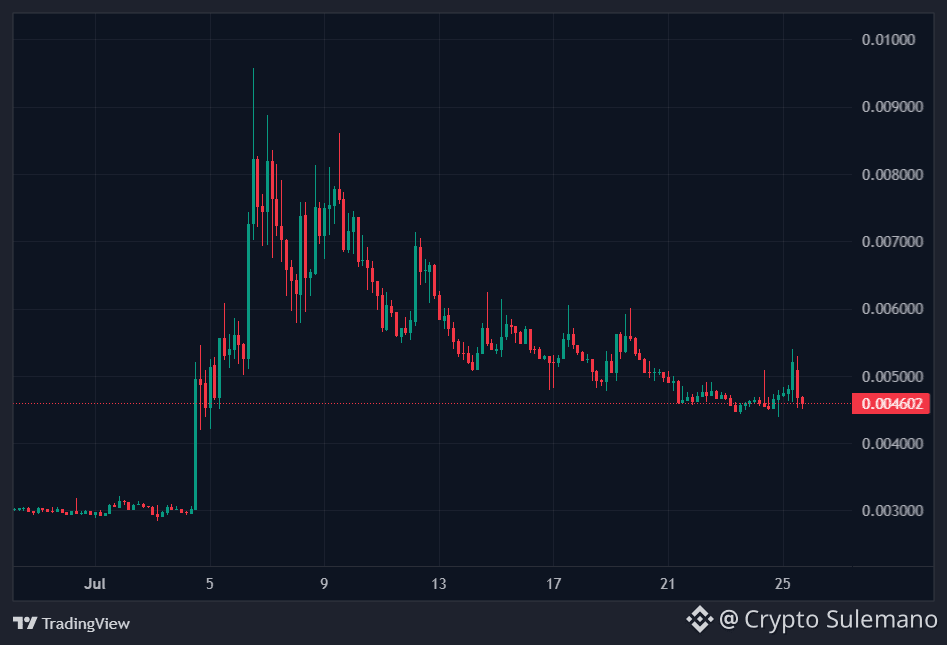
$VANRY is gaining attention, but the bigger story is its **transition to an AI-focused ecosystem on Base**. The project aims to attract developers and AI applications while expanding its ecosystem through a planned 1:1 token migration.
For **traders**, rising volume can create opportunities—but watch whether momentum holds after the initial hype.
For **investors**, the key question isn't today's price. It's whether Vanar can deliver real AI products, attract developers, and grow user adoption.
For **holders**, long-term value will depend on ecosystem growth, successful migration, and how the new tokenomics are managed over time.
🏛️ PMIF™ Insight
Narratives create attention.
Execution creates value.
Watch adoption—not just the chart.
#Vanar #Aİ #Web3 #Crypto
1
97


·
--
I've Been Patient With $VANRY and the Chart Is Finally Agreeing
Held the 0.002895 low and MACD just crossed bullish on the 4H. Volume spiked on this bounce — that's not retail noise.
RSI recovering and MA7 already flipped below price. The patience is paying off.
🎯 Trade Plan
Entry Zone: 0.003050 – 0.003100
✅ Target 1: 0.003260
✅ Target 2: 0.003500
❌ Stop Loss: 0.002820
DYOR | NFA
#VANRY #Vanar #CryptoTrading
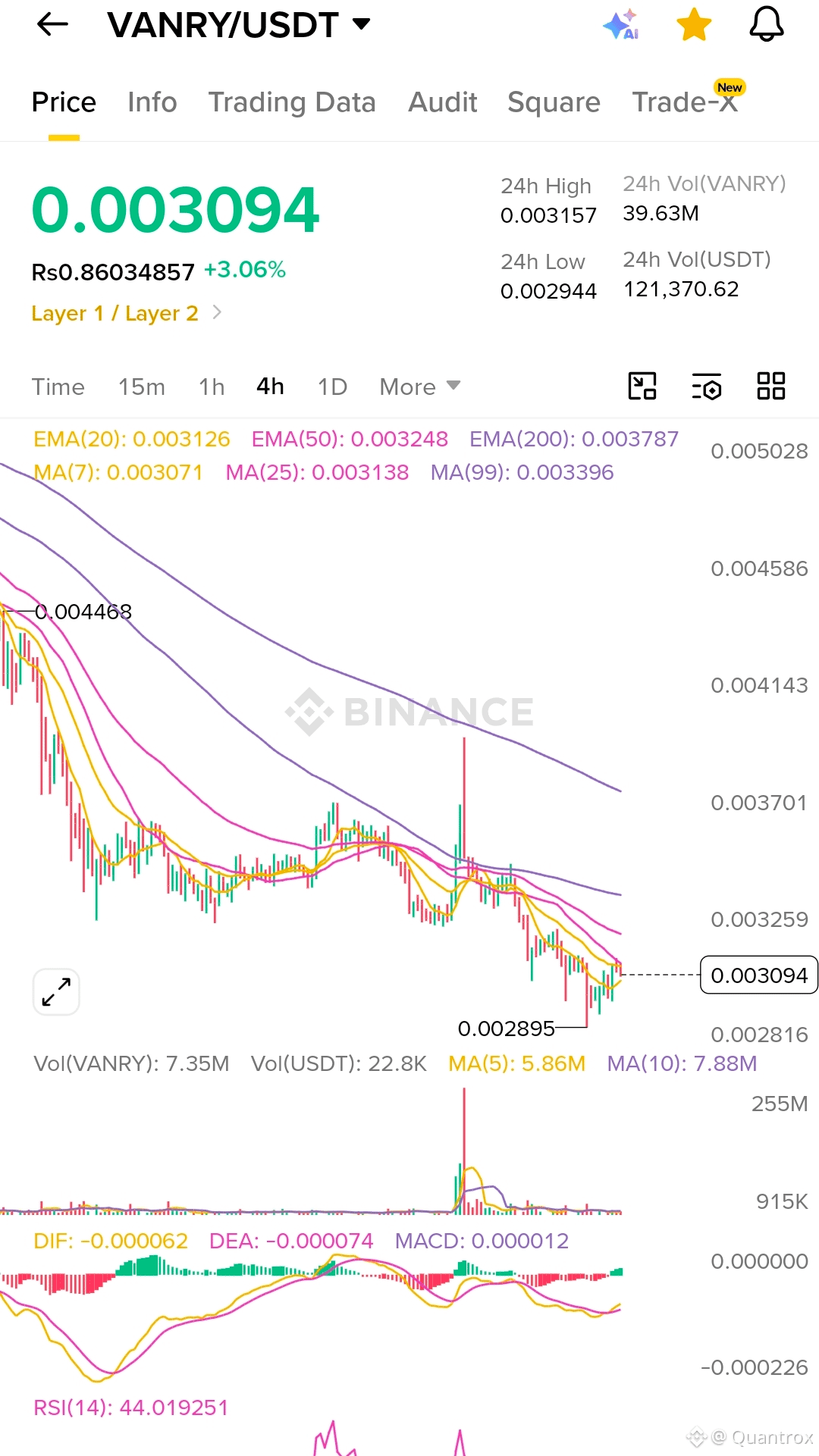
I've Been Patient With $VANRY and the Chart Is Finally Agreeing
Held the 0.002895 low and MACD just crossed bullish on the 4H. Volume spiked on this bounce — that's not retail noise.
RSI recovering and MA7 already flipped below price. The patience is paying off.
🎯 Trade Plan
Entry Zone: 0.003050 – 0.003100
✅ Target 1: 0.003260
✅ Target 2: 0.003500
❌ Stop Loss: 0.002820
DYOR | NFA
#VANRY #Vanar #CryptoTrading
Held the 0.002895 low and MACD just crossed bullish on the 4H. Volume spiked on this bounce — that's not retail noise.
RSI recovering and MA7 already flipped below price. The patience is paying off.
🎯 Trade Plan
Entry Zone: 0.003050 – 0.003100
✅ Target 1: 0.003260
✅ Target 2: 0.003500
❌ Stop Loss: 0.002820
DYOR | NFA
#VANRY #Vanar #CryptoTrading
1
341
·
--
VANRY surges 57.6% in a single day, with Binance futures open interest jumping 63%—capital is casting votes with real money.
As an L1 chain for entertainment and AI, Vanar Chain has seen its narrative reignited recently. A 63% spike in contract OI indicates large inflows of new leveraged funds entering the market, not just spot-driven buying. This kind of move often amplifies volatility and enables two-way liquidations.
Personal view:
1. After a blowout rally, chasing longs carries a sharply higher risk—keep a close watch on contract funding rates and the long/short ratio;
2. Only if it can hold above the prior high and retests without breaking down is the structure relatively healthy;
3. When a rotation signal for altcoins appears, low-cap narrative coins may get a short-term sentiment window.
Don’t chase the price up, don’t fight to the death. Set a stop-loss first, then consider opportunities.
$VANRY #VANRY #Vanar #Altcoin season
VANRY surges 57.6% in a single day, with Binance futures open interest jumping 63%—capital is casting votes with real money.
As an L1 chain for entertainment and AI, Vanar Chain has seen its narrative reignited recently. A 63% spike in contract OI indicates large inflows of new leveraged funds entering the market, not just spot-driven buying. This kind of move often amplifies volatility and enables two-way liquidations.
Personal view:
1. After a blowout rally, chasing longs carries a sharply higher risk—keep a close watch on contract funding rates and the long/short ratio;
2. Only if it can hold above the prior high and retests without breaking down is the structure relatively healthy;
3. When a rotation signal for altcoins appears, low-cap narrative coins may get a short-term sentiment window.
Don’t chase the price up, don’t fight to the death. Set a stop-loss first, then consider opportunities.
$VANRY #VANRY #Vanar #Altcoin season
As an L1 chain for entertainment and AI, Vanar Chain has seen its narrative reignited recently. A 63% spike in contract OI indicates large inflows of new leveraged funds entering the market, not just spot-driven buying. This kind of move often amplifies volatility and enables two-way liquidations.
Personal view:
1. After a blowout rally, chasing longs carries a sharply higher risk—keep a close watch on contract funding rates and the long/short ratio;
2. Only if it can hold above the prior high and retests without breaking down is the structure relatively healthy;
3. When a rotation signal for altcoins appears, low-cap narrative coins may get a short-term sentiment window.
Don’t chase the price up, don’t fight to the death. Set a stop-loss first, then consider opportunities.
$VANRY #VANRY #Vanar #Altcoin season
127

·
--
The Reality of the Chart: Navigating the Vanar Downtrend 📉
Let’s talk about $VANAR. There’s no point in sugarcoating it—the current price action is decidedly bearish, and the asset is facing significant overhead pressure. In moments like this, separating emotion from strategy is what keeps a trader alive.
Instead of panic-selling or blindly buying a falling knife, the smart move right now is patience. I am closely monitoring the macro support levels to see where buyers finally decide to step in and establish a firm accumulation floor. A bearish trend isn't just a downswing; it’s the market resetting and setting up the next potential structure.
Managing risk with strict stop-losses and keeping dry powder ready is the priority until we see a confirmed trend reversal or a solid double-bottom pattern on the higher timeframes.
Are you actively looking to scoop up the dip at lower support levels, or are you sitting on the sidelines waiting for a confirmed bullish market structure shift? Let me know your strategy in the comments below! 👇
#vanar #CryptoAnalysis #TradingStrategy #Altcoins #Write2Earn
$VANRY
{spot}(VANRYUSDT)
$GOOGL.US
{stock_us}(GOOGL.US)
The Reality of the Chart: Navigating the Vanar Downtrend 📉
Let’s talk about $VANAR. There’s no point in sugarcoating it—the current price action is decidedly bearish, and the asset is facing significant overhead pressure. In moments like this, separating emotion from strategy is what keeps a trader alive.
Instead of panic-selling or blindly buying a falling knife, the smart move right now is patience. I am closely monitoring the macro support levels to see where buyers finally decide to step in and establish a firm accumulation floor. A bearish trend isn't just a downswing; it’s the market resetting and setting up the next potential structure.
Managing risk with strict stop-losses and keeping dry powder ready is the priority until we see a confirmed trend reversal or a solid double-bottom pattern on the higher timeframes.
Are you actively looking to scoop up the dip at lower support levels, or are you sitting on the sidelines waiting for a confirmed bullish market structure shift? Let me know your strategy in the comments below! 👇
#vanar #CryptoAnalysis #TradingStrategy #Altcoins #Write2Earn
$VANRY
$GOOGL.US
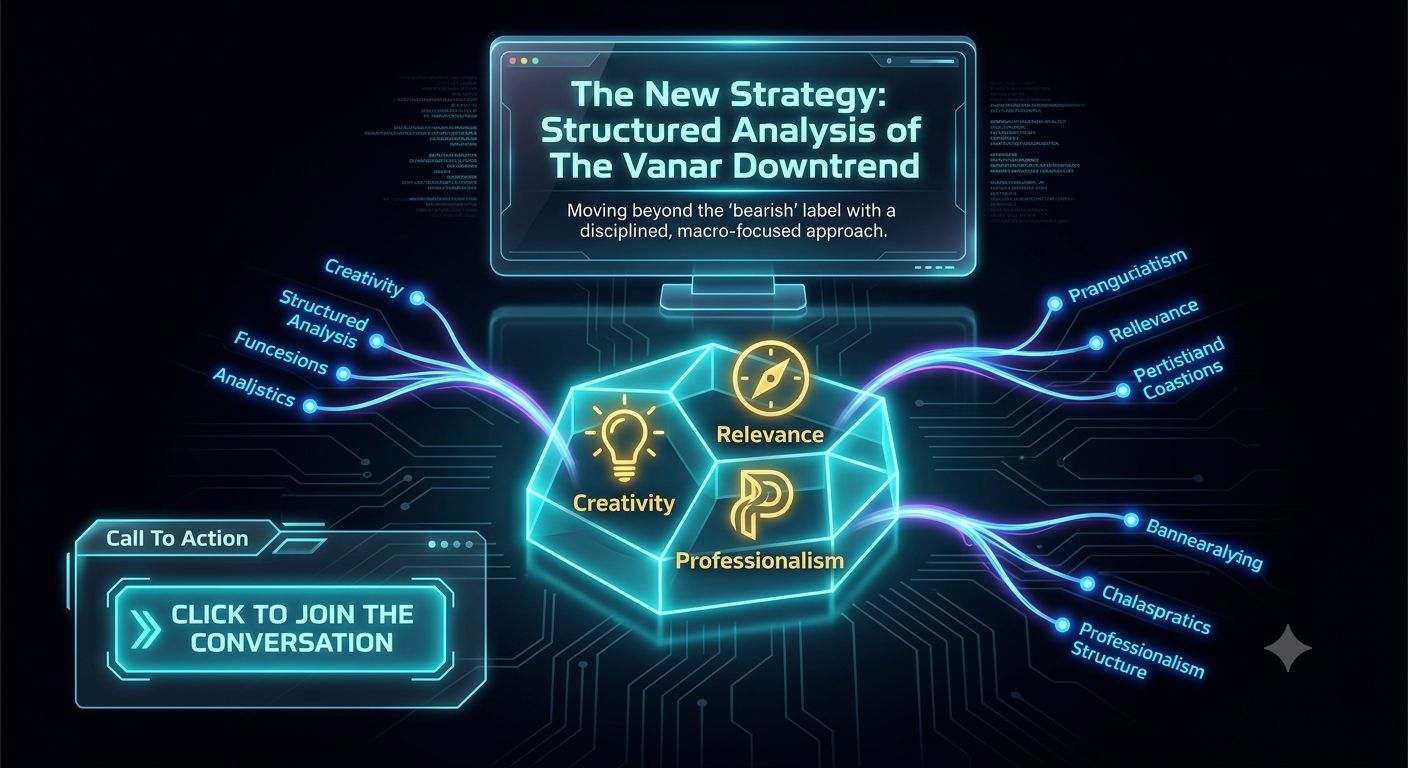
Let’s talk about $VANAR. There’s no point in sugarcoating it—the current price action is decidedly bearish, and the asset is facing significant overhead pressure. In moments like this, separating emotion from strategy is what keeps a trader alive.
Instead of panic-selling or blindly buying a falling knife, the smart move right now is patience. I am closely monitoring the macro support levels to see where buyers finally decide to step in and establish a firm accumulation floor. A bearish trend isn't just a downswing; it’s the market resetting and setting up the next potential structure.
Managing risk with strict stop-losses and keeping dry powder ready is the priority until we see a confirmed trend reversal or a solid double-bottom pattern on the higher timeframes.
Are you actively looking to scoop up the dip at lower support levels, or are you sitting on the sidelines waiting for a confirmed bullish market structure shift? Let me know your strategy in the comments below! 👇
#vanar #CryptoAnalysis #TradingStrategy #Altcoins #Write2Earn
$VANRY
$GOOGL.US
GOOGLUS+0.43%
426

·
--
Bullish
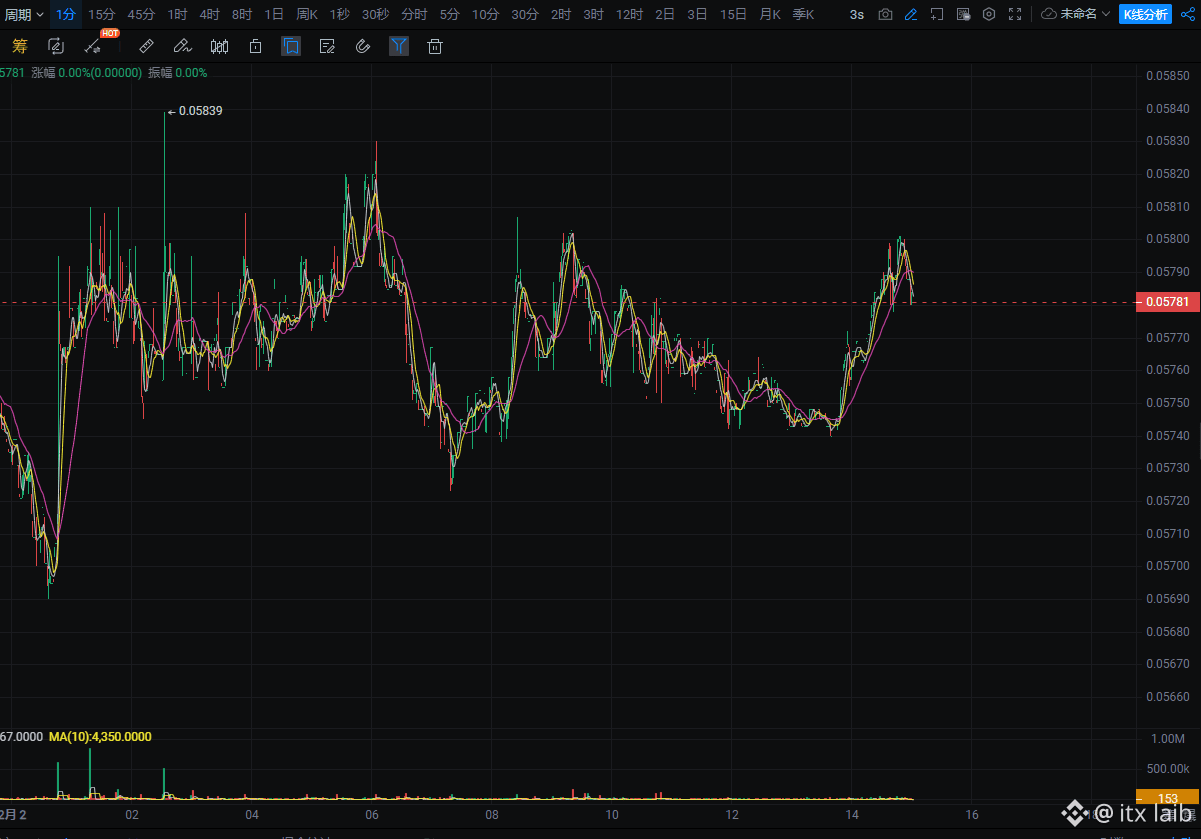
$VANRY is trading near a key support zone after a prolonged downtrend. • A breakout above $GOOG.US
{stock_us}(GOOG.US)
0.0054 with strong volume could confirm bullish momentum.
#USStrikesIran13thNightTrumpNotReadyToNegotiate #vanar #Altcoin #Binance $BNB
{future}(BNBUSDT)
$VANRY is trading near a key support zone after a prolonged downtrend. • A breakout above $GOOG.US
0.0054 with strong volume could confirm bullish momentum.
#USStrikesIran13thNightTrumpNotReadyToNegotiate #vanar #Altcoin #Binance $BNB
0.0054 with strong volume could confirm bullish momentum.
#USStrikesIran13thNightTrumpNotReadyToNegotiate #vanar #Altcoin #Binance $BNB
GOOGUS+0.60%
BNB+0.83%
1
115

·
--
Bullish
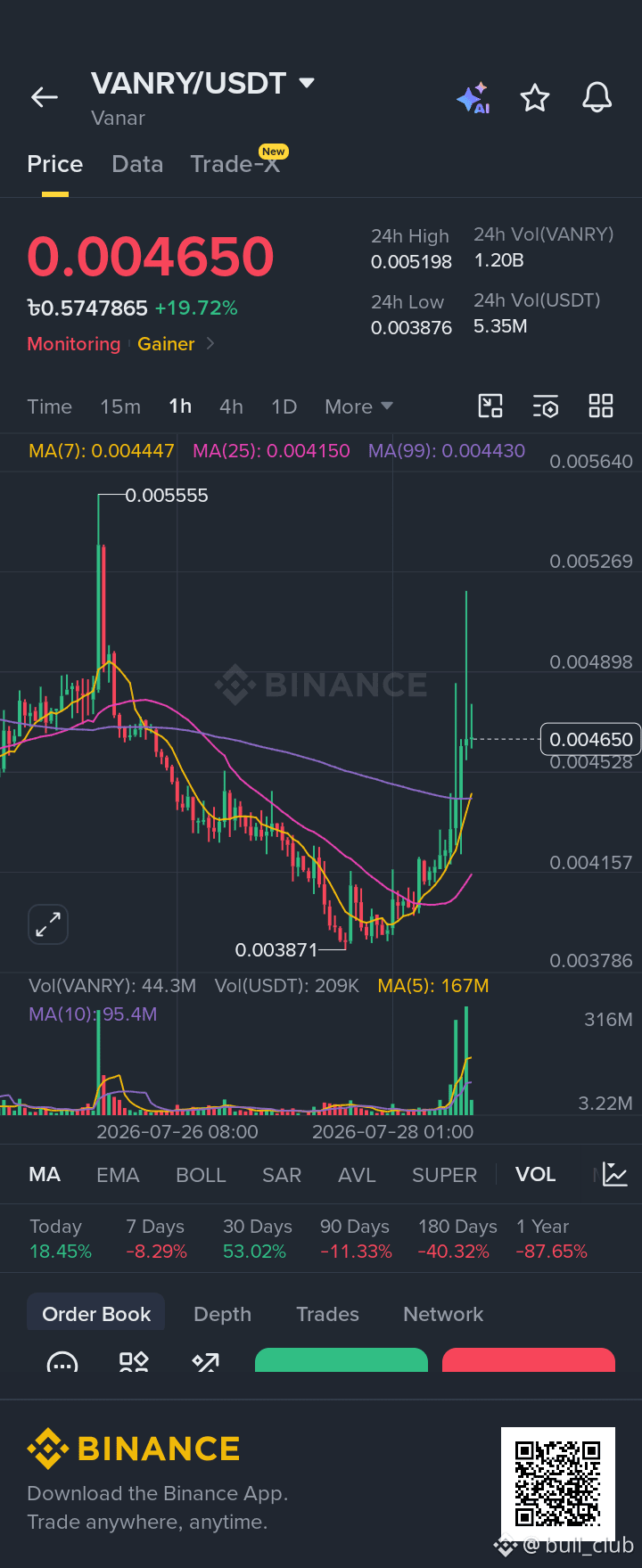
VANRY is pumping hard with 19 percent gain today. Volume is exploding with 1.20B tokens traded.
Here is my trade plan.
Entry 0.00440 to 0.00450.
Target 0.00500 and 0.00520.
Stop loss 0.00410.
Price bounced from 0.003871 low and now testing 0.004650. MA7 is at 0.004447 and MA25 at 0.004150. MAs are stacked bullish. If it breaks 0.00480 next target is 0.00520. If rejects might drop to 0.00440 support.
What is your plan for VANRY? Let me know in comments.
Not financial advice. DYOR.
$VANRY
{future}(VANRYUSDT)
#VANRY #Vanar #Crypto #trading
VANRY is pumping hard with 19 percent gain today. Volume is exploding with 1.20B tokens traded.
Here is my trade plan.
Entry 0.00440 to 0.00450.
Target 0.00500 and 0.00520.
Stop loss 0.00410.
Price bounced from 0.003871 low and now testing 0.004650. MA7 is at 0.004447 and MA25 at 0.004150. MAs are stacked bullish. If it breaks 0.00480 next target is 0.00520. If rejects might drop to 0.00440 support.
What is your plan for VANRY? Let me know in comments.
Not financial advice. DYOR.
$VANRY
#VANRY #Vanar #Crypto #trading
Here is my trade plan.
Entry 0.00440 to 0.00450.
Target 0.00500 and 0.00520.
Stop loss 0.00410.
Price bounced from 0.003871 low and now testing 0.004650. MA7 is at 0.004447 and MA25 at 0.004150. MAs are stacked bullish. If it breaks 0.00480 next target is 0.00520. If rejects might drop to 0.00440 support.
What is your plan for VANRY? Let me know in comments.
Not financial advice. DYOR.
$VANRY
#VANRY #Vanar #Crypto #trading
1
1
1.2k

·
--
Verified
Article
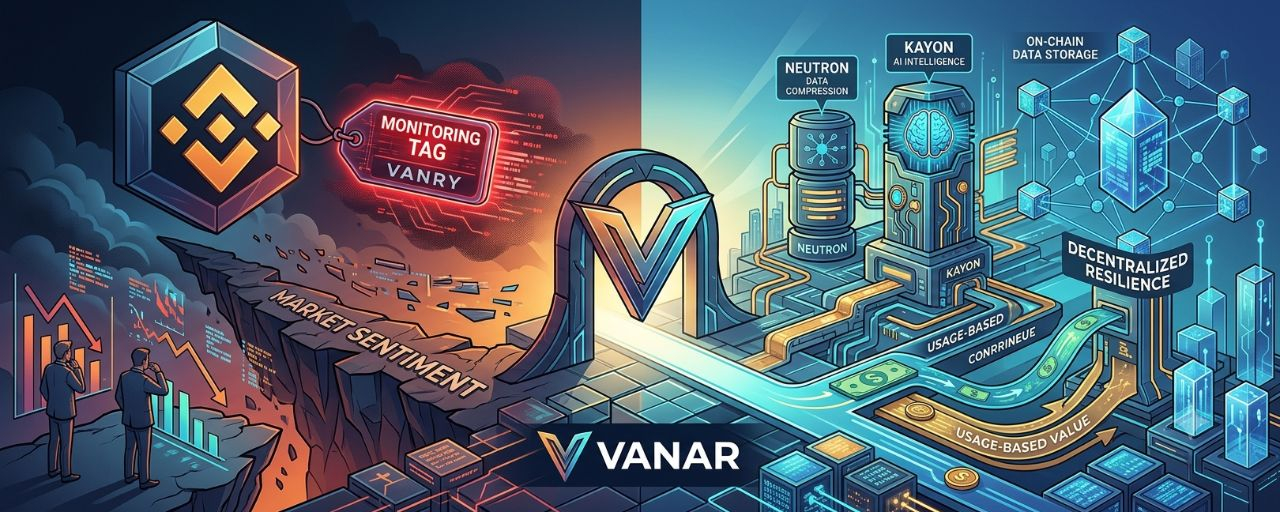
Vanar Chain Faces Binance Pressure While AI Infrastructure Keeps GrowingVanar Chain has reached a critical stage. On one side, Binance has placed a Monitoring Tag on VANRY, signaling that the token is under closer review for potentially failing to meet the exchange's listing standards. While this is not a delisting decision, it creates uncertainty and encourages investors to stay cautious. As long as the tag remains, market sentiment is likely to stay under pressure.
Behind that short-term challenge, Vanar continues expanding its AI infrastructure. Core products such as Neutron for on-chain data compression and Kayon, its decentralized intelligence engine, are already operational and are moving toward a subscription-based model. The goal is to tie VANRY's value directly to real network usage instead of relying mainly on market speculation.
The project's long-term vision has also been reinforced by CEO Jawad Ashraf, who highlighted the importance of decentralized infrastructure following major cloud service outages. Vanar aims to provide blockchain technology capable of storing data fully on-chain, reducing dependence on centralized cloud providers and strengthening resilience for digital infrastructure.
For now, Vanar sits between short-term exchange-related pressure and long-term technological progress. If its products continue gaining adoption, the project could rebuild market confidence. Until then, investors will likely remain focused on how Vanar responds to Binance's ongoing review. #vanar $VANRY
{spot}(VANRYUSDT)
{future}(VANRYUSDT)
Vanar Chain Faces Binance Pressure While AI Infrastructure Keeps Growing
Vanar Chain has reached a critical stage. On one side, Binance has placed a Monitoring Tag on VANRY, signaling that the token is under closer review for potentially failing to meet the exchange's listing standards. While this is not a delisting decision, it creates uncertainty and encourages investors to stay cautious. As long as the tag remains, market sentiment is likely to stay under pressure.
Behind that short-term challenge, Vanar continues expanding its AI infrastructure. Core products such as Neutron for on-chain data compression and Kayon, its decentralized intelligence engine, are already operational and are moving toward a subscription-based model. The goal is to tie VANRY's value directly to real network usage instead of relying mainly on market speculation.
The project's long-term vision has also been reinforced by CEO Jawad Ashraf, who highlighted the importance of decentralized infrastructure following major cloud service outages. Vanar aims to provide blockchain technology capable of storing data fully on-chain, reducing dependence on centralized cloud providers and strengthening resilience for digital infrastructure.
For now, Vanar sits between short-term exchange-related pressure and long-term technological progress. If its products continue gaining adoption, the project could rebuild market confidence. Until then, investors will likely remain focused on how Vanar responds to Binance's ongoing review. #vanar $VANRY
Behind that short-term challenge, Vanar continues expanding its AI infrastructure. Core products such as Neutron for on-chain data compression and Kayon, its decentralized intelligence engine, are already operational and are moving toward a subscription-based model. The goal is to tie VANRY's value directly to real network usage instead of relying mainly on market speculation.
The project's long-term vision has also been reinforced by CEO Jawad Ashraf, who highlighted the importance of decentralized infrastructure following major cloud service outages. Vanar aims to provide blockchain technology capable of storing data fully on-chain, reducing dependence on centralized cloud providers and strengthening resilience for digital infrastructure.
For now, Vanar sits between short-term exchange-related pressure and long-term technological progress. If its products continue gaining adoption, the project could rebuild market confidence. Until then, investors will likely remain focused on how Vanar responds to Binance's ongoing review. #vanar $VANRY
3
18
1.1k
VANR coins surge 57.6% in a single day; Binance derivatives open interest jumps 63% in sync. Money is quietly flowing into this game public chain track.
From the order book, both spot and derivatives see heavy volume at the same time, suggesting this round isn’t just pure spot FOMO. Leveraged funds are also entering in parallel, piling on—this feels more like a momentum/trend-driven market.
That said, stay calm for two reasons:
One is that the contract OI growth is faster than the coin price increase, and leverage on the short term is becoming crowded. Any pullback could be amplified;
Two is that as an L1 focused on games and entertainment, Vanar Chain’s fundamentals still need to be validated with ecosystem data. For now, it’s mostly sentiment-driven with low market-cap elasticity.
In terms of trading, the risk of chasing highs is already significant. A steadier approach is to wait and observe support after the first deep pullback, rather than going long at the needle-like spike. Funding rates and changes in OI are key indicators for whether the bulls still have room.
In the alt-season rotation, more and more small-cap coins like $VANRY will rise together. Managing position size matters more than chasing the size of the move.
#VANRY #Vanar #Alt-season
VANR coins surge 57.6% in a single day; Binance derivatives open interest jumps 63% in sync. Money is quietly flowing into this game public chain track.
From the order book, both spot and derivatives see heavy volume at the same time, suggesting this round isn’t just pure spot FOMO. Leveraged funds are also entering in parallel, piling on—this feels more like a momentum/trend-driven market.
That said, stay calm for two reasons:
One is that the contract OI growth is faster than the coin price increase, and leverage on the short term is becoming crowded. Any pullback could be amplified;
Two is that as an L1 focused on games and entertainment, Vanar Chain’s fundamentals still need to be validated with ecosystem data. For now, it’s mostly sentiment-driven with low market-cap elasticity.
In terms of trading, the risk of chasing highs is already significant. A steadier approach is to wait and observe support after the first deep pullback, rather than going long at the needle-like spike. Funding rates and changes in OI are key indicators for whether the bulls still have room.
In the alt-season rotation, more and more small-cap coins like $VANRY will rise together. Managing position size matters more than chasing the size of the move.
#VANRY #Vanar #Alt-season
From the order book, both spot and derivatives see heavy volume at the same time, suggesting this round isn’t just pure spot FOMO. Leveraged funds are also entering in parallel, piling on—this feels more like a momentum/trend-driven market.
That said, stay calm for two reasons:
One is that the contract OI growth is faster than the coin price increase, and leverage on the short term is becoming crowded. Any pullback could be amplified;
Two is that as an L1 focused on games and entertainment, Vanar Chain’s fundamentals still need to be validated with ecosystem data. For now, it’s mostly sentiment-driven with low market-cap elasticity.
In terms of trading, the risk of chasing highs is already significant. A steadier approach is to wait and observe support after the first deep pullback, rather than going long at the needle-like spike. Funding rates and changes in OI are key indicators for whether the bulls still have room.
In the alt-season rotation, more and more small-cap coins like $VANRY will rise together. Managing position size matters more than chasing the size of the move.
#VANRY #Vanar #Alt-season
119

·
--
Bullish
#Vanar (VANRY) is an L1 blockchain built for real-world adoption.
From gaming 🎮 and AI 🤖 to the metaverse 🌐 and global brands, Vanar is making Web3 easier for the next 3 billion users.
👀 Keep an eye on $VANRY
#VANRY #Vanar #Web3 #BinanceSquare $VANRY
{spot}(VANRYUSDT)
#Vanar (VANRY) is an L1 blockchain built for real-world adoption.
From gaming 🎮 and AI 🤖 to the metaverse 🌐 and global brands, Vanar is making Web3 easier for the next 3 billion users.
👀 Keep an eye on $VANRY
#VANRY #Vanar #Web3 #BinanceSquare $VANRY
From gaming 🎮 and AI 🤖 to the metaverse 🌐 and global brands, Vanar is making Web3 easier for the next 3 billion users.
👀 Keep an eye on $VANRY
#VANRY #Vanar #Web3 #BinanceSquare $VANRY

136
VANRY surged 57.6% in a single day; Binance futures open interest jumped 63%. Vanar Chain is quickly becoming one of the brightest names in this altcoin season.
Price and open interest are amplifying together—this usually means real incremental capital is entering the market, not just a simple spot squeeze. This kind of price-volume pairing can make short-term sentiment extremely bullish, but be careful: if funding rates spike to high levels and the long side becomes too crowded, a sudden, sharp pullback and shakeout could happen at any time.
Personal take: Vanar Chain is positioned for entertainment and AI application scenarios. The narrative itself has room for imagination, but fundamental value realization will take time. In the short term, I’ll treat it as a momentum/sentiment trading asset rather than a core long-term holding—don’t chase; it’s better to wait for a pullback. Also, you must control leverage and contract sizing; don’t put all your chips in when it’s hottest.
Altcoin rotation often comes wave after wave. Timing matters more than clinging to any single coin.
$VANRY #Vanar #山寨季 #Open interest
VANRY surged 57.6% in a single day; Binance futures open interest jumped 63%. Vanar Chain is quickly becoming one of the brightest names in this altcoin season.
Price and open interest are amplifying together—this usually means real incremental capital is entering the market, not just a simple spot squeeze. This kind of price-volume pairing can make short-term sentiment extremely bullish, but be careful: if funding rates spike to high levels and the long side becomes too crowded, a sudden, sharp pullback and shakeout could happen at any time.
Personal take: Vanar Chain is positioned for entertainment and AI application scenarios. The narrative itself has room for imagination, but fundamental value realization will take time. In the short term, I’ll treat it as a momentum/sentiment trading asset rather than a core long-term holding—don’t chase; it’s better to wait for a pullback. Also, you must control leverage and contract sizing; don’t put all your chips in when it’s hottest.
Altcoin rotation often comes wave after wave. Timing matters more than clinging to any single coin.
$VANRY #Vanar #山寨季 #Open interest
Price and open interest are amplifying together—this usually means real incremental capital is entering the market, not just a simple spot squeeze. This kind of price-volume pairing can make short-term sentiment extremely bullish, but be careful: if funding rates spike to high levels and the long side becomes too crowded, a sudden, sharp pullback and shakeout could happen at any time.
Personal take: Vanar Chain is positioned for entertainment and AI application scenarios. The narrative itself has room for imagination, but fundamental value realization will take time. In the short term, I’ll treat it as a momentum/sentiment trading asset rather than a core long-term holding—don’t chase; it’s better to wait for a pullback. Also, you must control leverage and contract sizing; don’t put all your chips in when it’s hottest.
Altcoin rotation often comes wave after wave. Timing matters more than clinging to any single coin.
$VANRY #Vanar #山寨季 #Open interest
109

·
--
Bullish
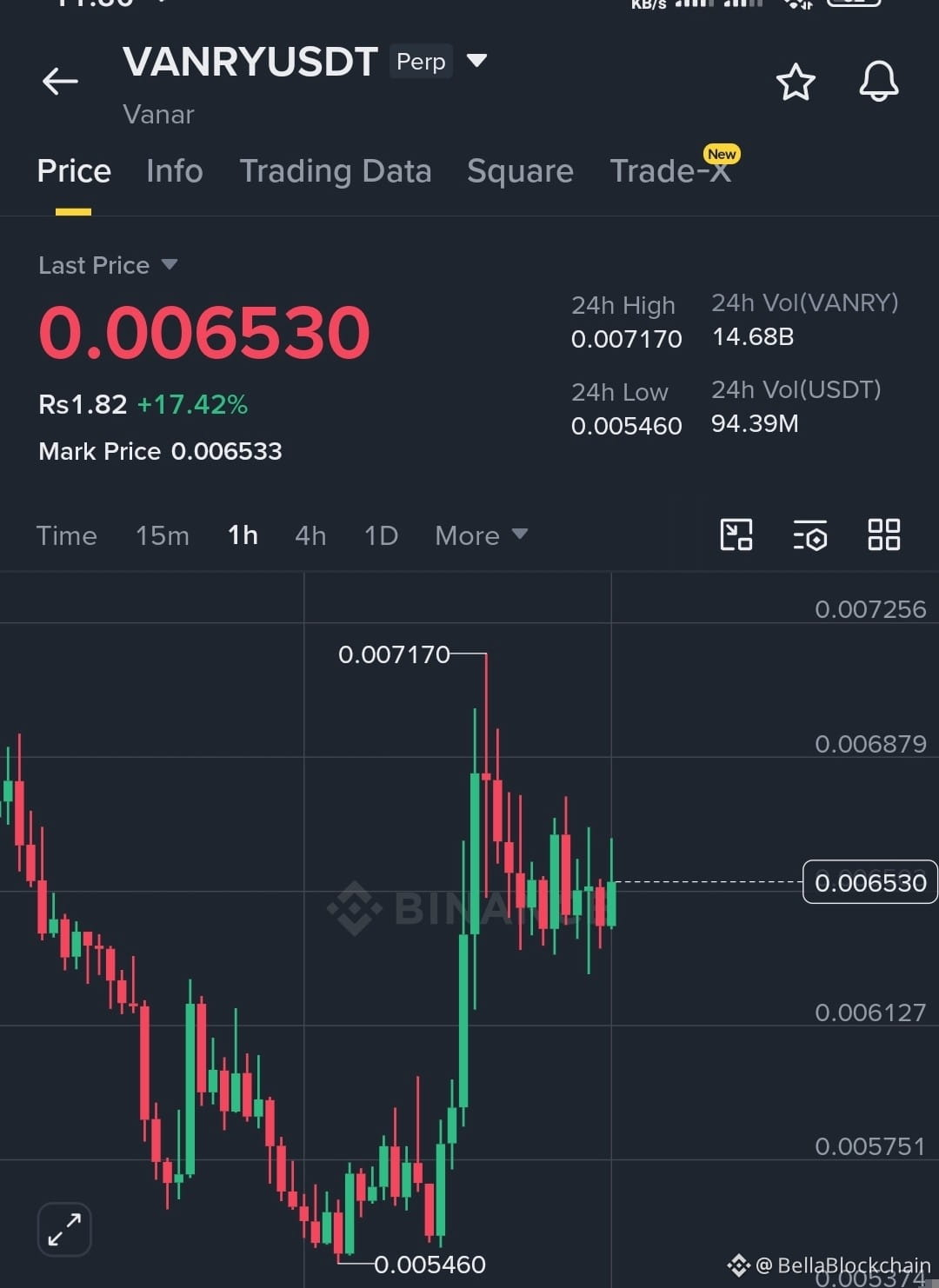
$VANRY has experienced a powerful recovery on the 1-hour chart, surging over 17% from its recent 24-hour low of 0.005460. After exploding upward to a peak of 0.007170, the price has entered a brief consolidation phase and is currently holding strong around the 0.006530 level. Massive trading volume indicates that market interest remains high, positioning the token nicely for another leg upward if buyers defend this current baseline.
Target 1: 0.006879
Target 2: 0.007170
Target 3: 0.007500
#VANRY #Vanar #CryptoTrading
$VANRY
{future}(VANRYUSDT)
$VANRY has experienced a powerful recovery on the 1-hour chart, surging over 17% from its recent 24-hour low of 0.005460. After exploding upward to a peak of 0.007170, the price has entered a brief consolidation phase and is currently holding strong around the 0.006530 level. Massive trading volume indicates that market interest remains high, positioning the token nicely for another leg upward if buyers defend this current baseline.
Target 1: 0.006879
Target 2: 0.007170
Target 3: 0.007500
#VANRY #Vanar #CryptoTrading
$VANRY
Target 1: 0.006879
Target 2: 0.007170
Target 3: 0.007500
#VANRY #Vanar #CryptoTrading
$VANRY
91
Log in to explore more content
Join global crypto users on Binance Square
⚡️ Get latest and useful information about crypto.
💬 Trusted by the world’s largest crypto exchange.
👍 Discover real insights from verified creators.
Email / Phone number
Trending Topics
1
#BitgetHackerMoves$83MStolenXRP
224 views
20 Discussing
2
#SOLSpotETFWeeklyInflow$188M
252 views
34 Discussing
3
#StrategyStriveAdd2305BitcoinThisWeek
28,779 views
884 Discussing
4
#TrumpRejectsIranHormuzReopening
31,592 views
711 Discussing
5
#TokenizedStockDEXVolumeHits$20.9B
122 views
6 Discussing
6
#CircleTetherFreezeBitgetHackerWallet
48,383 views
767 Discussing
7
#SECSaysTokenBuybacksNotAutoSecurities
23,480 views
410 Discussing
8
#ChinaUSAgreeOn$30BTariffCut
1,088 views
29 Discussing
9
#CoinMarketCapCompletesCoinglassAcquisition
40,700 views
559 Discussing
10
#CircleMints500MUSDCOnSolana
218,049 views
3,173 Discussing