
H A R E E M
7.9k Posts

H A R E E M
 Square Verified
Report
Block User
184 Following
30.5K+ Followers
10.6K+ Liked
Posts
All
Quotes
Live
·
--
#dusk $DUSK @Dusk_Foundation
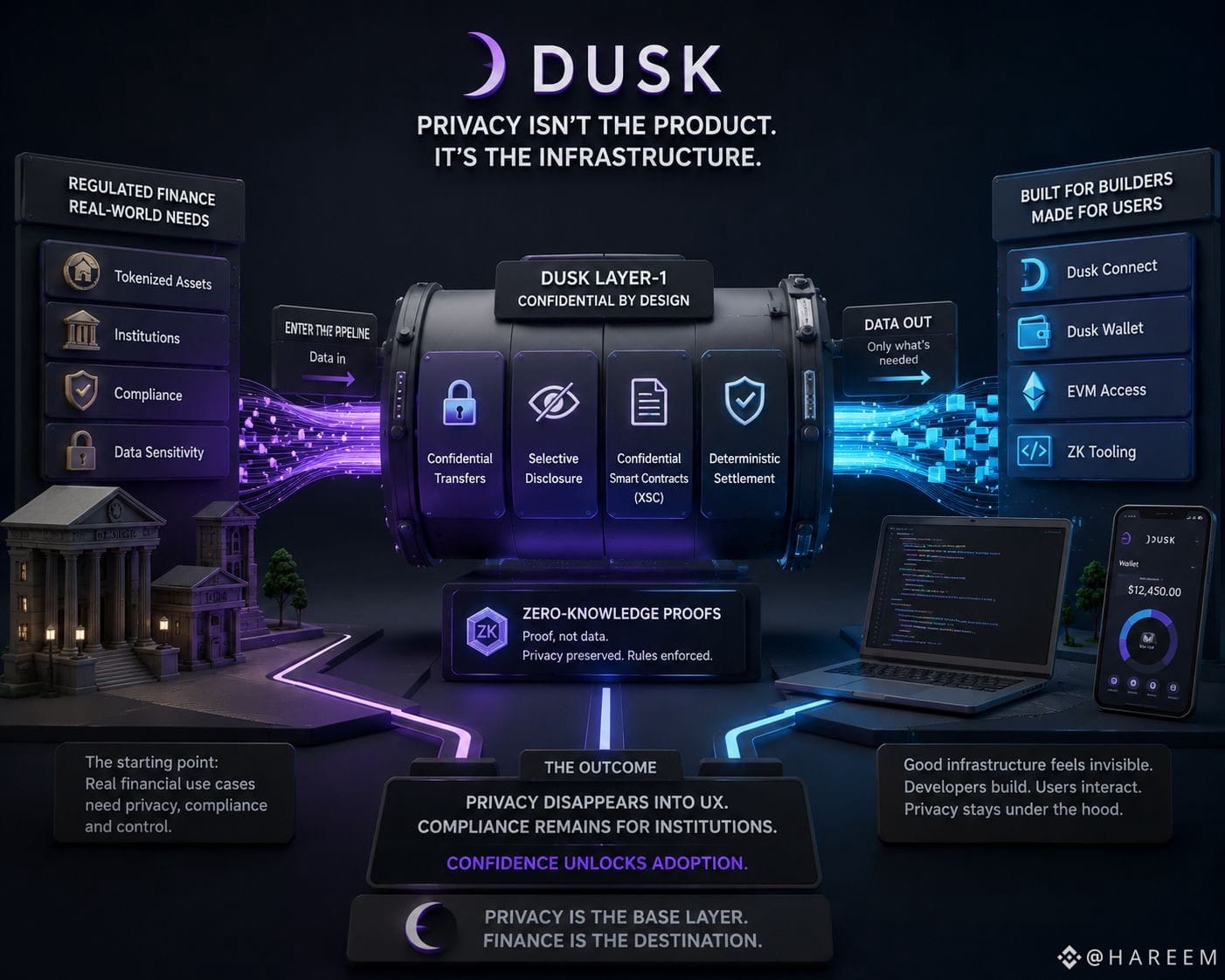
I keep coming back to one question with Dusk: is privacy really the product, or is it the condition that lets financial products exist onchain?
That distinction matters. Dusk is built around regulated assets, selective disclosure and confidential contracts, but the signal I find more interesting is happening around the edges. Dusk Connect and the new wallet are reducing dApp friction, while recent developer work has tightened zk tooling and EVM testing. To me, that looks less like a privacy showcase and more like an attempt to turn difficult cryptography into usable financial infrastructure.
I’ve seen privacy projects solve the hard technical problem, then struggle with the boring one: getting people to use it.
I’m not convinced Dusk has solved adoption. The test is whether confidentiality disappears into UX while compliance stays visible to institutions.
When that happens, privacy stops being the headline. It becomes infrastructure. That’s what I’m watching.
#dusk $DUSK @Dusk
I keep coming back to one question with Dusk: is privacy really the product, or is it the condition that lets financial products exist onchain?
That distinction matters. Dusk is built around regulated assets, selective disclosure and confidential contracts, but the signal I find more interesting is happening around the edges. Dusk Connect and the new wallet are reducing dApp friction, while recent developer work has tightened zk tooling and EVM testing. To me, that looks less like a privacy showcase and more like an attempt to turn difficult cryptography into usable financial infrastructure.
I’ve seen privacy projects solve the hard technical problem, then struggle with the boring one: getting people to use it.
I’m not convinced Dusk has solved adoption. The test is whether confidentiality disappears into UX while compliance stays visible to institutions.
When that happens, privacy stops being the headline. It becomes infrastructure. That’s what I’m watching.
I keep coming back to one question with Dusk: is privacy really the product, or is it the condition that lets financial products exist onchain?
That distinction matters. Dusk is built around regulated assets, selective disclosure and confidential contracts, but the signal I find more interesting is happening around the edges. Dusk Connect and the new wallet are reducing dApp friction, while recent developer work has tightened zk tooling and EVM testing. To me, that looks less like a privacy showcase and more like an attempt to turn difficult cryptography into usable financial infrastructure.
I’ve seen privacy projects solve the hard technical problem, then struggle with the boring one: getting people to use it.
I’m not convinced Dusk has solved adoption. The test is whether confidentiality disappears into UX while compliance stays visible to institutions.
When that happens, privacy stops being the headline. It becomes infrastructure. That’s what I’m watching.
233
·
--
Bullish
#dusk $DUSK @Dusk_Foundation
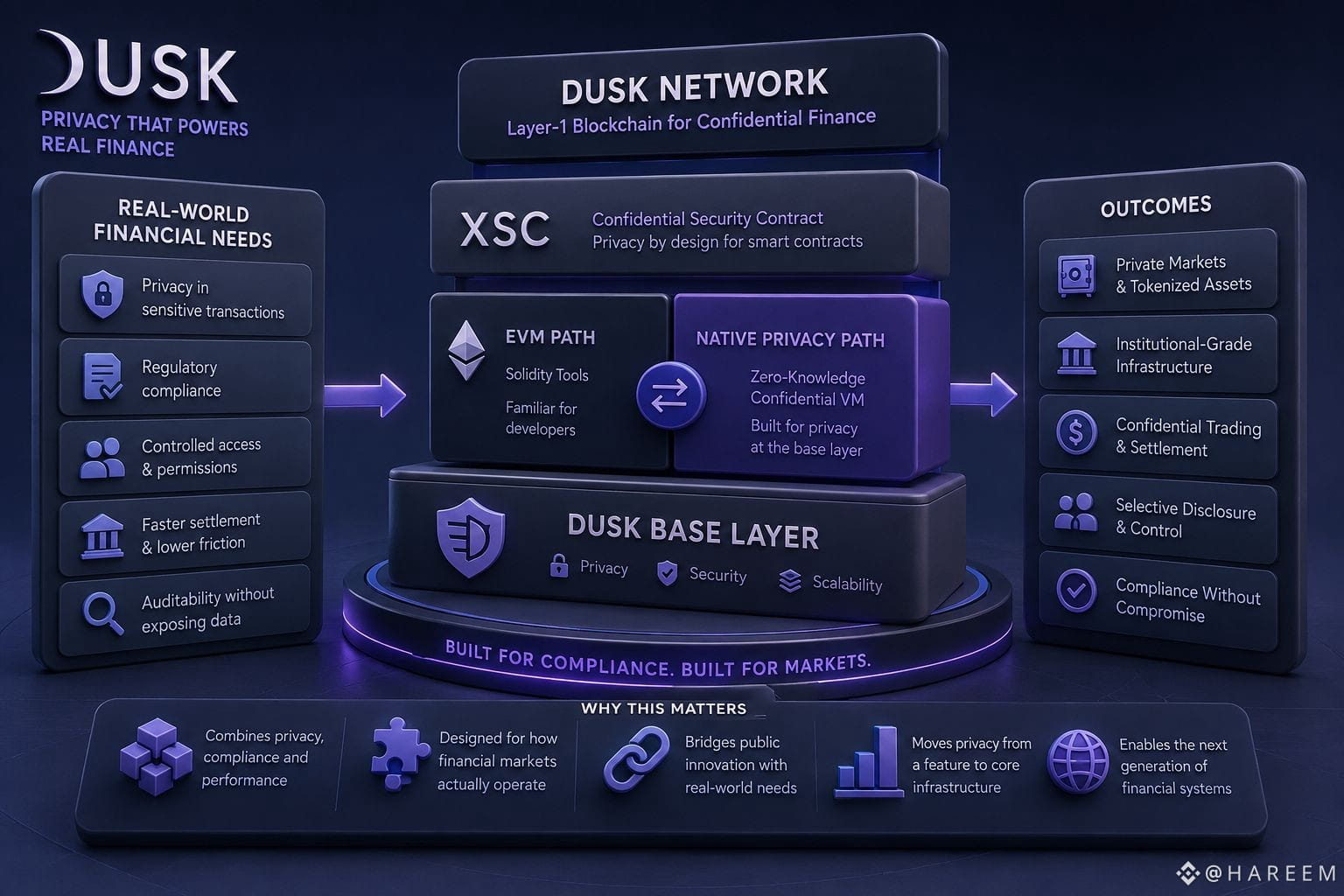
I've started looking at Dusk less as a “privacy chain” and more as a test of whether financial markets actually need a different blockchain design.
What caught my attention is the direction of the stack. Dusk now has an EVM route for familiar Solidity tooling, while its native VM handles privacy and zero-knowledge flows. At the same time, recent work is leaning harder into regulated securities, private-market financing, trading and settlement. That combination matters more to me than the privacy label itself.
I've seen plenty of chains add privacy, tokenization, or compliance narratives after the fact. The harder problem is making those pieces work together without recreating the same fragmented workflow institutions already use.
Dusk seems to be targeting that gap: eligibility, controlled transfers, selective disclosure and settlement living closer together. I'm still cautious, especially after every cycle has produced another “institutional blockchain” story.
But maybe the useful question isn't whether Dusk can make assets private. It's whether it can remove enough operational friction that financial firms prefer using it. That's the part I’ll be watching.
#dusk $DUSK @Dusk
I've started looking at Dusk less as a “privacy chain” and more as a test of whether financial markets actually need a different blockchain design.
What caught my attention is the direction of the stack. Dusk now has an EVM route for familiar Solidity tooling, while its native VM handles privacy and zero-knowledge flows. At the same time, recent work is leaning harder into regulated securities, private-market financing, trading and settlement. That combination matters more to me than the privacy label itself.
I've seen plenty of chains add privacy, tokenization, or compliance narratives after the fact. The harder problem is making those pieces work together without recreating the same fragmented workflow institutions already use.
Dusk seems to be targeting that gap: eligibility, controlled transfers, selective disclosure and settlement living closer together. I'm still cautious, especially after every cycle has produced another “institutional blockchain” story.
But maybe the useful question isn't whether Dusk can make assets private. It's whether it can remove enough operational friction that financial firms prefer using it. That's the part I’ll be watching.
I've started looking at Dusk less as a “privacy chain” and more as a test of whether financial markets actually need a different blockchain design.
What caught my attention is the direction of the stack. Dusk now has an EVM route for familiar Solidity tooling, while its native VM handles privacy and zero-knowledge flows. At the same time, recent work is leaning harder into regulated securities, private-market financing, trading and settlement. That combination matters more to me than the privacy label itself.
I've seen plenty of chains add privacy, tokenization, or compliance narratives after the fact. The harder problem is making those pieces work together without recreating the same fragmented workflow institutions already use.
Dusk seems to be targeting that gap: eligibility, controlled transfers, selective disclosure and settlement living closer together. I'm still cautious, especially after every cycle has produced another “institutional blockchain” story.
But maybe the useful question isn't whether Dusk can make assets private. It's whether it can remove enough operational friction that financial firms prefer using it. That's the part I’ll be watching.
1
2
134
·
--
#dusk $DUSK @Dusk_Foundation
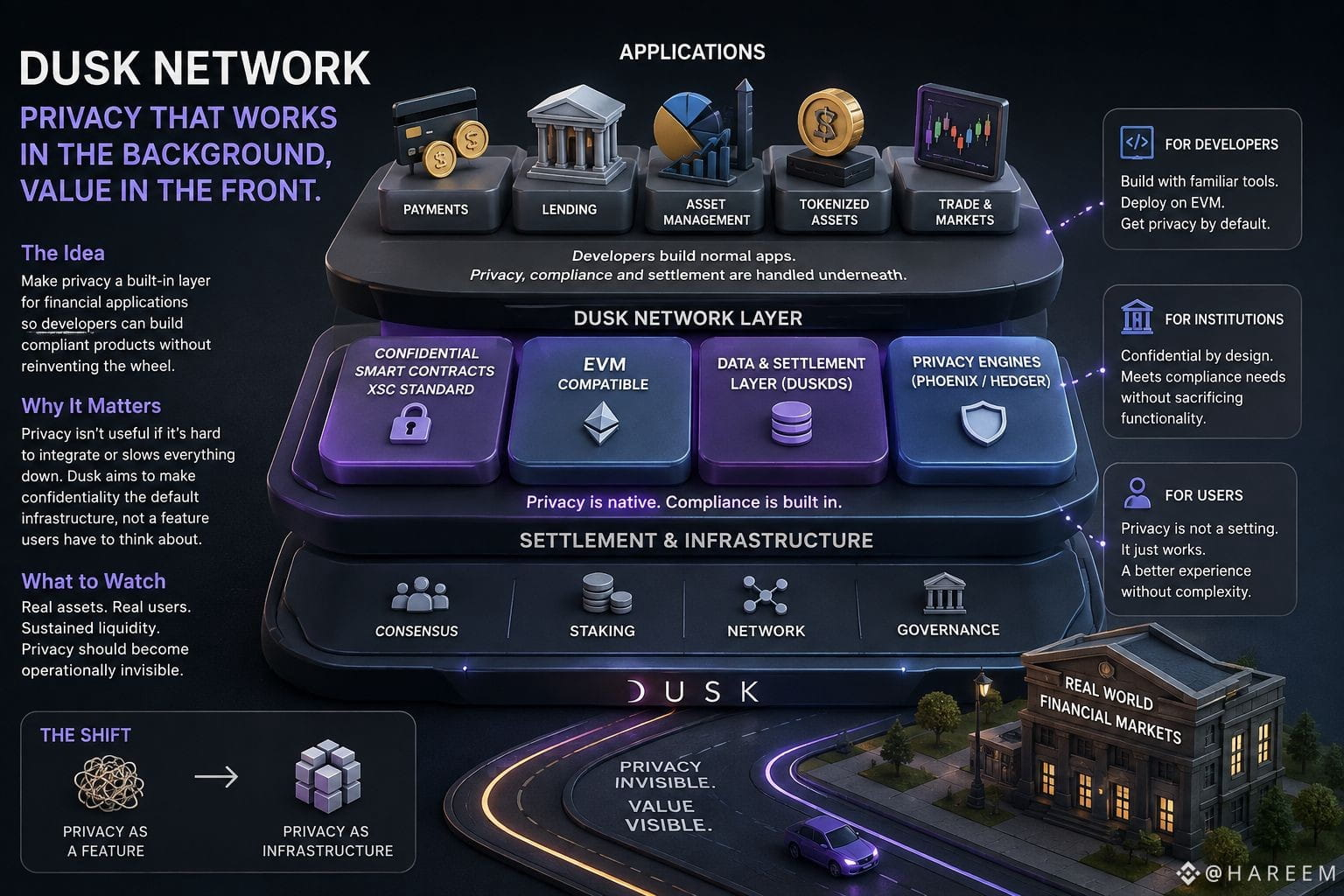
I keep coming back to one question with Dusk: does privacy actually become useful when nobody has to think about it?
That feels more important to me than the usual “privacy blockchain” label. Dusk is building around confidential smart contracts, EVM compatibility, its own settlement architecture, and infrastructure aimed at tokenized financial assets. The recent ecosystem activity around wallets, trading infrastructure and EVM tooling makes that direction easier to see.
But I’ve watched enough cycles to know that good architecture alone doesn’t create a market. The real test is whether developers can build regulated financial products without treating privacy as a separate engineering headache.
That’s where Dusk gets interesting to me. If confidentiality becomes something applications simply inherit from the underlying network, rather than a feature users have to actively choose, the value proposition changes.
I’m not ready to call that proven. Liquidity, users and sustained application activity still matter more than technical diagrams.
But I think the right thing to watch isn’t how loudly Dusk talks about privacy. It’s whether privacy quietly becomes part of the workflow.
#dusk $DUSK @Dusk
I keep coming back to one question with Dusk: does privacy actually become useful when nobody has to think about it?
That feels more important to me than the usual “privacy blockchain” label. Dusk is building around confidential smart contracts, EVM compatibility, its own settlement architecture, and infrastructure aimed at tokenized financial assets. The recent ecosystem activity around wallets, trading infrastructure and EVM tooling makes that direction easier to see.
But I’ve watched enough cycles to know that good architecture alone doesn’t create a market. The real test is whether developers can build regulated financial products without treating privacy as a separate engineering headache.
That’s where Dusk gets interesting to me. If confidentiality becomes something applications simply inherit from the underlying network, rather than a feature users have to actively choose, the value proposition changes.
I’m not ready to call that proven. Liquidity, users and sustained application activity still matter more than technical diagrams.
But I think the right thing to watch isn’t how loudly Dusk talks about privacy. It’s whether privacy quietly becomes part of the workflow.
I keep coming back to one question with Dusk: does privacy actually become useful when nobody has to think about it?
That feels more important to me than the usual “privacy blockchain” label. Dusk is building around confidential smart contracts, EVM compatibility, its own settlement architecture, and infrastructure aimed at tokenized financial assets. The recent ecosystem activity around wallets, trading infrastructure and EVM tooling makes that direction easier to see.
But I’ve watched enough cycles to know that good architecture alone doesn’t create a market. The real test is whether developers can build regulated financial products without treating privacy as a separate engineering headache.
That’s where Dusk gets interesting to me. If confidentiality becomes something applications simply inherit from the underlying network, rather than a feature users have to actively choose, the value proposition changes.
I’m not ready to call that proven. Liquidity, users and sustained application activity still matter more than technical diagrams.
But I think the right thing to watch isn’t how loudly Dusk talks about privacy. It’s whether privacy quietly becomes part of the workflow.
3
3
132
·
--
#dusk $DUSK @Dusk_Foundation
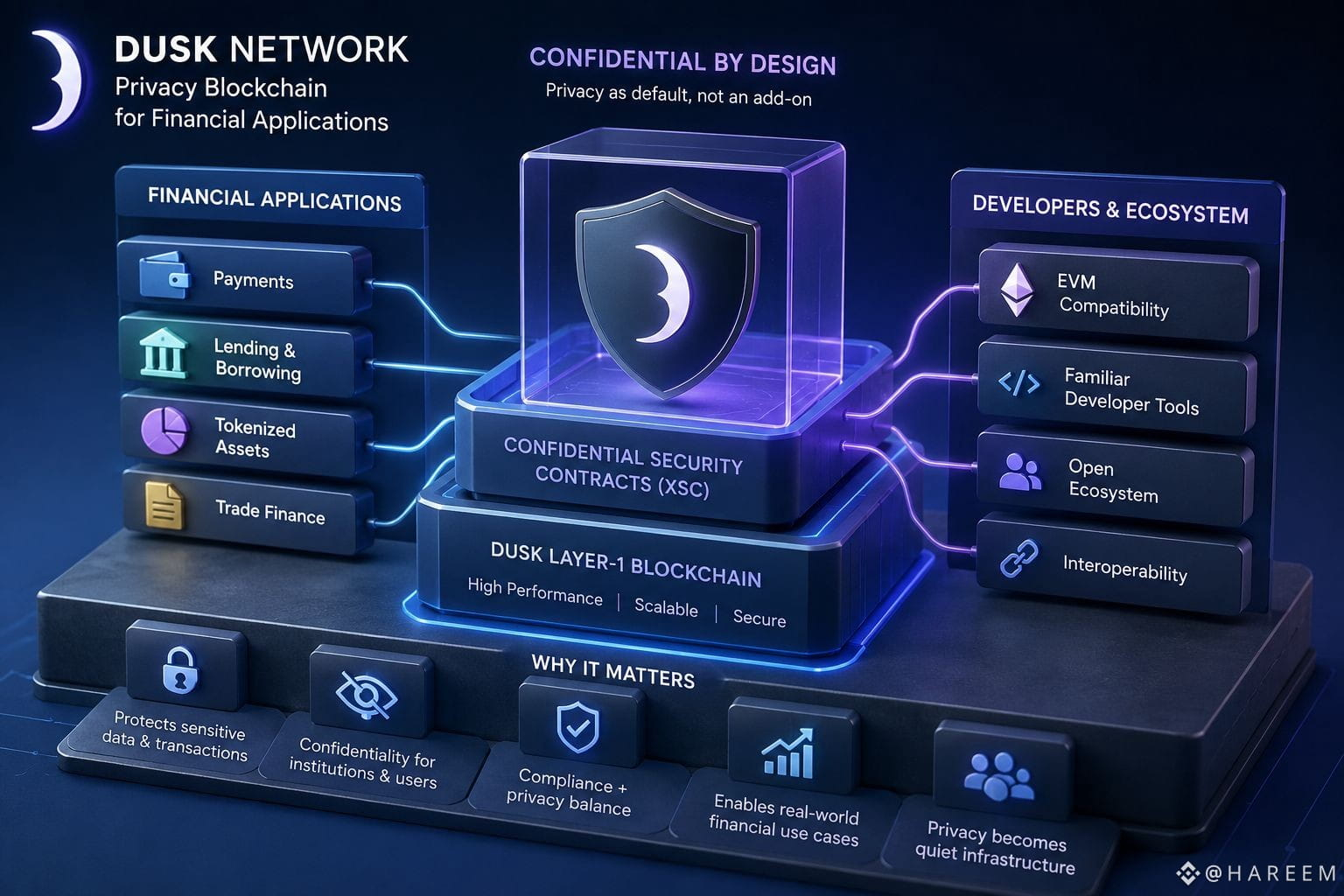
Something about Dusk feels worth watching for a reason that has little to do with the word “privacy.”
I’ve seen this cycle before: a project builds clever infrastructure, the market loves the architecture, then nobody really changes their behavior. The interesting part of Dusk is whether it can avoid that trap by making privacy feel less like a feature and more like the default plumbing for financial activity.
That distinction matters. Financial applications often need confidentiality around balances, transactions, counterparties, and sensitive business logic, but they also need predictable execution, familiar developer tools, and access to a wider ecosystem. Dusk seems to be working toward that balance rather than treating privacy as an isolated technical achievement.
I’m still skeptical. Good infrastructure doesn’t automatically create demand, and the financial market has no shortage of impressive chains that never reached meaningful usage.
What I’m watching is much simpler: do developers eventually choose Dusk because hiding sensitive information is practical, not because privacy is fashionable?
That would be the real signal to me. Privacy becomes valuable when users stop talking about it and simply expect it.
#dusk $DUSK @Dusk
Something about Dusk feels worth watching for a reason that has little to do with the word “privacy.”
I’ve seen this cycle before: a project builds clever infrastructure, the market loves the architecture, then nobody really changes their behavior. The interesting part of Dusk is whether it can avoid that trap by making privacy feel less like a feature and more like the default plumbing for financial activity.
That distinction matters. Financial applications often need confidentiality around balances, transactions, counterparties, and sensitive business logic, but they also need predictable execution, familiar developer tools, and access to a wider ecosystem. Dusk seems to be working toward that balance rather than treating privacy as an isolated technical achievement.
I’m still skeptical. Good infrastructure doesn’t automatically create demand, and the financial market has no shortage of impressive chains that never reached meaningful usage.
What I’m watching is much simpler: do developers eventually choose Dusk because hiding sensitive information is practical, not because privacy is fashionable?
That would be the real signal to me. Privacy becomes valuable when users stop talking about it and simply expect it.
Something about Dusk feels worth watching for a reason that has little to do with the word “privacy.”
I’ve seen this cycle before: a project builds clever infrastructure, the market loves the architecture, then nobody really changes their behavior. The interesting part of Dusk is whether it can avoid that trap by making privacy feel less like a feature and more like the default plumbing for financial activity.
That distinction matters. Financial applications often need confidentiality around balances, transactions, counterparties, and sensitive business logic, but they also need predictable execution, familiar developer tools, and access to a wider ecosystem. Dusk seems to be working toward that balance rather than treating privacy as an isolated technical achievement.
I’m still skeptical. Good infrastructure doesn’t automatically create demand, and the financial market has no shortage of impressive chains that never reached meaningful usage.
What I’m watching is much simpler: do developers eventually choose Dusk because hiding sensitive information is practical, not because privacy is fashionable?
That would be the real signal to me. Privacy becomes valuable when users stop talking about it and simply expect it.
9
8
173
·
--
#dusk $DUSK @Dusk_Foundation
I’ve been around enough crypto cycles to know that “privacy” can become just another word people throw around when they need a narrative.
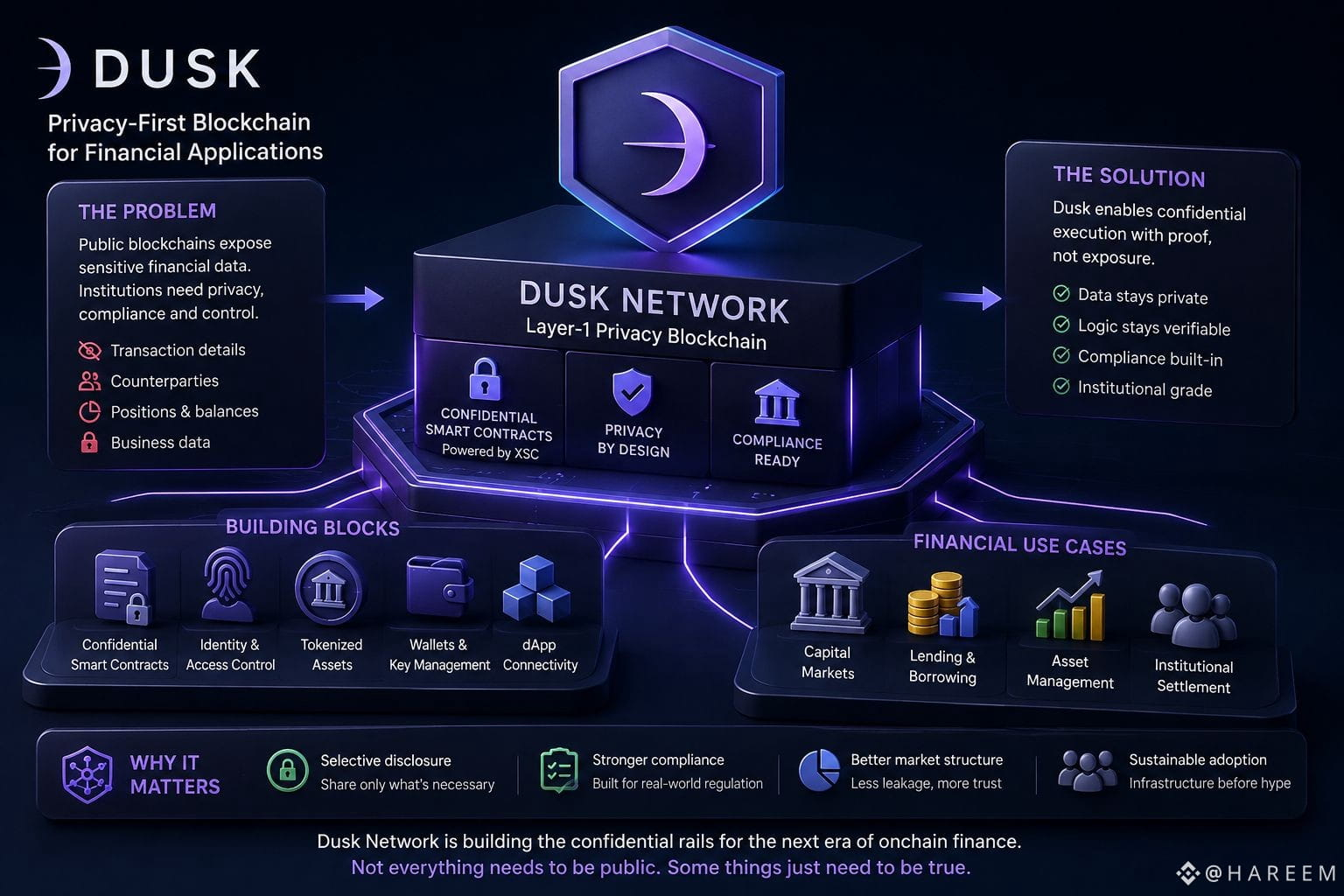
What makes Dusk a little more interesting to me is the problem underneath it. If real financial assets move onchain, I don’t think every detail should automatically be visible to everyone. Positions, identities, transactions and sensitive business data can’t always live in a glass house.
I keep noticing Dusk focusing on the less exciting parts of that puzzle: confidential smart contracts, identity, tokenized assets, wallets and the infrastructure needed for apps to actually use them.
I’m not saying that guarantees adoption. It doesn’t. I’ve seen plenty of technically solid projects struggle because the market simply didn’t care.
But I think the better question for Dusk isn’t “how big can privacy become?” It’s whether financial markets eventually decide that selective privacy is necessary, not optional.
If that happens, Dusk’s approach could make more sense in hindsight. For now, I’m watching the usage, not the promises.
#dusk $DUSK @Dusk
I’ve been around enough crypto cycles to know that “privacy” can become just another word people throw around when they need a narrative.
What makes Dusk a little more interesting to me is the problem underneath it. If real financial assets move onchain, I don’t think every detail should automatically be visible to everyone. Positions, identities, transactions and sensitive business data can’t always live in a glass house.
I keep noticing Dusk focusing on the less exciting parts of that puzzle: confidential smart contracts, identity, tokenized assets, wallets and the infrastructure needed for apps to actually use them.
I’m not saying that guarantees adoption. It doesn’t. I’ve seen plenty of technically solid projects struggle because the market simply didn’t care.
But I think the better question for Dusk isn’t “how big can privacy become?” It’s whether financial markets eventually decide that selective privacy is necessary, not optional.
If that happens, Dusk’s approach could make more sense in hindsight. For now, I’m watching the usage, not the promises.
I’ve been around enough crypto cycles to know that “privacy” can become just another word people throw around when they need a narrative.
What makes Dusk a little more interesting to me is the problem underneath it. If real financial assets move onchain, I don’t think every detail should automatically be visible to everyone. Positions, identities, transactions and sensitive business data can’t always live in a glass house.
I keep noticing Dusk focusing on the less exciting parts of that puzzle: confidential smart contracts, identity, tokenized assets, wallets and the infrastructure needed for apps to actually use them.
I’m not saying that guarantees adoption. It doesn’t. I’ve seen plenty of technically solid projects struggle because the market simply didn’t care.
But I think the better question for Dusk isn’t “how big can privacy become?” It’s whether financial markets eventually decide that selective privacy is necessary, not optional.
If that happens, Dusk’s approach could make more sense in hindsight. For now, I’m watching the usage, not the promises.
19
15
162
·
--
#dusk $DUSK @Dusk_Foundation
I’ve started thinking about Dusk a little differently.
At first, the privacy angle sounded like the usual crypto story. Then I looked closer and realized the harder problem isn’t making transactions private. It’s making them private without making the whole system impossible to verify.
That distinction matters.
Dusk lets different kinds of activity have different visibility: public accounts, shielded transfers, and selective disclosure when someone actually needs proof. Its XSC standard pushes that idea into confidential smart contracts, while DuskEVM gives developers a more familiar route into the ecosystem.
I keep coming back to that balance because financial markets have never really been “fully transparent.” They run on controlled information.
The recent push around Dusk Connect, the new wallet, and the broader EVM direction makes me more interested in whether the infrastructure can become usable, not just technically impressive.
I’m still cautious. A good design doesn’t automatically create demand. But if Dusk can make privacy feel like a normal part of financial infrastructure rather than a special feature, that’s where I think the real thesis starts.
#dusk $DUSK @Dusk
I’ve started thinking about Dusk a little differently.
At first, the privacy angle sounded like the usual crypto story. Then I looked closer and realized the harder problem isn’t making transactions private. It’s making them private without making the whole system impossible to verify.
That distinction matters.
Dusk lets different kinds of activity have different visibility: public accounts, shielded transfers, and selective disclosure when someone actually needs proof. Its XSC standard pushes that idea into confidential smart contracts, while DuskEVM gives developers a more familiar route into the ecosystem.
I keep coming back to that balance because financial markets have never really been “fully transparent.” They run on controlled information.
The recent push around Dusk Connect, the new wallet, and the broader EVM direction makes me more interested in whether the infrastructure can become usable, not just technically impressive.
I’m still cautious. A good design doesn’t automatically create demand. But if Dusk can make privacy feel like a normal part of financial infrastructure rather than a special feature, that’s where I think the real thesis starts.
I’ve started thinking about Dusk a little differently.
At first, the privacy angle sounded like the usual crypto story. Then I looked closer and realized the harder problem isn’t making transactions private. It’s making them private without making the whole system impossible to verify.
That distinction matters.
Dusk lets different kinds of activity have different visibility: public accounts, shielded transfers, and selective disclosure when someone actually needs proof. Its XSC standard pushes that idea into confidential smart contracts, while DuskEVM gives developers a more familiar route into the ecosystem.
I keep coming back to that balance because financial markets have never really been “fully transparent.” They run on controlled information.
The recent push around Dusk Connect, the new wallet, and the broader EVM direction makes me more interested in whether the infrastructure can become usable, not just technically impressive.
I’m still cautious. A good design doesn’t automatically create demand. But if Dusk can make privacy feel like a normal part of financial infrastructure rather than a special feature, that’s where I think the real thesis starts.
5
2
124
·
--
#dusk $DUSK @Dusk_Foundation
I’ve been watching Dusk for a while, and I think the interesting part isn’t simply “privacy on a blockchain.” That phrase has been used so many times that it barely tells me anything anymore.
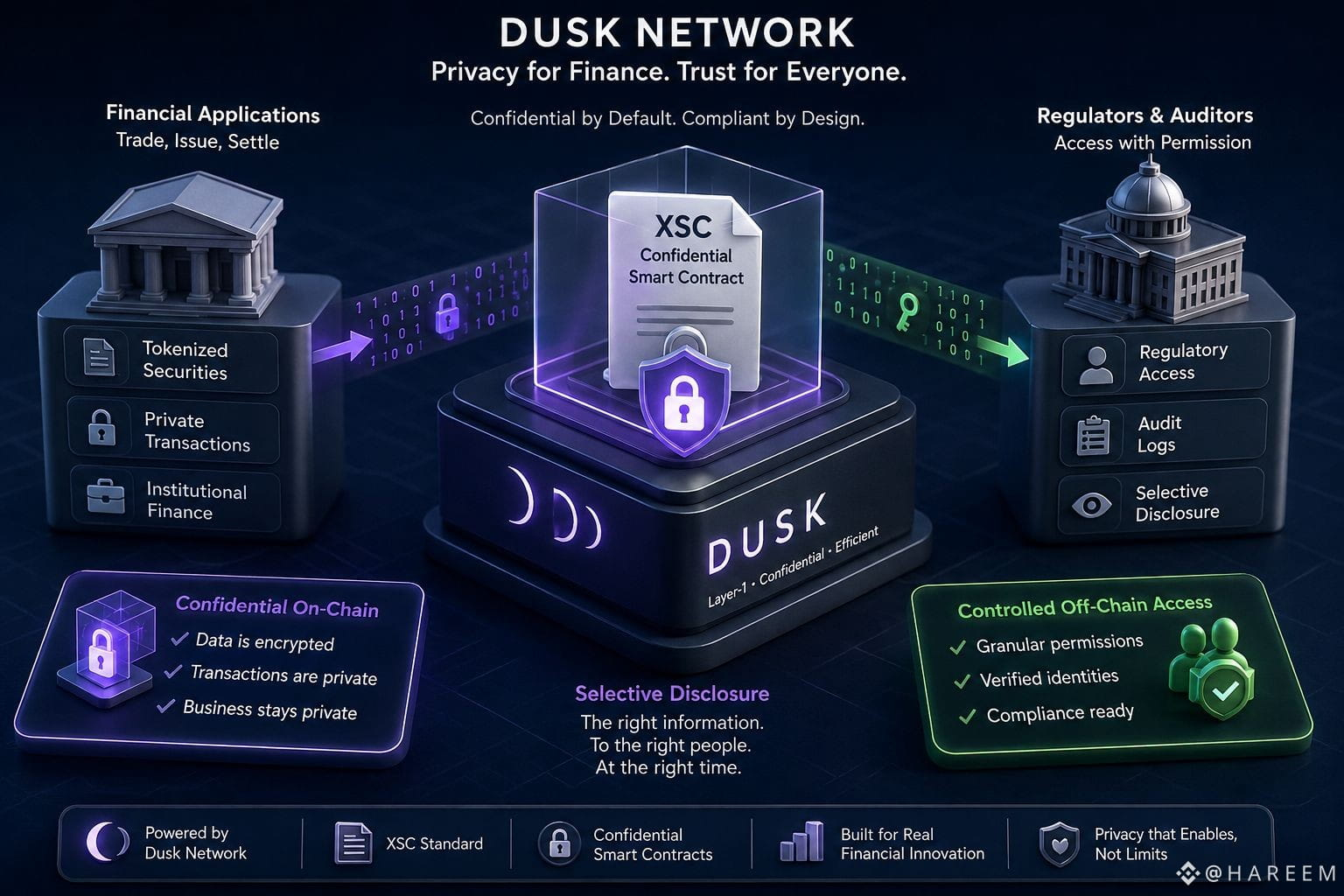
What catches my attention is the problem Dusk is trying to sit between: financial markets need confidentiality, but they also need rules, verification, and controlled access to information. You can’t realistically put every trade, balance, or business detail in full public view and expect serious financial institutions to be comfortable with it.
That’s where the XSC approach and confidential smart contracts start to make more sense to me. Recent work around Dusk’s wallet, Dusk Connect, and its growing focus on tokenized financial assets makes the idea feel less theoretical.
But I’m still not convinced. I’ve seen this cycle before: partnerships get announced, narratives get louder, and actual usage stays quiet.
So I’m not watching Dusk for hype. I’m watching to see if it can make privacy feel boring and practical. If financial applications eventually use confidential blockchain infrastructure without users even thinking about it, that would be far more meaningful than another short-lived crypto narrative.
#dusk $DUSK @Dusk
I’ve been watching Dusk for a while, and I think the interesting part isn’t simply “privacy on a blockchain.” That phrase has been used so many times that it barely tells me anything anymore.
What catches my attention is the problem Dusk is trying to sit between: financial markets need confidentiality, but they also need rules, verification, and controlled access to information. You can’t realistically put every trade, balance, or business detail in full public view and expect serious financial institutions to be comfortable with it.
That’s where the XSC approach and confidential smart contracts start to make more sense to me. Recent work around Dusk’s wallet, Dusk Connect, and its growing focus on tokenized financial assets makes the idea feel less theoretical.
But I’m still not convinced. I’ve seen this cycle before: partnerships get announced, narratives get louder, and actual usage stays quiet.
So I’m not watching Dusk for hype. I’m watching to see if it can make privacy feel boring and practical. If financial applications eventually use confidential blockchain infrastructure without users even thinking about it, that would be far more meaningful than another short-lived crypto narrative.
I’ve been watching Dusk for a while, and I think the interesting part isn’t simply “privacy on a blockchain.” That phrase has been used so many times that it barely tells me anything anymore.
What catches my attention is the problem Dusk is trying to sit between: financial markets need confidentiality, but they also need rules, verification, and controlled access to information. You can’t realistically put every trade, balance, or business detail in full public view and expect serious financial institutions to be comfortable with it.
That’s where the XSC approach and confidential smart contracts start to make more sense to me. Recent work around Dusk’s wallet, Dusk Connect, and its growing focus on tokenized financial assets makes the idea feel less theoretical.
But I’m still not convinced. I’ve seen this cycle before: partnerships get announced, narratives get louder, and actual usage stays quiet.
So I’m not watching Dusk for hype. I’m watching to see if it can make privacy feel boring and practical. If financial applications eventually use confidential blockchain infrastructure without users even thinking about it, that would be far more meaningful than another short-lived crypto narrative.
3
3
103
·
--
#dusk $DUSK @Dusk_Foundation
I’ve seen the privacy narrative come around in crypto more times than I can count. Usually it starts with a strong idea, then slowly turns into another list of technical features. That’s why I’m looking at Dusk a little differently.
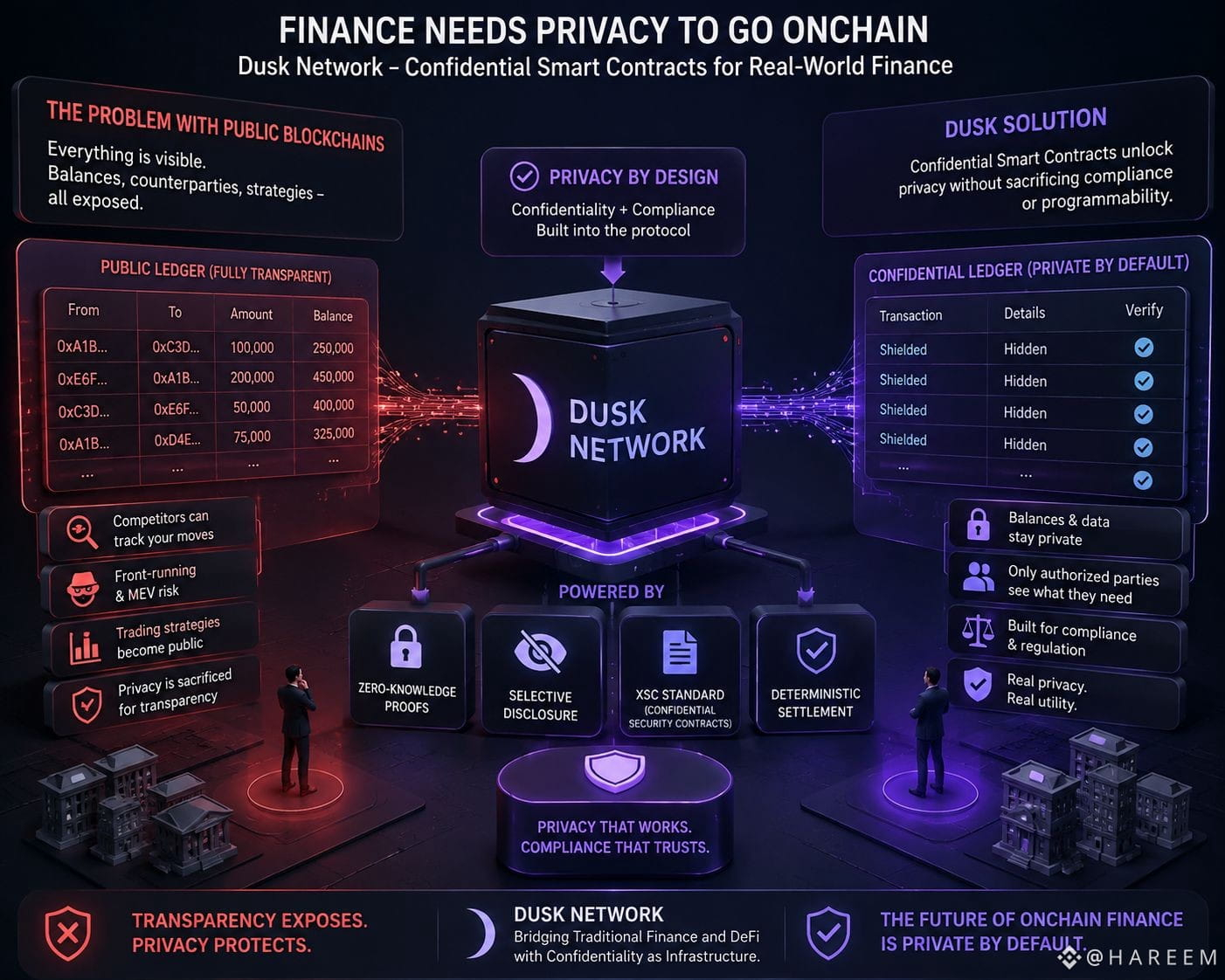
What interests me isn’t simply that Dusk wants transactions to be private. It’s the problem underneath that idea: financial markets can’t realistically put every balance, trade and business relationship on a public ledger and expect serious participants to be comfortable with that.
Dusk is trying to build around this with confidential smart contracts, zero-knowledge proofs, selective disclosure and its XSC framework for financial assets. I like the direction, but I’m not ready to call it a success. Crypto has plenty of projects with impressive architecture that never found real users.
I keep coming back to one simple question: what happens when institutions want the benefits of blockchain without turning their financial activity into public data?
If Dusk can answer that in practice, privacy stops being a narrative. It becomes part of the infrastructure people actually need.
#dusk $DUSK @Dusk
I’ve seen the privacy narrative come around in crypto more times than I can count. Usually it starts with a strong idea, then slowly turns into another list of technical features. That’s why I’m looking at Dusk a little differently.
What interests me isn’t simply that Dusk wants transactions to be private. It’s the problem underneath that idea: financial markets can’t realistically put every balance, trade and business relationship on a public ledger and expect serious participants to be comfortable with that.
Dusk is trying to build around this with confidential smart contracts, zero-knowledge proofs, selective disclosure and its XSC framework for financial assets. I like the direction, but I’m not ready to call it a success. Crypto has plenty of projects with impressive architecture that never found real users.
I keep coming back to one simple question: what happens when institutions want the benefits of blockchain without turning their financial activity into public data?
If Dusk can answer that in practice, privacy stops being a narrative. It becomes part of the infrastructure people actually need.
I’ve seen the privacy narrative come around in crypto more times than I can count. Usually it starts with a strong idea, then slowly turns into another list of technical features. That’s why I’m looking at Dusk a little differently.
What interests me isn’t simply that Dusk wants transactions to be private. It’s the problem underneath that idea: financial markets can’t realistically put every balance, trade and business relationship on a public ledger and expect serious participants to be comfortable with that.
Dusk is trying to build around this with confidential smart contracts, zero-knowledge proofs, selective disclosure and its XSC framework for financial assets. I like the direction, but I’m not ready to call it a success. Crypto has plenty of projects with impressive architecture that never found real users.
I keep coming back to one simple question: what happens when institutions want the benefits of blockchain without turning their financial activity into public data?
If Dusk can answer that in practice, privacy stops being a narrative. It becomes part of the infrastructure people actually need.
3
3
111
·
--
#dusk $DUSK @Dusk_Foundation
I’ve become more skeptical of privacy-chain narratives after watching enough cycles. “Private” sounds useful, but in finance the harder question is what you can prove without exposing everything. That’s where Dusk gets my attention.
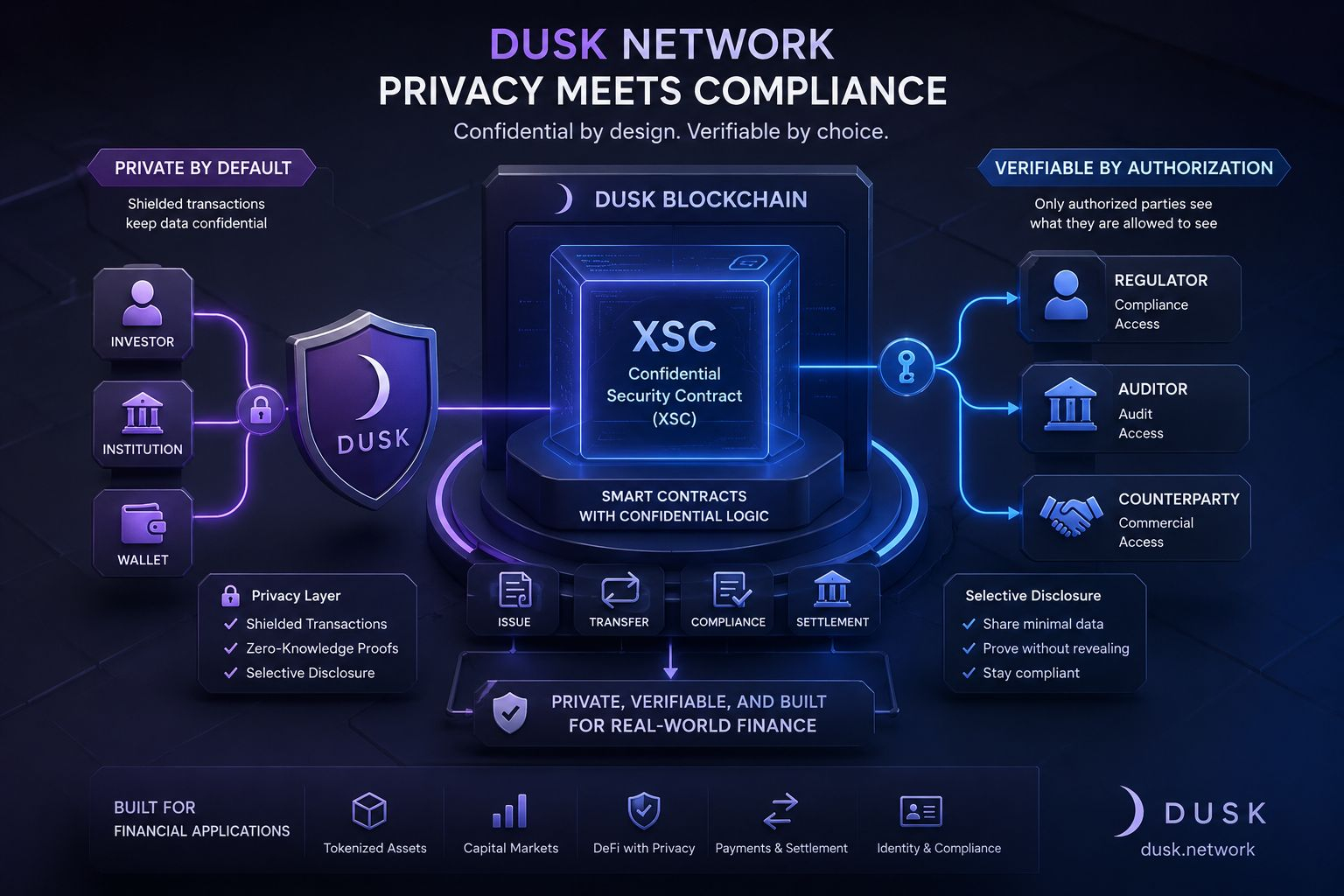
Its XSC model treats confidentiality as part of the contract, with controlled access to encrypted information. Recent work around Dusk Trade, tokenized assets, identity and settlement makes the idea more practical than simply building another chain where transactions are harder to see.
I’m not saying Dusk has solved it. We’ve all watched technically impressive networks struggle to find users. What interests me is whether privacy can become infrastructure rather than a feature.
If regulated markets move onchain, they won’t want every position exposed. But they also won’t accept a black box. Dusk is trying to sit in that middle.
That’s what I’m watching: whether privacy and verification can work together well enough for finance to care.
#dusk $DUSK @Dusk
I’ve become more skeptical of privacy-chain narratives after watching enough cycles. “Private” sounds useful, but in finance the harder question is what you can prove without exposing everything. That’s where Dusk gets my attention.
Its XSC model treats confidentiality as part of the contract, with controlled access to encrypted information. Recent work around Dusk Trade, tokenized assets, identity and settlement makes the idea more practical than simply building another chain where transactions are harder to see.
I’m not saying Dusk has solved it. We’ve all watched technically impressive networks struggle to find users. What interests me is whether privacy can become infrastructure rather than a feature.
If regulated markets move onchain, they won’t want every position exposed. But they also won’t accept a black box. Dusk is trying to sit in that middle.
That’s what I’m watching: whether privacy and verification can work together well enough for finance to care.
I’ve become more skeptical of privacy-chain narratives after watching enough cycles. “Private” sounds useful, but in finance the harder question is what you can prove without exposing everything. That’s where Dusk gets my attention.
Its XSC model treats confidentiality as part of the contract, with controlled access to encrypted information. Recent work around Dusk Trade, tokenized assets, identity and settlement makes the idea more practical than simply building another chain where transactions are harder to see.
I’m not saying Dusk has solved it. We’ve all watched technically impressive networks struggle to find users. What interests me is whether privacy can become infrastructure rather than a feature.
If regulated markets move onchain, they won’t want every position exposed. But they also won’t accept a black box. Dusk is trying to sit in that middle.
That’s what I’m watching: whether privacy and verification can work together well enough for finance to care.
7
3
137
·
--
Bullish
#dusk $DUSK @Dusk_Foundation
I’ve seen the privacy narrative come and go enough times that I don’t get excited just because a project says “confidential finance.”
What keeps me looking at Dusk is a little different.
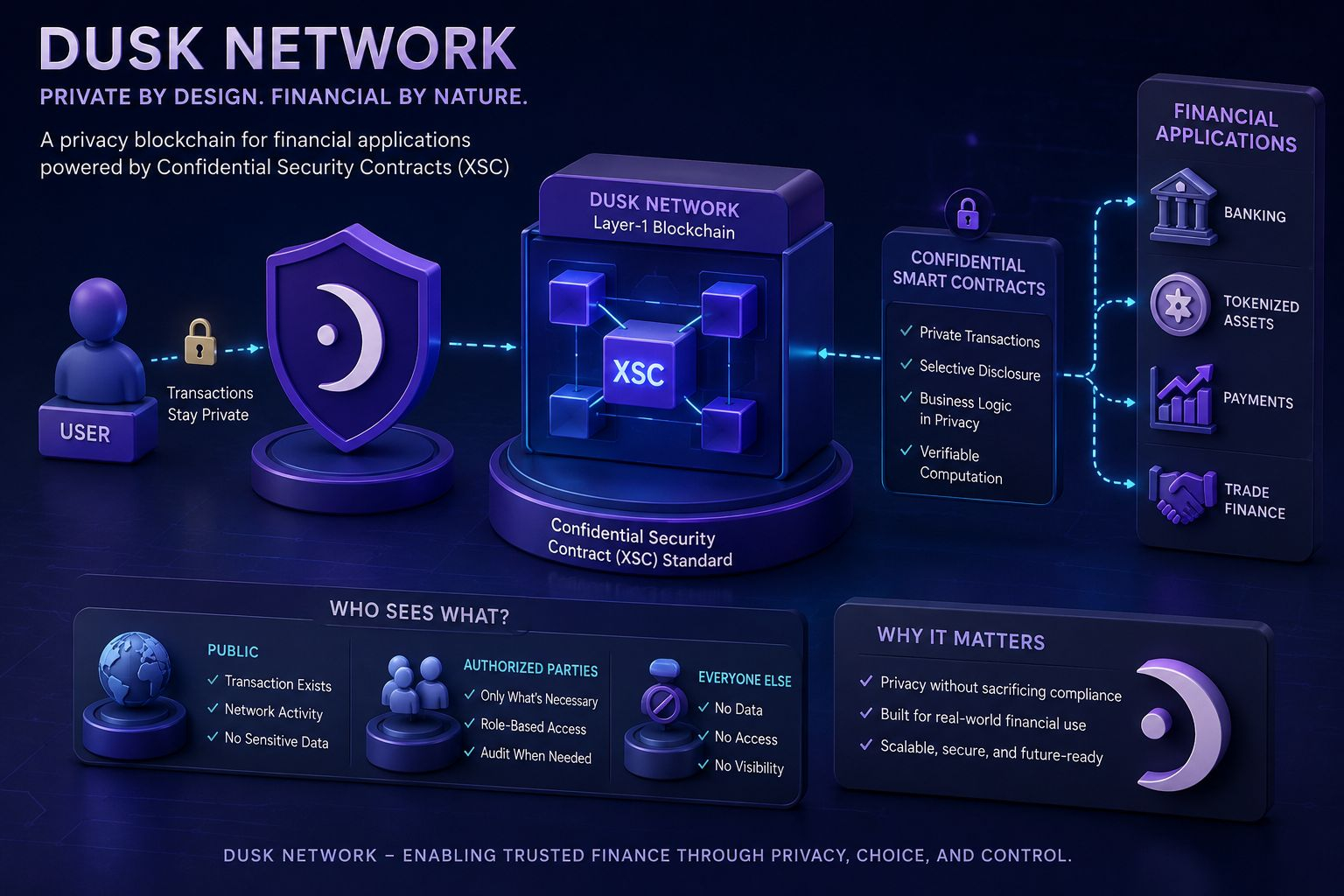
The real problem isn’t hiding everything. Financial systems can’t work that way. Someone still needs to verify ownership, enforce rules, settle transactions and know what they’re actually allowed to see. The interesting question is whether you can do all of that without turning every user’s financial activity into public data.
That’s where Dusk’s XSC approach and confidential contracts start to make more sense to me. And the recent focus on things like Dusk Connect, wallet infrastructure and security work makes me think the team understands that the hard part isn’t just building privacy technology. It’s making the whole experience usable and trustworthy.
I’m still skeptical. I’ve watched too many projects confuse clever technology with real adoption.
But Dusk has a more interesting test ahead: can privacy become something users barely think about?
If it can, that’s when I’d start paying much closer attention.
#dusk $DUSK @Dusk
I’ve seen the privacy narrative come and go enough times that I don’t get excited just because a project says “confidential finance.”
What keeps me looking at Dusk is a little different.
The real problem isn’t hiding everything. Financial systems can’t work that way. Someone still needs to verify ownership, enforce rules, settle transactions and know what they’re actually allowed to see. The interesting question is whether you can do all of that without turning every user’s financial activity into public data.
That’s where Dusk’s XSC approach and confidential contracts start to make more sense to me. And the recent focus on things like Dusk Connect, wallet infrastructure and security work makes me think the team understands that the hard part isn’t just building privacy technology. It’s making the whole experience usable and trustworthy.
I’m still skeptical. I’ve watched too many projects confuse clever technology with real adoption.
But Dusk has a more interesting test ahead: can privacy become something users barely think about?
If it can, that’s when I’d start paying much closer attention.
I’ve seen the privacy narrative come and go enough times that I don’t get excited just because a project says “confidential finance.”
What keeps me looking at Dusk is a little different.
The real problem isn’t hiding everything. Financial systems can’t work that way. Someone still needs to verify ownership, enforce rules, settle transactions and know what they’re actually allowed to see. The interesting question is whether you can do all of that without turning every user’s financial activity into public data.
That’s where Dusk’s XSC approach and confidential contracts start to make more sense to me. And the recent focus on things like Dusk Connect, wallet infrastructure and security work makes me think the team understands that the hard part isn’t just building privacy technology. It’s making the whole experience usable and trustworthy.
I’m still skeptical. I’ve watched too many projects confuse clever technology with real adoption.
But Dusk has a more interesting test ahead: can privacy become something users barely think about?
If it can, that’s when I’d start paying much closer attention.
5
5
139
·
--
Bullish
#dusk $DUSK @Dusk_Foundation
I’ve been thinking about Dusk a little differently lately.
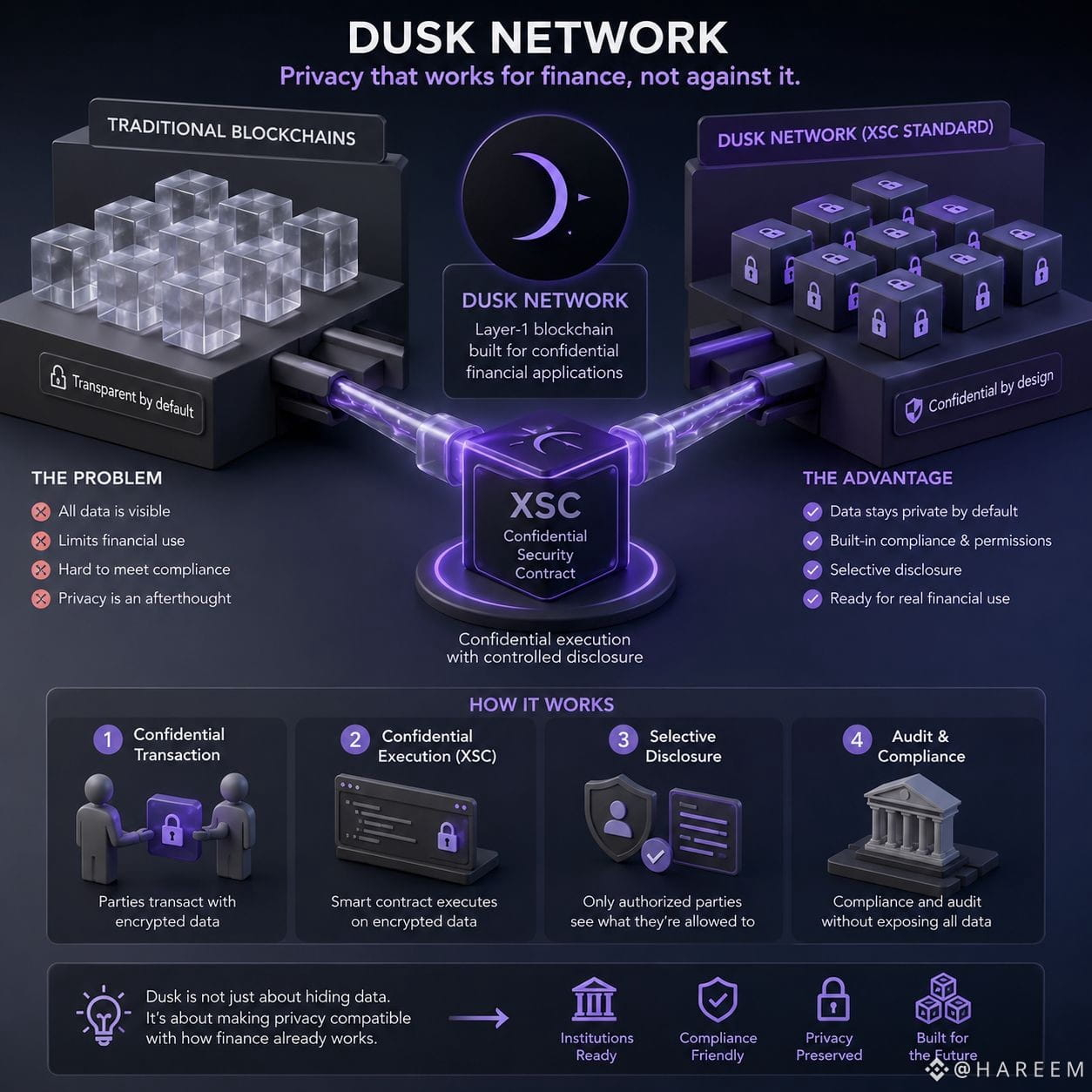
Privacy sounds simple until you put real financial activity into the picture. You don’t just want everything hidden. You still need rules, permissions, compliance, and some way to prove what happened without exposing everything behind it.
That’s the part I find interesting about Dusk.
The XSC approach is basically trying to make confidentiality part of how financial contracts work, instead of treating privacy like an extra layer added later. I like that direction, but I’m not ready to assume it works just because the architecture looks good on paper.
I’ve seen this before with crypto projects: strong technology gets attention, but the harder test comes when developers have to build something people actually use.
So I’m watching the ecosystem more than the narrative.
If developers eventually start using confidential execution simply because it makes financial products easier to build, that would matter to me far more than another privacy statistic.
For Dusk, the interesting question isn’t “Can blockchain be private?”
It’s whether privacy can become normal financial infrastructure.
#dusk $DUSK @Dusk
I’ve been thinking about Dusk a little differently lately.
Privacy sounds simple until you put real financial activity into the picture. You don’t just want everything hidden. You still need rules, permissions, compliance, and some way to prove what happened without exposing everything behind it.
That’s the part I find interesting about Dusk.
The XSC approach is basically trying to make confidentiality part of how financial contracts work, instead of treating privacy like an extra layer added later. I like that direction, but I’m not ready to assume it works just because the architecture looks good on paper.
I’ve seen this before with crypto projects: strong technology gets attention, but the harder test comes when developers have to build something people actually use.
So I’m watching the ecosystem more than the narrative.
If developers eventually start using confidential execution simply because it makes financial products easier to build, that would matter to me far more than another privacy statistic.
For Dusk, the interesting question isn’t “Can blockchain be private?”
It’s whether privacy can become normal financial infrastructure.
I’ve been thinking about Dusk a little differently lately.
Privacy sounds simple until you put real financial activity into the picture. You don’t just want everything hidden. You still need rules, permissions, compliance, and some way to prove what happened without exposing everything behind it.
That’s the part I find interesting about Dusk.
The XSC approach is basically trying to make confidentiality part of how financial contracts work, instead of treating privacy like an extra layer added later. I like that direction, but I’m not ready to assume it works just because the architecture looks good on paper.
I’ve seen this before with crypto projects: strong technology gets attention, but the harder test comes when developers have to build something people actually use.
So I’m watching the ecosystem more than the narrative.
If developers eventually start using confidential execution simply because it makes financial products easier to build, that would matter to me far more than another privacy statistic.
For Dusk, the interesting question isn’t “Can blockchain be private?”
It’s whether privacy can become normal financial infrastructure.
6
6
124
·
--
Bullish
#baby $BABY @babylonlabs_io
I’ve been thinking about Babylon a little differently lately. Most conversations still revolve around TVL, staking numbers, or whether Bitcoin should even be involved in securing other networks. Those are fair questions, but I’m not sure they get to the heart of what’s actually being tested here.
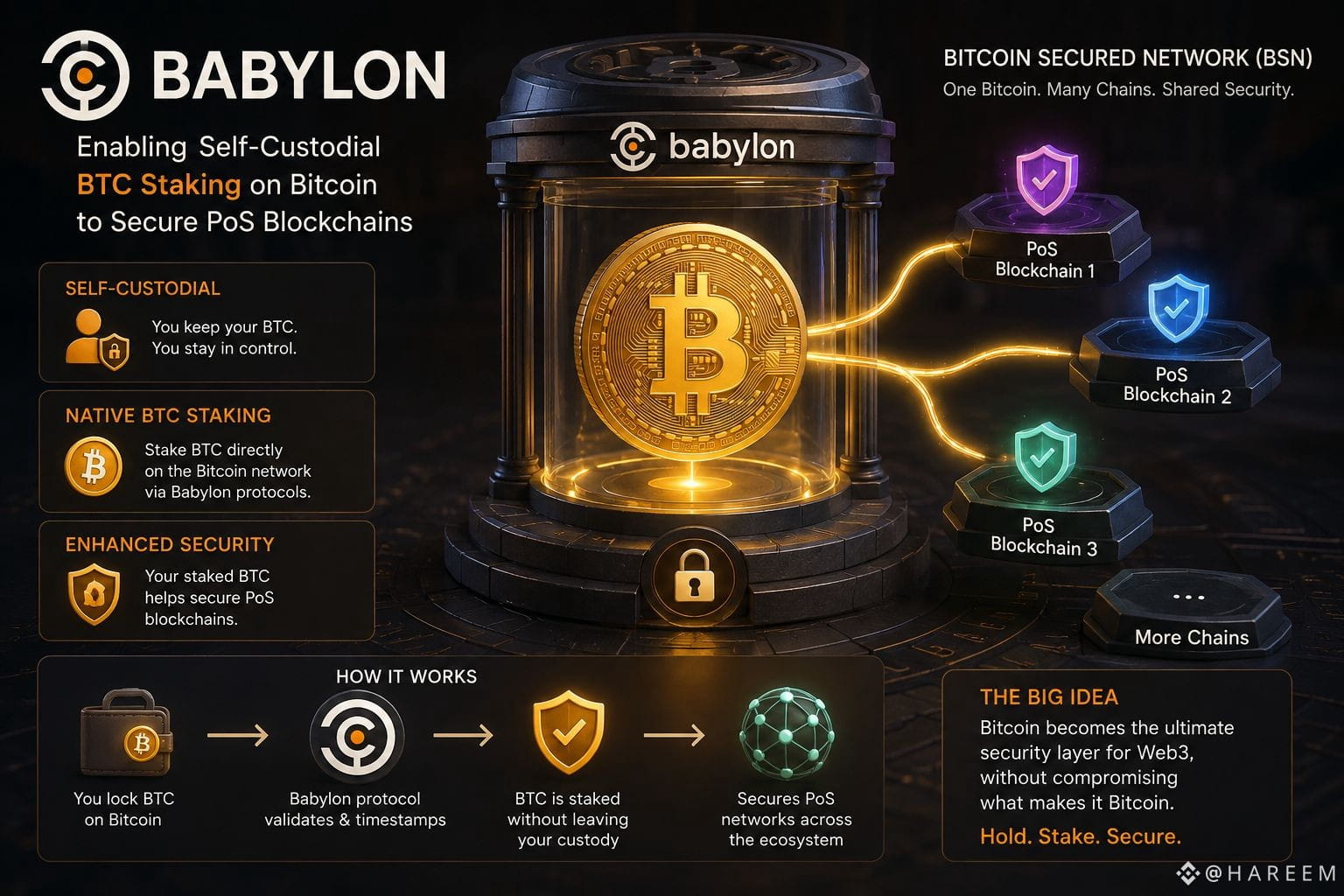
What I keep coming back to is human behavior. Bitcoin holders have spent years being conditioned to do one thing: hold their coins and avoid unnecessary risk. Babylon quietly challenges that mindset by asking a different question: what if your BTC could contribute to network security without giving up self-custody? That’s a much bigger shift than it sounds because it isn’t just about technology—it’s about trust.
I’ve seen plenty of crypto projects with impressive metrics that disappeared once incentives faded. Liquidity is easy to attract when rewards are high. Changing long-term behavior is much harder. That’s why I find Babylon interesting. The recent progress around BABY staking and the broader Bitcoin Secured Network vision matters less to me than whether people continue participating after the excitement settles.
Maybe that’s the real experiment. If Bitcoin evolves from being only a store of value into an active source of decentralized security—without compromising the principles that made it valuable in the first place—that would feel like genuine progress. If not, it will end up as another narrative that looked bigger than it really was.
#baby $BABY @BabylonLabs_io
I’ve been thinking about Babylon a little differently lately. Most conversations still revolve around TVL, staking numbers, or whether Bitcoin should even be involved in securing other networks. Those are fair questions, but I’m not sure they get to the heart of what’s actually being tested here.
What I keep coming back to is human behavior. Bitcoin holders have spent years being conditioned to do one thing: hold their coins and avoid unnecessary risk. Babylon quietly challenges that mindset by asking a different question: what if your BTC could contribute to network security without giving up self-custody? That’s a much bigger shift than it sounds because it isn’t just about technology—it’s about trust.
I’ve seen plenty of crypto projects with impressive metrics that disappeared once incentives faded. Liquidity is easy to attract when rewards are high. Changing long-term behavior is much harder. That’s why I find Babylon interesting. The recent progress around BABY staking and the broader Bitcoin Secured Network vision matters less to me than whether people continue participating after the excitement settles.
Maybe that’s the real experiment. If Bitcoin evolves from being only a store of value into an active source of decentralized security—without compromising the principles that made it valuable in the first place—that would feel like genuine progress. If not, it will end up as another narrative that looked bigger than it really was.
I’ve been thinking about Babylon a little differently lately. Most conversations still revolve around TVL, staking numbers, or whether Bitcoin should even be involved in securing other networks. Those are fair questions, but I’m not sure they get to the heart of what’s actually being tested here.
What I keep coming back to is human behavior. Bitcoin holders have spent years being conditioned to do one thing: hold their coins and avoid unnecessary risk. Babylon quietly challenges that mindset by asking a different question: what if your BTC could contribute to network security without giving up self-custody? That’s a much bigger shift than it sounds because it isn’t just about technology—it’s about trust.
I’ve seen plenty of crypto projects with impressive metrics that disappeared once incentives faded. Liquidity is easy to attract when rewards are high. Changing long-term behavior is much harder. That’s why I find Babylon interesting. The recent progress around BABY staking and the broader Bitcoin Secured Network vision matters less to me than whether people continue participating after the excitement settles.
Maybe that’s the real experiment. If Bitcoin evolves from being only a store of value into an active source of decentralized security—without compromising the principles that made it valuable in the first place—that would feel like genuine progress. If not, it will end up as another narrative that looked bigger than it really was.
92
38
680
·
--
Bullish
#baby $BABY @babylonlabs_io
I've been thinking about Babylon a bit differently lately. Everyone seems to focus on how much BTC is being staked or how quickly the ecosystem is growing, but I don't think those numbers tell the whole story.
What keeps my attention is a much simpler question: if the rewards became less attractive tomorrow, would people still see value in using it? I've watched enough crypto cycles to know that deposits can show up for incentives, but staying around usually requires something deeper.
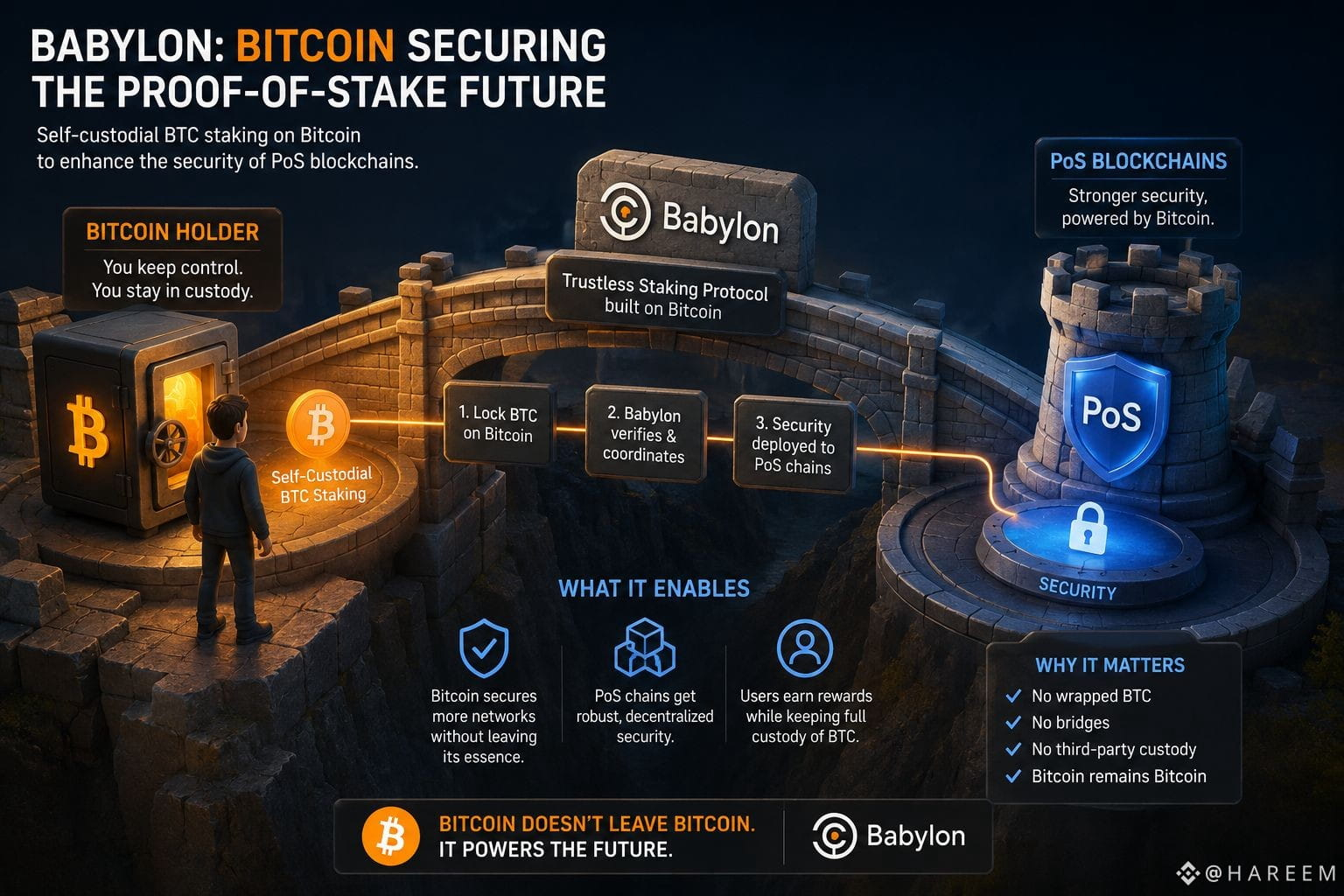
That's why I find Babylon interesting. It isn't trying to convince Bitcoin holders to give up custody just to earn yield. It's testing whether Bitcoin can contribute to securing other networks while still remaining Bitcoin. That feels like a more meaningful experiment than most people give it credit for.
I'm still not convinced of the outcome, and I don't think anyone should be yet. But if users keep participating when the easy rewards are no longer the main reason, that will tell me far more than any TVL chart or headline ever could.
#baby $BABY @BabylonLabs_io
I've been thinking about Babylon a bit differently lately. Everyone seems to focus on how much BTC is being staked or how quickly the ecosystem is growing, but I don't think those numbers tell the whole story.
What keeps my attention is a much simpler question: if the rewards became less attractive tomorrow, would people still see value in using it? I've watched enough crypto cycles to know that deposits can show up for incentives, but staying around usually requires something deeper.
That's why I find Babylon interesting. It isn't trying to convince Bitcoin holders to give up custody just to earn yield. It's testing whether Bitcoin can contribute to securing other networks while still remaining Bitcoin. That feels like a more meaningful experiment than most people give it credit for.
I'm still not convinced of the outcome, and I don't think anyone should be yet. But if users keep participating when the easy rewards are no longer the main reason, that will tell me far more than any TVL chart or headline ever could.
I've been thinking about Babylon a bit differently lately. Everyone seems to focus on how much BTC is being staked or how quickly the ecosystem is growing, but I don't think those numbers tell the whole story.
What keeps my attention is a much simpler question: if the rewards became less attractive tomorrow, would people still see value in using it? I've watched enough crypto cycles to know that deposits can show up for incentives, but staying around usually requires something deeper.
That's why I find Babylon interesting. It isn't trying to convince Bitcoin holders to give up custody just to earn yield. It's testing whether Bitcoin can contribute to securing other networks while still remaining Bitcoin. That feels like a more meaningful experiment than most people give it credit for.
I'm still not convinced of the outcome, and I don't think anyone should be yet. But if users keep participating when the easy rewards are no longer the main reason, that will tell me far more than any TVL chart or headline ever could.
108
48
713
·
--
#baby $BABY @babylonlabs_io
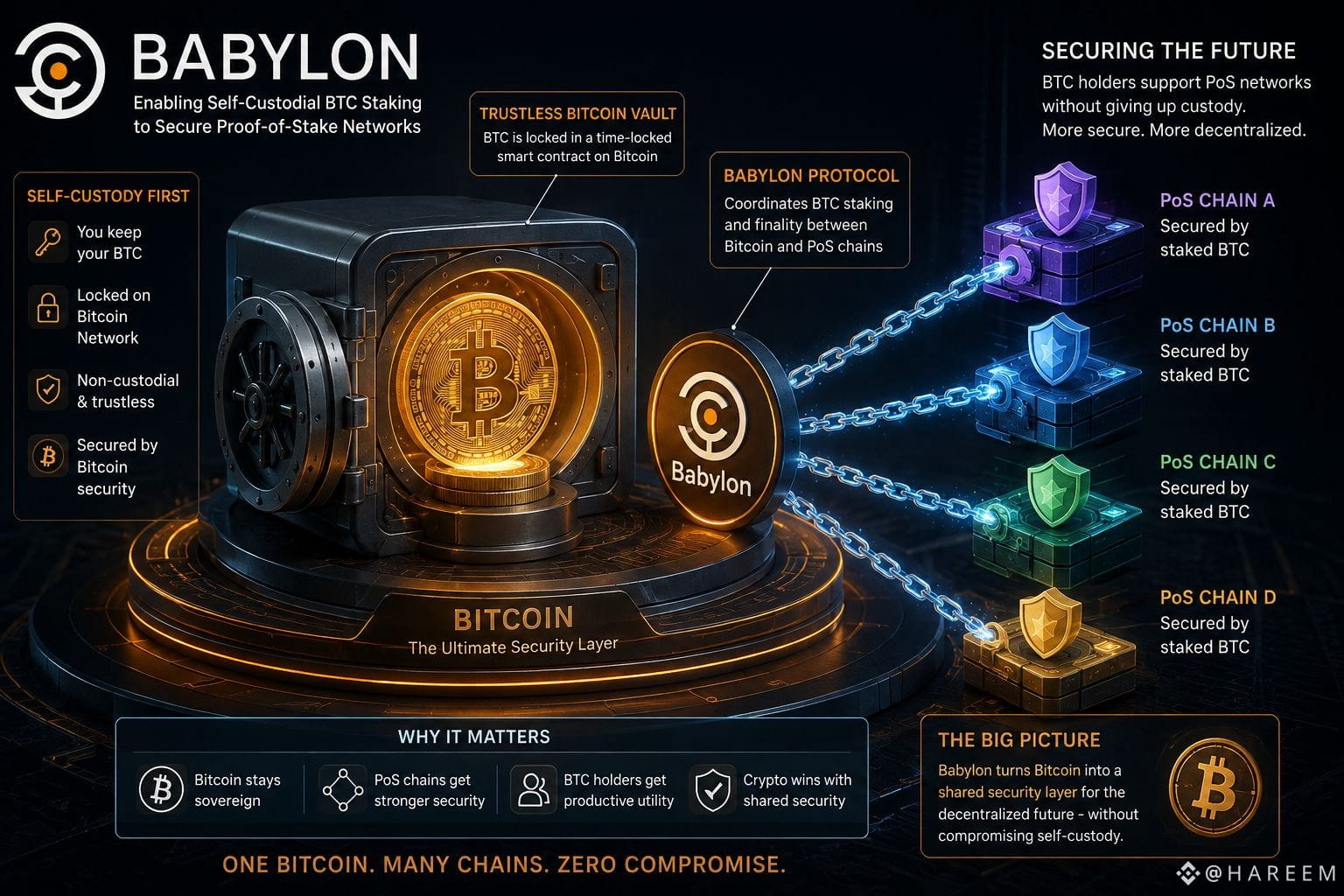
I keep coming back to the same thought whenever I look at Babylon: maybe we've been asking the wrong question. Everyone talks about how Bitcoin can generate yield, but I think the more interesting question is whether it can strengthen other networks without giving up the principles that made Bitcoin valuable in the first place.
I've watched enough crypto cycles to know that attractive incentives can make almost anything look successful for a while. What usually matters is what people do after the excitement fades. That's why I'm paying more attention to how Babylon's ecosystem is evolving than to short-term numbers. If builders, validators, and BTC holders continue participating when the easy rewards aren't the main reason, that tells me far more than any headline.
I'm still not convinced of the outcome, and I don't think anyone should be yet. But if Babylon proves that self-custodial Bitcoin can become a security layer for other chains without compromising ownership, it won't just be another protocol. It could quietly reshape how Bitcoin fits into the broader crypto ecosystem.
#baby $BABY @BabylonLabs_io
I keep coming back to the same thought whenever I look at Babylon: maybe we've been asking the wrong question. Everyone talks about how Bitcoin can generate yield, but I think the more interesting question is whether it can strengthen other networks without giving up the principles that made Bitcoin valuable in the first place.
I've watched enough crypto cycles to know that attractive incentives can make almost anything look successful for a while. What usually matters is what people do after the excitement fades. That's why I'm paying more attention to how Babylon's ecosystem is evolving than to short-term numbers. If builders, validators, and BTC holders continue participating when the easy rewards aren't the main reason, that tells me far more than any headline.
I'm still not convinced of the outcome, and I don't think anyone should be yet. But if Babylon proves that self-custodial Bitcoin can become a security layer for other chains without compromising ownership, it won't just be another protocol. It could quietly reshape how Bitcoin fits into the broader crypto ecosystem.
I keep coming back to the same thought whenever I look at Babylon: maybe we've been asking the wrong question. Everyone talks about how Bitcoin can generate yield, but I think the more interesting question is whether it can strengthen other networks without giving up the principles that made Bitcoin valuable in the first place.
I've watched enough crypto cycles to know that attractive incentives can make almost anything look successful for a while. What usually matters is what people do after the excitement fades. That's why I'm paying more attention to how Babylon's ecosystem is evolving than to short-term numbers. If builders, validators, and BTC holders continue participating when the easy rewards aren't the main reason, that tells me far more than any headline.
I'm still not convinced of the outcome, and I don't think anyone should be yet. But if Babylon proves that self-custodial Bitcoin can become a security layer for other chains without compromising ownership, it won't just be another protocol. It could quietly reshape how Bitcoin fits into the broader crypto ecosystem.
95
37
930
·
--
#baby $BABY @babylonlabs_io
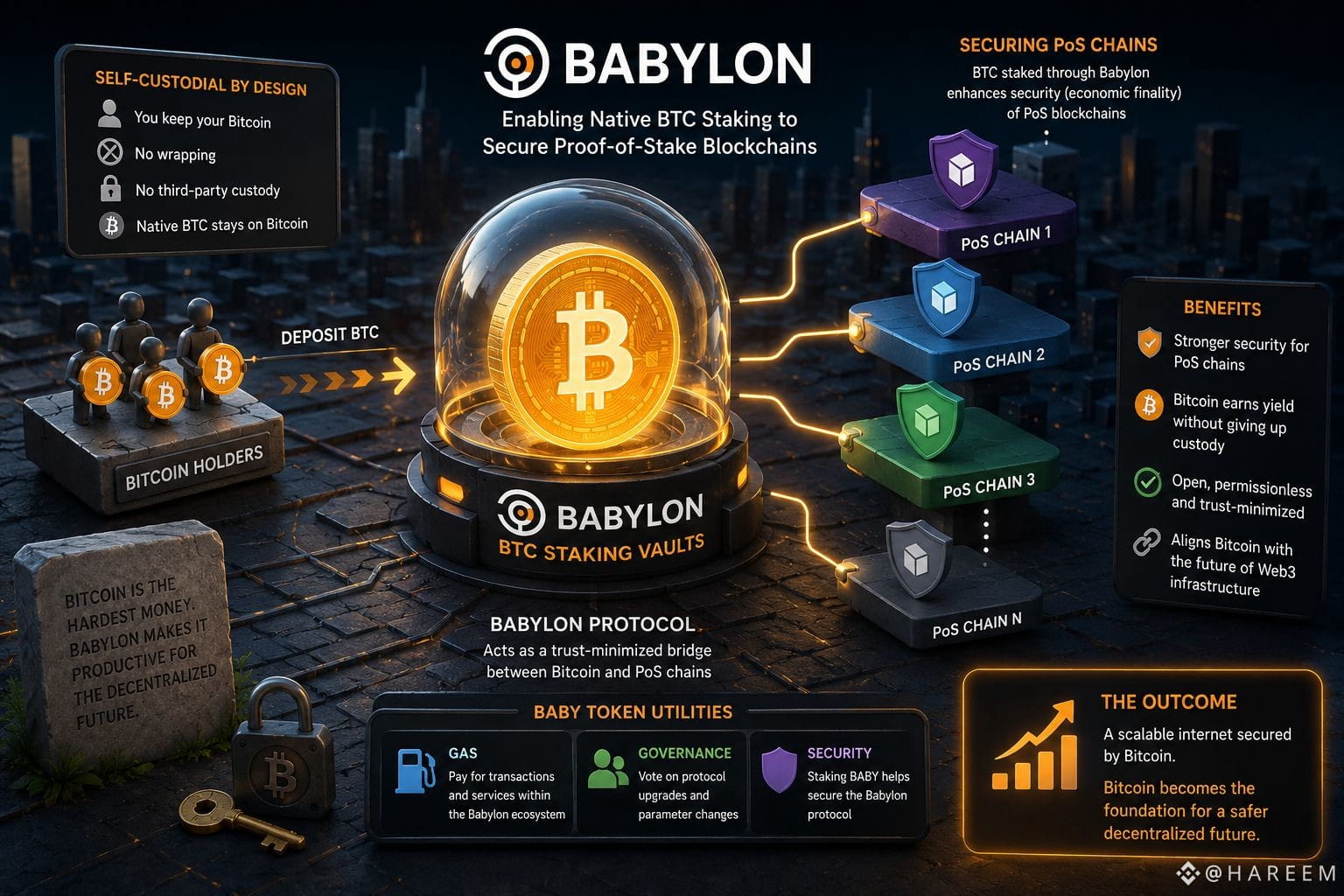
I've been thinking about Babylon from a different angle lately. Most conversations still revolve around BTC staking, but I feel like that's only the surface. What keeps my attention is the bigger question: can Bitcoin become a security layer for other networks without giving up what makes Bitcoin valuable in the first place?
I've watched enough market cycles to know that narratives are easy to build when liquidity is flowing. The difficult part comes later, when incentives cool down and people keep using the product because it actually solves a problem. That's the stage I care about.
Something about Babylon feels different because its success isn't tied to convincing people to abandon Bitcoin. It's trying to expand what Bitcoin can do while keeping self-custody at the center. I'm not ready to call that a proven model yet, but I think that's the right challenge to focus on. If real usage continues after the excitement fades, that will tell us far more than any short-term price move ever could.
#baby $BABY @BabylonLabs_io
I've been thinking about Babylon from a different angle lately. Most conversations still revolve around BTC staking, but I feel like that's only the surface. What keeps my attention is the bigger question: can Bitcoin become a security layer for other networks without giving up what makes Bitcoin valuable in the first place?
I've watched enough market cycles to know that narratives are easy to build when liquidity is flowing. The difficult part comes later, when incentives cool down and people keep using the product because it actually solves a problem. That's the stage I care about.
Something about Babylon feels different because its success isn't tied to convincing people to abandon Bitcoin. It's trying to expand what Bitcoin can do while keeping self-custody at the center. I'm not ready to call that a proven model yet, but I think that's the right challenge to focus on. If real usage continues after the excitement fades, that will tell us far more than any short-term price move ever could.
I've been thinking about Babylon from a different angle lately. Most conversations still revolve around BTC staking, but I feel like that's only the surface. What keeps my attention is the bigger question: can Bitcoin become a security layer for other networks without giving up what makes Bitcoin valuable in the first place?
I've watched enough market cycles to know that narratives are easy to build when liquidity is flowing. The difficult part comes later, when incentives cool down and people keep using the product because it actually solves a problem. That's the stage I care about.
Something about Babylon feels different because its success isn't tied to convincing people to abandon Bitcoin. It's trying to expand what Bitcoin can do while keeping self-custody at the center. I'm not ready to call that a proven model yet, but I think that's the right challenge to focus on. If real usage continues after the excitement fades, that will tell us far more than any short-term price move ever could.
110
40
281
·
--
Bullish
#baby $BABY @babylonlabs_io
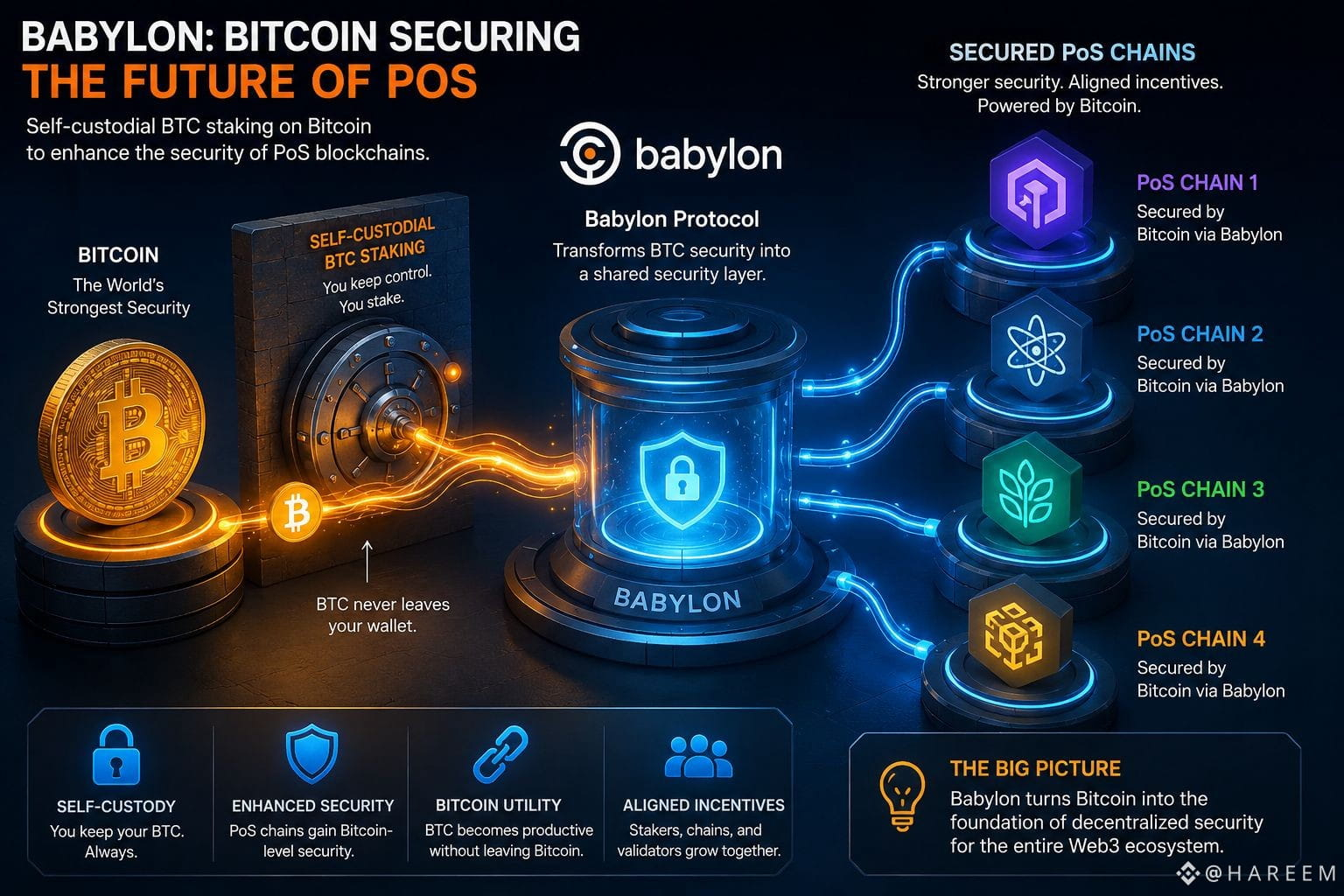
I've been thinking about Babylon a little differently lately. Most conversations still revolve around BTC staking, but I don't think that's the part worth watching. What catches my attention is the idea of Bitcoin quietly becoming a security layer for other networks while remaining in self-custody. If that works consistently, it's a much bigger shift than another staking product.
I've watched enough crypto cycles to know that good narratives spread faster than good infrastructure. The projects that survive usually aren't the loudest—they're the ones people keep using long after the excitement fades. That's why I pay more attention to ecosystem growth, validator participation, and real integrations than short-term price action.
I'm still cautious. Every protocol looks convincing when sentiment is strong. The real test comes when the market gets boring and people keep using it anyway. If Babylon continues proving that Bitcoin can secure PoS ecosystems without asking holders to give up control of their assets, then its biggest achievement won't be the yield. It'll be changing how Bitcoin creates value beyond its own chain.
#baby $BABY @BabylonLabs_io
I've been thinking about Babylon a little differently lately. Most conversations still revolve around BTC staking, but I don't think that's the part worth watching. What catches my attention is the idea of Bitcoin quietly becoming a security layer for other networks while remaining in self-custody. If that works consistently, it's a much bigger shift than another staking product.
I've watched enough crypto cycles to know that good narratives spread faster than good infrastructure. The projects that survive usually aren't the loudest—they're the ones people keep using long after the excitement fades. That's why I pay more attention to ecosystem growth, validator participation, and real integrations than short-term price action.
I'm still cautious. Every protocol looks convincing when sentiment is strong. The real test comes when the market gets boring and people keep using it anyway. If Babylon continues proving that Bitcoin can secure PoS ecosystems without asking holders to give up control of their assets, then its biggest achievement won't be the yield. It'll be changing how Bitcoin creates value beyond its own chain.
I've been thinking about Babylon a little differently lately. Most conversations still revolve around BTC staking, but I don't think that's the part worth watching. What catches my attention is the idea of Bitcoin quietly becoming a security layer for other networks while remaining in self-custody. If that works consistently, it's a much bigger shift than another staking product.
I've watched enough crypto cycles to know that good narratives spread faster than good infrastructure. The projects that survive usually aren't the loudest—they're the ones people keep using long after the excitement fades. That's why I pay more attention to ecosystem growth, validator participation, and real integrations than short-term price action.
I'm still cautious. Every protocol looks convincing when sentiment is strong. The real test comes when the market gets boring and people keep using it anyway. If Babylon continues proving that Bitcoin can secure PoS ecosystems without asking holders to give up control of their assets, then its biggest achievement won't be the yield. It'll be changing how Bitcoin creates value beyond its own chain.
83
34
508
·
--
Bullish
#baby $BABY @babylonlabs_io
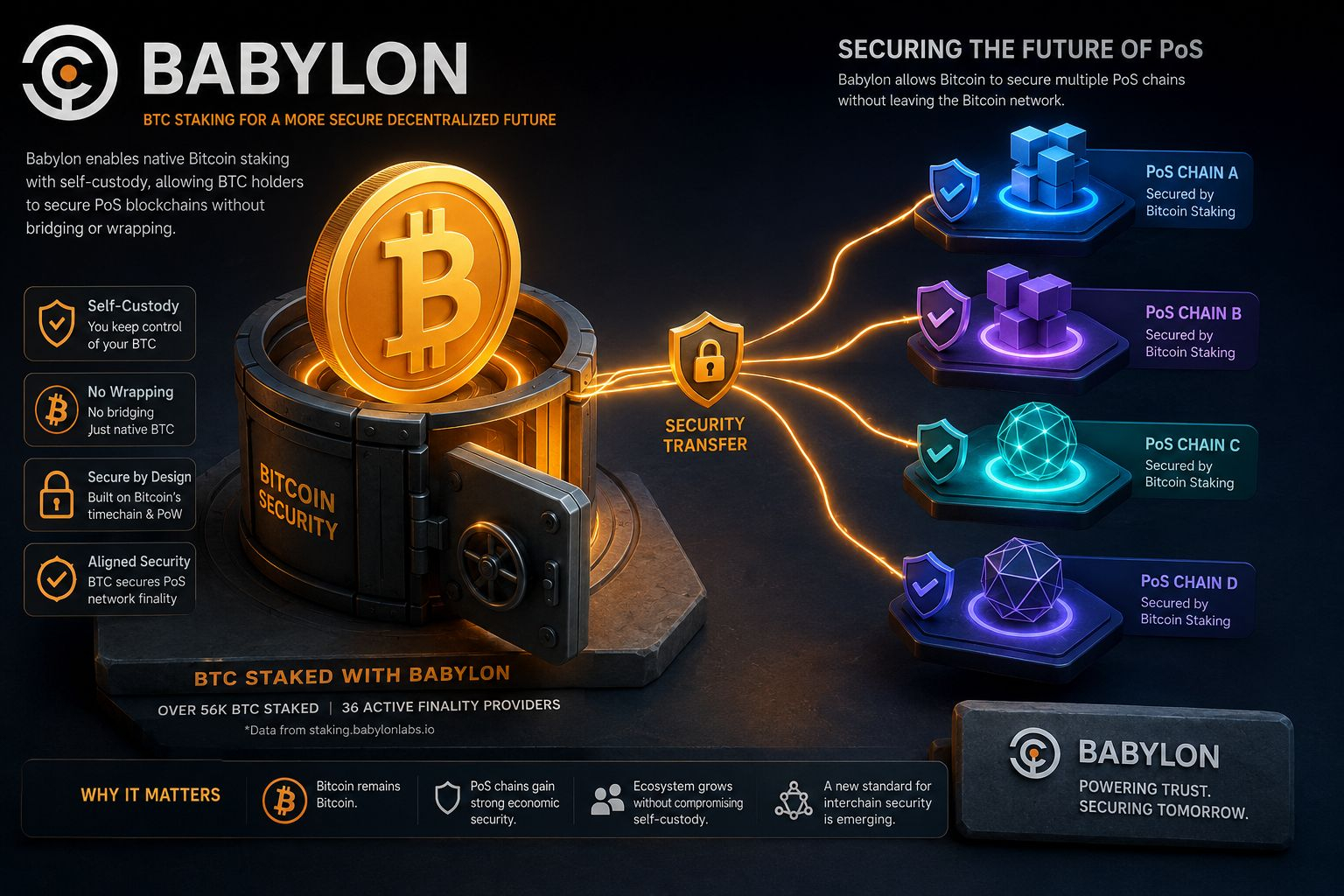
I've been in crypto long enough to notice that every cycle tries to give Bitcoin a new job. Some ideas disappear within months, while others quietly keep evolving even when the spotlight moves elsewhere. That's why I keep revisiting Babylon. What interests me isn't the promise of staking rewards or another TVL milestone. It's the bigger question the protocol is asking: can Bitcoin strengthen other networks without giving up the qualities that made it valuable in the first place?
I’ve seen plenty of projects confuse financial engineering with real innovation. Babylon feels different because the core idea is surprisingly simple. Instead of asking Bitcoin holders to trust another chain with their assets, it focuses on preserving self-custody while allowing Bitcoin's security to support PoS ecosystems. That sounds easy on paper, but it's a difficult balance to achieve in practice.
I'm still cautious. Every new crypto narrative deserves skepticism until it's tested through different market conditions. But something about Babylon makes me pay attention. If it proves that Bitcoin can extend its security beyond its own network without compromising its core principles, the long-term impact could be much more meaningful than another temporary yield story. Sometimes the strongest innovation isn't about making Bitcoin do more—it's about letting Bitcoin remain exactly what it is while quietly making everything around it stronger.
#baby $BABY @BabylonLabs_io
I've been in crypto long enough to notice that every cycle tries to give Bitcoin a new job. Some ideas disappear within months, while others quietly keep evolving even when the spotlight moves elsewhere. That's why I keep revisiting Babylon. What interests me isn't the promise of staking rewards or another TVL milestone. It's the bigger question the protocol is asking: can Bitcoin strengthen other networks without giving up the qualities that made it valuable in the first place?
I’ve seen plenty of projects confuse financial engineering with real innovation. Babylon feels different because the core idea is surprisingly simple. Instead of asking Bitcoin holders to trust another chain with their assets, it focuses on preserving self-custody while allowing Bitcoin's security to support PoS ecosystems. That sounds easy on paper, but it's a difficult balance to achieve in practice.
I'm still cautious. Every new crypto narrative deserves skepticism until it's tested through different market conditions. But something about Babylon makes me pay attention. If it proves that Bitcoin can extend its security beyond its own network without compromising its core principles, the long-term impact could be much more meaningful than another temporary yield story. Sometimes the strongest innovation isn't about making Bitcoin do more—it's about letting Bitcoin remain exactly what it is while quietly making everything around it stronger.
I've been in crypto long enough to notice that every cycle tries to give Bitcoin a new job. Some ideas disappear within months, while others quietly keep evolving even when the spotlight moves elsewhere. That's why I keep revisiting Babylon. What interests me isn't the promise of staking rewards or another TVL milestone. It's the bigger question the protocol is asking: can Bitcoin strengthen other networks without giving up the qualities that made it valuable in the first place?
I’ve seen plenty of projects confuse financial engineering with real innovation. Babylon feels different because the core idea is surprisingly simple. Instead of asking Bitcoin holders to trust another chain with their assets, it focuses on preserving self-custody while allowing Bitcoin's security to support PoS ecosystems. That sounds easy on paper, but it's a difficult balance to achieve in practice.
I'm still cautious. Every new crypto narrative deserves skepticism until it's tested through different market conditions. But something about Babylon makes me pay attention. If it proves that Bitcoin can extend its security beyond its own network without compromising its core principles, the long-term impact could be much more meaningful than another temporary yield story. Sometimes the strongest innovation isn't about making Bitcoin do more—it's about letting Bitcoin remain exactly what it is while quietly making everything around it stronger.
56
28
563
·
--
#FedSeptHikeOddsJumpToAbout82%
#USTreasuryYieldsRetreat
#OilExtendsDecline
$ON
{future}(ONUSDT)
$LAB
{future}(LABUSDT)
$DEXE
{spot}(DEXEUSDT)
The more I watch Babylon, the less I think the real story is about staking rewards. I think it's about how carefully they're treating Bitcoin itself. I've been around long enough to see plenty of projects promise to "unlock BTC," but many ended up asking users to trust another bridge, another custodian, or another layer of complexity. That's why I never judged Babylon by the marketing.
What keeps my attention is the mindset behind the design. Instead of trying to turn Bitcoin into everything, it seems focused on letting Bitcoin strengthen other networks while keeping self-custody at the center. That feels like a more realistic approach.
I'm still cautious. Crypto has a habit of making every new idea sound revolutionary before it's properly tested. But if Babylon succeeds, I don't think it'll be because it created another yield opportunity. It'll be because it proved Bitcoin can contribute to other ecosystems without giving up the principles that made it valuable in the first place. To me, that's the question worth following—not the hype.
#FedSeptHikeOddsJumpToAbout82%
#USTreasuryYieldsRetreat
#OilExtendsDecline
$ON
$LAB
$DEXE
The more I watch Babylon, the less I think the real story is about staking rewards. I think it's about how carefully they're treating Bitcoin itself. I've been around long enough to see plenty of projects promise to "unlock BTC," but many ended up asking users to trust another bridge, another custodian, or another layer of complexity. That's why I never judged Babylon by the marketing.
What keeps my attention is the mindset behind the design. Instead of trying to turn Bitcoin into everything, it seems focused on letting Bitcoin strengthen other networks while keeping self-custody at the center. That feels like a more realistic approach.
I'm still cautious. Crypto has a habit of making every new idea sound revolutionary before it's properly tested. But if Babylon succeeds, I don't think it'll be because it created another yield opportunity. It'll be because it proved Bitcoin can contribute to other ecosystems without giving up the principles that made it valuable in the first place. To me, that's the question worth following—not the hype.
#USTreasuryYieldsRetreat
#OilExtendsDecline
$ON
$LAB
$DEXE
The more I watch Babylon, the less I think the real story is about staking rewards. I think it's about how carefully they're treating Bitcoin itself. I've been around long enough to see plenty of projects promise to "unlock BTC," but many ended up asking users to trust another bridge, another custodian, or another layer of complexity. That's why I never judged Babylon by the marketing.
What keeps my attention is the mindset behind the design. Instead of trying to turn Bitcoin into everything, it seems focused on letting Bitcoin strengthen other networks while keeping self-custody at the center. That feels like a more realistic approach.
I'm still cautious. Crypto has a habit of making every new idea sound revolutionary before it's properly tested. But if Babylon succeeds, I don't think it'll be because it created another yield opportunity. It'll be because it proved Bitcoin can contribute to other ecosystems without giving up the principles that made it valuable in the first place. To me, that's the question worth following—not the hype.
🔒 Security over yield
40%
🟠 Self-custody matters most
40%
⚖️ Too early to judge
0%
👀 Watching, not convinced yet
20%
5 votes • Voting closed
19
16
3.8k
·
--
#baby @babylonlabs_io $BABY
{spot}(BABYUSDT)
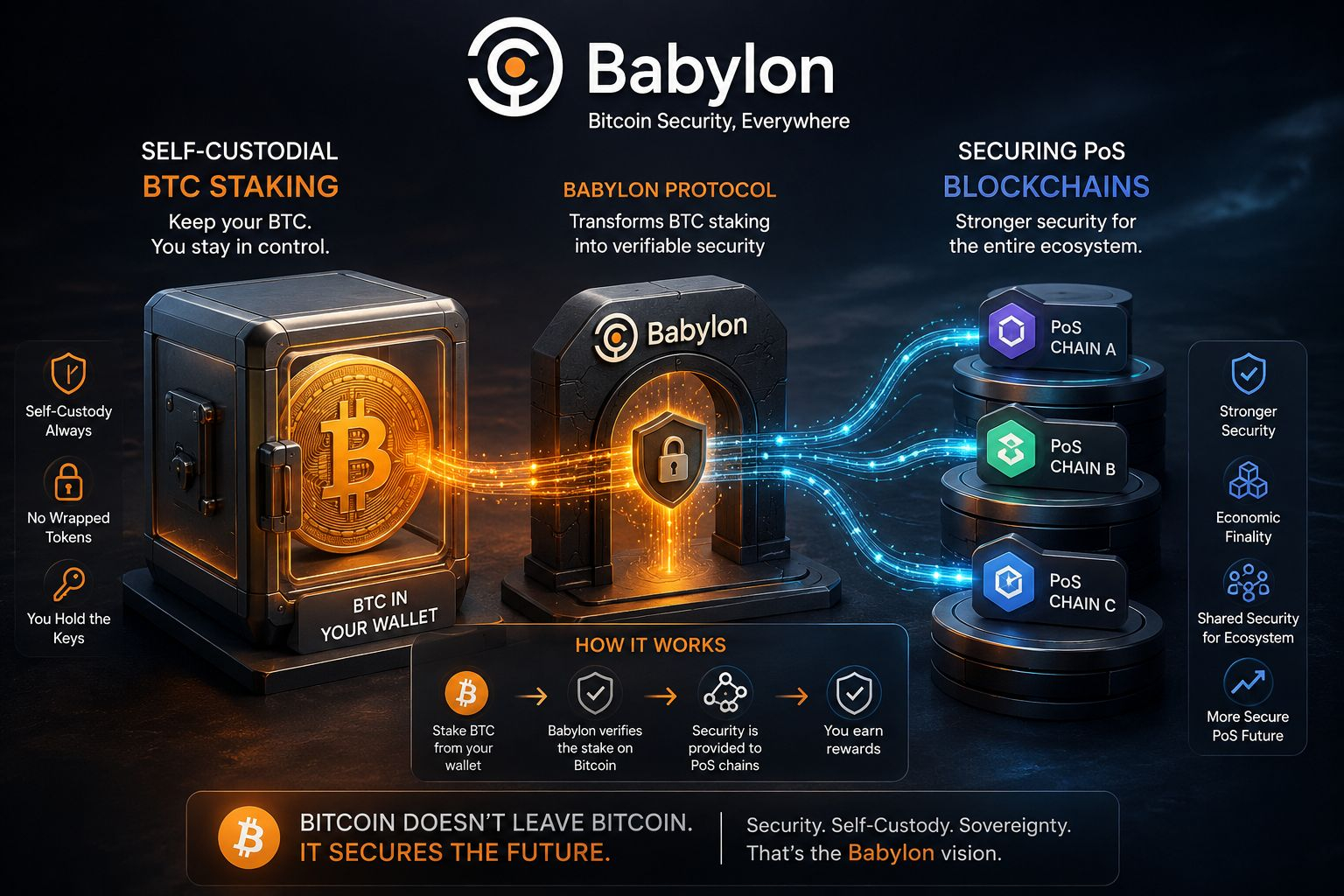
I've been around long enough to know that crypto loves turning every new idea into the next big narrative. Most of those stories fade once real users start asking difficult questions. That's why I keep looking at Babylon from a different angle. I don't see it as another way to squeeze extra yield out of Bitcoin. I see it as an experiment to find out whether Bitcoin's strongest feature—its security—can extend beyond its own network without compromising self-custody. That feels like a much more meaningful challenge.
The recent ecosystem progress, from expanding staking infrastructure to new integrations and tooling, tells me the team is focused on making the system more usable rather than simply creating excitement. I appreciate that approach because I've seen too many projects spend more time marketing than improving the product itself.
I'm still cautious. Every protocol looks solid until it faces stress, changing market conditions, and unexpected incentives. That's when the real design gets tested. If Babylon succeeds, it won't be because it offered the highest rewards. It will be because it proved Bitcoin can secure other ecosystems while remaining true to the principles that made people trust it in the first place. That's the question I'm watching, not the price.
#baby @BabylonLabs_io $BABY
I've been around long enough to know that crypto loves turning every new idea into the next big narrative. Most of those stories fade once real users start asking difficult questions. That's why I keep looking at Babylon from a different angle. I don't see it as another way to squeeze extra yield out of Bitcoin. I see it as an experiment to find out whether Bitcoin's strongest feature—its security—can extend beyond its own network without compromising self-custody. That feels like a much more meaningful challenge.
The recent ecosystem progress, from expanding staking infrastructure to new integrations and tooling, tells me the team is focused on making the system more usable rather than simply creating excitement. I appreciate that approach because I've seen too many projects spend more time marketing than improving the product itself.
I'm still cautious. Every protocol looks solid until it faces stress, changing market conditions, and unexpected incentives. That's when the real design gets tested. If Babylon succeeds, it won't be because it offered the highest rewards. It will be because it proved Bitcoin can secure other ecosystems while remaining true to the principles that made people trust it in the first place. That's the question I'm watching, not the price.
I've been around long enough to know that crypto loves turning every new idea into the next big narrative. Most of those stories fade once real users start asking difficult questions. That's why I keep looking at Babylon from a different angle. I don't see it as another way to squeeze extra yield out of Bitcoin. I see it as an experiment to find out whether Bitcoin's strongest feature—its security—can extend beyond its own network without compromising self-custody. That feels like a much more meaningful challenge.
The recent ecosystem progress, from expanding staking infrastructure to new integrations and tooling, tells me the team is focused on making the system more usable rather than simply creating excitement. I appreciate that approach because I've seen too many projects spend more time marketing than improving the product itself.
I'm still cautious. Every protocol looks solid until it faces stress, changing market conditions, and unexpected incentives. That's when the real design gets tested. If Babylon succeeds, it won't be because it offered the highest rewards. It will be because it proved Bitcoin can secure other ecosystems while remaining true to the principles that made people trust it in the first place. That's the question I'm watching, not the price.
49
30
848
·
--
Bullish
#baby $BABY @babylonlabs_io
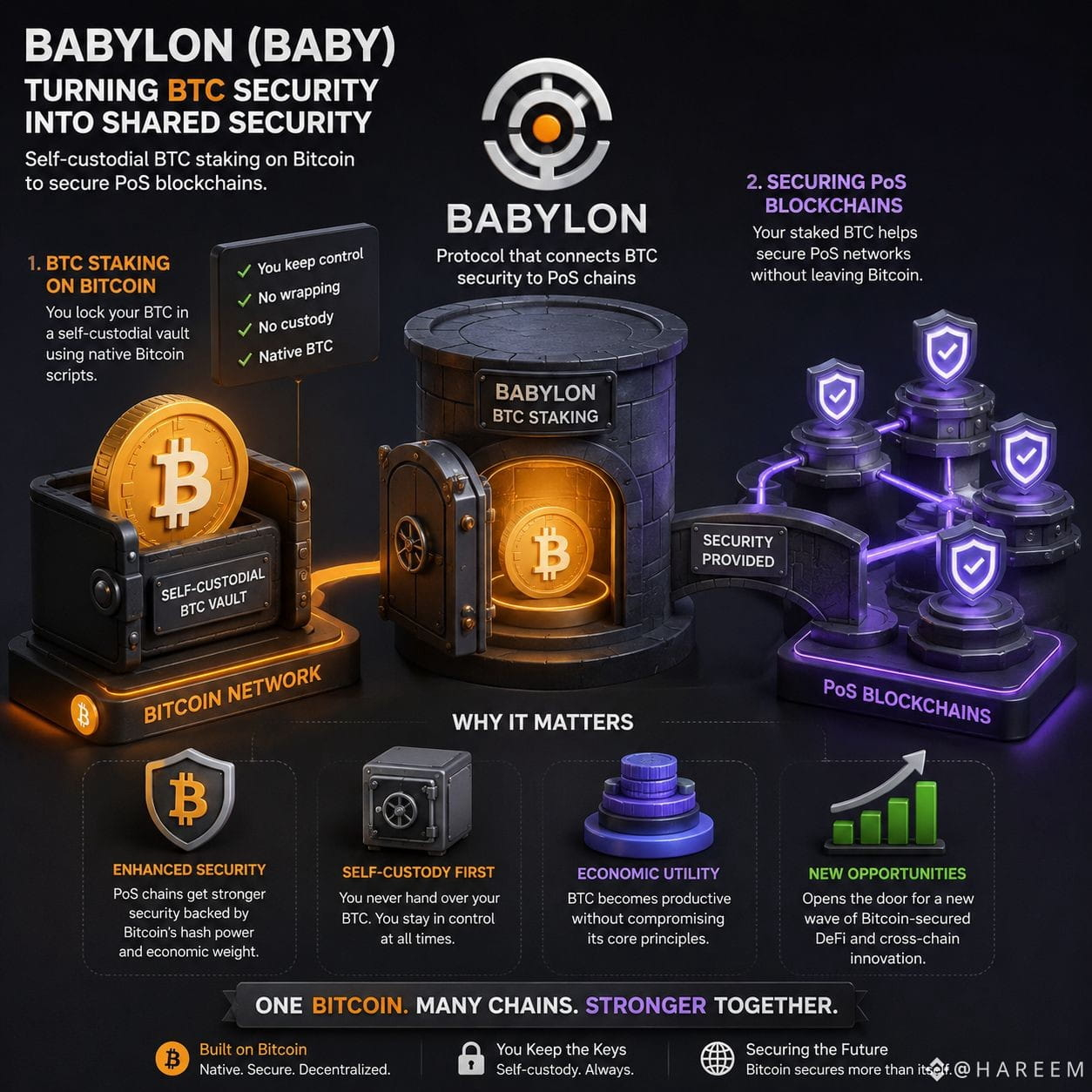
I’ve been watching Babylon, and the thing that feels most interesting to me is not the “BTC staking” label. It is the attempt to make self-custodied Bitcoin do more without asking holders to give up the part they care about most: control. That is a much harder problem than it sounds. A lot of crypto projects say they want to create utility around BTC, but most of them quietly rely on extra trust, extra wrappers, or extra assumptions. Babylon seems to be testing a different habit: keep the BTC native, keep the custody intact, and see whether people will accept complexity only when it clearly adds value. I’m not sure yet how much demand there really is for that tradeoff, but I don’t think the market should miss the signal. The real story is not staking. It is whether Bitcoin can stay Bitcoin while becoming useful in a more active financial system. That is a much narrower path, and probably a more honest one.
#baby $BABY @BabylonLabs_io
I’ve been watching Babylon, and the thing that feels most interesting to me is not the “BTC staking” label. It is the attempt to make self-custodied Bitcoin do more without asking holders to give up the part they care about most: control. That is a much harder problem than it sounds. A lot of crypto projects say they want to create utility around BTC, but most of them quietly rely on extra trust, extra wrappers, or extra assumptions. Babylon seems to be testing a different habit: keep the BTC native, keep the custody intact, and see whether people will accept complexity only when it clearly adds value. I’m not sure yet how much demand there really is for that tradeoff, but I don’t think the market should miss the signal. The real story is not staking. It is whether Bitcoin can stay Bitcoin while becoming useful in a more active financial system. That is a much narrower path, and probably a more honest one.
I’ve been watching Babylon, and the thing that feels most interesting to me is not the “BTC staking” label. It is the attempt to make self-custodied Bitcoin do more without asking holders to give up the part they care about most: control. That is a much harder problem than it sounds. A lot of crypto projects say they want to create utility around BTC, but most of them quietly rely on extra trust, extra wrappers, or extra assumptions. Babylon seems to be testing a different habit: keep the BTC native, keep the custody intact, and see whether people will accept complexity only when it clearly adds value. I’m not sure yet how much demand there really is for that tradeoff, but I don’t think the market should miss the signal. The real story is not staking. It is whether Bitcoin can stay Bitcoin while becoming useful in a more active financial system. That is a much narrower path, and probably a more honest one.
6
7
118
Log in to explore more content
Join global crypto users on Binance Square
⚡️ Get latest and useful information about crypto.
💬 Trusted by the world’s largest crypto exchange.
👍 Discover real insights from verified creators.
Email / Phone number
Trending Topics
ClarityActFacesProceduralVoteSept15
54,377 views
783 Discussing
Tuesday, September 15, 2:15pm ET. Mark it. 🗓️
The Senate votes on whether to even debate the CLARITY Act, the bill that would finally define which coins are securities vs commodities under US law.
Needs 60 votes. Republicans have 53. Several Democrats need to cross over, and it's not guaranteed.
Fail this vote = the bill is dead for 2026, likely until 2029 (midterms eat the calendar after this).
Pass this vote = doors open to real debate, still a long way to actual law.
Biggest crypto regulation moment of the year happens in a few days.
#ClarityActFacesProceduralVoteSept15
NewbieToNode
·5 Likes
·5.9k views
US2YearYieldRisesTo4.61%
38,013 views
706 Discussing
US10YearTreasuryYieldNears5%
23,350 views
418 Discussing