

#signprotocol
signprotocol
134,268 views
909 Discussing
Hot
Latest
·
--
Bullish
"Nobody owns your identity. Not yet."
Every day you log in, sign documents, verify yourself online — and none of it belongs to you. Banks own it. Governments own it. Big tech owns it.
SIGN Protocol is changing that.
For the first time — your identity, your signatures, your verifications live ON-CHAIN. Owned by you. Forever.
This is why smart investors are paying attention to $SIGN 👇
{future}(SIGNUSDT)
#SIGN #SignProtocol #Binance #Crypto2026 #web4ai
"Nobody owns your identity. Not yet."
Every day you log in, sign documents, verify yourself online — and none of it belongs to you. Banks own it. Governments own it. Big tech owns it.
SIGN Protocol is changing that.
For the first time — your identity, your signatures, your verifications live ON-CHAIN. Owned by you. Forever.
This is why smart investors are paying attention to $SIGN 👇
#SIGN #SignProtocol #Binance #Crypto2026 #web4ai
Every day you log in, sign documents, verify yourself online — and none of it belongs to you. Banks own it. Governments own it. Big tech owns it.
SIGN Protocol is changing that.
For the first time — your identity, your signatures, your verifications live ON-CHAIN. Owned by you. Forever.
This is why smart investors are paying attention to $SIGN 👇
#SIGN #SignProtocol #Binance #Crypto2026 #web4ai
352

What Is SIGN Protocol? The Web3 “Digital Notary” That Could Hit $1?
Let’s talk about a hidden gem today: $SIGN - the native token of Sign Protocol.
What does SIGN do?
In simple words, it’s the “Stamp Paper” of Blockchain. It verifies any document, agreement, or identity on-chain. A real solution to fake documents.
Why am I Bullish?
1. Real Use Case: Dubai Government and several banks are already testing Sign Protocol.
2. Strong Tokenomics: Low total supply and 60% of tokens are locked for staking.
3. Binance Listed: No liquidity issues, and it’s backed by Binance Labs.
Price Prediction:
Currently around $0.12. If Mainnet adoption grows in Q1 2026, a target of $0.50 to $1 is very realistic. DYOR!
What’s the Risk? It’s a low-cap coin, so volatility is very high. Only invest what you can afford to lose.
Do you hold $SIGN in your portfolio? Yes or No 👇
#SIGN #SignProtocol #Altcoin #Gem #BinanceSquareFamily #DYOR*
What Is SIGN Protocol? The Web3 “Digital Notary” That Could Hit $1?
Let’s talk about a hidden gem today: $SIGN - the native token of Sign Protocol.
What does SIGN do?
In simple words, it’s the “Stamp Paper” of Blockchain. It verifies any document, agreement, or identity on-chain. A real solution to fake documents.
Why am I Bullish?
1. Real Use Case: Dubai Government and several banks are already testing Sign Protocol.
2. Strong Tokenomics: Low total supply and 60% of tokens are locked for staking.
3. Binance Listed: No liquidity issues, and it’s backed by Binance Labs.
Price Prediction:
Currently around $0.12. If Mainnet adoption grows in Q1 2026, a target of $0.50 to $1 is very realistic. DYOR!
What’s the Risk? It’s a low-cap coin, so volatility is very high. Only invest what you can afford to lose.
Do you hold $SIGN in your portfolio? Yes or No 👇
#SIGN #SignProtocol #Altcoin #Gem #BinanceSquareFamily #DYOR*
Let’s talk about a hidden gem today: $SIGN - the native token of Sign Protocol.
What does SIGN do?
In simple words, it’s the “Stamp Paper” of Blockchain. It verifies any document, agreement, or identity on-chain. A real solution to fake documents.
Why am I Bullish?
1. Real Use Case: Dubai Government and several banks are already testing Sign Protocol.
2. Strong Tokenomics: Low total supply and 60% of tokens are locked for staking.
3. Binance Listed: No liquidity issues, and it’s backed by Binance Labs.
Price Prediction:
Currently around $0.12. If Mainnet adoption grows in Q1 2026, a target of $0.50 to $1 is very realistic. DYOR!
What’s the Risk? It’s a low-cap coin, so volatility is very high. Only invest what you can afford to lose.
Do you hold $SIGN in your portfolio? Yes or No 👇
#SIGN #SignProtocol #Altcoin #Gem #BinanceSquareFamily #DYOR*
1
1
166

BINANCE GAINERS — $DASH & $SIGN
Please follow my Account.
$DASH — Dash | +20.36%
DASH is leading the rally as privacy coins gain strong market interest. A technical breakout above $46.37 on high volume and upcoming DashCon are also supporting momentum. (CoinMarketCap)
SIGN — Sign | +16.27%
SIGN is showing strong buying momentum, with recent trading activity accelerating. September 3 saw an 8.41% daily gain with nearly 88.5M tokens traded on Binance. (ca.investing.com)
⚠️ DYOR — Don't FOMO.
#DASH #SIGN #Dash #SignProtocol #Binance #CryptoGainers #PrivacyCoins #Altcoins #DYOR
BINANCE GAINERS — $DASH & $SIGN
Please follow my Account.
$DASH — Dash | +20.36%
DASH is leading the rally as privacy coins gain strong market interest. A technical breakout above $46.37 on high volume and upcoming DashCon are also supporting momentum. (CoinMarketCap)
SIGN — Sign | +16.27%
SIGN is showing strong buying momentum, with recent trading activity accelerating. September 3 saw an 8.41% daily gain with nearly 88.5M tokens traded on Binance. (ca.investing.com)
⚠️ DYOR — Don't FOMO.
#DASH #SIGN #Dash #SignProtocol #Binance #CryptoGainers #PrivacyCoins #Altcoins #DYOR
Please follow my Account.
$DASH — Dash | +20.36%
DASH is leading the rally as privacy coins gain strong market interest. A technical breakout above $46.37 on high volume and upcoming DashCon are also supporting momentum. (CoinMarketCap)
SIGN — Sign | +16.27%
SIGN is showing strong buying momentum, with recent trading activity accelerating. September 3 saw an 8.41% daily gain with nearly 88.5M tokens traded on Binance. (ca.investing.com)
⚠️ DYOR — Don't FOMO.
#DASH #SIGN #Dash #SignProtocol #Binance #CryptoGainers #PrivacyCoins #Altcoins #DYOR
137

·
--
Bullish
Sequoia Capital, CZ's Binance Labs, and the government of Kyrgyzstan all believe in this coin. It's down 75% from its ATH and almost nobody is talking about it. 🤫
Let me introduce you to $SIGN before tomorrow's unlock changes the narrative
On April 28 — TOMORROW — Sign unlocks 401.1 million SIGN tokens (~$7.05M).
Most people will see this and run. Educated traders will read what's actually happening.
🔍 What is Sign Protocol?
Sign is building the global infrastructure for TRUST. Think of it as a decentralized notary service — verifying identities, credentials, agreements, and data across every blockchain simultaneously ($ETH ,$SOL , TON, Aptos, and more).
🏛️ The partnerships are WILD:
→ Kyrgyzstan's National Bank: CBDC + stablecoin built on Sign
→ Singapore's Singpass integration
→ Multiple government blockchain deals across the Middle East
→ $25M funding to build national blockchain infrastructure
→ Backed by Sequoia Capital + YZi Labs (Binance Labs)
The unlock is 20.78% of released supply — expect short-term sell pressure. But the long-term picture is compelling for a $52M project working with actual governments.
#SİGN #SignProtocol #Web3 #DigitalIdentity
{spot}(SIGNUSDT)
Sequoia Capital, CZ's Binance Labs, and the government of Kyrgyzstan all believe in this coin. It's down 75% from its ATH and almost nobody is talking about it. 🤫
Let me introduce you to $SIGN before tomorrow's unlock changes the narrative
On April 28 — TOMORROW — Sign unlocks 401.1 million SIGN tokens (~$7.05M).
Most people will see this and run. Educated traders will read what's actually happening.
🔍 What is Sign Protocol?
Sign is building the global infrastructure for TRUST. Think of it as a decentralized notary service — verifying identities, credentials, agreements, and data across every blockchain simultaneously ($ETH ,$SOL , TON, Aptos, and more).
🏛️ The partnerships are WILD:
→ Kyrgyzstan's National Bank: CBDC + stablecoin built on Sign
→ Singapore's Singpass integration
→ Multiple government blockchain deals across the Middle East
→ $25M funding to build national blockchain infrastructure
→ Backed by Sequoia Capital + YZi Labs (Binance Labs)
The unlock is 20.78% of released supply — expect short-term sell pressure. But the long-term picture is compelling for a $52M project working with actual governments.
#SİGN #SignProtocol #Web3 #DigitalIdentity
Let me introduce you to $SIGN before tomorrow's unlock changes the narrative
On April 28 — TOMORROW — Sign unlocks 401.1 million SIGN tokens (~$7.05M).
Most people will see this and run. Educated traders will read what's actually happening.
🔍 What is Sign Protocol?
Sign is building the global infrastructure for TRUST. Think of it as a decentralized notary service — verifying identities, credentials, agreements, and data across every blockchain simultaneously ($ETH ,$SOL , TON, Aptos, and more).
🏛️ The partnerships are WILD:
→ Kyrgyzstan's National Bank: CBDC + stablecoin built on Sign
→ Singapore's Singpass integration
→ Multiple government blockchain deals across the Middle East
→ $25M funding to build national blockchain infrastructure
→ Backed by Sequoia Capital + YZi Labs (Binance Labs)
The unlock is 20.78% of released supply — expect short-term sell pressure. But the long-term picture is compelling for a $52M project working with actual governments.
#SİGN #SignProtocol #Web3 #DigitalIdentity
404

·
--
Article
Sign Attestations: The Future of DAO GovernanceProgrammable Trust for DAOs and RWAs: Using Sign Attestations to Automate Conditional Access and Reputation Scoring in 2026
Listen, I've been in enough DAOs to know the drill. Most governance is still a mess manual votes on Snapshot, off-chain reputation that gets gamed by whales or Sybil farmers, and admins deciding who gets access to what. You see a proposal, you vote with your bag, but half the time the "active contributors" are just loud voices holding tokens, not people who actually shipped code, helped in forums, or did real work. Same story with RWAs. Tokenizing real stuff like real estate or bonds sounds great until you hit compliance walls. Proving you're the beneficial owner, accredited investor, or passed KYC every single time you want to trade or claim yield. It's repetitive, leaks data, and slows everything down.
Sign Protocol isn't trying to be another flashy app. It's building the plumbing that lets you turn attestations into programmable pieces smart contracts can actually read and act on automatically. No more trusting a central team or running the same verification loop across 10 different platforms. You attest once, structure it properly, and the chain enforces the rules.
Let me break down how it actually works in practice.
First, schemas. Think of these as reusable templates. You don't just dump random data on-chain. You define the exact structure upfront. For example, a schema for a "verified DAO contributor" might have fields like: contributor address, task type (code merge, forum moderation, translation), completion date, attester (could be the DAO multisig or a peer review group), score for quality, and maybe a ZK proof for certain private bits. Schemas make the data machine-readable and queryable later. Developers register them, and they become standards anyone can build on. It's like creating a standard form that everyone agrees to use so verification isn't a custom nightmare every time.
Next, attestations. These are the actual signed records that follow the schema. Someone (a DAO, a protocol, a government entity, or even another user) creates it, signs it cryptographically, and puts it on-chain or in decentralized storage. It's not just "trust me bro" — it's verifiable. The attestation binds the claim to the issuer and the subject (the wallet or entity). Because it's structured by the schema, contracts can parse it easily.
Then comes the magic part: hooks and conditional logic. $SIGN lets you attach a hook contract to a schema. Every time an attestation gets created or revoked on that schema, the hook fires. Your smart contract can check the attestation in real time. Example: Wallet wants to vote on a treasury proposal? Contract queries the Sign attestation for "active participant" does it have enough on-chain activity attestations, peer reviews, or task completions? If yes, allow the vote. If not, deny. Same for claiming a grant or airdrop. No manual approval needed. The rules run on-chain.
This cuts out endless KYC rounds. Instead of re-verifying identity for every new project, you reuse the attestation across chains. Sign is omni-chain, so one attestation on Ethereum can get verified on Solana, Base, TON, whatever. That's huge for users who jump between ecosystems.
Now, where this actually helps right now, based on what's live.
In DAOs: Reputation scoring becomes real instead of fake. Issue attestations for concrete actions — code merged via GitHub proof, forum posts that got traction, translations delivered, bug reports fixed. Build a cumulative score from those. Not based on how many tokens you hold or how much you shill in Discord. This directly fights Sybil attacks in grants and airdrops. TokenTable already proves the scale here. They've handled over $4 billion in token distributions across 40 million+ wallet addresses, especially big in TON campaigns. Every distribution ties back to verified claims via Sign attestations. You can set rules like "only wallets with valid contributor attestations get the unlock on this schedule." It's programmable capital that actually reduces fraud while staying transparent. DAOs managing bigger treasuries in 2026 won't want the drama of off-chain voting wars. This gives them enforceable, on-chain reputation without a dictator admin.
In RWAs: Compliance is the killer. When you tokenize real assets — property, invoices, bonds — institutions need proof of ownership, KYC/AML status, accredited investor checks, beneficial owner details. Dumping all that raw on-chain is stupid for privacy and regulatory reasons. Sign lets you attach attestations for exactly what's needed. "This wallet is verified beneficial owner for asset X" or "Passed accredited investor check as of date Y." Use selective disclosure + zero-knowledge proofs so the contract verifies the claim without exposing full personal data. User proves "I meet the criteria" without showing ID numbers or income. Perfect for trading tokenized assets or claiming yields. The contract reads the attestation and gates the action. This bridges the speed of on-chain with real-world rules that institutions demand. As RWA tokenization grows (we're seeing more institutional money eyeing this space), having a reliable evidence layer like Sign becomes table stakes. No more repeating paperwork for every platform.
Creators and smaller communities win too. Your contribution proof travels with you. Finished a task in DAO A? Get the attestation. Jump to DAO B? They can query it directly instead of making you start from zero reputation. Same for cross-project collabs or multi-DAO participation. It's portable trust.
Heading into 2026, this stuff starts mattering more. DAOs are handling serious money — bigger treasuries, agentic setups, automated executions. They need less drama in governance and better ways to reward real work over bag holders. RWAs are pushing for real institutional inflows. That means tighter compliance without killing liquidity or speed. Sign sits right in the middle as the layer that makes "prove it once, use it everywhere" practical across chains.
It's not sexy consumer hype like some meme coin or NFT drop. It's boring but necessary infrastructure. The kind of plumbing that lets decentralized groups and real assets coordinate without falling apart on trust issues or endless manual checks. We've seen TokenTable generate real revenue (around $15M in one year from distributions) and even use profits to buy Bitcoin — shows they're building something with actual usage, not just narrative. Pilots like Sierra Leone's digital ID push and Kyrgyz Republic's digital SOM experiments hint at bigger scalability tests, where structured attestations could handle national-level claims without central choke points.
For builders: Start simple. Define a schema for your DAO's contribution tracking. Add a hook that integrates with your governance contract. Test attestations on testnet, then go live. Query via SignScan (their explorer for all this data). It supports EVM, flexible deployment. Hooks draw from ideas like V4, so the extension potential is there for custom logic.
Of course, nothing is perfect. Attestations still rely on honest issuers (though you can have multi-attester setups or reputation-weighted ones). Cross-chain verification adds some complexity, but they're using things like decentralized TEEs with Lit Protocol for secure bridging. Privacy features like selective disclosure help, but adoption depends on developers actually integrating the hooks.
Overall, if DAOs and RWAs want to scale beyond small experiments, programmable trust via structured attestations is going to be key. Sign Protocol is quietly positioning as that layer not replacing everything, but sitting underneath so the rest works better.
What do you guys think will move first in 2026 — DAO reputation systems getting automated with schemas and hooks, or RWA compliance flows finally getting streamlined with selective ZK attestations? Have you seen any specific projects already building on Sign schemas for governance or asset tokenization? Drop real examples if you have them. Curious to hear what's working on the ground.
#Sign #SignProtocol
#DAO
#SignDigitalSovereignInfra
$SIGN
@SignOfficial
{spot}(SIGNUSDT)
Sign Attestations: The Future of DAO Governance
Programmable Trust for DAOs and RWAs: Using Sign Attestations to Automate Conditional Access and Reputation Scoring in 2026
Listen, I've been in enough DAOs to know the drill. Most governance is still a mess manual votes on Snapshot, off-chain reputation that gets gamed by whales or Sybil farmers, and admins deciding who gets access to what. You see a proposal, you vote with your bag, but half the time the "active contributors" are just loud voices holding tokens, not people who actually shipped code, helped in forums, or did real work. Same story with RWAs. Tokenizing real stuff like real estate or bonds sounds great until you hit compliance walls. Proving you're the beneficial owner, accredited investor, or passed KYC every single time you want to trade or claim yield. It's repetitive, leaks data, and slows everything down.
Sign Protocol isn't trying to be another flashy app. It's building the plumbing that lets you turn attestations into programmable pieces smart contracts can actually read and act on automatically. No more trusting a central team or running the same verification loop across 10 different platforms. You attest once, structure it properly, and the chain enforces the rules.
Let me break down how it actually works in practice.
First, schemas. Think of these as reusable templates. You don't just dump random data on-chain. You define the exact structure upfront. For example, a schema for a "verified DAO contributor" might have fields like: contributor address, task type (code merge, forum moderation, translation), completion date, attester (could be the DAO multisig or a peer review group), score for quality, and maybe a ZK proof for certain private bits. Schemas make the data machine-readable and queryable later. Developers register them, and they become standards anyone can build on. It's like creating a standard form that everyone agrees to use so verification isn't a custom nightmare every time.
Next, attestations. These are the actual signed records that follow the schema. Someone (a DAO, a protocol, a government entity, or even another user) creates it, signs it cryptographically, and puts it on-chain or in decentralized storage. It's not just "trust me bro" — it's verifiable. The attestation binds the claim to the issuer and the subject (the wallet or entity). Because it's structured by the schema, contracts can parse it easily.
Then comes the magic part: hooks and conditional logic. $SIGN lets you attach a hook contract to a schema. Every time an attestation gets created or revoked on that schema, the hook fires. Your smart contract can check the attestation in real time. Example: Wallet wants to vote on a treasury proposal? Contract queries the Sign attestation for "active participant" does it have enough on-chain activity attestations, peer reviews, or task completions? If yes, allow the vote. If not, deny. Same for claiming a grant or airdrop. No manual approval needed. The rules run on-chain.
This cuts out endless KYC rounds. Instead of re-verifying identity for every new project, you reuse the attestation across chains. Sign is omni-chain, so one attestation on Ethereum can get verified on Solana, Base, TON, whatever. That's huge for users who jump between ecosystems.
Now, where this actually helps right now, based on what's live.
In DAOs: Reputation scoring becomes real instead of fake. Issue attestations for concrete actions — code merged via GitHub proof, forum posts that got traction, translations delivered, bug reports fixed. Build a cumulative score from those. Not based on how many tokens you hold or how much you shill in Discord. This directly fights Sybil attacks in grants and airdrops. TokenTable already proves the scale here. They've handled over $4 billion in token distributions across 40 million+ wallet addresses, especially big in TON campaigns. Every distribution ties back to verified claims via Sign attestations. You can set rules like "only wallets with valid contributor attestations get the unlock on this schedule." It's programmable capital that actually reduces fraud while staying transparent. DAOs managing bigger treasuries in 2026 won't want the drama of off-chain voting wars. This gives them enforceable, on-chain reputation without a dictator admin.
In RWAs: Compliance is the killer. When you tokenize real assets — property, invoices, bonds — institutions need proof of ownership, KYC/AML status, accredited investor checks, beneficial owner details. Dumping all that raw on-chain is stupid for privacy and regulatory reasons. Sign lets you attach attestations for exactly what's needed. "This wallet is verified beneficial owner for asset X" or "Passed accredited investor check as of date Y." Use selective disclosure + zero-knowledge proofs so the contract verifies the claim without exposing full personal data. User proves "I meet the criteria" without showing ID numbers or income. Perfect for trading tokenized assets or claiming yields. The contract reads the attestation and gates the action. This bridges the speed of on-chain with real-world rules that institutions demand. As RWA tokenization grows (we're seeing more institutional money eyeing this space), having a reliable evidence layer like Sign becomes table stakes. No more repeating paperwork for every platform.
Creators and smaller communities win too. Your contribution proof travels with you. Finished a task in DAO A? Get the attestation. Jump to DAO B? They can query it directly instead of making you start from zero reputation. Same for cross-project collabs or multi-DAO participation. It's portable trust.
Heading into 2026, this stuff starts mattering more. DAOs are handling serious money — bigger treasuries, agentic setups, automated executions. They need less drama in governance and better ways to reward real work over bag holders. RWAs are pushing for real institutional inflows. That means tighter compliance without killing liquidity or speed. Sign sits right in the middle as the layer that makes "prove it once, use it everywhere" practical across chains.
It's not sexy consumer hype like some meme coin or NFT drop. It's boring but necessary infrastructure. The kind of plumbing that lets decentralized groups and real assets coordinate without falling apart on trust issues or endless manual checks. We've seen TokenTable generate real revenue (around $15M in one year from distributions) and even use profits to buy Bitcoin — shows they're building something with actual usage, not just narrative. Pilots like Sierra Leone's digital ID push and Kyrgyz Republic's digital SOM experiments hint at bigger scalability tests, where structured attestations could handle national-level claims without central choke points.
For builders: Start simple. Define a schema for your DAO's contribution tracking. Add a hook that integrates with your governance contract. Test attestations on testnet, then go live. Query via SignScan (their explorer for all this data). It supports EVM, flexible deployment. Hooks draw from ideas like V4, so the extension potential is there for custom logic.
Of course, nothing is perfect. Attestations still rely on honest issuers (though you can have multi-attester setups or reputation-weighted ones). Cross-chain verification adds some complexity, but they're using things like decentralized TEEs with Lit Protocol for secure bridging. Privacy features like selective disclosure help, but adoption depends on developers actually integrating the hooks.
Overall, if DAOs and RWAs want to scale beyond small experiments, programmable trust via structured attestations is going to be key. Sign Protocol is quietly positioning as that layer not replacing everything, but sitting underneath so the rest works better.
What do you guys think will move first in 2026 — DAO reputation systems getting automated with schemas and hooks, or RWA compliance flows finally getting streamlined with selective ZK attestations? Have you seen any specific projects already building on Sign schemas for governance or asset tokenization? Drop real examples if you have them. Curious to hear what's working on the ground.
#Sign #SignProtocol
#DAO
#SignDigitalSovereignInfra
$SIGN
@SignOfficial
Listen, I've been in enough DAOs to know the drill. Most governance is still a mess manual votes on Snapshot, off-chain reputation that gets gamed by whales or Sybil farmers, and admins deciding who gets access to what. You see a proposal, you vote with your bag, but half the time the "active contributors" are just loud voices holding tokens, not people who actually shipped code, helped in forums, or did real work. Same story with RWAs. Tokenizing real stuff like real estate or bonds sounds great until you hit compliance walls. Proving you're the beneficial owner, accredited investor, or passed KYC every single time you want to trade or claim yield. It's repetitive, leaks data, and slows everything down.
Sign Protocol isn't trying to be another flashy app. It's building the plumbing that lets you turn attestations into programmable pieces smart contracts can actually read and act on automatically. No more trusting a central team or running the same verification loop across 10 different platforms. You attest once, structure it properly, and the chain enforces the rules.
Let me break down how it actually works in practice.
First, schemas. Think of these as reusable templates. You don't just dump random data on-chain. You define the exact structure upfront. For example, a schema for a "verified DAO contributor" might have fields like: contributor address, task type (code merge, forum moderation, translation), completion date, attester (could be the DAO multisig or a peer review group), score for quality, and maybe a ZK proof for certain private bits. Schemas make the data machine-readable and queryable later. Developers register them, and they become standards anyone can build on. It's like creating a standard form that everyone agrees to use so verification isn't a custom nightmare every time.
Next, attestations. These are the actual signed records that follow the schema. Someone (a DAO, a protocol, a government entity, or even another user) creates it, signs it cryptographically, and puts it on-chain or in decentralized storage. It's not just "trust me bro" — it's verifiable. The attestation binds the claim to the issuer and the subject (the wallet or entity). Because it's structured by the schema, contracts can parse it easily.
Then comes the magic part: hooks and conditional logic. $SIGN lets you attach a hook contract to a schema. Every time an attestation gets created or revoked on that schema, the hook fires. Your smart contract can check the attestation in real time. Example: Wallet wants to vote on a treasury proposal? Contract queries the Sign attestation for "active participant" does it have enough on-chain activity attestations, peer reviews, or task completions? If yes, allow the vote. If not, deny. Same for claiming a grant or airdrop. No manual approval needed. The rules run on-chain.
This cuts out endless KYC rounds. Instead of re-verifying identity for every new project, you reuse the attestation across chains. Sign is omni-chain, so one attestation on Ethereum can get verified on Solana, Base, TON, whatever. That's huge for users who jump between ecosystems.
Now, where this actually helps right now, based on what's live.
In DAOs: Reputation scoring becomes real instead of fake. Issue attestations for concrete actions — code merged via GitHub proof, forum posts that got traction, translations delivered, bug reports fixed. Build a cumulative score from those. Not based on how many tokens you hold or how much you shill in Discord. This directly fights Sybil attacks in grants and airdrops. TokenTable already proves the scale here. They've handled over $4 billion in token distributions across 40 million+ wallet addresses, especially big in TON campaigns. Every distribution ties back to verified claims via Sign attestations. You can set rules like "only wallets with valid contributor attestations get the unlock on this schedule." It's programmable capital that actually reduces fraud while staying transparent. DAOs managing bigger treasuries in 2026 won't want the drama of off-chain voting wars. This gives them enforceable, on-chain reputation without a dictator admin.
In RWAs: Compliance is the killer. When you tokenize real assets — property, invoices, bonds — institutions need proof of ownership, KYC/AML status, accredited investor checks, beneficial owner details. Dumping all that raw on-chain is stupid for privacy and regulatory reasons. Sign lets you attach attestations for exactly what's needed. "This wallet is verified beneficial owner for asset X" or "Passed accredited investor check as of date Y." Use selective disclosure + zero-knowledge proofs so the contract verifies the claim without exposing full personal data. User proves "I meet the criteria" without showing ID numbers or income. Perfect for trading tokenized assets or claiming yields. The contract reads the attestation and gates the action. This bridges the speed of on-chain with real-world rules that institutions demand. As RWA tokenization grows (we're seeing more institutional money eyeing this space), having a reliable evidence layer like Sign becomes table stakes. No more repeating paperwork for every platform.
Creators and smaller communities win too. Your contribution proof travels with you. Finished a task in DAO A? Get the attestation. Jump to DAO B? They can query it directly instead of making you start from zero reputation. Same for cross-project collabs or multi-DAO participation. It's portable trust.
Heading into 2026, this stuff starts mattering more. DAOs are handling serious money — bigger treasuries, agentic setups, automated executions. They need less drama in governance and better ways to reward real work over bag holders. RWAs are pushing for real institutional inflows. That means tighter compliance without killing liquidity or speed. Sign sits right in the middle as the layer that makes "prove it once, use it everywhere" practical across chains.
It's not sexy consumer hype like some meme coin or NFT drop. It's boring but necessary infrastructure. The kind of plumbing that lets decentralized groups and real assets coordinate without falling apart on trust issues or endless manual checks. We've seen TokenTable generate real revenue (around $15M in one year from distributions) and even use profits to buy Bitcoin — shows they're building something with actual usage, not just narrative. Pilots like Sierra Leone's digital ID push and Kyrgyz Republic's digital SOM experiments hint at bigger scalability tests, where structured attestations could handle national-level claims without central choke points.
For builders: Start simple. Define a schema for your DAO's contribution tracking. Add a hook that integrates with your governance contract. Test attestations on testnet, then go live. Query via SignScan (their explorer for all this data). It supports EVM, flexible deployment. Hooks draw from ideas like V4, so the extension potential is there for custom logic.
Of course, nothing is perfect. Attestations still rely on honest issuers (though you can have multi-attester setups or reputation-weighted ones). Cross-chain verification adds some complexity, but they're using things like decentralized TEEs with Lit Protocol for secure bridging. Privacy features like selective disclosure help, but adoption depends on developers actually integrating the hooks.
Overall, if DAOs and RWAs want to scale beyond small experiments, programmable trust via structured attestations is going to be key. Sign Protocol is quietly positioning as that layer not replacing everything, but sitting underneath so the rest works better.
What do you guys think will move first in 2026 — DAO reputation systems getting automated with schemas and hooks, or RWA compliance flows finally getting streamlined with selective ZK attestations? Have you seen any specific projects already building on Sign schemas for governance or asset tokenization? Drop real examples if you have them. Curious to hear what's working on the ground.
#Sign #SignProtocol
#DAO
#SignDigitalSovereignInfra
$SIGN
@SignOfficial
172
2
109
26.1k

·
--
The Sign ProtocolHey there, hope you are doing well.
In the digital world, one big problem is trust. How do you prove that information is real? Whether it’s identity, certificates, or transactions, verification is always needed. This is where Sign Protocol (SIGN) comes in. It is designed to make digital information verifiable, secure, and reliable using blockchain technology.
Now What is Sign ?
Sign Protocol is a blockchain-based system for verifying information. Instead of trusting a central authority, it allows people and organizations to prove facts on-chain.
For example:
Proving your identity
Verifying a certificate
Confirming ownership of assets
The SIGN token powers the entire ecosystem. It is used for:
Paying for services on the network
Rewarding users and developers
Participating in governance decisions
#SignProtocol
#BTC
#ada
#SignDigitalSovereignInfra
$SIGN
#sign
The Sign Protocol
Hey there, hope you are doing well.
In the digital world, one big problem is trust. How do you prove that information is real? Whether it’s identity, certificates, or transactions, verification is always needed. This is where Sign Protocol (SIGN) comes in. It is designed to make digital information verifiable, secure, and reliable using blockchain technology.
Now What is Sign ?
Sign Protocol is a blockchain-based system for verifying information. Instead of trusting a central authority, it allows people and organizations to prove facts on-chain.
For example:
Proving your identity
Verifying a certificate
Confirming ownership of assets
The SIGN token powers the entire ecosystem. It is used for:
Paying for services on the network
Rewarding users and developers
Participating in governance decisions
#SignProtocol
#BTC
#ada
#SignDigitalSovereignInfra
$SIGN
#sign
In the digital world, one big problem is trust. How do you prove that information is real? Whether it’s identity, certificates, or transactions, verification is always needed. This is where Sign Protocol (SIGN) comes in. It is designed to make digital information verifiable, secure, and reliable using blockchain technology.
Now What is Sign ?
Sign Protocol is a blockchain-based system for verifying information. Instead of trusting a central authority, it allows people and organizations to prove facts on-chain.
For example:
Proving your identity
Verifying a certificate
Confirming ownership of assets
The SIGN token powers the entire ecosystem. It is used for:
Paying for services on the network
Rewarding users and developers
Participating in governance decisions
#SignProtocol
#BTC
#ada
#SignDigitalSovereignInfra
$SIGN
#sign
196

·
--
Article
BALASTIC ON THE WAY?🚀
The "Invisible" Bull Market: Why the Next 100x Isn't a Meme, It’s an Infrastructure.🚀
Everyone is staring at the same charts, chasing the same "Inu" derivatives, and wondering why their portfolio is stagnant. They are hunting for the next "moon mission" in the bargain bin of recycled ideas. The truth? You’re looking at the leaves when you should be looking at the roots. While the retail crowd is distracted by 24-hour volatility, a tectonic shift is happening in the bedrock of Web3. 🌳
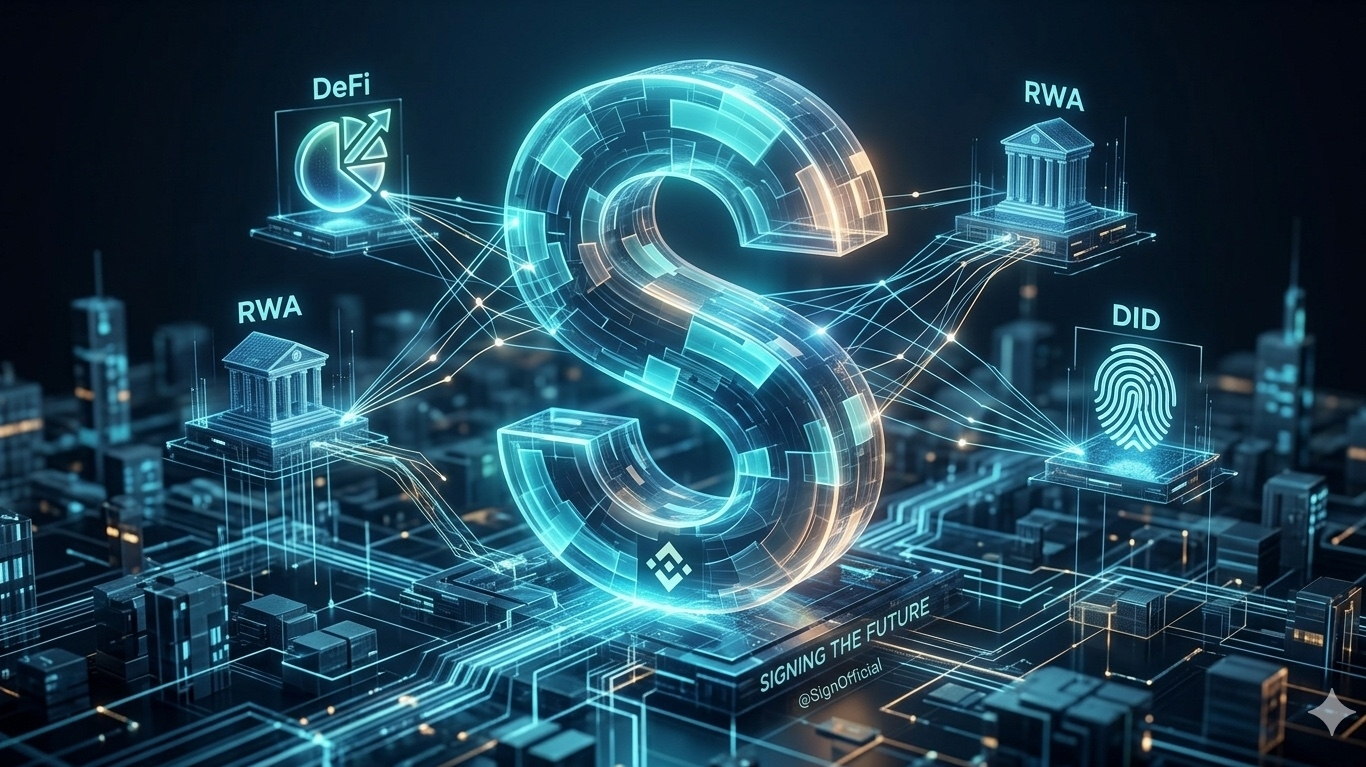
We are officially entering the era of Verifiable Everything. We live in a world increasingly flooded with AI-generated deepfakes, "paper" assets with no backing, and digital identities that can be spoofed in seconds. In this landscape, the most valuable currency isn't just a speculative token—it’s Proof. In the new economy, if you can’t prove an asset is real, a person is human, or a piece of data is authentic, it’s worth exactly zero.
This is where the entire game changes. I’ve been deep-diving into the "plumbing" of Web3, and @Sign (Sign Protocol) is quietly building the standard for on-chain attestation that the entire industry is going to depend on. It’s the missing piece of the puzzle that turns blockchain from a playground for speculators into a powerhouse for global commerce. 🏗️
Why "Attestation" is the Only Meta That Matters
To understand why @Sign is the cornerstone of the next bull run, you have to look at the massive roadblocks currently holding back mass adoption. Blockchain is great at moving value, but it’s historically terrible at verifying context. @Sign fixes this by allowing anyone to sign and verify any piece of information on-chain.
Think about the implications across these three massive pillars:
DeFi 2.0 & Undercollateralized Loans:
Currently, DeFi is limited because you have to over-collateralize everything. Why? Because the protocol doesn't know if you’re trustworthy. It enables verified credit scores and financial histories to be bridged on-chain without doxxing your private data. This unlocks trillions in liquidity that was previously trapped in the traditional "off-chain" world. ✅RWA (Real World Assets):
The tokenization of real estate, gold, and fine art is the "Holy Grail" of crypto. But a token representing a house is useless if you can't prove the deed is legitimate and the taxes are paid. It provides the immutable proof of ownership and compliance needed to make RWAs tradable with total confidence. It turns "trust me" into "verify me." ✅Governance & The Bot War:
DAOs and social platforms are currently under siege by Sybil attacks—bad actors creating thousands of fake accounts to swing votes. By using sign for Decentralized Identity (DID), communities can filter out the bots from the builders, ensuring that only verified, unique humans are shaping the future of the protocol. ✅
The "Trust Layer" for the Global Internet
The "Sign" protocol isn't just another dApp or a flash-in-the-pan yield farm; it is a Trust Layer. It sits beneath the surface, connecting Real-World Data, Decentralized Identity, and Financial Assets into one cohesive, verifiable web.
While the retail crowd fights over 5% swings on legacy coins or hopes for a "tweet pump," the smart money—the institutions and the true builders—are positioning in the infrastructure that makes those coins actually usable in the real world. You don’t get a house by buying the paint; you get it by owning the foundation.
The Verdict: Are You Early or Just Watching?
The history of crypto proves one thing: the biggest gains don't come from following the noise; they come from identifying the inevitable. It is inevitable that the world will require better digital proof. It is inevitable that RWAs will move on-chain. And it is inevitable that a standard will emerge to handle those attestations.
The "Proof-of-Reality" meta is coming, and it’s going to be led by @SignOfficial We are moving away from "Trust me, bro" and moving toward "$SIGN it on-chain."
Stop trading the noise. Start backing the foundation. The future isn't just being built; it's being Signed. ✍️✨
Are you positioned for the infrastructure flip, or will you be buying the top when everyone else realizes the "roots" were the real play?
Are you early, or are you just watching? 👇
#SignDigitalSovereignInfra #Web3 #SignProtocol #BullMarket #FutureOfFinance
BALASTIC ON THE WAY?
🚀
The "Invisible" Bull Market: Why the Next 100x Isn't a Meme, It’s an Infrastructure.🚀
Everyone is staring at the same charts, chasing the same "Inu" derivatives, and wondering why their portfolio is stagnant. They are hunting for the next "moon mission" in the bargain bin of recycled ideas. The truth? You’re looking at the leaves when you should be looking at the roots. While the retail crowd is distracted by 24-hour volatility, a tectonic shift is happening in the bedrock of Web3. 🌳
We are officially entering the era of Verifiable Everything. We live in a world increasingly flooded with AI-generated deepfakes, "paper" assets with no backing, and digital identities that can be spoofed in seconds. In this landscape, the most valuable currency isn't just a speculative token—it’s Proof. In the new economy, if you can’t prove an asset is real, a person is human, or a piece of data is authentic, it’s worth exactly zero.
This is where the entire game changes. I’ve been deep-diving into the "plumbing" of Web3, and @Sign (Sign Protocol) is quietly building the standard for on-chain attestation that the entire industry is going to depend on. It’s the missing piece of the puzzle that turns blockchain from a playground for speculators into a powerhouse for global commerce. 🏗️
Why "Attestation" is the Only Meta That Matters
To understand why @Sign is the cornerstone of the next bull run, you have to look at the massive roadblocks currently holding back mass adoption. Blockchain is great at moving value, but it’s historically terrible at verifying context. @Sign fixes this by allowing anyone to sign and verify any piece of information on-chain.
Think about the implications across these three massive pillars:
DeFi 2.0 & Undercollateralized Loans:
Currently, DeFi is limited because you have to over-collateralize everything. Why? Because the protocol doesn't know if you’re trustworthy. It enables verified credit scores and financial histories to be bridged on-chain without doxxing your private data. This unlocks trillions in liquidity that was previously trapped in the traditional "off-chain" world. ✅RWA (Real World Assets):
The tokenization of real estate, gold, and fine art is the "Holy Grail" of crypto. But a token representing a house is useless if you can't prove the deed is legitimate and the taxes are paid. It provides the immutable proof of ownership and compliance needed to make RWAs tradable with total confidence. It turns "trust me" into "verify me." ✅Governance & The Bot War:
DAOs and social platforms are currently under siege by Sybil attacks—bad actors creating thousands of fake accounts to swing votes. By using sign for Decentralized Identity (DID), communities can filter out the bots from the builders, ensuring that only verified, unique humans are shaping the future of the protocol. ✅
The "Trust Layer" for the Global Internet
The "Sign" protocol isn't just another dApp or a flash-in-the-pan yield farm; it is a Trust Layer. It sits beneath the surface, connecting Real-World Data, Decentralized Identity, and Financial Assets into one cohesive, verifiable web.
While the retail crowd fights over 5% swings on legacy coins or hopes for a "tweet pump," the smart money—the institutions and the true builders—are positioning in the infrastructure that makes those coins actually usable in the real world. You don’t get a house by buying the paint; you get it by owning the foundation.
The Verdict: Are You Early or Just Watching?
The history of crypto proves one thing: the biggest gains don't come from following the noise; they come from identifying the inevitable. It is inevitable that the world will require better digital proof. It is inevitable that RWAs will move on-chain. And it is inevitable that a standard will emerge to handle those attestations.
The "Proof-of-Reality" meta is coming, and it’s going to be led by @SignOfficial We are moving away from "Trust me, bro" and moving toward "$SIGN it on-chain."
Stop trading the noise. Start backing the foundation. The future isn't just being built; it's being Signed. ✍️✨
Are you positioned for the infrastructure flip, or will you be buying the top when everyone else realizes the "roots" were the real play?
Are you early, or are you just watching? 👇
#SignDigitalSovereignInfra #Web3 #SignProtocol #BullMarket #FutureOfFinance
The "Invisible" Bull Market: Why the Next 100x Isn't a Meme, It’s an Infrastructure.🚀
Everyone is staring at the same charts, chasing the same "Inu" derivatives, and wondering why their portfolio is stagnant. They are hunting for the next "moon mission" in the bargain bin of recycled ideas. The truth? You’re looking at the leaves when you should be looking at the roots. While the retail crowd is distracted by 24-hour volatility, a tectonic shift is happening in the bedrock of Web3. 🌳
We are officially entering the era of Verifiable Everything. We live in a world increasingly flooded with AI-generated deepfakes, "paper" assets with no backing, and digital identities that can be spoofed in seconds. In this landscape, the most valuable currency isn't just a speculative token—it’s Proof. In the new economy, if you can’t prove an asset is real, a person is human, or a piece of data is authentic, it’s worth exactly zero.
This is where the entire game changes. I’ve been deep-diving into the "plumbing" of Web3, and @Sign (Sign Protocol) is quietly building the standard for on-chain attestation that the entire industry is going to depend on. It’s the missing piece of the puzzle that turns blockchain from a playground for speculators into a powerhouse for global commerce. 🏗️
Why "Attestation" is the Only Meta That Matters
To understand why @Sign is the cornerstone of the next bull run, you have to look at the massive roadblocks currently holding back mass adoption. Blockchain is great at moving value, but it’s historically terrible at verifying context. @Sign fixes this by allowing anyone to sign and verify any piece of information on-chain.
Think about the implications across these three massive pillars:
DeFi 2.0 & Undercollateralized Loans:
Currently, DeFi is limited because you have to over-collateralize everything. Why? Because the protocol doesn't know if you’re trustworthy. It enables verified credit scores and financial histories to be bridged on-chain without doxxing your private data. This unlocks trillions in liquidity that was previously trapped in the traditional "off-chain" world. ✅RWA (Real World Assets):
The tokenization of real estate, gold, and fine art is the "Holy Grail" of crypto. But a token representing a house is useless if you can't prove the deed is legitimate and the taxes are paid. It provides the immutable proof of ownership and compliance needed to make RWAs tradable with total confidence. It turns "trust me" into "verify me." ✅Governance & The Bot War:
DAOs and social platforms are currently under siege by Sybil attacks—bad actors creating thousands of fake accounts to swing votes. By using sign for Decentralized Identity (DID), communities can filter out the bots from the builders, ensuring that only verified, unique humans are shaping the future of the protocol. ✅
The "Trust Layer" for the Global Internet
The "Sign" protocol isn't just another dApp or a flash-in-the-pan yield farm; it is a Trust Layer. It sits beneath the surface, connecting Real-World Data, Decentralized Identity, and Financial Assets into one cohesive, verifiable web.
While the retail crowd fights over 5% swings on legacy coins or hopes for a "tweet pump," the smart money—the institutions and the true builders—are positioning in the infrastructure that makes those coins actually usable in the real world. You don’t get a house by buying the paint; you get it by owning the foundation.
The Verdict: Are You Early or Just Watching?
The history of crypto proves one thing: the biggest gains don't come from following the noise; they come from identifying the inevitable. It is inevitable that the world will require better digital proof. It is inevitable that RWAs will move on-chain. And it is inevitable that a standard will emerge to handle those attestations.
The "Proof-of-Reality" meta is coming, and it’s going to be led by @SignOfficial We are moving away from "Trust me, bro" and moving toward "$SIGN it on-chain."
Stop trading the noise. Start backing the foundation. The future isn't just being built; it's being Signed. ✍️✨
Are you positioned for the infrastructure flip, or will you be buying the top when everyone else realizes the "roots" were the real play?
Are you early, or are you just watching? 👇
#SignDigitalSovereignInfra #Web3 #SignProtocol #BullMarket #FutureOfFinance
48


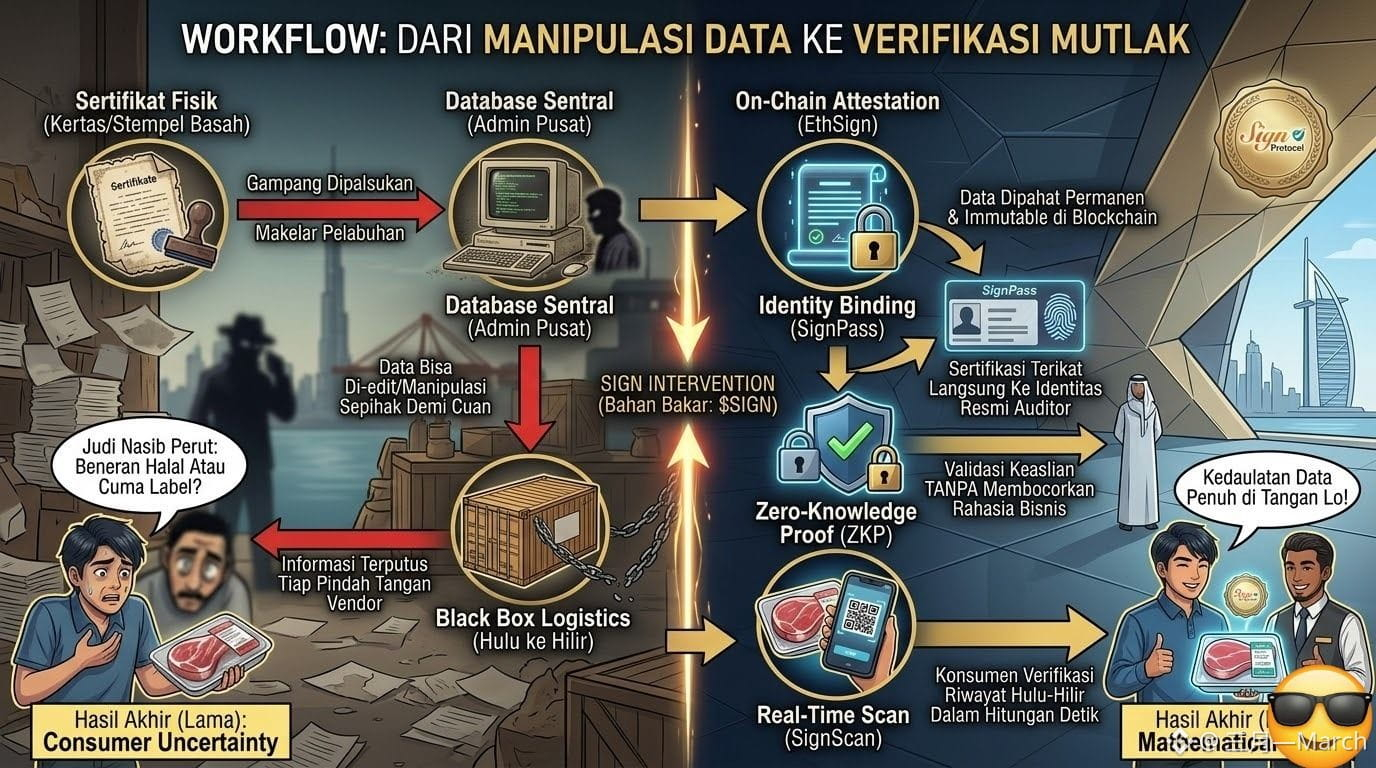
I believe a piece of paper can already prove that the item you bought from Arabia is halal and not expired????
I often think twice, man!!
I need a digital certificate that guarantees it won't be tampered with by the "big player" over there...
I can track it directly if I want to buy it.
Regarding my stomach and data, I can't mess around because🤣🤣🤣
Moreover, I've also been involved in blockchain for over half a decade..
I believe the system brought by the sign protocol can help solve this problem.
If the data is stored on-chain, I can directly trace "this product entered the market on this date and was registered as halal at this time". Clearly, there will be the name of the wallet of the person who registered it, when it was registered, and the amount is clear.
If something like this is implemented in the Middle East using this kind of crypto technology, I won't worry anymore about buying ajwa dates as a gift for my mom's favorite👌👌🤭
#signdigitalsovereigninfra | #signprotocol
$SIGN
@SignOfficial
I believe a piece of paper can already prove that the item you bought from Arabia is halal and not expired????
I often think twice, man!!
I need a digital certificate that guarantees it won't be tampered with by the "big player" over there...
I can track it directly if I want to buy it.
Regarding my stomach and data, I can't mess around because🤣🤣🤣
Moreover, I've also been involved in blockchain for over half a decade..
I believe the system brought by the sign protocol can help solve this problem.
If the data is stored on-chain, I can directly trace "this product entered the market on this date and was registered as halal at this time". Clearly, there will be the name of the wallet of the person who registered it, when it was registered, and the amount is clear.
If something like this is implemented in the Middle East using this kind of crypto technology, I won't worry anymore about buying ajwa dates as a gift for my mom's favorite👌👌🤭
#signdigitalsovereigninfra | #signprotocol
$SIGN
@SignOfficial
I often think twice, man!!
I need a digital certificate that guarantees it won't be tampered with by the "big player" over there...
I can track it directly if I want to buy it.
Regarding my stomach and data, I can't mess around because🤣🤣🤣
Moreover, I've also been involved in blockchain for over half a decade..
I believe the system brought by the sign protocol can help solve this problem.
If the data is stored on-chain, I can directly trace "this product entered the market on this date and was registered as halal at this time". Clearly, there will be the name of the wallet of the person who registered it, when it was registered, and the amount is clear.
If something like this is implemented in the Middle East using this kind of crypto technology, I won't worry anymore about buying ajwa dates as a gift for my mom's favorite👌👌🤭
#signdigitalsovereigninfra | #signprotocol
$SIGN
@SignOfficial
6
1k

Article
Sign Protocol's Role in Web3: Solving a Critical and Often Overlooked Challenge@SignOfficial #SignDigitalSovereignInfra $SIGN #SIGN After designing and building many web3 products, on thing become clear, the hardest issue is not gas fees or scaling. The real challenge is coordination-decision like who worthy of rewards, who eligibility for access, and how to manage these decisions without compromising systems stability.
This problem is rarely addressed openly, yest it affects nearly every project. With it is grant programs, Community rewards or incentive campaigns, the process often begin with clarity but suddenly turns chaotic. Applications grow, data becomes inconsistent and groups are left managing spreadsheets, verifying wallets, and manually checking contributions. Even after Continuous effort, mistakes still occur, real contributors are missed while duplicate participants or low quality sometimes slip through.
Traditional solutions strategies do not completely solve this. Off cahin systems like spreadsheets are fragile and expose to human errors. On chain solutions, while transparent can be inflexible. Once rules are written into smart contracts, adopting them becomes hard. Any modification may needs complex updates which adds risk and friction.
This is where #SIGN protocol introduces various strategy, In place of forcing everything into one fixed system, SIGN protocol let developers to define conditions as verifiable-attestations pieces of information that can be again used across applications. Rather than hardcoding every rule, developers can rely on proofs such as endorsemens,contributors, completed tasks, or verified success.
For instance, in a grant program, eligibility no longer require to depend on manual review. A participant can qualify based on a combination of attestations, proof of past contributions, recognition from other developers or completion of special milestones. These signal can be independently verified and than used by smart contracts to automate decisions.
This model decreasing complexity significantly. In place of rebuilding verification logic every single time, project can integrate available trusted data and respond to it dynamically. It change the focus from managing information or data to utilise it effectively.
Another main benefit is flexibility. $SIGN protocol does not force a single identity system. Users do not to rely on one platform or profile. Their activities on chain actions, community involvement and development work can remain divided while still being conducted through attestations. The provide a more open and modular system.
The importance of such infrastructure becoming specially clear in regions like the Middle East, where digital transformation is speeding up. As Enterprises and Governments are investing in blockchain, secure data systems and digital identity. In this atmosphere tools like #SIGNprotocol can play a game changer role by enabling trusted data exchange and verifiable credentials across platforms. This is crucial for scaling Web3 applications in regulated and quickly evolving markets.
Looking ahead, this strategy can also support the Rise of AI agents interacting with blockchain systems. Mentioned agents will need more than just wallet Assets or balances. They will need context, trust signal and history. As we also know that attestations could assist to provide that layer of intelligence, letting automated systems to make informed decisions without constant revalidation.
However, Things remain. Questions around, How trust is maintained, who can issue attestations and to prevent misuse are still open. If alots of power is concentrated among some users, the system risk becoming centralized again.
#SIGNprotocol does not eliminate these concerns entirely. However it offers a practical framework to handle real-world complexity without constant breakdown.
After years of interacting with fragmented systems and inefficient workflow that alone represents fruitful progress for Web3.
@SignOfficial #SignDigitalSovereignInfra $SIGN #SIGN
Sign Protocol's Role in Web3: Solving a Critical and Often Overlooked Challenge
@SignOfficial #SignDigitalSovereignInfra $SIGN #SIGN After designing and building many web3 products, on thing become clear, the hardest issue is not gas fees or scaling. The real challenge is coordination-decision like who worthy of rewards, who eligibility for access, and how to manage these decisions without compromising systems stability.
This problem is rarely addressed openly, yest it affects nearly every project. With it is grant programs, Community rewards or incentive campaigns, the process often begin with clarity but suddenly turns chaotic. Applications grow, data becomes inconsistent and groups are left managing spreadsheets, verifying wallets, and manually checking contributions. Even after Continuous effort, mistakes still occur, real contributors are missed while duplicate participants or low quality sometimes slip through.
Traditional solutions strategies do not completely solve this. Off cahin systems like spreadsheets are fragile and expose to human errors. On chain solutions, while transparent can be inflexible. Once rules are written into smart contracts, adopting them becomes hard. Any modification may needs complex updates which adds risk and friction.
This is where #SIGN protocol introduces various strategy, In place of forcing everything into one fixed system, SIGN protocol let developers to define conditions as verifiable-attestations pieces of information that can be again used across applications. Rather than hardcoding every rule, developers can rely on proofs such as endorsemens,contributors, completed tasks, or verified success.
For instance, in a grant program, eligibility no longer require to depend on manual review. A participant can qualify based on a combination of attestations, proof of past contributions, recognition from other developers or completion of special milestones. These signal can be independently verified and than used by smart contracts to automate decisions.
This model decreasing complexity significantly. In place of rebuilding verification logic every single time, project can integrate available trusted data and respond to it dynamically. It change the focus from managing information or data to utilise it effectively.
Another main benefit is flexibility. $SIGN protocol does not force a single identity system. Users do not to rely on one platform or profile. Their activities on chain actions, community involvement and development work can remain divided while still being conducted through attestations. The provide a more open and modular system.
The importance of such infrastructure becoming specially clear in regions like the Middle East, where digital transformation is speeding up. As Enterprises and Governments are investing in blockchain, secure data systems and digital identity. In this atmosphere tools like #SIGNprotocol can play a game changer role by enabling trusted data exchange and verifiable credentials across platforms. This is crucial for scaling Web3 applications in regulated and quickly evolving markets.
Looking ahead, this strategy can also support the Rise of AI agents interacting with blockchain systems. Mentioned agents will need more than just wallet Assets or balances. They will need context, trust signal and history. As we also know that attestations could assist to provide that layer of intelligence, letting automated systems to make informed decisions without constant revalidation.
However, Things remain. Questions around, How trust is maintained, who can issue attestations and to prevent misuse are still open. If alots of power is concentrated among some users, the system risk becoming centralized again.
#SIGNprotocol does not eliminate these concerns entirely. However it offers a practical framework to handle real-world complexity without constant breakdown.
After years of interacting with fragmented systems and inefficient workflow that alone represents fruitful progress for Web3.
@SignOfficial #SignDigitalSovereignInfra $SIGN #SIGN
This problem is rarely addressed openly, yest it affects nearly every project. With it is grant programs, Community rewards or incentive campaigns, the process often begin with clarity but suddenly turns chaotic. Applications grow, data becomes inconsistent and groups are left managing spreadsheets, verifying wallets, and manually checking contributions. Even after Continuous effort, mistakes still occur, real contributors are missed while duplicate participants or low quality sometimes slip through.
Traditional solutions strategies do not completely solve this. Off cahin systems like spreadsheets are fragile and expose to human errors. On chain solutions, while transparent can be inflexible. Once rules are written into smart contracts, adopting them becomes hard. Any modification may needs complex updates which adds risk and friction.
This is where #SIGN protocol introduces various strategy, In place of forcing everything into one fixed system, SIGN protocol let developers to define conditions as verifiable-attestations pieces of information that can be again used across applications. Rather than hardcoding every rule, developers can rely on proofs such as endorsemens,contributors, completed tasks, or verified success.
For instance, in a grant program, eligibility no longer require to depend on manual review. A participant can qualify based on a combination of attestations, proof of past contributions, recognition from other developers or completion of special milestones. These signal can be independently verified and than used by smart contracts to automate decisions.
This model decreasing complexity significantly. In place of rebuilding verification logic every single time, project can integrate available trusted data and respond to it dynamically. It change the focus from managing information or data to utilise it effectively.
Another main benefit is flexibility. $SIGN protocol does not force a single identity system. Users do not to rely on one platform or profile. Their activities on chain actions, community involvement and development work can remain divided while still being conducted through attestations. The provide a more open and modular system.
The importance of such infrastructure becoming specially clear in regions like the Middle East, where digital transformation is speeding up. As Enterprises and Governments are investing in blockchain, secure data systems and digital identity. In this atmosphere tools like #SIGNprotocol can play a game changer role by enabling trusted data exchange and verifiable credentials across platforms. This is crucial for scaling Web3 applications in regulated and quickly evolving markets.
Looking ahead, this strategy can also support the Rise of AI agents interacting with blockchain systems. Mentioned agents will need more than just wallet Assets or balances. They will need context, trust signal and history. As we also know that attestations could assist to provide that layer of intelligence, letting automated systems to make informed decisions without constant revalidation.
However, Things remain. Questions around, How trust is maintained, who can issue attestations and to prevent misuse are still open. If alots of power is concentrated among some users, the system risk becoming centralized again.
#SIGNprotocol does not eliminate these concerns entirely. However it offers a practical framework to handle real-world complexity without constant breakdown.
After years of interacting with fragmented systems and inefficient workflow that alone represents fruitful progress for Web3.
@SignOfficial #SignDigitalSovereignInfra $SIGN #SIGN
34
1
62
4.6k

·
--
#signdigitalsovereigninfra $SIGN 🚨🚨 THIS PROJECT IS QUIETLY TAKING OVER WEB3…
Most people are still sleeping on Signofficial.
But builders?
They’re already using it.
Here’s what you’re missing:
👉 It’s not just another token
👉 It’s building on-chain credentials & verification
👉 Real-world use cases are already happening
Read that again.
While you’re chasing hype coins…
Smart money is watching infrastructure.
Because in the next cycle:
💡 Utility > Noise
And Sign Protocol sits right in the middle of that shift.
The question is:
👉 Will you discover it early… or FOMO later?
#Crypto #Web3 #SignProtocol #BinanceSquare #altcoins
#signdigitalsovereigninfra $SIGN 🚨🚨 THIS PROJECT IS QUIETLY TAKING OVER WEB3…
Most people are still sleeping on Signofficial.
But builders?
They’re already using it.
Here’s what you’re missing:
👉 It’s not just another token
👉 It’s building on-chain credentials & verification
👉 Real-world use cases are already happening
Read that again.
While you’re chasing hype coins…
Smart money is watching infrastructure.
Because in the next cycle:
💡 Utility > Noise
And Sign Protocol sits right in the middle of that shift.
The question is:
👉 Will you discover it early… or FOMO later?
#Crypto #Web3 #SignProtocol #BinanceSquare #altcoins
Most people are still sleeping on Signofficial.
But builders?
They’re already using it.
Here’s what you’re missing:
👉 It’s not just another token
👉 It’s building on-chain credentials & verification
👉 Real-world use cases are already happening
Read that again.
While you’re chasing hype coins…
Smart money is watching infrastructure.
Because in the next cycle:
💡 Utility > Noise
And Sign Protocol sits right in the middle of that shift.
The question is:
👉 Will you discover it early… or FOMO later?
#Crypto #Web3 #SignProtocol #BinanceSquare #altcoins
2
6

·
--
Bullish
$SIGN is shaking up the market! +60–65% in 24 hours 🚀
Current price ~$0.051–0.052, market cap ~$85M, trading volume already $200–220M per day!
Sign Protocol is an omni-chain attestation layer: data verification, digital signatures, credentials on any chain. Works with governments (Asia, Middle East), TokenTable for airdrop/token distribution worth billions $.
Total supply 10B, circulating ~1.64B → huge upside.
This is infrastructure for real adoption: identity, verifiable credentials, sovereign blockchain.
Anyone already farming or holding $SIGN — write in the comments!
#SIGN #SignProtocol #omnichain #Write2Earn #BinanceSquare
$SIGN is shaking up the market! +60–65% in 24 hours 🚀
Current price ~$0.051–0.052, market cap ~$85M, trading volume already $200–220M per day!
Sign Protocol is an omni-chain attestation layer: data verification, digital signatures, credentials on any chain. Works with governments (Asia, Middle East), TokenTable for airdrop/token distribution worth billions $.
Total supply 10B, circulating ~1.64B → huge upside.
This is infrastructure for real adoption: identity, verifiable credentials, sovereign blockchain.
Anyone already farming or holding $SIGN — write in the comments!
#SIGN #SignProtocol #omnichain #Write2Earn #BinanceSquare
Current price ~$0.051–0.052, market cap ~$85M, trading volume already $200–220M per day!
Sign Protocol is an omni-chain attestation layer: data verification, digital signatures, credentials on any chain. Works with governments (Asia, Middle East), TokenTable for airdrop/token distribution worth billions $.
Total supply 10B, circulating ~1.64B → huge upside.
This is infrastructure for real adoption: identity, verifiable credentials, sovereign blockchain.
Anyone already farming or holding $SIGN — write in the comments!
#SIGN #SignProtocol #omnichain #Write2Earn #BinanceSquare
96

Article
🌐 Revolutionizing Digital Money: The Sign ProtocolHave you ever felt frustrated by the challenges of sending money across borders? Let me share a story. 💬
Meet Ali: A Small Business Owner's Struggle
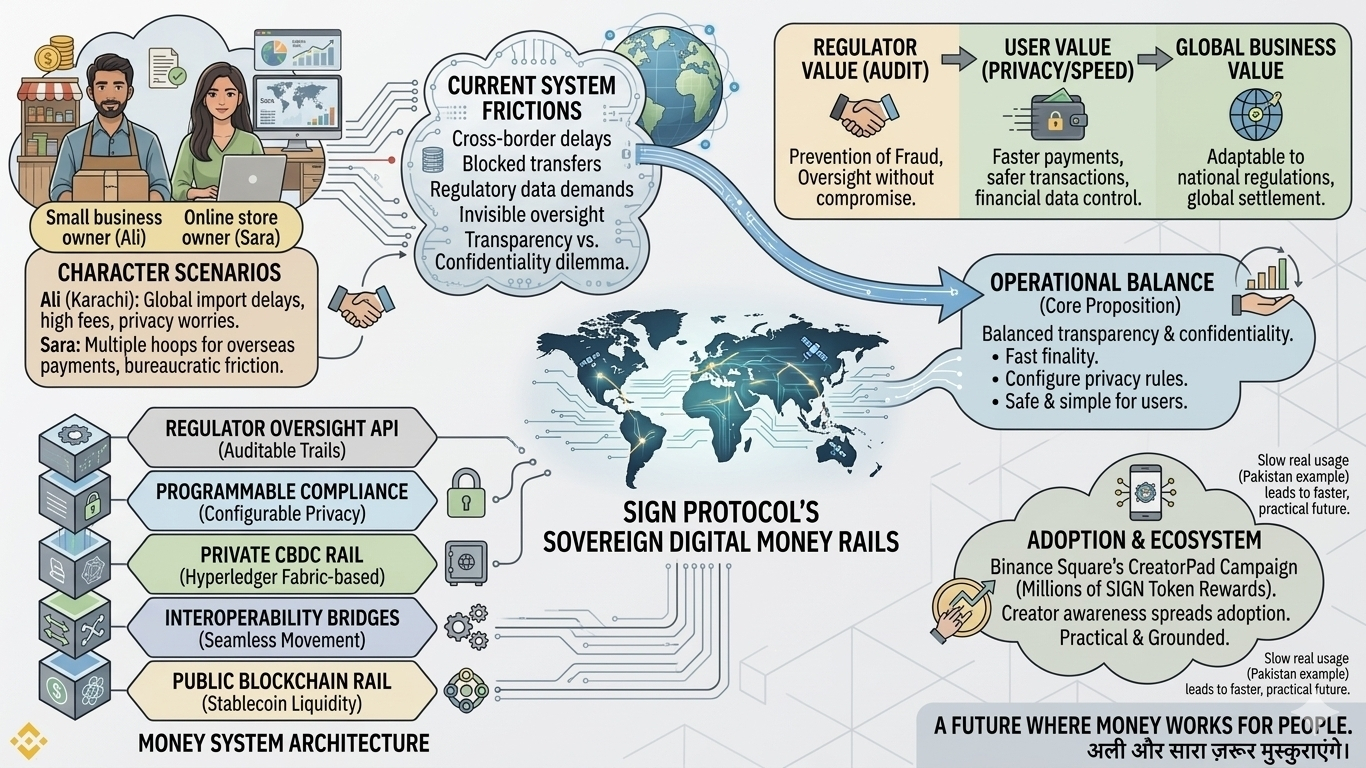
My friend Ali runs a small import business in Karachi. The other day, he confided in me about his woes: slow transactions, blocked payments, and sky-high fees. On top of that, he worries about his privacy; he doesn’t want everyone to have a glimpse into his financial activities. It got me thinking: how can we create a system that’s not only fast and secure but also respects privacy while keeping regulators satisfied? 🤔
That’s when I stumbled upon Sign Protocol’s New Money System—a game-changer in digital finance!
---
🌟 Why Is This Important?
Ali's experience isn't unique. Millions around the world face similar dilemmas.
- Governments need to prevent fraud and ensure compliance.
- Citizens want both privacy and convenience in their financial transactions.
Most current systems tend to prioritize either speed or privacy, often forcing users to sacrifice one for the other.
Say Hello to Sign Protocol! 👋
Sign Protocol doesn’t aim to be just another cryptocurrency. Instead, it offers a dual-rail digital money system that caters to both users and regulators. Here’s how it works:
1. Public Blockchain: This transparent layer is ideal for corporate transactions and cross-border payments.
2. Private, Permissioned Blockchain: Designed for sensitive operations, like Central Bank Digital Currencies (CBDCs). Here, personal transactions stay confidential—but regulators can access them when necessary.
Imagine Ali sending money internationally. It starts in a private CBDC channel, morphs into a stablecoin for quick cross-border settlement, and reaches the recipient instantly—without compromising on privacy. It’s efficient, secure, and user-friendly! 🚀
---
🔄 Two Rails, One Seamless Experience
What sets Sign Protocol apart? The way these two rails interact. With bridges, users can move funds seamlessly between the private CBDC and public stablecoins.
- This technology acts like invisible plumbing, ensuring a smooth transaction experience.
- Imagine Ali sending money abroad in just minutes while keeping his data safe.
⚙️ Cutting-Edge Technology
The architecture is built on Hyperledger Fabric, offering:
- Configurable Privacy: Tailor your privacy settings.
- Fast Finality: Speedy confirmations—crucial for businesses.
- Strong Governance: Maintaining transparency and compliance without sacrificing confidentiality.
This means that high-volume transactions can remain private while still being auditable by authorities. 📊
---
🌈 A User-Centric Vision
For users like Ali, this evolution means no more wasting hours in bank queues or navigating complicated processes. With faster payments, safer transactions, and greater control over financial data, the future looks bright! Additionally, regulators benefit from the visibility they need without compromising individual privacy.
The simplicity and effectiveness of Sign Protocol make it practical and ready for real-world applications! 🌍
---
📣 Join the Movement!
But wait, there’s more! The Sign Protocol ecosystem is actively engaging communities through initiatives like Binance Square’s CreatorPad. They recently launched a campaign offering millions of SIGN tokens to creators. This presents an excellent opportunity for people like Ali and Sara (another friend of mine with an online store) to learn about digital finance and earn rewards for their participation.
---
🚀 The Future Awaits!
Envision a world where daily transactions are seamless and adoption grows at a rapid pace. Systems like Sign Protocol could fundamentally transform how nations perceive and use money.
So next time you face banking delays or payment headaches, remember: a solution is emerging—one that prioritizes privacy, meets regulatory needs, and speeds up money transfers.
This isn't just a technical advancement; it’s a step toward a future where money truly works for the people. 🌟
---
What’s your take on the evolution of digital finance? Are you excited about where things are headed? Let’s discuss in the comments below!
#SignProtocol l #DigitalFinance #Binance #FutureOfMoney #Privacy #CBDC $SIGN #SignProtocol #Web3 #Crypto #Onchain #SIGN @SignOfficial $SIGN #SignDigitalSovereignInfra
🌐 Revolutionizing Digital Money: The Sign Protocol
Have you ever felt frustrated by the challenges of sending money across borders? Let me share a story. 💬
Meet Ali: A Small Business Owner's Struggle
My friend Ali runs a small import business in Karachi. The other day, he confided in me about his woes: slow transactions, blocked payments, and sky-high fees. On top of that, he worries about his privacy; he doesn’t want everyone to have a glimpse into his financial activities. It got me thinking: how can we create a system that’s not only fast and secure but also respects privacy while keeping regulators satisfied? 🤔
That’s when I stumbled upon Sign Protocol’s New Money System—a game-changer in digital finance!
---
🌟 Why Is This Important?
Ali's experience isn't unique. Millions around the world face similar dilemmas.
- Governments need to prevent fraud and ensure compliance.
- Citizens want both privacy and convenience in their financial transactions.
Most current systems tend to prioritize either speed or privacy, often forcing users to sacrifice one for the other.
Say Hello to Sign Protocol! 👋
Sign Protocol doesn’t aim to be just another cryptocurrency. Instead, it offers a dual-rail digital money system that caters to both users and regulators. Here’s how it works:
1. Public Blockchain: This transparent layer is ideal for corporate transactions and cross-border payments.
2. Private, Permissioned Blockchain: Designed for sensitive operations, like Central Bank Digital Currencies (CBDCs). Here, personal transactions stay confidential—but regulators can access them when necessary.
Imagine Ali sending money internationally. It starts in a private CBDC channel, morphs into a stablecoin for quick cross-border settlement, and reaches the recipient instantly—without compromising on privacy. It’s efficient, secure, and user-friendly! 🚀
---
🔄 Two Rails, One Seamless Experience
What sets Sign Protocol apart? The way these two rails interact. With bridges, users can move funds seamlessly between the private CBDC and public stablecoins.
- This technology acts like invisible plumbing, ensuring a smooth transaction experience.
- Imagine Ali sending money abroad in just minutes while keeping his data safe.
⚙️ Cutting-Edge Technology
The architecture is built on Hyperledger Fabric, offering:
- Configurable Privacy: Tailor your privacy settings.
- Fast Finality: Speedy confirmations—crucial for businesses.
- Strong Governance: Maintaining transparency and compliance without sacrificing confidentiality.
This means that high-volume transactions can remain private while still being auditable by authorities. 📊
---
🌈 A User-Centric Vision
For users like Ali, this evolution means no more wasting hours in bank queues or navigating complicated processes. With faster payments, safer transactions, and greater control over financial data, the future looks bright! Additionally, regulators benefit from the visibility they need without compromising individual privacy.
The simplicity and effectiveness of Sign Protocol make it practical and ready for real-world applications! 🌍
---
📣 Join the Movement!
But wait, there’s more! The Sign Protocol ecosystem is actively engaging communities through initiatives like Binance Square’s CreatorPad. They recently launched a campaign offering millions of SIGN tokens to creators. This presents an excellent opportunity for people like Ali and Sara (another friend of mine with an online store) to learn about digital finance and earn rewards for their participation.
---
🚀 The Future Awaits!
Envision a world where daily transactions are seamless and adoption grows at a rapid pace. Systems like Sign Protocol could fundamentally transform how nations perceive and use money.
So next time you face banking delays or payment headaches, remember: a solution is emerging—one that prioritizes privacy, meets regulatory needs, and speeds up money transfers.
This isn't just a technical advancement; it’s a step toward a future where money truly works for the people. 🌟
---
What’s your take on the evolution of digital finance? Are you excited about where things are headed? Let’s discuss in the comments below!
#SignProtocol l #DigitalFinance #Binance #FutureOfMoney #Privacy #CBDC $SIGN #SignProtocol #Web3 #Crypto #Onchain #SIGN @SignOfficial $SIGN #SignDigitalSovereignInfra
Meet Ali: A Small Business Owner's Struggle
My friend Ali runs a small import business in Karachi. The other day, he confided in me about his woes: slow transactions, blocked payments, and sky-high fees. On top of that, he worries about his privacy; he doesn’t want everyone to have a glimpse into his financial activities. It got me thinking: how can we create a system that’s not only fast and secure but also respects privacy while keeping regulators satisfied? 🤔
That’s when I stumbled upon Sign Protocol’s New Money System—a game-changer in digital finance!
---
🌟 Why Is This Important?
Ali's experience isn't unique. Millions around the world face similar dilemmas.
- Governments need to prevent fraud and ensure compliance.
- Citizens want both privacy and convenience in their financial transactions.
Most current systems tend to prioritize either speed or privacy, often forcing users to sacrifice one for the other.
Say Hello to Sign Protocol! 👋
Sign Protocol doesn’t aim to be just another cryptocurrency. Instead, it offers a dual-rail digital money system that caters to both users and regulators. Here’s how it works:
1. Public Blockchain: This transparent layer is ideal for corporate transactions and cross-border payments.
2. Private, Permissioned Blockchain: Designed for sensitive operations, like Central Bank Digital Currencies (CBDCs). Here, personal transactions stay confidential—but regulators can access them when necessary.
Imagine Ali sending money internationally. It starts in a private CBDC channel, morphs into a stablecoin for quick cross-border settlement, and reaches the recipient instantly—without compromising on privacy. It’s efficient, secure, and user-friendly! 🚀
---
🔄 Two Rails, One Seamless Experience
What sets Sign Protocol apart? The way these two rails interact. With bridges, users can move funds seamlessly between the private CBDC and public stablecoins.
- This technology acts like invisible plumbing, ensuring a smooth transaction experience.
- Imagine Ali sending money abroad in just minutes while keeping his data safe.
⚙️ Cutting-Edge Technology
The architecture is built on Hyperledger Fabric, offering:
- Configurable Privacy: Tailor your privacy settings.
- Fast Finality: Speedy confirmations—crucial for businesses.
- Strong Governance: Maintaining transparency and compliance without sacrificing confidentiality.
This means that high-volume transactions can remain private while still being auditable by authorities. 📊
---
🌈 A User-Centric Vision
For users like Ali, this evolution means no more wasting hours in bank queues or navigating complicated processes. With faster payments, safer transactions, and greater control over financial data, the future looks bright! Additionally, regulators benefit from the visibility they need without compromising individual privacy.
The simplicity and effectiveness of Sign Protocol make it practical and ready for real-world applications! 🌍
---
📣 Join the Movement!
But wait, there’s more! The Sign Protocol ecosystem is actively engaging communities through initiatives like Binance Square’s CreatorPad. They recently launched a campaign offering millions of SIGN tokens to creators. This presents an excellent opportunity for people like Ali and Sara (another friend of mine with an online store) to learn about digital finance and earn rewards for their participation.
---
🚀 The Future Awaits!
Envision a world where daily transactions are seamless and adoption grows at a rapid pace. Systems like Sign Protocol could fundamentally transform how nations perceive and use money.
So next time you face banking delays or payment headaches, remember: a solution is emerging—one that prioritizes privacy, meets regulatory needs, and speeds up money transfers.
This isn't just a technical advancement; it’s a step toward a future where money truly works for the people. 🌟
---
What’s your take on the evolution of digital finance? Are you excited about where things are headed? Let’s discuss in the comments below!
#SignProtocol l #DigitalFinance #Binance #FutureOfMoney #Privacy #CBDC $SIGN #SignProtocol #Web3 #Crypto #Onchain #SIGN @SignOfficial $SIGN #SignDigitalSovereignInfra
1
80

·
--

Article
Boosting Financial Inclusion in Africa: Sign Protocol’s Role with $SIGNThe former cycle created some mark in my tokens of reading infrastructure. I had watched projects print beautiful dashboards, boast of skyrocketing numbers of users, drooling with incentives everywhere and come the following day turn into ghost towns the minute the money went away. That is why I cannot view the contents of the Africa story by #SignProtocol as a feel-good headline of inclusion and move on. Financial inclusion does not entail necessarily downloading more wallets. It concerns the potentiality of the identity, payments, eligibility and proofs to be able to interact in such a way that is cheap, inspectable and usable after the marketing stage is accomplished. Sign itself has its papers, with an idea of money, identity and capital as a stack, Sign Protocol as the ubiquitous layer of evidence of verifiable records and the November 12, 2025 MoU of Sierra Leone being the same direction with digital identity and wallet infrastructure and blockchain-based payment rails and public-service delivery.
It is the one that I actually find interesting. Sign is not here literally selling one shining application. What is more significant is that the attestations become functional infrastructure. Plain English would turn this to mean that a claim would be in a structured form, verified later and linked to an identity, payment or a policy action without all the institutions having to rebuild the trust starting anew. The builder documentation is quite explicit on the problem that they think they are trying to solve: their disjointed data, their hand-based audits, their fractured records and their poor interoperability. As long as Sign can streamline the process of credentials validation, approvals, and distributions between systems, then the Africa inclusion angle can be understandable because most of the friction in emerging markets is not the inability to require, rather the lack of coordination and high cost of trust. This is the reason why I would go back to the retention issue. Big announcements are easy. Verifiable usage is the only thing that matters and can be preserved in the case of incentive withdrawal.
The market indicators, at least just as of now March 29, 2026, is rather a narrative of success, than a success lap. CoinMarketCap shows $SIGN of about 0.031932 with actual live market capitalization of about 52.37 million, 24 hrs volume of about 50.26 million and circulating supply of 1.64 billion of total max supply of 10 billion tokens. The price page on Binance is showing near the same market cap and circulating supply and the Base contact page of 0x868F...87A4c3 on BaseScan has 6,047 holders and market cap of approximately 52.42 million circulating supply. This to me is suggestive of real liquidity and concentration in the token, but not suggestive of inexorable network effect. The number of holders can be rendered fancy. Volume may be volume chasing. The noise of a busy transfer tab can be made even when the on-chain activity in question is simply distribution or speculation or short-term rotation, rather than repeated usage of the economy.
The risks are quite conspicuous when you suspend a moment the reading of this and read it like a story of some trader. First of all, governmental partnerships represent a radically different scenario to the behavior of an ordinary user, and Africa is already accustomed to the abundance of digital initiatives that initially sounded inclusion-friendly until they met the execution reality. Second, there will never be easy identity and payments without hard questions being asked on privacy, data control and the opportunity to examine it. Third, the usefulness of the protocol layer does not necessarily make infrastructure significant, and even the token which has been valuable becomes a requirement in the sense of the speculators. Fourth, even the ambition of Sign itself cuts across the field of both the public and the private deployment, that is flexible on paper but in practice leads to governance becoming messy because there are differences in rules, controls, and politics that exist in every sovereign establishment. Fifth, where the most obvious workings on the chain relate to exchange speculation or campaign-style involvement, the retention issue is never solved no matter how smooth the architecture is polished.
Boring signals then are the more than exciting ones. I would rather have fees and repeat dealings running through quiet weeks than have a feast in a one volume gush. I would rather that such type of checked records should be rewritten and rewritten in real work processes than read another discussion of sovereign adoption. Whether the wallet activity, issues of credits and attestations concerning payments keep on compounding over time now that incentive is no longer applied than to be told that the vision is colossal. My engineering bet is simple: when SIGN is interesting, one should look at it as being only interesting when it is verifiably used routinely and cheap and sticky enough to be the case that when no one is farming attention the flows of public-service or payment make sense. Is it the dawning of that kind of on-chain activity that is sustainable, or are we still essentially pricing the tale? And when there are incentives evaporated what specifically should make you know that the retention problem is lastly coming your way in the favor of Sign?
@SignOfficial #SignDigitalSovereignInfra $SIGN
Boosting Financial Inclusion in Africa: Sign Protocol’s Role with $SIGN
The former cycle created some mark in my tokens of reading infrastructure. I had watched projects print beautiful dashboards, boast of skyrocketing numbers of users, drooling with incentives everywhere and come the following day turn into ghost towns the minute the money went away. That is why I cannot view the contents of the Africa story by #SignProtocol as a feel-good headline of inclusion and move on. Financial inclusion does not entail necessarily downloading more wallets. It concerns the potentiality of the identity, payments, eligibility and proofs to be able to interact in such a way that is cheap, inspectable and usable after the marketing stage is accomplished. Sign itself has its papers, with an idea of money, identity and capital as a stack, Sign Protocol as the ubiquitous layer of evidence of verifiable records and the November 12, 2025 MoU of Sierra Leone being the same direction with digital identity and wallet infrastructure and blockchain-based payment rails and public-service delivery.
It is the one that I actually find interesting. Sign is not here literally selling one shining application. What is more significant is that the attestations become functional infrastructure. Plain English would turn this to mean that a claim would be in a structured form, verified later and linked to an identity, payment or a policy action without all the institutions having to rebuild the trust starting anew. The builder documentation is quite explicit on the problem that they think they are trying to solve: their disjointed data, their hand-based audits, their fractured records and their poor interoperability. As long as Sign can streamline the process of credentials validation, approvals, and distributions between systems, then the Africa inclusion angle can be understandable because most of the friction in emerging markets is not the inability to require, rather the lack of coordination and high cost of trust. This is the reason why I would go back to the retention issue. Big announcements are easy. Verifiable usage is the only thing that matters and can be preserved in the case of incentive withdrawal.
The market indicators, at least just as of now March 29, 2026, is rather a narrative of success, than a success lap. CoinMarketCap shows $SIGN of about 0.031932 with actual live market capitalization of about 52.37 million, 24 hrs volume of about 50.26 million and circulating supply of 1.64 billion of total max supply of 10 billion tokens. The price page on Binance is showing near the same market cap and circulating supply and the Base contact page of 0x868F...87A4c3 on BaseScan has 6,047 holders and market cap of approximately 52.42 million circulating supply. This to me is suggestive of real liquidity and concentration in the token, but not suggestive of inexorable network effect. The number of holders can be rendered fancy. Volume may be volume chasing. The noise of a busy transfer tab can be made even when the on-chain activity in question is simply distribution or speculation or short-term rotation, rather than repeated usage of the economy.
The risks are quite conspicuous when you suspend a moment the reading of this and read it like a story of some trader. First of all, governmental partnerships represent a radically different scenario to the behavior of an ordinary user, and Africa is already accustomed to the abundance of digital initiatives that initially sounded inclusion-friendly until they met the execution reality. Second, there will never be easy identity and payments without hard questions being asked on privacy, data control and the opportunity to examine it. Third, the usefulness of the protocol layer does not necessarily make infrastructure significant, and even the token which has been valuable becomes a requirement in the sense of the speculators. Fourth, even the ambition of Sign itself cuts across the field of both the public and the private deployment, that is flexible on paper but in practice leads to governance becoming messy because there are differences in rules, controls, and politics that exist in every sovereign establishment. Fifth, where the most obvious workings on the chain relate to exchange speculation or campaign-style involvement, the retention issue is never solved no matter how smooth the architecture is polished.
Boring signals then are the more than exciting ones. I would rather have fees and repeat dealings running through quiet weeks than have a feast in a one volume gush. I would rather that such type of checked records should be rewritten and rewritten in real work processes than read another discussion of sovereign adoption. Whether the wallet activity, issues of credits and attestations concerning payments keep on compounding over time now that incentive is no longer applied than to be told that the vision is colossal. My engineering bet is simple: when SIGN is interesting, one should look at it as being only interesting when it is verifiably used routinely and cheap and sticky enough to be the case that when no one is farming attention the flows of public-service or payment make sense. Is it the dawning of that kind of on-chain activity that is sustainable, or are we still essentially pricing the tale? And when there are incentives evaporated what specifically should make you know that the retention problem is lastly coming your way in the favor of Sign?
@SignOfficial #SignDigitalSovereignInfra $SIGN
It is the one that I actually find interesting. Sign is not here literally selling one shining application. What is more significant is that the attestations become functional infrastructure. Plain English would turn this to mean that a claim would be in a structured form, verified later and linked to an identity, payment or a policy action without all the institutions having to rebuild the trust starting anew. The builder documentation is quite explicit on the problem that they think they are trying to solve: their disjointed data, their hand-based audits, their fractured records and their poor interoperability. As long as Sign can streamline the process of credentials validation, approvals, and distributions between systems, then the Africa inclusion angle can be understandable because most of the friction in emerging markets is not the inability to require, rather the lack of coordination and high cost of trust. This is the reason why I would go back to the retention issue. Big announcements are easy. Verifiable usage is the only thing that matters and can be preserved in the case of incentive withdrawal.
The market indicators, at least just as of now March 29, 2026, is rather a narrative of success, than a success lap. CoinMarketCap shows $SIGN of about 0.031932 with actual live market capitalization of about 52.37 million, 24 hrs volume of about 50.26 million and circulating supply of 1.64 billion of total max supply of 10 billion tokens. The price page on Binance is showing near the same market cap and circulating supply and the Base contact page of 0x868F...87A4c3 on BaseScan has 6,047 holders and market cap of approximately 52.42 million circulating supply. This to me is suggestive of real liquidity and concentration in the token, but not suggestive of inexorable network effect. The number of holders can be rendered fancy. Volume may be volume chasing. The noise of a busy transfer tab can be made even when the on-chain activity in question is simply distribution or speculation or short-term rotation, rather than repeated usage of the economy.
The risks are quite conspicuous when you suspend a moment the reading of this and read it like a story of some trader. First of all, governmental partnerships represent a radically different scenario to the behavior of an ordinary user, and Africa is already accustomed to the abundance of digital initiatives that initially sounded inclusion-friendly until they met the execution reality. Second, there will never be easy identity and payments without hard questions being asked on privacy, data control and the opportunity to examine it. Third, the usefulness of the protocol layer does not necessarily make infrastructure significant, and even the token which has been valuable becomes a requirement in the sense of the speculators. Fourth, even the ambition of Sign itself cuts across the field of both the public and the private deployment, that is flexible on paper but in practice leads to governance becoming messy because there are differences in rules, controls, and politics that exist in every sovereign establishment. Fifth, where the most obvious workings on the chain relate to exchange speculation or campaign-style involvement, the retention issue is never solved no matter how smooth the architecture is polished.
Boring signals then are the more than exciting ones. I would rather have fees and repeat dealings running through quiet weeks than have a feast in a one volume gush. I would rather that such type of checked records should be rewritten and rewritten in real work processes than read another discussion of sovereign adoption. Whether the wallet activity, issues of credits and attestations concerning payments keep on compounding over time now that incentive is no longer applied than to be told that the vision is colossal. My engineering bet is simple: when SIGN is interesting, one should look at it as being only interesting when it is verifiably used routinely and cheap and sticky enough to be the case that when no one is farming attention the flows of public-service or payment make sense. Is it the dawning of that kind of on-chain activity that is sustainable, or are we still essentially pricing the tale? And when there are incentives evaporated what specifically should make you know that the retention problem is lastly coming your way in the favor of Sign?
@SignOfficial #SignDigitalSovereignInfra $SIGN
118
108
2.1k

·
--
Most crypto projects sell narratives. Very few deliver.
#SignProtocol started as a simple on-chain attestation layer — now it’s evolving into sovereign digital infrastructure.
While the market dipped, $SIGN moved. No Digital currency infrastructure in Kyrgyzstan
Partnerships in Abu Dhabi & Sierra Leone
most wallets, billions already distributed
The edge? Verifiable data with privacy — auditability without mass surveillance.
It’s still early, and government integrations are never easy. But if this executes, it’s real adoption — not just speculation.
Keeping it on the radar. Small exposure, watching for real traction.
Narratives fade. Execution wins.
@SignOfficial
#signdigitalsovereigninfra $SIGN
Most crypto projects sell narratives. Very few deliver.
#SignProtocol started as a simple on-chain attestation layer — now it’s evolving into sovereign digital infrastructure.
While the market dipped, $SIGN moved. No Digital currency infrastructure in Kyrgyzstan
Partnerships in Abu Dhabi & Sierra Leone
most wallets, billions already distributed
The edge? Verifiable data with privacy — auditability without mass surveillance.
It’s still early, and government integrations are never easy. But if this executes, it’s real adoption — not just speculation.
Keeping it on the radar. Small exposure, watching for real traction.
Narratives fade. Execution wins.
@SignOfficial
#signdigitalsovereigninfra $SIGN
#SignProtocol started as a simple on-chain attestation layer — now it’s evolving into sovereign digital infrastructure.
While the market dipped, $SIGN moved. No Digital currency infrastructure in Kyrgyzstan
Partnerships in Abu Dhabi & Sierra Leone
most wallets, billions already distributed
The edge? Verifiable data with privacy — auditability without mass surveillance.
It’s still early, and government integrations are never easy. But if this executes, it’s real adoption — not just speculation.
Keeping it on the radar. Small exposure, watching for real traction.
Narratives fade. Execution wins.
@SignOfficial
#signdigitalsovereigninfra $SIGN
1
22
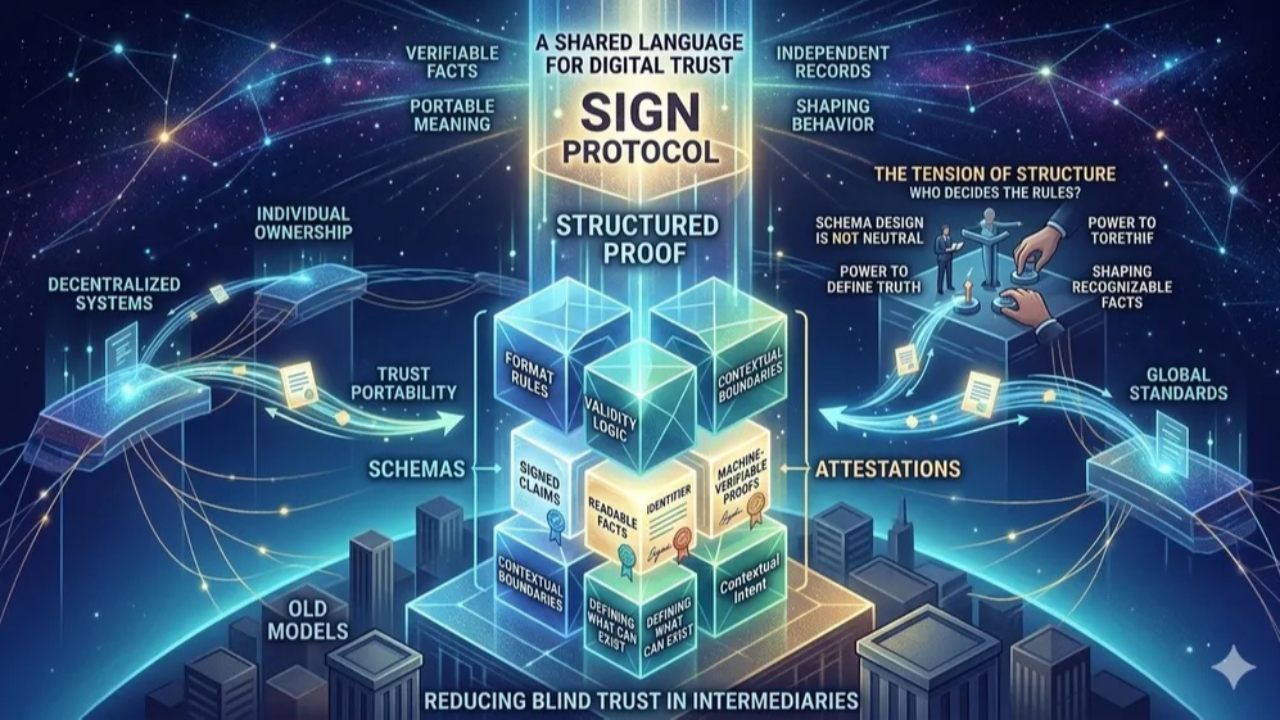
Article
Is Buying Sign a Deadly Trap? View From the Brutal Nature of TokenomicsSeneca once said: "Truth is always naked, only lies need those splendid cloaks."
I just read through the presentation of the Sign Protocol. Terms like "structure of truth" or "common language for belief" sound really pleasant, even too fanciful for a technical project. Two years of living and studying IT in Finland taught me one core thing: Never trust code that is explained with too much philosophy. The technical nature of "Sign" is just a digital signature system and basic data classification. There is no magic here. It is just a data repository with a signature. Period.
Is Buying Sign a Deadly Trap? View From the Brutal Nature of Tokenomics
Seneca once said: "Truth is always naked, only lies need those splendid cloaks."
I just read through the presentation of the Sign Protocol. Terms like "structure of truth" or "common language for belief" sound really pleasant, even too fanciful for a technical project. Two years of living and studying IT in Finland taught me one core thing: Never trust code that is explained with too much philosophy. The technical nature of "Sign" is just a digital signature system and basic data classification. There is no magic here. It is just a data repository with a signature. Period.
I just read through the presentation of the Sign Protocol. Terms like "structure of truth" or "common language for belief" sound really pleasant, even too fanciful for a technical project. Two years of living and studying IT in Finland taught me one core thing: Never trust code that is explained with too much philosophy. The technical nature of "Sign" is just a digital signature system and basic data classification. There is no magic here. It is just a data repository with a signature. Period.
1
2
62

·
--
Bullish
#signdigitalsovereigninfra
$SIGN: The Quiet Backbone of a Verifiable Digital World
Most crypto projects keep shouting with big promises over and over again.
$SIGN doesn’t.
It simply does one simple but extremely important thing: turning truth into something verifiable.
In an era of deepfakes, easily altered documents, and fragile digital trust, Sign Protocol is quietly building an omni-chain attestation infrastructure. You can create tamper-proof proofs about identity, ownership, or contracts — and easily verify them across multiple blockchains.
Sensitive data can be stored off-chain for privacy, while the cryptographic proof remains immutable on-chain. Through TokenTable, it has already helped hundreds of projects distribute tokens transparently to millions of users.
Beyond crypto, governments in the UAE, Thailand, and others are using Sign to build digital identity and data sovereignty.
$SIGN is not just ordinary gas fees. It serves as the foundation for governance, staking, and a reliable verification layer for the future.
In a world flooded with AI-generated fake content, the ability to confidently say “this is verifiably true” is becoming incredibly valuable.
Sign Protocol isn’t promising to change the world overnight.
It is quietly laying down a solid foundation for an era where truth can be verified.
Slowly. Quietly. But surely.
Are you holding SIGN because of the short-term chart?
Or because you believe verifiable truth will be the most valuable resource in the digital age?
I choose the second reason.
#SignProtocol @SignOfficial
#signdigitalsovereigninfra
$SIGN : The Quiet Backbone of a Verifiable Digital World
Most crypto projects keep shouting with big promises over and over again.
$SIGN doesn’t.
It simply does one simple but extremely important thing: turning truth into something verifiable.
In an era of deepfakes, easily altered documents, and fragile digital trust, Sign Protocol is quietly building an omni-chain attestation infrastructure. You can create tamper-proof proofs about identity, ownership, or contracts — and easily verify them across multiple blockchains.
Sensitive data can be stored off-chain for privacy, while the cryptographic proof remains immutable on-chain. Through TokenTable, it has already helped hundreds of projects distribute tokens transparently to millions of users.
Beyond crypto, governments in the UAE, Thailand, and others are using Sign to build digital identity and data sovereignty.
$SIGN is not just ordinary gas fees. It serves as the foundation for governance, staking, and a reliable verification layer for the future.
In a world flooded with AI-generated fake content, the ability to confidently say “this is verifiably true” is becoming incredibly valuable.
Sign Protocol isn’t promising to change the world overnight.
It is quietly laying down a solid foundation for an era where truth can be verified.
Slowly. Quietly. But surely.
Are you holding SIGN because of the short-term chart?
Or because you believe verifiable truth will be the most valuable resource in the digital age?
I choose the second reason.
#SignProtocol @SignOfficial
$SIGN : The Quiet Backbone of a Verifiable Digital World
Most crypto projects keep shouting with big promises over and over again.
$SIGN doesn’t.
It simply does one simple but extremely important thing: turning truth into something verifiable.
In an era of deepfakes, easily altered documents, and fragile digital trust, Sign Protocol is quietly building an omni-chain attestation infrastructure. You can create tamper-proof proofs about identity, ownership, or contracts — and easily verify them across multiple blockchains.
Sensitive data can be stored off-chain for privacy, while the cryptographic proof remains immutable on-chain. Through TokenTable, it has already helped hundreds of projects distribute tokens transparently to millions of users.
Beyond crypto, governments in the UAE, Thailand, and others are using Sign to build digital identity and data sovereignty.
$SIGN is not just ordinary gas fees. It serves as the foundation for governance, staking, and a reliable verification layer for the future.
In a world flooded with AI-generated fake content, the ability to confidently say “this is verifiably true” is becoming incredibly valuable.
Sign Protocol isn’t promising to change the world overnight.
It is quietly laying down a solid foundation for an era where truth can be verified.
Slowly. Quietly. But surely.
Are you holding SIGN because of the short-term chart?
Or because you believe verifiable truth will be the most valuable resource in the digital age?
I choose the second reason.
#SignProtocol @SignOfficial
13
10
121

·
--
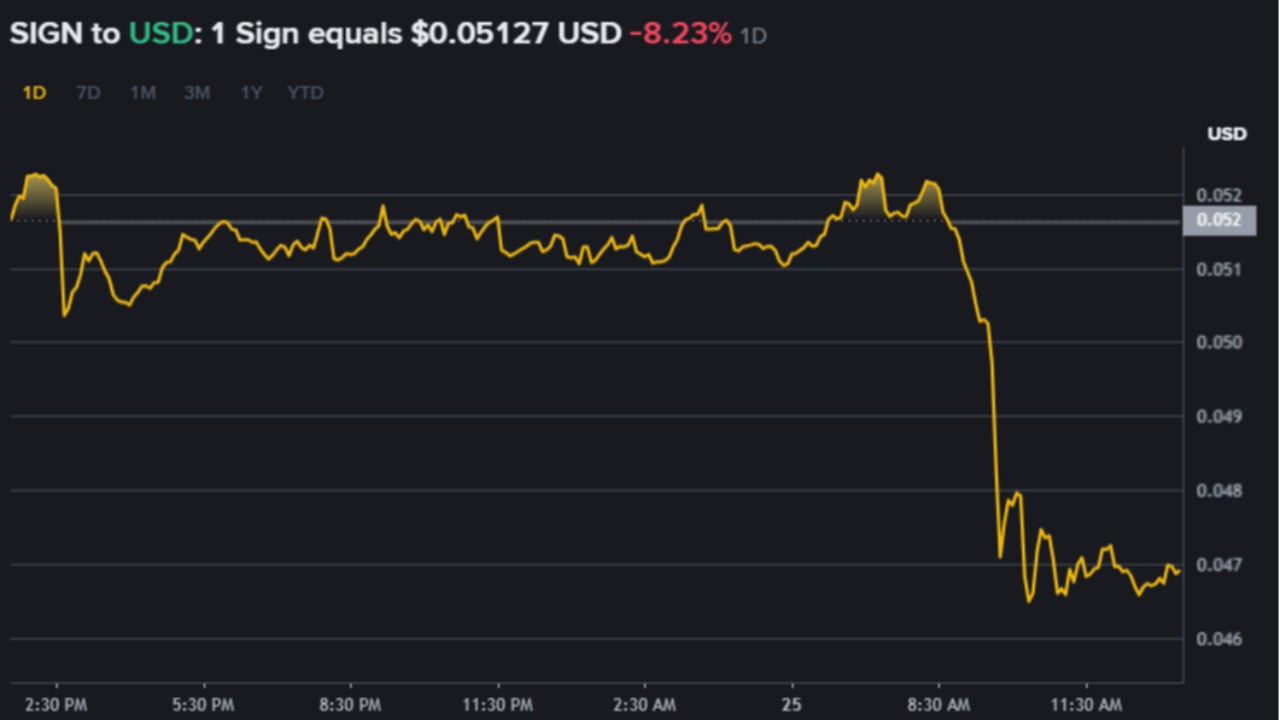
Article
SIGN Token Schema Registry as Open Infrastructure. this part is missing and no one is explain itthe schema registry is the part of Sign Protocol that separates it from every other attestation tool i have looked at. took me a while to understand why.
software engineering class professor gave us a problem. design a system why different organisations can share data with out agreeing on a common database schema beforehand. i spent two hours on it. the answer i up with a shared schema library where any one can publish a template and any one can use it. professor some thing similar exists. i mean no idea what he referring to. that the problem is back again last week when i read the schema registry document.
$SIGN is at $$0.051 today. market cap $84.08M. 1.64B circulating out of 10B max. 67% below ATH. Date: March 25, 2026. [sign token price chart info](https://www.binance.com/en-IN/price/sign)
{future}(SIGNUSDT)
Sign Protocol's schema registry is an open, permissionless library of data templates deployed on chain. any one can publish a schema defining what a specific type of attestation looks like. any one else can use that schema to issue attestations against it. the schema is publicly readable. the attestations conforming to it are publicly verifiable. no central organisation decides which schemas are allowed or who can use them.
this is what makes the evidence layer composable. a developer building a KYC attestation tool are not need to invent a data format. they find the existing KYC schema in the registry, issue attestations conforming to it, and any verifier that understands that schema can check attestations from any issuer. interoperability is not negotiated between parties. it is inherited the shared schema.
a country deploying is residency card schema publish to registry. any other country any verifier private sector any developer building application use that schema to verify residency claim. to the credential grow ecosystem with out duplex agreements the schema is public infrastructur.
the part i have not found a clean answer on. a permissionless registry means any one can publish schemas including poorly designed or ambiguous ones. if a widely used schema has a flaw discovered after thousands of attestations are issued, a schema migration is required. how that migration works with out invalidating existing attestations is not clearly documented anywhere i have found.
March 25 SIGN token allocation. Community Incentive hold 30.00% .
schema registry the government and enterprise schemas globally makes SIGN token demand structural. $0.34 at $500M. schema quality problem put in at $0.017 to $0.029 on unlock.
total schema count in the registry and which schemas show the highest attestation volume on SignScan are what i am tracking.
what schema category do you think gets the most real-world usage on Sign Protocol this year? tell me in comments.
#SignProtocol #Token #blockchain #SignDigitalSovereignInfra $SIGN @SignOfficial
SIGN Token Schema Registry as Open Infrastructure. this part is missing and no one is explain it
the schema registry is the part of Sign Protocol that separates it from every other attestation tool i have looked at. took me a while to understand why.
software engineering class professor gave us a problem. design a system why different organisations can share data with out agreeing on a common database schema beforehand. i spent two hours on it. the answer i up with a shared schema library where any one can publish a template and any one can use it. professor some thing similar exists. i mean no idea what he referring to. that the problem is back again last week when i read the schema registry document.
$SIGN is at $$0.051 today. market cap $84.08M. 1.64B circulating out of 10B max. 67% below ATH. Date: March 25, 2026. sign token price chart info
Sign Protocol's schema registry is an open, permissionless library of data templates deployed on chain. any one can publish a schema defining what a specific type of attestation looks like. any one else can use that schema to issue attestations against it. the schema is publicly readable. the attestations conforming to it are publicly verifiable. no central organisation decides which schemas are allowed or who can use them.
this is what makes the evidence layer composable. a developer building a KYC attestation tool are not need to invent a data format. they find the existing KYC schema in the registry, issue attestations conforming to it, and any verifier that understands that schema can check attestations from any issuer. interoperability is not negotiated between parties. it is inherited the shared schema.
a country deploying is residency card schema publish to registry. any other country any verifier private sector any developer building application use that schema to verify residency claim. to the credential grow ecosystem with out duplex agreements the schema is public infrastructur.
the part i have not found a clean answer on. a permissionless registry means any one can publish schemas including poorly designed or ambiguous ones. if a widely used schema has a flaw discovered after thousands of attestations are issued, a schema migration is required. how that migration works with out invalidating existing attestations is not clearly documented anywhere i have found.
March 25 SIGN token allocation. Community Incentive hold 30.00% .
schema registry the government and enterprise schemas globally makes SIGN token demand structural. $0.34 at $500M. schema quality problem put in at $0.017 to $0.029 on unlock.
total schema count in the registry and which schemas show the highest attestation volume on SignScan are what i am tracking.
what schema category do you think gets the most real-world usage on Sign Protocol this year? tell me in comments.
#SignProtocol #Token #blockchain #SignDigitalSovereignInfra $SIGN @SignOfficial
software engineering class professor gave us a problem. design a system why different organisations can share data with out agreeing on a common database schema beforehand. i spent two hours on it. the answer i up with a shared schema library where any one can publish a template and any one can use it. professor some thing similar exists. i mean no idea what he referring to. that the problem is back again last week when i read the schema registry document.
$SIGN is at $$0.051 today. market cap $84.08M. 1.64B circulating out of 10B max. 67% below ATH. Date: March 25, 2026. sign token price chart info
Sign Protocol's schema registry is an open, permissionless library of data templates deployed on chain. any one can publish a schema defining what a specific type of attestation looks like. any one else can use that schema to issue attestations against it. the schema is publicly readable. the attestations conforming to it are publicly verifiable. no central organisation decides which schemas are allowed or who can use them.
this is what makes the evidence layer composable. a developer building a KYC attestation tool are not need to invent a data format. they find the existing KYC schema in the registry, issue attestations conforming to it, and any verifier that understands that schema can check attestations from any issuer. interoperability is not negotiated between parties. it is inherited the shared schema.
a country deploying is residency card schema publish to registry. any other country any verifier private sector any developer building application use that schema to verify residency claim. to the credential grow ecosystem with out duplex agreements the schema is public infrastructur.
the part i have not found a clean answer on. a permissionless registry means any one can publish schemas including poorly designed or ambiguous ones. if a widely used schema has a flaw discovered after thousands of attestations are issued, a schema migration is required. how that migration works with out invalidating existing attestations is not clearly documented anywhere i have found.
March 25 SIGN token allocation. Community Incentive hold 30.00% .
schema registry the government and enterprise schemas globally makes SIGN token demand structural. $0.34 at $500M. schema quality problem put in at $0.017 to $0.029 on unlock.
total schema count in the registry and which schemas show the highest attestation volume on SignScan are what i am tracking.
what schema category do you think gets the most real-world usage on Sign Protocol this year? tell me in comments.
#SignProtocol #Token #blockchain #SignDigitalSovereignInfra $SIGN @SignOfficial
78
123
14.5k
Log in to explore more content
Join global crypto users on Binance Square
⚡️ Get latest and useful information about crypto.
💬 Trusted by the world’s largest crypto exchange.
👍 Discover real insights from verified creators.
Email / Phone number
Trending Topics
1
#MetaMaskExitsLidoValidatorsAfterSecurityIncident
20,081 views
481 Discussing
2
#MicronBeatsEarningsLiftsGuidance
17,120 views
422 Discussing
3
#CFTCSubmitsTwoEventContractRulesToWhiteHouse
14,531 views
376 Discussing
4
#BitcoinClears$85200
29,554 views
318 Discussing
5
#AltcoinSeasonIndexHoldsAbove60For5Days
145,472 views
1,883 Discussing
6
#USADPAdds90000JobsInSeptember
68,176 views
1,071 Discussing
7
#USCorePCEEasesTo3%InAugust
46,112 views
722 Discussing
8
#KospiPostsWorstQuarterSince2020
25,886 views
602 Discussing
9
#SECToClarifyOnChainFundraisingRules
64,308 views
800 Discussing
10
#UKFCAOpensCryptoFirmAuthorization
60,113 views
667 Discussing