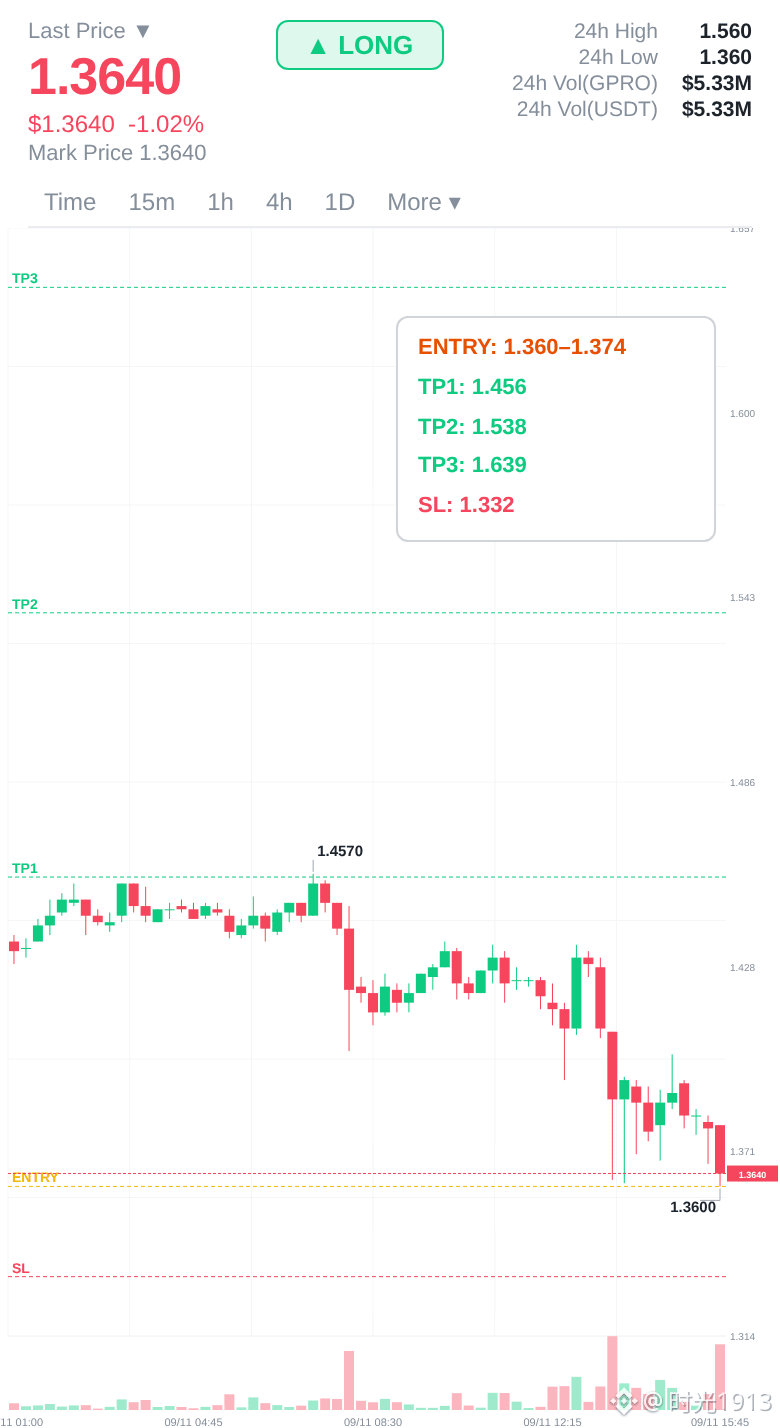
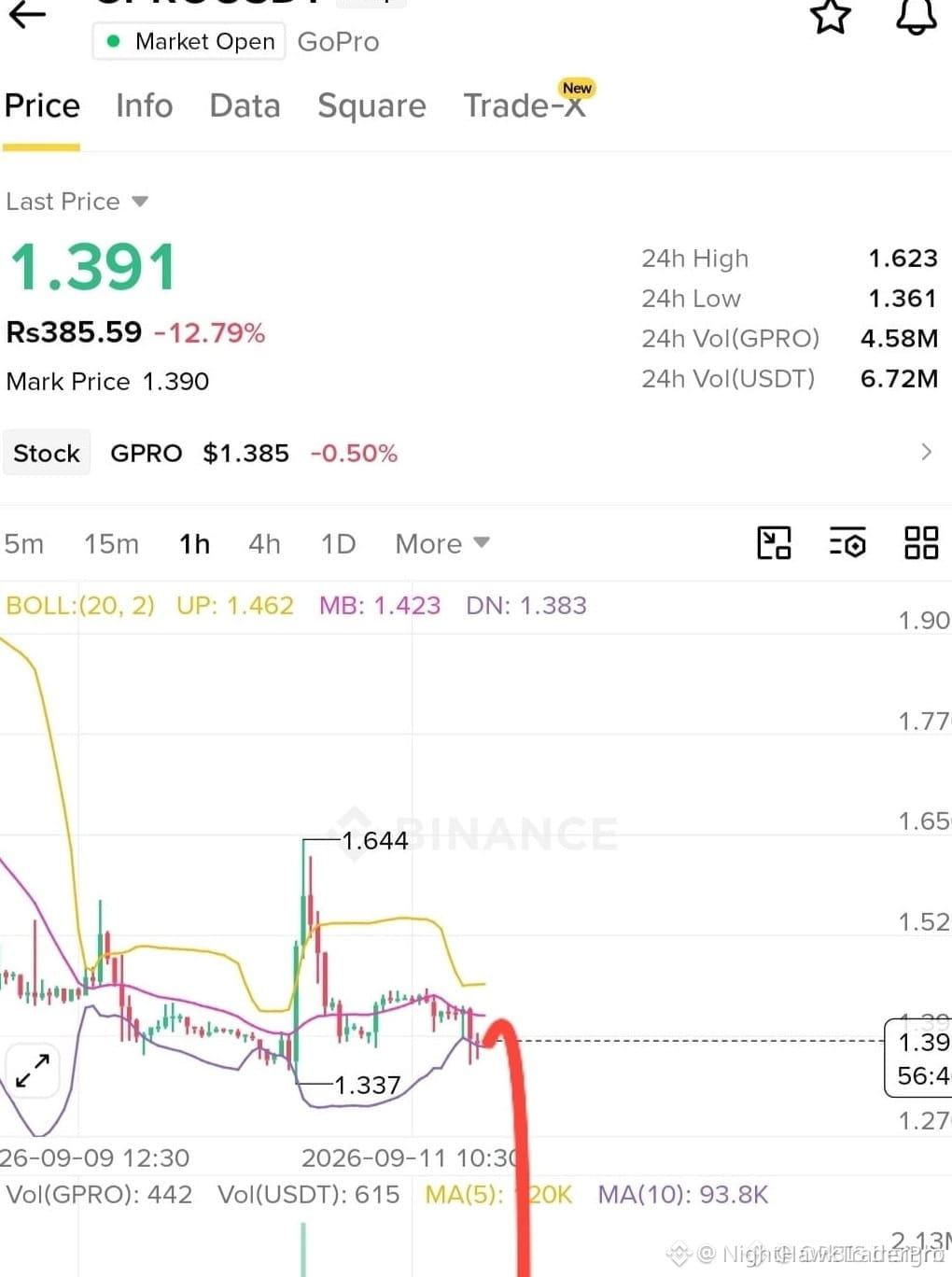
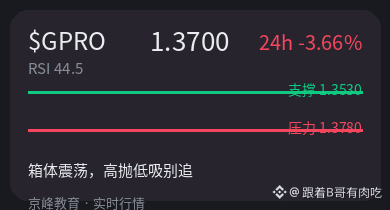
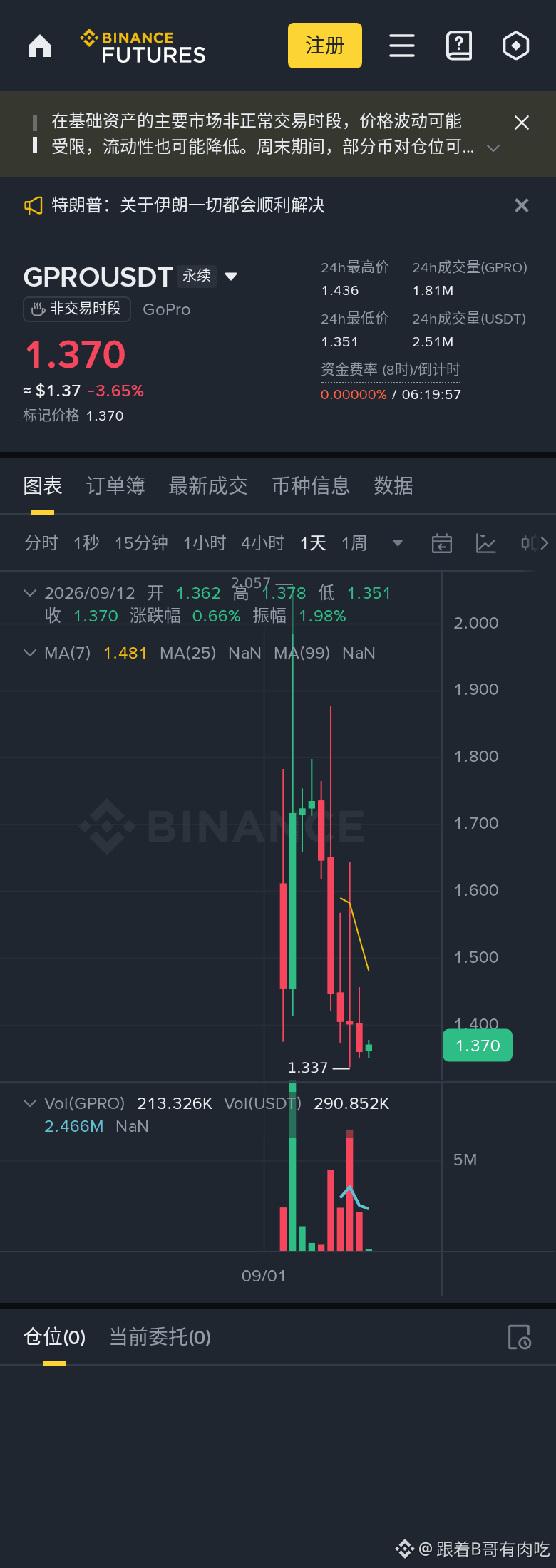
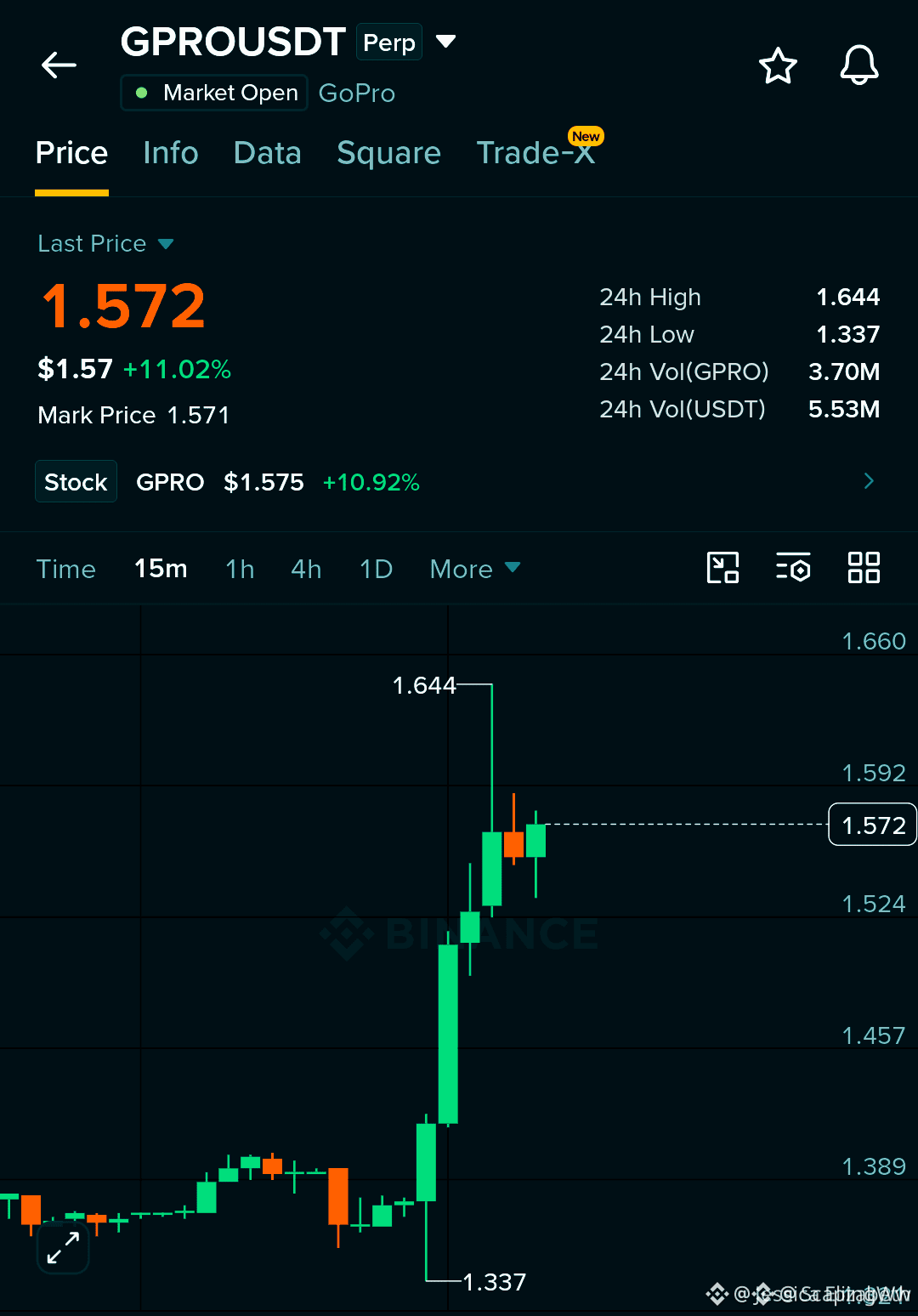
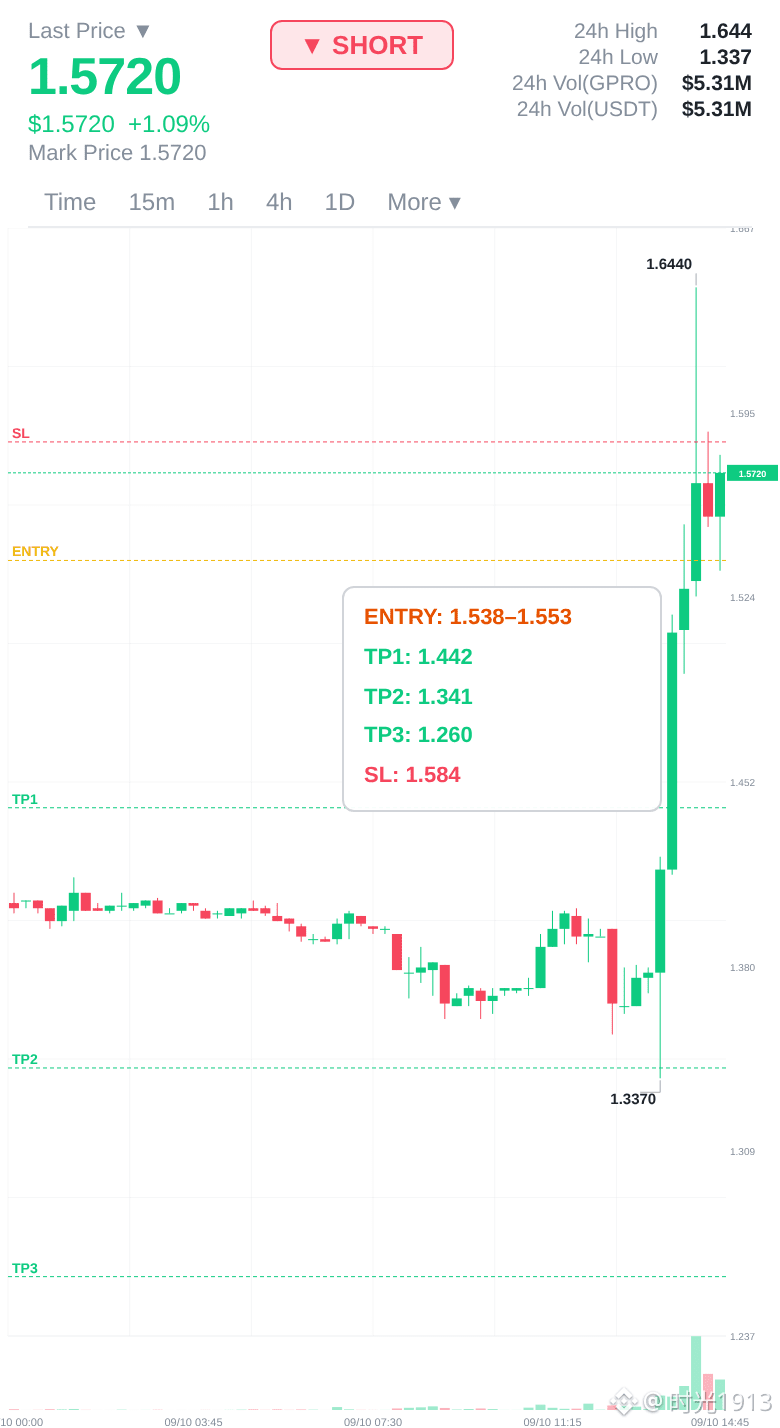
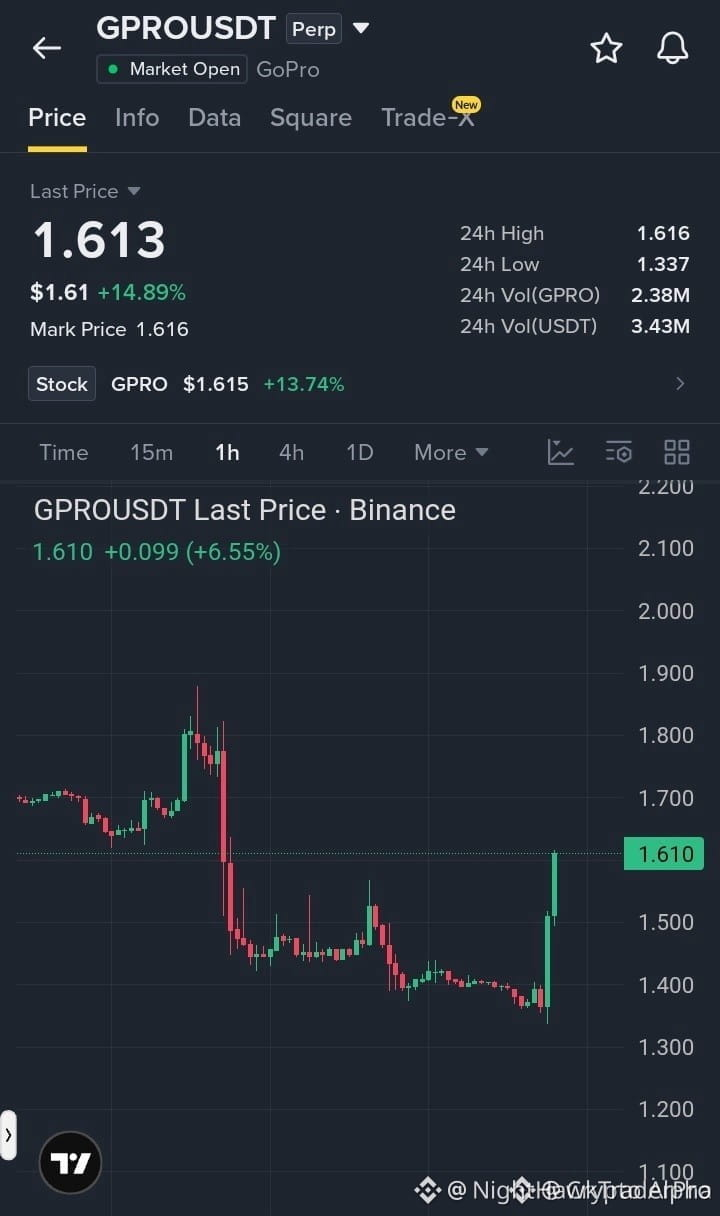
$GPRO 24 hours dropped 4.25%, and the price is pressing at 1.307. But the funding rate is negative, -0.0015575, meaning shorts are paying longs.
Looking only at these two numbers, the structure is already clear: the price is moving down, yet shorts are crowded enough to pay funding to maintain positions. This is not shorts celebrating victory; it is bearish sentiment getting overheated. Open interest is still above 539,600, so shorts have not backed off. That means if any external catalyst ignites a rebound, this batch of shorts will be the most direct fuel. The current price is about 5 cents lower than 24 hours ago, but shorts are still paying fees every day. Time is not on their side.
The strongest counterargument is simple: if the overall U.S. stock market keeps drifting lower, or if concerns about tech stock earnings deepen,
$GPRO may continue to sink. Even though shorts are paying, if they are right on direction they can still make money from the price move. Right now there is no specific news event that can falsify this decline logic; this judgment is based purely on capital structure.
The second-order effect is that if the price stabilizes or even rebounds near the psychological level of 1.30, shorts will face double pressure: losses on price plus ongoing funding outflows. If pushed far enough, they will cover, and the act of covering itself will push the price higher. Conversely, if 1.30 is broken decisively, longs may start stopping out, accelerating the decline and giving shorts temporary breathing room.
My view is that under a negative funding-rate backdrop, blindly chasing shorts offers a poor risk-reward profile. Shorts are currently paying to hold, and any small rebound could hurt them. But going long also needs a catalyst; without a news-driven trigger, rebounds caused purely by squeeze dynamics are usually limited in strength and prone to reversals.
Invalidation condition: if the price falls below 1.30 and continues to trade with expanding volume, and the funding rate turns positive, that would mean the short-side structure has completely shifted and this analytical framework would fail.
As for action, I would not short here. Aggressive traders could consider placing conditional orders near 1.30, and if the price rebounds on volume and breaks above 1.32 (about 1% above the current price), they could try a small long with a stop below 1.28. A more conservative approach is to wait: either wait for a decisive break below 1.30 to flush out panic selling, or wait for the funding rate to turn positive and give a clear directional signal. Risk-averse traders do not need to look at this instrument at all; liquidity is mediocre and volatility is driven by sentiment.
At the global news level, there is currently a vacuum, but funding-rate data itself is real-time market sentiment news.
Trading tag:
#TradFi #链上美股 #GPRO
Where do you think this whole judgment is most likely to be wrong?