

#cryptofuture
cryptofuture
4.7M views
6,643 Discussing
Hot
Latest

·
--
Bullish
3 sectors that will explode in 2026 — I’m personally betting on them
The market doesn’t rise all at once. It’s the sectors that explode.
These 3 sectors I’m watching closely for 2026:
01. RWA tokenization / RWA Tokenization
Tokenizing real-world assets on the blockchain.
Turning real estate, gold, and bonds into tradable tokens.
- Why? Global liquidity + transparency + massive institutional entry.
- Expected market size for 2026: $16 trillion (+320%)
02. AI x Crypto (Artificial Intelligence & Digital Currencies)
Integrating AI with blockchain systems.
Independent AI agents to manage wallets, trade, and analyze data.
- Why? Full automation + faster decisions.
- Expected growth: +280% and AI robots serving +50M users.
03. Networks for infrastructure DePIN
Decentralized physical networks — connectivity, energy, and data infrastructure via blockchain.
- Why? The world needs decentralized internet and power.
- Connected devices: +100M in the energy, telecoms, and mapping sectors.
Why 2026?
Accelerated institutional adoption + high liquidity + next-gen technologies.
Conclusion — the new black gold:
Data + assets + infrastructure = the wealth of the future
My plan:
I don’t buy the entire sector. I pick one fundamentally strong project in each sector and keep an eye on it.
Which sector do you think will explode first? 01 or 02 or 03?
"Which sector are you betting on? RWA / AI x Crypto / DePIN"
#ETH
#RWA
#DePIN
#BinanceSquare
#cryptofuture
$BEAMX
{future}(BEAMXUSDT)
$GTC
{spot}(GTCUSDT)
$BNB
{future}(BNBUSDT)
3 sectors that will explode in 2026 — I’m personally betting on them
The market doesn’t rise all at once. It’s the sectors that explode.
These 3 sectors I’m watching closely for 2026:
01. RWA tokenization / RWA Tokenization
Tokenizing real-world assets on the blockchain.
Turning real estate, gold, and bonds into tradable tokens.
- Why? Global liquidity + transparency + massive institutional entry.
- Expected market size for 2026: $16 trillion (+320%)
02. AI x Crypto (Artificial Intelligence & Digital Currencies)
Integrating AI with blockchain systems.
Independent AI agents to manage wallets, trade, and analyze data.
- Why? Full automation + faster decisions.
- Expected growth: +280% and AI robots serving +50M users.
03. Networks for infrastructure DePIN
Decentralized physical networks — connectivity, energy, and data infrastructure via blockchain.
- Why? The world needs decentralized internet and power.
- Connected devices: +100M in the energy, telecoms, and mapping sectors.
Why 2026?
Accelerated institutional adoption + high liquidity + next-gen technologies.
Conclusion — the new black gold:
Data + assets + infrastructure = the wealth of the future
My plan:
I don’t buy the entire sector. I pick one fundamentally strong project in each sector and keep an eye on it.
Which sector do you think will explode first? 01 or 02 or 03?
"Which sector are you betting on? RWA / AI x Crypto / DePIN"
#ETH
#RWA
#DePIN
#BinanceSquare
#cryptofuture
$BEAMX
$GTC
$BNB
The market doesn’t rise all at once. It’s the sectors that explode.
These 3 sectors I’m watching closely for 2026:
01. RWA tokenization / RWA Tokenization
Tokenizing real-world assets on the blockchain.
Turning real estate, gold, and bonds into tradable tokens.
- Why? Global liquidity + transparency + massive institutional entry.
- Expected market size for 2026: $16 trillion (+320%)
02. AI x Crypto (Artificial Intelligence & Digital Currencies)
Integrating AI with blockchain systems.
Independent AI agents to manage wallets, trade, and analyze data.
- Why? Full automation + faster decisions.
- Expected growth: +280% and AI robots serving +50M users.
03. Networks for infrastructure DePIN
Decentralized physical networks — connectivity, energy, and data infrastructure via blockchain.
- Why? The world needs decentralized internet and power.
- Connected devices: +100M in the energy, telecoms, and mapping sectors.
Why 2026?
Accelerated institutional adoption + high liquidity + next-gen technologies.
Conclusion — the new black gold:
Data + assets + infrastructure = the wealth of the future
My plan:
I don’t buy the entire sector. I pick one fundamentally strong project in each sector and keep an eye on it.
Which sector do you think will explode first? 01 or 02 or 03?
"Which sector are you betting on? RWA / AI x Crypto / DePIN"
#ETH
#RWA
#DePIN
#BinanceSquare
#cryptofuture
$BEAMX
$GTC
$BNB
3
3
299

·
--
Bullish
**🚀 The Future of Crypto Is Already Here**
Bitcoin won’t just be digital gold.
It will be the global reserve asset.
Ethereum will power the next internet.
Smart contracts → real-world everything.
BNB + Solana will dominate speed & utility.
While AI agents start trading for you 24/7.
We’re not early.
We’re just getting started.
The next decade belongs to those who build and hold.
Drop a 🔥 if you’re still bullish.
Follow @Nexus Crypto for daily alpha.
#Bitcoin #Ethereum #BNB #Solana #Crypto #Web3 #BullRun #AgentOS #CryptoFuture
**🚀 The Future of Crypto Is Already Here**
Bitcoin won’t just be digital gold.
It will be the global reserve asset.
Ethereum will power the next internet.
Smart contracts → real-world everything.
BNB + Solana will dominate speed & utility.
While AI agents start trading for you 24/7.
We’re not early.
We’re just getting started.
The next decade belongs to those who build and hold.
Drop a 🔥 if you’re still bullish.
Follow @Nexus Crypto for daily alpha.
#Bitcoin #Ethereum #BNB #Solana #Crypto #Web3 #BullRun #AgentOS #CryptoFuture
Bitcoin won’t just be digital gold.
It will be the global reserve asset.
Ethereum will power the next internet.
Smart contracts → real-world everything.
BNB + Solana will dominate speed & utility.
While AI agents start trading for you 24/7.
We’re not early.
We’re just getting started.
The next decade belongs to those who build and hold.
Drop a 🔥 if you’re still bullish.
Follow @Nexus Crypto for daily alpha.
#Bitcoin #Ethereum #BNB #Solana #Crypto #Web3 #BullRun #AgentOS #CryptoFuture
107

💡 Weekend Reflections: What $2.28T Market Cap Means for Crypto's Future
On July 11, 2026, as the week ends with total market cap at $2.28T, it's worth reflecting on how far the industry has come. From a niche internet experiment to a financial force processing $59.81B daily.
With 17,467 coins, 1,497 markets, and major companies like Robinhood and Kraken investing in AI tools, crypto has entered a new phase of maturity.
The path ahead includes regulatory clarity, technological innovation, and continued adoption. Assets like $BTC and $ETH lead the way, but the entire ecosystem benefits from the growing legitimacy.
📌 Key Takeaway:
Crypto at $2.28T is no longer an experiment — it's a mature financial ecosystem with staying power.
#CryptoFuture #MarketMaturity #DigitalAssets
#BinanceAlphaAlert
💡 Weekend Reflections: What $2.28T Market Cap Means for Crypto's Future
On July 11, 2026, as the week ends with total market cap at $2.28T, it's worth reflecting on how far the industry has come. From a niche internet experiment to a financial force processing $59.81B daily.
With 17,467 coins, 1,497 markets, and major companies like Robinhood and Kraken investing in AI tools, crypto has entered a new phase of maturity.
The path ahead includes regulatory clarity, technological innovation, and continued adoption. Assets like $BTC and $ETH lead the way, but the entire ecosystem benefits from the growing legitimacy.
📌 Key Takeaway:
Crypto at $2.28T is no longer an experiment — it's a mature financial ecosystem with staying power.
#CryptoFuture #MarketMaturity #DigitalAssets
#BinanceAlphaAlert
On July 11, 2026, as the week ends with total market cap at $2.28T, it's worth reflecting on how far the industry has come. From a niche internet experiment to a financial force processing $59.81B daily.
With 17,467 coins, 1,497 markets, and major companies like Robinhood and Kraken investing in AI tools, crypto has entered a new phase of maturity.
The path ahead includes regulatory clarity, technological innovation, and continued adoption. Assets like $BTC and $ETH lead the way, but the entire ecosystem benefits from the growing legitimacy.
📌 Key Takeaway:
Crypto at $2.28T is no longer an experiment — it's a mature financial ecosystem with staying power.
#CryptoFuture #MarketMaturity #DigitalAssets
#BinanceAlphaAlert
63

·
--
Crypto 2026: The Dawn of Real Finance
Crypto is no longer just speculation—it’s becoming the backbone of global finance.
In 2026, we see clear regulations, institutional adoption, and tokenization 2.0 reshaping markets. Stablecoins are powering payrolls, Bitcoin ETFs are absorbing gold’s role, and privacy tech is protecting institutional flows.
And at the heart of this revolution?
Binance.
The exchange that turned vision into reality, burning its own revenue to support communities, leading innovation, and proving that crypto is about commitment, not PR stunts.
Changpeng Zhao (CZ) and the Binance team have shown unmatched leadership—building bridges between TradFi and DeFi, empowering millions, and ensuring crypto’s place in the financial system. Their courage and foresight inspire us all.
🌍 The future is here. The question is: are you ready to be part of it?
#CryptoFuture #Binance #BTC #TradFi #Innovation $BTC $BNB $ETH
Crypto 2026: The Dawn of Real Finance
Crypto is no longer just speculation—it’s becoming the backbone of global finance.
In 2026, we see clear regulations, institutional adoption, and tokenization 2.0 reshaping markets. Stablecoins are powering payrolls, Bitcoin ETFs are absorbing gold’s role, and privacy tech is protecting institutional flows.
And at the heart of this revolution?
Binance.
The exchange that turned vision into reality, burning its own revenue to support communities, leading innovation, and proving that crypto is about commitment, not PR stunts.
Changpeng Zhao (CZ) and the Binance team have shown unmatched leadership—building bridges between TradFi and DeFi, empowering millions, and ensuring crypto’s place in the financial system. Their courage and foresight inspire us all.
🌍 The future is here. The question is: are you ready to be part of it?
#CryptoFuture #Binance #BTC #TradFi #Innovation $BTC $BNB $ETH
Crypto is no longer just speculation—it’s becoming the backbone of global finance.
In 2026, we see clear regulations, institutional adoption, and tokenization 2.0 reshaping markets. Stablecoins are powering payrolls, Bitcoin ETFs are absorbing gold’s role, and privacy tech is protecting institutional flows.
And at the heart of this revolution?
Binance.
The exchange that turned vision into reality, burning its own revenue to support communities, leading innovation, and proving that crypto is about commitment, not PR stunts.
Changpeng Zhao (CZ) and the Binance team have shown unmatched leadership—building bridges between TradFi and DeFi, empowering millions, and ensuring crypto’s place in the financial system. Their courage and foresight inspire us all.
🌍 The future is here. The question is: are you ready to be part of it?
#CryptoFuture #Binance #BTC #TradFi #Innovation $BTC $BNB $ETH
2
71

🚀 FUTURE MARKET UPDATE - 5 OCT 2026 🚀
BTC/USDT - Current Situation
BTC is currently trading around $86,000.
🔹 Market News: US Spot ETFs have seen consecutive inflows of $241M, and CME has started 24/7 futures trading. This has significantly increased market volume.
🔹 Technical Levels:
Support: $84,000 and $82,000
Resistance: $86,000 - $87,500
My Futures Trade Setup:
LONG / BUY Plan
Entry Zone: $84,200 - $85,000
Target 1: $86,500
Target 2: $87,500
Target 3: $90,000 (if $87,500 breaks)
Stop Loss (SL): $82,800 - make sure to set it
Leverage: Don’t use more than 3x to 5x
Note: This is an educational post only. Futures trading is very risky. Always set your SL and trade only after doing your own research.
$BTC #CryptoFuture #Binance
🚀 FUTURE MARKET UPDATE - 5 OCT 2026 🚀
BTC/USDT - Current Situation
BTC is currently trading around $86,000.
🔹 Market News: US Spot ETFs have seen consecutive inflows of $241M, and CME has started 24/7 futures trading. This has significantly increased market volume.
🔹 Technical Levels:
Support: $84,000 and $82,000
Resistance: $86,000 - $87,500
My Futures Trade Setup:
LONG / BUY Plan
Entry Zone: $84,200 - $85,000
Target 1: $86,500
Target 2: $87,500
Target 3: $90,000 (if $87,500 breaks)
Stop Loss (SL): $82,800 - make sure to set it
Leverage: Don’t use more than 3x to 5x
Note: This is an educational post only. Futures trading is very risky. Always set your SL and trade only after doing your own research.
$BTC #CryptoFuture #Binance
BTC/USDT - Current Situation
BTC is currently trading around $86,000.
🔹 Market News: US Spot ETFs have seen consecutive inflows of $241M, and CME has started 24/7 futures trading. This has significantly increased market volume.
🔹 Technical Levels:
Support: $84,000 and $82,000
Resistance: $86,000 - $87,500
My Futures Trade Setup:
LONG / BUY Plan
Entry Zone: $84,200 - $85,000
Target 1: $86,500
Target 2: $87,500
Target 3: $90,000 (if $87,500 breaks)
Stop Loss (SL): $82,800 - make sure to set it
Leverage: Don’t use more than 3x to 5x
Note: This is an educational post only. Futures trading is very risky. Always set your SL and trade only after doing your own research.
$BTC #CryptoFuture #Binance
70
The Future of Financial Markets:
Will Crypto Currencies Do Away with Traditional Stock Exchanges?
📊 Converting Assets into Digital Tokens (Tokenization) is not just a passing trend, but a complete restructuring of how the world gains access to stock markets and public ownership.
This transformation won’t happen overnight, but it opens the door to unprecedented liquidity and the ability to trade around the clock, 24/7.
The real question here:
Will traditional markets fully merge with the blockchain, or will one of them eliminate the other?
💬 Share your opinion in the comments:
Do you think the shares of major companies will be fully traded as digital tokens within the next five years?
#Tokenization
#Binance
#CryptoFuture
#RWA
The Future of Financial Markets:
Will Crypto Currencies Do Away with Traditional Stock Exchanges?
📊 Converting Assets into Digital Tokens (Tokenization) is not just a passing trend, but a complete restructuring of how the world gains access to stock markets and public ownership.
This transformation won’t happen overnight, but it opens the door to unprecedented liquidity and the ability to trade around the clock, 24/7.
The real question here:
Will traditional markets fully merge with the blockchain, or will one of them eliminate the other?
💬 Share your opinion in the comments:
Do you think the shares of major companies will be fully traded as digital tokens within the next five years?
#Tokenization
#Binance
#CryptoFuture
#RWA
Will Crypto Currencies Do Away with Traditional Stock Exchanges?
📊 Converting Assets into Digital Tokens (Tokenization) is not just a passing trend, but a complete restructuring of how the world gains access to stock markets and public ownership.
This transformation won’t happen overnight, but it opens the door to unprecedented liquidity and the ability to trade around the clock, 24/7.
The real question here:
Will traditional markets fully merge with the blockchain, or will one of them eliminate the other?
💬 Share your opinion in the comments:
Do you think the shares of major companies will be fully traded as digital tokens within the next five years?
#Tokenization
#Binance
#CryptoFuture
#RWA
1
109

🤔🚀 Could a Cryptocurrency Ever Become More Valuable Than Bitcoin?
Bitcoin is one of the most well-known cryptocurrencies today. But could a new cryptocurrency surpass Bitcoin in the future?
💎 What do you think? Which cryptocurrency could become the next big thing?
👇 Share your thoughts in the comments!
#Bitcoin #BTC #Binance #Crypto #Cryptocurrency #cryptofuture
🤔🚀 Could a Cryptocurrency Ever Become More Valuable Than Bitcoin?
Bitcoin is one of the most well-known cryptocurrencies today. But could a new cryptocurrency surpass Bitcoin in the future?
💎 What do you think? Which cryptocurrency could become the next big thing?
👇 Share your thoughts in the comments!
#Bitcoin #BTC #Binance #Crypto #Cryptocurrency #cryptofuture
Bitcoin is one of the most well-known cryptocurrencies today. But could a new cryptocurrency surpass Bitcoin in the future?
💎 What do you think? Which cryptocurrency could become the next big thing?
👇 Share your thoughts in the comments!
#Bitcoin #BTC #Binance #Crypto #Cryptocurrency #cryptofuture
273

·
--
📱 iPhone Today or 0.5 ETH for the Future?
An iPhone can lose value over time. But 0.5 ETH is an asset whose future value will depend on Ethereum’s adoption, demand, and market conditions.
At today’s ETH price of roughly $2,677, 0.5 ETH is worth about $1,339.
🔮 What could 0.5 ETH be worth in 3 years?
Nobody knows. That’s the interesting part. 👀
#Ethereum #ETH #Crypto #CryptoFuture
📱 iPhone Today or 0.5 ETH for the Future?
An iPhone can lose value over time. But 0.5 ETH is an asset whose future value will depend on Ethereum’s adoption, demand, and market conditions.
At today’s ETH price of roughly $2,677, 0.5 ETH is worth about $1,339.
🔮 What could 0.5 ETH be worth in 3 years?
Nobody knows. That’s the interesting part. 👀
#Ethereum #ETH #Crypto #CryptoFuture
An iPhone can lose value over time. But 0.5 ETH is an asset whose future value will depend on Ethereum’s adoption, demand, and market conditions.
At today’s ETH price of roughly $2,677, 0.5 ETH is worth about $1,339.
🔮 What could 0.5 ETH be worth in 3 years?
Nobody knows. That’s the interesting part. 👀
#Ethereum #ETH #Crypto #CryptoFuture
1
88

🚀 USDC (USD Coin) — Future & Long-Term Potential
$USDC is one of the leading stablecoins in the crypto market, designed to maintain a value close to $1 USD. Unlike highly volatile cryptocurrencies, USDC focuses on stability, liquidity, and fast digital transactions.
🔮 What could be the future of USDC?
As blockchain adoption continues to grow, the demand for stable digital dollars could increase. USDC can play an important role in:
🌍 Global Payments — Faster and more efficient cross-border transactions.
💰 Crypto Trading — Providing traders with a stable asset for entering and exiting volatile markets.
🏦 DeFi & Web3 — USDC can be used across decentralized finance applications, lending, liquidity pools, and other blockchain services.
📱 Digital Economy — Stablecoins may become increasingly useful for online payments and digital financial services.
🔐 Transparency & Trust — USDC is designed around reserve backing and regulatory compliance, which can support wider adoption.
📈 My Future View:
I believe USDC's biggest opportunity is not massive price growth, because its goal is stability. Its long-term potential comes from greater adoption, deeper liquidity, global payments, and wider use across Web3 and traditional finance.
⚠️ Not financial advice. Always do your own research before investing.
#USDC #USDcoin #Crypto #Stablecoin #Binance #DeFi #Web3 #Blockchain #CryptoFuture
🚀 USDC (USD Coin) — Future & Long-Term Potential
$USDC is one of the leading stablecoins in the crypto market, designed to maintain a value close to $1 USD. Unlike highly volatile cryptocurrencies, USDC focuses on stability, liquidity, and fast digital transactions.
🔮 What could be the future of USDC?
As blockchain adoption continues to grow, the demand for stable digital dollars could increase. USDC can play an important role in:
🌍 Global Payments — Faster and more efficient cross-border transactions.
💰 Crypto Trading — Providing traders with a stable asset for entering and exiting volatile markets.
🏦 DeFi & Web3 — USDC can be used across decentralized finance applications, lending, liquidity pools, and other blockchain services.
📱 Digital Economy — Stablecoins may become increasingly useful for online payments and digital financial services.
🔐 Transparency & Trust — USDC is designed around reserve backing and regulatory compliance, which can support wider adoption.
📈 My Future View:
I believe USDC's biggest opportunity is not massive price growth, because its goal is stability. Its long-term potential comes from greater adoption, deeper liquidity, global payments, and wider use across Web3 and traditional finance.
⚠️ Not financial advice. Always do your own research before investing.
#USDC #USDcoin #Crypto #Stablecoin #Binance #DeFi #Web3 #Blockchain #CryptoFuture
$USDC is one of the leading stablecoins in the crypto market, designed to maintain a value close to $1 USD. Unlike highly volatile cryptocurrencies, USDC focuses on stability, liquidity, and fast digital transactions.
🔮 What could be the future of USDC?
As blockchain adoption continues to grow, the demand for stable digital dollars could increase. USDC can play an important role in:
🌍 Global Payments — Faster and more efficient cross-border transactions.
💰 Crypto Trading — Providing traders with a stable asset for entering and exiting volatile markets.
🏦 DeFi & Web3 — USDC can be used across decentralized finance applications, lending, liquidity pools, and other blockchain services.
📱 Digital Economy — Stablecoins may become increasingly useful for online payments and digital financial services.
🔐 Transparency & Trust — USDC is designed around reserve backing and regulatory compliance, which can support wider adoption.
📈 My Future View:
I believe USDC's biggest opportunity is not massive price growth, because its goal is stability. Its long-term potential comes from greater adoption, deeper liquidity, global payments, and wider use across Web3 and traditional finance.
⚠️ Not financial advice. Always do your own research before investing.
#USDC #USDcoin #Crypto #Stablecoin #Binance #DeFi #Web3 #Blockchain #CryptoFuture
89

Jefferies talking about a possible $1 trillion crypto IPO market shows how serious big institutions are getting about blockchain now.
Crypto doesn’t feel like only hype trading anymore, especially with tokenization growing fast.
If this trend keeps moving the next few years could change how people invest globally.
#CryptoIPO #TokenizationRevolution
#BinanceSquare #CryptoFuture
Jefferies talking about a possible $1 trillion crypto IPO market shows how serious big institutions are getting about blockchain now.
Crypto doesn’t feel like only hype trading anymore, especially with tokenization growing fast.
If this trend keeps moving the next few years could change how people invest globally.
#CryptoIPO #TokenizationRevolution
#BinanceSquare #CryptoFuture
Crypto doesn’t feel like only hype trading anymore, especially with tokenization growing fast.
If this trend keeps moving the next few years could change how people invest globally.
#CryptoIPO #TokenizationRevolution
#BinanceSquare #CryptoFuture
390

🦈 $XAG GOES 24/7 — THE OLD GUARD JUST ADOPTED CRYPTO'S PLAYBOOK 💥
The CME just announced silver will trade around the clock starting September 11. 🏦 Let that sink in.
💡 Traditional finance spent years calling crypto "unregulated chaos" — now they're copying our market structure. The 24/7 model that Bitcoin pioneers built is becoming the standard for legacy assets. 🛡️
This isn't about silver. It's about validation. When the biggest derivatives exchange in the world restructures its trading hours to match crypto's always-on engine, it signals where institutional capital is heading. 🌊
The question isn't whether trad-fi will keep merging with digital assets — it's how fast. 📊
💬 Do you see this as bullish pressure for crypto adoption, or just a defensive move from legacy players? 👇
⚠️ Not financial advice. Always manage your risk. 🛡️
🏷️ #XAG #InstitutionalAdoption #CryptoFuture #MarketStructure
🎯 🦈
🦈 $XAG GOES 24/7 — THE OLD GUARD JUST ADOPTED CRYPTO'S PLAYBOOK 💥
The CME just announced silver will trade around the clock starting September 11. 🏦 Let that sink in.
💡 Traditional finance spent years calling crypto "unregulated chaos" — now they're copying our market structure. The 24/7 model that Bitcoin pioneers built is becoming the standard for legacy assets. 🛡️
This isn't about silver. It's about validation. When the biggest derivatives exchange in the world restructures its trading hours to match crypto's always-on engine, it signals where institutional capital is heading. 🌊
The question isn't whether trad-fi will keep merging with digital assets — it's how fast. 📊
💬 Do you see this as bullish pressure for crypto adoption, or just a defensive move from legacy players? 👇
⚠️ Not financial advice. Always manage your risk. 🛡️
🏷️ #XAG #InstitutionalAdoption #CryptoFuture #MarketStructure
🎯 🦈
The CME just announced silver will trade around the clock starting September 11. 🏦 Let that sink in.
💡 Traditional finance spent years calling crypto "unregulated chaos" — now they're copying our market structure. The 24/7 model that Bitcoin pioneers built is becoming the standard for legacy assets. 🛡️
This isn't about silver. It's about validation. When the biggest derivatives exchange in the world restructures its trading hours to match crypto's always-on engine, it signals where institutional capital is heading. 🌊
The question isn't whether trad-fi will keep merging with digital assets — it's how fast. 📊
💬 Do you see this as bullish pressure for crypto adoption, or just a defensive move from legacy players? 👇
⚠️ Not financial advice. Always manage your risk. 🛡️
🏷️ #XAG #InstitutionalAdoption #CryptoFuture #MarketStructure
🎯 🦈
48

·
--
Article
US Treasury Urges Senate to Pass Crypto Clarity Act—What It Means for $BTCThe Treasury Secretary’s plea to Congress isn’t just political theater; it’s a signal that the U.S. government is finally ready to give the crypto industry the legal certainty it’s been craving.
The Concept
The “Crypto Clarity Act” is a piece of legislation that would define what constitutes a “cryptocurrency” under U.S. law, clarifying how existing securities, commodities, and tax regulations apply. Think of it as a user manual for regulators and businesses: it tells them whether a digital asset is a security, a commodity, or something else entirely. #CryptoRegulation #LegalClarity
Real‑World Example
Imagine a startup that wants to launch a new token. Without the Act, the company faces a legal maze—could it be a security requiring registration, or a commodity that falls under the Commodity Futures Trading Commission? The uncertainty forces firms to either over‑regulate, stifling innovation, or under‑regulate, risking penalties. The Clarity Act would cut through this confusion, allowing the startup to know exactly which rules to follow and how to structure its token sale. This clarity would also help investors understand the risks and protections associated with their holdings.
Takeaway
If the Senate passes the Act, you’ll see a smoother path for crypto projects to launch, more predictable tax treatment for holders, and a clearer framework for compliance. For everyday users, this means less chance of sudden regulatory crackdowns and more confidence that your digital assets are protected by a solid legal foundation. #CryptoFuture
Engagement Question
Do you think a clear legal definition will boost crypto adoption, or could it still leave too many gray areas? Let me know in the comments!
US Treasury Urges Senate to Pass Crypto Clarity Act—What It Means for $BTC
The Treasury Secretary’s plea to Congress isn’t just political theater; it’s a signal that the U.S. government is finally ready to give the crypto industry the legal certainty it’s been craving.
The Concept
The “Crypto Clarity Act” is a piece of legislation that would define what constitutes a “cryptocurrency” under U.S. law, clarifying how existing securities, commodities, and tax regulations apply. Think of it as a user manual for regulators and businesses: it tells them whether a digital asset is a security, a commodity, or something else entirely. #CryptoRegulation #LegalClarity
Real‑World Example
Imagine a startup that wants to launch a new token. Without the Act, the company faces a legal maze—could it be a security requiring registration, or a commodity that falls under the Commodity Futures Trading Commission? The uncertainty forces firms to either over‑regulate, stifling innovation, or under‑regulate, risking penalties. The Clarity Act would cut through this confusion, allowing the startup to know exactly which rules to follow and how to structure its token sale. This clarity would also help investors understand the risks and protections associated with their holdings.
Takeaway
If the Senate passes the Act, you’ll see a smoother path for crypto projects to launch, more predictable tax treatment for holders, and a clearer framework for compliance. For everyday users, this means less chance of sudden regulatory crackdowns and more confidence that your digital assets are protected by a solid legal foundation. #CryptoFuture
Engagement Question
Do you think a clear legal definition will boost crypto adoption, or could it still leave too many gray areas? Let me know in the comments!
The Concept
The “Crypto Clarity Act” is a piece of legislation that would define what constitutes a “cryptocurrency” under U.S. law, clarifying how existing securities, commodities, and tax regulations apply. Think of it as a user manual for regulators and businesses: it tells them whether a digital asset is a security, a commodity, or something else entirely. #CryptoRegulation #LegalClarity
Real‑World Example
Imagine a startup that wants to launch a new token. Without the Act, the company faces a legal maze—could it be a security requiring registration, or a commodity that falls under the Commodity Futures Trading Commission? The uncertainty forces firms to either over‑regulate, stifling innovation, or under‑regulate, risking penalties. The Clarity Act would cut through this confusion, allowing the startup to know exactly which rules to follow and how to structure its token sale. This clarity would also help investors understand the risks and protections associated with their holdings.
Takeaway
If the Senate passes the Act, you’ll see a smoother path for crypto projects to launch, more predictable tax treatment for holders, and a clearer framework for compliance. For everyday users, this means less chance of sudden regulatory crackdowns and more confidence that your digital assets are protected by a solid legal foundation. #CryptoFuture
Engagement Question
Do you think a clear legal definition will boost crypto adoption, or could it still leave too many gray areas? Let me know in the comments!
21

·
--
Article
The Trillion-Dollar Mystery: What’s Next for Bitcoin? 🔮Is Bitcoin just a digital asset, or are we witnessing the rewrite of human monetary history?
When Satoshi Nakamoto mined the genesis block back in 2009, few could have predicted that a line of code would grow into a trillion-dollar phenomenon, challenging the world's most powerful financial institutions. Yet, here we are. Decades later, Bitcoin remains the ultimate paradox: entirely transparent on the blockchain, yet deeply mysterious in its potential.
The real curiosity isn't just about where the price goes next—whether it hits $100k, $500k, or beyond. The true fascination lies in its evolution. We are watching traditional finance, global corporations, and entire nations queue up to adopt an asset that has no CEO, no marketing department, and no physical form.
Many analysts argue that we are still incredibly early—that we are merely in the "internet of the 1990s" phase of crypto. Others wonder if the biggest surprises are yet to come. It forces us to ask a mind-bending question: What happens when the world fully realizes that there will only ever be 21 million Bitcoins?
We are living through a living financial experiment. Is Bitcoin the ultimate lifeboat for global wealth, or is it leading us toward an entirely new economic dimension that we can't even fully visualize yet?
What do you think is the ultimate endgame for Bitcoin? Are you accumulation-mode for the long haul, or watching safely from the sidelines? Let's discuss below!
#Bitcoin #BTC #CryptoCuriosity #BinanceSquare #Web3 #cryptofuture
The Trillion-Dollar Mystery: What’s Next for Bitcoin? 🔮
Is Bitcoin just a digital asset, or are we witnessing the rewrite of human monetary history?
When Satoshi Nakamoto mined the genesis block back in 2009, few could have predicted that a line of code would grow into a trillion-dollar phenomenon, challenging the world's most powerful financial institutions. Yet, here we are. Decades later, Bitcoin remains the ultimate paradox: entirely transparent on the blockchain, yet deeply mysterious in its potential.
The real curiosity isn't just about where the price goes next—whether it hits $100k, $500k, or beyond. The true fascination lies in its evolution. We are watching traditional finance, global corporations, and entire nations queue up to adopt an asset that has no CEO, no marketing department, and no physical form.
Many analysts argue that we are still incredibly early—that we are merely in the "internet of the 1990s" phase of crypto. Others wonder if the biggest surprises are yet to come. It forces us to ask a mind-bending question: What happens when the world fully realizes that there will only ever be 21 million Bitcoins?
We are living through a living financial experiment. Is Bitcoin the ultimate lifeboat for global wealth, or is it leading us toward an entirely new economic dimension that we can't even fully visualize yet?
What do you think is the ultimate endgame for Bitcoin? Are you accumulation-mode for the long haul, or watching safely from the sidelines? Let's discuss below!
#Bitcoin #BTC #CryptoCuriosity #BinanceSquare #Web3 #cryptofuture
When Satoshi Nakamoto mined the genesis block back in 2009, few could have predicted that a line of code would grow into a trillion-dollar phenomenon, challenging the world's most powerful financial institutions. Yet, here we are. Decades later, Bitcoin remains the ultimate paradox: entirely transparent on the blockchain, yet deeply mysterious in its potential.
The real curiosity isn't just about where the price goes next—whether it hits $100k, $500k, or beyond. The true fascination lies in its evolution. We are watching traditional finance, global corporations, and entire nations queue up to adopt an asset that has no CEO, no marketing department, and no physical form.
Many analysts argue that we are still incredibly early—that we are merely in the "internet of the 1990s" phase of crypto. Others wonder if the biggest surprises are yet to come. It forces us to ask a mind-bending question: What happens when the world fully realizes that there will only ever be 21 million Bitcoins?
We are living through a living financial experiment. Is Bitcoin the ultimate lifeboat for global wealth, or is it leading us toward an entirely new economic dimension that we can't even fully visualize yet?
What do you think is the ultimate endgame for Bitcoin? Are you accumulation-mode for the long haul, or watching safely from the sidelines? Let's discuss below!
#Bitcoin #BTC #CryptoCuriosity #BinanceSquare #Web3 #cryptofuture
106

🚀💰 SpaceX Secures $1.6B — Innovation Boom
🇺🇸 Massive contract signals tech expansion.
🔹 Innovation cycles fuel crypto narratives 🌌
🔹 Space + blockchain integrations gaining attention
🔹 Binance users eye long-term tech plays
Future tech = future markets.
$BTC
{spot}(BTCUSDT)
• $ETH
{spot}(ETHUSDT)
• $ICP
{spot}(ICPUSDT)
#INNOVATION #cryptofuture #BİNANCE
❓ Which sector will drive the next crypto supercycle?
🚀💰 SpaceX Secures $1.6B — Innovation Boom
🇺🇸 Massive contract signals tech expansion.
🔹 Innovation cycles fuel crypto narratives 🌌
🔹 Space + blockchain integrations gaining attention
🔹 Binance users eye long-term tech plays
Future tech = future markets.
$BTC
• $ETH
• $ICP
#INNOVATION #cryptofuture #BİNANCE
❓ Which sector will drive the next crypto supercycle?
🇺🇸 Massive contract signals tech expansion.
🔹 Innovation cycles fuel crypto narratives 🌌
🔹 Space + blockchain integrations gaining attention
🔹 Binance users eye long-term tech plays
Future tech = future markets.
$BTC
• $ETH
• $ICP
#INNOVATION #cryptofuture #BİNANCE
❓ Which sector will drive the next crypto supercycle?
194

·
--
Bullish
🔥 Tim Draper’s Bold Take: Quantum Computing Will Hit Banks Before Bitcoin
Venture capitalist Tim Draper says quantum computing is a bigger threat to traditional banks than to blockchains.
💡 His logic:
· Even if a blockchain is compromised, nodes can roll back to a secure block and recover.
· The dollar & banking system have no such fallback.
Draper also predicts Bitcoin will eventually fully replace the US dollar as retailers adopt it.
🔒 $BTC : 61,488 (-2.8%) — still safer than dollars in a bank? What do you think?
#Bitcoin #QuantumComputing #CryptoFuture
{spot}(BTCUSDT)
🔥 Tim Draper’s Bold Take: Quantum Computing Will Hit Banks Before Bitcoin
Venture capitalist Tim Draper says quantum computing is a bigger threat to traditional banks than to blockchains.
💡 His logic:
· Even if a blockchain is compromised, nodes can roll back to a secure block and recover.
· The dollar & banking system have no such fallback.
Draper also predicts Bitcoin will eventually fully replace the US dollar as retailers adopt it.
🔒 $BTC : 61,488 (-2.8%) — still safer than dollars in a bank? What do you think?
#Bitcoin #QuantumComputing #CryptoFuture
Venture capitalist Tim Draper says quantum computing is a bigger threat to traditional banks than to blockchains.
💡 His logic:
· Even if a blockchain is compromised, nodes can roll back to a secure block and recover.
· The dollar & banking system have no such fallback.
Draper also predicts Bitcoin will eventually fully replace the US dollar as retailers adopt it.
🔒 $BTC : 61,488 (-2.8%) — still safer than dollars in a bank? What do you think?
#Bitcoin #QuantumComputing #CryptoFuture
106

·
--
The market isn't just shifting; it’s evolving. Are you paying attention? 🧠💡
While the timeline panics over 15-minute red candles, the real wealth transfer of this decade is happening quietly in the background: the intersection of AI and Web3.
We aren't just moving toward a decentralized internet anymore. We are building the automated, intelligent systems that will power the world in 2030. The projects that will dominate the next massive bull run aren't meme coins—they are the protocols providing real computational power, data storage, and machine learning infrastructure.
💡 The Takeaway: Stop staring at the micro-dips. Zoom out. Look for projects building the infrastructure for tomorrow's technology.
What is your top AI-related coin right now? Let’s discuss in the comments! 👇
$BTC $ETH $RENDER #AI #Web3Revolution #cryptofuture
The market isn't just shifting; it’s evolving. Are you paying attention? 🧠💡
While the timeline panics over 15-minute red candles, the real wealth transfer of this decade is happening quietly in the background: the intersection of AI and Web3.
We aren't just moving toward a decentralized internet anymore. We are building the automated, intelligent systems that will power the world in 2030. The projects that will dominate the next massive bull run aren't meme coins—they are the protocols providing real computational power, data storage, and machine learning infrastructure.
💡 The Takeaway: Stop staring at the micro-dips. Zoom out. Look for projects building the infrastructure for tomorrow's technology.
What is your top AI-related coin right now? Let’s discuss in the comments! 👇
$BTC $ETH $RENDER #AI #Web3Revolution #cryptofuture
While the timeline panics over 15-minute red candles, the real wealth transfer of this decade is happening quietly in the background: the intersection of AI and Web3.
We aren't just moving toward a decentralized internet anymore. We are building the automated, intelligent systems that will power the world in 2030. The projects that will dominate the next massive bull run aren't meme coins—they are the protocols providing real computational power, data storage, and machine learning infrastructure.
💡 The Takeaway: Stop staring at the micro-dips. Zoom out. Look for projects building the infrastructure for tomorrow's technology.
What is your top AI-related coin right now? Let’s discuss in the comments! 👇
$BTC $ETH $RENDER #AI #Web3Revolution #cryptofuture
146
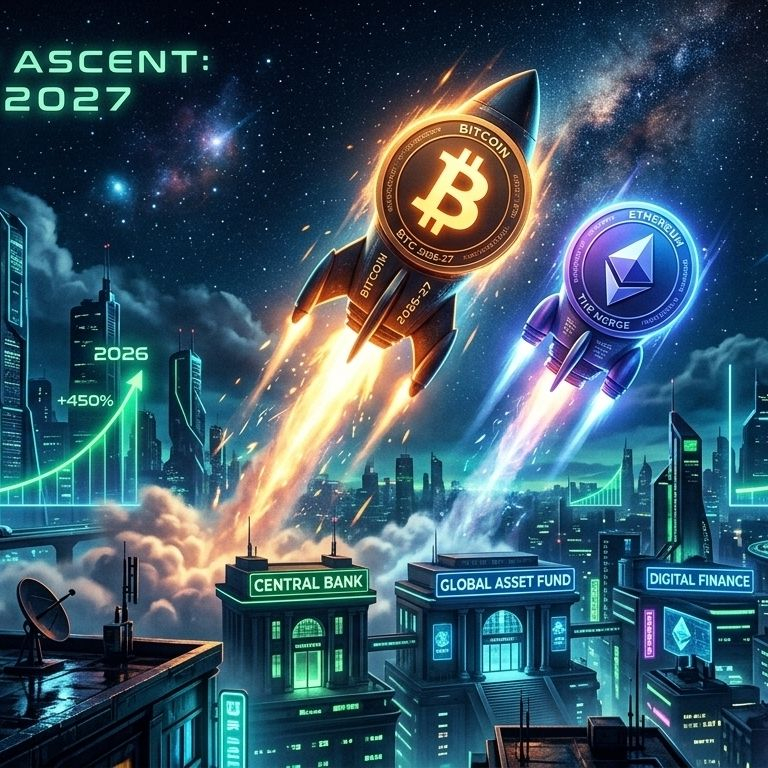
Real talk: Bitcoin isn't just 'digital gold' anymore — it's becoming the global reserve asset. By 2027-2030, with nation-state adoption and halving cycles, $200K+ feels conservative.
We're still early. The people calling it a bubble today will be the same ones FOMOing at $120K. Stack sats consistently.
What's your BTC price prediction for 2030?
{spot}(BTCUSDT)
$BTC #BTC #HODL #cryptofuture #crypto
Real talk: Bitcoin isn't just 'digital gold' anymore — it's becoming the global reserve asset. By 2027-2030, with nation-state adoption and halving cycles, $200K+ feels conservative.
We're still early. The people calling it a bubble today will be the same ones FOMOing at $120K. Stack sats consistently.
What's your BTC price prediction for 2030?
$BTC #BTC #HODL #cryptofuture #crypto
We're still early. The people calling it a bubble today will be the same ones FOMOing at $120K. Stack sats consistently.
What's your BTC price prediction for 2030?
$BTC #BTC #HODL #cryptofuture #crypto
1
194

🤖 Will robots replace traders soon? 💼
AI (Artificial Intelligence) is no longer just a text-writing tool—it has become the hidden engine behind today’s biggest crypto trades.
From analyzing real-time data to executing complex strategies in fractions of a second.
AI projects in the world of crypto are creating a real revolution and attracting massive liquidity.
But the real question is: Can human traders’ emotions and intuition outperform strict AI algorithms? Or will the future belong entirely to Trading Bots?
🤔 Do you rely on bots or AI tools in your current trading? And what is the strongest coin from an AI project that you’re keeping under watch?
#AI #cryptofuture #Web3 #BinanceSquare $BTC $ETH $SOL
{future}(SOLUSDT)
{future}(ETHUSDT)
{future}(BTCUSDT)
🤖 Will robots replace traders soon? 💼
AI (Artificial Intelligence) is no longer just a text-writing tool—it has become the hidden engine behind today’s biggest crypto trades.
From analyzing real-time data to executing complex strategies in fractions of a second.
AI projects in the world of crypto are creating a real revolution and attracting massive liquidity.
But the real question is: Can human traders’ emotions and intuition outperform strict AI algorithms? Or will the future belong entirely to Trading Bots?
🤔 Do you rely on bots or AI tools in your current trading? And what is the strongest coin from an AI project that you’re keeping under watch?
#AI #cryptofuture #Web3 #BinanceSquare $BTC $ETH $SOL
AI (Artificial Intelligence) is no longer just a text-writing tool—it has become the hidden engine behind today’s biggest crypto trades.
From analyzing real-time data to executing complex strategies in fractions of a second.
AI projects in the world of crypto are creating a real revolution and attracting massive liquidity.
But the real question is: Can human traders’ emotions and intuition outperform strict AI algorithms? Or will the future belong entirely to Trading Bots?
🤔 Do you rely on bots or AI tools in your current trading? And what is the strongest coin from an AI project that you’re keeping under watch?
#AI #cryptofuture #Web3 #BinanceSquare $BTC $ETH $SOL
3
3
278

·
--
Bullish
What You want in 2040...?
Bitcoin $100000
Pi $10
$BNB $1000
$DOGE $1
$XRP $10
@bitcoin
#bitcoin #Dogecoin #xrpetf #PiNetworkMainnet
#cryptofuture
What You want in 2040...?
Bitcoin $100000
Pi $10
$BNB $1000
$DOGE $1
$XRP $10
@Bitcoin
#bitcoin #Dogecoin #xrpetf #PiNetworkMainnet
#cryptofuture
Bitcoin $100000
Pi $10
$BNB $1000
$DOGE $1
$XRP $10
@Bitcoin
#bitcoin #Dogecoin #xrpetf #PiNetworkMainnet
#cryptofuture
127


👑 Market Top 3 Gainers — Futures Short Watch 👀📉
1️⃣ $AGT USDT Perp
Price: $0.021089
24H Change: +56.03% 🚀
After a vertical move like this, momentum starts looking overheated. Large impulsive candles + aggressive retail FOMO usually increase short-term correction probability. Watching for liquidity sweep and rejection near local highs.
{future}(AGTUSDT)
2️⃣ $UB USDT Perp
Price: $0.17223
24H Change: +29.07% 📈
Strong breakout momentum, but parabolic continuation without consolidation often leads to sharp pullbacks. If volume weakens while price keeps pushing higher, it could become a high-risk long and a potential short setup.
{future}(UBUSDT)
3️⃣ $NIL USDT Perp
Price: $0.07682 📊
Still holding relative strength, but volatility expansion across recent gainers suggests traders should stay cautious. Waiting for exhaustion signals rather than chasing green candles.
{future}(NILUSDT)
⚠️ In fast-moving futures markets, patience matters more than speed.
Don’t short strength blindly — wait for confirmation, failed breakout structure, or lower timeframe weakness first.
#cryptofuture #Market_Update #Binance
#kingbro1
👑 Market Top 3 Gainers — Futures Short Watch 👀📉
1️⃣ $AGT USDT Perp
Price: $0.021089
24H Change: +56.03% 🚀
After a vertical move like this, momentum starts looking overheated. Large impulsive candles + aggressive retail FOMO usually increase short-term correction probability. Watching for liquidity sweep and rejection near local highs.
2️⃣ $UB USDT Perp
Price: $0.17223
24H Change: +29.07% 📈
Strong breakout momentum, but parabolic continuation without consolidation often leads to sharp pullbacks. If volume weakens while price keeps pushing higher, it could become a high-risk long and a potential short setup.
3️⃣ $NIL USDT Perp
Price: $0.07682 📊
Still holding relative strength, but volatility expansion across recent gainers suggests traders should stay cautious. Waiting for exhaustion signals rather than chasing green candles.
⚠️ In fast-moving futures markets, patience matters more than speed.
Don’t short strength blindly — wait for confirmation, failed breakout structure, or lower timeframe weakness first.
#cryptofuture #Market_Update #Binance
#kingbro1
1️⃣ $AGT USDT Perp
Price: $0.021089
24H Change: +56.03% 🚀
After a vertical move like this, momentum starts looking overheated. Large impulsive candles + aggressive retail FOMO usually increase short-term correction probability. Watching for liquidity sweep and rejection near local highs.
2️⃣ $UB USDT Perp
Price: $0.17223
24H Change: +29.07% 📈
Strong breakout momentum, but parabolic continuation without consolidation often leads to sharp pullbacks. If volume weakens while price keeps pushing higher, it could become a high-risk long and a potential short setup.
3️⃣ $NIL USDT Perp
Price: $0.07682 📊
Still holding relative strength, but volatility expansion across recent gainers suggests traders should stay cautious. Waiting for exhaustion signals rather than chasing green candles.
⚠️ In fast-moving futures markets, patience matters more than speed.
Don’t short strength blindly — wait for confirmation, failed breakout structure, or lower timeframe weakness first.
#cryptofuture #Market_Update #Binance
#kingbro1
$AGT
34%
$UB
27%
$NIL
39%
109 votes • Voting closed
2
9
4k
Log in to explore more content
Join global crypto users on Binance Square
⚡️ Get latest and useful information about crypto.
💬 Trusted by the world’s largest crypto exchange.
👍 Discover real insights from verified creators.
Email / Phone number
Trending Topics
1
#CPIWatch
88.5M views
507,568 Discussing
2
#OptimismOPRises19.98%
10,360 views
303 Discussing
3
#OpenAIEngineerArrestedOverAllegedOfficeRecording
4,029 views
144 Discussing
4
#GoogleReleasesGemini4ArgonAIModel
3,012 views
131 Discussing
5
#LedgerAsksSoutheastAsiaHKResellersToHaltSales
10,776 views
323 Discussing
6
#USEthereumETFsSee10StraightDaysOfOutflows
12,366 views
271 Discussing
7
#MostTokenizedStockTradingHappensOutsideUSHours
4,731 views
124 Discussing
8
#AvalancheSaysKoreaKSDPlatformWillSupportItsLedger
7,088 views
150 Discussing
9
#BTCDominanceBackAt60%
99,476 views
1,179 Discussing
10
#UKHighCourtRulesChineseLawGovernsBitcoinClaims
97,115 views
924 Discussing