
#cloudinfrastructure
cloudinfrastructure
922 views
15 Discussing
Hot
Latest

·
--
🚨 $ICP SMASHES 300 BILLION TRANSACTIONS AS BLOCKCHAIN SHIFTS TO GLOBAL CLOUD POWER! 💥
Smart money isn't just watching pure DeFi playbooks anymore; $ICP just flipped the script by processing over 300 billion total transactions. 📊 That is equivalent to every human on Earth executing 36 network calls on-chain, proving this engine can handle heavy enterprise workloads without choking. ⚡
While most networks fight over basic token swaps, $ICP is aggressively positioning itself as decentralized cloud infrastructure to run real AI models and massive data storage. 💡 The architecture is proving that throughput scales far beyond financial speculation into high-volume real-world utility. 🔍
💬 Will decentralized networks completely displace traditional web cloud giants over the next market cycle? 👇
⚠️ Not financial advice. Always manage your risk. 🛡️
🏷️ #ICP #Web3 #CloudInfrastructure #Crypto
🔥 💎
🚨 $ICP SMASHES 300 BILLION TRANSACTIONS AS BLOCKCHAIN SHIFTS TO GLOBAL CLOUD POWER! 💥
Smart money isn't just watching pure DeFi playbooks anymore; $ICP just flipped the script by processing over 300 billion total transactions. 📊 That is equivalent to every human on Earth executing 36 network calls on-chain, proving this engine can handle heavy enterprise workloads without choking. ⚡
While most networks fight over basic token swaps, $ICP is aggressively positioning itself as decentralized cloud infrastructure to run real AI models and massive data storage. 💡 The architecture is proving that throughput scales far beyond financial speculation into high-volume real-world utility. 🔍
💬 Will decentralized networks completely displace traditional web cloud giants over the next market cycle? 👇
⚠️ Not financial advice. Always manage your risk. 🛡️
🏷️ #ICP #Web3 #CloudInfrastructure #Crypto
🔥 💎
Smart money isn't just watching pure DeFi playbooks anymore; $ICP just flipped the script by processing over 300 billion total transactions. 📊 That is equivalent to every human on Earth executing 36 network calls on-chain, proving this engine can handle heavy enterprise workloads without choking. ⚡
While most networks fight over basic token swaps, $ICP is aggressively positioning itself as decentralized cloud infrastructure to run real AI models and massive data storage. 💡 The architecture is proving that throughput scales far beyond financial speculation into high-volume real-world utility. 🔍
💬 Will decentralized networks completely displace traditional web cloud giants over the next market cycle? 👇
⚠️ Not financial advice. Always manage your risk. 🛡️
🏷️ #ICP #Web3 #CloudInfrastructure #Crypto
🔥 💎
36

·
--
Bullish
Google Cloud outage in London disrupts Revolut services
☁️ On October 20, multiple Google Cloud services in the London region experienced errors and intermittent connectivity. Google attributed the disruption to a power event at one of the region’s infrastructure zones.
💳 Revolut reported disruptions to card payments, transfers, ATM withdrawals and account access. The digital bank confirmed that customers’ money and data remained safe.
🛠️ Google said the power issue had been resolved, while services were being restored in stages. Addressing the cause did not mean all functions were immediately back to normal.
🏦 The incident highlights operational risks when financial services depend on concentrated cloud infrastructure. Backup systems and the ability to switch infrastructure are important for maintaining payments during outages.
#CloudInfrastructure $GOOGLB
Google Cloud outage in London disrupts Revolut services
☁️ On October 20, multiple Google Cloud services in the London region experienced errors and intermittent connectivity. Google attributed the disruption to a power event at one of the region’s infrastructure zones.
💳 Revolut reported disruptions to card payments, transfers, ATM withdrawals and account access. The digital bank confirmed that customers’ money and data remained safe.
🛠️ Google said the power issue had been resolved, while services were being restored in stages. Addressing the cause did not mean all functions were immediately back to normal.
🏦 The incident highlights operational risks when financial services depend on concentrated cloud infrastructure. Backup systems and the ability to switch infrastructure are important for maintaining payments during outages.
#CloudInfrastructure $GOOGLB
☁️ On October 20, multiple Google Cloud services in the London region experienced errors and intermittent connectivity. Google attributed the disruption to a power event at one of the region’s infrastructure zones.
💳 Revolut reported disruptions to card payments, transfers, ATM withdrawals and account access. The digital bank confirmed that customers’ money and data remained safe.
🛠️ Google said the power issue had been resolved, while services were being restored in stages. Addressing the cause did not mean all functions were immediately back to normal.
🏦 The incident highlights operational risks when financial services depend on concentrated cloud infrastructure. Backup systems and the ability to switch infrastructure are important for maintaining payments during outages.
#CloudInfrastructure $GOOGLB

22

$FET ALIBABA CLOUD LEADS AI INFRASTRUCTURE – MASSIVE ADOPTION SIGNAL 🚀
Alibaba Cloud holds 40.1% of China’s AI cloud market, topping a $59.59B sector and beating the next three competitors combined. This isn’t just a tech story – it’s direct confirmation that AI compute demand is exploding at the institutional level.
The crypto AI narrative has been sleeping, but setups like $FET are starting to show accumulation near support. Infrastructure buildouts like this tend to spill over into decentralized AI projects within a few weeks.
Which AI crypto are you watching this week?
Not financial advice. Always manage your risk.
#FET #AISetup #CloudInfrastructure #CryptoAI
⚡
$FET ALIBABA CLOUD LEADS AI INFRASTRUCTURE – MASSIVE ADOPTION SIGNAL 🚀
Alibaba Cloud holds 40.1% of China’s AI cloud market, topping a $59.59B sector and beating the next three competitors combined. This isn’t just a tech story – it’s direct confirmation that AI compute demand is exploding at the institutional level.
The crypto AI narrative has been sleeping, but setups like $FET are starting to show accumulation near support. Infrastructure buildouts like this tend to spill over into decentralized AI projects within a few weeks.
Which AI crypto are you watching this week?
Not financial advice. Always manage your risk.
#FET #AISetup #CloudInfrastructure #CryptoAI
⚡
Alibaba Cloud holds 40.1% of China’s AI cloud market, topping a $59.59B sector and beating the next three competitors combined. This isn’t just a tech story – it’s direct confirmation that AI compute demand is exploding at the institutional level.
The crypto AI narrative has been sleeping, but setups like $FET are starting to show accumulation near support. Infrastructure buildouts like this tend to spill over into decentralized AI projects within a few weeks.
Which AI crypto are you watching this week?
Not financial advice. Always manage your risk.
#FET #AISetup #CloudInfrastructure #CryptoAI
⚡
110

·
--

Article
Choosing the Right Compute Infrastructure for AIChoosing the Right Compute Infrastructure for AI
Most AI teams choose compute providers the wrong way.
They compare H100 hourly rates, browse provider rankings, and pick the cheapest option. Six months later, they're dealing with capacity limits, rising costs, and vendor lock-in.
The problem? Compute decisions should be based on workload requirements, not just GPU prices.
Here's a better framework.
1. Ask the Right Questions First
Before choosing a provider, consider five things:
- Workload: Batch training or low-latency inference?
- Budget: Experimental spending or predictable, large-scale demand?
- DevOps: Can your team manage multiple infrastructure providers?
- Compliance: Do you need HIPAA, SOC 2, or regional data controls?
- Scalability: Can infrastructure handle a sudden 10× increase in demand?
The answers determine which compute model makes sense.
2. Understand the Three Compute Models
Hyperscalers (AWS/GCP): Mature ecosystems, strong compliance, and integrated tooling. But often come with premium pricing, egress fees, and slow GPU quota approvals.
Neoclouds: Competitive GPU pricing and faster access to raw compute, but potentially greater dependence on one provider's capacity.
Aggregated compute fabrics (GPU.net): Connect distributed GPU supply through a unified marketplace, offering broader capacity access, competitive pricing, and flexible scaling.
Each model serves different needs. The goal is to avoid unnecessary infrastructure constraints.
3. Training and Inference Are Not the Same
This is one of the most expensive mistakes AI teams make.
Training requires powerful GPU clusters, high-speed interconnects such as NVLink, and efficient batch processing.
Inference requires low latency, geographical distribution, fast startup times, high availability, and optimized cost per token.
Training happens in intensive phases. Inference continues for as long as users consume your AI product.
Your infrastructure strategy must account for both.
4. Scale Your Infrastructure in Stages
- Pre-PMF: Prioritize on-demand compute. Avoid long-term commitments while demand remains uncertain.
- Early growth: Separate training and inference clusters. Analyze 60-day spending before considering reserved capacity.
- Production scale: Reduce single-vendor dependency through portable deployments, open container standards, and multi-provider infrastructure.
Don't build infrastructure for a company you haven't become yet.
5. Where GPU.net Fits
GPU.net brings distributed GPU capacity and AI services into one ecosystem.
Its offering includes:
- NVIDIA H100 GPUs from $2.20/hour.
- B200 and Blackwell reservation options.
- OpenAI-compatible GLM 5.3 inference at $0.15 per 1M tokens.
The broader ecosystem also connects GPU compute with hosted models, AI agents, and GPU-related yield opportunities.
The Bigger Picture
The future of AI infrastructure won't be defined by a single cloud provider.
It will be defined by how efficiently workloads access global compute based on cost, geography, availability, and latency.
The competitive advantage won't simply be owning more GPUs. It will be accessing the right compute at the right time and cost
Explore the GPU.net ecosystem: https://world.gpu.net/
#AI #GPU #DePIN #AIInfrastructure #C#cloudcomputing #Aİ #CloudInfrastructure #GPURental #DePIN
Choosing the Right Compute Infrastructure for AI
Choosing the Right Compute Infrastructure for AI
Most AI teams choose compute providers the wrong way.
They compare H100 hourly rates, browse provider rankings, and pick the cheapest option. Six months later, they're dealing with capacity limits, rising costs, and vendor lock-in.
The problem? Compute decisions should be based on workload requirements, not just GPU prices.
Here's a better framework.
1. Ask the Right Questions First
Before choosing a provider, consider five things:
- Workload: Batch training or low-latency inference?
- Budget: Experimental spending or predictable, large-scale demand?
- DevOps: Can your team manage multiple infrastructure providers?
- Compliance: Do you need HIPAA, SOC 2, or regional data controls?
- Scalability: Can infrastructure handle a sudden 10× increase in demand?
The answers determine which compute model makes sense.
2. Understand the Three Compute Models
Hyperscalers (AWS/GCP): Mature ecosystems, strong compliance, and integrated tooling. But often come with premium pricing, egress fees, and slow GPU quota approvals.
Neoclouds: Competitive GPU pricing and faster access to raw compute, but potentially greater dependence on one provider's capacity.
Aggregated compute fabrics (GPU.net): Connect distributed GPU supply through a unified marketplace, offering broader capacity access, competitive pricing, and flexible scaling.
Each model serves different needs. The goal is to avoid unnecessary infrastructure constraints.
3. Training and Inference Are Not the Same
This is one of the most expensive mistakes AI teams make.
Training requires powerful GPU clusters, high-speed interconnects such as NVLink, and efficient batch processing.
Inference requires low latency, geographical distribution, fast startup times, high availability, and optimized cost per token.
Training happens in intensive phases. Inference continues for as long as users consume your AI product.
Your infrastructure strategy must account for both.
4. Scale Your Infrastructure in Stages
- Pre-PMF: Prioritize on-demand compute. Avoid long-term commitments while demand remains uncertain.
- Early growth: Separate training and inference clusters. Analyze 60-day spending before considering reserved capacity.
- Production scale: Reduce single-vendor dependency through portable deployments, open container standards, and multi-provider infrastructure.
Don't build infrastructure for a company you haven't become yet.
5. Where GPU.net Fits
GPU.net brings distributed GPU capacity and AI services into one ecosystem.
Its offering includes:
- NVIDIA H100 GPUs from $2.20/hour.
- B200 and Blackwell reservation options.
- OpenAI-compatible GLM 5.3 inference at $0.15 per 1M tokens.
The broader ecosystem also connects GPU compute with hosted models, AI agents, and GPU-related yield opportunities.
The Bigger Picture
The future of AI infrastructure won't be defined by a single cloud provider.
It will be defined by how efficiently workloads access global compute based on cost, geography, availability, and latency.
The competitive advantage won't simply be owning more GPUs. It will be accessing the right compute at the right time and cost
Explore the GPU.net ecosystem: https://world.gpu.net/
#AI #GPU #DePIN #AIInfrastructure #C#cloudcomputing #Aİ #CloudInfrastructure #GPURental #DePIN
Most AI teams choose compute providers the wrong way.
They compare H100 hourly rates, browse provider rankings, and pick the cheapest option. Six months later, they're dealing with capacity limits, rising costs, and vendor lock-in.
The problem? Compute decisions should be based on workload requirements, not just GPU prices.
Here's a better framework.
1. Ask the Right Questions First
Before choosing a provider, consider five things:
- Workload: Batch training or low-latency inference?
- Budget: Experimental spending or predictable, large-scale demand?
- DevOps: Can your team manage multiple infrastructure providers?
- Compliance: Do you need HIPAA, SOC 2, or regional data controls?
- Scalability: Can infrastructure handle a sudden 10× increase in demand?
The answers determine which compute model makes sense.
2. Understand the Three Compute Models
Hyperscalers (AWS/GCP): Mature ecosystems, strong compliance, and integrated tooling. But often come with premium pricing, egress fees, and slow GPU quota approvals.
Neoclouds: Competitive GPU pricing and faster access to raw compute, but potentially greater dependence on one provider's capacity.
Aggregated compute fabrics (GPU.net): Connect distributed GPU supply through a unified marketplace, offering broader capacity access, competitive pricing, and flexible scaling.
Each model serves different needs. The goal is to avoid unnecessary infrastructure constraints.
3. Training and Inference Are Not the Same
This is one of the most expensive mistakes AI teams make.
Training requires powerful GPU clusters, high-speed interconnects such as NVLink, and efficient batch processing.
Inference requires low latency, geographical distribution, fast startup times, high availability, and optimized cost per token.
Training happens in intensive phases. Inference continues for as long as users consume your AI product.
Your infrastructure strategy must account for both.
4. Scale Your Infrastructure in Stages
- Pre-PMF: Prioritize on-demand compute. Avoid long-term commitments while demand remains uncertain.
- Early growth: Separate training and inference clusters. Analyze 60-day spending before considering reserved capacity.
- Production scale: Reduce single-vendor dependency through portable deployments, open container standards, and multi-provider infrastructure.
Don't build infrastructure for a company you haven't become yet.
5. Where GPU.net Fits
GPU.net brings distributed GPU capacity and AI services into one ecosystem.
Its offering includes:
- NVIDIA H100 GPUs from $2.20/hour.
- B200 and Blackwell reservation options.
- OpenAI-compatible GLM 5.3 inference at $0.15 per 1M tokens.
The broader ecosystem also connects GPU compute with hosted models, AI agents, and GPU-related yield opportunities.
The Bigger Picture
The future of AI infrastructure won't be defined by a single cloud provider.
It will be defined by how efficiently workloads access global compute based on cost, geography, availability, and latency.
The competitive advantage won't simply be owning more GPUs. It will be accessing the right compute at the right time and cost
Explore the GPU.net ecosystem: https://world.gpu.net/
#AI #GPU #DePIN #AIInfrastructure #C#cloudcomputing #Aİ #CloudInfrastructure #GPURental #DePIN
152

·
--
⚡ $NBIS POSITIONED AT THE EPICENTER OF A STRUCTURAL AI COMPUTE SUPPLY CRUNCH! 🏦
🌊 Institutional validation for decentralized and neocloud infrastructure just accelerated drastically. With hyperscalers aggressively hunting available clusters and payback windows compressing rapidly, available capacity is getting locked down at premium pricing.
💡 The macro thesis hinges on rising compute value per watt, pointing toward sustained structural demand and prolonged supply deficits that favor specialized providers. 💬 Is the compute supply bottleneck the most asymmetric theme of this cycle, or are markets still underpricing high-tier infrastructure? 👇
⚠️ Not financial advice. Always manage your risk. 🛡️
🏷️ #NBIS #AI #CloudInfrastructure #SmartMoney #Crypto
🎯 🦈
⚡ $NBIS POSITIONED AT THE EPICENTER OF A STRUCTURAL AI COMPUTE SUPPLY CRUNCH! 🏦
🌊 Institutional validation for decentralized and neocloud infrastructure just accelerated drastically. With hyperscalers aggressively hunting available clusters and payback windows compressing rapidly, available capacity is getting locked down at premium pricing.
💡 The macro thesis hinges on rising compute value per watt, pointing toward sustained structural demand and prolonged supply deficits that favor specialized providers. 💬 Is the compute supply bottleneck the most asymmetric theme of this cycle, or are markets still underpricing high-tier infrastructure? 👇
⚠️ Not financial advice. Always manage your risk. 🛡️
🏷️ #NBIS #AI #CloudInfrastructure #SmartMoney #Crypto
🎯 🦈
🌊 Institutional validation for decentralized and neocloud infrastructure just accelerated drastically. With hyperscalers aggressively hunting available clusters and payback windows compressing rapidly, available capacity is getting locked down at premium pricing.
💡 The macro thesis hinges on rising compute value per watt, pointing toward sustained structural demand and prolonged supply deficits that favor specialized providers. 💬 Is the compute supply bottleneck the most asymmetric theme of this cycle, or are markets still underpricing high-tier infrastructure? 👇
⚠️ Not financial advice. Always manage your risk. 🛡️
🏷️ #NBIS #AI #CloudInfrastructure #SmartMoney #Crypto
🎯 🦈
8

·
--
$AI Infrastructure Costs Are Rising as Inference Demand Expands ⚡
Citigroup says AI inference demand is still running hot, and the pressure is no longer limited to the newest chips. Scarcity is moving across GPUs, data centers, power access, and routing layers, which means the market is now pricing the full stack, not just semiconductors.
The key takeaway is structural: model vendors are monetizing faster, while infrastructure bottlenecks are becoming the real constraint. If this trend continues, value may keep rotating toward the layers that help reduce inference cost and allocate compute more efficiently.
Not financial advice. Manage your risk.
#AI #Inference #DataCenters #CloudInfrastructure #Tech
⚡
$AI Infrastructure Costs Are Rising as Inference Demand Expands ⚡
Citigroup says AI inference demand is still running hot, and the pressure is no longer limited to the newest chips. Scarcity is moving across GPUs, data centers, power access, and routing layers, which means the market is now pricing the full stack, not just semiconductors.
The key takeaway is structural: model vendors are monetizing faster, while infrastructure bottlenecks are becoming the real constraint. If this trend continues, value may keep rotating toward the layers that help reduce inference cost and allocate compute more efficiently.
Not financial advice. Manage your risk.
#AI #Inference #DataCenters #CloudInfrastructure #Tech
⚡
Citigroup says AI inference demand is still running hot, and the pressure is no longer limited to the newest chips. Scarcity is moving across GPUs, data centers, power access, and routing layers, which means the market is now pricing the full stack, not just semiconductors.
The key takeaway is structural: model vendors are monetizing faster, while infrastructure bottlenecks are becoming the real constraint. If this trend continues, value may keep rotating toward the layers that help reduce inference cost and allocate compute more efficiently.
Not financial advice. Manage your risk.
#AI #Inference #DataCenters #CloudInfrastructure #Tech
⚡
64
$FET AI INFRASTRUCTURE PLAY: NVIDIA + NAVER BUILDING EXASCALE CLOUD ⚡
🔍 NVIDIA, Naver, and Brookfield are pouring billions into a 200MW AI factory in South Korea, scaling to 1GW by 2028. This is not just a tech story – it’s a massive demand signal for decentralized compute networks like $FET . 📊
💡 As centralized cloud giants race to meet AI compute hunger, the value of open, scalable blockchain-based compute becomes undeniable. The hardware pipeline (Vera Rubin, Blackwell) confirms the exponential trajectory. 💬 Which AI crypto protocol is best positioned to absorb this wave – $FET or $RNDR ? 👇
⚠️ Not financial advice. Always manage your risk. 🛡️
🏷️ #FET #AI #NVIDIA #CloudInfrastructure #Crypto
🎯 🦈
$FET AI INFRASTRUCTURE PLAY: NVIDIA + NAVER BUILDING EXASCALE CLOUD ⚡
🔍 NVIDIA, Naver, and Brookfield are pouring billions into a 200MW AI factory in South Korea, scaling to 1GW by 2028. This is not just a tech story – it’s a massive demand signal for decentralized compute networks like $FET . 📊
💡 As centralized cloud giants race to meet AI compute hunger, the value of open, scalable blockchain-based compute becomes undeniable. The hardware pipeline (Vera Rubin, Blackwell) confirms the exponential trajectory. 💬 Which AI crypto protocol is best positioned to absorb this wave – $FET or $RNDR ? 👇
⚠️ Not financial advice. Always manage your risk. 🛡️
🏷️ #FET #AI #NVIDIA #CloudInfrastructure #Crypto
🎯 🦈
🔍 NVIDIA, Naver, and Brookfield are pouring billions into a 200MW AI factory in South Korea, scaling to 1GW by 2028. This is not just a tech story – it’s a massive demand signal for decentralized compute networks like $FET . 📊
💡 As centralized cloud giants race to meet AI compute hunger, the value of open, scalable blockchain-based compute becomes undeniable. The hardware pipeline (Vera Rubin, Blackwell) confirms the exponential trajectory. 💬 Which AI crypto protocol is best positioned to absorb this wave – $FET or $RNDR ? 👇
⚠️ Not financial advice. Always manage your risk. 🛡️
🏷️ #FET #AI #NVIDIA #CloudInfrastructure #Crypto
🎯 🦈
1
253

·
--
🌐 Google's Big Bet: $185 Billion Investment in AI and Cloud Infrastructure! 🚀
A major shift is about to take place in the world of AI! Google has announced a massive investment of $175 billion to $185 billion this year to strengthen artificial intelligence and cloud infrastructure.
CEO Sundar Pichai has called this the "Agentic Era," indicating that future AI will not only respond, but also take action!
💡 Key highlights of this investment:
Mega Investment: The $175B-$185B investment will directly propel Google's AI and cloud capabilities to new heights.
Strengthening the Ecosystem: Google has released a special fund of $750 million for its 120,000 cloud partners.
Objective: Its primary goal is to build 'Agentic AI' products to foster innovation and collaboration.
This move establishes Google as a clear leader in the digital race of the future. We are entering an era where AI will become not just a tool, but a collaborator!
👉 $SPK $GOOGL $RAVE
What do you think? Will this 'Agentic Era' completely change the way we work? Share your thoughts in the comments! 👇
#Google #AI #CloudInfrastructure #AgenticAI #TechNews #Innovation #futureoftech
🌐 Google's Big Bet: $185 Billion Investment in AI and Cloud Infrastructure! 🚀
A major shift is about to take place in the world of AI! Google has announced a massive investment of $175 billion to $185 billion this year to strengthen artificial intelligence and cloud infrastructure.
CEO Sundar Pichai has called this the "Agentic Era," indicating that future AI will not only respond, but also take action!
💡 Key highlights of this investment:
Mega Investment: The $175B-$185B investment will directly propel Google's AI and cloud capabilities to new heights.
Strengthening the Ecosystem: Google has released a special fund of $750 million for its 120,000 cloud partners.
Objective: Its primary goal is to build 'Agentic AI' products to foster innovation and collaboration.
This move establishes Google as a clear leader in the digital race of the future. We are entering an era where AI will become not just a tool, but a collaborator!
👉 $SPK $GOOGL $RAVE
What do you think? Will this 'Agentic Era' completely change the way we work? Share your thoughts in the comments! 👇
#Google #AI #CloudInfrastructure #AgenticAI #TechNews #Innovation #futureoftech
A major shift is about to take place in the world of AI! Google has announced a massive investment of $175 billion to $185 billion this year to strengthen artificial intelligence and cloud infrastructure.
CEO Sundar Pichai has called this the "Agentic Era," indicating that future AI will not only respond, but also take action!
💡 Key highlights of this investment:
Mega Investment: The $175B-$185B investment will directly propel Google's AI and cloud capabilities to new heights.
Strengthening the Ecosystem: Google has released a special fund of $750 million for its 120,000 cloud partners.
Objective: Its primary goal is to build 'Agentic AI' products to foster innovation and collaboration.
This move establishes Google as a clear leader in the digital race of the future. We are entering an era where AI will become not just a tool, but a collaborator!
👉 $SPK $GOOGL $RAVE
What do you think? Will this 'Agentic Era' completely change the way we work? Share your thoughts in the comments! 👇
#Google #AI #CloudInfrastructure #AgenticAI #TechNews #Innovation #futureoftech

167
·
--
🚨 $COTI & $UTK — CLOUD GIANTS STEP BACK, ALTERNATIVES STEP UP! ⚡
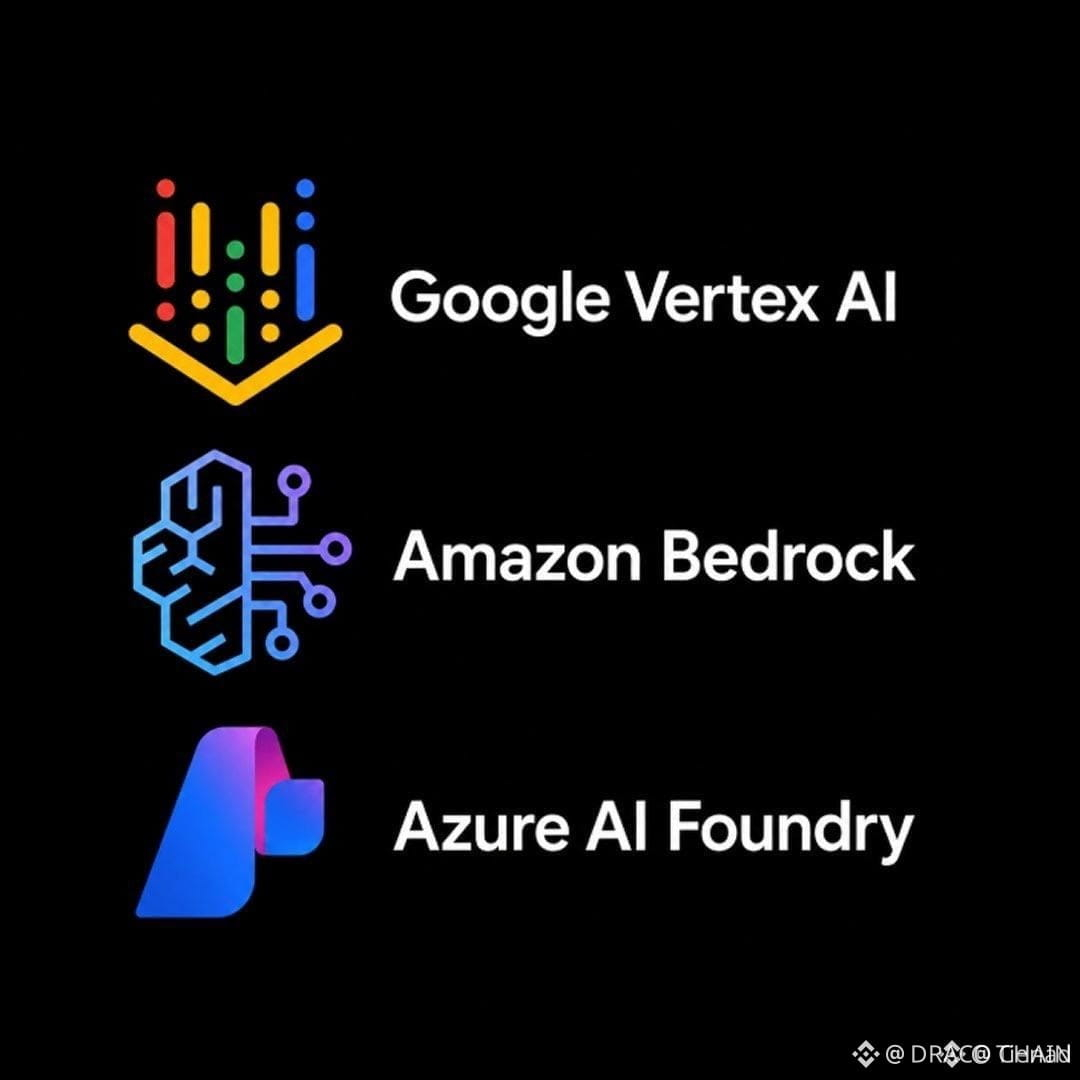
The three largest cloud providers just refused to host the world’s leading open AI model. 🦈 This creates a vacuum—institutional liquidity is shifting, and smaller infrastructure plays like $COTI and $UTK are positioned to absorb the overflow. 📊
Smart money often redeploys into overlooked sectors during structural realignments. The question is whether this is a temporary hesitation or a permanent pivot in AI hosting. 💬 Are you watching the alternative cloud narrative, or do you see this as a headwind for adoption? 👇
⚠️ Not financial advice. Always manage your risk. 🛡️
🏷️ #COTI #UTK #AI #CloudInfrastructure #Crypto
🦈 🌊
🚨 $COTI & $UTK — CLOUD GIANTS STEP BACK, ALTERNATIVES STEP UP! ⚡
The three largest cloud providers just refused to host the world’s leading open AI model. 🦈 This creates a vacuum—institutional liquidity is shifting, and smaller infrastructure plays like $COTI and $UTK are positioned to absorb the overflow. 📊
Smart money often redeploys into overlooked sectors during structural realignments. The question is whether this is a temporary hesitation or a permanent pivot in AI hosting. 💬 Are you watching the alternative cloud narrative, or do you see this as a headwind for adoption? 👇
⚠️ Not financial advice. Always manage your risk. 🛡️
🏷️ #COTI #UTK #AI #CloudInfrastructure #Crypto
🦈 🌊
The three largest cloud providers just refused to host the world’s leading open AI model. 🦈 This creates a vacuum—institutional liquidity is shifting, and smaller infrastructure plays like $COTI and $UTK are positioned to absorb the overflow. 📊
Smart money often redeploys into overlooked sectors during structural realignments. The question is whether this is a temporary hesitation or a permanent pivot in AI hosting. 💬 Are you watching the alternative cloud narrative, or do you see this as a headwind for adoption? 👇
⚠️ Not financial advice. Always manage your risk. 🛡️
🏷️ #COTI #UTK #AI #CloudInfrastructure #Crypto
🦈 🌊

70
Log in to explore more content
Join global crypto users on Binance Square
⚡️ Get latest and useful information about crypto.
💬 Trusted by the world’s largest crypto exchange.
👍 Discover real insights from verified creators.
Email / Phone number
Trending Topics
1
#BTCReboundsAbove$60KAmidWhaleDipBuying
87,462 views
374 Discussing
2
#SolanaSets2027RoadmapToDoubleComputeCapacity
72,115 views
1,091 Discussing
3
#CaliforniaNvidiaProbeExaminesPotentialCriminalViolations
19,625 views
152 Discussing
4
#BlackRockLaunchesHKDollarDigitalLiquidityFund
60,494 views
824 Discussing
5
#NvidiaLoses$2.7TrillionInMonthAndAHalf
82,199 views
322 Discussing
6
#GlobalStocksFaceLongestLosingStreakSince2023
590,969 views
3,548 Discussing
7
#BlackRockIBITPostsRecord$541MSingleDayOutflow
99,780 views
186 Discussing
8
#AnthropicPlungesTowardIPOPriceonDay2
329,451 views
2,385 Discussing
9
#TwentyOneCapitalAdds172.25BTC
178,604 views
1,696 Discussing
10
#HKBillWouldExcludeTokenizedDepositsFromVirtualAssets
19,138 views
109 Discussing