In this article, you will learn about common scams that happen in the P2P market and how to prevent them.

At Binance, we take user protection seriously, so we consider it our responsibility to constantly keep our users updated on security tips and advice. Because you are dealing with strangers when trading P2P, you should always be vigilant and keep in mind the possibility that your counterparty is not acting in good faith. Some common scams that exploit peer-to-peer transactions include identity fraud and cashback fraud. Below you will find descriptions of common criminal schemes and tips on how not to become a victim.
When transacting P2P online, it’s extremely important to closely check all payment-related information that your counterparty shares with you. Scammers can manipulate screenshots and other evidence to claim that they have upheld their part of the deal and then pressure you into completing yours. If you comply without confirming that you have indeed received the money, you risk losing your digital assets with little chance of recovering them.
Always make sure to check your bank account or wallet to confirm that you have indeed received the money from the P2P transaction.
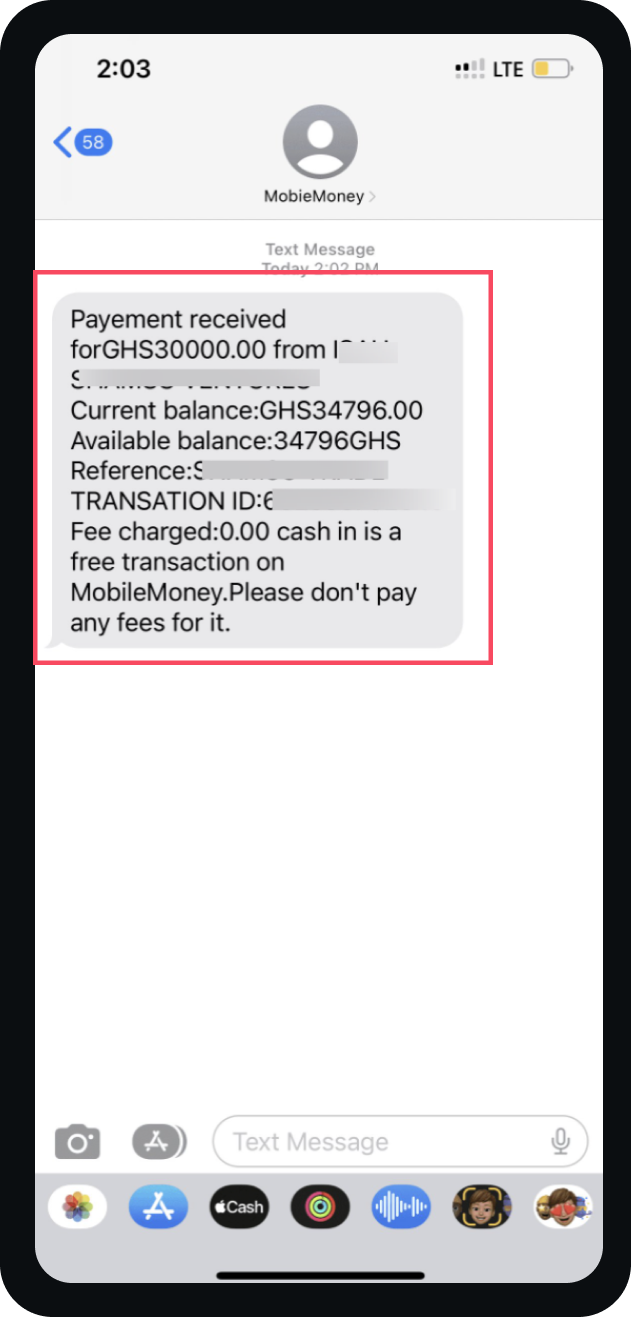
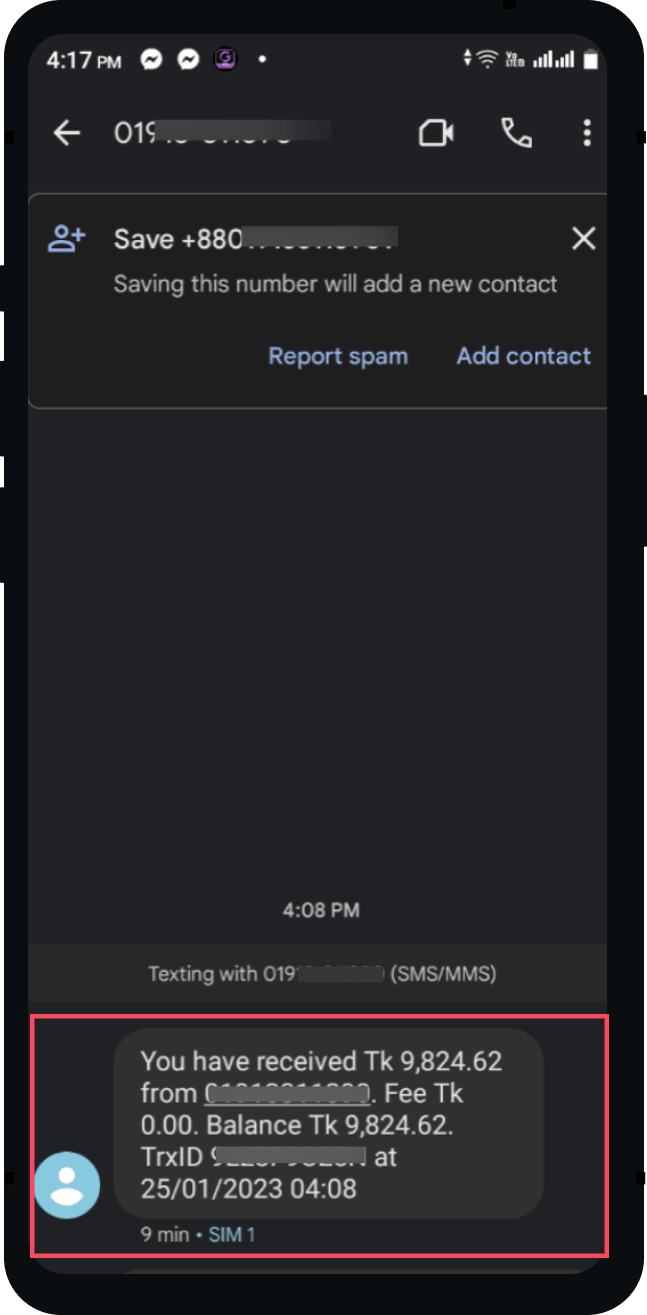
SMS scams are a type of proof of payment scam whereby criminals forge a text message to notify the victim that they have received a payment. Sophisticated scammers can send you an SMS message that looks identical to the notifications sent by bank or e-wallet apps. Here are some examples:
Always make sure to check your bank account or wallet to confirm that you have indeed received the money from the P2P transaction. Don’t simply trust the message – log in to your bank or wallet account and check firsthand whether the funds are there and available to you.
Sometimes, a scammer can attempt to take advantage of the chargeback feature available for some payment methods to retract the payment they have made to their P2P counterparty. Notably, in many cases, they seek to process such payments via a third-party account.
Furthermore, if the person on the opposite side of a P2P transaction attempts to pay you via a check deposit, they most likely intend to defraud you. When using a check payment, requesting a chargeback is extremely easy. If your counterparty insists on paying you via check, do not release the funds and appeal the order immediately.
Always make sure to only accept payment from the buyer whose details match their verified name on Binance. Do not accept payments from third-party accounts, if it happens, raise an appeal and refund the payment back to the sending account.
In man-in-the-middle scams, malicious actors pretend to be reputable P2P traders who make fast transfers and accept third-party payments. A scammer will find a victim via social networking platforms, such as WhatsApp, Telegram, Instagram, or Facebook, and pretend to be that reputable P2P buyer looking to buy or sell crypto. Let’s take a victim seller as an example.
Along with a link to a P2P ad, the scammer will send the victim their bank account details on the social networking platform to let them know they'll be making a payment via this account. The scammer will then ask the victim to confirm that they've received the account details by having them copy these details over to the P2P platform’s chat.
What the victim doesn't realize is that they are sharing the scammer’s bank account details in the chat of an unrelated buyer, who is also not aware about the scam. The victim then sends their crypto to the unrelated buyer, who unknowingly sends money to the scammer’s bank account. Note that the unrelated buyer believes the bank account belongs to the victim (because the victim has previously shared the details of the scammer’s bank account in the P2P chat).
At this point, the scammer disappears with the money. The victim, realizing this, will try to reverse the transaction by opening an appeal. However, there isn't much customer service can do in this case since all critical communication took place outside of the Binance P2P platform, and the buyer sent their funds to a third-party scammer account.
Don't respond to trading requests on any social networking platform. Limit your communication with your counterparty to the Binance P2P platform ahead of and during a transaction. More importantly, if a buyer asks if they can make payment via a third-party transfer, remind them that transfers made from someone else's account violate P2P transaction policies. Also, make sure to double check the bank account details of your counterparty directly on the Binance P2P platform. Don’t trust information or offers received on external channels.
A triangle scam involves two buyers belonging to the same criminal group taking two orders from the same seller almost simultaneously. For example, Buyer A takes an order for 5000 BUSD worth of crypto (order A), while Buyer B takes an order for the equivalent of 6000 BUSD (order B).
Buyer B then transfers 5000 BUSD to the seller, at the same time Buyer A marks the order A as paid. The seller releases crypto to Buyer A, thus completing order A for 5000 BUSD. Buyer B sends another 1000 BUSD to the seller, provides payment proof for 5000 BUSD (which they got from Buyer A) plus 1000 BUSD, and forces the seller to release digital assets under order B.
When the dust settles, it turns out that the seller has released 5000 + 6000 = 11,000 BUSD worth of crypto but has been paid only 6000 BUSD.
Always make sure to check your bank account or wallet to confirm that you indeed have received all the money from all your pending P2P transactions. Be careful with the proof of payment the counterparties send you, and remember that scammers may try to reuse these proofs.
Ready to start trading on Binance P2P? Register a new Binance account or download the Binance app. Once you've completed your identity verification, you can start buying and selling crypto on the Binance P2P marketplace.
To learn more about Binance P2P, visit these links:
Disclaimer: Your use of Binance P2P services and all information and other content (including that of third parties) included in or accessible from Binance P2P services is at your sole risk. Our only responsibility is to handle crypto transactions. All payments are final upon completion unless otherwise required by law. The Binance P2P platform has neither the right nor obligation to resolve any disputes arising from a completed payment. Neither the Binance P2P platform nor its merchants shall be responsible for any loss after a completed payment.