

BigBreakingWire
549 Posts

BigBreakingWire
Report
Block User
Follow @BigBreakingWire-Your fast lane to finance, stocks, crypto & bonds! Get sharp insights, stay ahead, invest smarter.
0 Following
46 Followers
165 Liked
Posts
All
Quotes
Videos
BREAKING: Fed’s Williams Signals Another Rate Hike, US 10Y Yield Hits 5.14%
Fed’s Williams said another rate hike before year end would be reasonable, citing significant inflation challenges and strong AI demand.
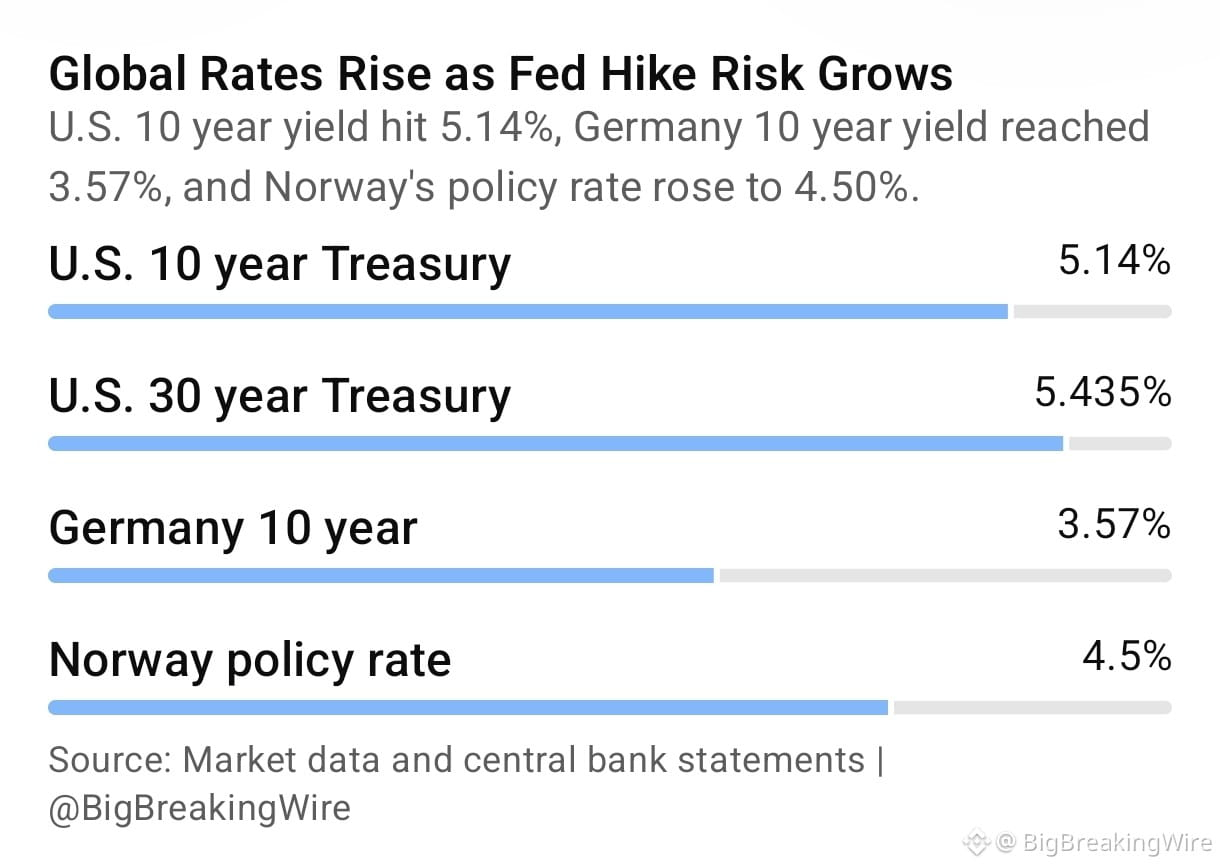
The U.S. 10 year Treasury yield rose 2 bps to 5.14%, highest since 2007, while the 30 year yield climbed 3 bps to 5.435%.
Spot gold fell more than $10 to around $4,270 an ounce as yields rose.
Germany’s 10 year yield reached 3.57%, highest since 2009, while Norway’s central bank raised rates 25 bps to 4.50% and signaled rates may stay elevated.
BREAKING: Fed’s Williams Signals Another Rate Hike, US 10Y Yield Hits 5.14%
Fed’s Williams said another rate hike before year end would be reasonable, citing significant inflation challenges and strong AI demand.
The U.S. 10 year Treasury yield rose 2 bps to 5.14%, highest since 2007, while the 30 year yield climbed 3 bps to 5.435%.
Spot gold fell more than $10 to around $4,270 an ounce as yields rose.
Germany’s 10 year yield reached 3.57%, highest since 2009, while Norway’s central bank raised rates 25 bps to 4.50% and signaled rates may stay elevated.
Fed’s Williams said another rate hike before year end would be reasonable, citing significant inflation challenges and strong AI demand.
The U.S. 10 year Treasury yield rose 2 bps to 5.14%, highest since 2007, while the 30 year yield climbed 3 bps to 5.435%.
Spot gold fell more than $10 to around $4,270 an ounce as yields rose.
Germany’s 10 year yield reached 3.57%, highest since 2009, while Norway’s central bank raised rates 25 bps to 4.50% and signaled rates may stay elevated.
2
🚨 BREAKING: Gold stays under pressure as dollar firms and Treasury yields hit multi year highs
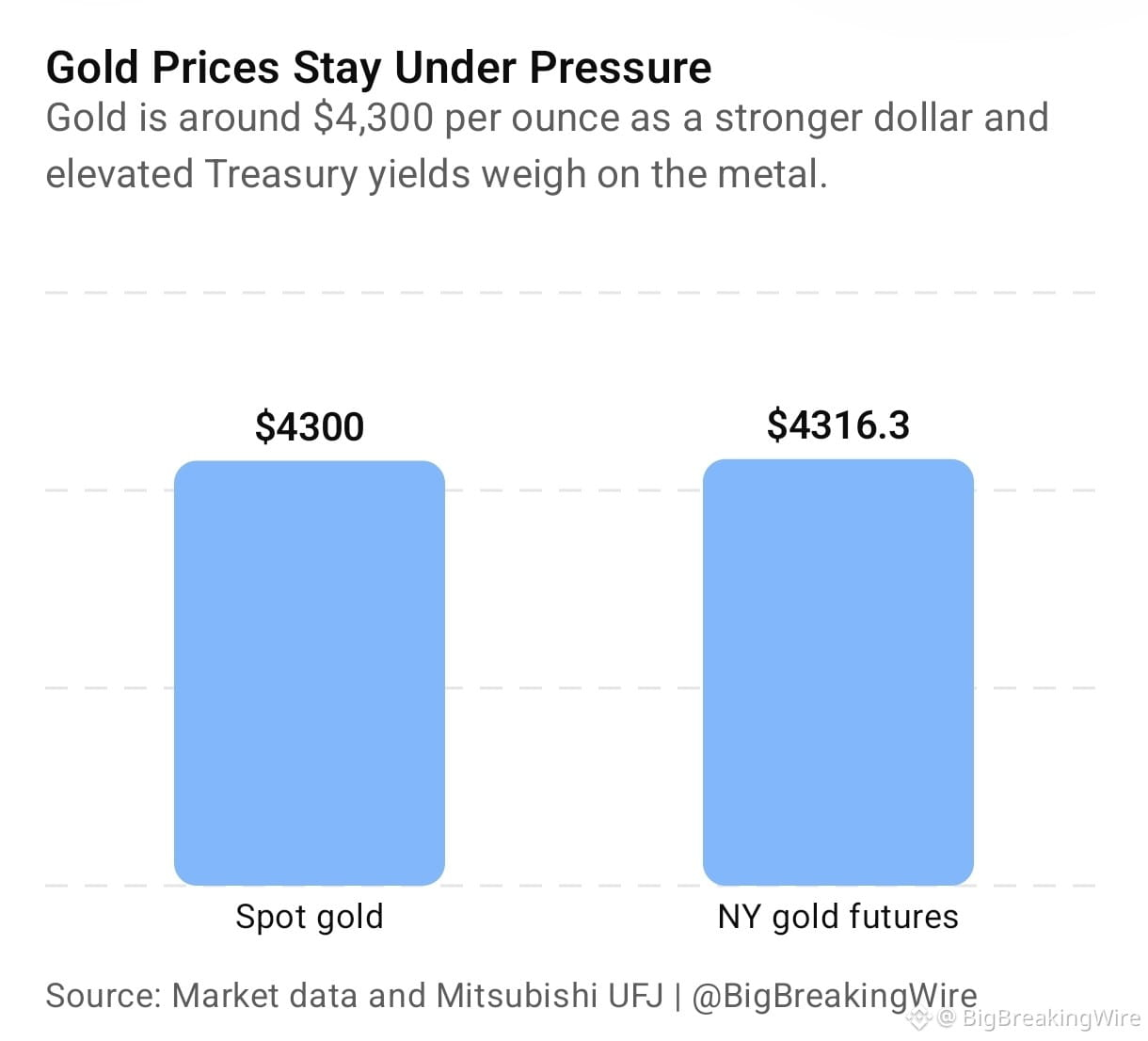
Gold remained muted around $4,300 per ounce, with NY gold futures flat at $4,316.30 as a stronger dollar and elevated US Treasury yields weighed on the metal.
Mitsubishi UFJ analysts said Fed officials remain hawkish, while Fed board member Barr indicated further tightening may be needed.
Markets are pricing in at least three more Fed rate hikes by April, keeping pressure on gold as higher yields increase the opportunity cost of holding the metal.
Persistent energy driven inflation and multi year high Treasury yields remain major headwinds for gold.
🚨 BREAKING: Gold stays under pressure as dollar firms and Treasury yields hit multi year highs
Gold remained muted around $4,300 per ounce, with NY gold futures flat at $4,316.30 as a stronger dollar and elevated US Treasury yields weighed on the metal.
Mitsubishi UFJ analysts said Fed officials remain hawkish, while Fed board member Barr indicated further tightening may be needed.
Markets are pricing in at least three more Fed rate hikes by April, keeping pressure on gold as higher yields increase the opportunity cost of holding the metal.
Persistent energy driven inflation and multi year high Treasury yields remain major headwinds for gold.
Gold remained muted around $4,300 per ounce, with NY gold futures flat at $4,316.30 as a stronger dollar and elevated US Treasury yields weighed on the metal.
Mitsubishi UFJ analysts said Fed officials remain hawkish, while Fed board member Barr indicated further tightening may be needed.
Markets are pricing in at least three more Fed rate hikes by April, keeping pressure on gold as higher yields increase the opportunity cost of holding the metal.
Persistent energy driven inflation and multi year high Treasury yields remain major headwinds for gold.
149
BREAKING: Japan 10 Year JGB Yield Hits 3.075%, Yen Nears 160 per Dollar
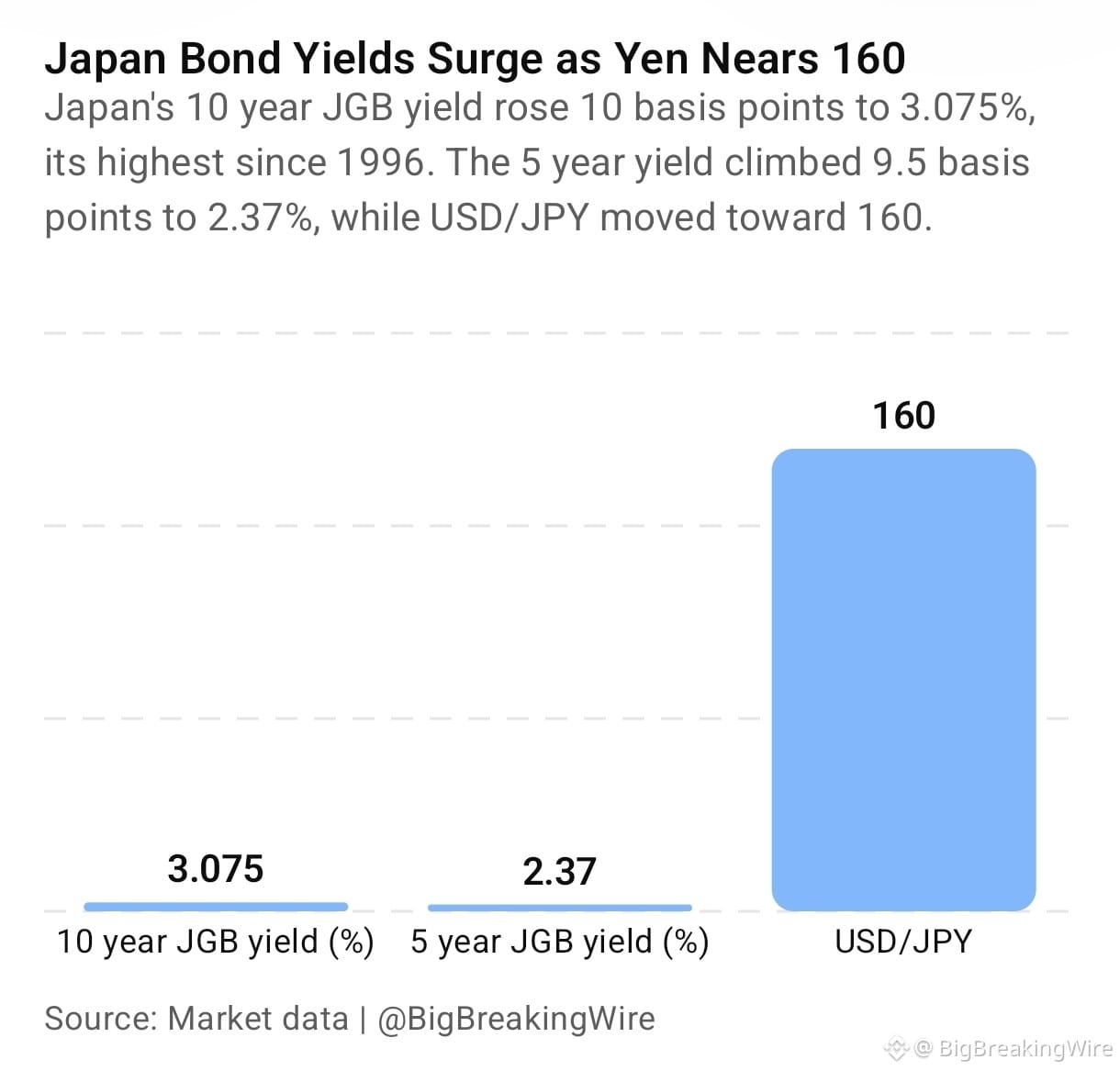
Japan’s 10 year JGB yield jumped 10 bps to 3.075%, the highest since 1996, while the 5 year yield rose 9.5 bps to 2.37%.
The move followed a U.S. Treasury selloff, rising oil prices and expectations of further Fed tightening, alongside expectations for more BOJ rate hikes.
The yen weakened for a second straight week, pushing USD/JPY toward the closely watched 160 level.
Markets are watching 160 as a potential trigger for renewed Japanese intervention concerns if the yen weakens rapidly.
BREAKING: Japan 10 Year JGB Yield Hits 3.075%, Yen Nears 160 per Dollar
Japan’s 10 year JGB yield jumped 10 bps to 3.075%, the highest since 1996, while the 5 year yield rose 9.5 bps to 2.37%.
The move followed a U.S. Treasury selloff, rising oil prices and expectations of further Fed tightening, alongside expectations for more BOJ rate hikes.
The yen weakened for a second straight week, pushing USD/JPY toward the closely watched 160 level.
Markets are watching 160 as a potential trigger for renewed Japanese intervention concerns if the yen weakens rapidly.
Japan’s 10 year JGB yield jumped 10 bps to 3.075%, the highest since 1996, while the 5 year yield rose 9.5 bps to 2.37%.
The move followed a U.S. Treasury selloff, rising oil prices and expectations of further Fed tightening, alongside expectations for more BOJ rate hikes.
The yen weakened for a second straight week, pushing USD/JPY toward the closely watched 160 level.
Markets are watching 160 as a potential trigger for renewed Japanese intervention concerns if the yen weakens rapidly.
205
BREAKING: Trump Sold Up to $50M of Microsoft and Amazon Shares in July
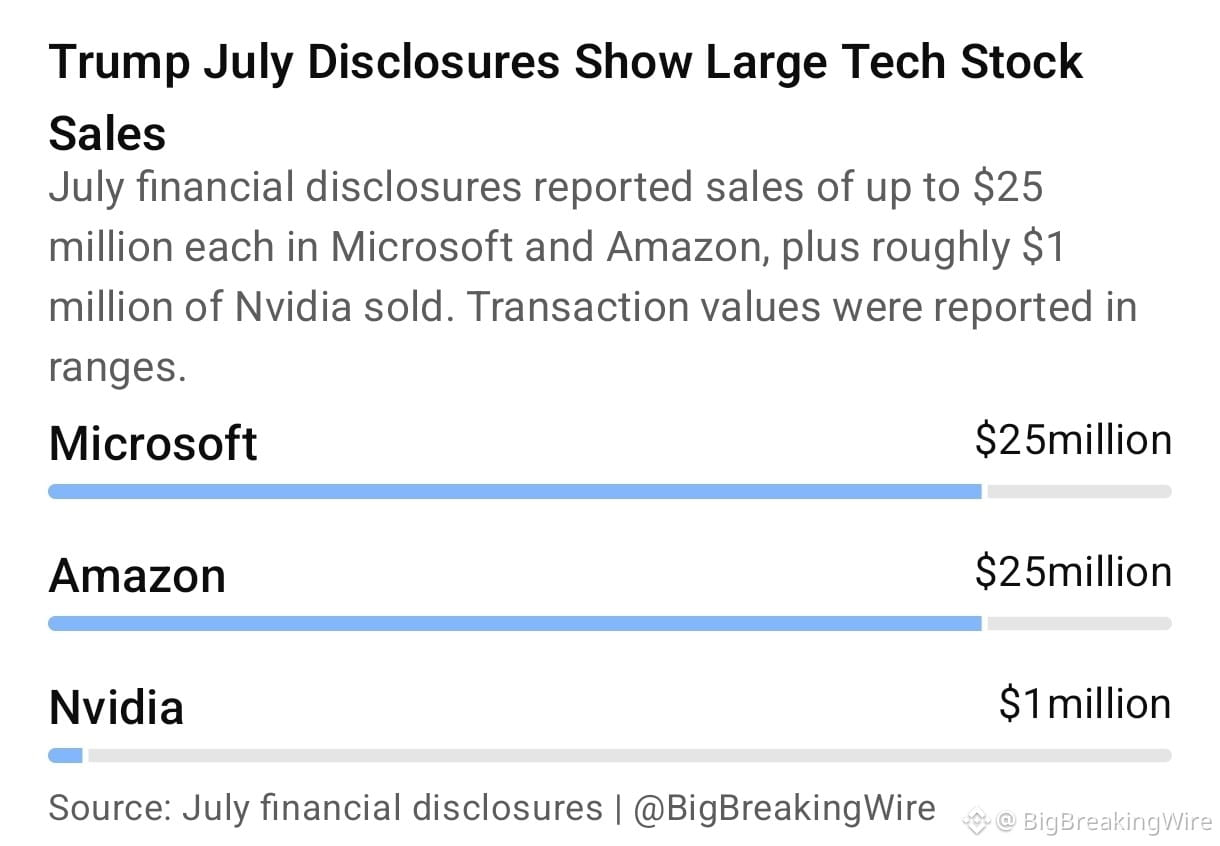
U.S. President Donald Trump’s July financial disclosures show sales of up to $25M each in Microsoft and Amazon shares.
The filings also show sales involving Meta, Alphabet and Nvidia, including about $1M of Nvidia sold in two trades and roughly the same amount bought.
More than 700 sell transactions and over 440 purchases were disclosed for July, with amounts reported in ranges rather than exact figures.
The filings cover trades made on Trump’s behalf through independently managed accounts.
BREAKING: Trump Sold Up to $50M of Microsoft and Amazon Shares in July
U.S. President Donald Trump’s July financial disclosures show sales of up to $25M each in Microsoft and Amazon shares.
The filings also show sales involving Meta, Alphabet and Nvidia, including about $1M of Nvidia sold in two trades and roughly the same amount bought.
More than 700 sell transactions and over 440 purchases were disclosed for July, with amounts reported in ranges rather than exact figures.
The filings cover trades made on Trump’s behalf through independently managed accounts.
U.S. President Donald Trump’s July financial disclosures show sales of up to $25M each in Microsoft and Amazon shares.
The filings also show sales involving Meta, Alphabet and Nvidia, including about $1M of Nvidia sold in two trades and roughly the same amount bought.
More than 700 sell transactions and over 440 purchases were disclosed for July, with amounts reported in ranges rather than exact figures.
The filings cover trades made on Trump’s behalf through independently managed accounts.
100
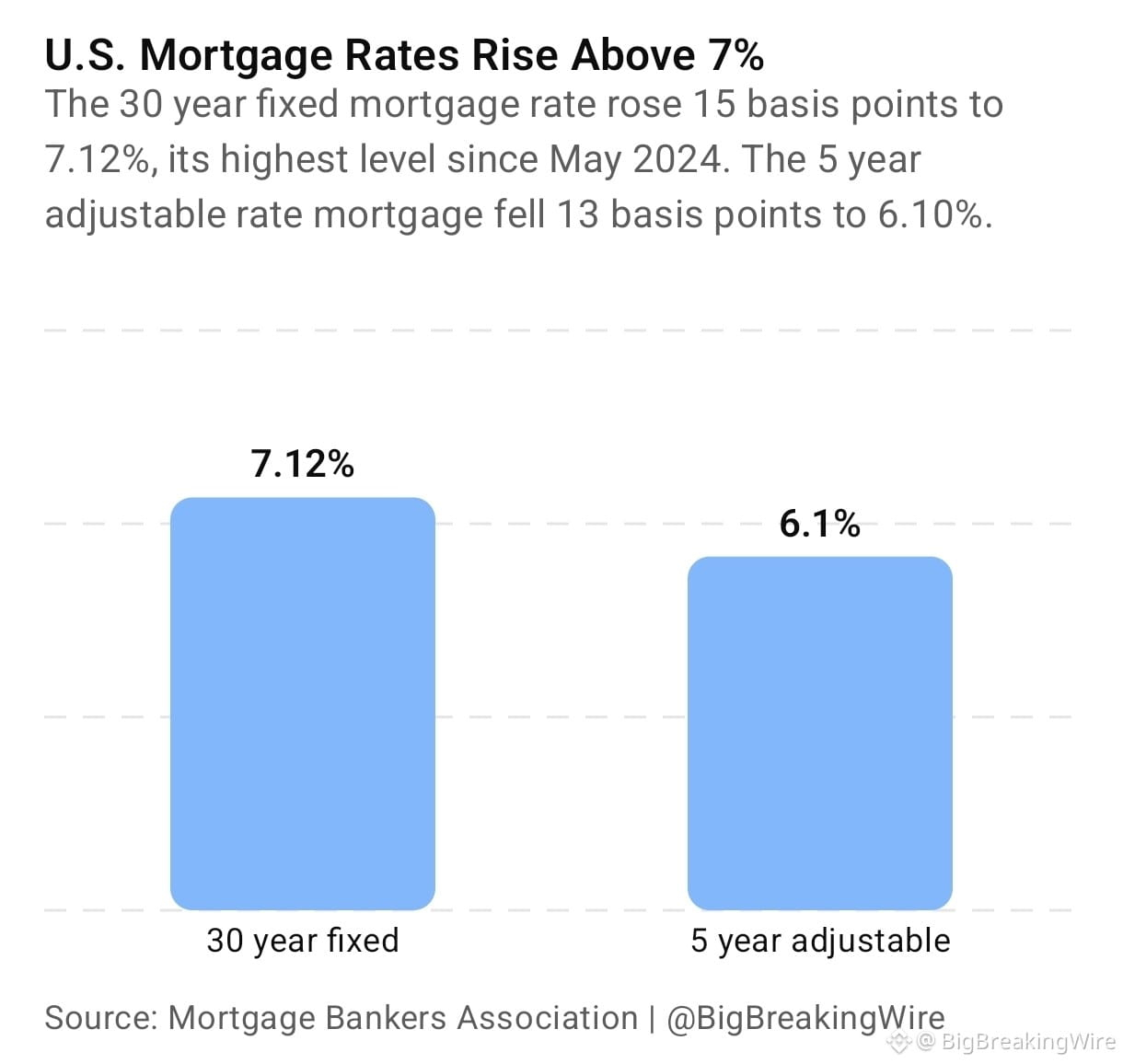
BREAKING: U.S. Mortgage Rates Hit 7.12%, Highest Since May 2024
The 30 year fixed mortgage rate rose 15 bps to 7.12% for the week ended September 18, adding pressure to the housing market.
The 5 year adjustable rate mortgage fell 13 bps to 6.10%.
MBA mortgage demand weakened, with the purchase index down 0.8% and refinancing demand falling 2.6% to its lowest since February 2025.
Rates above 7% could further weigh on housing demand as high prices and weak sales persist.
BREAKING: U.S. Mortgage Rates Hit 7.12%, Highest Since May 2024
The 30 year fixed mortgage rate rose 15 bps to 7.12% for the week ended September 18, adding pressure to the housing market.
The 5 year adjustable rate mortgage fell 13 bps to 6.10%.
MBA mortgage demand weakened, with the purchase index down 0.8% and refinancing demand falling 2.6% to its lowest since February 2025.
Rates above 7% could further weigh on housing demand as high prices and weak sales persist.
The 30 year fixed mortgage rate rose 15 bps to 7.12% for the week ended September 18, adding pressure to the housing market.
The 5 year adjustable rate mortgage fell 13 bps to 6.10%.
MBA mortgage demand weakened, with the purchase index down 0.8% and refinancing demand falling 2.6% to its lowest since February 2025.
Rates above 7% could further weigh on housing demand as high prices and weak sales persist.
61
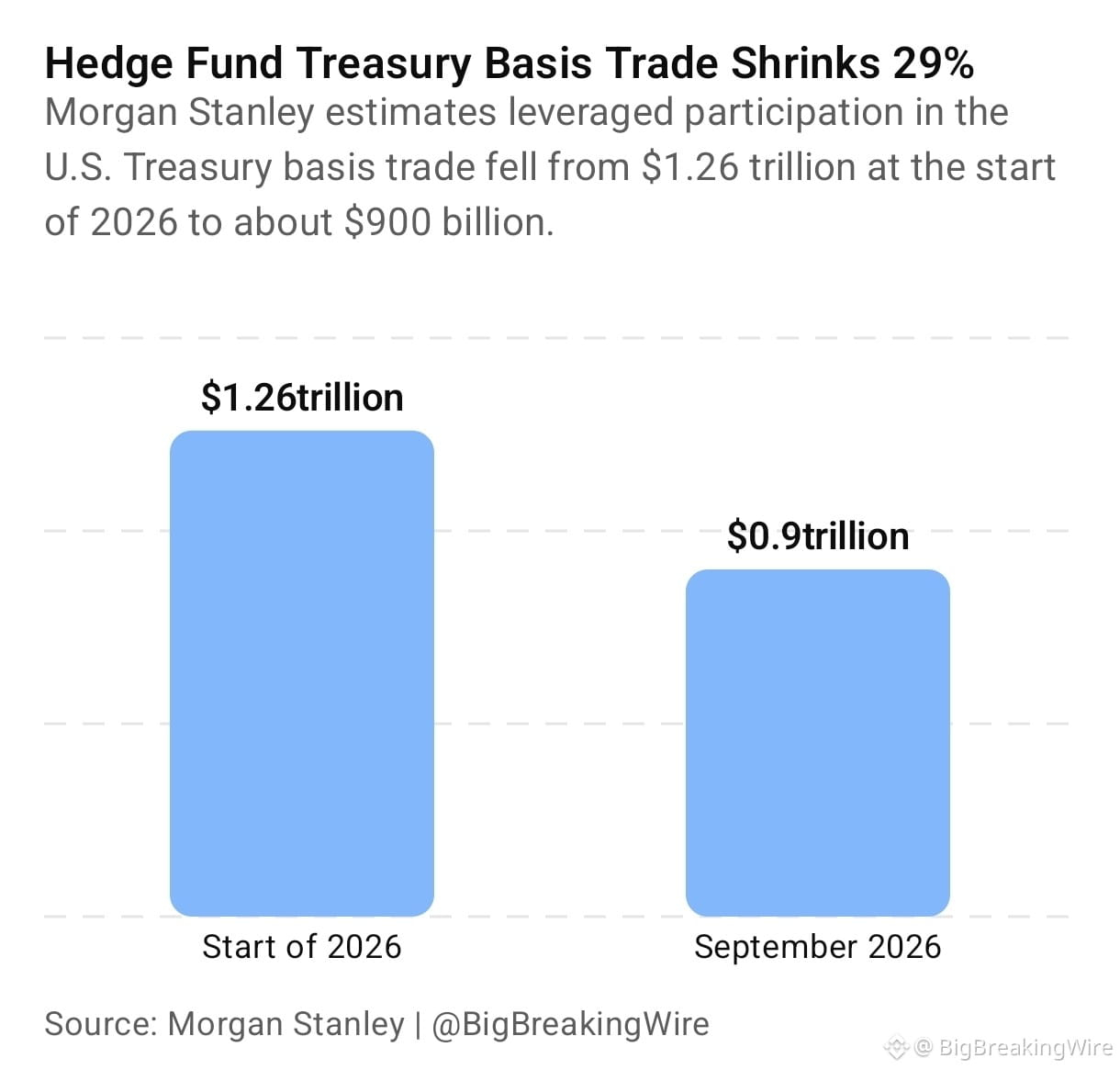
BREAKING: Hedge Funds Cut Treasury Basis Trades From $1.26T to $900B
Morgan Stanley estimates leveraged participation in the U.S. Treasury basis trade has fallen from $1.26 trillion at the start of 2026 to about $900 billion.
The strategy has shrunk to its smallest scale in more than two years as futures cash spreads and market dislocations narrow.
Citigroup and Morgan Stanley say the trade is not disappearing, but weaker relative value opportunities and lower volatility have reduced hedge fund activity.
The slowdown could also mean stronger than expected underlying demand for U.S. Treasuries as hedge funds provide less liquidity.
BREAKING: Hedge Funds Cut Treasury Basis Trades From $1.26T to $900B
Morgan Stanley estimates leveraged participation in the U.S. Treasury basis trade has fallen from $1.26 trillion at the start of 2026 to about $900 billion.
The strategy has shrunk to its smallest scale in more than two years as futures cash spreads and market dislocations narrow.
Citigroup and Morgan Stanley say the trade is not disappearing, but weaker relative value opportunities and lower volatility have reduced hedge fund activity.
The slowdown could also mean stronger than expected underlying demand for U.S. Treasuries as hedge funds provide less liquidity.
Morgan Stanley estimates leveraged participation in the U.S. Treasury basis trade has fallen from $1.26 trillion at the start of 2026 to about $900 billion.
The strategy has shrunk to its smallest scale in more than two years as futures cash spreads and market dislocations narrow.
Citigroup and Morgan Stanley say the trade is not disappearing, but weaker relative value opportunities and lower volatility have reduced hedge fund activity.
The slowdown could also mean stronger than expected underlying demand for U.S. Treasuries as hedge funds provide less liquidity.
AGGETF-0,15%
53
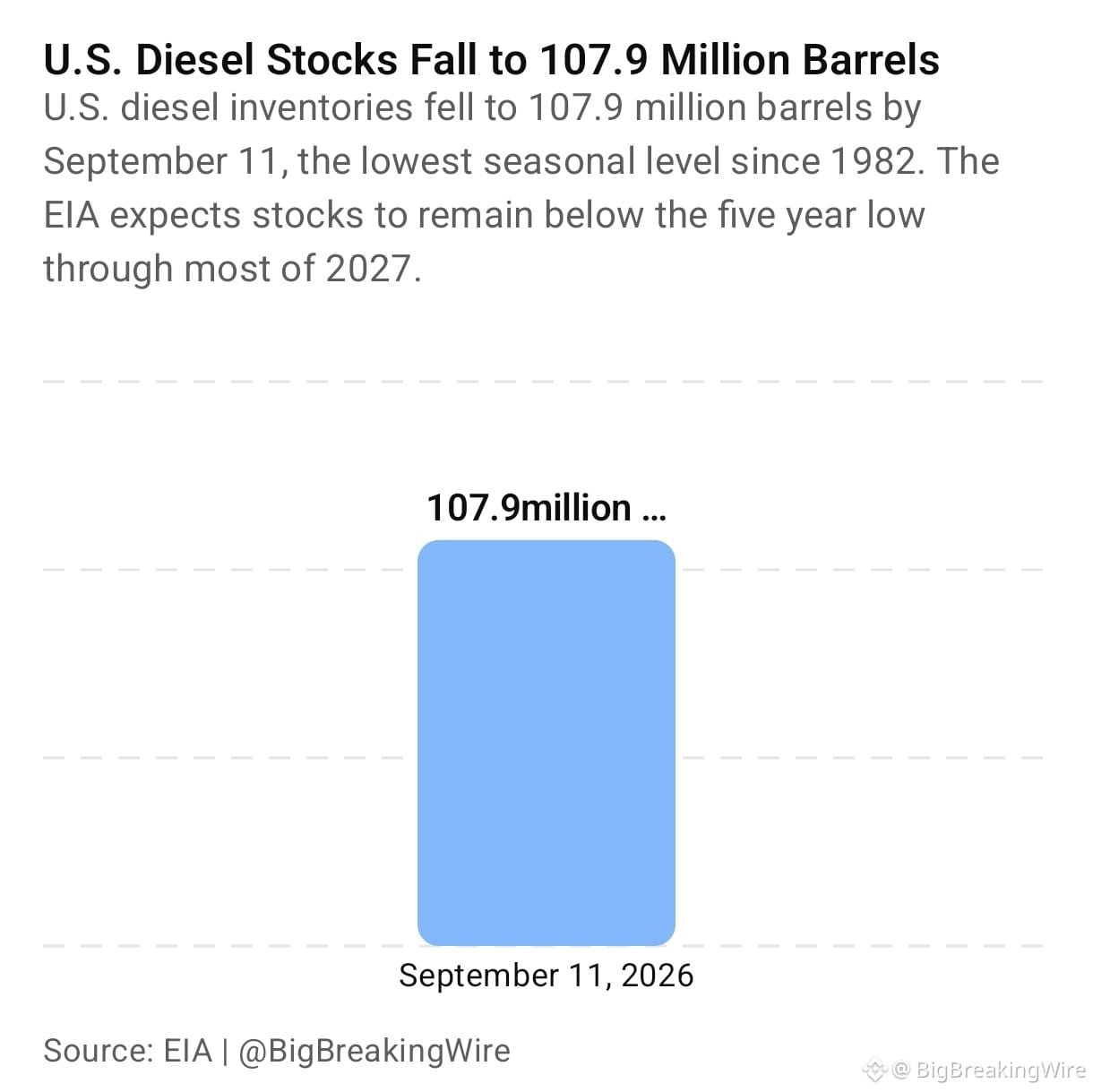
BREAKING: U.S. Diesel Stocks Hit 107.9M Barrels, Lowest Seasonal Level Since 1982
U.S. diesel inventories fell to 107.9M barrels by September 11, with EIA expecting stocks to remain below the five year low through most of 2027.
U.S. retail diesel has crossed $6 a gallon as Iran and Ukraine wars, plus Russia’s diesel export restrictions, tighten global supplies.
Saudi Aramco reportedly cut October crude shipments to Europe, forcing refiners to compete for costlier replacement barrels.
China cut crude imports from 11–12M bpd to around 5M bpd, helping contain the price surge during the Hormuz crisis.
IEA members have released 80% of 400M emergency barrels, while the Hormuz disruption affected up to 14% of global oil and gas supply.
BREAKING: U.S. Diesel Stocks Hit 107.9M Barrels, Lowest Seasonal Level Since 1982
U.S. diesel inventories fell to 107.9M barrels by September 11, with EIA expecting stocks to remain below the five year low through most of 2027.
U.S. retail diesel has crossed $6 a gallon as Iran and Ukraine wars, plus Russia’s diesel export restrictions, tighten global supplies.
Saudi Aramco reportedly cut October crude shipments to Europe, forcing refiners to compete for costlier replacement barrels.
China cut crude imports from 11–12M bpd to around 5M bpd, helping contain the price surge during the Hormuz crisis.
IEA members have released 80% of 400M emergency barrels, while the Hormuz disruption affected up to 14% of global oil and gas supply.
U.S. diesel inventories fell to 107.9M barrels by September 11, with EIA expecting stocks to remain below the five year low through most of 2027.
U.S. retail diesel has crossed $6 a gallon as Iran and Ukraine wars, plus Russia’s diesel export restrictions, tighten global supplies.
Saudi Aramco reportedly cut October crude shipments to Europe, forcing refiners to compete for costlier replacement barrels.
China cut crude imports from 11–12M bpd to around 5M bpd, helping contain the price surge during the Hormuz crisis.
IEA members have released 80% of 400M emergency barrels, while the Hormuz disruption affected up to 14% of global oil and gas supply.
238
🚨 BREAKING: Fed Raises Rates by 25 Bps, Signals Another Hike in 2026
The Federal Reserve raised its federal funds target range by 25 bps to 3.75% to 4.00%, its first rate hike since July 2023 and ending the longest pause since 2008.
The decision was unanimous and in line with expectations. The Fed said higher rates will support a more timely return of inflation to its 2% target.
The FOMC dot plot shows one additional rate hike in 2026, while the median end 2026 rate forecast rose to 4.1% from 3.8% in June.
The move could support the U.S. dollar and Treasury yields while adding pressure to equities, with markets now focused on the Fed’s path beyond this meeting.
#FedRateWatch
🚨 BREAKING: Fed Raises Rates by 25 Bps, Signals Another Hike in 2026
The Federal Reserve raised its federal funds target range by 25 bps to 3.75% to 4.00%, its first rate hike since July 2023 and ending the longest pause since 2008.
The decision was unanimous and in line with expectations. The Fed said higher rates will support a more timely return of inflation to its 2% target.
The FOMC dot plot shows one additional rate hike in 2026, while the median end 2026 rate forecast rose to 4.1% from 3.8% in June.
The move could support the U.S. dollar and Treasury yields while adding pressure to equities, with markets now focused on the Fed’s path beyond this meeting.
#FedRateWatch
The Federal Reserve raised its federal funds target range by 25 bps to 3.75% to 4.00%, its first rate hike since July 2023 and ending the longest pause since 2008.
The decision was unanimous and in line with expectations. The Fed said higher rates will support a more timely return of inflation to its 2% target.
The FOMC dot plot shows one additional rate hike in 2026, while the median end 2026 rate forecast rose to 4.1% from 3.8% in June.
The move could support the U.S. dollar and Treasury yields while adding pressure to equities, with markets now focused on the Fed’s path beyond this meeting.
#FedRateWatch
71
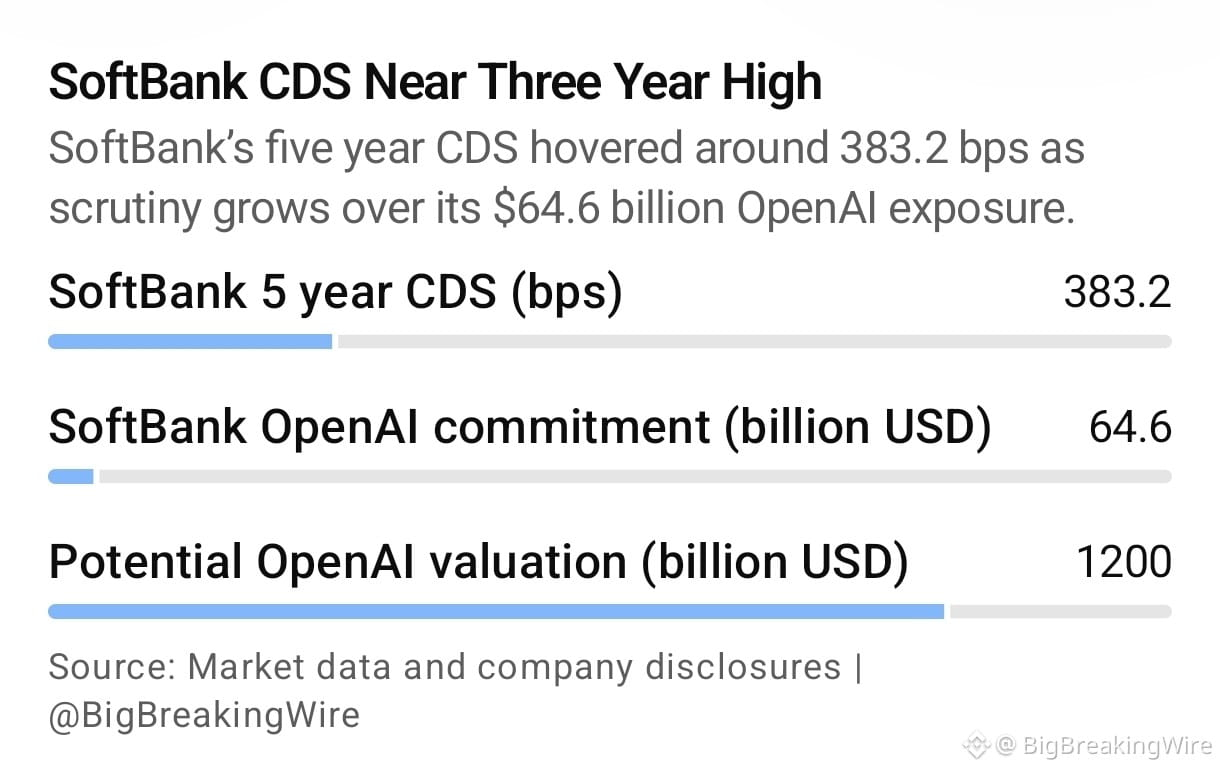
🚨 SoftBank CDS hits near three year high as OpenAI exposure draws scrutiny
SoftBank’s five year CDS hovered around 383.2 bps, near its highest level since 2023, as traders assessed the group’s growing exposure to OpenAI.
SoftBank has committed $64.6 billion to OpenAI, making it one of the group’s largest investments.
OpenAI is in early talks for a pre IPO funding round that could value the company above $1.2 trillion.
CEO Sam Altman said OpenAI is preparing for an IPO, but does not expect the listing to happen this year.
🚨 SoftBank CDS hits near three year high as OpenAI exposure draws scrutiny
SoftBank’s five year CDS hovered around 383.2 bps, near its highest level since 2023, as traders assessed the group’s growing exposure to OpenAI.
SoftBank has committed $64.6 billion to OpenAI, making it one of the group’s largest investments.
OpenAI is in early talks for a pre IPO funding round that could value the company above $1.2 trillion.
CEO Sam Altman said OpenAI is preparing for an IPO, but does not expect the listing to happen this year.
SoftBank’s five year CDS hovered around 383.2 bps, near its highest level since 2023, as traders assessed the group’s growing exposure to OpenAI.
SoftBank has committed $64.6 billion to OpenAI, making it one of the group’s largest investments.
OpenAI is in early talks for a pre IPO funding round that could value the company above $1.2 trillion.
CEO Sam Altman said OpenAI is preparing for an IPO, but does not expect the listing to happen this year.
75
🚨 BREAKING: Hackers Demand 10,000 Bitcoin From Revolut After Customer Data Exposure
Hackers are demanding 10,000 Bitcoin from Revolut after the fintech was tricked into handing over sensitive customer data through fraudulent government style email requests.
The exposed data reportedly includes passports, verification selfies, home addresses, IBANs and full transaction histories, potentially stripping pseudonymity from affected users’ crypto activity.
Around 680 customers were affected, with attackers threatening to leak additional data every day unless their demands are met.
The UK Information Commissioner’s Office and Financial Conduct Authority have both confirmed they are reviewing the incident, according to Insurance Business.
🚨 BREAKING: Hackers Demand 10,000 Bitcoin From Revolut After Customer Data Exposure
Hackers are demanding 10,000 Bitcoin from Revolut after the fintech was tricked into handing over sensitive customer data through fraudulent government style email requests.
The exposed data reportedly includes passports, verification selfies, home addresses, IBANs and full transaction histories, potentially stripping pseudonymity from affected users’ crypto activity.
Around 680 customers were affected, with attackers threatening to leak additional data every day unless their demands are met.
The UK Information Commissioner’s Office and Financial Conduct Authority have both confirmed they are reviewing the incident, according to Insurance Business.
Hackers are demanding 10,000 Bitcoin from Revolut after the fintech was tricked into handing over sensitive customer data through fraudulent government style email requests.
The exposed data reportedly includes passports, verification selfies, home addresses, IBANs and full transaction histories, potentially stripping pseudonymity from affected users’ crypto activity.
Around 680 customers were affected, with attackers threatening to leak additional data every day unless their demands are met.
The UK Information Commissioner’s Office and Financial Conduct Authority have both confirmed they are reviewing the incident, according to Insurance Business.
99
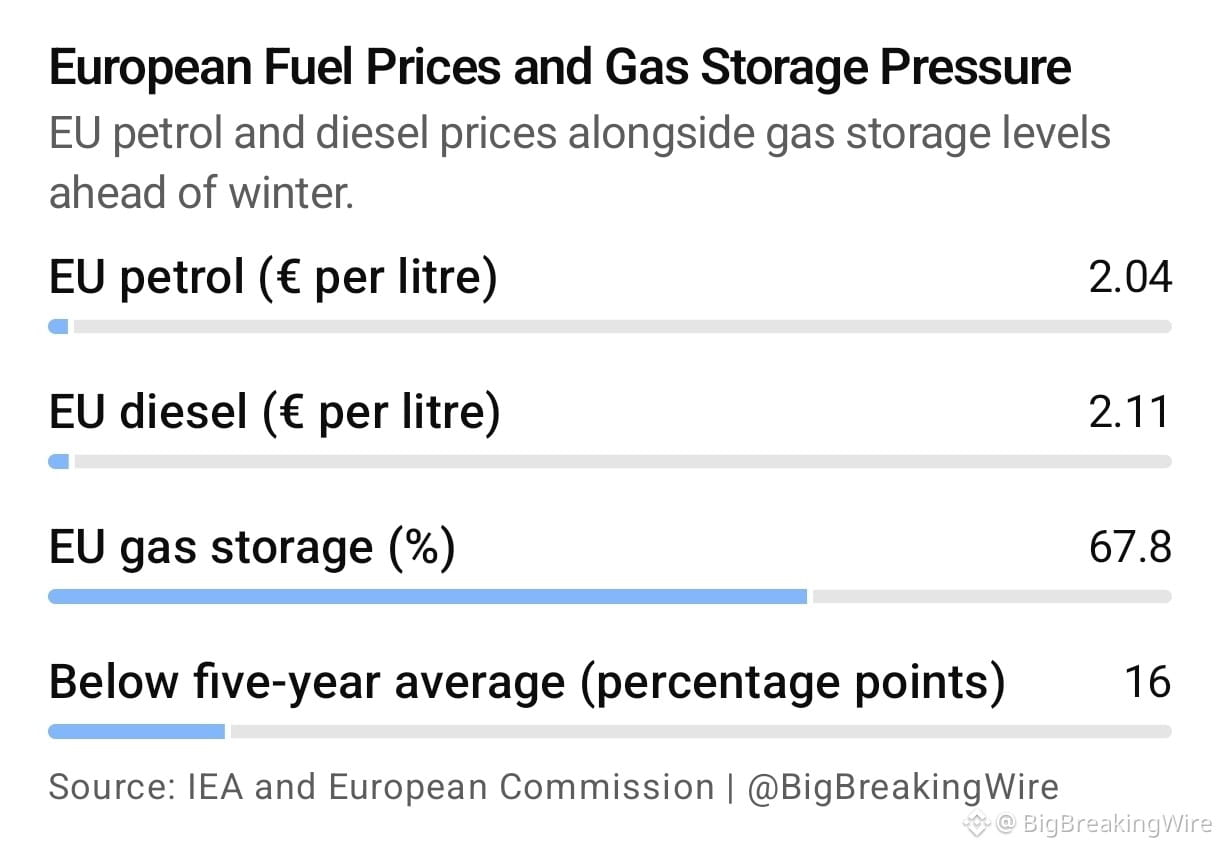
🚨 European fuel prices surge as gas storage remains well below normal levels.
EU petrol prices have climbed to €2.04 per litre, while diesel has reached €2.11 per litre, with countries including Denmark, Finland and Bulgaria among the hardest hit.
EU gas storage stood at just 67.8% full, around 16 percentage points below the five-year average, raising concerns ahead of the winter season.
The IEA has urged European governments to secure emergency energy reserves as disruptions to Gulf energy flows continue.
The European Commission said there is no immediate supply threat, but warned that energy markets could tighten further if fighting near the Strait of Hormuz persists.
🚨 European fuel prices surge as gas storage remains well below normal levels.
EU petrol prices have climbed to €2.04 per litre, while diesel has reached €2.11 per litre, with countries including Denmark, Finland and Bulgaria among the hardest hit.
EU gas storage stood at just 67.8% full, around 16 percentage points below the five-year average, raising concerns ahead of the winter season.
The IEA has urged European governments to secure emergency energy reserves as disruptions to Gulf energy flows continue.
The European Commission said there is no immediate supply threat, but warned that energy markets could tighten further if fighting near the Strait of Hormuz persists.
EU petrol prices have climbed to €2.04 per litre, while diesel has reached €2.11 per litre, with countries including Denmark, Finland and Bulgaria among the hardest hit.
EU gas storage stood at just 67.8% full, around 16 percentage points below the five-year average, raising concerns ahead of the winter season.
The IEA has urged European governments to secure emergency energy reserves as disruptions to Gulf energy flows continue.
The European Commission said there is no immediate supply threat, but warned that energy markets could tighten further if fighting near the Strait of Hormuz persists.
2
🚨 BREAKING: US Inflation Comes in Hotter Than Expected, Fed Rate Hike Odds Jump to 90%
August US inflation data delivered a stronger-than-expected reading, adding fresh pressure on the Federal Reserve.
Monthly Inflation: • Headline CPI: +0.396% M/M, effectively 0.4% • Core CPI: +0.290% M/M vs around 0.22% expected • Previous core CPI: 0.215%
Year-over-Year: • Headline CPI: 3.397% • Core CPI: 2.446%, down from 2.478% previously
The key concern is the sharp acceleration in monthly core inflation, while headline inflation remains above 3%.
With elevated energy prices and geopolitical risks adding to inflation pressures, the path toward easier monetary policy is becoming increasingly difficult.
⚠️ Traders now see around a 90% chance of a Fed rate hike next week, up from roughly 70% before the inflation report.
#CPIWatch
🚨 BREAKING: US Inflation Comes in Hotter Than Expected, Fed Rate Hike Odds Jump to 90%
August US inflation data delivered a stronger-than-expected reading, adding fresh pressure on the Federal Reserve.
Monthly Inflation: • Headline CPI: +0.396% M/M, effectively 0.4% • Core CPI: +0.290% M/M vs around 0.22% expected • Previous core CPI: 0.215%
Year-over-Year: • Headline CPI: 3.397% • Core CPI: 2.446%, down from 2.478% previously
The key concern is the sharp acceleration in monthly core inflation, while headline inflation remains above 3%.
With elevated energy prices and geopolitical risks adding to inflation pressures, the path toward easier monetary policy is becoming increasingly difficult.
⚠️ Traders now see around a 90% chance of a Fed rate hike next week, up from roughly 70% before the inflation report.
#CPIWatch
August US inflation data delivered a stronger-than-expected reading, adding fresh pressure on the Federal Reserve.
Monthly Inflation: • Headline CPI: +0.396% M/M, effectively 0.4% • Core CPI: +0.290% M/M vs around 0.22% expected • Previous core CPI: 0.215%
Year-over-Year: • Headline CPI: 3.397% • Core CPI: 2.446%, down from 2.478% previously
The key concern is the sharp acceleration in monthly core inflation, while headline inflation remains above 3%.
With elevated energy prices and geopolitical risks adding to inflation pressures, the path toward easier monetary policy is becoming increasingly difficult.
⚠️ Traders now see around a 90% chance of a Fed rate hike next week, up from roughly 70% before the inflation report.
#CPIWatch
46
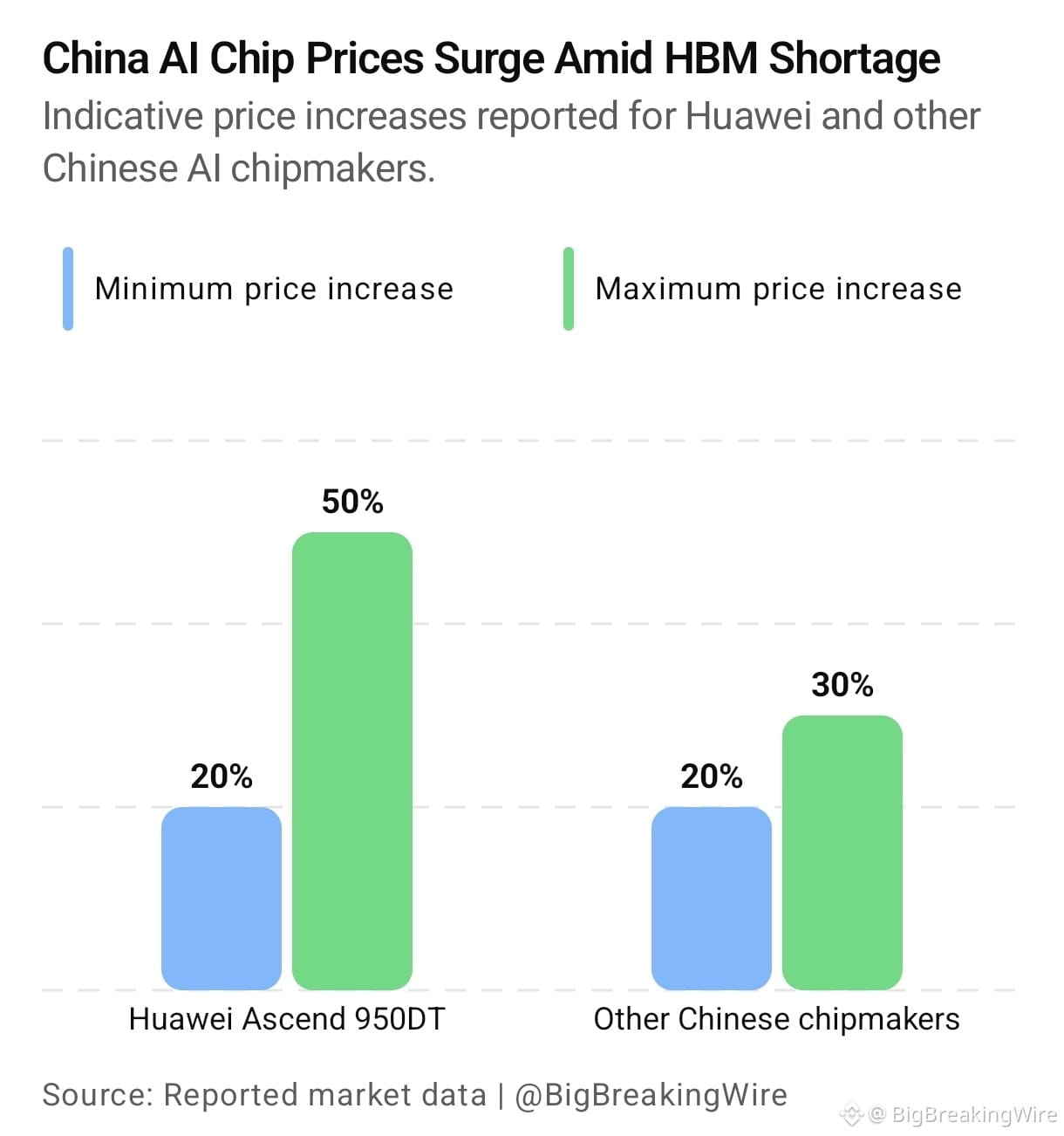
🚨 China’s domestic AI chip prices surge as the global HBM shortage worsens.
Huawei has raised the indicative price of its Ascend 950DT accelerator card to above 250,000 yuan, marking an increase of around 20% to 50% in just two months.
Other Chinese chipmakers, including Cambricon, MetaX and Iluvatar CoreX, have also raised next-generation AI chip prices by 20% to 30%.
The price surge is being driven by a global shortage of high-bandwidth memory (HBM), made worse for Chinese companies by US export controls.
Chinese chipmakers are increasingly turning to grey-market channels, where memory costs can be several times higher than global prices, significantly increasing production costs.
The rising costs come as Beijing pushes domestic companies to replace Nvidia products with Chinese-made AI chips, making the HBM supply crunch a major challenge for China’s AI ambitions.
🚨 China’s domestic AI chip prices surge as the global HBM shortage worsens.
Huawei has raised the indicative price of its Ascend 950DT accelerator card to above 250,000 yuan, marking an increase of around 20% to 50% in just two months.
Other Chinese chipmakers, including Cambricon, MetaX and Iluvatar CoreX, have also raised next-generation AI chip prices by 20% to 30%.
The price surge is being driven by a global shortage of high-bandwidth memory (HBM), made worse for Chinese companies by US export controls.
Chinese chipmakers are increasingly turning to grey-market channels, where memory costs can be several times higher than global prices, significantly increasing production costs.
The rising costs come as Beijing pushes domestic companies to replace Nvidia products with Chinese-made AI chips, making the HBM supply crunch a major challenge for China’s AI ambitions.
Huawei has raised the indicative price of its Ascend 950DT accelerator card to above 250,000 yuan, marking an increase of around 20% to 50% in just two months.
Other Chinese chipmakers, including Cambricon, MetaX and Iluvatar CoreX, have also raised next-generation AI chip prices by 20% to 30%.
The price surge is being driven by a global shortage of high-bandwidth memory (HBM), made worse for Chinese companies by US export controls.
Chinese chipmakers are increasingly turning to grey-market channels, where memory costs can be several times higher than global prices, significantly increasing production costs.
The rising costs come as Beijing pushes domestic companies to replace Nvidia products with Chinese-made AI chips, making the HBM supply crunch a major challenge for China’s AI ambitions.
60
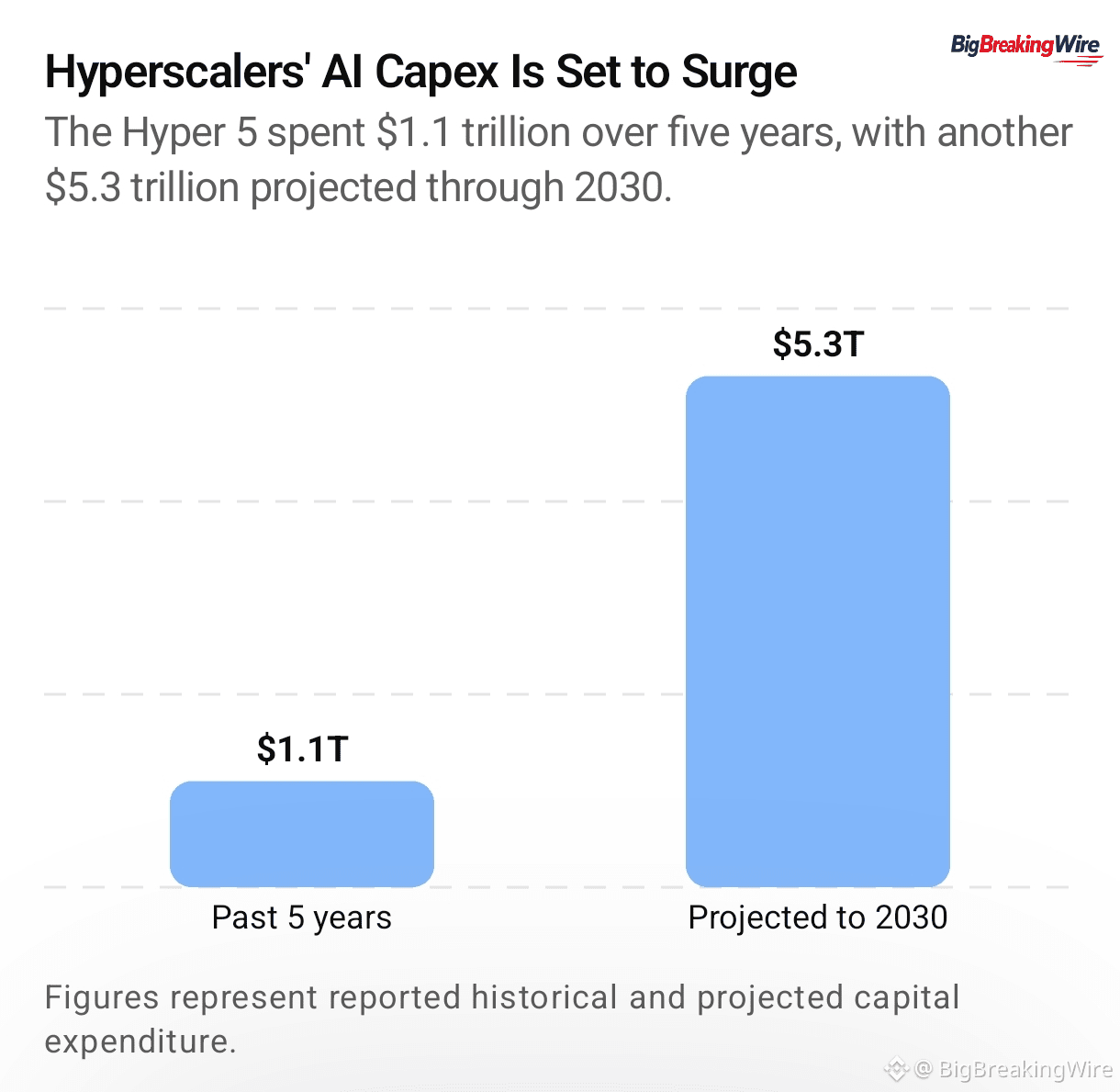
🚨 US tech giants face a potential shift from cash-funded to debt-funded AI investment.
The “Hyper 5” — Amazon, Alphabet, Microsoft, Meta and Oracle — spent $1.1 trillion on capital expenditure over the past five years.
Their AI and data-centre spending is projected to surge by another $5.3 trillion through 2030, raising concerns about whether returns can justify the massive outlay.
S&P Global Ratings expects all six major US hyperscalers to generate negative free operating cash flow in 2026 and 2027, with no recovery expected before 2029.
Alphabet posted its first negative free cash flow quarter since its 2004 IPO, while Amazon’s trailing cash flow also swung sharply negative amid accelerating AI investment.
S&P Global warns the companies could increasingly shift from cash-funded to debt-funded AI spending before investment returns materialise.
🚨 US tech giants face a potential shift from cash-funded to debt-funded AI investment.
The “Hyper 5” — Amazon, Alphabet, Microsoft, Meta and Oracle — spent $1.1 trillion on capital expenditure over the past five years.
Their AI and data-centre spending is projected to surge by another $5.3 trillion through 2030, raising concerns about whether returns can justify the massive outlay.
S&P Global Ratings expects all six major US hyperscalers to generate negative free operating cash flow in 2026 and 2027, with no recovery expected before 2029.
Alphabet posted its first negative free cash flow quarter since its 2004 IPO, while Amazon’s trailing cash flow also swung sharply negative amid accelerating AI investment.
S&P Global warns the companies could increasingly shift from cash-funded to debt-funded AI spending before investment returns materialise.
The “Hyper 5” — Amazon, Alphabet, Microsoft, Meta and Oracle — spent $1.1 trillion on capital expenditure over the past five years.
Their AI and data-centre spending is projected to surge by another $5.3 trillion through 2030, raising concerns about whether returns can justify the massive outlay.
S&P Global Ratings expects all six major US hyperscalers to generate negative free operating cash flow in 2026 and 2027, with no recovery expected before 2029.
Alphabet posted its first negative free cash flow quarter since its 2004 IPO, while Amazon’s trailing cash flow also swung sharply negative amid accelerating AI investment.
S&P Global warns the companies could increasingly shift from cash-funded to debt-funded AI spending before investment returns materialise.
120
🚨 BREAKING: Japanese Retail Investors Build ¥3.61 Trillion Yen Short Position
Japanese retail investors increased their net short positions against the yen to around ¥3.61 trillion ($23.5 billion) last week, rising from August levels.
Short bets previously peaked at ¥4.41 trillion in July, the highest level since 2015, according to data from the Japan Financial Futures Association and Tokyo Financial Exchange.
Retail traders have continued to sell the yen during strength and buy on weakness, even as overseas investors unwind yen carry trades and hedge funds increasingly bet on further yen gains.
Some investors expect USD/JPY to fall below 150 by year-end.
Mizuho Bank strategist Masayuki Nakajima warned that sustained yen appreciation could force retail traders to close USD-long positions, with stop-loss selling potentially accelerating a yen rally.
#usdjpy
🚨 BREAKING: Japanese Retail Investors Build ¥3.61 Trillion Yen Short Position
Japanese retail investors increased their net short positions against the yen to around ¥3.61 trillion ($23.5 billion) last week, rising from August levels.
Short bets previously peaked at ¥4.41 trillion in July, the highest level since 2015, according to data from the Japan Financial Futures Association and Tokyo Financial Exchange.
Retail traders have continued to sell the yen during strength and buy on weakness, even as overseas investors unwind yen carry trades and hedge funds increasingly bet on further yen gains.
Some investors expect USD/JPY to fall below 150 by year-end.
Mizuho Bank strategist Masayuki Nakajima warned that sustained yen appreciation could force retail traders to close USD-long positions, with stop-loss selling potentially accelerating a yen rally.
#usdjpy
Japanese retail investors increased their net short positions against the yen to around ¥3.61 trillion ($23.5 billion) last week, rising from August levels.
Short bets previously peaked at ¥4.41 trillion in July, the highest level since 2015, according to data from the Japan Financial Futures Association and Tokyo Financial Exchange.
Retail traders have continued to sell the yen during strength and buy on weakness, even as overseas investors unwind yen carry trades and hedge funds increasingly bet on further yen gains.
Some investors expect USD/JPY to fall below 150 by year-end.
Mizuho Bank strategist Masayuki Nakajima warned that sustained yen appreciation could force retail traders to close USD-long positions, with stop-loss selling potentially accelerating a yen rally.
#usdjpy
46
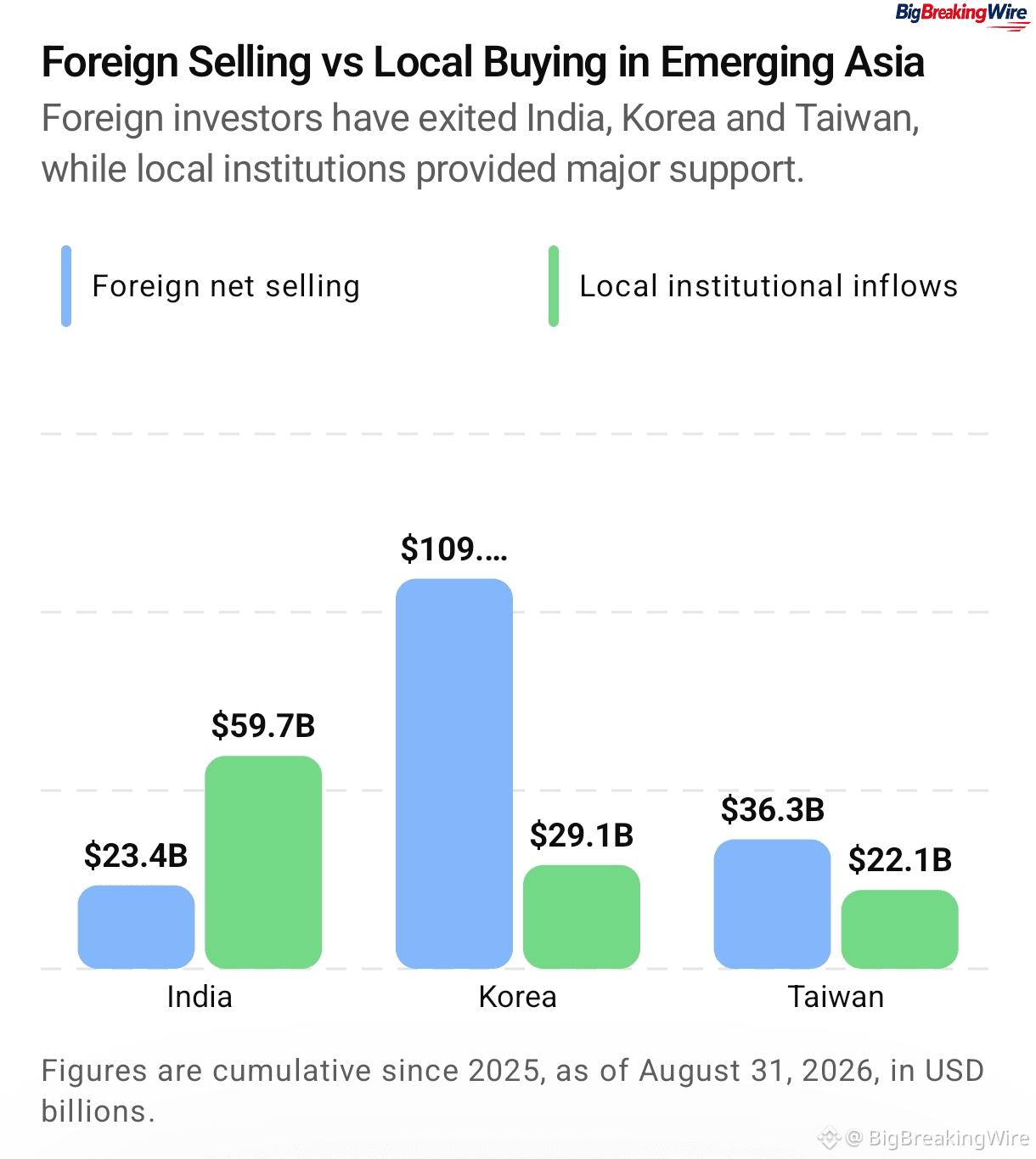
🚨 Foreign investors have sold $173.5 billion of Emerging Asian equities since 2025.
Korea saw the biggest foreign outflows at $109.4 billion, followed by Taiwan at $36.3 billion and India at $23.4 billion, according to Goldman Sachs data as of August 31, 2026.
Local institutional investors absorbed much of the selling, recording around $114 billion in net inflows across India, Korea and Taiwan.
India led domestic buying with $59.7 billion of inflows, followed by Korea at $29.1 billion and Taiwan at $22.1 billion.
Despite continued foreign exits, Korea and Taiwan equities have surged 90.6% and 62.0% YTD in dollar terms, supported by domestic buying and strong AI and semiconductor earnings expectations.
🚨 Foreign investors have sold $173.5 billion of Emerging Asian equities since 2025.
Korea saw the biggest foreign outflows at $109.4 billion, followed by Taiwan at $36.3 billion and India at $23.4 billion, according to Goldman Sachs data as of August 31, 2026.
Local institutional investors absorbed much of the selling, recording around $114 billion in net inflows across India, Korea and Taiwan.
India led domestic buying with $59.7 billion of inflows, followed by Korea at $29.1 billion and Taiwan at $22.1 billion.
Despite continued foreign exits, Korea and Taiwan equities have surged 90.6% and 62.0% YTD in dollar terms, supported by domestic buying and strong AI and semiconductor earnings expectations.
Korea saw the biggest foreign outflows at $109.4 billion, followed by Taiwan at $36.3 billion and India at $23.4 billion, according to Goldman Sachs data as of August 31, 2026.
Local institutional investors absorbed much of the selling, recording around $114 billion in net inflows across India, Korea and Taiwan.
India led domestic buying with $59.7 billion of inflows, followed by Korea at $29.1 billion and Taiwan at $22.1 billion.
Despite continued foreign exits, Korea and Taiwan equities have surged 90.6% and 62.0% YTD in dollar terms, supported by domestic buying and strong AI and semiconductor earnings expectations.
60
🚨 The Netherlands has moved 86 tonnes of gold to London as European central banks rethink where their reserves are stored.
De Nederlandsche Bank transferred the gold from the US and Canada to London between March and August, citing crisis preparedness amid rising geopolitical risks.
The operation used a mix of market swaps and physical transport.
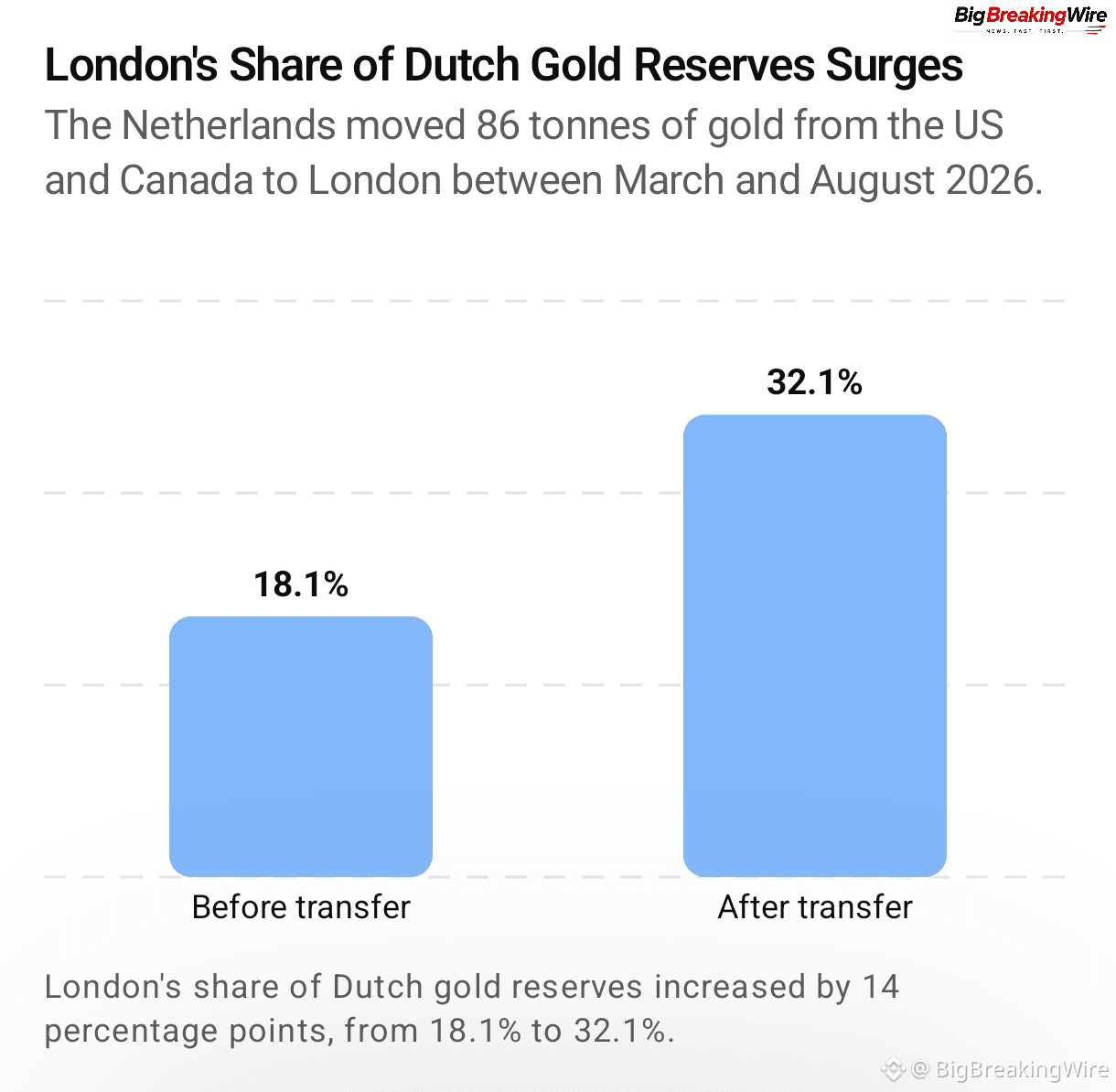
London's share of Dutch gold reserves jumped from 18.1% to 32.1% after the six month operation.
Germany's Bundesbank has so far refused to follow a similar path, but the broader trend is clear.
A World Gold Council survey found 89% of central banks expect global gold holdings to increase, as geopolitical uncertainty pushes countries to strengthen and reposition their reserves.
Big picture: Central banks are not just buying more gold. They are also increasingly reconsidering where their gold is physically held.
🚨 The Netherlands has moved 86 tonnes of gold to London as European central banks rethink where their reserves are stored.
De Nederlandsche Bank transferred the gold from the US and Canada to London between March and August, citing crisis preparedness amid rising geopolitical risks.
The operation used a mix of market swaps and physical transport.
London's share of Dutch gold reserves jumped from 18.1% to 32.1% after the six month operation.
Germany's Bundesbank has so far refused to follow a similar path, but the broader trend is clear.
A World Gold Council survey found 89% of central banks expect global gold holdings to increase, as geopolitical uncertainty pushes countries to strengthen and reposition their reserves.
Big picture: Central banks are not just buying more gold. They are also increasingly reconsidering where their gold is physically held.
De Nederlandsche Bank transferred the gold from the US and Canada to London between March and August, citing crisis preparedness amid rising geopolitical risks.
The operation used a mix of market swaps and physical transport.
London's share of Dutch gold reserves jumped from 18.1% to 32.1% after the six month operation.
Germany's Bundesbank has so far refused to follow a similar path, but the broader trend is clear.
A World Gold Council survey found 89% of central banks expect global gold holdings to increase, as geopolitical uncertainty pushes countries to strengthen and reposition their reserves.
Big picture: Central banks are not just buying more gold. They are also increasingly reconsidering where their gold is physically held.
2
🚨 BREAKING: 4,000 Bitcoin Worth $320M Withdrawn in Liquid Network Hack
Liquid Network said around 4,000 of the 4,200 Bitcoin held in its Liquid Federation wallet were withdrawn in an apparent hack, worth approximately $320 million.
The network said the withdrawals were carried out by purported “white-hat hackers” through SideSwap, a settlement platform authorised to handle withdrawals.
Liquid Network said the key used in the process was not compromised and has halted new transactions, warning that Liquid wallets will be impacted.
The hacker is reportedly communicating with network maintainers through on-chain Bitcoin transactions and intends to return the BTC after the vulnerability is fixed.
🚨 BREAKING: 4,000 Bitcoin Worth $320M Withdrawn in Liquid Network Hack
Liquid Network said around 4,000 of the 4,200 Bitcoin held in its Liquid Federation wallet were withdrawn in an apparent hack, worth approximately $320 million.
The network said the withdrawals were carried out by purported “white-hat hackers” through SideSwap, a settlement platform authorised to handle withdrawals.
Liquid Network said the key used in the process was not compromised and has halted new transactions, warning that Liquid wallets will be impacted.
The hacker is reportedly communicating with network maintainers through on-chain Bitcoin transactions and intends to return the BTC after the vulnerability is fixed.
Liquid Network said around 4,000 of the 4,200 Bitcoin held in its Liquid Federation wallet were withdrawn in an apparent hack, worth approximately $320 million.
The network said the withdrawals were carried out by purported “white-hat hackers” through SideSwap, a settlement platform authorised to handle withdrawals.
Liquid Network said the key used in the process was not compromised and has halted new transactions, warning that Liquid wallets will be impacted.
The hacker is reportedly communicating with network maintainers through on-chain Bitcoin transactions and intends to return the BTC after the vulnerability is fixed.
76
🚨 Perpetual futures tied to stocks, indices and commodities are exploding on crypto platforms.
Contracts linked to traditional assets generated $778 billion in trading volume, according to Bloomberg citing Fasanara Digital data.
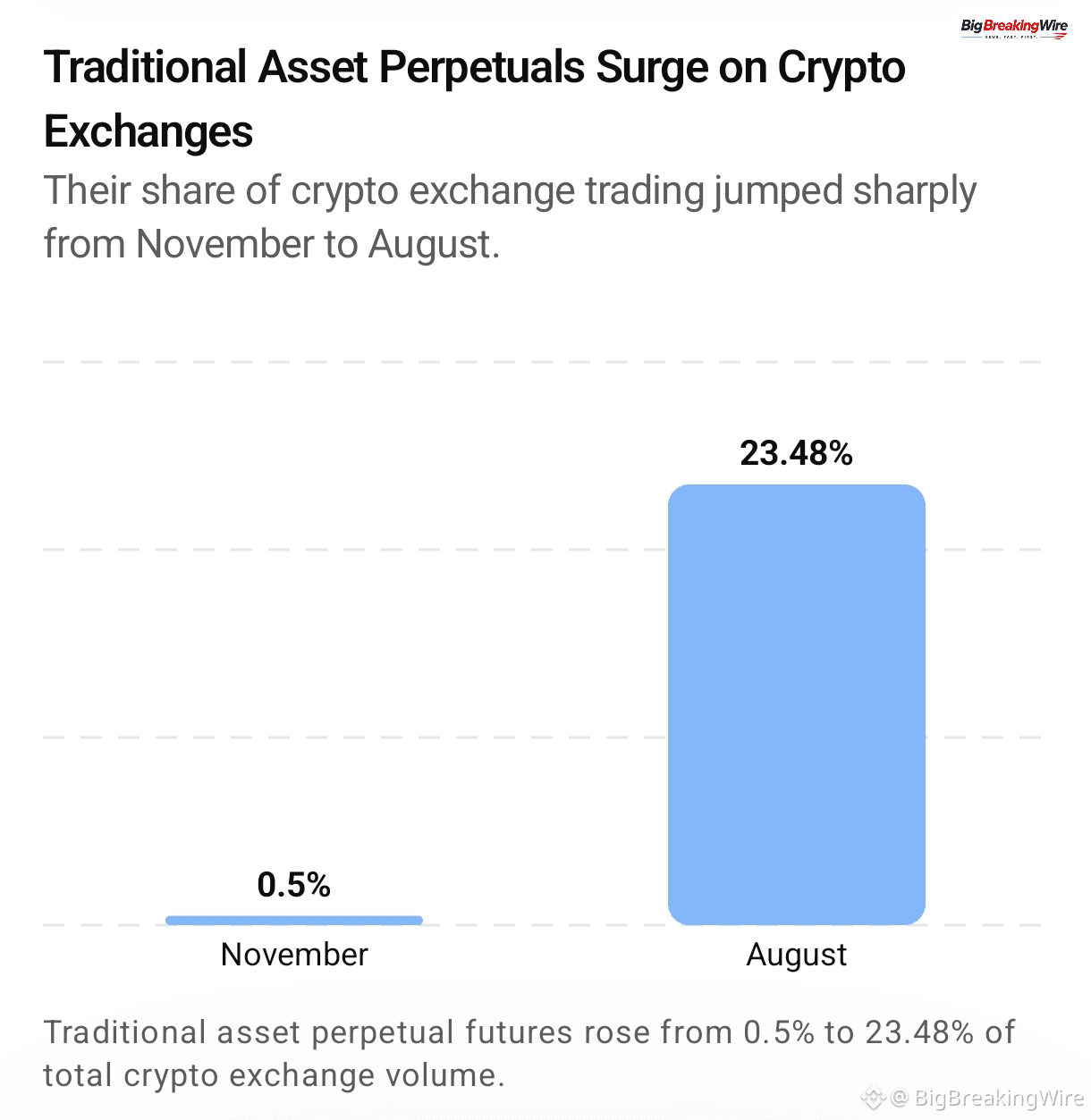
Their share of total crypto exchange trading surged from just 0.5% in November to 23.48% in August.
The trend is also gaining regulatory acceptance. The CFTC approved the listing of a true perpetual contract on a US designated contract market for the first time in May.
South Korean investors alone have traded roughly $220 billion in Korean stock based perpetual futures on overseas crypto exchanges in 2026.
The rapid growth shows crypto exchanges are increasingly becoming platforms for trading traditional financial assets through perpetual futures.
🚨 Perpetual futures tied to stocks, indices and commodities are exploding on crypto platforms.
Contracts linked to traditional assets generated $778 billion in trading volume, according to Bloomberg citing Fasanara Digital data.
Their share of total crypto exchange trading surged from just 0.5% in November to 23.48% in August.
The trend is also gaining regulatory acceptance. The CFTC approved the listing of a true perpetual contract on a US designated contract market for the first time in May.
South Korean investors alone have traded roughly $220 billion in Korean stock based perpetual futures on overseas crypto exchanges in 2026.
The rapid growth shows crypto exchanges are increasingly becoming platforms for trading traditional financial assets through perpetual futures.
Contracts linked to traditional assets generated $778 billion in trading volume, according to Bloomberg citing Fasanara Digital data.
Their share of total crypto exchange trading surged from just 0.5% in November to 23.48% in August.
The trend is also gaining regulatory acceptance. The CFTC approved the listing of a true perpetual contract on a US designated contract market for the first time in May.
South Korean investors alone have traded roughly $220 billion in Korean stock based perpetual futures on overseas crypto exchanges in 2026.
The rapid growth shows crypto exchanges are increasingly becoming platforms for trading traditional financial assets through perpetual futures.
85
🚨 JPMorgan warns of a potential yen short squeeze.
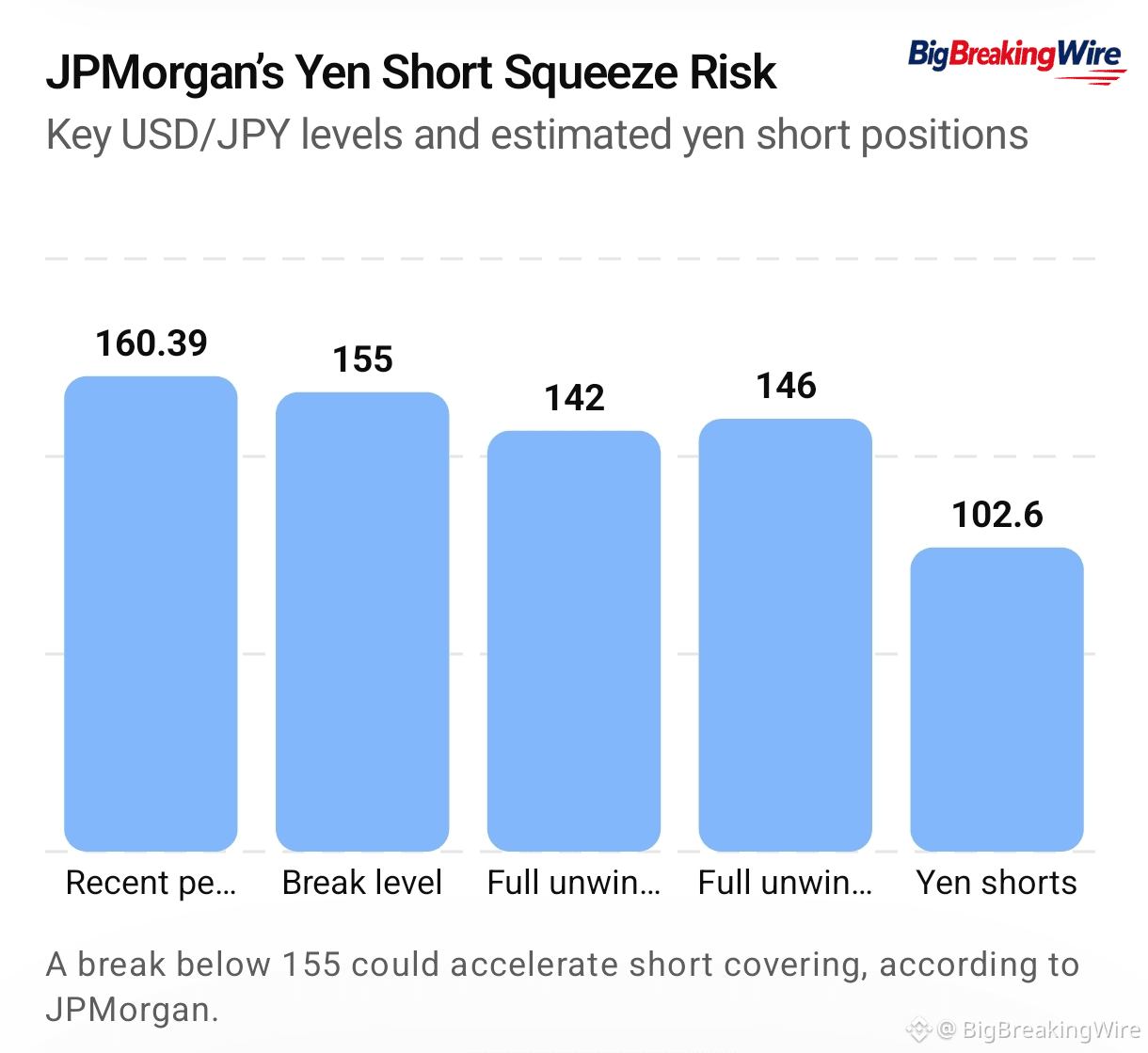
JPMorgan estimates ¥16 trillion to ¥17 trillion ($102.6 billion) of bearish yen positions remain open.
If USD/JPY breaks below 155, concentrated short covering could accelerate yen gains, with selling potentially triggering more selling.
In theory, a full unwind of these positions could push USD/JPY to 142 to 146, implying significantly stronger yen levels.
The warning comes after USD/JPY surged to 160.39 earlier this week before reversing to around 155.30. JPMorgan says recent price action suggests a large yen short position is still outstanding.
However, JPMorgan does not currently see a high probability of USD/JPY moving materially below its 155 to 165 range.
🚨 JPMorgan warns of a potential yen short squeeze.
JPMorgan estimates ¥16 trillion to ¥17 trillion ($102.6 billion) of bearish yen positions remain open.
If USD/JPY breaks below 155, concentrated short covering could accelerate yen gains, with selling potentially triggering more selling.
In theory, a full unwind of these positions could push USD/JPY to 142 to 146, implying significantly stronger yen levels.
The warning comes after USD/JPY surged to 160.39 earlier this week before reversing to around 155.30. JPMorgan says recent price action suggests a large yen short position is still outstanding.
However, JPMorgan does not currently see a high probability of USD/JPY moving materially below its 155 to 165 range.
JPMorgan estimates ¥16 trillion to ¥17 trillion ($102.6 billion) of bearish yen positions remain open.
If USD/JPY breaks below 155, concentrated short covering could accelerate yen gains, with selling potentially triggering more selling.
In theory, a full unwind of these positions could push USD/JPY to 142 to 146, implying significantly stronger yen levels.
The warning comes after USD/JPY surged to 160.39 earlier this week before reversing to around 155.30. JPMorgan says recent price action suggests a large yen short position is still outstanding.
However, JPMorgan does not currently see a high probability of USD/JPY moving materially below its 155 to 165 range.
88
Log in to explore more content
Join global crypto users on Binance Square
⚡️ Get latest and useful information about crypto.
💬 Trusted by the world’s largest crypto exchange.
👍 Discover real insights from verified creators.
Email / Phone number