
Aiman艾曼_BNB
7.6k Posts

Aiman艾曼_BNB
 Square Verified+
Report
Block User
Crypto trader | Passionate about blockchain & DeFi | Sharing market insights & strategies | Building long-term value in digital assets.
Open Trade
Frequent Trader
1.3 Years
316 Following
44.0K+ Followers
22.0K+ Liked
Posts
Portfolio
All
Quotes
Videos
Live
·
--
Bearish
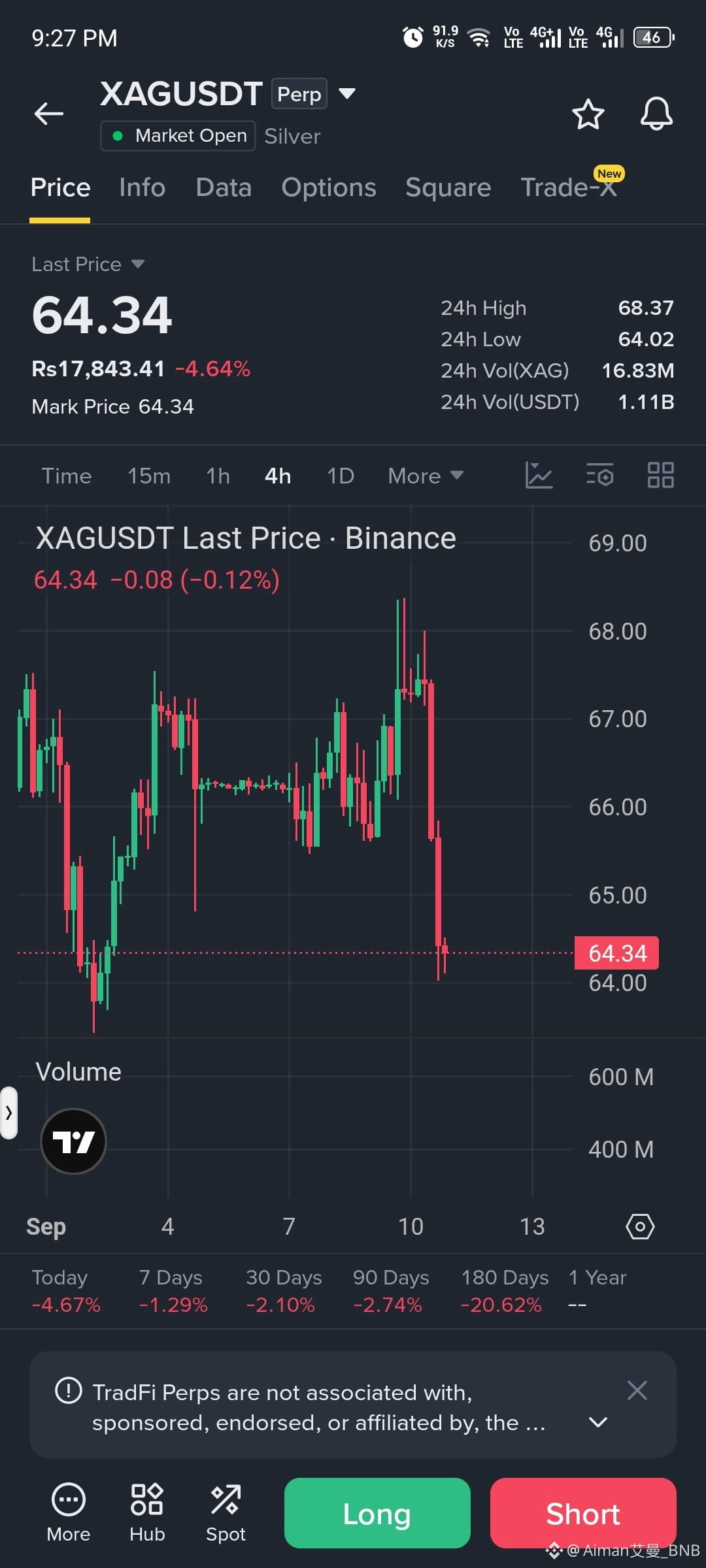
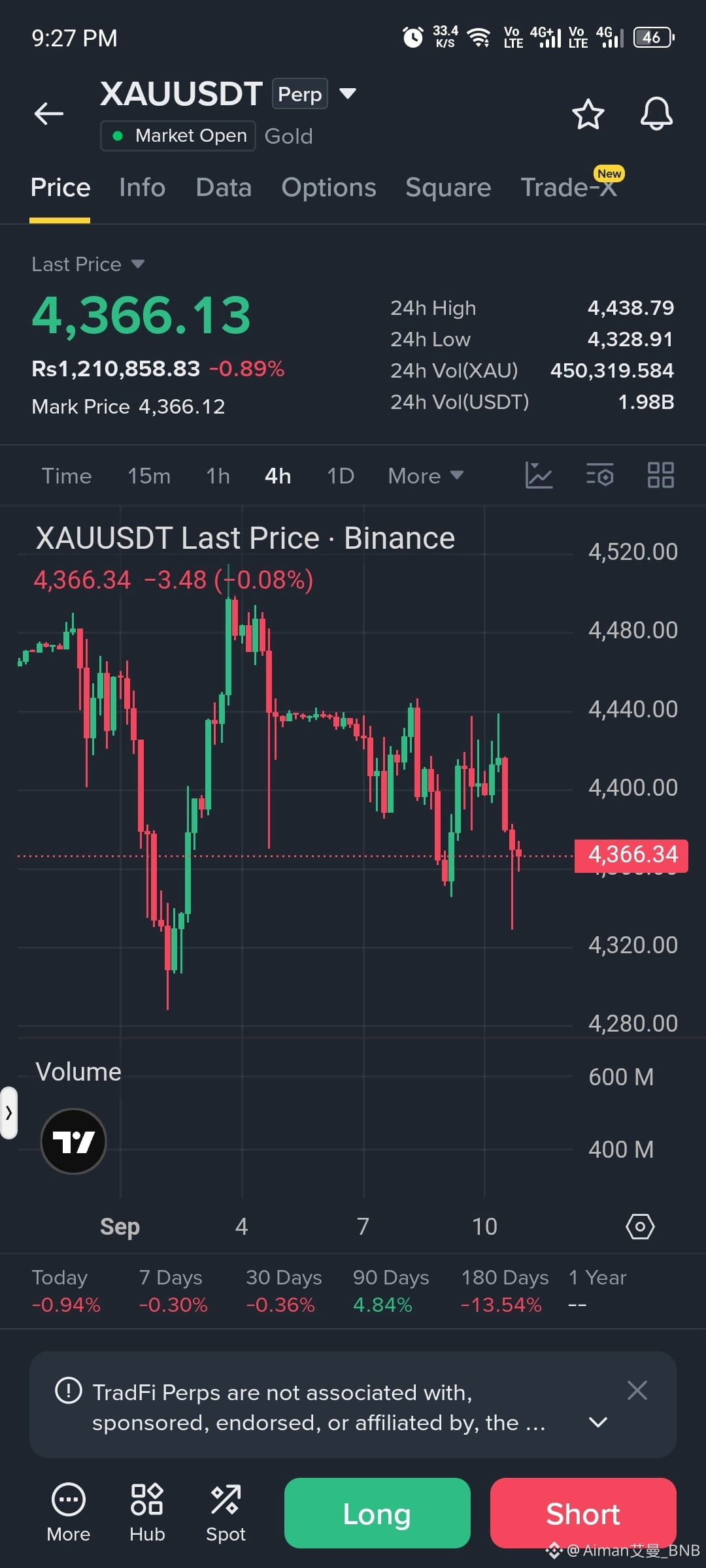
$800 billion just wiped out from GOLD $XAU and SILVER $XAG in 6 hours📉😫🥰
{future}(XAGUSDT)
{future}(XAUUSDT)
$800 billion just wiped out from GOLD $XAU and SILVER $XAG in 6 hours📉😫🥰
1
139
·
--
Bearish
🚨 TRUMP’S $5,000 “DIVIDEND” CLAIM 🇺🇸
$USELESS $PONS $MARSCOIN
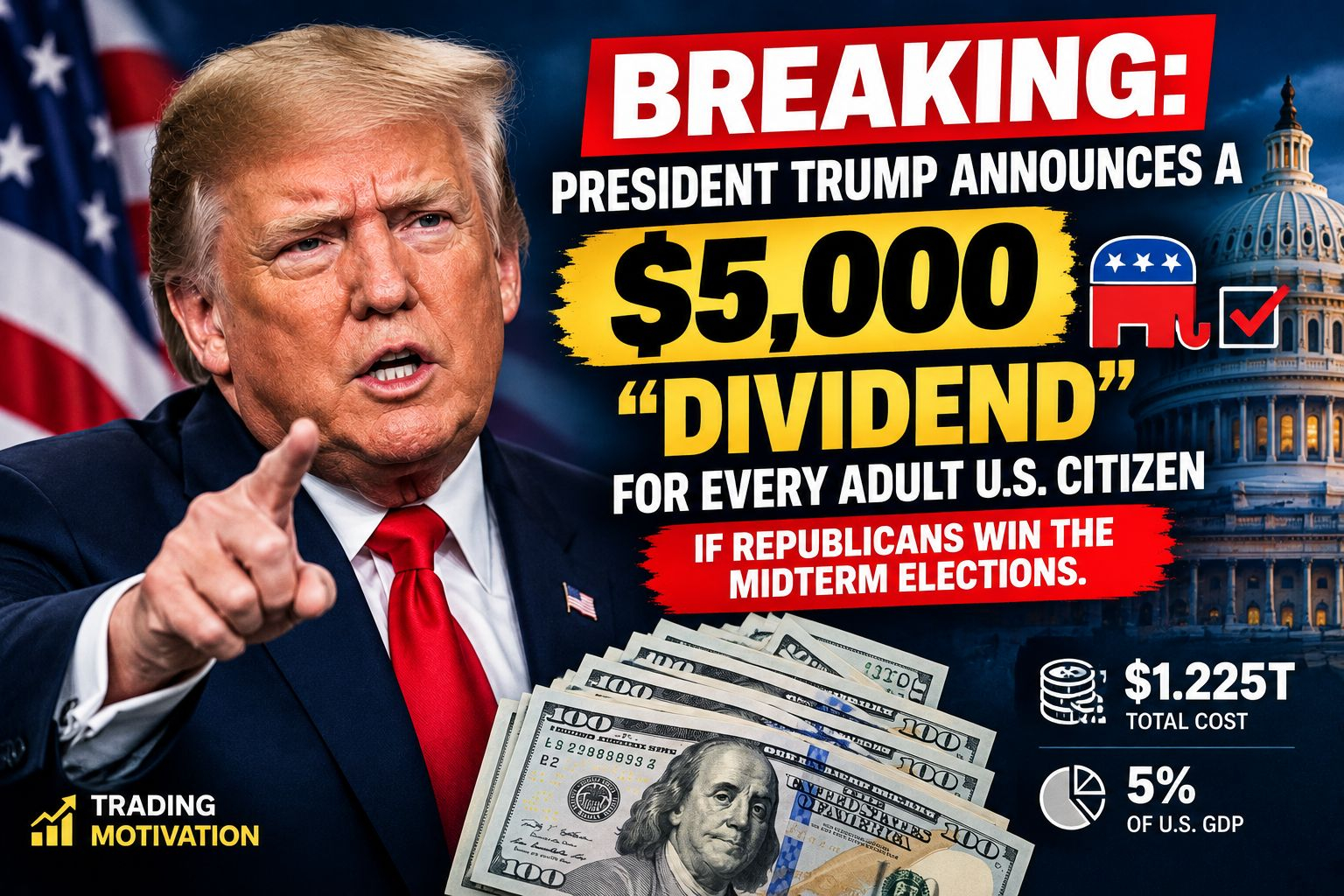
President Donald Trump says every adult U.S. citizen could receive a $5,000 cash “dividend” if Republicans win and retain control of both the House and Senate in the 2026 midterm elections.
With around 245 million adult citizens, the proposed payout could total roughly $1.225 TRILLION. 😳
That would be an enormous government expenditure, equivalent to around 5% of U.S. GDP.
But the biggest question is not just the size of the payout — it’s how such a massive program would be funded and implemented. 👀
A $1.2T+ proposal could have major implications for the U.S. economy, government spending and financial markets if it ever moves beyond a political proposal.
#Trump's
{future}(MARSCOINUSDT)
#TrumpDividend #usa #economy #crypto
🚨 TRUMP’S $5,000 “DIVIDEND” CLAIM 🇺🇸
$USELESS $PONS $MARSCOIN
President Donald Trump says every adult U.S. citizen could receive a $5,000 cash “dividend” if Republicans win and retain control of both the House and Senate in the 2026 midterm elections.
With around 245 million adult citizens, the proposed payout could total roughly $1.225 TRILLION. 😳
That would be an enormous government expenditure, equivalent to around 5% of U.S. GDP.
But the biggest question is not just the size of the payout — it’s how such a massive program would be funded and implemented. 👀
A $1.2T+ proposal could have major implications for the U.S. economy, government spending and financial markets if it ever moves beyond a political proposal.
#Trump's
#TrumpDividend #usa #economy #crypto
$USELESS $PONS $MARSCOIN
President Donald Trump says every adult U.S. citizen could receive a $5,000 cash “dividend” if Republicans win and retain control of both the House and Senate in the 2026 midterm elections.
With around 245 million adult citizens, the proposed payout could total roughly $1.225 TRILLION. 😳
That would be an enormous government expenditure, equivalent to around 5% of U.S. GDP.
But the biggest question is not just the size of the payout — it’s how such a massive program would be funded and implemented. 👀
A $1.2T+ proposal could have major implications for the U.S. economy, government spending and financial markets if it ever moves beyond a political proposal.
#Trump's
#TrumpDividend #usa #economy #crypto
130
·
--
Bullish
🚨 BIG CLAIM FROM TRUMP 🇺🇸
$SKHYB $BULLA $VTHO
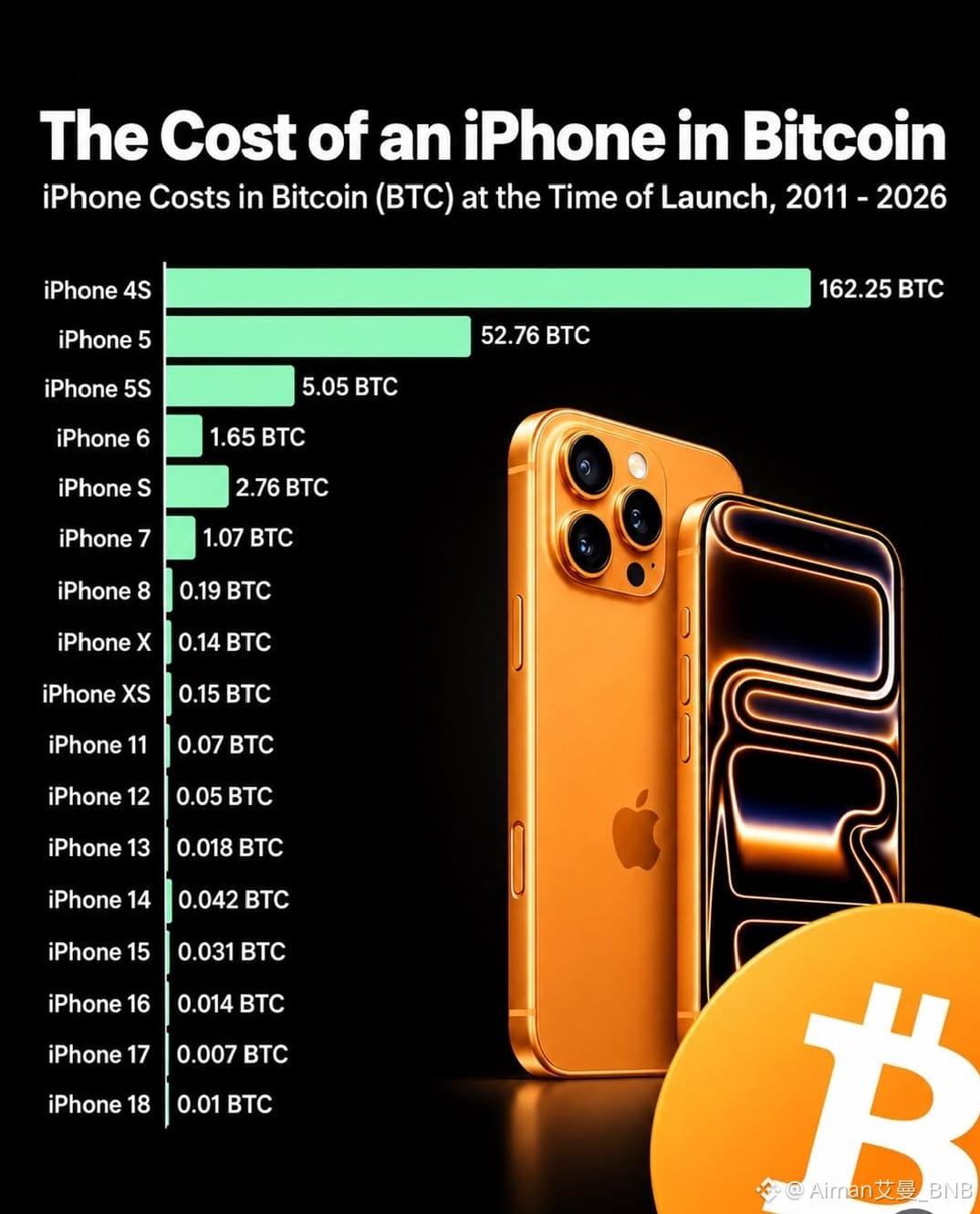
President Trump says every adult U.S. citizen could receive a $5,000 “dividend” if Republicans win the midterm elections.
With roughly 245 million adult citizens, that would put the potential cost at around $1.2 TRILLION. 😳
For perspective, that figure would be larger than the U.S. government’s annual interest payments on its national debt and could represent roughly 16% of the federal budget.
A massive number — but the bigger question is: Where would the money come from, and how would such a plan actually work? 👀
#Trump's
{future}(VTHOUSDT)
#usa #USPolitics #economy #crypto
🚨 BIG CLAIM FROM TRUMP 🇺🇸
$SKHYB $BULLA $VTHO
President Trump says every adult U.S. citizen could receive a $5,000 “dividend” if Republicans win the midterm elections.
With roughly 245 million adult citizens, that would put the potential cost at around $1.2 TRILLION. 😳
For perspective, that figure would be larger than the U.S. government’s annual interest payments on its national debt and could represent roughly 16% of the federal budget.
A massive number — but the bigger question is: Where would the money come from, and how would such a plan actually work? 👀
#Trump's
#usa #USPolitics #economy #crypto
$SKHYB $BULLA $VTHO
President Trump says every adult U.S. citizen could receive a $5,000 “dividend” if Republicans win the midterm elections.
With roughly 245 million adult citizens, that would put the potential cost at around $1.2 TRILLION. 😳
For perspective, that figure would be larger than the U.S. government’s annual interest payments on its national debt and could represent roughly 16% of the federal budget.
A massive number — but the bigger question is: Where would the money come from, and how would such a plan actually work? 👀
#Trump's
#usa #USPolitics #economy #crypto

237
·
--
Article
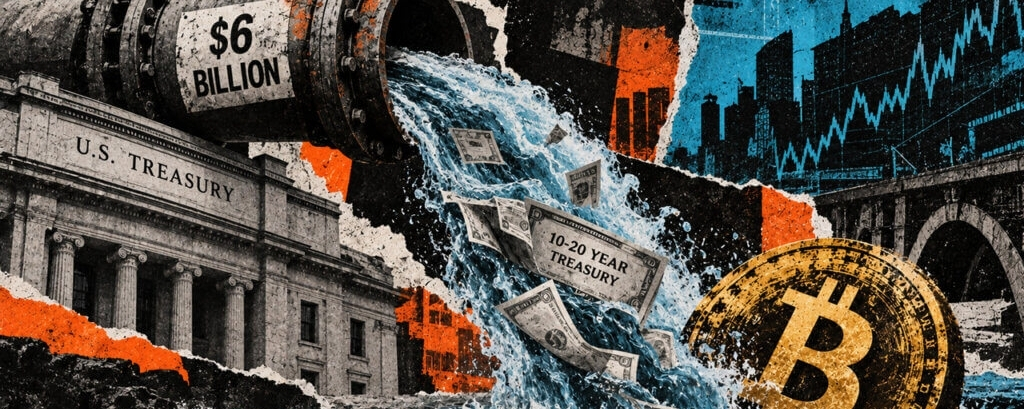
Treasury’s $6B Bond Buyback Could Be a Hidden Catalyst for Bitcoin$RAY $VTHO $BULLA
I’m watching the U.S. Treasury’s latest $6 billion bond buyback closely because the headline number looks significant, but the real Bitcoin signal may come from what happens underneath the surface.
On Sept. 10, the Treasury has set a maximum of $6 billion for buying back older, long-dated Treasury bonds. That is three times the previous $2 billion limit and even higher than the minimum $4 billion expansion announced in August.
The operation focuses on Treasury securities with 10 to 20 years remaining until maturity, covering bonds maturing from Sept. 11, 2036, through Sept. 10, 2046. The operation is scheduled for 1:40 p.m. to 2 p.m. Eastern, with settlement expected on Sept. 11.
But I don’t think the $6 billion ceiling itself is the main story.
The Treasury describes these operations as providing a "predictable outlet" for dealers looking to sell older, less-traded Treasury securities. That matters because dealers holding large inventories can face greater balance-sheet pressure, particularly when the bond market becomes difficult to trade.
The Treasury will retire the bonds it purchases at settlement rather than putting them back into the market. In simple terms, that can reduce the amount of older debt dealers have to carry.
That is where I see the potential connection with Bitcoin.
If the operation genuinely improves Treasury market liquidity, reduces dealer inventory pressure and makes it easier for financial institutions to intermediate trades, the effect could eventually reach broader funding conditions. But I would not call this "new liquidity" or "QE" just because the Treasury is buying $6 billion of bonds.
There is an important distinction here: $6 billion is only the maximum capacity, not a guaranteed purchase amount. Treasury can accept fewer securities or potentially none at all depending on the offers it receives. The buybacks can also be funded through debt-sale proceeds or general-fund money, meaning the headline figure does not automatically translate into fresh money entering financial markets.
For Bitcoin, that distinction is extremely important.
I’m looking beyond the headline and watching what happens after the operation. If older Treasury bonds begin trading more smoothly, bid-ask spreads improve and pricing becomes less strained compared with newer benchmark securities, that would provide stronger evidence that the intervention is actually improving market functioning.
The next question is funding.
If easier Treasury intermediation eventually reduces pressure in secured borrowing and other funding markets, then the connection to Bitcoin becomes much more interesting. Bitcoin tends to benefit when financial conditions become easier and risk appetite expands, but that transmission cannot simply be assumed from a single Treasury purchase.
So I’m treating Sept. 10 as the "test", not the conclusion.
The accepted purchase amount will tell us how much Treasury actually bought, while the following days should tell us whether market liquidity and funding conditions genuinely improved.
For Bitcoin, the strongest signal would not be the "$6 billion" headline itself. It would be sustained evidence that the intervention is easing financial-market stress and improving the flow of capital.
That is the part I’m watching next.
#bitcoin #Treasury #CryptoMarket #liquidity #UStreasury
Treasury’s $6B Bond Buyback Could Be a Hidden Catalyst for Bitcoin
$RAY $VTHO $BULLA
I’m watching the U.S. Treasury’s latest $6 billion bond buyback closely because the headline number looks significant, but the real Bitcoin signal may come from what happens underneath the surface.
On Sept. 10, the Treasury has set a maximum of $6 billion for buying back older, long-dated Treasury bonds. That is three times the previous $2 billion limit and even higher than the minimum $4 billion expansion announced in August.
The operation focuses on Treasury securities with 10 to 20 years remaining until maturity, covering bonds maturing from Sept. 11, 2036, through Sept. 10, 2046. The operation is scheduled for 1:40 p.m. to 2 p.m. Eastern, with settlement expected on Sept. 11.
But I don’t think the $6 billion ceiling itself is the main story.
The Treasury describes these operations as providing a "predictable outlet" for dealers looking to sell older, less-traded Treasury securities. That matters because dealers holding large inventories can face greater balance-sheet pressure, particularly when the bond market becomes difficult to trade.
The Treasury will retire the bonds it purchases at settlement rather than putting them back into the market. In simple terms, that can reduce the amount of older debt dealers have to carry.
That is where I see the potential connection with Bitcoin.
If the operation genuinely improves Treasury market liquidity, reduces dealer inventory pressure and makes it easier for financial institutions to intermediate trades, the effect could eventually reach broader funding conditions. But I would not call this "new liquidity" or "QE" just because the Treasury is buying $6 billion of bonds.
There is an important distinction here: $6 billion is only the maximum capacity, not a guaranteed purchase amount. Treasury can accept fewer securities or potentially none at all depending on the offers it receives. The buybacks can also be funded through debt-sale proceeds or general-fund money, meaning the headline figure does not automatically translate into fresh money entering financial markets.
For Bitcoin, that distinction is extremely important.
I’m looking beyond the headline and watching what happens after the operation. If older Treasury bonds begin trading more smoothly, bid-ask spreads improve and pricing becomes less strained compared with newer benchmark securities, that would provide stronger evidence that the intervention is actually improving market functioning.
The next question is funding.
If easier Treasury intermediation eventually reduces pressure in secured borrowing and other funding markets, then the connection to Bitcoin becomes much more interesting. Bitcoin tends to benefit when financial conditions become easier and risk appetite expands, but that transmission cannot simply be assumed from a single Treasury purchase.
So I’m treating Sept. 10 as the "test", not the conclusion.
The accepted purchase amount will tell us how much Treasury actually bought, while the following days should tell us whether market liquidity and funding conditions genuinely improved.
For Bitcoin, the strongest signal would not be the "$6 billion" headline itself. It would be sustained evidence that the intervention is easing financial-market stress and improving the flow of capital.
That is the part I’m watching next.
#bitcoin #Treasury #CryptoMarket #liquidity #UStreasury
I’m watching the U.S. Treasury’s latest $6 billion bond buyback closely because the headline number looks significant, but the real Bitcoin signal may come from what happens underneath the surface.
On Sept. 10, the Treasury has set a maximum of $6 billion for buying back older, long-dated Treasury bonds. That is three times the previous $2 billion limit and even higher than the minimum $4 billion expansion announced in August.
The operation focuses on Treasury securities with 10 to 20 years remaining until maturity, covering bonds maturing from Sept. 11, 2036, through Sept. 10, 2046. The operation is scheduled for 1:40 p.m. to 2 p.m. Eastern, with settlement expected on Sept. 11.
But I don’t think the $6 billion ceiling itself is the main story.
The Treasury describes these operations as providing a "predictable outlet" for dealers looking to sell older, less-traded Treasury securities. That matters because dealers holding large inventories can face greater balance-sheet pressure, particularly when the bond market becomes difficult to trade.
The Treasury will retire the bonds it purchases at settlement rather than putting them back into the market. In simple terms, that can reduce the amount of older debt dealers have to carry.
That is where I see the potential connection with Bitcoin.
If the operation genuinely improves Treasury market liquidity, reduces dealer inventory pressure and makes it easier for financial institutions to intermediate trades, the effect could eventually reach broader funding conditions. But I would not call this "new liquidity" or "QE" just because the Treasury is buying $6 billion of bonds.
There is an important distinction here: $6 billion is only the maximum capacity, not a guaranteed purchase amount. Treasury can accept fewer securities or potentially none at all depending on the offers it receives. The buybacks can also be funded through debt-sale proceeds or general-fund money, meaning the headline figure does not automatically translate into fresh money entering financial markets.
For Bitcoin, that distinction is extremely important.
I’m looking beyond the headline and watching what happens after the operation. If older Treasury bonds begin trading more smoothly, bid-ask spreads improve and pricing becomes less strained compared with newer benchmark securities, that would provide stronger evidence that the intervention is actually improving market functioning.
The next question is funding.
If easier Treasury intermediation eventually reduces pressure in secured borrowing and other funding markets, then the connection to Bitcoin becomes much more interesting. Bitcoin tends to benefit when financial conditions become easier and risk appetite expands, but that transmission cannot simply be assumed from a single Treasury purchase.
So I’m treating Sept. 10 as the "test", not the conclusion.
The accepted purchase amount will tell us how much Treasury actually bought, while the following days should tell us whether market liquidity and funding conditions genuinely improved.
For Bitcoin, the strongest signal would not be the "$6 billion" headline itself. It would be sustained evidence that the intervention is easing financial-market stress and improving the flow of capital.
That is the part I’m watching next.
#bitcoin #Treasury #CryptoMarket #liquidity #UStreasury
232
·
--
Bullish
Verified
🚨 BIG MOVE FROM THE U.S. TREASURY! 🇺🇸
$ZEC $IOST $RAY
I’m watching this closely because the U.S. Treasury is reportedly set to buy back $12.5 billion of its own debt today.
Why does this matter for crypto? 👀
Treasury buybacks can improve liquidity and market conditions, which is why traders may view the move as a potentially bullish signal for Bitcoin and other risk assets. 🚀
But the real question is how markets react once the money starts moving.
$12.5B is a big number. Now Bitcoin bulls are watching for the ripple effect. 👀
#BTC #crypto #USDTreasury #CryptoNews #market
🚨 BIG MOVE FROM THE U.S. TREASURY! 🇺🇸
$ZEC $IOST $RAY
I’m watching this closely because the U.S. Treasury is reportedly set to buy back $12.5 billion of its own debt today.
Why does this matter for crypto? 👀
Treasury buybacks can improve liquidity and market conditions, which is why traders may view the move as a potentially bullish signal for Bitcoin and other risk assets. 🚀
But the real question is how markets react once the money starts moving.
$12.5B is a big number. Now Bitcoin bulls are watching for the ripple effect. 👀
#BTC #crypto #USDTreasury #CryptoNews #market
$ZEC $IOST $RAY
I’m watching this closely because the U.S. Treasury is reportedly set to buy back $12.5 billion of its own debt today.
Why does this matter for crypto? 👀
Treasury buybacks can improve liquidity and market conditions, which is why traders may view the move as a potentially bullish signal for Bitcoin and other risk assets. 🚀
But the real question is how markets react once the money starts moving.
$12.5B is a big number. Now Bitcoin bulls are watching for the ripple effect. 👀
#BTC #crypto #USDTreasury #CryptoNews #market

544
·
--
Bullish
30D trade $ZEC 38.2 USDT
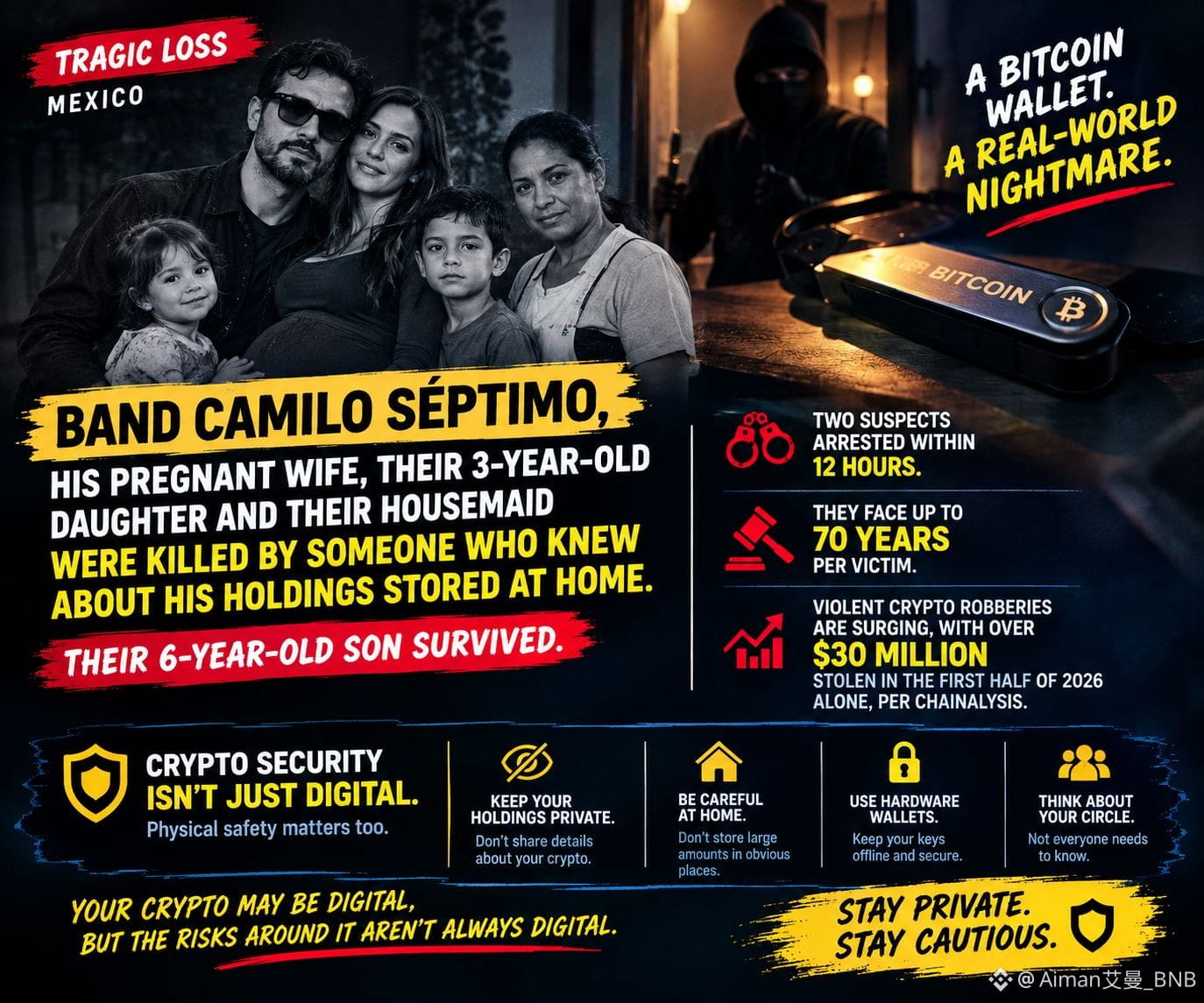
I’m looking at this disturbing case, and it highlights a side of crypto that is often ignored: physical security can matter just as much as digital security. 😔
Jonathan Meléndez, keyboardist of Mexican band Camilo Séptimo, was reportedly killed along with his pregnant wife, their 3-year-old daughter and a housemaid in an attack allegedly linked to a Bitcoin hardware wallet kept at their home.
Their 6-year-old son reportedly survived.
Authorities arrested two suspects within 12 hours, according to reports, while the case remains a stark reminder of the risks that can arise when information about significant crypto holdings becomes known.
The bigger issue goes beyond one incident.
Crypto holders often focus heavily on protecting seed phrases, private keys and exchange accounts, but "keeping your holdings secure" also means thinking about who knows you own them and where that information is stored.
With physical attacks against crypto holders reportedly increasing, privacy and personal safety should be treated as part of crypto security—not an afterthought.
Your crypto may be digital, but the risks around it aren’t always digital. Stay private. Stay cautious. 🔐
#bitcoin #crypto #BitcoinSecurity #CryptoSecurity #BTC $VVV $USELESS $ZEC
{future}(USELESSUSDT)
{future}(VVVUSDT)
I’m looking at this disturbing case, and it highlights a side of crypto that is often ignored: physical security can matter just as much as digital security. 😔
Jonathan Meléndez, keyboardist of Mexican band Camilo Séptimo, was reportedly killed along with his pregnant wife, their 3-year-old daughter and a housemaid in an attack allegedly linked to a Bitcoin hardware wallet kept at their home.
Their 6-year-old son reportedly survived.
Authorities arrested two suspects within 12 hours, according to reports, while the case remains a stark reminder of the risks that can arise when information about significant crypto holdings becomes known.
The bigger issue goes beyond one incident.
Crypto holders often focus heavily on protecting seed phrases, private keys and exchange accounts, but "keeping your holdings secure" also means thinking about who knows you own them and where that information is stored.
With physical attacks against crypto holders reportedly increasing, privacy and personal safety should be treated as part of crypto security—not an afterthought.
Your crypto may be digital, but the risks around it aren’t always digital. Stay private. Stay cautious. 🔐
#bitcoin #crypto #BitcoinSecurity #CryptoSecurity #BTC $VVV $USELESS $ZEC
Jonathan Meléndez, keyboardist of Mexican band Camilo Séptimo, was reportedly killed along with his pregnant wife, their 3-year-old daughter and a housemaid in an attack allegedly linked to a Bitcoin hardware wallet kept at their home.
Their 6-year-old son reportedly survived.
Authorities arrested two suspects within 12 hours, according to reports, while the case remains a stark reminder of the risks that can arise when information about significant crypto holdings becomes known.
The bigger issue goes beyond one incident.
Crypto holders often focus heavily on protecting seed phrases, private keys and exchange accounts, but "keeping your holdings secure" also means thinking about who knows you own them and where that information is stored.
With physical attacks against crypto holders reportedly increasing, privacy and personal safety should be treated as part of crypto security—not an afterthought.
Your crypto may be digital, but the risks around it aren’t always digital. Stay private. Stay cautious. 🔐
#bitcoin #crypto #BitcoinSecurity #CryptoSecurity #BTC $VVV $USELESS $ZEC
2
225
·
--
Hunter Biden is reportedly stepping into the memecoin market. 💀👀
$DOT $ZEC $VVV
A new token reportedly called LAPTOP is expected to launch on the Base Network, and the hype is already starting to build around it.
With celebrity-linked memecoins, attention can arrive fast — but so can extreme volatility. 🚨
Early buyers, snipers and heavy speculation can create huge price swings, especially when traders rush in because of the hype.
So I’m keeping an eye on the launch rather than blindly chasing the excitement.
Big hype doesn’t always mean a good trade. DYOR and stay cautious. ⚠️
#crypto #memecoin #Base #HunterBiden #Laptop
{future}(VVVUSDT)
Hunter Biden is reportedly stepping into the memecoin market. 💀👀
$DOT $ZEC $VVV
A new token reportedly called LAPTOP is expected to launch on the Base Network, and the hype is already starting to build around it.
With celebrity-linked memecoins, attention can arrive fast — but so can extreme volatility. 🚨
Early buyers, snipers and heavy speculation can create huge price swings, especially when traders rush in because of the hype.
So I’m keeping an eye on the launch rather than blindly chasing the excitement.
Big hype doesn’t always mean a good trade. DYOR and stay cautious. ⚠️
#crypto #memecoin #Base #HunterBiden #Laptop
$DOT $ZEC $VVV
A new token reportedly called LAPTOP is expected to launch on the Base Network, and the hype is already starting to build around it.
With celebrity-linked memecoins, attention can arrive fast — but so can extreme volatility. 🚨
Early buyers, snipers and heavy speculation can create huge price swings, especially when traders rush in because of the hype.
So I’m keeping an eye on the launch rather than blindly chasing the excitement.
Big hype doesn’t always mean a good trade. DYOR and stay cautious. ⚠️
#crypto #memecoin #Base #HunterBiden #Laptop

2
231
·
--
go
go


Binance Square Official
·
--
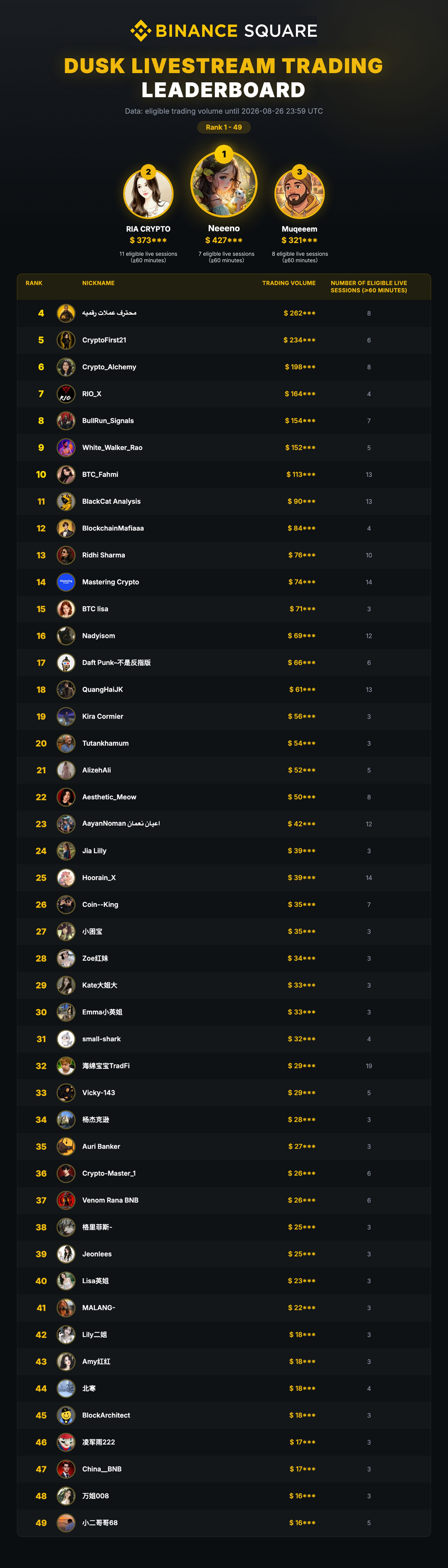
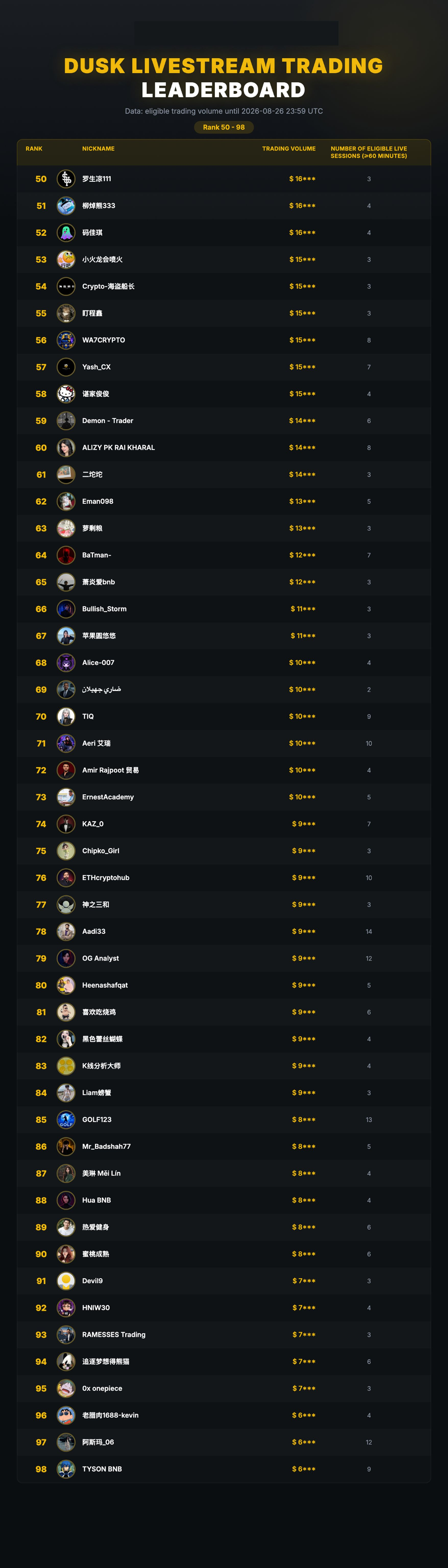
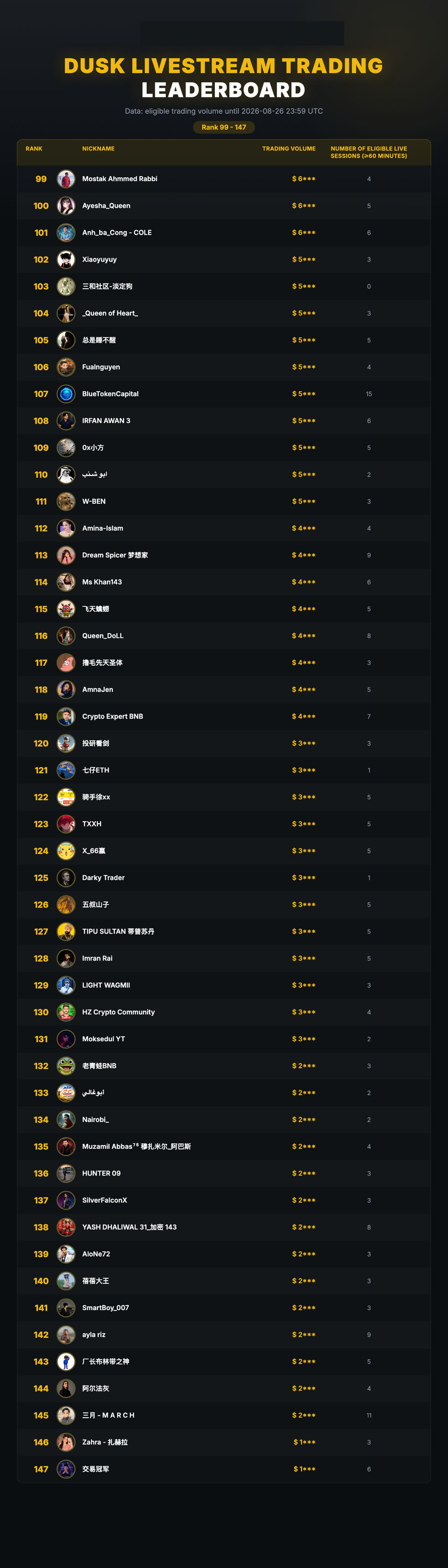
DUSK Livestream Leaderboard update (data until 2026-08-26 23:59 UTC).
A quick heads-up: The rewards will be distributed to the eligible participants before 2026-09-17. For more details related to eligibility requirements, please refer to campaign rules(https://www.binance.com/en/support/announcement/detail/a07227f11c5345e091c8f0118d403806). Thank you.
A quick heads-up: The rewards will be distributed to the eligible participants before 2026-09-17. For more details related to eligibility requirements, please refer to campaign rules(https://www.binance.com/en/support/announcement/detail/a07227f11c5345e091c8f0118d403806). Thank you.

141
·
--
Article
A Smaller Dollar Share Doesn’t Prove Central Banks Are Turning to Bitcoin$USELESS $BNC $VVV
I’ve been looking at the recent debate around declining dollar reserves, and one thing stands out: a smaller share of global reserves does not automatically mean central banks are buying Bitcoin. The difference between a changing percentage and an actual investment decision is easy to overlook.
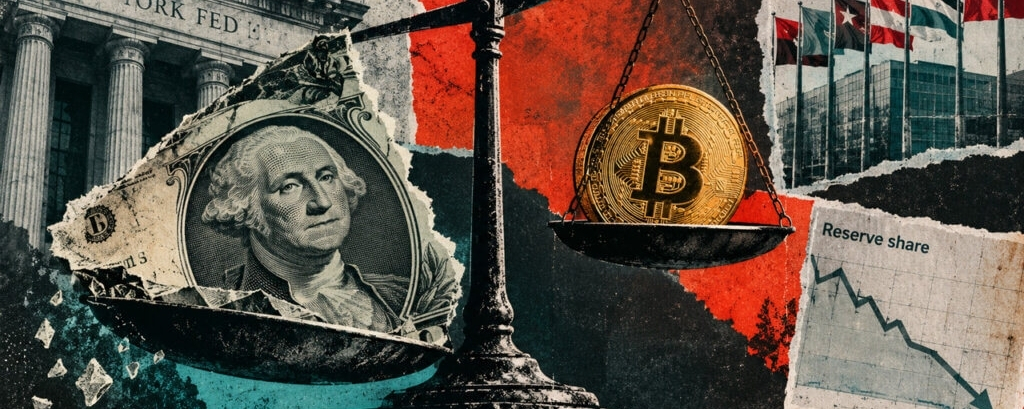
A Sept. 2 analysis from New York Fed researchers found that the U.S. dollar’s share of global official foreign-exchange reserves declined from 64% at the end of 2015 to 56% at the end of 2025, based on IMF COFER data.
At first glance, that decline may look like central banks are moving away from the dollar. But the researchers highlight another possibility: the global percentage can change because countries alter their currency preferences, or because the size of their overall reserves changes.
This is the important distinction between "currency preference" and "reserve-size effects."
A country can increase its reserves without reducing the percentage held in dollars. If that country has a below-average dollar allocation, simply accumulating more reserves can push the global dollar share lower.
Switzerland provides a useful example. Between 2015 and 2019, its reserves grew while its own dollar allocation increased, yet its reserve growth still contributed to a decline in the global dollar share.
The research shows why investors should be careful when interpreting aggregate reserve data. A falling percentage does not necessarily reveal where the money is going.
And that becomes even more important when Bitcoin enters the discussion.
The underlying New York Fed research separates reserves needed for liquidity from an investment portion held beyond those immediate requirements. Central banks need liquid foreign-currency reserves for things such as trade payments, foreign-currency debt and currency stabilization.
Only after those liquidity needs are satisfied does greater diversification become more relevant.
But "diversification" does not automatically mean "Bitcoin."
There is a real-world example of why this distinction matters. In November 2025, the Czech National Bank announced a $1 million digital-asset test portfolio that included Bitcoin, a dollar stablecoin and a tokenized deposit. However, the central bank explicitly said the portfolio was outside its international reserves.
That example shows why simply pointing to a declining dollar share is not enough to establish a sovereign Bitcoin-buying trend.
To make a serious case for growing government demand for Bitcoin, we need separate evidence: a disclosed allocation, the source of funding and confirmation that purchases were actually executed. It also matters whether those Bitcoin holdings are officially classified as reserves or held separately.
The New York Fed research does not provide those details. It explains how the composition and size of reserve portfolios can change the global dollar percentage, but it does not measure sovereign Bitcoin purchases or estimate their impact on Bitcoin’s price.
So my takeaway is simple: "A shrinking dollar share is a signal of changing reserve dynamics, not proof of central banks buying Bitcoin."
If sovereign Bitcoin demand is increasing, the evidence needs to come from actual allocations and purchases not from interpreting a single global reserve percentage as something it doesn’t prove.
A Smaller Dollar Share Doesn’t Prove Central Banks Are Turning to Bitcoin
$USELESS $BNC $VVV
I’ve been looking at the recent debate around declining dollar reserves, and one thing stands out: a smaller share of global reserves does not automatically mean central banks are buying Bitcoin. The difference between a changing percentage and an actual investment decision is easy to overlook.
A Sept. 2 analysis from New York Fed researchers found that the U.S. dollar’s share of global official foreign-exchange reserves declined from 64% at the end of 2015 to 56% at the end of 2025, based on IMF COFER data.
At first glance, that decline may look like central banks are moving away from the dollar. But the researchers highlight another possibility: the global percentage can change because countries alter their currency preferences, or because the size of their overall reserves changes.
This is the important distinction between "currency preference" and "reserve-size effects."
A country can increase its reserves without reducing the percentage held in dollars. If that country has a below-average dollar allocation, simply accumulating more reserves can push the global dollar share lower.
Switzerland provides a useful example. Between 2015 and 2019, its reserves grew while its own dollar allocation increased, yet its reserve growth still contributed to a decline in the global dollar share.
The research shows why investors should be careful when interpreting aggregate reserve data. A falling percentage does not necessarily reveal where the money is going.
And that becomes even more important when Bitcoin enters the discussion.
The underlying New York Fed research separates reserves needed for liquidity from an investment portion held beyond those immediate requirements. Central banks need liquid foreign-currency reserves for things such as trade payments, foreign-currency debt and currency stabilization.
Only after those liquidity needs are satisfied does greater diversification become more relevant.
But "diversification" does not automatically mean "Bitcoin."
There is a real-world example of why this distinction matters. In November 2025, the Czech National Bank announced a $1 million digital-asset test portfolio that included Bitcoin, a dollar stablecoin and a tokenized deposit. However, the central bank explicitly said the portfolio was outside its international reserves.
That example shows why simply pointing to a declining dollar share is not enough to establish a sovereign Bitcoin-buying trend.
To make a serious case for growing government demand for Bitcoin, we need separate evidence: a disclosed allocation, the source of funding and confirmation that purchases were actually executed. It also matters whether those Bitcoin holdings are officially classified as reserves or held separately.
The New York Fed research does not provide those details. It explains how the composition and size of reserve portfolios can change the global dollar percentage, but it does not measure sovereign Bitcoin purchases or estimate their impact on Bitcoin’s price.
So my takeaway is simple: "A shrinking dollar share is a signal of changing reserve dynamics, not proof of central banks buying Bitcoin."
If sovereign Bitcoin demand is increasing, the evidence needs to come from actual allocations and purchases not from interpreting a single global reserve percentage as something it doesn’t prove.
I’ve been looking at the recent debate around declining dollar reserves, and one thing stands out: a smaller share of global reserves does not automatically mean central banks are buying Bitcoin. The difference between a changing percentage and an actual investment decision is easy to overlook.
A Sept. 2 analysis from New York Fed researchers found that the U.S. dollar’s share of global official foreign-exchange reserves declined from 64% at the end of 2015 to 56% at the end of 2025, based on IMF COFER data.
At first glance, that decline may look like central banks are moving away from the dollar. But the researchers highlight another possibility: the global percentage can change because countries alter their currency preferences, or because the size of their overall reserves changes.
This is the important distinction between "currency preference" and "reserve-size effects."
A country can increase its reserves without reducing the percentage held in dollars. If that country has a below-average dollar allocation, simply accumulating more reserves can push the global dollar share lower.
Switzerland provides a useful example. Between 2015 and 2019, its reserves grew while its own dollar allocation increased, yet its reserve growth still contributed to a decline in the global dollar share.
The research shows why investors should be careful when interpreting aggregate reserve data. A falling percentage does not necessarily reveal where the money is going.
And that becomes even more important when Bitcoin enters the discussion.
The underlying New York Fed research separates reserves needed for liquidity from an investment portion held beyond those immediate requirements. Central banks need liquid foreign-currency reserves for things such as trade payments, foreign-currency debt and currency stabilization.
Only after those liquidity needs are satisfied does greater diversification become more relevant.
But "diversification" does not automatically mean "Bitcoin."
There is a real-world example of why this distinction matters. In November 2025, the Czech National Bank announced a $1 million digital-asset test portfolio that included Bitcoin, a dollar stablecoin and a tokenized deposit. However, the central bank explicitly said the portfolio was outside its international reserves.
That example shows why simply pointing to a declining dollar share is not enough to establish a sovereign Bitcoin-buying trend.
To make a serious case for growing government demand for Bitcoin, we need separate evidence: a disclosed allocation, the source of funding and confirmation that purchases were actually executed. It also matters whether those Bitcoin holdings are officially classified as reserves or held separately.
The New York Fed research does not provide those details. It explains how the composition and size of reserve portfolios can change the global dollar percentage, but it does not measure sovereign Bitcoin purchases or estimate their impact on Bitcoin’s price.
So my takeaway is simple: "A shrinking dollar share is a signal of changing reserve dynamics, not proof of central banks buying Bitcoin."
If sovereign Bitcoin demand is increasing, the evidence needs to come from actual allocations and purchases not from interpreting a single global reserve percentage as something it doesn’t prove.
394
·
--

Article
Tether Wants AI Agents to Handle Money, but Developers Must Control the Risk$SOPH $BNC $INJ
I’ve been looking closely at Tether’s push to bring AI agents into digital payments, and one thing stands out: giving an AI access to a wallet is not the same as deciding what that AI is actually allowed to spend. That difference could become one of the biggest challenges as autonomous financial agents become more common.
Tether CEO Paolo Ardoino has outlined a broader vision where people, machines and AI agents can interact with programmable money while users maintain control of their funds. Tether’s Wallet Development Kit (WDK) is designed to support that vision, but its latest wallet tools also highlight an important responsibility for developers: defining the limits of an AI agent’s financial authority.
Tether’s WDK CLI separates wallet access from transaction approval. A user can unlock a wallet for a temporary session, after which another process operating under the same system account may request transactions through the local wallet endpoint. The agent does not necessarily need the wallet password again for every payment.
That creates an important distinction between "self-custody" and "spending control." Keeping private keys under the user’s control protects custody, but it does not automatically determine which recipient an AI can pay, how much it can spend or which operations it can execute.
The default CLI session lasts five minutes after unlocking, while users can lock it earlier or unlock again to restart the timer. The session can also be configured without automatic expiration.
These controls help limit how long an unlocked wallet remains accessible, but a short session does not automatically create a spending limit. An AI could still potentially make multiple transactions during the period in which the wallet is available.
Tether describes this same-user access as a practical hot-wallet trade-off and recommends measures such as using a dedicated wallet, keeping only limited funds inside it and separating the wallet under a dedicated operating-system account. These are precautions rather than evidence of a reported exploit or theft.
The MCP interface adds another layer. Its built-in tools keep sensitive wallet administration, such as seed export and unlocking, outside the agent-facing toolset. However, that protection depends on how the environment is configured. If an AI client also has independent shell access, the restrictions of the MCP tool list may not cover every possible route to the wallet.
For transfers, Tether recommends a safer workflow: first preview the transaction, display details such as the network, recipient, token, amount and estimated fee, then obtain confirmation before broadcasting it.
But there is a crucial point here: "recommended confirmation" is not necessarily the same as "enforced authorization." The underlying daemon can process a valid transaction request from an unlocked wallet without proving that the earlier preview and confirmation steps actually happened.
That means the location of the security check matters. A polished approval screen may look reassuring, but if another permitted route can bypass that screen, the spending restriction is only as strong as the surrounding application design.
WDK gives developers additional tools through its SDK. Local transaction policies can define ALLOW and DENY rules for certain wallet or protocol operations, including conditions involving approved recipients and transaction amounts.
But these controls are not a complete sandbox. They operate locally and within a defined scope, meaning developers still need to understand which operations and account references fall outside those checks.
This becomes especially important when developers promise users a cumulative spending limit.
For example, blocking a single transaction above $100 does not automatically enforce a $500 daily budget. The application must track previous spending, preserve that information reliably and handle simultaneous requests correctly. In other words, "daily spending limits" require accounting as well as transaction-level checks.
Tether’s separate MCP Toolkit takes a different approach. Its built-in write tools use explicit user approval before broadcasting transactions, while developers can choose which tools to expose and can create additional operations.
That flexibility is useful, but it also puts more responsibility on the developer. The more customized the agent becomes, the more carefully its permissions need to be defined.
Tether effectively offers different paths for different use cases: the CLI for local workflows, the SDK for applications and the MCP Toolkit for custom AI-agent servers. Developers can therefore choose how much automation and human involvement they want.
The trade-off is straightforward. "Approve every transaction" gives users direct control over each payment. "Set a spending budget and let the agent operate" provides greater automation, but requires reliable rules covering amounts, recipients, transaction types and cumulative spending.
For users, the real question is not simply whether an AI wallet is self-custodial or whether it shows an approval prompt.
The important questions are: "How much can this agent spend?" "Where can it send my funds?" and "What exactly ends its authority?"
Tether’s self-custody approach gives developers a way to build AI-powered financial systems without handing wallet ownership to a centralized custodian. But the final layer of protection belongs to the product itself.
The biggest challenge may not be giving AI agents access to money. It may be making sure the authority we give them is exactly as limited as we think it is.
#TetherUpdate
Tether Wants AI Agents to Handle Money, but Developers Must Control the Risk
$SOPH $BNC $INJ
I’ve been looking closely at Tether’s push to bring AI agents into digital payments, and one thing stands out: giving an AI access to a wallet is not the same as deciding what that AI is actually allowed to spend. That difference could become one of the biggest challenges as autonomous financial agents become more common.
Tether CEO Paolo Ardoino has outlined a broader vision where people, machines and AI agents can interact with programmable money while users maintain control of their funds. Tether’s Wallet Development Kit (WDK) is designed to support that vision, but its latest wallet tools also highlight an important responsibility for developers: defining the limits of an AI agent’s financial authority.
Tether’s WDK CLI separates wallet access from transaction approval. A user can unlock a wallet for a temporary session, after which another process operating under the same system account may request transactions through the local wallet endpoint. The agent does not necessarily need the wallet password again for every payment.
That creates an important distinction between "self-custody" and "spending control." Keeping private keys under the user’s control protects custody, but it does not automatically determine which recipient an AI can pay, how much it can spend or which operations it can execute.
The default CLI session lasts five minutes after unlocking, while users can lock it earlier or unlock again to restart the timer. The session can also be configured without automatic expiration.
These controls help limit how long an unlocked wallet remains accessible, but a short session does not automatically create a spending limit. An AI could still potentially make multiple transactions during the period in which the wallet is available.
Tether describes this same-user access as a practical hot-wallet trade-off and recommends measures such as using a dedicated wallet, keeping only limited funds inside it and separating the wallet under a dedicated operating-system account. These are precautions rather than evidence of a reported exploit or theft.
The MCP interface adds another layer. Its built-in tools keep sensitive wallet administration, such as seed export and unlocking, outside the agent-facing toolset. However, that protection depends on how the environment is configured. If an AI client also has independent shell access, the restrictions of the MCP tool list may not cover every possible route to the wallet.
For transfers, Tether recommends a safer workflow: first preview the transaction, display details such as the network, recipient, token, amount and estimated fee, then obtain confirmation before broadcasting it.
But there is a crucial point here: "recommended confirmation" is not necessarily the same as "enforced authorization." The underlying daemon can process a valid transaction request from an unlocked wallet without proving that the earlier preview and confirmation steps actually happened.
That means the location of the security check matters. A polished approval screen may look reassuring, but if another permitted route can bypass that screen, the spending restriction is only as strong as the surrounding application design.
WDK gives developers additional tools through its SDK. Local transaction policies can define ALLOW and DENY rules for certain wallet or protocol operations, including conditions involving approved recipients and transaction amounts.
But these controls are not a complete sandbox. They operate locally and within a defined scope, meaning developers still need to understand which operations and account references fall outside those checks.
This becomes especially important when developers promise users a cumulative spending limit.
For example, blocking a single transaction above $100 does not automatically enforce a $500 daily budget. The application must track previous spending, preserve that information reliably and handle simultaneous requests correctly. In other words, "daily spending limits" require accounting as well as transaction-level checks.
Tether’s separate MCP Toolkit takes a different approach. Its built-in write tools use explicit user approval before broadcasting transactions, while developers can choose which tools to expose and can create additional operations.
That flexibility is useful, but it also puts more responsibility on the developer. The more customized the agent becomes, the more carefully its permissions need to be defined.
Tether effectively offers different paths for different use cases: the CLI for local workflows, the SDK for applications and the MCP Toolkit for custom AI-agent servers. Developers can therefore choose how much automation and human involvement they want.
The trade-off is straightforward. "Approve every transaction" gives users direct control over each payment. "Set a spending budget and let the agent operate" provides greater automation, but requires reliable rules covering amounts, recipients, transaction types and cumulative spending.
For users, the real question is not simply whether an AI wallet is self-custodial or whether it shows an approval prompt.
The important questions are: "How much can this agent spend?" "Where can it send my funds?" and "What exactly ends its authority?"
Tether’s self-custody approach gives developers a way to build AI-powered financial systems without handing wallet ownership to a centralized custodian. But the final layer of protection belongs to the product itself.
The biggest challenge may not be giving AI agents access to money. It may be making sure the authority we give them is exactly as limited as we think it is.
#TetherUpdate
I’ve been looking closely at Tether’s push to bring AI agents into digital payments, and one thing stands out: giving an AI access to a wallet is not the same as deciding what that AI is actually allowed to spend. That difference could become one of the biggest challenges as autonomous financial agents become more common.
Tether CEO Paolo Ardoino has outlined a broader vision where people, machines and AI agents can interact with programmable money while users maintain control of their funds. Tether’s Wallet Development Kit (WDK) is designed to support that vision, but its latest wallet tools also highlight an important responsibility for developers: defining the limits of an AI agent’s financial authority.
Tether’s WDK CLI separates wallet access from transaction approval. A user can unlock a wallet for a temporary session, after which another process operating under the same system account may request transactions through the local wallet endpoint. The agent does not necessarily need the wallet password again for every payment.
That creates an important distinction between "self-custody" and "spending control." Keeping private keys under the user’s control protects custody, but it does not automatically determine which recipient an AI can pay, how much it can spend or which operations it can execute.
The default CLI session lasts five minutes after unlocking, while users can lock it earlier or unlock again to restart the timer. The session can also be configured without automatic expiration.
These controls help limit how long an unlocked wallet remains accessible, but a short session does not automatically create a spending limit. An AI could still potentially make multiple transactions during the period in which the wallet is available.
Tether describes this same-user access as a practical hot-wallet trade-off and recommends measures such as using a dedicated wallet, keeping only limited funds inside it and separating the wallet under a dedicated operating-system account. These are precautions rather than evidence of a reported exploit or theft.
The MCP interface adds another layer. Its built-in tools keep sensitive wallet administration, such as seed export and unlocking, outside the agent-facing toolset. However, that protection depends on how the environment is configured. If an AI client also has independent shell access, the restrictions of the MCP tool list may not cover every possible route to the wallet.
For transfers, Tether recommends a safer workflow: first preview the transaction, display details such as the network, recipient, token, amount and estimated fee, then obtain confirmation before broadcasting it.
But there is a crucial point here: "recommended confirmation" is not necessarily the same as "enforced authorization." The underlying daemon can process a valid transaction request from an unlocked wallet without proving that the earlier preview and confirmation steps actually happened.
That means the location of the security check matters. A polished approval screen may look reassuring, but if another permitted route can bypass that screen, the spending restriction is only as strong as the surrounding application design.
WDK gives developers additional tools through its SDK. Local transaction policies can define ALLOW and DENY rules for certain wallet or protocol operations, including conditions involving approved recipients and transaction amounts.
But these controls are not a complete sandbox. They operate locally and within a defined scope, meaning developers still need to understand which operations and account references fall outside those checks.
This becomes especially important when developers promise users a cumulative spending limit.
For example, blocking a single transaction above $100 does not automatically enforce a $500 daily budget. The application must track previous spending, preserve that information reliably and handle simultaneous requests correctly. In other words, "daily spending limits" require accounting as well as transaction-level checks.
Tether’s separate MCP Toolkit takes a different approach. Its built-in write tools use explicit user approval before broadcasting transactions, while developers can choose which tools to expose and can create additional operations.
That flexibility is useful, but it also puts more responsibility on the developer. The more customized the agent becomes, the more carefully its permissions need to be defined.
Tether effectively offers different paths for different use cases: the CLI for local workflows, the SDK for applications and the MCP Toolkit for custom AI-agent servers. Developers can therefore choose how much automation and human involvement they want.
The trade-off is straightforward. "Approve every transaction" gives users direct control over each payment. "Set a spending budget and let the agent operate" provides greater automation, but requires reliable rules covering amounts, recipients, transaction types and cumulative spending.
For users, the real question is not simply whether an AI wallet is self-custodial or whether it shows an approval prompt.
The important questions are: "How much can this agent spend?" "Where can it send my funds?" and "What exactly ends its authority?"
Tether’s self-custody approach gives developers a way to build AI-powered financial systems without handing wallet ownership to a centralized custodian. But the final layer of protection belongs to the product itself.
The biggest challenge may not be giving AI agents access to money. It may be making sure the authority we give them is exactly as limited as we think it is.
#TetherUpdate
2
365
·
--

Article
Seven-Year-Old Harmony Plans to Abandon Its Blockchain and Move ONE to Ethereum$AKE $WLD $UAI
I’m looking at Harmony’s latest move, and to me, this is no longer just a blockchain migration story. It looks more like a decision to stop defending an independent network that has become increasingly difficult to justify.
Harmony is now proposing to shut down its own blockchain and move ONE to Ethereum, despite rejecting the same idea only weeks earlier. The plan would take a snapshot at the final block and distribute new ONE tokens to the same wallet addresses on Ethereum, while keeping the token’s supply and emissions unchanged.
The timing is important. Harmony recently rolled back its chain after an August exploit involving cross-shard receipts allowed attackers to create tokens without matching debits elsewhere. The project initially estimated around 4 billion ONE had been created, but its later reconstruction put the unauthorized issuance at roughly 3.01 trillion ONE across six transactions.
Harmony completed the rollback on Aug. 21, but the recovery came with a major cost. More than 109,000 regular transactions and 315 staking transactions from the affected shard archive were discarded.
And this wasn’t Harmony’s first major security crisis. In 2022, its Horizon bridge lost nearly $100 million in an attack later attributed by the FBI to North Korea’s Lazarus Group. ONE never fully recovered from the damage, eventually falling around 99% from its peak.
Now Harmony is essentially saying that continuing to operate its own chain is no longer worth the risk.
The most striking part of the proposal is Harmony’s explanation: “The threats posed by state actors and AI agents are too great.”
That statement tells me this is bigger than a simple technical migration. Harmony appears to be changing its entire risk model. Instead of spending resources protecting and maintaining an independent blockchain, it wants Ethereum to become the infrastructure underneath ONE.
But the migration has limitations. The blockchain itself cannot simply be moved to Ethereum. Smart contracts, liquidity pools and multisig safes will not automatically transfer. Harmony is therefore urging users to exit smart contracts before Sept. 10, while validators may begin shutting down the same day.
The proposal also includes a $1.37 million compensation pool for governors and delegators, paid over four quarters under certain conditions. Future ONE emissions could also be redirected toward Harmony’s AI-video initiative rather than being used primarily to support the blockchain.
That makes the recent rollback look very different in hindsight. What initially appeared to be a serious attempt to restore Harmony may have been only a temporary step before the network was eventually retired.
My takeaway is simple: Harmony isn’t just moving ONE to Ethereum. It is abandoning the idea that ONE needs its own blockchain to survive. The token may continue, but the network that gave it its original purpose could soon disappear.
#Ethereum #Harmony #HarmonyOne
Seven-Year-Old Harmony Plans to Abandon Its Blockchain and Move ONE to Ethereum
$AKE $WLD $UAI
I’m looking at Harmony’s latest move, and to me, this is no longer just a blockchain migration story. It looks more like a decision to stop defending an independent network that has become increasingly difficult to justify.
Harmony is now proposing to shut down its own blockchain and move ONE to Ethereum, despite rejecting the same idea only weeks earlier. The plan would take a snapshot at the final block and distribute new ONE tokens to the same wallet addresses on Ethereum, while keeping the token’s supply and emissions unchanged.
The timing is important. Harmony recently rolled back its chain after an August exploit involving cross-shard receipts allowed attackers to create tokens without matching debits elsewhere. The project initially estimated around 4 billion ONE had been created, but its later reconstruction put the unauthorized issuance at roughly 3.01 trillion ONE across six transactions.
Harmony completed the rollback on Aug. 21, but the recovery came with a major cost. More than 109,000 regular transactions and 315 staking transactions from the affected shard archive were discarded.
And this wasn’t Harmony’s first major security crisis. In 2022, its Horizon bridge lost nearly $100 million in an attack later attributed by the FBI to North Korea’s Lazarus Group. ONE never fully recovered from the damage, eventually falling around 99% from its peak.
Now Harmony is essentially saying that continuing to operate its own chain is no longer worth the risk.
The most striking part of the proposal is Harmony’s explanation: “The threats posed by state actors and AI agents are too great.”
That statement tells me this is bigger than a simple technical migration. Harmony appears to be changing its entire risk model. Instead of spending resources protecting and maintaining an independent blockchain, it wants Ethereum to become the infrastructure underneath ONE.
But the migration has limitations. The blockchain itself cannot simply be moved to Ethereum. Smart contracts, liquidity pools and multisig safes will not automatically transfer. Harmony is therefore urging users to exit smart contracts before Sept. 10, while validators may begin shutting down the same day.
The proposal also includes a $1.37 million compensation pool for governors and delegators, paid over four quarters under certain conditions. Future ONE emissions could also be redirected toward Harmony’s AI-video initiative rather than being used primarily to support the blockchain.
That makes the recent rollback look very different in hindsight. What initially appeared to be a serious attempt to restore Harmony may have been only a temporary step before the network was eventually retired.
My takeaway is simple: Harmony isn’t just moving ONE to Ethereum. It is abandoning the idea that ONE needs its own blockchain to survive. The token may continue, but the network that gave it its original purpose could soon disappear.
#Ethereum #Harmony #HarmonyOne
I’m looking at Harmony’s latest move, and to me, this is no longer just a blockchain migration story. It looks more like a decision to stop defending an independent network that has become increasingly difficult to justify.
Harmony is now proposing to shut down its own blockchain and move ONE to Ethereum, despite rejecting the same idea only weeks earlier. The plan would take a snapshot at the final block and distribute new ONE tokens to the same wallet addresses on Ethereum, while keeping the token’s supply and emissions unchanged.
The timing is important. Harmony recently rolled back its chain after an August exploit involving cross-shard receipts allowed attackers to create tokens without matching debits elsewhere. The project initially estimated around 4 billion ONE had been created, but its later reconstruction put the unauthorized issuance at roughly 3.01 trillion ONE across six transactions.
Harmony completed the rollback on Aug. 21, but the recovery came with a major cost. More than 109,000 regular transactions and 315 staking transactions from the affected shard archive were discarded.
And this wasn’t Harmony’s first major security crisis. In 2022, its Horizon bridge lost nearly $100 million in an attack later attributed by the FBI to North Korea’s Lazarus Group. ONE never fully recovered from the damage, eventually falling around 99% from its peak.
Now Harmony is essentially saying that continuing to operate its own chain is no longer worth the risk.
The most striking part of the proposal is Harmony’s explanation: “The threats posed by state actors and AI agents are too great.”
That statement tells me this is bigger than a simple technical migration. Harmony appears to be changing its entire risk model. Instead of spending resources protecting and maintaining an independent blockchain, it wants Ethereum to become the infrastructure underneath ONE.
But the migration has limitations. The blockchain itself cannot simply be moved to Ethereum. Smart contracts, liquidity pools and multisig safes will not automatically transfer. Harmony is therefore urging users to exit smart contracts before Sept. 10, while validators may begin shutting down the same day.
The proposal also includes a $1.37 million compensation pool for governors and delegators, paid over four quarters under certain conditions. Future ONE emissions could also be redirected toward Harmony’s AI-video initiative rather than being used primarily to support the blockchain.
That makes the recent rollback look very different in hindsight. What initially appeared to be a serious attempt to restore Harmony may have been only a temporary step before the network was eventually retired.
My takeaway is simple: Harmony isn’t just moving ONE to Ethereum. It is abandoning the idea that ONE needs its own blockchain to survive. The token may continue, but the network that gave it its original purpose could soon disappear.
#Ethereum #Harmony #HarmonyOne
1
334
·
--
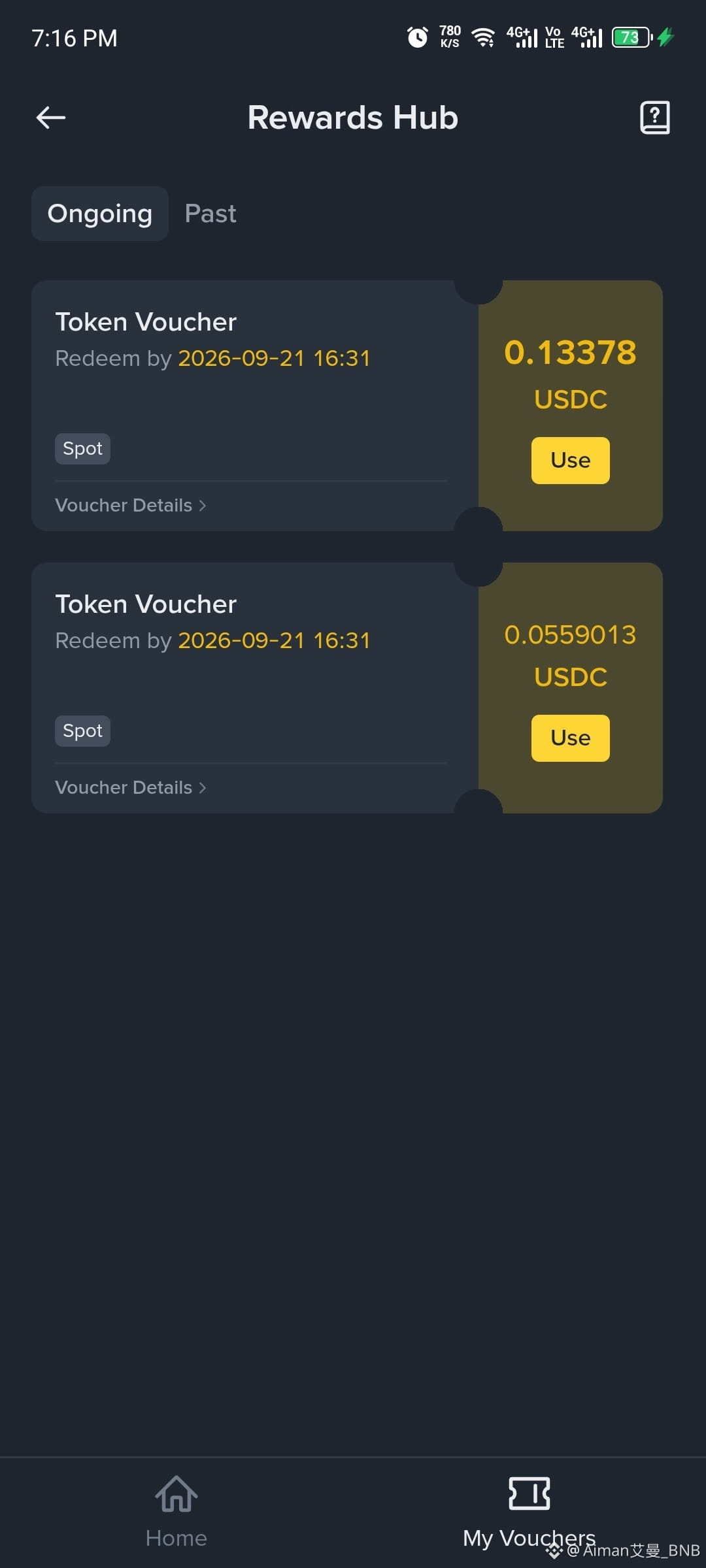
just received these two vouchers by doing one of the simple 1 minute task on#Binance 😁🥰
just received these two vouchers by doing one of the simple 1 minute task on#Binance 😁🥰
90
·
--
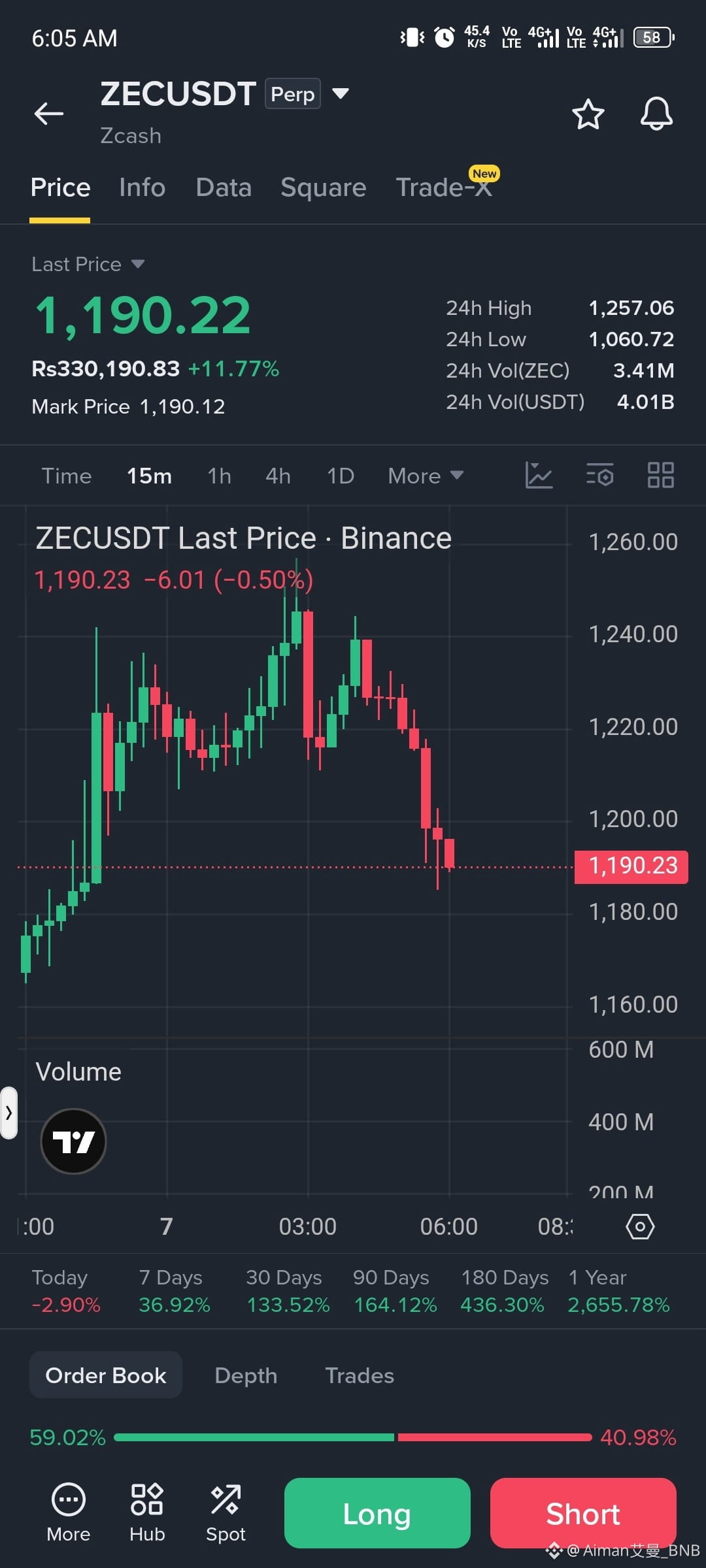
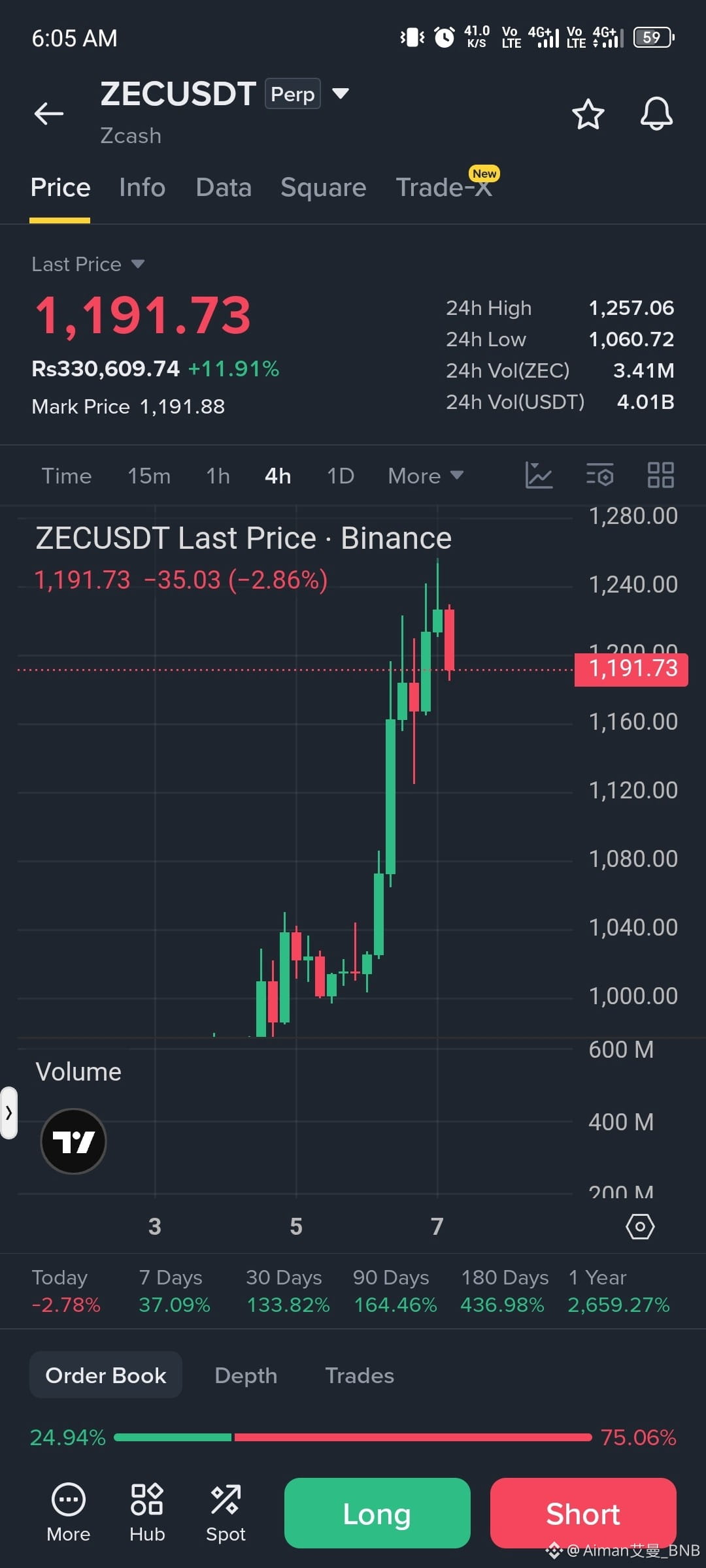
🚨 $ZEC IS ABOUT TO GET HIT HARD! 📉🔥
The sellers have taken control, while buyers are losing strength. The selling pressure is clearly much stronger, showing that the market is turning bearish and ZEC is likely heading lower from here. ⚠️📉
Trade Setup SHORT 🔻
Entry Level:1186-1191
Targets 🎯
T1: 1,160
T2: 1,120
T3: 1,080
SL: 1,250
$RAYSOL
{future}(RAYSOLUSDT)
{future}(ZECUSDT)
$TAO
{future}(TAOUSDT)
$
🚨 $ZEC IS ABOUT TO GET HIT HARD! 📉🔥
The sellers have taken control, while buyers are losing strength. The selling pressure is clearly much stronger, showing that the market is turning bearish and ZEC is likely heading lower from here. ⚠️📉
Trade Setup SHORT 🔻
Entry Level:1186-1191
Targets 🎯
T1: 1,160
T2: 1,120
T3: 1,080
SL: 1,250
$RAYSOL
$TAO
$
The sellers have taken control, while buyers are losing strength. The selling pressure is clearly much stronger, showing that the market is turning bearish and ZEC is likely heading lower from here. ⚠️📉
Trade Setup SHORT 🔻
Entry Level:1186-1191
Targets 🎯
T1: 1,160
T2: 1,120
T3: 1,080
SL: 1,250
$RAYSOL
$TAO
$
200
·
--
Article
Bitcoin ETF Inflows Drop 76% Before Labor Day as BlackRock and Fidelity Lead Fresh Demand$RAY $ZEC $TAO
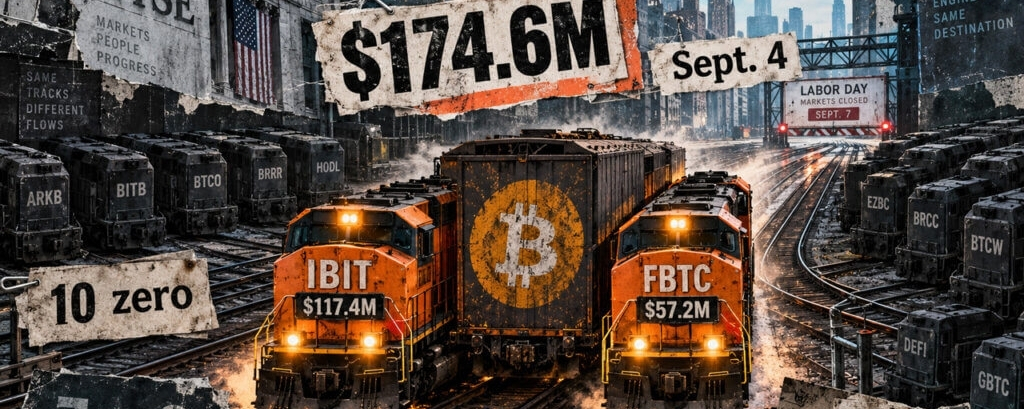
I’m watching the latest Bitcoin ETF flows because the headline number looks weaker, but the details tell a more interesting story. U.S. spot Bitcoin ETFs recorded $174.6 million in net inflows on Friday, Sept. 4, a sharp 76.1% drop from the $730.8 million recorded the previous session.
What stands out to me is how concentrated Friday’s inflows became. Only BlackRock’s IBIT and Fidelity’s FBTC recorded positive flows, meaning just two of the 12 tracked products contributed fresh money to the group. That is a notable change from Thursday, when seven funds posted positive inflows.
BlackRock’s iShares Bitcoin Trust ETF, or IBIT, attracted $117.4 million, while Fidelity’s Wise Origin Bitcoin Fund, or FBTC, brought in $57.2 million. Together, the two funds accounted for the entire $174.6 million net inflow reported for the session.
The other 10 products — BITB, ARKB, BTCO, EZBC, BRRR, HODL, BTCW, MSBT, GBTC and BTC — all showed “zero net flows.” None recorded a net outflow. So I wouldn’t describe Friday’s data as investors pulling money out of Bitcoin ETFs. It looks more like the pace of fresh capital slowed and became heavily concentrated in the two largest products.
That distinction matters because a zero flow does not mean there was no trading activity. Investors can still buy and sell ETF shares throughout the market session without those trades necessarily creating or redeeming fund shares. The flow data measures the net movement of assets into or out of the funds, not the total amount of shares traded.
The timing also matters. Monday, Sept. 7, is a U.S. market holiday for Labor Day, putting the next regular exchange session on Tuesday, Sept. 8. That means Friday’s $174.6 million figure will remain the latest completed U.S. ETF flow reading during the holiday break.
Bitcoin itself, however, doesn't stop trading because U.S. stock exchanges are closed. The underlying crypto market continues operating globally, while the exchange-traded products remain tied to regular stock-market hours.
For me, the bigger question is what happens when U.S. markets reopen. Friday’s numbers show a clear slowdown compared with Thursday, but they don't tell us who was behind the flows or prove that the decline was caused by any particular market event. If inflows broaden back across several funds on Tuesday, Friday could simply look like a temporary pause. If the concentration continues, it may be a more meaningful signal that ETF demand is becoming narrower.
#bitcoin
Bitcoin ETF Inflows Drop 76% Before Labor Day as BlackRock and Fidelity Lead Fresh Demand
$RAY $ZEC $TAO
I’m watching the latest Bitcoin ETF flows because the headline number looks weaker, but the details tell a more interesting story. U.S. spot Bitcoin ETFs recorded $174.6 million in net inflows on Friday, Sept. 4, a sharp 76.1% drop from the $730.8 million recorded the previous session.
What stands out to me is how concentrated Friday’s inflows became. Only BlackRock’s IBIT and Fidelity’s FBTC recorded positive flows, meaning just two of the 12 tracked products contributed fresh money to the group. That is a notable change from Thursday, when seven funds posted positive inflows.
BlackRock’s iShares Bitcoin Trust ETF, or IBIT, attracted $117.4 million, while Fidelity’s Wise Origin Bitcoin Fund, or FBTC, brought in $57.2 million. Together, the two funds accounted for the entire $174.6 million net inflow reported for the session.
The other 10 products — BITB, ARKB, BTCO, EZBC, BRRR, HODL, BTCW, MSBT, GBTC and BTC — all showed “zero net flows.” None recorded a net outflow. So I wouldn’t describe Friday’s data as investors pulling money out of Bitcoin ETFs. It looks more like the pace of fresh capital slowed and became heavily concentrated in the two largest products.
That distinction matters because a zero flow does not mean there was no trading activity. Investors can still buy and sell ETF shares throughout the market session without those trades necessarily creating or redeeming fund shares. The flow data measures the net movement of assets into or out of the funds, not the total amount of shares traded.
The timing also matters. Monday, Sept. 7, is a U.S. market holiday for Labor Day, putting the next regular exchange session on Tuesday, Sept. 8. That means Friday’s $174.6 million figure will remain the latest completed U.S. ETF flow reading during the holiday break.
Bitcoin itself, however, doesn't stop trading because U.S. stock exchanges are closed. The underlying crypto market continues operating globally, while the exchange-traded products remain tied to regular stock-market hours.
For me, the bigger question is what happens when U.S. markets reopen. Friday’s numbers show a clear slowdown compared with Thursday, but they don't tell us who was behind the flows or prove that the decline was caused by any particular market event. If inflows broaden back across several funds on Tuesday, Friday could simply look like a temporary pause. If the concentration continues, it may be a more meaningful signal that ETF demand is becoming narrower.
#bitcoin
I’m watching the latest Bitcoin ETF flows because the headline number looks weaker, but the details tell a more interesting story. U.S. spot Bitcoin ETFs recorded $174.6 million in net inflows on Friday, Sept. 4, a sharp 76.1% drop from the $730.8 million recorded the previous session.
What stands out to me is how concentrated Friday’s inflows became. Only BlackRock’s IBIT and Fidelity’s FBTC recorded positive flows, meaning just two of the 12 tracked products contributed fresh money to the group. That is a notable change from Thursday, when seven funds posted positive inflows.
BlackRock’s iShares Bitcoin Trust ETF, or IBIT, attracted $117.4 million, while Fidelity’s Wise Origin Bitcoin Fund, or FBTC, brought in $57.2 million. Together, the two funds accounted for the entire $174.6 million net inflow reported for the session.
The other 10 products — BITB, ARKB, BTCO, EZBC, BRRR, HODL, BTCW, MSBT, GBTC and BTC — all showed “zero net flows.” None recorded a net outflow. So I wouldn’t describe Friday’s data as investors pulling money out of Bitcoin ETFs. It looks more like the pace of fresh capital slowed and became heavily concentrated in the two largest products.
That distinction matters because a zero flow does not mean there was no trading activity. Investors can still buy and sell ETF shares throughout the market session without those trades necessarily creating or redeeming fund shares. The flow data measures the net movement of assets into or out of the funds, not the total amount of shares traded.
The timing also matters. Monday, Sept. 7, is a U.S. market holiday for Labor Day, putting the next regular exchange session on Tuesday, Sept. 8. That means Friday’s $174.6 million figure will remain the latest completed U.S. ETF flow reading during the holiday break.
Bitcoin itself, however, doesn't stop trading because U.S. stock exchanges are closed. The underlying crypto market continues operating globally, while the exchange-traded products remain tied to regular stock-market hours.
For me, the bigger question is what happens when U.S. markets reopen. Friday’s numbers show a clear slowdown compared with Thursday, but they don't tell us who was behind the flows or prove that the decline was caused by any particular market event. If inflows broaden back across several funds on Tuesday, Friday could simply look like a temporary pause. If the concentration continues, it may be a more meaningful signal that ETF demand is becoming narrower.
#bitcoin
1
369
·
--
Verified

Article
Three DeFi Projects Risk Losing Access to Future Arbitrum DAO Programs$ARB $ZEC $RAYSOL
I’m watching the Arbitrum DAO situation closely because this looks less like a simple “funds were misused” story and more like a test of how seriously DAO governance can enforce accountability.
Three DeFi projects Good Entry, Limitless and APX Finance are now facing possible exclusion from future Arbitrum DAO programs after the Watchdog Committee raised high-severity concerns over their grant usage. The committee has given the projects a tentative deadline of Sept. 10 to respond to the findings and resolve the issues, with separate Snapshot votes possible if their explanations are considered unsatisfactory.
The figures involved total 457,553 ARB, but I think it’s important not to treat that number as one confirmed debt. The cases involve different findings, and the amounts represent things such as disputed distributions, transfers and alleged misuse rather than a single amount officially declared stolen or recoverable.
For Good Entry, the committee said its analysis identified “142,839 ARB” distributed to 1,032 users it considered ineligible. It also alleged self-farming involving wallets linked to team addresses and said the project had not provided sufficient clarification. Good Entry had requested 200,000 ARB, meaning the watchdog figure relates to part of the grant rather than automatically representing an outstanding repayment balance.
Limitless is a more direct case. The committee alleged that “75,000 ARB” was swapped into USDC and transferred to Base, while saying it was unable to reach team members for clarification or recovery. That amount also matches the 75,000 ARB requested through its LTIPP application.
APX Finance is harder to reduce to a single repayment figure. The committee linked “239,714 ARB” to several issues, including funds allegedly left unused in treasury addresses, late transfers to distributor contracts and alleged team-linked Sybil activity. APX had requested 525,000 ARB, but the proposal does not provide a detailed breakdown showing how much of the 239,714 ARB relates to each individual issue.
What stands out to me is the proposed consequence. These are not on-chain enforcement actions. Each project could face its own off-chain Snapshot vote, with the proposed ban targeting founders, team members and affiliated contributors where applicable. The goal would be to make those parties “ineligible for future programs run by the Arbitrum DAO.”
That distinction matters. A governance-access ban would not freeze wallets, shut down a protocol or directly recover funds. Instead, it would use future access to DAO-funded programs as the enforcement mechanism.
The broader numbers also show why this process matters. The Watchdog Committee said that, as of Sept. 2, it had received 90 reports, recovered around 532,000 ARB and distributed roughly 268,000 ARB in reporter bounties.
For me, the biggest signal now is not the headline figure of 457,553 ARB. It is whether these projects respond before the tentative Sept. 10 deadline and whether Arbitrum governance actually follows through with exclusion votes if the committee's concerns remain unresolved. That could become a meaningful test of how much power DAO oversight mechanisms really have when grant recipients fail to provide satisfactory answers.
#ARB
Three DeFi Projects Risk Losing Access to Future Arbitrum DAO Programs
$ARB $ZEC $RAYSOL
I’m watching the Arbitrum DAO situation closely because this looks less like a simple “funds were misused” story and more like a test of how seriously DAO governance can enforce accountability.
Three DeFi projects Good Entry, Limitless and APX Finance are now facing possible exclusion from future Arbitrum DAO programs after the Watchdog Committee raised high-severity concerns over their grant usage. The committee has given the projects a tentative deadline of Sept. 10 to respond to the findings and resolve the issues, with separate Snapshot votes possible if their explanations are considered unsatisfactory.
The figures involved total 457,553 ARB, but I think it’s important not to treat that number as one confirmed debt. The cases involve different findings, and the amounts represent things such as disputed distributions, transfers and alleged misuse rather than a single amount officially declared stolen or recoverable.
For Good Entry, the committee said its analysis identified “142,839 ARB” distributed to 1,032 users it considered ineligible. It also alleged self-farming involving wallets linked to team addresses and said the project had not provided sufficient clarification. Good Entry had requested 200,000 ARB, meaning the watchdog figure relates to part of the grant rather than automatically representing an outstanding repayment balance.
Limitless is a more direct case. The committee alleged that “75,000 ARB” was swapped into USDC and transferred to Base, while saying it was unable to reach team members for clarification or recovery. That amount also matches the 75,000 ARB requested through its LTIPP application.
APX Finance is harder to reduce to a single repayment figure. The committee linked “239,714 ARB” to several issues, including funds allegedly left unused in treasury addresses, late transfers to distributor contracts and alleged team-linked Sybil activity. APX had requested 525,000 ARB, but the proposal does not provide a detailed breakdown showing how much of the 239,714 ARB relates to each individual issue.
What stands out to me is the proposed consequence. These are not on-chain enforcement actions. Each project could face its own off-chain Snapshot vote, with the proposed ban targeting founders, team members and affiliated contributors where applicable. The goal would be to make those parties “ineligible for future programs run by the Arbitrum DAO.”
That distinction matters. A governance-access ban would not freeze wallets, shut down a protocol or directly recover funds. Instead, it would use future access to DAO-funded programs as the enforcement mechanism.
The broader numbers also show why this process matters. The Watchdog Committee said that, as of Sept. 2, it had received 90 reports, recovered around 532,000 ARB and distributed roughly 268,000 ARB in reporter bounties.
For me, the biggest signal now is not the headline figure of 457,553 ARB. It is whether these projects respond before the tentative Sept. 10 deadline and whether Arbitrum governance actually follows through with exclusion votes if the committee's concerns remain unresolved. That could become a meaningful test of how much power DAO oversight mechanisms really have when grant recipients fail to provide satisfactory answers.
#ARB
I’m watching the Arbitrum DAO situation closely because this looks less like a simple “funds were misused” story and more like a test of how seriously DAO governance can enforce accountability.
Three DeFi projects Good Entry, Limitless and APX Finance are now facing possible exclusion from future Arbitrum DAO programs after the Watchdog Committee raised high-severity concerns over their grant usage. The committee has given the projects a tentative deadline of Sept. 10 to respond to the findings and resolve the issues, with separate Snapshot votes possible if their explanations are considered unsatisfactory.
The figures involved total 457,553 ARB, but I think it’s important not to treat that number as one confirmed debt. The cases involve different findings, and the amounts represent things such as disputed distributions, transfers and alleged misuse rather than a single amount officially declared stolen or recoverable.
For Good Entry, the committee said its analysis identified “142,839 ARB” distributed to 1,032 users it considered ineligible. It also alleged self-farming involving wallets linked to team addresses and said the project had not provided sufficient clarification. Good Entry had requested 200,000 ARB, meaning the watchdog figure relates to part of the grant rather than automatically representing an outstanding repayment balance.
Limitless is a more direct case. The committee alleged that “75,000 ARB” was swapped into USDC and transferred to Base, while saying it was unable to reach team members for clarification or recovery. That amount also matches the 75,000 ARB requested through its LTIPP application.
APX Finance is harder to reduce to a single repayment figure. The committee linked “239,714 ARB” to several issues, including funds allegedly left unused in treasury addresses, late transfers to distributor contracts and alleged team-linked Sybil activity. APX had requested 525,000 ARB, but the proposal does not provide a detailed breakdown showing how much of the 239,714 ARB relates to each individual issue.
What stands out to me is the proposed consequence. These are not on-chain enforcement actions. Each project could face its own off-chain Snapshot vote, with the proposed ban targeting founders, team members and affiliated contributors where applicable. The goal would be to make those parties “ineligible for future programs run by the Arbitrum DAO.”
That distinction matters. A governance-access ban would not freeze wallets, shut down a protocol or directly recover funds. Instead, it would use future access to DAO-funded programs as the enforcement mechanism.
The broader numbers also show why this process matters. The Watchdog Committee said that, as of Sept. 2, it had received 90 reports, recovered around 532,000 ARB and distributed roughly 268,000 ARB in reporter bounties.
For me, the biggest signal now is not the headline figure of 457,553 ARB. It is whether these projects respond before the tentative Sept. 10 deadline and whether Arbitrum governance actually follows through with exclusion votes if the committee's concerns remain unresolved. That could become a meaningful test of how much power DAO oversight mechanisms really have when grant recipients fail to provide satisfactory answers.
#ARB
1
582
·
--

Article
From Power Laws to AI: Why Complex Bitcoin Price Models Keep Memorizing Market Noise$ARB $UNI $FLOCK
I’ve been looking at the growing number of Bitcoin price-prediction models, and one thing stands out to me: many of the most complicated systems still struggle to beat a very simple forecast. Whether the model uses power laws, on-chain data, macro indicators, or artificial intelligence, complexity does not automatically mean better predictions.
Bitcoin has inspired hundreds of forecasting methods. Some models use the halving schedule and scarcity to estimate future value, while others rely on wallet activity, transaction data, or network growth. More advanced systems use machine learning to process market and macroeconomic information.
But all of these models face the same basic competitor: a "naive forecast."
A price forecast can simply assume tomorrow's price will be close to today's price. A return forecast can assume the next return is zero, while a direction forecast can effectively follow a random walk. Surprisingly, sophisticated models often struggle to consistently outperform these basic approaches when tested on new market conditions.
A May 2026 preprint by Carlos Baquero of the University of Porto reached a particularly interesting conclusion. After reviewing Bitcoin forecasting research, the study found that no model had demonstrated durable superiority over an appropriate naive benchmark across multiple market regimes and one- to six-month forecasting horizons.
The review examined hundreds of papers but selected 23 for closer analysis based on factors such as methodology, influence, and genuine out-of-sample testing. The paper is still awaiting peer review, so its conclusions should be treated accordingly. Still, the central message is important: forecasting models need to prove that they can work beyond the historical data used to create them.
The Problem With Complex Models
I think the biggest problem is not necessarily that these models are badly designed. The bigger issue is that Bitcoin's market keeps changing.
A strategy that worked during the retail-driven 2017 cycle faced a very different market in 2021, when derivatives became more important. The arrival of spot Bitcoin ETFs in 2024 created another major channel for capital and price discovery.
This is known as "non-stationarity." In simple terms, the relationship between different variables can change over time.
Bitcoin's liquidity, investors, regulation, market access, and trading infrastructure have all evolved. A model can discover a relationship that looks extremely powerful during one period and then fail when the environment changes.
Research by Francesco Puoti, Fabrizio Pittorino, and Manuel Roveri found something similar. Their study compared 12 statistical, machine-learning, and deep-learning methods across five major cryptocurrencies at one-day, seven-day, and 30-day horizons.
The simpler models consistently performed better than methods including ARIMA, Prophet, random forests, XGBoost, LSTM networks, and N-BEATS.
That doesn't mean artificial intelligence or machine learning is useless for crypto. It means a complicated model only creates an advantage when there is a stable pattern for it to learn. When the underlying signal is weak or temporary, the model can simply "memorize the noise."
And Bitcoin has plenty of data that can make this problem worse. Millions of hourly or minute-level observations may look like an enormous dataset, but many of those observations come from the same market regime. Repeating thousands of observations from a single bull market or liquidity shock doesn't necessarily give a model thousands of independent lessons.
When Backtests Start Looking Like Crystal Balls
Another issue I find important is "backtest overfitting."
Researchers can test different variables, time periods, indicators, lookback windows, and model architectures. Eventually, one version is likely to produce an impressive historical result simply by chance.
That winning model may have discovered something real. But it may also have won what is essentially a "lottery" conducted on historical price data.
David Bailey and his co-authors studied this problem and showed that testing more variations increases the probability of finding an impressive backtest even when the underlying strategy has little genuine predictive power.
This is why a single historical test isn't enough.
Walk-forward testing provides a stronger approach because the model repeatedly learns from past data and then makes predictions on periods it hasn't seen. Even better, researchers can use multiple non-overlapping holdout periods so the model has to survive different conditions, including bull markets, crashes, sideways markets, and changing liquidity.
Information leakage creates another problem. If future information accidentally enters the training process, the model can appear far more accurate than it really is.
Even the performance metric can sometimes create a misleading impression. Bitcoin prices are persistent, so a model that predicts $100,500 when Bitcoin actually moves from $100,000 to $99,500 may have a relatively small price error while still producing the wrong trading signal.
For traders, direction, magnitude, timing, and transaction costs matter much more than simply being close to the eventual price.
The Models That Sound Better Than They Forecast
Some of Bitcoin's most famous valuation models remain popular because they provide simple explanations for a complicated market.
Stock-to-flow argues that scarcity can drive value, with each Bitcoin halving reducing the amount of new supply relative to existing supply.
Metcalfe-style models connect network value with the size or activity of the user base.
Power-law models attempt to describe Bitcoin's long-term price trajectory through a mathematical relationship between price and time.
I don't think these ideas are automatically meaningless. They can provide useful frameworks for understanding Bitcoin's history. The problem begins when historical relationships are treated as reliable future forecasts without enough out-of-sample evidence.
A 2024 peer-reviewed study by Alexander Shelton found that stock-to-flow and Metcalfe-related variables could help explain Bitcoin returns inside the sample, but their predictive power outside the sample was limited or disappeared.
The stock-to-flow relationship becomes especially interesting because Bitcoin's supply ratio increases according to a predetermined schedule, while Bitcoin's price also increased dramatically during much of its history. Two variables moving together through time can create the appearance of a strong economic relationship even when the underlying causal connection is weaker than it looks.
Metcalfe-style models face a similar challenge. Network activity can increase because Bitcoin adoption is growing, but higher prices can also attract more users and activity. Both variables can therefore influence each other.
Why Power Laws Are Different
Power-law models are more complicated to dismiss because their long-term curves have tracked significant parts of Bitcoin's historical journey.
They can be useful as a visual framework for showing whether Bitcoin is trading above or below a long-term trend.
But a high "R-squared" value does not automatically prove that the underlying relationship will continue into the future. A model can fit historical data extremely well and still fail when new observations arrive.
Researchers need to examine whether the results remain stable when the starting date changes, whether alternative mathematical functions perform similarly, and whether the model actually works on future data.
That's where the difference between "describing the past" and "predicting the future" becomes critical.
What a Better Bitcoin Forecast Should Look Like
For me, the most useful standard is actually quite simple.
A forecasting model should show its performance next to a naive benchmark. Researchers should test it across different market regimes, include realistic trading costs, and make the data and code available for independent verification.
They should also disclose how many different versions of the model were tested before presenting the winning result. Without that information, it's difficult to know whether the reported performance represents genuine predictive power or simply the best result from hundreds of experiments.
Most importantly, valuation models should not automatically be presented as precise price forecasts.
Sometimes the most honest conclusion is that "today's price is the best forecast."
That answer isn't exciting. It doesn't provide a huge price target or a specific date for Bitcoin to reach it. But it does something many complicated forecasts fail to do: it forces the model to prove exactly how much additional information it contributes beyond what the market already knows.
And that, in my view, is the real test for any Bitcoin prediction model.
#bitcoin #BTCReaches$80000 #BitcoinETFsBiggestDailyInflowSinceJanuary
From Power Laws to AI: Why Complex Bitcoin Price Models Keep Memorizing Market Noise
$ARB $UNI $FLOCK
I’ve been looking at the growing number of Bitcoin price-prediction models, and one thing stands out to me: many of the most complicated systems still struggle to beat a very simple forecast. Whether the model uses power laws, on-chain data, macro indicators, or artificial intelligence, complexity does not automatically mean better predictions.
Bitcoin has inspired hundreds of forecasting methods. Some models use the halving schedule and scarcity to estimate future value, while others rely on wallet activity, transaction data, or network growth. More advanced systems use machine learning to process market and macroeconomic information.
But all of these models face the same basic competitor: a "naive forecast."
A price forecast can simply assume tomorrow's price will be close to today's price. A return forecast can assume the next return is zero, while a direction forecast can effectively follow a random walk. Surprisingly, sophisticated models often struggle to consistently outperform these basic approaches when tested on new market conditions.
A May 2026 preprint by Carlos Baquero of the University of Porto reached a particularly interesting conclusion. After reviewing Bitcoin forecasting research, the study found that no model had demonstrated durable superiority over an appropriate naive benchmark across multiple market regimes and one- to six-month forecasting horizons.
The review examined hundreds of papers but selected 23 for closer analysis based on factors such as methodology, influence, and genuine out-of-sample testing. The paper is still awaiting peer review, so its conclusions should be treated accordingly. Still, the central message is important: forecasting models need to prove that they can work beyond the historical data used to create them.
The Problem With Complex Models
I think the biggest problem is not necessarily that these models are badly designed. The bigger issue is that Bitcoin's market keeps changing.
A strategy that worked during the retail-driven 2017 cycle faced a very different market in 2021, when derivatives became more important. The arrival of spot Bitcoin ETFs in 2024 created another major channel for capital and price discovery.
This is known as "non-stationarity." In simple terms, the relationship between different variables can change over time.
Bitcoin's liquidity, investors, regulation, market access, and trading infrastructure have all evolved. A model can discover a relationship that looks extremely powerful during one period and then fail when the environment changes.
Research by Francesco Puoti, Fabrizio Pittorino, and Manuel Roveri found something similar. Their study compared 12 statistical, machine-learning, and deep-learning methods across five major cryptocurrencies at one-day, seven-day, and 30-day horizons.
The simpler models consistently performed better than methods including ARIMA, Prophet, random forests, XGBoost, LSTM networks, and N-BEATS.
That doesn't mean artificial intelligence or machine learning is useless for crypto. It means a complicated model only creates an advantage when there is a stable pattern for it to learn. When the underlying signal is weak or temporary, the model can simply "memorize the noise."
And Bitcoin has plenty of data that can make this problem worse. Millions of hourly or minute-level observations may look like an enormous dataset, but many of those observations come from the same market regime. Repeating thousands of observations from a single bull market or liquidity shock doesn't necessarily give a model thousands of independent lessons.
When Backtests Start Looking Like Crystal Balls
Another issue I find important is "backtest overfitting."
Researchers can test different variables, time periods, indicators, lookback windows, and model architectures. Eventually, one version is likely to produce an impressive historical result simply by chance.
That winning model may have discovered something real. But it may also have won what is essentially a "lottery" conducted on historical price data.
David Bailey and his co-authors studied this problem and showed that testing more variations increases the probability of finding an impressive backtest even when the underlying strategy has little genuine predictive power.
This is why a single historical test isn't enough.
Walk-forward testing provides a stronger approach because the model repeatedly learns from past data and then makes predictions on periods it hasn't seen. Even better, researchers can use multiple non-overlapping holdout periods so the model has to survive different conditions, including bull markets, crashes, sideways markets, and changing liquidity.
Information leakage creates another problem. If future information accidentally enters the training process, the model can appear far more accurate than it really is.
Even the performance metric can sometimes create a misleading impression. Bitcoin prices are persistent, so a model that predicts $100,500 when Bitcoin actually moves from $100,000 to $99,500 may have a relatively small price error while still producing the wrong trading signal.
For traders, direction, magnitude, timing, and transaction costs matter much more than simply being close to the eventual price.
The Models That Sound Better Than They Forecast
Some of Bitcoin's most famous valuation models remain popular because they provide simple explanations for a complicated market.
Stock-to-flow argues that scarcity can drive value, with each Bitcoin halving reducing the amount of new supply relative to existing supply.
Metcalfe-style models connect network value with the size or activity of the user base.
Power-law models attempt to describe Bitcoin's long-term price trajectory through a mathematical relationship between price and time.
I don't think these ideas are automatically meaningless. They can provide useful frameworks for understanding Bitcoin's history. The problem begins when historical relationships are treated as reliable future forecasts without enough out-of-sample evidence.
A 2024 peer-reviewed study by Alexander Shelton found that stock-to-flow and Metcalfe-related variables could help explain Bitcoin returns inside the sample, but their predictive power outside the sample was limited or disappeared.
The stock-to-flow relationship becomes especially interesting because Bitcoin's supply ratio increases according to a predetermined schedule, while Bitcoin's price also increased dramatically during much of its history. Two variables moving together through time can create the appearance of a strong economic relationship even when the underlying causal connection is weaker than it looks.
Metcalfe-style models face a similar challenge. Network activity can increase because Bitcoin adoption is growing, but higher prices can also attract more users and activity. Both variables can therefore influence each other.
Why Power Laws Are Different
Power-law models are more complicated to dismiss because their long-term curves have tracked significant parts of Bitcoin's historical journey.
They can be useful as a visual framework for showing whether Bitcoin is trading above or below a long-term trend.
But a high "R-squared" value does not automatically prove that the underlying relationship will continue into the future. A model can fit historical data extremely well and still fail when new observations arrive.
Researchers need to examine whether the results remain stable when the starting date changes, whether alternative mathematical functions perform similarly, and whether the model actually works on future data.
That's where the difference between "describing the past" and "predicting the future" becomes critical.
What a Better Bitcoin Forecast Should Look Like
For me, the most useful standard is actually quite simple.
A forecasting model should show its performance next to a naive benchmark. Researchers should test it across different market regimes, include realistic trading costs, and make the data and code available for independent verification.
They should also disclose how many different versions of the model were tested before presenting the winning result. Without that information, it's difficult to know whether the reported performance represents genuine predictive power or simply the best result from hundreds of experiments.
Most importantly, valuation models should not automatically be presented as precise price forecasts.
Sometimes the most honest conclusion is that "today's price is the best forecast."
That answer isn't exciting. It doesn't provide a huge price target or a specific date for Bitcoin to reach it. But it does something many complicated forecasts fail to do: it forces the model to prove exactly how much additional information it contributes beyond what the market already knows.
And that, in my view, is the real test for any Bitcoin prediction model.
#bitcoin #BTCReaches$80000 #BitcoinETFsBiggestDailyInflowSinceJanuary
I’ve been looking at the growing number of Bitcoin price-prediction models, and one thing stands out to me: many of the most complicated systems still struggle to beat a very simple forecast. Whether the model uses power laws, on-chain data, macro indicators, or artificial intelligence, complexity does not automatically mean better predictions.
Bitcoin has inspired hundreds of forecasting methods. Some models use the halving schedule and scarcity to estimate future value, while others rely on wallet activity, transaction data, or network growth. More advanced systems use machine learning to process market and macroeconomic information.
But all of these models face the same basic competitor: a "naive forecast."
A price forecast can simply assume tomorrow's price will be close to today's price. A return forecast can assume the next return is zero, while a direction forecast can effectively follow a random walk. Surprisingly, sophisticated models often struggle to consistently outperform these basic approaches when tested on new market conditions.
A May 2026 preprint by Carlos Baquero of the University of Porto reached a particularly interesting conclusion. After reviewing Bitcoin forecasting research, the study found that no model had demonstrated durable superiority over an appropriate naive benchmark across multiple market regimes and one- to six-month forecasting horizons.
The review examined hundreds of papers but selected 23 for closer analysis based on factors such as methodology, influence, and genuine out-of-sample testing. The paper is still awaiting peer review, so its conclusions should be treated accordingly. Still, the central message is important: forecasting models need to prove that they can work beyond the historical data used to create them.
The Problem With Complex Models
I think the biggest problem is not necessarily that these models are badly designed. The bigger issue is that Bitcoin's market keeps changing.
A strategy that worked during the retail-driven 2017 cycle faced a very different market in 2021, when derivatives became more important. The arrival of spot Bitcoin ETFs in 2024 created another major channel for capital and price discovery.
This is known as "non-stationarity." In simple terms, the relationship between different variables can change over time.
Bitcoin's liquidity, investors, regulation, market access, and trading infrastructure have all evolved. A model can discover a relationship that looks extremely powerful during one period and then fail when the environment changes.
Research by Francesco Puoti, Fabrizio Pittorino, and Manuel Roveri found something similar. Their study compared 12 statistical, machine-learning, and deep-learning methods across five major cryptocurrencies at one-day, seven-day, and 30-day horizons.
The simpler models consistently performed better than methods including ARIMA, Prophet, random forests, XGBoost, LSTM networks, and N-BEATS.
That doesn't mean artificial intelligence or machine learning is useless for crypto. It means a complicated model only creates an advantage when there is a stable pattern for it to learn. When the underlying signal is weak or temporary, the model can simply "memorize the noise."
And Bitcoin has plenty of data that can make this problem worse. Millions of hourly or minute-level observations may look like an enormous dataset, but many of those observations come from the same market regime. Repeating thousands of observations from a single bull market or liquidity shock doesn't necessarily give a model thousands of independent lessons.
When Backtests Start Looking Like Crystal Balls
Another issue I find important is "backtest overfitting."
Researchers can test different variables, time periods, indicators, lookback windows, and model architectures. Eventually, one version is likely to produce an impressive historical result simply by chance.
That winning model may have discovered something real. But it may also have won what is essentially a "lottery" conducted on historical price data.
David Bailey and his co-authors studied this problem and showed that testing more variations increases the probability of finding an impressive backtest even when the underlying strategy has little genuine predictive power.
This is why a single historical test isn't enough.
Walk-forward testing provides a stronger approach because the model repeatedly learns from past data and then makes predictions on periods it hasn't seen. Even better, researchers can use multiple non-overlapping holdout periods so the model has to survive different conditions, including bull markets, crashes, sideways markets, and changing liquidity.
Information leakage creates another problem. If future information accidentally enters the training process, the model can appear far more accurate than it really is.
Even the performance metric can sometimes create a misleading impression. Bitcoin prices are persistent, so a model that predicts $100,500 when Bitcoin actually moves from $100,000 to $99,500 may have a relatively small price error while still producing the wrong trading signal.
For traders, direction, magnitude, timing, and transaction costs matter much more than simply being close to the eventual price.
The Models That Sound Better Than They Forecast
Some of Bitcoin's most famous valuation models remain popular because they provide simple explanations for a complicated market.
Stock-to-flow argues that scarcity can drive value, with each Bitcoin halving reducing the amount of new supply relative to existing supply.
Metcalfe-style models connect network value with the size or activity of the user base.
Power-law models attempt to describe Bitcoin's long-term price trajectory through a mathematical relationship between price and time.
I don't think these ideas are automatically meaningless. They can provide useful frameworks for understanding Bitcoin's history. The problem begins when historical relationships are treated as reliable future forecasts without enough out-of-sample evidence.
A 2024 peer-reviewed study by Alexander Shelton found that stock-to-flow and Metcalfe-related variables could help explain Bitcoin returns inside the sample, but their predictive power outside the sample was limited or disappeared.
The stock-to-flow relationship becomes especially interesting because Bitcoin's supply ratio increases according to a predetermined schedule, while Bitcoin's price also increased dramatically during much of its history. Two variables moving together through time can create the appearance of a strong economic relationship even when the underlying causal connection is weaker than it looks.
Metcalfe-style models face a similar challenge. Network activity can increase because Bitcoin adoption is growing, but higher prices can also attract more users and activity. Both variables can therefore influence each other.
Why Power Laws Are Different
Power-law models are more complicated to dismiss because their long-term curves have tracked significant parts of Bitcoin's historical journey.
They can be useful as a visual framework for showing whether Bitcoin is trading above or below a long-term trend.
But a high "R-squared" value does not automatically prove that the underlying relationship will continue into the future. A model can fit historical data extremely well and still fail when new observations arrive.
Researchers need to examine whether the results remain stable when the starting date changes, whether alternative mathematical functions perform similarly, and whether the model actually works on future data.
That's where the difference between "describing the past" and "predicting the future" becomes critical.
What a Better Bitcoin Forecast Should Look Like
For me, the most useful standard is actually quite simple.
A forecasting model should show its performance next to a naive benchmark. Researchers should test it across different market regimes, include realistic trading costs, and make the data and code available for independent verification.
They should also disclose how many different versions of the model were tested before presenting the winning result. Without that information, it's difficult to know whether the reported performance represents genuine predictive power or simply the best result from hundreds of experiments.
Most importantly, valuation models should not automatically be presented as precise price forecasts.
Sometimes the most honest conclusion is that "today's price is the best forecast."
That answer isn't exciting. It doesn't provide a huge price target or a specific date for Bitcoin to reach it. But it does something many complicated forecasts fail to do: it forces the model to prove exactly how much additional information it contributes beyond what the market already knows.
And that, in my view, is the real test for any Bitcoin prediction model.
#bitcoin #BTCReaches$80000 #BitcoinETFsBiggestDailyInflowSinceJanuary
1
122
·
--
when $BULLA was the top gainer of the day most of the market was red now the whole market is green and $BULLA showing red 😂
{future}(BULLAUSDT)
#TradingSignals #GreenMarketDays
when $BULLA was the top gainer of the day most of the market was red now the whole market is green and $BULLA showing red 😂
#TradingSignals #GreenMarketDays
#TradingSignals #GreenMarketDays
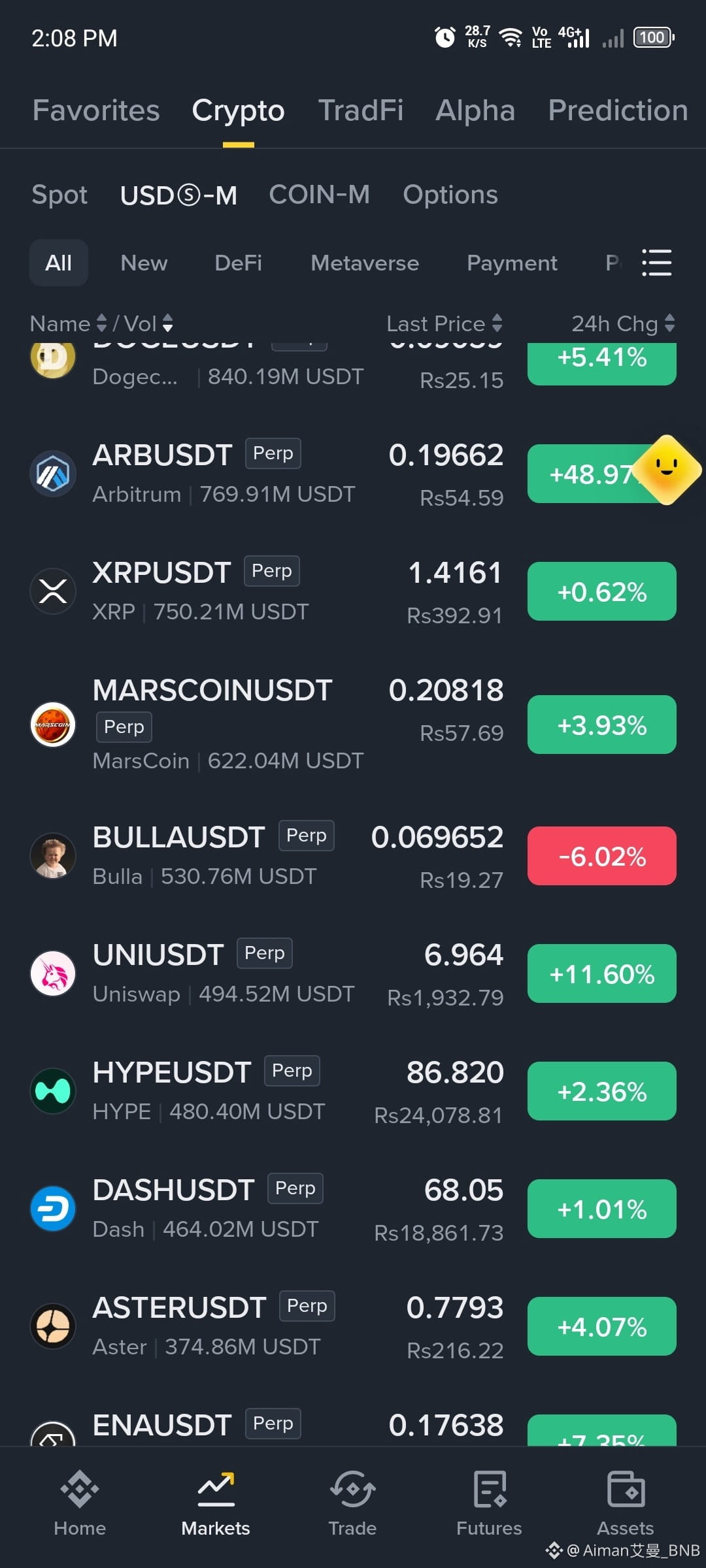
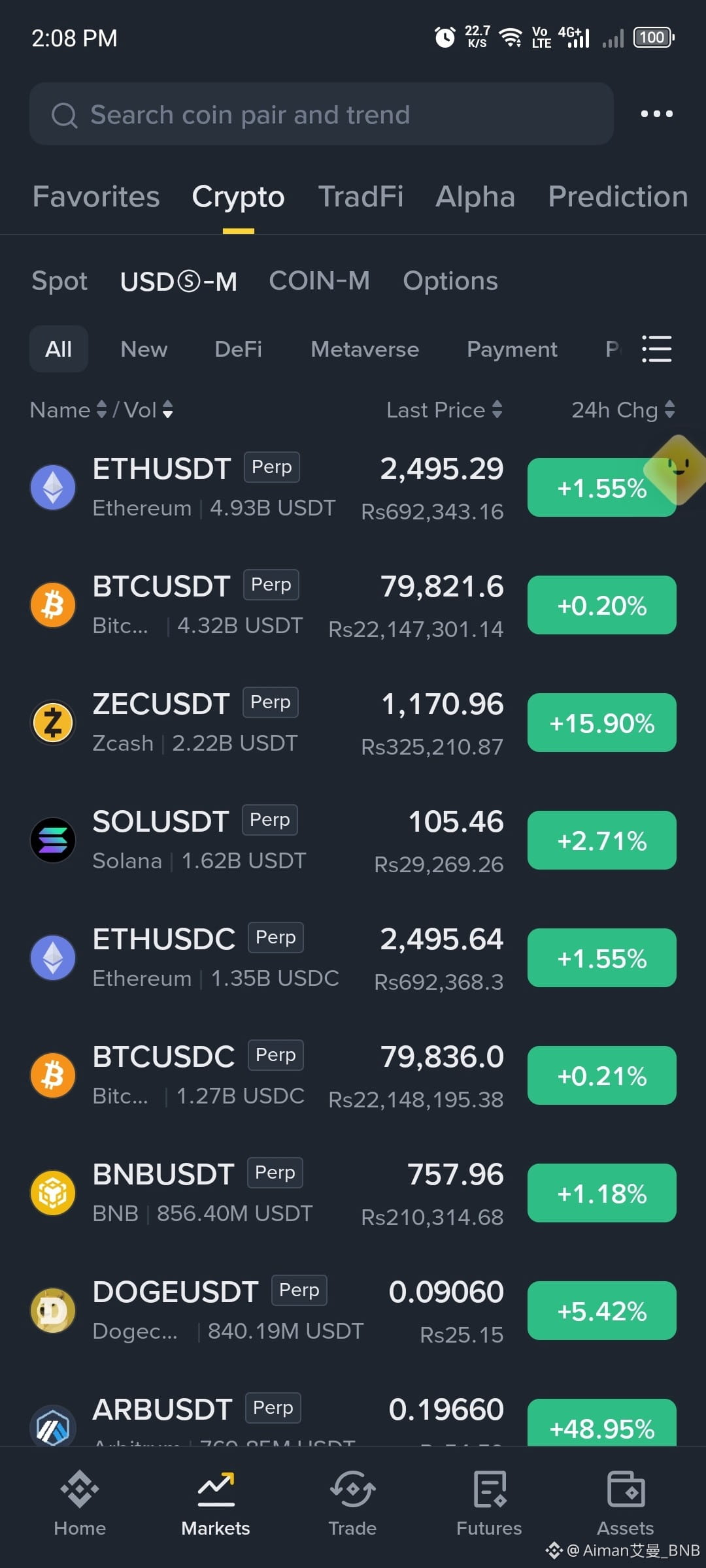
2
287
·
--

Article
Trezor Breach Expands Sixfold as Old Shipping Records Resurface$BULLA $MARSCOIN $DASH
I think the most concerning part of this Trezor breach isn't just the number of customers affected, but the fact that old customer records reportedly remained with a logistics provider years after they were supposed to be deleted. For hardware-wallet users, this shows that protecting crypto isn't only about securing private keys — the personal information connected to a purchase can also create serious risks.
Hardware wallet manufacturer Trezor has expanded the number of customers affected by a data breach at its logistics partner ShipMonk, saying an additional 67,000 U.S. customers may have had their information exposed.
Trezor initially reported that 13,689 customers were affected. The newly disclosed group would bring the total to roughly 80,689 people, although the company has not published a single combined figure or provided enough underlying data to determine whether there is any overlap between the two groups.
The newly identified records reportedly relate to U.S. orders placed between November 2019 and August 2021. They included names, email addresses, phone numbers, shipping addresses and order numbers.
That combination of information is particularly sensitive for hardware-wallet customers because it can potentially connect a person's identity and physical address with the fact that they purchased a crypto-security device.
Old records remained despite deletion assurances
Trezor's initial disclosure on Aug. 13 identified 11,742 customers with full exposure and another 1,947 with partial exposure. At the time, the company said older order information had already been deleted, although a later clarification acknowledged that some older orders were present among partially exposed records.
The company's latest update paints a different picture.
Trezor said it had repeatedly requested confirmation from ShipMonk that the relevant information had been deleted and received written assurances that the data was gone. However, records dating back to 2019 were apparently still present in the vendor's systems.
Trezor's delivery-data policy states that customer information should normally be removed from both Trezor's systems and those of its fulfillment partners after 90 days, except when information is required to resolve ongoing order-related issues.
The company has not publicly released the deletion assurances or the dates on which they were provided.
According to reporting from BleepingComputer, a ShipMonk notification linked the original unauthorized access to a vulnerability involving the Metabase analytics platform. Metabase previously said an August zero-day vulnerability could potentially allow an attacker to obtain an administrator session and download large amounts of database information.
As the logistics-provider incident was investigated further, the discovery of historical records significantly increased the number of Trezor customers believed to have been exposed.
Trezor wallets themselves were not compromised
There is an important distinction here: the breach did not compromise Trezor's wallet systems.
The company said its own systems, products and services were not breached and that its hardware devices remained secure. The information identified in the incident involved customer and order details rather than wallet recovery seeds, private keys or cryptocurrency balances.
The bigger concern is what attackers could potentially do with the information surrounding the wallet purchase.
Trezor warned that exposed details could be used to create convincing phishing emails, fraudulent phone calls or letters, and potentially even attempts at physical targeting.
However, the company has not reported a confirmed downstream attack resulting from this newly identified dataset, meaning these are potential risks rather than documented consequences.
Trezor said it contacted every newly affected customer directly and emphasized that customers should never share their wallet backup or enter recovery information into a website.
For me, the biggest lesson is that hardware-wallet security doesn't end with the device itself. Your private keys may remain protected, but the personal information created when you purchase and receive a wallet can still become a security risk.
A company can have a strict 90-day deletion policy on paper, but if a third-party vendor keeps the information for years, that policy provides little real protection. This incident is a reminder that crypto security also depends on how exchanges, manufacturers and logistics companies handle the data surrounding the assets.
Trezor Breach Expands Sixfold as Old Shipping Records Resurface
$BULLA $MARSCOIN $DASH
I think the most concerning part of this Trezor breach isn't just the number of customers affected, but the fact that old customer records reportedly remained with a logistics provider years after they were supposed to be deleted. For hardware-wallet users, this shows that protecting crypto isn't only about securing private keys — the personal information connected to a purchase can also create serious risks.
Hardware wallet manufacturer Trezor has expanded the number of customers affected by a data breach at its logistics partner ShipMonk, saying an additional 67,000 U.S. customers may have had their information exposed.
Trezor initially reported that 13,689 customers were affected. The newly disclosed group would bring the total to roughly 80,689 people, although the company has not published a single combined figure or provided enough underlying data to determine whether there is any overlap between the two groups.
The newly identified records reportedly relate to U.S. orders placed between November 2019 and August 2021. They included names, email addresses, phone numbers, shipping addresses and order numbers.
That combination of information is particularly sensitive for hardware-wallet customers because it can potentially connect a person's identity and physical address with the fact that they purchased a crypto-security device.
Old records remained despite deletion assurances
Trezor's initial disclosure on Aug. 13 identified 11,742 customers with full exposure and another 1,947 with partial exposure. At the time, the company said older order information had already been deleted, although a later clarification acknowledged that some older orders were present among partially exposed records.
The company's latest update paints a different picture.
Trezor said it had repeatedly requested confirmation from ShipMonk that the relevant information had been deleted and received written assurances that the data was gone. However, records dating back to 2019 were apparently still present in the vendor's systems.
Trezor's delivery-data policy states that customer information should normally be removed from both Trezor's systems and those of its fulfillment partners after 90 days, except when information is required to resolve ongoing order-related issues.
The company has not publicly released the deletion assurances or the dates on which they were provided.
According to reporting from BleepingComputer, a ShipMonk notification linked the original unauthorized access to a vulnerability involving the Metabase analytics platform. Metabase previously said an August zero-day vulnerability could potentially allow an attacker to obtain an administrator session and download large amounts of database information.
As the logistics-provider incident was investigated further, the discovery of historical records significantly increased the number of Trezor customers believed to have been exposed.
Trezor wallets themselves were not compromised
There is an important distinction here: the breach did not compromise Trezor's wallet systems.
The company said its own systems, products and services were not breached and that its hardware devices remained secure. The information identified in the incident involved customer and order details rather than wallet recovery seeds, private keys or cryptocurrency balances.
The bigger concern is what attackers could potentially do with the information surrounding the wallet purchase.
Trezor warned that exposed details could be used to create convincing phishing emails, fraudulent phone calls or letters, and potentially even attempts at physical targeting.
However, the company has not reported a confirmed downstream attack resulting from this newly identified dataset, meaning these are potential risks rather than documented consequences.
Trezor said it contacted every newly affected customer directly and emphasized that customers should never share their wallet backup or enter recovery information into a website.
For me, the biggest lesson is that hardware-wallet security doesn't end with the device itself. Your private keys may remain protected, but the personal information created when you purchase and receive a wallet can still become a security risk.
A company can have a strict 90-day deletion policy on paper, but if a third-party vendor keeps the information for years, that policy provides little real protection. This incident is a reminder that crypto security also depends on how exchanges, manufacturers and logistics companies handle the data surrounding the assets.
I think the most concerning part of this Trezor breach isn't just the number of customers affected, but the fact that old customer records reportedly remained with a logistics provider years after they were supposed to be deleted. For hardware-wallet users, this shows that protecting crypto isn't only about securing private keys — the personal information connected to a purchase can also create serious risks.
Hardware wallet manufacturer Trezor has expanded the number of customers affected by a data breach at its logistics partner ShipMonk, saying an additional 67,000 U.S. customers may have had their information exposed.
Trezor initially reported that 13,689 customers were affected. The newly disclosed group would bring the total to roughly 80,689 people, although the company has not published a single combined figure or provided enough underlying data to determine whether there is any overlap between the two groups.
The newly identified records reportedly relate to U.S. orders placed between November 2019 and August 2021. They included names, email addresses, phone numbers, shipping addresses and order numbers.
That combination of information is particularly sensitive for hardware-wallet customers because it can potentially connect a person's identity and physical address with the fact that they purchased a crypto-security device.
Old records remained despite deletion assurances
Trezor's initial disclosure on Aug. 13 identified 11,742 customers with full exposure and another 1,947 with partial exposure. At the time, the company said older order information had already been deleted, although a later clarification acknowledged that some older orders were present among partially exposed records.
The company's latest update paints a different picture.
Trezor said it had repeatedly requested confirmation from ShipMonk that the relevant information had been deleted and received written assurances that the data was gone. However, records dating back to 2019 were apparently still present in the vendor's systems.
Trezor's delivery-data policy states that customer information should normally be removed from both Trezor's systems and those of its fulfillment partners after 90 days, except when information is required to resolve ongoing order-related issues.
The company has not publicly released the deletion assurances or the dates on which they were provided.
According to reporting from BleepingComputer, a ShipMonk notification linked the original unauthorized access to a vulnerability involving the Metabase analytics platform. Metabase previously said an August zero-day vulnerability could potentially allow an attacker to obtain an administrator session and download large amounts of database information.
As the logistics-provider incident was investigated further, the discovery of historical records significantly increased the number of Trezor customers believed to have been exposed.
Trezor wallets themselves were not compromised
There is an important distinction here: the breach did not compromise Trezor's wallet systems.
The company said its own systems, products and services were not breached and that its hardware devices remained secure. The information identified in the incident involved customer and order details rather than wallet recovery seeds, private keys or cryptocurrency balances.
The bigger concern is what attackers could potentially do with the information surrounding the wallet purchase.
Trezor warned that exposed details could be used to create convincing phishing emails, fraudulent phone calls or letters, and potentially even attempts at physical targeting.
However, the company has not reported a confirmed downstream attack resulting from this newly identified dataset, meaning these are potential risks rather than documented consequences.
Trezor said it contacted every newly affected customer directly and emphasized that customers should never share their wallet backup or enter recovery information into a website.
For me, the biggest lesson is that hardware-wallet security doesn't end with the device itself. Your private keys may remain protected, but the personal information created when you purchase and receive a wallet can still become a security risk.
A company can have a strict 90-day deletion policy on paper, but if a third-party vendor keeps the information for years, that policy provides little real protection. This incident is a reminder that crypto security also depends on how exchanges, manufacturers and logistics companies handle the data surrounding the assets.
1
452
Log in to explore more content
Join global crypto users on Binance Square
⚡️ Get latest and useful information about crypto.
💬 Trusted by the world’s largest crypto exchange.
👍 Discover real insights from verified creators.
Email / Phone number
Trending Topics
USAugustPPIRisesLessThanExpected
15,377 views
412 Discussing
🚨 US AUG PPI: Rises LESS Than Expected! Bullish for Crypto? 🚀
PPI +0.4% MoM as expected, but CORE PPI only +0.2% vs +0.3% expected - cooling!
What it means:
• Wholesale inflation softer than feared
• Fed rate hike chance now 62% - but dovish signals coming
• Core PCE revisions expected downward - bullish
• BTC usually pumps on softer PPI
Fed meeting Sep 15-16 - Market now expects pause, not hike?
Is this the green light for Q4 rally?
#Bitcoin #PPI #Fed #CryptoNews #BTC#usaugustppiriseslessthanexpected
True News
·1 Likes
·1.2k views
SECApprovesNasdaqTexasCommodityTrustRule
11,666 views
363 Discussing
ECBRaisesRatesSecondTimeTo2.5%
8,097 views
260 Discussing