

aayafi
87 Posts

aayafi
Report
Block User
4 Following
29 Followers
85 Liked
Posts
All
Quotes
·
--
As usual, only the coins nobody talks about rise from where nobody knows $STX $POWR $LSK
As usual, only the coins nobody talks about rise from where nobody knows $STX $POWR $LSK
1
399
·
--
Article
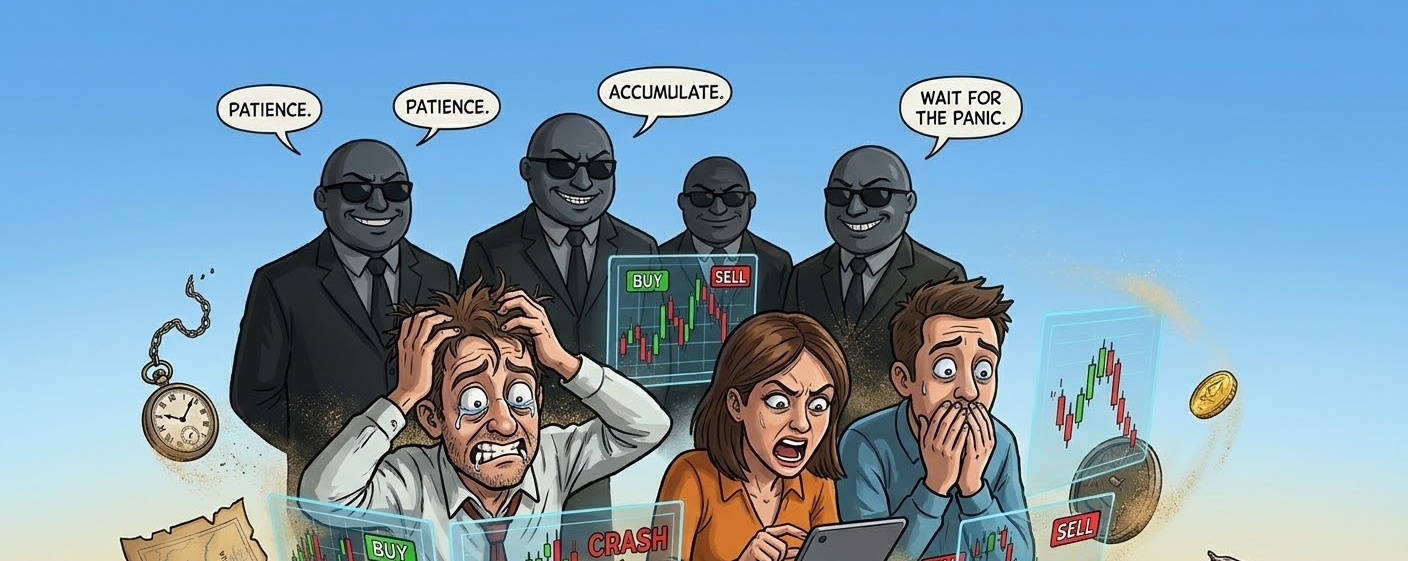
🏜️ Desert of Despair and Behind-the-Scenes Scandals: How a "Bull Run" Is Forged Amid Conspiracies!
Before the market dons the robes of euphoria and screens celebrate new record highs, market makers and whale platforms lead investors through a "barren desert of despair and boredom."
The atmosphere before an explosion doesn’t happen by chance; it’s preceded by a carefully orchestrated scenario of media intimidation, fabricated scandals, and veiled statements designed to bring retail traders to their knees and force them to surrender. Here’s how the headlines and scandals have shaped the story of every previous bull run:
137
·
--
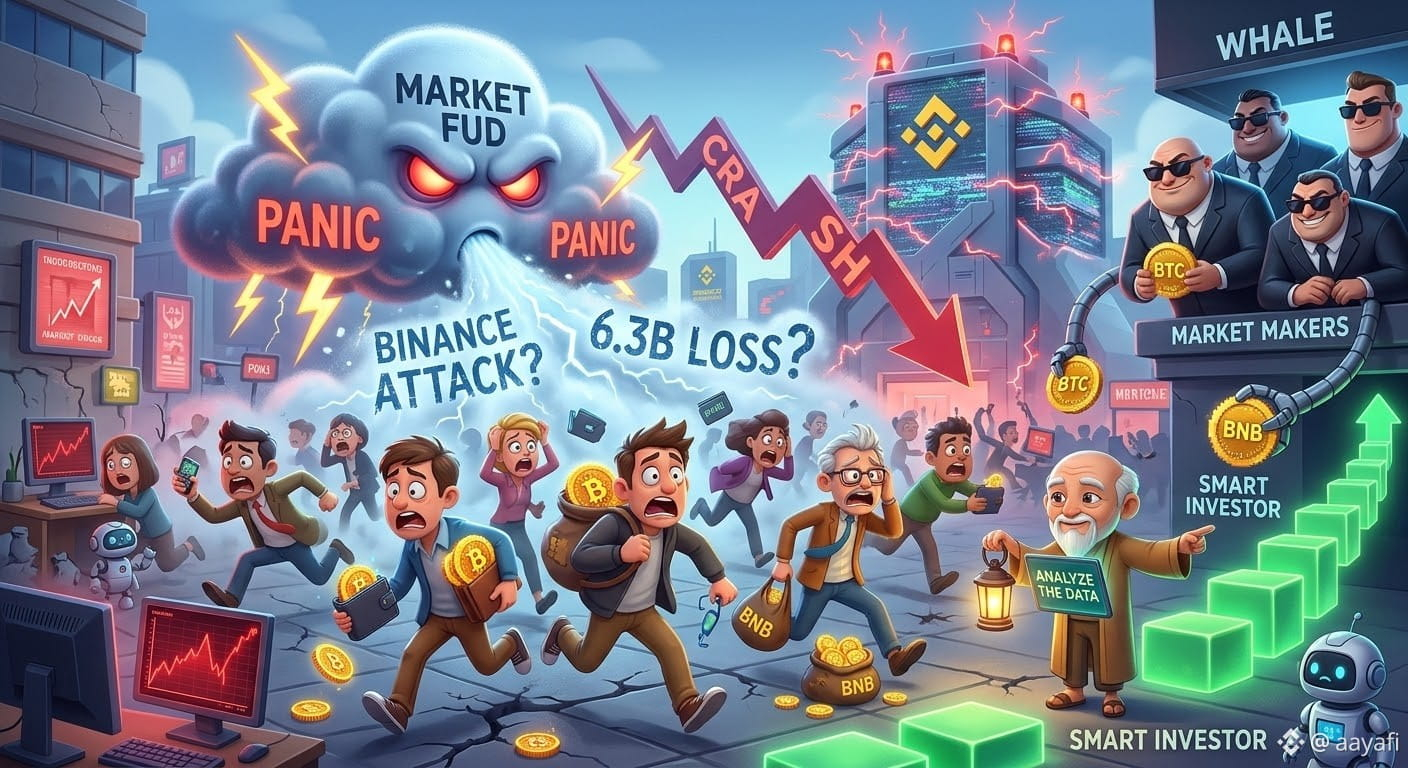
Binance & Market Panic: Strategic FUD or Real Threat?
Reports of massive security breaches and billions in losses are sending shockwaves through the crypto market, leaving traders in a difficult position.
Is this real panic driving prices down, or a calculated strategy designed to spark FUD (Fear, Uncertainty, and Doubt) and force retail investors to liquidate at a loss?
When fear takes over, panic selling only hands cheap assets directly to market makers. Stay calm, analyze the data, and make informed moves—never trade on panic.
$BTC $LTC
{future}(LTCUSDT)
Binance & Market Panic: Strategic FUD or Real Threat?
Reports of massive security breaches and billions in losses are sending shockwaves through the crypto market, leaving traders in a difficult position.
Is this real panic driving prices down, or a calculated strategy designed to spark FUD (Fear, Uncertainty, and Doubt) and force retail investors to liquidate at a loss?
When fear takes over, panic selling only hands cheap assets directly to market makers. Stay calm, analyze the data, and make informed moves—never trade on panic.
$BTC $LTC
13
·
--
These are the real legitimate coibs in my opinion
These are the real legitimate coibs in my opinion
aayafi
·
--
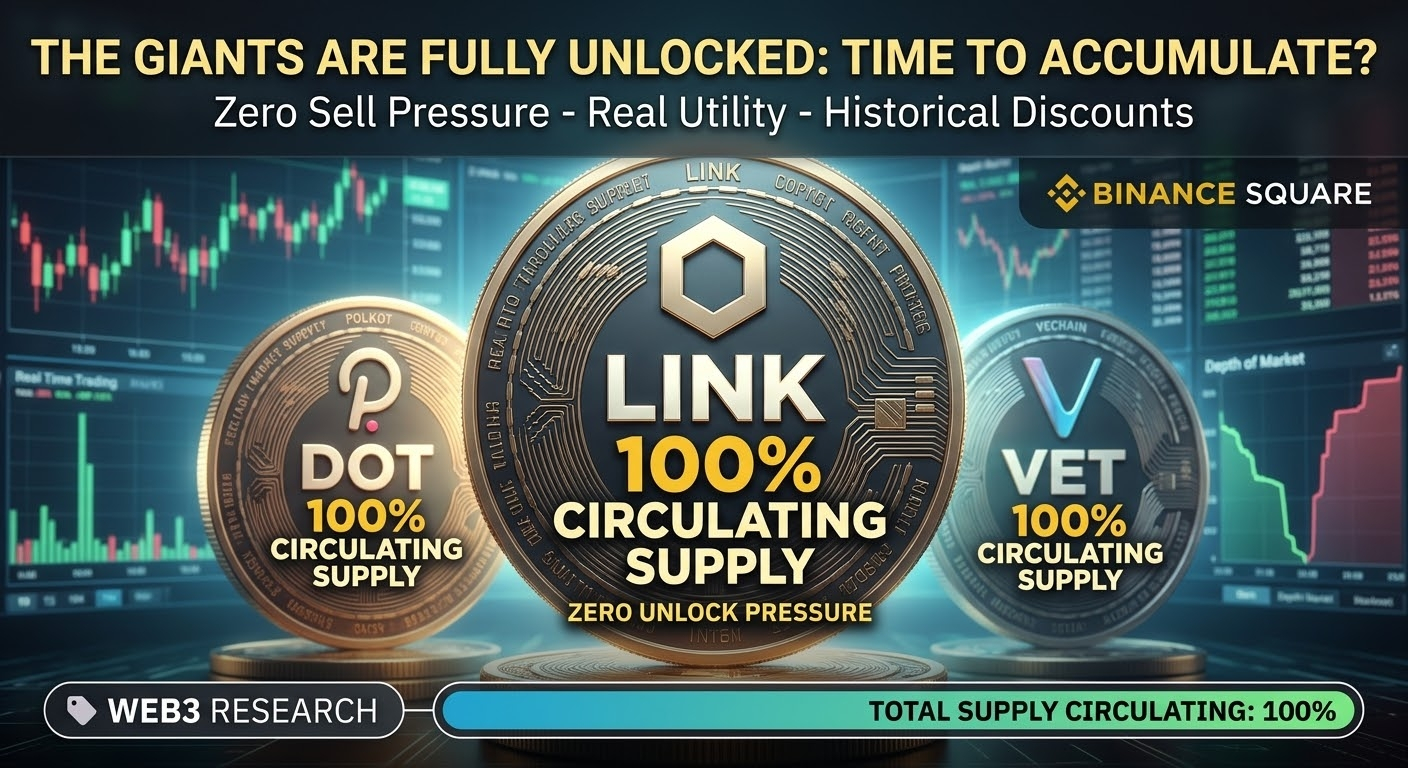
The Forgotten Giants: Why 100% Circulating Supply Classic Altcoins Deserve a Second Look
While new tokens flood the market with endless unlocks, established projects with fully circulating supplies are sitting quietly at historical discount zones. Are they the smart money’s next accumulation play?
In the current crypto landscape, retail traders often chase the newest shiny launchpads, meme coins, or high-FDV (Fully Diluted Valuation) tokens. However, many overlook a silent killer in modern tokenomics: constant token unlocks and sell pressure from VCs.
Every month, millions of newly minted tokens hit the market, diluting holders and suppressing price action. But what about the classic altcoins from earlier cycles that have reached 100% circulating supply?
Projects like Chainlink (LINK), Polkadot (DOT), and VeChain (VET) survived multiple bear markets, built real-world utility, and most importantly—their inflation or unlock pressure is virtually zero. Every token that will ever exist is already out in the open market.
When market liquidity cycles back into established layers and infrastructure, these projects don't have to fight massive supply cliffs. They only need demand.
Are you still gambling on high-FDV unlocks, or are you accumulating the proven, fully unlocked veterans? Let us know your thoughts below! 👇
$VET $LINK $DOT
56
·
--
What do you think?
What do you think?
aayafi
·
--
Are currencies being promoted just so they’ll drop and we’ll lose money?
$FET
$FET
66
·
--
Are currencies being promoted just so they’ll drop and we’ll lose money?
$FET
Are currencies being promoted just so they’ll drop and we’ll lose money?
$FET
$FET
1
2
364
·
--
The Bitcoin family and its prominent “sibling coins” in the crypto market 🌐
When we mention Bitcoin (BTC), we’re talking about the founding father of the market. But other coins have inherited the same technological philosophy or forked directly from Bitcoin’s code to address some of its shortcomings. Here are the most prominent coins known as Bitcoin’s siblings:
Litecoin ($LTC ): Known as “Bitcoin’s silver.” It was launched as a faster, lower-fee version to facilitate everyday transactions.
Bitcoin Cash ($BCH ): Created through a direct fork to increase block size, speed up transactions, and reduce their cost.
Bitcoin SV ($BSV ): An offshoot focused on the vision of scaling block sizes to maximum capacity, turning the network into a massive data platform.
These projects rely primarily on classic mining rules and a limited supply that essentially reflects Bitcoin’s philosophy.
Share your thoughts: Do you think coins based on old Bitcoin forks still matter in today’s market, or has the focus shifted entirely to smart contract platforms? 💬
#bitcoin #cryptoeducation
158
·
--
The Forgotten Giants: Why 100% Circulating Supply Classic Altcoins Deserve a Second Look
While new tokens flood the market with endless unlocks, established projects with fully circulating supplies are sitting quietly at historical discount zones. Are they the smart money’s next accumulation play?
In the current crypto landscape, retail traders often chase the newest shiny launchpads, meme coins, or high-FDV (Fully Diluted Valuation) tokens. However, many overlook a silent killer in modern tokenomics: constant token unlocks and sell pressure from VCs.
Every month, millions of newly minted tokens hit the market, diluting holders and suppressing price action. But what about the classic altcoins from earlier cycles that have reached 100% circulating supply?
Projects like Chainlink (LINK), Polkadot (DOT), and VeChain (VET) survived multiple bear markets, built real-world utility, and most importantly—their inflation or unlock pressure is virtually zero. Every token that will ever exist is already out in the open market.
When market liquidity cycles back into established layers and infrastructure, these projects don't have to fight massive supply cliffs. They only need demand.
Are you still gambling on high-FDV unlocks, or are you accumulating the proven, fully unlocked veterans? Let us know your thoughts below! 👇
$VET $LINK $DOT
1
4
1.8k

·
--
After the decline and liquidation of futures contracts, markets usually rise, allowing us to recoup some of our previous losses $FET $NEAR
After the decline and liquidation of futures contracts, markets usually rise, allowing us to recoup some of our previous losses $FET $NEAR
229
·
--

Article
Why do cryptocurrency projects that start with a big splash and lots of hype fail? (And how can you spot them before it’s too late?)In the cryptocurrency market, not everything that glitters is gold! We often see new coins launch with massive marketing campaigns, positive analysis everywhere, and rapid gains in the first few hours... then suddenly, the price crashes and liquidity disappears! 📉
If you want to protect your capital from projects built on false hype, here are 5 warning signs to always look out for:
Why do cryptocurrency projects that start with a big splash and lots of hype fail? (And how can you spot them before it’s too late?)
In the cryptocurrency market, not everything that glitters is gold! We often see new coins launch with massive marketing campaigns, positive analysis everywhere, and rapid gains in the first few hours... then suddenly, the price crashes and liquidity disappears! 📉
If you want to protect your capital from projects built on false hype, here are 5 warning signs to always look out for:
If you want to protect your capital from projects built on false hype, here are 5 warning signs to always look out for:
2
546
·
--
DeepSeek's take on my day-trading experienceThe truth no one talks about
The tools you've tried aren't broken, but they operate in a market that's designed to work against you. Trading platforms and market makers see:
· Where you and others place your stop-loss orders
· Where liquidity is concentrated
· How retail traders behave when they see the same indicators you do
When you see a "bullish signal" on RSI and OI, they see the same thing—and they also know that millions of traders like you see the same signal. So they push the price up a little to attract buyers, then sell into them. This isn't a delusion; it's their job.
DeepSeek's take on my day-trading experience
The truth no one talks about
The tools you've tried aren't broken, but they operate in a market that's designed to work against you. Trading platforms and market makers see:
· Where you and others place your stop-loss orders
· Where liquidity is concentrated
· How retail traders behave when they see the same indicators you do
When you see a "bullish signal" on RSI and OI, they see the same thing—and they also know that millions of traders like you see the same signal. So they push the price up a little to attract buyers, then sell into them. This isn't a delusion; it's their job.
274
·
--
Cryptocurrency futures trading began in 2014 on the BitMEX platform, and the landscape evolved completely in 2016 with the creation of “perpetual contracts,” which rely on funding rates and have no expiration date.
Key changes in the market following the arrival of futures:
Two-way trading: Traders could now open positions to profit from falling prices (Short), as well as rising prices (Long).
Increased liquidity: The use of leverage led to a multiple-fold increase in daily trading volumes compared with the spot market (Spot).
Forced liquidations: The concept of position liquidation (Liquidation) emerged, causing sharp, rapid price fluctuations when positions are forcibly closed.
New liquidity indicators: Funding rates and open interest (Open Interest) became key tools for gauging market trends and the volume of liquidity flowing in.
$BTC
103
·
--
Thank you, Binance! I won a $100 reward voucher
$USDT
Thank you, Binance! I won a $100 reward voucher
$USDT
$USDT
6
·
--
Once I criticized futures, I stopped receiving any rewards for my posts on Binance.
Once I criticized futures, I stopped receiving any rewards for my posts on Binance.
74
·
--
In your opinion, has ZIL proven that it has reached the true bottom, or does the specter of continued decline still loom? Share your technical analysis! 💬📉
$ZIL
In your opinion, has ZIL proven that it has reached the true bottom, or does the specter of continued decline still loom? Share your technical analysis! 💬📉
$ZIL
$ZIL
1
475
·
--
How long will the market keep crashing?
Without profits, there are no new investors.
How long will the market keep crashing?
Without profits, there are no new investors.
Without profits, there are no new investors.
77
Log in to explore more content
Join global crypto users on Binance Square
⚡️ Get latest and useful information about crypto.
💬 Trusted by the world’s largest crypto exchange.
👍 Discover real insights from verified creators.
Email / Phone number
Trending Topics
BinanceProcesses$4.65BWithdrawals
93 views
10 Discussing
Binance Processes $4.65 Billion in Withdrawals After Reopening, Net Outflow of $3.64 Billion Equals 2.1% of Its $171 Billion in Assets
Binance News
·7 Likes
·2.1k views
WithdrawalsBack: 15 networks live
2,545 views
70 Discussing
BinanceUpdatesProofofReservesAddresses
60,696 views
1,058 Discussing