
#icp
icp
16.9M views
26,197 Discussing
Hot
Latest

·
--
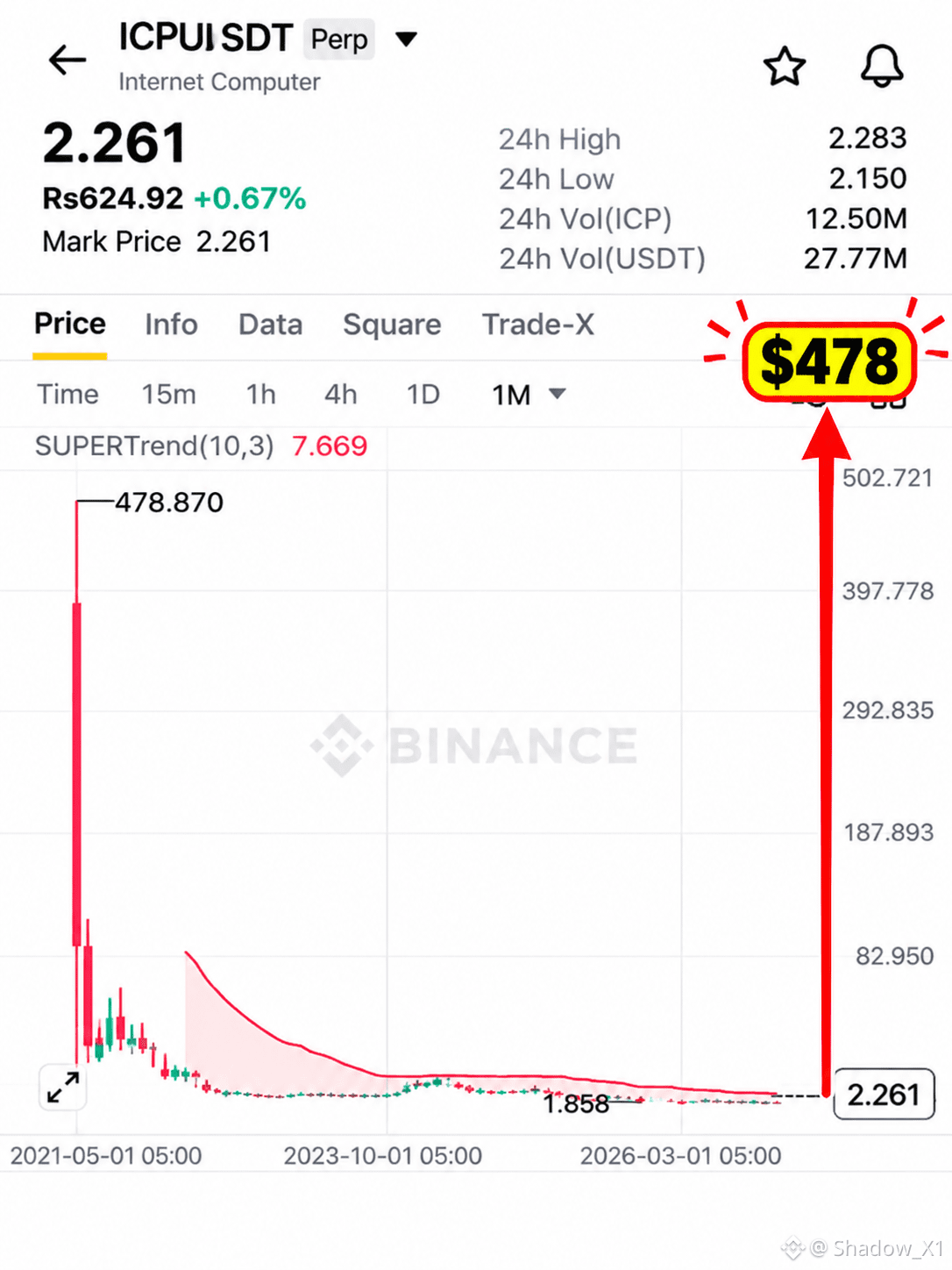
Just one month ago, $ICP
{spot}(ICPUSDT)
reached an incredible price of $478. Looking at its historical chart, it feels like we could witness another massive rally someday, potentially taking ICP back toward $478. 🚀
Could history repeat itself? 👀
#NvidiaBoardReportedlySplitOverHuang’sReturn #CanGTA6'sLaunchLiftTTWOShares?
#ICP #Crypto #Binance
Just one month ago, $ICP
reached an incredible price of $478. Looking at its historical chart, it feels like we could witness another massive rally someday, potentially taking ICP back toward $478. 🚀
Could history repeat itself? 👀
#NvidiaBoardReportedlySplitOverHuang’sReturn #CanGTA6'sLaunchLiftTTWOShares?
#ICP #Crypto #Binance
clasnic:
hıh
1
2
245

·
--
Article
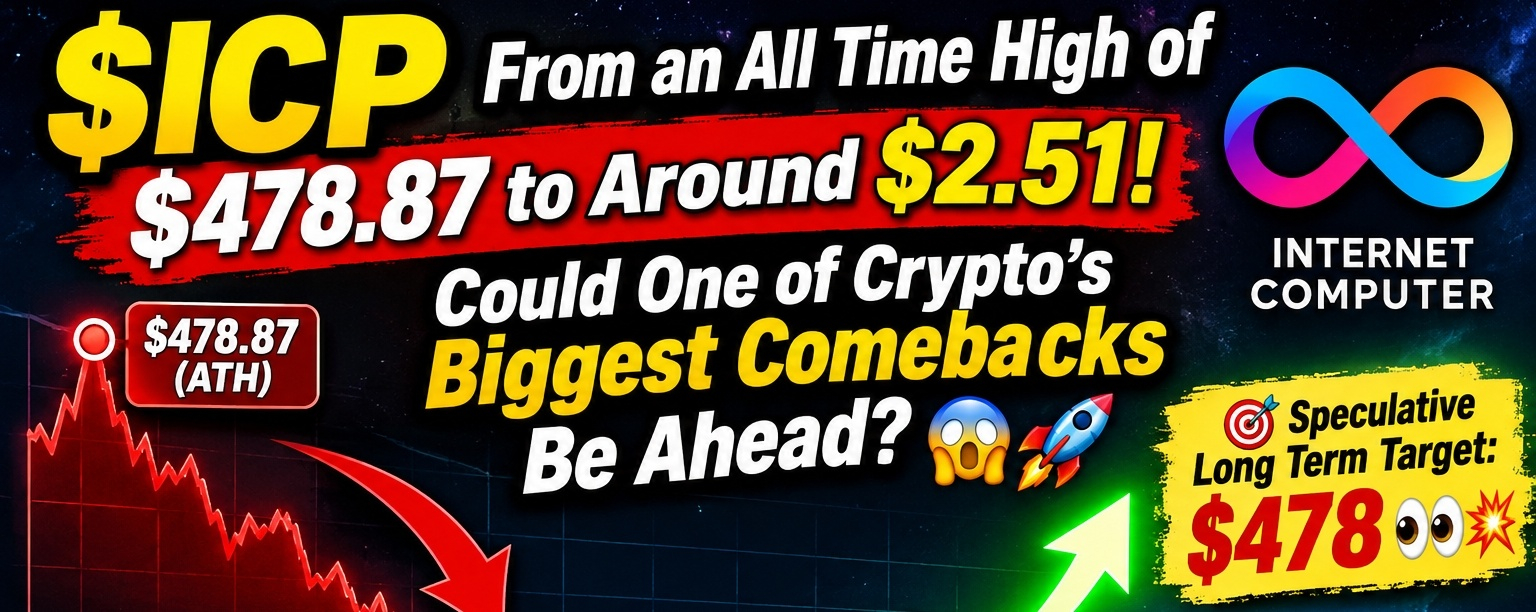
$ICP: FROM $478 ATH TO $2.51 — CAN INTERNET COMPUTER MAKE A HISTORIC COMEBACK? 😱🚀Internet Computer ($ICP) has experienced a massive fall from its All-Time High of $478.87 to around $2.51. That's a huge decline, but could this be one of crypto's most surprising comeback stories? 👀
The Internet Computer project aims to bring decentralized computing, smart contracts, and Web3 infrastructure to a new level. Its long-term vision remains ambitious, but the market still needs to prove whether ICP can regain strong momentum.
🔥 What Could Be Ahead?
Can ICP attract new investors and developers?
Could growing adoption strengthen its ecosystem?
Will a new bull market bring renewed attention to ICP?
Can long-term holders finally see a major recovery?
🎯 Speculative Long-Term Target: $478
A return to its previous ATH would be an extraordinary move, not a guaranteed outcome. It would require significant adoption, strong demand, and favorable market conditions.
Could $ICP surprise the entire crypto market again? Or is this just another risky recovery dream?
What's your opinion? Are you bullish or bearish on ICP? 👇
#ICP #InternetComputer #CryptoComeback #BullRun
$ICP: FROM $478 ATH TO $2.51 — CAN INTERNET COMPUTER MAKE A HISTORIC COMEBACK? 😱
🚀Internet Computer ($ICP ) has experienced a massive fall from its All-Time High of $478.87 to around $2.51. That's a huge decline, but could this be one of crypto's most surprising comeback stories? 👀
The Internet Computer project aims to bring decentralized computing, smart contracts, and Web3 infrastructure to a new level. Its long-term vision remains ambitious, but the market still needs to prove whether ICP can regain strong momentum.
🔥 What Could Be Ahead?
Can ICP attract new investors and developers?
Could growing adoption strengthen its ecosystem?
Will a new bull market bring renewed attention to ICP?
Can long-term holders finally see a major recovery?
🎯 Speculative Long-Term Target: $478
A return to its previous ATH would be an extraordinary move, not a guaranteed outcome. It would require significant adoption, strong demand, and favorable market conditions.
Could $ICP surprise the entire crypto market again? Or is this just another risky recovery dream?
What's your opinion? Are you bullish or bearish on ICP? 👇
#ICP #InternetComputer #CryptoComeback #BullRun
2
302

·
--
$ICP sits 1.4 percent below $2.2850 right now
A close past that ceiling opens room to run
Reject here and $2.1540 is the floor underneath
Tap $ICP and check the hourly chart yourself
Break or reject 👀
#ICP #PriceAction
$ICP sits 1.4 percent below $2.2850 right now
A close past that ceiling opens room to run
Reject here and $2.1540 is the floor underneath
Tap $ICP and check the hourly chart yourself
Break or reject 👀
#ICP #PriceAction
A close past that ceiling opens room to run
Reject here and $2.1540 is the floor underneath
Tap $ICP and check the hourly chart yourself
Break or reject 👀
#ICP #PriceAction
3

·
--
Bullish
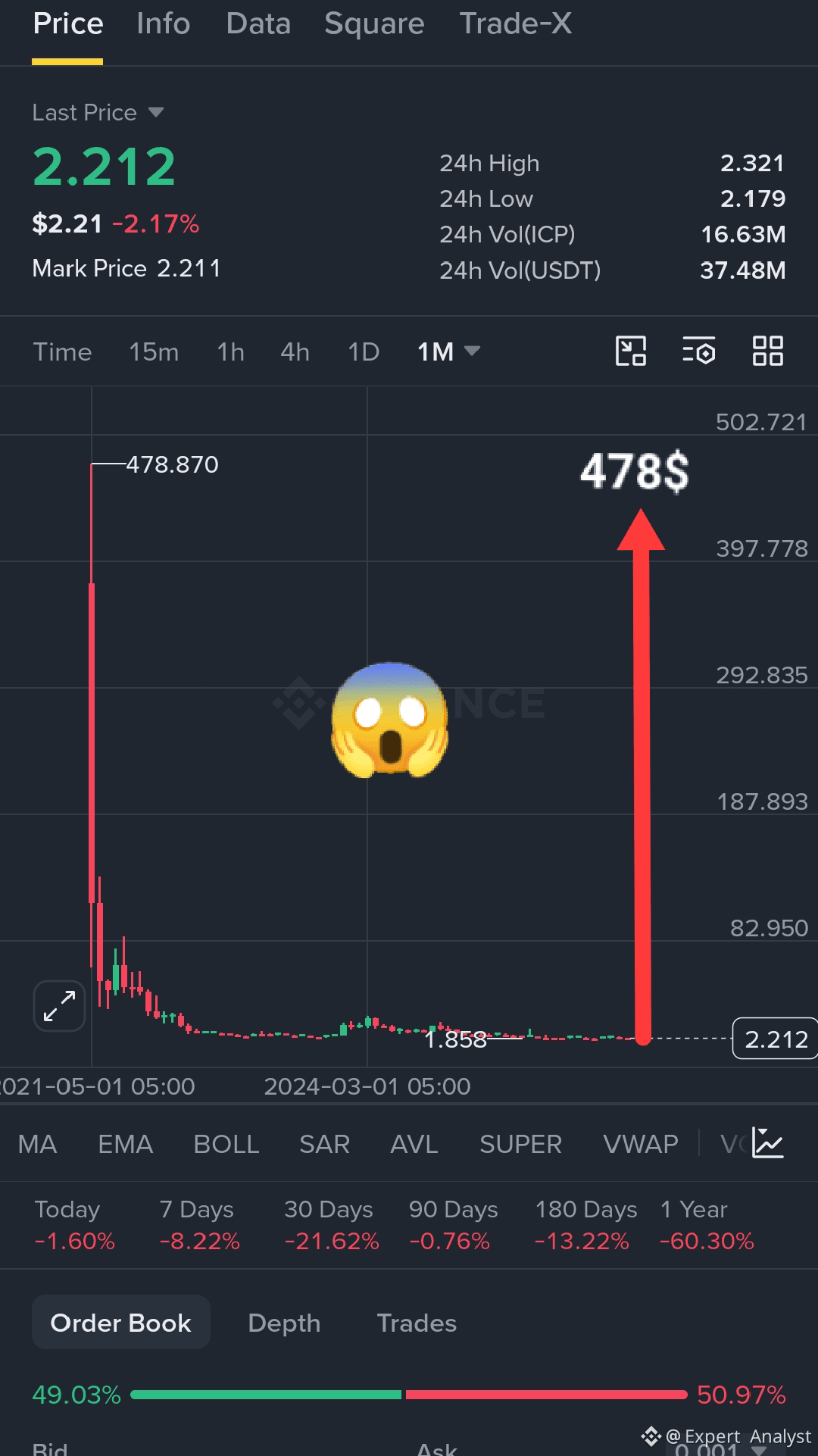
$ICP — 🎯 $10–$20: Potential recovery milestones.
$100+ is a highly speculative long-term scenario. Returning to the chart's previous high near $478 would require an extraordinary rally — it is not a guaranteed target.
The real question is: can $ICP become one of the biggest comeback stories of the next crypto cycle?
🔥 Are you still holding $ICP ?
#ICP #BinanceSquareTalks #Crypto_Jobs🎯 #Binance #Altcoins!
{future}(ICPUSDT)
$ICP — 🎯 $10–$20: Potential recovery milestones.
$100+ is a highly speculative long-term scenario. Returning to the chart's previous high near $478 would require an extraordinary rally — it is not a guaranteed target.
The real question is: can $ICP become one of the biggest comeback stories of the next crypto cycle?
🔥 Are you still holding $ICP ?
#ICP #BinanceSquareTalks #Crypto_Jobs🎯 #Binance #Altcoins!
9
3.7k


·
--
Verified
🤖 $ICP : AI-BUILT APPS ARE GETTING A BIGGER SPOTLIGHT!
Internet Computer has several fresh ecosystem developments:
- Cloud Engine rollout: DFINITY began sending early-access coupons to waitlisted users on November 14.
- Caffeine upgrade: Builders can now choose European Cloud and Encrypted Cloud deployment options.
- AI app market: Caffeine now lets creators publish apps for others to discover and remix.
- Mission 70: DFINITY aims to reduce ICP inflation by at least 70% by the end of 2026.
Can ICP turn its AI-powered cloud vision into mainstream adoption?
$ICP
{future}(ICPUSDT)
.
.
.
#ICP #InternetComputer #crypto
Not financial advice. DYOR.
🤖 $ICP : AI-BUILT APPS ARE GETTING A BIGGER SPOTLIGHT!
Internet Computer has several fresh ecosystem developments:
- Cloud Engine rollout: DFINITY began sending early-access coupons to waitlisted users on November 14.
- Caffeine upgrade: Builders can now choose European Cloud and Encrypted Cloud deployment options.
- AI app market: Caffeine now lets creators publish apps for others to discover and remix.
- Mission 70: DFINITY aims to reduce ICP inflation by at least 70% by the end of 2026.
Can ICP turn its AI-powered cloud vision into mainstream adoption?
$ICP
.
.
.
#ICP #InternetComputer #crypto
Not financial advice. DYOR.
2
679

·
--
Orthogonal Persistence vs Storage Deals: The Evolution of Decentralized Cloud ArchitectureThe architectural design of decentralized storage networks has evolved significantly over the past decade. Early decentralized storage protocols introduced novel peer-to-peer data distribution and proof-of-replication models, yet developers building real-time production software frequently encounter structural operational constraints.
1. Structural Limitations in Early Decentralized Storage
First-generation decentralized storage architectures present specific trade-offs for enterprise applications:
- Contractual Storage Deals: Protocols relying on storage deals require ongoing negotiation with third-party storage providers. Because deals expire within set duration windows, automated renewal logic and monitoring overhead are mandatory. Furthermore, retrieval latencies often take tens of seconds to locate and unseal data partitions.
- Fragile Content Pinning: Addressing rails like IPFS require external centralized pinning infrastructure to prevent unreferenced data from being garbage-collected. Public gateways frequently experience rate limits and connection timeouts under high load.
- Static Data Immutability: Permanent pay-once networks ensure byte-level preservation, but data remains strictly write-once and isolated from real-time compute execution.
2. Orthogonal Persistence and Co-Located Compute on the Internet Computer
Smart contract storage canisters deployed on the Internet Computer Protocol ($ICP) resolve these limitations through orthogonal persistence and native WebAssembly execution:
- Continuous Memory Persistence: Canister memory allocations within sixty-four-bit stable memory structures are permanently preserved across upgrades. Applications maintain persistent data stores without managing expiring contracts or serialization layers.
- In-Canister Turing-Complete Compute: Unlike static storage networks, canisters execute computational logic directly over stored assets. Applications can authenticate user principals, enforce dynamic access gating, calculate cryptographic hashes, and mutate state within the exact same execution boundary.
- Sub-Second Global HTTP Streaming: Boundary nodes act as consensus-certified edge gateways, caching signed assets globally and delivering sub-second response times directly to standard web browsers without specialized extensions.
3. S3 Specification Interoperability
By implementing standard S3 object storage APIs, decentralized storage canisters allow development teams to connect modern backend frameworks, automated pipelines, and cloud services to on-chain infrastructure using familiar developer tools.
As Web3 architecture transitions toward enterprise-grade performance throughout 2026, orthogonal persistence and smart contract storage canisters deliver a scalable, resilient foundation for decentralized cloud computing.
$ICP #ICP #BinanceSquare #Web3 #CloudStorage
Orthogonal Persistence vs Storage Deals: The Evolution of Decentralized Cloud Architecture
The architectural design of decentralized storage networks has evolved significantly over the past decade. Early decentralized storage protocols introduced novel peer-to-peer data distribution and proof-of-replication models, yet developers building real-time production software frequently encounter structural operational constraints.
1. Structural Limitations in Early Decentralized Storage
First-generation decentralized storage architectures present specific trade-offs for enterprise applications:
- Contractual Storage Deals: Protocols relying on storage deals require ongoing negotiation with third-party storage providers. Because deals expire within set duration windows, automated renewal logic and monitoring overhead are mandatory. Furthermore, retrieval latencies often take tens of seconds to locate and unseal data partitions.
- Fragile Content Pinning: Addressing rails like IPFS require external centralized pinning infrastructure to prevent unreferenced data from being garbage-collected. Public gateways frequently experience rate limits and connection timeouts under high load.
- Static Data Immutability: Permanent pay-once networks ensure byte-level preservation, but data remains strictly write-once and isolated from real-time compute execution.
2. Orthogonal Persistence and Co-Located Compute on the Internet Computer
Smart contract storage canisters deployed on the Internet Computer Protocol ($ICP ) resolve these limitations through orthogonal persistence and native WebAssembly execution:
- Continuous Memory Persistence: Canister memory allocations within sixty-four-bit stable memory structures are permanently preserved across upgrades. Applications maintain persistent data stores without managing expiring contracts or serialization layers.
- In-Canister Turing-Complete Compute: Unlike static storage networks, canisters execute computational logic directly over stored assets. Applications can authenticate user principals, enforce dynamic access gating, calculate cryptographic hashes, and mutate state within the exact same execution boundary.
- Sub-Second Global HTTP Streaming: Boundary nodes act as consensus-certified edge gateways, caching signed assets globally and delivering sub-second response times directly to standard web browsers without specialized extensions.
3. S3 Specification Interoperability
By implementing standard S3 object storage APIs, decentralized storage canisters allow development teams to connect modern backend frameworks, automated pipelines, and cloud services to on-chain infrastructure using familiar developer tools.
As Web3 architecture transitions toward enterprise-grade performance throughout 2026, orthogonal persistence and smart contract storage canisters deliver a scalable, resilient foundation for decentralized cloud computing.
$ICP #ICP #BinanceSquare #Web3 #CloudStorage
1
399


·
--
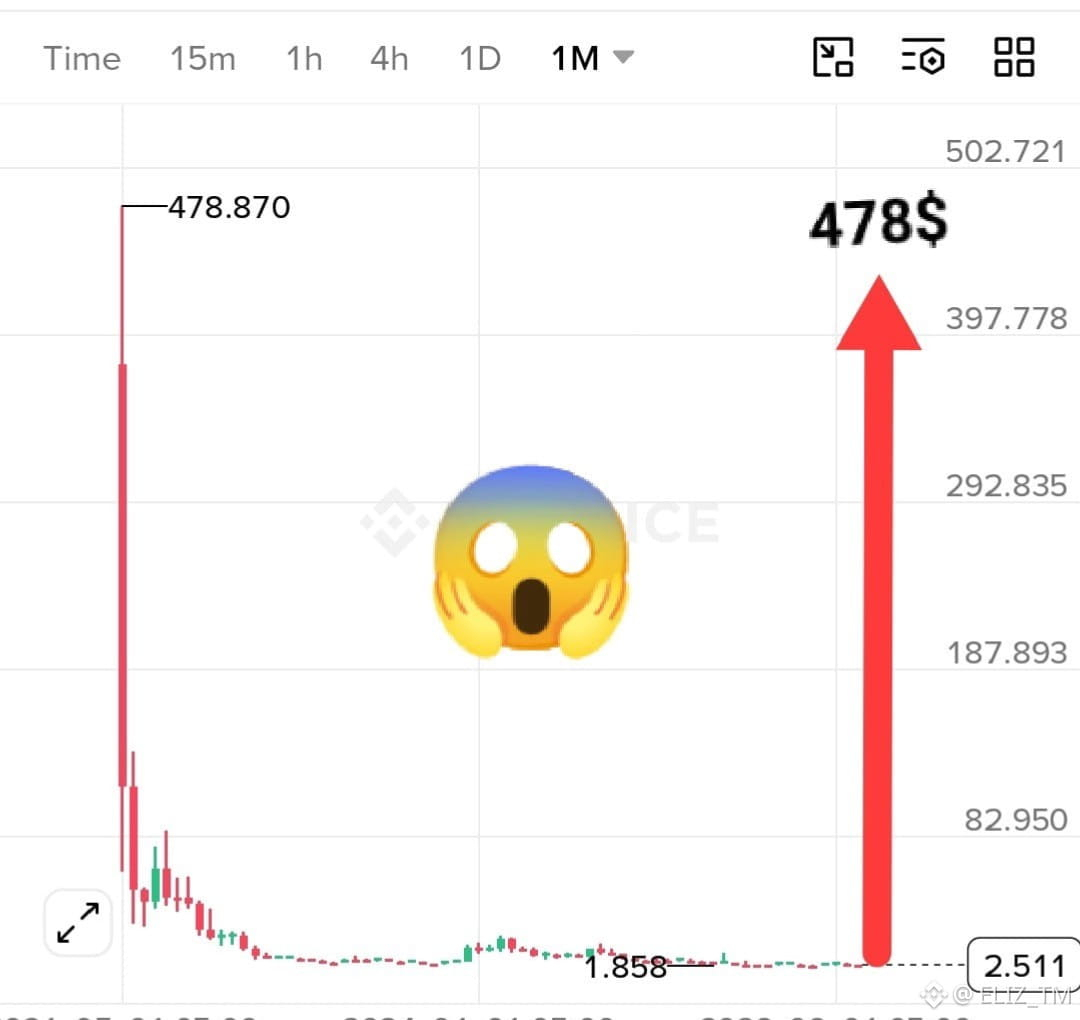
$ICP — From an All Time High of $478.87 to Around $2.51! Could One of Crypto’s Biggest Comebacks Be Ahead? 😱🚀
🎯 Speculative Long Term Target: $478 👀💥
Can Internet Computer surprise the entire crypto market again?
#ICP #BinanceSquareTalks #InternetComputer #BinanceSquare
$ICP — From an All Time High of $478.87 to Around $2.51! Could One of Crypto’s Biggest Comebacks Be Ahead? 😱🚀
🎯 Speculative Long Term Target: $478 👀💥
Can Internet Computer surprise the entire crypto market again?
#ICP #BinanceSquareTalks #InternetComputer #BinanceSquare
🎯 Speculative Long Term Target: $478 👀💥
Can Internet Computer surprise the entire crypto market again?
#ICP #BinanceSquareTalks #InternetComputer #BinanceSquare
HumayunPK:
never ever
21
3
49
77.1k

·
--
🍁 $ICP : AI CLOUD DEVELOPMENT IS PICKING UP SPEED!
Internet Computer has some notable ecosystem updates:
- Caffeine expansion: New European and encrypted cloud options are being added for ICP apps.
- Cloud Engine: DFINITY began sending service coupons to waitlisted users on November 14.
- Bitcoin ecosystem: Liquidium reported its largest single USDT loan, backed by ICP.
- Mission 70: DFINITY's tokenomics plan aims to reduce ICP inflation by at least 70% by the end of 2026.
Can ICP turn its AI and cloud vision into real-world adoption?
$ICP
{future}(ICPUSDT)
.
.
.
.
#ICP #InternetComputer #Crypto
Not financial advice. DYOR.
🍁 $ICP : AI CLOUD DEVELOPMENT IS PICKING UP SPEED!
Internet Computer has some notable ecosystem updates:
- Caffeine expansion: New European and encrypted cloud options are being added for ICP apps.
- Cloud Engine: DFINITY began sending service coupons to waitlisted users on November 14.
- Bitcoin ecosystem: Liquidium reported its largest single USDT loan, backed by ICP.
- Mission 70: DFINITY's tokenomics plan aims to reduce ICP inflation by at least 70% by the end of 2026.
Can ICP turn its AI and cloud vision into real-world adoption?
$ICP
.
.
.
.
#ICP #InternetComputer #Crypto
Not financial advice. DYOR.

2
417
·
--
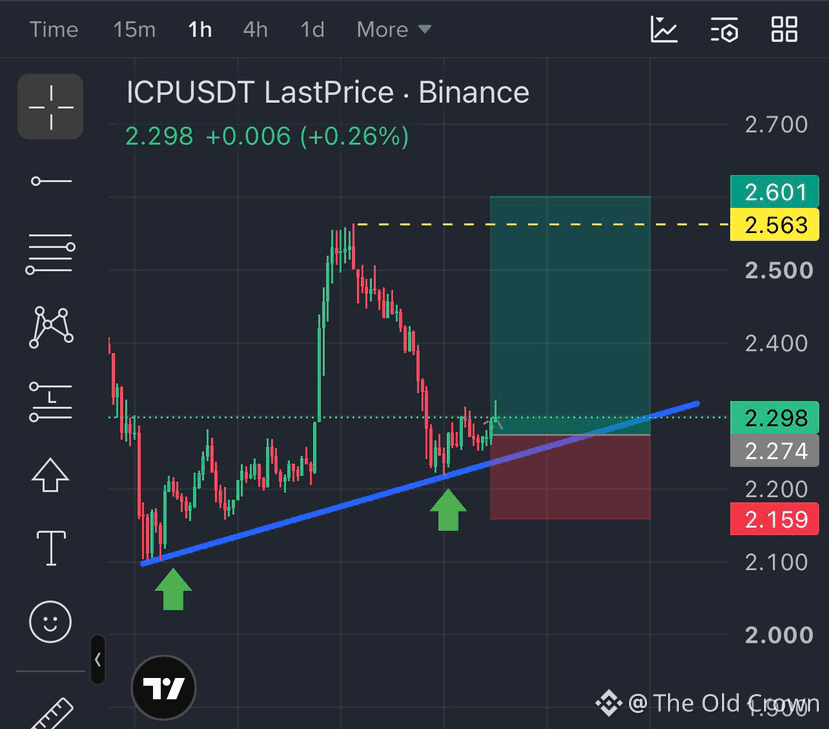
$ICP is sitting near the bottom at 2.2060 and I am passing on it today
Volume is only 0.8x the average so nobody is actually funding this move
I need to see an hourly close and hold above 2.3230 first
Or I want a pullback that holds 2.2090 and bounces from there
It could keep running without me and a bad entry costs more than a missed move
Chasing $ICP here or waiting for 2.2090
#ICP #RiskManagement
5


·
--
☁️ Big Tech built an empire controlling the cloud. Now AI could be what challenges it 👀
🗣️ $ICP founder Dominic Williams says 2027 could be huge for Cloud Engines
🔒 The pitch: tamperproof apps and infrastructure users can control
🤖 The bet: the next generation of AI won’t want to live on someone else’s servers
This is a narrative post, and the thesis is clear. If AI apps and agents handle sensitive data or money, running them on infrastructure controlled by a single company becomes a real risk. ICP is positioning Cloud Engines as the alternative: private subnets, tamperproof code, and no landlord.
Keep in mind who is talking. This is a forecast from the project’s own founder, and “could be huge” is a hope, not a result. Earlier we flagged the revenue model: 80% to node providers, 20% buy-and-burn. That only matters if enterprises and AI builders actually sign up, and the token was still down over 28% in 30 days when we last covered it. AWS, Azure and Google Cloud also have deep moats in tooling, scale and enterprise relationships.
❓ Does AI push builders toward sovereign cloud, or does Big Tech keep the workloads?
👇 Bullish, bearish, or just noise? Drop your take below!
📌 Follow for daily on-chain updates.
Not financial advice. DYOR.
#ICP #DFINITY #AI #Cloud #Crypto #Binance #BinanceSquare

42
·
--
SPREAD SCORECARD: Architecture of $ICP vs $ETH
Result: +$23.41 Net Profit
Spread breakdown from our active 10-leg book: $ICP / ETH (+$23.41 spread yield).
Most retail traders lose money because they bet 100% long on tokens with predatory FDV overhangs and zero cash flow. When the market turns, they take the full hit.
We pair the highest-quality cash-flow protocol in the sector (ICP) against the weakest inflationary asset (ETH). Both sides are calibrated at conservative leverage with hard stop floors active.
Inspect the full live portfolio on Binance Copy Trading:
https://www.binance.com/en/copy-trading/lead-details/4483279284065330433?timeRange=30D
#ICP #ETH #BinanceSquare
1
331

·
--
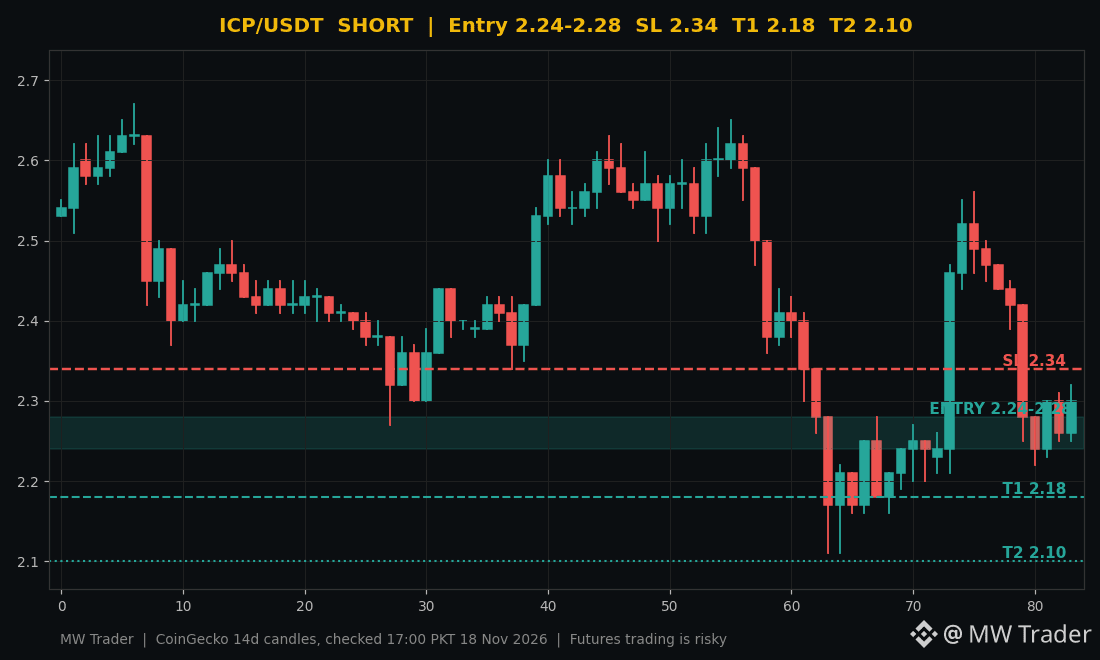
$ICP #ICP is down 6.71 percent at $2.25, the weakest major of the day. 📉
Internet Computer ran from a 24 hour high of $2.42 to a low of $2.22, and the last candle closed at $2.30, so sellers pushed it down hard and buyers only managed a small bounce. 🔴 My plan is a short on the entry zone of $2.24 to $2.28, with a stop loss at $2.34, target 1 at $2.18 and target 2 at $2.10. The $2.22 low is the level to break, and a clean loss of it opens the way to $2.10. I stay short only while price holds under $2.28. ⚠️
Does ICP break $2.22 and fall to $2.10, or does $2.22 hold as support? 🤔
Futures trading is risky, trade small, manage risk, do your own research.
Follow for more trades.
#InternetComputer #Crypto #FuturesTrading #TradingSignals
16

·
--
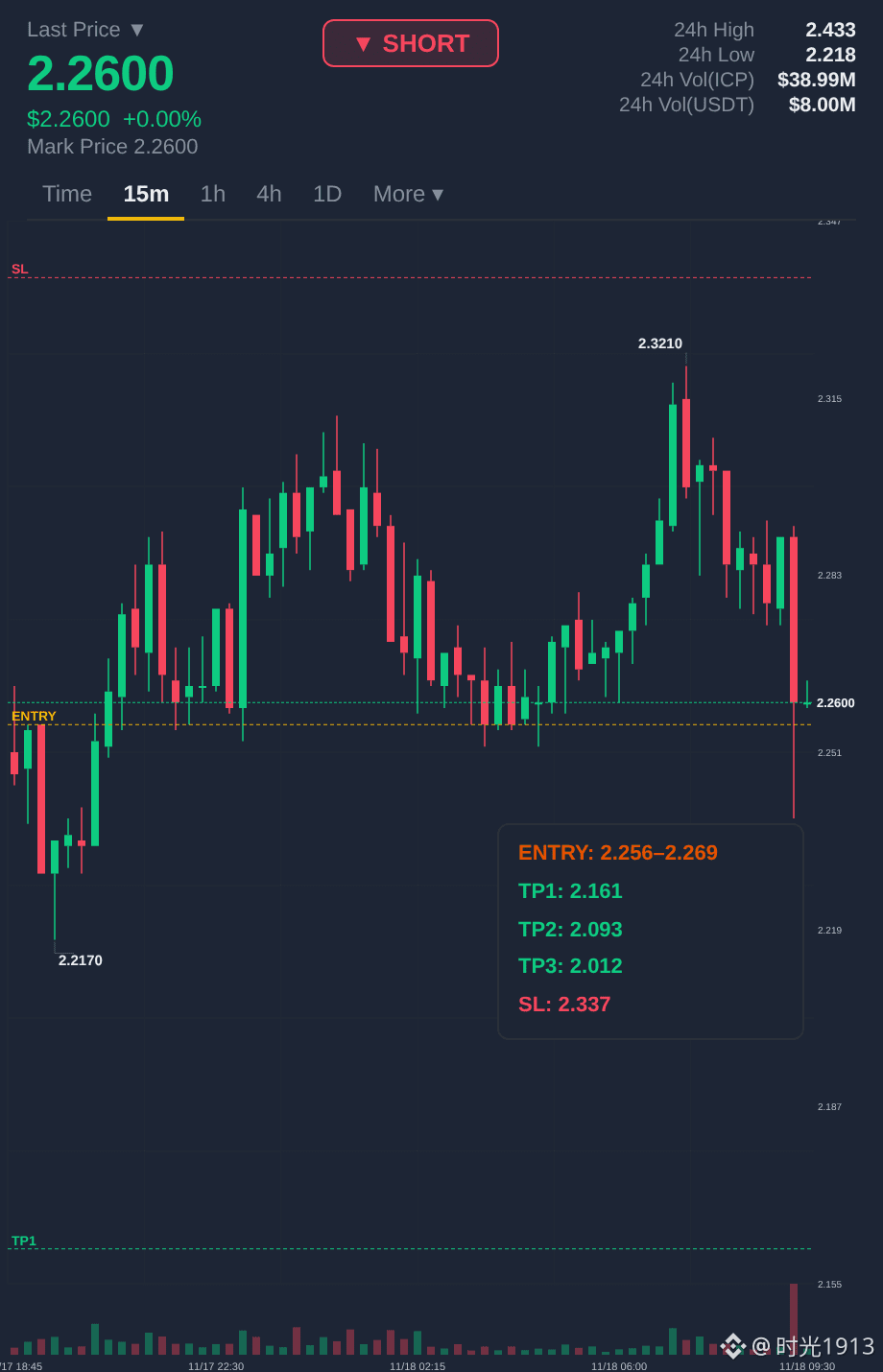
📉 INTERNET COMPUTER (ICP): SELLING PRESSURE! CAN IT RECOVER?
Internet Computer is facing selling pressure in today's crypto market! 👀
📊 24H MARKET SNAPSHOT:
💰 Price: $2.28
📉 24H Change: -7.71%
💵 24H Volume: $55.6 Million
🔥 MY MARKET OUTLOOK:
ICP is showing short-term weakness.
📈 RECOVERY SCENARIO:
If buying interest returns and trading volume improves, a short-term bounce is possible.
📉 BEARISH SCENARIO:
If sellers remain in control, further downside is possible.
🔍 WHAT I'M WATCHING:
• Trading volume
• Buying pressure
• Bitcoin's next move
• Overall market sentiment
💬 YOUR PREDICTION:
Can $ICP recover from this decline?
Or will selling pressure continue?
Share your thoughts below! 👇
#icp #InternetComputer #CryptoLosers #CryptoMarke #CryptoAnalysis #Altcoins #BinanceSquare #MarketZen
Recorded market snapshot. Educational commentary only, not financial advice.

212

·
--
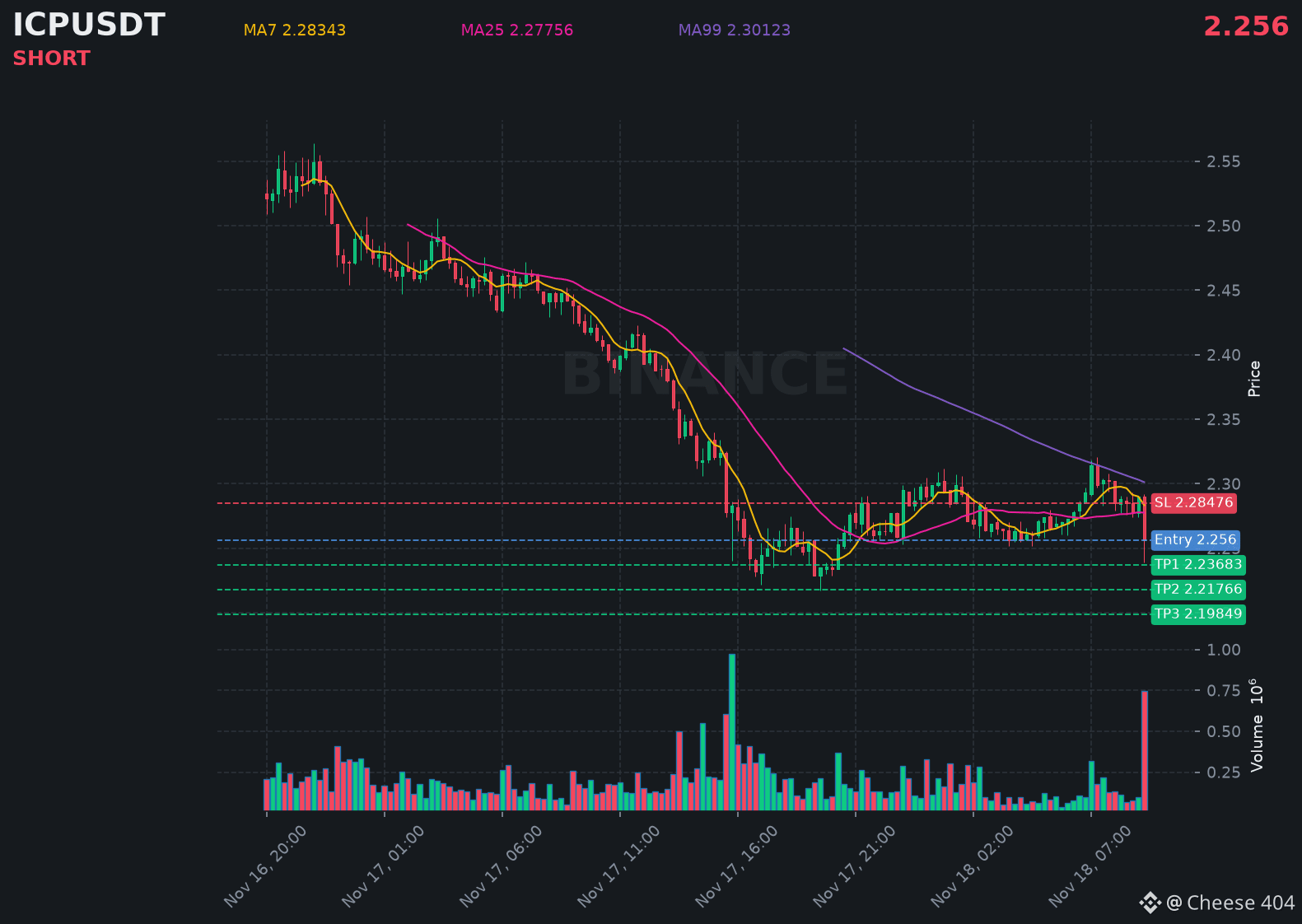
$ICP is struggling below resistance, hinting at another leg down in the coming hours.
📍 @ 2.256 | Volume: 1.69M USD
RSI 40 | EMA20: 2.28178 USD
📈 Trade Plan:
📈 Entry: 2.25025 – 2.26175
🛑 Stop Loss: 2.28476
🎯 TP1: 2.23683
🎯 TP2: 2.21766
🎯 TP3: 2.19849
Waiting for confirmation, then riding the downtrend.
👉 $ICP 👈 Catch it
#ICP
📍 @ 2.256 | Volume: 1.69M USD
RSI 40 | EMA20: 2.28178 USD
📈 Trade Plan:
📈 Entry: 2.25025 – 2.26175
🛑 Stop Loss: 2.28476
🎯 TP1: 2.23683
🎯 TP2: 2.21766
🎯 TP3: 2.19849
Waiting for confirmation, then riding the downtrend.
👉 $ICP 👈 Catch it
#ICP
172

·
--
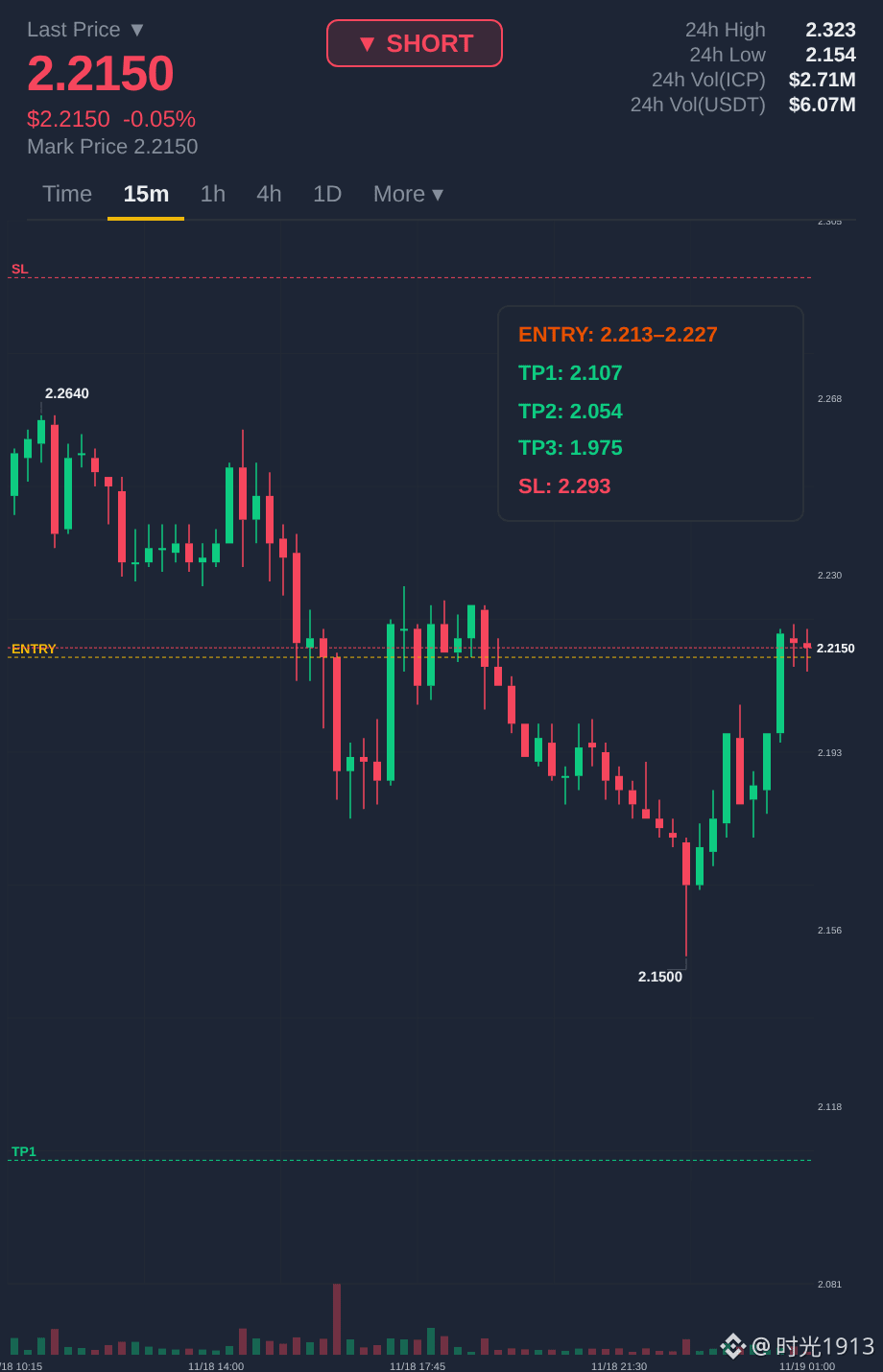
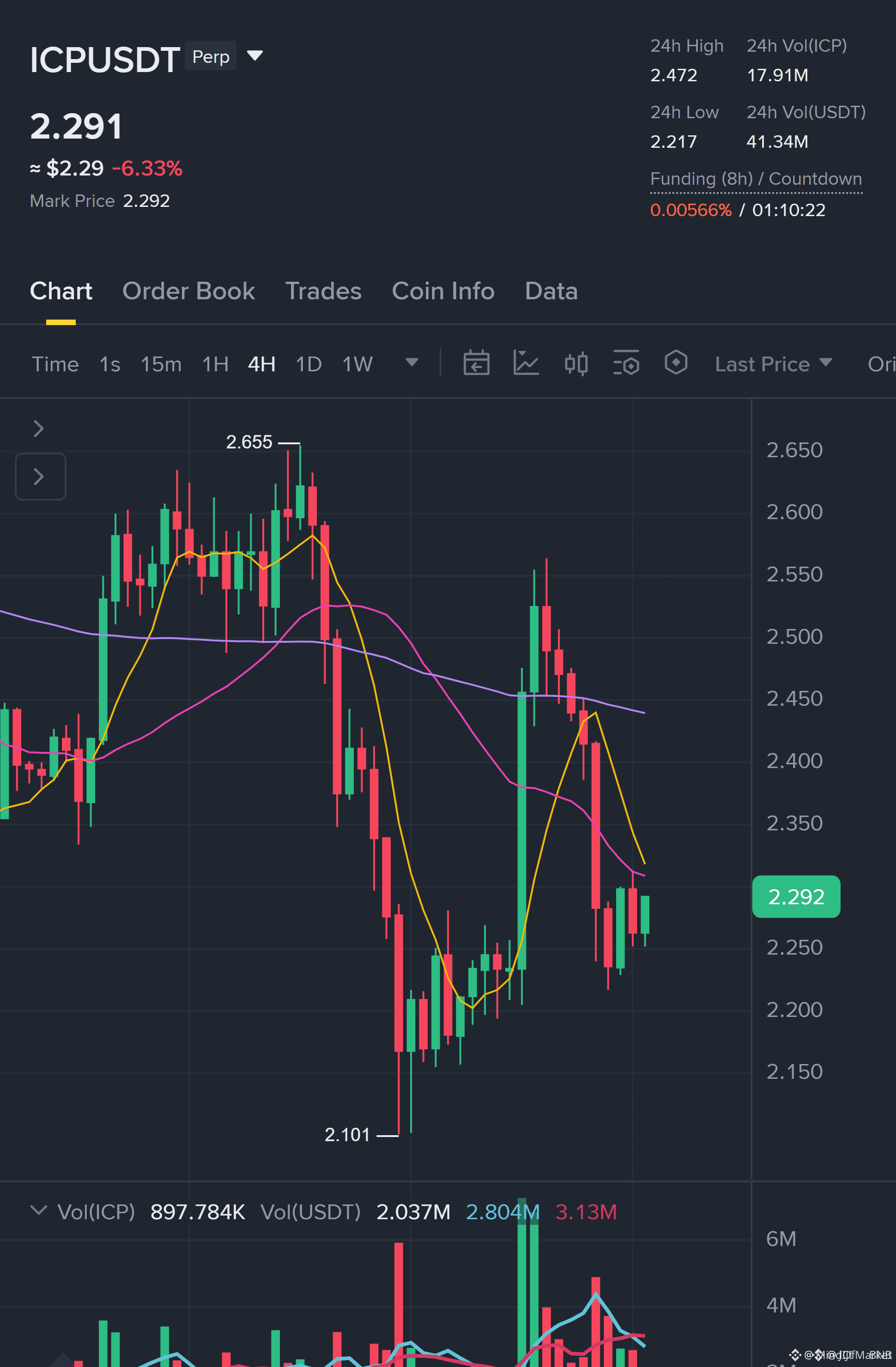
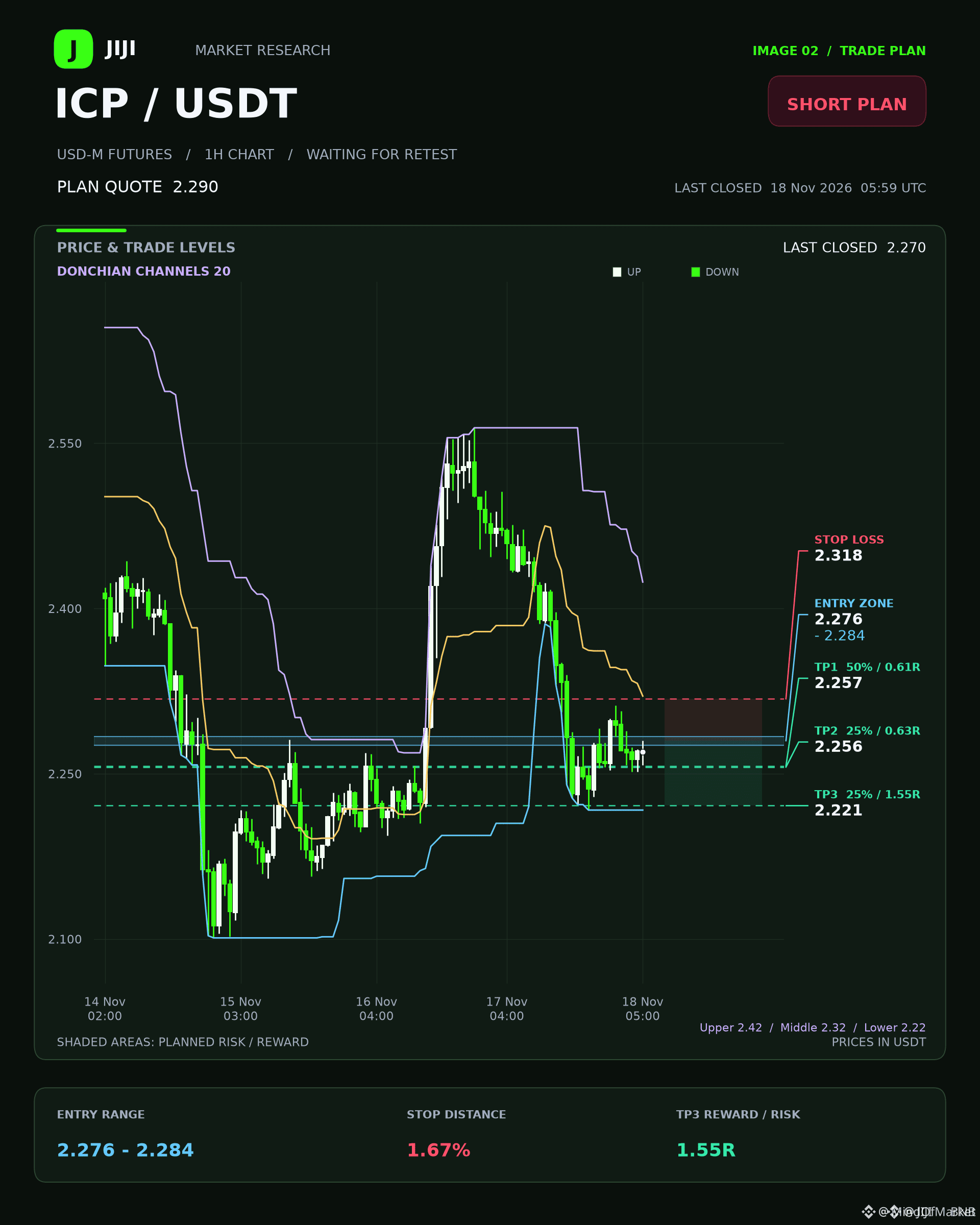
🔴 $ICP SHORT PROBING RESISTANCE WHILE INSTITUTIONAL ORDER FLOW BUILDS 📉
Entry: 2.276 – 2.284 ⚡
Target: 2.221 🚀
Stop Loss: 2.318 ⚠️
Institutional order flow on $ICP is currently testing our patience at the 2.276 to 2.284 resistance shelf. While lower timeframe momentum indicators show conflicting bullish pressure, patience remains our primary edge before committing capital. 📊
We are monitoring for a decisive 15-minute candle closure below the zone to validate institutional distribution. Managing execution risk tightly against the 2.318 invalidation level ensures structural integrity. 🔍
💬 Are you waiting for a confirmed lower-timeframe shift or positioning early against the range boundary? 👇
⚠️ Not financial advice. Always manage your risk. 🛡️
🏷️ #ICP #CryptoFutures #SmartMoney #ShortSetup
🦈 📉
15


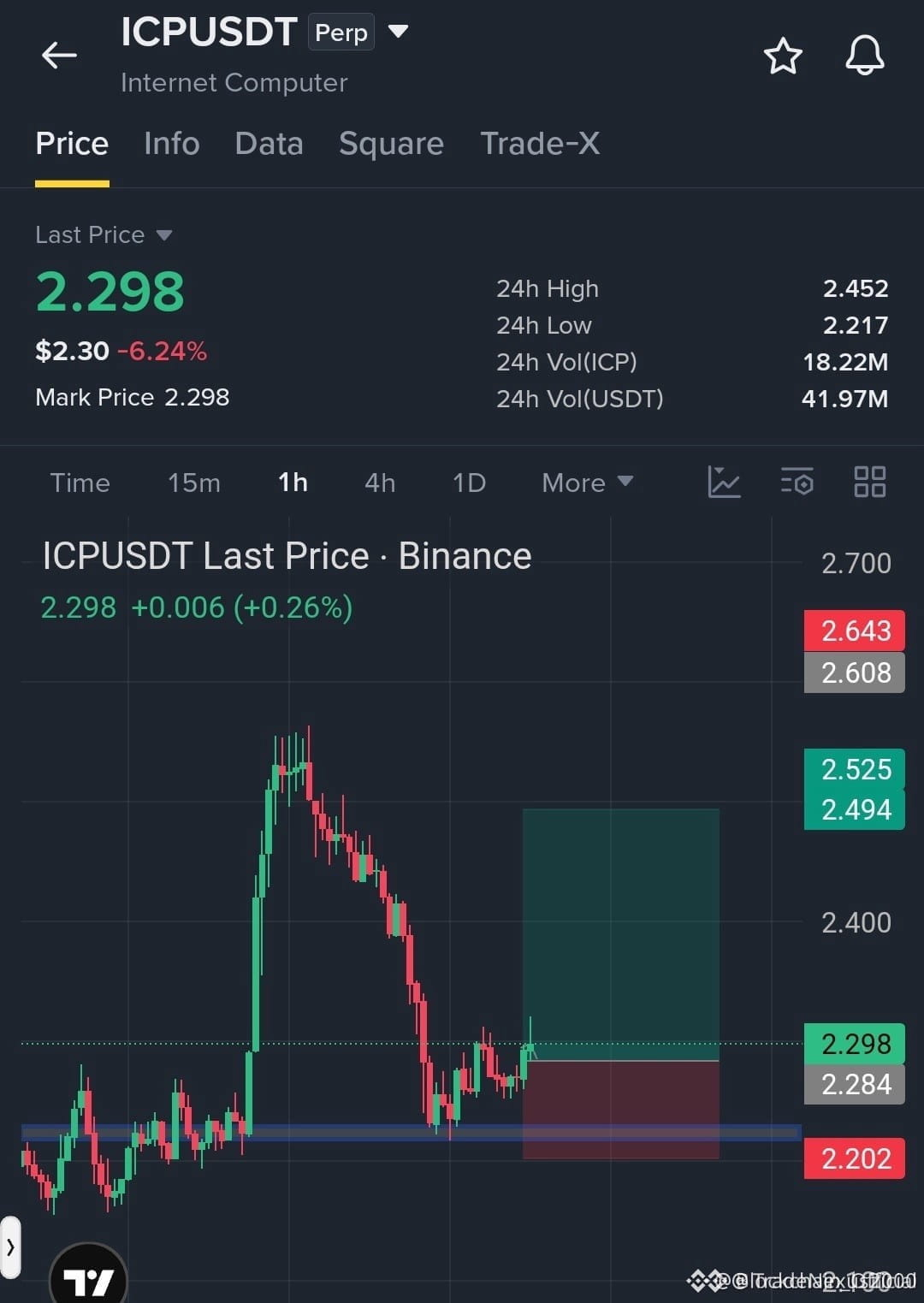
🦈 $ICP DEFENDING MAJOR DEMAND AS SMART MONEY TESTS THE RANGE LOW! ⚡
Entry: 2.280 - 2.300 ⚡
Target 1: 2.350 🎯
Target 2: 2.425 🎯
Target 3: 2.525 🚀
Stop Loss: 2.202 ⚠️
Price action has compressed into a high-timeframe demand cluster following an aggressive shakeout. Institutional absorption is evident as bids step in to defend the structural floor. 📊
Sustaining this retest opens the path for a measured expansion toward upper inefficiency zones and resting liquidity. Patience here is key as order flow shifts from distribution to aggressive accumulation. 💡
Are you scaling in across this support zone or waiting for a confirmed market structure shift? 👇
⚠️ Not financial advice. Always manage your risk. 🛡️
🏷️ #ICP #SmartMoney #Crypto #PriceAction #TradingSetup
🔥 💎
11
Log in to explore more content
Join global crypto users on Binance Square
⚡️ Get latest and useful information about crypto.
💬 Trusted by the world’s largest crypto exchange.
👍 Discover real insights from verified creators.
Email / Phone number
Trending Topics
1
#IsAnthropic’s$1.5TMarketCapJustified?
2,385 views
22 Discussing
2
#BTCRemainsUnderPressureAfterHawkishFOMCMinutes
165,672 views
1,778 Discussing
3
#NvidiaBoardReportedlySplitOverHuang’sReturn
79,178 views
921 Discussing
4
#StrategySTRCPreferredSlips3.65%Below$100Par
2,681 views
50 Discussing
5
#MASToUpgradeSGDTestnetToSGDigitalLedger
8,561 views
157 Discussing
6
#CanGTA6'sLaunchLiftTTWOShares?
53,120 views
705 Discussing
7
#Solana2027RoadmapTargetsDoubleComputeCapacity
1,846 views
66 Discussing
8
#InjectiveTokenizedRealEstateMortgagesTop$1.5B
673 views
26 Discussing
9
#TetherMakesStrategicInvestmentInSCRYPT
2,515 views
59 Discussing
10
#CapitalGroupAdds1264500StrategyShares
16,338 views
192 Discussing