
#usdt
usdt
2.9G views
12.7M Discussing
Hot
Latest

·
--
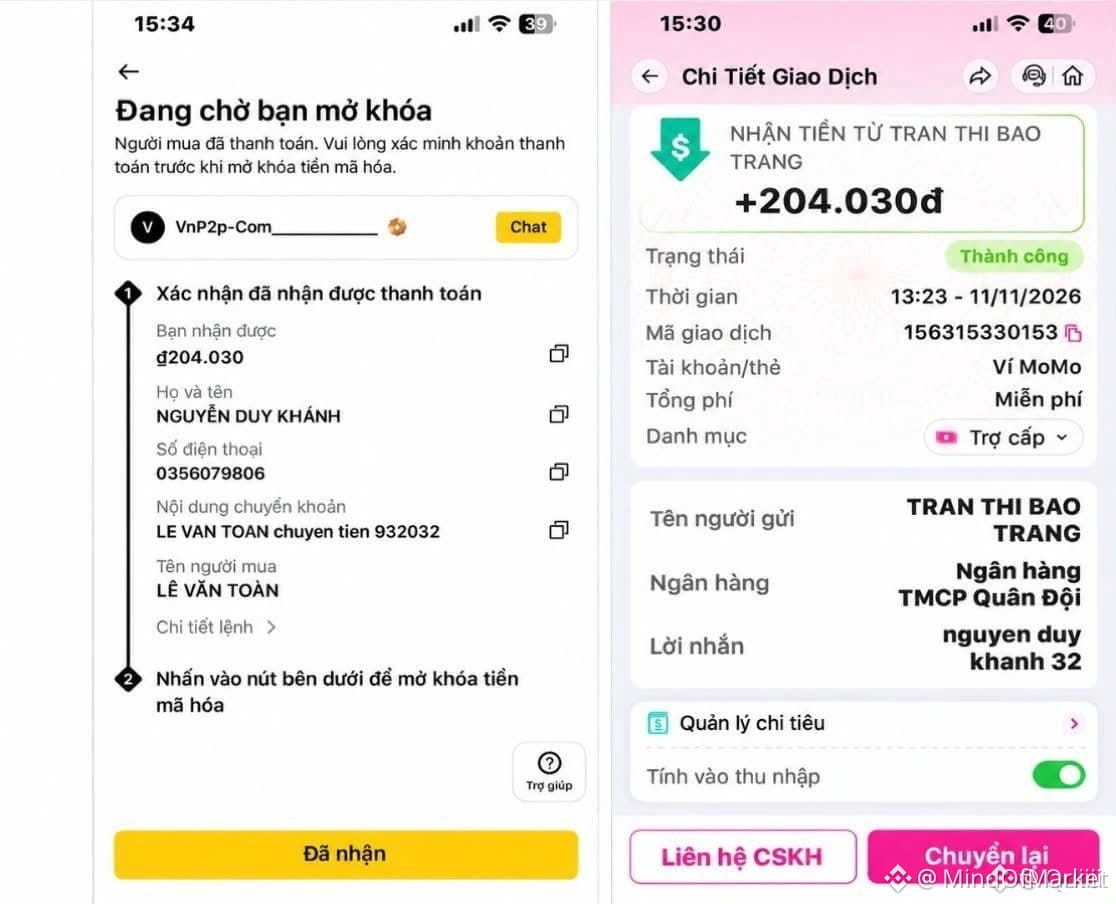
🚨 $USDT P2P TRAPS: WHY THIRD-PARTY FIAT TRANSFERS DEMAND IMMEDIATE FRICTION AND DEFENSIVE ACTION 🛑
Encountering a fiat transfer where the sender credentials do not match the verified counterparty on the exchange introduces severe operational friction. Institutional execution requires strict KYC alignment; releasing assets to unverified third parties exposes accounts to freezing vectors and compliance liabilities. 🔍
Preserving transaction integrity means holding the digital assets, securing full evidentiary trails, and immediately escalating through formal dispute channels. Never compromise on compliance protocols for minor settlements. ⚖️
💬 How do you handle counterparty discrepancies during peer-to-peer fiat settlements? 👇
⚠️ Not financial advice. Always manage your risk. 🛡️
🏷️ #USDT #RiskManagement #CryptoTrading #Security
🦈 🔒
5

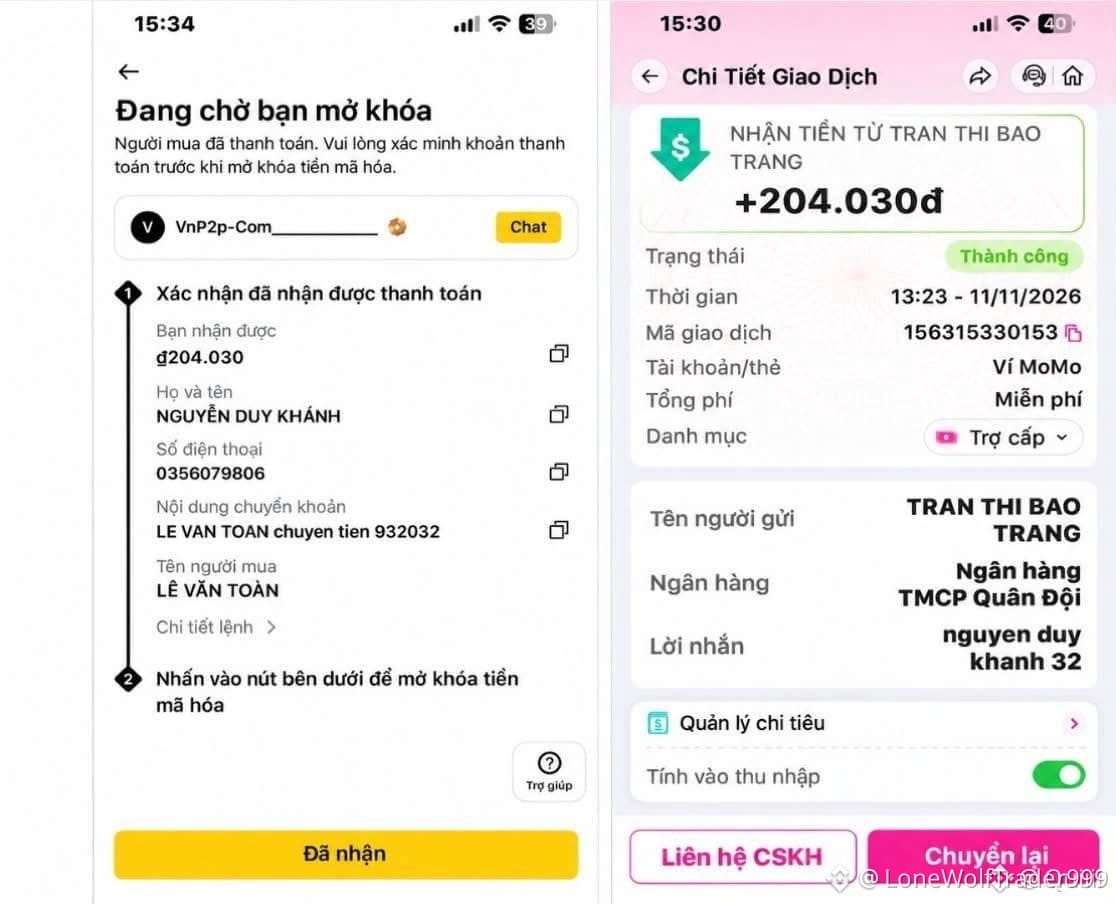
🚨 WATCH OUT FOR THIRD-PARTY PAYMENT TRAPS WHEN SELLING $USDT ON P2P! ⚠️
When fiat hits your account from a name that completely clashes with the verified buyer profile on the exchange, freeze your release immediately. Third-party transfers are a classic playground for operational friction and frozen bank accounts. 🌊
Never let impatience force you into releasing $USDT prematurely. Always capture full screenshot evidence of the mismatch and escalate the dispute directly through official support channels. 💡
💬 Have you ever faced a sketchy third-party payment while clearing your trades? 👇
⚠️ Not financial advice. Always manage your risk. 🛡️
🏷️ #USDT #CryptoTrading #P2P #RiskManagement #TradingSecurity
🛡️ ⚖️
1

·
--
🚨 NINETY-FOUR BILLION REASONS WHY THE NEW ON-CHAIN SHIELDING FOR $USDT CHANGES THE GAME! 🛡️
Major liquidity rails are tightening up as elite analytics firms step in to purge bad actors before funds move. 🦈 With over ninety billion dollars of volume anchoring the ecosystem, robust security layers are the ultimate moat for long-term stability.
Institutional confidence scales when compliance meets high-speed velocity on-chain. 📊 This new alliance sets a formidable standard for asset protection across major networks.
💬 How does tighter on-chain monitoring shift your long-term outlook for major stablecoin deployment? 👇
⚠️ Not financial advice. Always manage your risk. 🛡️
🏷️ #USDT #Tron #Chainalysis #CryptoSecurity #Stablecoins
🔥 💎

23

·
--
Article
What Do You Actually Pay to Send USDT to a Bank Account?Disclosure: It is not financial advice
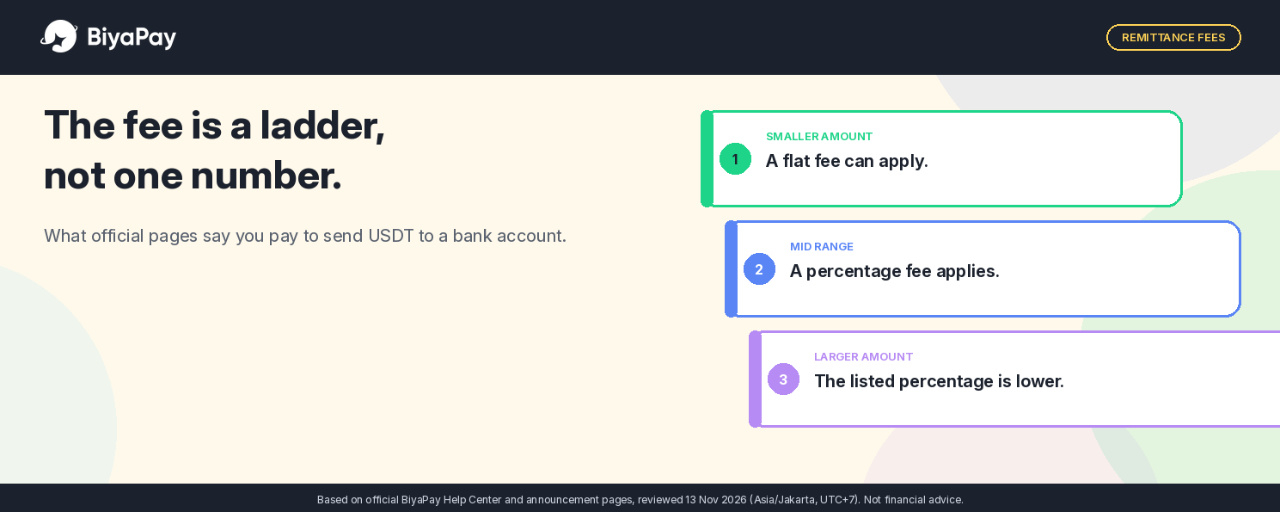
A short line about a remittance fee can make the cost sound like one number. Official BiyaPay pages describe something else: a tiered fee that changes with the size of the transfer.
This is not a recommendation to send funds. It is a reading of what the official Help Center and a remittance-fee announcement actually say, and of what I would check before confirming.
Two official routes, and they are described as paying out the same
According to a BiyaPay Help Center guide dated 28 February 2026, there are two ways to withdraw fiat currency, and the arrival amounts of these two methods are the same. The example on that page is a USD withdrawal.
The first method is to open Flash Exchange on the app homepage, or open My Assets, then Funds, then Flash Exchange on the web, exchange USDT to USD, and then go to the Remittance page. There you select USD, choose the recipient account, and enter an email verification code or a Biya authenticator code.
The second method skips the separate exchange step. On the Remittance page, you select USDT for remittance, with the actual remittance in USD, then choose the recipient account and enter the same kind of verification code.
Some older Help Center pages use the word Convert for that step. The February 2026 guide calls it Flash Exchange. I would follow the labels on the screen I am looking at.
Before those steps: verification and a recipient account
Official product guidance starts earlier than the Remittance button. It tells you to complete identity verification and link a bank account, then deposit USDT, then exchange, then withdraw to the linked account.
The Help Center guide on binding bank accounts, also dated 28 February 2026, says the recipient account is the one that receives fiat withdrawn from BiyaPay. You can add one from Personal Center, under Recipient Management, or from the Remittance page, under Remit to Self or Remit to Others.
You can choose Self, Others, or Business. A Self account needs bank and personal information. An Others account also requires the recipient's ID card or passport. A Business account needs bank and enterprise information.
The fee is tiered, not a single headline rate
A Help Center article on fiat withdrawal fees, updated on 28 February 2026, says that if you deposit USDT and withdraw USD, USDT is exchanged 1:1 with USD.
On the BiyaPay fee itself, that article gives a short summary. When the fiat withdrawal amount is between 200 USD and 2000 USD, the withdrawal fee is 20 USD. When the amount is greater than 2000 USD, the withdrawal fee is 1 percent, with a minimum fee of 0.5 percent available. Fees for other fiat currencies follow the equivalent amount in USD. A higher withdrawal amount has a lower fee percentage. Transferring fiat between BiyaPay wallets through a registered email has no handling fee.
A fuller table sits in an official announcement titled Notice on the further reduction of the fee rate for BiyaPay remittance (fiat currency withdrawal), published on 28 November 2024. The page still showed this table when checked on 13 November 2026, after a page update dated 15 October 2026.
The announcement says remittance still uses a tiered rate, taking a US dollar remittance as the example, with other fiat currencies calculated on the equivalent US dollar amount. The fee is deducted from the remittance amount. The published tiers, as a single remittance or withdrawal in US dollars, are:
200 up to but not including 2,000: a 20 US dollar fee, with no discount listed.
2,000 up to but not including 50,000: 1.00 percent, with no discount listed.
50,000 up to but not including 100,000: 0.90 percent, described as 10 percent off.
100,000 up to but not including 500,000: 0.80 percent, described as 20 percent off.
500,000 up to but not including 1 million: 0.70 percent, described as 30 percent off.
1 million up to but not including 2 million: 0.60 percent, described as 40 percent off.
2 million and above: 0.50 percent, described as 50 percent off.
I would treat that table as a published schedule, not as a promise that the screen will look identical on the day I send. Fees can change. The place I would confirm is the current Cost Center remittance table, and then the amount shown on the Remittance preview before I submit.
What the 0.1 percent headline does not replace
You may see a short line that remittance fees start from 0.1 percent. That is a headline floor. It is not what the published tier table above shows for ordinary sizes.
On that announcement table, the lowest listed rate is 0.50 percent, and only at 2 million US dollars and above. A 20 US dollar fee on a 200 US dollar transfer is 10 percent of the amount, not 0.1 percent. On a 2,000 US dollar transfer, the same 20 US dollar fee is 1 percent.
The useful question is which tier this amount falls into, and what the preview shows will be paid.
Other costs that are not on the BiyaPay fee line
The BiyaPay fee is not always the only deduction. A Help Center article on bank charges, last updated on 3 November 2024, says that a transfer in a home-country or local currency, such as US dollars to a US bank, Singapore dollars to a Singapore bank, or Hong Kong dollars to a Hong Kong bank, generally has no bank handling fee.
If the remittance is not in that local currency, the bank may charge a fee ranging from a few dollars to tens of dollars. The same article warns that some banks charge even on a local-currency payment, and gives a specific example: a US dollar transfer to US Wise, with a 10 US dollar fee per transaction. I would read the receiving bank's own fee, not only the BiyaPay tier.
Limits, cancellation, and what the transfer supports
The Help Center says a single remittance can be up to 5 million US dollars. To avoid bank scrutiny and a slower arrival, it recommends that each remittance does not exceed 1 million US dollars, and that an amount above that is best split into more than one transfer.
Fiat withdrawal currently supports over 30 currencies, including USD, HKD, and SGD. The supported list can change, and the place to check is the currency selection page when you bind a recipient on Remittance. Remittances go to nearly 200 countries and regions, except countries or regions sanctioned by the United States or the international community. Only online bank transfers are supported, not cash.
Once funds have been remitted, the Help Center says they cannot be cancelled. A separate article on remittance messages adds a narrower point: if the order status is under review, you can cancel that order yourself and then submit again.
Arrival time depends on more than the submit button
A Help Center article updated on 28 February 2026 says funds will typically arrive within 1 to 3 business days, depending on the remittance country and currency, the payment method, working hours, and bank review.
Local currencies are generally faster. USD to a US bank, SGD to a Singapore bank, and HKD to a Hong Kong bank are described as generally arriving on the same working day. A cross-currency route, such as SGD to a US bank or USD to a Hong Kong bank, is described as generally arriving on the same day or the next working day.
When you bind a bank account, the page is also said to show arrival times for the payment method. The examples given are US SWIFT in 1 to 3 working days, and ABA or ACH in 0 to 1 working day.
If you submit before 5 PM Singapore time, the remittance is generally sent the same day. A later submission is likely sent on the next working day. Weekends and legal holidays in the destination country can extend arrival. If a bank review is extended, BiyaPay says it cannot confirm when the funds will arrive, because that depends on the recipient's bank. If a remittance has not arrived after more than 3 working days, the Help Center says you should contact them so they can check the progress.
Flash Exchange itself is described as available 24 hours a day, and as completed in real time. That is the conversion step, not the bank arrival window.
A checklist I would use before confirming
Finish identity verification and bind the correct recipient account, with the documents that account type requires.Decide the route: Flash Exchange into USD and then remit USD, or remit USDT as USD. Official pages say the arrival amounts are the same.Read the current remittance fee table, not a headline rate I remember, and confirm the tier for this amount.Look at the preview of the amount to be received, including the BiyaPay fee that will be deducted.Check whether the receiving bank may add its own fee, especially if the currency is not local to that bank.Check the payment method's stated arrival window, and whether I am submitting before the 5 PM Singapore cutoff on a working day.Recheck the recipient details. After the funds have been remitted, the Help Center says the transfer cannot be cancelled.Complete the email or Biya authenticator verification only after those checks feel right.
None of this is financial advice, and it is not a recommendation to convert or to remit. Official fees, supported currencies, limits, and arrival times can change. I would re-read the current Cost Center remittance table, the Remittance preview, and the latest Help Center pages before sending.
Source: BiyaPay Help Center, Wallet and Remittance sections, and the official remittance-fee announcement published on 28 November 2024, all checked on 13 November 2026 (Asia/Jakarta, UTC+7).
#BiyaPay #USDT #Remittance #BankTransfer
What Do You Actually Pay to Send USDT to a Bank Account?
Disclosure: It is not financial advice
A short line about a remittance fee can make the cost sound like one number. Official BiyaPay pages describe something else: a tiered fee that changes with the size of the transfer.
This is not a recommendation to send funds. It is a reading of what the official Help Center and a remittance-fee announcement actually say, and of what I would check before confirming.
Two official routes, and they are described as paying out the same
According to a BiyaPay Help Center guide dated 28 February 2026, there are two ways to withdraw fiat currency, and the arrival amounts of these two methods are the same. The example on that page is a USD withdrawal.
The first method is to open Flash Exchange on the app homepage, or open My Assets, then Funds, then Flash Exchange on the web, exchange USDT to USD, and then go to the Remittance page. There you select USD, choose the recipient account, and enter an email verification code or a Biya authenticator code.
The second method skips the separate exchange step. On the Remittance page, you select USDT for remittance, with the actual remittance in USD, then choose the recipient account and enter the same kind of verification code.
Some older Help Center pages use the word Convert for that step. The February 2026 guide calls it Flash Exchange. I would follow the labels on the screen I am looking at.
Before those steps: verification and a recipient account
Official product guidance starts earlier than the Remittance button. It tells you to complete identity verification and link a bank account, then deposit USDT, then exchange, then withdraw to the linked account.
The Help Center guide on binding bank accounts, also dated 28 February 2026, says the recipient account is the one that receives fiat withdrawn from BiyaPay. You can add one from Personal Center, under Recipient Management, or from the Remittance page, under Remit to Self or Remit to Others.
You can choose Self, Others, or Business. A Self account needs bank and personal information. An Others account also requires the recipient's ID card or passport. A Business account needs bank and enterprise information.
The fee is tiered, not a single headline rate
A Help Center article on fiat withdrawal fees, updated on 28 February 2026, says that if you deposit USDT and withdraw USD, USDT is exchanged 1:1 with USD.
On the BiyaPay fee itself, that article gives a short summary. When the fiat withdrawal amount is between 200 USD and 2000 USD, the withdrawal fee is 20 USD. When the amount is greater than 2000 USD, the withdrawal fee is 1 percent, with a minimum fee of 0.5 percent available. Fees for other fiat currencies follow the equivalent amount in USD. A higher withdrawal amount has a lower fee percentage. Transferring fiat between BiyaPay wallets through a registered email has no handling fee.
A fuller table sits in an official announcement titled Notice on the further reduction of the fee rate for BiyaPay remittance (fiat currency withdrawal), published on 28 November 2024. The page still showed this table when checked on 13 November 2026, after a page update dated 15 October 2026.
The announcement says remittance still uses a tiered rate, taking a US dollar remittance as the example, with other fiat currencies calculated on the equivalent US dollar amount. The fee is deducted from the remittance amount. The published tiers, as a single remittance or withdrawal in US dollars, are:
200 up to but not including 2,000: a 20 US dollar fee, with no discount listed.
2,000 up to but not including 50,000: 1.00 percent, with no discount listed.
50,000 up to but not including 100,000: 0.90 percent, described as 10 percent off.
100,000 up to but not including 500,000: 0.80 percent, described as 20 percent off.
500,000 up to but not including 1 million: 0.70 percent, described as 30 percent off.
1 million up to but not including 2 million: 0.60 percent, described as 40 percent off.
2 million and above: 0.50 percent, described as 50 percent off.
I would treat that table as a published schedule, not as a promise that the screen will look identical on the day I send. Fees can change. The place I would confirm is the current Cost Center remittance table, and then the amount shown on the Remittance preview before I submit.
What the 0.1 percent headline does not replace
You may see a short line that remittance fees start from 0.1 percent. That is a headline floor. It is not what the published tier table above shows for ordinary sizes.
On that announcement table, the lowest listed rate is 0.50 percent, and only at 2 million US dollars and above. A 20 US dollar fee on a 200 US dollar transfer is 10 percent of the amount, not 0.1 percent. On a 2,000 US dollar transfer, the same 20 US dollar fee is 1 percent.
The useful question is which tier this amount falls into, and what the preview shows will be paid.
Other costs that are not on the BiyaPay fee line
The BiyaPay fee is not always the only deduction. A Help Center article on bank charges, last updated on 3 November 2024, says that a transfer in a home-country or local currency, such as US dollars to a US bank, Singapore dollars to a Singapore bank, or Hong Kong dollars to a Hong Kong bank, generally has no bank handling fee.
If the remittance is not in that local currency, the bank may charge a fee ranging from a few dollars to tens of dollars. The same article warns that some banks charge even on a local-currency payment, and gives a specific example: a US dollar transfer to US Wise, with a 10 US dollar fee per transaction. I would read the receiving bank's own fee, not only the BiyaPay tier.
Limits, cancellation, and what the transfer supports
The Help Center says a single remittance can be up to 5 million US dollars. To avoid bank scrutiny and a slower arrival, it recommends that each remittance does not exceed 1 million US dollars, and that an amount above that is best split into more than one transfer.
Fiat withdrawal currently supports over 30 currencies, including USD, HKD, and SGD. The supported list can change, and the place to check is the currency selection page when you bind a recipient on Remittance. Remittances go to nearly 200 countries and regions, except countries or regions sanctioned by the United States or the international community. Only online bank transfers are supported, not cash.
Once funds have been remitted, the Help Center says they cannot be cancelled. A separate article on remittance messages adds a narrower point: if the order status is under review, you can cancel that order yourself and then submit again.
Arrival time depends on more than the submit button
A Help Center article updated on 28 February 2026 says funds will typically arrive within 1 to 3 business days, depending on the remittance country and currency, the payment method, working hours, and bank review.
Local currencies are generally faster. USD to a US bank, SGD to a Singapore bank, and HKD to a Hong Kong bank are described as generally arriving on the same working day. A cross-currency route, such as SGD to a US bank or USD to a Hong Kong bank, is described as generally arriving on the same day or the next working day.
When you bind a bank account, the page is also said to show arrival times for the payment method. The examples given are US SWIFT in 1 to 3 working days, and ABA or ACH in 0 to 1 working day.
If you submit before 5 PM Singapore time, the remittance is generally sent the same day. A later submission is likely sent on the next working day. Weekends and legal holidays in the destination country can extend arrival. If a bank review is extended, BiyaPay says it cannot confirm when the funds will arrive, because that depends on the recipient's bank. If a remittance has not arrived after more than 3 working days, the Help Center says you should contact them so they can check the progress.
Flash Exchange itself is described as available 24 hours a day, and as completed in real time. That is the conversion step, not the bank arrival window.
A checklist I would use before confirming
Finish identity verification and bind the correct recipient account, with the documents that account type requires.Decide the route: Flash Exchange into USD and then remit USD, or remit USDT as USD. Official pages say the arrival amounts are the same.Read the current remittance fee table, not a headline rate I remember, and confirm the tier for this amount.Look at the preview of the amount to be received, including the BiyaPay fee that will be deducted.Check whether the receiving bank may add its own fee, especially if the currency is not local to that bank.Check the payment method's stated arrival window, and whether I am submitting before the 5 PM Singapore cutoff on a working day.Recheck the recipient details. After the funds have been remitted, the Help Center says the transfer cannot be cancelled.Complete the email or Biya authenticator verification only after those checks feel right.
None of this is financial advice, and it is not a recommendation to convert or to remit. Official fees, supported currencies, limits, and arrival times can change. I would re-read the current Cost Center remittance table, the Remittance preview, and the latest Help Center pages before sending.
Source: BiyaPay Help Center, Wallet and Remittance sections, and the official remittance-fee announcement published on 28 November 2024, all checked on 13 November 2026 (Asia/Jakarta, UTC+7).
#BiyaPay #USDT #Remittance #BankTransfer
69
·
--
🚨 THAI REGULATORY SQUEEZE ON $USDT LIQUIDITY RAMPS SIGNALS A MAJOR SHIFT IN ASIA! 🦈
Regulatory bodies in Thailand are tightening the flow of capital by capping daily stablecoin transactions at roughly one hundred forty-eight thousand dollars per account. 📊 This structural squeeze aims to choke off capital flight vectors while forcing strict on-chain attribution across all local operators.
Market makers and regional brokers now face stringent third-party wallet restrictions and mandatory disclosure rules. 💡 As liquidity pathways fragment, order flow dynamics across regional ramps are undergoing an enforced institutional overhaul.
How will market participants adapt to these rigid compliance bottlenecks? 🤔
⚠️ Not financial advice. Always manage your risk. 🛡️
🏷️ #USDT #CryptoRegulation #Stablecoins #Thailand
🦈 ⚖️

11

🚨 THAILAND THROTTLES $USDT ONSHORE RAMPS WITH A STREAK OF NEW COMPLIANCE CAPS! ⚡
Regulatory anchors are tightening across Asian digital asset corridors as authorities clamp down on capital-flight channels. Operators now face strict daily deposit ceilings and mandatory wallet verification protocols that fundamentally alter how liquidity moves. 🌊
Market makers must step out of the shadows with transparent identities while brokers face complete isolation from external liquidity providers. These friction points signal a decisive shift toward institutionalized oversight on core stablecoin pairs. 📊
How will these structural choke points reshape regional volume flows and retail on-ramp behavior moving forward? 👇
⚠️ Not financial advice. Always manage your risk. 🛡️
🏷️ #USDT #Stablecoins #CryptoRegulation #MarketDynamics
🔥 💎

26

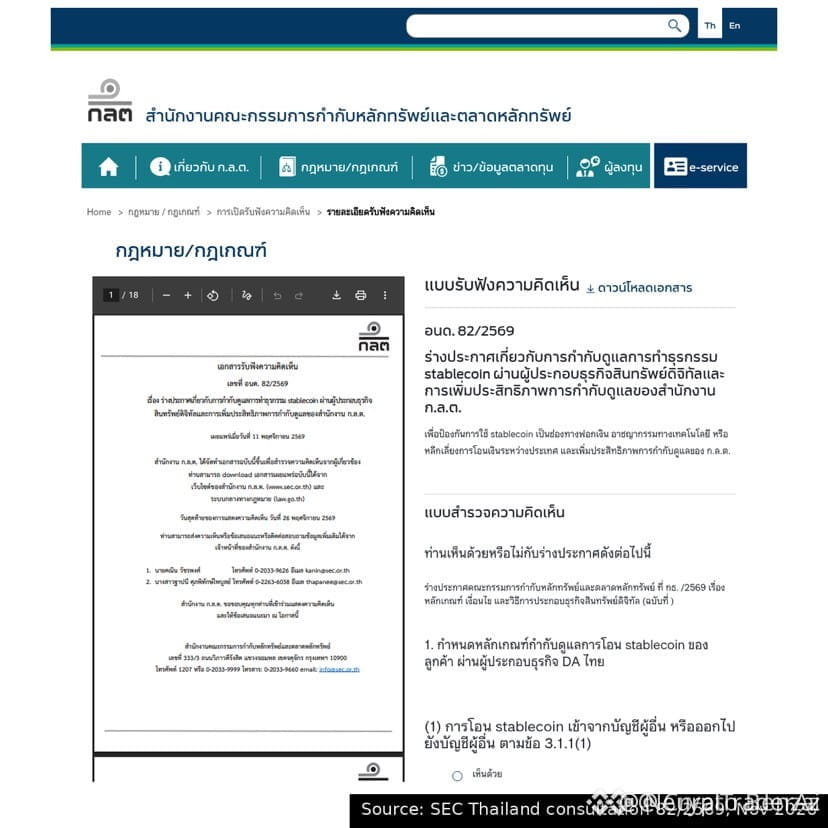
🚨 NEW REGULATORY LIQUIDITY CAPS ON $USDT AND $USDC ARE RESHAPING STABLECOIN FLOWS 🦈
Institutional settlement rails face a structural shift as regulatory bodies tighten the leash on liquidity movement. Thailand's latest oversight framework introduces strict daily caps on $USDT and $USDC , freezing third-party wallet transfers and demanding fully verified identity structures. 📊 This forces institutional desks and retail participants alike to adapt their execution routing and capital deployment strategies across regional platforms. 💡
When regional liquidity conduits are constrained like this, order flow dynamics inevitably reconfigure toward compliant channels. How will these strict transactional ceilings impact cross-border liquidity distribution in the coming quarters? 💬 👇
⚠️ Not financial advice. Always manage your risk. 🛡️
🏷️ #USDT #Stablecoins #Regulation #Crypto #Liquidity
🦈 ⚖️
4
·
--
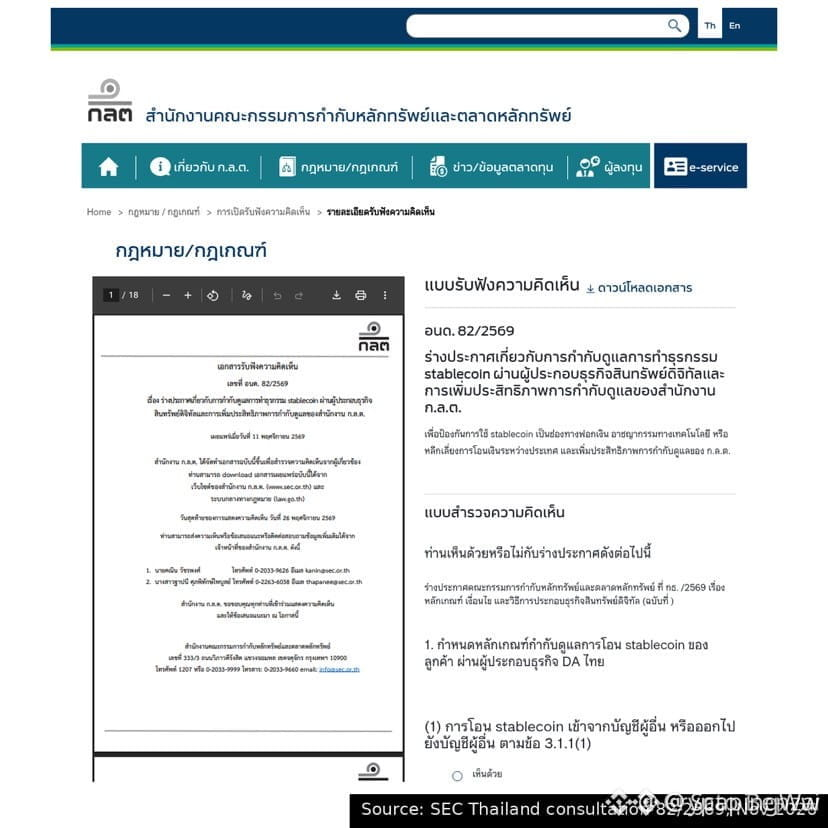
🚨 THAI REGULATORS CRACK DOWN ON $USDT FLOWS WITH NEW DAILY CAPS 💥
Fresh regulatory crosshairs are locking onto liquidity velocity as Thailand’s SEC proposes a strict five million baht daily limit on $USDT and $USDC movements. 📊 Licensed platforms will enforce identity-locked wallets while peer-to-peer transfers face a complete blackout under these draft guidelines. ⚡
Institutional participants and regional desks must now navigate tighter friction channels as sovereign oversight tightens its grip on digital dollar rails. 🌊 How will these localized transfer caps reshape regional liquidity routing going forward? 🤔
⚠️ Not financial advice. Always manage your risk. 🛡️
🏷️ #USDT #USDC #CryptoRegulation #Liquidity #Trading
🔥 💎
14

·
--
MASSIVE LIQUIDITY INFLOWS HIT $USDT AS RETAIL ON-RAMPS OPEN WIDE ACROSS MARKETS! 🚀 ⚡
When fresh capital starts routing smoothly through fiat gateways, smart money watches the order books closely for a surge in buying pressure. A top-tier exchange just rolled out streamlined onboarding and reward campaigns touching $USDT , lowering the barrier for incoming liquidity. 🌊
This kind of structural upgrade usually precedes heightened activity on major pairs like $BTC and $ETH as sidelined capital finally finds its way to the bid side. Frictionless entry points mean retail velocity can pick up faster when momentum shifts. ⚡
💬 Are you seeing early signs of fresh retail capital rotating into your favorite altcoin bags yet? 👇
⚠️ Not financial advice. Always manage your risk. 🛡️
🏷️ #USDT #Liquidity #Crypto #Trading #MarketMetrics
🔥 💎
1
·
--
🦈 HOW INSTITUTIONS POSITION IDLE CAPITAL DURING RANGE-BOUND CHOP IN $USDT $BNB 💡
Smart capital never sleeps, even when macro liquidity dries up and price action stalls in tight consolidation ranges. 📊 Instead of leaving dry powder idle in spot balances, savvy participants deploy capital into Binance Simple Earn structures to compound yield quietly. ⚡
Whether utilizing flexible liquidity or locked duration products across thirty to ninety days, micro-allocations starting from twenty dollars can steadily build APR returns on foundational assets like $USDT and $BNB . 💡
Optimizing your cash flow efficiency ensures your holdings stay productive through every market regime. 💬 Which earning mechanism should we deep-dive next in our structural analysis series? 👇
⚠️ Not financial advice. Always manage your risk. 🛡️
🏷️ #USDT #BNB #Crypto #Yield #SmartMoney
🦈 📊

🚨 REGULATORY CROSSHAIRS HIT $USDT FLOWS AS OFFSHORE LIQUIDITY ROUTING FACES INTENSE SCRUTINY ⚡
📊 Institutional capital flows across borders are encountering severe friction as regulatory agencies tighten their grip on derivative volume and fiat-to-stablecoin bridges.
When massive liquidity channels are forced to restructure compliance frameworks, market makers often adjust their execution routes, creating temporary inefficiencies in order books. 💡
How will major execution venues adapt to these escalating cross-border compliance demands moving forward? 👇
⚠️ Not financial advice. Always manage your risk. 🛡️
🏷️ #USDT #CryptoRegulation #Compliance #Liquidity #Derivatives
🔥 💎

3

🚨 REGULATORY CROSSHAIRS HIT $USDT FLOWS AS SOUTH ASIA TIGHTENS THE NOOSE ON OFFSHORE BRIDGES! ⚡
Cross-border liquidity pipelines are facing a rude awakening as regional enforcement agencies zero in on how local fiat transitions into digital rails. When billions in $USDT volume get routed through offshore channels via paper entities, regulatory radar inevitably lights up. 🌊
This structural squeeze on derivative corridors means order routing is shifting away from shadow paths toward strict domestic compliance. 📊 Market participants must watch how regional liquidity adapts when traditional bypass routes hit a brick wall. 💡
💬 How will retail order flow pivot if cross-border liquidity bridges remain under heavy microscope surveillance? 👇
⚠️ Not financial advice. Always manage your risk. 🛡️
🏷️ #USDT #CryptoRegulation #MarketStructure #Liquidity
🔥 💎

11

JUST IN: The crypto stablecoin supply dropped by $14.2 billion — the largest decline since the 2022 bear market.
The sharp fall in $USDT and other stablecoins points to money leaving the crypto market.
Is this a warning sign for crypto prices ahead?
#Stablecoin #Crypto #USDT
DYOR. This is not financial advice.
The sharp fall in $USDT and other stablecoins points to money leaving the crypto market.
Is this a warning sign for crypto prices ahead?
#Stablecoin #Crypto #USDT
DYOR. This is not financial advice.
1
80

·
--
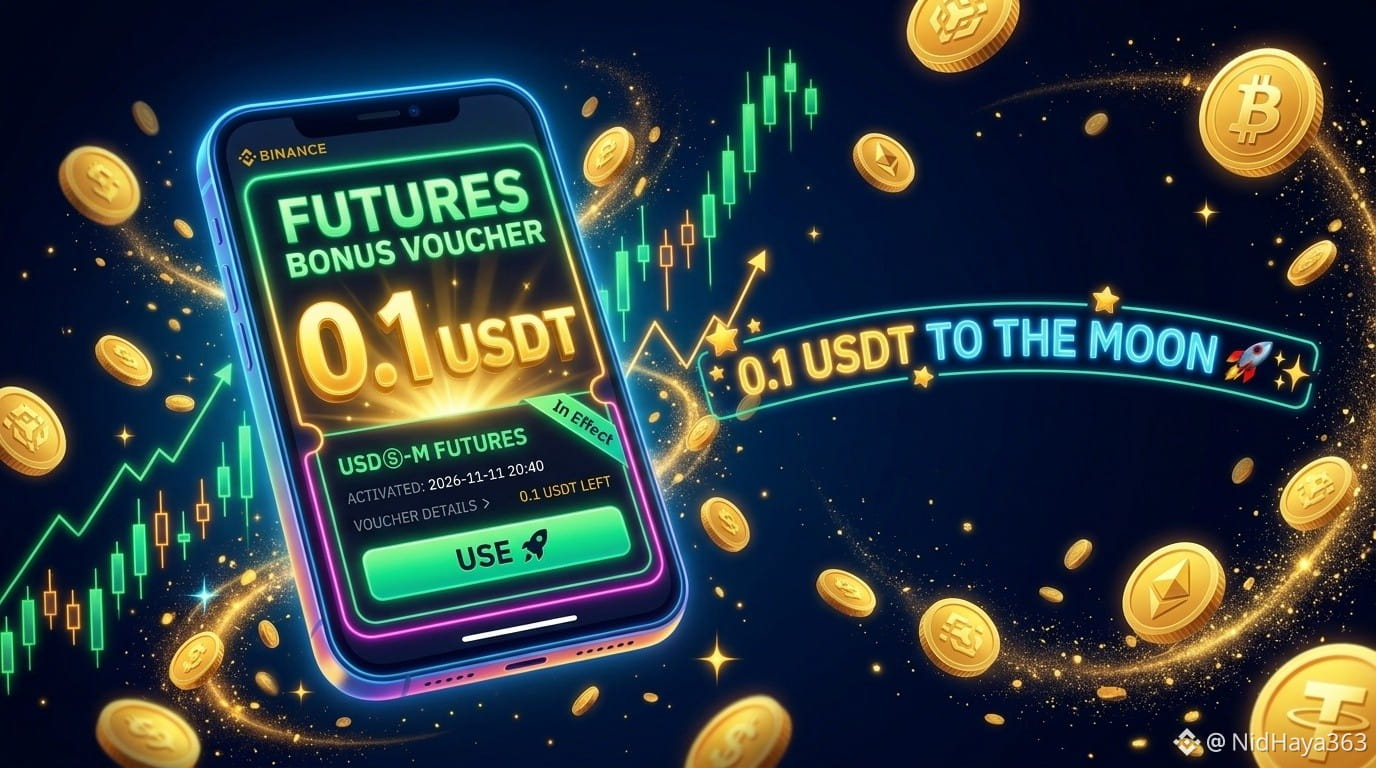
Never underestimate small beginnings in crypto! 💪
Just activated my 0.1 USDT Futures Bonus Voucher in the Binance Rewards Hub. Even small bonuses are great for testing out USDⓈ-M Futures strategies without risking your own capital. 📈
Have you checked your "My Vouchers" tab today? You might have free rewards waiting! 👀
#BinanceSquare #FuturesTrading #CryptoRewards #USDT #tradingjourney
1
348

·
--
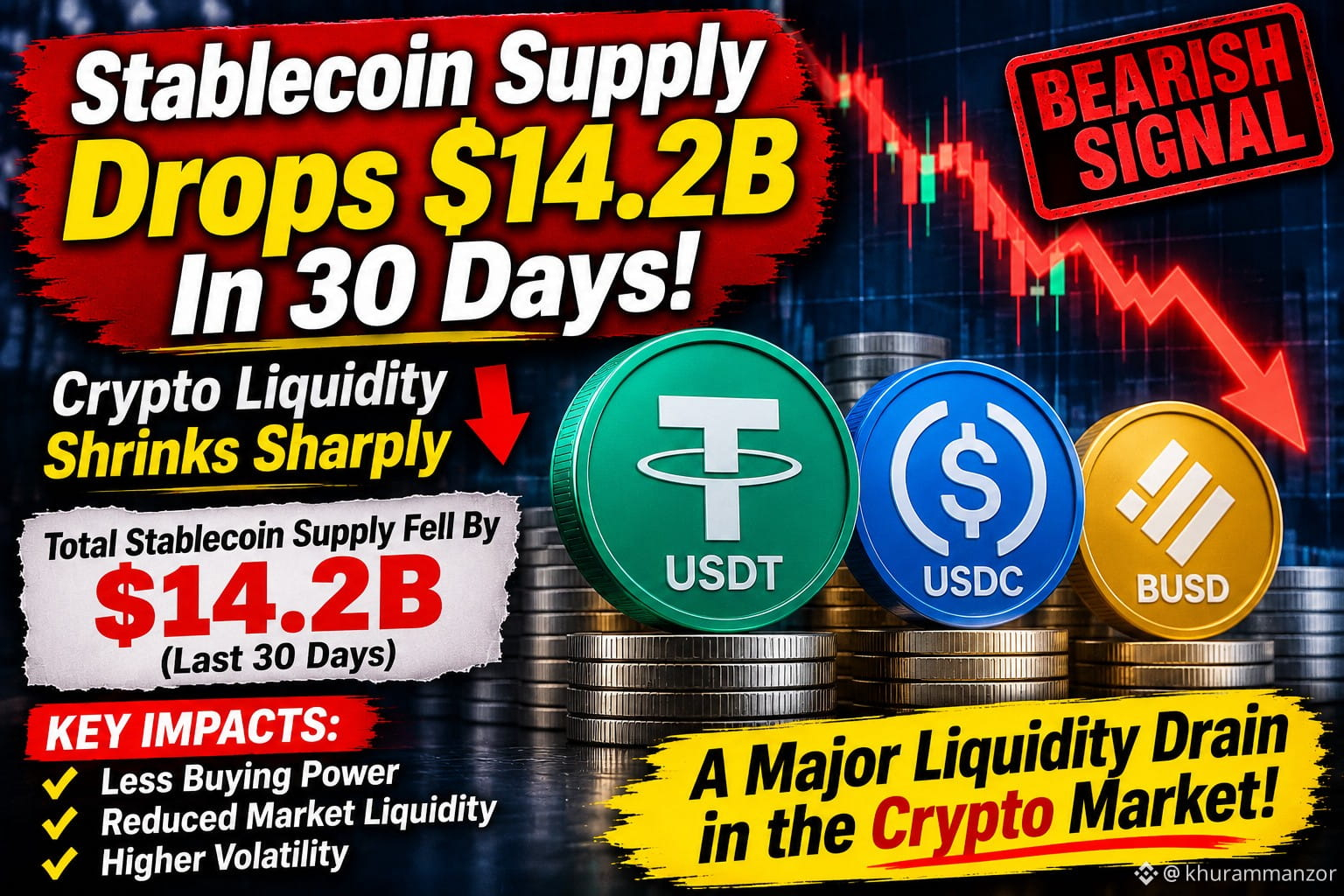
🚨 **BREAKING: $14.2 BILLION WIPED OUT OF STABLECOIN SUPPLY IN JUST 30 DAYS!**
Crypto liquidity is shrinking, and investors are watching closely! ⚠️
According to Glassnode's latest report, the supply of major stablecoins dropped by **$14.2 BILLION over the past 30 days**, marking the biggest monthly contraction since the 2022 bear market.
📊 **HERE'S WHAT THE DATA SHOWS:**
🔴 Total stablecoin supply fell to below $280 billion, according to Glassnode's tracked measure.
🔴 USDT lost approximately $6.6 billion in market capitalization over 60 days through November 7, according to CryptoQuant.
🔴 USDT and $USDC account for the majority of stablecoin liquidity.
🔴 US spot Bitcoin ETFs also recorded approximately $1.6 billion in net outflows over 20 trading sessions.
⚠️ **WHY SHOULD CRYPTO INVESTORS CARE?**
Stablecoins are the cash reserves of the crypto market.
When their supply contracts, it can signal:
- Less available buying power.
- Investors redeeming stablecoins for dollars.
- Reduced liquidity for $BTC
{future}(BTCUSDT)
and altcoins.
- Potentially greater volatility across the market.
🔥 **THE BIG QUESTION:**
Could this liquidity drain signal another major correction, or is the market preparing for a powerful recovery?
Remember: A shrinking stablecoin supply doesn't guarantee a Bitcoin crash.
📈 Watch $USDT supply, ETF flows and fresh stablecoin minting for the next major market signal.
**WHAT'S YOUR MOVE?**
🟢 BUY THE DIP
🔴 WAIT FOR MORE DOWNSIDE
#BTC #USDT #USDC
🚨 **BREAKING: $14.2 BILLION WIPED OUT OF STABLECOIN SUPPLY IN JUST 30 DAYS!**
Crypto liquidity is shrinking, and investors are watching closely! ⚠️
According to Glassnode's latest report, the supply of major stablecoins dropped by **$14.2 BILLION over the past 30 days**, marking the biggest monthly contraction since the 2022 bear market.
📊 **HERE'S WHAT THE DATA SHOWS:**
🔴 Total stablecoin supply fell to below $280 billion, according to Glassnode's tracked measure.
🔴 USDT lost approximately $6.6 billion in market capitalization over 60 days through November 7, according to CryptoQuant.
🔴 USDT and $USDC account for the majority of stablecoin liquidity.
🔴 US spot Bitcoin ETFs also recorded approximately $1.6 billion in net outflows over 20 trading sessions.
⚠️ **WHY SHOULD CRYPTO INVESTORS CARE?**
Stablecoins are the cash reserves of the crypto market.
When their supply contracts, it can signal:
- Less available buying power.
- Investors redeeming stablecoins for dollars.
- Reduced liquidity for $BTC
and altcoins.
- Potentially greater volatility across the market.
🔥 **THE BIG QUESTION:**
Could this liquidity drain signal another major correction, or is the market preparing for a powerful recovery?
Remember: A shrinking stablecoin supply doesn't guarantee a Bitcoin crash.
📈 Watch $USDT supply, ETF flows and fresh stablecoin minting for the next major market signal.
**WHAT'S YOUR MOVE?**
🟢 BUY THE DIP
🔴 WAIT FOR MORE DOWNSIDE
#BTC #USDT #USDC
9

·
--
Holding $USDT 8.1 USDT
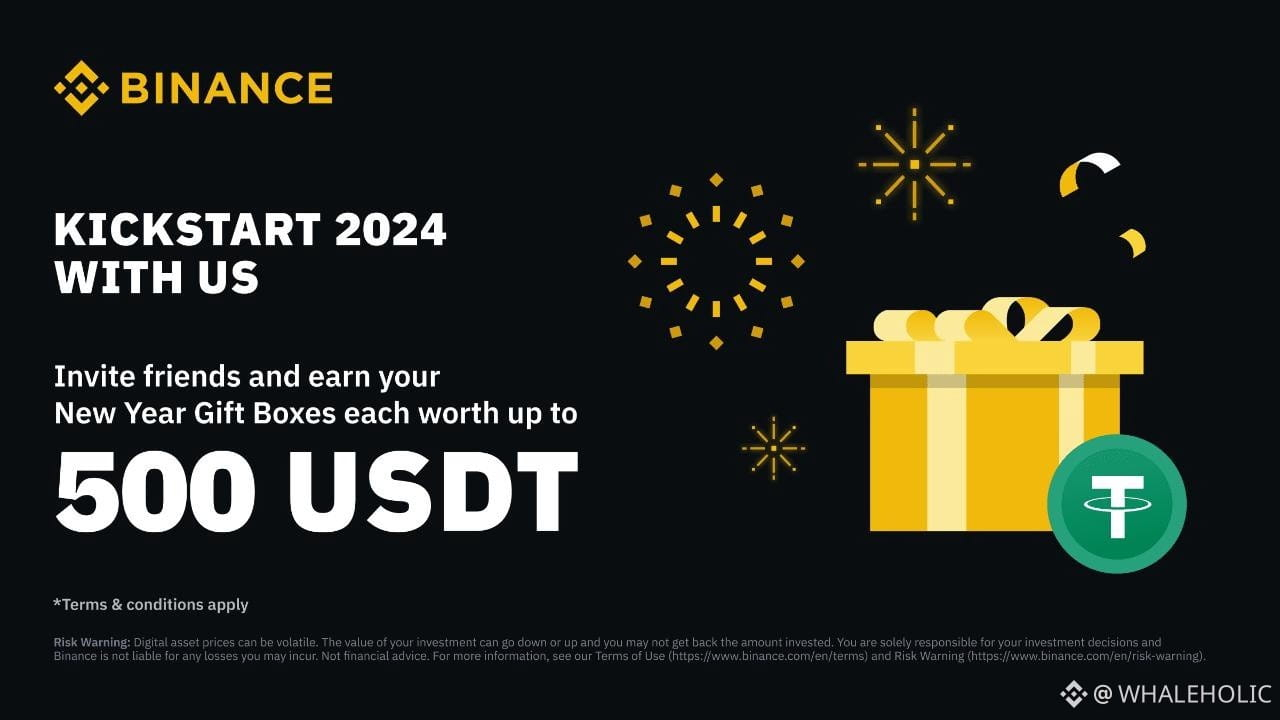
🎁 FREE USDT IS WAITING!
FREE $USDT ? YES, IT'S POSSIBLE! 💚
Why just watch crypto when you can explore opportunities to earn rewards?
Check Binance campaigns, complete eligible tasks, and discover available USDT rewards!
Who's ready to grab their next reward? 👇
#Binance #USDT #FreeCrypto #CryptoRewards
FREE $USDT ? YES, IT'S POSSIBLE! 💚
Why just watch crypto when you can explore opportunities to earn rewards?
Check Binance campaigns, complete eligible tasks, and discover available USDT rewards!
Who's ready to grab their next reward? 👇
#Binance #USDT #FreeCrypto #CryptoRewards
31

·
--
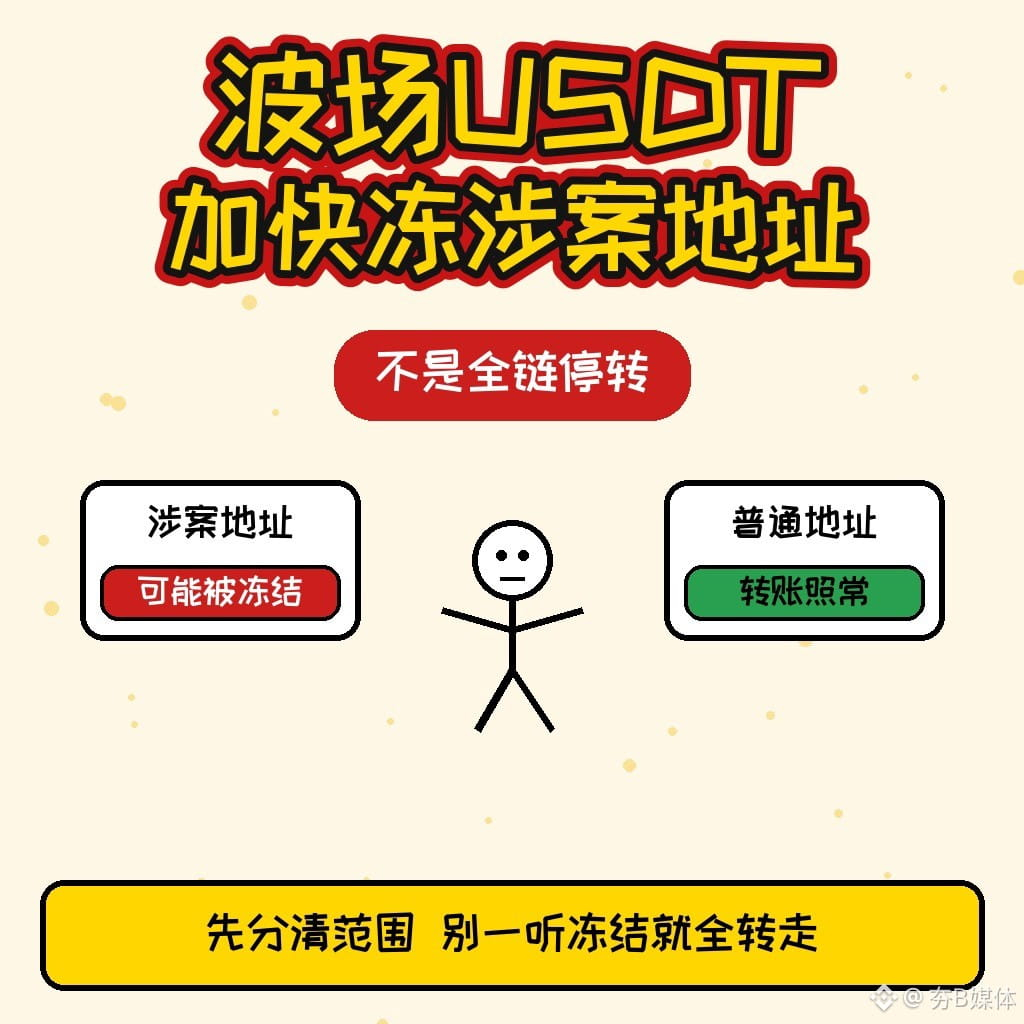
Tron USDT to speed up freezing addresses linked to crimes: This does not mean the entire chain will stop, and ordinary transfers are not being indiscriminately blocked
At around 19:00 today (Hong Kong time), Tron, Tether, and blockchain analytics company Chainalysis announced the formation of a “Digital Crimes Special Task Force” to identify suspicious activity involving USDT on the Tron blockchain and work with law enforcement agencies to speed up the tracing and freezing of funds.
First, let’s clarify the scope. This initiative targets USDT on Tron—not all blockchains or all stablecoins. It aims to freeze addresses identified as being linked to fraud, theft, or similar crimes; it does not mean indiscriminately halting ordinary transfers. Tether already has the ability to freeze USDT, and the company says it has frozen more than $7 billion in total. The new task force is primarily intended to strengthen monitoring and cooperation so that action can be taken more quickly before funds are moved. Their T3 team with TRM Labs was disbanded at the end of August.
Ordinary users do not need to immediately move all their Tron USDT as a result. The key thing to bear in mind is that if an address is later identified as being linked to a crime, the USDT held at that address may be frozen by the issuer. The specific criteria for flagging addresses and the appeal process have not yet been announced; refer to future statements from Tether and Tron.
Which blockchain do you mainly use to send and receive USDT?
This is not investment advice.
Source: The Block, Cointelegraph (2026-11-12, around 19:00 Hong Kong time); paraphrased by Wu Says
2026-11-12 around 20:25 Hong Kong time
#USDT #TRX #波场 #夯B媒体 $USDT $TRX
216

WHY $USDT MATTERS MORE THAN YOU THINK
$USDT is not designed to deliver the explosive price movements traders seek in $BTC or altcoins. Its real value is utility: moving capital, maintaining dollar-denominated exposure and accessing trading pairs across exchanges. In a fast-moving market, stablecoin liquidity can be just as important as price action.
#USDT #Tether #CryptoLiquidity #Stablecoins #Binance
1
5
Log in to explore more content
Join global crypto users on Binance Square
⚡️ Get latest and useful information about crypto.
💬 Trusted by the world’s largest crypto exchange.
👍 Discover real insights from verified creators.
Email / Phone number
Trending Topics
1
#HuangExitNvidiaStrategyInFocus
82,053 views
932 Discussing
2
#AnthropicRejectsIPODelayValuationinQuestion
680,198 views
5,211 Discussing
3
#BitMineReports$6.3BNetLossForFiscal2026
10,320 views
115 Discussing
4
#ChipStocksExtendLossesAfterNvidiaCEOChange
32,208 views
413 Discussing
5
#ThailandProposes$148KDailyStablecoinDepositWithdrawalCaps
3,000 views
45 Discussing
6
#CoreWeaveJumps10%On168%RevenueGrowth
185,439 views
1,647 Discussing
7
#ZcashFallsBelow$1000ForFirstTimeSinceSeptember
87,284 views
259 Discussing
8
#MSCIRemovalMayCurbStrategy’sBitcoinBuying
53,136 views
586 Discussing
9
#TradFiForBeginners
530,568 views
3,682 Discussing
10
#USJoblessClaimsRise
19.1M views
7,792 Discussing