Binance Square
#cftc

cftc

1.8M views
3,677 Discussing
Price Pulse
·
--
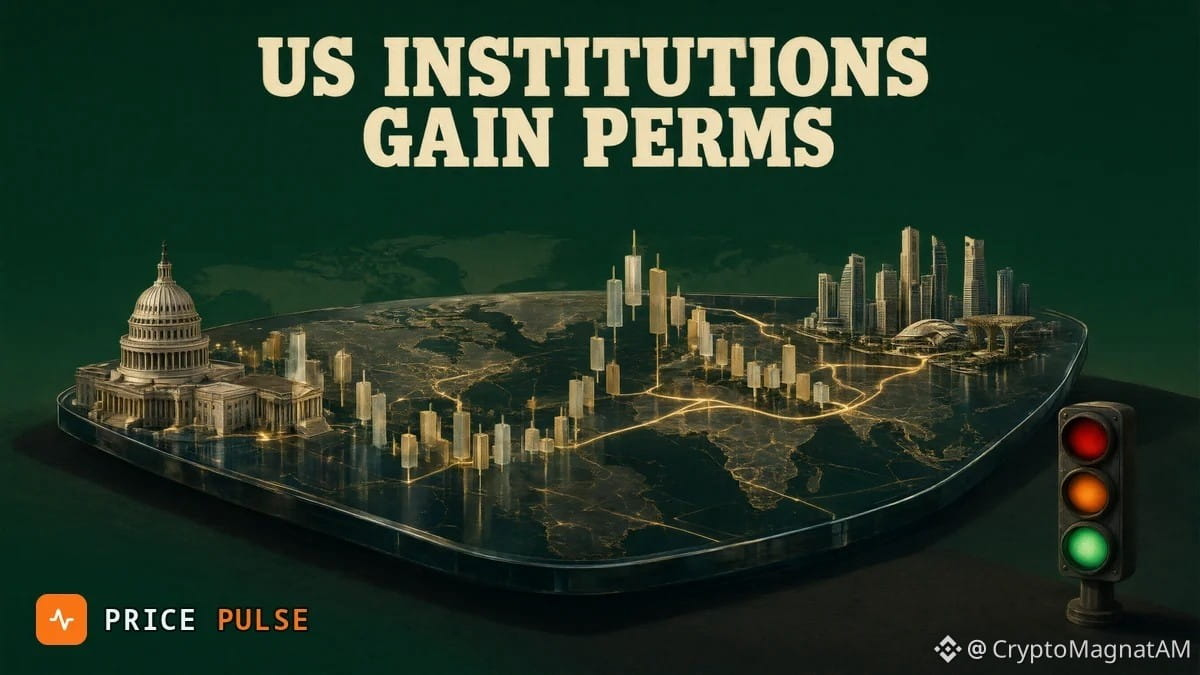
🟢 The CFTC has cleared Singapore Exchange to offer U.S. institutional investors direct access to its Bitcoin and Ether perpetual futures. This opens a regulated gateway ⚡ for American capital to trade crypto perpetuals without offshore counterparty risk. Expect deeper global order books 📈 and tighter spreads as Wall Street desks bridge liquidity across Asian trading hours. Will CFTC-cleared overseas perps siphon major institutional volume from unregulated offshore exchanges? 👇 #cftc #sgx #perpetuals #institutions #derivatives
🟢 The CFTC has cleared Singapore Exchange to offer U.S. institutional investors direct access to its Bitcoin and Ether perpetual futures. This opens a regulated gateway ⚡ for American capital to trade crypto perpetuals without offshore counterparty risk. Expect deeper global order books 📈 and tighter spreads as Wall Street desks bridge liquidity across Asian trading hours.

Will CFTC-cleared overseas perps siphon major institutional volume from unregulated offshore exchanges? 👇

#cftc #sgx #perpetuals #institutions #derivatives
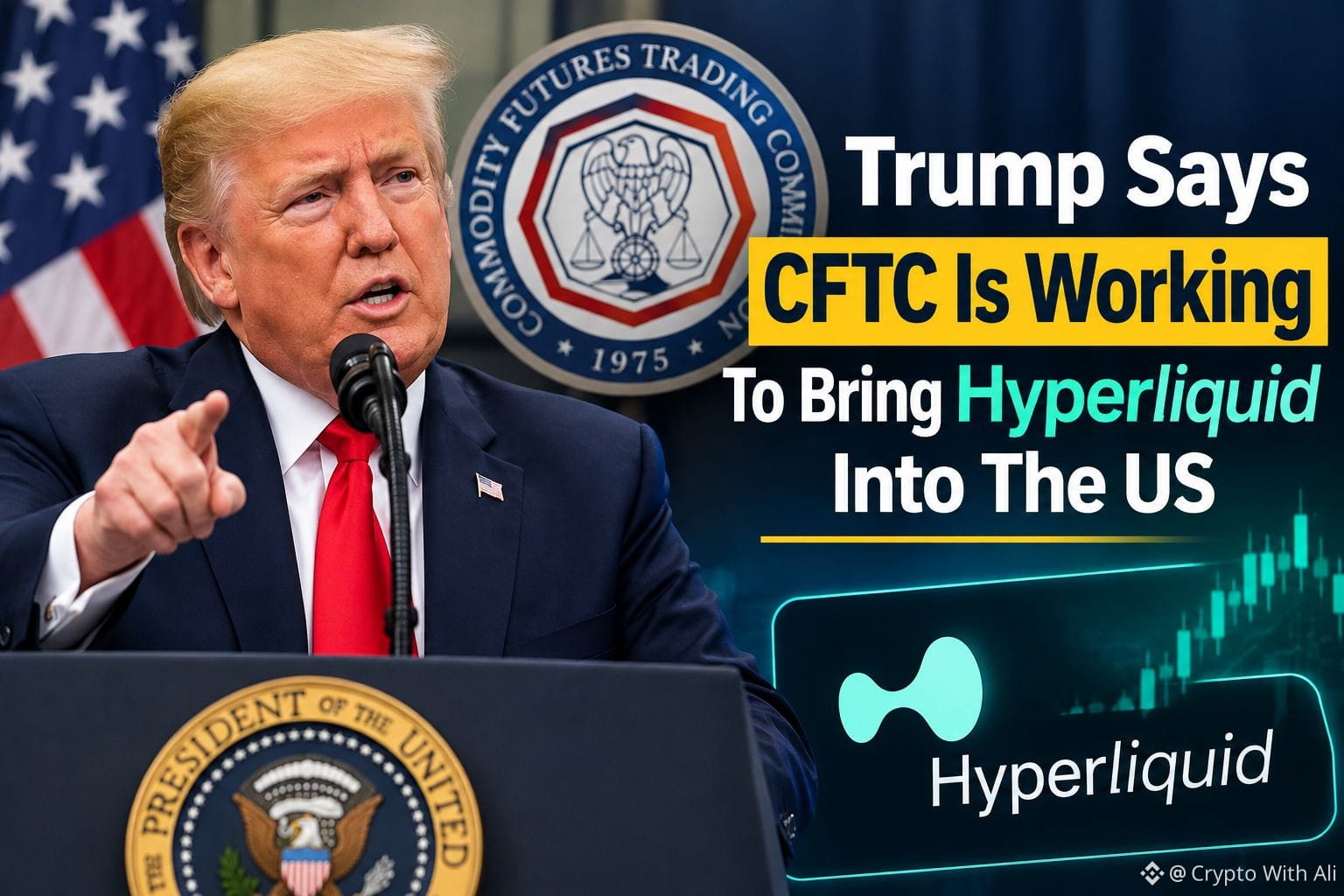
Trump Says CFTC Is Working To Bring Hyperliquid Into The U.S 🇺🇸 #CFTC Key Takeaways: CFTC-led compliance effort HYPE up over 6% Selig details expected Thursday Summary : President Donald Trump announced that regulators are working to bring Hyperliquid into the U.S. in a fully compliant way, giving a nod to CFTC Chairman Michael Selig for leading the charge during a White House gathering. 🏛️ Within hours of the news, HYPE jumped more than 6%, trading near $68.19 with a market cap sitting around $15.1 billion. Selig also hinted that more details would be shared soon. 📈🚀 The move highlights how regulators are increasingly engaging with offshore-origin perpetual futures platforms to find a path for onshore access. 🌐✨ $ETH {spot}(ETHUSDT) $BTC {spot}(BTCUSDT) $BNB {spot}(BNBUSDT) #RippleLobbiesToAdvanceCLARITYActVote #ChinaAugustCPIRises0.8%YoY #USStrikesTargetsNearHormuzAndJask #OilRisesToHighestSinceJuly
Trump Says CFTC Is Working To Bring Hyperliquid Into The U.S 🇺🇸
#CFTC
Key Takeaways:
CFTC-led compliance effort
HYPE up over 6%
Selig details expected Thursday

Summary :
President Donald Trump announced that regulators are working to bring Hyperliquid into the U.S. in a fully compliant way, giving a nod to CFTC Chairman Michael Selig for leading the charge during a White House gathering. 🏛️

Within hours of the news, HYPE jumped more than 6%, trading near $68.19 with a market cap sitting around $15.1 billion. Selig also hinted that more details would be shared soon. 📈🚀

The move highlights how regulators are increasingly engaging with offshore-origin perpetual futures platforms to find a path for onshore access. 🌐✨
$ETH
$BTC
$BNB
#RippleLobbiesToAdvanceCLARITYActVote #ChinaAugustCPIRises0.8%YoY #USStrikesTargetsNearHormuzAndJask #OilRisesToHighestSinceJuly
Bitcoin Up or Down on September 9?

Bitcoin Up or Down on September 9?

1%Up99%Down
Volume $59,339.52
🚨 CME vs Hyperliquid: The US on the brink of legalizing perps! In the US, a war has erupted over the derivatives market. CME Group, a giant exchange operator, has filed a lawsuit against the regulator CFTC, trying to block perpetual futures (perpetuals) for Coinbase and Kalshi, calling them a «disaster» for the market. However, Hyperliquid Policy Center stepped in to defend the CFTC, together with the former US Solicitor General Elizabeth Prelogar. They stated directly that CME is simply afraid of competition and is trying to stifle innovations it itself is unable to implement. A win for the CFTC in this court case means the final legalization of perps in the US and a green light for a major DEX platform event to enter the American market. Does CME genuinely see risks, or is it just protecting its monopoly from DEX? #BinanceSquare #Hyperliquid #CFTC #Trading {future}(HYPEUSDT)
🚨 CME vs Hyperliquid: The US on the brink of legalizing perps!
In the US, a war has erupted over the derivatives market. CME Group, a giant exchange operator, has filed a lawsuit against the regulator CFTC, trying to block perpetual futures (perpetuals) for Coinbase and Kalshi, calling them a «disaster» for the market.
However, Hyperliquid Policy Center stepped in to defend the CFTC, together with the former US Solicitor General Elizabeth Prelogar. They stated directly that CME is simply afraid of competition and is trying to stifle innovations it itself is unable to implement.
A win for the CFTC in this court case means the final legalization of perps in the US and a green light for a major DEX platform event to enter the American market.
Does CME genuinely see risks, or is it just protecting its monopoly from DEX?

#BinanceSquare #Hyperliquid #CFTC #Trading
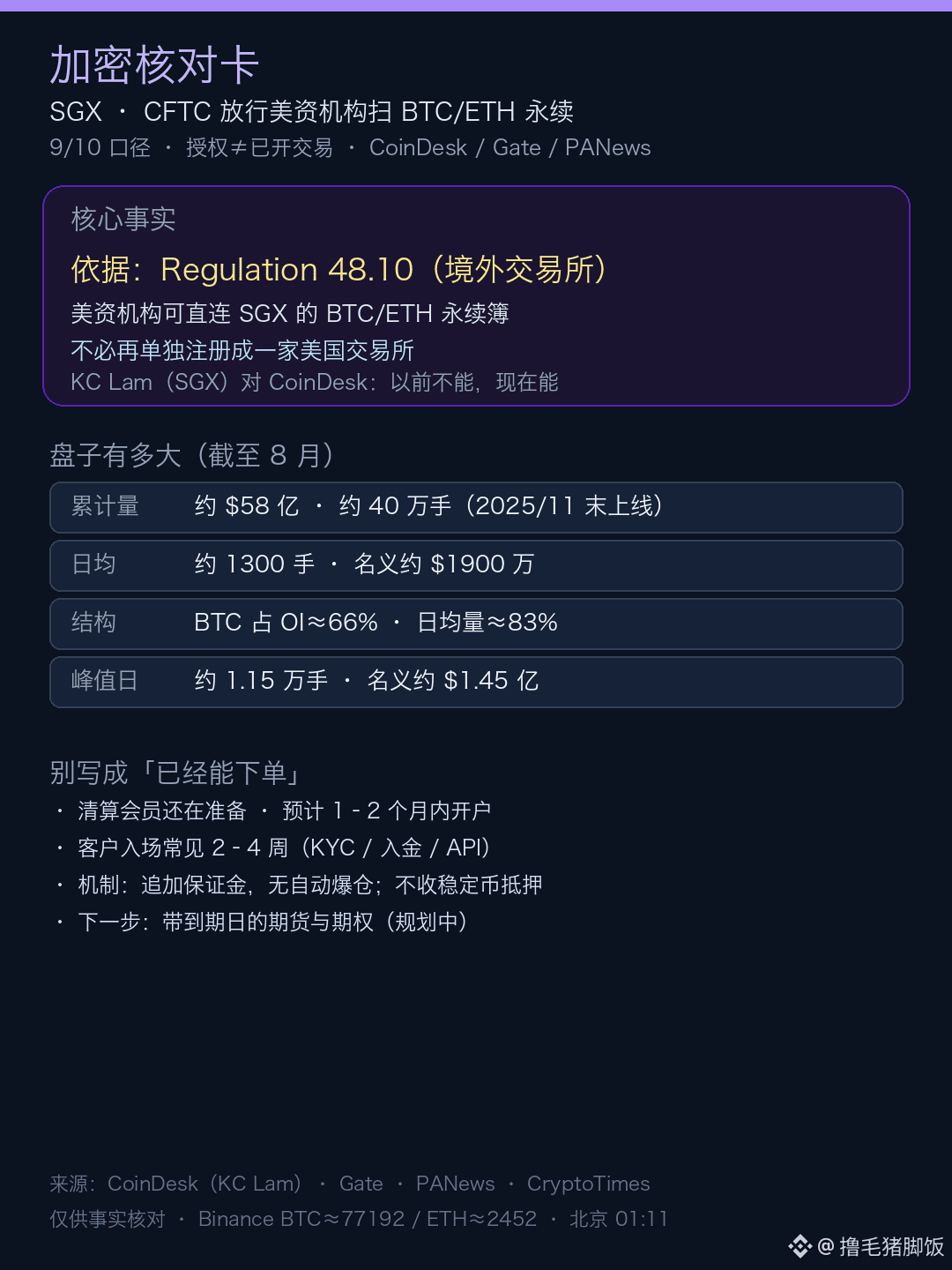
U.S. institutions want to play the long game with perpetual futures—and they don’t necessarily have to wait until a “U.S. version of an exchange” gets approved first. Singapore Exchange (SGX) obtained CFTC Regulation 48.10 authorization as of the 9/10 criteria: U.S.-based firms can directly connect to its BTC / ETH perpetual order book. KC Lam (Head of Crypto Derivatives at SGX) told CoinDesk very plainly: “It wasn’t possible before, now it is.” Gate and PANews cross-checked and confirmed. The trading interface has actually been live for a while. Since late November 2025 go-live, cumulative totals are about $5.8 billion and roughly 400,000 contracts; In August, average daily volume is about 1,300 contracts, with nominal notional around $19 million; BTC remains the main driver (OI≈66%, daily volume≈83%). But don’t write it as “you can place orders tonight.” With authorization in hand, U.S. clearing members are still onboarding—officially, the timeline is in the next 1–2 months; on the client side, the common expectation is 2–4 weeks. The mechanics are also more like traditional futures: variation margin / additional margin calls, no automatic liquidations, and stablecoins are not used as collateral. In this round, Binance was rechecked (Beijing time ~01:11): BTC≈77192 / ETH≈2452. I think this is more like “overseas-compliant perpetuals opened a window for U.S.-based capital,” not another piece of trading-news hype. Next, watch: whether real trading volume truly ramps up, and when futures/options that include expiry dates go live. Not investment advice. #SGX #CFTC $BTC $ETH
U.S. institutions want to play the long game with perpetual futures—and they don’t necessarily have to wait until a “U.S. version of an exchange” gets approved first.

Singapore Exchange (SGX) obtained CFTC Regulation 48.10 authorization as of the 9/10 criteria:
U.S.-based firms can directly connect to its BTC / ETH perpetual order book.
KC Lam (Head of Crypto Derivatives at SGX) told CoinDesk very plainly: “It wasn’t possible before, now it is.”
Gate and PANews cross-checked and confirmed.

The trading interface has actually been live for a while.
Since late November 2025 go-live, cumulative totals are about $5.8 billion and roughly 400,000 contracts;
In August, average daily volume is about 1,300 contracts, with nominal notional around $19 million;
BTC remains the main driver (OI≈66%, daily volume≈83%).

But don’t write it as “you can place orders tonight.”
With authorization in hand, U.S. clearing members are still onboarding—officially, the timeline is in the next 1–2 months; on the client side, the common expectation is 2–4 weeks.
The mechanics are also more like traditional futures: variation margin / additional margin calls, no automatic liquidations, and stablecoins are not used as collateral.

In this round, Binance was rechecked (Beijing time ~01:11): BTC≈77192 / ETH≈2452.

I think this is more like “overseas-compliant perpetuals opened a window for U.S.-based capital,” not another piece of trading-news hype.
Next, watch: whether real trading volume truly ramps up, and when futures/options that include expiry dates go live.

Not investment advice.
#SGX #CFTC $BTC $ETH

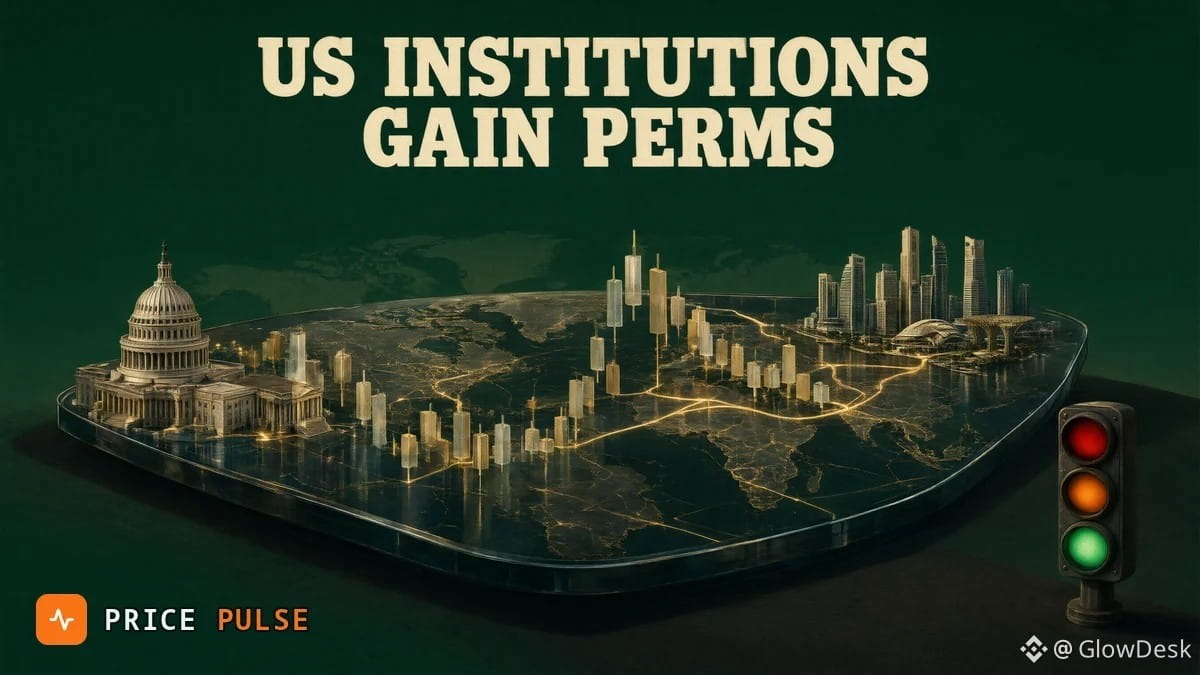
🟢 The CFTC has authorized Singapore Exchange to offer institutional investors from the U.S. direct access to its Bitcoin and Ether perpetual futures. This opens a regulated ⚡ gateway for U.S. capital to trade crypto perps with no offshore counterparty risk. Expect deeper global order books 📈 and tighter spreads as Wall Street desks connect liquidity across Asian trading hours. Will CFTC-authorized foreign perps divert a significant amount of institutional volume away from unregulated offshore exchanges? 👇 #cftc #sgx #perpetuals #institutions #derivatives
🟢 The CFTC has authorized Singapore Exchange to offer institutional investors from the U.S. direct access to its Bitcoin and Ether perpetual futures. This opens a regulated ⚡ gateway for U.S. capital to trade crypto perps with no offshore counterparty risk. Expect deeper global order books 📈 and tighter spreads as Wall Street desks connect liquidity across Asian trading hours.

Will CFTC-authorized foreign perps divert a significant amount of institutional volume away from unregulated offshore exchanges? 👇

#cftc #sgx #perpetuals #institutions #derivatives
Citadel Securities officially stated its position on the regulatory jurisdiction for event contracts and perpetual derivatives: for products linked to U.S.-listed companies and their securities, the SEC should have primary regulatory authority, and exchanges cannot bypass review by relying on self-certification. It also calls on the SEC to improve the efficiency of filings for new products, so that regulatory gaps or overlapping jurisdiction do not become channels for market arbitrage. The core dispute is this: are equity-linked event contracts securities or commodities? And how should perpetual derivatives be classified? If the SEC and the CFTC do not promptly draw clear boundaries, both traditional finance and the crypto derivatives market could be affected. #SEC #CFTC #Crypto Regulation
Citadel Securities officially stated its position on the regulatory jurisdiction for event contracts and perpetual derivatives: for products linked to U.S.-listed companies and their securities, the SEC should have primary regulatory authority, and exchanges cannot bypass review by relying on self-certification.

It also calls on the SEC to improve the efficiency of filings for new products, so that regulatory gaps or overlapping jurisdiction do not become channels for market arbitrage.

The core dispute is this: are equity-linked event contracts securities or commodities? And how should perpetual derivatives be classified? If the SEC and the CFTC do not promptly draw clear boundaries, both traditional finance and the crypto derivatives market could be affected.

#SEC #CFTC #Crypto Regulation
🟢 The CFTC has allowed the Singapore Exchange to offer U.S. institutional investors direct access to its bitcoin and ether perpetual futures. This opens up a regulated gateway ⚡ for U.S. capital to trade crypto perps without offshore counterparty risk. Expect deeper global order books 📈 and tighter spreads as Wall Street venues link liquidity during Asian trading hours. Will the CFTC-approved overseas perps pull a significant amount of institutional volume away from unregulated offshore exchanges? 👇 #cftc #sgx #perpetuals #institutions #derivatives
🟢 The CFTC has allowed the Singapore Exchange to offer U.S. institutional investors direct access to its bitcoin and ether perpetual futures. This opens up a regulated gateway ⚡ for U.S. capital to trade crypto perps without offshore counterparty risk. Expect deeper global order books 📈 and tighter spreads as Wall Street venues link liquidity during Asian trading hours.

Will the CFTC-approved overseas perps pull a significant amount of institutional volume away from unregulated offshore exchanges? 👇

#cftc #sgx #perpetuals #institutions #derivatives
Prediction market platform Kalshi has received approval from the U.S. CFTC and will launch perpetual gold and silver contracts on September 10. The key point is not just that “two more trading products” have been added, but that this is the first non-crypto perpetual contract product approved by the CFTC. Previously, Kalshi received approval at the end of May to offer crypto perpetual contracts; its related notional trading volume has already reached $44 billion. This means the trading mechanism of perpetual contracts—one that has been proven workable in the crypto market—is now being formally accepted into the traditional financial regulatory framework. After gold and silver, if assets such as stock indexes and foreign exchange follow suit, the logic behind traditional futures positions, margin, and funding rates could all be reshaped, and long-established exchanges like CME may face more direct competition. For the crypto industry, this is not merely a diversion of capital, but an important validation that the Perp model is entering mainstream assets.#Kalshi #CFTC #永续合约
Prediction market platform Kalshi has received approval from the U.S. CFTC and will launch perpetual gold and silver contracts on September 10. The key point is not just that “two more trading products” have been added, but that this is the first non-crypto perpetual contract product approved by the CFTC. Previously, Kalshi received approval at the end of May to offer crypto perpetual contracts; its related notional trading volume has already reached $44 billion.

This means the trading mechanism of perpetual contracts—one that has been proven workable in the crypto market—is now being formally accepted into the traditional financial regulatory framework. After gold and silver, if assets such as stock indexes and foreign exchange follow suit, the logic behind traditional futures positions, margin, and funding rates could all be reshaped, and long-established exchanges like CME may face more direct competition.

For the crypto industry, this is not merely a diversion of capital, but an important validation that the Perp model is entering mainstream assets.#Kalshi #CFTC #永续合约
Citadel Securities’ statement on SEC and CFTC joint product definition consultation: for products linked to U.S.-listed companies or their securities, the primary regulatory authority should rest with the SEC; exchanges cannot bypass review by relying on self-certification mechanisms. It also calls for the SEC to improve the efficiency and predictability of reviews for filings of new products. A key dispute is how equity-linked event contracts and perpetual derivatives should be classified. This is not only a question for Wall Street equity products; it could also affect the regulatory boundary for U.S. perpetual contracts. If regulation draws the line based on “economic substance” rather than product names, the licensing pathway and compliance costs for crypto platforms expanding their business in the U.S. would become clearer. #SEC #CFTC #derivatives regulation
Citadel Securities’ statement on SEC and CFTC joint product definition consultation: for products linked to U.S.-listed companies or their securities, the primary regulatory authority should rest with the SEC; exchanges cannot bypass review by relying on self-certification mechanisms. It also calls for the SEC to improve the efficiency and predictability of reviews for filings of new products.

A key dispute is how equity-linked event contracts and perpetual derivatives should be classified. This is not only a question for Wall Street equity products; it could also affect the regulatory boundary for U.S. perpetual contracts. If regulation draws the line based on “economic substance” rather than product names, the licensing pathway and compliance costs for crypto platforms expanding their business in the U.S. would become clearer.

#SEC #CFTC #derivatives regulation
Citadel Securities responds to SEC and CFTC’s joint product definition consultation: for products linked to U.S.-listed companies and their securities, the SEC should have primary regulatory authority; exchanges should not circumvent SEC oversight through self-certification mechanisms. The document also calls on the SEC to improve the efficiency and timeliness of new product registration and review. The core dispute is how equity-linked event contracts and perpetual derivatives should be classified—and which regulator should oversee them. If the scope of SEC jurisdiction expands, the listing pathways, disclosure requirements, and compliance obligations for relevant products could all be affected, and crypto-related perpetual derivatives would be hard to exempt. This is not only a question of how responsibilities are divided between two regulatory agencies; it also determines how traditional securities rules extend to new trading structures. Further developments are worth monitoring. #SEC #CFTC #Regulatory update
Citadel Securities responds to SEC and CFTC’s joint product definition consultation: for products linked to U.S.-listed companies and their securities, the SEC should have primary regulatory authority; exchanges should not circumvent SEC oversight through self-certification mechanisms. The document also calls on the SEC to improve the efficiency and timeliness of new product registration and review.

The core dispute is how equity-linked event contracts and perpetual derivatives should be classified—and which regulator should oversee them. If the scope of SEC jurisdiction expands, the listing pathways, disclosure requirements, and compliance obligations for relevant products could all be affected, and crypto-related perpetual derivatives would be hard to exempt.

This is not only a question of how responsibilities are divided between two regulatory agencies; it also determines how traditional securities rules extend to new trading structures. Further developments are worth monitoring.

#SEC #CFTC #Regulatory update
Citadel Securities’ latest statement directly addresses the dispute over regulatory jurisdiction for U.S. event contracts and perpetual derivatives. In its responses submitted to the SEC and CFTC, it says that for products linked to U.S.-listed companies and their securities, the SEC should have primary regulatory authority; exchanges cannot bypass SEC oversight by relying on self-certification mechanisms. At the same time, the SEC should also shorten the review cycle for new products and improve filing efficiency. The key issue is not just “who regulates,” but how equity-linked event contracts and perpetual derivatives are actually classified. If the regulatory boundaries are clear, it will be harder for stock-style event contracts to expand into regulatory gray areas; for crypto perpetual contracts, it may also prompt U.S. markets to re-examine product classification, listing pathways, and investor protection. Traditional market makers have publicly called for role clarification, indicating that competition for this kind of product has moved into the institutional framework. How the SEC and CFTC draw the lines going forward is something that warrants ongoing attention. #SEC #CFTC #CitadelSecurities
Citadel Securities’ latest statement directly addresses the dispute over regulatory jurisdiction for U.S. event contracts and perpetual derivatives. In its responses submitted to the SEC and CFTC, it says that for products linked to U.S.-listed companies and their securities, the SEC should have primary regulatory authority; exchanges cannot bypass SEC oversight by relying on self-certification mechanisms. At the same time, the SEC should also shorten the review cycle for new products and improve filing efficiency.

The key issue is not just “who regulates,” but how equity-linked event contracts and perpetual derivatives are actually classified. If the regulatory boundaries are clear, it will be harder for stock-style event contracts to expand into regulatory gray areas; for crypto perpetual contracts, it may also prompt U.S. markets to re-examine product classification, listing pathways, and investor protection.

Traditional market makers have publicly called for role clarification, indicating that competition for this kind of product has moved into the institutional framework. How the SEC and CFTC draw the lines going forward is something that warrants ongoing attention.

#SEC #CFTC #CitadelSecurities
Hyperliquid supports the CFTC in its fight over perpetual futures contracts, urging the court to dismiss CME’s lawsuit • Hyperliquid Policy Center alleges that CME Group is obstructing innovation in the cryptocurrency space. • The organization asks the court to reject CME’s lawsuit against the Commodity Futures Trading Commission (CFTC). • This move supports the CFTC’s position on regulation of perpetual futures contracts. #BinanceSquare #CryptoNews #CFTC #CME $btc $eth #vlikevn Titanbot Source: The Block
Hyperliquid supports the CFTC in its fight over perpetual futures contracts, urging the court to dismiss CME’s lawsuit

• Hyperliquid Policy Center alleges that CME Group is obstructing innovation in the cryptocurrency space.
• The organization asks the court to reject CME’s lawsuit against the Commodity Futures Trading Commission (CFTC).
• This move supports the CFTC’s position on regulation of perpetual futures contracts.
#BinanceSquare #CryptoNews #CFTC #CME

$btc $eth

#vlikevn Titanbot

Source: The Block
Not just another regulatory news item: the September 15 vote may decide whether US Crypto rules have to wait another four yearsUS Crypto regulation—soon, a crucial milestone for this year is about to arrive. On September 15, the Senate will hold a critical procedural vote on the CLARITY Act. First, let’s make it clear: September 15 is not the final passage of the CLARITY Act. What it determines is whether this bill can overcome procedural hurdles and move into the next stage of consideration. But the issue here is that this step requires 60 votes. If it can’t even clear this step, then formal discussions, amendments, and the final vote that follow basically won’t have much to talk about. So although this looks like a vote on “procedural matters,” it may, in fact, directly determine whether the US Crypto market structure bill has any chance of becoming law this year.

Not just another regulatory news item: the September 15 vote may decide whether US Crypto rules have to wait another four years

US Crypto regulation—soon, a crucial milestone for this year is about to arrive.
On September 15, the Senate will hold a critical procedural vote on the CLARITY Act.
First, let’s make it clear: September 15 is not the final passage of the CLARITY Act.
What it determines is whether this bill can overcome procedural hurdles and move into the next stage of consideration.
But the issue here is that this step requires 60 votes.
If it can’t even clear this step, then formal discussions, amendments, and the final vote that follow basically won’t have much to talk about.
So although this looks like a vote on “procedural matters,” it may, in fact, directly determine whether the US Crypto market structure bill has any chance of becoming law this year.
User-ff5e108f:
CLARITY Act这种参议院博弈分析得很透,但我这种脑子追消息每次都两头挨巴掌,现在干脆全丢给代跑不管了,有兴趣可以去翻翻 他的帖子
🔴 Prediction Markets on the Brink of the US Supreme Court: The Legal Battle of the Year Core Conflict: The State of New York has officially petitioned the U.S. Supreme Court. The key question is whether event and sports outcome contracts on prediction platforms (like Kalshi or Polymarket) constitute illegal gambling under state laws, or if they are federally regulated financial swaps overseen by the CFTC. Why It Is Critically Important: The case impacts the interests of dozens of similar jurisdictions and threatens a complete overhaul of the regulatory framework. Two Opposite Outcomes for the Industry: If state courts prevail (the gambling approach), platforms will be forced to acquire expensive local licenses and pay taxes in each individual region, paralyzing their scalability. If federal preemption wins out (the financial approach), it will protect crypto and fintech prediction platforms from local bans while delivering a major blow to the traditional sportsbook industry. Basis for Review: A previously generated legal conflict and conflicting rulings among different appellate circuits have created ideal conditions for the highest court to settle the matter definitively. #CRYPTO #NEWS #CFTC $BNB {future}(BNBUSDT)
🔴 Prediction Markets on the Brink of the US Supreme Court: The Legal Battle of the Year

Core Conflict: The State of New York has officially petitioned the U.S. Supreme Court. The key question is whether event and sports outcome contracts on prediction platforms (like Kalshi or Polymarket) constitute illegal gambling under state laws, or if they are federally regulated financial swaps overseen by the CFTC.

Why It Is Critically Important: The case impacts the interests of dozens of similar jurisdictions and threatens a complete overhaul of the regulatory framework.

Two Opposite Outcomes for the Industry:

If state courts prevail (the gambling approach), platforms will be forced to acquire expensive local licenses and pay taxes in each individual region, paralyzing their scalability.

If federal preemption wins out (the financial approach), it will protect crypto and fintech prediction platforms from local bans while delivering a major blow to the traditional sportsbook industry.

Basis for Review: A previously generated legal conflict and conflicting rulings among different appellate circuits have created ideal conditions for the highest court to settle the matter definitively.

#CRYPTO #NEWS #CFTC $BNB
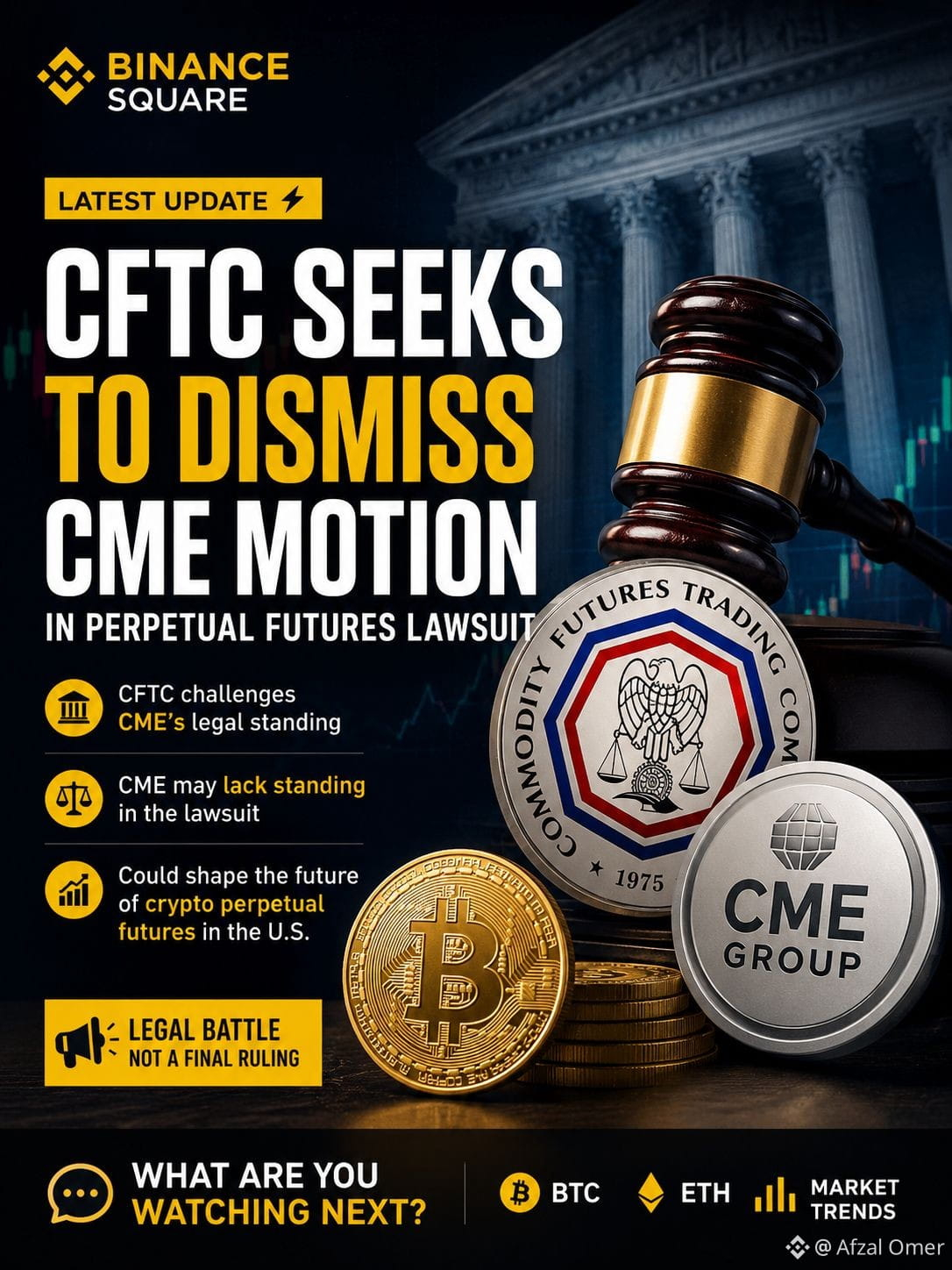
🚨 CFTC MOVES TO DISMISS CME’S PERPETUAL FUTURES LAWSUIT ⚖️ The U.S. Commodity Futures Trading Commission (CFTC) has asked a federal court to dismiss CME Group’s lawsuit challenging the regulatory treatment of crypto perpetual futures. 🔍 What’s happening? CME has challenged the CFTC’s approval allowing Kalshi to offer Bitcoin perpetual futures, arguing that these products should be treated as swaps rather than futures. The CFTC is pushing back, arguing that: • CME may lack legal standing • CME could potentially offer perpetual futures itself • The exchange has not demonstrated sufficient competitive harm 📌 Why it matters for crypto The case could have major implications for the future of Bitcoin perpetual futures in the U.S. If the $CFTC position prevails, it could strengthen the path for regulated, onshore crypto perpetual products and potentially bring more institutional liquidity into the U.S. derivatives market. ⚠️ Important: This is a motion to dismiss, not a final court ruling. The legal battle is still ongoing. 👀 What do you think? Will U.S. regulators ultimately open the door wider for crypto perpetual futures, or will stricter rules prevail? #CFTC #CME #PerpetualFutures #cryptooinsigts
🚨 CFTC MOVES TO DISMISS CME’S PERPETUAL FUTURES LAWSUIT ⚖️

The U.S. Commodity Futures Trading Commission (CFTC) has asked a federal court to dismiss CME Group’s lawsuit challenging the regulatory treatment of crypto perpetual futures.

🔍 What’s happening?
CME has challenged the CFTC’s approval allowing Kalshi to offer Bitcoin perpetual futures, arguing that these products should be treated as swaps rather than futures.

The CFTC is pushing back, arguing that:

• CME may lack legal standing
• CME could potentially offer perpetual futures itself
• The exchange has not demonstrated sufficient competitive harm

📌 Why it matters for crypto

The case could have major implications for the future of Bitcoin perpetual futures in the U.S.

If the $CFTC position prevails, it could strengthen the path for regulated, onshore crypto perpetual products and potentially bring more institutional liquidity into the U.S. derivatives market.

⚠️ Important: This is a motion to dismiss, not a final court ruling. The legal battle is still ongoing.

👀 What do you think?

Will U.S. regulators ultimately open the door wider for crypto perpetual futures, or will stricter rules prevail?

#CFTC #CME #PerpetualFutures #cryptooinsigts
⚖️ The U.S. Commodity Futures Trading Commission seeks to dismiss CME's lawsuit over perpetual Bitcoin futures contracts The U.S. Commodity Futures Trading Commission (CFTC) has filed a motion in federal court to dismiss the lawsuit brought by CME Group. The case concerns CME's challenge to the regulator's approval of cryptocurrency derivatives contracts tied to perpetual futures offered by the Kalshi platform. ━━━━━━━━━━━━━━ 📊 Impact: 📈 High 🏷️ REGULATION #CFTC #Regulation #Crypto #Futures #Legal 📰 Source: bitcoinfoundation.org
⚖️ The U.S. Commodity Futures Trading Commission seeks to dismiss CME's lawsuit over perpetual Bitcoin futures contracts

The U.S. Commodity Futures Trading Commission (CFTC) has filed a motion in federal court to dismiss the lawsuit brought by CME Group. The case concerns CME's challenge to the regulator's approval of cryptocurrency derivatives contracts tied to perpetual futures offered by the Kalshi platform.

━━━━━━━━━━━━━━
📊 Impact: 📈 High
🏷️ REGULATION

#CFTC #Regulation #Crypto #Futures #Legal

📰 Source: bitcoinfoundation.org
⚖️ The Commodity Futures Trading Commission requests dismissal of CME's lawsuit against Kalshi over Bitcoin futures contracts The U.S. Commodity Futures Trading Commission (CFTC) has filed a request to dismiss the lawsuit brought by the Chicago Mercantile Exchange (CME) against the Kalshi platform. The case concerns Kalshi's Bitcoin (BTC) futures contracts, and this move comes in a context that raises questions about the nature of regulating crypto derivative products in the United States. ━━━━━━━━━━━━━━ 📊 Impact: 📈 High 🏷️ REGULATION #CFTC #Regulation #CryptoDerivatives #Bitcoin #LegalNews 📰 Source: cryptobriefing.com
⚖️ The Commodity Futures Trading Commission requests dismissal of CME's lawsuit against Kalshi over Bitcoin futures contracts

The U.S. Commodity Futures Trading Commission (CFTC) has filed a request to dismiss the lawsuit brought by the Chicago Mercantile Exchange (CME) against the Kalshi platform. The case concerns Kalshi's Bitcoin (BTC) futures contracts, and this move comes in a context that raises questions about the nature of regulating crypto derivative products in the United States.

━━━━━━━━━━━━━━
📊 Impact: 📈 High
🏷️ REGULATION

#CFTC #Regulation #CryptoDerivatives #Bitcoin #LegalNews

📰 Source: cryptobriefing.com
The CFTC requested the dismissal of the lawsuit it filed against CME's approval of Bitcoin futures. The regulator argues that CME cannot challenge this decision without demonstrating concrete financial harm. $BTC and this legal process is being closely monitored from the perspective of derivative markets. #Bitcoin #CFTC #Crypto
ABD Emtia Vadeli İşlemler Komisyonu CFTC, CME'nin kripto vadeli işlemleri hakkındaki davasının reddedilmesini talep etti. Düzenleyici kurum, mevcut kararın tüm yetkili piyasalara bu ürünleri listeleme hakkı tanıdığını savunuyor. Kripto türev piyasalarının hukuki çerçevesi açısından bu gelişmeyi yakından takip etmekte fayda var. $BTC #CFTC #KriptoTurevleri #CME
Log in to explore more content
Join global crypto users on Binance Square
⚡️ Get latest and useful information about crypto.
💬 Trusted by the world’s largest crypto exchange.
👍 Discover real insights from verified creators.
Email / Phone number