

China_BNB
8k Posts

China_BNB
 Square Verified+
Report
Block User
Content Creator & trader analiys
[@ChinaBNB1 - X]
High-Frequency Trader
2.1 Years
454 Following
39.4K Followers
23.6K+ Liked
Posts
All
Quotes
Videos
Live
·
--
Bullish
30D trade $LSK 272.5 USDT
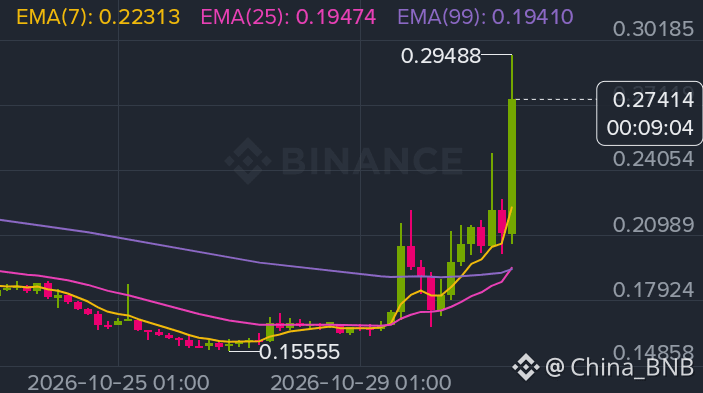
$LSK — BULLS ARE TAKING CONTROL! IS $0.30 NEXT?
Lisk is showing impressive bullish momentum after a strong breakout. Price has climbed above all three major EMAs, suggesting buyers currently have the upper hand.
SPOT TRADING PLAN — $LSK/USDT
Current Chart Price: $0.27414
Entry Zone:
$0.2400 – $0.2500 (on a confirmed pullback)
Take Profit Targets:
TP1: $0.2948
TP2: $0.3018
TP3: $0.3200
Stop Loss: $0.2090
Key Resistance: $0.29488
Bullish Scenario:
A strong candle close above $0.29488 could confirm another breakout attempt toward $0.30185 and potentially $0.3200.
Risk Scenario:
Failure to hold $0.2400 could trigger a deeper correction toward $0.2230.
My Strategy:
I would rather wait for a healthy retest than chase a massive green candle. Confirmation matters more than excitement.
Watch the breakout. Respect the risk. Trade with discipline.
Technical analysis based on the supplied chart snapshot. Targets are hypothetical, not guaranteed. Not financial advice.
$LSK
{future}(LSKUSDT)
$LSK — BULLS ARE TAKING CONTROL! IS $0.30 NEXT?
Lisk is showing impressive bullish momentum after a strong breakout. Price has climbed above all three major EMAs, suggesting buyers currently have the upper hand.
SPOT TRADING PLAN — $LSK /USDT
Current Chart Price: $0.27414
Entry Zone:
$0.2400 – $0.2500 (on a confirmed pullback)
Take Profit Targets:
TP1: $0.2948
TP2: $0.3018
TP3: $0.3200
Stop Loss: $0.2090
Key Resistance: $0.29488
Bullish Scenario:
A strong candle close above $0.29488 could confirm another breakout attempt toward $0.30185 and potentially $0.3200.
Risk Scenario:
Failure to hold $0.2400 could trigger a deeper correction toward $0.2230.
My Strategy:
I would rather wait for a healthy retest than chase a massive green candle. Confirmation matters more than excitement.
Watch the breakout. Respect the risk. Trade with discipline.
Technical analysis based on the supplied chart snapshot. Targets are hypothetical, not guaranteed. Not financial advice.
$LSK
1
81
·
--
30D trade $ETH 3.8K USDT
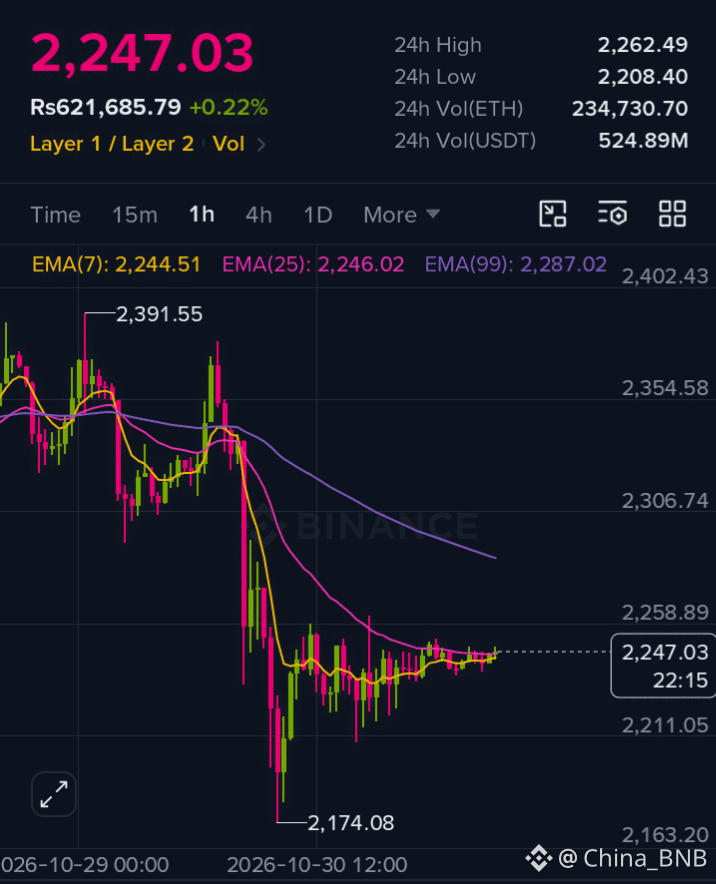
ETH SPOT ANALYSIS: THE NEXT MOVE COULD BE CRITICAL
Ethereum is trading near $2,245, and the daily chart shows a bearish bias. Buyers are approaching an important support zone, while sellers continue defending the upside.
Key Support Levels
- S1: $2,207
- S2: $2,156
- S3: $2,101
Key Resistance Levels
- R1: $2,268
- R2: $2,316
- R3: $2,375
Market Outlook
Bullish Scenario: A strong daily close above $2,268 could open the door toward $2,316 and potentially $2,375.
Bearish Scenario: If ETH loses $2,207 on a daily closing basis, downside pressure could increase toward $2,156 and $2,101.
My Observation
ETH's daily RSI is around 30, showing weak momentum and proximity to oversold territory. However, oversold conditions alone do not confirm a reversal.
The key question is whether buyers can defend $2,207 or sellers will push ETH toward lower support levels.
Trade smart. Wait for confirmation, not speculation.
Analysis snapshot: October 31, 2026. Levels are approximate and can change with market conditions. Educational content, not financial advice.
#ETH $ETH
1
104
·
--
Article
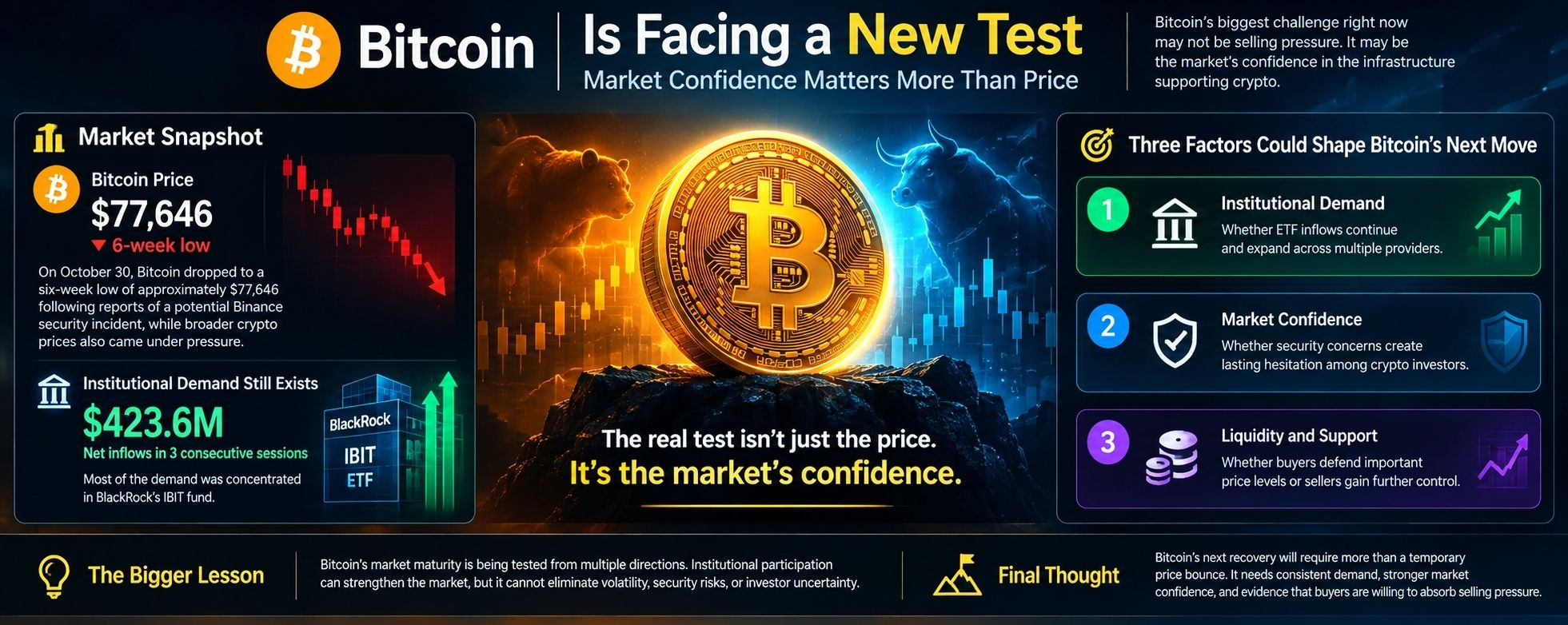
Bitcoin Is Facing a New Test: Market Confidence Matters More Than PriceBitcoin's biggest challenge right now may not be selling pressure. It may be the market's confidence in the infrastructure supporting crypto.
October 30 brought renewed uncertainty to the cryptocurrency market. Bitcoin dropped to a six-week low of approximately $77,646 following reports of a potential Binance security incident, while broader crypto prices also came under pressure.
But there is another important development worth watching: institutional demand has not completely disappeared.
U.S. spot Bitcoin ETFs recorded approximately $423.6 million in net inflows over three consecutive sessions, although most of that demand was concentrated in BlackRock's IBIT fund.
This creates an interesting market situation. Institutional investors are still showing interest, but Bitcoin's price remains vulnerable to negative sentiment and sudden selling pressure.
Three factors could shape Bitcoin's next move:
1. Institutional demand: Whether ETF inflows continue and expand across multiple providers.
2. Market confidence: Whether security concerns create lasting hesitation among crypto investors.
3. Liquidity and support: Whether buyers defend important price levels or sellers gain further control.
The bigger lesson is that Bitcoin's market maturity is being tested from multiple directions. Institutional participation can strengthen the market, but it cannot eliminate volatility, security risks, or investor uncertainty.
Final Thought
Bitcoin's next recovery will require more than a temporary price bounce. It needs consistent demand, stronger market confidence, and evidence that buyers are willing to absorb selling pressure.
The real question is no longer simply how high Bitcoin can go.
It is how strong the market remains when confidence is tested.
#bitcoin $BTC
{spot}(BTCUSDT)
Bitcoin Is Facing a New Test: Market Confidence Matters More Than Price
Bitcoin's biggest challenge right now may not be selling pressure. It may be the market's confidence in the infrastructure supporting crypto.
October 30 brought renewed uncertainty to the cryptocurrency market. Bitcoin dropped to a six-week low of approximately $77,646 following reports of a potential Binance security incident, while broader crypto prices also came under pressure.
But there is another important development worth watching: institutional demand has not completely disappeared.
U.S. spot Bitcoin ETFs recorded approximately $423.6 million in net inflows over three consecutive sessions, although most of that demand was concentrated in BlackRock's IBIT fund.
This creates an interesting market situation. Institutional investors are still showing interest, but Bitcoin's price remains vulnerable to negative sentiment and sudden selling pressure.
Three factors could shape Bitcoin's next move:
1. Institutional demand: Whether ETF inflows continue and expand across multiple providers.
2. Market confidence: Whether security concerns create lasting hesitation among crypto investors.
3. Liquidity and support: Whether buyers defend important price levels or sellers gain further control.
The bigger lesson is that Bitcoin's market maturity is being tested from multiple directions. Institutional participation can strengthen the market, but it cannot eliminate volatility, security risks, or investor uncertainty.
Final Thought
Bitcoin's next recovery will require more than a temporary price bounce. It needs consistent demand, stronger market confidence, and evidence that buyers are willing to absorb selling pressure.
The real question is no longer simply how high Bitcoin can go.
It is how strong the market remains when confidence is tested.
#bitcoin $BTC
1
2
93
·
--
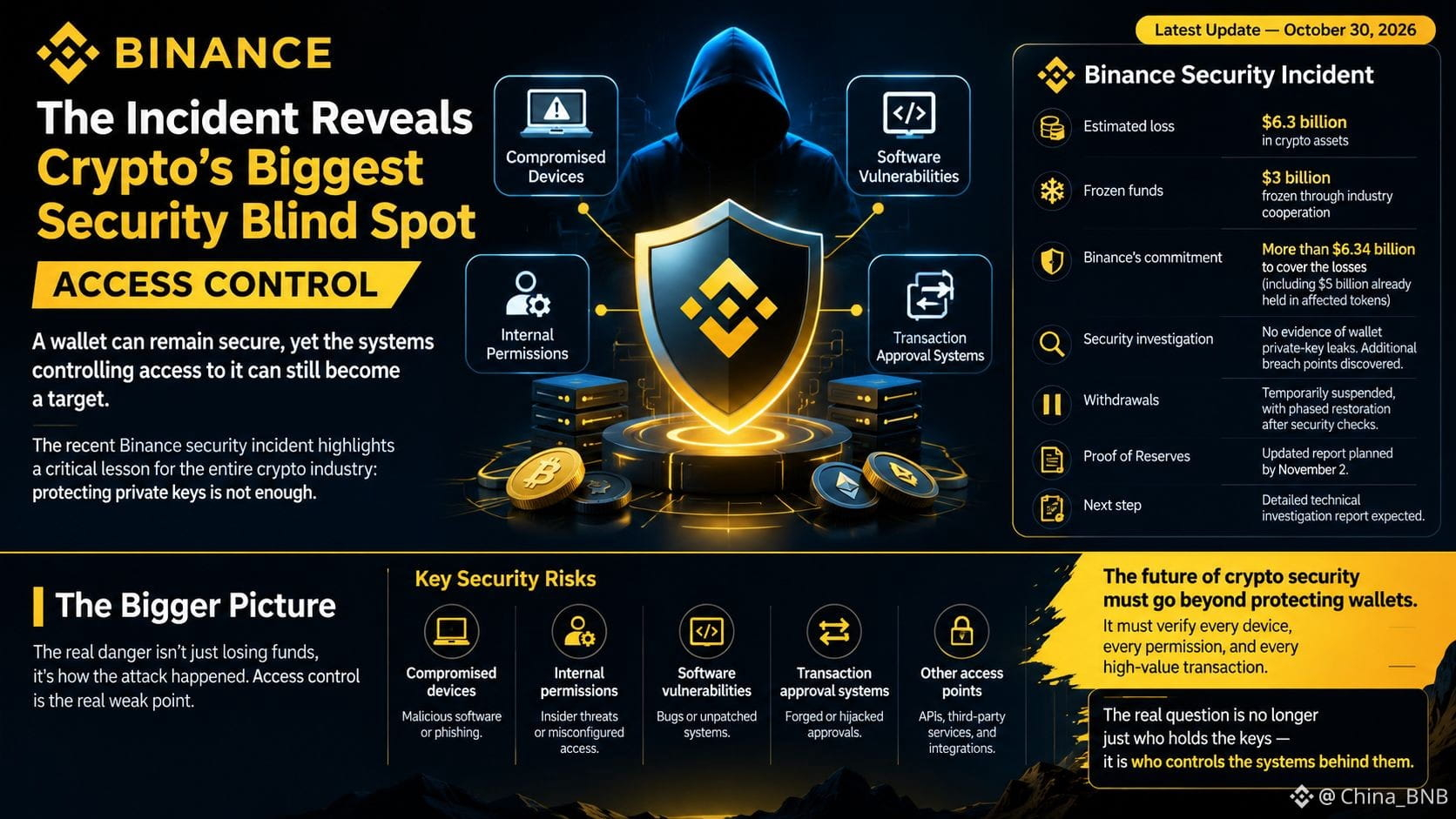
The Binance Incident Reveals Crypto’s Biggest Security Blind Spot
A wallet can remain secure, yet the systems controlling access to it can still become a target.
The recent Binance security incident highlights a critical lesson for the entire crypto industry: protecting private keys is not enough.
Binance reported an estimated $6.3 billion impact, with approximately $3 billion frozen through industry cooperation. The exchange says it has found no evidence of wallet private-key leaks and has committed more than $6.34 billion to cover the losses.
But the deeper concern is access control.
Compromised devices, internal permissions, software vulnerabilities, and transaction approval systems can create security risks even when private keys remain protected.
The future of crypto security must go beyond protecting wallets. It must verify every device, every permission, and every high-value transaction.
The real question is no longer just who holds the keys — it is who controls the systems behind them.
#BinanceAnnouncements $BNB #USDT
1
2
304
·
--
Bullish
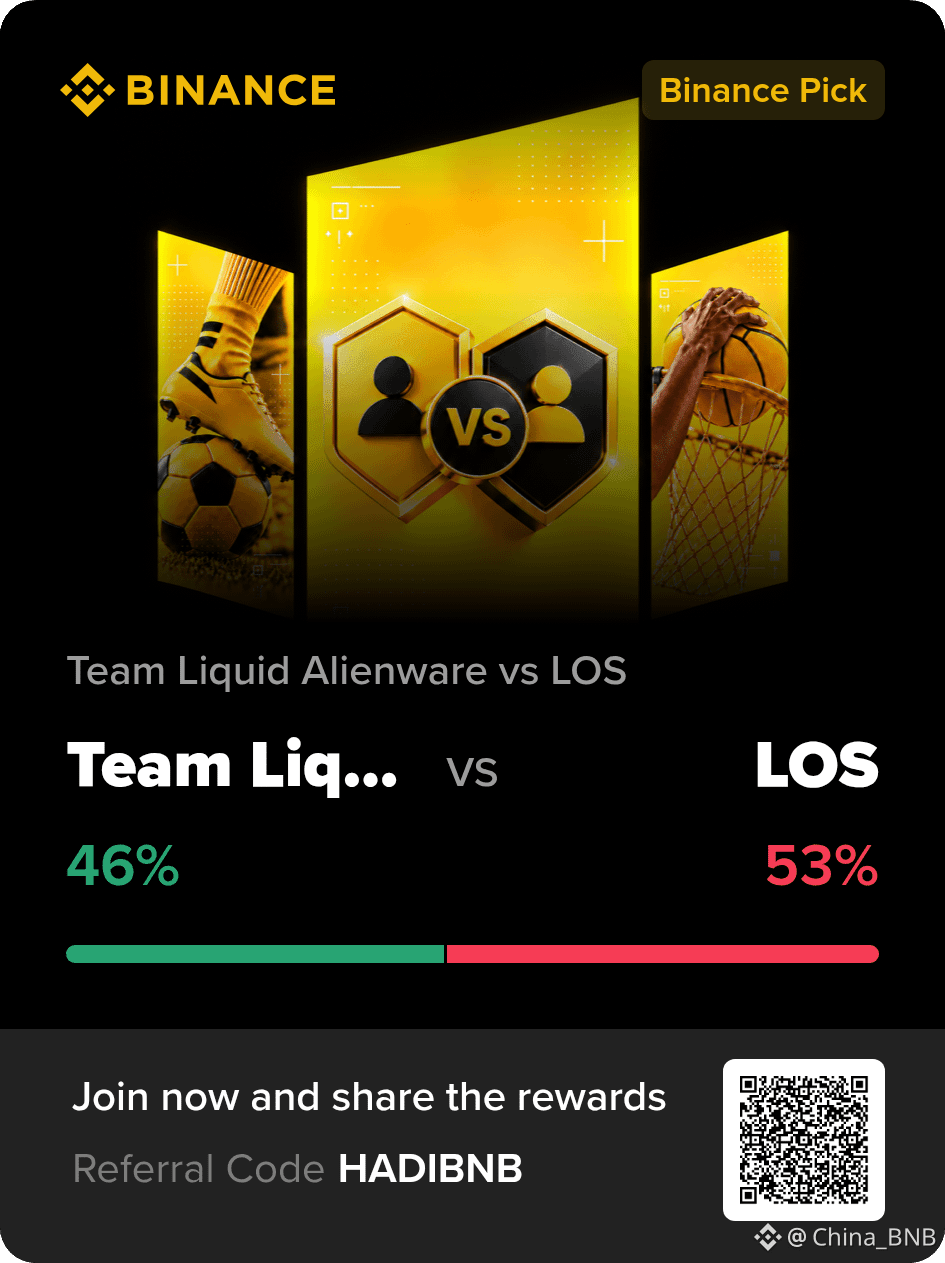
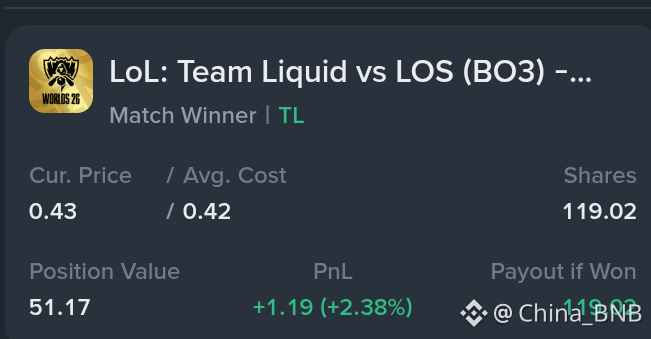
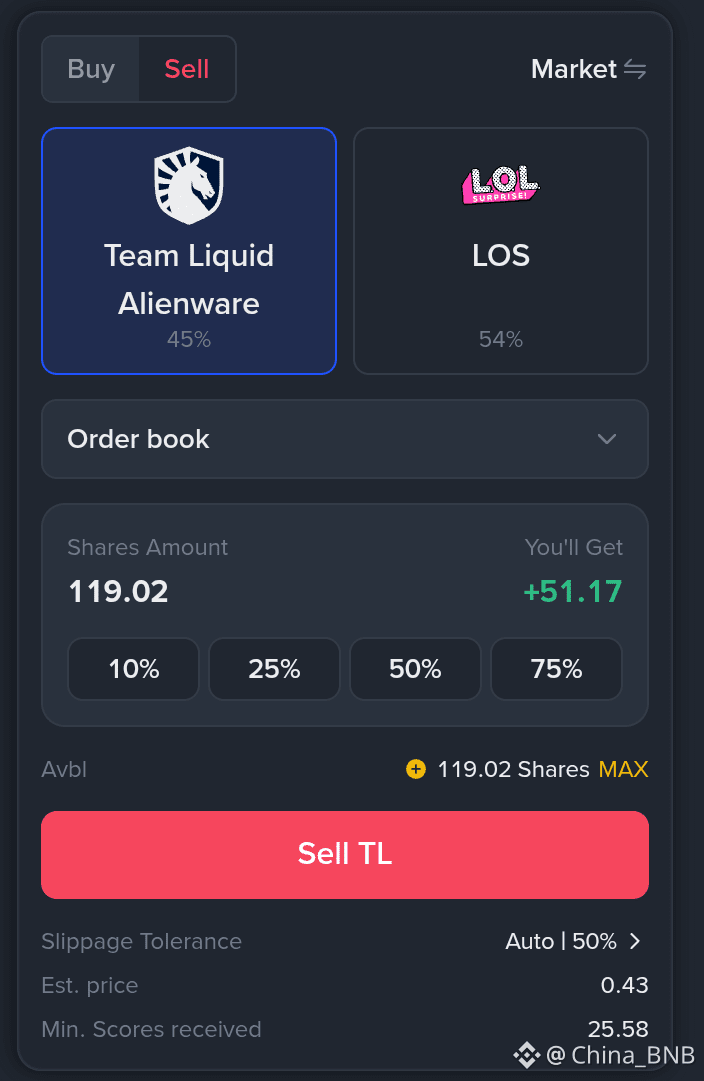
#BinancePick
Binance Pick: Discover Opportunities Before the Crowd
In crypto, the biggest opportunities often begin with a project that few people are watching.
Binance Pick brings attention to selected crypto projects and emerging opportunities, helping users explore new names in the evolving digital asset market.
But smart investing is not about following every trend. It's about understanding the project, researching its fundamentals, evaluating the risks, and making informed decisions.
Stay curious. Research deeply. Choose wisely.
Because in crypto, knowledge is your strongest advantage.
From Binance Pick
2
189
·
--
Article
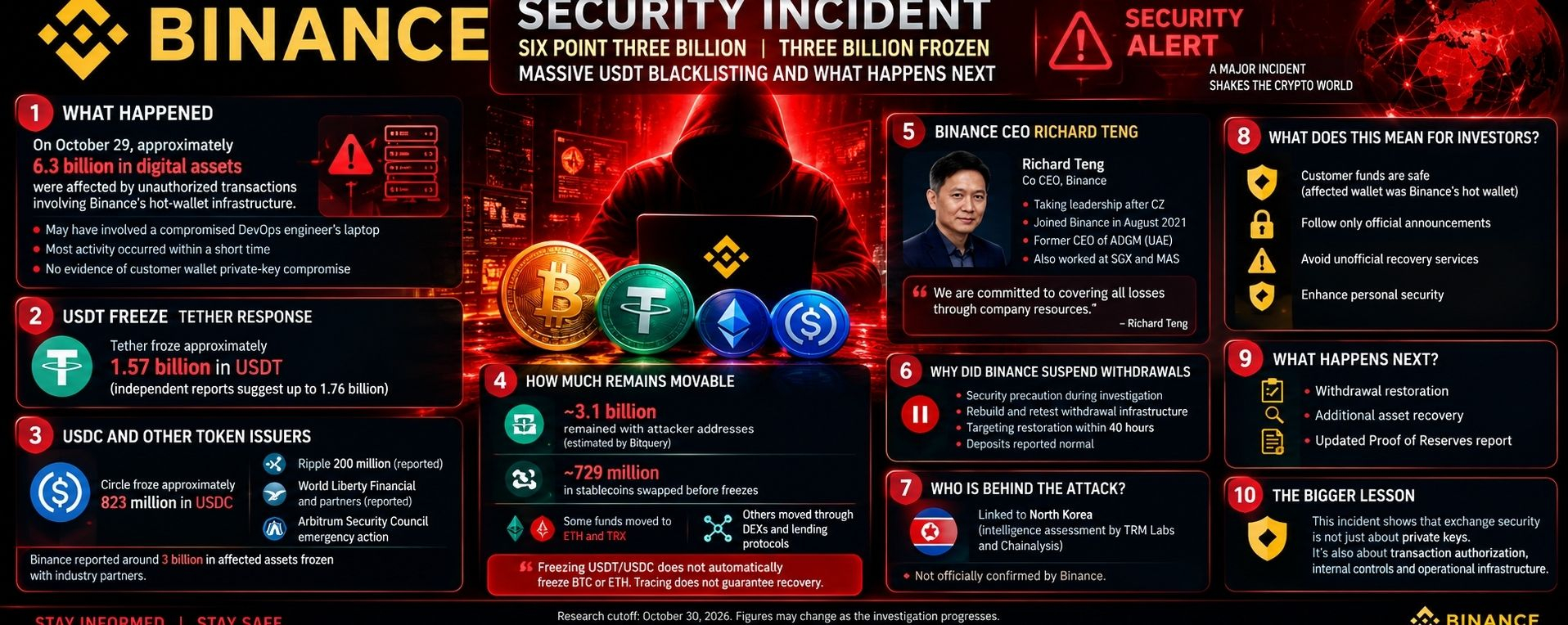
BINANCE SIX POINT THREE BILLION SECURITY INCIDENT THREE BILLION FROZEN MASSIVE USDT BLACKLISTING ANDOctober 30, 2026 | Crypto Security Special Report
A major security incident involving Binance has placed the cryptocurrency industry's infrastructure under serious scrutiny.
On October 29, approximately $6.3 billion in digital assets was affected by unauthorized transactions involving Binance's own hot-wallet infrastructure, according to the exchange's preliminary investigation.
The incident triggered an international response involving stablecoin issuers, blockchain intelligence companies, security researchers and law enforcement agencies.
One of the most important developments has been the freezing of billions of dollars in associated digital assets.
But how much has actually been frozen? What happened to the USDT? And how much of the affected cryptocurrency may still be beyond direct freezing?
Let's examine the available information.
1. WHAT HAPPENED TO BINANCE?
Binance's preliminary investigation indicated that the incident may have involved a compromised laptop belonging to a DevOps engineer.
According to the exchange, this may have allowed an attacker to access service containers and submit unauthorized withdrawal transactions.
Binance reported no evidence of a wallet private-key compromise.
The estimated total impact was approximately $6.3 billion.
The majority of the activity occurred within a relatively short period, demonstrating how quickly weaknesses in transaction authorization infrastructure can become serious security incidents.
Importantly, Binance has stated that the affected wallet belonged to its own operational infrastructure rather than customer-controlled wallets.
2. THE MASSIVE USDT FREEZE: TETHER'S RESPONSE
One of the most significant developments came from Tether, the issuer of USDT.
According to its reported response, Tether froze approximately $1.57 billion in USDT associated with the incident.
However, subsequent independent on-chain research by Bitquery reported a larger cumulative figure of approximately $1.76 billion in frozen USDT.
These figures reflect different reporting snapshots and methodologies, rather than necessarily representing additional independent freezes.
This operation demonstrates an important characteristic of centralized stablecoins: their issuers can blacklist specific wallet addresses and restrict the movement of tokens held at those addresses.
The objective is to prevent suspicious funds from being transferred or converted through the affected stablecoin contracts.
3. USDC AND OTHER TOKEN ISSUERS JOIN THE RESPONSE
Tether was not the only company involved.
Circle reportedly froze approximately $823 million in USDC associated with the incident.
Other organizations also took action:
- Ripple reportedly froze approximately $200 million in associated funds.
- World Liberty Financial and other partners reportedly helped freeze additional stablecoins and tokens.
- Arbitrum's Security Council took emergency action involving assets on its network.
Binance subsequently reported that approximately $3 billion in affected assets had been frozen on-chain with the assistance of industry partners.
These figures should be treated carefully because they represent different asset categories and reporting snapshots.
4. HOW MUCH OF THE FUNDS REMAINED MOVABLE?
This is arguably the most important part of the investigation.
Bitquery's independent on-chain analysis, using balances observed at approximately 03:54 UTC on October 30, estimated that around $3.1 billion remained with the attacker's addresses.
Its investigation also identified approximately $729 million in stablecoins that had been swapped before the relevant freezes arrived.
Some funds were reportedly converted into ETH and TRX, while other assets were moved through decentralized exchanges and lending protocols.
This highlights a major limitation of stablecoin freezing operations.
Freezing USDT or USDC does not automatically freeze Bitcoin or Ethereum.
There is no central issuer of BTC or ETH with the same ability to blacklist individual wallet balances.
These assets may still be traced, but intervention generally requires cooperation from exchanges, custodians or law enforcement.
5. HOW DID THE ATTACKERS EXPLOIT THE INFRASTRUCTURE?
Binance CO-CEO Richard Teng provided additional technical details.
According to his October 30 announcement, attackers used Ethereum's EIP-7702 functionality to obtain unauthorized on-chain execution approval over an affected Binance hot wallet.
EIP-7702 allows an externally owned account to delegate execution functionality to smart-contract code.
The technology itself is a legitimate Ethereum standard.
The security issue described by Binance involved the way this functionality was used to obtain execution approval without passing through normal internal authorization controls.
This is an important distinction.
The incident does not establish that EIP-7702 itself is inherently unsafe. Instead, it highlights the importance of securing the systems responsible for approving and signing blockchain transactions.
6. BINANCE CEO'S RESPONSE: WHO WILL COVER THE LOSSES?
Binance CO - CEO Richard Teng stated that the exchange is committed to covering all losses through company resources.
In its October 30 announcement, Binance reported:
- More than $6.34 billion reserved to cover the incident.
- Approximately $5 billion already held in the exact affected tokens.
- The remaining assets being acquired through market and OTC channels.
- Recovery efforts continuing alongside industry partners and law enforcement.
The exchange also stated that customer funds were not affected because the incident involved its own hot-wallet infrastructure.
These are Binance's stated commitments and figures, not an independently completed audit.
7. WHY DID BINANCE SUSPEND WITHDRAWALS?
Binance temporarily suspended deposits and withdrawals as a security precaution while investigating the incident.
The exchange said it needed to rebuild and retest its withdrawal infrastructure before restoring normal services.
Richard Teng indicated that Binance was targeting withdrawal restoration within approximately 40 hours, ahead of Sunday, subject to successful security testing.
The company also announced a broader security review covering:
- Endpoint security.- Cloud infrastructure.- Key management.- Transaction signing.- Internal authorization systems.
Binance also committed to publishing an updated Proof of Reserves report after completing the relevant remediation and verification work.
8. WHO IS RESPONSIBLE?
The identity of the attackers has not been officially confirmed by Binance.
Blockchain intelligence firms have identified similarities with previous operations attributed to North Korean-linked cyber groups.
TRM Labs reportedly expressed high confidence in this assessment.
However, an intelligence attribution is not the same as official confirmation.
The investigation remains ongoing, and responsibility should not be presented as established fact without further evidence.
9. WHAT DOES THIS MEAN FOR CRYPTO INVESTORS?
This incident raises several important questions about the security of centralized exchanges.
First, protecting private keys is not enough. The infrastructure responsible for authorizing transactions must also be secured.
Second, stablecoin issuers can play a major role in responding to suspicious activity because they have the ability to freeze specific token balances.
Third, blockchain transparency allows investigators to follow transactions across networks, but tracing funds does not guarantee their recovery.
For Binance users, the exchange has stated that customer funds remain safe and that it will cover the affected losses.
Users should continue following official announcements and avoid unofficial recovery services.
10. WHAT SHOULD WE WATCH NEXT?
Three developments deserve particular attention:
1. Withdrawal Restoration
The successful rebuilding and testing of Binance's withdrawal infrastructure will be an important milestone.
2. Additional Asset Recovery
Investigators may continue identifying wallets and coordinating with issuers and exchanges to restrict suspicious assets.
3. Updated Proof of Reserves
The promised report should provide additional transparency about Binance's asset position following the incident.
FINAL ANALYSIS
The Binance security incident is more than a story about billions of dollars moving across blockchain networks.
It is a major reminder that the security of a cryptocurrency exchange depends on much more than wallet storage.
Transaction authorization, internal access controls, operational infrastructure and real-time monitoring are equally important.
The freezing of USDT and USDC demonstrates how centralized stablecoin issuers can assist in limiting the movement of suspicious funds.
However, frozen assets should never automatically be described as recovered assets.
Binance's next challenge is to demonstrate that its infrastructure has been secured, its financial commitments have been fulfilled and its customers can continue using the platform with confidence.
The biggest lesson for the entire crypto industry is clear: blockchain security is not only about protecting assets. It is also about protecting the systems that have the authority to move them.
This time my personal Research
Research cutoff: October 30, 2026. This article distinguishes official Binance statements from independent blockchain research and third-party intelligence assessments. Figures may change as the investigation progresses.
Educational and informational content only. Not financial advice.
#Hack #USDT #Binance
BINANCE SIX POINT THREE BILLION SECURITY INCIDENT THREE BILLION FROZEN MASSIVE USDT BLACKLISTING AND
October 30, 2026 | Crypto Security Special Report
A major security incident involving Binance has placed the cryptocurrency industry's infrastructure under serious scrutiny.
On October 29, approximately $6.3 billion in digital assets was affected by unauthorized transactions involving Binance's own hot-wallet infrastructure, according to the exchange's preliminary investigation.
The incident triggered an international response involving stablecoin issuers, blockchain intelligence companies, security researchers and law enforcement agencies.
One of the most important developments has been the freezing of billions of dollars in associated digital assets.
But how much has actually been frozen? What happened to the USDT? And how much of the affected cryptocurrency may still be beyond direct freezing?
Let's examine the available information.
1. WHAT HAPPENED TO BINANCE?
Binance's preliminary investigation indicated that the incident may have involved a compromised laptop belonging to a DevOps engineer.
According to the exchange, this may have allowed an attacker to access service containers and submit unauthorized withdrawal transactions.
Binance reported no evidence of a wallet private-key compromise.
The estimated total impact was approximately $6.3 billion.
The majority of the activity occurred within a relatively short period, demonstrating how quickly weaknesses in transaction authorization infrastructure can become serious security incidents.
Importantly, Binance has stated that the affected wallet belonged to its own operational infrastructure rather than customer-controlled wallets.
2. THE MASSIVE USDT FREEZE: TETHER'S RESPONSE
One of the most significant developments came from Tether, the issuer of USDT.
According to its reported response, Tether froze approximately $1.57 billion in USDT associated with the incident.
However, subsequent independent on-chain research by Bitquery reported a larger cumulative figure of approximately $1.76 billion in frozen USDT.
These figures reflect different reporting snapshots and methodologies, rather than necessarily representing additional independent freezes.
This operation demonstrates an important characteristic of centralized stablecoins: their issuers can blacklist specific wallet addresses and restrict the movement of tokens held at those addresses.
The objective is to prevent suspicious funds from being transferred or converted through the affected stablecoin contracts.
3. USDC AND OTHER TOKEN ISSUERS JOIN THE RESPONSE
Tether was not the only company involved.
Circle reportedly froze approximately $823 million in USDC associated with the incident.
Other organizations also took action:
- Ripple reportedly froze approximately $200 million in associated funds.
- World Liberty Financial and other partners reportedly helped freeze additional stablecoins and tokens.
- Arbitrum's Security Council took emergency action involving assets on its network.
Binance subsequently reported that approximately $3 billion in affected assets had been frozen on-chain with the assistance of industry partners.
These figures should be treated carefully because they represent different asset categories and reporting snapshots.
4. HOW MUCH OF THE FUNDS REMAINED MOVABLE?
This is arguably the most important part of the investigation.
Bitquery's independent on-chain analysis, using balances observed at approximately 03:54 UTC on October 30, estimated that around $3.1 billion remained with the attacker's addresses.
Its investigation also identified approximately $729 million in stablecoins that had been swapped before the relevant freezes arrived.
Some funds were reportedly converted into ETH and TRX, while other assets were moved through decentralized exchanges and lending protocols.
This highlights a major limitation of stablecoin freezing operations.
Freezing USDT or USDC does not automatically freeze Bitcoin or Ethereum.
There is no central issuer of BTC or ETH with the same ability to blacklist individual wallet balances.
These assets may still be traced, but intervention generally requires cooperation from exchanges, custodians or law enforcement.
5. HOW DID THE ATTACKERS EXPLOIT THE INFRASTRUCTURE?
Binance CO-CEO Richard Teng provided additional technical details.
According to his October 30 announcement, attackers used Ethereum's EIP-7702 functionality to obtain unauthorized on-chain execution approval over an affected Binance hot wallet.
EIP-7702 allows an externally owned account to delegate execution functionality to smart-contract code.
The technology itself is a legitimate Ethereum standard.
The security issue described by Binance involved the way this functionality was used to obtain execution approval without passing through normal internal authorization controls.
This is an important distinction.
The incident does not establish that EIP-7702 itself is inherently unsafe. Instead, it highlights the importance of securing the systems responsible for approving and signing blockchain transactions.
6. BINANCE CEO'S RESPONSE: WHO WILL COVER THE LOSSES?
Binance CO - CEO Richard Teng stated that the exchange is committed to covering all losses through company resources.
In its October 30 announcement, Binance reported:
- More than $6.34 billion reserved to cover the incident.
- Approximately $5 billion already held in the exact affected tokens.
- The remaining assets being acquired through market and OTC channels.
- Recovery efforts continuing alongside industry partners and law enforcement.
The exchange also stated that customer funds were not affected because the incident involved its own hot-wallet infrastructure.
These are Binance's stated commitments and figures, not an independently completed audit.
7. WHY DID BINANCE SUSPEND WITHDRAWALS?
Binance temporarily suspended deposits and withdrawals as a security precaution while investigating the incident.
The exchange said it needed to rebuild and retest its withdrawal infrastructure before restoring normal services.
Richard Teng indicated that Binance was targeting withdrawal restoration within approximately 40 hours, ahead of Sunday, subject to successful security testing.
The company also announced a broader security review covering:
- Endpoint security.- Cloud infrastructure.- Key management.- Transaction signing.- Internal authorization systems.
Binance also committed to publishing an updated Proof of Reserves report after completing the relevant remediation and verification work.
8. WHO IS RESPONSIBLE?
The identity of the attackers has not been officially confirmed by Binance.
Blockchain intelligence firms have identified similarities with previous operations attributed to North Korean-linked cyber groups.
TRM Labs reportedly expressed high confidence in this assessment.
However, an intelligence attribution is not the same as official confirmation.
The investigation remains ongoing, and responsibility should not be presented as established fact without further evidence.
9. WHAT DOES THIS MEAN FOR CRYPTO INVESTORS?
This incident raises several important questions about the security of centralized exchanges.
First, protecting private keys is not enough. The infrastructure responsible for authorizing transactions must also be secured.
Second, stablecoin issuers can play a major role in responding to suspicious activity because they have the ability to freeze specific token balances.
Third, blockchain transparency allows investigators to follow transactions across networks, but tracing funds does not guarantee their recovery.
For Binance users, the exchange has stated that customer funds remain safe and that it will cover the affected losses.
Users should continue following official announcements and avoid unofficial recovery services.
10. WHAT SHOULD WE WATCH NEXT?
Three developments deserve particular attention:
1. Withdrawal Restoration
The successful rebuilding and testing of Binance's withdrawal infrastructure will be an important milestone.
2. Additional Asset Recovery
Investigators may continue identifying wallets and coordinating with issuers and exchanges to restrict suspicious assets.
3. Updated Proof of Reserves
The promised report should provide additional transparency about Binance's asset position following the incident.
FINAL ANALYSIS
The Binance security incident is more than a story about billions of dollars moving across blockchain networks.
It is a major reminder that the security of a cryptocurrency exchange depends on much more than wallet storage.
Transaction authorization, internal access controls, operational infrastructure and real-time monitoring are equally important.
The freezing of USDT and USDC demonstrates how centralized stablecoin issuers can assist in limiting the movement of suspicious funds.
However, frozen assets should never automatically be described as recovered assets.
Binance's next challenge is to demonstrate that its infrastructure has been secured, its financial commitments have been fulfilled and its customers can continue using the platform with confidence.
The biggest lesson for the entire crypto industry is clear: blockchain security is not only about protecting assets. It is also about protecting the systems that have the authority to move them.
This time my personal Research
Research cutoff: October 30, 2026. This article distinguishes official Binance statements from independent blockchain research and third-party intelligence assessments. Figures may change as the investigation progresses.
Educational and informational content only. Not financial advice.
#Hack #USDT #Binance
9
9
1.6k
·
--
Article
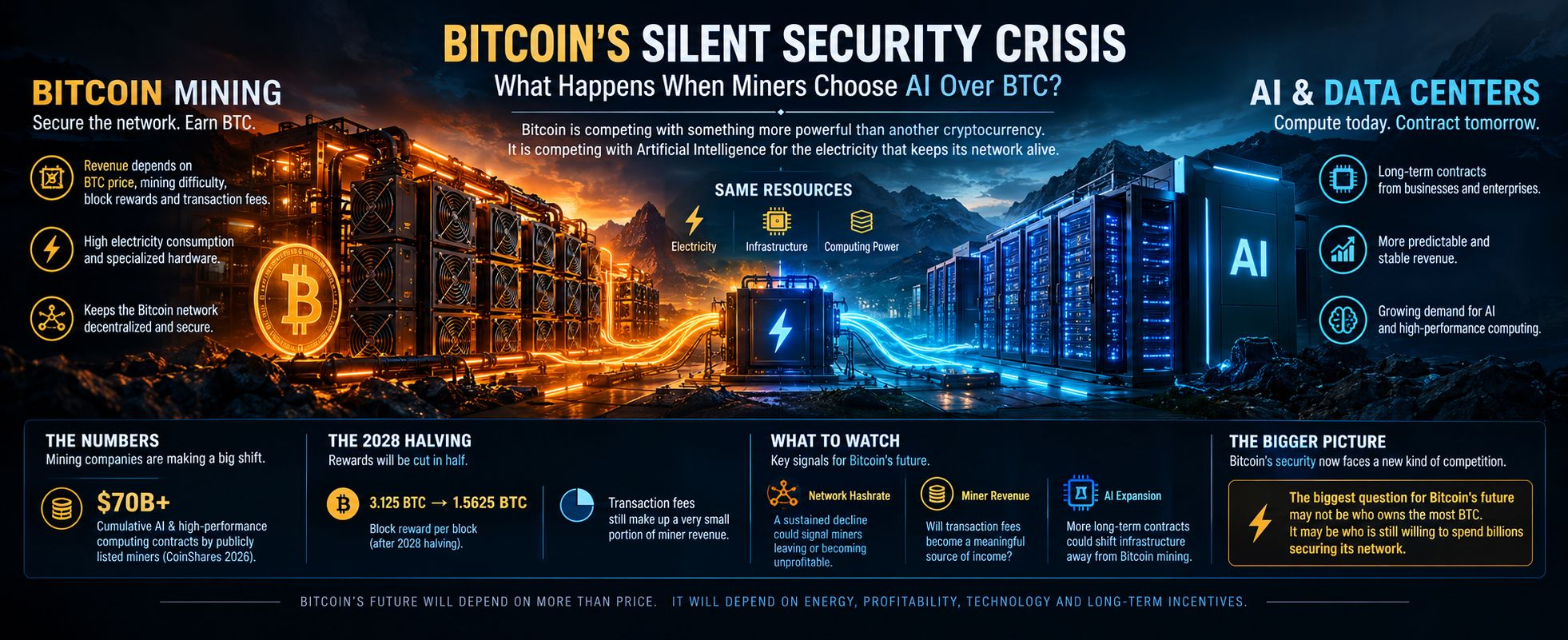
Bitcoin's Silent Security Crisis: What Happens When Miners Choose AI Over BTC?Bitcoin is competing with something more powerful than another cryptocurrency. It is competing with Artificial Intelligence for the electricity that keeps its network alive.
While most investors are watching Bitcoin's price charts, a major transformation is happening behind the scenes.
Bitcoin mining companies are increasingly looking beyond BTC. Instead of using all their computing infrastructure to mine Bitcoin, some are redirecting their electricity capacity, data centers, and investment toward AI and high-performance computing.
And this could change the future economics of Bitcoin.
The Unexpected Competition
Bitcoin mining and artificial intelligence have something important in common: both require enormous amounts of electricity and specialized infrastructure.
But their business models are very different.
Bitcoin mining revenue depends on BTC prices, mining difficulty, block rewards, and transaction fees.
AI infrastructure companies, on the other hand, can secure long-term contracts with businesses that need computing power.
For mining operators facing shrinking profit margins, AI can look like a more predictable business opportunity.
According to CoinShares' 2026 mining research, publicly listed miners have announced more than $70 billion in cumulative AI and high-performance computing contracts.
This is not simply a technological trend. It represents a fundamental shift in how mining infrastructure is valued.
Could Bitcoin Lose Its Miners?
Here is where the story becomes more interesting.
When mining companies redirect computing capacity toward AI, some Bitcoin mining machines may shut down or leave those facilities.
Less active mining capacity can reduce Bitcoin's total network hashrate.
However, this does not automatically mean Bitcoin becomes insecure.
Bitcoin's difficulty-adjustment mechanism helps the network adapt when mining power changes. The real concern is whether long-term mining economics can continue attracting enough independent participants to protect the network.
The bigger question is not whether miners leave.
It is whether enough miners will find Bitcoin mining economically sustainable.
The 2028 Halving Makes This More Important
Bitcoin's next expected halving in 2028 will reduce the block subsidy from 3.125 BTC to 1.5625 BTC per block.
That means miners will receive fewer newly issued bitcoins for securing the network.
Transaction fees could become increasingly important as a source of mining revenue.
But there is a challenge: transaction fees have remained a very small proportion of total miner revenue in recent market data.
This creates a long-term economic question that the Bitcoin ecosystem cannot ignore.
Three Signals Investors Should Watch
1. Network Hashrate
A sustained decline could indicate that mining capacity is leaving or becoming unprofitable.
2. Miner Revenue and Transaction Fees
These numbers help reveal whether miners can maintain sustainable operations without depending almost entirely on block rewards.
3. AI Infrastructure Expansion
More long-term AI contracts could encourage mining companies to prioritize data-center operations over Bitcoin production.
The Bigger Picture
Bitcoin was created to operate without centralized financial institutions. Its security depends on a decentralized network of miners competing to validate transactions.
But the future of mining may be influenced by an entirely different industry.
Artificial intelligence is creating new demand for electricity, infrastructure, and computing capacity. Bitcoin miners are now part of that competition.
This does not mean Bitcoin is losing its future
It means its mining economy is entering a new phase where electricity, profitability, technology, and long-term incentives will matter more than ever.
The biggest question for Bitcoin's future may not be who owns the most BTC. It may be who is still willing to spend billions securing its network.
#BTC $BTC #bitcoin
{future}(BTCUSDT)
Bitcoin's Silent Security Crisis: What Happens When Miners Choose AI Over BTC?
Bitcoin is competing with something more powerful than another cryptocurrency. It is competing with Artificial Intelligence for the electricity that keeps its network alive.
While most investors are watching Bitcoin's price charts, a major transformation is happening behind the scenes.
Bitcoin mining companies are increasingly looking beyond BTC. Instead of using all their computing infrastructure to mine Bitcoin, some are redirecting their electricity capacity, data centers, and investment toward AI and high-performance computing.
And this could change the future economics of Bitcoin.
The Unexpected Competition
Bitcoin mining and artificial intelligence have something important in common: both require enormous amounts of electricity and specialized infrastructure.
But their business models are very different.
Bitcoin mining revenue depends on BTC prices, mining difficulty, block rewards, and transaction fees.
AI infrastructure companies, on the other hand, can secure long-term contracts with businesses that need computing power.
For mining operators facing shrinking profit margins, AI can look like a more predictable business opportunity.
According to CoinShares' 2026 mining research, publicly listed miners have announced more than $70 billion in cumulative AI and high-performance computing contracts.
This is not simply a technological trend. It represents a fundamental shift in how mining infrastructure is valued.
Could Bitcoin Lose Its Miners?
Here is where the story becomes more interesting.
When mining companies redirect computing capacity toward AI, some Bitcoin mining machines may shut down or leave those facilities.
Less active mining capacity can reduce Bitcoin's total network hashrate.
However, this does not automatically mean Bitcoin becomes insecure.
Bitcoin's difficulty-adjustment mechanism helps the network adapt when mining power changes. The real concern is whether long-term mining economics can continue attracting enough independent participants to protect the network.
The bigger question is not whether miners leave.
It is whether enough miners will find Bitcoin mining economically sustainable.
The 2028 Halving Makes This More Important
Bitcoin's next expected halving in 2028 will reduce the block subsidy from 3.125 BTC to 1.5625 BTC per block.
That means miners will receive fewer newly issued bitcoins for securing the network.
Transaction fees could become increasingly important as a source of mining revenue.
But there is a challenge: transaction fees have remained a very small proportion of total miner revenue in recent market data.
This creates a long-term economic question that the Bitcoin ecosystem cannot ignore.
Three Signals Investors Should Watch
1. Network Hashrate
A sustained decline could indicate that mining capacity is leaving or becoming unprofitable.
2. Miner Revenue and Transaction Fees
These numbers help reveal whether miners can maintain sustainable operations without depending almost entirely on block rewards.
3. AI Infrastructure Expansion
More long-term AI contracts could encourage mining companies to prioritize data-center operations over Bitcoin production.
The Bigger Picture
Bitcoin was created to operate without centralized financial institutions. Its security depends on a decentralized network of miners competing to validate transactions.
But the future of mining may be influenced by an entirely different industry.
Artificial intelligence is creating new demand for electricity, infrastructure, and computing capacity. Bitcoin miners are now part of that competition.
This does not mean Bitcoin is losing its future
It means its mining economy is entering a new phase where electricity, profitability, technology, and long-term incentives will matter more than ever.
The biggest question for Bitcoin's future may not be who owns the most BTC. It may be who is still willing to spend billions securing its network.
#BTC $BTC #bitcoin
2
90
·
--
Bearish
SOLANA AT A CRITICAL CROSSROADS: BREAKDOWN OR THE NEXT BIG OPPORTUNITY?
The next move for Solana could reveal more about market confidence than price action alone.
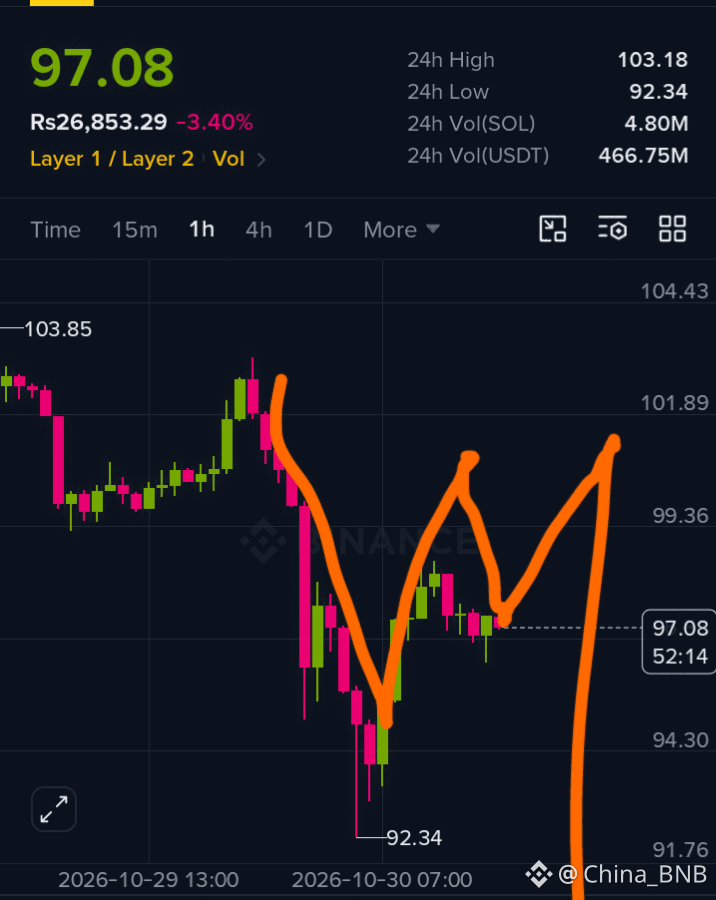
SOL has been facing selling pressure as broader crypto market uncertainty weighs on investor sentiment. The $100 psychological level remains an important area to watch, while trading volume and buyer strength could determine whether the price stabilizes or faces further downside.
But smart market analysis goes beyond red and green candles.
The real signals are liquidity, support strength, buying momentum, and whether long-term investors continue showing confidence in the ecosystem.
Solana has built a strong presence in the blockchain industry, but even strong projects are not immune to market cycles.
The opportunity is not in predicting every move. It is in understanding the market before making one.
#SolanaUSTD $SOL
{future}(SOLUSDT)
SOLANA AT A CRITICAL CROSSROADS: BREAKDOWN OR THE NEXT BIG OPPORTUNITY?
The next move for Solana could reveal more about market confidence than price action alone.
SOL has been facing selling pressure as broader crypto market uncertainty weighs on investor sentiment. The $100 psychological level remains an important area to watch, while trading volume and buyer strength could determine whether the price stabilizes or faces further downside.
But smart market analysis goes beyond red and green candles.
The real signals are liquidity, support strength, buying momentum, and whether long-term investors continue showing confidence in the ecosystem.
Solana has built a strong presence in the blockchain industry, but even strong projects are not immune to market cycles.
The opportunity is not in predicting every move. It is in understanding the market before making one.
#SolanaUSTD $SOL
89
·
--
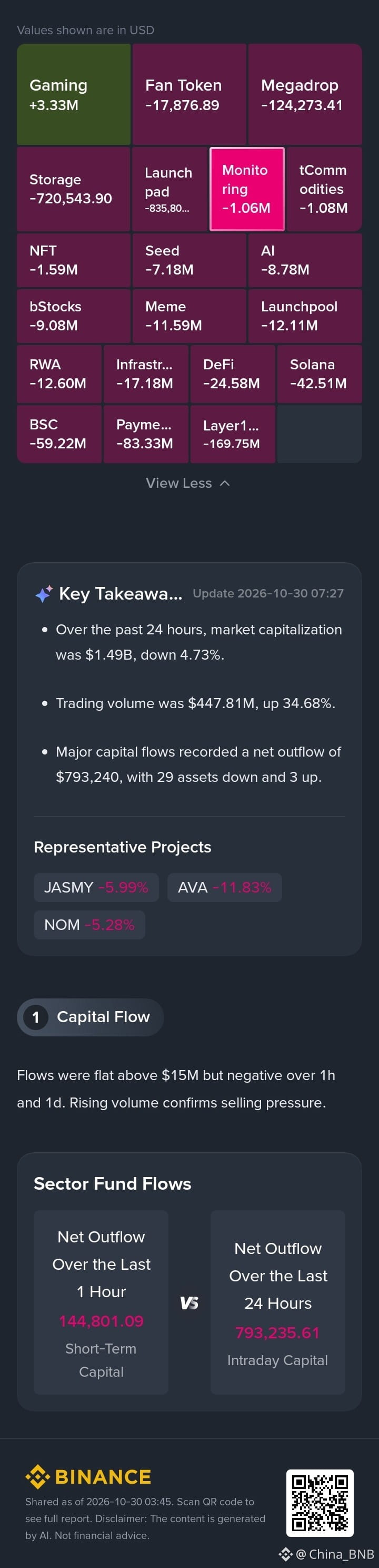
Over the past 24 hours, market…
Monitor 3three token
[https://app.binance.com/uni-qr/AZBMsb2C](https://app.binance.com/uni-qr/AZBMsb2C)
Over the past 24 hours, market…
Monitor 3three token
https://app.binance.com/uni-qr/AZBMsb2C
Monitor 3three token
https://app.binance.com/uni-qr/AZBMsb2C
1
967
·
--
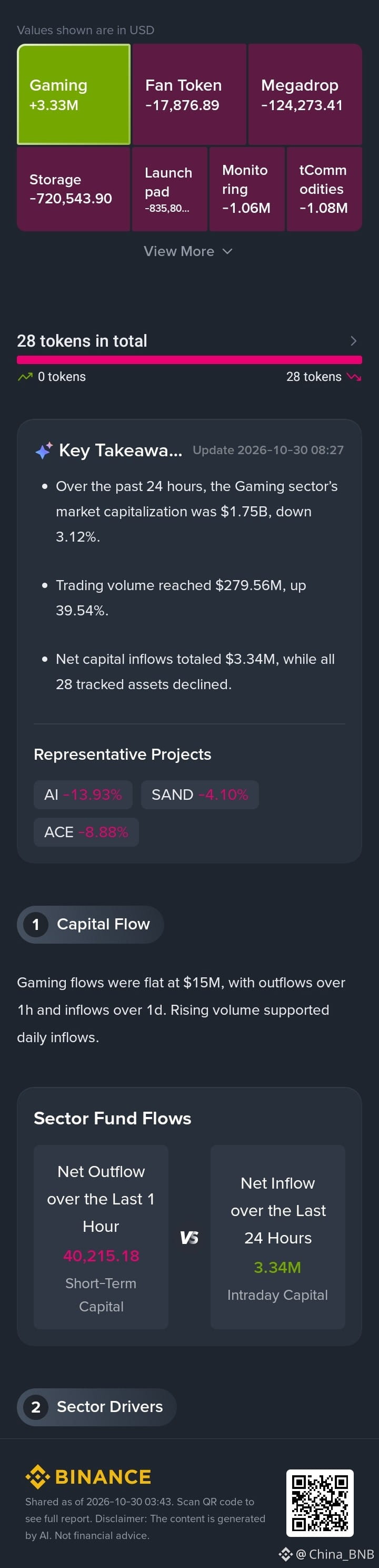
Over the past 24 hours, the Gaming…
[https://app.binance.com/uni-qr/SsKiJqmm](https://app.binance.com/uni-qr/SsKiJqmm)
Over the past 24 hours, the Gaming…
https://app.binance.com/uni-qr/SsKiJqmm
https://app.binance.com/uni-qr/SsKiJqmm
1
69
·
--
Bullish
Verified
Binance Alpha Announces a New Listing: PREDICT (P)
A new opportunity enters the Binance Alpha ecosystem.
Binance Alpha has announced the addition of PREDICT (P), bringing another project into the spotlight of the evolving Web3 landscape.
This listing puts PREDICT on the radar of crypto enthusiasts, creating an opportunity to explore its ecosystem, potential use cases, and future development.
As always, a new listing brings attention, but sustainable growth depends on real utility, adoption, and long-term execution.
The real question is not just how a token launches, but what it delivers afterward.
$PREDICT
{future}(PREDICTUSDT)
Binance Alpha Announces a New Listing: PREDICT (P)
A new opportunity enters the Binance Alpha ecosystem.
Binance Alpha has announced the addition of PREDICT (P), bringing another project into the spotlight of the evolving Web3 landscape.
This listing puts PREDICT on the radar of crypto enthusiasts, creating an opportunity to explore its ecosystem, potential use cases, and future development.
As always, a new listing brings attention, but sustainable growth depends on real utility, adoption, and long-term execution.
The real question is not just how a token launches, but what it delivers afterward.
$PREDICT
1
4
1.3k
·
--
Article
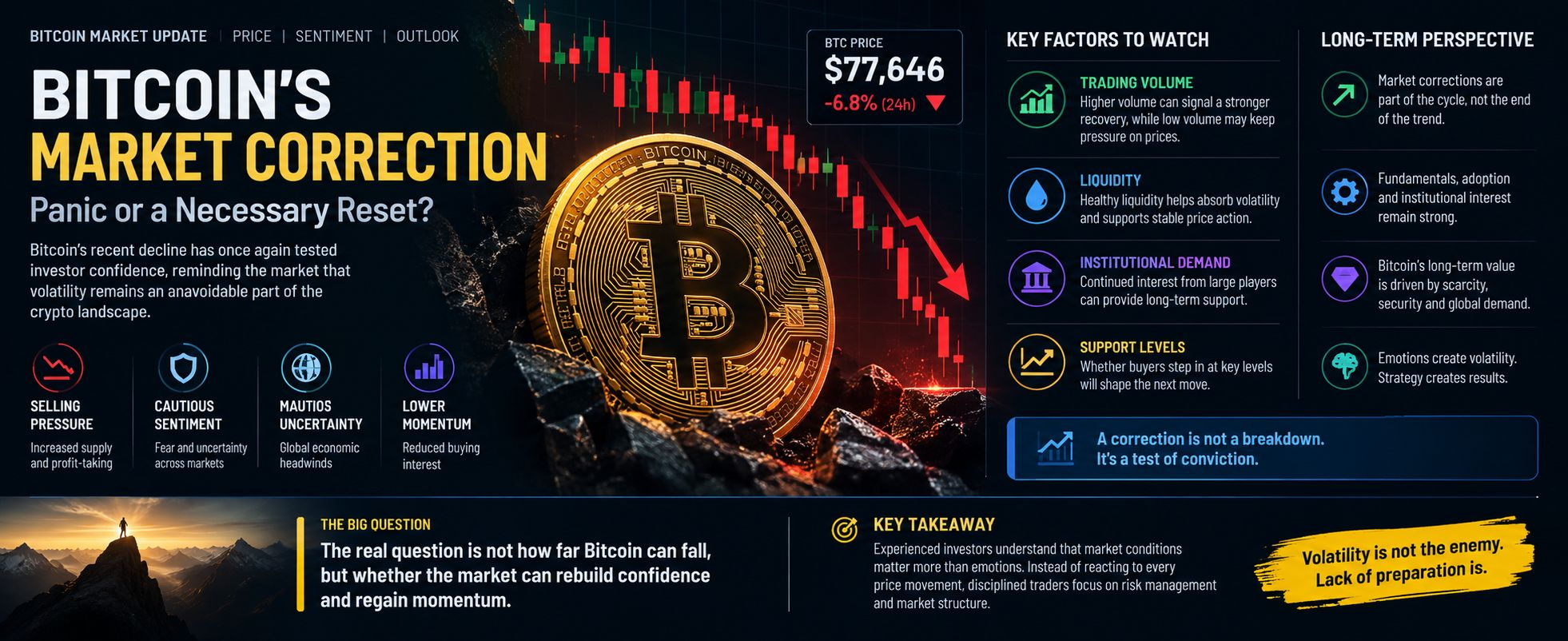
Bitcoin's Market Correction: Panic or a Necessary Reset?Bitcoin's recent decline has once again tested investor confidence, reminding the market that volatility remains an unavoidable part of the crypto landscape.
Selling pressure, cautious sentiment, and uncertainty across financial markets are creating challenges for short-term price action. However, a market correction does not automatically signal the end of a long-term trend.
The key factors to watch are trading volume, liquidity, institutional demand, and whether buyers step in at important support levels.
Experienced investors understand that market conditions matter more than emotions. Instead of reacting to every price movement, disciplined traders focus on risk management and market structure.
The real question is not how far Bitcoin can fall, but whether the market can rebuild confidence and regain momentum.
#BitcoinDropsBelow$80K $BTC
{spot}(BTCUSDT)
Bitcoin's Market Correction: Panic or a Necessary Reset?
Bitcoin's recent decline has once again tested investor confidence, reminding the market that volatility remains an unavoidable part of the crypto landscape.
Selling pressure, cautious sentiment, and uncertainty across financial markets are creating challenges for short-term price action. However, a market correction does not automatically signal the end of a long-term trend.
The key factors to watch are trading volume, liquidity, institutional demand, and whether buyers step in at important support levels.
Experienced investors understand that market conditions matter more than emotions. Instead of reacting to every price movement, disciplined traders focus on risk management and market structure.
The real question is not how far Bitcoin can fall, but whether the market can rebuild confidence and regain momentum.
#BitcoinDropsBelow$80K $BTC
152
·
--
Bullish
Security Is the Real Foundation of Trust in Crypto
A security incident in the crypto industry is more than a technical concern. It is a reminder that protecting user assets must always remain the highest priority.
Binance recently reported a potential security incident, drawing attention to the importance of rapid threat detection, coordinated industry responses, and transparent communication. Reports also highlighted efforts by crypto firms to freeze potentially affected assets.
The bigger lesson is clear: trust in digital finance cannot depend on reputation alone. It must be supported by strong security infrastructure, continuous monitoring, and responsible risk management.
As the crypto industry continues to grow, security must evolve alongside innovation.
In crypto, protecting trust is just as important as building technology.
#binacesecurity #BinanceSquareTalks $BNB
{spot}(BNBUSDT)
Security Is the Real Foundation of Trust in Crypto
A security incident in the crypto industry is more than a technical concern. It is a reminder that protecting user assets must always remain the highest priority.
Binance recently reported a potential security incident, drawing attention to the importance of rapid threat detection, coordinated industry responses, and transparent communication. Reports also highlighted efforts by crypto firms to freeze potentially affected assets.
The bigger lesson is clear: trust in digital finance cannot depend on reputation alone. It must be supported by strong security infrastructure, continuous monitoring, and responsible risk management.
As the crypto industry continues to grow, security must evolve alongside innovation.
In crypto, protecting trust is just as important as building technology.
#binacesecurity #BinanceSquareTalks $BNB
121
·
--
Article
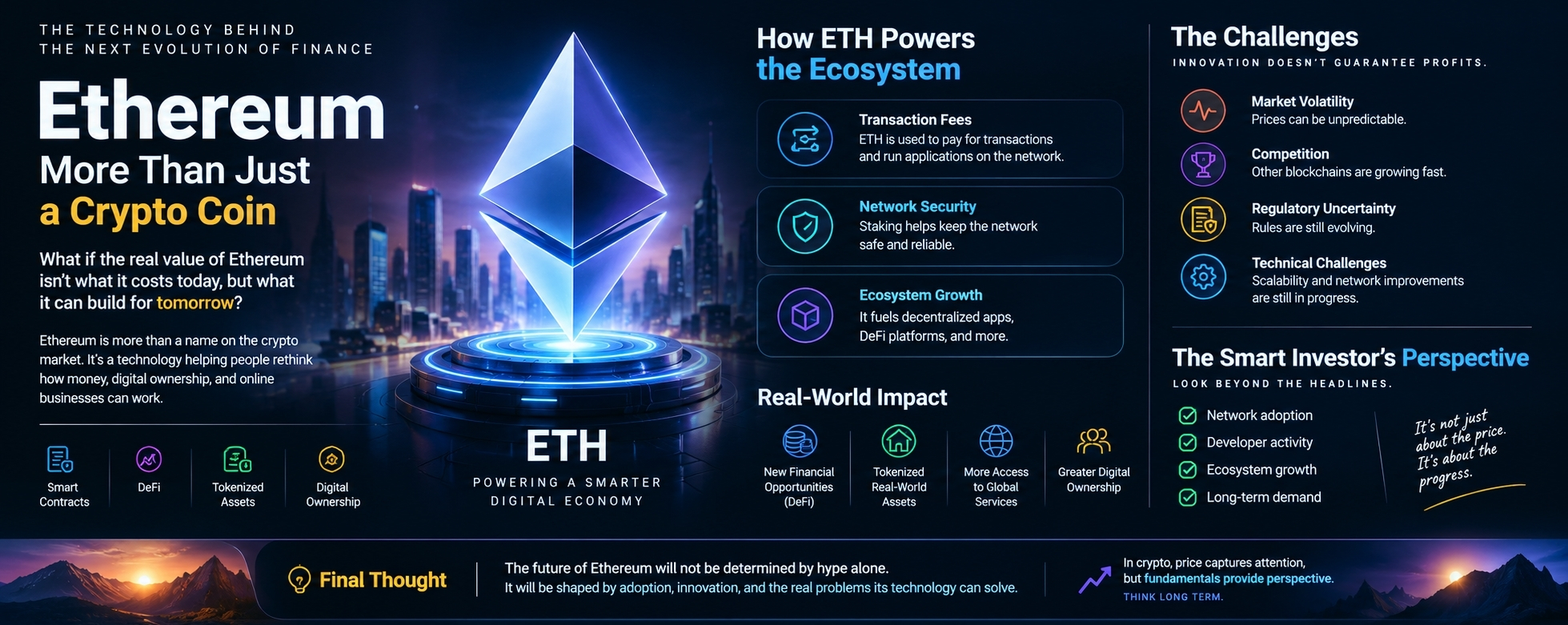
Ethereum: More Than Just a Crypto CoinWhat if the real value of Ethereum isn't what it costs today, but what it can build for tomorrow?
Ethereum is more than a name on the crypto market. It's a technology helping people rethink how money, digital ownership, and online businesses can work. From DeFi and smart contracts to tokenized assets, Ethereum is creating opportunities that go far beyond simple trading.
But let's be realistic: innovation doesn't guarantee profits. ETH still faces market volatility, competition, regulatory uncertainty, and technical challenges. That's why understanding the bigger picture matters more than following every market trend.
The smartest approach is to look at what is actually growing: real adoption, network activity, developer progress, and long-term demand.
Crypto rewards curiosity, but it can punish blind confidence.
My takeaway: Don't just watch the price of ETH. Understand the technology, follow its progress, and think beyond the next market move. Because real growth starts with real utility, not just hype.
#ETH #Ethereum $ETH
{future}(ETHUSDT)
Ethereum: More Than Just a Crypto Coin
What if the real value of Ethereum isn't what it costs today, but what it can build for tomorrow?
Ethereum is more than a name on the crypto market. It's a technology helping people rethink how money, digital ownership, and online businesses can work. From DeFi and smart contracts to tokenized assets, Ethereum is creating opportunities that go far beyond simple trading.
But let's be realistic: innovation doesn't guarantee profits. ETH still faces market volatility, competition, regulatory uncertainty, and technical challenges. That's why understanding the bigger picture matters more than following every market trend.
The smartest approach is to look at what is actually growing: real adoption, network activity, developer progress, and long-term demand.
Crypto rewards curiosity, but it can punish blind confidence.
My takeaway: Don't just watch the price of ETH. Understand the technology, follow its progress, and think beyond the next market move. Because real growth starts with real utility, not just hype.
#ETH #Ethereum $ETH
1
4
175
·
--
Bullish
#BinancePick
🚀 Binance Pick: Trade Smart, Think Long-Term! 💛
Crypto success isn’t just about buying low and selling high — it’s about understanding market trends, managing risk, and staying disciplined.
📊 Watch Bitcoin’s movements
🛡️ Protect your capital
🎯 Make decisions based on research, not emotions.
Remember: The smartest move in crypto is often patience. Build knowledge before chasing profits!
#EarningsSeason #cryptoeducation
{spot}(PYPLBUSDT)
#BinancePick
🚀 Binance Pick: Trade Smart, Think Long-Term! 💛
Crypto success isn’t just about buying low and selling high — it’s about understanding market trends, managing risk, and staying disciplined.
📊 Watch Bitcoin’s movements
🛡️ Protect your capital
🎯 Make decisions based on research, not emotions.
Remember: The smartest move in crypto is often patience. Build knowledge before chasing profits!
#EarningsSeason #cryptoeducation

3
112
·
--
Article
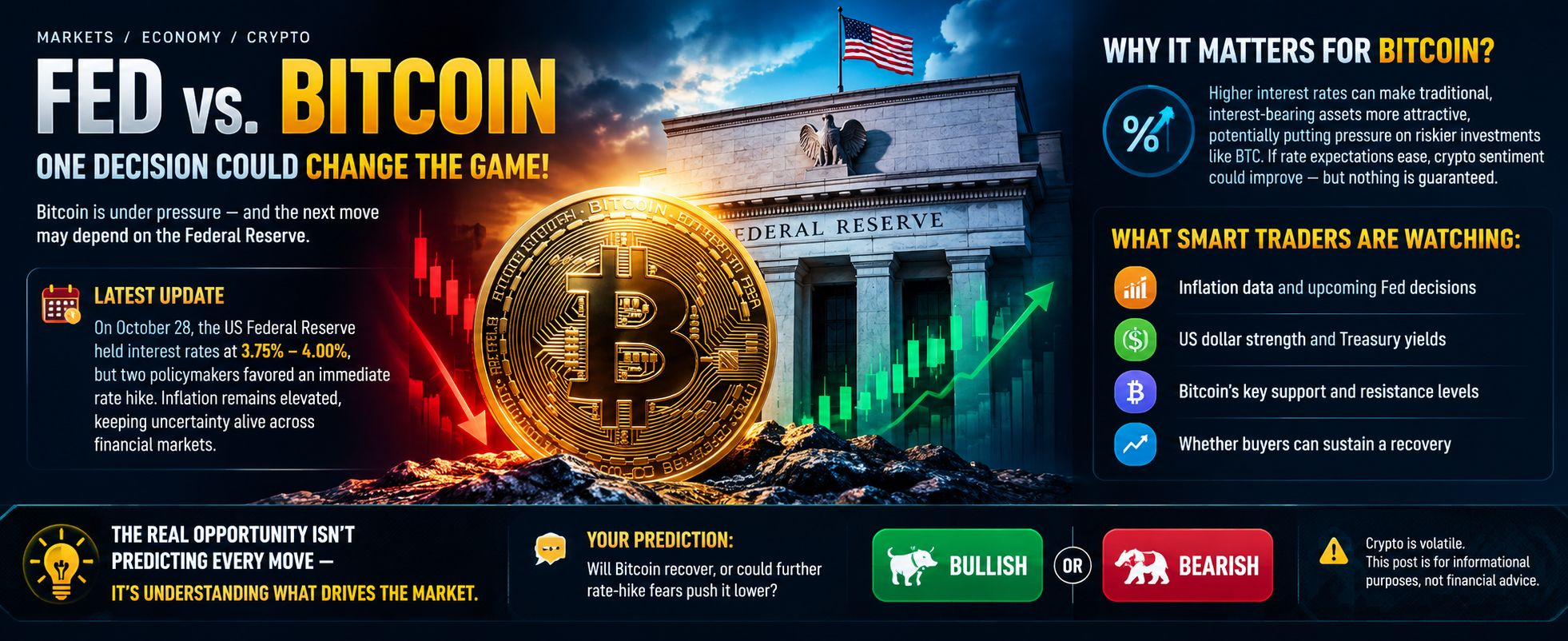
🚨 FED vs BITCOIN: ONE DECISION COULD CHANGE THE GAME!📉 Bitcoin is under pressure — and the next move may depend on the Federal Reserve.
US Federal Reserve held interest rates at 3.75%–4.00%, but two policymakers favored an immediate rate hike. Inflation remains elevated, keeping uncertainty alive across financial markets.
🧠 Why does this matter for Bitcoin?
Higher interest rates can make traditional, interest-bearing assets more attractive, potentially putting pressure on riskier investments like BTC. If rate expectations ease, crypto sentiment could improve — but nothing is guaranteed.
🔍 What smart traders are watching:
- 📊 Inflation data and upcoming Fed decisions- 💵 US dollar strength and Treasury yields- ₿ Bitcoin’s key support and resistance levels- 📈 Whether buyers can sustain a recovery
🔥 The real opportunity isn't predicting every move — it's understanding what drives the market.
💬 Your prediction: Will Bitcoin recover, or could further rate-hike fears push it lower?
🐂 BULLISH | 🐻 BEARISH
⚠️ Crypto is volatile. This post is for informational purposes, not financial advice.
#BTC $BTC
{future}(BTCUSDT)
🚨 FED vs BITCOIN: ONE DECISION COULD CHANGE THE GAME!
📉 Bitcoin is under pressure — and the next move may depend on the Federal Reserve.
US Federal Reserve held interest rates at 3.75%–4.00%, but two policymakers favored an immediate rate hike. Inflation remains elevated, keeping uncertainty alive across financial markets.
🧠 Why does this matter for Bitcoin?
Higher interest rates can make traditional, interest-bearing assets more attractive, potentially putting pressure on riskier investments like BTC. If rate expectations ease, crypto sentiment could improve — but nothing is guaranteed.
🔍 What smart traders are watching:
- 📊 Inflation data and upcoming Fed decisions- 💵 US dollar strength and Treasury yields- ₿ Bitcoin’s key support and resistance levels- 📈 Whether buyers can sustain a recovery
🔥 The real opportunity isn't predicting every move — it's understanding what drives the market.
💬 Your prediction: Will Bitcoin recover, or could further rate-hike fears push it lower?
🐂 BULLISH | 🐻 BEARISH
⚠️ Crypto is volatile. This post is for informational purposes, not financial advice.
#BTC $BTC
1
2
258
·
--
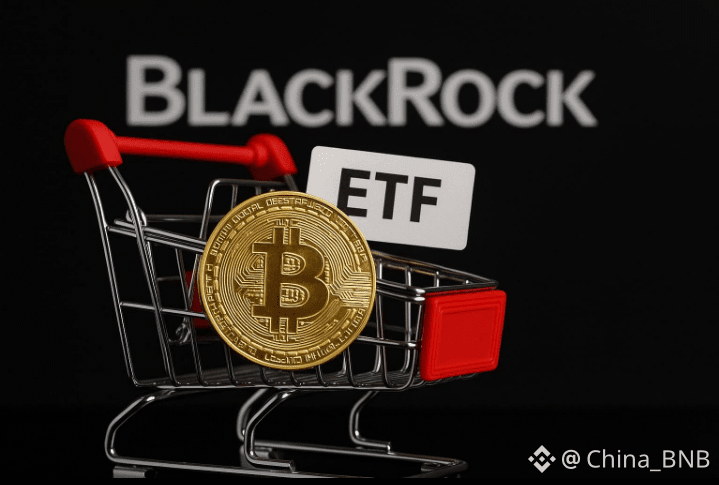
🚨 BITCOIN ETF INFLOWS RISE — ARE BIG INVESTORS BUYING THE DIP? ₿
📊 Institutional money is back in focus as Bitcoin ETFs record fresh inflows. Could this signal renewed confidence in BTC?
🐋 Smart investors are watching. The market is waiting.
The big question: Is this the beginning of a recovery, or just a temporary bounce?
🔥 Bitcoin’s next move could surprise everyone.
💬 What do you think? BUY THE DIP 📈 or WAIT FOR CONFIRMATION ⏳?
⚠️ ETF inflows don’t guarantee a price rally. Always research before investing.
{future}(BTCUSDT)
🚨 BITCOIN ETF INFLOWS RISE — ARE BIG INVESTORS BUYING THE DIP? ₿
📊 Institutional money is back in focus as Bitcoin ETFs record fresh inflows. Could this signal renewed confidence in BTC?
🐋 Smart investors are watching. The market is waiting.
The big question: Is this the beginning of a recovery, or just a temporary bounce?
🔥 Bitcoin’s next move could surprise everyone.
💬 What do you think? BUY THE DIP 📈 or WAIT FOR CONFIRMATION ⏳?
⚠️ ETF inflows don’t guarantee a price rally. Always research before investing.
1
152
·
--
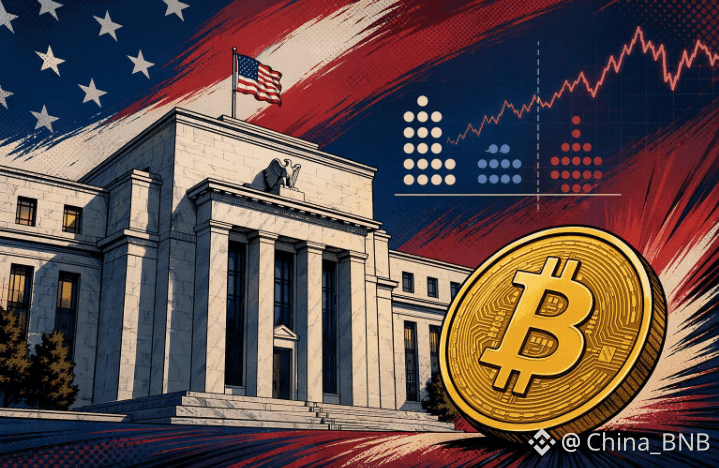
🚨 BITCOIN BELOW $80,000 — WHAT HAPPENS NEXT? ₿
Bitcoin’s next move could define the market’s direction. 📉📈
Traders are watching key support levels, institutional activity, and US interest-rate expectations to determine whether BTC can recover or face further downside pressure.
🧠 Smart money watches the data, not the hype.
🔥 Will Bitcoin bounce back stronger, or is more volatility ahead?
💬 What’s your prediction? BULLISH 🐂 or BEARISH 🐻?
⚠️ Crypto markets are volatile. Always do your own research before investing.
2
147
·
--
Bullish
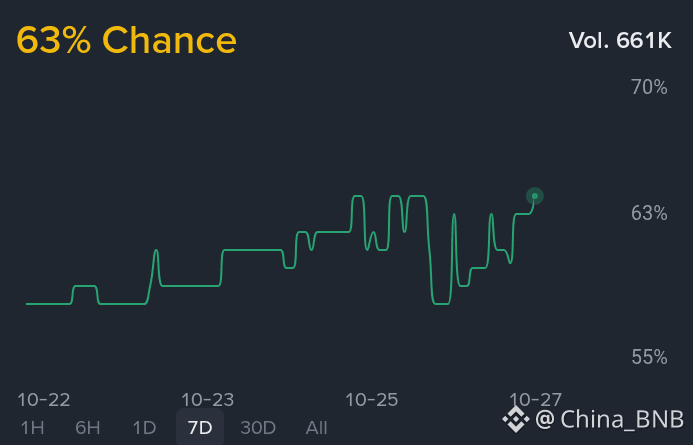
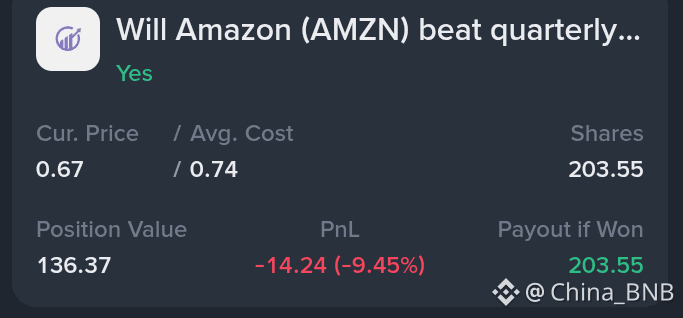
#BinancePick
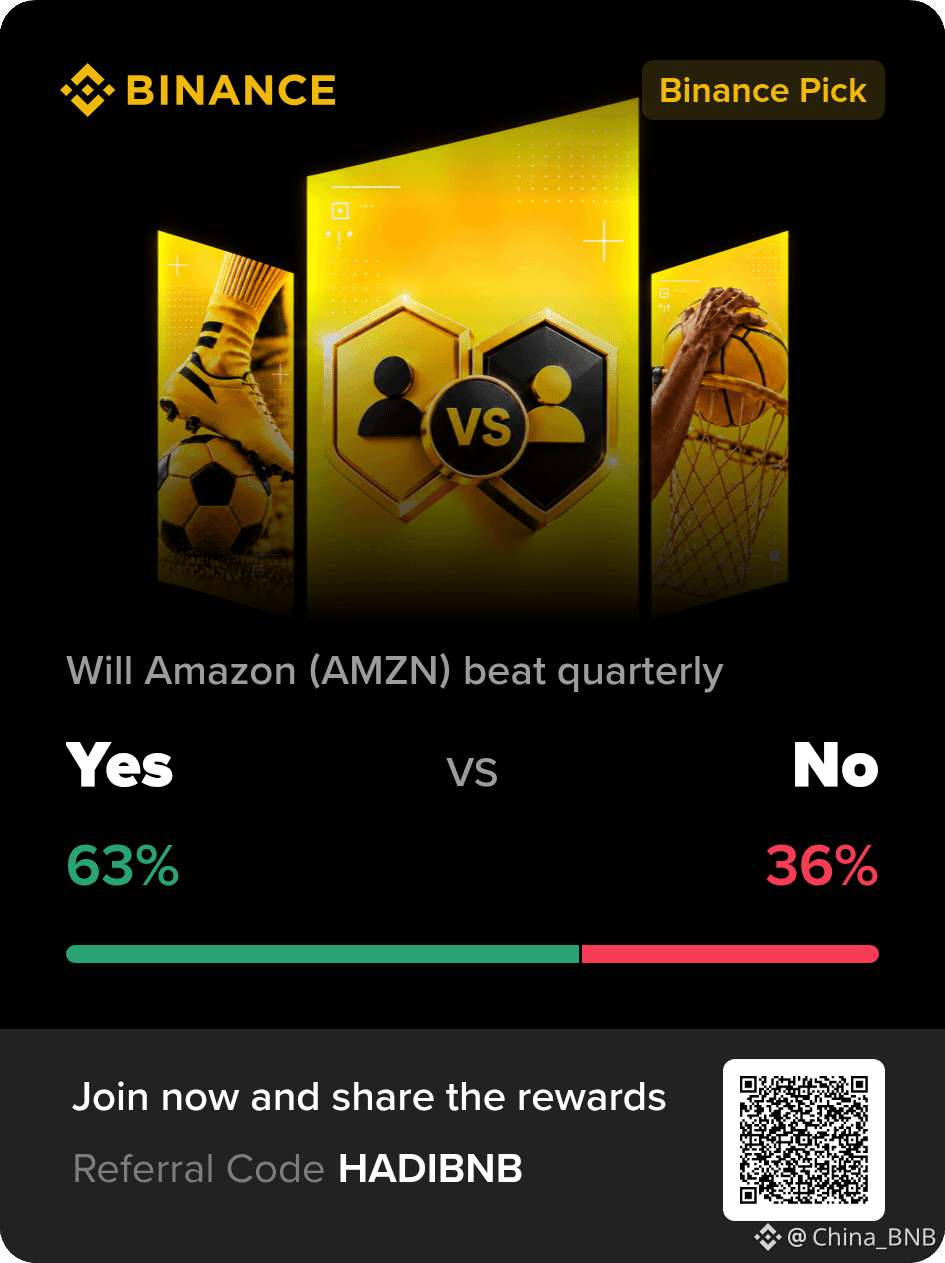
this is the bigger opportunity for join Binance pick to op#EarningsSeason to finance open free point trade and win it!
$AMZNB $LLYB $GOOGLB
{spot}(LLYBUSDT)
{spot}(AMZNBUSDT)
{stock_us}(MLI.US)
#BinancePick
this is the bigger opportunity for join Binance pick to op#EarningsSeason to finance open free point trade and win it!
$AMZNB $LLYB $GOOGLB
this is the bigger opportunity for join Binance pick to op#EarningsSeason to finance open free point trade and win it!
$AMZNB $LLYB $GOOGLB
From Binance Pick
1
1
163
Log in to explore more content
Join global crypto users on Binance Square
⚡️ Get latest and useful information about crypto.
💬 Trusted by the world’s largest crypto exchange.
👍 Discover real insights from verified creators.
Email / Phone number
Trending Topics
BinanceReports80%Recoveryof$6.3BillioninLossesfromHackIncident
13,895 views
134 Discussing
Security Incident Update #2 (2026-10-30)
Binance Announcement
·1.1k Likes
·1.2M views
HeYiSaysWithdrawalsExpectedtoResumeWithin42Hours
23,623 views
453 Discussing
CZSaysCompensationIsinPlaceUsersAreProtected
26,093 views
359 Discussing