⚡ The $894,000 MVP, and $700 million that won’t start being paid for eight years
On November 12, the Baseball Writers’ Association of America announced its voting results. Cubs center fielder Pete Crow-Armstrong received all 30 first-place votes for National League MVP. He is 24. Unanimous.
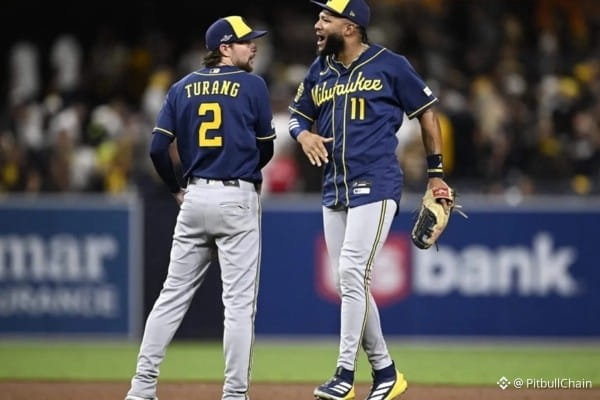
Ohtani finished second, Turang third. Both leagues had unanimous winners: Yordan Alvarez in the American League, becoming the second player in history whose primary position was designated hitter to win MVP.
This season, he hit 45 home runs, tied for the most in MLB, along with 31 doubles, 8 triples, and 41 stolen bases in 48 attempts—the only player in all of MLB to go 40-40. His slash line was .280/.372/.570. His 119 runs led all of MLB, and his 107 RBIs ranked third in the National League. He played nearly 1,400 innings in center field and recorded 25 outs above average, tying the best season by an outfielder since the stat was introduced in 2016. WAR by the two measures: 9.8 from Baseball Reference, 10.6 from FanGraphs. Both over ten.
His salary in 2026 is $894,000. That’s it.
The six-year, $115 million extension he signed on March 26 doesn’t begin until 2027. He’ll get $10 million each of the first three years, $20 million in 2030, and $30 million each in 2031 and 2032, plus a $5 million signing bonus. The pre-arbitration bonus pool is separate; MVP is the top tier, worth $2.5 million according to media reports.
The runner-up’s contract is bigger on paper. Ohtani’s 10-year, $700 million deal pays him just $2 million a year from 2024 through 2033, for a total of $20 million over ten years. The remaining $680 million will be paid from 2034 through 2043, at $68 million a year. No interest. Discounted to present value, it comes to about $460 million for luxury-tax purposes, or $46 million per year. The discount rate is the 4.43% federal mid-term rate at the time he signed.
The difference between $700 million and $460 million is $240 million. It buys time. One is paid in full that year; the other is pushed out until he’s in his forties.
The season’s numbers don’t quite add up, either. Ohtani was in the Cy Young race for the first three months, allowing just 1.79 runs over 85⅔ innings and striking out 95. Before the All-Star break, he was hitting .293/.403/.549. He didn’t pitch again after injuring his left knee on July 3. In August, he developed an issue with his right biceps, and went the final six weeks without an extra-base hit. He finished at .275/.377/.512, with 30 home runs in 618 plate appearances. The worst season of his career.
The current collective bargaining agreement expires at 11:59 p.m. on December 1. Article 16 explicitly places no limit on deferred payments. Whether that clause changes will directly determine how contracts like these are valued.
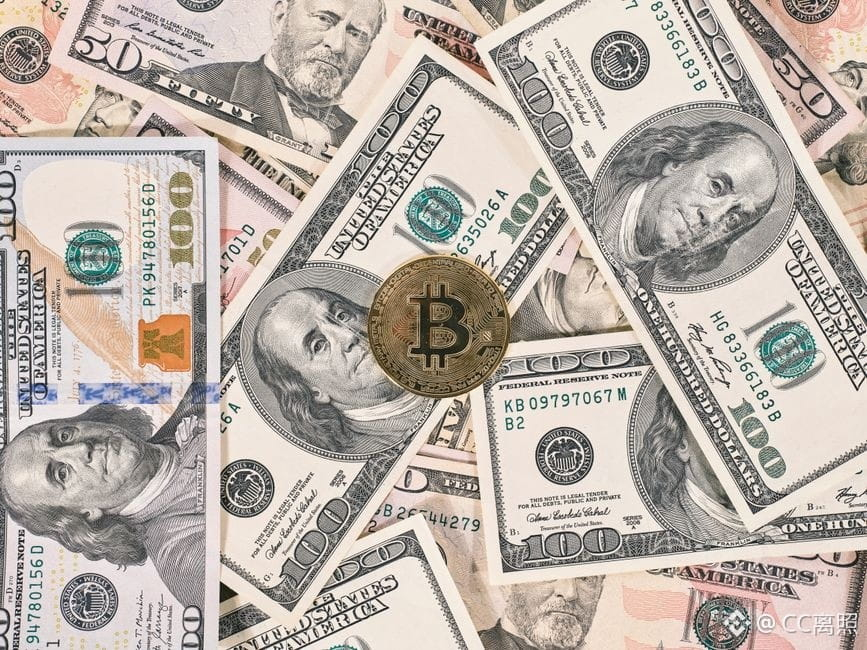
Crypto ledgers look the same. Total supply, circulating supply, and the unlock schedule: three sheets attached to a single asset. The white paper states the total supply, exchanges list the circulating supply, and tokens locked up for three years and released linearly still count toward FDV, even though they can’t be traded today. Anyone who treated total supply as market cap got it wrong at least once. The only on-chain number you don’t have to take anyone’s word for is the balance in a wallet right now.
As for the market, BTC: $69,265 to $69,395, six sources, down 4.8% in 24 hours. ETH: $1,958 to $1,962. Down 2.9%.
What something is worth and what someone gets paid: two different tables. The ballot records the first; the payment schedule, the second.
#中本聪国际社区Baoluo币商资本 #加密货币 #MLB