
Robic_Vic
206 Posts

Robic_Vic
Report
Block User
If you don't believe in yourself nobody else will.
Open Trade
Frequent Trader
3.1 Years
85 Following
4.2K+ Followers
395 Liked
Posts
Portfolio
All
Quotes
Videos
Live
·
--
See translation
Crypto Asked for Clarity. The Senate Said No.
The CLARITY Act fell 11 votes short of advancing in the Senate.
XRP became the market’s proxy for Washington’s chances of delivering a broader crypto framework.
BNB’s resilience was defensive. It had no new catalyst, and the rest of the altcoin market did not follow. It simply had less policy premium to give back.
The week’s price action showed exactly where the market had placed its regulatory expectations.
Coinbase Was the Policy Trade.
The failed vote pushed regulatory clarity further out for Coinbase.
A federal framework could clarify how assets and services are regulated on US platforms. Until that arrives, COIN remains one of the clearest public-market expressions of Washington’s crypto policy risk.
The Fed decides at 18:00 UTC today with the front end of the curve already pricing hikes. And Bitcoin has, for now, stopped trading as a macro asset.
#FedRateWatch
$BTC $XRP $BNB
Crypto Asked for Clarity. The Senate Said No.
The CLARITY Act fell 11 votes short of advancing in the Senate.
XRP became the market’s proxy for Washington’s chances of delivering a broader crypto framework.
BNB’s resilience was defensive. It had no new catalyst, and the rest of the altcoin market did not follow. It simply had less policy premium to give back.
The week’s price action showed exactly where the market had placed its regulatory expectations.
Coinbase Was the Policy Trade.
The failed vote pushed regulatory clarity further out for Coinbase.
A federal framework could clarify how assets and services are regulated on US platforms. Until that arrives, COIN remains one of the clearest public-market expressions of Washington’s crypto policy risk.
The Fed decides at 18:00 UTC today with the front end of the curve already pricing hikes. And Bitcoin has, for now, stopped trading as a macro asset.
#FedRateWatch
$BTC $XRP $BNB
The CLARITY Act fell 11 votes short of advancing in the Senate.
XRP became the market’s proxy for Washington’s chances of delivering a broader crypto framework.
BNB’s resilience was defensive. It had no new catalyst, and the rest of the altcoin market did not follow. It simply had less policy premium to give back.
The week’s price action showed exactly where the market had placed its regulatory expectations.
Coinbase Was the Policy Trade.
The failed vote pushed regulatory clarity further out for Coinbase.
A federal framework could clarify how assets and services are regulated on US platforms. Until that arrives, COIN remains one of the clearest public-market expressions of Washington’s crypto policy risk.
The Fed decides at 18:00 UTC today with the front end of the curve already pricing hikes. And Bitcoin has, for now, stopped trading as a macro asset.
#FedRateWatch
$BTC $XRP $BNB
2
252
·
--
Bearish
See translation
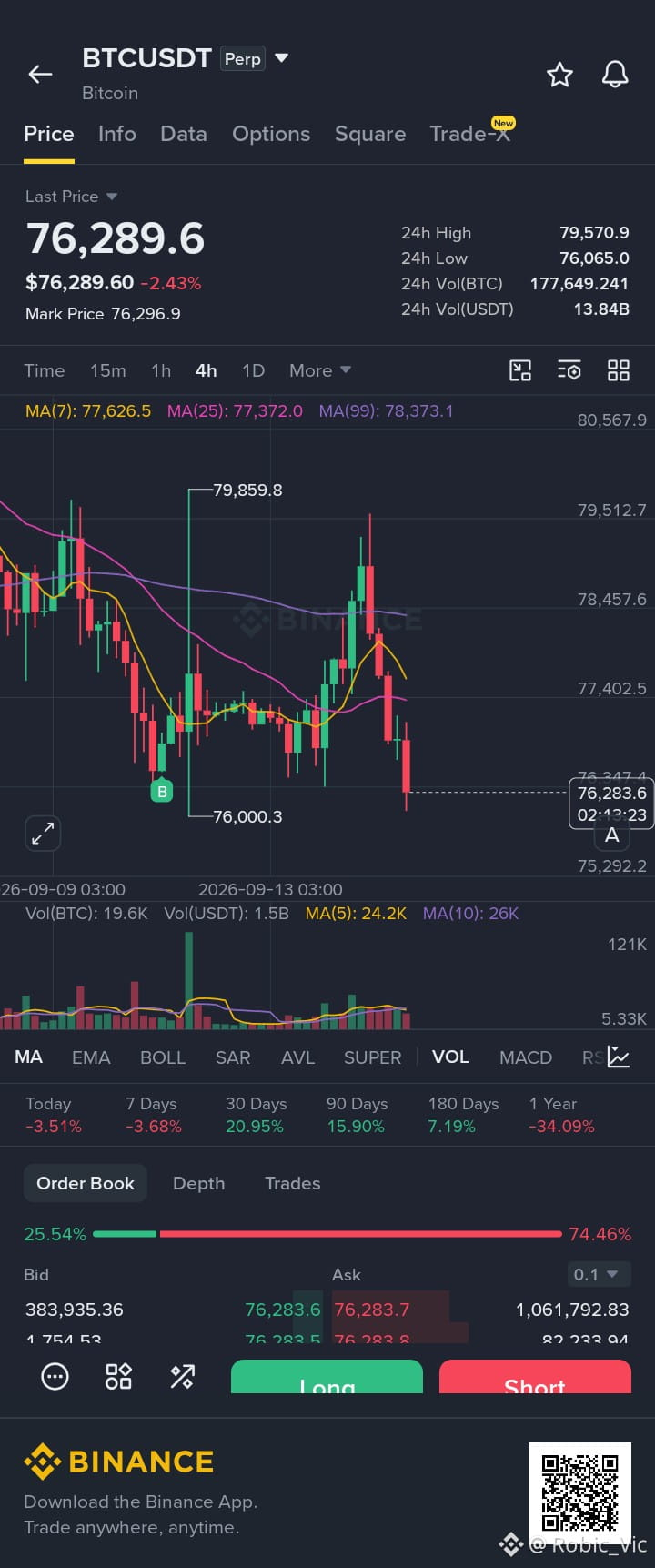
Knowing when to enter and exit is goated in trading because anything can happen in a short period of time.
#FedRateCut
$BTC
Knowing when to enter and exit is goated in trading because anything can happen in a short period of time.
#FedRateCut
$BTC
#FedRateCut
$BTC
3
199
·
--
See translation
A prominent trader discusses FOMC’s impact on crypto: Macro narratives are mostly noise, and Bitcoin prices typically move ahead of macro trends.
Prominent trader Killa has shared insights on the potential impact of this week’s upcoming FOMC meeting on the crypto market. He noted that while many heavily rely on macroeconomics, policies, and economic data to predict asset moves, Killa argues "most macro narratives are just distractions." Killa explained that BTC often begins moving before its driving cause becomes obvious. By the time the macro environment shifts and the broader market catches on, Bitcoin has usually already completed its price move. Correlations tend to lag; markets don’t move because most people understand them—most people understand them because the market has already moved. On September 12, Killa analyzed that Bitcoin has been in repeated consolidation recently, with the market repeatedly hunting long positions below prior lows to clear leverage and gradually erode the confidence of long holders. This continuous "sweep lower" behavior typically signals the market’s final intent to reward longs, where the last sweep marks a local bottom, after which prices rally higher. A BTC-focused quant trader, Killa previously predicted the peak of this bull market in May 2025 and boasts over 200,000 followers on X. In mid-April, he shorted Bitcoin at $74,688, then shifted to long positions during the broad market sell-off on June 5.
$BTC
#BitcoinCrosses78000
#ClarityActFacesProceduralVoteSep15
A prominent trader discusses FOMC’s impact on crypto: Macro narratives are mostly noise, and Bitcoin prices typically move ahead of macro trends.
Prominent trader Killa has shared insights on the potential impact of this week’s upcoming FOMC meeting on the crypto market. He noted that while many heavily rely on macroeconomics, policies, and economic data to predict asset moves, Killa argues "most macro narratives are just distractions." Killa explained that BTC often begins moving before its driving cause becomes obvious. By the time the macro environment shifts and the broader market catches on, Bitcoin has usually already completed its price move. Correlations tend to lag; markets don’t move because most people understand them—most people understand them because the market has already moved. On September 12, Killa analyzed that Bitcoin has been in repeated consolidation recently, with the market repeatedly hunting long positions below prior lows to clear leverage and gradually erode the confidence of long holders. This continuous "sweep lower" behavior typically signals the market’s final intent to reward longs, where the last sweep marks a local bottom, after which prices rally higher. A BTC-focused quant trader, Killa previously predicted the peak of this bull market in May 2025 and boasts over 200,000 followers on X. In mid-April, he shorted Bitcoin at $74,688, then shifted to long positions during the broad market sell-off on June 5.
$BTC
#BitcoinCrosses78000
#ClarityActFacesProceduralVoteSep15
Prominent trader Killa has shared insights on the potential impact of this week’s upcoming FOMC meeting on the crypto market. He noted that while many heavily rely on macroeconomics, policies, and economic data to predict asset moves, Killa argues "most macro narratives are just distractions." Killa explained that BTC often begins moving before its driving cause becomes obvious. By the time the macro environment shifts and the broader market catches on, Bitcoin has usually already completed its price move. Correlations tend to lag; markets don’t move because most people understand them—most people understand them because the market has already moved. On September 12, Killa analyzed that Bitcoin has been in repeated consolidation recently, with the market repeatedly hunting long positions below prior lows to clear leverage and gradually erode the confidence of long holders. This continuous "sweep lower" behavior typically signals the market’s final intent to reward longs, where the last sweep marks a local bottom, after which prices rally higher. A BTC-focused quant trader, Killa previously predicted the peak of this bull market in May 2025 and boasts over 200,000 followers on X. In mid-April, he shorted Bitcoin at $74,688, then shifted to long positions during the broad market sell-off on June 5.
$BTC
#BitcoinCrosses78000
#ClarityActFacesProceduralVoteSep15
2
111
·
--
See translation
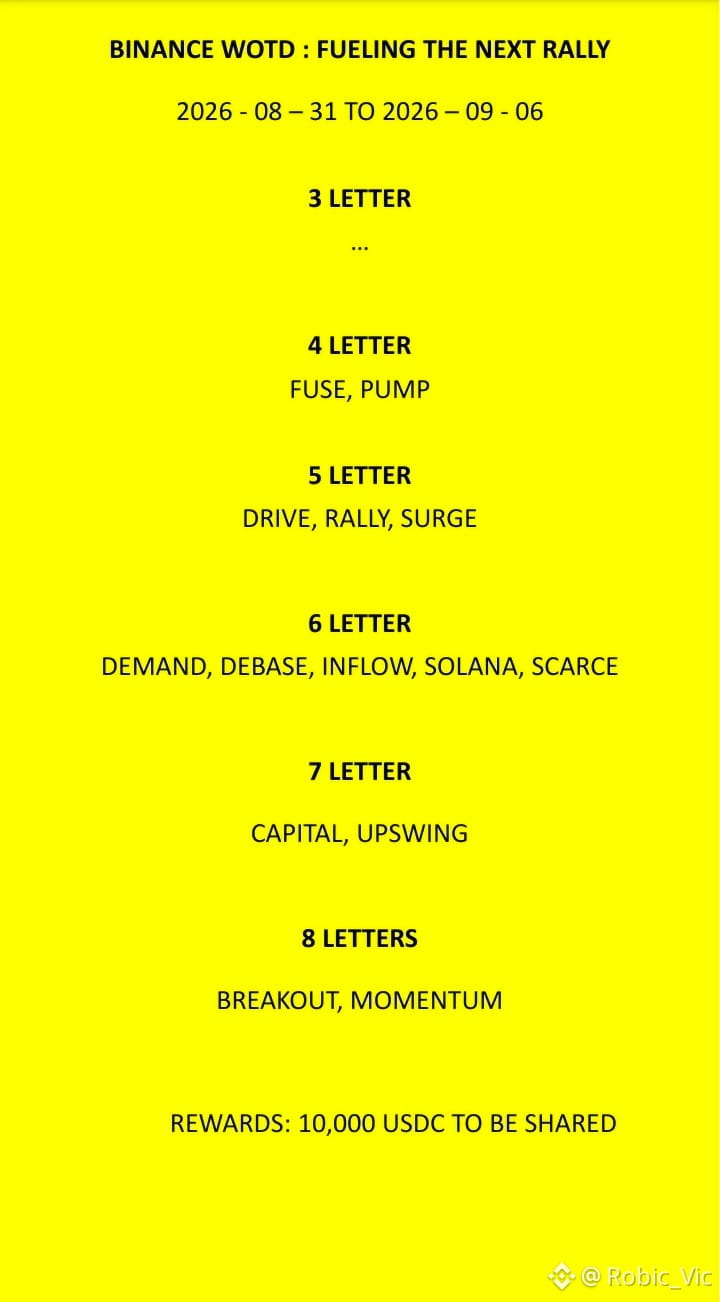
BINANCE WOTD : FUELING THE NEXT RALLY
2026 - 08 - 31 TO 2026 - 09 - 06
#wotd
#binancewotd
#dyor
$USDC
BINANCE WOTD : FUELING THE NEXT RALLY
2026 - 08 - 31 TO 2026 - 09 - 06
#wotd
#binancewotd
#dyor
$USDC
2026 - 08 - 31 TO 2026 - 09 - 06
#wotd
#binancewotd
#dyor
$USDC
4
66
·
--
See translation
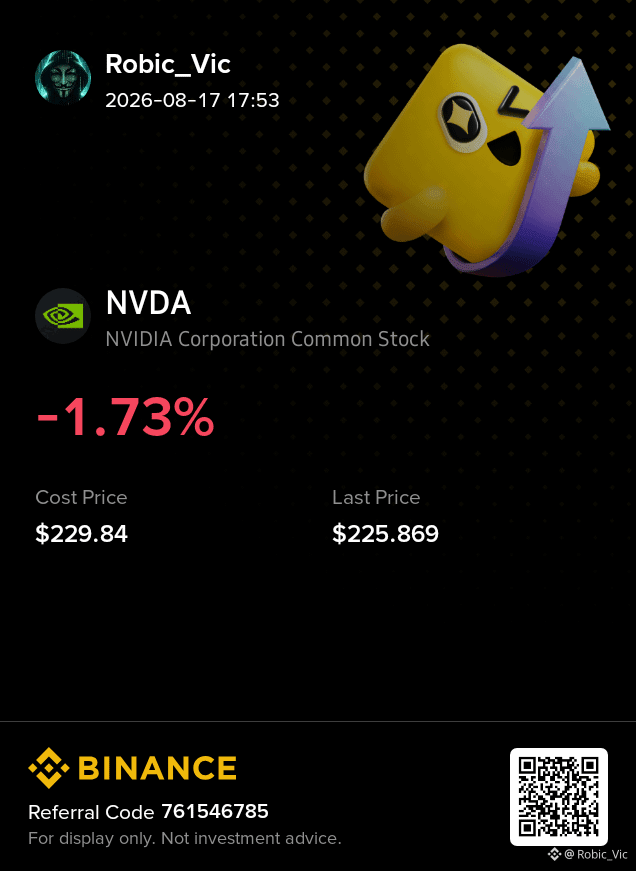
I just bought NVDA worth 10 USDC on binance. Binance is really a superapp and it's a game changer in this space 🔥🔥🚀🚀https://www.binance.com/en/stocks/EQ_NVDA?ref=761546785
#TradebStocks #BinanceAfrica
I just bought NVDA worth 10 USDC on binance. Binance is really a superapp and it's a game changer in this space 🔥🔥🚀🚀https://www.binance.com/en/stocks/EQ_NVDA?ref=761546785
#TradebStocks #BinanceAfrica
#TradebStocks #BinanceAfrica
3
101
·
--
Article
See translation
Stop Buying the Dip Blind: Check the Holders Distribution First.Everyone's shouting "buy the dip," and you're aping in without checking one thing that actually matters — who owns the supply.
Holders Distribution tells you how a token's supply is split across wallets. It's the fastest way to see who's really running the show.
Why it's non-negotiable:
A handful of wallets holding most of the supply means a handful of people control the price. They don't need a bear market to dump on you — they just need a reason. That's not a coin, that's their exit liquidity.
Spread supply across thousands of wallets tells a different story: real people, real conviction, no single hand on the wheel.
Put it in perspective:
Token A — top 15 wallets hold 80% of supply. One coordinated sell and retail eats the loss.
Token B — top 10 wallets hold 10-15%. No single player can tank it alone.
Same market, very different risk.
Before you ape in:
Pull up the top holders on Dexscreener, Etherscan, or BscScan. Anything over 5-10% in one non-LP, non-locked wallet is a red flag, not a green light.
Distribution won't tell you if a project succeeds. But it will tell you if you're investing in a community — or funding someone else's payday.
#CryptoEducation💡🚀 #dyor
Stop Buying the Dip Blind: Check the Holders Distribution First.
Everyone's shouting "buy the dip," and you're aping in without checking one thing that actually matters — who owns the supply.
Holders Distribution tells you how a token's supply is split across wallets. It's the fastest way to see who's really running the show.
Why it's non-negotiable:
A handful of wallets holding most of the supply means a handful of people control the price. They don't need a bear market to dump on you — they just need a reason. That's not a coin, that's their exit liquidity.
Spread supply across thousands of wallets tells a different story: real people, real conviction, no single hand on the wheel.
Put it in perspective:
Token A — top 15 wallets hold 80% of supply. One coordinated sell and retail eats the loss.
Token B — top 10 wallets hold 10-15%. No single player can tank it alone.
Same market, very different risk.
Before you ape in:
Pull up the top holders on Dexscreener, Etherscan, or BscScan. Anything over 5-10% in one non-LP, non-locked wallet is a red flag, not a green light.
Distribution won't tell you if a project succeeds. But it will tell you if you're investing in a community — or funding someone else's payday.
#CryptoEducation💡🚀 #dyor
Holders Distribution tells you how a token's supply is split across wallets. It's the fastest way to see who's really running the show.
Why it's non-negotiable:
A handful of wallets holding most of the supply means a handful of people control the price. They don't need a bear market to dump on you — they just need a reason. That's not a coin, that's their exit liquidity.
Spread supply across thousands of wallets tells a different story: real people, real conviction, no single hand on the wheel.
Put it in perspective:
Token A — top 15 wallets hold 80% of supply. One coordinated sell and retail eats the loss.
Token B — top 10 wallets hold 10-15%. No single player can tank it alone.
Same market, very different risk.
Before you ape in:
Pull up the top holders on Dexscreener, Etherscan, or BscScan. Anything over 5-10% in one non-LP, non-locked wallet is a red flag, not a green light.
Distribution won't tell you if a project succeeds. But it will tell you if you're investing in a community — or funding someone else's payday.
#CryptoEducation💡🚀 #dyor
4
139
·
--

4
76
·
--
Article
See translation
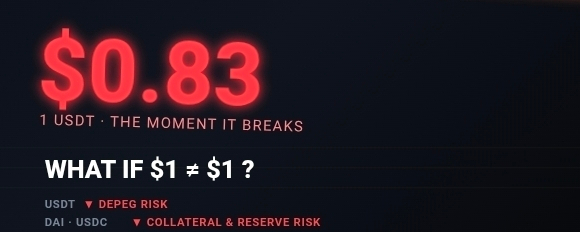
The Stablecoin Apocalypse: What If USDT or DAI Lost Its Peg?Let's talk about the assumption nobody questions until it's too late.
You hold USDT. You see "1000 USDT" in your wallet and your brain reads it as "1000 dollars." Same with DAI. Same with USDC. It feels like cash sitting in a bank account.
But here's the uncomfortable truth: in Web3, nothing is guaranteed. Not even the "stable" in stablecoin. And this isn't hypothetical fear-mongering, it's already happened, more than once.
Why we even need stablecoins
Stables exist because crypto needed a dollar-like unit that doesn't swing 10% before lunch. They give us a simple way to track profit and loss. They're the bridge between CeFi and DeFi — the on-ramp that lets you move into on-chain tools without leaving the comfort of "dollar" pricing. And they're the backbone of trading, farming and lending — the "safe haven" asset in an otherwise chaotic market.
All of that only works on one condition: 1 USDT stays worth $1.
So what does "unpegging" actually mean?
It's simple and terrifying at the same time — a stablecoin stops trading at $1. Instead of a reliable dollar equivalent, it might trade at $0.97, or $0.85, or in the worst cases, fractions of a cent.
And yes, this has genuinely happened:
UST from the Terra ecosystem was the poster child of algorithmic stablecoin failure — it unraveled in roughly 48 hours and wiped out billions of dollars in value. USDC, usually seen as one of the "safest" stables, dropped to around $0.88 for about a day and a half in March 2023 after the bank holding part of its reserves collapsed. And DAI, despite being marketed as decentralized, is partly backed by USDC — so when USDC wobbled, DAI felt it too.
The lesson: decentralization doesn't automatically mean safety, and "backed by reserves" is only as strong as the reserves themselves.
What triggers a depeg?
It's rarely just one thing. Panic and mass withdrawals, a shortfall in reserves, sudden regulatory pressure, or a plain old code exploit can all do it. Sometimes it only takes one smart contract bug or one collateral manipulation to snap the link between a token and the dollar it's supposed to represent.
If USDT or DAI broke tomorrow, here's the domino effect
DeFi protocols and DEXs would freeze up or start behaving unpredictably. Collateral backed by the broken stablecoin would suddenly be worth less than the loans against it, triggering a wave of liquidations. Arbitrageurs would move fast and profit off the chaos, while regular holders would be left eating the loss. Fear would send capital fleeing into BTC, ETH, or straight back to fiat. And the trust that holds the entire DeFi ecosystem together would take a serious hit.
Think of it like your bank calling you up and saying, "Your savings are now worth 80 cents on the dollar." That's the scale of disruption we're talking about.
How to actually protect yourself
Don't park everything in a single stablecoin — spread the risk. Pay attention to reserve audits and transparency reports; if a project won't show its books, that's a red flag. Understand the mechanism behind the stable you're holding — fiat-backed, algorithmic, and overcollateralized models all carry different risk profiles. Keep some value in native assets or off exchange entirely. And most importantly, internalize that "stable" is a description of intent, not a guarantee.
Bottom line
Stablecoins are the foundation DeFi is built on. But foundations can crack, and this one has cracked before. If you're living in crypto, it's worth planning for a world where $1 doesn't always equal $1 — because stability here isn't a promise, it's a mechanism. And every mechanism can fail.
The odds are low. But "never say never" is basically the tagline of this industry.
The Stablecoin Apocalypse: What If USDT or DAI Lost Its Peg?
Let's talk about the assumption nobody questions until it's too late.
You hold USDT. You see "1000 USDT" in your wallet and your brain reads it as "1000 dollars." Same with DAI. Same with USDC. It feels like cash sitting in a bank account.
But here's the uncomfortable truth: in Web3, nothing is guaranteed. Not even the "stable" in stablecoin. And this isn't hypothetical fear-mongering, it's already happened, more than once.
Why we even need stablecoins
Stables exist because crypto needed a dollar-like unit that doesn't swing 10% before lunch. They give us a simple way to track profit and loss. They're the bridge between CeFi and DeFi — the on-ramp that lets you move into on-chain tools without leaving the comfort of "dollar" pricing. And they're the backbone of trading, farming and lending — the "safe haven" asset in an otherwise chaotic market.
All of that only works on one condition: 1 USDT stays worth $1.
So what does "unpegging" actually mean?
It's simple and terrifying at the same time — a stablecoin stops trading at $1. Instead of a reliable dollar equivalent, it might trade at $0.97, or $0.85, or in the worst cases, fractions of a cent.
And yes, this has genuinely happened:
UST from the Terra ecosystem was the poster child of algorithmic stablecoin failure — it unraveled in roughly 48 hours and wiped out billions of dollars in value. USDC, usually seen as one of the "safest" stables, dropped to around $0.88 for about a day and a half in March 2023 after the bank holding part of its reserves collapsed. And DAI, despite being marketed as decentralized, is partly backed by USDC — so when USDC wobbled, DAI felt it too.
The lesson: decentralization doesn't automatically mean safety, and "backed by reserves" is only as strong as the reserves themselves.
What triggers a depeg?
It's rarely just one thing. Panic and mass withdrawals, a shortfall in reserves, sudden regulatory pressure, or a plain old code exploit can all do it. Sometimes it only takes one smart contract bug or one collateral manipulation to snap the link between a token and the dollar it's supposed to represent.
If USDT or DAI broke tomorrow, here's the domino effect
DeFi protocols and DEXs would freeze up or start behaving unpredictably. Collateral backed by the broken stablecoin would suddenly be worth less than the loans against it, triggering a wave of liquidations. Arbitrageurs would move fast and profit off the chaos, while regular holders would be left eating the loss. Fear would send capital fleeing into BTC, ETH, or straight back to fiat. And the trust that holds the entire DeFi ecosystem together would take a serious hit.
Think of it like your bank calling you up and saying, "Your savings are now worth 80 cents on the dollar." That's the scale of disruption we're talking about.
How to actually protect yourself
Don't park everything in a single stablecoin — spread the risk. Pay attention to reserve audits and transparency reports; if a project won't show its books, that's a red flag. Understand the mechanism behind the stable you're holding — fiat-backed, algorithmic, and overcollateralized models all carry different risk profiles. Keep some value in native assets or off exchange entirely. And most importantly, internalize that "stable" is a description of intent, not a guarantee.
Bottom line
Stablecoins are the foundation DeFi is built on. But foundations can crack, and this one has cracked before. If you're living in crypto, it's worth planning for a world where $1 doesn't always equal $1 — because stability here isn't a promise, it's a mechanism. And every mechanism can fail.
The odds are low. But "never say never" is basically the tagline of this industry.
You hold USDT. You see "1000 USDT" in your wallet and your brain reads it as "1000 dollars." Same with DAI. Same with USDC. It feels like cash sitting in a bank account.
But here's the uncomfortable truth: in Web3, nothing is guaranteed. Not even the "stable" in stablecoin. And this isn't hypothetical fear-mongering, it's already happened, more than once.
Why we even need stablecoins
Stables exist because crypto needed a dollar-like unit that doesn't swing 10% before lunch. They give us a simple way to track profit and loss. They're the bridge between CeFi and DeFi — the on-ramp that lets you move into on-chain tools without leaving the comfort of "dollar" pricing. And they're the backbone of trading, farming and lending — the "safe haven" asset in an otherwise chaotic market.
All of that only works on one condition: 1 USDT stays worth $1.
So what does "unpegging" actually mean?
It's simple and terrifying at the same time — a stablecoin stops trading at $1. Instead of a reliable dollar equivalent, it might trade at $0.97, or $0.85, or in the worst cases, fractions of a cent.
And yes, this has genuinely happened:
UST from the Terra ecosystem was the poster child of algorithmic stablecoin failure — it unraveled in roughly 48 hours and wiped out billions of dollars in value. USDC, usually seen as one of the "safest" stables, dropped to around $0.88 for about a day and a half in March 2023 after the bank holding part of its reserves collapsed. And DAI, despite being marketed as decentralized, is partly backed by USDC — so when USDC wobbled, DAI felt it too.
The lesson: decentralization doesn't automatically mean safety, and "backed by reserves" is only as strong as the reserves themselves.
What triggers a depeg?
It's rarely just one thing. Panic and mass withdrawals, a shortfall in reserves, sudden regulatory pressure, or a plain old code exploit can all do it. Sometimes it only takes one smart contract bug or one collateral manipulation to snap the link between a token and the dollar it's supposed to represent.
If USDT or DAI broke tomorrow, here's the domino effect
DeFi protocols and DEXs would freeze up or start behaving unpredictably. Collateral backed by the broken stablecoin would suddenly be worth less than the loans against it, triggering a wave of liquidations. Arbitrageurs would move fast and profit off the chaos, while regular holders would be left eating the loss. Fear would send capital fleeing into BTC, ETH, or straight back to fiat. And the trust that holds the entire DeFi ecosystem together would take a serious hit.
Think of it like your bank calling you up and saying, "Your savings are now worth 80 cents on the dollar." That's the scale of disruption we're talking about.
How to actually protect yourself
Don't park everything in a single stablecoin — spread the risk. Pay attention to reserve audits and transparency reports; if a project won't show its books, that's a red flag. Understand the mechanism behind the stable you're holding — fiat-backed, algorithmic, and overcollateralized models all carry different risk profiles. Keep some value in native assets or off exchange entirely. And most importantly, internalize that "stable" is a description of intent, not a guarantee.
Bottom line
Stablecoins are the foundation DeFi is built on. But foundations can crack, and this one has cracked before. If you're living in crypto, it's worth planning for a world where $1 doesn't always equal $1 — because stability here isn't a promise, it's a mechanism. And every mechanism can fail.
The odds are low. But "never say never" is basically the tagline of this industry.
4
346
·
--
See translation
Why does withdrawing USDT cost differently depending on the network?
If you've ever withdrawn USDT and noticed the fee change completely just by switching networks, you're not imagining things. It has nothing to do with USDT itself — it's all about the blockchain you're sending it through.
USDT isn't tied to one chain. It exists on TRON, Ethereum, BNB Chain, TON, and a few others, and each of these networks has its own way of calculating transaction fees. Some are naturally cheaper to process, some get congested more often, and that directly affects what it costs to move funds.
Here's what actually happens when you withdraw: you pick USDT, choose a network (say TRON or Ethereum), and the exchange builds a transaction on that specific chain. The fee gets calculated based on that network's rules, not a fixed number the exchange decides on its own. Once you confirm, the funds move.
So why do the numbers differ so much? A few reasons — transaction processing costs vary per network, some chains are more congested than others at any given time, the fee mechanisms themselves work differently, and exchanges also adjust withdrawal fees periodically to reflect real network conditions.
On Binance, for example, you'll usually see multiple network options for USDT withdrawals, each with its own fee shown before you confirm. Comparing them takes a few seconds, and it can save you a noticeable amount — as long as the network you pick is actually supported by the recipient's wallet or exchange.
Bottom line: the fee is a function of the network, not the coin. Before you send anything, it's worth double-checking which chains the recipient can accept and comparing the cost across them first.
#USDT #Fee $USDT
Why does withdrawing USDT cost differently depending on the network?
If you've ever withdrawn USDT and noticed the fee change completely just by switching networks, you're not imagining things. It has nothing to do with USDT itself — it's all about the blockchain you're sending it through.
USDT isn't tied to one chain. It exists on TRON, Ethereum, BNB Chain, TON, and a few others, and each of these networks has its own way of calculating transaction fees. Some are naturally cheaper to process, some get congested more often, and that directly affects what it costs to move funds.
Here's what actually happens when you withdraw: you pick USDT, choose a network (say TRON or Ethereum), and the exchange builds a transaction on that specific chain. The fee gets calculated based on that network's rules, not a fixed number the exchange decides on its own. Once you confirm, the funds move.
So why do the numbers differ so much? A few reasons — transaction processing costs vary per network, some chains are more congested than others at any given time, the fee mechanisms themselves work differently, and exchanges also adjust withdrawal fees periodically to reflect real network conditions.
On Binance, for example, you'll usually see multiple network options for USDT withdrawals, each with its own fee shown before you confirm. Comparing them takes a few seconds, and it can save you a noticeable amount — as long as the network you pick is actually supported by the recipient's wallet or exchange.
Bottom line: the fee is a function of the network, not the coin. Before you send anything, it's worth double-checking which chains the recipient can accept and comparing the cost across them first.
#USDT #Fee $USDT
If you've ever withdrawn USDT and noticed the fee change completely just by switching networks, you're not imagining things. It has nothing to do with USDT itself — it's all about the blockchain you're sending it through.
USDT isn't tied to one chain. It exists on TRON, Ethereum, BNB Chain, TON, and a few others, and each of these networks has its own way of calculating transaction fees. Some are naturally cheaper to process, some get congested more often, and that directly affects what it costs to move funds.
Here's what actually happens when you withdraw: you pick USDT, choose a network (say TRON or Ethereum), and the exchange builds a transaction on that specific chain. The fee gets calculated based on that network's rules, not a fixed number the exchange decides on its own. Once you confirm, the funds move.
So why do the numbers differ so much? A few reasons — transaction processing costs vary per network, some chains are more congested than others at any given time, the fee mechanisms themselves work differently, and exchanges also adjust withdrawal fees periodically to reflect real network conditions.
On Binance, for example, you'll usually see multiple network options for USDT withdrawals, each with its own fee shown before you confirm. Comparing them takes a few seconds, and it can save you a noticeable amount — as long as the network you pick is actually supported by the recipient's wallet or exchange.
Bottom line: the fee is a function of the network, not the coin. Before you send anything, it's worth double-checking which chains the recipient can accept and comparing the cost across them first.
#USDT #Fee $USDT
5
111
·
--
See translation
Ever wonder why the crypto world gets so worked up over "the halving"? Here's the simple version.
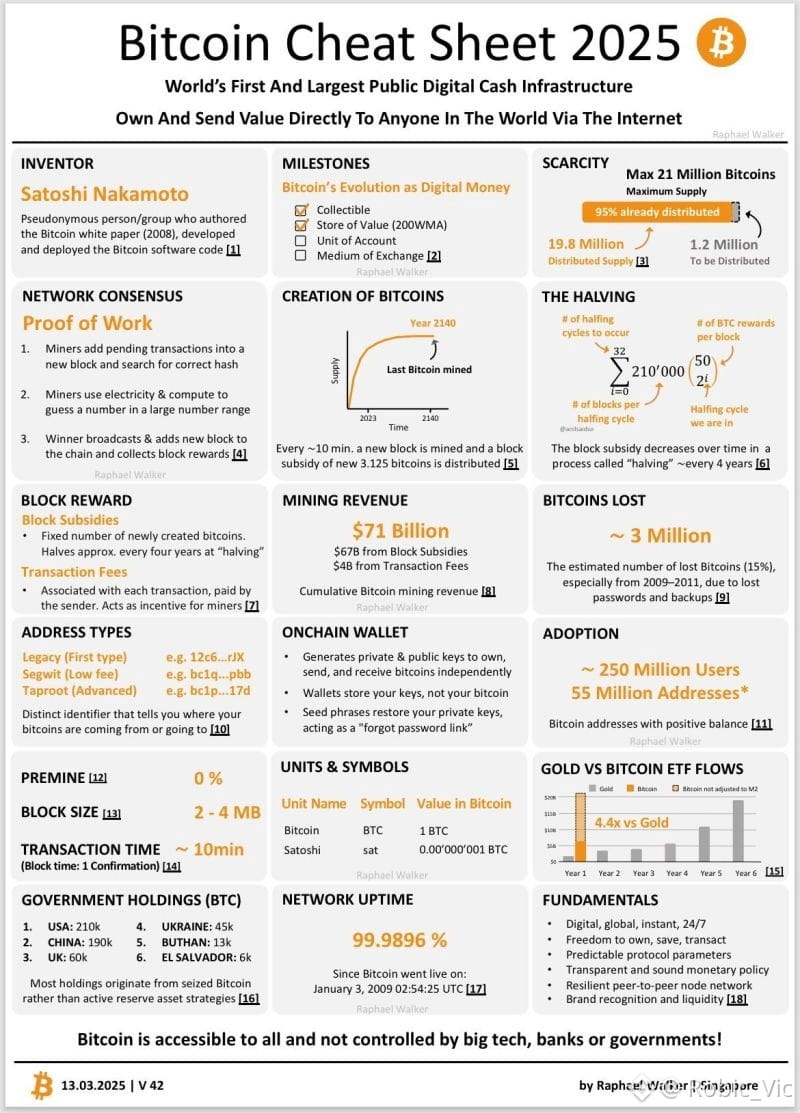
Bitcoin halving is baked right into the protocol: roughly every four years, the reward miners earn for confirming a new block gets cut in half. Here's why that matters:
1. Supply slows down. Miners now earn half as much BTC for the same work, so fewer new coins enter circulation.
2. Inflation pressure eases. Less new supply hitting the market, same or rising demand — that combination tends to push prices upward over time.
3. History has a pattern. Each of the last three halvings was followed by a serious price rally in the months after — sometimes triple-digit percentage gains. That said, no cycle is guaranteed to repeat.
A quick history check: back in 2020, miners earned 6.25 BTC per block. After the 2024 halving, that dropped to 3.125 BTC. The next one, expected around April 2028 at block 1,050,000, will cut it again to roughly 1.5625 BTC. This keeps happening until rewards shrink to nearly nothing — projected around the year 2140.
The market also tends to price in expectations before the actual event, then react again after — so don't expect a single dramatic spike on halving day itself. It's usually a slower story.
What makes this genuinely different from fiat currency is that no central bank can just decide to print more Bitcoin. The scarcity is coded in, predictable, and impossible to override.
Next halving to watch: April 2028. Set a reminder — this is one of the few dates in crypto you actually know is coming.
#bitcoin #Bitcoinhaving $BTC
Ever wonder why the crypto world gets so worked up over "the halving"? Here's the simple version.
Bitcoin halving is baked right into the protocol: roughly every four years, the reward miners earn for confirming a new block gets cut in half. Here's why that matters:
1. Supply slows down. Miners now earn half as much BTC for the same work, so fewer new coins enter circulation.
2. Inflation pressure eases. Less new supply hitting the market, same or rising demand — that combination tends to push prices upward over time.
3. History has a pattern. Each of the last three halvings was followed by a serious price rally in the months after — sometimes triple-digit percentage gains. That said, no cycle is guaranteed to repeat.
A quick history check: back in 2020, miners earned 6.25 BTC per block. After the 2024 halving, that dropped to 3.125 BTC. The next one, expected around April 2028 at block 1,050,000, will cut it again to roughly 1.5625 BTC. This keeps happening until rewards shrink to nearly nothing — projected around the year 2140.
The market also tends to price in expectations before the actual event, then react again after — so don't expect a single dramatic spike on halving day itself. It's usually a slower story.
What makes this genuinely different from fiat currency is that no central bank can just decide to print more Bitcoin. The scarcity is coded in, predictable, and impossible to override.
Next halving to watch: April 2028. Set a reminder — this is one of the few dates in crypto you actually know is coming.
#bitcoin #Bitcoinhaving $BTC
Bitcoin halving is baked right into the protocol: roughly every four years, the reward miners earn for confirming a new block gets cut in half. Here's why that matters:
1. Supply slows down. Miners now earn half as much BTC for the same work, so fewer new coins enter circulation.
2. Inflation pressure eases. Less new supply hitting the market, same or rising demand — that combination tends to push prices upward over time.
3. History has a pattern. Each of the last three halvings was followed by a serious price rally in the months after — sometimes triple-digit percentage gains. That said, no cycle is guaranteed to repeat.
A quick history check: back in 2020, miners earned 6.25 BTC per block. After the 2024 halving, that dropped to 3.125 BTC. The next one, expected around April 2028 at block 1,050,000, will cut it again to roughly 1.5625 BTC. This keeps happening until rewards shrink to nearly nothing — projected around the year 2140.
The market also tends to price in expectations before the actual event, then react again after — so don't expect a single dramatic spike on halving day itself. It's usually a slower story.
What makes this genuinely different from fiat currency is that no central bank can just decide to print more Bitcoin. The scarcity is coded in, predictable, and impossible to override.
Next halving to watch: April 2028. Set a reminder — this is one of the few dates in crypto you actually know is coming.
#bitcoin #Bitcoinhaving $BTC
8
198
·
--
See translation
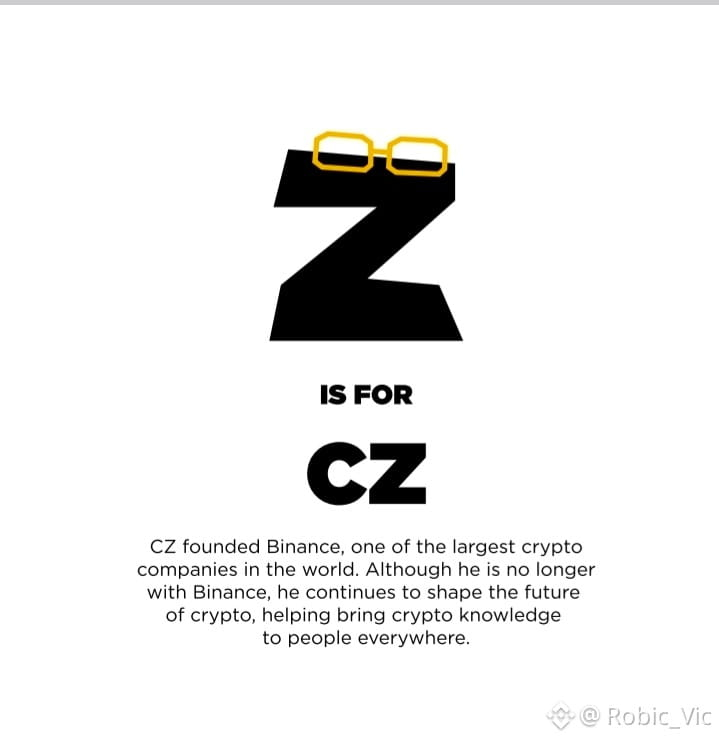
Z as of ABCs of crypto is for CZ. Changpeng Zhao founded Binance in 2017, building it into the world's largest crypto exchange. A former developer with a background in high-frequency trading systems, CZ became one of crypto's most recognizable voices, championing blockchain adoption and education globally before stepping back from day-to-day operations.
#ABCs #ABCofcrypto #beginners
Z as of ABCs of crypto is for CZ. Changpeng Zhao founded Binance in 2017, building it into the world's largest crypto exchange. A former developer with a background in high-frequency trading systems, CZ became one of crypto's most recognizable voices, championing blockchain adoption and education globally before stepping back from day-to-day operations.
#ABCs #ABCofcrypto #beginners
#ABCs #ABCofcrypto #beginners

5
117
·
--
See translation
Happy 9th Anniversary, Binance! 💛 Thank you for building a world of financial freedom and endless possibilities. Feeling incredibly proud and excited to be part of this incredible journey, here's to many more years together 🎉.
#BinanceTurns9 #BinanceSquareTG
Happy 9th Anniversary, Binance! 💛 Thank you for building a world of financial freedom and endless possibilities. Feeling incredibly proud and excited to be part of this incredible journey, here's to many more years together 🎉.
#BinanceTurns9 #BinanceSquareTG
#BinanceTurns9 #BinanceSquareTG

6
129
·
--
See translation
Y in the next letter in ABCs of Crypto and it stands for YOLO.
YOLO in crypto means "You Only Live Once" basically going all-in on a trade without overthinking it. Think market-buying a token with a big chunk of your portfolio purely on conviction (or vibes 😅), skipping the usual DCA or risk management playbook. It's high risk, high reward energy. Some YOLOs turn into legendary flips, others become cautionary tales in the group chat. Either way, it's a mindset — bold, a little reckless, and very "send it" 🚀. Just remember: only YOLO what you can afford to lose. 💸
#ABCs #ABCofcrypto #begginers
Y in the next letter in ABCs of Crypto and it stands for YOLO.
YOLO in crypto means "You Only Live Once" basically going all-in on a trade without overthinking it. Think market-buying a token with a big chunk of your portfolio purely on conviction (or vibes 😅), skipping the usual DCA or risk management playbook. It's high risk, high reward energy. Some YOLOs turn into legendary flips, others become cautionary tales in the group chat. Either way, it's a mindset — bold, a little reckless, and very "send it" 🚀. Just remember: only YOLO what you can afford to lose. 💸
#ABCs #ABCofcrypto #begginers
YOLO in crypto means "You Only Live Once" basically going all-in on a trade without overthinking it. Think market-buying a token with a big chunk of your portfolio purely on conviction (or vibes 😅), skipping the usual DCA or risk management playbook. It's high risk, high reward energy. Some YOLOs turn into legendary flips, others become cautionary tales in the group chat. Either way, it's a mindset — bold, a little reckless, and very "send it" 🚀. Just remember: only YOLO what you can afford to lose. 💸
#ABCs #ABCofcrypto #begginers


7
232
·
--
See translation
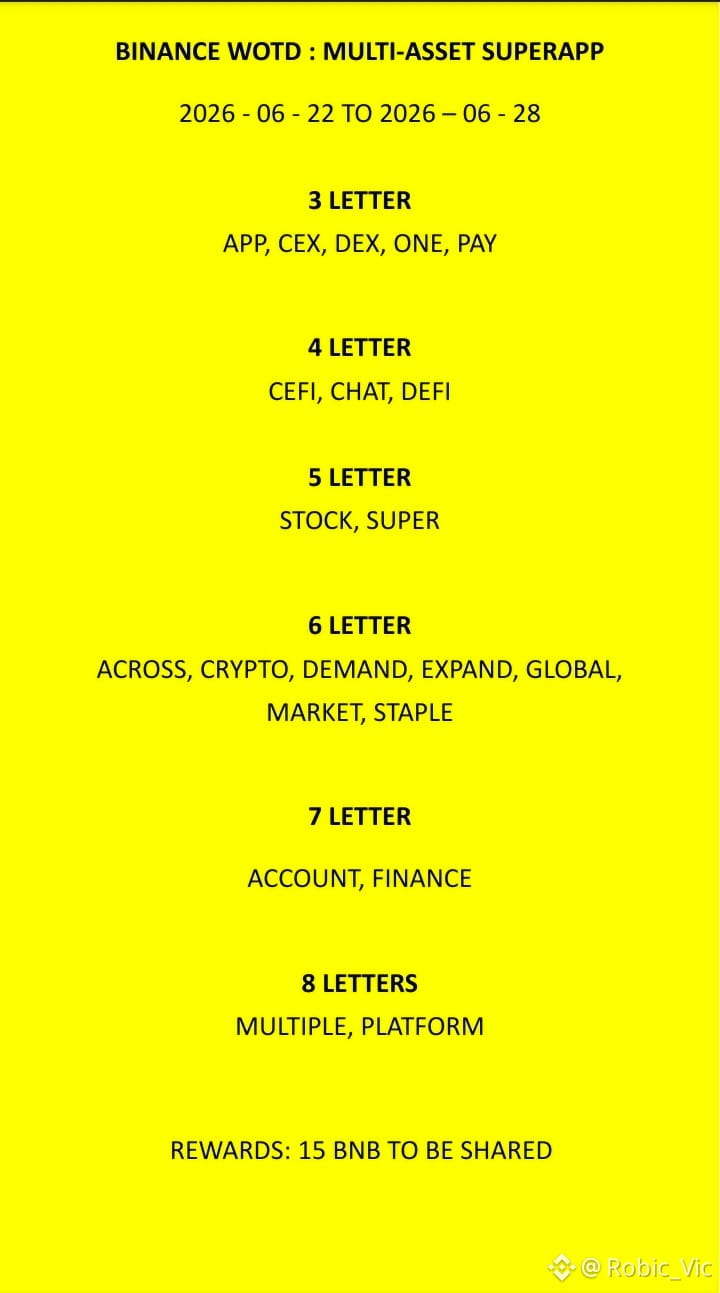
BINANCE WOTD : MULTI-ASSET SUPERAPP
2026 - 06 - 22 TO 2026 - 06- 28
#Binance
#wotd
#binancewotd
#dyor
Join me and let's play WOTD together 👇👇
https://www.binance.com/activity/word-of-the-day/multi-asset-superapp?ref=CPA_00I6V42AZ5
BINANCE WOTD : MULTI-ASSET SUPERAPP
2026 - 06 - 22 TO 2026 - 06- 28
#Binance
#wotd
#binancewotd
#dyor
Join me and let's play WOTD together 👇👇
https://www.binance.com/activity/word-of-the-day/multi-asset-superapp?ref=CPA_00I6V42AZ5
2026 - 06 - 22 TO 2026 - 06- 28
#Binance
#wotd
#binancewotd
#dyor
Join me and let's play WOTD together 👇👇
https://www.binance.com/activity/word-of-the-day/multi-asset-superapp?ref=CPA_00I6V42AZ5
6
43
·
--
See translation
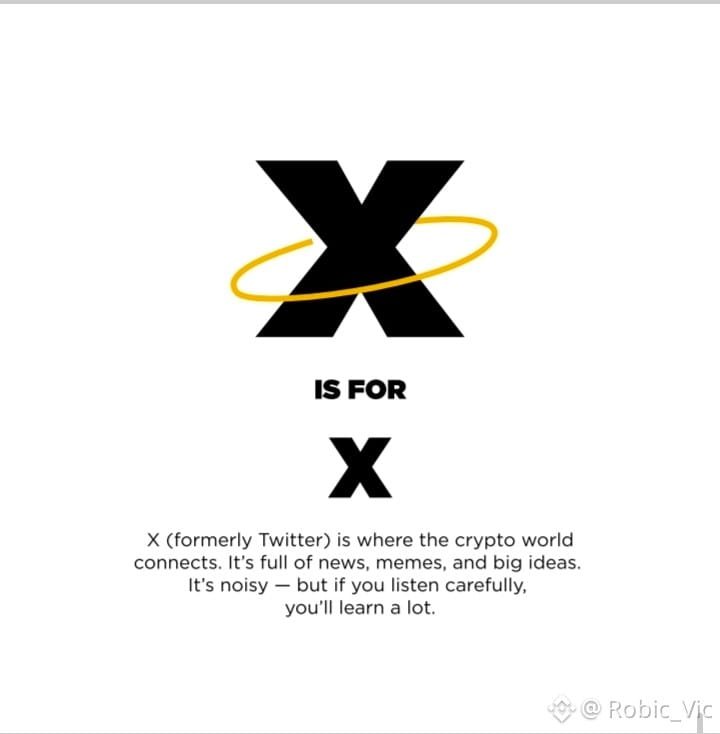
X mainly for X, mainly twitter.
It's where the crypto community connect and share insights.
#ABCs #ABCsofCrypto #beginners
X mainly for X, mainly twitter.
It's where the crypto community connect and share insights.
#ABCs #ABCsofCrypto #beginners
It's where the crypto community connect and share insights.
#ABCs #ABCsofCrypto #beginners
6
113
·
--
See translation
TP 2 hit ✅️🚀🚀
TP 2 hit ✅️🚀🚀
Robic_Vic
·
--
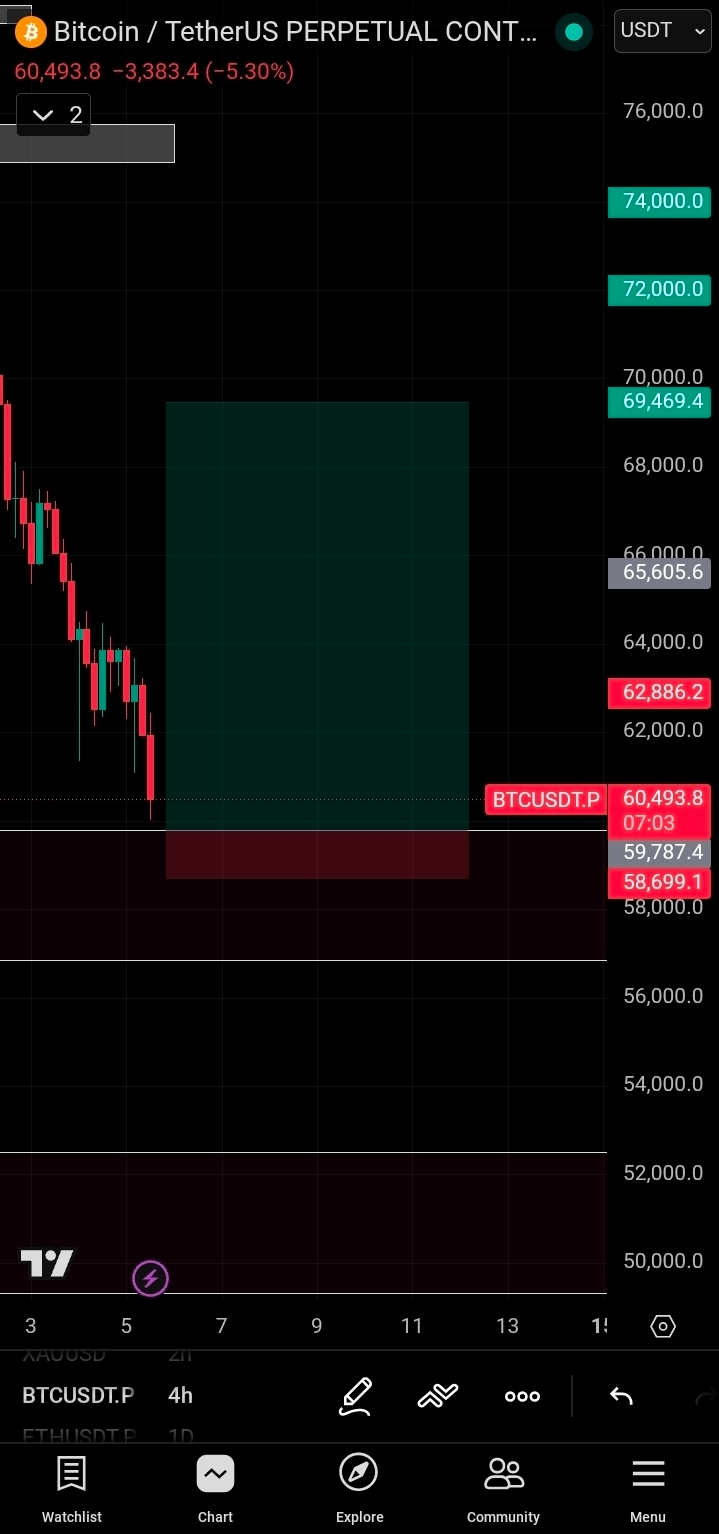
BullishBTCUSDT LONG SIGNAL
ENTRY : 59787.4
STOP LOSS : 58699.1
TP 1 : 61790.5
TP 2 : 64681.8
TP 3 : 67649.8
TP 4 : 69469.4
#bitcoin
$BTC
ENTRY : 59787.4
STOP LOSS : 58699.1
TP 1 : 61790.5
TP 2 : 64681.8
TP 3 : 67649.8
TP 4 : 69469.4
#bitcoin
$BTC
7
74
·
--
See translation
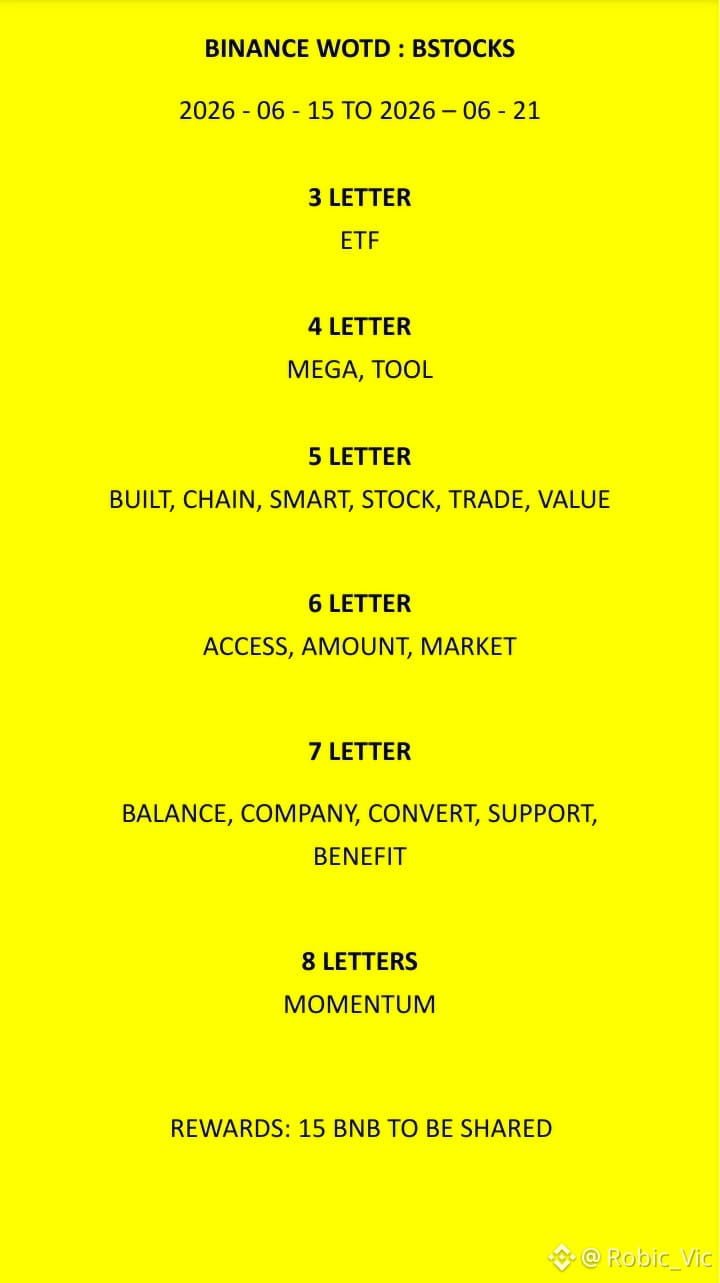
BINANCE WOTD : BSTOCKS
2026 - 06 - 15 TO 2026 - 06 - 21
https://www.binance.com/activity/word-of-the-day/BStock?ref=CPA_00I6V42AZ5
#Binance
#wotd
#binancewotd
#DYOR
BINANCE WOTD : BSTOCKS
2026 - 06 - 15 TO 2026 - 06 - 21
https://www.binance.com/activity/word-of-the-day/BStock?ref=CPA_00I6V42AZ5
#Binance
#wotd
#binancewotd
#DYOR
2026 - 06 - 15 TO 2026 - 06 - 21
https://www.binance.com/activity/word-of-the-day/BStock?ref=CPA_00I6V42AZ5
#Binance
#wotd
#binancewotd
#DYOR
6
70
·
--
See translation
All you need is a volume of $500 in order to be eligible to share the prize pool. You can achieve that volume in 7 days before the activity ends. Lock in now 🚀🚀. Read the terms and conditions of the activity here 👇https://www.binance.com/activity/trading-competition/spot-altcoin-festival-wave-XAUT2?ref=761546785
#XAUT #XAUTTradingTournament $XAUT
All you need is a volume of $500 in order to be eligible to share the prize pool. You can achieve that volume in 7 days before the activity ends. Lock in now 🚀🚀. Read the terms and conditions of the activity here 👇https://www.binance.com/activity/trading-competition/spot-altcoin-festival-wave-XAUT2?ref=761546785
#XAUT #XAUTTradingTournament $XAUT
#XAUT #XAUTTradingTournament $XAUT

6
56
Log in to explore more content
Join global crypto users on Binance Square
⚡️ Get latest and useful information about crypto.
💬 Trusted by the world’s largest crypto exchange.
👍 Discover real insights from verified creators.
Email / Phone number
Trending Topics
ArkhamSaysBlackRockBuys$1.5BInETH
4 views
5 Discussing
🚨BlackRock’s $1.57B ETH signal
#ArkhamSaysBlackRockBuys$1.5BInETH
⚫ BlackRock just accumulated ~$1.57B of ETH exposure in 20 days.
But the interesting part isn't the headline number.
Arkham data shows roughly $1.27B through ETHA and another $296.5M through ETHB.
That's two different institutional doors into Ethereum:
ETHA: spot ETH exposure
ETHB: ETH exposure + staking
And ETHB recorded no single-day outflow during the period.
BlackRock's own data puts ETHA at about $8.74B in net assets and ETHB at roughly $1.0B around Sept. 9–10.
So this isn't simply a story about an asset manager “buying ETH.”
It's a deeper shift:
Institutional Ethereum demand is gaining both spot exposure AND access to staking economics through regulated products.
The question is no longer just how much ETH institutions want.
It's how much of Ethereum's supply can increasingly be absorbed into long-duration, yield-seeking institutional vehicles.
DYOR.
$ETH $BTC
#ArkhamSaysBlackRockBuys$1.5BInETH #ElSalvadorBTCHoldingsRiseTo7777 #MemeLaunchpads82%OfArcDayOneVolume
Stink meaner
·1 Likes
·18 views
ElSalvadorBTCHoldingsRiseTo7777
7,202 views
226 Discussing
MemeLaunchpads82%OfArcDayOneVolume
16,435 views
434 Discussing