
jujucrypt
1.4k Posts

jujucrypt
Report
Block User
just here to learn and share ideas
Open Trade
Occasional Trader
4.8 Years
25 Following
1.5K+ Followers
8.0K+ Liked
Posts
Portfolio
All
Quotes
·
--
See translation
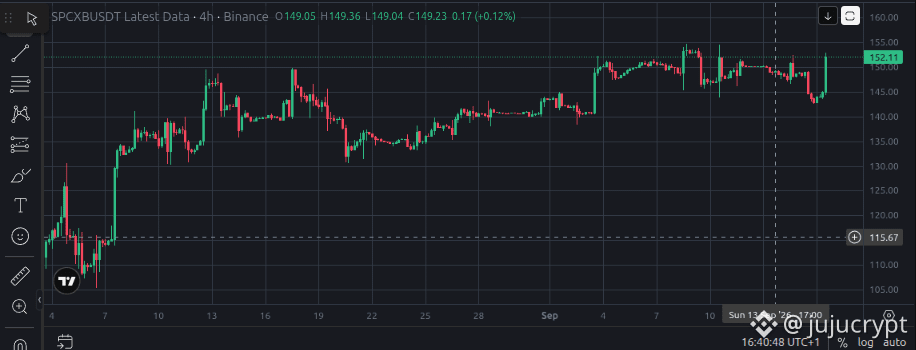
$SPCX just made a wild pump up
damn just like a rocket
$SPCX just made a wild pump up
damn just like a rocket
damn just like a rocket
150
·
--

Article
See translation
Fedrate Cut and how I am positioningWhat I’m Watching Across $BTC , $MU , $AAPL
The market has a lot to digest this week.
August core CPI came in at 0.3% month-over-month, above the 0.2% economists were expecting. That pushed expectations for a 25bp Fed rate hike sharply higher, with markets pricing in roughly a 90% chance before the decision.
So the big question for me isn’t just whether the Fed hikes.
It’s what happens after.
Is this the start of a longer hiking cycle?
Right now, I’m not looking at one 25bp hike as confirmation that we’re entering a long hiking cycle.
The Fed will still have to look at inflation, jobs and the next round of economic data before deciding what comes next. Some economists are already expecting additional hikes later this year, but that is still something the upcoming data will have to confirm.
For me, the reaction in bonds and risk assets after the decision will be more important than the headline rate change itself.
What does this mean for BTC?
BTC could see some short-term pressure if the Fed takes a more hawkish tone.
Higher rates generally make liquidity conditions less friendly for risk assets, and we’ve already seen how sensitive crypto can be to changes in macro expectations.
But there is another factor I’m watching closely: regulation.
The CLARITY Act failed to advance in the Senate on September 15 after getting 49 votes, short of the 60 needed to move forward. Bitcoin and crypto-related stocks also sold off following the vote.
So BTC is dealing with two different stories right now:
Fed → liquidity and rates
CLARITY Act → crypto regulation and market confidence
That makes the reaction around these events even more interesting.
MU and AAPL are on my watchlist
For stocks, I’m mainly watching MU and $AAPL.
MU is interesting because of its exposure to the semiconductor and AI cycle. If the market remains comfortable with risk despite higher rates, I’ll be watching how MU reacts.
AAPL is a different setup. It’s one of the biggest names in tech, so it can give a good read on how investors are treating large-cap tech when rates are moving higher.
I’m not looking to force either trade before the market gives me a clear setup.
My game plan
I’m keeping some risk on, but I’m not going heavy before the Fed decision.
If we get the 25bp hike, I want to see how BTC, MU and AAPL react first.
A rate hike itself isn’t necessarily the trade.
The reaction is the trade I’m watching.
For now, I’m keeping BTC, MU and AAPL on my watchlist and waiting for the market to show its hand.
#FedRateWatch
Fedrate Cut and how I am positioning
What I’m Watching Across $BTC , $MU , $AAPL
The market has a lot to digest this week.
August core CPI came in at 0.3% month-over-month, above the 0.2% economists were expecting. That pushed expectations for a 25bp Fed rate hike sharply higher, with markets pricing in roughly a 90% chance before the decision.
So the big question for me isn’t just whether the Fed hikes.
It’s what happens after.
Is this the start of a longer hiking cycle?
Right now, I’m not looking at one 25bp hike as confirmation that we’re entering a long hiking cycle.
The Fed will still have to look at inflation, jobs and the next round of economic data before deciding what comes next. Some economists are already expecting additional hikes later this year, but that is still something the upcoming data will have to confirm.
For me, the reaction in bonds and risk assets after the decision will be more important than the headline rate change itself.
What does this mean for BTC?
BTC could see some short-term pressure if the Fed takes a more hawkish tone.
Higher rates generally make liquidity conditions less friendly for risk assets, and we’ve already seen how sensitive crypto can be to changes in macro expectations.
But there is another factor I’m watching closely: regulation.
The CLARITY Act failed to advance in the Senate on September 15 after getting 49 votes, short of the 60 needed to move forward. Bitcoin and crypto-related stocks also sold off following the vote.
So BTC is dealing with two different stories right now:
Fed → liquidity and rates
CLARITY Act → crypto regulation and market confidence
That makes the reaction around these events even more interesting.
MU and AAPL are on my watchlist
For stocks, I’m mainly watching MU and $AAPL .
MU is interesting because of its exposure to the semiconductor and AI cycle. If the market remains comfortable with risk despite higher rates, I’ll be watching how MU reacts.
AAPL is a different setup. It’s one of the biggest names in tech, so it can give a good read on how investors are treating large-cap tech when rates are moving higher.
I’m not looking to force either trade before the market gives me a clear setup.
My game plan
I’m keeping some risk on, but I’m not going heavy before the Fed decision.
If we get the 25bp hike, I want to see how BTC, MU and AAPL react first.
A rate hike itself isn’t necessarily the trade.
The reaction is the trade I’m watching.
For now, I’m keeping BTC, MU and AAPL on my watchlist and waiting for the market to show its hand.
#FedRateWatch
The market has a lot to digest this week.
August core CPI came in at 0.3% month-over-month, above the 0.2% economists were expecting. That pushed expectations for a 25bp Fed rate hike sharply higher, with markets pricing in roughly a 90% chance before the decision.
So the big question for me isn’t just whether the Fed hikes.
It’s what happens after.
Is this the start of a longer hiking cycle?
Right now, I’m not looking at one 25bp hike as confirmation that we’re entering a long hiking cycle.
The Fed will still have to look at inflation, jobs and the next round of economic data before deciding what comes next. Some economists are already expecting additional hikes later this year, but that is still something the upcoming data will have to confirm.
For me, the reaction in bonds and risk assets after the decision will be more important than the headline rate change itself.
What does this mean for BTC?
BTC could see some short-term pressure if the Fed takes a more hawkish tone.
Higher rates generally make liquidity conditions less friendly for risk assets, and we’ve already seen how sensitive crypto can be to changes in macro expectations.
But there is another factor I’m watching closely: regulation.
The CLARITY Act failed to advance in the Senate on September 15 after getting 49 votes, short of the 60 needed to move forward. Bitcoin and crypto-related stocks also sold off following the vote.
So BTC is dealing with two different stories right now:
Fed → liquidity and rates
CLARITY Act → crypto regulation and market confidence
That makes the reaction around these events even more interesting.
MU and AAPL are on my watchlist
For stocks, I’m mainly watching MU and $AAPL .
MU is interesting because of its exposure to the semiconductor and AI cycle. If the market remains comfortable with risk despite higher rates, I’ll be watching how MU reacts.
AAPL is a different setup. It’s one of the biggest names in tech, so it can give a good read on how investors are treating large-cap tech when rates are moving higher.
I’m not looking to force either trade before the market gives me a clear setup.
My game plan
I’m keeping some risk on, but I’m not going heavy before the Fed decision.
If we get the 25bp hike, I want to see how BTC, MU and AAPL react first.
A rate hike itself isn’t necessarily the trade.
The reaction is the trade I’m watching.
For now, I’m keeping BTC, MU and AAPL on my watchlist and waiting for the market to show its hand.
#FedRateWatch
178
·
--
See translation
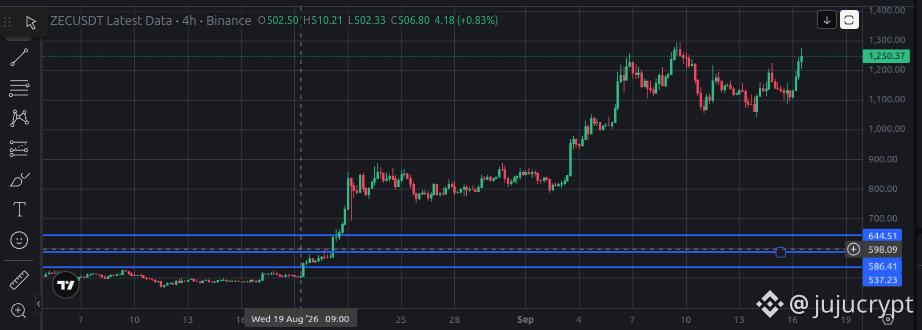
$ZEC is back and running currently at a key point just got my eyes on that level let see if a break out is in place.
#ZcashRises6%
$ZEC is back and running currently at a key point just got my eyes on that level let see if a break out is in place.
#ZcashRises6%
#ZcashRises6%
313
·
--
See translation
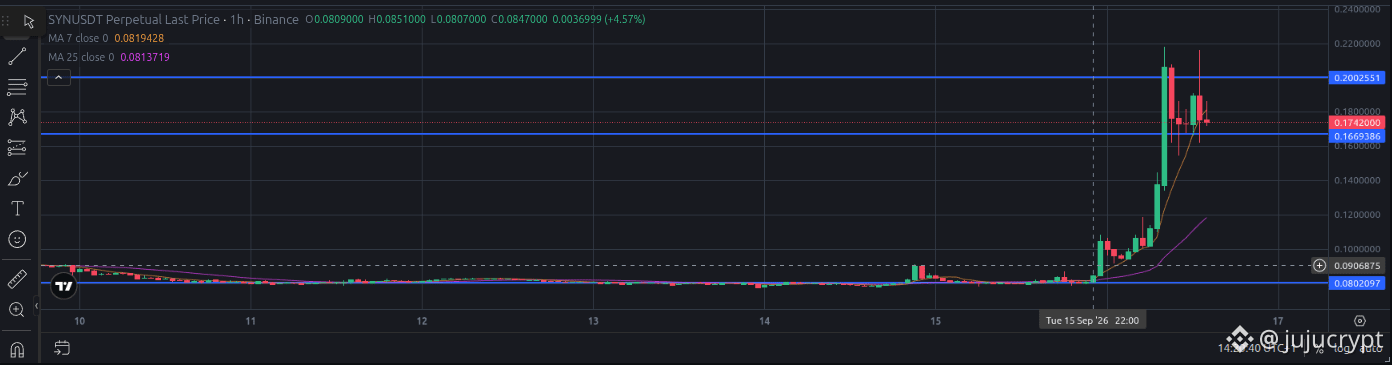
$SYN looks like it might be setting up for quite the dump.
I’ve marked out some key zones just in case it goes the other way.
It’s already had quite a few rejections, so I’m watching closely.
$LSK , on the other hand, looks like it’s consolidating. A break below 0.3284 would be an important level for me to watch.
On the STON.fi side, there’s also an AMA coming up that caught my attention.
“Inside the Cross-Chain Flight: Your Questions, Our Answers.”
The STON.fi Dev team will be answering questions about the “One Swap. Across Chains” campaign, how cross-chain swaps actually work, and how routes are built behind the scenes.
There’s also a little incentive to come prepared. 👀
Submit your question through the Google Form before September 21.
10 questions will be selected for the live session, with the 3 best questions earning 50 STON each.
Personally, I’d be curious to hear what actually happens behind the scenes when a swap moves from one chain to another.
Sometimes the best way to understand a feature is to ask the people building it.
Got a question for the Dev team?
$SYN looks like it might be setting up for quite the dump.
I’ve marked out some key zones just in case it goes the other way.
It’s already had quite a few rejections, so I’m watching closely.
$LSK , on the other hand, looks like it’s consolidating. A break below 0.3284 would be an important level for me to watch.
On the STON.fi side, there’s also an AMA coming up that caught my attention.
“Inside the Cross-Chain Flight: Your Questions, Our Answers.”
The STON.fi Dev team will be answering questions about the “One Swap. Across Chains” campaign, how cross-chain swaps actually work, and how routes are built behind the scenes.
There’s also a little incentive to come prepared. 👀
Submit your question through the Google Form before September 21.
10 questions will be selected for the live session, with the 3 best questions earning 50 STON each.
Personally, I’d be curious to hear what actually happens behind the scenes when a swap moves from one chain to another.
Sometimes the best way to understand a feature is to ask the people building it.
Got a question for the Dev team?
I’ve marked out some key zones just in case it goes the other way.
It’s already had quite a few rejections, so I’m watching closely.
$LSK , on the other hand, looks like it’s consolidating. A break below 0.3284 would be an important level for me to watch.
On the STON.fi side, there’s also an AMA coming up that caught my attention.
“Inside the Cross-Chain Flight: Your Questions, Our Answers.”
The STON.fi Dev team will be answering questions about the “One Swap. Across Chains” campaign, how cross-chain swaps actually work, and how routes are built behind the scenes.
There’s also a little incentive to come prepared. 👀
Submit your question through the Google Form before September 21.
10 questions will be selected for the live session, with the 3 best questions earning 50 STON each.
Personally, I’d be curious to hear what actually happens behind the scenes when a swap moves from one chain to another.
Sometimes the best way to understand a feature is to ask the people building it.
Got a question for the Dev team?
1
1
287
·
--
See translation
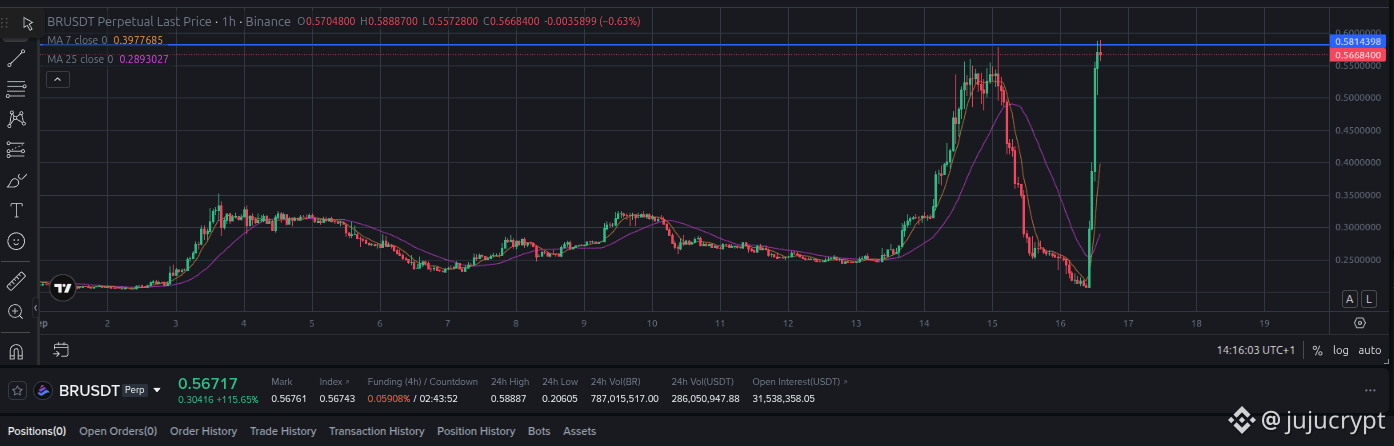
$AIN almost caught the dip there.
Right now I’m just watching the charts and seeing how things play out.
$BR also looks pretty interesting. Didn’t expect that kind of pump after the deep pullback.
Meanwhile, I was checking what’s new on STONfi, and the 6-week main stage of the “One Swap. Across Chains” campaign is now live.
I like that this one is more about learning by doing.
You can explore how cross-chain swaps work, complete missions, collect miles and track your progress as you move assets across different chains.
There are also fresh swap and partner missions live right now.
And the first Flight Deals are open too.
These rewards refresh every week and only stay available for 7 days, so if you’re already taking part, it’s worth checking what you’re eligible for before the next lineup drops.
Charts on one side, cross-chain exploration on the other.
Let’s see where both go from here.
#FedRateWatch
$AIN almost caught the dip there.
Right now I’m just watching the charts and seeing how things play out.
$BR also looks pretty interesting. Didn’t expect that kind of pump after the deep pullback.
Meanwhile, I was checking what’s new on STONfi, and the 6-week main stage of the “One Swap. Across Chains” campaign is now live.
I like that this one is more about learning by doing.
You can explore how cross-chain swaps work, complete missions, collect miles and track your progress as you move assets across different chains.
There are also fresh swap and partner missions live right now.
And the first Flight Deals are open too.
These rewards refresh every week and only stay available for 7 days, so if you’re already taking part, it’s worth checking what you’re eligible for before the next lineup drops.
Charts on one side, cross-chain exploration on the other.
Let’s see where both go from here.
#FedRateWatch
Right now I’m just watching the charts and seeing how things play out.
$BR also looks pretty interesting. Didn’t expect that kind of pump after the deep pullback.
Meanwhile, I was checking what’s new on STONfi, and the 6-week main stage of the “One Swap. Across Chains” campaign is now live.
I like that this one is more about learning by doing.
You can explore how cross-chain swaps work, complete missions, collect miles and track your progress as you move assets across different chains.
There are also fresh swap and partner missions live right now.
And the first Flight Deals are open too.
These rewards refresh every week and only stay available for 7 days, so if you’re already taking part, it’s worth checking what you’re eligible for before the next lineup drops.
Charts on one side, cross-chain exploration on the other.
Let’s see where both go from here.
#FedRateWatch
1
485
·
--
Article
See translation
What Fees Do You Pay in a Cross-Chain Swap? A Simple Guide to the Real CostWhat Fees Do You Pay in a Cross-Chain Swap? A Simple Guide to the Real Cost
One thing I’ve noticed with cross-chain swaps is that the word “fee” can make things sound simpler than they actually are.
You might see a fee before confirming a transaction and think, “Okay, that’s what I’m paying.”
But when you’re moving an asset from one blockchain to another, there can be a few different costs involved.
And some things that affect how much you receive aren’t technically fees at all.
So I wanted to break down what you’re actually paying for when you make a cross-chain swap.
It’s not always just one fee
Let’s say I want to move $USDC from Ethereum to an asset on GRAM.
I’m not simply sending USDC from one wallet to another.
The transaction involves different networks, execution steps and liquidity sources.
That means the overall cost can come from different places:
Source-chain gasProtocol or execution costsDestination-side costsPrice impactSlippage
The first three are actual costs. Price impact and slippage are different, but they can still affect the final amount I receive.
That distinction is important.
1. Source-chain gas
The first cost is usually the blockchain transaction itself.
Every network has its own way of pricing transactions.
If I’m starting from Ethereum, for example, I need $ETH to pay for the transaction.
If I’m starting from TON, I need TON's native gas asset.
This is one reason you can't really say that every cross-chain swap costs the same amount.
The network you start from matters.
Ethereum can be significantly more expensive than lower-cost networks such as Base or Polygon, especially when network activity increases.
So if I’m moving $50, paying a few dollars in network costs feels very different from moving $5,000.
The fee might be the same type of fee, but the percentage of my transaction it represents is completely different.
2. Protocol and execution costs
Then there is the actual cross-chain execution.
Someone or something has to coordinate the swap between the two networks.
With a resolver-based system such as Omniston, the route is built around quotes from liquidity providers/resolvers and cross-chain settlement rather than simply sending an asset through a traditional bridge. STON.fi describes its cross-chain model as using linked HTLCs for atomic settlement.
The important thing for me as a user is not necessarily understanding every technical step.
It's understanding that the cross-chain route itself has a cost.
And that cost can be reflected in the quote I'm given.
3. Destination-side costs
The destination chain can have its own transaction costs too.
This is easy to overlook.
You might think:
“I'm paying gas on the chain I'm sending from, so I'm done.”
Not necessarily.
A cross-chain route can involve execution on the destination network as well.
That's why the fee profile can look different depending on the route.
Moving from Ethereum to GRAM is not the same cost structure as moving from Base to GRAM.
Even if I'm swapping the same amount of USDC.
The networks involved change the economics of the transaction.
Why Ethereum can feel very different from Base or Polygon
This is probably one of the easiest ways to understand cross-chain fees.
Ethereum has a different fee environment from Base or Polygon.
Base, for example, uses an L2 fee model that includes both execution and an L1 security component, while Polygon has its own network fee structure.
So if I compare:
Ethereum → $GRAM
with:
Base → GRAM
I'm not just comparing two different starting points.
I'm comparing two different transaction-cost environments.
This is why I don't like judging a cross-chain swap simply by looking at a percentage fee.
The network itself can have a big influence on the final cost.
But here's where things get interesting: price impact isn't a fee
This is something I think every DeFi user should understand.
Price impact ≠ fee.
Price impact is about how much your own trade changes the price available in the liquidity pool.
If I make a large swap against a relatively small pool, my trade can push the pool's price against me.
STON.fi explains price impact in a similar way: larger swaps relative to available liquidity can produce greater price impact.
So I could have a route with a low network fee but still receive a worse amount because the available liquidity isn't deep enough.
That's why looking at the gas fee alone isn't enough.
Slippage is different again
Slippage is the difference between the price I expect when I confirm and the price at which the transaction actually executes.
Network delays, volatility and other trades can affect this.
STON.fi currently shows both price impact and slippage-related information before a swap, helping users understand the expected execution before confirming.
So when I look at a quote, I'm not just asking:
“How much is the fee?”
I'm also asking:
“How much am I actually going to receive?”
That's the more important number.
Where STON.fi makes this easier to check
This is one part of the cross-chain experience I like about STON.fi.
Instead of confirming first and figuring out the costs afterward, the swap interface gives you the quote before you sign.
You select the asset you're sending, the destination network and the asset you want to receive.
Then you can review the expected output, exchange rate, fees and price impact before confirming. STON.fi's current cross-chain guide specifically tells users to review the final quote, amount, fees, exchange rate and price impact before signing.
For a normal STON.fi swap, the interface also shows the expected output, swap rate, blockchain fee and price impact before the transaction is confirmed.
That gives me a much better way to think about the cost.
Instead of asking:
“What's the fee?”
I can ask:
“How much am I sending, how much am I getting, and what is causing the difference?”
What I would check before confirming
Whenever I'm doing a cross-chain swap, I'd quickly check four things:
1. Source network
Am I sending from Ethereum, Base, GRAM or another chain?
2. Destination network
Am I actually receiving the asset on the network I need?
3. Total execution cost
What fees are included in the quote?
4. Final received amount
After everything is considered, how much will actually arrive in my wallet?
That last one is probably the most important.
A simple way to think about it
Imagine I want to swap $500 worth of an asset from one chain to another.
The transaction might look like this:
$500 sent
→ source-chain gas
→ cross-chain execution costs
→ destination-side costs
→ price impact
→ possible slippage
→ final amount received
Not every route will have the exact same fee structure.
And that's the point.
There isn't one universal “cross-chain fee.”
The cost depends on the networks, route, liquidity and execution conditions.
Why I think this matters
Cross-chain swaps are becoming more common, but the user experience can still feel confusing.
You're dealing with different networks, different gas tokens, different liquidity sources and different execution conditions.
That's why I think quote transparency matters.
For example, STON.fi's current cross-chain flow lets you review the expected amount, fees, exchange rate and price impact before you confirm the transaction.
You don't have to understand every piece of infrastructure happening behind the swap.
But you should understand what you're paying and what you're receiving.
For me, that's the simplest way to judge whether a cross-chain route actually makes sense.
Don't just look at the fee.
Look at the whole quote.
What Fees Do You Pay in a Cross-Chain Swap? A Simple Guide to the Real Cost
What Fees Do You Pay in a Cross-Chain Swap? A Simple Guide to the Real Cost
One thing I’ve noticed with cross-chain swaps is that the word “fee” can make things sound simpler than they actually are.
You might see a fee before confirming a transaction and think, “Okay, that’s what I’m paying.”
But when you’re moving an asset from one blockchain to another, there can be a few different costs involved.
And some things that affect how much you receive aren’t technically fees at all.
So I wanted to break down what you’re actually paying for when you make a cross-chain swap.
It’s not always just one fee
Let’s say I want to move $USDC from Ethereum to an asset on GRAM.
I’m not simply sending USDC from one wallet to another.
The transaction involves different networks, execution steps and liquidity sources.
That means the overall cost can come from different places:
Source-chain gasProtocol or execution costsDestination-side costsPrice impactSlippage
The first three are actual costs. Price impact and slippage are different, but they can still affect the final amount I receive.
That distinction is important.
1. Source-chain gas
The first cost is usually the blockchain transaction itself.
Every network has its own way of pricing transactions.
If I’m starting from Ethereum, for example, I need $ETH to pay for the transaction.
If I’m starting from TON, I need TON's native gas asset.
This is one reason you can't really say that every cross-chain swap costs the same amount.
The network you start from matters.
Ethereum can be significantly more expensive than lower-cost networks such as Base or Polygon, especially when network activity increases.
So if I’m moving $50, paying a few dollars in network costs feels very different from moving $5,000.
The fee might be the same type of fee, but the percentage of my transaction it represents is completely different.
2. Protocol and execution costs
Then there is the actual cross-chain execution.
Someone or something has to coordinate the swap between the two networks.
With a resolver-based system such as Omniston, the route is built around quotes from liquidity providers/resolvers and cross-chain settlement rather than simply sending an asset through a traditional bridge. STON.fi describes its cross-chain model as using linked HTLCs for atomic settlement.
The important thing for me as a user is not necessarily understanding every technical step.
It's understanding that the cross-chain route itself has a cost.
And that cost can be reflected in the quote I'm given.
3. Destination-side costs
The destination chain can have its own transaction costs too.
This is easy to overlook.
You might think:
“I'm paying gas on the chain I'm sending from, so I'm done.”
Not necessarily.
A cross-chain route can involve execution on the destination network as well.
That's why the fee profile can look different depending on the route.
Moving from Ethereum to GRAM is not the same cost structure as moving from Base to GRAM.
Even if I'm swapping the same amount of USDC.
The networks involved change the economics of the transaction.
Why Ethereum can feel very different from Base or Polygon
This is probably one of the easiest ways to understand cross-chain fees.
Ethereum has a different fee environment from Base or Polygon.
Base, for example, uses an L2 fee model that includes both execution and an L1 security component, while Polygon has its own network fee structure.
So if I compare:
Ethereum → $GRAM
with:
Base → GRAM
I'm not just comparing two different starting points.
I'm comparing two different transaction-cost environments.
This is why I don't like judging a cross-chain swap simply by looking at a percentage fee.
The network itself can have a big influence on the final cost.
But here's where things get interesting: price impact isn't a fee
This is something I think every DeFi user should understand.
Price impact ≠ fee.
Price impact is about how much your own trade changes the price available in the liquidity pool.
If I make a large swap against a relatively small pool, my trade can push the pool's price against me.
STON.fi explains price impact in a similar way: larger swaps relative to available liquidity can produce greater price impact.
So I could have a route with a low network fee but still receive a worse amount because the available liquidity isn't deep enough.
That's why looking at the gas fee alone isn't enough.
Slippage is different again
Slippage is the difference between the price I expect when I confirm and the price at which the transaction actually executes.
Network delays, volatility and other trades can affect this.
STON.fi currently shows both price impact and slippage-related information before a swap, helping users understand the expected execution before confirming.
So when I look at a quote, I'm not just asking:
“How much is the fee?”
I'm also asking:
“How much am I actually going to receive?”
That's the more important number.
Where STON.fi makes this easier to check
This is one part of the cross-chain experience I like about STON.fi.
Instead of confirming first and figuring out the costs afterward, the swap interface gives you the quote before you sign.
You select the asset you're sending, the destination network and the asset you want to receive.
Then you can review the expected output, exchange rate, fees and price impact before confirming. STON.fi's current cross-chain guide specifically tells users to review the final quote, amount, fees, exchange rate and price impact before signing.
For a normal STON.fi swap, the interface also shows the expected output, swap rate, blockchain fee and price impact before the transaction is confirmed.
That gives me a much better way to think about the cost.
Instead of asking:
“What's the fee?”
I can ask:
“How much am I sending, how much am I getting, and what is causing the difference?”
What I would check before confirming
Whenever I'm doing a cross-chain swap, I'd quickly check four things:
1. Source network
Am I sending from Ethereum, Base, GRAM or another chain?
2. Destination network
Am I actually receiving the asset on the network I need?
3. Total execution cost
What fees are included in the quote?
4. Final received amount
After everything is considered, how much will actually arrive in my wallet?
That last one is probably the most important.
A simple way to think about it
Imagine I want to swap $500 worth of an asset from one chain to another.
The transaction might look like this:
$500 sent
→ source-chain gas
→ cross-chain execution costs
→ destination-side costs
→ price impact
→ possible slippage
→ final amount received
Not every route will have the exact same fee structure.
And that's the point.
There isn't one universal “cross-chain fee.”
The cost depends on the networks, route, liquidity and execution conditions.
Why I think this matters
Cross-chain swaps are becoming more common, but the user experience can still feel confusing.
You're dealing with different networks, different gas tokens, different liquidity sources and different execution conditions.
That's why I think quote transparency matters.
For example, STON.fi's current cross-chain flow lets you review the expected amount, fees, exchange rate and price impact before you confirm the transaction.
You don't have to understand every piece of infrastructure happening behind the swap.
But you should understand what you're paying and what you're receiving.
For me, that's the simplest way to judge whether a cross-chain route actually makes sense.
Don't just look at the fee.
Look at the whole quote.
One thing I’ve noticed with cross-chain swaps is that the word “fee” can make things sound simpler than they actually are.
You might see a fee before confirming a transaction and think, “Okay, that’s what I’m paying.”
But when you’re moving an asset from one blockchain to another, there can be a few different costs involved.
And some things that affect how much you receive aren’t technically fees at all.
So I wanted to break down what you’re actually paying for when you make a cross-chain swap.
It’s not always just one fee
Let’s say I want to move $USDC from Ethereum to an asset on GRAM.
I’m not simply sending USDC from one wallet to another.
The transaction involves different networks, execution steps and liquidity sources.
That means the overall cost can come from different places:
Source-chain gasProtocol or execution costsDestination-side costsPrice impactSlippage
The first three are actual costs. Price impact and slippage are different, but they can still affect the final amount I receive.
That distinction is important.
1. Source-chain gas
The first cost is usually the blockchain transaction itself.
Every network has its own way of pricing transactions.
If I’m starting from Ethereum, for example, I need $ETH to pay for the transaction.
If I’m starting from TON, I need TON's native gas asset.
This is one reason you can't really say that every cross-chain swap costs the same amount.
The network you start from matters.
Ethereum can be significantly more expensive than lower-cost networks such as Base or Polygon, especially when network activity increases.
So if I’m moving $50, paying a few dollars in network costs feels very different from moving $5,000.
The fee might be the same type of fee, but the percentage of my transaction it represents is completely different.
2. Protocol and execution costs
Then there is the actual cross-chain execution.
Someone or something has to coordinate the swap between the two networks.
With a resolver-based system such as Omniston, the route is built around quotes from liquidity providers/resolvers and cross-chain settlement rather than simply sending an asset through a traditional bridge. STON.fi describes its cross-chain model as using linked HTLCs for atomic settlement.
The important thing for me as a user is not necessarily understanding every technical step.
It's understanding that the cross-chain route itself has a cost.
And that cost can be reflected in the quote I'm given.
3. Destination-side costs
The destination chain can have its own transaction costs too.
This is easy to overlook.
You might think:
“I'm paying gas on the chain I'm sending from, so I'm done.”
Not necessarily.
A cross-chain route can involve execution on the destination network as well.
That's why the fee profile can look different depending on the route.
Moving from Ethereum to GRAM is not the same cost structure as moving from Base to GRAM.
Even if I'm swapping the same amount of USDC.
The networks involved change the economics of the transaction.
Why Ethereum can feel very different from Base or Polygon
This is probably one of the easiest ways to understand cross-chain fees.
Ethereum has a different fee environment from Base or Polygon.
Base, for example, uses an L2 fee model that includes both execution and an L1 security component, while Polygon has its own network fee structure.
So if I compare:
Ethereum → $GRAM
with:
Base → GRAM
I'm not just comparing two different starting points.
I'm comparing two different transaction-cost environments.
This is why I don't like judging a cross-chain swap simply by looking at a percentage fee.
The network itself can have a big influence on the final cost.
But here's where things get interesting: price impact isn't a fee
This is something I think every DeFi user should understand.
Price impact ≠ fee.
Price impact is about how much your own trade changes the price available in the liquidity pool.
If I make a large swap against a relatively small pool, my trade can push the pool's price against me.
STON.fi explains price impact in a similar way: larger swaps relative to available liquidity can produce greater price impact.
So I could have a route with a low network fee but still receive a worse amount because the available liquidity isn't deep enough.
That's why looking at the gas fee alone isn't enough.
Slippage is different again
Slippage is the difference between the price I expect when I confirm and the price at which the transaction actually executes.
Network delays, volatility and other trades can affect this.
STON.fi currently shows both price impact and slippage-related information before a swap, helping users understand the expected execution before confirming.
So when I look at a quote, I'm not just asking:
“How much is the fee?”
I'm also asking:
“How much am I actually going to receive?”
That's the more important number.
Where STON.fi makes this easier to check
This is one part of the cross-chain experience I like about STON.fi.
Instead of confirming first and figuring out the costs afterward, the swap interface gives you the quote before you sign.
You select the asset you're sending, the destination network and the asset you want to receive.
Then you can review the expected output, exchange rate, fees and price impact before confirming. STON.fi's current cross-chain guide specifically tells users to review the final quote, amount, fees, exchange rate and price impact before signing.
For a normal STON.fi swap, the interface also shows the expected output, swap rate, blockchain fee and price impact before the transaction is confirmed.
That gives me a much better way to think about the cost.
Instead of asking:
“What's the fee?”
I can ask:
“How much am I sending, how much am I getting, and what is causing the difference?”
What I would check before confirming
Whenever I'm doing a cross-chain swap, I'd quickly check four things:
1. Source network
Am I sending from Ethereum, Base, GRAM or another chain?
2. Destination network
Am I actually receiving the asset on the network I need?
3. Total execution cost
What fees are included in the quote?
4. Final received amount
After everything is considered, how much will actually arrive in my wallet?
That last one is probably the most important.
A simple way to think about it
Imagine I want to swap $500 worth of an asset from one chain to another.
The transaction might look like this:
$500 sent
→ source-chain gas
→ cross-chain execution costs
→ destination-side costs
→ price impact
→ possible slippage
→ final amount received
Not every route will have the exact same fee structure.
And that's the point.
There isn't one universal “cross-chain fee.”
The cost depends on the networks, route, liquidity and execution conditions.
Why I think this matters
Cross-chain swaps are becoming more common, but the user experience can still feel confusing.
You're dealing with different networks, different gas tokens, different liquidity sources and different execution conditions.
That's why I think quote transparency matters.
For example, STON.fi's current cross-chain flow lets you review the expected amount, fees, exchange rate and price impact before you confirm the transaction.
You don't have to understand every piece of infrastructure happening behind the swap.
But you should understand what you're paying and what you're receiving.
For me, that's the simplest way to judge whether a cross-chain route actually makes sense.
Don't just look at the fee.
Look at the whole quote.
277
·
--
See translation
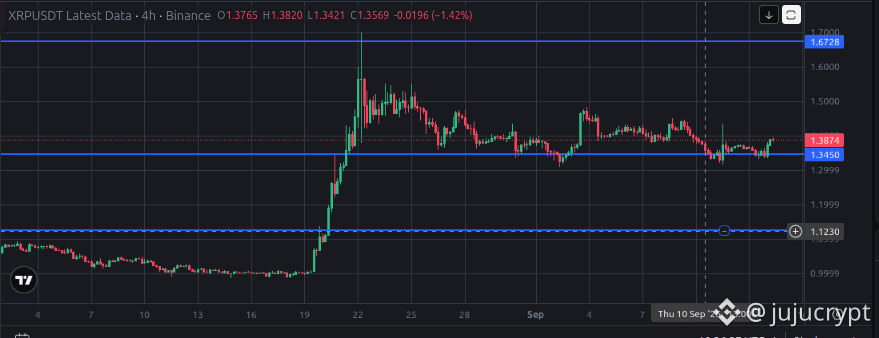
$XRP has been showing a lot of potential lately.
Still keeping my eyes on $PONS too. I’ve got a good feeling about that one.
Meanwhile, something I’ve been thinking about with STON.fi is how much of the work happens without all the noise.
You don’t always need a big announcement for a product to be useful.
If I can open STON.fi, find the token I want, check the liquidity, see the price impact and make the swap without jumping through unnecessary hoops, that already says a lot.
And then there’s the infrastructure underneath it.
With Omniston connecting different liquidity sources and helping find better routes, the focus is less on shouting about DeFi and more on making the actual experience work.
That’s probably what I like most about STON.fi.
Less noise. More building.
While I’m watching what $XRP and $PON do next, I’m also watching the infrastructure being built around TON.
$XRP has been showing a lot of potential lately.
Still keeping my eyes on $PONS too. I’ve got a good feeling about that one.
Meanwhile, something I’ve been thinking about with STON.fi is how much of the work happens without all the noise.
You don’t always need a big announcement for a product to be useful.
If I can open STON.fi, find the token I want, check the liquidity, see the price impact and make the swap without jumping through unnecessary hoops, that already says a lot.
And then there’s the infrastructure underneath it.
With Omniston connecting different liquidity sources and helping find better routes, the focus is less on shouting about DeFi and more on making the actual experience work.
That’s probably what I like most about STON.fi.
Less noise. More building.
While I’m watching what $XRP and $PON do next, I’m also watching the infrastructure being built around TON.
Still keeping my eyes on $PONS too. I’ve got a good feeling about that one.
Meanwhile, something I’ve been thinking about with STON.fi is how much of the work happens without all the noise.
You don’t always need a big announcement for a product to be useful.
If I can open STON.fi, find the token I want, check the liquidity, see the price impact and make the swap without jumping through unnecessary hoops, that already says a lot.
And then there’s the infrastructure underneath it.
With Omniston connecting different liquidity sources and helping find better routes, the focus is less on shouting about DeFi and more on making the actual experience work.
That’s probably what I like most about STON.fi.
Less noise. More building.
While I’m watching what $XRP and $PON do next, I’m also watching the infrastructure being built around TON.
229
·
--
See translation
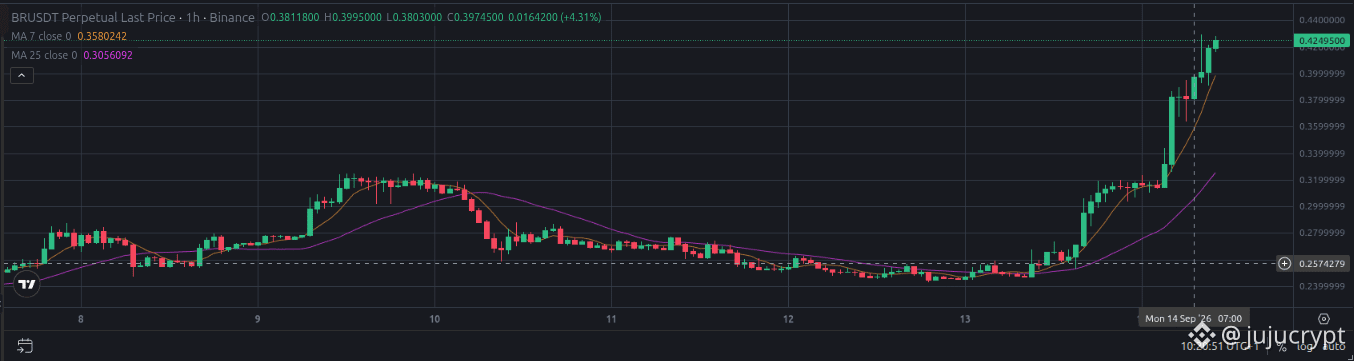
$BR and $AIN have been hot this morning.
Looks like we might already have our early Monday runners.
On the other hand, I was looking at STON.fi and something I’ve always wondered is why you can have multiple pools for the same token pair.
For example, why have more than one TON/USDT pool if one already exists?
The simple answer is that not every pool is the same.
They can have different liquidity, fees, incentives, or just be set up differently.
So having multiple pools isn't necessarily a bad thing.
The interesting part is what happens when you want to trade.
Instead of checking every pool yourself, Omniston can look across available liquidity sources and help find a better route for the swap.
That’s what I like about this side of DeFi.
More pools can mean more fragmented liquidity, but good routing can help bring that liquidity together when you need it.
$BR and $AIN have been hot this morning.
Looks like we might already have our early Monday runners.
On the other hand, I was looking at STON.fi and something I’ve always wondered is why you can have multiple pools for the same token pair.
For example, why have more than one TON/USDT pool if one already exists?
The simple answer is that not every pool is the same.
They can have different liquidity, fees, incentives, or just be set up differently.
So having multiple pools isn't necessarily a bad thing.
The interesting part is what happens when you want to trade.
Instead of checking every pool yourself, Omniston can look across available liquidity sources and help find a better route for the swap.
That’s what I like about this side of DeFi.
More pools can mean more fragmented liquidity, but good routing can help bring that liquidity together when you need it.
Looks like we might already have our early Monday runners.
On the other hand, I was looking at STON.fi and something I’ve always wondered is why you can have multiple pools for the same token pair.
For example, why have more than one TON/USDT pool if one already exists?
The simple answer is that not every pool is the same.
They can have different liquidity, fees, incentives, or just be set up differently.
So having multiple pools isn't necessarily a bad thing.
The interesting part is what happens when you want to trade.
Instead of checking every pool yourself, Omniston can look across available liquidity sources and help find a better route for the swap.
That’s what I like about this side of DeFi.
More pools can mean more fragmented liquidity, but good routing can help bring that liquidity together when you need it.
1
264
·
--
See translation
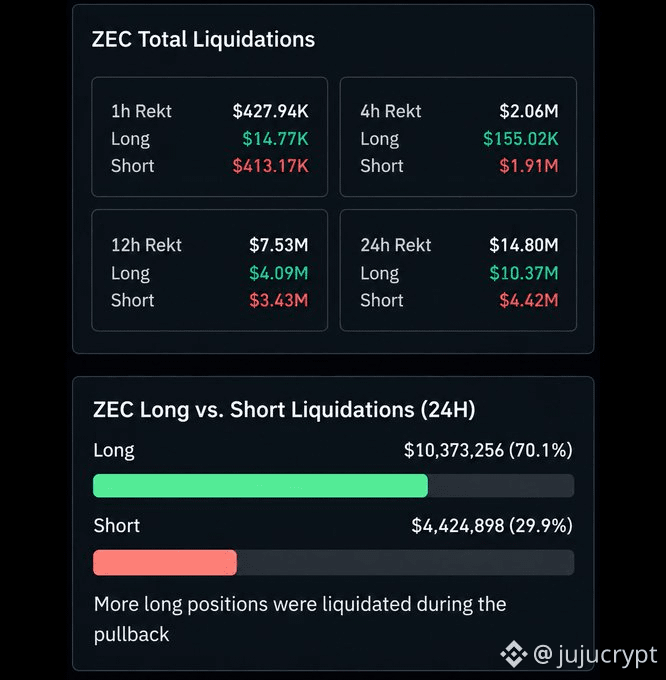
Interesting stats on $ZEC
Around $14.8M in Zcash positions were liquidated over the last 24 hours.
Both longs and shorts got caught, but longs took the bigger hit.
ZEC volatility has been crazy lately.
If you’re trading it, risk management really matters because the moves can come fast.
#zec
Interesting stats on $ZEC
Around $14.8M in Zcash positions were liquidated over the last 24 hours.
Both longs and shorts got caught, but longs took the bigger hit.
ZEC volatility has been crazy lately.
If you’re trading it, risk management really matters because the moves can come fast.
#zec
Around $14.8M in Zcash positions were liquidated over the last 24 hours.
Both longs and shorts got caught, but longs took the bigger hit.
ZEC volatility has been crazy lately.
If you’re trading it, risk management really matters because the moves can come fast.
#zec
315
·
--
See translation
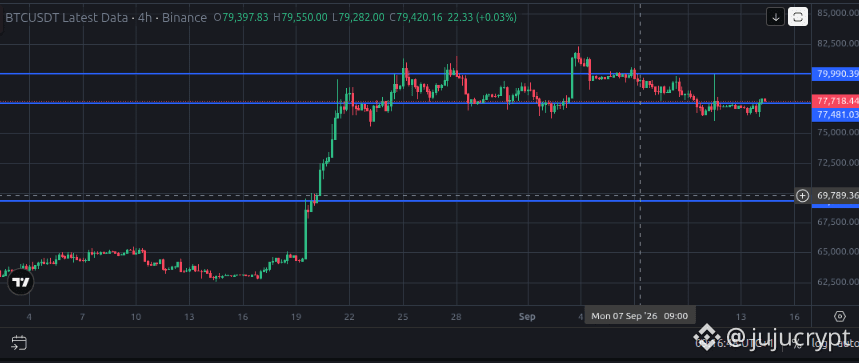
My outlook on $BTC this week is pretty simple.
We’re still sitting around the $79K rejection zone, and I think there’s a good chance we see a breakout if buyers can push through and hold above it.
If that doesn’t happen, I wouldn’t be surprised to see more sideways movement and consolidation for a while.
For now, I’m watching how BTC reacts around $79K.
My outlook on $BTC this week is pretty simple.
We’re still sitting around the $79K rejection zone, and I think there’s a good chance we see a breakout if buyers can push through and hold above it.
If that doesn’t happen, I wouldn’t be surprised to see more sideways movement and consolidation for a while.
For now, I’m watching how BTC reacts around $79K.
We’re still sitting around the $79K rejection zone, and I think there’s a good chance we see a breakout if buyers can push through and hold above it.
If that doesn’t happen, I wouldn’t be surprised to see more sideways movement and consolidation for a while.
For now, I’m watching how BTC reacts around $79K.
92
·
--
See translation
Market is getting hot again.
Tokens like $POWER and $BTW have been making some moves, and so far it feels like liquidity is starting to flow back into alts.
That also got me checking what’s happening on the STON.fi farming side.
A few pools caught my attention:
STON/USDT
10,000 STON per month, ongoing with no LP lock, plus a boost of up to 2× APR until Sept 30.
JETTON/USDT + JETTON/GRAM
200,000 JETTON per month across either pool, running until Dec 31 with no LP lock.
STORM/GRAM
30,000 STORM per day, ongoing and no LP lock.
Obviously, farming isn’t free money token price, impermanent loss and how long the incentives last all matter.
But I like seeing liquidity starting to move back into smaller tokens.
For now, I’m just watching the flows and seeing where the next opportunities show up.
Market is getting hot again.
Tokens like $POWER and $BTW have been making some moves, and so far it feels like liquidity is starting to flow back into alts.
That also got me checking what’s happening on the STON.fi farming side.
A few pools caught my attention:
STON/USDT
10,000 STON per month, ongoing with no LP lock, plus a boost of up to 2× APR until Sept 30.
JETTON/USDT + JETTON/GRAM
200,000 JETTON per month across either pool, running until Dec 31 with no LP lock.
STORM/GRAM
30,000 STORM per day, ongoing and no LP lock.
Obviously, farming isn’t free money token price, impermanent loss and how long the incentives last all matter.
But I like seeing liquidity starting to move back into smaller tokens.
For now, I’m just watching the flows and seeing where the next opportunities show up.
Tokens like $POWER and $BTW have been making some moves, and so far it feels like liquidity is starting to flow back into alts.
That also got me checking what’s happening on the STON.fi farming side.
A few pools caught my attention:
STON/USDT
10,000 STON per month, ongoing with no LP lock, plus a boost of up to 2× APR until Sept 30.
JETTON/USDT + JETTON/GRAM
200,000 JETTON per month across either pool, running until Dec 31 with no LP lock.
STORM/GRAM
30,000 STORM per day, ongoing and no LP lock.
Obviously, farming isn’t free money token price, impermanent loss and how long the incentives last all matter.
But I like seeing liquidity starting to move back into smaller tokens.
For now, I’m just watching the flows and seeing where the next opportunities show up.
2
614
·
--
See translation
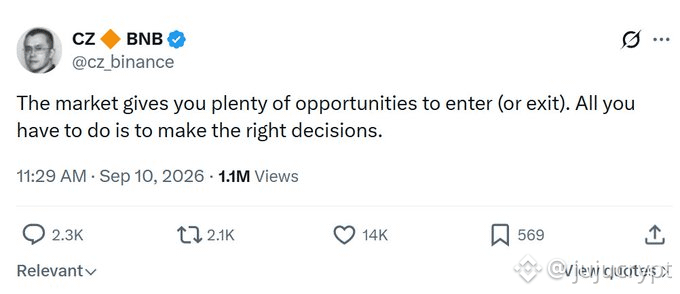
Just saw this tweet and it got me thinking about some of the tokens I missed yesterday, especially $LSK and $STEEM .
Another reminder that I really need to lock in more and stay closer to the market.
There are always going to be tokens making moves when you’re not watching, but I’d rather be positioned early and let the market do its thing than keep chasing after the move has already happened.
Been checking out the Stoncat NFT mint on STON.fi too. I’ve already minted like 5.
The interesting part is that you can actually feed your Stoncat with GEMSTON, which helps upgrade it and increase its utility/value within the ecosystem.
So now I’m wondering if I’m actually early to this one too.
For once, let me catch the move before it starts.
Just saw this tweet and it got me thinking about some of the tokens I missed yesterday, especially $LSK and $STEEM .
Another reminder that I really need to lock in more and stay closer to the market.
There are always going to be tokens making moves when you’re not watching, but I’d rather be positioned early and let the market do its thing than keep chasing after the move has already happened.
Been checking out the Stoncat NFT mint on STON.fi too. I’ve already minted like 5.
The interesting part is that you can actually feed your Stoncat with GEMSTON, which helps upgrade it and increase its utility/value within the ecosystem.
So now I’m wondering if I’m actually early to this one too.
For once, let me catch the move before it starts.
Another reminder that I really need to lock in more and stay closer to the market.
There are always going to be tokens making moves when you’re not watching, but I’d rather be positioned early and let the market do its thing than keep chasing after the move has already happened.
Been checking out the Stoncat NFT mint on STON.fi too. I’ve already minted like 5.
The interesting part is that you can actually feed your Stoncat with GEMSTON, which helps upgrade it and increase its utility/value within the ecosystem.
So now I’m wondering if I’m actually early to this one too.
For once, let me catch the move before it starts.
304
·
--
Article
See translation
How to Swap USDT on BNB Chain for USDT on STONFiOne thing that can be confusing when you first start using different chains is seeing the same token name on different networks.
$USDT is a good example.
You can hold USDT on $BNB Chain and USDT on Stonfi, but they aren't sitting on the same network. So even though the asset is called USDT on both sides, moving from one to the other isn't simply a normal token transfer.
That’s where cross-chain execution comes in.
I’ve found it much easier to think about it as:
BNB Chain + USDT → $GRAM + USDT
You are keeping the asset you want, but changing the network it lives on.
First, make sure you’re using USDT on BNB Chain
If your USDT is on BNB Chain, you're dealing with the BNB Chain version of USDT, commonly identified as a BEP-20 token.
That network detail matters.
Sending a token to the wrong network or assuming that every USDT address works everywhere can create unnecessary problems. Before doing anything, I’d check the network shown in your wallet and make sure the source asset is actually USDT on BNB Chain.
The destination is different:
Source: BNB Chain / USDT
Destination: TON / USDT
Once you look at it this way, the reason for using a cross-chain swap becomes much clearer.
Why can't I just send the USDT directly?
Because the two assets are living on different networks.
A normal transfer keeps you within the same blockchain. If your USDT is on BNB Chain and you want USDT on TON, something needs to coordinate the transaction across both networks.
That is what cross-chain execution is designed to handle.
Instead of manually moving the asset through several steps and figuring out what to swap afterward, you can specify what you have and what you want to receive.
For example, on STON.fi, you can set:
BNB Chain → USDT → TON → USDT
The important part is that the destination asset is already USDT on TON.
How I would approach the swap
Before confirming any transaction, I’d first check the quote.
You want to know:
How much USDT you're sendingHow much USDT you're expected to receive on TONThe fees involvedWhich wallet is receiving the USDTThe source and destination networks
This is one of those steps I wouldn't rush.
Even when you're swapping the same asset, the amount you receive can be affected by execution costs and the route being used.
The goal isn't simply to see “USDT → USDT” and click confirm.
You want to understand exactly what is happening:
BNB Chain USDT leaves the source side → cross-chain execution takes place → TON USDT arrives in the destination wallet.
What happens behind the scenes?
This is where STON.fi's Omniston infrastructure becomes interesting.
Omniston is designed to handle cross-chain execution by connecting liquidity and execution across different networks. Instead of requiring the user to manually figure out every step, the system works around the requested source and destination assets.
The user experience can therefore stay relatively simple:
I have USDT on BNB Chain.
I want USDT on TON.
You don't necessarily need to understand every piece of infrastructure underneath that request to use it, just like you don't need to understand how every internet server works before opening a website.
What matters at the user level is that you review the route, quote, fees and destination before signing.
What can I do with the USDT once it reaches TON?
This is another part I find useful.
Getting USDT onto TON doesn't have to be the end of the journey.
Once you have USDT on TON, you can use Omniston's aggregated TON liquidity for your next swap.
For example, you could move from:
BNB Chain USDT → TON USDT → another TON asset
Instead of treating the cross-chain move and the next trade as completely unrelated problems, you can think of them as two steps in the same journey.
First, get the asset onto the network you want.
Then, once you're on TON, look for the best available execution for the next swap.
A simple way to remember it
If you're trying this for the first time, I’d keep the mental model simple:
1. Identify what you actually hold
USDT on BNB Chain, not just “USDT.”
2. Choose the destination
USDT on TON.
3. Review the quote
Check the expected amount, fees and route.
4. Check the destination wallet
Make sure the wallet receiving the funds supports TON and that the address is correct.
5. Confirm only after everything looks right.
Then, once the USDT arrives on TON, you can use the available TON liquidity for whatever swap you want to make next.
Why I like this approach
For me, the interesting part isn't just that you can move USDT from one chain to another.
It's the fact that the user doesn't necessarily have to think about the whole process as a collection of disconnected steps.
You start with one asset on one network and tell the interface what you want to end up with on another network.
BNB Chain / USDT → TON / USDT
Then TON becomes your new starting point for whatever comes next.
Of course, cross-chain transactions still deserve the same caution as any other DeFi transaction. Always verify the network, destination wallet, quoted amount and fees before signing, and remember that routes, fees and supported assets can change.
But once you understand that the main challenge is changing networks, rather than simply swapping USDT for another token, the whole process becomes much easier to understand.
#BNBChain
How to Swap USDT on BNB Chain for USDT on STONFi
One thing that can be confusing when you first start using different chains is seeing the same token name on different networks.
$USDT is a good example.
You can hold USDT on $BNB Chain and USDT on Stonfi, but they aren't sitting on the same network. So even though the asset is called USDT on both sides, moving from one to the other isn't simply a normal token transfer.
That’s where cross-chain execution comes in.
I’ve found it much easier to think about it as:
BNB Chain + USDT → $GRAM + USDT
You are keeping the asset you want, but changing the network it lives on.
First, make sure you’re using USDT on BNB Chain
If your USDT is on BNB Chain, you're dealing with the BNB Chain version of USDT, commonly identified as a BEP-20 token.
That network detail matters.
Sending a token to the wrong network or assuming that every USDT address works everywhere can create unnecessary problems. Before doing anything, I’d check the network shown in your wallet and make sure the source asset is actually USDT on BNB Chain.
The destination is different:
Source: BNB Chain / USDT
Destination: TON / USDT
Once you look at it this way, the reason for using a cross-chain swap becomes much clearer.
Why can't I just send the USDT directly?
Because the two assets are living on different networks.
A normal transfer keeps you within the same blockchain. If your USDT is on BNB Chain and you want USDT on TON, something needs to coordinate the transaction across both networks.
That is what cross-chain execution is designed to handle.
Instead of manually moving the asset through several steps and figuring out what to swap afterward, you can specify what you have and what you want to receive.
For example, on STON.fi, you can set:
BNB Chain → USDT → TON → USDT
The important part is that the destination asset is already USDT on TON.
How I would approach the swap
Before confirming any transaction, I’d first check the quote.
You want to know:
How much USDT you're sendingHow much USDT you're expected to receive on TONThe fees involvedWhich wallet is receiving the USDTThe source and destination networks
This is one of those steps I wouldn't rush.
Even when you're swapping the same asset, the amount you receive can be affected by execution costs and the route being used.
The goal isn't simply to see “USDT → USDT” and click confirm.
You want to understand exactly what is happening:
BNB Chain USDT leaves the source side → cross-chain execution takes place → TON USDT arrives in the destination wallet.
What happens behind the scenes?
This is where STON.fi's Omniston infrastructure becomes interesting.
Omniston is designed to handle cross-chain execution by connecting liquidity and execution across different networks. Instead of requiring the user to manually figure out every step, the system works around the requested source and destination assets.
The user experience can therefore stay relatively simple:
I have USDT on BNB Chain.
I want USDT on TON.
You don't necessarily need to understand every piece of infrastructure underneath that request to use it, just like you don't need to understand how every internet server works before opening a website.
What matters at the user level is that you review the route, quote, fees and destination before signing.
What can I do with the USDT once it reaches TON?
This is another part I find useful.
Getting USDT onto TON doesn't have to be the end of the journey.
Once you have USDT on TON, you can use Omniston's aggregated TON liquidity for your next swap.
For example, you could move from:
BNB Chain USDT → TON USDT → another TON asset
Instead of treating the cross-chain move and the next trade as completely unrelated problems, you can think of them as two steps in the same journey.
First, get the asset onto the network you want.
Then, once you're on TON, look for the best available execution for the next swap.
A simple way to remember it
If you're trying this for the first time, I’d keep the mental model simple:
1. Identify what you actually hold
USDT on BNB Chain, not just “USDT.”
2. Choose the destination
USDT on TON.
3. Review the quote
Check the expected amount, fees and route.
4. Check the destination wallet
Make sure the wallet receiving the funds supports TON and that the address is correct.
5. Confirm only after everything looks right.
Then, once the USDT arrives on TON, you can use the available TON liquidity for whatever swap you want to make next.
Why I like this approach
For me, the interesting part isn't just that you can move USDT from one chain to another.
It's the fact that the user doesn't necessarily have to think about the whole process as a collection of disconnected steps.
You start with one asset on one network and tell the interface what you want to end up with on another network.
BNB Chain / USDT → TON / USDT
Then TON becomes your new starting point for whatever comes next.
Of course, cross-chain transactions still deserve the same caution as any other DeFi transaction. Always verify the network, destination wallet, quoted amount and fees before signing, and remember that routes, fees and supported assets can change.
But once you understand that the main challenge is changing networks, rather than simply swapping USDT for another token, the whole process becomes much easier to understand.
#BNBChain
$USDT is a good example.
You can hold USDT on $BNB Chain and USDT on Stonfi, but they aren't sitting on the same network. So even though the asset is called USDT on both sides, moving from one to the other isn't simply a normal token transfer.
That’s where cross-chain execution comes in.
I’ve found it much easier to think about it as:
BNB Chain + USDT → $GRAM + USDT
You are keeping the asset you want, but changing the network it lives on.
First, make sure you’re using USDT on BNB Chain
If your USDT is on BNB Chain, you're dealing with the BNB Chain version of USDT, commonly identified as a BEP-20 token.
That network detail matters.
Sending a token to the wrong network or assuming that every USDT address works everywhere can create unnecessary problems. Before doing anything, I’d check the network shown in your wallet and make sure the source asset is actually USDT on BNB Chain.
The destination is different:
Source: BNB Chain / USDT
Destination: TON / USDT
Once you look at it this way, the reason for using a cross-chain swap becomes much clearer.
Why can't I just send the USDT directly?
Because the two assets are living on different networks.
A normal transfer keeps you within the same blockchain. If your USDT is on BNB Chain and you want USDT on TON, something needs to coordinate the transaction across both networks.
That is what cross-chain execution is designed to handle.
Instead of manually moving the asset through several steps and figuring out what to swap afterward, you can specify what you have and what you want to receive.
For example, on STON.fi, you can set:
BNB Chain → USDT → TON → USDT
The important part is that the destination asset is already USDT on TON.
How I would approach the swap
Before confirming any transaction, I’d first check the quote.
You want to know:
How much USDT you're sendingHow much USDT you're expected to receive on TONThe fees involvedWhich wallet is receiving the USDTThe source and destination networks
This is one of those steps I wouldn't rush.
Even when you're swapping the same asset, the amount you receive can be affected by execution costs and the route being used.
The goal isn't simply to see “USDT → USDT” and click confirm.
You want to understand exactly what is happening:
BNB Chain USDT leaves the source side → cross-chain execution takes place → TON USDT arrives in the destination wallet.
What happens behind the scenes?
This is where STON.fi's Omniston infrastructure becomes interesting.
Omniston is designed to handle cross-chain execution by connecting liquidity and execution across different networks. Instead of requiring the user to manually figure out every step, the system works around the requested source and destination assets.
The user experience can therefore stay relatively simple:
I have USDT on BNB Chain.
I want USDT on TON.
You don't necessarily need to understand every piece of infrastructure underneath that request to use it, just like you don't need to understand how every internet server works before opening a website.
What matters at the user level is that you review the route, quote, fees and destination before signing.
What can I do with the USDT once it reaches TON?
This is another part I find useful.
Getting USDT onto TON doesn't have to be the end of the journey.
Once you have USDT on TON, you can use Omniston's aggregated TON liquidity for your next swap.
For example, you could move from:
BNB Chain USDT → TON USDT → another TON asset
Instead of treating the cross-chain move and the next trade as completely unrelated problems, you can think of them as two steps in the same journey.
First, get the asset onto the network you want.
Then, once you're on TON, look for the best available execution for the next swap.
A simple way to remember it
If you're trying this for the first time, I’d keep the mental model simple:
1. Identify what you actually hold
USDT on BNB Chain, not just “USDT.”
2. Choose the destination
USDT on TON.
3. Review the quote
Check the expected amount, fees and route.
4. Check the destination wallet
Make sure the wallet receiving the funds supports TON and that the address is correct.
5. Confirm only after everything looks right.
Then, once the USDT arrives on TON, you can use the available TON liquidity for whatever swap you want to make next.
Why I like this approach
For me, the interesting part isn't just that you can move USDT from one chain to another.
It's the fact that the user doesn't necessarily have to think about the whole process as a collection of disconnected steps.
You start with one asset on one network and tell the interface what you want to end up with on another network.
BNB Chain / USDT → TON / USDT
Then TON becomes your new starting point for whatever comes next.
Of course, cross-chain transactions still deserve the same caution as any other DeFi transaction. Always verify the network, destination wallet, quoted amount and fees before signing, and remember that routes, fees and supported assets can change.
But once you understand that the main challenge is changing networks, rather than simply swapping USDT for another token, the whole process becomes much easier to understand.
#BNBChain
1
119

·
--
See translation
$LAB and $MET have been making quite the move lately, and it’s good to see utility tokens getting some attention again.
On the STONfi side, they’re not just keeping up with the race they’re actually building and delivering while the market moves.
The latest is the integration with Stonks, an AI-powered token launcher on TON.
Projects can launch tokens, set custom bonding curves, add liquidity or run presales, then move those tokens into STON.fi pools as they grow.
That creates a pretty interesting path from launch → early trading → liquidity → wider access.
I like seeing this kind of infrastructure being built because it goes beyond just chasing market attention.
TON is moving, and STON.fi seems to be using that momentum to keep adding more pieces to the ecosystem.
Not just keeping up with the race.
Still delivering while running it.
$LAB and $MET have been making quite the move lately, and it’s good to see utility tokens getting some attention again.
On the STONfi side, they’re not just keeping up with the race they’re actually building and delivering while the market moves.
The latest is the integration with Stonks, an AI-powered token launcher on TON.
Projects can launch tokens, set custom bonding curves, add liquidity or run presales, then move those tokens into STON.fi pools as they grow.
That creates a pretty interesting path from launch → early trading → liquidity → wider access.
I like seeing this kind of infrastructure being built because it goes beyond just chasing market attention.
TON is moving, and STON.fi seems to be using that momentum to keep adding more pieces to the ecosystem.
Not just keeping up with the race.
Still delivering while running it.
On the STONfi side, they’re not just keeping up with the race they’re actually building and delivering while the market moves.
The latest is the integration with Stonks, an AI-powered token launcher on TON.
Projects can launch tokens, set custom bonding curves, add liquidity or run presales, then move those tokens into STON.fi pools as they grow.
That creates a pretty interesting path from launch → early trading → liquidity → wider access.
I like seeing this kind of infrastructure being built because it goes beyond just chasing market attention.
TON is moving, and STON.fi seems to be using that momentum to keep adding more pieces to the ecosystem.
Not just keeping up with the race.
Still delivering while running it.

271
·
--
See translation
$ZEC just got a pullback, but I still feel like there could be more moves ahead.
$USELESS is also looking interesting right now, so I’m just watching how both of them develop from here.
Meanwhile, something else caught my attention on STON.fi.
The new Stoncat NFTs are now live, and honestly, the whole idea is pretty fun.
You mint a Stoncat and feed it GEMSTON to increase its score and rarity, with a public leaderboard showing who’s climbing the ranks.
People were already rushing in hard enough that the first Diamond Stoncat showed up after 7,777 GEMSTON was fed.
There were some delays with NFT delivery right after launch because of the traffic, but things seem to be running more smoothly now.
I like seeing GEMSTON getting an actual use case inside the ecosystem.
It’s not just about collecting a cute cat there’s a little competition, progression and community activity built around it too.
Now I’m just watching to see how far people take this Stoncat competition.
$ZEC just got a pullback, but I still feel like there could be more moves ahead.
$USELESS is also looking interesting right now, so I’m just watching how both of them develop from here.
Meanwhile, something else caught my attention on STON.fi.
The new Stoncat NFTs are now live, and honestly, the whole idea is pretty fun.
You mint a Stoncat and feed it GEMSTON to increase its score and rarity, with a public leaderboard showing who’s climbing the ranks.
People were already rushing in hard enough that the first Diamond Stoncat showed up after 7,777 GEMSTON was fed.
There were some delays with NFT delivery right after launch because of the traffic, but things seem to be running more smoothly now.
I like seeing GEMSTON getting an actual use case inside the ecosystem.
It’s not just about collecting a cute cat there’s a little competition, progression and community activity built around it too.
Now I’m just watching to see how far people take this Stoncat competition.
$USELESS is also looking interesting right now, so I’m just watching how both of them develop from here.
Meanwhile, something else caught my attention on STON.fi.
The new Stoncat NFTs are now live, and honestly, the whole idea is pretty fun.
You mint a Stoncat and feed it GEMSTON to increase its score and rarity, with a public leaderboard showing who’s climbing the ranks.
People were already rushing in hard enough that the first Diamond Stoncat showed up after 7,777 GEMSTON was fed.
There were some delays with NFT delivery right after launch because of the traffic, but things seem to be running more smoothly now.
I like seeing GEMSTON getting an actual use case inside the ecosystem.
It’s not just about collecting a cute cat there’s a little competition, progression and community activity built around it too.
Now I’m just watching to see how far people take this Stoncat competition.

474
·
--
Verified
See translation
interesting
Former #Ripple CTO David Schwartz says he believes $XRP could eventually flip $BTC .
Not because Bitcoin shrinks, but because XRP grows faster.
Interesting way to look at it.
In crypto, sometimes the story isn't about one thing going down. It’s about another thing growing much faster.
And that got me thinking about some of the growth happening on the TON side too.
Omniston processed around $150K in cross-chain swap volume in a single day on August 25. 👀
To put that number into perspective, 150,000 kilometers is enough to travel around Earth roughly 3.5 times. 🌍😂
Obviously, $150K is still early compared to the size of the overall crypto market, but I like watching these milestones build up.
Cross-chain liquidity is becoming more important as users and assets spread across different ecosystems.
For now, just keeping my eyes on the growth and seeing where Omniston takes it next.
interesting
Former #Ripple CTO David Schwartz says he believes $XRP could eventually flip $BTC .
Not because Bitcoin shrinks, but because XRP grows faster.
Interesting way to look at it.
In crypto, sometimes the story isn't about one thing going down. It’s about another thing growing much faster.
And that got me thinking about some of the growth happening on the TON side too.
Omniston processed around $150K in cross-chain swap volume in a single day on August 25. 👀
To put that number into perspective, 150,000 kilometers is enough to travel around Earth roughly 3.5 times. 🌍😂
Obviously, $150K is still early compared to the size of the overall crypto market, but I like watching these milestones build up.
Cross-chain liquidity is becoming more important as users and assets spread across different ecosystems.
For now, just keeping my eyes on the growth and seeing where Omniston takes it next.
Former #Ripple CTO David Schwartz says he believes $XRP could eventually flip $BTC .
Not because Bitcoin shrinks, but because XRP grows faster.
Interesting way to look at it.
In crypto, sometimes the story isn't about one thing going down. It’s about another thing growing much faster.
And that got me thinking about some of the growth happening on the TON side too.
Omniston processed around $150K in cross-chain swap volume in a single day on August 25. 👀
To put that number into perspective, 150,000 kilometers is enough to travel around Earth roughly 3.5 times. 🌍😂
Obviously, $150K is still early compared to the size of the overall crypto market, but I like watching these milestones build up.
Cross-chain liquidity is becoming more important as users and assets spread across different ecosystems.
For now, just keeping my eyes on the growth and seeing where Omniston takes it next.
8
1
28
32.1k
·
--
Partly True
See translation
Over $440B wiped out from US stocks at the open as the S&P 500 dropped around 0.55% after PPI came in hotter than expected. 😬
You can feel the market getting a little nervous whenever inflation data comes in hotter than expected.
This is also why I like having different things on my radar instead of staring at one market all day.
While US stocks are dealing with the macro reaction, I’m still doing my own thing picking up more $GRAM and staking $STON to keep stacking GEMSTON.
I honestly have no idea what GEMSTON will be worth tomorrow, next month, or even later on. 😂
But that’s part of why I’m interested in it. I’m not treating it like guaranteed profit; I’m just building my position and watching how the STONfi ecosystem develops.
There’s been a lot happening around TON lately, and I’ve also been spending some time checking out the tokenized stocks available on STONfi.
Being able to look at crypto, TON DeFi, and tokenized versions of traditional assets from the same ecosystem is pretty interesting.
So yeah, stocks can have their macro drama today 😂
I’ll still be around the charts, stacking $GRAM, staking $STON, and keeping my eyes open for what comes next.
#USAugustPPIRisesLessThanExpected
Over $440B wiped out from US stocks at the open as the S&P 500 dropped around 0.55% after PPI came in hotter than expected. 😬
You can feel the market getting a little nervous whenever inflation data comes in hotter than expected.
This is also why I like having different things on my radar instead of staring at one market all day.
While US stocks are dealing with the macro reaction, I’m still doing my own thing picking up more $GRAM and staking $STON to keep stacking GEMSTON.
I honestly have no idea what GEMSTON will be worth tomorrow, next month, or even later on. 😂
But that’s part of why I’m interested in it. I’m not treating it like guaranteed profit; I’m just building my position and watching how the STONfi ecosystem develops.
There’s been a lot happening around TON lately, and I’ve also been spending some time checking out the tokenized stocks available on STONfi.
Being able to look at crypto, TON DeFi, and tokenized versions of traditional assets from the same ecosystem is pretty interesting.
So yeah, stocks can have their macro drama today 😂
I’ll still be around the charts, stacking $GRAM , staking $STON, and keeping my eyes open for what comes next.
#USAugustPPIRisesLessThanExpected
You can feel the market getting a little nervous whenever inflation data comes in hotter than expected.
This is also why I like having different things on my radar instead of staring at one market all day.
While US stocks are dealing with the macro reaction, I’m still doing my own thing picking up more $GRAM and staking $STON to keep stacking GEMSTON.
I honestly have no idea what GEMSTON will be worth tomorrow, next month, or even later on. 😂
But that’s part of why I’m interested in it. I’m not treating it like guaranteed profit; I’m just building my position and watching how the STONfi ecosystem develops.
There’s been a lot happening around TON lately, and I’ve also been spending some time checking out the tokenized stocks available on STONfi.
Being able to look at crypto, TON DeFi, and tokenized versions of traditional assets from the same ecosystem is pretty interesting.
So yeah, stocks can have their macro drama today 😂
I’ll still be around the charts, stacking $GRAM , staking $STON, and keeping my eyes open for what comes next.
#USAugustPPIRisesLessThanExpected
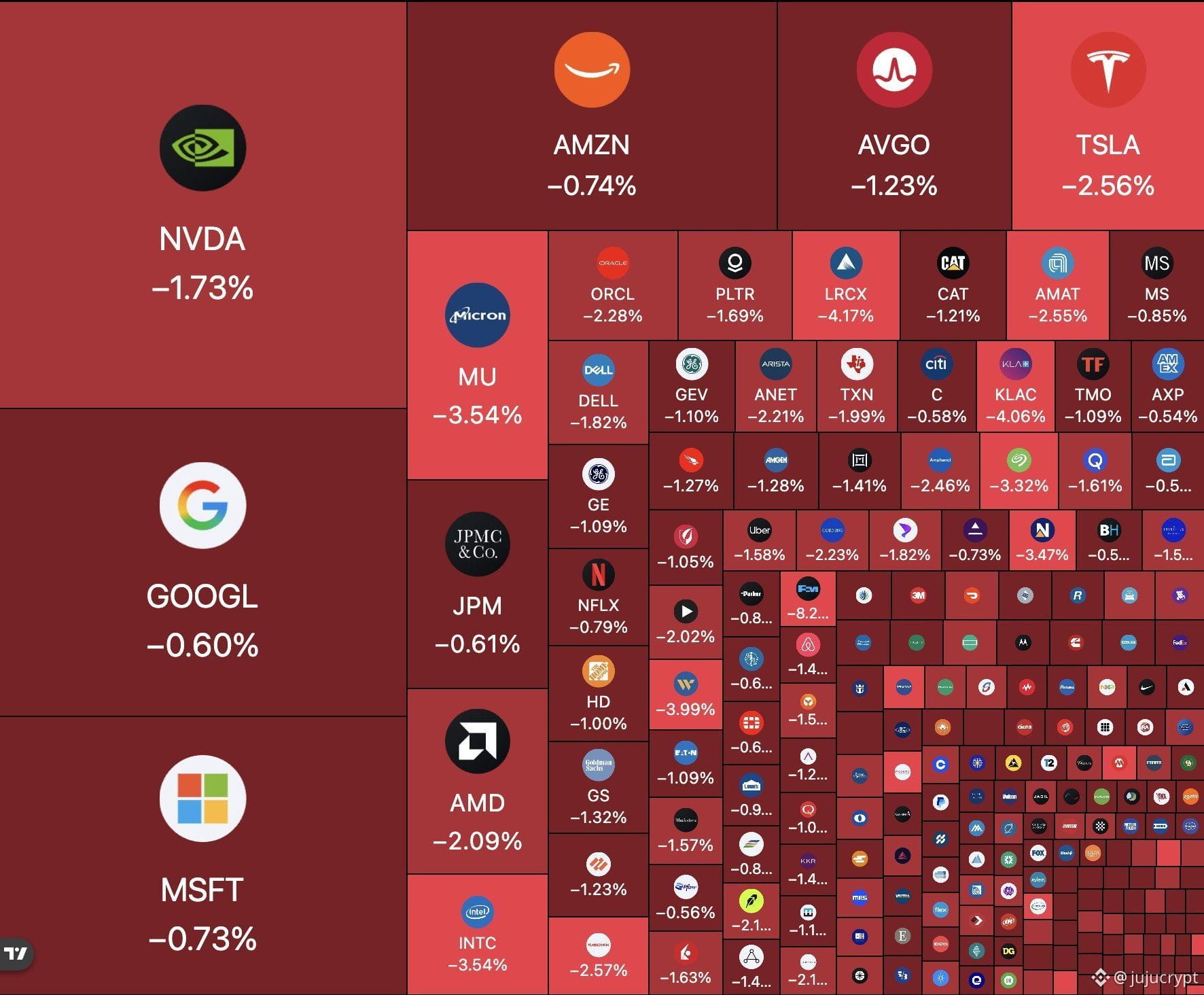
15
16.6k
·
--
Verified
See translation
Robinhood Chain memes are really getting the vibes right
Some of these coins are pumping hard, and I’m already seeing people moving from the $SOL trenches over to the $HOOD trenches.
What caught my attention though is that you can now go from TON to Robinhood Chain directly through STONfi.
The flow is pretty simple:
Connect your TON wallet, choose the asset you want to send, select Robinhood Chain as the destination, and choose the supported asset you want to receive.
From there, Omniston handles the cross-chain execution behind the scenes, connecting the liquidity needed to complete the swap.
So instead of manually figuring out the whole route yourself, you can simply tell STONfi:
This is what I’m sending → this is where I want to send it → this is what I want to receive.
TON asset → Robinhood Chain asset.
That’s the kind of UX I like.
Crypto already has enough moving parts
If the infrastructure can make moving between chains feel this simple, I’m all for it.
Some DEXs just know how to keep us moving.
Robinhood Chain memes are really getting the vibes right
Some of these coins are pumping hard, and I’m already seeing people moving from the $SOL trenches over to the $HOOD trenches.
What caught my attention though is that you can now go from TON to Robinhood Chain directly through STONfi.
The flow is pretty simple:
Connect your TON wallet, choose the asset you want to send, select Robinhood Chain as the destination, and choose the supported asset you want to receive.
From there, Omniston handles the cross-chain execution behind the scenes, connecting the liquidity needed to complete the swap.
So instead of manually figuring out the whole route yourself, you can simply tell STONfi:
This is what I’m sending → this is where I want to send it → this is what I want to receive.
TON asset → Robinhood Chain asset.
That’s the kind of UX I like.
Crypto already has enough moving parts
If the infrastructure can make moving between chains feel this simple, I’m all for it.
Some DEXs just know how to keep us moving.
Some of these coins are pumping hard, and I’m already seeing people moving from the $SOL trenches over to the $HOOD trenches.
What caught my attention though is that you can now go from TON to Robinhood Chain directly through STONfi.
The flow is pretty simple:
Connect your TON wallet, choose the asset you want to send, select Robinhood Chain as the destination, and choose the supported asset you want to receive.
From there, Omniston handles the cross-chain execution behind the scenes, connecting the liquidity needed to complete the swap.
So instead of manually figuring out the whole route yourself, you can simply tell STONfi:
This is what I’m sending → this is where I want to send it → this is what I want to receive.
TON asset → Robinhood Chain asset.
That’s the kind of UX I like.
Crypto already has enough moving parts
If the infrastructure can make moving between chains feel this simple, I’m all for it.
Some DEXs just know how to keep us moving.
1
4
9.3k
·
--
See translation
$SUI and the $XRP Ledger are showing some interesting stablecoin growth this week.
Sui’s stablecoin market cap grew 5.2%, while XRPL jumped 11.3% and crossed the $1B mark.
It reminds me of something simple: when you make something easier to use, you create more value. And when you keep making it better, that value can compound.
That’s part of what I’ve been watching with STON.fi and Omniston.
Omniston just passed $3M+ in all-time cross-chain swap volume. 🚀
$3M is a great start to the journey enough distance to make the Moon and back almost four times.
Still early, but it’s interesting to see cross-chain swaps gradually becoming a bigger part of how liquidity moves across ecosystems.
And honestly, making that experience simpler is where a lot of the value lies.
#Ripple
$SUI and the $XRP Ledger are showing some interesting stablecoin growth this week.
Sui’s stablecoin market cap grew 5.2%, while XRPL jumped 11.3% and crossed the $1B mark.
It reminds me of something simple: when you make something easier to use, you create more value. And when you keep making it better, that value can compound.
That’s part of what I’ve been watching with STON.fi and Omniston.
Omniston just passed $3M+ in all-time cross-chain swap volume. 🚀
$3M is a great start to the journey enough distance to make the Moon and back almost four times.
Still early, but it’s interesting to see cross-chain swaps gradually becoming a bigger part of how liquidity moves across ecosystems.
And honestly, making that experience simpler is where a lot of the value lies.
#Ripple
Sui’s stablecoin market cap grew 5.2%, while XRPL jumped 11.3% and crossed the $1B mark.
It reminds me of something simple: when you make something easier to use, you create more value. And when you keep making it better, that value can compound.
That’s part of what I’ve been watching with STON.fi and Omniston.
Omniston just passed $3M+ in all-time cross-chain swap volume. 🚀
$3M is a great start to the journey enough distance to make the Moon and back almost four times.
Still early, but it’s interesting to see cross-chain swaps gradually becoming a bigger part of how liquidity moves across ecosystems.
And honestly, making that experience simpler is where a lot of the value lies.
#Ripple
2
5
6.9k
Log in to explore more content
Join global crypto users on Binance Square
⚡️ Get latest and useful information about crypto.
💬 Trusted by the world’s largest crypto exchange.
👍 Discover real insights from verified creators.
Email / Phone number
Trending Topics
FedRateWatch
1.5M views
6,867 Discussing
Share & Win Traffic Reward in our Trending Hashtag Campaign
✨Topic: FOMC September, What's The Fed's Next Move?
👉How to Join:
Publish a short post or article with hashtag #FedRateWatch
Create content based on the below angles:
- August core CPI rose 0.3% month-over-month, and the odds of a 25bp hike this week are now close to 90%. Do you anticipate a rate hike this week? Is it a one-off, or the start of a longer hiking cycle?
- If the hike lands, how does it play out for BTC, tech stocks, and gold? Bullish or bearish?
- How are you planning to trade next? Share your BTC, stocks or gold trade/holdings with our trade sharing widget.
⏰Campaign Period:
- 2026-09-15 11:00 - 2026-09-17 3:00 UTC
🎁Reward:
- Qualified posts that comply with the above guidelines and contain more than 100 words will be reviewed and may receive a random traffic boost of 500 to 3,000 views. You will receive a notification from your feed secretary if your post is selected.
- Get a chance to have your article featured on Binance Square Official
Need ideas for your post? Visit the topic page #FedRateWatch or the Square Guide on How to Post for Better Reach.
Binance Square Official
·651 Likes
·1.7M views
ZcashRises6%
61,385 views
709 Discussing
XRPSinks10%
40,593 views
468 Discussing