
HappyCryptoAE
53 Posts
HappyCryptoAE
Report
Block User
In crypto since 2019 · P2P desk based in Dubai Cashing out in the UAE — banks, limits, and the paperwork nobody warns you about
Open Trade
Frequent Trader
1.1 Years
0 Following
92 Followers
98 Liked
Posts
Portfolio
Article
See translation
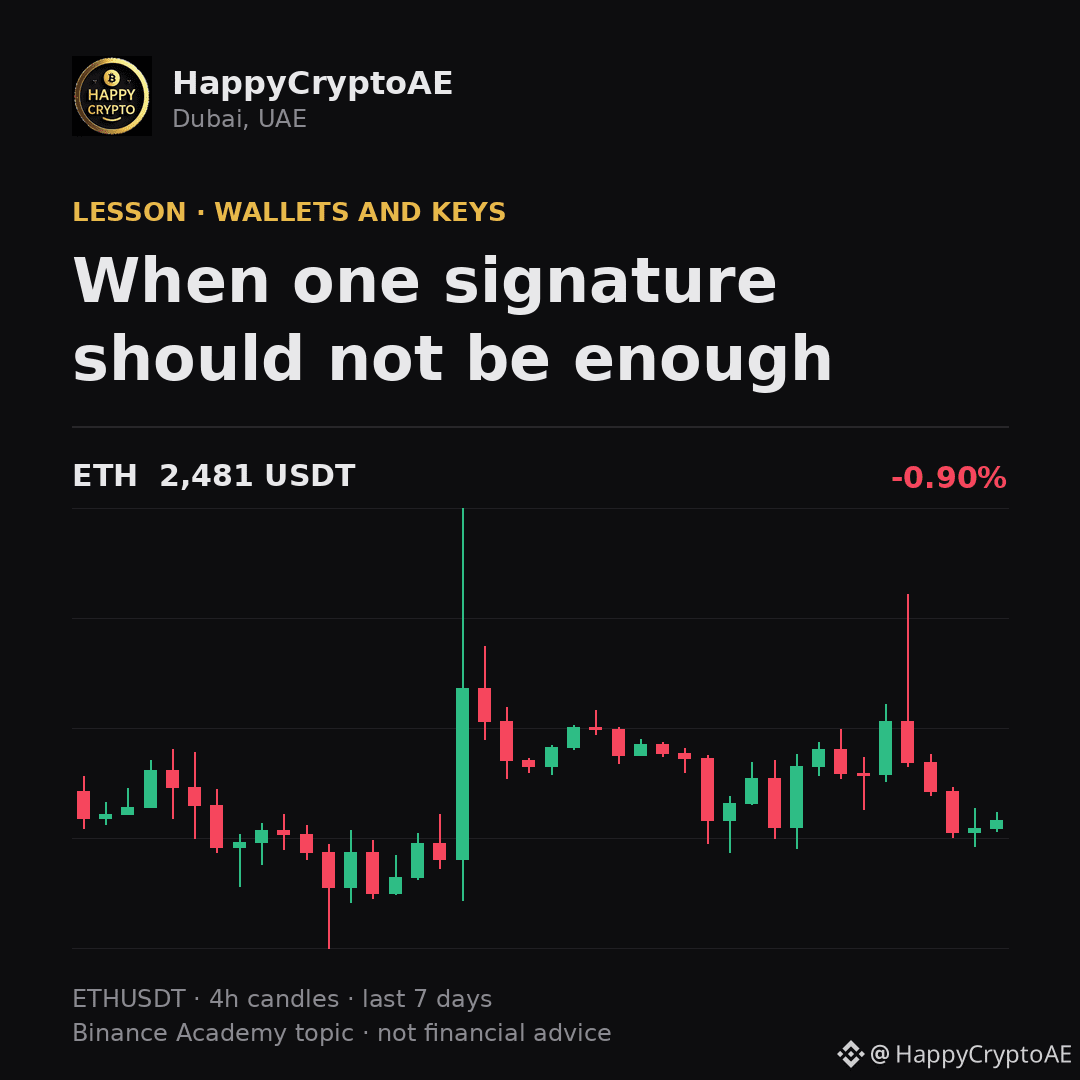
When one signature should not be enoughA multisignature setup requires several keys to approve a transfer instead of one. Two of three, three of five, whatever the arrangement - no single key can move the funds alone.
This solves two problems at once. A stolen key is no longer a catastrophe, and a lost key is no longer a catastrophe either, because the remaining keys can still act. It is how funds held on behalf of a business or a group are normally structured, and the reason is not sophistication - it is that a single point of failure is unacceptable when the money is not one person's to lose.
Binance Academy covers this in more depth: https://www.binance.com/en/academy/glossary/multisig
Trading crypto from Dubai since 2019.
$BTC $ETH
#Crypto #CryptoEducation #Binance
When one signature should not be enough
A multisignature setup requires several keys to approve a transfer instead of one. Two of three, three of five, whatever the arrangement - no single key can move the funds alone.
This solves two problems at once. A stolen key is no longer a catastrophe, and a lost key is no longer a catastrophe either, because the remaining keys can still act. It is how funds held on behalf of a business or a group are normally structured, and the reason is not sophistication - it is that a single point of failure is unacceptable when the money is not one person's to lose.
Binance Academy covers this in more depth: https://www.binance.com/en/academy/glossary/multisig
Trading crypto from Dubai since 2019.
$BTC $ETH
#Crypto #CryptoEducation #Binance
This solves two problems at once. A stolen key is no longer a catastrophe, and a lost key is no longer a catastrophe either, because the remaining keys can still act. It is how funds held on behalf of a business or a group are normally structured, and the reason is not sophistication - it is that a single point of failure is unacceptable when the money is not one person's to lose.
Binance Academy covers this in more depth: https://www.binance.com/en/academy/glossary/multisig
Trading crypto from Dubai since 2019.
$BTC $ETH
#Crypto #CryptoEducation #Binance
46
Article
See translation
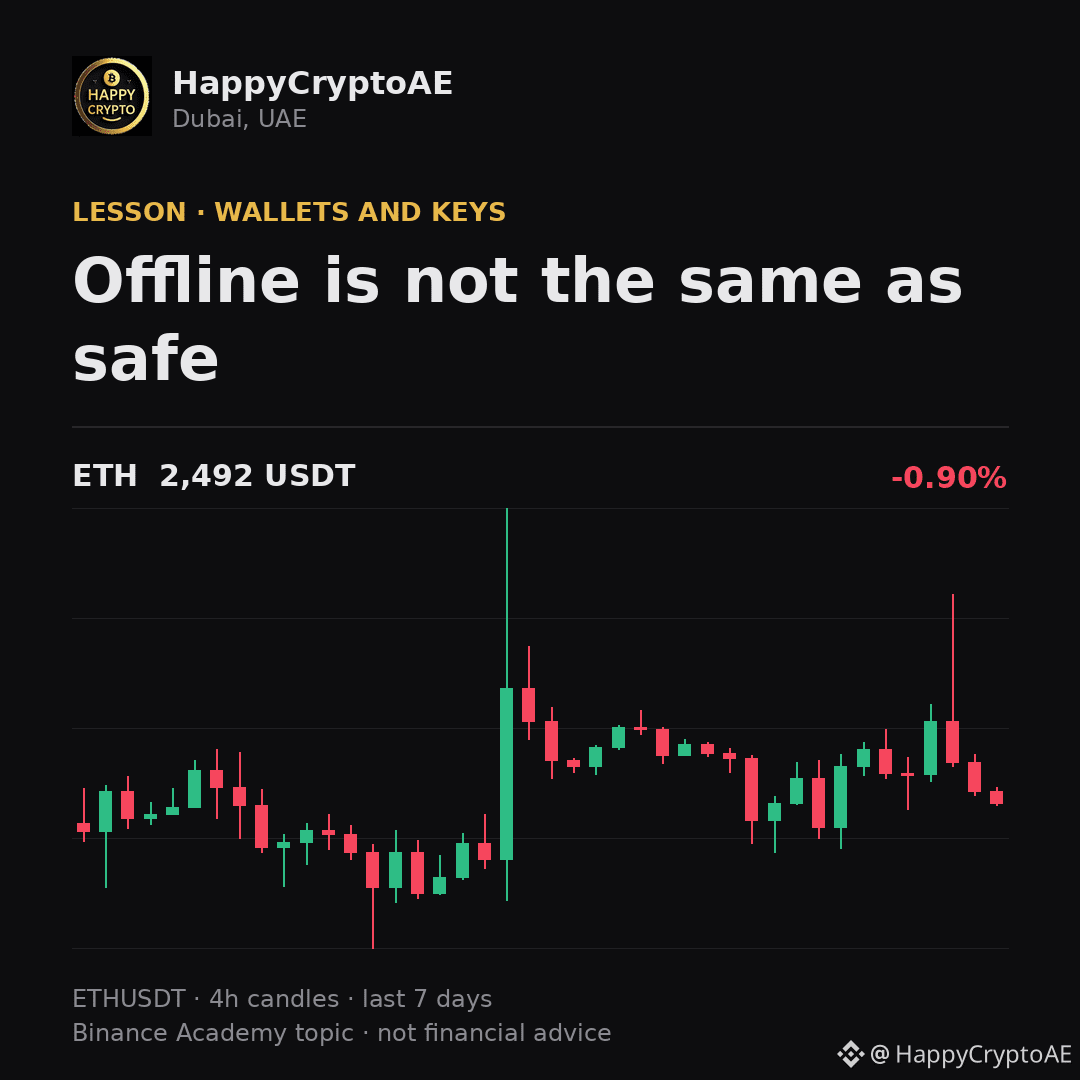
Offline is not the same as safeA paper wallet is keys printed or written on paper and kept away from any device. It removes every remote attack at once, which sounds like a complete solution and is not.
What replaces the hacker is physical reality: fire, water, fading ink, a tidy relative, a house move. And when funds are eventually spent, the key usually has to touch a connected device anyway, which is where mistakes cluster. Offline storage trades one category of risk for another rather than eliminating risk. Understanding which risk you have chosen is the point of choosing at all.
Binance Academy covers this in more depth: https://www.binance.com/en/academy/glossary/paper-wallet
Trading crypto from Dubai since 2019.
$BTC $ETH
#Crypto #CryptoEducation #Binance
Offline is not the same as safe
A paper wallet is keys printed or written on paper and kept away from any device. It removes every remote attack at once, which sounds like a complete solution and is not.
What replaces the hacker is physical reality: fire, water, fading ink, a tidy relative, a house move. And when funds are eventually spent, the key usually has to touch a connected device anyway, which is where mistakes cluster. Offline storage trades one category of risk for another rather than eliminating risk. Understanding which risk you have chosen is the point of choosing at all.
Binance Academy covers this in more depth: https://www.binance.com/en/academy/glossary/paper-wallet
Trading crypto from Dubai since 2019.
$BTC $ETH
#Crypto #CryptoEducation #Binance
What replaces the hacker is physical reality: fire, water, fading ink, a tidy relative, a house move. And when funds are eventually spent, the key usually has to touch a connected device anyway, which is where mistakes cluster. Offline storage trades one category of risk for another rather than eliminating risk. Understanding which risk you have chosen is the point of choosing at all.
Binance Academy covers this in more depth: https://www.binance.com/en/academy/glossary/paper-wallet
Trading crypto from Dubai since 2019.
$BTC $ETH
#Crypto #CryptoEducation #Binance
1
85
Article
See translation
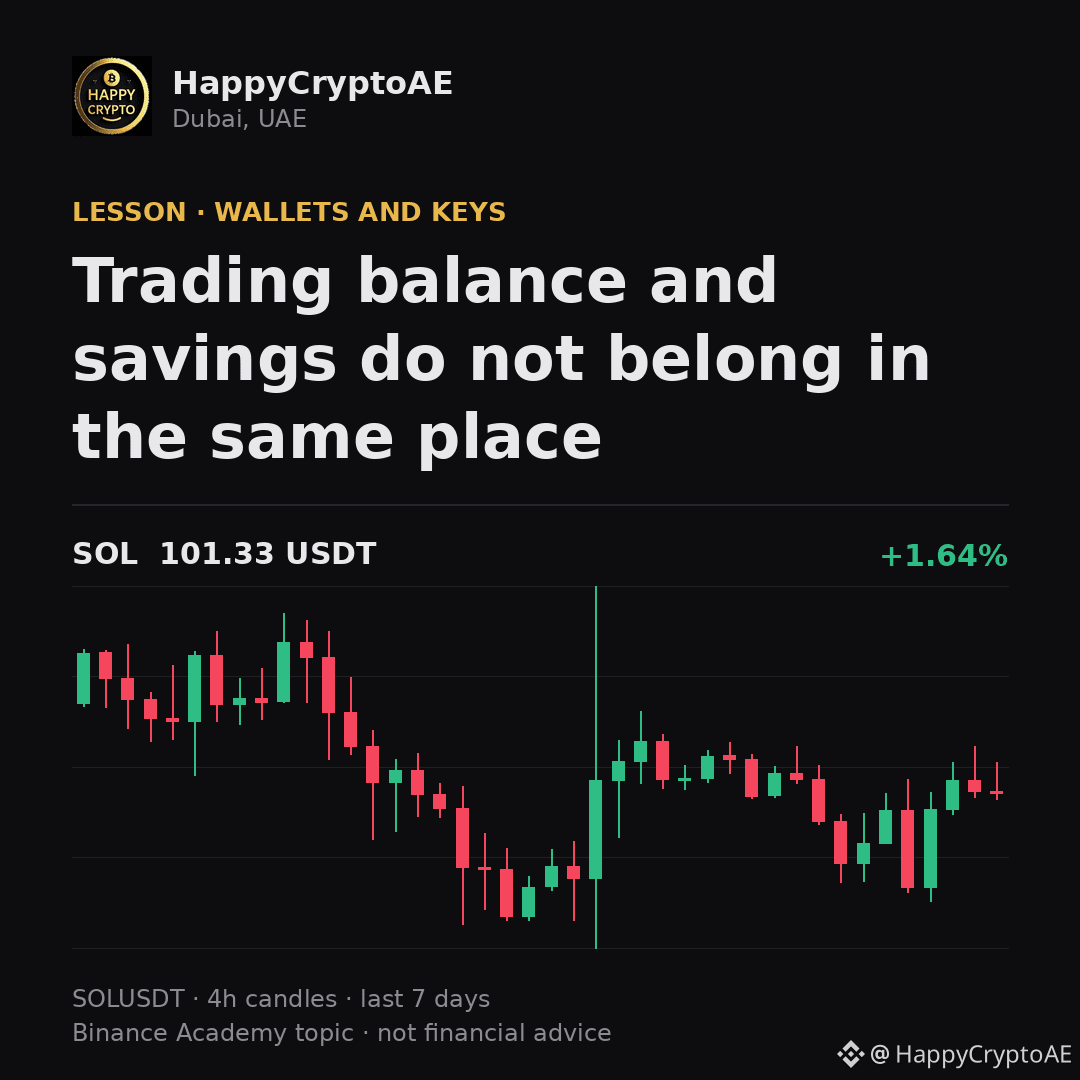
Trading balance and savings do not belong in the same placeCold storage means keys held offline, disconnected from anything reachable over a network. It is slower to use on purpose, and that slowness is the security.
The practical version is boring and effective: keep what you actively trade where you can reach it quickly, and keep what you are not touching this month somewhere that takes deliberate effort to open. Almost every large loss involves someone whose entire holding sat in the most convenient possible place.
Binance Academy covers this in more depth: https://www.binance.com/en/academy/glossary/cold-storage
Trading crypto from Dubai since 2019.
$BTC $USDT $SOL
#Crypto #CryptoEducation #Binance
Trading balance and savings do not belong in the same place
Cold storage means keys held offline, disconnected from anything reachable over a network. It is slower to use on purpose, and that slowness is the security.
The practical version is boring and effective: keep what you actively trade where you can reach it quickly, and keep what you are not touching this month somewhere that takes deliberate effort to open. Almost every large loss involves someone whose entire holding sat in the most convenient possible place.
Binance Academy covers this in more depth: https://www.binance.com/en/academy/glossary/cold-storage
Trading crypto from Dubai since 2019.
$BTC $USDT $SOL
#Crypto #CryptoEducation #Binance
The practical version is boring and effective: keep what you actively trade where you can reach it quickly, and keep what you are not touching this month somewhere that takes deliberate effort to open. Almost every large loss involves someone whose entire holding sat in the most convenient possible place.
Binance Academy covers this in more depth: https://www.binance.com/en/academy/glossary/cold-storage
Trading crypto from Dubai since 2019.
$BTC $USDT $SOL
#Crypto #CryptoEducation #Binance
1
46
Article
See translation
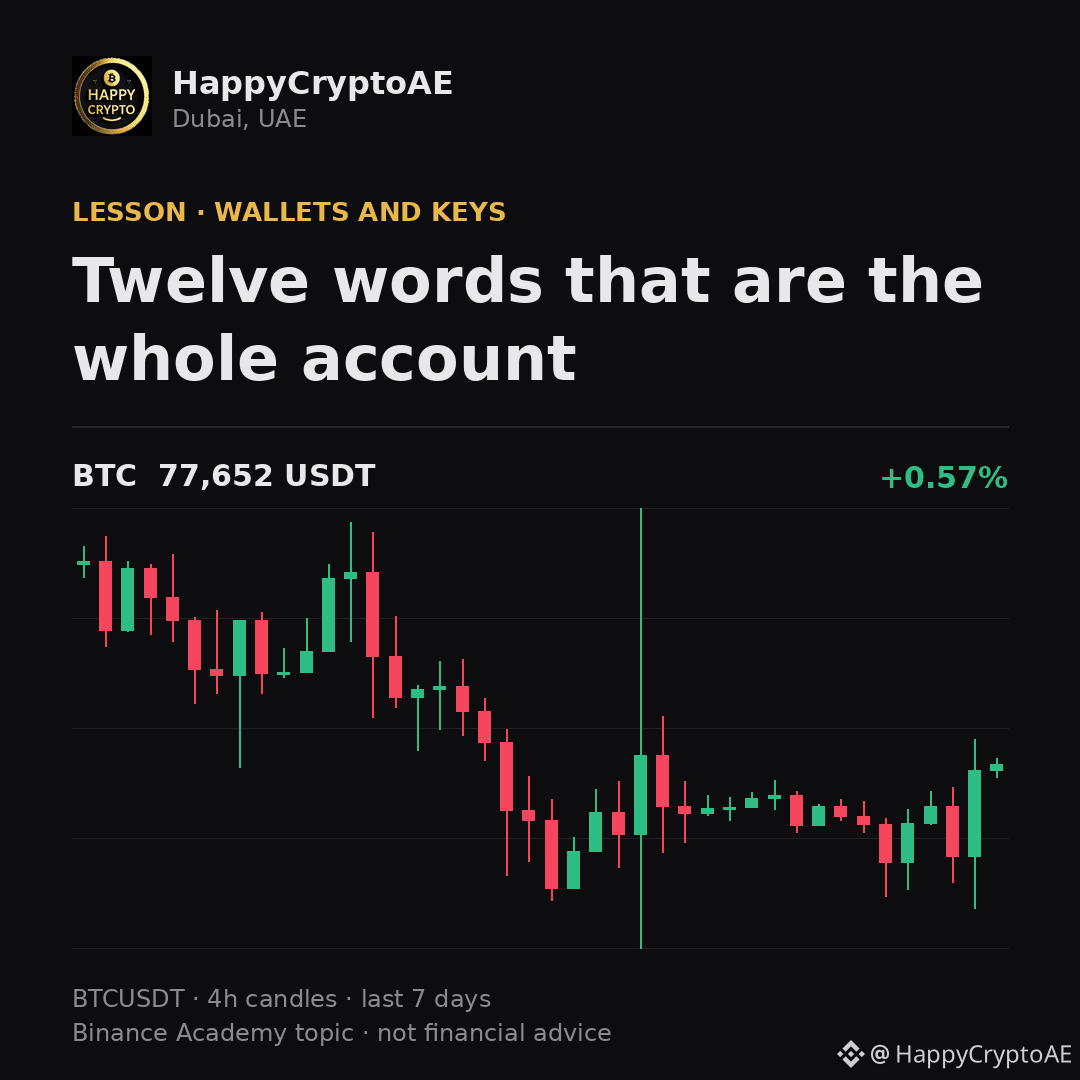
Twelve words that are the whole accountA seed phrase is a human-readable form of the secret that generates all your keys. Write those words down and you can rebuild the wallet on any device, anywhere, with no help from anyone.
Which is exactly why anyone else who reads them can do the same. A seed phrase is not a backup in the ordinary sense - it is the asset in text form. It does not belong in a photo, a notes app, an email to yourself, or a cloud drive. It belongs somewhere physical that only you can reach, ideally in more than one place, because losing it is as final as someone else finding it.
Binance Academy covers this in more depth: https://www.binance.com/en/academy/glossary/seed-phrase
Trading crypto from Dubai since 2019.
$BTC $ETH
#Crypto #CryptoEducation #Binance
Twelve words that are the whole account
A seed phrase is a human-readable form of the secret that generates all your keys. Write those words down and you can rebuild the wallet on any device, anywhere, with no help from anyone.
Which is exactly why anyone else who reads them can do the same. A seed phrase is not a backup in the ordinary sense - it is the asset in text form. It does not belong in a photo, a notes app, an email to yourself, or a cloud drive. It belongs somewhere physical that only you can reach, ideally in more than one place, because losing it is as final as someone else finding it.
Binance Academy covers this in more depth: https://www.binance.com/en/academy/glossary/seed-phrase
Trading crypto from Dubai since 2019.
$BTC $ETH
#Crypto #CryptoEducation #Binance
Which is exactly why anyone else who reads them can do the same. A seed phrase is not a backup in the ordinary sense - it is the asset in text form. It does not belong in a photo, a notes app, an email to yourself, or a cloud drive. It belongs somewhere physical that only you can reach, ideally in more than one place, because losing it is as final as someone else finding it.
Binance Academy covers this in more depth: https://www.binance.com/en/academy/glossary/seed-phrase
Trading crypto from Dubai since 2019.
$BTC $ETH
#Crypto #CryptoEducation #Binance
2
80
Article
See translation
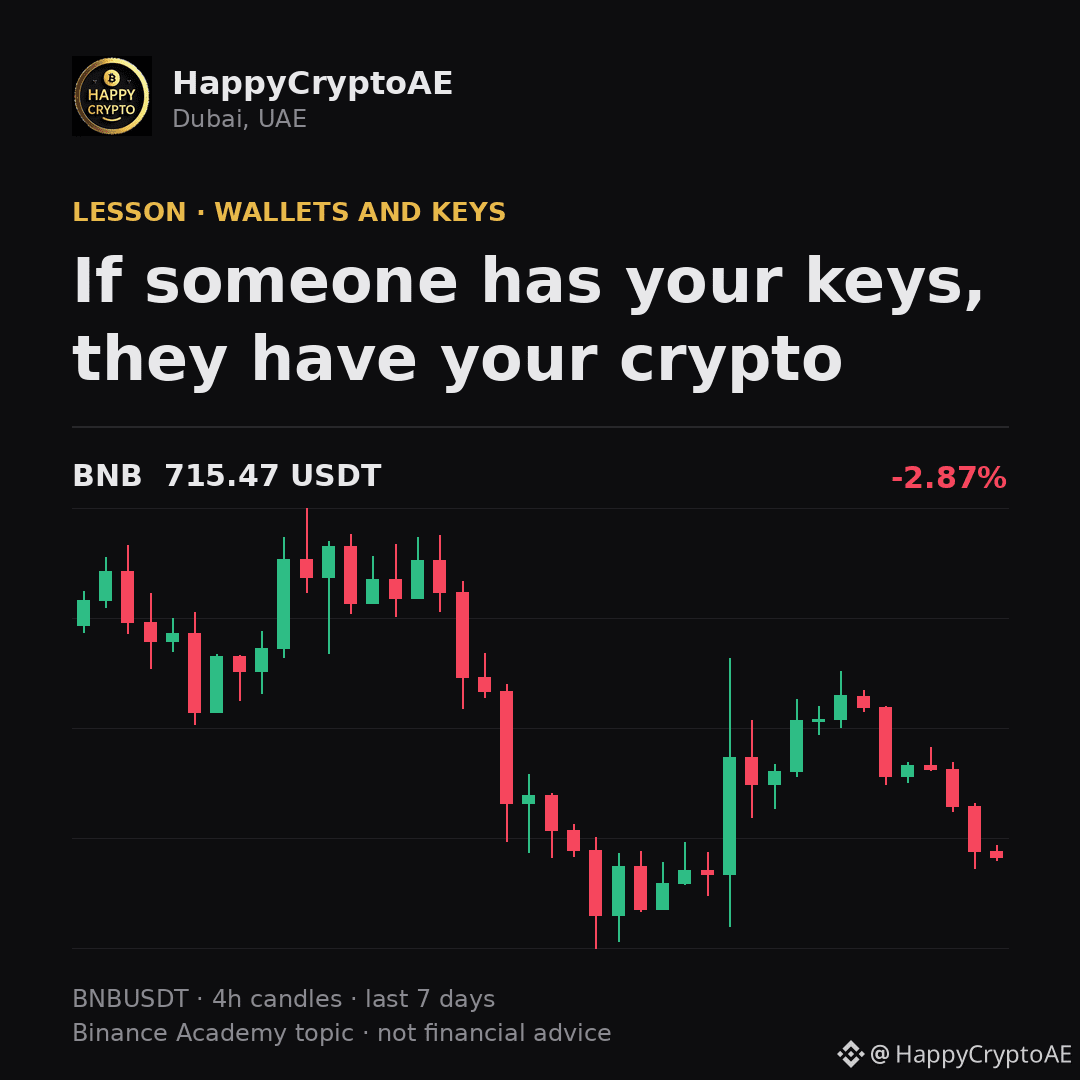
If someone has your keys, they have your cryptoThe private key is not a password protecting an account. It is the proof of ownership itself. Whoever holds it can spend the funds, and there is no account recovery, no support line, and no reversal.
This is why no legitimate person or platform will ever ask for a private key or a recovery phrase. Not support, not a verification step, not an urgent security check. A request for it is not one red flag among several; it is the entire scam, complete. The correct response to being asked is to stop, not to verify who is asking.
Binance Academy covers this in more depth: https://www.binance.com/en/academy/glossary/private-key
Trading crypto from Dubai since 2019.
$BTC $ETH $BNB
#Crypto #CryptoEducation #Binance
If someone has your keys, they have your crypto
The private key is not a password protecting an account. It is the proof of ownership itself. Whoever holds it can spend the funds, and there is no account recovery, no support line, and no reversal.
This is why no legitimate person or platform will ever ask for a private key or a recovery phrase. Not support, not a verification step, not an urgent security check. A request for it is not one red flag among several; it is the entire scam, complete. The correct response to being asked is to stop, not to verify who is asking.
Binance Academy covers this in more depth: https://www.binance.com/en/academy/glossary/private-key
Trading crypto from Dubai since 2019.
$BTC $ETH $BNB
#Crypto #CryptoEducation #Binance
This is why no legitimate person or platform will ever ask for a private key or a recovery phrase. Not support, not a verification step, not an urgent security check. A request for it is not one red flag among several; it is the entire scam, complete. The correct response to being asked is to stop, not to verify who is asking.
Binance Academy covers this in more depth: https://www.binance.com/en/academy/glossary/private-key
Trading crypto from Dubai since 2019.
$BTC $ETH $BNB
#Crypto #CryptoEducation #Binance
2
40
Article
See translation
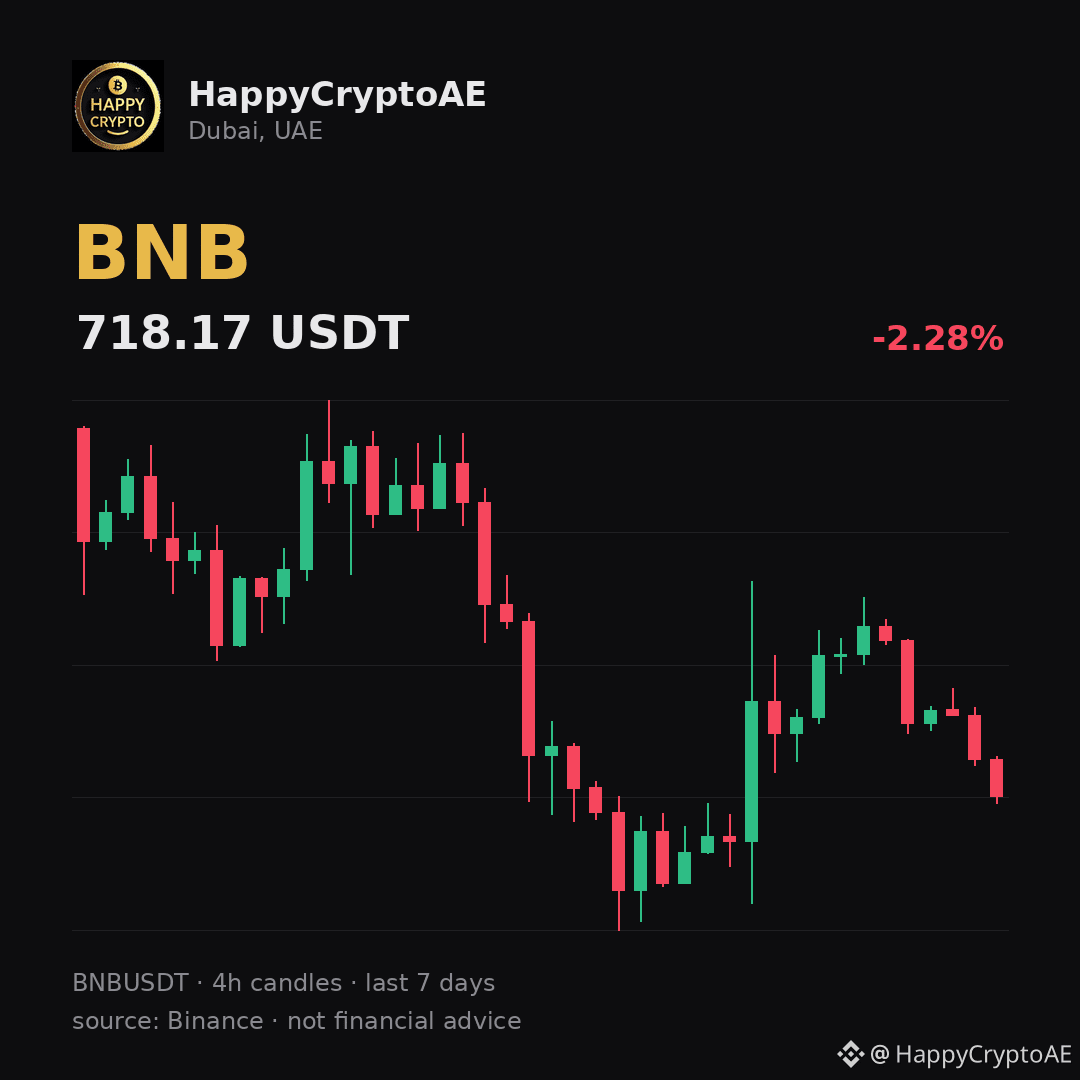
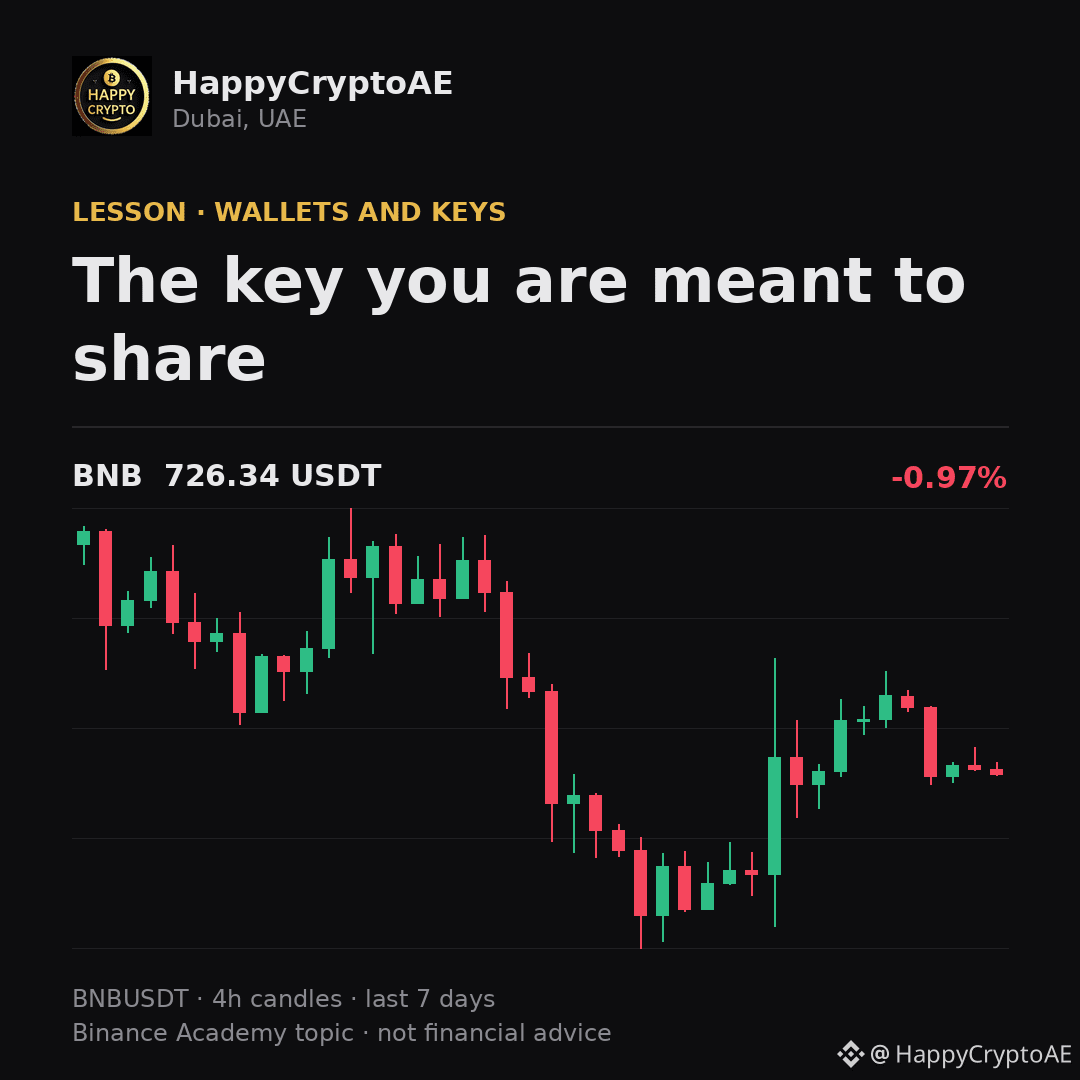
The key you are meant to shareEvery wallet is built on a pair of keys. The public one is derived from the private one, and your receiving address is derived from that. It is designed to be handed out freely - that is its entire job.
What makes the pair useful is that the maths only runs one way. From the private key you can compute the public key and the address; from the address you cannot work backwards to the private key. So publishing where to pay you reveals nothing about your ability to spend. Every transfer you have ever received is public, and your funds are still safe.
Binance Academy covers this in more depth: https://www.binance.com/en/academy/glossary/public-key
Trading crypto from Dubai since 2019.
$BTC $ETH $BNB
#Crypto #CryptoEducation #Binance
The key you are meant to share
Every wallet is built on a pair of keys. The public one is derived from the private one, and your receiving address is derived from that. It is designed to be handed out freely - that is its entire job.
What makes the pair useful is that the maths only runs one way. From the private key you can compute the public key and the address; from the address you cannot work backwards to the private key. So publishing where to pay you reveals nothing about your ability to spend. Every transfer you have ever received is public, and your funds are still safe.
Binance Academy covers this in more depth: https://www.binance.com/en/academy/glossary/public-key
Trading crypto from Dubai since 2019.
$BTC $ETH $BNB
#Crypto #CryptoEducation #Binance
What makes the pair useful is that the maths only runs one way. From the private key you can compute the public key and the address; from the address you cannot work backwards to the private key. So publishing where to pay you reveals nothing about your ability to spend. Every transfer you have ever received is public, and your funds are still safe.
Binance Academy covers this in more depth: https://www.binance.com/en/academy/glossary/public-key
Trading crypto from Dubai since 2019.
$BTC $ETH $BNB
#Crypto #CryptoEducation #Binance
2
68
Article
See translation
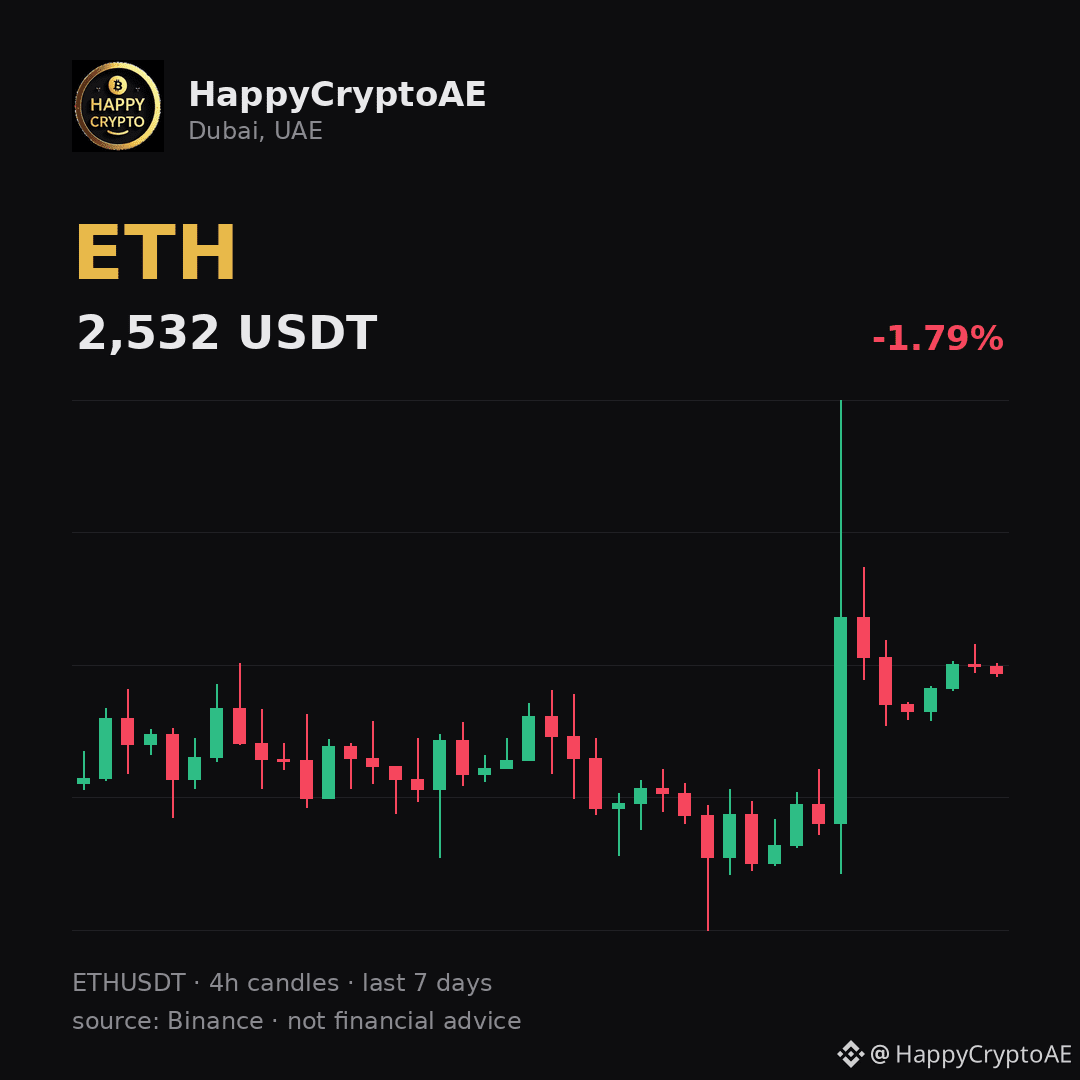
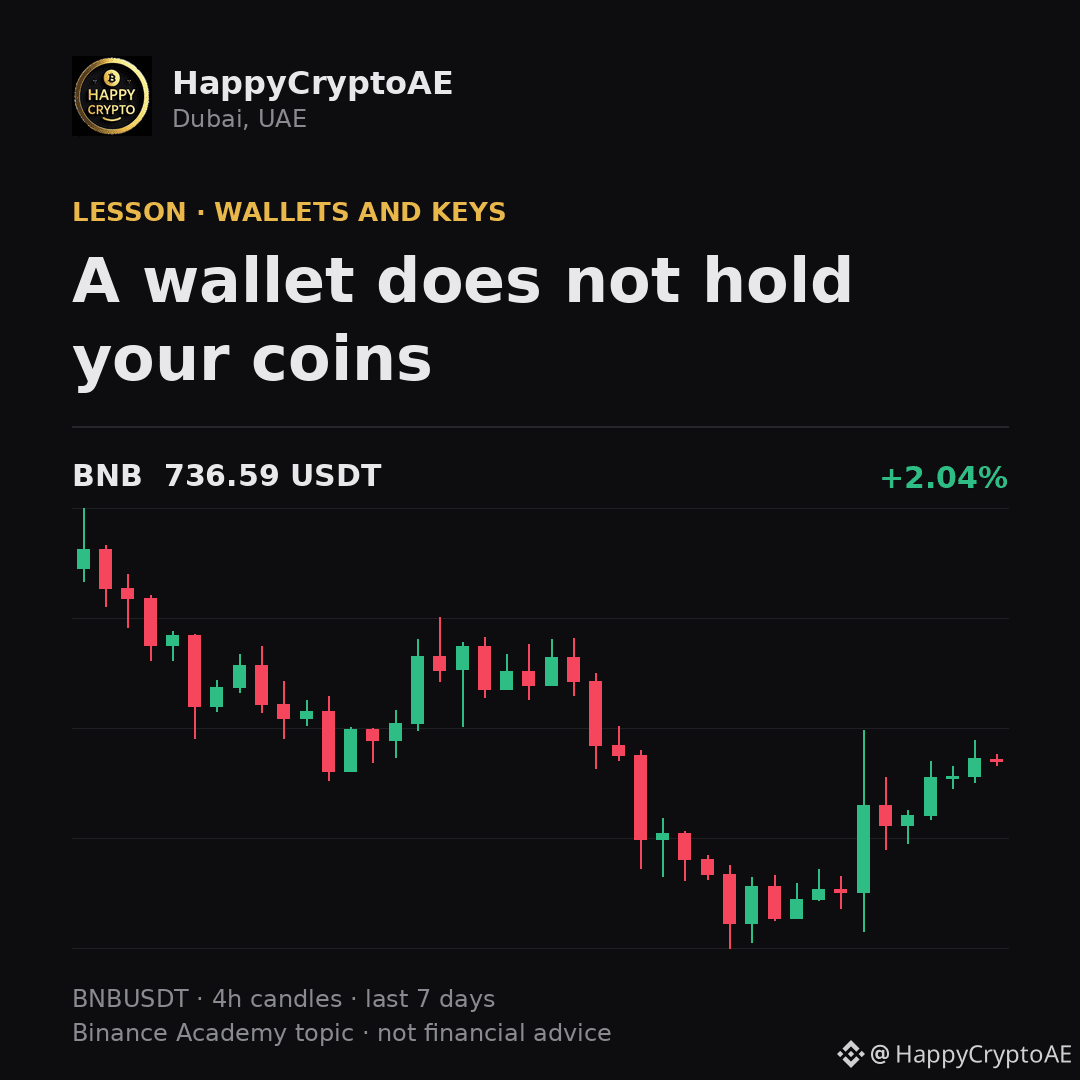
A wallet does not hold your coinsA wallet stores keys, not coins. The balance lives on the blockchain; the wallet is the tool that proves you control it. That is why the same holdings reappear in a new wallet the moment you restore the keys - nothing moved.
The important distinction is who holds those keys. If a platform holds them for you, you have an account and a counterparty. If you hold them yourself, you have full control and full responsibility, including for the mistakes. Both are legitimate. Confusing one for the other is what causes trouble.
Binance Academy covers this in more depth: https://www.binance.com/en/academy/glossary/wallet
Trading crypto from Dubai since 2019.
$BTC $ETH $BNB
#Crypto #CryptoEducation #Binance
A wallet does not hold your coins
A wallet stores keys, not coins. The balance lives on the blockchain; the wallet is the tool that proves you control it. That is why the same holdings reappear in a new wallet the moment you restore the keys - nothing moved.
The important distinction is who holds those keys. If a platform holds them for you, you have an account and a counterparty. If you hold them yourself, you have full control and full responsibility, including for the mistakes. Both are legitimate. Confusing one for the other is what causes trouble.
Binance Academy covers this in more depth: https://www.binance.com/en/academy/glossary/wallet
Trading crypto from Dubai since 2019.
$BTC $ETH $BNB
#Crypto #CryptoEducation #Binance
The important distinction is who holds those keys. If a platform holds them for you, you have an account and a counterparty. If you hold them yourself, you have full control and full responsibility, including for the mistakes. Both are legitimate. Confusing one for the other is what causes trouble.
Binance Academy covers this in more depth: https://www.binance.com/en/academy/glossary/wallet
Trading crypto from Dubai since 2019.
$BTC $ETH $BNB
#Crypto #CryptoEducation #Binance
2
47


Article
See translation
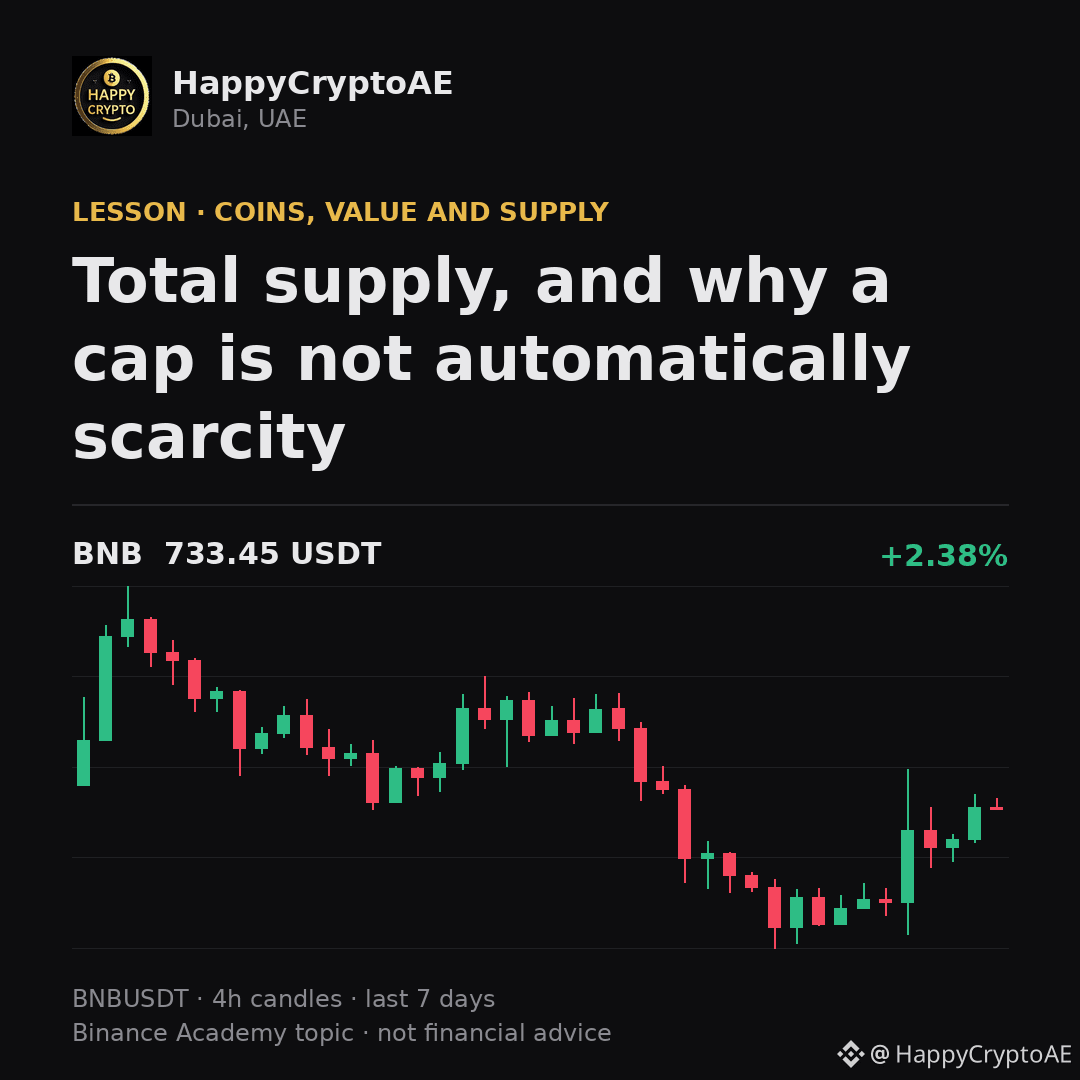
Total supply, and why a cap is not automatically scarcityTotal supply counts everything that exists now, including units that are locked or otherwise out of the market. Some assets also have a hard maximum that can never be exceeded; many do not.
A fixed cap gets quoted as if it settled the question of scarcity, and it does not. What matters is the whole picture: how much exists, how much circulates, how fast new units arrive, and whether anything is ever removed. An asset with no cap but negligible issuance can be tighter in practice than a capped one still releasing most of its supply. The headline number is where the analysis starts.
Binance Academy covers this in more depth: https://www.binance.com/en/academy/glossary/total-supply
Trading crypto from Dubai since 2019.
$BTC $ETH $BNB
#Crypto #CryptoEducation #Binance
Total supply, and why a cap is not automatically scarcity
Total supply counts everything that exists now, including units that are locked or otherwise out of the market. Some assets also have a hard maximum that can never be exceeded; many do not.
A fixed cap gets quoted as if it settled the question of scarcity, and it does not. What matters is the whole picture: how much exists, how much circulates, how fast new units arrive, and whether anything is ever removed. An asset with no cap but negligible issuance can be tighter in practice than a capped one still releasing most of its supply. The headline number is where the analysis starts.
Binance Academy covers this in more depth: https://www.binance.com/en/academy/glossary/total-supply
Trading crypto from Dubai since 2019.
$BTC $ETH $BNB
#Crypto #CryptoEducation #Binance
A fixed cap gets quoted as if it settled the question of scarcity, and it does not. What matters is the whole picture: how much exists, how much circulates, how fast new units arrive, and whether anything is ever removed. An asset with no cap but negligible issuance can be tighter in practice than a capped one still releasing most of its supply. The headline number is where the analysis starts.
Binance Academy covers this in more depth: https://www.binance.com/en/academy/glossary/total-supply
Trading crypto from Dubai since 2019.
$BTC $ETH $BNB
#Crypto #CryptoEducation #Binance
2
77


Article
See translation
How many units are actually out thereCirculating supply is the number of units currently available in the market. It excludes what is locked, reserved, or not yet issued.
It matters because the difference between what circulates today and what will exist eventually can be large. If a great deal is still scheduled to be released, existing holders face dilution as it arrives - the same demand spread over more units. This is not hidden information; issuance schedules are usually published. It is simply information most people never look up, and it explains price behaviour that otherwise looks random.
Binance Academy covers this in more depth: https://www.binance.com/en/academy/glossary/circulating-supply
Trading crypto from Dubai since 2019.
$BTC $BNB $ETH
#Crypto #CryptoEducation #Binance
How many units are actually out there
Circulating supply is the number of units currently available in the market. It excludes what is locked, reserved, or not yet issued.
It matters because the difference between what circulates today and what will exist eventually can be large. If a great deal is still scheduled to be released, existing holders face dilution as it arrives - the same demand spread over more units. This is not hidden information; issuance schedules are usually published. It is simply information most people never look up, and it explains price behaviour that otherwise looks random.
Binance Academy covers this in more depth: https://www.binance.com/en/academy/glossary/circulating-supply
Trading crypto from Dubai since 2019.
$BTC $BNB $ETH
#Crypto #CryptoEducation #Binance
It matters because the difference between what circulates today and what will exist eventually can be large. If a great deal is still scheduled to be released, existing holders face dilution as it arrives - the same demand spread over more units. This is not hidden information; issuance schedules are usually published. It is simply information most people never look up, and it explains price behaviour that otherwise looks random.
Binance Academy covers this in more depth: https://www.binance.com/en/academy/glossary/circulating-supply
Trading crypto from Dubai since 2019.
$BTC $BNB $ETH
#Crypto #CryptoEducation #Binance
2
84


Article
See translation
Price alone tells you almost nothingMarket capitalisation is price multiplied by circulating supply. It is the reason a coin trading at a fraction of a cent can be worth more in total than one trading at hundreds of dollars.
This is why comparing two assets by price is meaningless, and why "it is cheap, it only costs a few cents" is not a fact about value at all - it is a fact about how many units exist. Market cap is a far from perfect measure too, since it assumes every unit could be sold at the last price, which in a thin market is not remotely true. But it is the right starting point, and price alone is not.
Binance Academy covers this in more depth: https://www.binance.com/en/academy/glossary/market-capitalization
Trading crypto from Dubai since 2019.
$BTC $ETH $SOL
#Crypto #CryptoEducation #Binance
Price alone tells you almost nothing
Market capitalisation is price multiplied by circulating supply. It is the reason a coin trading at a fraction of a cent can be worth more in total than one trading at hundreds of dollars.
This is why comparing two assets by price is meaningless, and why "it is cheap, it only costs a few cents" is not a fact about value at all - it is a fact about how many units exist. Market cap is a far from perfect measure too, since it assumes every unit could be sold at the last price, which in a thin market is not remotely true. But it is the right starting point, and price alone is not.
Binance Academy covers this in more depth: https://www.binance.com/en/academy/glossary/market-capitalization
Trading crypto from Dubai since 2019.
$BTC $ETH $SOL
#Crypto #CryptoEducation #Binance
This is why comparing two assets by price is meaningless, and why "it is cheap, it only costs a few cents" is not a fact about value at all - it is a fact about how many units exist. Market cap is a far from perfect measure too, since it assumes every unit could be sold at the last price, which in a thin market is not remotely true. But it is the right starting point, and price alone is not.
Binance Academy covers this in more depth: https://www.binance.com/en/academy/glossary/market-capitalization
Trading crypto from Dubai since 2019.
$BTC $ETH $SOL
#Crypto #CryptoEducation #Binance
2
89
Log in to explore more content
Join global crypto users on Binance Square
⚡️ Get latest and useful information about crypto.
💬 Trusted by the world’s largest crypto exchange.
👍 Discover real insights from verified creators.
Email / Phone number
Trending Topics
FedRateWatch
495,176 views
2,500 Discussing
Share & Win Traffic Reward in our Trending Hashtag Campaign
✨Topic: FOMC September, What's The Fed's Next Move?
👉How to Join:
Publish a short post or article with hashtag #FedRateWatch
Create content based on the below angles:
- August core CPI rose 0.3% month-over-month, and the odds of a 25bp hike this week are now close to 90%. Do you anticipate a rate hike this week? Is it a one-off, or the start of a longer hiking cycle?
- If the hike lands, how does it play out for BTC, tech stocks, and gold? Bullish or bearish?
- How are you planning to trade next? Share your BTC, stocks or gold trade/holdings with our trade sharing widget.
⏰Campaign Period:
- 2026-09-15 11:00 - 2026-09-17 3:00 UTC
🎁Reward:
- Qualified posts that comply with the above guidelines and contain more than 100 words will be reviewed and may receive a random traffic boost of 500 to 3,000 views. You will receive a notification from your feed secretary if your post is selected.
- Get a chance to have your article featured on Binance Square Official
Need ideas for your post? Visit the topic page #FedRateWatch or the Square Guide on How to Post for Better Reach.
Binance Square Official
·362 Likes
·785.3k views
BitcoinSlidesTo$76000
15,715 views
105 Discussing
BitcoinReboundsTo$79K
59,683 views
396 Discussing