
dEMENTORIO
285 Posts

dEMENTORIO
Report
Block User
Yooo, how u doing?
Open Trade
High-Frequency Trader
4.1 Years
53 Following
67 Followers
206 Liked
Posts
Portfolio
All
Quotes
PINNED
·
--
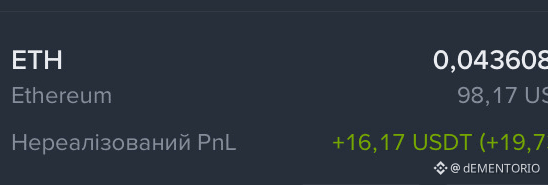
🚀 Flying to $4000? $ETH
The broadcast finally broke 2k, and it’s definitely nice for the eyes. *I bought somewhere around 2200, I honestly don’t remember exactly* I’ll wait for at least 3k to sell. And what are you doing right now? Did you buy ETH? Will you buy? Interesting to read different opinions💭
🚀 Flying to $4000? $ETH
The broadcast finally broke 2k, and it’s definitely nice for the eyes. *I bought somewhere around 2200, I honestly don’t remember exactly* I’ll wait for at least 3k to sell. And what are you doing right now? Did you buy ETH? Will you buy? Interesting to read different opinions💭
The broadcast finally broke 2k, and it’s definitely nice for the eyes. *I bought somewhere around 2200, I honestly don’t remember exactly* I’ll wait for at least 3k to sell. And what are you doing right now? Did you buy ETH? Will you buy? Interesting to read different opinions💭
2
4
4.9k
·
--
Article
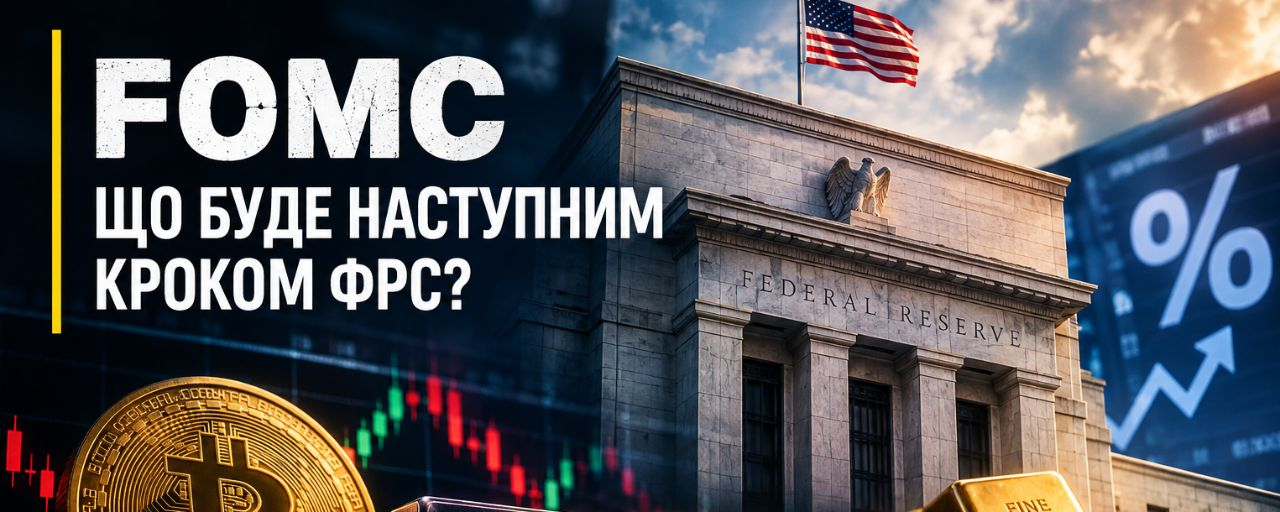
FOMC: what will be the next step from the Fed?This week, the markets are fixated on the Federal Reserve. The core consumer price index in the US rose by 0.3% in August, which turned out slightly above expectations. Against this backdrop, traders significantly increased the estimated probability of a 25 bp rate hike at the September meeting.
But the main question is not even the hike itself. The market wants to understand: is this a one-off move or the start of a new cycle of tighter monetary policy?
FOMC: what will be the next step from the Fed?
This week, the markets are fixated on the Federal Reserve. The core consumer price index in the US rose by 0.3% in August, which turned out slightly above expectations. Against this backdrop, traders significantly increased the estimated probability of a 25 bp rate hike at the September meeting.
But the main question is not even the hike itself. The market wants to understand: is this a one-off move or the start of a new cycle of tighter monetary policy?
But the main question is not even the hike itself. The market wants to understand: is this a one-off move or the start of a new cycle of tighter monetary policy?
91
·
--
Not long ago, stocks and crypto seemed like two different planets. 🌍
To buy stocks, you need a broker.
To buy crypto — a crypto exchange.
Different platforms, different rules, different infrastructure.
But now these worlds are gradually coming closer.
Stocks — one of the examples of this trend. Traditional assets are becoming available through infrastructure that crypto users are already familiar with. And it feels to me like this is only the beginning. In the future, an investor may not care at all which “camp” an asset belongs to.
What will matter to them is only:
📌 what the asset is
📌 how much it costs
📌 how it can be used
📌 what risks it carries
Crypto and TradFi are gradually ceasing to be competitors.
Maybe they’re simply becoming parts of one big market.
It’ll be interesting to see if we live to the moment when the word “TradFi” is no longer used at all? 👀
Not long ago, stocks and crypto seemed like two different planets. 🌍
To buy stocks, you need a broker.
To buy crypto — a crypto exchange.
Different platforms, different rules, different infrastructure.
But now these worlds are gradually coming closer.
Stocks — one of the examples of this trend. Traditional assets are becoming available through infrastructure that crypto users are already familiar with. And it feels to me like this is only the beginning. In the future, an investor may not care at all which “camp” an asset belongs to.
What will matter to them is only:
📌 what the asset is
📌 how much it costs
📌 how it can be used
📌 what risks it carries
Crypto and TradFi are gradually ceasing to be competitors.
Maybe they’re simply becoming parts of one big market.
It’ll be interesting to see if we live to the moment when the word “TradFi” is no longer used at all? 👀
To buy stocks, you need a broker.
To buy crypto — a crypto exchange.
Different platforms, different rules, different infrastructure.
But now these worlds are gradually coming closer.
Stocks — one of the examples of this trend. Traditional assets are becoming available through infrastructure that crypto users are already familiar with. And it feels to me like this is only the beginning. In the future, an investor may not care at all which “camp” an asset belongs to.
What will matter to them is only:
📌 what the asset is
📌 how much it costs
📌 how it can be used
📌 what risks it carries
Crypto and TradFi are gradually ceasing to be competitors.
Maybe they’re simply becoming parts of one big market.
It’ll be interesting to see if we live to the moment when the word “TradFi” is no longer used at all? 👀
111
·
--
Why does a person sitting in crypto need TradFi at all? 🤔
If you’re used to BTC, stablecoins, and DeFi, it may seem like traditional finance isn’t needed at all. But let’s imagine a simple situation.
You don’t want to keep all your capital in crypto, but you also don’t really want to open separate accounts and deal with a bunch of different platforms. Then it becomes interesting to combine crypto + TradFi.
For example, through bStocks you can get exposure to traditional stocks without treating the stock market as something completely separate from the crypto ecosystem. I like this direction a lot. Not “crypto instead of traditional finance” and not the other way around. But when you can use the advantages of both worlds depending on the situation.
Maybe the future of investing isn’t even a choice between crypto and TradFi, but a normal combination of both.
What do you think about this idea?
Why does a person sitting in crypto need TradFi at all? 🤔
If you’re used to BTC, stablecoins, and DeFi, it may seem like traditional finance isn’t needed at all. But let’s imagine a simple situation.
You don’t want to keep all your capital in crypto, but you also don’t really want to open separate accounts and deal with a bunch of different platforms. Then it becomes interesting to combine crypto + TradFi.
For example, through bStocks you can get exposure to traditional stocks without treating the stock market as something completely separate from the crypto ecosystem. I like this direction a lot. Not “crypto instead of traditional finance” and not the other way around. But when you can use the advantages of both worlds depending on the situation.
Maybe the future of investing isn’t even a choice between crypto and TradFi, but a normal combination of both.
What do you think about this idea?
If you’re used to BTC, stablecoins, and DeFi, it may seem like traditional finance isn’t needed at all. But let’s imagine a simple situation.
You don’t want to keep all your capital in crypto, but you also don’t really want to open separate accounts and deal with a bunch of different platforms. Then it becomes interesting to combine crypto + TradFi.
For example, through bStocks you can get exposure to traditional stocks without treating the stock market as something completely separate from the crypto ecosystem. I like this direction a lot. Not “crypto instead of traditional finance” and not the other way around. But when you can use the advantages of both worlds depending on the situation.
Maybe the future of investing isn’t even a choice between crypto and TradFi, but a normal combination of both.
What do you think about this idea?
1
98
·
--
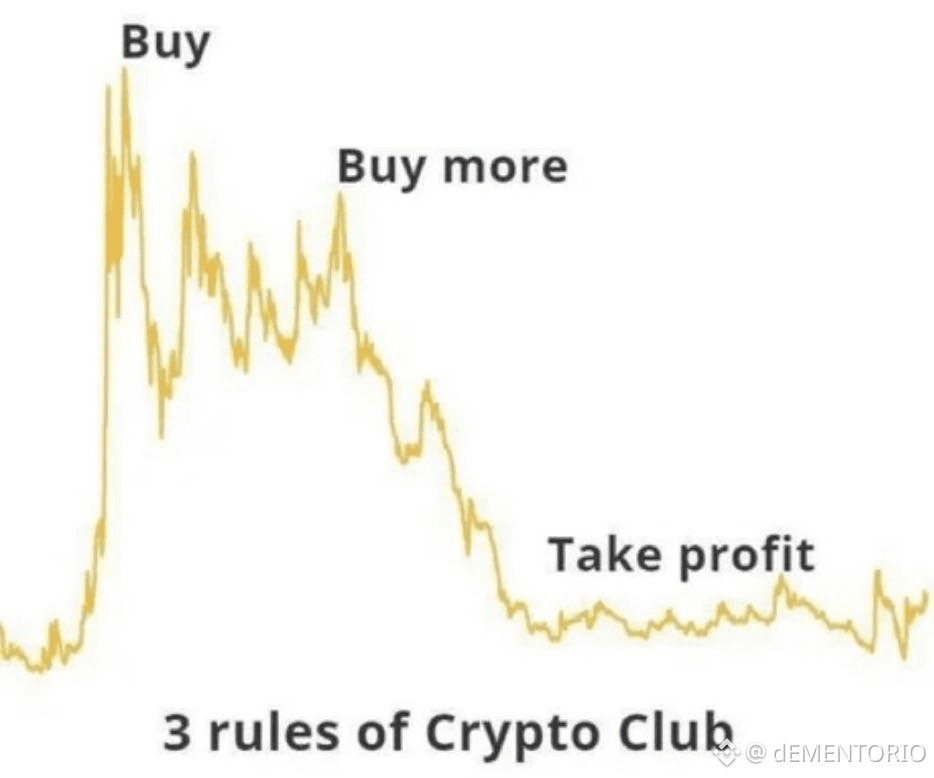
«I’ll jump into the market when everything falls» — familiar? 😅
The problem is that when the market actually starts dropping, buying somehow becomes even scarier.
Up +20% — you want to buy.
Down -10% — it’s already scary.
Down -30% — “probably it’ll go even lower.”
As a result, you can end up waiting for years for the perfect moment—which simply doesn’t exist. I like a different approach more: not trying to guess one ideal point, but gradually distributing your capital across different assets.
For example, some of it can be in crypto, some can be in traditional assets via solutions like bStocks, and some can remain liquid. You can even put it into Earn.
Then you don’t need to predict every move of the chart. Because investing isn’t a competition to predict the future as accurately as possible.
Sometimes it’s much more important to just have a plan and not change it after every red candle. 📉
«I’ll jump into the market when everything falls» — familiar? 😅
The problem is that when the market actually starts dropping, buying somehow becomes even scarier.
Up +20% — you want to buy.
Down -10% — it’s already scary.
Down -30% — “probably it’ll go even lower.”
As a result, you can end up waiting for years for the perfect moment—which simply doesn’t exist. I like a different approach more: not trying to guess one ideal point, but gradually distributing your capital across different assets.
For example, some of it can be in crypto, some can be in traditional assets via solutions like bStocks, and some can remain liquid. You can even put it into Earn.
Then you don’t need to predict every move of the chart. Because investing isn’t a competition to predict the future as accurately as possible.
Sometimes it’s much more important to just have a plan and not change it after every red candle. 📉
The problem is that when the market actually starts dropping, buying somehow becomes even scarier.
Up +20% — you want to buy.
Down -10% — it’s already scary.
Down -30% — “probably it’ll go even lower.”
As a result, you can end up waiting for years for the perfect moment—which simply doesn’t exist. I like a different approach more: not trying to guess one ideal point, but gradually distributing your capital across different assets.
For example, some of it can be in crypto, some can be in traditional assets via solutions like bStocks, and some can remain liquid. You can even put it into Earn.
Then you don’t need to predict every move of the chart. Because investing isn’t a competition to predict the future as accurately as possible.
Sometimes it’s much more important to just have a plan and not change it after every red candle. 📉
1
433
·
--
#bStocks 👀What if part of the portfolio is kept not in crypto, but in stocks?👀
Let’s imagine that I don’t want to put everything on BTC and altcoins. Part of the portfolio can be kept in crypto, in USDT, and for diversification, look toward traditional assets.
This is exactly where the bStocks format is interesting to me — it allows exposure to traditional stocks through Binance’s crypto infrastructure. For example, if I already keep part of my funds in crypto, I don’t necessarily have to leave the crypto ecosystem completely in order to add stocks to the strategy.
For me, the logic is simple:
🔹 bStocks is an interesting way to combine these two worlds — crypto and stock products.
Of course, the risks always remain. But the very possibility of having different types of assets in one ecosystem looks quite interesting!
#bStocks 👀What if part of the portfolio is kept not in crypto, but in stocks?👀
Let’s imagine that I don’t want to put everything on BTC and altcoins. Part of the portfolio can be kept in crypto, in USDT, and for diversification, look toward traditional assets.
This is exactly where the bStocks format is interesting to me — it allows exposure to traditional stocks through Binance’s crypto infrastructure. For example, if I already keep part of my funds in crypto, I don’t necessarily have to leave the crypto ecosystem completely in order to add stocks to the strategy.
For me, the logic is simple:
🔹 bStocks is an interesting way to combine these two worlds — crypto and stock products.
Of course, the risks always remain. But the very possibility of having different types of assets in one ecosystem looks quite interesting!
Let’s imagine that I don’t want to put everything on BTC and altcoins. Part of the portfolio can be kept in crypto, in USDT, and for diversification, look toward traditional assets.
This is exactly where the bStocks format is interesting to me — it allows exposure to traditional stocks through Binance’s crypto infrastructure. For example, if I already keep part of my funds in crypto, I don’t necessarily have to leave the crypto ecosystem completely in order to add stocks to the strategy.
For me, the logic is simple:
🔹 bStocks is an interesting way to combine these two worlds — crypto and stock products.
Of course, the risks always remain. But the very possibility of having different types of assets in one ecosystem looks quite interesting!
83
·
--
The hardest part during a market crash is not losing money. It’s not doing something stupid. 😅
When you see your portfolio drop 10–20% in a day, the first thought is usually the same: We need to sell everything! And it’s exactly at that moment that people often make their worst decisions.
When markets are rising, all investors are geniuses. When they fall, suddenly everyone wants to get out. That’s why one of the most important things in investing for me is understanding in advance how much risk I’m really ready to endure. If a 20% drop makes you panic-sell everything, maybe the position was too large to begin with.
The market owes nobody anything. It can rise, fall, and then do the same thing again. So sometimes the best strategy is not to try to be the smartest person in the room, but simply not to let emotions control your money.
What do you do during a big drop — buy, hold, or get out?
The hardest part during a market crash is not losing money. It’s not doing something stupid. 😅
When you see your portfolio drop 10–20% in a day, the first thought is usually the same: We need to sell everything! And it’s exactly at that moment that people often make their worst decisions.
When markets are rising, all investors are geniuses. When they fall, suddenly everyone wants to get out. That’s why one of the most important things in investing for me is understanding in advance how much risk I’m really ready to endure. If a 20% drop makes you panic-sell everything, maybe the position was too large to begin with.
The market owes nobody anything. It can rise, fall, and then do the same thing again. So sometimes the best strategy is not to try to be the smartest person in the room, but simply not to let emotions control your money.
What do you do during a big drop — buy, hold, or get out?
When you see your portfolio drop 10–20% in a day, the first thought is usually the same: We need to sell everything! And it’s exactly at that moment that people often make their worst decisions.
When markets are rising, all investors are geniuses. When they fall, suddenly everyone wants to get out. That’s why one of the most important things in investing for me is understanding in advance how much risk I’m really ready to endure. If a 20% drop makes you panic-sell everything, maybe the position was too large to begin with.
The market owes nobody anything. It can rise, fall, and then do the same thing again. So sometimes the best strategy is not to try to be the smartest person in the room, but simply not to let emotions control your money.
What do you do during a big drop — buy, hold, or get out?
2
1
2
765
·
--
Why choose between crypto and stocks at all?
Let’s say you have $1000.
You can put it all into crypto and wait for the market to move. Or you can keep part of it in crypto and allocate part to TradFi.
I like this approach: not trying to guess what will “definitely go up,” but spreading the risk.
For example:
🔹1 part — BTC/ETH/SOL
🔹2 part — stocks of large companies
🔹3 part — stables (probably the bigger part of the budget)
Each asset behaves differently. When crypto is plunging, stocks don’t necessarily follow the same move, although quite often they do. And vice versa.
Of course, this doesn’t mean diversification guarantees profit. But personally, I feel much more comfortable when the whole portfolio doesn’t depend on just one set of assets...
What do you prefer more: pure crypto or a crypto + TradFi mix? 👇
#TradFi #bStocks
Why choose between crypto and stocks at all?
Let’s say you have $1000.
You can put it all into crypto and wait for the market to move. Or you can keep part of it in crypto and allocate part to TradFi.
I like this approach: not trying to guess what will “definitely go up,” but spreading the risk.
For example:
🔹1 part — BTC/ETH/SOL
🔹2 part — stocks of large companies
🔹3 part — stables (probably the bigger part of the budget)
Each asset behaves differently. When crypto is plunging, stocks don’t necessarily follow the same move, although quite often they do. And vice versa.
Of course, this doesn’t mean diversification guarantees profit. But personally, I feel much more comfortable when the whole portfolio doesn’t depend on just one set of assets...
What do you prefer more: pure crypto or a crypto + TradFi mix? 👇
#TradFi #bStocks
Let’s say you have $1000.
You can put it all into crypto and wait for the market to move. Or you can keep part of it in crypto and allocate part to TradFi.
I like this approach: not trying to guess what will “definitely go up,” but spreading the risk.
For example:
🔹1 part — BTC/ETH/SOL
🔹2 part — stocks of large companies
🔹3 part — stables (probably the bigger part of the budget)
Each asset behaves differently. When crypto is plunging, stocks don’t necessarily follow the same move, although quite often they do. And vice versa.
Of course, this doesn’t mean diversification guarantees profit. But personally, I feel much more comfortable when the whole portfolio doesn’t depend on just one set of assets...
What do you prefer more: pure crypto or a crypto + TradFi mix? 👇
#TradFi #bStocks
1
133
·
--
Stocks and crypto in one place — sounds interesting 🤔
For me, crypto and the stock market used to be two completely different worlds. Crypto is 24/7, volatility, and a bunch of tokens.
Stocks are exchanges, brokers, trading hours, and other infrastructure.
But bStocks is interesting specifically because it lets you get exposure to traditional assets through a crypto ecosystem.
For example, if I’m interested in a particular company but I don’t want to separately deal with a classic brokerage account, this format seems quite convenient.
At the same time, it’s important not to forget: this doesn’t mean that stocks suddenly became risk-free. Prices can drop, and the terms and availability of specific assets need to be checked before placing a trade.
I like the trend itself: traditional financial assets are gradually getting closer to crypto infrastructure.
Looks like the line between TradFi and crypto is getting thinner 👀
#bStocks #TradFi
Stocks and crypto in one place — sounds interesting 🤔
For me, crypto and the stock market used to be two completely different worlds. Crypto is 24/7, volatility, and a bunch of tokens.
Stocks are exchanges, brokers, trading hours, and other infrastructure.
But bStocks is interesting specifically because it lets you get exposure to traditional assets through a crypto ecosystem.
For example, if I’m interested in a particular company but I don’t want to separately deal with a classic brokerage account, this format seems quite convenient.
At the same time, it’s important not to forget: this doesn’t mean that stocks suddenly became risk-free. Prices can drop, and the terms and availability of specific assets need to be checked before placing a trade.
I like the trend itself: traditional financial assets are gradually getting closer to crypto infrastructure.
Looks like the line between TradFi and crypto is getting thinner 👀
#bStocks #TradFi
For me, crypto and the stock market used to be two completely different worlds. Crypto is 24/7, volatility, and a bunch of tokens.
Stocks are exchanges, brokers, trading hours, and other infrastructure.
But bStocks is interesting specifically because it lets you get exposure to traditional assets through a crypto ecosystem.
For example, if I’m interested in a particular company but I don’t want to separately deal with a classic brokerage account, this format seems quite convenient.
At the same time, it’s important not to forget: this doesn’t mean that stocks suddenly became risk-free. Prices can drop, and the terms and availability of specific assets need to be checked before placing a trade.
I like the trend itself: traditional financial assets are gradually getting closer to crypto infrastructure.
Looks like the line between TradFi and crypto is getting thinner 👀
#bStocks #TradFi
1
126
·
--
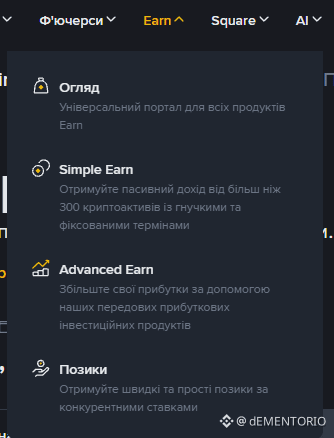
❗A Quick, Easy Earn Products Guide for Beginners❗
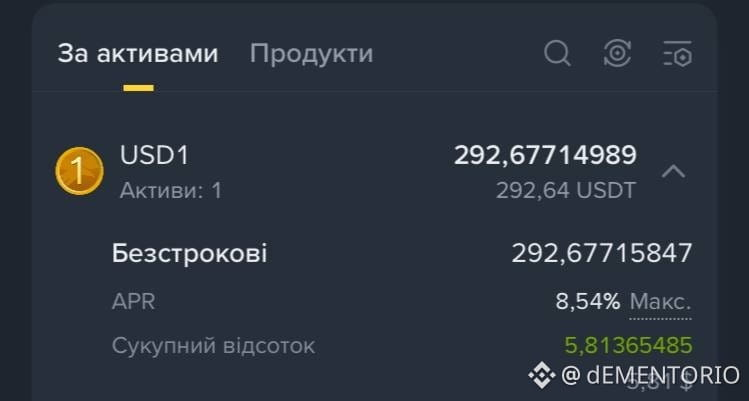
1. If you’re new to Binance and already have some stablecoins (a type of crypto whose value is tied to stable assets, such as, for example, the US dollar or gold, to avoid sudden price jumps) or other tokens that you don’t really need right now—you can use the Earn tab in your wallet or find it via search.
2. After you’ve found a product you like (I chose USD1, because it currently offers a nice annual return) on the Spot tab, click on it and select “Start earning” in the Recommended sub-tab.
3. Choose the method you need—Flexible or Fixed. For now, we won’t look into the others. And at the start, I’d recommend choosing Flexible, because if you don’t like something, you can withdraw your coins from there at any moment. Easy.
4. That’s it. You’ve become your own kind of investor. For convenience, in the Earn tab you can also click “Auto-subscribe” and select your products so that the earned tokens are credited to Earn right away.
So, that’s Simple Earn covered. Easy? Very. Anyone can do it. Good luck 🍀
❗A Quick, Easy Earn Products Guide for Beginners❗
1. If you’re new to Binance and already have some stablecoins (a type of crypto whose value is tied to stable assets, such as, for example, the US dollar or gold, to avoid sudden price jumps) or other tokens that you don’t really need right now—you can use the Earn tab in your wallet or find it via search.
2. After you’ve found a product you like (I chose USD1, because it currently offers a nice annual return) on the Spot tab, click on it and select “Start earning” in the Recommended sub-tab.
3. Choose the method you need—Flexible or Fixed. For now, we won’t look into the others. And at the start, I’d recommend choosing Flexible, because if you don’t like something, you can withdraw your coins from there at any moment. Easy.
4. That’s it. You’ve become your own kind of investor. For convenience, in the Earn tab you can also click “Auto-subscribe” and select your products so that the earned tokens are credited to Earn right away.
So, that’s Simple Earn covered. Easy? Very. Anyone can do it. Good luck 🍀
1. If you’re new to Binance and already have some stablecoins (a type of crypto whose value is tied to stable assets, such as, for example, the US dollar or gold, to avoid sudden price jumps) or other tokens that you don’t really need right now—you can use the Earn tab in your wallet or find it via search.
2. After you’ve found a product you like (I chose USD1, because it currently offers a nice annual return) on the Spot tab, click on it and select “Start earning” in the Recommended sub-tab.
3. Choose the method you need—Flexible or Fixed. For now, we won’t look into the others. And at the start, I’d recommend choosing Flexible, because if you don’t like something, you can withdraw your coins from there at any moment. Easy.
4. That’s it. You’ve become your own kind of investor. For convenience, in the Earn tab you can also click “Auto-subscribe” and select your products so that the earned tokens are credited to Earn right away.
So, that’s Simple Earn covered. Easy? Very. Anyone can do it. Good luck 🍀
2
121
·
--
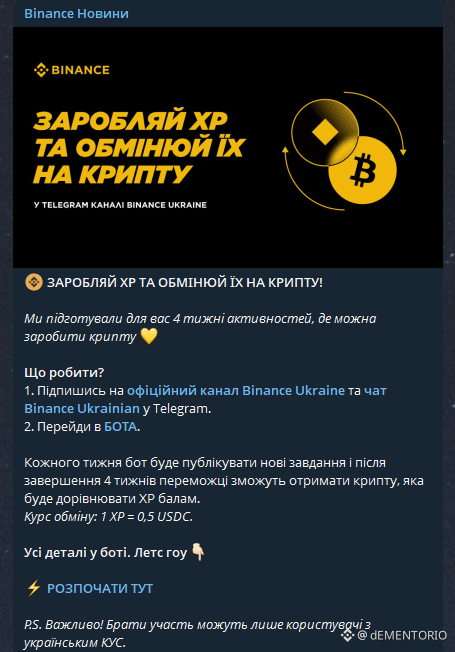
👀For the Ukrainian audience, top activity for low-banks has been launched—just go to their TG, and complete the tasks, including going to the bot with tasks for XP! Everything is easy and accessible, so don’t skip it.
XP conversion -1 XP = 0.5 USDC🚀
👀For the Ukrainian audience, top activity for low-banks has been launched—just go to their TG, and complete the tasks, including going to the bot with tasks for XP! Everything is easy and accessible, so don’t skip it.
XP conversion -1 XP = 0.5 USDC🚀
XP conversion -1 XP = 0.5 USDC🚀
2
76
·
--
#termmax @termmax ⚡ DeFi → 24/7 → 365 days a year.
The market never sleeps, and along with it, rates, prices, and opportunities for managing capital change. That’s why I’m interested in @termmax — a project that works with financial mechanisms where it’s not only numbers 📊 that matter, but also proper position management.
1️⃣ Flexibility
2️⃣ Structured tools
3️⃣ On-chain mechanics
Not just “another DeFi project,” but a direction that’s truly interesting to watch 👀
#TermMax
#termmax @TermMax ⚡ DeFi → 24/7 → 365 days a year.
The market never sleeps, and along with it, rates, prices, and opportunities for managing capital change. That’s why I’m interested in @TermMax — a project that works with financial mechanisms where it’s not only numbers 📊 that matter, but also proper position management.
1️⃣ Flexibility
2️⃣ Structured tools
3️⃣ On-chain mechanics
Not just “another DeFi project,” but a direction that’s truly interesting to watch 👀
#TermMax
The market never sleeps, and along with it, rates, prices, and opportunities for managing capital change. That’s why I’m interested in @TermMax — a project that works with financial mechanisms where it’s not only numbers 📊 that matter, but also proper position management.
1️⃣ Flexibility
2️⃣ Structured tools
3️⃣ On-chain mechanics
Not just “another DeFi project,” but a direction that’s truly interesting to watch 👀
#TermMax
2
73
·
--
#termmax @termmax 🔹 For DeFi users, it’s not just new tokens that are needed, but tools that help manage capital more effectively. @termmax is developing the direction of structured financial products, adding more flexibility to working with positions. It is precisely such solutions that can gradually make DeFi more functional and understandable for a wider audience. #TermMax
#termmax @TermMax 🔹 For DeFi users, it’s not just new tokens that are needed, but tools that help manage capital more effectively. @TermMax is developing the direction of structured financial products, adding more flexibility to working with positions. It is precisely such solutions that can gradually make DeFi more functional and understandable for a wider audience. #TermMax
83
·
--
#bstockscis @BinanceCIS 📊 25+ bStocks and the list continues to grow
From NVIDIA and Tesla to SpaceX, AMD, Intel, Circle, and ETFs for South Korea — the choice is no longer limited to just a few of the most well-known companies.
Personally, I’m interested in seeing how tokenization is gradually moving beyond experimentation and turning into a separate area of financial infrastructure.
What would you add next? 👀 @BinanceCIS $SPCXB #bStocksCIS
#bstockscis @BinanceCIS 📊 25+ bStocks and the list continues to grow
From NVIDIA and Tesla to SpaceX, AMD, Intel, Circle, and ETFs for South Korea — the choice is no longer limited to just a few of the most well-known companies.
Personally, I’m interested in seeing how tokenization is gradually moving beyond experimentation and turning into a separate area of financial infrastructure.
What would you add next? 👀 @BinanceCIS $SPCXB #bStocksCIS
From NVIDIA and Tesla to SpaceX, AMD, Intel, Circle, and ETFs for South Korea — the choice is no longer limited to just a few of the most well-known companies.
Personally, I’m interested in seeing how tokenization is gradually moving beyond experimentation and turning into a separate area of financial infrastructure.
What would you add next? 👀 @BinanceCIS $SPCXB #bStocksCIS
80
·
--
The longer I look at BStocks, the more I see in them not just "stocks on Binance," but an attempt to change the way we interact with traditional assets.
A tokenized format, BNB Chain, 24/7 trading, fractional positions—each individual detail may seem small, but together they create a completely different experience compared to a regular brokerage account. @BinanceCIS $SPCXB #bStocksCIS
The longer I look at BStocks, the more I see in them not just "stocks on Binance," but an attempt to change the way we interact with traditional assets.
A tokenized format, BNB Chain, 24/7 trading, fractional positions—each individual detail may seem small, but together they create a completely different experience compared to a regular brokerage account. @BinanceCIS $SPCXB #bStocksCIS
A tokenized format, BNB Chain, 24/7 trading, fractional positions—each individual detail may seem small, but together they create a completely different experience compared to a regular brokerage account. @BinanceCIS $SPCXB #bStocksCIS
94

·
--
#bstockscis @BinanceCIS I’m curious what will happen next with BStocks?🧐🤨
Today, tokenized assets are mostly stocks and ETFs. But the model itself looks significantly broader. If the infrastructure works, why not see even more traditional financial instruments in a tokenized format in the future?
For me, BStocks is interesting not only as a standalone product, but also as an experiment in what the financial market could look like in a few years. @BinanceCIS #bStocksCIS $SPCXB
#bstockscis @BinanceCIS I’m curious what will happen next with BStocks?🧐🤨
Today, tokenized assets are mostly stocks and ETFs. But the model itself looks significantly broader. If the infrastructure works, why not see even more traditional financial instruments in a tokenized format in the future?
For me, BStocks is interesting not only as a standalone product, but also as an experiment in what the financial market could look like in a few years. @BinanceCIS #bStocksCIS $SPCXB
Today, tokenized assets are mostly stocks and ETFs. But the model itself looks significantly broader. If the infrastructure works, why not see even more traditional financial instruments in a tokenized format in the future?
For me, BStocks is interesting not only as a standalone product, but also as an experiment in what the financial market could look like in a few years. @BinanceCIS #bStocksCIS $SPCXB
90
·
--
Imagine a simple scenario.
You have some free USDT, but you want to add something to your portfolio that’s outside of crypto. Instead of opening yet another account, going through a separate procedure, and figuring out a new platform, you can simply find the right bStock on Binance Spot.
This doesn’t mean that BStocks are automatically better than traditional stocks— they have a different structure, rights, and regulatory status.
But the idea of reducing the number of barriers between crypto users and stock market assets looks like a very interesting experiment. @BinanceCIS #bStocksCIS $SPCXB
Imagine a simple scenario.
You have some free USDT, but you want to add something to your portfolio that’s outside of crypto. Instead of opening yet another account, going through a separate procedure, and figuring out a new platform, you can simply find the right bStock on Binance Spot.
This doesn’t mean that BStocks are automatically better than traditional stocks— they have a different structure, rights, and regulatory status.
But the idea of reducing the number of barriers between crypto users and stock market assets looks like a very interesting experiment. @BinanceCIS #bStocksCIS $SPCXB
You have some free USDT, but you want to add something to your portfolio that’s outside of crypto. Instead of opening yet another account, going through a separate procedure, and figuring out a new platform, you can simply find the right bStock on Binance Spot.
This doesn’t mean that BStocks are automatically better than traditional stocks— they have a different structure, rights, and regulatory status.
But the idea of reducing the number of barriers between crypto users and stock market assets looks like a very interesting experiment. @BinanceCIS #bStocksCIS $SPCXB
96
Log in to explore more content
Join global crypto users on Binance Square
⚡️ Get latest and useful information about crypto.
💬 Trusted by the world’s largest crypto exchange.
👍 Discover real insights from verified creators.
Email / Phone number
Trending Topics
FedRateWatch
1.2M views
5,603 Discussing
Share & Win Traffic Reward in our Trending Hashtag Campaign
✨Topic: FOMC September, What's The Fed's Next Move?
👉How to Join:
Publish a short post or article with hashtag #FedRateWatch
Create content based on the below angles:
- August core CPI rose 0.3% month-over-month, and the odds of a 25bp hike this week are now close to 90%. Do you anticipate a rate hike this week? Is it a one-off, or the start of a longer hiking cycle?
- If the hike lands, how does it play out for BTC, tech stocks, and gold? Bullish or bearish?
- How are you planning to trade next? Share your BTC, stocks or gold trade/holdings with our trade sharing widget.
⏰Campaign Period:
- 2026-09-15 11:00 - 2026-09-17 3:00 UTC
🎁Reward:
- Qualified posts that comply with the above guidelines and contain more than 100 words will be reviewed and may receive a random traffic boost of 500 to 3,000 views. You will receive a notification from your feed secretary if your post is selected.
- Get a chance to have your article featured on Binance Square Official
Need ideas for your post? Visit the topic page #FedRateWatch or the Square Guide on How to Post for Better Reach.
Binance Square Official
·598 Likes
·1.4M views
ZcashRises6%
6,898 views
176 Discussing
XRPSinks10%
3,531 views
114 Discussing