
浪老湿
60 Posts
Posts
All
Quotes

·
--
See translation
PROM moved through a 1.301 USDT range in an hour and still closed up 7.51%.
On Nov. 22, Binance $PROM/USDT spot fell 9.52% from 15:00 to 16:00 UTC. In the next hour it traded between 3.851 and 5.152 USDT and closed at 5.025. Turnover rose from 1.15 million to 3.19 million USDT. The low came in the 16:35 candle, which traded 614,090 USDT in five minutes. The high came in the final five-minute candle.
On Binance Spot, open PROM/USDT, select 1H under Chart, and hover over the candle starting at 16:00 UTC to check its Low, High, and Close.
285
·
--
See translation
The biggest volume bar in the $PIEVERSE rebound came 15 minutes before the high.
From 14:00 to 15:00 UTC on Nov. 22, Binance’s PIEVERSEUSDT perpetual ranged from 2.7365 to 3.8270 USDT and closed at 3.5998, up 22.78% from its open. Turnover reached 107.51 million USDT, up from 55.30 million the prior hour.
The 14:15 UTC bar traded 17.63 million USDT, the most of any five-minute bar that hour. The price high came in the 14:30 bar, which traded 12.61 million.
On Binance Futures, open PIEVERSEUSDT Perpetual, select 5m in Chart, and hover over the bars to compare Vol(USDT).
436
·
--
See translation
BLESSUSDT perpetual rose 10.29% in one hour, and turnover more than doubled. On Nov. 22 from 13:00 to 14:00 UTC (21:00–22:00 UTC+8), BLESS moved from 0.014201 to 0.015662 USDT. Turnover reached 20.71 million USDT, about 2.15 times the previous hour’s 9.62 million.
To check the move, open BLESSUSDT Perpetual on Binance, switch to the 1-hour chart, and compare Vol (USDT) on those two closed candles.
To check the move, open BLESSUSDT Perpetual on Binance, switch to the 1-hour chart, and compare Vol (USDT) on those two closed candles.
372
·
--
See translation
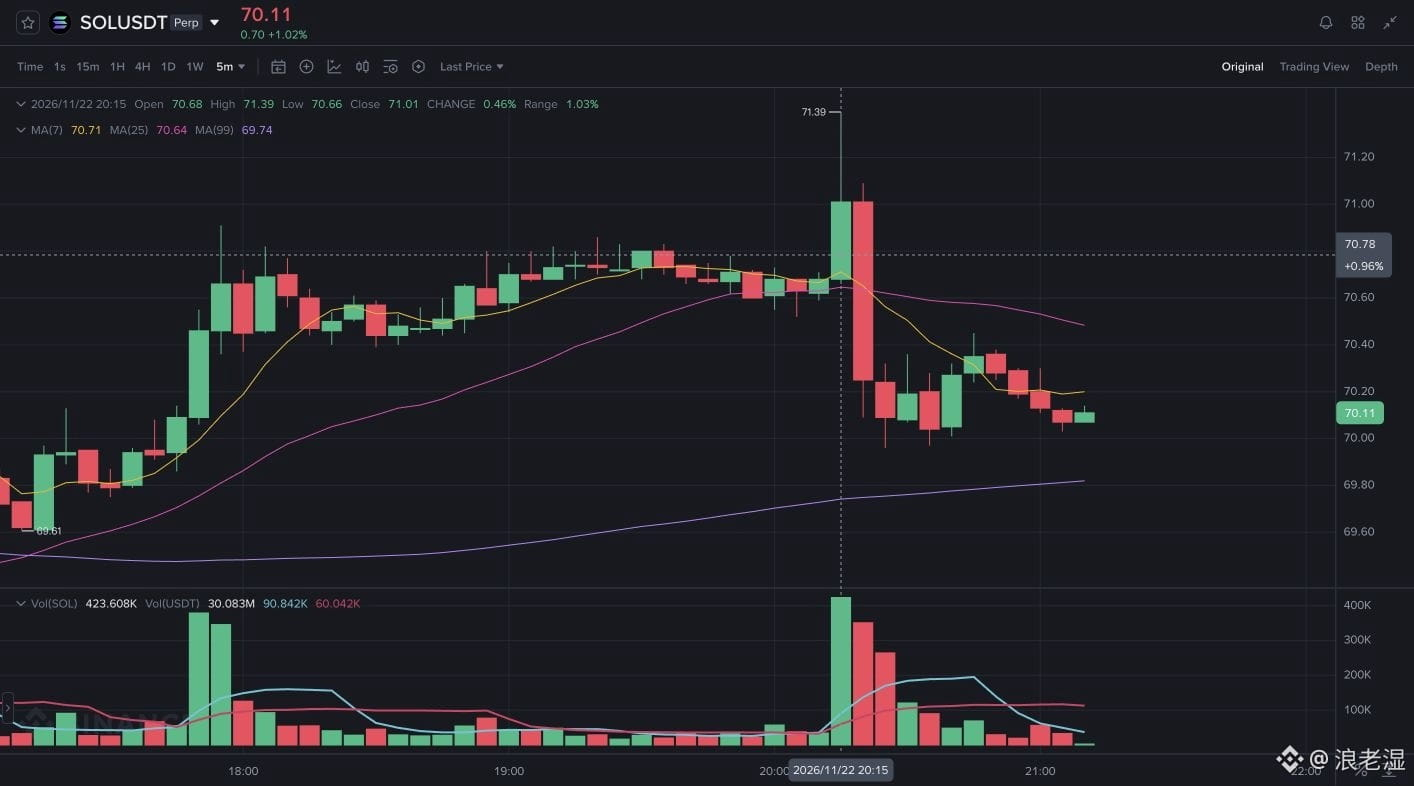
Three five-minute candles accounted for two-thirds of an hour’s trading in the $SOL perpetual on Binance. Between 12:15 and 12:30 UTC on Nov 22 (20:15–20:30 on the chart, UTC+8), the contract touched 71.39 USDT and then dropped to 69.96. Turnover across those three candles came to 73.4 million USDT.
The full hour from 12:05 to 13:05 UTC traded 109.0 million USDT, nearly four times the previous hour’s 27.3 million. To check the numbers, open SOLUSDT Perpetual on Binance Futures, select 5m and hover over each volume bar. Vol(USDT) gives you turnover; Vol(SOL) shows the quantity traded.
{future}(SOLUSDT)
Three five-minute candles accounted for two-thirds of an hour’s trading in the $SOL perpetual on Binance. Between 12:15 and 12:30 UTC on Nov 22 (20:15–20:30 on the chart, UTC+8), the contract touched 71.39 USDT and then dropped to 69.96. Turnover across those three candles came to 73.4 million USDT.
The full hour from 12:05 to 13:05 UTC traded 109.0 million USDT, nearly four times the previous hour’s 27.3 million. To check the numbers, open SOLUSDT Perpetual on Binance Futures, select 5m and hover over each volume bar. Vol(USDT) gives you turnover; Vol(SOL) shows the quantity traded.
The full hour from 12:05 to 13:05 UTC traded 109.0 million USDT, nearly four times the previous hour’s 27.3 million. To check the numbers, open SOLUSDT Perpetual on Binance Futures, select 5m and hover over each volume bar. Vol(USDT) gives you turnover; Vol(SOL) shows the quantity traded.
35
·
--
One Nvidia earnings report, three markets—how did they move?
Nvidia’s quarterly revenue more than doubled year over year. In the half hour after the earnings report came out, which moved the most: chip stocks, the Nasdaq, or gold?
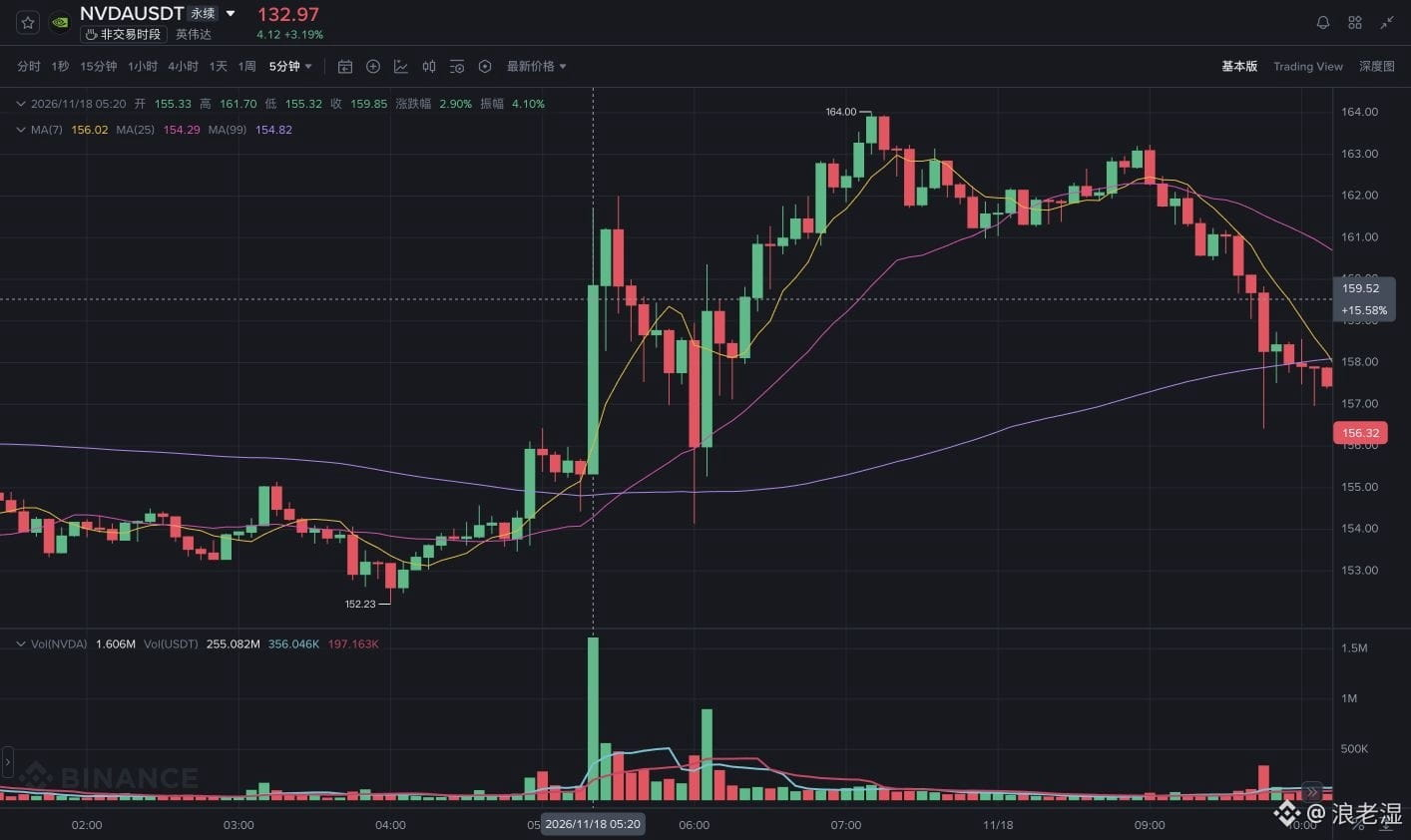
We aligned the 5-minute charts for three Binance perpetual contracts to 05:20–05:50 Beijing time on November 18. $NVDA rose from 155.33 to 158.77 USDT, up 2.21%, and even touched 162 along the way. $QQQ , which tracks the Nasdaq 100 Index, gained 0.20% over the same period. And gold? $XAU moved from 3,856.15 to 3,856.73—a difference of just 0.58 USDT in half an hour.
Looking only at Nvidia’s long green candle, it’s easy to think the whole market was buzzing. Put the other two charts alongside it, and you can see which one was the liveliest during that half hour.
{future}(NVDAUSDT)
One Nvidia earnings report, three markets—how did they move?
Nvidia’s quarterly revenue more than doubled year over year. In the half hour after the earnings report came out, which moved the most: chip stocks, the Nasdaq, or gold?
We aligned the 5-minute charts for three Binance perpetual contracts to 05:20–05:50 Beijing time on November 18. $NVDA rose from 155.33 to 158.77 USDT, up 2.21%, and even touched 162 along the way. $QQQ , which tracks the Nasdaq 100 Index, gained 0.20% over the same period. And gold? $XAU moved from 3,856.15 to 3,856.73—a difference of just 0.58 USDT in half an hour.
Looking only at Nvidia’s long green candle, it’s easy to think the whole market was buzzing. Put the other two charts alongside it, and you can see which one was the liveliest during that half hour.
288
·
--
On Sunday evening, before the U.S. stock market had even opened, Binance’s semiconductor ETF perpetual contract was already fluctuating around 34 USDT.
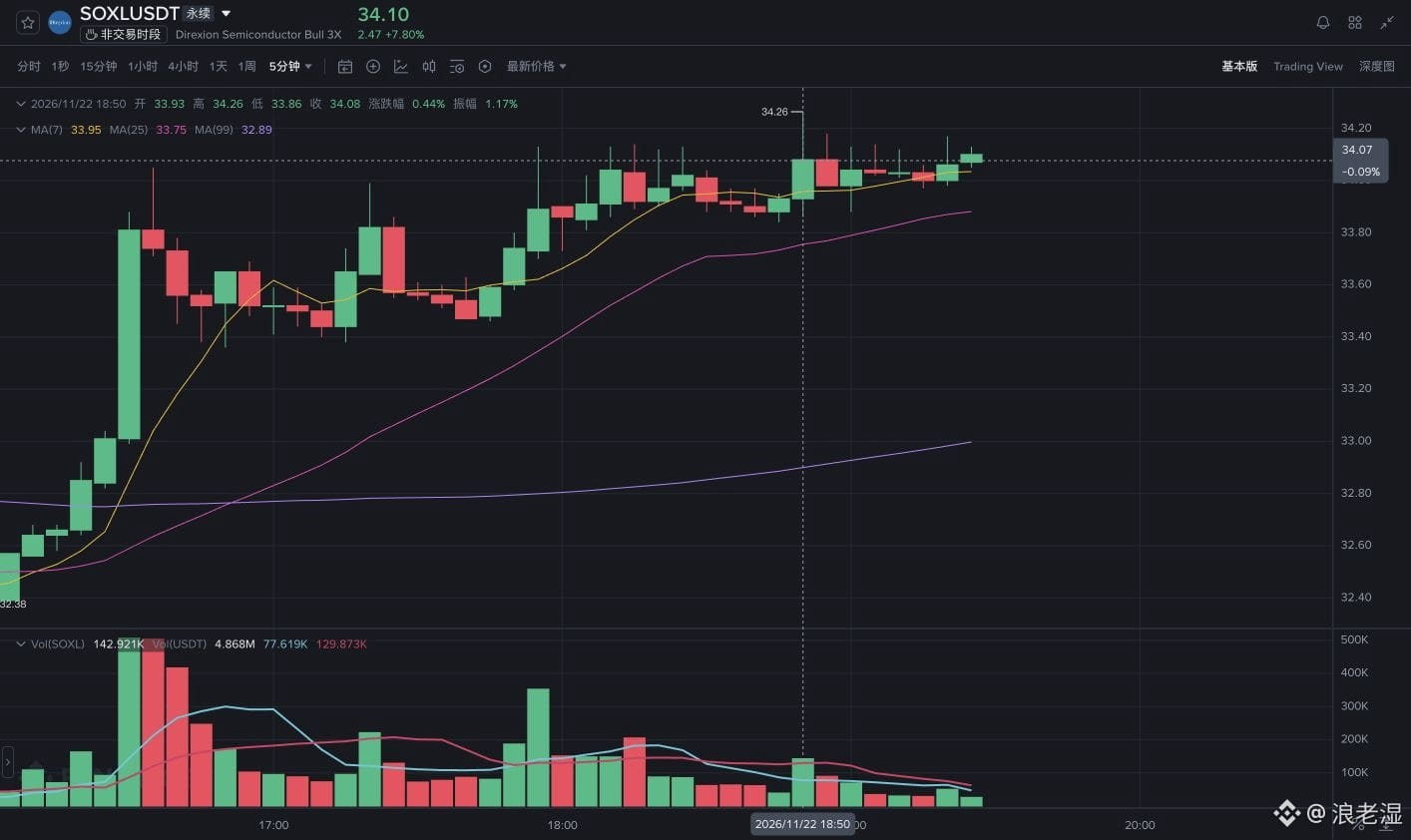
At 18:50 Beijing time on November 22, the 5-minute candle for the $SOXL perpetual contract touched 34.26, reaching its highest price in the past 24 hours, and closed at 34.08. That candle alone saw 4.87 million USDT in trading volume.
Zoom out one hour, and the pattern becomes clear. Trading volume was 58.5 million USDT from 17:25 to 18:25, but only 25.83 million in the following hour. By 19:28, the contract was still up 7.92% over 24 hours, but the hour in which it surged to its high saw less than half the trading volume of the previous hour.
{future}(SOXLUSDT)
On Sunday evening, before the U.S. stock market had even opened, Binance’s semiconductor ETF perpetual contract was already fluctuating around 34 USDT.
At 18:50 Beijing time on November 22, the 5-minute candle for the $SOXL perpetual contract touched 34.26, reaching its highest price in the past 24 hours, and closed at 34.08. That candle alone saw 4.87 million USDT in trading volume.
Zoom out one hour, and the pattern becomes clear. Trading volume was 58.5 million USDT from 17:25 to 18:25, but only 25.83 million in the following hour. By 19:28, the contract was still up 7.92% over 24 hours, but the hour in which it surged to its high saw less than half the trading volume of the previous hour.
427
·
--
Guess which side was more eager to trade before and after $BNB touched 556.78 USDT?
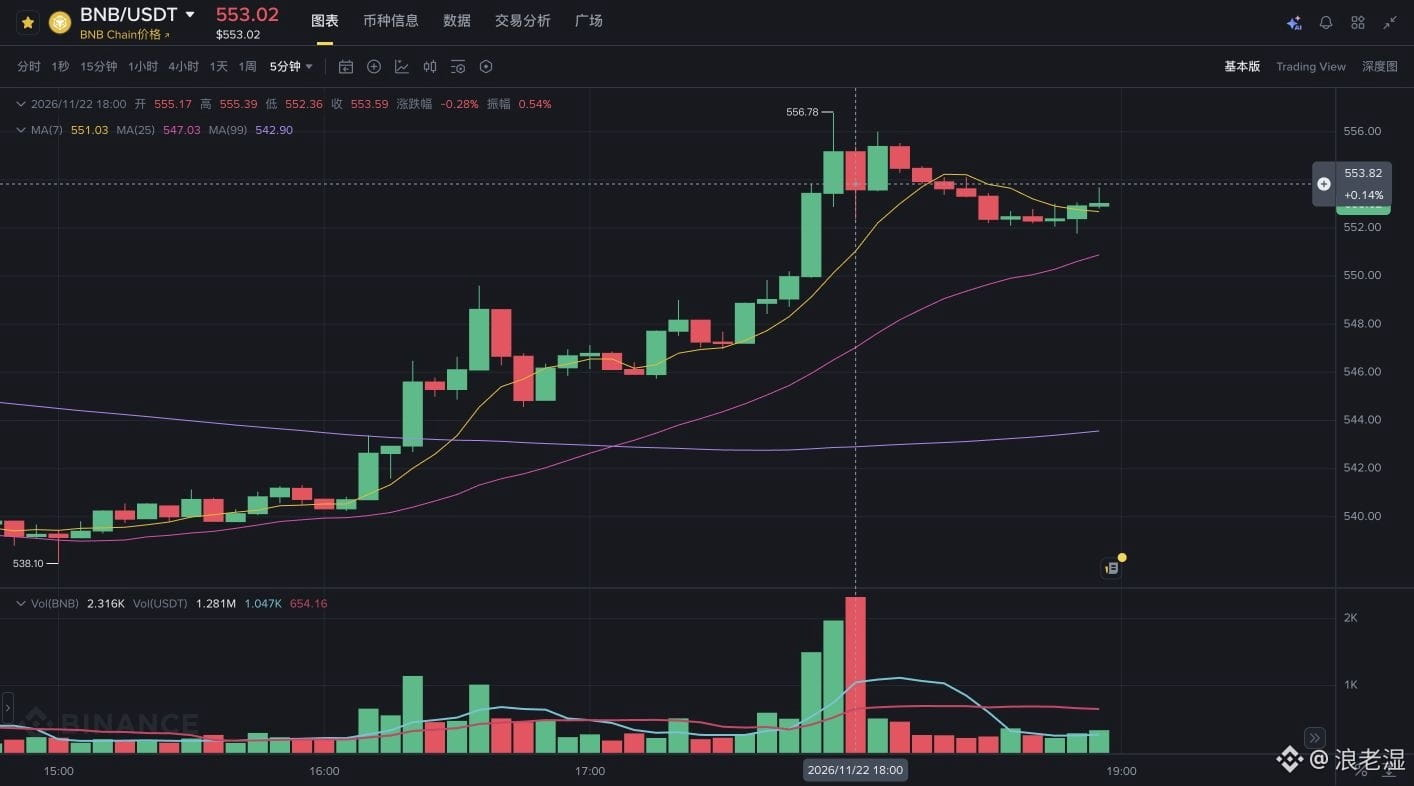
At 17:55 Beijing time on November 22, Binance’s BNB/USDT spot market hit its 24-hour high in a five-minute candlestick. Trading volume during those five minutes was 1.0915 million USDT, and for every 100 U traded, buyers initiated about 60 U worth of trades.
At 18:00, marked by the crosshair in the chart, the buyers and sellers switched places. Trading volume rose to 1.2815 million USDT, with sellers initiating about 62.5% of trades. The price fell from 555.17 to 553.59. By 18:57, the 24-hour gain was still 5.21%—you wouldn’t know just from the percentage gain what happened during those five minutes after the spike.
{future}(BNBUSDT)
Guess which side was more eager to trade before and after $BNB touched 556.78 USDT?
At 17:55 Beijing time on November 22, Binance’s BNB/USDT spot market hit its 24-hour high in a five-minute candlestick. Trading volume during those five minutes was 1.0915 million USDT, and for every 100 U traded, buyers initiated about 60 U worth of trades.
At 18:00, marked by the crosshair in the chart, the buyers and sellers switched places. Trading volume rose to 1.2815 million USDT, with sellers initiating about 62.5% of trades. The price fell from 555.17 to 553.59. By 18:57, the 24-hour gain was still 5.21%—you wouldn’t know just from the percentage gain what happened during those five minutes after the spike.
95
·
--
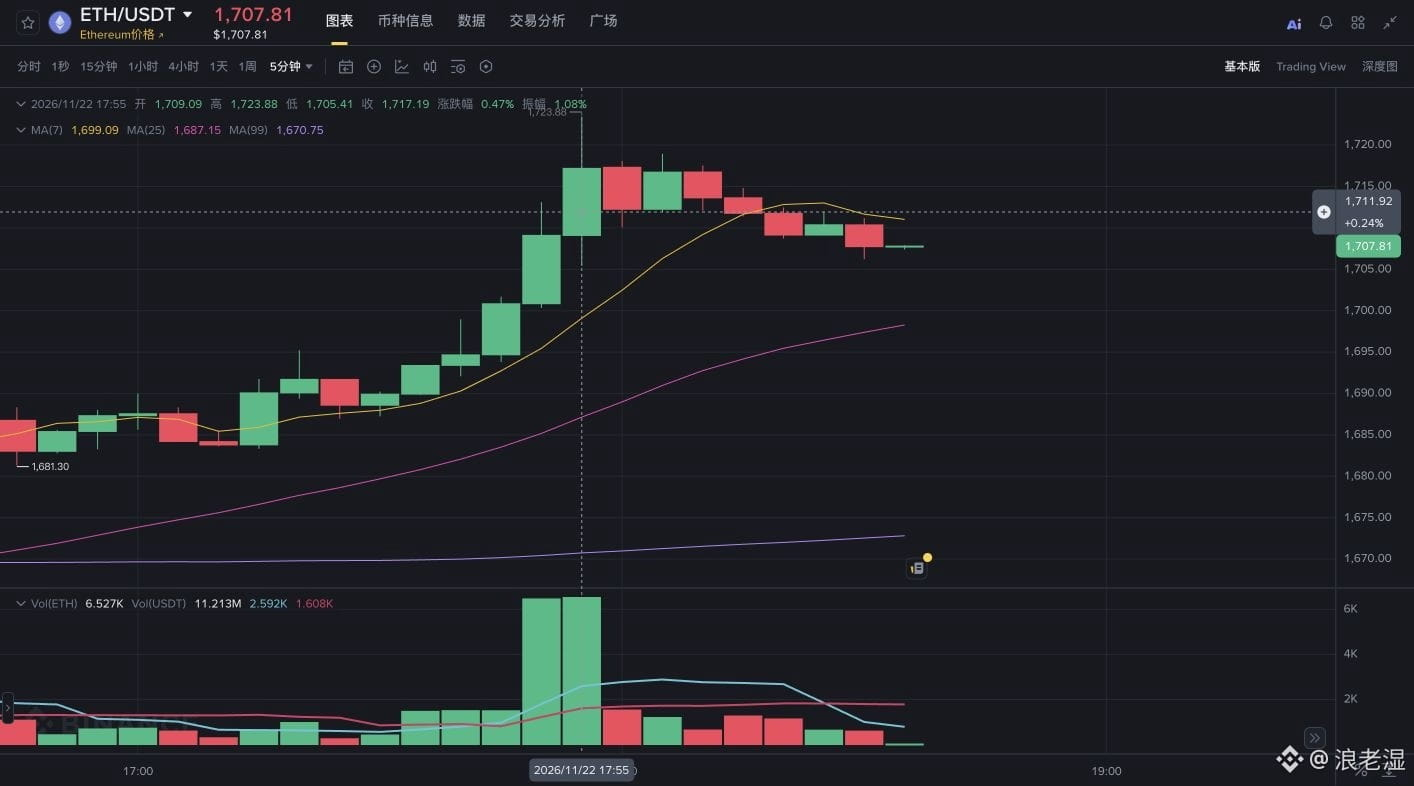
The two adjacent green bars in the chart account for more than half of the trading volume during this one-hour period, $ETH .
From 17:30 to 18:30 on November 22, Beijing time, Binance ETH/USDT spot trading volume was approximately 41.54 million USDT. In just the ten minutes from 17:50 to 18:00, trading volume reached 22.26 million, or 53.6% of the total—more than during the entire preceding hour, from 16:30 to 17:30.
The crosshair on the chart marks 17:55. That five-minute candlestick touched 1,723.88 USDT. Over the following half hour, the volume bars shrank, and the price closed at 1,710.38 at 18:30.
{future}(ETHUSDT)
The two adjacent green bars in the chart account for more than half of the trading volume during this one-hour period, $ETH .
From 17:30 to 18:30 on November 22, Beijing time, Binance ETH/USDT spot trading volume was approximately 41.54 million USDT. In just the ten minutes from 17:50 to 18:00, trading volume reached 22.26 million, or 53.6% of the total—more than during the entire preceding hour, from 16:30 to 17:30.
The crosshair on the chart marks 17:55. That five-minute candlestick touched 1,723.88 USDT. Over the following half hour, the volume bars shrank, and the price closed at 1,710.38 at 18:30.
72
·
--
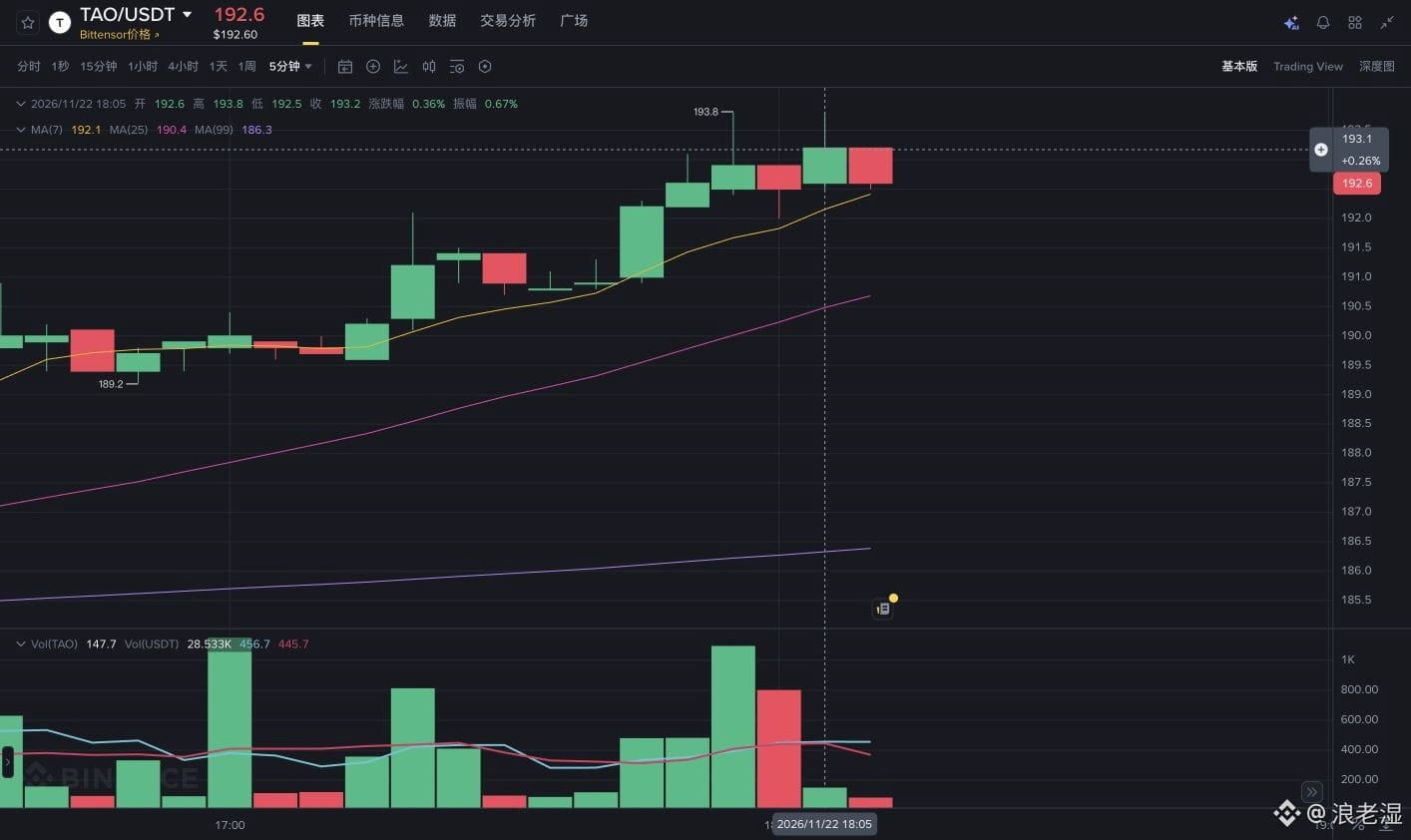
Looking at the two upper wicks of $TAO side by side, they both peaked at 193.8 USDT, but the volume bars below them were vastly different.
At 17:55 Beijing time on November 22, Binance TAO/USDT spot touched 193.8 in a 5-minute candlestick, with a trading volume of 211,100 USDT. Ten minutes later, it touched the same price again, but the entire candle saw just 28,500 USDT in volume—about 14% of the previous candle. The closing price actually rose from 192.9 to 193.2.
As of 18:11, TAO was up 8.38% over 24 hours. If you only look at the gainers list, it’s easy to miss this detail: the second time it hit the same price, trading was much lighter. The crosshair in the chart marks the second touch.
Data: Binance TAO/USDT spot market and 5-minute candlesticks.
{future}(TAOUSDT)
Looking at the two upper wicks of $TAO side by side, they both peaked at 193.8 USDT, but the volume bars below them were vastly different.
At 17:55 Beijing time on November 22, Binance TAO/USDT spot touched 193.8 in a 5-minute candlestick, with a trading volume of 211,100 USDT. Ten minutes later, it touched the same price again, but the entire candle saw just 28,500 USDT in volume—about 14% of the previous candle. The closing price actually rose from 192.9 to 193.2.
As of 18:11, TAO was up 8.38% over 24 hours. If you only look at the gainers list, it’s easy to miss this detail: the second time it hit the same price, trading was much lighter. The crosshair in the chart marks the second touch.
Data: Binance TAO/USDT spot market and 5-minute candlesticks.
1
197
·
--
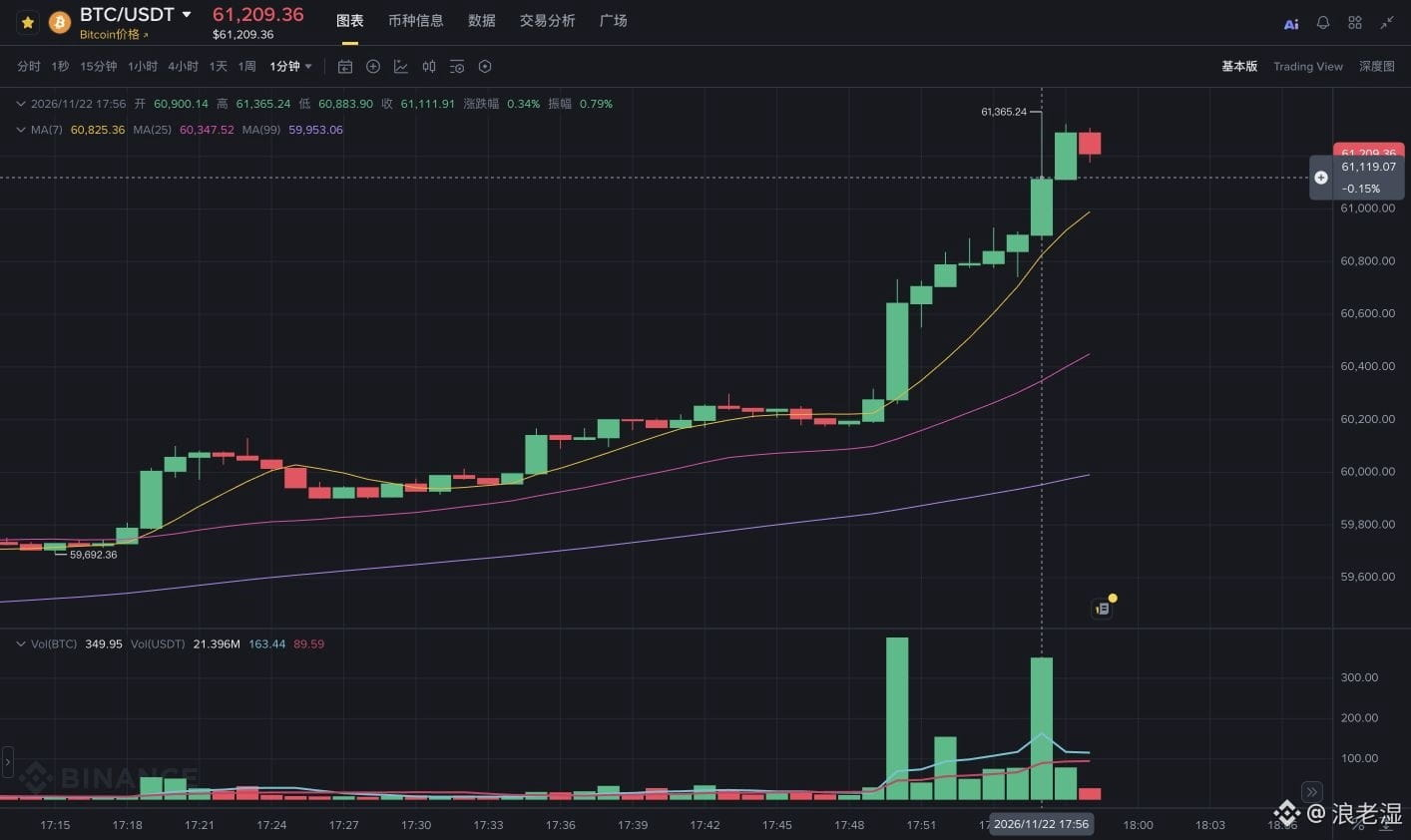
Guys, $BTC just pushed past 61,000 USDT. Look left at a few candlesticks—the volume picked up first.
From 17:50 to 17:55 Beijing time on November 22, Binance BTC/USDT spot trading volume reached 43.5 million USDT. The previous five minutes saw only 4.68 million; this five-minute period was 9.3 times higher. At that point, the price had yet to touch 61,000.
The price actually crossed the threshold with the 17:56 one-minute candle: it reached a high of 61,365.24 and closed at 61,111.91, with 21.4 million USDT traded in that one minute alone. That’s the candle marked by the crosshair in the chart; you can trace it back using the volume bars below.
Data: Binance BTC/USDT spot one-minute and five-minute candlesticks.
{future}(BTCUSDT)
Guys, $BTC just pushed past 61,000 USDT. Look left at a few candlesticks—the volume picked up first.
From 17:50 to 17:55 Beijing time on November 22, Binance BTC/USDT spot trading volume reached 43.5 million USDT. The previous five minutes saw only 4.68 million; this five-minute period was 9.3 times higher. At that point, the price had yet to touch 61,000.
The price actually crossed the threshold with the 17:56 one-minute candle: it reached a high of 61,365.24 and closed at 61,111.91, with 21.4 million USDT traded in that one minute alone. That’s the candle marked by the crosshair in the chart; you can trace it back using the volume bars below.
Data: Binance BTC/USDT spot one-minute and five-minute candlesticks.
85
·
--
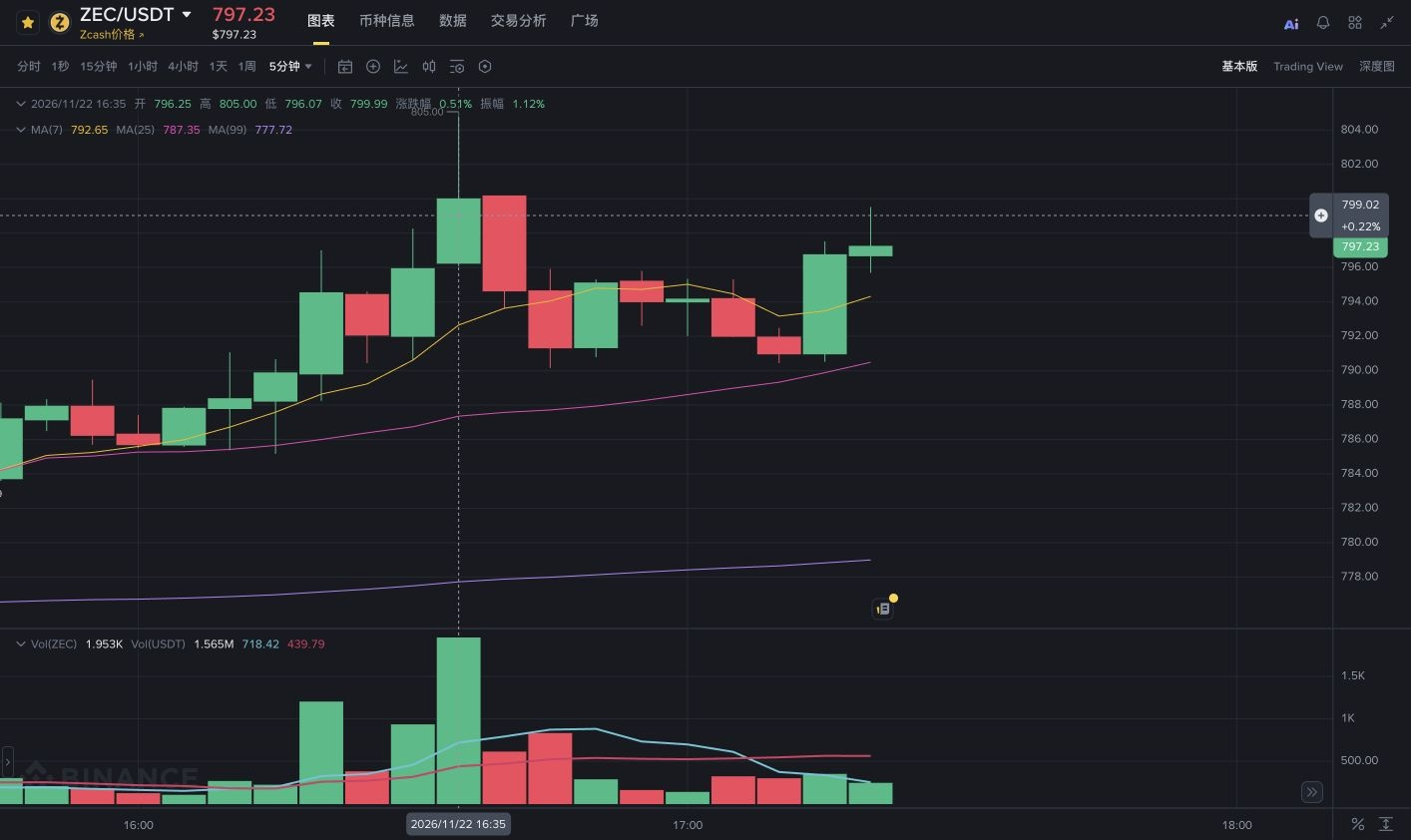
Just 0.01 USDT short. $ZEC surged to 805 just now, but that 5-minute candlestick closed at 799.99.
From 16:35 to 16:40 Beijing time on November 22, Binance’s ZEC/USDT spot market saw 1.565 million USDT in trading volume over those 5 minutes, accounting for 27% of the total volume for the entire hour from 16:15 to 17:15. Now look at the 12 candlesticks in that hour: the price high crossed 800 twice, but not a single candle closed above 800.
As of 17:15, the 24-hour gain was still 6.70%, and the latest 5-minute candle closed at 790.98. When you’re checking the gainers list, do you usually click in to look at the upper wick?
Data from Binance ZEC/USDT spot market and 5-minute candlesticks.
{future}(ZECUSDT)
Just 0.01 USDT short. $ZEC surged to 805 just now, but that 5-minute candlestick closed at 799.99.
From 16:35 to 16:40 Beijing time on November 22, Binance’s ZEC/USDT spot market saw 1.565 million USDT in trading volume over those 5 minutes, accounting for 27% of the total volume for the entire hour from 16:15 to 17:15. Now look at the 12 candlesticks in that hour: the price high crossed 800 twice, but not a single candle closed above 800.
As of 17:15, the 24-hour gain was still 6.70%, and the latest 5-minute candle closed at 790.98. When you’re checking the gainers list, do you usually click in to look at the upper wick?
Data from Binance ZEC/USDT spot market and 5-minute candlesticks.
581
·
--
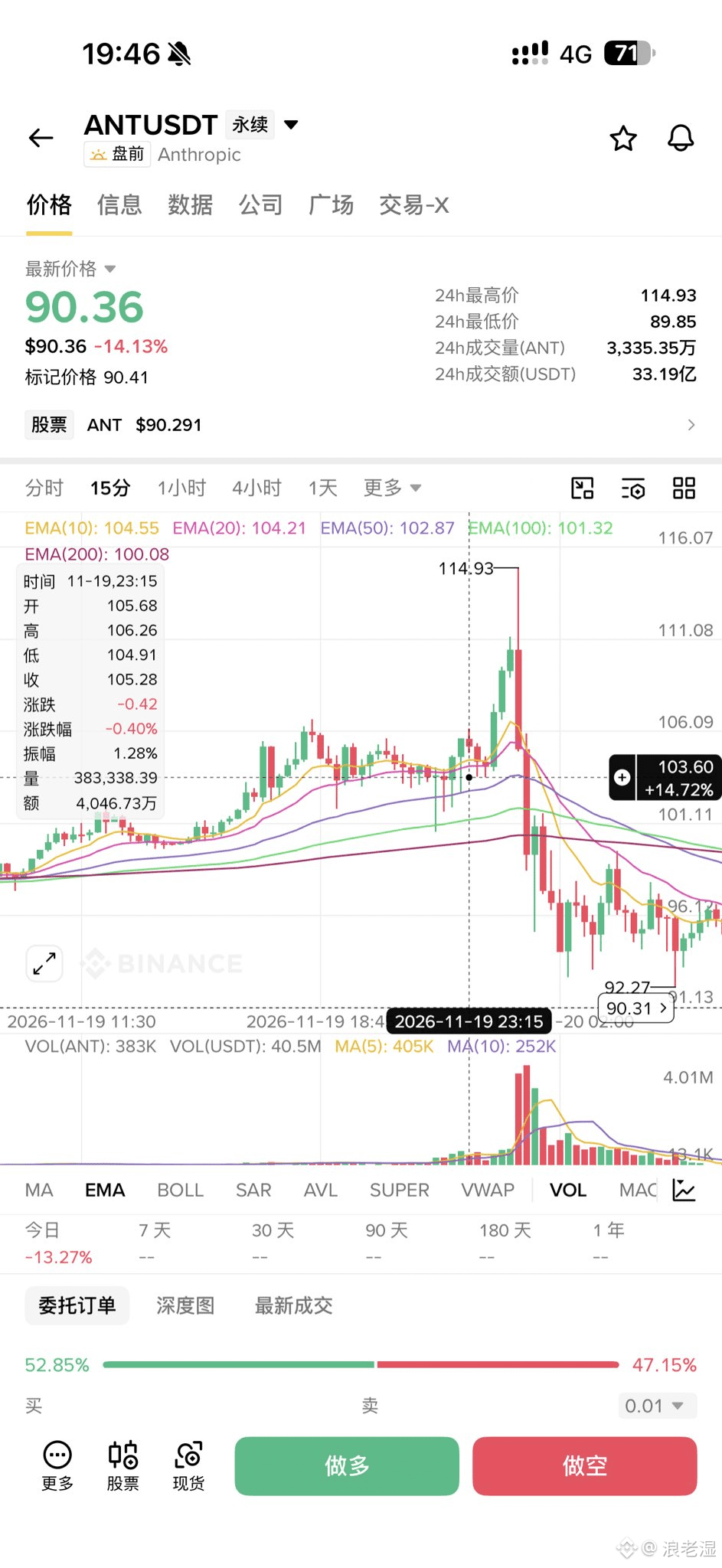
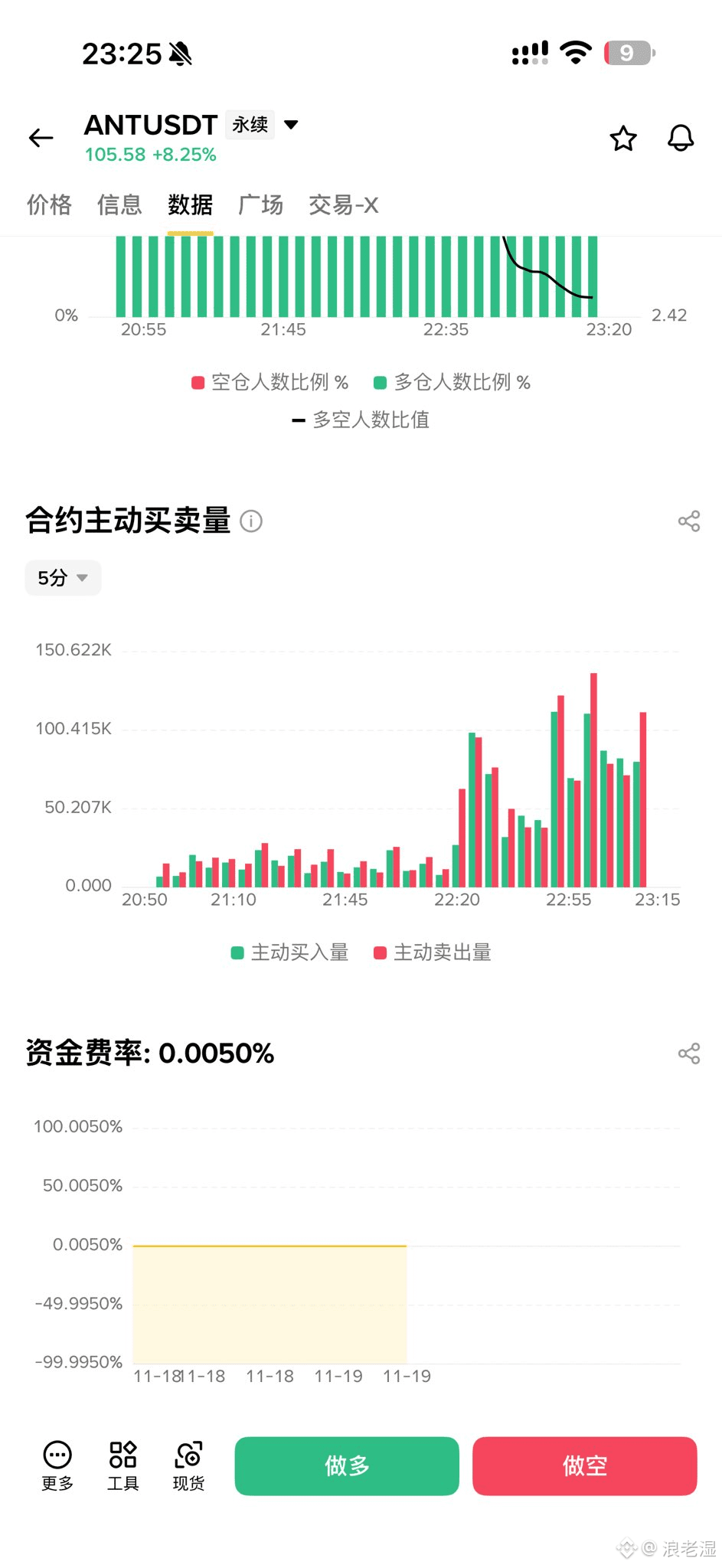
It was off by less than 0.3%. When Anthropic made its first trade on Nasdaq, the price on Binance’s ANTUSDT perpetual market was that close to it.
What I’m more curious about is how many people actually put real money behind this price. According to Hatim’s data, total trading volume for ANT perpetual contracts was $6.6 billion, with Binance accounting for 47%—about $3.1 billion.
{future}(ANTUSDT)
So next time a hot U.S. stock IPO comes along, while waiting for the market to open, I want to take a closer look at Binance’s contract “trading data”: where the price is, whether open interest is changing along with it, and which side is more aggressive—buyers or sellers. Once the first trade hits Nasdaq, I can look back and see how it compares. That’s a lot more interesting than just guessing how much it’ll open up.
#Anthropic
It was off by less than 0.3%. When Anthropic made its first trade on Nasdaq, the price on Binance’s ANTUSDT perpetual market was that close to it.
What I’m more curious about is how many people actually put real money behind this price. According to Hatim’s data, total trading volume for ANT perpetual contracts was $6.6 billion, with Binance accounting for 47%—about $3.1 billion.
So next time a hot U.S. stock IPO comes along, while waiting for the market to open, I want to take a closer look at Binance’s contract “trading data”: where the price is, whether open interest is changing along with it, and which side is more aggressive—buyers or sellers. Once the first trade hits Nasdaq, I can look back and see how it compares. That’s a lot more interesting than just guessing how much it’ll open up.
#Anthropic
783
·
--
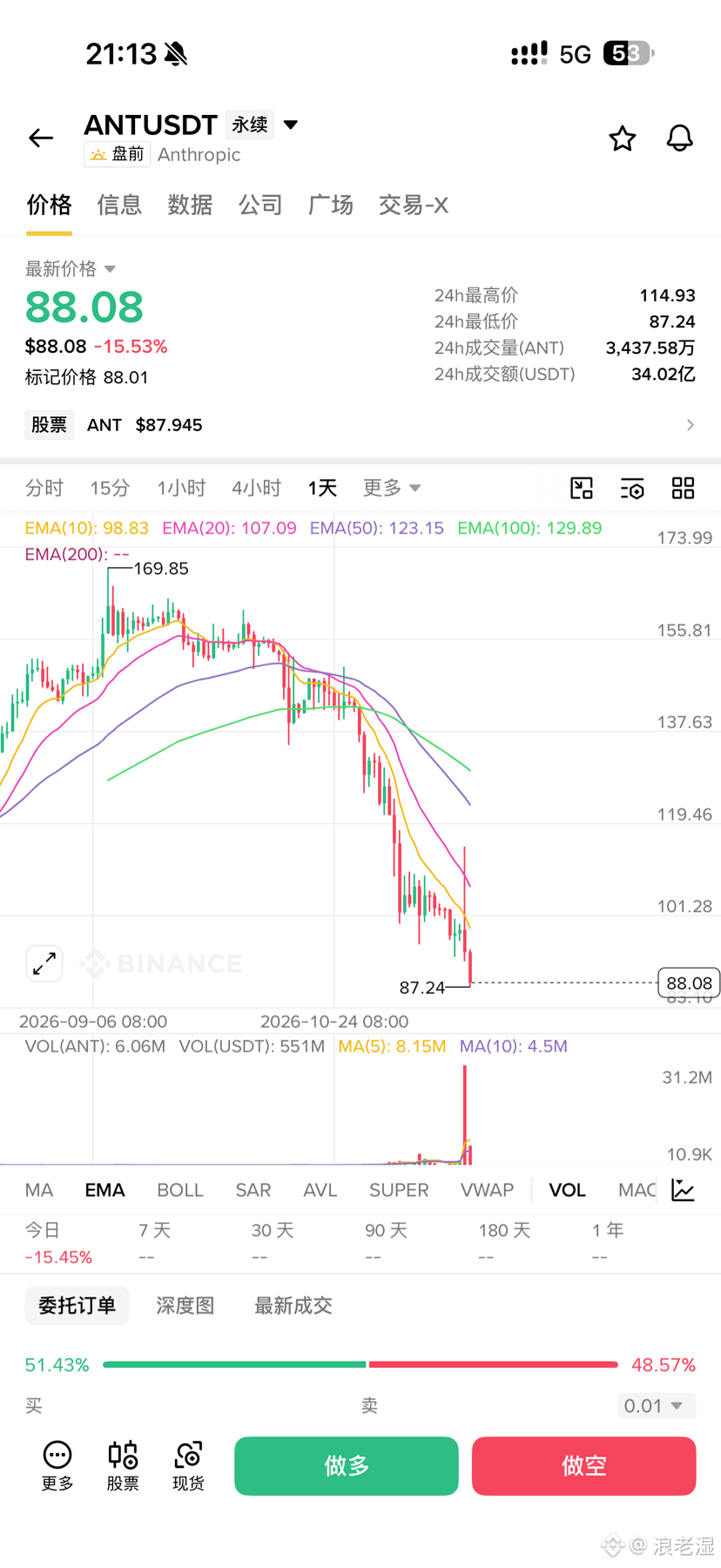
That piece of shit Anthropic is about to fall below its IPO price. Just go straight to zero already. I paid for an annual membership, and you ban my account outright without even giving me a refund. #Anthropic创纪录上市,1.5万亿美元市值合理吗?
{future}(ANTUSDT)
That piece of shit Anthropic is about to fall below its IPO price. Just go straight to zero already. I paid for an annual membership, and you ban my account outright without even giving me a refund. #Anthropic创纪录上市,1.5万亿美元市值合理吗?
4
3
10.4k
·
--
Partly True
Tonight, Anthropic, the company behind Claude, rang the opening bell at Nasdaq. Its IPO was priced at $83. The Nasdaq rose about 1.7% after the market opened, and the AI scene is buzzing again.
But more than guessing what the first candlestick will look like, I’m interested in how people are placing their bets.
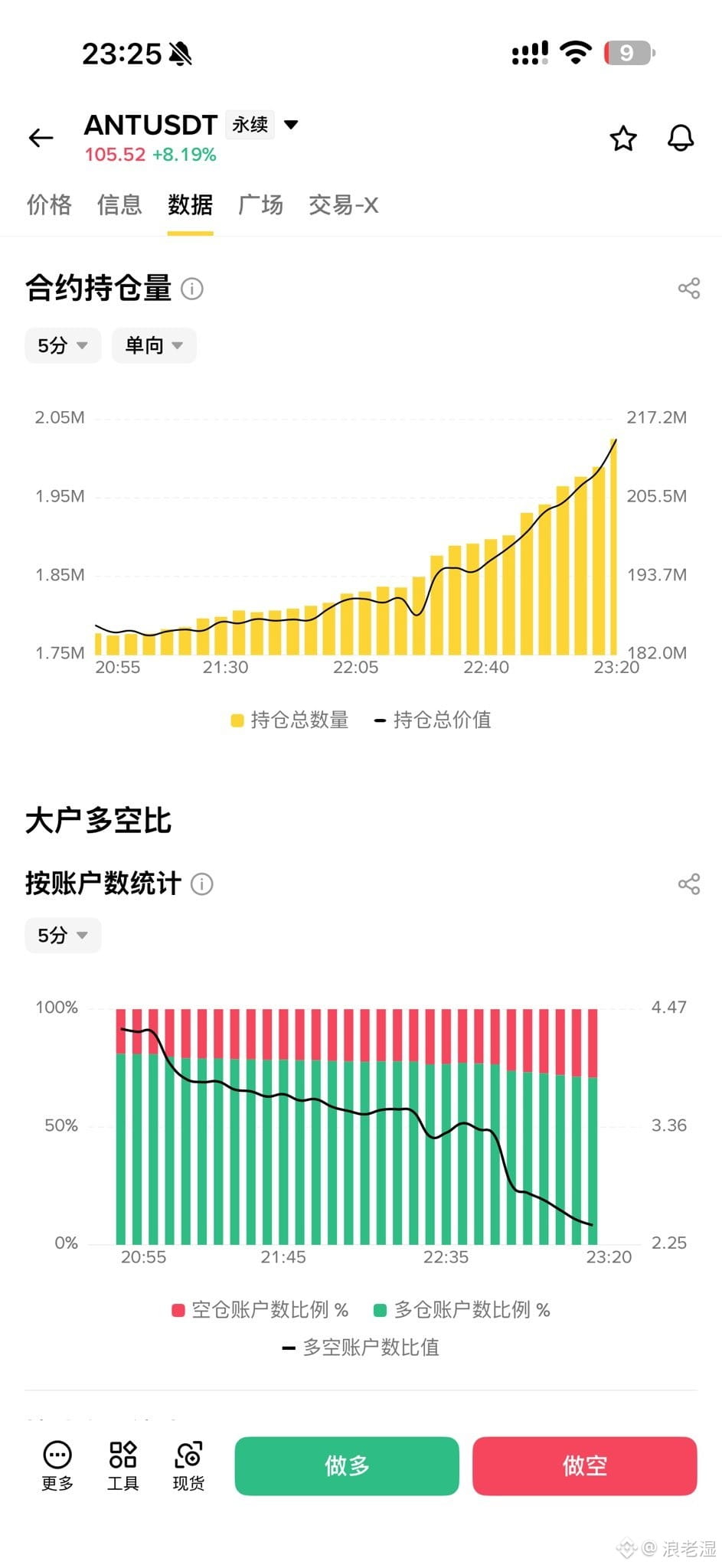
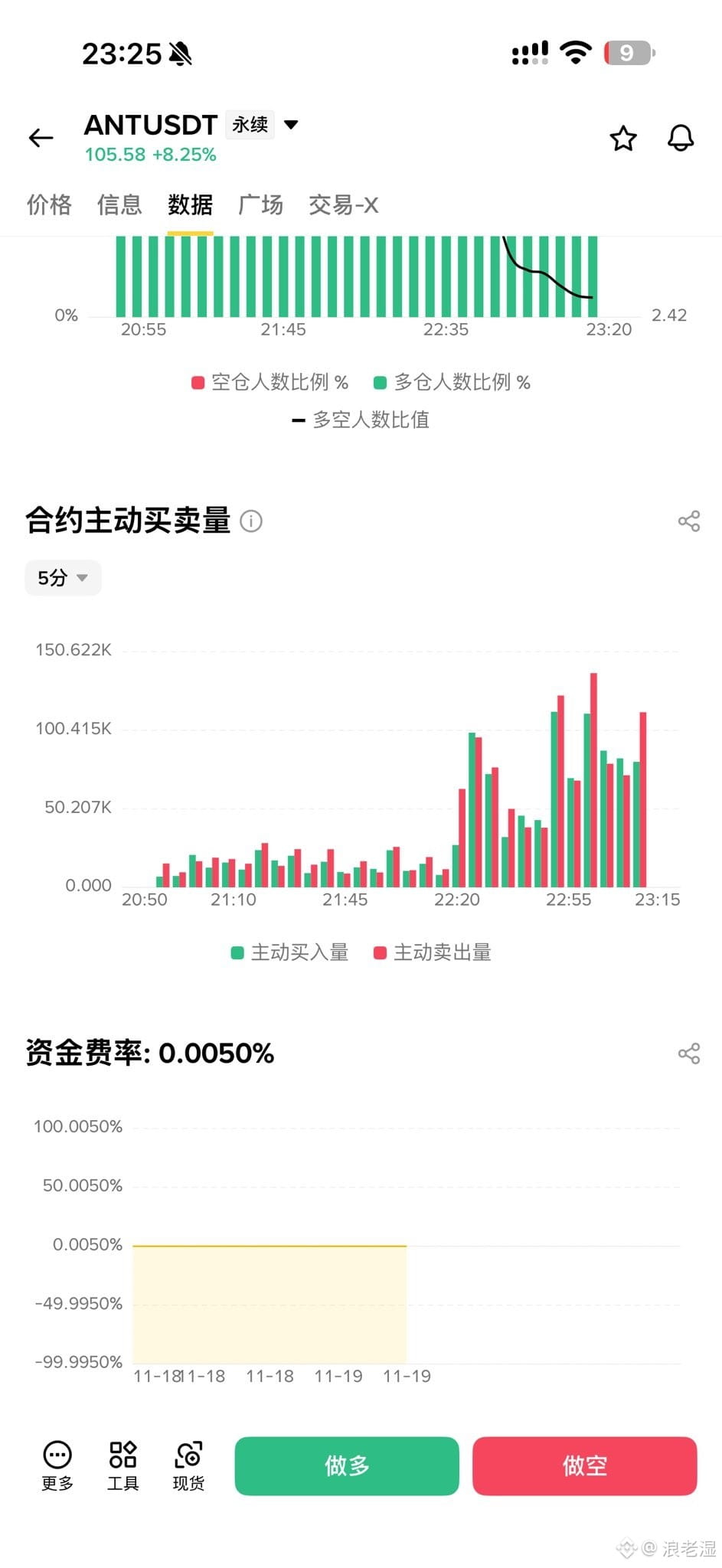
Open “Trading Data” for Binance ANTUSDT, and two numbers stand out:
1. From 22:30 to 23:10 Beijing time, open interest increased by about 5.50%.
2. In the 5-minute data for 23:00, taker buy volume / taker sell volume was about 0.81, meaning taker sell volume was higher.
It’s easy for beginners to interpret “increasing positions” as “everyone is bullish.” But every new contract has both a long and a short side. Open interest tells you how much people are participating; on its own, it doesn’t tell you which way they’re betting.
That’s what makes this Binance data page useful: after checking the price moves, you can also see the buying and selling activity behind them.
You can gauge the buzz from trading volume, but to see the direction, you need to look at the divide.
#Anthropic今日开始交易,IPO定价每股83美元 #TradFi
{future}(ANTUSDT)
Tonight, Anthropic, the company behind Claude, rang the opening bell at Nasdaq. Its IPO was priced at $83. The Nasdaq rose about 1.7% after the market opened, and the AI scene is buzzing again.
But more than guessing what the first candlestick will look like, I’m interested in how people are placing their bets.
Open “Trading Data” for Binance ANTUSDT, and two numbers stand out:
1. From 22:30 to 23:10 Beijing time, open interest increased by about 5.50%.
2. In the 5-minute data for 23:00, taker buy volume / taker sell volume was about 0.81, meaning taker sell volume was higher.
It’s easy for beginners to interpret “increasing positions” as “everyone is bullish.” But every new contract has both a long and a short side. Open interest tells you how much people are participating; on its own, it doesn’t tell you which way they’re betting.
That’s what makes this Binance data page useful: after checking the price moves, you can also see the buying and selling activity behind them.
You can gauge the buzz from trading volume, but to see the direction, you need to look at the divide.
#Anthropic今日开始交易,IPO定价每股83美元 #TradFi
1.5k
·
--
Tonight, Lang Laoshi became a student again and earned a certificate of completion for Binance Academy’s TradFi products course.
This new Binance Academy course covers stocks, stock tokens (bStocks), TradFi perpetuals, and options. Complete the quiz to earn an exclusive certificate of completion. If you’ve ever found it hard to tell these products apart, this course is worth checking out.
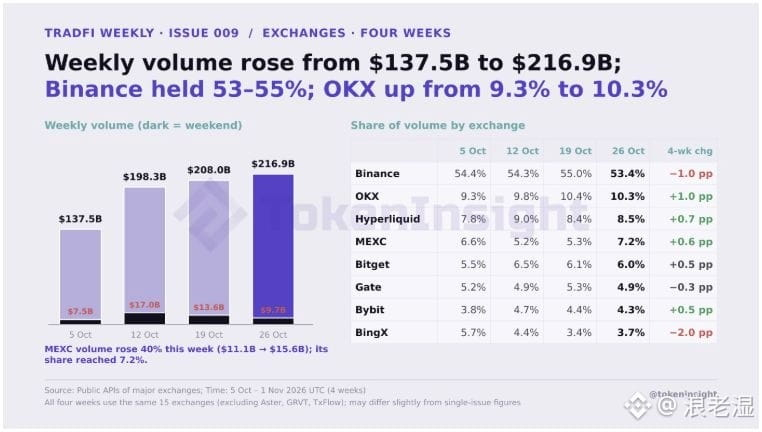
I also took a look at TokenInsight’s data: from October 5 to November 1, Binance’s share of TradFi perpetual trading volume stayed between 53% and 55% for four consecutive weeks, ranking first among the 15 platforms surveyed.
Trading volume is already leading the way, and product education is catching up. For everyday users, understanding the products and rules first can help you avoid pitfalls in this market. If you’re interested, here’s the course link 👇
[币安学院 TradFi 产品课程|点击学习](https://www.binance.com/zh-CN/academy/track/tradfi-products-on-binance)
#AnthropicIPO需求强劲,发行价或超80美元
{future}(NVDAUSDT)
Tonight, Lang Laoshi became a student again and earned a certificate of completion for Binance Academy’s TradFi products course.
This new Binance Academy course covers stocks, stock tokens (bStocks), TradFi perpetuals, and options. Complete the quiz to earn an exclusive certificate of completion. If you’ve ever found it hard to tell these products apart, this course is worth checking out.
I also took a look at TokenInsight’s data: from October 5 to November 1, Binance’s share of TradFi perpetual trading volume stayed between 53% and 55% for four consecutive weeks, ranking first among the 15 platforms surveyed.
Trading volume is already leading the way, and product education is catching up. For everyday users, understanding the products and rules first can help you avoid pitfalls in this market. If you’re interested, here’s the course link 👇
币安学院 TradFi 产品课程|点击学习
#AnthropicIPO需求强劲,发行价或超80美元

368
·
--
Before yesterday: That bastard A banned my account, the fucking idiot!
After today: The kid is still young. Give it some time to grow.
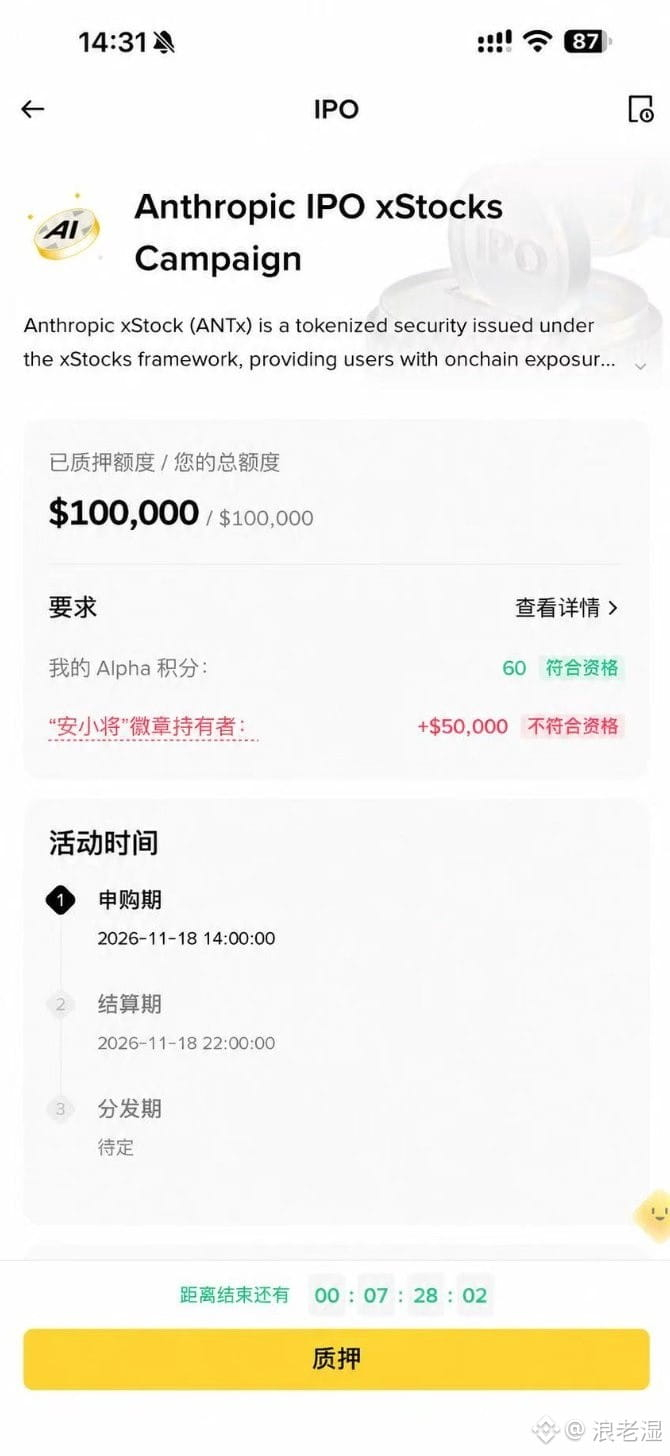
The Anthropic IPO event in Binance Wallet hasn’t hit its cap yet, so I’m jumping in first.
$ANTHROPIC #AnthropicIPO #AnthropicIPO需求强劲,发行价或超80美元
{future}(ANTUSDT)
Before yesterday: That bastard A banned my account, the fucking idiot!
After today: The kid is still young. Give it some time to grow.
The Anthropic IPO event in Binance Wallet hasn’t hit its cap yet, so I’m jumping in first.
$ANTHROPIC #AnthropicIPO #AnthropicIPO需求强劲,发行价或超80美元
After today: The kid is still young. Give it some time to grow.
The Anthropic IPO event in Binance Wallet hasn’t hit its cap yet, so I’m jumping in first.
$ANTHROPIC #AnthropicIPO #AnthropicIPO需求强劲,发行价或超80美元
1
636
·
--
No worries about in-stock items
No worries about in-stock items


Yi He
·
--
The pullback is temporary; spot holders have nothing to fear.🫥
39
·
--
Use Binance AI Pro to Build a Weekly BTC DCA StrategyNow you can build your own DCA strategy just by describing it in plain language.
I just tried Binance AI Pro. My request was simple:
“Buy BTC every week, buy a little more when the price drops significantly, and spend no more than 500 USDT per month.”
It first confirms how to allocate my budget and when to increase my purchases, then generates a strategy workflow and code, runs automated tests, and deploys it to the cloud. I can also simulate it with virtual funds first. For live trading, I need to confirm and transfer the funds myself.
The “BTC weekly DCA + buying more on dips” strategy I created is now shown as running. I’ll keep an eye on how it performs.
Use Binance AI Pro to Build a Weekly BTC DCA Strategy
Now you can build your own DCA strategy just by describing it in plain language.
I just tried Binance AI Pro. My request was simple:
“Buy BTC every week, buy a little more when the price drops significantly, and spend no more than 500 USDT per month.”
It first confirms how to allocate my budget and when to increase my purchases, then generates a strategy workflow and code, runs automated tests, and deploys it to the cloud. I can also simulate it with virtual funds first. For live trading, I need to confirm and transfer the funds myself.
The “BTC weekly DCA + buying more on dips” strategy I created is now shown as running. I’ll keep an eye on how it performs.
102
·
--
Last chance to claim a free Binance VIP gift ⏰
Become a Binance VIP by 07:59 AM (Beijing time) tomorrow, November 16, to receive a limited-edition New Year gift:
✈️ VIP 1–2: Bomber jacket + baseball cap
🎿 VIP 3–9: Ski jacket + goggles
You must maintain your VIP status until December 16. Gifts are awarded based on your lowest VIP tier during these 30 days. The market’s freezing—grab a jacket to keep warm!
@BinanceVIP @sisibinance @yayabinance

198
·
--
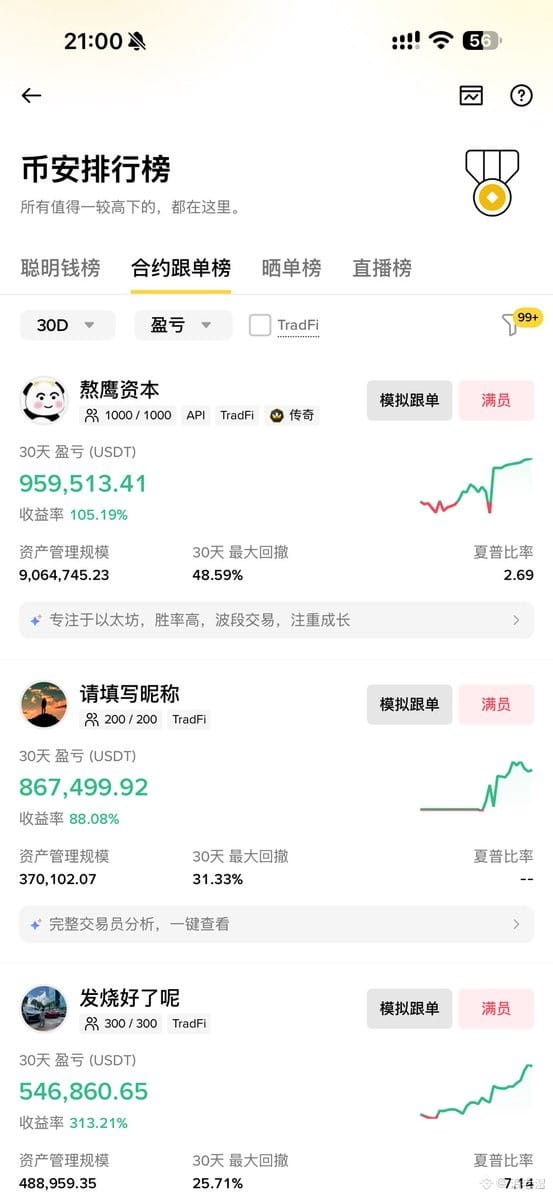
Guys, the copy trader “熬鹰” on Binance Copy Trading is no longer accepting new followers, but you can check out other top traders on the leaderboard.
Binance recently launched a new 【Leaderboard】 feature that lists traders across different categories. Now you can open Binance and review traders’ actual performance directly.
Steps:
1. Binance App → 【Leaderboard】;
2. Check traders’ data, including return rates, maximum drawdowns, and trading history.
3. Find a trader you’re interested in, then go to 【Futures Copy Trading】 to see if you can copy their trades and set your investment amount and stop-loss parameters.
But here’s a reminder from Lang Laoshi for beginners: when checking out top traders, don’t just look at how much they’ve earned—also consider how much risk they’ve taken.
Huge short-term gains don’t mean long-term stability, and past returns don’t guarantee future performance.
Besides @thankUcrypto, guys, recommend a few more top traders in the comments. Your little bro here wants to copy their trades and make some money too.
#Binance #BinanceCopyTrading
1
1
5.4k
Log in to explore more content
Join global crypto users on Binance Square
⚡️ Get latest and useful information about crypto.
💬 Trusted by the world’s largest crypto exchange.
👍 Discover real insights from verified creators.
Email / Phone number
Trending Topics
WillMarketsStageAThanksgivingReliefRally?
10,298 views
238 Discussing
Markets enter Thanksgiving week after a sharp sell-off, with investors looking for a catalyst to stabilize risk assets.
The key event this week is Wednesday's October PCE inflation report and Q3 GDP revision, both scheduled for November 25 at 8:30 AM ET, according to the official US Bureau of Economic Analysis calendar.
The inflation data could influence expectations for the Federal Reserve's next policy decision. A softer-than-expected reading could support a relief rally across stocks and crypto, while hotter inflation may keep pressure on risk assets.
US markets will also be closed on Thanksgiving Day, creating a shortened trading week with potentially thinner liquidity.
My view: a relief rally is possible, but confirmation is still needed. Watch inflation data, market breadth, Bitcoin's recovery, and whether buyers can reclaim key resistance levels.
A bounce is not necessarily a reversal.
HOLD $BTC
#WillMarketsStageAThanksgivingReliefRally?
Waseem Ahmad mir
·0 Likes
·458 views
BessentSoftensStanceOnHuang’sNvidiaReturn
7,674 views
166 Discussing
EvolveAtBinanceBlockchainWeek
19 views
24 Discussing