

黑僵尸
141 Posts

黑僵尸
Report
Block User
我是来搞笑的
Open Trade
Frequent Trader
2.4 Years
261 Following
328 Followers
186 Liked
Posts
Portfolio
All
Quotes
·
--
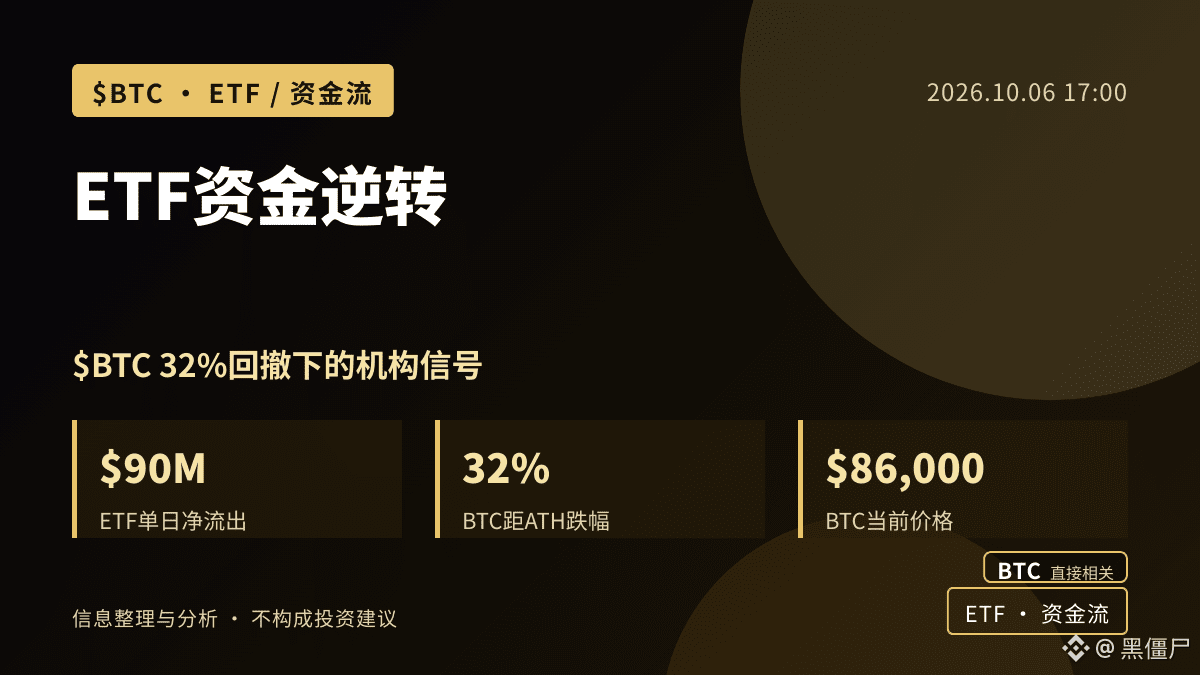
$BTC ETF Sees $90M in Single-Day Outflows Amid 32% Drawdown: Institutional Signals
According to Cointelegraph, U.S. spot Bitcoin ETFs reversed course after two consecutive days of net inflows, recording approximately $90M in net outflows in a single day. Over the same period, $BTC fell below $86,000, down about 32% from its all-time high of $126,000. This shift in fund flows contrasts with recent reports of sustained ETF net inflows and may signal cooling short-term institutional sentiment.
ETF fund flows are often viewed as a key indicator of institutional participation. A single-day outflow of $90M is not extreme in itself, but what matters is that it occurred against the backdrop of a steep 32% price drawdown. According to CoinDesk's analysis, the decline in this bear market has been milder than in past cycles. This may reflect changes in institutional holdings, or suggest that strong buying support exists around $86,000.
Technically, $BTC has fallen from its $126,000 peak to $86,000, a 32% drawdown that would still be considered moderate by historical bear market standards. However, the shift in ETF flows from inflows to outflows may indicate weaker marginal institutional demand at current levels. If outflows continue over the next few trading days, the price could face further downward pressure. Conversely, if the outflows are only a short-term fluctuation, the area around $86,000 may become an important range to watch.
It is worth bearing in mind that a single day of ETF outflows does not necessarily signal a trend reversal. Historically, there have been many instances where substantial single-day outflows were quickly followed by a return to inflows. However, alongside a 32% drawdown, this signal deserves attention and should not be dismissed as mere short-term noise.
What’s worth watching next is whether ETF fund flows return to net inflows over the next few trading days, and how trading volume for $BTC changes below $86,000. If you’re following BTC, the key short-term things to watch are whether $86,000 holds and whether ETF flows confirm the shift with several consecutive days of net outflows, rather than rushing to judge the trend after a single day of outflows.
$BTC #Bitcoin #ETF
The above is a summary of information and personal analysis; it does not constitute investment advice.
Follow me for ongoing updates on key market developments and data.
$BTC ETF Sees $90M in Single-Day Outflows Amid 32% Drawdown: Institutional Signals
According to Cointelegraph, U.S. spot Bitcoin ETFs reversed course after two consecutive days of net inflows, recording approximately $90M in net outflows in a single day. Over the same period, $BTC fell below $86,000, down about 32% from its all-time high of $126,000. This shift in fund flows contrasts with recent reports of sustained ETF net inflows and may signal cooling short-term institutional sentiment.
ETF fund flows are often viewed as a key indicator of institutional participation. A single-day outflow of $90M is not extreme in itself, but what matters is that it occurred against the backdrop of a steep 32% price drawdown. According to CoinDesk's analysis, the decline in this bear market has been milder than in past cycles. This may reflect changes in institutional holdings, or suggest that strong buying support exists around $86,000.
Technically, $BTC has fallen from its $126,000 peak to $86,000, a 32% drawdown that would still be considered moderate by historical bear market standards. However, the shift in ETF flows from inflows to outflows may indicate weaker marginal institutional demand at current levels. If outflows continue over the next few trading days, the price could face further downward pressure. Conversely, if the outflows are only a short-term fluctuation, the area around $86,000 may become an important range to watch.
It is worth bearing in mind that a single day of ETF outflows does not necessarily signal a trend reversal. Historically, there have been many instances where substantial single-day outflows were quickly followed by a return to inflows. However, alongside a 32% drawdown, this signal deserves attention and should not be dismissed as mere short-term noise.
What’s worth watching next is whether ETF fund flows return to net inflows over the next few trading days, and how trading volume for $BTC changes below $86,000. If you’re following BTC, the key short-term things to watch are whether $86,000 holds and whether ETF flows confirm the shift with several consecutive days of net outflows, rather than rushing to judge the trend after a single day of outflows.
$BTC #Bitcoin #ETF
The above is a summary of information and personal analysis; it does not constitute investment advice.
Follow me for ongoing updates on key market developments and data.
According to Cointelegraph, U.S. spot Bitcoin ETFs reversed course after two consecutive days of net inflows, recording approximately $90M in net outflows in a single day. Over the same period, $BTC fell below $86,000, down about 32% from its all-time high of $126,000. This shift in fund flows contrasts with recent reports of sustained ETF net inflows and may signal cooling short-term institutional sentiment.
ETF fund flows are often viewed as a key indicator of institutional participation. A single-day outflow of $90M is not extreme in itself, but what matters is that it occurred against the backdrop of a steep 32% price drawdown. According to CoinDesk's analysis, the decline in this bear market has been milder than in past cycles. This may reflect changes in institutional holdings, or suggest that strong buying support exists around $86,000.
Technically, $BTC has fallen from its $126,000 peak to $86,000, a 32% drawdown that would still be considered moderate by historical bear market standards. However, the shift in ETF flows from inflows to outflows may indicate weaker marginal institutional demand at current levels. If outflows continue over the next few trading days, the price could face further downward pressure. Conversely, if the outflows are only a short-term fluctuation, the area around $86,000 may become an important range to watch.
It is worth bearing in mind that a single day of ETF outflows does not necessarily signal a trend reversal. Historically, there have been many instances where substantial single-day outflows were quickly followed by a return to inflows. However, alongside a 32% drawdown, this signal deserves attention and should not be dismissed as mere short-term noise.
What’s worth watching next is whether ETF fund flows return to net inflows over the next few trading days, and how trading volume for $BTC changes below $86,000. If you’re following BTC, the key short-term things to watch are whether $86,000 holds and whether ETF flows confirm the shift with several consecutive days of net outflows, rather than rushing to judge the trend after a single day of outflows.
$BTC #Bitcoin #ETF
The above is a summary of information and personal analysis; it does not constitute investment advice.
Follow me for ongoing updates on key market developments and data.
99
·
--
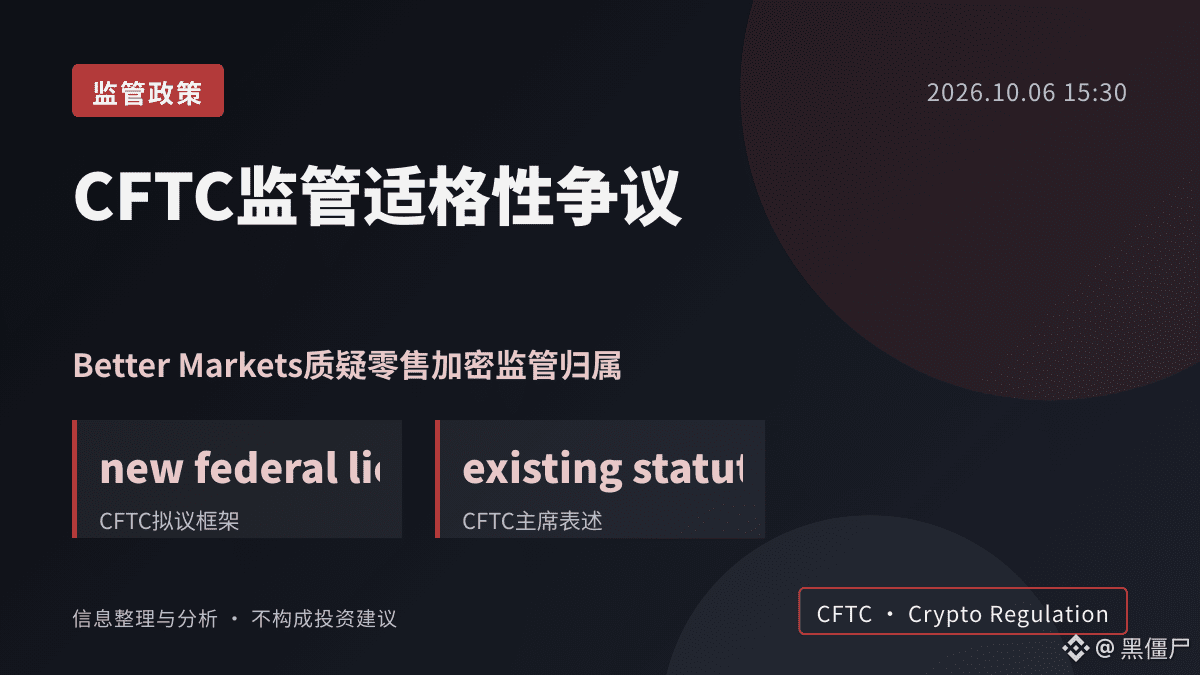
CFTC proposes federal license for crypto exchanges; Better Markets questions its regulatory suitability
According to Decrypt, the CFTC is seeking public comment on a proposed framework that would establish a new federal license for crypto exchanges, along with related regulatory requirements. Cointelegraph reported that CFTC Chair Michael Selig said the move is based on “existing statutory authority” to advance crypto regulation. However, according to Cointelegraph, consumer advocacy group Better Markets immediately pushed back publicly, calling the CFTC the “wrong agency” to regulate retail crypto businesses.
At the heart of the dispute is which agency has regulatory authority. The CFTC has traditionally focused on derivatives markets, while retail crypto trading involves multiple dimensions—including whether assets qualify as securities, consumer protection, and payment settlement—that typically overlap with the responsibilities of the SEC and state-level financial regulators. Better Markets is not disputing the need for regulation; rather, it is challenging whether the CFTC has the statutory basis and expertise to address the complexities of the retail market. After a vote on the CLARITY Act failed to pass, the CFTC and SEC moved forward with their respective frameworks, reflecting a regulatory “race ahead” by agencies amid the absence of federal legislation.
In terms of market impact, if the CFTC framework is ultimately adopted, compliance costs could rise. However, a unified federal license could reduce the fragmentation of state-level regulation and provide greater certainty for large exchanges. Still, if organizations such as Better Markets continue to apply pressure, the framework could be revised during the public comment period or even trigger a jurisdictional dispute between the CFTC and SEC, prolonging the compliance transition period. The framework is currently still in the public comment stage, and the final rules remain uncertain. The market reaction may be limited, but clarity on the regulatory path will directly affect the compliance expectations of exchanges and stablecoin issuers.
Next, observers should watch how the CFTC responds to public comments and whether the SEC proposes a competing framework for retail crypto businesses. If the two agencies show clear differences over retail crypto regulation, compliance uncertainty will increase, and investors should focus on the details of forthcoming rules rather than current statements.
#CFTC #CryptoRegulation
The above is a compilation of information and personal analysis and does not constitute investment advice.
CFTC proposes federal license for crypto exchanges; Better Markets questions its regulatory suitability
According to Decrypt, the CFTC is seeking public comment on a proposed framework that would establish a new federal license for crypto exchanges, along with related regulatory requirements. Cointelegraph reported that CFTC Chair Michael Selig said the move is based on “existing statutory authority” to advance crypto regulation. However, according to Cointelegraph, consumer advocacy group Better Markets immediately pushed back publicly, calling the CFTC the “wrong agency” to regulate retail crypto businesses.
At the heart of the dispute is which agency has regulatory authority. The CFTC has traditionally focused on derivatives markets, while retail crypto trading involves multiple dimensions—including whether assets qualify as securities, consumer protection, and payment settlement—that typically overlap with the responsibilities of the SEC and state-level financial regulators. Better Markets is not disputing the need for regulation; rather, it is challenging whether the CFTC has the statutory basis and expertise to address the complexities of the retail market. After a vote on the CLARITY Act failed to pass, the CFTC and SEC moved forward with their respective frameworks, reflecting a regulatory “race ahead” by agencies amid the absence of federal legislation.
In terms of market impact, if the CFTC framework is ultimately adopted, compliance costs could rise. However, a unified federal license could reduce the fragmentation of state-level regulation and provide greater certainty for large exchanges. Still, if organizations such as Better Markets continue to apply pressure, the framework could be revised during the public comment period or even trigger a jurisdictional dispute between the CFTC and SEC, prolonging the compliance transition period. The framework is currently still in the public comment stage, and the final rules remain uncertain. The market reaction may be limited, but clarity on the regulatory path will directly affect the compliance expectations of exchanges and stablecoin issuers.
Next, observers should watch how the CFTC responds to public comments and whether the SEC proposes a competing framework for retail crypto businesses. If the two agencies show clear differences over retail crypto regulation, compliance uncertainty will increase, and investors should focus on the details of forthcoming rules rather than current statements.
#CFTC #CryptoRegulation
The above is a compilation of information and personal analysis and does not constitute investment advice.
According to Decrypt, the CFTC is seeking public comment on a proposed framework that would establish a new federal license for crypto exchanges, along with related regulatory requirements. Cointelegraph reported that CFTC Chair Michael Selig said the move is based on “existing statutory authority” to advance crypto regulation. However, according to Cointelegraph, consumer advocacy group Better Markets immediately pushed back publicly, calling the CFTC the “wrong agency” to regulate retail crypto businesses.
At the heart of the dispute is which agency has regulatory authority. The CFTC has traditionally focused on derivatives markets, while retail crypto trading involves multiple dimensions—including whether assets qualify as securities, consumer protection, and payment settlement—that typically overlap with the responsibilities of the SEC and state-level financial regulators. Better Markets is not disputing the need for regulation; rather, it is challenging whether the CFTC has the statutory basis and expertise to address the complexities of the retail market. After a vote on the CLARITY Act failed to pass, the CFTC and SEC moved forward with their respective frameworks, reflecting a regulatory “race ahead” by agencies amid the absence of federal legislation.
In terms of market impact, if the CFTC framework is ultimately adopted, compliance costs could rise. However, a unified federal license could reduce the fragmentation of state-level regulation and provide greater certainty for large exchanges. Still, if organizations such as Better Markets continue to apply pressure, the framework could be revised during the public comment period or even trigger a jurisdictional dispute between the CFTC and SEC, prolonging the compliance transition period. The framework is currently still in the public comment stage, and the final rules remain uncertain. The market reaction may be limited, but clarity on the regulatory path will directly affect the compliance expectations of exchanges and stablecoin issuers.
Next, observers should watch how the CFTC responds to public comments and whether the SEC proposes a competing framework for retail crypto businesses. If the two agencies show clear differences over retail crypto regulation, compliance uncertainty will increase, and investors should focus on the details of forthcoming rules rather than current statements.
#CFTC #CryptoRegulation
The above is a compilation of information and personal analysis and does not constitute investment advice.
25
·
--
FinCEN Withdraws $10K Private Wallet Reporting Rule, Easing Compliance Pressure on Self-Custody
According to CoinDesk, the U.S. Financial Crimes Enforcement Network (FinCEN) has formally withdrawn two proposals that had been pending for years and never took effect. One would have required reporting cryptocurrency transfers of more than $10,000 to private wallets. The move directly eases the regulatory uncertainty that self-custody users and mixers have faced for years.
From a regulatory perspective, if implemented, the rule could have forced on-chain privacy tools to compromise between “traceability” and “user control.” Following its withdrawal, the operating environment for mixers and self-custody wallets is likely to become more permissive in the short term, giving the on-chain privacy narrative some policy breathing room.
However, withdrawing the rule does not mean the end of regulation. FinCEN may put forward similar requirements in another form, and the practical impact on institutional compliance pathways is limited—institutions are more concerned with KYC/AML frameworks and custodial responsibilities than with reporting thresholds for personal wallets.
What’s worth watching next is whether FinCEN will clarify the boundaries of the definition of “private wallet” in future documents, and whether mixers will use this window to accelerate product development. If signals of regulatory easing continue, the on-chain privacy sector may see a fresh wave of interest.
#Bitcoin #CryptoRegulation
The above is a compilation of information and personal analysis, and does not constitute investment advice.
I’ll continue to provide updates as further policy details become clear.
FinCEN Withdraws $10K Private Wallet Reporting Rule, Easing Compliance Pressure on Self-Custody
According to CoinDesk, the U.S. Financial Crimes Enforcement Network (FinCEN) has formally withdrawn two proposals that had been pending for years and never took effect. One would have required reporting cryptocurrency transfers of more than $10,000 to private wallets. The move directly eases the regulatory uncertainty that self-custody users and mixers have faced for years.
From a regulatory perspective, if implemented, the rule could have forced on-chain privacy tools to compromise between “traceability” and “user control.” Following its withdrawal, the operating environment for mixers and self-custody wallets is likely to become more permissive in the short term, giving the on-chain privacy narrative some policy breathing room.
However, withdrawing the rule does not mean the end of regulation. FinCEN may put forward similar requirements in another form, and the practical impact on institutional compliance pathways is limited—institutions are more concerned with KYC/AML frameworks and custodial responsibilities than with reporting thresholds for personal wallets.
What’s worth watching next is whether FinCEN will clarify the boundaries of the definition of “private wallet” in future documents, and whether mixers will use this window to accelerate product development. If signals of regulatory easing continue, the on-chain privacy sector may see a fresh wave of interest.
#Bitcoin #CryptoRegulation
The above is a compilation of information and personal analysis, and does not constitute investment advice.
I’ll continue to provide updates as further policy details become clear.
According to CoinDesk, the U.S. Financial Crimes Enforcement Network (FinCEN) has formally withdrawn two proposals that had been pending for years and never took effect. One would have required reporting cryptocurrency transfers of more than $10,000 to private wallets. The move directly eases the regulatory uncertainty that self-custody users and mixers have faced for years.
From a regulatory perspective, if implemented, the rule could have forced on-chain privacy tools to compromise between “traceability” and “user control.” Following its withdrawal, the operating environment for mixers and self-custody wallets is likely to become more permissive in the short term, giving the on-chain privacy narrative some policy breathing room.
However, withdrawing the rule does not mean the end of regulation. FinCEN may put forward similar requirements in another form, and the practical impact on institutional compliance pathways is limited—institutions are more concerned with KYC/AML frameworks and custodial responsibilities than with reporting thresholds for personal wallets.
What’s worth watching next is whether FinCEN will clarify the boundaries of the definition of “private wallet” in future documents, and whether mixers will use this window to accelerate product development. If signals of regulatory easing continue, the on-chain privacy sector may see a fresh wave of interest.
#Bitcoin #CryptoRegulation
The above is a compilation of information and personal analysis, and does not constitute investment advice.
I’ll continue to provide updates as further policy details become clear.

183
·
--
Solana teams up with JPMorgan to advance an institutional settlement standard, giving the SOL ecosystem a key catalyst
According to Decrypt, Solana has launched an open-source “DvP” program with JPMorgan’s participation, allowing institutions to settle transactions atomically on Solana. This development puts $SOL at the center of discussions about institutional settlement standards and highlights its potential to compete with Ethereum in the tokenized asset sector.
From a technical perspective, DvP (Delivery versus Payment) is a core mechanism in traditional finance that ensures the simultaneous delivery of assets and funds. By open-sourcing it and incorporating institutional input, Solana signals that its on-chain settlement capabilities are evolving from “usable” to “trusted by institutions.” For $SOL, this is not just a technical upgrade, but also a key step in shifting the ecosystem’s position from a high-performance public blockchain toward institutional-grade financial infrastructure.
The market may interpret this as another milestone for SOL in the tokenization of RWA (real-world assets). If more institutions adopt this standard, the volume of tokenized assets and transaction activity on the SOL network could increase, potentially supporting demand for $SOL. However, it is worth noting that there is still a gap between the release of an open-source standard and its actual adoption by institutions. Chains such as Ethereum are also advancing similar institutional settlement solutions, so SOL may not have an exclusive advantage.
What to watch next: whether more institutions connect to the DvP program, and whether the actual trading volume of tokenized assets on Solana shows verifiable growth. If you are following $SOL, in the short term it may be more worthwhile to watch for signs of institutional adoption becoming tangible rather than simply chasing news-driven volatility.
$SOL #Solana #CryptoMarket
The above is a compilation of information and personal analysis and does not constitute investment advice.
Solana teams up with JPMorgan to advance an institutional settlement standard, giving the SOL ecosystem a key catalyst
According to Decrypt, Solana has launched an open-source “DvP” program with JPMorgan’s participation, allowing institutions to settle transactions atomically on Solana. This development puts $SOL at the center of discussions about institutional settlement standards and highlights its potential to compete with Ethereum in the tokenized asset sector.
From a technical perspective, DvP (Delivery versus Payment) is a core mechanism in traditional finance that ensures the simultaneous delivery of assets and funds. By open-sourcing it and incorporating institutional input, Solana signals that its on-chain settlement capabilities are evolving from “usable” to “trusted by institutions.” For $SOL , this is not just a technical upgrade, but also a key step in shifting the ecosystem’s position from a high-performance public blockchain toward institutional-grade financial infrastructure.
The market may interpret this as another milestone for SOL in the tokenization of RWA (real-world assets). If more institutions adopt this standard, the volume of tokenized assets and transaction activity on the SOL network could increase, potentially supporting demand for $SOL . However, it is worth noting that there is still a gap between the release of an open-source standard and its actual adoption by institutions. Chains such as Ethereum are also advancing similar institutional settlement solutions, so SOL may not have an exclusive advantage.
What to watch next: whether more institutions connect to the DvP program, and whether the actual trading volume of tokenized assets on Solana shows verifiable growth. If you are following $SOL , in the short term it may be more worthwhile to watch for signs of institutional adoption becoming tangible rather than simply chasing news-driven volatility.
$SOL #Solana #CryptoMarket
The above is a compilation of information and personal analysis and does not constitute investment advice.
According to Decrypt, Solana has launched an open-source “DvP” program with JPMorgan’s participation, allowing institutions to settle transactions atomically on Solana. This development puts $SOL at the center of discussions about institutional settlement standards and highlights its potential to compete with Ethereum in the tokenized asset sector.
From a technical perspective, DvP (Delivery versus Payment) is a core mechanism in traditional finance that ensures the simultaneous delivery of assets and funds. By open-sourcing it and incorporating institutional input, Solana signals that its on-chain settlement capabilities are evolving from “usable” to “trusted by institutions.” For $SOL , this is not just a technical upgrade, but also a key step in shifting the ecosystem’s position from a high-performance public blockchain toward institutional-grade financial infrastructure.
The market may interpret this as another milestone for SOL in the tokenization of RWA (real-world assets). If more institutions adopt this standard, the volume of tokenized assets and transaction activity on the SOL network could increase, potentially supporting demand for $SOL . However, it is worth noting that there is still a gap between the release of an open-source standard and its actual adoption by institutions. Chains such as Ethereum are also advancing similar institutional settlement solutions, so SOL may not have an exclusive advantage.
What to watch next: whether more institutions connect to the DvP program, and whether the actual trading volume of tokenized assets on Solana shows verifiable growth. If you are following $SOL , in the short term it may be more worthwhile to watch for signs of institutional adoption becoming tangible rather than simply chasing news-driven volatility.
$SOL #Solana #CryptoMarket
The above is a compilation of information and personal analysis and does not constitute investment advice.

129
·
--
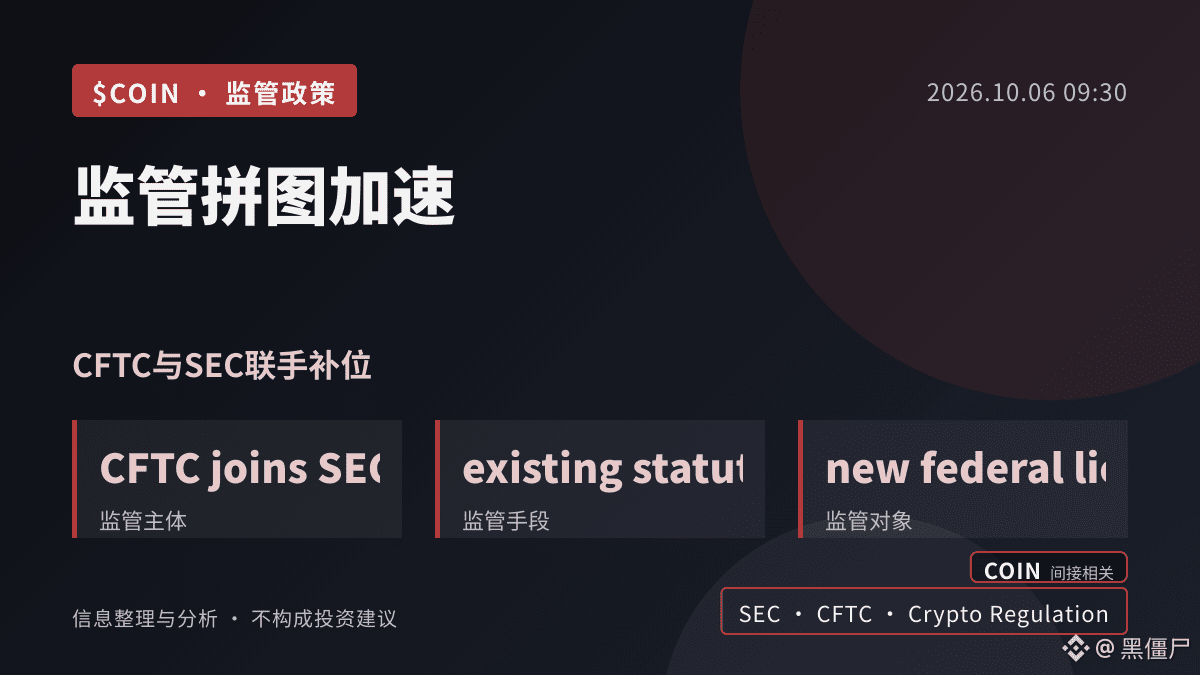
After CLARITY Stalls, CFTC Joins SEC to Advance Crypto Regulatory Framework
With the CLARITY Act stalled in Congress, the U.S. approach to crypto regulation is shifting from legislation to administrative action. According to Cointelegraph, CFTC Chair Michael Selig said the agency is using its “existing statutory authority” to advance crypto regulation in coordination with the SEC. Decrypt reports that the CFTC has sought public comment on a new framework centered on establishing federal licenses for crypto exchanges, along with related rules. According to CoinDesk, the CFTC plans to introduce two rules intended to cover the regulatory scope of crypto activities and exchanges, though a regulatory gap in the spot market remains.
The significance of this move is that the regulatory picture no longer depends entirely on Congress. The CFTC’s use of its existing authority to fill in the gaps could clarify compliance expectations for exchanges sooner, potentially benefiting leading compliant platforms first. As a major publicly listed exchange, $COIN could see its compliance advantage become more pronounced if a federal licensing framework is implemented, though the specific impact remains to be seen as the rules take shape.
Risks include the unaddressed regulatory gap in the spot market and the fact that the framework’s details have yet to be finalized, both of which could lead to higher compliance costs or uncertainty around market access. A shift from legislation to administrative action could move things along faster, but it also offers greater flexibility, so the scope for future revisions is worth watching.
Next, watch for the specific provisions of the CFTC’s two rules, public feedback, and whether the SEC develops accompanying measures in parallel. From a trading perspective, if you are following $COIN, it is more useful to watch for confirmation in its trading volume and fund flows around the implementation of regulatory details than to anticipate a direction at this early stage of the framework.
$COIN #CryptoRegulation #CFTC #SEC
The above is a compilation of information and personal analysis and does not constitute investment advice.
After CLARITY Stalls, CFTC Joins SEC to Advance Crypto Regulatory Framework
With the CLARITY Act stalled in Congress, the U.S. approach to crypto regulation is shifting from legislation to administrative action. According to Cointelegraph, CFTC Chair Michael Selig said the agency is using its “existing statutory authority” to advance crypto regulation in coordination with the SEC. Decrypt reports that the CFTC has sought public comment on a new framework centered on establishing federal licenses for crypto exchanges, along with related rules. According to CoinDesk, the CFTC plans to introduce two rules intended to cover the regulatory scope of crypto activities and exchanges, though a regulatory gap in the spot market remains.
The significance of this move is that the regulatory picture no longer depends entirely on Congress. The CFTC’s use of its existing authority to fill in the gaps could clarify compliance expectations for exchanges sooner, potentially benefiting leading compliant platforms first. As a major publicly listed exchange, $COIN could see its compliance advantage become more pronounced if a federal licensing framework is implemented, though the specific impact remains to be seen as the rules take shape.
Risks include the unaddressed regulatory gap in the spot market and the fact that the framework’s details have yet to be finalized, both of which could lead to higher compliance costs or uncertainty around market access. A shift from legislation to administrative action could move things along faster, but it also offers greater flexibility, so the scope for future revisions is worth watching.
Next, watch for the specific provisions of the CFTC’s two rules, public feedback, and whether the SEC develops accompanying measures in parallel. From a trading perspective, if you are following $COIN , it is more useful to watch for confirmation in its trading volume and fund flows around the implementation of regulatory details than to anticipate a direction at this early stage of the framework.
$COIN #CryptoRegulation #CFTC #SEC
The above is a compilation of information and personal analysis and does not constitute investment advice.
With the CLARITY Act stalled in Congress, the U.S. approach to crypto regulation is shifting from legislation to administrative action. According to Cointelegraph, CFTC Chair Michael Selig said the agency is using its “existing statutory authority” to advance crypto regulation in coordination with the SEC. Decrypt reports that the CFTC has sought public comment on a new framework centered on establishing federal licenses for crypto exchanges, along with related rules. According to CoinDesk, the CFTC plans to introduce two rules intended to cover the regulatory scope of crypto activities and exchanges, though a regulatory gap in the spot market remains.
The significance of this move is that the regulatory picture no longer depends entirely on Congress. The CFTC’s use of its existing authority to fill in the gaps could clarify compliance expectations for exchanges sooner, potentially benefiting leading compliant platforms first. As a major publicly listed exchange, $COIN could see its compliance advantage become more pronounced if a federal licensing framework is implemented, though the specific impact remains to be seen as the rules take shape.
Risks include the unaddressed regulatory gap in the spot market and the fact that the framework’s details have yet to be finalized, both of which could lead to higher compliance costs or uncertainty around market access. A shift from legislation to administrative action could move things along faster, but it also offers greater flexibility, so the scope for future revisions is worth watching.
Next, watch for the specific provisions of the CFTC’s two rules, public feedback, and whether the SEC develops accompanying measures in parallel. From a trading perspective, if you are following $COIN , it is more useful to watch for confirmation in its trading volume and fund flows around the implementation of regulatory details than to anticipate a direction at this early stage of the framework.
$COIN #CryptoRegulation #CFTC #SEC
The above is a compilation of information and personal analysis and does not constitute investment advice.
84
·
--
Stripe’s Stablecoin Card to Reach 100 Countries by Year-End as USDC Payments Gain Momentum
According to CoinDesk, Stripe plans to expand its stablecoin card business to more than 100 countries by the end of this year, while also exploring solutions related to tokenized deposits. The significance of this move lies not in the launch of a single product, but in the growing direct link between the expansion of payment networks and stablecoin settlement capabilities.
From a market-structure perspective, Stripe’s distribution reach has long been a key bottleneck for bringing crypto payments into real-world use. Stablecoins have so far been used primarily for on-chain transfers and institutional settlements, while access to card networks and acquiring networks determines whether everyday merchants and consumers can use them for routine purchases. If the goal of reaching 100 countries by year-end stays on track, the adoption path for USDC in cross-border payments, merchant settlements, and consumer spending may become clearer. Competition among stablecoins could also shift from “who issues them” to “who connects to more payment nodes.”
However, the information disclosed so far remains more of a roadmap: the specific countries covered, merchant numbers, payment volumes, and compliance timelines have yet to be clarified. Requirements for stablecoin cards, tokenized deposits, and payment licenses vary widely across jurisdictions, making the timeline uncertain. If the expansion remains limited to partnership announcements, actual fund flows and transaction volumes may fall short of expectations.
What will be more important to watch next is whether Stripe discloses launches in specific countries, merchant onboarding figures, or transaction volumes. For those following USDC, the key near-term question is whether the payment network’s expansion leads to confirmed real-world usage—not simply what the roadmap suggests.
#Stablecoin #USDC #CryptoMarket
The above is a summary of information and personal analysis, and does not constitute investment advice.
Follow me for ongoing coverage of key market developments and data.
Stripe’s Stablecoin Card to Reach 100 Countries by Year-End as USDC Payments Gain Momentum
According to CoinDesk, Stripe plans to expand its stablecoin card business to more than 100 countries by the end of this year, while also exploring solutions related to tokenized deposits. The significance of this move lies not in the launch of a single product, but in the growing direct link between the expansion of payment networks and stablecoin settlement capabilities.
From a market-structure perspective, Stripe’s distribution reach has long been a key bottleneck for bringing crypto payments into real-world use. Stablecoins have so far been used primarily for on-chain transfers and institutional settlements, while access to card networks and acquiring networks determines whether everyday merchants and consumers can use them for routine purchases. If the goal of reaching 100 countries by year-end stays on track, the adoption path for USDC in cross-border payments, merchant settlements, and consumer spending may become clearer. Competition among stablecoins could also shift from “who issues them” to “who connects to more payment nodes.”
However, the information disclosed so far remains more of a roadmap: the specific countries covered, merchant numbers, payment volumes, and compliance timelines have yet to be clarified. Requirements for stablecoin cards, tokenized deposits, and payment licenses vary widely across jurisdictions, making the timeline uncertain. If the expansion remains limited to partnership announcements, actual fund flows and transaction volumes may fall short of expectations.
What will be more important to watch next is whether Stripe discloses launches in specific countries, merchant onboarding figures, or transaction volumes. For those following USDC, the key near-term question is whether the payment network’s expansion leads to confirmed real-world usage—not simply what the roadmap suggests.
#Stablecoin #USDC #CryptoMarket
The above is a summary of information and personal analysis, and does not constitute investment advice.
Follow me for ongoing coverage of key market developments and data.
According to CoinDesk, Stripe plans to expand its stablecoin card business to more than 100 countries by the end of this year, while also exploring solutions related to tokenized deposits. The significance of this move lies not in the launch of a single product, but in the growing direct link between the expansion of payment networks and stablecoin settlement capabilities.
From a market-structure perspective, Stripe’s distribution reach has long been a key bottleneck for bringing crypto payments into real-world use. Stablecoins have so far been used primarily for on-chain transfers and institutional settlements, while access to card networks and acquiring networks determines whether everyday merchants and consumers can use them for routine purchases. If the goal of reaching 100 countries by year-end stays on track, the adoption path for USDC in cross-border payments, merchant settlements, and consumer spending may become clearer. Competition among stablecoins could also shift from “who issues them” to “who connects to more payment nodes.”
However, the information disclosed so far remains more of a roadmap: the specific countries covered, merchant numbers, payment volumes, and compliance timelines have yet to be clarified. Requirements for stablecoin cards, tokenized deposits, and payment licenses vary widely across jurisdictions, making the timeline uncertain. If the expansion remains limited to partnership announcements, actual fund flows and transaction volumes may fall short of expectations.
What will be more important to watch next is whether Stripe discloses launches in specific countries, merchant onboarding figures, or transaction volumes. For those following USDC, the key near-term question is whether the payment network’s expansion leads to confirmed real-world usage—not simply what the roadmap suggests.
#Stablecoin #USDC #CryptoMarket
The above is a summary of information and personal analysis, and does not constitute investment advice.
Follow me for ongoing coverage of key market developments and data.

110
·
--
Metaplanet Sells 10,000 BTC and Buys Back 11,000, Responding to Liquidity Concerns
According to Decrypt, Metaplanet sold 10,000 $BTC in the third quarter, then bought back 11,000, increasing its holdings by a net 1,000 BTC for the quarter and bringing its total holdings to 44,000 BTC. CoinDesk reports that the move was intended to show rating agencies that it has the liquidity to meet its debt obligations, rather than simply reducing its holdings.
This move matters because it directly addresses a central concern in the market about BTC companies: whether they will actually sell when their debt comes due. Rating agencies focus on whether a company can remain solvent when debt matures. By selling first and buying back later, Metaplanet demonstrated its ability to manage cash flow while maintaining its long-term holding strategy.
The data show that the net increase of 1,000 BTC indicates that it has not changed its long-term allocation strategy. However, the temporary increase in supply of 10,000 BTC could create localized selling pressure. This buy-and-sell combination both supports its credit narrative and could be interpreted as a liquidity management measure rather than a pure expression of confidence.
The market reaction may be relatively neutral: on the one hand, total holdings remain at 44,000 BTC, leaving the long-term narrative intact; on the other, further selling could weaken expectations that BTC companies' holdings are scarce. The short-term price of $BTC may be affected by supply fluctuations, but the fundamental outlook has not yet reversed.
The risk is that if rating agencies remain unconvinced by its demonstration of liquidity, or if it continues to be a net seller in future quarters, the market may reassess the sustainability of these companies' holdings. In addition, frequent buy-and-sell operations could dilute the signaling value of “long-term holding.”
Next, watch whether Metaplanet continues to increase its holdings on a net basis in future quarters, as well as rating agencies' latest assessments of its liquidity. If you are following BTC, a more useful short-term indicator is whether changes in institutional holdings like this lead to higher trading volume or changes in funding rates, which could indicate how the market is receiving its liquidity narrative.
$BTC #Bitcoin #CryptoMarket
The above is a compilation of information and personal analysis, and does not constitute investment advice.
Metaplanet Sells 10,000 BTC and Buys Back 11,000, Responding to Liquidity Concerns
According to Decrypt, Metaplanet sold 10,000 $BTC in the third quarter, then bought back 11,000, increasing its holdings by a net 1,000 BTC for the quarter and bringing its total holdings to 44,000 BTC. CoinDesk reports that the move was intended to show rating agencies that it has the liquidity to meet its debt obligations, rather than simply reducing its holdings.
This move matters because it directly addresses a central concern in the market about BTC companies: whether they will actually sell when their debt comes due. Rating agencies focus on whether a company can remain solvent when debt matures. By selling first and buying back later, Metaplanet demonstrated its ability to manage cash flow while maintaining its long-term holding strategy.
The data show that the net increase of 1,000 BTC indicates that it has not changed its long-term allocation strategy. However, the temporary increase in supply of 10,000 BTC could create localized selling pressure. This buy-and-sell combination both supports its credit narrative and could be interpreted as a liquidity management measure rather than a pure expression of confidence.
The market reaction may be relatively neutral: on the one hand, total holdings remain at 44,000 BTC, leaving the long-term narrative intact; on the other, further selling could weaken expectations that BTC companies' holdings are scarce. The short-term price of $BTC may be affected by supply fluctuations, but the fundamental outlook has not yet reversed.
The risk is that if rating agencies remain unconvinced by its demonstration of liquidity, or if it continues to be a net seller in future quarters, the market may reassess the sustainability of these companies' holdings. In addition, frequent buy-and-sell operations could dilute the signaling value of “long-term holding.”
Next, watch whether Metaplanet continues to increase its holdings on a net basis in future quarters, as well as rating agencies' latest assessments of its liquidity. If you are following BTC, a more useful short-term indicator is whether changes in institutional holdings like this lead to higher trading volume or changes in funding rates, which could indicate how the market is receiving its liquidity narrative.
$BTC #Bitcoin #CryptoMarket
The above is a compilation of information and personal analysis, and does not constitute investment advice.
According to Decrypt, Metaplanet sold 10,000 $BTC in the third quarter, then bought back 11,000, increasing its holdings by a net 1,000 BTC for the quarter and bringing its total holdings to 44,000 BTC. CoinDesk reports that the move was intended to show rating agencies that it has the liquidity to meet its debt obligations, rather than simply reducing its holdings.
This move matters because it directly addresses a central concern in the market about BTC companies: whether they will actually sell when their debt comes due. Rating agencies focus on whether a company can remain solvent when debt matures. By selling first and buying back later, Metaplanet demonstrated its ability to manage cash flow while maintaining its long-term holding strategy.
The data show that the net increase of 1,000 BTC indicates that it has not changed its long-term allocation strategy. However, the temporary increase in supply of 10,000 BTC could create localized selling pressure. This buy-and-sell combination both supports its credit narrative and could be interpreted as a liquidity management measure rather than a pure expression of confidence.
The market reaction may be relatively neutral: on the one hand, total holdings remain at 44,000 BTC, leaving the long-term narrative intact; on the other, further selling could weaken expectations that BTC companies' holdings are scarce. The short-term price of $BTC may be affected by supply fluctuations, but the fundamental outlook has not yet reversed.
The risk is that if rating agencies remain unconvinced by its demonstration of liquidity, or if it continues to be a net seller in future quarters, the market may reassess the sustainability of these companies' holdings. In addition, frequent buy-and-sell operations could dilute the signaling value of “long-term holding.”
Next, watch whether Metaplanet continues to increase its holdings on a net basis in future quarters, as well as rating agencies' latest assessments of its liquidity. If you are following BTC, a more useful short-term indicator is whether changes in institutional holdings like this lead to higher trading volume or changes in funding rates, which could indicate how the market is receiving its liquidity narrative.
$BTC #Bitcoin #CryptoMarket
The above is a compilation of information and personal analysis, and does not constitute investment advice.

124
·
--
BTC ETFs See Net Inflows for Three Consecutive Weeks, While ETH ETFs Record $138 Million in Outflows
According to Cointelegraph, spot $BTC ETFs recorded net inflows for a third consecutive week, while spot $ETH ETFs shifted to net outflows of $138 million. Zcash funds also recorded outflows for the first time. This divergence is no accident; it puts changing institutional allocation preferences in plain sight: capital is concentrating in assets with deeper liquidity and clearer regulatory pathways.
Why does this matter? ETF flows are the most direct window into institutional participation in the crypto market. Three consecutive weeks of net inflows into BTC suggest that buying is not a one-off event, but an ongoing allocation trend. ETH shifting from inflows to outflows suggests that some institutions may be taking short-term profits or rebalancing their positions. The two trends occurring at the same time indicate that the market is making choices internally, rather than retreating as a whole.
Fundamentally, BTC has a more established institutional narrative, and ETFs reduce the friction involved in gaining exposure through a compliant channel. While ETH’s long-term case remains intact, its short-term funding picture is under pressure, and it is still uncertain whether the outflows will continue. The data on Zcash fund outflows is limited and should be treated as an observation, not overinterpreted.
How might the market react? If BTC inflows continue, $BTC is more likely to find support. If ETH outflows persist, it may face temporary selling pressure. However, short-term fluctuations in fund flows can be misleading, and a single week of data is not enough to draw firm conclusions.
What should you watch next? Focus on whether ETF flows continue to diverge next week and whether ETH outflows grow. If you’re watching $BTC, it’s more worthwhile in the short term to see whether sustained net inflows confirm the strength of institutional buying than to chase a rally.
$BTC $ETH #BitcoinETF #CryptoMarket
The above is a summary of information and personal analysis, and does not constitute investment advice.
Follow me for ongoing coverage of key market developments and data.
BTC ETFs See Net Inflows for Three Consecutive Weeks, While ETH ETFs Record $138 Million in Outflows
According to Cointelegraph, spot $BTC ETFs recorded net inflows for a third consecutive week, while spot $ETH ETFs shifted to net outflows of $138 million. Zcash funds also recorded outflows for the first time. This divergence is no accident; it puts changing institutional allocation preferences in plain sight: capital is concentrating in assets with deeper liquidity and clearer regulatory pathways.
Why does this matter? ETF flows are the most direct window into institutional participation in the crypto market. Three consecutive weeks of net inflows into BTC suggest that buying is not a one-off event, but an ongoing allocation trend. ETH shifting from inflows to outflows suggests that some institutions may be taking short-term profits or rebalancing their positions. The two trends occurring at the same time indicate that the market is making choices internally, rather than retreating as a whole.
Fundamentally, BTC has a more established institutional narrative, and ETFs reduce the friction involved in gaining exposure through a compliant channel. While ETH’s long-term case remains intact, its short-term funding picture is under pressure, and it is still uncertain whether the outflows will continue. The data on Zcash fund outflows is limited and should be treated as an observation, not overinterpreted.
How might the market react? If BTC inflows continue, $BTC is more likely to find support. If ETH outflows persist, it may face temporary selling pressure. However, short-term fluctuations in fund flows can be misleading, and a single week of data is not enough to draw firm conclusions.
What should you watch next? Focus on whether ETF flows continue to diverge next week and whether ETH outflows grow. If you’re watching $BTC , it’s more worthwhile in the short term to see whether sustained net inflows confirm the strength of institutional buying than to chase a rally.
$BTC $ETH #BitcoinETF #CryptoMarket
The above is a summary of information and personal analysis, and does not constitute investment advice.
Follow me for ongoing coverage of key market developments and data.
According to Cointelegraph, spot $BTC ETFs recorded net inflows for a third consecutive week, while spot $ETH ETFs shifted to net outflows of $138 million. Zcash funds also recorded outflows for the first time. This divergence is no accident; it puts changing institutional allocation preferences in plain sight: capital is concentrating in assets with deeper liquidity and clearer regulatory pathways.
Why does this matter? ETF flows are the most direct window into institutional participation in the crypto market. Three consecutive weeks of net inflows into BTC suggest that buying is not a one-off event, but an ongoing allocation trend. ETH shifting from inflows to outflows suggests that some institutions may be taking short-term profits or rebalancing their positions. The two trends occurring at the same time indicate that the market is making choices internally, rather than retreating as a whole.
Fundamentally, BTC has a more established institutional narrative, and ETFs reduce the friction involved in gaining exposure through a compliant channel. While ETH’s long-term case remains intact, its short-term funding picture is under pressure, and it is still uncertain whether the outflows will continue. The data on Zcash fund outflows is limited and should be treated as an observation, not overinterpreted.
How might the market react? If BTC inflows continue, $BTC is more likely to find support. If ETH outflows persist, it may face temporary selling pressure. However, short-term fluctuations in fund flows can be misleading, and a single week of data is not enough to draw firm conclusions.
What should you watch next? Focus on whether ETF flows continue to diverge next week and whether ETH outflows grow. If you’re watching $BTC , it’s more worthwhile in the short term to see whether sustained net inflows confirm the strength of institutional buying than to chase a rally.
$BTC $ETH #BitcoinETF #CryptoMarket
The above is a summary of information and personal analysis, and does not constitute investment advice.
Follow me for ongoing coverage of key market developments and data.

249
·
--
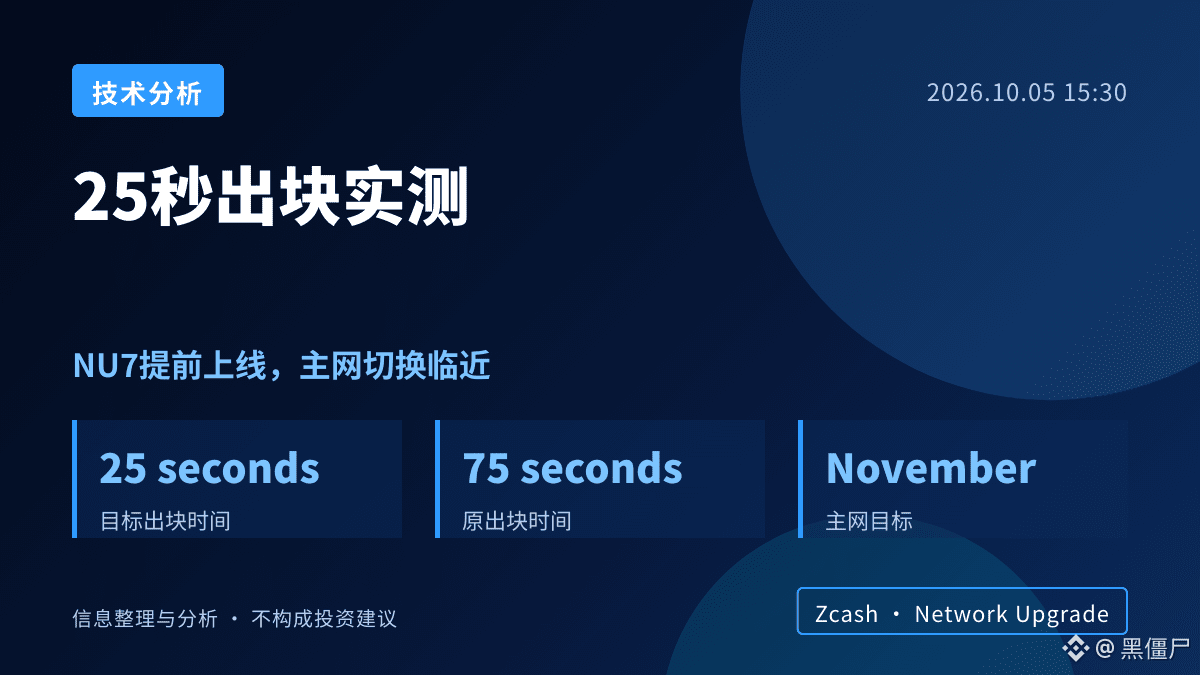
Zcash NU7 Goes Live on Testnet, 25-Second Block Times Put to the Test
The Zcash NU7 upgrade has gone live early on the public testnet, reducing the target block time from 75 seconds to 25 seconds. CoinDesk reports that this early activation gives exchanges, wallets, and developers a chance to conduct a live rehearsal before the mainnet transition. According to Cointelegraph, developers also have several weeks to assess the 25-second block time and other protocol changes, with the mainnet still targeted for November.
The significance is that Zcash is moving its performance upgrade from the roadmap into a testable phase. Cutting block times to one-third of their previous length could, in theory, speed up transaction confirmations and increase on-chain throughput, while also improving the experience of private transactions. However, testnet performance does not guarantee mainnet stability. A 25-second block time could put more pressure on node synchronization and privacy-proof computation, and a rough mainnet transition could undermine confidence in the ecosystem.
Next, watch the stability data after several weeks of testnet operation, and whether the mainnet transition goes ahead as planned in November. For trading, if you are following ZEC, it is more useful to watch for confirmation in trading volume and volatility before and after the mainnet transition than to place bets early.
#Zcash #CryptoUpgrade
The above is a compilation of information and personal analysis, and does not constitute investment advice.
I will continue to track key data and technical developments.
Zcash NU7 Goes Live on Testnet, 25-Second Block Times Put to the Test
The Zcash NU7 upgrade has gone live early on the public testnet, reducing the target block time from 75 seconds to 25 seconds. CoinDesk reports that this early activation gives exchanges, wallets, and developers a chance to conduct a live rehearsal before the mainnet transition. According to Cointelegraph, developers also have several weeks to assess the 25-second block time and other protocol changes, with the mainnet still targeted for November.
The significance is that Zcash is moving its performance upgrade from the roadmap into a testable phase. Cutting block times to one-third of their previous length could, in theory, speed up transaction confirmations and increase on-chain throughput, while also improving the experience of private transactions. However, testnet performance does not guarantee mainnet stability. A 25-second block time could put more pressure on node synchronization and privacy-proof computation, and a rough mainnet transition could undermine confidence in the ecosystem.
Next, watch the stability data after several weeks of testnet operation, and whether the mainnet transition goes ahead as planned in November. For trading, if you are following ZEC, it is more useful to watch for confirmation in trading volume and volatility before and after the mainnet transition than to place bets early.
#Zcash #CryptoUpgrade
The above is a compilation of information and personal analysis, and does not constitute investment advice.
I will continue to track key data and technical developments.
The Zcash NU7 upgrade has gone live early on the public testnet, reducing the target block time from 75 seconds to 25 seconds. CoinDesk reports that this early activation gives exchanges, wallets, and developers a chance to conduct a live rehearsal before the mainnet transition. According to Cointelegraph, developers also have several weeks to assess the 25-second block time and other protocol changes, with the mainnet still targeted for November.
The significance is that Zcash is moving its performance upgrade from the roadmap into a testable phase. Cutting block times to one-third of their previous length could, in theory, speed up transaction confirmations and increase on-chain throughput, while also improving the experience of private transactions. However, testnet performance does not guarantee mainnet stability. A 25-second block time could put more pressure on node synchronization and privacy-proof computation, and a rough mainnet transition could undermine confidence in the ecosystem.
Next, watch the stability data after several weeks of testnet operation, and whether the mainnet transition goes ahead as planned in November. For trading, if you are following ZEC, it is more useful to watch for confirmation in trading volume and volatility before and after the mainnet transition than to place bets early.
#Zcash #CryptoUpgrade
The above is a compilation of information and personal analysis, and does not constitute investment advice.
I will continue to track key data and technical developments.
81
·
--
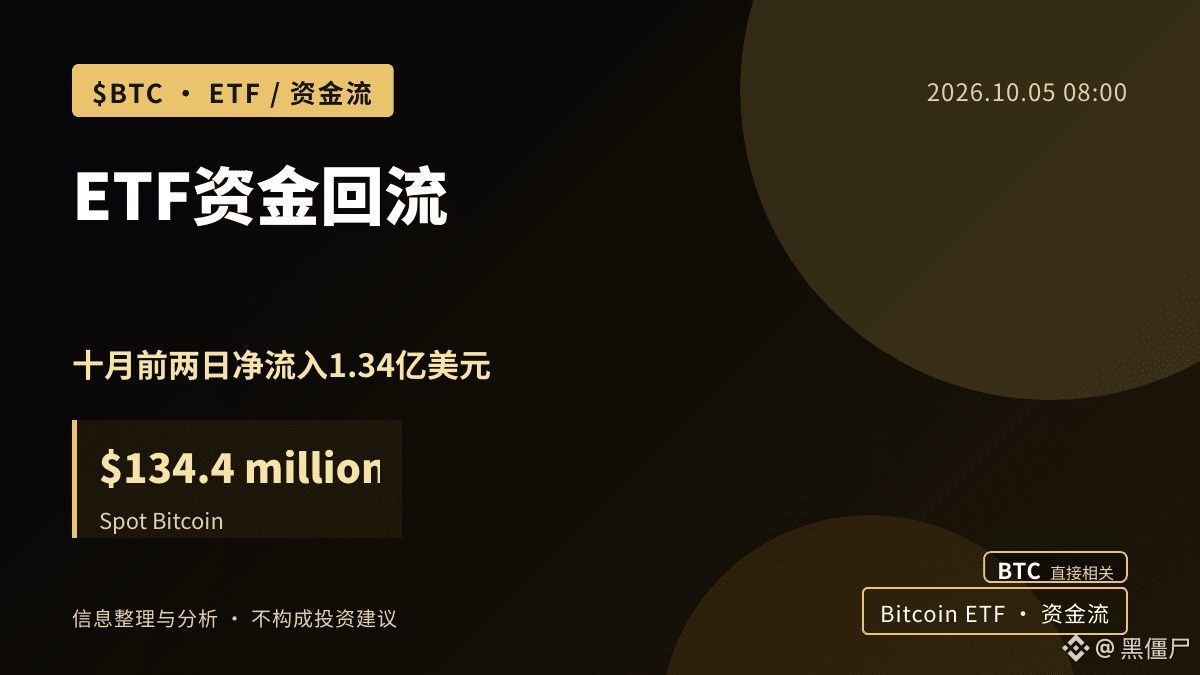
Bitcoin ETF sees net inflows of $134 million in the first two days of October, signaling a shift in liquidity conditions
According to Decrypt, spot Bitcoin ETFs recorded a total net inflow of $134.4 million in the first two trading days of October, ending the net outflow situation on September 30. This change occurred at the start of “Uptober,” and the market generally interprets it as an early sign of money returning.
In terms of fund structure, ETF inflows translate directly into buy-side demand for $BTC, serving as one of the main channels through which institutions and qualified investors participate in the spot market. The contrast between the outflows at the end of September and the inflows at the beginning of October suggests that near-term sentiment or liquidity conditions have shifted. However, relying on data from just two days is not enough to confirm a trend reversal.
What needs to be watched is whether these inflows are sustained. If net inflows continue on subsequent trading days, and macro risk appetite does not deteriorate significantly, it may strengthen the pricing foundation for $BTC above key support levels. Conversely, if inflows quickly turn into outflows, the current rebound is more likely to be merely a technical correction.
At the trading level, what’s more worth observing is whether ETF fund flows and $BTC price momentum confirm each other in tandem, rather than inferring direction solely from two days of data.
$BTC #Bitcoin #ETF #CryptoMarket
The above is information compilation and personal analysis, and does not constitute investment advice. Follow me for ongoing tracking of key market changes and data.
Bitcoin ETF sees net inflows of $134 million in the first two days of October, signaling a shift in liquidity conditions
According to Decrypt, spot Bitcoin ETFs recorded a total net inflow of $134.4 million in the first two trading days of October, ending the net outflow situation on September 30. This change occurred at the start of “Uptober,” and the market generally interprets it as an early sign of money returning.
In terms of fund structure, ETF inflows translate directly into buy-side demand for $BTC , serving as one of the main channels through which institutions and qualified investors participate in the spot market. The contrast between the outflows at the end of September and the inflows at the beginning of October suggests that near-term sentiment or liquidity conditions have shifted. However, relying on data from just two days is not enough to confirm a trend reversal.
What needs to be watched is whether these inflows are sustained. If net inflows continue on subsequent trading days, and macro risk appetite does not deteriorate significantly, it may strengthen the pricing foundation for $BTC above key support levels. Conversely, if inflows quickly turn into outflows, the current rebound is more likely to be merely a technical correction.
At the trading level, what’s more worth observing is whether ETF fund flows and $BTC price momentum confirm each other in tandem, rather than inferring direction solely from two days of data.
$BTC #Bitcoin #ETF #CryptoMarket
The above is information compilation and personal analysis, and does not constitute investment advice. Follow me for ongoing tracking of key market changes and data.
According to Decrypt, spot Bitcoin ETFs recorded a total net inflow of $134.4 million in the first two trading days of October, ending the net outflow situation on September 30. This change occurred at the start of “Uptober,” and the market generally interprets it as an early sign of money returning.
In terms of fund structure, ETF inflows translate directly into buy-side demand for $BTC , serving as one of the main channels through which institutions and qualified investors participate in the spot market. The contrast between the outflows at the end of September and the inflows at the beginning of October suggests that near-term sentiment or liquidity conditions have shifted. However, relying on data from just two days is not enough to confirm a trend reversal.
What needs to be watched is whether these inflows are sustained. If net inflows continue on subsequent trading days, and macro risk appetite does not deteriorate significantly, it may strengthen the pricing foundation for $BTC above key support levels. Conversely, if inflows quickly turn into outflows, the current rebound is more likely to be merely a technical correction.
At the trading level, what’s more worth observing is whether ETF fund flows and $BTC price momentum confirm each other in tandem, rather than inferring direction solely from two days of data.
$BTC #Bitcoin #ETF #CryptoMarket
The above is information compilation and personal analysis, and does not constitute investment advice. Follow me for ongoing tracking of key market changes and data.
97
·
--
The Clarity Act Hits a Roadblock—Why Crypto M&A Still Sets Records
According to CoinDesk, the U.S. Senate’s Clarity Act has stalled in progress, but crypto industry M&A deals have not slowed down; instead, they are at a historic high. This pairing seems contradictory, but it actually reveals a core logic in today’s market: regulatory uncertainty is being re-priced by capital, using real money.
The stagnation of the Clarity Act means the legal boundaries for crypto assets within the banking system, securities classification, and tax treatment are still not fully clear. For traditional financial institutions, this increases compliance costs and adds complexity to deal-structure design. However, M&A data shows that neither buyers nor sellers have stopped acting. There are typically two explanations: first, deal parties hedge regulatory risk with more complex legal structures (such as SPVs and contingent terms); second, the market believes that even in a period of regulatory ambiguity, the scarcity premium of high-quality crypto assets is sufficient to cover the added compliance costs.
In terms of industry impact, regulatory obstruction may lengthen the completion timelines for certain deals, especially M&A involving bank charters or securities issuance. But record-level deal volume also indicates that capital’s long-term valuation of crypto infrastructure and top-tier projects has not changed due to short-term policy fluctuations. This “policy cool, deal hot” divergence often appears during the transition period when regulatory frameworks move from ambiguity toward clarity.
Next, what needs to be watched is the specific direction of the Clarity Act’s amendments in the Senate, and whether other state-level or industry self-regulatory standards will fill the gaps at the federal level. If the regulatory vacuum persists, valuation discounts in M&A could widen, and some deals that rely on clear securities status may need to renegotiate their terms.
#Regulation
The above is information compilation and personal analysis and does not constitute investment advice.
The Clarity Act Hits a Roadblock—Why Crypto M&A Still Sets Records
According to CoinDesk, the U.S. Senate’s Clarity Act has stalled in progress, but crypto industry M&A deals have not slowed down; instead, they are at a historic high. This pairing seems contradictory, but it actually reveals a core logic in today’s market: regulatory uncertainty is being re-priced by capital, using real money.
The stagnation of the Clarity Act means the legal boundaries for crypto assets within the banking system, securities classification, and tax treatment are still not fully clear. For traditional financial institutions, this increases compliance costs and adds complexity to deal-structure design. However, M&A data shows that neither buyers nor sellers have stopped acting. There are typically two explanations: first, deal parties hedge regulatory risk with more complex legal structures (such as SPVs and contingent terms); second, the market believes that even in a period of regulatory ambiguity, the scarcity premium of high-quality crypto assets is sufficient to cover the added compliance costs.
In terms of industry impact, regulatory obstruction may lengthen the completion timelines for certain deals, especially M&A involving bank charters or securities issuance. But record-level deal volume also indicates that capital’s long-term valuation of crypto infrastructure and top-tier projects has not changed due to short-term policy fluctuations. This “policy cool, deal hot” divergence often appears during the transition period when regulatory frameworks move from ambiguity toward clarity.
Next, what needs to be watched is the specific direction of the Clarity Act’s amendments in the Senate, and whether other state-level or industry self-regulatory standards will fill the gaps at the federal level. If the regulatory vacuum persists, valuation discounts in M&A could widen, and some deals that rely on clear securities status may need to renegotiate their terms.
#Regulation
The above is information compilation and personal analysis and does not constitute investment advice.
According to CoinDesk, the U.S. Senate’s Clarity Act has stalled in progress, but crypto industry M&A deals have not slowed down; instead, they are at a historic high. This pairing seems contradictory, but it actually reveals a core logic in today’s market: regulatory uncertainty is being re-priced by capital, using real money.
The stagnation of the Clarity Act means the legal boundaries for crypto assets within the banking system, securities classification, and tax treatment are still not fully clear. For traditional financial institutions, this increases compliance costs and adds complexity to deal-structure design. However, M&A data shows that neither buyers nor sellers have stopped acting. There are typically two explanations: first, deal parties hedge regulatory risk with more complex legal structures (such as SPVs and contingent terms); second, the market believes that even in a period of regulatory ambiguity, the scarcity premium of high-quality crypto assets is sufficient to cover the added compliance costs.
In terms of industry impact, regulatory obstruction may lengthen the completion timelines for certain deals, especially M&A involving bank charters or securities issuance. But record-level deal volume also indicates that capital’s long-term valuation of crypto infrastructure and top-tier projects has not changed due to short-term policy fluctuations. This “policy cool, deal hot” divergence often appears during the transition period when regulatory frameworks move from ambiguity toward clarity.
Next, what needs to be watched is the specific direction of the Clarity Act’s amendments in the Senate, and whether other state-level or industry self-regulatory standards will fill the gaps at the federal level. If the regulatory vacuum persists, valuation discounts in M&A could widen, and some deals that rely on clear securities status may need to renegotiate their terms.
#Regulation
The above is information compilation and personal analysis and does not constitute investment advice.

63
·
--
1.38 billion USD loan released to El Salvador after the IMF grants exemptions to Bitcoin-related matters
According to Cointelegraph, after the IMF granted Bitcoin-related exemptions, it disbursed a $138 million loan to El Salvador. With the funds now in place, this means that El Salvador’s Bitcoin policy has been formally incorporated into an IMF framework for the first time, rather than remaining confined to a contentious or unclear position.
The significance of this development lies in the fact that it offers an observable sample: whether a sovereign state can continue advancing the integration of Bitcoin into its monetary or fiscal systems under the rules of international financial institutions. The IMF also said that El Salvador will continue to reduce the state’s involvement in Bitcoin-related activities and strengthen oversight of crypto assets. This suggests that the exemption is not an unconditional endorsement, but is accompanied by structural adjustment requirements.
From a market perspective, this event may reinforce the narrative of “sovereign adoption,” but it could also spark debate about the durability of the policy. If the IMF requires El Salvador to lower the level of state participation, the country’s subsequent actions regarding Bitcoin payments, reserves, or promotion may become more cautious, which could affect some market participants’ expectations of the long-term path to BTC adoption.
Next, what’s worth watching is how El Salvador will adjust its Bitcoin policy within the IMF framework, and whether the IMF will replicate similar exemption arrangements in cases involving other sovereign countries. If more countries later receive comparable treatment, the regulatory route for BTC may become even clearer; conversely, if El Salvador’s policy is scaled back, it could serve as a counterexample to the sovereign adoption narrative.
#Bitcoin #CryptoMarket
The above is an information roundup and personal analysis, and does not constitute investment advice.
Once further policy details are clarified, I will continue to update.
1.38 billion USD loan released to El Salvador after the IMF grants exemptions to Bitcoin-related matters
According to Cointelegraph, after the IMF granted Bitcoin-related exemptions, it disbursed a $138 million loan to El Salvador. With the funds now in place, this means that El Salvador’s Bitcoin policy has been formally incorporated into an IMF framework for the first time, rather than remaining confined to a contentious or unclear position.
The significance of this development lies in the fact that it offers an observable sample: whether a sovereign state can continue advancing the integration of Bitcoin into its monetary or fiscal systems under the rules of international financial institutions. The IMF also said that El Salvador will continue to reduce the state’s involvement in Bitcoin-related activities and strengthen oversight of crypto assets. This suggests that the exemption is not an unconditional endorsement, but is accompanied by structural adjustment requirements.
From a market perspective, this event may reinforce the narrative of “sovereign adoption,” but it could also spark debate about the durability of the policy. If the IMF requires El Salvador to lower the level of state participation, the country’s subsequent actions regarding Bitcoin payments, reserves, or promotion may become more cautious, which could affect some market participants’ expectations of the long-term path to BTC adoption.
Next, what’s worth watching is how El Salvador will adjust its Bitcoin policy within the IMF framework, and whether the IMF will replicate similar exemption arrangements in cases involving other sovereign countries. If more countries later receive comparable treatment, the regulatory route for BTC may become even clearer; conversely, if El Salvador’s policy is scaled back, it could serve as a counterexample to the sovereign adoption narrative.
#Bitcoin #CryptoMarket
The above is an information roundup and personal analysis, and does not constitute investment advice.
Once further policy details are clarified, I will continue to update.
According to Cointelegraph, after the IMF granted Bitcoin-related exemptions, it disbursed a $138 million loan to El Salvador. With the funds now in place, this means that El Salvador’s Bitcoin policy has been formally incorporated into an IMF framework for the first time, rather than remaining confined to a contentious or unclear position.
The significance of this development lies in the fact that it offers an observable sample: whether a sovereign state can continue advancing the integration of Bitcoin into its monetary or fiscal systems under the rules of international financial institutions. The IMF also said that El Salvador will continue to reduce the state’s involvement in Bitcoin-related activities and strengthen oversight of crypto assets. This suggests that the exemption is not an unconditional endorsement, but is accompanied by structural adjustment requirements.
From a market perspective, this event may reinforce the narrative of “sovereign adoption,” but it could also spark debate about the durability of the policy. If the IMF requires El Salvador to lower the level of state participation, the country’s subsequent actions regarding Bitcoin payments, reserves, or promotion may become more cautious, which could affect some market participants’ expectations of the long-term path to BTC adoption.
Next, what’s worth watching is how El Salvador will adjust its Bitcoin policy within the IMF framework, and whether the IMF will replicate similar exemption arrangements in cases involving other sovereign countries. If more countries later receive comparable treatment, the regulatory route for BTC may become even clearer; conversely, if El Salvador’s policy is scaled back, it could serve as a counterexample to the sovereign adoption narrative.
#Bitcoin #CryptoMarket
The above is an information roundup and personal analysis, and does not constitute investment advice.
Once further policy details are clarified, I will continue to update.

65
·
--
Nonfarm added only 29K—why is $BTC pushing toward 87K?
In September, new U.S. nonfarm payrolls added just 29K jobs, far below the 84K expected, and the unemployment rate rose to 4.2%. According to CNBC, this figure directly suppressed U.S. Treasury yields and became the key macro catalyst behind $BTC briefly touching 87K during the day.
A sharp weakening in employment suggests the labor market is cooling. The market accordingly repriced the Federal Reserve’s policy path. Per Decrypt, after this data was released, the probability of a rate hike in October was essentially wiped out, and rate-cut expectations warmed significantly. For $BTC, falling rates typically reduce the relative cost of holding non–interest-bearing assets and boost risk appetite—so the macro logic aligns and resonates with price action.
Technically, according to Cointelegraph, $BTC met clear resistance near 87K on the order book and failed to break through smoothly. This indicates that despite strong macro tailwinds, sell pressure at higher levels is also real; bulls and bears are locked in a tug-of-war at this price.
The market may interpret this data as a signal of economic slowing. While rate-cut expectations rise alongside the positives, it also needs to watch out for risk-off sentiment driven by recession concerns. If subsequent data continues to weaken, macro tailwinds and hedging demand could offset each other, potentially capping $BTC’s upside.
Next, it’s important to monitor whether $BTC can hold firmly above 87K and whether Treasury yields continue to decline. From a trading perspective, it’s more worth waiting for a confirmed breakout above the 87K resistance than chasing while the price is stuck in a standoff.
$BTC #Bitcoin #CryptoMarket
The above is an information summary and personal analysis, not investment advice.
Follow me for continued tracking of key market developments and data.
Nonfarm added only 29K—why is $BTC pushing toward 87K?
In September, new U.S. nonfarm payrolls added just 29K jobs, far below the 84K expected, and the unemployment rate rose to 4.2%. According to CNBC, this figure directly suppressed U.S. Treasury yields and became the key macro catalyst behind $BTC briefly touching 87K during the day.
A sharp weakening in employment suggests the labor market is cooling. The market accordingly repriced the Federal Reserve’s policy path. Per Decrypt, after this data was released, the probability of a rate hike in October was essentially wiped out, and rate-cut expectations warmed significantly. For $BTC , falling rates typically reduce the relative cost of holding non–interest-bearing assets and boost risk appetite—so the macro logic aligns and resonates with price action.
Technically, according to Cointelegraph, $BTC met clear resistance near 87K on the order book and failed to break through smoothly. This indicates that despite strong macro tailwinds, sell pressure at higher levels is also real; bulls and bears are locked in a tug-of-war at this price.
The market may interpret this data as a signal of economic slowing. While rate-cut expectations rise alongside the positives, it also needs to watch out for risk-off sentiment driven by recession concerns. If subsequent data continues to weaken, macro tailwinds and hedging demand could offset each other, potentially capping $BTC ’s upside.
Next, it’s important to monitor whether $BTC can hold firmly above 87K and whether Treasury yields continue to decline. From a trading perspective, it’s more worth waiting for a confirmed breakout above the 87K resistance than chasing while the price is stuck in a standoff.
$BTC #Bitcoin #CryptoMarket
The above is an information summary and personal analysis, not investment advice.
Follow me for continued tracking of key market developments and data.
In September, new U.S. nonfarm payrolls added just 29K jobs, far below the 84K expected, and the unemployment rate rose to 4.2%. According to CNBC, this figure directly suppressed U.S. Treasury yields and became the key macro catalyst behind $BTC briefly touching 87K during the day.
A sharp weakening in employment suggests the labor market is cooling. The market accordingly repriced the Federal Reserve’s policy path. Per Decrypt, after this data was released, the probability of a rate hike in October was essentially wiped out, and rate-cut expectations warmed significantly. For $BTC , falling rates typically reduce the relative cost of holding non–interest-bearing assets and boost risk appetite—so the macro logic aligns and resonates with price action.
Technically, according to Cointelegraph, $BTC met clear resistance near 87K on the order book and failed to break through smoothly. This indicates that despite strong macro tailwinds, sell pressure at higher levels is also real; bulls and bears are locked in a tug-of-war at this price.
The market may interpret this data as a signal of economic slowing. While rate-cut expectations rise alongside the positives, it also needs to watch out for risk-off sentiment driven by recession concerns. If subsequent data continues to weaken, macro tailwinds and hedging demand could offset each other, potentially capping $BTC ’s upside.
Next, it’s important to monitor whether $BTC can hold firmly above 87K and whether Treasury yields continue to decline. From a trading perspective, it’s more worth waiting for a confirmed breakout above the 87K resistance than chasing while the price is stuck in a standoff.
$BTC #Bitcoin #CryptoMarket
The above is an information summary and personal analysis, not investment advice.
Follow me for continued tracking of key market developments and data.

1
77
·
--
Job data sharply weakens; $BTC approaches a key resistance near 87K
In the U.S., September nonfarm payrolls added only 29,000 jobs, far below market expectations of 84,000, while the unemployment rate rose to 4.2%. This data directly pressured U.S. Treasury yields downward and essentially erased the likelihood of a rate hike in October, becoming the key macro driver behind the current upward move in BTC.
According to Cointelegraph, driven by the weak employment figures, BTC briefly touched around $87,000 in the short term. However, clear resistance levels remain visible in the order book, limiting the price’s ability to break further higher. Decrypt’s analysis notes that this employment report coming in below expectations is causing the market to re-price expectations for the Federal Reserve’s policy path. BTC is right at the threshold of its annual highs.
From a fundamentals perspective, the cooling labor market strengthens expectations for easier policy, directly boosting the appeal of risk assets. As a digital asset sensitive to macro liquidity, BTC’s negative correlation with Treasury yields is especially clear right now. Falling yields reduce the relative cost of holding non-yielding assets, providing support for capital inflows into the crypto market.
That said, the market reaction is not one-way. If subsequent economic data rebounds, or rate-cut expectations fade due to sticky inflation, short-term upside gains may face pressure to give back. The order-book resistance is the most obvious technical obstacle in the near term. If it cannot be broken effectively, the price may range-trade and consolidate.
Next, it’s important to watch whether BTC can hold above $87,000 and whether trading volume increases accordingly. From a trading perspective, what’s more worth monitoring is the sustainability after a breakout, rather than chasing the move higher. If the price repeatedly tests the resistance level without breaking through, investors should be alert to the downside risk from shifting macro expectations.
$BTC #Bitcoin #CryptoMarket
The above is an information roundup and personal analysis and does not constitute investment advice.
Job data sharply weakens; $BTC approaches a key resistance near 87K
In the U.S., September nonfarm payrolls added only 29,000 jobs, far below market expectations of 84,000, while the unemployment rate rose to 4.2%. This data directly pressured U.S. Treasury yields downward and essentially erased the likelihood of a rate hike in October, becoming the key macro driver behind the current upward move in BTC.
According to Cointelegraph, driven by the weak employment figures, BTC briefly touched around $87,000 in the short term. However, clear resistance levels remain visible in the order book, limiting the price’s ability to break further higher. Decrypt’s analysis notes that this employment report coming in below expectations is causing the market to re-price expectations for the Federal Reserve’s policy path. BTC is right at the threshold of its annual highs.
From a fundamentals perspective, the cooling labor market strengthens expectations for easier policy, directly boosting the appeal of risk assets. As a digital asset sensitive to macro liquidity, BTC’s negative correlation with Treasury yields is especially clear right now. Falling yields reduce the relative cost of holding non-yielding assets, providing support for capital inflows into the crypto market.
That said, the market reaction is not one-way. If subsequent economic data rebounds, or rate-cut expectations fade due to sticky inflation, short-term upside gains may face pressure to give back. The order-book resistance is the most obvious technical obstacle in the near term. If it cannot be broken effectively, the price may range-trade and consolidate.
Next, it’s important to watch whether BTC can hold above $87,000 and whether trading volume increases accordingly. From a trading perspective, what’s more worth monitoring is the sustainability after a breakout, rather than chasing the move higher. If the price repeatedly tests the resistance level without breaking through, investors should be alert to the downside risk from shifting macro expectations.
$BTC #Bitcoin #CryptoMarket
The above is an information roundup and personal analysis and does not constitute investment advice.
In the U.S., September nonfarm payrolls added only 29,000 jobs, far below market expectations of 84,000, while the unemployment rate rose to 4.2%. This data directly pressured U.S. Treasury yields downward and essentially erased the likelihood of a rate hike in October, becoming the key macro driver behind the current upward move in BTC.
According to Cointelegraph, driven by the weak employment figures, BTC briefly touched around $87,000 in the short term. However, clear resistance levels remain visible in the order book, limiting the price’s ability to break further higher. Decrypt’s analysis notes that this employment report coming in below expectations is causing the market to re-price expectations for the Federal Reserve’s policy path. BTC is right at the threshold of its annual highs.
From a fundamentals perspective, the cooling labor market strengthens expectations for easier policy, directly boosting the appeal of risk assets. As a digital asset sensitive to macro liquidity, BTC’s negative correlation with Treasury yields is especially clear right now. Falling yields reduce the relative cost of holding non-yielding assets, providing support for capital inflows into the crypto market.
That said, the market reaction is not one-way. If subsequent economic data rebounds, or rate-cut expectations fade due to sticky inflation, short-term upside gains may face pressure to give back. The order-book resistance is the most obvious technical obstacle in the near term. If it cannot be broken effectively, the price may range-trade and consolidate.
Next, it’s important to watch whether BTC can hold above $87,000 and whether trading volume increases accordingly. From a trading perspective, what’s more worth monitoring is the sustainability after a breakout, rather than chasing the move higher. If the price repeatedly tests the resistance level without breaking through, investors should be alert to the downside risk from shifting macro expectations.
$BTC #Bitcoin #CryptoMarket
The above is an information roundup and personal analysis and does not constitute investment advice.
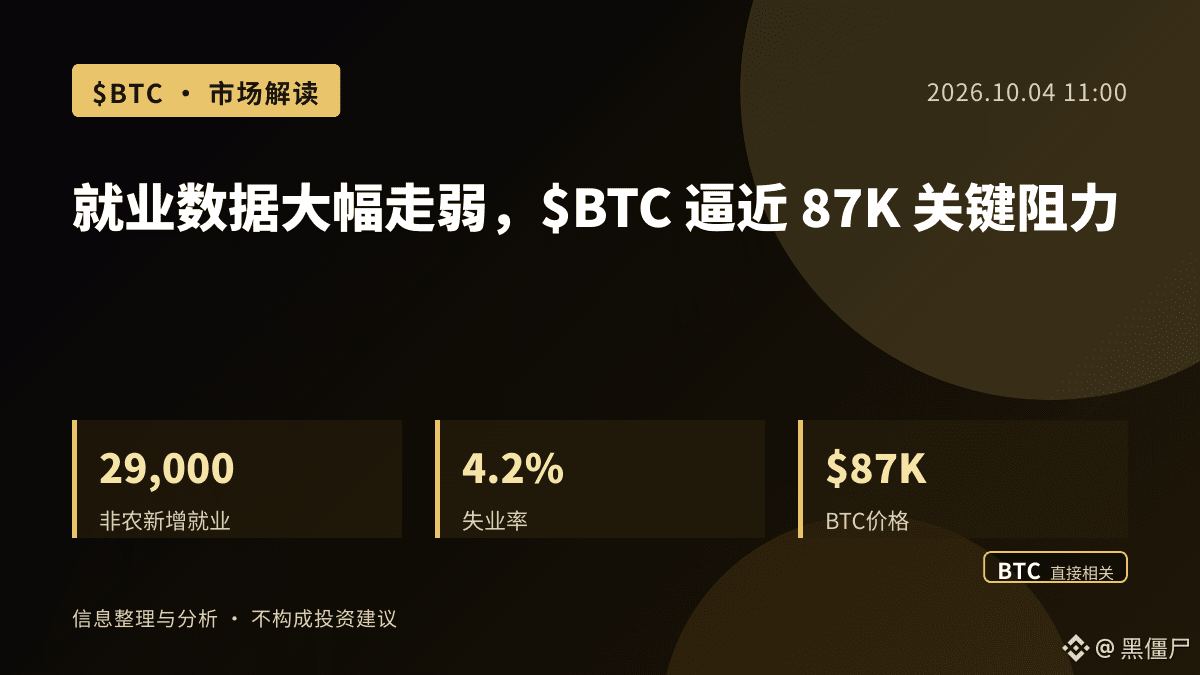
76
·
--
Chainalysis uses AI to trace Bitget’s $387 million theft to North Korea
According to Decrypt, Chainalysis disclosed that it uses its in-house AI tools to trace the $387 million funds stolen by Bitget on September 24 to addresses associated with North Korea. The incident pushed North Korea’s cryptocurrency-related revenue in 2026 past the $1 billion mark.
At the heart of this development is a breakthrough in tracing technology. Chainalysis said its internal AI system can process complex patterns within on-chain data, identifying linkage paths that are difficult for traditional manual analysis to capture. For a sum of this magnitude—$387 million—AI played a critical role in shortening attribution time and improving the accuracy of address clustering. This is not just a resolution of a single case, but also demonstrates the boundaries of on-chain analytics tools in handling large-scale hacker incidents.
In terms of market impact, North Korean hackers (such as the Lazarus Group) have long been viewed as one of the main threats to crypto security. The successful AI tracing may ease some investors’ short-term concerns that the funds could be fully laundered. At the same time, it reinforces the market’s perception that “North Korea is a major collector of crypto assets.” With cumulative revenue surpassing $1 billion in 2026, geopolitical risk has effectively transformed into a systemic cost for the crypto market.
On the risk side, even though the flow of funds has been traced, the hacker’s money may already have moved into privacy coin pools or been distributed across multiple addresses, meaning the difficulty of actually recovering the funds remains high. The presence of a North Korea nexus could also amplify market doubts about exchange security mechanisms—especially regarding centralized platforms that custody large sums of assets.
Next, we need to watch whether Chainalysis publishes more technical details, and whether Bitget launches legal actions or on-chain freeze operations based on this lead. If the funds are ultimately confirmed to have entered addresses under North Korea’s state control, it could trigger broader geopolitical responses.
#Bitcoin #CryptoSecurity
The above is an information summary and personal analysis and does not constitute investment advice. If there are important updates afterward, I will continue to track and share them.
Chainalysis uses AI to trace Bitget’s $387 million theft to North Korea
According to Decrypt, Chainalysis disclosed that it uses its in-house AI tools to trace the $387 million funds stolen by Bitget on September 24 to addresses associated with North Korea. The incident pushed North Korea’s cryptocurrency-related revenue in 2026 past the $1 billion mark.
At the heart of this development is a breakthrough in tracing technology. Chainalysis said its internal AI system can process complex patterns within on-chain data, identifying linkage paths that are difficult for traditional manual analysis to capture. For a sum of this magnitude—$387 million—AI played a critical role in shortening attribution time and improving the accuracy of address clustering. This is not just a resolution of a single case, but also demonstrates the boundaries of on-chain analytics tools in handling large-scale hacker incidents.
In terms of market impact, North Korean hackers (such as the Lazarus Group) have long been viewed as one of the main threats to crypto security. The successful AI tracing may ease some investors’ short-term concerns that the funds could be fully laundered. At the same time, it reinforces the market’s perception that “North Korea is a major collector of crypto assets.” With cumulative revenue surpassing $1 billion in 2026, geopolitical risk has effectively transformed into a systemic cost for the crypto market.
On the risk side, even though the flow of funds has been traced, the hacker’s money may already have moved into privacy coin pools or been distributed across multiple addresses, meaning the difficulty of actually recovering the funds remains high. The presence of a North Korea nexus could also amplify market doubts about exchange security mechanisms—especially regarding centralized platforms that custody large sums of assets.
Next, we need to watch whether Chainalysis publishes more technical details, and whether Bitget launches legal actions or on-chain freeze operations based on this lead. If the funds are ultimately confirmed to have entered addresses under North Korea’s state control, it could trigger broader geopolitical responses.
#Bitcoin #CryptoSecurity
The above is an information summary and personal analysis and does not constitute investment advice. If there are important updates afterward, I will continue to track and share them.
According to Decrypt, Chainalysis disclosed that it uses its in-house AI tools to trace the $387 million funds stolen by Bitget on September 24 to addresses associated with North Korea. The incident pushed North Korea’s cryptocurrency-related revenue in 2026 past the $1 billion mark.
At the heart of this development is a breakthrough in tracing technology. Chainalysis said its internal AI system can process complex patterns within on-chain data, identifying linkage paths that are difficult for traditional manual analysis to capture. For a sum of this magnitude—$387 million—AI played a critical role in shortening attribution time and improving the accuracy of address clustering. This is not just a resolution of a single case, but also demonstrates the boundaries of on-chain analytics tools in handling large-scale hacker incidents.
In terms of market impact, North Korean hackers (such as the Lazarus Group) have long been viewed as one of the main threats to crypto security. The successful AI tracing may ease some investors’ short-term concerns that the funds could be fully laundered. At the same time, it reinforces the market’s perception that “North Korea is a major collector of crypto assets.” With cumulative revenue surpassing $1 billion in 2026, geopolitical risk has effectively transformed into a systemic cost for the crypto market.
On the risk side, even though the flow of funds has been traced, the hacker’s money may already have moved into privacy coin pools or been distributed across multiple addresses, meaning the difficulty of actually recovering the funds remains high. The presence of a North Korea nexus could also amplify market doubts about exchange security mechanisms—especially regarding centralized platforms that custody large sums of assets.
Next, we need to watch whether Chainalysis publishes more technical details, and whether Bitget launches legal actions or on-chain freeze operations based on this lead. If the funds are ultimately confirmed to have entered addresses under North Korea’s state control, it could trigger broader geopolitical responses.
#Bitcoin #CryptoSecurity
The above is an information summary and personal analysis and does not constitute investment advice. If there are important updates afterward, I will continue to track and share them.

149
·
--
BlackRock: The next step of tokenization may be to put entire investment portfolios on-chain
According to CoinDesk, BlackRock’s latest view suggests that tokenization is not only about moving a single stock or fund onto the blockchain. The next step may be to tokenize entire investment portfolios. This statement may appear to be merely an extension of product forms, but beneath it lies a shift in institutional allocation logic: from “buying a particular asset” to “managing a basket of on-chain assets.”
Why does it matter? Over the past year or so, the RWA narrative has mainly focused on the tokenization of individual assets—such as government bonds, funds, and individual stocks. If BlackRock elevates the perspective to the portfolio level, it implies that on-chain assets may start to play the role of “allocation tools,” not just “asset mirrors.” This would change institutional demand for on-chain infrastructure: settlement, custody, permissions management, and portfolio rebalancing would all become more central.
What to watch for is that, at present, this piece looks more like an opinion and outlook, lacking specific products, scale, or timelines. Therefore, it should not be interpreted directly as a near-term cryptocurrency price catalyst; it is more appropriate to treat it as a signal of an upgrade to the RWA narrative.
The countervailing factors are that portfolio-level tokenization involves compliance, valuation, liquidity, and cross-chain coordination, making implementation more difficult than for single-asset tokenization. If there is no further follow-up with clear products or partnership announcements, market enthusiasm may cool quickly.
Next, it’s worth monitoring whether BlackRock launches specific portfolio tokenization products, which chains or custodians it partners with, and whether institutional capital begins allocating to structures like this.
#RWA #BlackRock
The above is an information compilation and personal analysis and does not constitute investment advice. I will continue tracking key data and technical developments going forward.
BlackRock: The next step of tokenization may be to put entire investment portfolios on-chain
According to CoinDesk, BlackRock’s latest view suggests that tokenization is not only about moving a single stock or fund onto the blockchain. The next step may be to tokenize entire investment portfolios. This statement may appear to be merely an extension of product forms, but beneath it lies a shift in institutional allocation logic: from “buying a particular asset” to “managing a basket of on-chain assets.”
Why does it matter? Over the past year or so, the RWA narrative has mainly focused on the tokenization of individual assets—such as government bonds, funds, and individual stocks. If BlackRock elevates the perspective to the portfolio level, it implies that on-chain assets may start to play the role of “allocation tools,” not just “asset mirrors.” This would change institutional demand for on-chain infrastructure: settlement, custody, permissions management, and portfolio rebalancing would all become more central.
What to watch for is that, at present, this piece looks more like an opinion and outlook, lacking specific products, scale, or timelines. Therefore, it should not be interpreted directly as a near-term cryptocurrency price catalyst; it is more appropriate to treat it as a signal of an upgrade to the RWA narrative.
The countervailing factors are that portfolio-level tokenization involves compliance, valuation, liquidity, and cross-chain coordination, making implementation more difficult than for single-asset tokenization. If there is no further follow-up with clear products or partnership announcements, market enthusiasm may cool quickly.
Next, it’s worth monitoring whether BlackRock launches specific portfolio tokenization products, which chains or custodians it partners with, and whether institutional capital begins allocating to structures like this.
#RWA #BlackRock
The above is an information compilation and personal analysis and does not constitute investment advice. I will continue tracking key data and technical developments going forward.
According to CoinDesk, BlackRock’s latest view suggests that tokenization is not only about moving a single stock or fund onto the blockchain. The next step may be to tokenize entire investment portfolios. This statement may appear to be merely an extension of product forms, but beneath it lies a shift in institutional allocation logic: from “buying a particular asset” to “managing a basket of on-chain assets.”
Why does it matter? Over the past year or so, the RWA narrative has mainly focused on the tokenization of individual assets—such as government bonds, funds, and individual stocks. If BlackRock elevates the perspective to the portfolio level, it implies that on-chain assets may start to play the role of “allocation tools,” not just “asset mirrors.” This would change institutional demand for on-chain infrastructure: settlement, custody, permissions management, and portfolio rebalancing would all become more central.
What to watch for is that, at present, this piece looks more like an opinion and outlook, lacking specific products, scale, or timelines. Therefore, it should not be interpreted directly as a near-term cryptocurrency price catalyst; it is more appropriate to treat it as a signal of an upgrade to the RWA narrative.
The countervailing factors are that portfolio-level tokenization involves compliance, valuation, liquidity, and cross-chain coordination, making implementation more difficult than for single-asset tokenization. If there is no further follow-up with clear products or partnership announcements, market enthusiasm may cool quickly.
Next, it’s worth monitoring whether BlackRock launches specific portfolio tokenization products, which chains or custodians it partners with, and whether institutional capital begins allocating to structures like this.
#RWA #BlackRock
The above is an information compilation and personal analysis and does not constitute investment advice. I will continue tracking key data and technical developments going forward.

38
·
--
NEAR Intents recovers the full $3.8 million within 48 hours after a deadline
According to Cointelegraph, after identifying the exploiters and issuing a 48-hour response deadline, NEAR Intents has fully recovered the stolen $3.8 million.
This incident is a key wrap-up to the recent security controversy involving NEAR Intents and Bitget. From the exploitation to the return of the funds, the entire process was completed within the deadline, indicating the team’s strong execution in incident response and asset tracking.
For the $NEAR ecosystem, this full recovery sends a positive signal: even if an exploit occurs, ecosystem projects still have the ability to recoup losses through technical measures and external coordination. This can help repair market confidence in NEAR Intents and the security of the NEAR ecosystem, and reduce negative sentiment stemming from the hack.
However, the amount of $3.8 million is relatively limited in the crypto market, and multiple reports on recent developments related to NEAR Intents and the Bitget hacker have already been published. As a result, the market’s marginal reaction to such incidents may become muted. A full refund is more about loss containment and confidence restoration than a major fundamental positive catalyst.
Next, what needs to be watched is whether NEAR Intents will disclose the specific root causes of the vulnerability and its follow-up remediation plan, and whether Bitget will provide further official statements. On the trading front, if $NEAR experiences a pulse-like rally in the short term due to the news, what’s more worth observing is whether trading volume can sustain and expand, rather than simply chasing the price.
$NEAR #NEAR #CryptoSecurity
The above is information compilation and personal analysis and does not constitute investment advice. If there are any important updates going forward, I will continue to track and share them.
NEAR Intents recovers the full $3.8 million within 48 hours after a deadline
According to Cointelegraph, after identifying the exploiters and issuing a 48-hour response deadline, NEAR Intents has fully recovered the stolen $3.8 million.
This incident is a key wrap-up to the recent security controversy involving NEAR Intents and Bitget. From the exploitation to the return of the funds, the entire process was completed within the deadline, indicating the team’s strong execution in incident response and asset tracking.
For the $NEAR ecosystem, this full recovery sends a positive signal: even if an exploit occurs, ecosystem projects still have the ability to recoup losses through technical measures and external coordination. This can help repair market confidence in NEAR Intents and the security of the NEAR ecosystem, and reduce negative sentiment stemming from the hack.
However, the amount of $3.8 million is relatively limited in the crypto market, and multiple reports on recent developments related to NEAR Intents and the Bitget hacker have already been published. As a result, the market’s marginal reaction to such incidents may become muted. A full refund is more about loss containment and confidence restoration than a major fundamental positive catalyst.
Next, what needs to be watched is whether NEAR Intents will disclose the specific root causes of the vulnerability and its follow-up remediation plan, and whether Bitget will provide further official statements. On the trading front, if $NEAR experiences a pulse-like rally in the short term due to the news, what’s more worth observing is whether trading volume can sustain and expand, rather than simply chasing the price.
$NEAR #NEAR #CryptoSecurity
The above is information compilation and personal analysis and does not constitute investment advice. If there are any important updates going forward, I will continue to track and share them.
According to Cointelegraph, after identifying the exploiters and issuing a 48-hour response deadline, NEAR Intents has fully recovered the stolen $3.8 million.
This incident is a key wrap-up to the recent security controversy involving NEAR Intents and Bitget. From the exploitation to the return of the funds, the entire process was completed within the deadline, indicating the team’s strong execution in incident response and asset tracking.
For the $NEAR ecosystem, this full recovery sends a positive signal: even if an exploit occurs, ecosystem projects still have the ability to recoup losses through technical measures and external coordination. This can help repair market confidence in NEAR Intents and the security of the NEAR ecosystem, and reduce negative sentiment stemming from the hack.
However, the amount of $3.8 million is relatively limited in the crypto market, and multiple reports on recent developments related to NEAR Intents and the Bitget hacker have already been published. As a result, the market’s marginal reaction to such incidents may become muted. A full refund is more about loss containment and confidence restoration than a major fundamental positive catalyst.
Next, what needs to be watched is whether NEAR Intents will disclose the specific root causes of the vulnerability and its follow-up remediation plan, and whether Bitget will provide further official statements. On the trading front, if $NEAR experiences a pulse-like rally in the short term due to the news, what’s more worth observing is whether trading volume can sustain and expand, rather than simply chasing the price.
$NEAR #NEAR #CryptoSecurity
The above is information compilation and personal analysis and does not constitute investment advice. If there are any important updates going forward, I will continue to track and share them.

259
·
--
Clayton or an AI czar? The old accounts of crypto regulation are being brought back up
According to Cointelegraph, the Trump administration is considering appointing former SEC chair Jay Clayton as the new AI czar. The role would coordinate AI innovation and development and may include “self-regulation” for tech CEOs. The appointment is still only under consideration and has not been officially confirmed, but its signal value is worth noting.
Clayton is not a typical regulator. As CoinDesk recalled, during his time at the SEC he led enforcement actions against the crypto industry, serving as a key driving force during the tightening of crypto regulation. If he shifts to become an AI czar, his prior stance in the crypto space may be reinterpreted by the market: on one hand, AI and crypto are deeply intertwined in technological narratives, and his role could influence how policy draws the boundaries between the two; on the other hand, it is unclear whether the AI czar’s scope overlaps with or belongs to crypto regulation, and this ambiguity alone could amplify market uncertainty.
From the market reaction, after the news was released there was no major volatility in the crypto sector, suggesting that investors currently prefer to wait and see rather than price it in. However, what needs to be observed is that if Clayton is officially appointed, his team composition, policy priorities, and whether he will continue or adjust the SEC’s enforcement pace toward crypto could all become variables affecting risk appetite going forward. For mainstream assets such as $Bitcoin, flip-flopping regulatory expectations are often an important source of volatility, not a deciding factor for direction.
The counterargument is that the AI czar’s authority may focus more on industrial policy and technology governance rather than directly intervening in crypto regulation. If his role is limited to the AI innovation layer, his practical impact on the crypto market could be limited. Additionally, since the appointment has not been finalized, any interpretation based on expectations may be subject to revision.
Next, the key to watch is whether Clayton is officially confirmed, whether any team members in his lineup have crypto backgrounds, and whether the SEC adjusts its enforcement stance toward crypto assets as it advances AI policy. If you are following BTC, in the short term it would be more worthwhile to watch whether trading volume and funding rates change around the actual rollout of regulatory news—rather than pricing it in early during the anticipation phase.
#Bitcoin #CryptoRegulation
The above is information compiled and personal analysis only, and does not constitute investment advice.
After more policy details become clear, I will continue to update.
Clayton or an AI czar? The old accounts of crypto regulation are being brought back up
According to Cointelegraph, the Trump administration is considering appointing former SEC chair Jay Clayton as the new AI czar. The role would coordinate AI innovation and development and may include “self-regulation” for tech CEOs. The appointment is still only under consideration and has not been officially confirmed, but its signal value is worth noting.
Clayton is not a typical regulator. As CoinDesk recalled, during his time at the SEC he led enforcement actions against the crypto industry, serving as a key driving force during the tightening of crypto regulation. If he shifts to become an AI czar, his prior stance in the crypto space may be reinterpreted by the market: on one hand, AI and crypto are deeply intertwined in technological narratives, and his role could influence how policy draws the boundaries between the two; on the other hand, it is unclear whether the AI czar’s scope overlaps with or belongs to crypto regulation, and this ambiguity alone could amplify market uncertainty.
From the market reaction, after the news was released there was no major volatility in the crypto sector, suggesting that investors currently prefer to wait and see rather than price it in. However, what needs to be observed is that if Clayton is officially appointed, his team composition, policy priorities, and whether he will continue or adjust the SEC’s enforcement pace toward crypto could all become variables affecting risk appetite going forward. For mainstream assets such as $Bitcoin, flip-flopping regulatory expectations are often an important source of volatility, not a deciding factor for direction.
The counterargument is that the AI czar’s authority may focus more on industrial policy and technology governance rather than directly intervening in crypto regulation. If his role is limited to the AI innovation layer, his practical impact on the crypto market could be limited. Additionally, since the appointment has not been finalized, any interpretation based on expectations may be subject to revision.
Next, the key to watch is whether Clayton is officially confirmed, whether any team members in his lineup have crypto backgrounds, and whether the SEC adjusts its enforcement stance toward crypto assets as it advances AI policy. If you are following BTC, in the short term it would be more worthwhile to watch whether trading volume and funding rates change around the actual rollout of regulatory news—rather than pricing it in early during the anticipation phase.
#Bitcoin #CryptoRegulation
The above is information compiled and personal analysis only, and does not constitute investment advice.
After more policy details become clear, I will continue to update.
According to Cointelegraph, the Trump administration is considering appointing former SEC chair Jay Clayton as the new AI czar. The role would coordinate AI innovation and development and may include “self-regulation” for tech CEOs. The appointment is still only under consideration and has not been officially confirmed, but its signal value is worth noting.
Clayton is not a typical regulator. As CoinDesk recalled, during his time at the SEC he led enforcement actions against the crypto industry, serving as a key driving force during the tightening of crypto regulation. If he shifts to become an AI czar, his prior stance in the crypto space may be reinterpreted by the market: on one hand, AI and crypto are deeply intertwined in technological narratives, and his role could influence how policy draws the boundaries between the two; on the other hand, it is unclear whether the AI czar’s scope overlaps with or belongs to crypto regulation, and this ambiguity alone could amplify market uncertainty.
From the market reaction, after the news was released there was no major volatility in the crypto sector, suggesting that investors currently prefer to wait and see rather than price it in. However, what needs to be observed is that if Clayton is officially appointed, his team composition, policy priorities, and whether he will continue or adjust the SEC’s enforcement pace toward crypto could all become variables affecting risk appetite going forward. For mainstream assets such as $Bitcoin, flip-flopping regulatory expectations are often an important source of volatility, not a deciding factor for direction.
The counterargument is that the AI czar’s authority may focus more on industrial policy and technology governance rather than directly intervening in crypto regulation. If his role is limited to the AI innovation layer, his practical impact on the crypto market could be limited. Additionally, since the appointment has not been finalized, any interpretation based on expectations may be subject to revision.
Next, the key to watch is whether Clayton is officially confirmed, whether any team members in his lineup have crypto backgrounds, and whether the SEC adjusts its enforcement stance toward crypto assets as it advances AI policy. If you are following BTC, in the short term it would be more worthwhile to watch whether trading volume and funding rates change around the actual rollout of regulatory news—rather than pricing it in early during the anticipation phase.
#Bitcoin #CryptoRegulation
The above is information compiled and personal analysis only, and does not constitute investment advice.
After more policy details become clear, I will continue to update.

139
·
--
Anchorage Lays Off 17%: Institutions Begin to “Run the Numbers” on Efficiency
According to Cointelegraph, crypto bank Anchorage Digital has reportedly laid off 17% of its staff. The report also says the company is expanding its institutional business, including stablecoin issuance, and moving forward with roughly $100 million in related business expansion. Anchorage’s previously disclosed business scale was about $4.2 billion.
This is worth paying attention to—not only because one company is cutting back, but because it may signal that institutional crypto is shifting from “expand first” to “count the cost first.” In recent years, institutional crypto firms have generally used fundraising and team size to secure market position. Now, if leading institutions start cutting headcount while directing resources toward stablecoin issuance—businesses that are more closely tied to cash flow and compliance needs—it suggests the industry’s requirements for efficiency are increasing.
For the stablecoin segment, this signal is slightly neutral-to-positive: institutions are still willing to invest in stablecoin issuance, indicating that this direction is still viewed as an important entry point for institutional crypto. However, the layoffs could also be interpreted by the market as demand-side pressure—especially if more institutional crypto companies take similar actions, which may temporarily weigh on sentiment around related assets such as exchanges, custody, and compliance services.
The risk is that there is currently limited publicly available information. The report does not elaborate on which departments were cut, whether existing customers are affected, or how the stablecoin issuance is progressing. If subsequent disclosures show customer outflows or business contraction, the market reaction could be more negative than the layoffs alone.
Next, what’s even more worth watching is whether Anchorage’s stablecoin issuance actually gets off the ground, whether institutional customers continue to increase, and whether other crypto banks follow suit in cutting costs. If the stablecoin business can generate verifiable institutional demand, these layoffs look more like a structural adjustment; if it’s merely contraction, it could become an early sign of an industry cool-down.
#CryptoMarket #Stablecoins
The above is information compiled and my personal analysis only; it does not constitute investment advice.
Follow me to keep tracking key market changes and data.
Anchorage Lays Off 17%: Institutions Begin to “Run the Numbers” on Efficiency
According to Cointelegraph, crypto bank Anchorage Digital has reportedly laid off 17% of its staff. The report also says the company is expanding its institutional business, including stablecoin issuance, and moving forward with roughly $100 million in related business expansion. Anchorage’s previously disclosed business scale was about $4.2 billion.
This is worth paying attention to—not only because one company is cutting back, but because it may signal that institutional crypto is shifting from “expand first” to “count the cost first.” In recent years, institutional crypto firms have generally used fundraising and team size to secure market position. Now, if leading institutions start cutting headcount while directing resources toward stablecoin issuance—businesses that are more closely tied to cash flow and compliance needs—it suggests the industry’s requirements for efficiency are increasing.
For the stablecoin segment, this signal is slightly neutral-to-positive: institutions are still willing to invest in stablecoin issuance, indicating that this direction is still viewed as an important entry point for institutional crypto. However, the layoffs could also be interpreted by the market as demand-side pressure—especially if more institutional crypto companies take similar actions, which may temporarily weigh on sentiment around related assets such as exchanges, custody, and compliance services.
The risk is that there is currently limited publicly available information. The report does not elaborate on which departments were cut, whether existing customers are affected, or how the stablecoin issuance is progressing. If subsequent disclosures show customer outflows or business contraction, the market reaction could be more negative than the layoffs alone.
Next, what’s even more worth watching is whether Anchorage’s stablecoin issuance actually gets off the ground, whether institutional customers continue to increase, and whether other crypto banks follow suit in cutting costs. If the stablecoin business can generate verifiable institutional demand, these layoffs look more like a structural adjustment; if it’s merely contraction, it could become an early sign of an industry cool-down.
#CryptoMarket #Stablecoins
The above is information compiled and my personal analysis only; it does not constitute investment advice.
Follow me to keep tracking key market changes and data.
According to Cointelegraph, crypto bank Anchorage Digital has reportedly laid off 17% of its staff. The report also says the company is expanding its institutional business, including stablecoin issuance, and moving forward with roughly $100 million in related business expansion. Anchorage’s previously disclosed business scale was about $4.2 billion.
This is worth paying attention to—not only because one company is cutting back, but because it may signal that institutional crypto is shifting from “expand first” to “count the cost first.” In recent years, institutional crypto firms have generally used fundraising and team size to secure market position. Now, if leading institutions start cutting headcount while directing resources toward stablecoin issuance—businesses that are more closely tied to cash flow and compliance needs—it suggests the industry’s requirements for efficiency are increasing.
For the stablecoin segment, this signal is slightly neutral-to-positive: institutions are still willing to invest in stablecoin issuance, indicating that this direction is still viewed as an important entry point for institutional crypto. However, the layoffs could also be interpreted by the market as demand-side pressure—especially if more institutional crypto companies take similar actions, which may temporarily weigh on sentiment around related assets such as exchanges, custody, and compliance services.
The risk is that there is currently limited publicly available information. The report does not elaborate on which departments were cut, whether existing customers are affected, or how the stablecoin issuance is progressing. If subsequent disclosures show customer outflows or business contraction, the market reaction could be more negative than the layoffs alone.
Next, what’s even more worth watching is whether Anchorage’s stablecoin issuance actually gets off the ground, whether institutional customers continue to increase, and whether other crypto banks follow suit in cutting costs. If the stablecoin business can generate verifiable institutional demand, these layoffs look more like a structural adjustment; if it’s merely contraction, it could become an early sign of an industry cool-down.
#CryptoMarket #Stablecoins
The above is information compiled and my personal analysis only; it does not constitute investment advice.
Follow me to keep tracking key market changes and data.

109
·
--
Job data significantly underperformed expectations, macro logic behind $BTC nearing the 87K mark
After the U.S. September nonfarm payrolls were released, BTC surged more than 2% in the short term and moved toward the $87,000 level. According to CNBC, September added just 29,000 jobs, far below the market expectation of 84,000, while the unemployment rate rose to 4.2%. This combination of data directly changed the market’s pricing of the Federal Reserve’s October rate path.
From the macro transmission mechanism, weak employment boosted expectations for rate cuts, reduced U.S. Treasury yields, and provided liquidity support for risk assets. As Cointelegraph reported, falling bond yields were a direct catalyst for BTC’s short-term strength. However, it’s worth noting that order-book resistance prevented BTC from holding above 87K, indicating clear sell pressure at that level.
According to Decrypt’s analysis, this employment data came in far below expectations and essentially erased the possibility of a rate hike in October. BTC is now pressing toward its year-to-date high zone. The macro-driven logic is clear: employment weakens → rate-cut expectations rise → real yields fall → risk assets benefit.
Still, risks remain. If subsequent economic data shows a rebound, or if the Fed turns more hawkish due to inflation pressure, the current macro driver could quickly reverse. In addition, if the order-book resistance near 87K isn’t effectively broken, BTC may face pullback pressure.
What to watch next is whether BTC can form an effective breakout above 87K, and whether upcoming economic data continues to confirm the weak employment trend. If you’re following BTC, the more worthwhile short-term observation is the change in trading volume and capital flows around the 87K level to verify the breakout’s validity, rather than simply chasing the move upward.
$BTC #Bitcoin #CryptoMarket #Macro
The above is an information summary and personal analysis and does not constitute investment advice.
Follow me for ongoing tracking of key market changes and data.
Job data significantly underperformed expectations, macro logic behind $BTC nearing the 87K mark
After the U.S. September nonfarm payrolls were released, BTC surged more than 2% in the short term and moved toward the $87,000 level. According to CNBC, September added just 29,000 jobs, far below the market expectation of 84,000, while the unemployment rate rose to 4.2%. This combination of data directly changed the market’s pricing of the Federal Reserve’s October rate path.
From the macro transmission mechanism, weak employment boosted expectations for rate cuts, reduced U.S. Treasury yields, and provided liquidity support for risk assets. As Cointelegraph reported, falling bond yields were a direct catalyst for BTC’s short-term strength. However, it’s worth noting that order-book resistance prevented BTC from holding above 87K, indicating clear sell pressure at that level.
According to Decrypt’s analysis, this employment data came in far below expectations and essentially erased the possibility of a rate hike in October. BTC is now pressing toward its year-to-date high zone. The macro-driven logic is clear: employment weakens → rate-cut expectations rise → real yields fall → risk assets benefit.
Still, risks remain. If subsequent economic data shows a rebound, or if the Fed turns more hawkish due to inflation pressure, the current macro driver could quickly reverse. In addition, if the order-book resistance near 87K isn’t effectively broken, BTC may face pullback pressure.
What to watch next is whether BTC can form an effective breakout above 87K, and whether upcoming economic data continues to confirm the weak employment trend. If you’re following BTC, the more worthwhile short-term observation is the change in trading volume and capital flows around the 87K level to verify the breakout’s validity, rather than simply chasing the move upward.
$BTC #Bitcoin #CryptoMarket #Macro
The above is an information summary and personal analysis and does not constitute investment advice.
Follow me for ongoing tracking of key market changes and data.
After the U.S. September nonfarm payrolls were released, BTC surged more than 2% in the short term and moved toward the $87,000 level. According to CNBC, September added just 29,000 jobs, far below the market expectation of 84,000, while the unemployment rate rose to 4.2%. This combination of data directly changed the market’s pricing of the Federal Reserve’s October rate path.
From the macro transmission mechanism, weak employment boosted expectations for rate cuts, reduced U.S. Treasury yields, and provided liquidity support for risk assets. As Cointelegraph reported, falling bond yields were a direct catalyst for BTC’s short-term strength. However, it’s worth noting that order-book resistance prevented BTC from holding above 87K, indicating clear sell pressure at that level.
According to Decrypt’s analysis, this employment data came in far below expectations and essentially erased the possibility of a rate hike in October. BTC is now pressing toward its year-to-date high zone. The macro-driven logic is clear: employment weakens → rate-cut expectations rise → real yields fall → risk assets benefit.
Still, risks remain. If subsequent economic data shows a rebound, or if the Fed turns more hawkish due to inflation pressure, the current macro driver could quickly reverse. In addition, if the order-book resistance near 87K isn’t effectively broken, BTC may face pullback pressure.
What to watch next is whether BTC can form an effective breakout above 87K, and whether upcoming economic data continues to confirm the weak employment trend. If you’re following BTC, the more worthwhile short-term observation is the change in trading volume and capital flows around the 87K level to verify the breakout’s validity, rather than simply chasing the move upward.
$BTC #Bitcoin #CryptoMarket #Macro
The above is an information summary and personal analysis and does not constitute investment advice.
Follow me for ongoing tracking of key market changes and data.

192
Log in to explore more content
Join global crypto users on Binance Square
⚡️ Get latest and useful information about crypto.
💬 Trusted by the world’s largest crypto exchange.
👍 Discover real insights from verified creators.
Email / Phone number
Trending Topics
BinanceLaunchesBinanceIntelligence
100,939 views
1,075 Discussing
🚨 BINANCE JUST PUT AI DIRECTLY INSIDE THE EXCHANGE — AND THIS COULD CHANGE HOW RETAIL TRADES.
Binance has officially launched Binance Intelligence, a new AI layer built into the Binance ecosystem. It combines three products:
Binance AI for everyday users,
Binance AI Pro for automated trading workflows,
and Agent OS for developers building financial agents.
The part traders should care about?
Binance AI can surface market briefs, smart alerts, PnL recaps and personalized information, while AI Pro is designed to turn a plain-English trading idea into a visual strategy workflow.
That means the next phase of exchange competition may not be:
lowest fees vs deepest liquidity.
It could be:
who gives traders the best AI execution layer.
If Binance Intelligence actually drives heavier user activity, automated strategies and higher trading frequency, watch $BNB first.
AI adoption ↑
→ Binance engagement ↑
→ trading activity ↑
→ ecosystem narrative strengthens.
The catalyst I’d watch now:
global rollout + AI Pro launch + measurable user adoption.
Because once AI stops just telling you what the market is doing…
…and starts helping build the trade itself?
That’s when this gets much bigger than another chatbot. 👀
#binancelaunchesbinanceintelligence #EvernorthXRPTreasuryCompletesSPACMerger #ADAGains10%Above$0.27 #ETHUp70%InQ3ButLiquidityFalls #EthStakingExitQueueHits2026High
KimHotbae
·30 Likes
·36.5k views
StriveBuys2000BTCFor$169M
2,927 views
48 Discussing
EvernorthXRPTreasuryCompletesSPACMerger
68,562 views
720 Discussing