
AMCx
69 Posts

AMCx
Report
Block User
Mimpi Jangan Ketinggian, Ok Kawan Jatuhnya Garis Merah😅
23 Following
20 Followers
68 Liked
Posts
All
Quotes
Videos
·
--
Article
See translation
BITCOIN (BTC): The Future of Digital Money and What Comes Next?Bitcoin (BTC) continues to hold its position as the world's leading cryptocurrency by market capitalization. Since its creation, Bitcoin has transformed the financial landscape by introducing a decentralized monetary system that operates without relying on traditional banks or central authorities.
But as the cryptocurrency industry continues to evolve, an important question remains: What comes next for Bitcoin?
1. Understanding Bitcoin's Position
Bitcoin was introduced in 2009 by the pseudonymous creator Satoshi Nakamoto. Its primary purpose was to create a peer-to-peer electronic cash system that allows people to transfer value directly without intermediaries.
One of Bitcoin's strongest characteristics is its limited supply of 21 million coins. This predictable monetary policy makes BTC fundamentally different from traditional currencies, which can be issued by central banks.
Bitcoin is increasingly viewed as a digital store of value and an alternative asset for investors seeking exposure to decentralized finance.
2. Bitcoin's Latest Developments in 2026
Bitcoin's ecosystem continues to develop, particularly in infrastructure, network security, institutional participation, and transaction efficiency.
One important development is the release of Bitcoin Core 32.1 in October 2026.
The update includes improvements to network communication, transaction handling, fee estimation, wallet functionality, and node performance.
These improvements demonstrate that Bitcoin development continues even when market conditions become challenging.
Meanwhile, institutional participation remains an important part of Bitcoin's long-term story. However, recent market conditions have shown that institutional demand and ETF flows can fluctuate significantly.
3. What Is Bitcoin Planning for the Future?
Unlike many cryptocurrency projects, Bitcoin does not have a centralized company or management team that controls a fixed development roadmap.
Its future development depends on independent developers, miners, node operators, researchers, and community consensus.
Several important areas are attracting attention:
A. Network Security
Security remains one of Bitcoin's highest priorities. Researchers are exploring post-quantum cryptography to prepare for potential future threats from increasingly powerful computers.
B. Scalability and Faster Payments
The Lightning Network continues to represent an important direction for making Bitcoin transactions faster and more practical for everyday payments.
C. More Advanced Bitcoin Applications
Developers are discussing proposals such as OP_CAT and OP_CHECKTEMPLATEVERIFY (CTV), which could expand Bitcoin's scripting capabilities.
These proposals are still subject to technical review and community discussion. They should not be considered confirmed network upgrades.
D. Continuous Infrastructure Improvements
Bitcoin Core development continues to focus on node performance, privacy, transaction efficiency, and network reliability.
4. Bitcoin Halving: Looking Toward 2028
Another major event investors are watching is the next Bitcoin halving, currently estimated for 2028.
During a halving, the mining reward is reduced by 50%.
Following the 2024 halving, miners receive 3.125 BTC for each successfully mined block. After the next halving, this reward is expected to decrease to 1.5625 BTC.
This mechanism gradually reduces the issuance of new Bitcoin and reinforces its fixed-supply monetary policy.
Historically, halvings have attracted significant market attention, although they do not guarantee future price increases.
5. Challenges Bitcoin Must Overcome
Despite its strong position, Bitcoin still faces several challenges.
Market volatility and changing investor sentiment.Regulatory uncertainty across different countries.Competition from other blockchain ecosystems.Long-term mining profitability and network security.Future technological challenges, including quantum computing.
How the Bitcoin ecosystem addresses these challenges will be important for its long-term sustainability.
6. Bitcoin's Long-Term Outlook
Bitcoin's long-term potential is closely connected to its adoption, network security, monetary characteristics, and role in the global financial system.
Its limited supply, decentralized architecture, and established network provide a strong foundation.
However, short-term price movements remain unpredictable. Investors should consider market conditions, liquidity, macroeconomic developments, and their own risk tolerance.
Bitcoin's future is not simply about reaching a higher price. It is also about maintaining a reliable decentralized monetary network for the next generation.
Final Thoughts
Bitcoin started as an experiment in decentralized money and has grown into one of the most recognized digital assets in the world.
As we move toward 2027 and the next halving cycle in 2028, the development of its infrastructure, security, and global adoption will remain important factors to watch.
The journey of Bitcoin is far from over.
BTC — The Pioneer of Decentralized Money.
AMCx | Exploring the Future of Crypto.
#bitcoin #BTC #Crypto #Blockchain #Web3 #BinanceSquare #AMCx
BITCOIN (BTC): The Future of Digital Money and What Comes Next?
Bitcoin (BTC) continues to hold its position as the world's leading cryptocurrency by market capitalization. Since its creation, Bitcoin has transformed the financial landscape by introducing a decentralized monetary system that operates without relying on traditional banks or central authorities.
But as the cryptocurrency industry continues to evolve, an important question remains: What comes next for Bitcoin?
1. Understanding Bitcoin's Position
Bitcoin was introduced in 2009 by the pseudonymous creator Satoshi Nakamoto. Its primary purpose was to create a peer-to-peer electronic cash system that allows people to transfer value directly without intermediaries.
One of Bitcoin's strongest characteristics is its limited supply of 21 million coins. This predictable monetary policy makes BTC fundamentally different from traditional currencies, which can be issued by central banks.
Bitcoin is increasingly viewed as a digital store of value and an alternative asset for investors seeking exposure to decentralized finance.
2. Bitcoin's Latest Developments in 2026
Bitcoin's ecosystem continues to develop, particularly in infrastructure, network security, institutional participation, and transaction efficiency.
One important development is the release of Bitcoin Core 32.1 in October 2026.
The update includes improvements to network communication, transaction handling, fee estimation, wallet functionality, and node performance.
These improvements demonstrate that Bitcoin development continues even when market conditions become challenging.
Meanwhile, institutional participation remains an important part of Bitcoin's long-term story. However, recent market conditions have shown that institutional demand and ETF flows can fluctuate significantly.
3. What Is Bitcoin Planning for the Future?
Unlike many cryptocurrency projects, Bitcoin does not have a centralized company or management team that controls a fixed development roadmap.
Its future development depends on independent developers, miners, node operators, researchers, and community consensus.
Several important areas are attracting attention:
A. Network Security
Security remains one of Bitcoin's highest priorities. Researchers are exploring post-quantum cryptography to prepare for potential future threats from increasingly powerful computers.
B. Scalability and Faster Payments
The Lightning Network continues to represent an important direction for making Bitcoin transactions faster and more practical for everyday payments.
C. More Advanced Bitcoin Applications
Developers are discussing proposals such as OP_CAT and OP_CHECKTEMPLATEVERIFY (CTV), which could expand Bitcoin's scripting capabilities.
These proposals are still subject to technical review and community discussion. They should not be considered confirmed network upgrades.
D. Continuous Infrastructure Improvements
Bitcoin Core development continues to focus on node performance, privacy, transaction efficiency, and network reliability.
4. Bitcoin Halving: Looking Toward 2028
Another major event investors are watching is the next Bitcoin halving, currently estimated for 2028.
During a halving, the mining reward is reduced by 50%.
Following the 2024 halving, miners receive 3.125 BTC for each successfully mined block. After the next halving, this reward is expected to decrease to 1.5625 BTC.
This mechanism gradually reduces the issuance of new Bitcoin and reinforces its fixed-supply monetary policy.
Historically, halvings have attracted significant market attention, although they do not guarantee future price increases.
5. Challenges Bitcoin Must Overcome
Despite its strong position, Bitcoin still faces several challenges.
Market volatility and changing investor sentiment.Regulatory uncertainty across different countries.Competition from other blockchain ecosystems.Long-term mining profitability and network security.Future technological challenges, including quantum computing.
How the Bitcoin ecosystem addresses these challenges will be important for its long-term sustainability.
6. Bitcoin's Long-Term Outlook
Bitcoin's long-term potential is closely connected to its adoption, network security, monetary characteristics, and role in the global financial system.
Its limited supply, decentralized architecture, and established network provide a strong foundation.
However, short-term price movements remain unpredictable. Investors should consider market conditions, liquidity, macroeconomic developments, and their own risk tolerance.
Bitcoin's future is not simply about reaching a higher price. It is also about maintaining a reliable decentralized monetary network for the next generation.
Final Thoughts
Bitcoin started as an experiment in decentralized money and has grown into one of the most recognized digital assets in the world.
As we move toward 2027 and the next halving cycle in 2028, the development of its infrastructure, security, and global adoption will remain important factors to watch.
The journey of Bitcoin is far from over.
BTC — The Pioneer of Decentralized Money.
AMCx | Exploring the Future of Crypto.
#bitcoin #BTC #Crypto #Blockchain #Web3 #BinanceSquare #AMCx
9
·
--
Article
See translation
XLM (Stellar): The Future of Global Payments and Tokenized FinanceAMCx | Blockchain & Digital Asset Research
November 17, 2026
1. Introduction: What Makes Stellar Different?
Stellar (XLM) is a blockchain network designed to make global financial transactions faster, cheaper, and more accessible. Its primary mission is to connect traditional financial institutions with the digital economy through efficient payment infrastructure.
Unlike blockchain projects that focus mainly on speculation, Stellar has positioned itself around real-world financial applications, including cross-border payments, stablecoins, asset tokenization, and decentralized financial services.
Its native cryptocurrency, Lumens (XLM), plays an important role in the ecosystem by supporting transaction fees, account requirements, and asset transfers.
As the digital financial industry continues to evolve, Stellar is increasingly positioning itself as infrastructure for the next generation of global finance.
2. Stellar's Latest Developments in 2026
Stellar has made significant progress throughout 2026, particularly in institutional adoption, network performance, and real-world asset tokenization.
Some of its most important developments include:
Real-World Asset (RWA) Expansion
One of Stellar's biggest achievements has been the expansion of tokenized real-world assets.
By the second quarter of 2026, the value of real-world assets on Stellar had exceeded $3 billion. This growth reflects increasing interest from financial institutions in using blockchain technology to represent traditional financial assets.
Projects involving tokenized U.S. Treasury products, institutional funds, private credit, and gold are helping expand Stellar's financial ecosystem.
Institutional Partnerships
Stellar continues to attract major financial organizations.
Some notable developments include:
DTCC selected Stellar as one of the public blockchain networks for its tokenization initiatives.MoneyGram launched its MGUSD digital dollar initiative.Franklin Templeton continued expanding its tokenized financial products.Circle's payment infrastructure and stablecoin ecosystem have strengthened Stellar's role in digital finance.
These developments demonstrate that Stellar is working toward practical financial adoption rather than relying solely on cryptocurrency market speculation.
Network Performance and Reliability
Stellar has also continued improving its blockchain infrastructure.
The network has processed more than 22.5 billion total operations, maintained approximately 99.99% uptime, and kept average transaction fees around one hundredth of a penny, according to its Q1 2026 report.
These characteristics make Stellar attractive for applications requiring frequent, low-cost financial transactions.
3. What Is Stellar Planning for the Future?
Looking ahead, Stellar's development strategy focuses on several important areas.
A. Expanding Global Payment Infrastructure
Stellar aims to become a stronger foundation for international payments and financial settlements.
Its long-term direction includes making money transfers more accessible, improving cross-border payment infrastructure, and connecting traditional financial systems with blockchain-based services.
B. Expanding Smart Contracts Through Soroban
Soroban is Stellar's smart contract platform.
The ecosystem is working to make Soroban more powerful and accessible for developers building decentralized applications.
Future development is expected to support:
Decentralized finance (DeFi).Financial applications and lending services.Tokenized financial products.More advanced payment applications.Institutional blockchain solutions.
C. Privacy and Security Improvements
Privacy is another major priority.
Stellar is developing privacy infrastructure that can support confidential financial transactions while maintaining the transparency and auditability required by regulated financial environments.
This could make the network more attractive to institutions handling sensitive financial information.
D. Preparing for Quantum-Resistant Technology
Stellar is also preparing for the long-term security challenges associated with quantum computing.
Its proposed Bell Protocol 30 upgrade includes support for post-quantum signature verification in smart contracts.
The mainnet validator vote is scheduled for November 23, 2026. The proposal also includes improvements to smart account infrastructure and ledger timing.
This is an important step toward making the network more adaptable to future technological developments.
4. What Could Drive XLM's Growth?
Several factors could influence Stellar's long-term development and the potential demand for XLM.
Institutional Adoption: More financial institutions using Stellar could increase activity across its ecosystem.
Stablecoin Growth: Greater stablecoin usage could strengthen Stellar's position as a global payment network.
RWA Tokenization: The expansion of tokenized financial assets could attract more capital and applications.
DeFi Development: A stronger Soroban ecosystem could increase the number of applications and users interacting with Stellar.
Network Improvements: Faster infrastructure, lower costs, and better security could make Stellar more competitive.
However, it is important to understand that increased network adoption does not automatically translate into an increase in XLM's market price. The relationship between network activity, token utility, market demand, and price depends on several factors.
5. XLM Price Outlook: What Could Happen Next?
From a long-term perspective, Stellar has several promising developments that could support its position in the digital asset industry.
A positive scenario would involve continued institutional adoption, stronger stablecoin activity, increasing RWA tokenization, and greater use of Soroban applications.
If these developments translate into sustained demand for the network and its native token, XLM could benefit from stronger long-term market interest.
However, there are also risks to consider:
Competition from other blockchain payment networks.Regulatory uncertainty across different countries.Market volatility and changing investor sentiment.Slower-than-expected adoption of institutional blockchain products.The possibility that network growth may not generate proportional demand for XLM.
For this reason, investors should evaluate Stellar based on both its technological progress and actual economic activity.
6. Conclusion: Is Stellar Building Something Bigger?
Stellar is gradually developing beyond its original identity as a blockchain for international payments.
Its growing involvement in tokenized assets, stablecoin infrastructure, institutional finance, smart contracts, and privacy technology suggests that its ambitions extend into the broader financial infrastructure industry.
The next important milestones will be the continued expansion of institutional adoption, the development of Soroban applications, and the proposed Protocol 30 upgrade.
Stellar's long-term success will ultimately depend on whether it can turn technological innovation into sustainable real-world usage.
AMCx Perspective:
Stellar is a project worth watching as the global financial industry moves toward blockchain-based infrastructure. Its focus on payments, tokenization, and institutional adoption gives it a distinct position in the crypto ecosystem.
The future of XLM will depend not only on market sentiment but also on how effectively Stellar transforms its growing ecosystem into real financial utility.
Disclaimer: This article is for informational and educational purposes only. It does not constitute financial or investment advice. Cryptocurrency investments involve significant risks, and readers should conduct their own research before making investment decisions.
XLM (Stellar): The Future of Global Payments and Tokenized Finance
AMCx | Blockchain & Digital Asset Research
November 17, 2026
1. Introduction: What Makes Stellar Different?
Stellar (XLM) is a blockchain network designed to make global financial transactions faster, cheaper, and more accessible. Its primary mission is to connect traditional financial institutions with the digital economy through efficient payment infrastructure.
Unlike blockchain projects that focus mainly on speculation, Stellar has positioned itself around real-world financial applications, including cross-border payments, stablecoins, asset tokenization, and decentralized financial services.
Its native cryptocurrency, Lumens (XLM), plays an important role in the ecosystem by supporting transaction fees, account requirements, and asset transfers.
As the digital financial industry continues to evolve, Stellar is increasingly positioning itself as infrastructure for the next generation of global finance.
2. Stellar's Latest Developments in 2026
Stellar has made significant progress throughout 2026, particularly in institutional adoption, network performance, and real-world asset tokenization.
Some of its most important developments include:
Real-World Asset (RWA) Expansion
One of Stellar's biggest achievements has been the expansion of tokenized real-world assets.
By the second quarter of 2026, the value of real-world assets on Stellar had exceeded $3 billion. This growth reflects increasing interest from financial institutions in using blockchain technology to represent traditional financial assets.
Projects involving tokenized U.S. Treasury products, institutional funds, private credit, and gold are helping expand Stellar's financial ecosystem.
Institutional Partnerships
Stellar continues to attract major financial organizations.
Some notable developments include:
DTCC selected Stellar as one of the public blockchain networks for its tokenization initiatives.MoneyGram launched its MGUSD digital dollar initiative.Franklin Templeton continued expanding its tokenized financial products.Circle's payment infrastructure and stablecoin ecosystem have strengthened Stellar's role in digital finance.
These developments demonstrate that Stellar is working toward practical financial adoption rather than relying solely on cryptocurrency market speculation.
Network Performance and Reliability
Stellar has also continued improving its blockchain infrastructure.
The network has processed more than 22.5 billion total operations, maintained approximately 99.99% uptime, and kept average transaction fees around one hundredth of a penny, according to its Q1 2026 report.
These characteristics make Stellar attractive for applications requiring frequent, low-cost financial transactions.
3. What Is Stellar Planning for the Future?
Looking ahead, Stellar's development strategy focuses on several important areas.
A. Expanding Global Payment Infrastructure
Stellar aims to become a stronger foundation for international payments and financial settlements.
Its long-term direction includes making money transfers more accessible, improving cross-border payment infrastructure, and connecting traditional financial systems with blockchain-based services.
B. Expanding Smart Contracts Through Soroban
Soroban is Stellar's smart contract platform.
The ecosystem is working to make Soroban more powerful and accessible for developers building decentralized applications.
Future development is expected to support:
Decentralized finance (DeFi).Financial applications and lending services.Tokenized financial products.More advanced payment applications.Institutional blockchain solutions.
C. Privacy and Security Improvements
Privacy is another major priority.
Stellar is developing privacy infrastructure that can support confidential financial transactions while maintaining the transparency and auditability required by regulated financial environments.
This could make the network more attractive to institutions handling sensitive financial information.
D. Preparing for Quantum-Resistant Technology
Stellar is also preparing for the long-term security challenges associated with quantum computing.
Its proposed Bell Protocol 30 upgrade includes support for post-quantum signature verification in smart contracts.
The mainnet validator vote is scheduled for November 23, 2026. The proposal also includes improvements to smart account infrastructure and ledger timing.
This is an important step toward making the network more adaptable to future technological developments.
4. What Could Drive XLM's Growth?
Several factors could influence Stellar's long-term development and the potential demand for XLM.
Institutional Adoption: More financial institutions using Stellar could increase activity across its ecosystem.
Stablecoin Growth: Greater stablecoin usage could strengthen Stellar's position as a global payment network.
RWA Tokenization: The expansion of tokenized financial assets could attract more capital and applications.
DeFi Development: A stronger Soroban ecosystem could increase the number of applications and users interacting with Stellar.
Network Improvements: Faster infrastructure, lower costs, and better security could make Stellar more competitive.
However, it is important to understand that increased network adoption does not automatically translate into an increase in XLM's market price. The relationship between network activity, token utility, market demand, and price depends on several factors.
5. XLM Price Outlook: What Could Happen Next?
From a long-term perspective, Stellar has several promising developments that could support its position in the digital asset industry.
A positive scenario would involve continued institutional adoption, stronger stablecoin activity, increasing RWA tokenization, and greater use of Soroban applications.
If these developments translate into sustained demand for the network and its native token, XLM could benefit from stronger long-term market interest.
However, there are also risks to consider:
Competition from other blockchain payment networks.Regulatory uncertainty across different countries.Market volatility and changing investor sentiment.Slower-than-expected adoption of institutional blockchain products.The possibility that network growth may not generate proportional demand for XLM.
For this reason, investors should evaluate Stellar based on both its technological progress and actual economic activity.
6. Conclusion: Is Stellar Building Something Bigger?
Stellar is gradually developing beyond its original identity as a blockchain for international payments.
Its growing involvement in tokenized assets, stablecoin infrastructure, institutional finance, smart contracts, and privacy technology suggests that its ambitions extend into the broader financial infrastructure industry.
The next important milestones will be the continued expansion of institutional adoption, the development of Soroban applications, and the proposed Protocol 30 upgrade.
Stellar's long-term success will ultimately depend on whether it can turn technological innovation into sustainable real-world usage.
AMCx Perspective:
Stellar is a project worth watching as the global financial industry moves toward blockchain-based infrastructure. Its focus on payments, tokenization, and institutional adoption gives it a distinct position in the crypto ecosystem.
The future of XLM will depend not only on market sentiment but also on how effectively Stellar transforms its growing ecosystem into real financial utility.
Disclaimer: This article is for informational and educational purposes only. It does not constitute financial or investment advice. Cryptocurrency investments involve significant risks, and readers should conduct their own research before making investment decisions.
2
73
·
--
Article
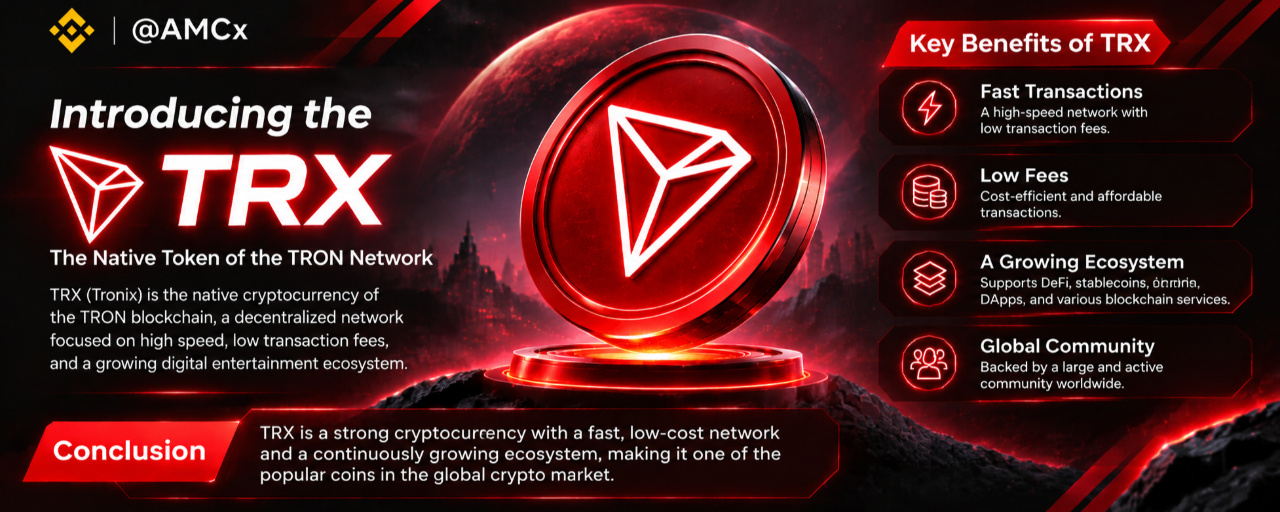
GETTING TO KNOW TRX: THE COIN THAT POWERS THE TRON ECOSYSTEMWhat Is $TRX ?
TRX, or TRONIX, is the native crypto asset of the TRON blockchain network. TRX plays an important role in supporting transactions, paying network fees, staking, and participating in governance within the TRON ecosystem.
TRON was developed to create a blockchain network capable of supporting digital transactions and various decentralized applications (DApps).
⚡ Why Is TRX Worth Paying Attention To?
Several factors make TRX interesting in the world of cryptocurrency:
1. Digital Transactions
GETTING TO KNOW TRX: THE COIN THAT POWERS THE TRON ECOSYSTEM
What Is $TRX ?
TRX, or TRONIX, is the native crypto asset of the TRON blockchain network. TRX plays an important role in supporting transactions, paying network fees, staking, and participating in governance within the TRON ecosystem.
TRON was developed to create a blockchain network capable of supporting digital transactions and various decentralized applications (DApps).
⚡ Why Is TRX Worth Paying Attention To?
Several factors make TRX interesting in the world of cryptocurrency:
1. Digital Transactions
2
12
·
--
Article
See translation
BITCOIN: FEAR OR OPPORTUNITY? Is the Market Preparing for Its Next Big Move?The cryptocurrency market is facing another important moment, and Bitcoin is once again at the center of attention.
As of November 17, 2026, Bitcoin's six-week losing streak has become one of the major discussions on Binance Square. Market sentiment is also showing Extreme Fear, with the Fear & Greed Index recently reported at 12.
But here's an important question:
Does extreme fear mean the market is finished, or could it create opportunities for the next recovery?
1. Bitcoin and the Power of Market Sentiment
Bitcoin has always experienced cycles of optimism, uncertainty, and fear.
When prices fall, many investors become nervous and begin selling their assets. However, experienced market participants understand that market sentiment alone should never determine an investment decision.
Fear can create opportunities, but it can also signal that more downside risk remains.
2. Three Things Worth Watching
Before making any decision, I believe investors should pay attention to three important factors:
1. Bitcoin Trading Volume
A recovery supported by stronger spot trading volume can provide more meaningful confirmation than a temporary price bounce.
2. Institutional Money Flows
ETF inflows and outflows can help investors understand whether institutional demand is strengthening or weakening.
3. Macroeconomic Conditions
Interest-rate expectations, inflation data, and Federal Reserve decisions can influence liquidity and investor appetite for risk assets.
3. Is This the Right Time to Buy Bitcoin?
There is no guaranteed answer.
Instead of chasing every market movement, investors should consider:
Managing risk and avoiding excessive leverage.
Watching important support and resistance levels.
Waiting for confirmation before entering a position.
Maintaining a long-term perspective while understanding short-term volatility.
Remember: A falling market does not automatically mean a buying opportunity.
4. My Perspective
I believe the most important skill in crypto investing is not predicting every price movement, but understanding the market and managing risk.
Bitcoin has experienced multiple market cycles throughout its history. Every cycle teaches investors something about patience, discipline, and market psychology.
The next major move will depend on actual demand, liquidity, market confidence, and broader economic conditions.
Fear creates uncertainty. Knowledge creates better decisions.
Final Question for the Community
What is your strategy during the current Bitcoin market situation?
Are you:
Accumulating BTC gradually?
Waiting for a stronger recovery signal?
Staying away until market sentiment improves?
Share your thoughts in the comments. Let's discuss the next possible chapter of Bitcoin together!
AMCx | Independent Crypto Market Perspective
#bitcoin #BTC #CryptoMarket #BinanceSquare uare #MarketAnalysis #CryptoTrading #FearAndGreed #AMCx #Write2Earn
Disclaimer: This article is for educational and informational purposes only. It is not financial advice. Always conduct your own research (DYOR) and manage your investment risks.
BITCOIN: FEAR OR OPPORTUNITY? Is the Market Preparing for Its Next Big Move?
The cryptocurrency market is facing another important moment, and Bitcoin is once again at the center of attention.
As of November 17, 2026, Bitcoin's six-week losing streak has become one of the major discussions on Binance Square. Market sentiment is also showing Extreme Fear, with the Fear & Greed Index recently reported at 12.
But here's an important question:
Does extreme fear mean the market is finished, or could it create opportunities for the next recovery?
1. Bitcoin and the Power of Market Sentiment
Bitcoin has always experienced cycles of optimism, uncertainty, and fear.
When prices fall, many investors become nervous and begin selling their assets. However, experienced market participants understand that market sentiment alone should never determine an investment decision.
Fear can create opportunities, but it can also signal that more downside risk remains.
2. Three Things Worth Watching
Before making any decision, I believe investors should pay attention to three important factors:
1. Bitcoin Trading Volume
A recovery supported by stronger spot trading volume can provide more meaningful confirmation than a temporary price bounce.
2. Institutional Money Flows
ETF inflows and outflows can help investors understand whether institutional demand is strengthening or weakening.
3. Macroeconomic Conditions
Interest-rate expectations, inflation data, and Federal Reserve decisions can influence liquidity and investor appetite for risk assets.
3. Is This the Right Time to Buy Bitcoin?
There is no guaranteed answer.
Instead of chasing every market movement, investors should consider:
Managing risk and avoiding excessive leverage.
Watching important support and resistance levels.
Waiting for confirmation before entering a position.
Maintaining a long-term perspective while understanding short-term volatility.
Remember: A falling market does not automatically mean a buying opportunity.
4. My Perspective
I believe the most important skill in crypto investing is not predicting every price movement, but understanding the market and managing risk.
Bitcoin has experienced multiple market cycles throughout its history. Every cycle teaches investors something about patience, discipline, and market psychology.
The next major move will depend on actual demand, liquidity, market confidence, and broader economic conditions.
Fear creates uncertainty. Knowledge creates better decisions.
Final Question for the Community
What is your strategy during the current Bitcoin market situation?
Are you:
Accumulating BTC gradually?
Waiting for a stronger recovery signal?
Staying away until market sentiment improves?
Share your thoughts in the comments. Let's discuss the next possible chapter of Bitcoin together!
AMCx | Independent Crypto Market Perspective
#bitcoin #BTC #CryptoMarket #BinanceSquare uare #MarketAnalysis #CryptoTrading #FearAndGreed #AMCx #Write2Earn
Disclaimer: This article is for educational and informational purposes only. It is not financial advice. Always conduct your own research (DYOR) and manage your investment risks.
2
24
·
--
Verified
Article
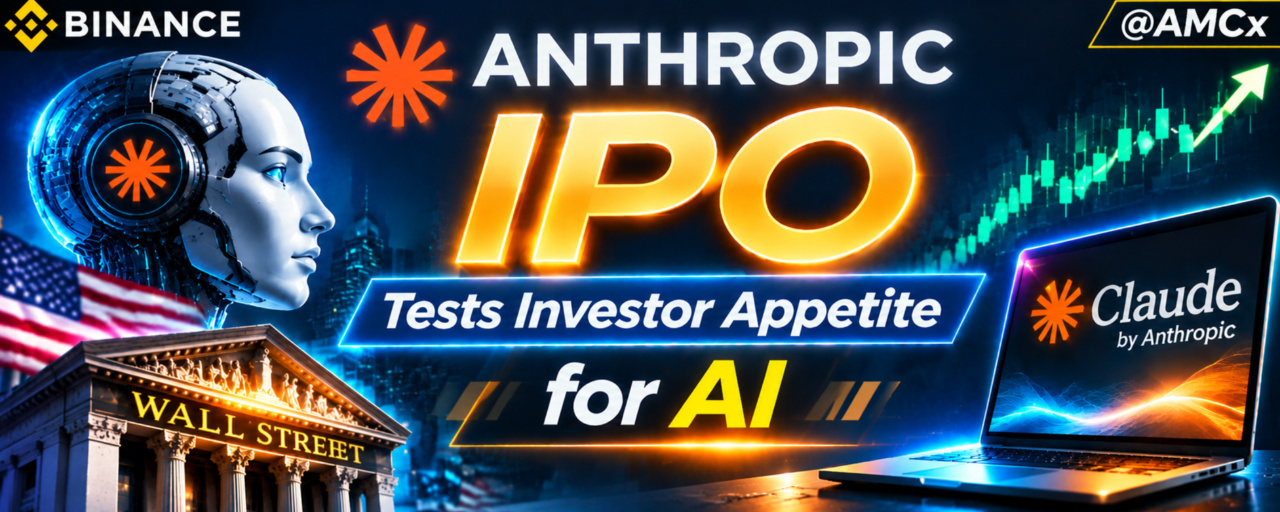
ANTHROPIC IPO: A MAJOR TEST FOR WALL STREET—DO INVESTORS STILL BELIEVE IN AI’S FUTURE?The Artificial Intelligence (AI) industry is once again at the center of global financial markets. This time, the spotlight is on Anthropic, the company behind the Claude chatbot, which is preparing for an Initial Public Offering (IPO).
Anthropic’s IPO is more than just a major step for a technology company. It is also an important test of how much investors still believe in the growth of the AI industry.
After years of attracting major investments, the AI industry now faces an increasingly serious question:
ANTHROPIC IPO: A MAJOR TEST FOR WALL STREET—DO INVESTORS STILL BELIEVE IN AI’S FUTURE?
The Artificial Intelligence (AI) industry is once again at the center of global financial markets. This time, the spotlight is on Anthropic, the company behind the Claude chatbot, which is preparing for an Initial Public Offering (IPO).
Anthropic’s IPO is more than just a major step for a technology company. It is also an important test of how much investors still believe in the growth of the AI industry.
After years of attracting major investments, the AI industry now faces an increasingly serious question:
Anthropic’s IPO is more than just a major step for a technology company. It is also an important test of how much investors still believe in the growth of the AI industry.
After years of attracting major investments, the AI industry now faces an increasingly serious question:
2
962
·
--
Article
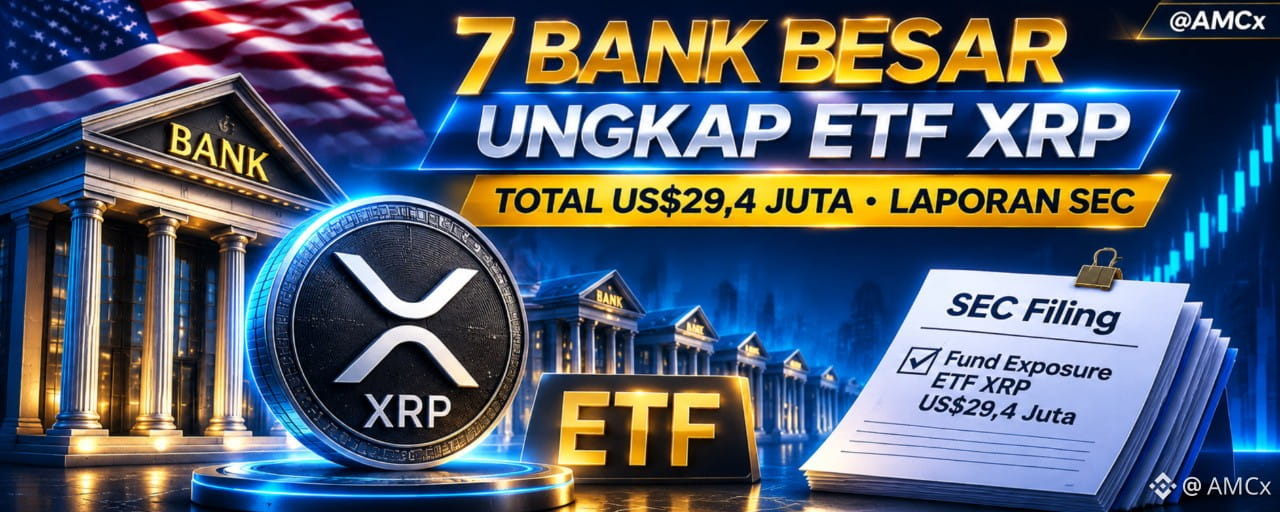
SEVEN MAJOR BANKS REVEAL US$29.4 MILLION IN XRP ETF HOLDINGS! WHAT DOES THIS MEAN FOR XRP’S FUTURE?The world of cryptocurrency is once again attracting attention after seven major banking institutions were reported to have exposure to investment products related to XRP.
According to Form 13F reports filed with the U.S. Securities and Exchange Commission (SEC) between November 9 and 16, 2026, the seven institutions held a total of approximately US$29.4 million in XRP-related investment products, based on positions as of September 30, 2026.
This news is noteworthy because it shows that digital assets like XRP are increasingly becoming part of discussions about the portfolios of major financial institutions.
SEVEN MAJOR BANKS REVEAL US$29.4 MILLION IN XRP ETF HOLDINGS! WHAT DOES THIS MEAN FOR XRP’S FUTURE?
The world of cryptocurrency is once again attracting attention after seven major banking institutions were reported to have exposure to investment products related to XRP.
According to Form 13F reports filed with the U.S. Securities and Exchange Commission (SEC) between November 9 and 16, 2026, the seven institutions held a total of approximately US$29.4 million in XRP-related investment products, based on positions as of September 30, 2026.
This news is noteworthy because it shows that digital assets like XRP are increasingly becoming part of discussions about the portfolios of major financial institutions.
2
70
·
--
Article
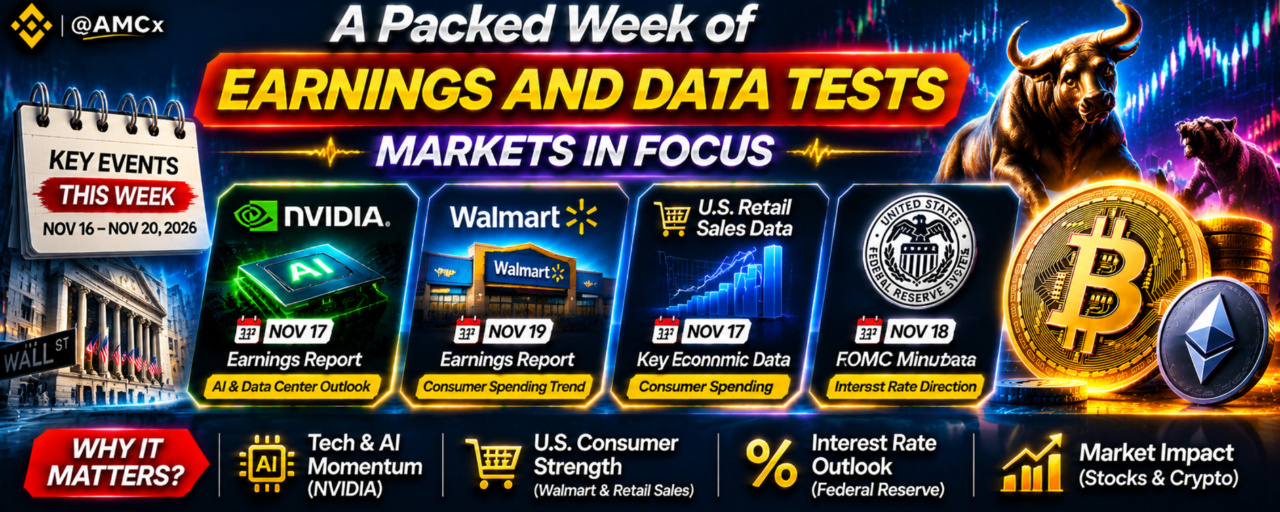
A PACKED WEEK OF EARNINGS AND DATA TESTS MARKETS: What Should Investors Watch?A PACKED WEEK OF EARNINGS AND DATA TESTS MARKETS: What Should Investors Watch?
Global financial markets are heading into a busy week from November 16–20, 2026. Several major companies will release their earnings reports, while U.S. economic data and Federal Reserve commentary could influence the direction of markets.
This week is about more than just corporate earnings figures. Investors will also be looking for clues about whether economic growth remains strong, whether consumers are starting to cut back on spending, and what lies ahead for the technology sector and artificial intelligence (AI).
A PACKED WEEK OF EARNINGS AND DATA TESTS MARKETS: What Should Investors Watch?
A PACKED WEEK OF EARNINGS AND DATA TESTS MARKETS: What Should Investors Watch?
Global financial markets are heading into a busy week from November 16–20, 2026. Several major companies will release their earnings reports, while U.S. economic data and Federal Reserve commentary could influence the direction of markets.
This week is about more than just corporate earnings figures. Investors will also be looking for clues about whether economic growth remains strong, whether consumers are starting to cut back on spending, and what lies ahead for the technology sector and artificial intelligence (AI).
2
133
·
--
Article
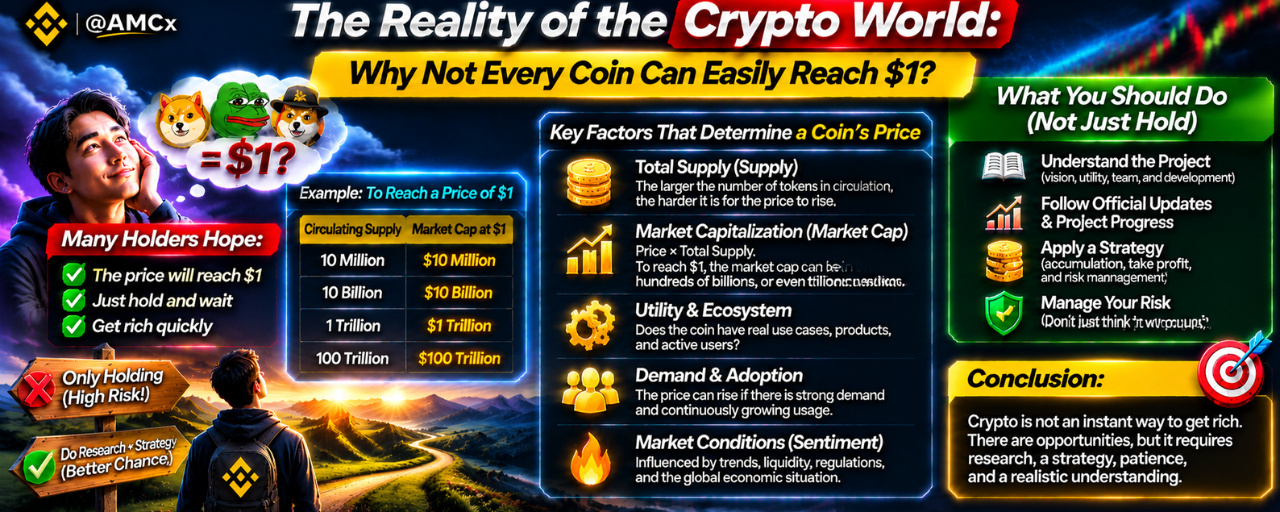
NOT EVERY MEME COIN CAN REACH $1! Understand the Supply Before You Get Your Hopes UpIn the world of cryptocurrency, we often see meme coin holders hoping that the coins they own will reach $1 someday.
Some say DOGE could reach $1, SHIB could reach $1, and even various new meme coins share the same hope.
But have we ever asked ourselves: are those price targets realistic given the number of tokens in circulation?
One thing every crypto investor should understand is that a coin’s price can’t be judged solely by its price per token. We also need to look at its supply and market capitalization.
NOT EVERY MEME COIN CAN REACH $1! Understand the Supply Before You Get Your Hopes Up
In the world of cryptocurrency, we often see meme coin holders hoping that the coins they own will reach $1 someday.
Some say DOGE could reach $1, SHIB could reach $1, and even various new meme coins share the same hope.
But have we ever asked ourselves: are those price targets realistic given the number of tokens in circulation?
One thing every crypto investor should understand is that a coin’s price can’t be judged solely by its price per token. We also need to look at its supply and market capitalization.
2
206
·
--
See translation
#Binance Earn Share $500K worth of SXT rewards https://www.bmwweb.biz/activity/trading-competition/Earn-with-SXT-and-ETH?ref=18371870
#Binance Earn Share $500K worth of SXT rewards https://www.bmwweb.biz/activity/trading-competition/Earn-with-SXT-and-ETH?ref=18371870
2
14
·
--
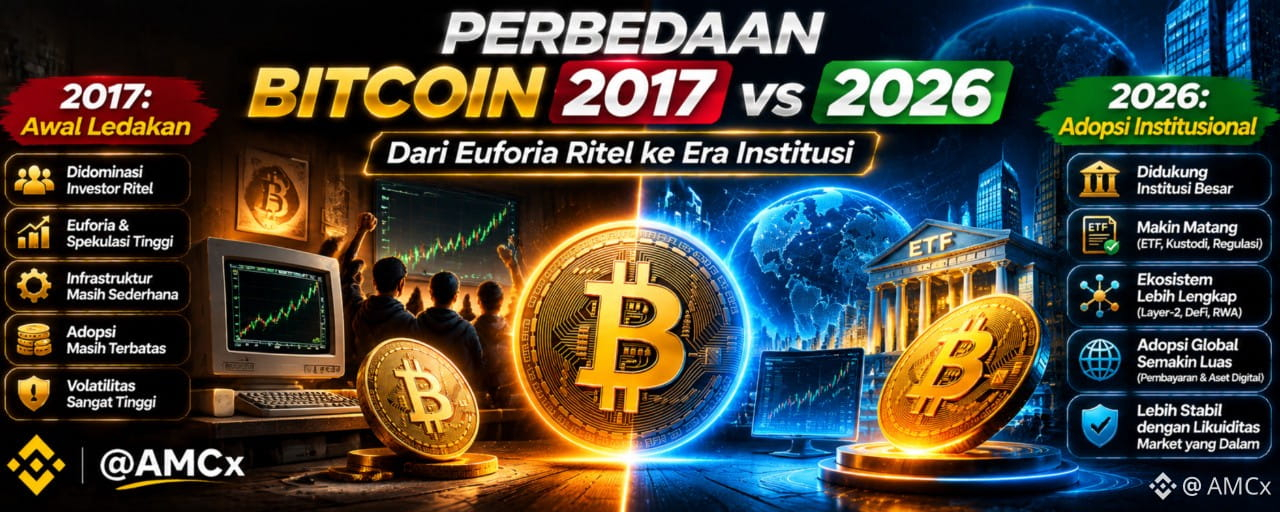
Article
BITCOIN 2017 vs. 2026: From Retail Euphoria to the Institutional EraHow has Bitcoin changed in nine years?
Bitcoin is no longer the same asset it was when the world witnessed its price surge in 2017. Over nine years, Bitcoin has undergone major changes—not only in price, but also in adoption, infrastructure, investment access, and its role in the global financial system.
Let’s compare Bitcoin in 2017 and 2026.
1. Bitcoin in 2017: The Popularity Boom
2017 was one of the most historic periods for Bitcoin. At the beginning of the year, BTC was still trading at around US$1,000. Toward the end of the year, Bitcoin briefly reached around US$20,000 before closing the year at approximately US$14,156.
BITCOIN 2017 vs. 2026: From Retail Euphoria to the Institutional Era
How has Bitcoin changed in nine years?
Bitcoin is no longer the same asset it was when the world witnessed its price surge in 2017. Over nine years, Bitcoin has undergone major changes—not only in price, but also in adoption, infrastructure, investment access, and its role in the global financial system.
Let’s compare Bitcoin in 2017 and 2026.
1. Bitcoin in 2017: The Popularity Boom
2017 was one of the most historic periods for Bitcoin. At the beginning of the year, BTC was still trading at around US$1,000. Toward the end of the year, Bitcoin briefly reached around US$20,000 before closing the year at approximately US$14,156.
1
37
·
--
Article
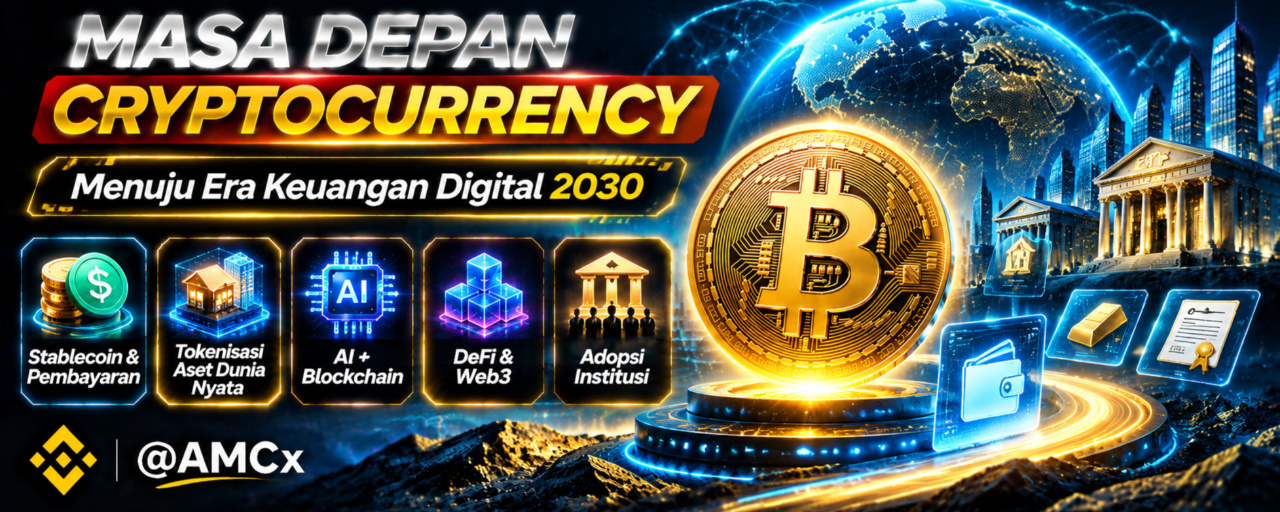
THE FUTURE OF CRYPTOCURRENCY: Toward a Bigger Digital Finance Era by 2030?The world of cryptocurrency is undergoing major changes. While crypto assets were once better known as speculative instruments for seeking profits from price increases, blockchain technology is now beginning to enter the sectors of payments, banking, investment, trade, and real-world asset management.
The question is, what will the future of cryptocurrency look like over the next few years?
Will crypto remain merely a place to invest, or will it become an important part of the global financial system?
Let’s discuss some developments that could shape the future of this industry.
THE FUTURE OF CRYPTOCURRENCY: Toward a Bigger Digital Finance Era by 2030?
The world of cryptocurrency is undergoing major changes. While crypto assets were once better known as speculative instruments for seeking profits from price increases, blockchain technology is now beginning to enter the sectors of payments, banking, investment, trade, and real-world asset management.
The question is, what will the future of cryptocurrency look like over the next few years?
Will crypto remain merely a place to invest, or will it become an important part of the global financial system?
Let’s discuss some developments that could shape the future of this industry.
The question is, what will the future of cryptocurrency look like over the next few years?
Will crypto remain merely a place to invest, or will it become an important part of the global financial system?
Let’s discuss some developments that could shape the future of this industry.
1
109
·
--
Article
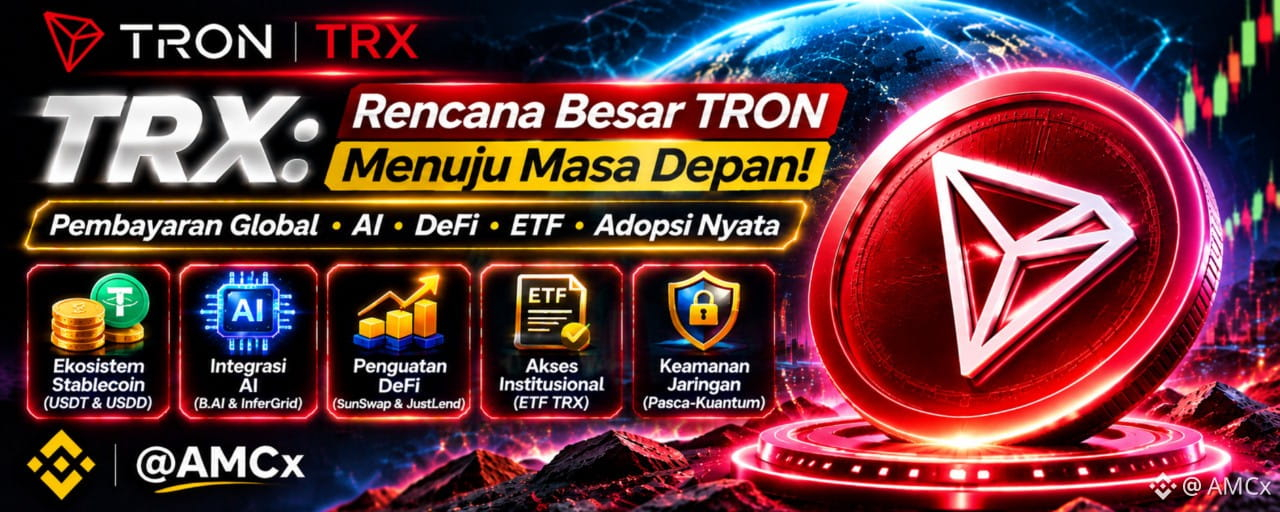
TRON (TRX): Big Ambitions for the Future of Digital Payments, AI, and Global Finance!1. What Is TRON Building?
TRON is a blockchain network focused on digital transactions, smart contracts, decentralized applications, and stablecoin payments.
Its native token is $TRX , which is used to pay transaction fees, stake, and participate in network governance.
In 2026, TRON is further strengthening its position as digital financial infrastructure. Its development focus is not only on increasing the number of users, but also on expanding the network’s use in everyday life.
TRON (TRX): Big Ambitions for the Future of Digital Payments, AI, and Global Finance!
1. What Is TRON Building?
TRON is a blockchain network focused on digital transactions, smart contracts, decentralized applications, and stablecoin payments.
Its native token is $TRX , which is used to pay transaction fees, stake, and participate in network governance.
In 2026, TRON is further strengthening its position as digital financial infrastructure. Its development focus is not only on increasing the number of users, but also on expanding the network’s use in everyday life.
1
43
·
--
Article
BITCOIN: 100,000 CHARACTERS TO UNVEIL THE FUTURE OF THE WORLD'S LARGEST DIGITAL ASSET!This article just wants to try max 100,000 characters on binance square.
"I'm trying a different challenge this time. Can anyone finish this 100,000-character Bitcoin article? 😁 Let's see who's really interested in learning more about Bitcoin!"
BITCOIN (BTC): UNDERSTANDING THE FIRST DIGITAL ASSETS, LATEST DEVELOPMENTS, AND ITS FUTURE In-depth analysis by @AMCx Edition: November 14, 2026
EDITORIAL NOTE
This article is intended for educational and analytical purposes. Market data is constantly changing. The figures cited are dated and should not be construed as direct prices. This article is not a solicitation to buy or sell crypto assets.
BITCOIN: 100,000 CHARACTERS TO UNVEIL THE FUTURE OF THE WORLD'S LARGEST DIGITAL ASSET!
This article just wants to try max 100,000 characters on binance square.
"I'm trying a different challenge this time. Can anyone finish this 100,000-character Bitcoin article? 😁 Let's see who's really interested in learning more about Bitcoin!"
BITCOIN (BTC): UNDERSTANDING THE FIRST DIGITAL ASSETS, LATEST DEVELOPMENTS, AND ITS FUTURE In-depth analysis by @AMCx Edition: November 14, 2026
EDITORIAL NOTE
This article is intended for educational and analytical purposes. Market data is constantly changing. The figures cited are dated and should not be construed as direct prices. This article is not a solicitation to buy or sell crypto assets.
1
26
·
--
Verified
Article
See translation
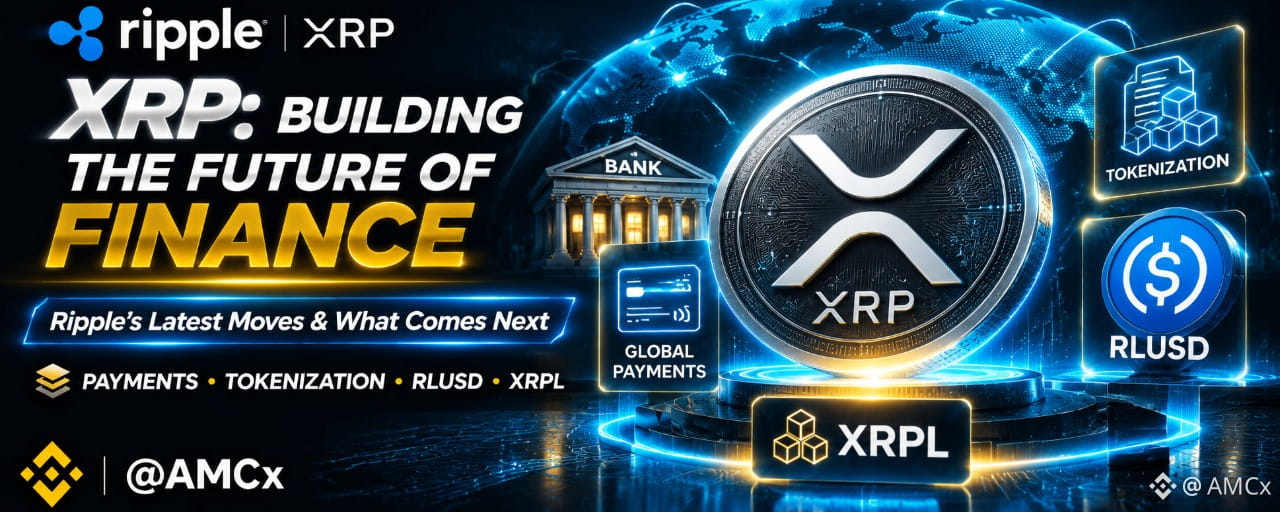
XRP: WHAT IS RIPPLE BUILDING FOR THE FUTURE?Ripple's Latest Developments, Technology and Long-Term Vision
By @AMCx | November 14, 2026
1. XRP Is More Than Just a Cryptocurrency
XRP is one of the digital assets attracting attention in the cryptocurrency industry.
But what makes XRP interesting is not simply its market price. Its ecosystem is being developed to support payments, digital assets, financial infrastructure and institutional blockchain adoption.
Ripple and the XRP Ledger are working toward a broader financial ecosystem that could connect traditional finance with blockchain technology.
2. Ripple's Latest Institutional Development
One important development came on October 27, 2026, when Ripple announced an expanded collaboration with BNY.
The partnership includes:
Institutional custody for XRP and RLUSD.Exploration of tokenized investment products.Tokenized trade finance.New payment and settlement opportunities.
This development could help connect blockchain infrastructure with traditional financial institutions.
3. RLUSD: Another Important Part of the Ecosystem
Ripple is also developing RLUSD, a stablecoin designed to maintain a value equivalent to the US dollar.
Unlike XRP, RLUSD is designed for price stability rather than market appreciation.
Its potential applications include payments, trading and tokenized financial transactions.
This distinction is important because XRP and RLUSD have different purposes within the Ripple ecosystem.
4. Faster Business Payments Through C2FO
Ripple and C2FO announced an initiative called C2FO Instant Pay.
The project aims to use the XRP Ledger and RLUSD to help businesses receive payments faster.
Instead of waiting several days for traditional settlement processes, participating suppliers could receive funds in seconds.
This is an interesting example of how blockchain technology could solve real business problems.
5. What Is Coming Next for XRP Ledger?
The development roadmap includes several proposed improvements:
Smart Contracts
Allowing developers to build more advanced applications directly on the XRP Ledger.
Confidential Transfers
Providing additional privacy for certain token transactions.
Loan Collateral
Supporting lending applications backed by digital assets.
Perpetual Futures
Potentially bringing more advanced trading infrastructure to the network.
Post-Quantum Security
Preparing the network for future security challenges posed by quantum computing.
Some of these capabilities are already represented in protocol releases, while others remain proposed or under development. They should not be considered guaranteed launches.
6. Can XRP Become Part of Global Financial Infrastructure?
This is one of the biggest questions surrounding XRP.
Imagine a financial ecosystem where businesses can:
Send payments across countries.Settle transactions more efficiently.Transfer tokenized financial assets.Use stablecoins for business payments.Connect traditional financial institutions with blockchain networks.
If adoption continues, the XRP Ledger could become an important part of this evolving infrastructure.
However, competition from other blockchain networks remains significant.
7. AMCx's Long-Term Perspective
In my opinion, the most interesting part of XRP is its long-term development.
I am more interested in seeing how the technology is adopted than simply watching its price move every day.
Ripple has been expanding its institutional relationships, developing RLUSD and supporting new applications on the XRP Ledger.
These developments deserve attention.
But investors should remember that a successful company or blockchain ecosystem does not automatically guarantee an increase in the price of its native token.
Real adoption, demand for XRP, liquidity and market conditions will remain important factors.
FINAL THOUGHTS
XRP's future will depend on more than market speculation.
The real challenge is proving that its technology can deliver meaningful value to businesses, financial institutions and everyday users.
I believe the next few years will be important for the development of the XRP Ledger.
The question is not only how high XRP can go, but how important its technology can become in the future of global finance.
What do you think?
Can XRP become one of the most important blockchain networks for global payments and financial infrastructure?
Share your thoughts in the comments.
— @AMCx
#XRP #Ripple #XRPL #RLUSD #CryptoNews #Blockchain #BinanceSquare #AMCx
Disclaimer: This article is for educational and informational purposes only. It is not financial advice or a recommendation to buy or sell XRP.
XRP: WHAT IS RIPPLE BUILDING FOR THE FUTURE?
Ripple's Latest Developments, Technology and Long-Term Vision
By @AMCx | November 14, 2026
1. XRP Is More Than Just a Cryptocurrency
XRP is one of the digital assets attracting attention in the cryptocurrency industry.
But what makes XRP interesting is not simply its market price. Its ecosystem is being developed to support payments, digital assets, financial infrastructure and institutional blockchain adoption.
Ripple and the XRP Ledger are working toward a broader financial ecosystem that could connect traditional finance with blockchain technology.
2. Ripple's Latest Institutional Development
One important development came on October 27, 2026, when Ripple announced an expanded collaboration with BNY.
The partnership includes:
Institutional custody for XRP and RLUSD.Exploration of tokenized investment products.Tokenized trade finance.New payment and settlement opportunities.
This development could help connect blockchain infrastructure with traditional financial institutions.
3. RLUSD: Another Important Part of the Ecosystem
Ripple is also developing RLUSD, a stablecoin designed to maintain a value equivalent to the US dollar.
Unlike XRP, RLUSD is designed for price stability rather than market appreciation.
Its potential applications include payments, trading and tokenized financial transactions.
This distinction is important because XRP and RLUSD have different purposes within the Ripple ecosystem.
4. Faster Business Payments Through C2FO
Ripple and C2FO announced an initiative called C2FO Instant Pay.
The project aims to use the XRP Ledger and RLUSD to help businesses receive payments faster.
Instead of waiting several days for traditional settlement processes, participating suppliers could receive funds in seconds.
This is an interesting example of how blockchain technology could solve real business problems.
5. What Is Coming Next for XRP Ledger?
The development roadmap includes several proposed improvements:
Smart Contracts
Allowing developers to build more advanced applications directly on the XRP Ledger.
Confidential Transfers
Providing additional privacy for certain token transactions.
Loan Collateral
Supporting lending applications backed by digital assets.
Perpetual Futures
Potentially bringing more advanced trading infrastructure to the network.
Post-Quantum Security
Preparing the network for future security challenges posed by quantum computing.
Some of these capabilities are already represented in protocol releases, while others remain proposed or under development. They should not be considered guaranteed launches.
6. Can XRP Become Part of Global Financial Infrastructure?
This is one of the biggest questions surrounding XRP.
Imagine a financial ecosystem where businesses can:
Send payments across countries.Settle transactions more efficiently.Transfer tokenized financial assets.Use stablecoins for business payments.Connect traditional financial institutions with blockchain networks.
If adoption continues, the XRP Ledger could become an important part of this evolving infrastructure.
However, competition from other blockchain networks remains significant.
7. AMCx's Long-Term Perspective
In my opinion, the most interesting part of XRP is its long-term development.
I am more interested in seeing how the technology is adopted than simply watching its price move every day.
Ripple has been expanding its institutional relationships, developing RLUSD and supporting new applications on the XRP Ledger.
These developments deserve attention.
But investors should remember that a successful company or blockchain ecosystem does not automatically guarantee an increase in the price of its native token.
Real adoption, demand for XRP, liquidity and market conditions will remain important factors.
FINAL THOUGHTS
XRP's future will depend on more than market speculation.
The real challenge is proving that its technology can deliver meaningful value to businesses, financial institutions and everyday users.
I believe the next few years will be important for the development of the XRP Ledger.
The question is not only how high XRP can go, but how important its technology can become in the future of global finance.
What do you think?
Can XRP become one of the most important blockchain networks for global payments and financial infrastructure?
Share your thoughts in the comments.
— @AMCx
#XRP #Ripple #XRPL #RLUSD #CryptoNews #Blockchain #BinanceSquare #AMCx
Disclaimer: This article is for educational and informational purposes only. It is not financial advice or a recommendation to buy or sell XRP.
1
209
·
--
Article
See translation
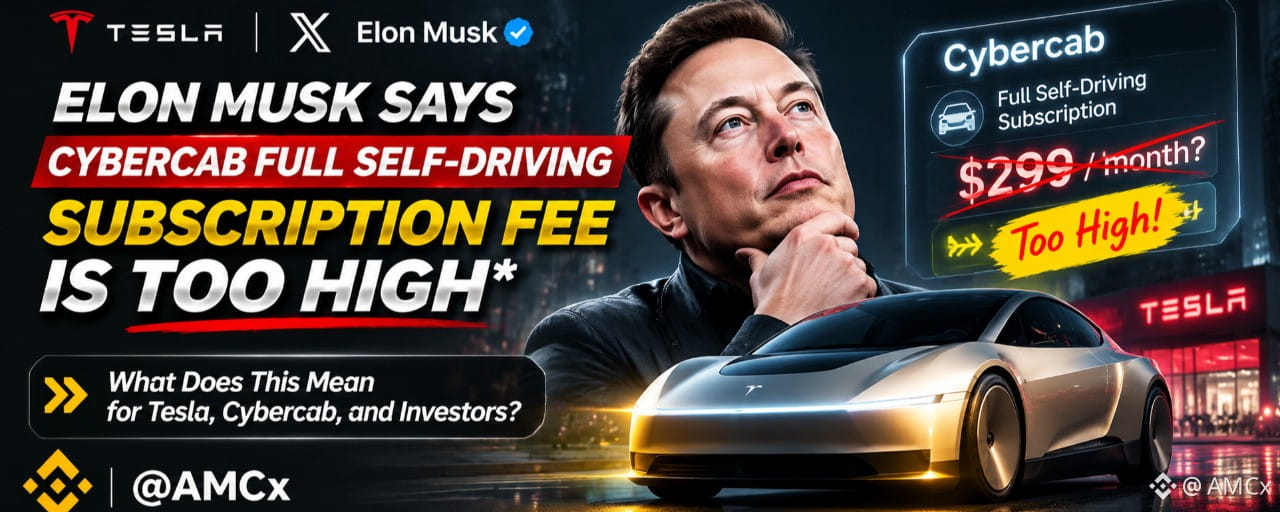
Is Tesla's $299 Cybercab Subscription Too Expensive?Is Tesla's $299 Cybercab Subscription Too Expensive?
1. Cybercab: The Future of Transportation Without Drivers
Tesla is once again attracting attention with its ambitious Cybercab project. Developed under Elon Musk's vision, Cybercab represents a new generation of autonomous electric transportation.
Unlike conventional vehicles, Cybercab is designed without a steering wheel or traditional pedals. Its primary purpose is to transport passengers using autonomous driving technology.
However, an important question is emerging: How much are consumers willing to pay for a driverless transportation experience?
2. The $299 Monthly Subscription Debate
One of the most discussed aspects of the Cybercab business model is its reported autonomous-driving subscription fee of $299 per month.
Let's look at the potential cost:
ItemCostCybercab purchase price$29,990Monthly subscription$299Annual subscription$3,588
At first glance, the vehicle's purchase price may appear competitive. However, an additional $299 every month could become a significant expense over time.
For consumers, this raises an important question: Should autonomous driving be an additional premium service, or should it be included in the vehicle's purchase price?
It is important to distinguish the reported subscription pricing from a verified direct statement by Elon Musk that the price is too high. The affordability question is an issue for consumers and investors to evaluate.
3. Why Is Tesla Charging for Autonomous Technology?
Developing autonomous driving technology requires substantial investment.
Some of the major areas include:
Artificial intelligence development.Advanced computing infrastructure.Real-time vehicle data processing.Software updates and improvements.Safety testing and autonomous-driving research.
Tesla's challenge is to turn these investments into a sustainable business model.
Monthly subscriptions could create recurring revenue, potentially becoming an important source of income beyond traditional vehicle sales.
4. Will Consumers Accept the Subscription Model?
This is perhaps the biggest challenge facing Cybercab.
Some consumers may consider $299 per month reasonable if the technology provides a safe, reliable, and convenient transportation experience.
Others may prefer traditional vehicles without recurring software payments.
Tesla will need to demonstrate that the benefits of autonomous driving justify the additional cost.
The success of Cybercab will not depend on technology alone. Consumer acceptance will be equally important.
5. What Does This Mean for Tesla Investors?
From an investment perspective, Cybercab represents an opportunity as well as a risk.
Potential opportunities:
Recurring revenue through subscriptions.Expansion into autonomous transportation.Development of a larger Robotaxi ecosystem.Increased demand for AI and computing technology.
Potential risks:
High subscription costs could discourage consumers.Regulatory restrictions may slow expansion.Autonomous-driving technology must prove its reliability.Competition could put pressure on subscription prices.
If Tesla successfully expands its autonomous transportation business, Cybercab could become an important part of its long-term growth strategy.
However, investors should not assume that technological innovation automatically translates into financial success.
6. AMCx's Perspective: Is the Future Worth $299 a Month?
In my opinion, Tesla is attempting to introduce something much bigger than another electric vehicle.
Cybercab represents a potential transformation in how people travel.
But there is one important principle: The best technology must also make economic sense for its users.
If autonomous transportation becomes safer, more accessible, and more affordable, it could transform the global automotive industry.
However, if subscription costs remain too high, adoption could be slower than Tesla expects.
The real question is not simply whether a vehicle can drive itself.
The real question is whether millions of people will be willing to pay for that experience every month.
What do you think? Would you pay $299 every month for a fully autonomous Cybercab, or would you prefer traditional electric vehicles?
Share your thoughts in the comments.
$TSLA
{future}(TSLAUSDT)
Is Tesla's $299 Cybercab Subscription Too Expensive?
Is Tesla's $299 Cybercab Subscription Too Expensive?
1. Cybercab: The Future of Transportation Without Drivers
Tesla is once again attracting attention with its ambitious Cybercab project. Developed under Elon Musk's vision, Cybercab represents a new generation of autonomous electric transportation.
Unlike conventional vehicles, Cybercab is designed without a steering wheel or traditional pedals. Its primary purpose is to transport passengers using autonomous driving technology.
However, an important question is emerging: How much are consumers willing to pay for a driverless transportation experience?
2. The $299 Monthly Subscription Debate
One of the most discussed aspects of the Cybercab business model is its reported autonomous-driving subscription fee of $299 per month.
Let's look at the potential cost:
ItemCostCybercab purchase price$29,990Monthly subscription$299Annual subscription$3,588
At first glance, the vehicle's purchase price may appear competitive. However, an additional $299 every month could become a significant expense over time.
For consumers, this raises an important question: Should autonomous driving be an additional premium service, or should it be included in the vehicle's purchase price?
It is important to distinguish the reported subscription pricing from a verified direct statement by Elon Musk that the price is too high. The affordability question is an issue for consumers and investors to evaluate.
3. Why Is Tesla Charging for Autonomous Technology?
Developing autonomous driving technology requires substantial investment.
Some of the major areas include:
Artificial intelligence development.Advanced computing infrastructure.Real-time vehicle data processing.Software updates and improvements.Safety testing and autonomous-driving research.
Tesla's challenge is to turn these investments into a sustainable business model.
Monthly subscriptions could create recurring revenue, potentially becoming an important source of income beyond traditional vehicle sales.
4. Will Consumers Accept the Subscription Model?
This is perhaps the biggest challenge facing Cybercab.
Some consumers may consider $299 per month reasonable if the technology provides a safe, reliable, and convenient transportation experience.
Others may prefer traditional vehicles without recurring software payments.
Tesla will need to demonstrate that the benefits of autonomous driving justify the additional cost.
The success of Cybercab will not depend on technology alone. Consumer acceptance will be equally important.
5. What Does This Mean for Tesla Investors?
From an investment perspective, Cybercab represents an opportunity as well as a risk.
Potential opportunities:
Recurring revenue through subscriptions.Expansion into autonomous transportation.Development of a larger Robotaxi ecosystem.Increased demand for AI and computing technology.
Potential risks:
High subscription costs could discourage consumers.Regulatory restrictions may slow expansion.Autonomous-driving technology must prove its reliability.Competition could put pressure on subscription prices.
If Tesla successfully expands its autonomous transportation business, Cybercab could become an important part of its long-term growth strategy.
However, investors should not assume that technological innovation automatically translates into financial success.
6. AMCx's Perspective: Is the Future Worth $299 a Month?
In my opinion, Tesla is attempting to introduce something much bigger than another electric vehicle.
Cybercab represents a potential transformation in how people travel.
But there is one important principle: The best technology must also make economic sense for its users.
If autonomous transportation becomes safer, more accessible, and more affordable, it could transform the global automotive industry.
However, if subscription costs remain too high, adoption could be slower than Tesla expects.
The real question is not simply whether a vehicle can drive itself.
The real question is whether millions of people will be willing to pay for that experience every month.
What do you think? Would you pay $299 every month for a fully autonomous Cybercab, or would you prefer traditional electric vehicles?
Share your thoughts in the comments.
$TSLA
1
33
·
--
Article
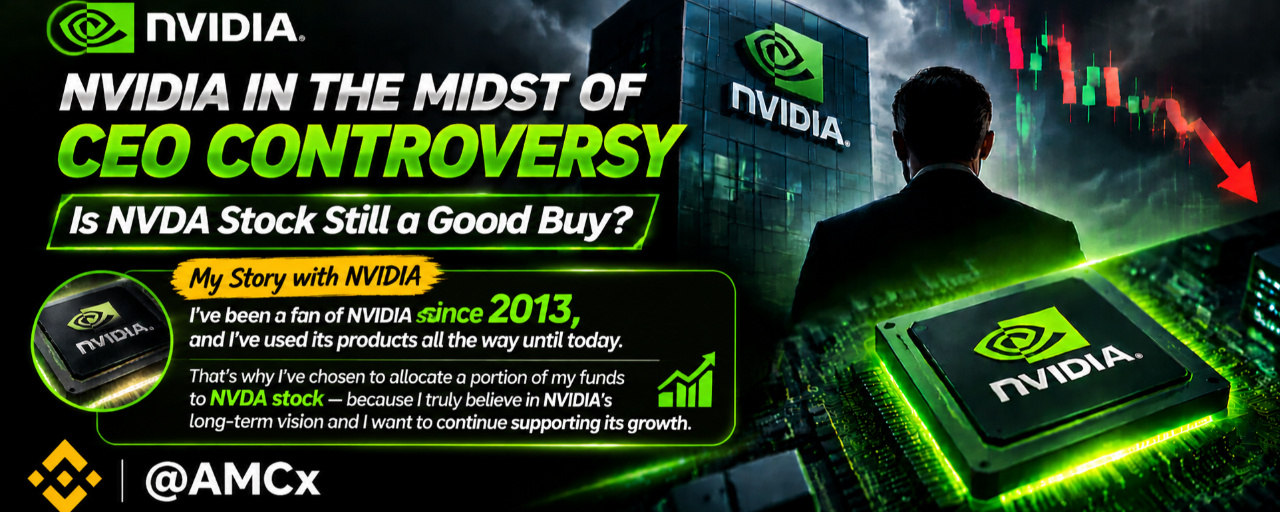
My NVIDIA Journey: Since 2013My NVIDIA Journey: Since 2013
For me, NVIDIA is more than just a technology company or a symbol on the stock market. I’ve known and used NVIDIA products since 2013, and to this day, I still use its technology.
Over the years, I’ve watched NVIDIA grow from a company known for its graphics card technology into one of the most influential players in the artificial intelligence (AI) industry.
That’s one of the reasons why I decided to set aside a small portion of my money to invest in NVIDIA (NVDA) stock.
My NVIDIA Journey: Since 2013
My NVIDIA Journey: Since 2013
For me, NVIDIA is more than just a technology company or a symbol on the stock market. I’ve known and used NVIDIA products since 2013, and to this day, I still use its technology.
Over the years, I’ve watched NVIDIA grow from a company known for its graphics card technology into one of the most influential players in the artificial intelligence (AI) industry.
That’s one of the reasons why I decided to set aside a small portion of my money to invest in NVIDIA (NVDA) stock.
1
117
·
--
Article
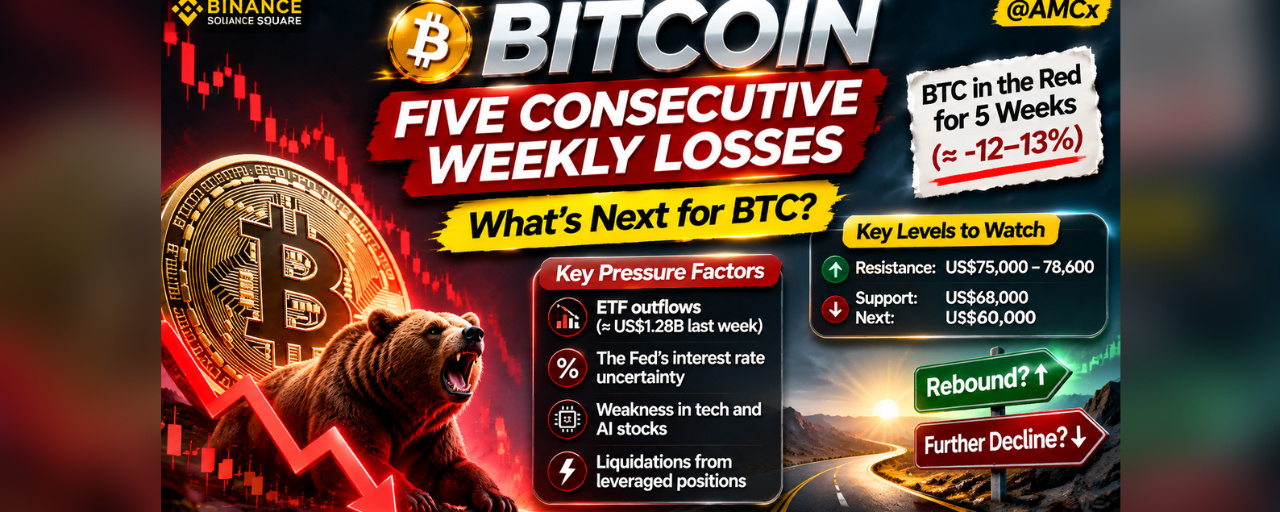
Bitcoin Posts 5 Consecutive Losing Weeks: Will the Decline Continue?#bitcoinfiveweeklylosses
Bitcoin Posts 5 Consecutive Losing Weeks: Will the Decline Continue?
Bitcoin is once again facing significant pressure. After posting five consecutive losing weeks, the confidence of some investors is starting to be tested.
This situation has drawn attention in the crypto market because Bitcoin is not only seeing its price fall, but is also facing pressure from institutional fund flows, economic conditions in the United States, and rising global market uncertainty.
In fact, on November 13, 2026, Bitcoin was reported to have fallen below US$70,000, putting it at risk of recording its sixth consecutive losing week.
Bitcoin Posts 5 Consecutive Losing Weeks: Will the Decline Continue?
#bitcoinfiveweeklylosses
Bitcoin Posts 5 Consecutive Losing Weeks: Will the Decline Continue?
Bitcoin is once again facing significant pressure. After posting five consecutive losing weeks, the confidence of some investors is starting to be tested.
This situation has drawn attention in the crypto market because Bitcoin is not only seeing its price fall, but is also facing pressure from institutional fund flows, economic conditions in the United States, and rising global market uncertainty.
In fact, on November 13, 2026, Bitcoin was reported to have fallen below US$70,000, putting it at risk of recording its sixth consecutive losing week.
Bitcoin Posts 5 Consecutive Losing Weeks: Will the Decline Continue?
Bitcoin is once again facing significant pressure. After posting five consecutive losing weeks, the confidence of some investors is starting to be tested.
This situation has drawn attention in the crypto market because Bitcoin is not only seeing its price fall, but is also facing pressure from institutional fund flows, economic conditions in the United States, and rising global market uncertainty.
In fact, on November 13, 2026, Bitcoin was reported to have fallen below US$70,000, putting it at risk of recording its sixth consecutive losing week.
1
128
·
--
Article
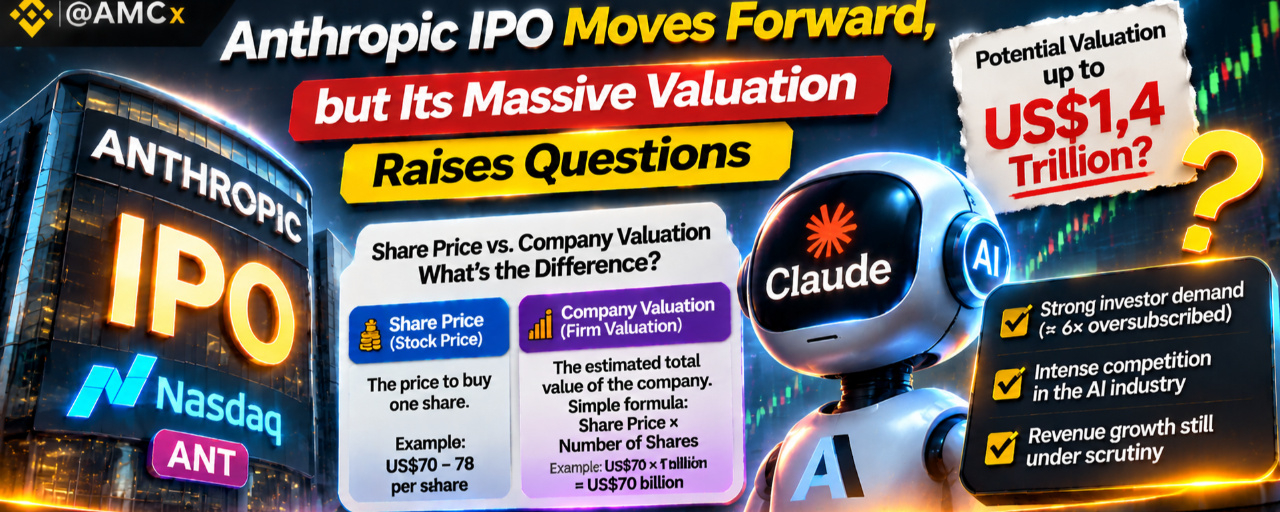
Understanding the Difference Between Share Price and Company Valuation#anthropicrejectsipodelayvaluationinquestion
Understanding the Difference Between Share Price and Company Valuation
Before assessing Anthropic’s IPO, we need to understand two terms that investors often consider synonymous: share price and company valuation.
1. Share Price
A share price is the amount an investor must pay to buy one share of a company.
For example, if Anthropic offers shares at US$70–78 per share, investors would need to pay around US$70–78 to buy one share at that offering price.
Understanding the Difference Between Share Price and Company Valuation
#anthropicrejectsipodelayvaluationinquestion
Understanding the Difference Between Share Price and Company Valuation
Before assessing Anthropic’s IPO, we need to understand two terms that investors often consider synonymous: share price and company valuation.
1. Share Price
A share price is the amount an investor must pay to buy one share of a company.
For example, if Anthropic offers shares at US$70–78 per share, investors would need to pay around US$70–78 to buy one share at that offering price.
Understanding the Difference Between Share Price and Company Valuation
Before assessing Anthropic’s IPO, we need to understand two terms that investors often consider synonymous: share price and company valuation.
1. Share Price
A share price is the amount an investor must pay to buy one share of a company.
For example, if Anthropic offers shares at US$70–78 per share, investors would need to pay around US$70–78 to buy one share at that offering price.
1
140
Log in to explore more content
Join global crypto users on Binance Square
⚡️ Get latest and useful information about crypto.
💬 Trusted by the world’s largest crypto exchange.
👍 Discover real insights from verified creators.
Email / Phone number
Trending Topics
NvidiaBeatsEstimatesAICloudStocksRiseAfterHours
7,269 views
86 Discussing
Nvidia Beats With $115.8 Billion in Revenue, Guides to $130 Billion and Adds $150 Billion Buyback
Binance News
·8 Likes
·12.1k views
A Packed Week of Earnings and Data Tests Markets
154,768 views
668 Discussing
AnthropicIPOTestsInvestorAppetiteForAI
341,635 views
2,944 Discussing