

命犯桃花
35 Posts

命犯桃花
Report
Block User
16 Following
47 Followers
27 Liked
Posts
All
Quotes
·
--
The spot ETF for $AVAX has already been listed, but "being listed" and "someone buying it" are two different things.
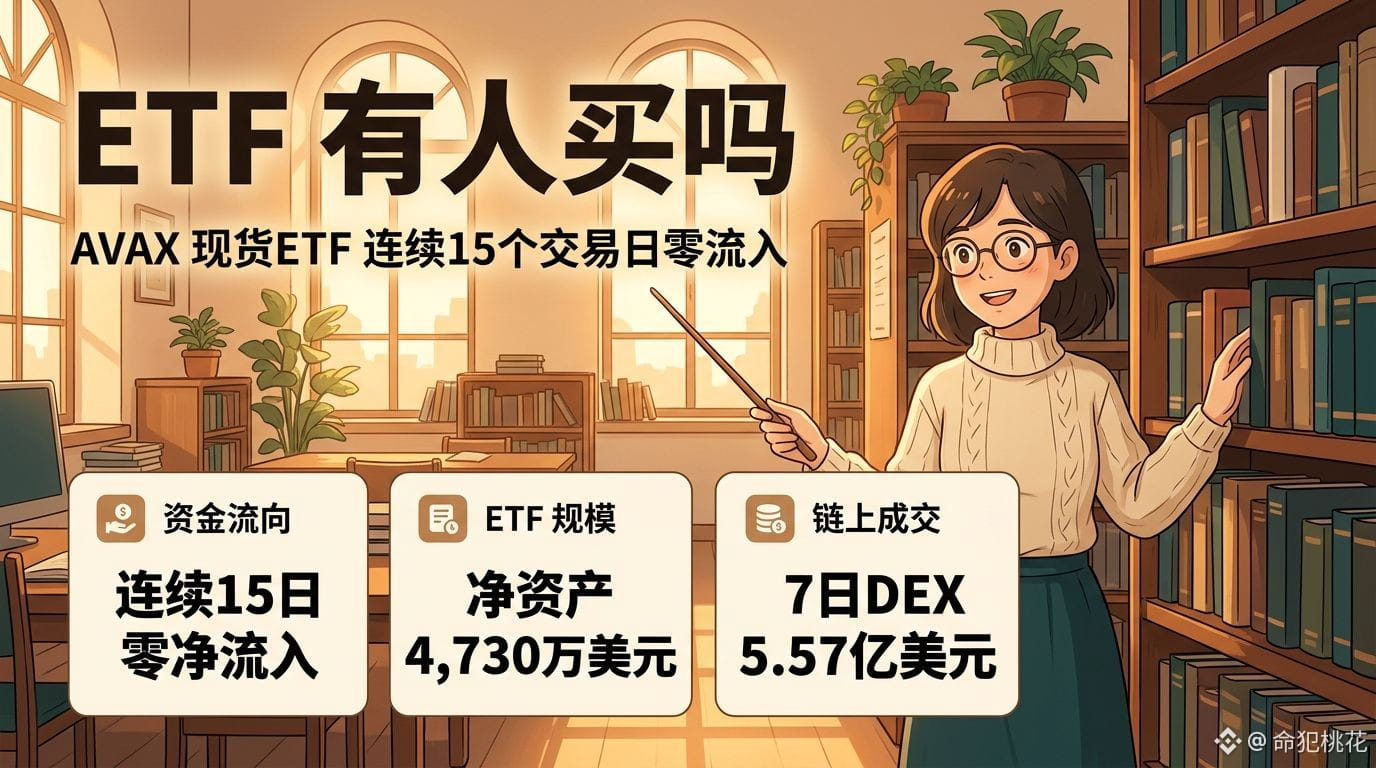
First, the facts (TokenPost citing SoSoValue, 10/30 data): AVAX spot ETF had zero net inflows for 15 consecutive trading days, with cumulative net inflows of $14.23 million, net assets of $47.3 million, accounting for about 1.24% of circulating market cap. On the same day, SOL's ETF saw net outflows of $10.74 million.
On-chain side (DefiLlama): Avalanche TVL fell from $5.57 billion on 10/24 to $5.20 billion on 10/30 (about -6.8%); stablecoins were $1.42 billion to $1.43 billion, basically flat; DEX trading volume over the past 7 days was $557 million, down 13% from the previous week.
News side: Dinari, a tokenized stock service provider, said in an official Avalanche program that it chose this chain. This was a statement in an interview, not a new product launch, so don't overinterpret it.
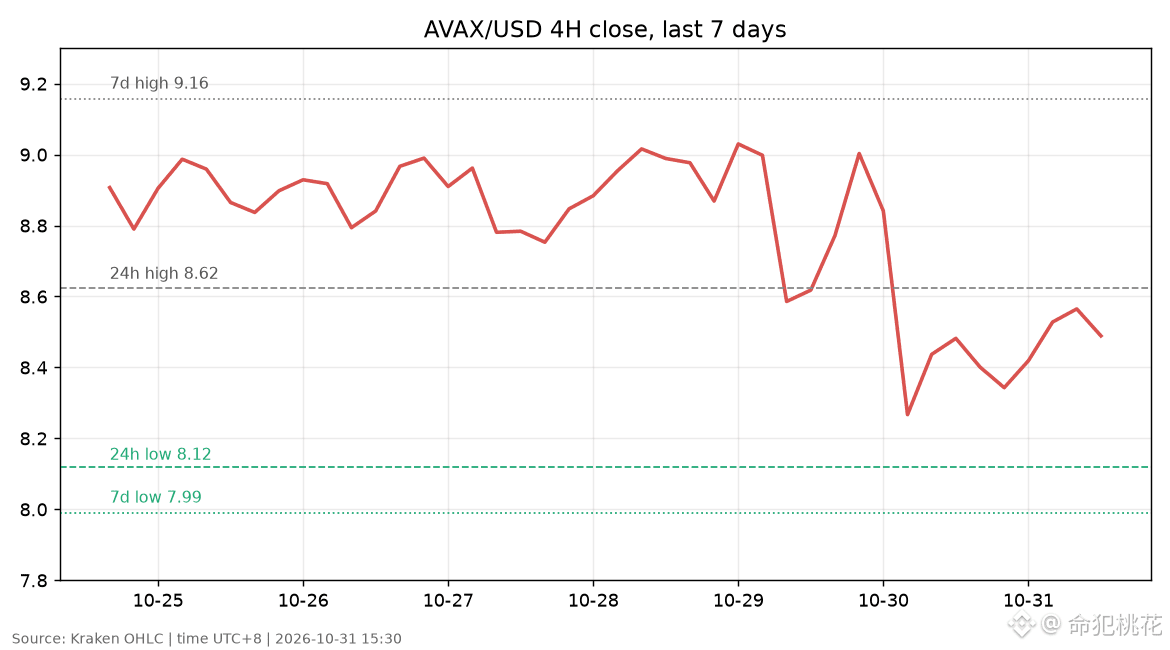
Price (Kraken): current price is about $8.50, 24-hour range $8.12–$8.62, 7-day range $7.99–$9.16. Around $8.62 is the short-term upper band; if it breaks below $8.12, pay attention to a retest of the $8.0 area.
Risk: no ETF inflows means institutional demand has not yet caught up; the broader market is affected by Binance's security incident, so sentiment is cautious (Fear & Greed Index 30).
Would you be more bullish on a coin just because it has an ETF, or would you focus more on actual capital flows?
Not investment advice. Please assess the risks yourself.
#AVAX #ETF #beginner guide
1
278
·
--

Article
Understanding points programs: three calculations to make before farming airdropsUnderstanding points programs: three calculations to make before farming airdrops
Many newcomers see “earn points by interacting, with a token launch possible later” and jump in, but rarely stop to ask: how much are these points actually worth? Today, we’ll look at a few recent public examples and explain how to read the rules of a points program.
1. First, calculate the “denominator”: how many points are issued each week
The value of points depends on the total supply. According to publicly available information compiled by third parties, Arcus, developed by dYdX Labs, issued a fixed 250,000 points per week during its first season, with the program planned to run at least through the first half of 2027. Pacifica, meanwhile, allocates 10 million points to users each week. The figures differ by a factor of 40, but that doesn’t tell us directly which points are more valuable, since neither the eventual token conversion rate nor the share of tokens allocated has been announced. The only thing we can confirm is this: the slower the issuance and the smaller the total supply, the more slowly each point is diluted.
Understanding points programs: three calculations to make before farming airdrops
Understanding points programs: three calculations to make before farming airdrops
Many newcomers see “earn points by interacting, with a token launch possible later” and jump in, but rarely stop to ask: how much are these points actually worth? Today, we’ll look at a few recent public examples and explain how to read the rules of a points program.
1. First, calculate the “denominator”: how many points are issued each week
The value of points depends on the total supply. According to publicly available information compiled by third parties, Arcus, developed by dYdX Labs, issued a fixed 250,000 points per week during its first season, with the program planned to run at least through the first half of 2027. Pacifica, meanwhile, allocates 10 million points to users each week. The figures differ by a factor of 40, but that doesn’t tell us directly which points are more valuable, since neither the eventual token conversion rate nor the share of tokens allocated has been announced. The only thing we can confirm is this: the slower the issuance and the smaller the total supply, the more slowly each point is diluted.
41
·
--
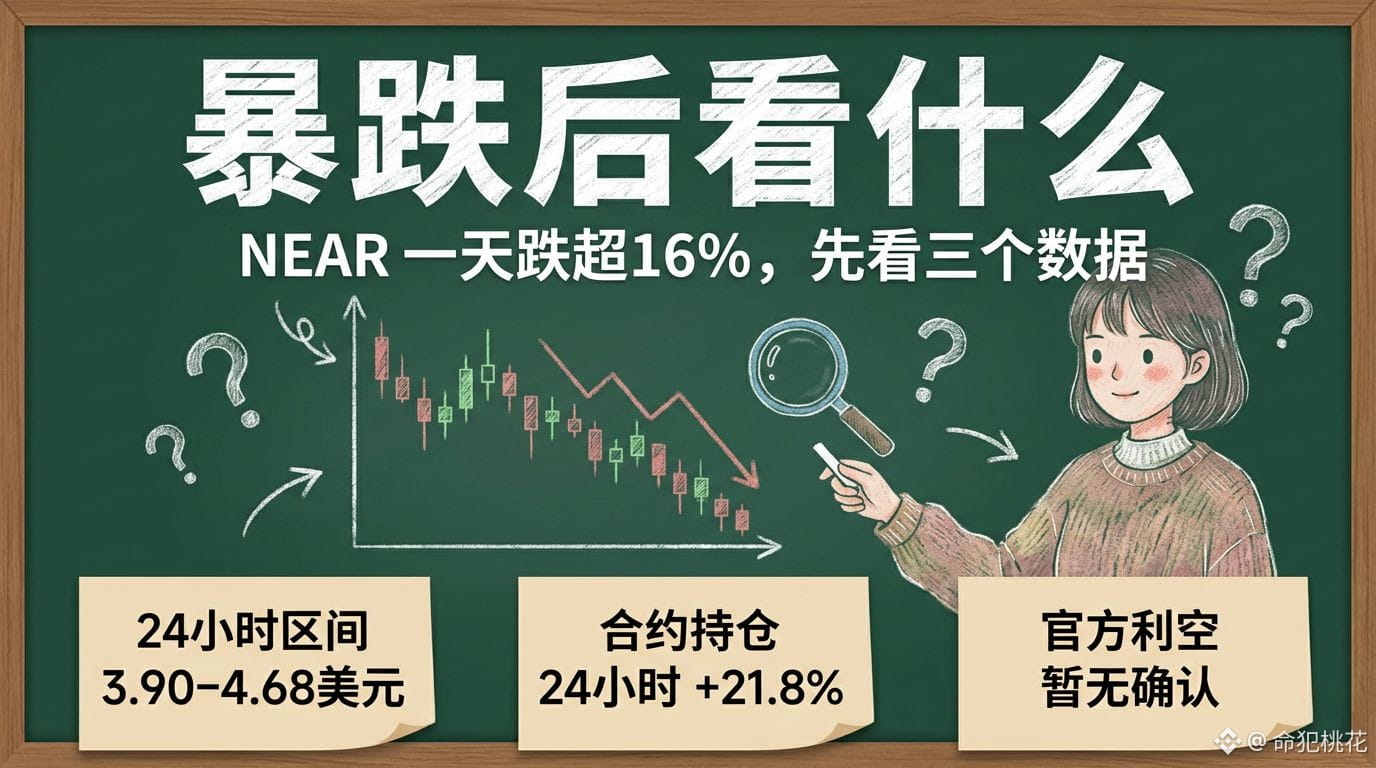
$NEAR has been moving sharply over the past two days: according to third-party data, it briefly fell to around $3.93 on October 30, down about 16.5% in 24 hours, with trading volume exceeding $1 billion. Many beginners’ first reaction is, “What major news came out?” Today, let’s look at things from another angle and discuss three things to check after a sharp drop.
1. Is there any confirmed negative news?
So far, there has been no officially confirmed news of token unlocks, a protocol attack, or an exchange delisting (third-party market data sites also say they have found no clear single cause). The broader market has been weak at the same time, with $BTC returning to around 77,600, while the Binance security incident has also prompted market-wide deleveraging. A drop without negative fundamental news is more likely to be a matter of sentiment and positioning, but that doesn’t mean it can’t keep falling.
2. Price structure
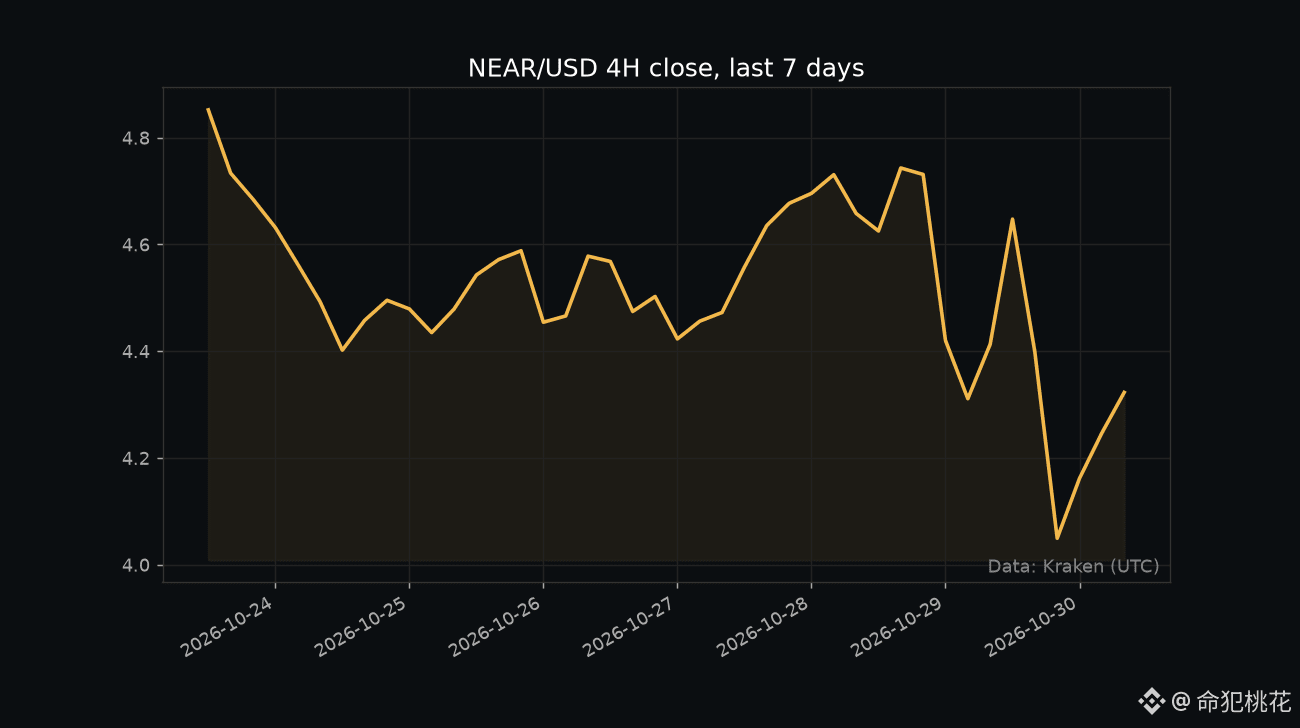
Kraken currently quotes it at around $4.32, with a 24-hour range of $3.90–$4.68, rebounding about 11% from the low. The highest 4-hour close in the past 7 days was about $4.85.
• Below: $3.90 is the recently tested low; third-party analysis puts stronger support around $3.52.
• Above: $4.68–$4.69 is the 24-hour high, while around $5.08 is near the 20-day moving average.
3. What are futures doing?
According to Binance futures data cited by Blockchain.News, NEAR open interest increased about 21.8% over 24 hours to $245 million, while the funding rate was close to neutral (0.0014%). A falling price alongside rising open interest suggests that some traders are opening new positions during the decline. Both longs and shorts are in the market, making a rapid squeeze more likely, though the direction is uncertain.
Additional context: NEAR just launched pre-IPO perpetual futures for Anthropic (ANT), with up to 10x leverage, this week. This is a new product-level development, but its impact on the token price remains unclear. On-chain TVL is around $195 million (DefiLlama), a relatively small amount.
Risk warning: Volatility can be amplified when open interest is high. Don’t use leverage to chase a rebound; a break below $3.90 could lead to another test of lower levels.
When you encounter a sharp drop, do you check the news, the candlestick chart, or futures data first?
#NEAR #新手科普 #ContentMining
Data sources: Kraken, DefiLlama, third-party market data and media reports. This is not investment advice.
561
·
--
Last night's big story: According to CoinDesk, Binance's hot wallet was attacked, and approximately 200,000 ETH was transferred out. Binance's co-CEOs said users' funds were safe and that Binance would cover the losses. Tether, Circle, and others have frozen some of the stolen stablecoins. Reports differ on the exact amount of the losses; please refer to Binance's official announcement.
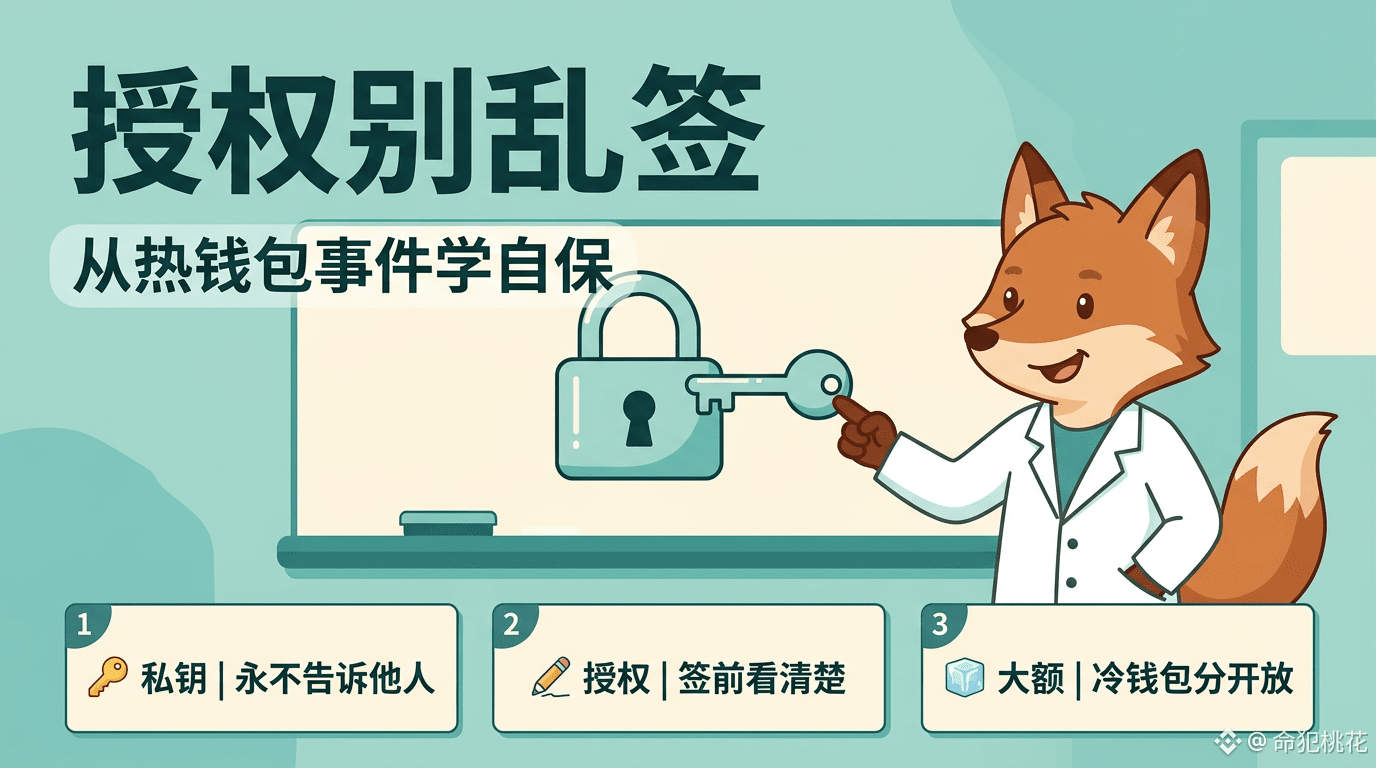
A quick lesson for beginners: Reports say the attackers exploited Ethereum's EIP-7702, a feature that allows a wallet to “delegate” control to a piece of code. The feature itself isn't a vulnerability. The problem is that if a private key is exposed, signing an authorization can change how the wallet behaves.
What everyday users can learn from this:
1. Never share your private key or recovery phrase with anyone, and don't store them in cloud notes.
2. Before signing, check what you're authorizing. If you don't understand it, don't sign.
3. Keep large holdings in a cold wallet and use a separate wallet for small everyday amounts.
As for market prices, BTC is around $77,100 and ETH around $2,212 (Coinbase spot prices, 10:30 UTC+8).
Do you regularly check your wallet authorizations?
This is not investment advice.
#钱包安全 #以太坊 #CryptoBasics
385
·
--

Article
Is Google going to do crypto custody? First, understand why private keys always run into troubleIs Google going to do crypto custody? First, understand why private keys always run into trouble
These past two days, there has been a piece of news worth a quick look for ordinary people: according to a CoinDesk report on October 28, Google showcased a security service called Google Multi-Party Compute (MPC) at a digital assets seminar in New York. It is currently in private preview, not officially launched, and is expected to go commercial in early 2027; pricing has not been announced. Google's parent company Alphabet has already started using it to store its digital assets on Ethereum and Solana. The above comes from media interviews with Google, but Google did not disclose the specific testing institutions.
Is Google going to do crypto custody? First, understand why private keys always run into trouble
Is Google going to do crypto custody? First, understand why private keys always run into trouble
These past two days, there has been a piece of news worth a quick look for ordinary people: according to a CoinDesk report on October 28, Google showcased a security service called Google Multi-Party Compute (MPC) at a digital assets seminar in New York. It is currently in private preview, not officially launched, and is expected to go commercial in early 2027; pricing has not been announced. Google's parent company Alphabet has already started using it to store its digital assets on Ethereum and Solana. The above comes from media interviews with Google, but Google did not disclose the specific testing institutions.
These past two days, there has been a piece of news worth a quick look for ordinary people: according to a CoinDesk report on October 28, Google showcased a security service called Google Multi-Party Compute (MPC) at a digital assets seminar in New York. It is currently in private preview, not officially launched, and is expected to go commercial in early 2027; pricing has not been announced. Google's parent company Alphabet has already started using it to store its digital assets on Ethereum and Solana. The above comes from media interviews with Google, but Google did not disclose the specific testing institutions.
GOOGUS-0.86%
118
·
--
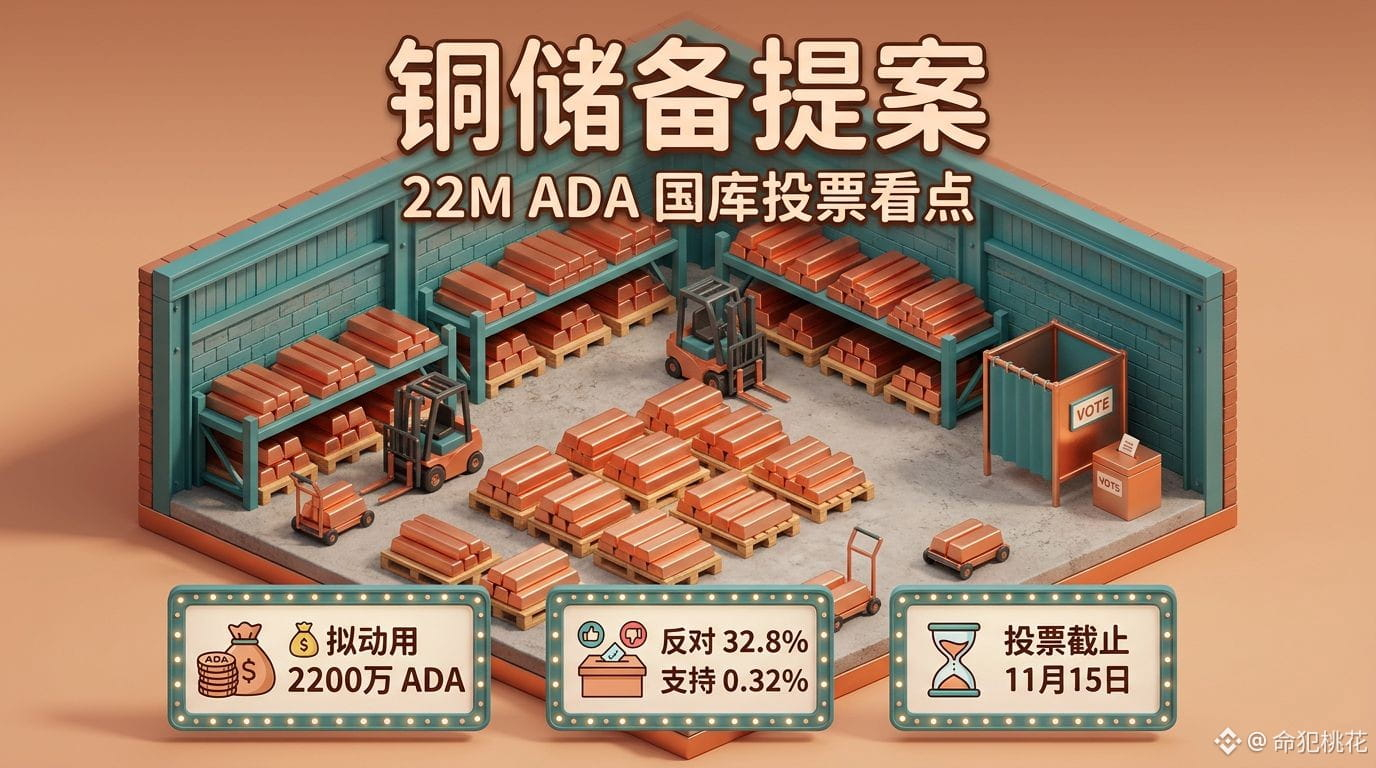
$ADA The latest talking point isn’t the price chart, but on-chain governance: a proposal seeks to withdraw 22 million ADA from the Cardano treasury to buy physical copper and issue CuTT tokens, each representing 1 pound of copper at a 1:1 ratio.
First, let’s clarify the facts (according to reports by Decrypto and Korean media outlet DigitalToday, not an official Cardano announcement):
• The proposal was submitted by Toto Finance. About two-thirds of the funds would be used to buy copper, which would be held for up to two years before being sold under controlled conditions.
• The proposal itself states that neither the principal nor returns are guaranteed. The break-even copper price is approximately $10.06 per pound.
• Two members of the Constitutional Committee have voted against it, citing unresolved issues around document custody, the structure for delegating the recipient account, and independent oversight.
• DRep voting currently stands at 32.8% against and 0.32% in favor, with 66.87% yet to vote. Voting closes on November 15, so the outcome could still change.
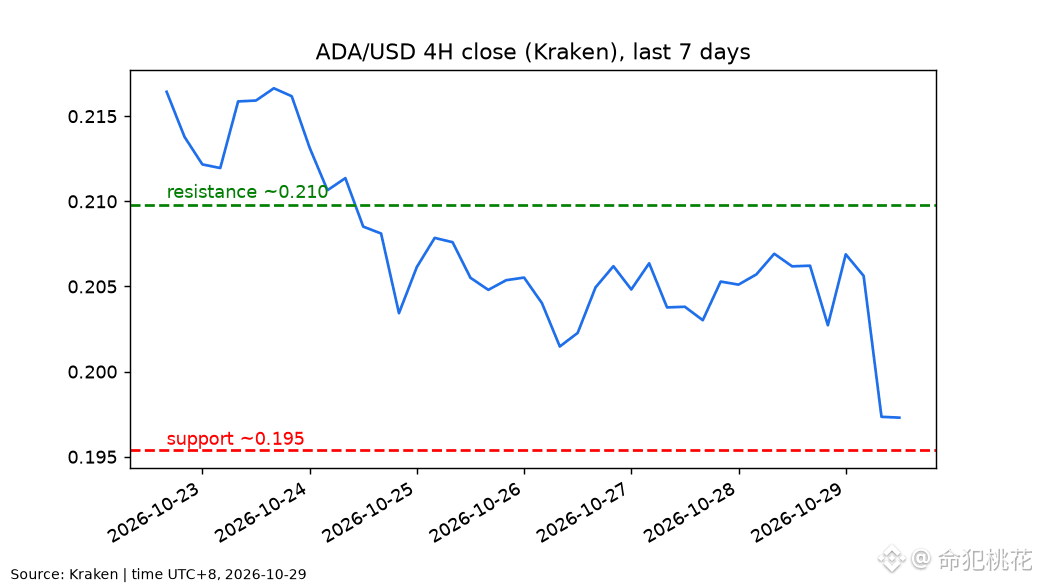
Price action: Kraken quotes ADA at around 0.197, with a 24-hour range of 0.195–0.210. The 7-day closing prices have ranged from 0.197 to 0.217, and it is currently near the lower end of that range. Keep an eye on the recent low around 0.195; a break below it would be worth watching. The area around 0.210 is near-term resistance.
Catalysts and risks: The voting outcome, and whether the audit and bridge security review are carried out, could affect how the market views “treasury-backed RWA.” However, the proposal could be rejected, while liquidity and broader market sentiment (including a BTC pullback) could also weigh on altcoins.
For beginners: A treasury proposal is like an on-chain “public budget.” Understanding who votes and how oversight works is more important than trying to guess whether the price will rise or fall.
Do you think the community treasury should invest in physical assets?
#Cardano #RWA #On-chain governance
This is not investment advice.
362
·
--
There’s a stablecoin signal hidden in Visa’s earnings report that’s worth understanding, even for beginners.
According to media reports on Visa’s October 27 earnings call, the annualized volume of stablecoin settlements has exceeded $25 billion—about 10 times the year-ago figure. Visa currently supports 10 blockchains and has more than 225 stablecoin-linked card programs. Note that these figures came from management’s remarks on the call; they were not disclosed in the formal financial statements.
What does this mean? Put simply, stablecoins are shifting from “chips on crypto exchanges” to “settlement tools behind the scenes at payment companies.” Merchants and users may not notice a change, but the routes money takes between institutions are quietly moving on-chain.
There are two things ordinary people should keep in mind:
1) Settlement volume doesn’t mean the coins you hold will rise in value—those are separate things.
2) Stablecoin regulations are still being implemented in different countries. Before choosing a stablecoin, check its issuer, reserve disclosures, and compliance status.
What do you think stablecoins will change first: cross-border transfers or everyday card payments?
#稳定币 #支付 #Beginner's Guide
This article is for educational purposes only and does not constitute investment advice.

88
·
--

Article
Why Do Cross-Chain Bridges Keep Getting Hacked? A Breakdown of Three Bridges in One WeekFirst, a statistic worth paying attention to: In DefiLlama’s hack database, incidents tagged as “cross-chain bridges” totaled 11 in all of 2025, with losses of about $38.3 million. So far in 2026, there have already been 49 incidents, with losses totaling about $753 million. That’s more than four times as many incidents as last year. Two major incidents—Liquid Network, at about $320 million, and Kelp, at about $293 million—account for most of the losses, but the frequency of incidents is indeed rising.
First, let’s clarify how they work. A common approach used by cross-chain bridges is “lock and mint”: you lock your assets in a contract on Chain A, and the bridge issues you an equivalent amount of “wrapped” tokens on Chain B. The entire security model rests on one assumption: every wrapped token on Chain B is backed by real assets locked on Chain A. If that link is broken, things go wrong.
Why Do Cross-Chain Bridges Keep Getting Hacked? A Breakdown of Three Bridges in One Week
First, a statistic worth paying attention to: In DefiLlama’s hack database, incidents tagged as “cross-chain bridges” totaled 11 in all of 2025, with losses of about $38.3 million. So far in 2026, there have already been 49 incidents, with losses totaling about $753 million. That’s more than four times as many incidents as last year. Two major incidents—Liquid Network, at about $320 million, and Kelp, at about $293 million—account for most of the losses, but the frequency of incidents is indeed rising.
First, let’s clarify how they work. A common approach used by cross-chain bridges is “lock and mint”: you lock your assets in a contract on Chain A, and the bridge issues you an equivalent amount of “wrapped” tokens on Chain B. The entire security model rests on one assumption: every wrapped token on Chain B is backed by real assets locked on Chain A. If that link is broken, things go wrong.
First, let’s clarify how they work. A common approach used by cross-chain bridges is “lock and mint”: you lock your assets in a contract on Chain A, and the bridge issues you an equivalent amount of “wrapped” tokens on Chain B. The entire security model rests on one assumption: every wrapped token on Chain B is backed by real assets locked on Chain A. If that link is broken, things go wrong.
686
·
--
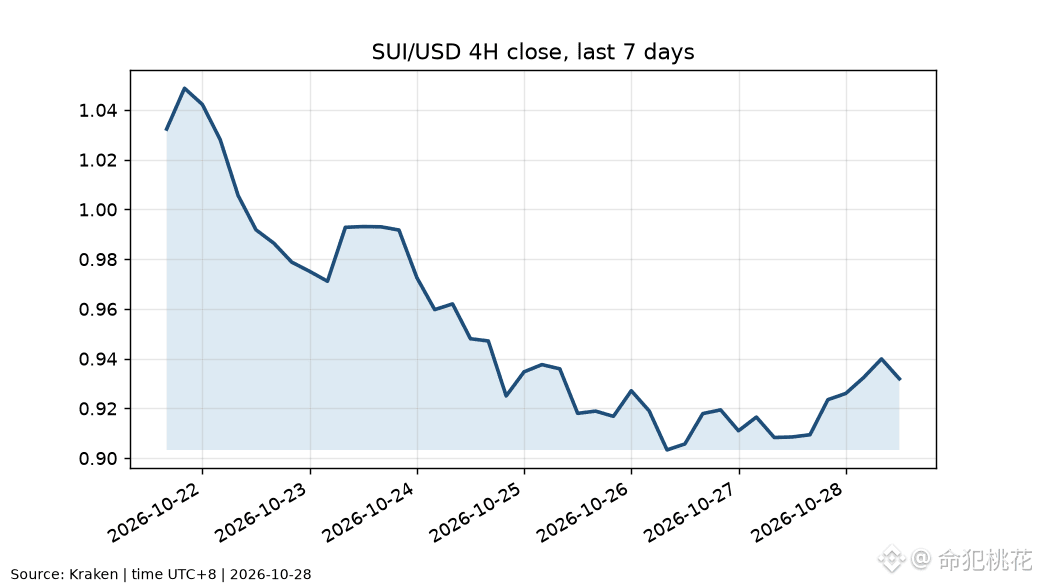
$SUI is currently around $0.93, with a 4-hour closing range of about $0.90–$1.06 over the past 7 days. Experienced traders looking at it don’t focus on price movements first; they check three sets of on-chain data:
1) TVL is about $478 million, down roughly 4% from $498 million a week ago (DefiLlama).
2) DEX trading volume on Sui over the past 24 hours was about $25.47 million, down 12% over 7 days.
3) On-chain stablecoins total about $442 million, down roughly 22% from $567 million a week ago, suggesting that some funds are flowing out.
Catalysts: Samsung Wallet plans to begin supporting USDC on Sui in the last week of this month; the Hashi Bitcoin finance project is launching in phases; about 13.15 million SUI (roughly $12 million) will unlock on November 1.
Risks: The price remains below the 20-day and 50-day moving averages. Around $0.90 is near-term support, while there is a resistance zone around $1.05. On-chain activity and stablecoin holdings are both weakening, so positive developments need to translate into real usage.
Price reflects sentiment; on-chain data reflects usage. When the two diverge, it’s worth watching patiently. Which on-chain metrics do you usually track?
#SUI #链上数据 #ContentMining
The above is a compilation of data and does not constitute investment advice.

1
514
·
--
Why does Bitcoin always produce “about one block every ten minutes”? It’s all down to difficulty adjustments. Let’s take a look using the latest data.
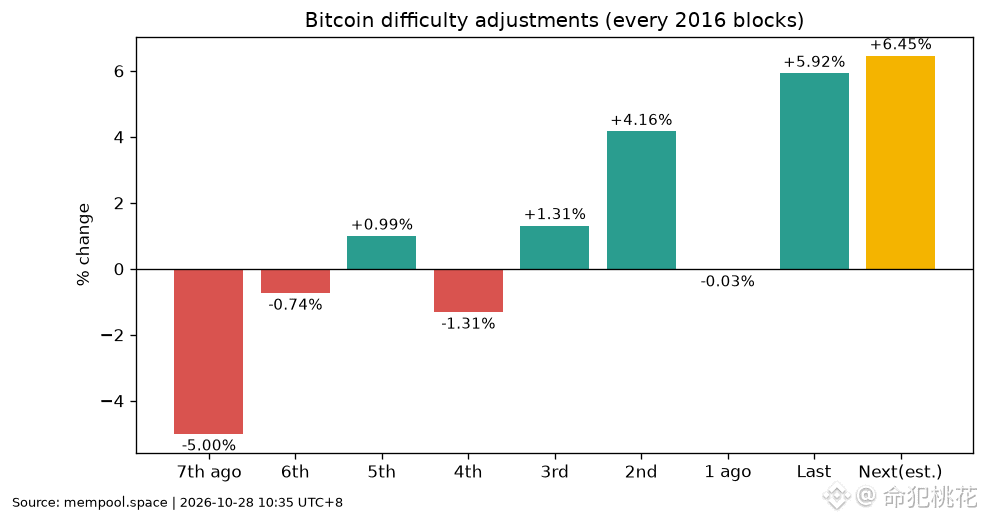
The rule is simple: every 2,016 blocks (about two weeks), the network resets mining difficulty based on how quickly blocks were actually produced during that period. If hash rate rises and blocks are produced faster, difficulty goes up; if hash rate falls and blocks take longer, difficulty goes down.
I just checked mempool.space: the current period is about 88% complete, with 242 blocks remaining. The next adjustment is estimated to be a 6.45% increase, expected to take effect in the early hours of October 30. The previous adjustment, on October 16, was +5.92%. Over the past 30 days, the network’s hash rate has gone from about 1.09 ZH/s to around 1.11 ZH/s, and currently stands at about 1.07 ZH/s.
How should you interpret this number? An increase in difficulty means miners are continuing to commit hash power, and the network’s security budget is growing. But for miners, the block reward earned per unit of hash power decreases, putting more pressure on costs. Difficulty offers a window into miner sentiment, but it doesn’t directly determine which way the price will move.
One more thing: the estimate can change depending on how quickly the remaining blocks are produced. It won’t be final until the very last moment.
Do you usually keep an eye on hash rate and difficulty, or do you pay more attention to fees?
#比特币 #链上数据 #BeginnerEducation
This is not investment advice.

120
·
--

Article
A Guide to Avoiding Airdrop Farming Pitfalls: Five Things Beginners Should Check FirstAirdrop farming isn’t just clicking around: beginners should check these five things before deciding whether to interact
Airdrop farming has been all the rage lately, but I’ve seen far too many beginners waste time and fees on projects that aren’t worth it—or even get their wallets drained by fake websites. This article doesn’t recommend any specific projects. It just offers a framework to help you avoid common pitfalls.
1. First, distinguish “confirmed rewards” from “wishful thinking”
Many projects haven’t launched a token or announced any points or airdrop rules. Nous Research is one example: it’s an open-source AI lab reportedly valued at around $1.5 billion in October 2026, with investors including Paradigm. Its Psyche training network runs on the Solana testnet. But so far, it hasn’t announced any token, points, or airdrop. Catalyst is similar: on October 8, it announced a $30 million seed round led by Sequoia. For now, it only has a waitlist, and the team hasn’t mentioned any rewards either.
A Guide to Avoiding Airdrop Farming Pitfalls: Five Things Beginners Should Check First
Airdrop farming isn’t just clicking around: beginners should check these five things before deciding whether to interact
Airdrop farming has been all the rage lately, but I’ve seen far too many beginners waste time and fees on projects that aren’t worth it—or even get their wallets drained by fake websites. This article doesn’t recommend any specific projects. It just offers a framework to help you avoid common pitfalls.
1. First, distinguish “confirmed rewards” from “wishful thinking”
Many projects haven’t launched a token or announced any points or airdrop rules. Nous Research is one example: it’s an open-source AI lab reportedly valued at around $1.5 billion in October 2026, with investors including Paradigm. Its Psyche training network runs on the Solana testnet. But so far, it hasn’t announced any token, points, or airdrop. Catalyst is similar: on October 8, it announced a $30 million seed round led by Sequoia. For now, it only has a waitlist, and the team hasn’t mentioned any rewards either.
52
·
--
$LINK Oracle leader: Market is quiet; catalysts are on the institutional side
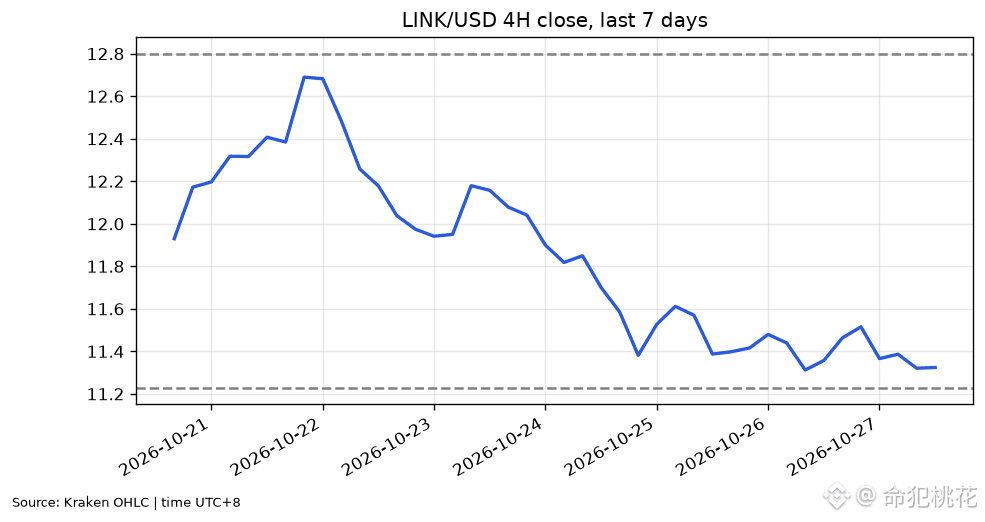
First, the data. Coinbase is currently around $11.33. Kraken 4H data shows that closing prices over the past 7 days ranged roughly from $11.23 to $12.80; the price was about $11.90 seven days ago, indicating overall weak, range-bound trading.
Fundamentals: Chainlink-secured on-chain assets on DefiLlama total about $1.998 billion, versus roughly $1.991 billion a week ago—essentially flat. Protocol fees over the past 24 hours were about $3,263, a modest figure that suggests short-term revenue is not the main narrative.
Catalysts:
• CustodySync launched on October 26, with Anchorage Digital as its first custody partner. It allows institutional assets to remain in compliant custody while connecting to DeFi lending.
• Partnership with LG CNS announced on October 22, targeting South Korea’s digital asset market.
• A Link:NYC event is scheduled for October 29, which could bring further partnership announcements.
Price levels to watch: On the downside, watch whether the price can hold near $11.20; a break below would weaken the short-term structure. On the upside, $12.80 is the high for the past week, and a move above it on increased volume would be needed to signal a recovery.
Risks: Altcoins are broadly weak, and partnership announcements often do not immediately show up in the price. The oracle sector also faces competition.
How long do you think it takes for institutional partnerships to translate into token price movements?
This is not investment advice. Please assess the risks for yourself.
#Chainlink #预言机 #On-chain data

235
·
--
Why are stablecoins “stable”? First, understand the three mechanisms.
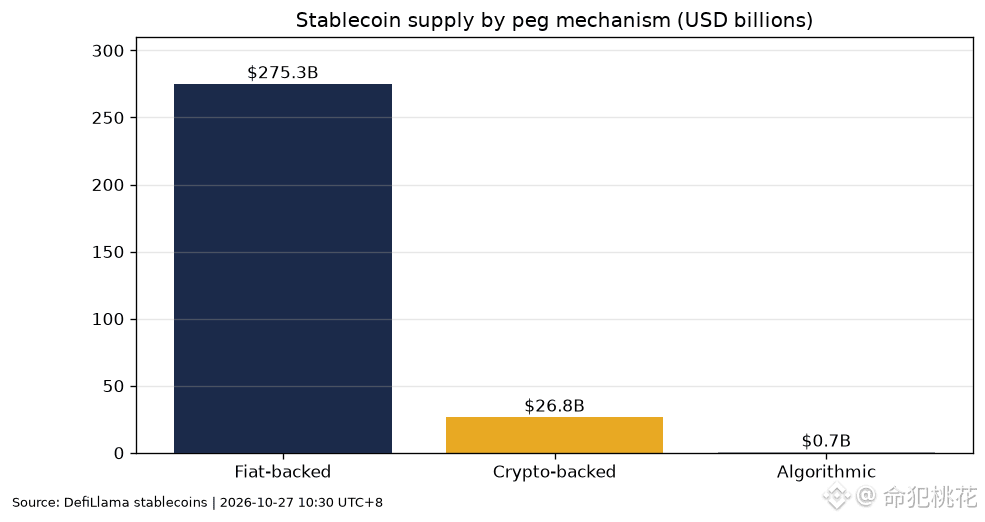
Here’s a breakdown of DefiLlama’s data from this morning:
• Fiat-backed (USDT, USDC, etc.): about $275.3 billion, by far the largest category
• Crypto-collateralized with overcollateralization (USDS, DAI, USDe, etc.): about $26.8 billion
• Algorithmic: only about $700 million remains
How they stay stable: Fiat-backed stablecoins rely on issuers holding cash and short-term debt. Users can mint and redeem them at a 1:1 rate, and arbitrage helps bring price deviations back in line. Overcollateralized stablecoins lock up extra assets on-chain and liquidate them if the market falls. Algorithmic stablecoins rely mainly on mechanisms and confidence, and historically have been the most prone to problems.
As for prices, USDT is around 0.9987, USDC around 0.9993, and USDe around 0.9989—all close to $1. But “stable” only refers to the peg. Reserve transparency, regulation, and redemption channels still warrant ongoing attention.
Which type of stablecoin do you use most often, and do you prioritize liquidity or decentralization?
Not investment advice.
#稳定币 #新手科普 #OnchainData

96
·
--

Article
What Do You Actually Earn from Staking? A Guide to ETH Staking and LSTsWhen beginners hear “staking,” their first thought is often: deposit your coins and earn interest while you sit back. That’s only half right. Today, using the latest data I’ve just gathered, I’ll explain ETH staking and liquid staking (LST).
1. What exactly does staking do?
Ethereum is a proof-of-stake network. Validators must lock up 32 ETH as collateral and are responsible for proposing and validating blocks. If they do a good job, the network rewards them; if they act maliciously or stay offline for too long, some of their collateral may be slashed. So staking rewards aren’t “interest”—they’re more like compensation for putting up collateral to help secure the network. The rewards come from protocol issuance and tips paid by users for transactions.
What Do You Actually Earn from Staking? A Guide to ETH Staking and LSTs
When beginners hear “staking,” their first thought is often: deposit your coins and earn interest while you sit back. That’s only half right. Today, using the latest data I’ve just gathered, I’ll explain ETH staking and liquid staking (LST).
1. What exactly does staking do?
Ethereum is a proof-of-stake network. Validators must lock up 32 ETH as collateral and are responsible for proposing and validating blocks. If they do a good job, the network rewards them; if they act maliciously or stay offline for too long, some of their collateral may be slashed. So staking rewards aren’t “interest”—they’re more like compensation for putting up collateral to help secure the network. The rewards come from protocol issuance and tips paid by users for transactions.
249
·
--
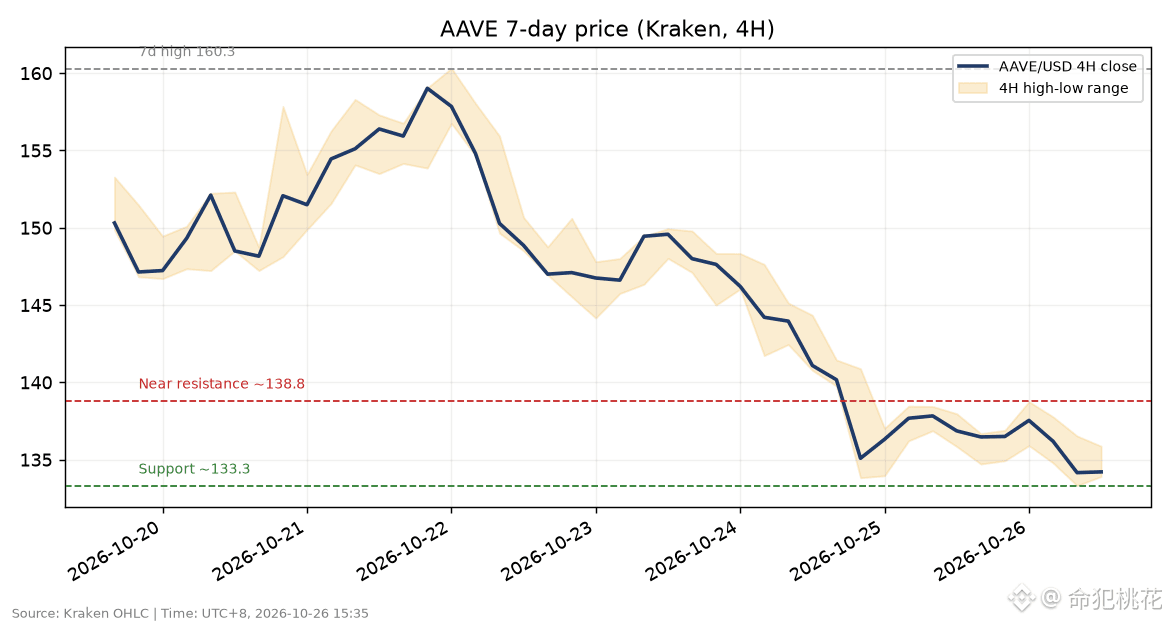
$AAVE has fallen from 160 to 134 over the past few days. I’d like to look at it from the perspective of whether the protocol is actually making money.
Price: Kraken’s current price is around 134.2, with today’s open at 136.17 and low at 133.32. Over the past 7 days, 4-hour closes have ranged from about 134 to 159. It was around 150 a week ago, representing a cumulative decline of roughly 10%. The 30-day high was 187.6, so the current price is well below that peak.
On-chain data (DefiLlama):
1. Protocol TVL is around $17.58 billion, including about $12.16 billion in outstanding borrows, indicating that capital is still being actively used.
2. Protocol fees over the past 7 days were about $8.2 million, equivalent to roughly $430 million annualized; revenue attributable to the protocol was about $1.1 million, or around $57.5 million annualized.
3. Based on a circulating market cap of $2.07 billion, that’s about 4.8x annualized fees, but roughly 36x annualized protocol revenue. The conclusion varies considerably depending on which metric you use.
Catalysts: The first externally curated V4 markets, managed by Sentora, have launched on Ethereum. A market has also opened on Base where tokenized U.S. stocks can be used as collateral to borrow USDC. Risks: On-chain monitoring reports that an institution recently transferred about 35,000 AAVE to exchanges; the V3.8 upgrade and proposals to wind down low-utilization markets are still under governance review.
Key levels: On the downside, watch this morning’s low at 133.3. On the upside, the first level to watch is around 138.8, yesterday’s rebound high. A break below the previous low could weaken the short-term momentum.
Which do you value more: protocol fees, or revenue that actually accrues to the token?
#AAVE #DeFi #On-chain data
This is not investment advice. Please assess the risks for yourself.

654
·
--
Today, let’s talk about a security issue that beginners often overlook: wallet approvals.
When you click “Approve” on a DeFi or NFT page, you’re not transferring tokens. You’re telling the contract, “You may use this type of token up to a certain amount.” Many people choose “Unlimited” just to save time. Even if they stop using the app later, the approval remains active. If the contract has a vulnerability—or if the site you connected to was a fake—the risk is still there.
Three habits to share with friends:
1. When approving, set the amount to what you actually need instead of accepting the default.
2. Spend a few minutes each month checking and revoking approvals you no longer use with your wallet’s built-in tools or a trusted approval manager.
3. Keep large holdings separate from the wallet you use for everyday transactions, and access projects through their official X account or website. Don’t click unfamiliar links.
Also, no one should ever ask you for your recovery phrase or private key. Before signing, read carefully to see what action the pop-up is asking you to approve.
For a quick market reference: ETH is around $2,303 and BTC is around $79,494. The higher the prices, the more costly a single approval mistake can be.
When was the last time you checked your wallet approvals? Share your habits in the comments.
This is not investment advice.
#钱包安全 #Web3科普 #ETH

284
·
--
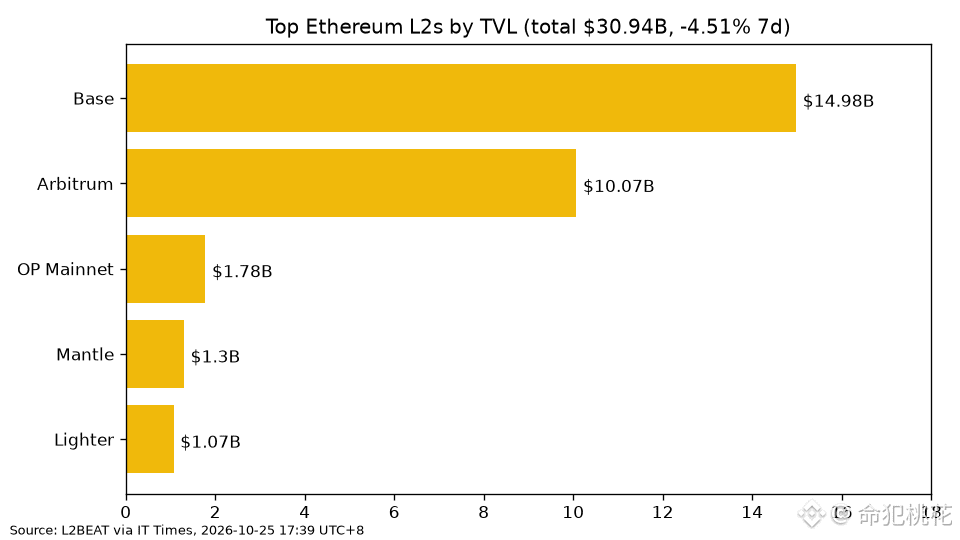
Article
What Exactly Is a Layer 2 Network (L2)? Explained with a Week of DataWhat Exactly Is a Layer 2 Network (L2)? Explained with a Week of Data
When beginners first hear about L2, it can sound like an obscure term. But here’s a simple everyday analogy: Ethereum mainnet is like a very secure highway with a limited number of lanes. When traffic gets heavy, tolls go up. L2 is like a “side road” built alongside it: many transactions are bundled and processed off-chain first, then the compressed results are sent back to mainnet to be “stamped.” This borrows the security of mainnet while bringing the fee per transaction down to just a few cents.
1. How L2 Works
What Exactly Is a Layer 2 Network (L2)? Explained with a Week of Data
What Exactly Is a Layer 2 Network (L2)? Explained with a Week of Data
When beginners first hear about L2, it can sound like an obscure term. But here’s a simple everyday analogy: Ethereum mainnet is like a very secure highway with a limited number of lanes. When traffic gets heavy, tolls go up. L2 is like a “side road” built alongside it: many transactions are bundled and processed off-chain first, then the compressed results are sent back to mainnet to be “stamped.” This borrows the security of mainnet while bringing the fee per transaction down to just a few cents.
1. How L2 Works
143
·
--
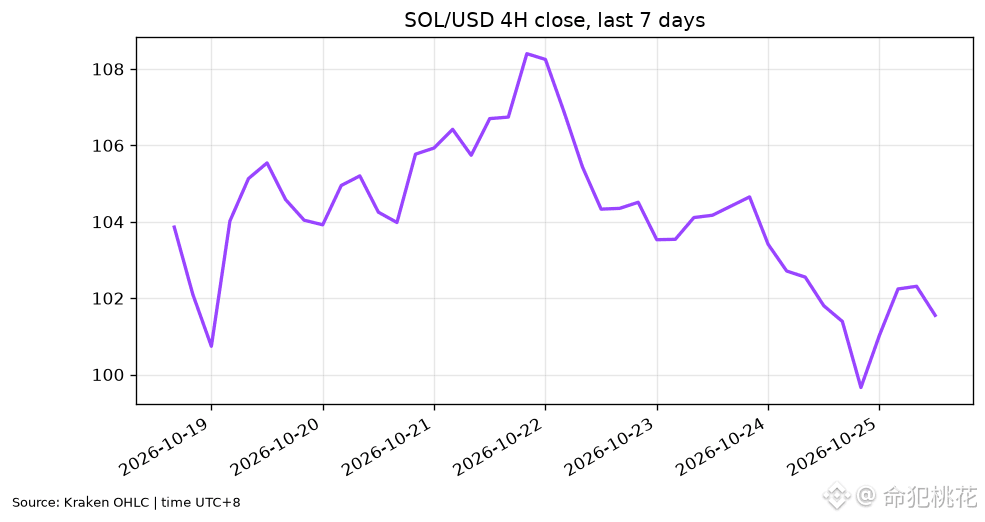
$SOL has been trading sideways around $100 for a few days, so I took a look at its on-chain data to see how it’s doing.
First, the price: SOL is currently around 101.55 on Kraken, with an open of 102.24 today, a 24-hour low of 98.51, and a high of 102.64. Over the past 7 days, 4-hour closes have ranged from 99.66 to 108.40. The chart shows a steady pullback after the spike on October 22, with support around 99.7 this morning.
A few on-chain metrics:
1. DEX volume on Solana was about $1.73 billion over 24 hours, up 38% week over week. The price hasn’t risen, but trading activity is picking up.
2. On-chain stablecoins totaled about $15.85 billion, up slightly by around $20 million from 7 days ago, so funds haven’t withdrawn.
3. On-chain TVL was about $5.77 billion, roughly 2% below the $5.90 billion a week ago.
Catalysts: The Alpenglow consensus upgrade went live on October 21, aiming to cut finality to around 150 milliseconds. Tokenized stocks have also launched on the chain. Starting November 11, about 397,000 SOL in staking rewards will unlock each week—a known source of supply.
Risks: Watch the 98.5–99.7 range, which includes the recent low. A break below it could lead to a test of lower levels. The 104–108 range above is a previous high-volume area, where a rebound could run into selling pressure. Rising macro yields and ETF outflows could also weigh on the price.
My take: Higher trading activity alongside declining TVL suggests short-term speculation rather than a trend. Do you pay more attention to trading volume or TVL?
#Solana #链上数据 #Crypto
This is not investment advice. Please assess the risks for yourself.
136
·
--
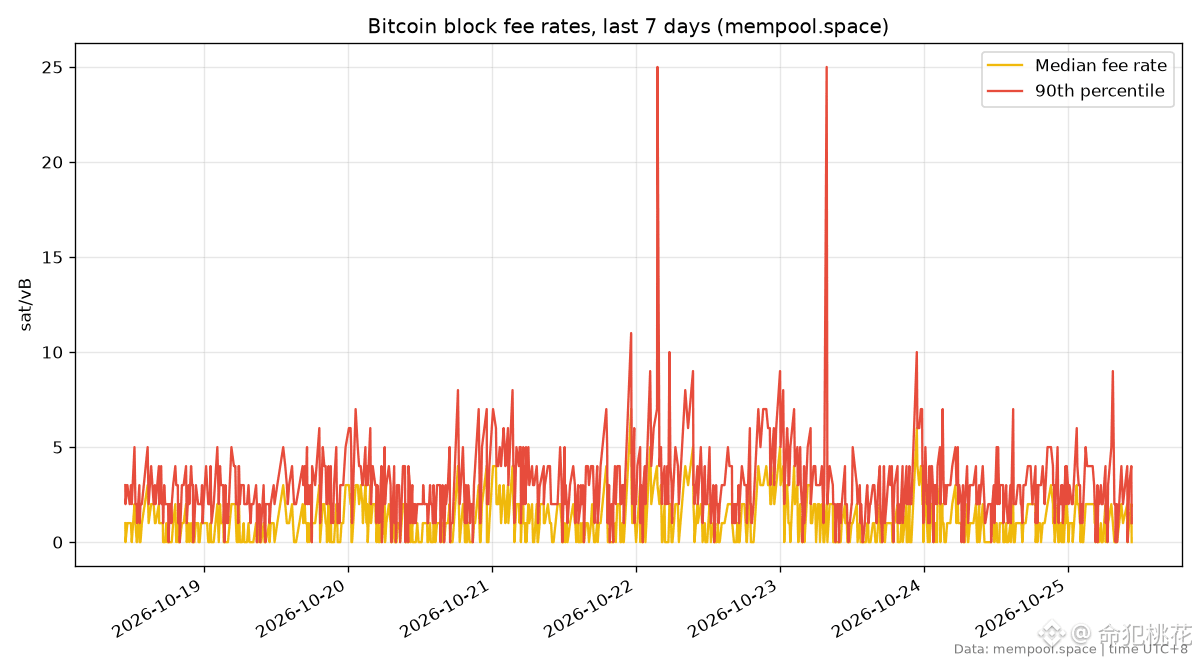
How cheap are Bitcoin transaction fees right now? Let’s use on-chain data to do the math for beginners.
As of this morning, all recommended fee rates on mempool.space—from “fastest” to “economy”—are 1 sat/vB. There are about 41,500 transactions queued in the mempool, and you can still find low-fee transactions paying around 0.13 sat/vB. Over the past 7 days, the median block fee rate averaged less than 1 sat/vB, with only two brief spikes to 25 sat/vB, on the 22nd and 23rd.
How do you convert the fee rate into a dollar amount? A typical native SegWit transaction (1 input, 2 outputs) is about 141 vB. At 1 sat/vB, that comes to 141 sats, or roughly $0.11 at the current BTC price of about $80,878.
Two tips for beginners:
1. When sending from your own wallet, don’t blindly choose “fastest.” Check the current recommended fee rate first. During quiet periods like this, even the low-fee option can confirm quickly.
2. If you want to consolidate your UTXOs (combine lots of small amounts into one), doing it when fees are low will save you the most.
When you send BTC, do you adjust the fee manually or just use the default?
#比特币 #链上数据 #BitcoinBasics
Not investment advice
140
·
--
Bullish
17
7
11
10.6k
Log in to explore more content
Join global crypto users on Binance Square
⚡️ Get latest and useful information about crypto.
💬 Trusted by the world’s largest crypto exchange.
👍 Discover real insights from verified creators.
Email / Phone number
Trending Topics
BinanceReports80%Recoveryof$6.3BillioninLossesfromHackIncident
17,559 views
159 Discussing
Security Incident Update #2 (2026-10-30)
Binance Announcement
·1.1k Likes
·1.4M views
HeYiSaysWithdrawalsExpectedtoResumeWithin42Hours
31,654 views
605 Discussing
CZSaysCompensationIsinPlaceUsersAreProtected
35,170 views
483 Discussing