

lianshangxiaohe
13k Posts

lianshangxiaohe
Report
Block User
链上小河
19 Following
12.2K+ Followers
322.9K+ Liked
Posts
Verified
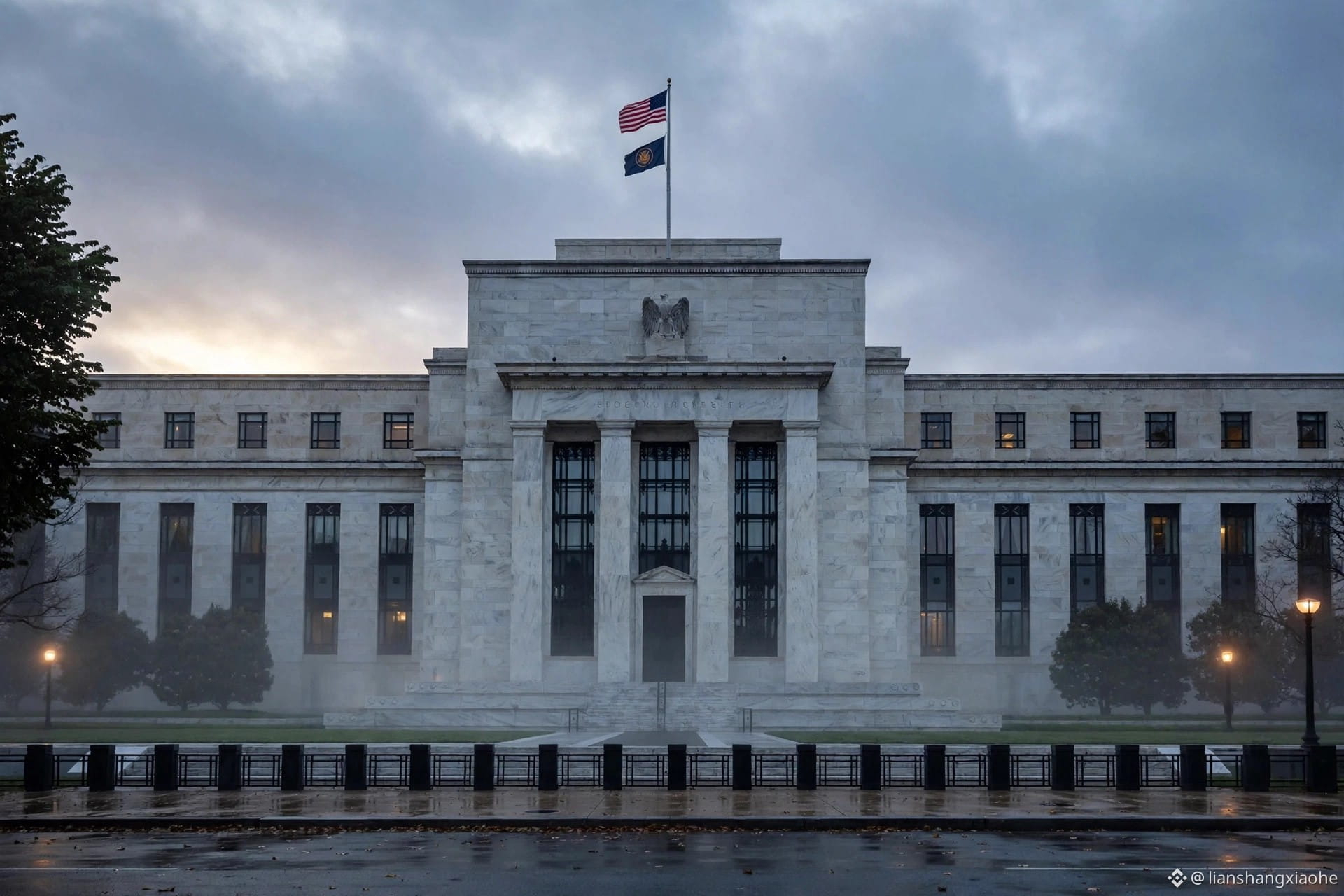
This is the week that will truly determine direction. Don’t just focus on BTC hovering around $80,000—the calendar is packed.
The Fed’s decision is on Wednesday. Markets expect rates to remain unchanged at 3.75%–4.00%, but everyone is waiting for signals about a December rate hike. On Thursday: the ECB’s decision, U.S. Q3 GDP, and September PCE inflation. On Friday: the Bank of Japan’s decision, with rates expected to hold at 1.25%. That same Friday, around $11 billion worth of BTC options expire. Then, the following week, come the November 3 midterm elections.
Where things stand: BTC is around $80,100, with a 24-hour range of roughly $79,397–$80,354. The 50-day moving average, at about $81,850, has turned from support into resistance. RSI is around 41.5: bears have the upper hand, but there’s been no breakdown yet. Brent crude is around $110 a barrel, and the 10-year Treasury yield is about 5%—the thorn of inflation hasn’t been pulled out. Prediction markets put the odds of BTC falling below $77,500 in October at around 48.5%. That’s just a market quote, not a directional call.
The takeaway is simple: if $80,000 doesn’t hold, the next battleground is around $77,500. A move back above $81,850 would give the bulls room to breathe. News on any day this week could rewrite the script in a single candle, so don’t go all-in before the decisions.
#美联储 #MacroWeek
1
4
1k
With the broader market lying lifeless near $80,000, this one managed to climb back up on its own—the most eye-catching countertrend play of the day.
Snapshot across platforms on October 26: OSMO is trading at around $0.050–$0.054. Its 24-hour gain ranges from 9% to 20%, depending on the snapshot time; CoinPaprika’s daily gainers list shows +14.39%. Meanwhile, BTC is around $80,100 and ETH around $2,320, with both weakening. The 24-hour range is approximately $0.0435–$0.056, with about $9.5 million in trading volume, up roughly 90%. This is a textbook breakout on rising price and volume—not some sneaky little spike.
Let’s be clear about the key levels: hold above the $0.04838 support, and the next resistance to watch is $0.05678. If support breaks, it could fall back toward $0.0446, so don’t chase it halfway up or try to catch a falling knife. In a weak market, whether a countertrend surge on rising volume is genuine strength or a bull trap will show up in the volume first—watch the volume, not just the gains.
#逆势上涨 #Osmosis

127
Verified
$BTC has fallen below $80,000. Ahead of the Fed’s October 27–28 policy meeting, the market blinked first: BTC briefly dropped to around $79,300, down about 1% in 24 hours, while $ETH also slid toward $2,300. ETFs saw about $770 million in outflows in just two days, and with options expiring on October 30, volatility will only increase this week. $79,000 is the key support level to hold for now. Unless it gets back above $82,000, any rebound can only be considered an oversold bounce—don’t rush to buy the dip. #比特币 #FederalReserve
$BTC has fallen below $80,000. Ahead of the Fed’s October 27–28 policy meeting, the market blinked first: BTC briefly dropped to around $79,300, down about 1% in 24 hours, while $ETH also slid toward $2,300. ETFs saw about $770 million in outflows in just two days, and with options expiring on October 30, volatility will only increase this week. $79,000 is the key support level to hold for now. Unless it gets back above $82,000, any rebound can only be considered an oversold bounce—don’t rush to buy the dip. #比特币 #FederalReserve

2
2
691
With the broader market falling this hard, $ERA still managed to rally more than 20% against the trend. Caldera’s 24-hour gain briefly surged to nearly 29% today, with the price returning to around $0.09 and 24-hour trading volume reaching $40 million to $60 million. Turnover shot to more than four times its market cap— that’s how low-cap coins work: once money flows in, prices can rise without rhyme or reason. From the intraday low of around $0.073, it reached a high of about $0.097—a gain of more than 30%. Those who missed the entry yesterday can only kick themselves today, but with no clear catalyst and the rally driven purely by capital flows, chasing the price is like trying to catch a falling knife. If $0.08 fails to hold, watch for $0.075 first. #Caldera
With the broader market falling this hard, $ERA still managed to rally more than 20% against the trend. Caldera’s 24-hour gain briefly surged to nearly 29% today, with the price returning to around $0.09 and 24-hour trading volume reaching $40 million to $60 million. Turnover shot to more than four times its market cap— that’s how low-cap coins work: once money flows in, prices can rise without rhyme or reason. From the intraday low of around $0.073, it reached a high of about $0.097—a gain of more than 30%. Those who missed the entry yesterday can only kick themselves today, but with no clear catalyst and the rally driven purely by capital flows, chasing the price is like trying to catch a falling knife. If $0.08 fails to hold, watch for $0.075 first. #Caldera
78
Longs got wiped out again, and this time there wasn’t even a convincing bearish catalyst to point to: according to Coinglass data, over the past 24 hours, total liquidations across the entire network reached $119 million, including $82.01 million in long positions, nearly 70% of the total, while shorts accounted for only $36.71 million. $ETH was the hardest hit, with long positions liquidated for $22.41 million; $BTC also saw $13.24 million in long liquidations. The largest single liquidation was a $7 million ETH long on Binance, which got taken out in one sweep. The market didn’t crash; prices only pulled back slightly, but those with heavy leverage fell first—right now, this market is not killing direction, it’s killing leverage. #爆仓 #leverage
Longs got wiped out again, and this time there wasn’t even a convincing bearish catalyst to point to: according to Coinglass data, over the past 24 hours, total liquidations across the entire network reached $119 million, including $82.01 million in long positions, nearly 70% of the total, while shorts accounted for only $36.71 million. $ETH was the hardest hit, with long positions liquidated for $22.41 million; $BTC also saw $13.24 million in long liquidations. The largest single liquidation was a $7 million ETH long on Binance, which got taken out in one sweep. The market didn’t crash; prices only pulled back slightly, but those with heavy leverage fell first—right now, this market is not killing direction, it’s killing leverage. #爆仓 #leverage

219
Korean retail traders have taught the entire market a lesson again: $ORDER has gone absolutely wild on Upbit’s KRW market, briefly surging to 124 won intraday, with its reported daily gain peaking at 172%. Its 24-hour trading volume exploded from $25 million to $386 million—not driven by institutions, but by Korean retail traders piling in with real money. But the other half of the story is even more dramatic: after the spike, it gave back nearly 80% of its gains and now sits around $0.044–$0.049. CoinStats’ figure for the day is also down to +62.66% (about $0.05682). Listing FOMO always works like this: early buyers take the profits, latecomers get left holding the bag. The only difference is the minute you get in. #Upbit #Orderly
Korean retail traders have taught the entire market a lesson again: $ORDER has gone absolutely wild on Upbit’s KRW market, briefly surging to 124 won intraday, with its reported daily gain peaking at 172%. Its 24-hour trading volume exploded from $25 million to $386 million—not driven by institutions, but by Korean retail traders piling in with real money. But the other half of the story is even more dramatic: after the spike, it gave back nearly 80% of its gains and now sits around $0.044–$0.049. CoinStats’ figure for the day is also down to +62.66% (about $0.05682). Listing FOMO always works like this: early buyers take the profits, latecomers get left holding the bag. The only difference is the minute you get in. #Upbit #Orderly
201
The ETF weekly report is out, and the numbers look scary—but the real story is the complete opposite: For the week of October 19–23, $BTC spot ETFs saw $443 million in outflows. $ETH had it even worse: five straight days of outflows, with no positive day since September 28, and cumulative net inflows shrinking from $13.95 billion to $13.26 billion. The worst single day was October 22, when $BTC ETFs saw $635.5 million flow out in one day—the biggest outflow since June. But Bitwise CIO Hougan set the record straight on CNBC: ETF investors weren’t behind the selling. It was OGs who’d held for 15 years trimming their positions, while financial advisors were quietly buying the dip. In the same product, fast money is running while long-term money is buying. Now, about 40% of $BTC spot ETF holders need a 50% rally just to break even, and gold has topped $5,000. Once the panic selling runs its course, the coins can change hands. #ETF #Bitcoin
The ETF weekly report is out, and the numbers look scary—but the real story is the complete opposite: For the week of October 19–23, $BTC spot ETFs saw $443 million in outflows. $ETH had it even worse: five straight days of outflows, with no positive day since September 28, and cumulative net inflows shrinking from $13.95 billion to $13.26 billion. The worst single day was October 22, when $BTC ETFs saw $635.5 million flow out in one day—the biggest outflow since June. But Bitwise CIO Hougan set the record straight on CNBC: ETF investors weren’t behind the selling. It was OGs who’d held for 15 years trimming their positions, while financial advisors were quietly buying the dip. In the same product, fast money is running while long-term money is buying. Now, about 40% of $BTC spot ETF holders need a 50% rally just to break even, and gold has topped $5,000. Once the panic selling runs its course, the coins can change hands. #ETF #Bitcoin
82
$DODO This price action makes no sense: while the broader market moves sideways, it’s surged more than 11% in 24 hours, with a 10% spike in just one hour, climbing from 0.022 all the way to 0.0276. Its intraday high was 0.0278. And the craziest part? This isn’t just a one-day pump—it’s up 29% in 7 days and 48% in 30 days, breaking out on heavy volume, with 24-hour trading volume hitting $7.3 million. The price is now holding above the 0.025 support, and 0.028 is the last barrier overhead. Get above that, and another rally could be underway. Those who didn’t get in yesterday are kicking themselves again today. With coins moving against the trend, the worst thing you can do is hesitate. #DODO #AltcoinSeason
$DODO This price action makes no sense: while the broader market moves sideways, it’s surged more than 11% in 24 hours, with a 10% spike in just one hour, climbing from 0.022 all the way to 0.0276. Its intraday high was 0.0278. And the craziest part? This isn’t just a one-day pump—it’s up 29% in 7 days and 48% in 30 days, breaking out on heavy volume, with 24-hour trading volume hitting $7.3 million. The price is now holding above the 0.025 support, and 0.028 is the last barrier overhead. Get above that, and another rally could be underway. Those who didn’t get in yesterday are kicking themselves again today. With coins moving against the trend, the worst thing you can do is hesitate. #DODO #AltcoinSeason
67
Bitwise's October research estimated Bitcoin's fair value at $197,000. With the current price hovering around $80,000, the model suggests there's still roughly 2.5x upside, driven by expanding global liquidity and a weakening U.S. dollar. But models are just models: BTC just closed at $80,019, down 0.8% on the day, while 29 of the top 50 coins were falling. Those who trust the model are focused on the direction; those watching the charts are focused on the price level. Both can be right—but don't mistake a model price for money in the bank. #Bitcoin #Bitwise
Bitwise's October research estimated Bitcoin's fair value at $197,000. With the current price hovering around $80,000, the model suggests there's still roughly 2.5x upside, driven by expanding global liquidity and a weakening U.S. dollar. But models are just models: BTC just closed at $80,019, down 0.8% on the day, while 29 of the top 50 coins were falling. Those who trust the model are focused on the direction; those watching the charts are focused on the price level. Both can be right—but don't mistake a model price for money in the bank. #Bitcoin #Bitwise

233
$MORPHO Today, it’s the biggest loser in the top 100: down about 5% in 24 hours, trading around $2.08, down more than 10% over 7 days and nearly a quarter over the past month. Morpho is a decentralized lending protocol on Ethereum, and it was only listed on Binance spot last October. Given this decline, funds are clearly flowing out of the lending sector. When the market is moving sideways, the biggest losers tell you the most—not because this coin is weak on its own, but because the entire DeFi sector is bleeding. #Morpho #DeFi
$MORPHO Today, it’s the biggest loser in the top 100: down about 5% in 24 hours, trading around $2.08, down more than 10% over 7 days and nearly a quarter over the past month. Morpho is a decentralized lending protocol on Ethereum, and it was only listed on Binance spot last October. Given this decline, funds are clearly flowing out of the lending sector. When the market is moving sideways, the biggest losers tell you the most—not because this coin is weak on its own, but because the entire DeFi sector is bleeding. #Morpho #DeFi

193
The most important day of the week is almost here: the Fed’s October 27–28 policy meeting. Of the 100 economists surveyed by Reuters from October 16–20, 94 are betting the Fed will hold steady this time, keeping rates at 3.75%–4.00%. But all 100 expect a rate hike in December—meaning October is just a breather, and the real test comes at year-end. The Fed unanimously raised rates by 25 basis points in September, the 10-year Treasury yield is still hovering around 5.10%, and $BTC is around $80,000 while $ETH 2326 is trading sideways near $749,293,802. The market is already waiting for the other shoe to drop. Volatility is sure to pick up around the announcement, so don’t make impulsive trades in the first few minutes after the news breaks. #美联储 #RateDecision
The most important day of the week is almost here: the Fed’s October 27–28 policy meeting. Of the 100 economists surveyed by Reuters from October 16–20, 94 are betting the Fed will hold steady this time, keeping rates at 3.75%–4.00%. But all 100 expect a rate hike in December—meaning October is just a breather, and the real test comes at year-end. The Fed unanimously raised rates by 25 basis points in September, the 10-year Treasury yield is still hovering around 5.10%, and $BTC is around $80,000 while $ETH 2326 is trading sideways near $749,293,802. The market is already waiting for the other shoe to drop. Volatility is sure to pick up around the announcement, so don’t make impulsive trades in the first few minutes after the news breaks. #美联储 #RateDecision
382
While the broader market was falling, this one quietly surged 35% all by itself! $CAP shot straight to the top of CoinPaprika’s 24-hour gainers list today, up +34.8% in 24 hours. Its price climbed from $0.0787 to $0.1119, with more than $260 million in 24-hour trading volume. If you were watching it hover around $0.08 at this time yesterday, you might have opened your eyes today to find your account up by over 30%—the most frustrating thing about a move like this isn’t missing out; it’s having seen it and scrolled right past. With volatility this high, think carefully about how much of a pullback you can stomach before chasing the price. Don’t get carried away. #CAP #Top Gainers
While the broader market was falling, this one quietly surged 35% all by itself! $CAP shot straight to the top of CoinPaprika’s 24-hour gainers list today, up +34.8% in 24 hours. Its price climbed from $0.0787 to $0.1119, with more than $260 million in 24-hour trading volume. If you were watching it hover around $0.08 at this time yesterday, you might have opened your eyes today to find your account up by over 30%—the most frustrating thing about a move like this isn’t missing out; it’s having seen it and scrolled right past. With volatility this high, think carefully about how much of a pullback you can stomach before chasing the price. Don’t get carried away. #CAP #Top Gainers
361
The weekend wrapped up with Bitcoin holding above $80,000: It closed at around $80,019 at 00:00 UTC on October 25, with an intraday range of $79,812–$80,904, down 0.8%. Ethereum closed at $2,326, down 1.1%; BNB was essentially flat at $737.53, while SOL stood at $101.19 and XRP at $1.29. Total market capitalization was around $2.64 trillion, down 0.9%, with Bitcoin dominance at 60.6%. Among the top 50 coins, 14 rose and 29 fell; the median decline was 0.5%. The market hardly looked strong, but on-chain signals were intriguing: whale tracking showed about $623.8 million in exchange inflows, versus a hefty $1.9 billion in outflows—a net outflow, with coins moving to custodial wallets. One transfer alone moved nearly $1 billion in USDT from Binance to an unlabeled wallet. Prices are moving sideways as coins leave exchanges; ahead of the Federal Reserve decision on October 28, the market is waiting for a clear direction. $BTC $ETH #比特币 #Federal Reserve
The weekend wrapped up with Bitcoin holding above $80,000: It closed at around $80,019 at 00:00 UTC on October 25, with an intraday range of $79,812–$80,904, down 0.8%. Ethereum closed at $2,326, down 1.1%; BNB was essentially flat at $737.53, while SOL stood at $101.19 and XRP at $1.29. Total market capitalization was around $2.64 trillion, down 0.9%, with Bitcoin dominance at 60.6%. Among the top 50 coins, 14 rose and 29 fell; the median decline was 0.5%. The market hardly looked strong, but on-chain signals were intriguing: whale tracking showed about $623.8 million in exchange inflows, versus a hefty $1.9 billion in outflows—a net outflow, with coins moving to custodial wallets. One transfer alone moved nearly $1 billion in USDT from Binance to an unlabeled wallet. Prices are moving sideways as coins leave exchanges; ahead of the Federal Reserve decision on October 28, the market is waiting for a clear direction. $BTC $ETH #比特币 #Federal Reserve

226
While the broader market moved sideways, oracle veteran $PYTH quietly turned green: its current price is around $0.075, up about 5% to 7% over 24 hours (a Binance-linked snapshot shows around $0.075 and a 5.9% gain, while ChangeHero shows around $0.0756 and a 7.5% gain). Its market cap is about $560 million, with 24-hour trading volume of around $23 million to $24 million. What’s really worth watching isn’t those percentage gains, but the fundamentals: on October 8, Pyth DAO passed OP-PIP-136, the “100% rule,” directing all product revenue it receives toward market buybacks of PYTH. Third-quarter annualized revenue was $11.49 million, up a whopping 86.5% quarter over quarter, with 276 paying accounts. The DAO gets about 60% of the revenue, with a monthly buyback budget of around $574,500, and reserves now stand at about 42 million tokens. But don’t get carried away: that amount is small relative to trading volume. Support this week is around $0.0764, and the current price is sitting just below it, while resistance is at $0.0881. Is this an oversold bounce, or is the buyback thesis starting to get priced in? Just watch whether it can reclaim $0.0764. #预言机 #Pyth
While the broader market moved sideways, oracle veteran $PYTH quietly turned green: its current price is around $0.075, up about 5% to 7% over 24 hours (a Binance-linked snapshot shows around $0.075 and a 5.9% gain, while ChangeHero shows around $0.0756 and a 7.5% gain). Its market cap is about $560 million, with 24-hour trading volume of around $23 million to $24 million. What’s really worth watching isn’t those percentage gains, but the fundamentals: on October 8, Pyth DAO passed OP-PIP-136, the “100% rule,” directing all product revenue it receives toward market buybacks of PYTH. Third-quarter annualized revenue was $11.49 million, up a whopping 86.5% quarter over quarter, with 276 paying accounts. The DAO gets about 60% of the revenue, with a monthly buyback budget of around $574,500, and reserves now stand at about 42 million tokens. But don’t get carried away: that amount is small relative to trading volume. Support this week is around $0.0764, and the current price is sitting just below it, while resistance is at $0.0881. Is this an oversold bounce, or is the buyback thesis starting to get priced in? Just watch whether it can reclaim $0.0764. #预言机 #Pyth

197
Do you understand what Strategy is doing? In the week of October 12–18, it spent just $22.1 million to buy 267 $BTC at an average price of $82,900, bringing its holdings to 848,517 coins at a total cost of $64 billion. Yet in the same week, it spent $193.1 million buying back STRC preferred stock—nearly nine times as much as it spent on Bitcoin. The board directly raised the preferred stock buyback cap from $2 billion to $3 billion, with $1.16 billion of capacity still remaining. Put simply, dividends and buybacks on the preferred stock are draining cash from the treasury company, and the pace of Bitcoin purchases has visibly slowed. Shareholders are also due to vote on October 28 on whether STRC should switch to daily dividends. In this Bitcoin treasury saga, the lead character is shifting from “buy, buy, buy” to “make sure the creditors are taken care of first.” #Strategy #Bitcoin
Do you understand what Strategy is doing? In the week of October 12–18, it spent just $22.1 million to buy 267 $BTC at an average price of $82,900, bringing its holdings to 848,517 coins at a total cost of $64 billion. Yet in the same week, it spent $193.1 million buying back STRC preferred stock—nearly nine times as much as it spent on Bitcoin. The board directly raised the preferred stock buyback cap from $2 billion to $3 billion, with $1.16 billion of capacity still remaining. Put simply, dividends and buybacks on the preferred stock are draining cash from the treasury company, and the pace of Bitcoin purchases has visibly slowed. Shareholders are also due to vote on October 28 on whether STRC should switch to daily dividends. In this Bitcoin treasury saga, the lead character is shifting from “buy, buy, buy” to “make sure the creditors are taken care of first.” #Strategy #Bitcoin
133
This rally is seriously strong: from $55 in September, it surged all the way to $373—nearly 7x. Plenty of people got off midway and are kicking themselves now. Then came a brutal half-way pullback, dropping to around $177, right on the 0.618 golden ratio level, where buyers stepped in and caught it. Today it rebounded to around $190, up nearly 9% in 24 hours, with a market cap of $2.8 billion and 24-hour trading volume of $200 million. The 50-day moving average at $162 is providing support below. As long as it holds above this demand zone, the September breakout structure remains intact; the first target to the upside is $214, followed by $252. While others panic, it’s quietly reclaiming lost ground. #QNT #cryptocurrency
This rally is seriously strong: from $55 in September, it surged all the way to $373—nearly 7x. Plenty of people got off midway and are kicking themselves now. Then came a brutal half-way pullback, dropping to around $177, right on the 0.618 golden ratio level, where buyers stepped in and caught it. Today it rebounded to around $190, up nearly 9% in 24 hours, with a market cap of $2.8 billion and 24-hour trading volume of $200 million. The 50-day moving average at $162 is providing support below. As long as it holds above this demand zone, the September breakout structure remains intact; the first target to the upside is $214, followed by $252. While others panic, it’s quietly reclaiming lost ground. #QNT #cryptocurrency

1
1
1.6k
Ethereum has chosen to back down this time—not in a bad way, but wisely. The Glamsterdam upgrade, originally set to activate on the Hoodi testnet on October 26, was called off by the development team at the 248th All Core Developers meeting. The reason: the EIP-8037 gas repricing change could break older contracts already deployed on mainnet. Security firm ChainSecurity has identified 13 real-world cases of affected contracts. The plan to raise Hoodi’s gas limit to 200 million has also been scrapped, and a new activation date has yet to be set. Glamsterdam ran successfully on Sepolia on October 6, but the mainnet timeline remains uncertain. ETH is currently trading around $2,320, while the market awaits the Federal Reserve meeting on October 27–28. In a Reuters poll, 94 of 100 economists expected rates to remain unchanged. Better to upgrade slowly than get it wrong—a sentiment that feels especially apt for Ethereum today. $ETH #以太坊 #Glamsterdam
Ethereum has chosen to back down this time—not in a bad way, but wisely. The Glamsterdam upgrade, originally set to activate on the Hoodi testnet on October 26, was called off by the development team at the 248th All Core Developers meeting. The reason: the EIP-8037 gas repricing change could break older contracts already deployed on mainnet. Security firm ChainSecurity has identified 13 real-world cases of affected contracts. The plan to raise Hoodi’s gas limit to 200 million has also been scrapped, and a new activation date has yet to be set. Glamsterdam ran successfully on Sepolia on October 6, but the mainnet timeline remains uncertain. ETH is currently trading around $2,320, while the market awaits the Federal Reserve meeting on October 27–28. In a Reuters poll, 94 of 100 economists expected rates to remain unchanged. Better to upgrade slowly than get it wrong—a sentiment that feels especially apt for Ethereum today. $ETH #以太坊 #Glamsterdam

473
AAVE has had a really rough week: it hit a weekly high of $158.75, then steadily slid to around $136, down about 13.8% from the high. The weekly low of $135.06 is right below us. What stings even more is the on-chain activity: an institution transferred 156,690 AAVE worth about $22.86 million in one go, with 62,000 tokens sent straight to an exchange—clearly preparing to sell. Even DeFi’s old guard couldn’t withstand this week’s selling pressure. If the $140 level doesn’t hold, $135 is the first stop, followed by the $130 area. To turn the downtrend around, AAVE first needs to reclaim $155. Until then, don’t rush to buy the dip—trying to catch a falling knife is the easiest way to get hurt. $AAVE #DeFi #AAVE
AAVE has had a really rough week: it hit a weekly high of $158.75, then steadily slid to around $136, down about 13.8% from the high. The weekly low of $135.06 is right below us. What stings even more is the on-chain activity: an institution transferred 156,690 AAVE worth about $22.86 million in one go, with 62,000 tokens sent straight to an exchange—clearly preparing to sell. Even DeFi’s old guard couldn’t withstand this week’s selling pressure. If the $140 level doesn’t hold, $135 is the first stop, followed by the $130 area. To turn the downtrend around, AAVE first needs to reclaim $155. Until then, don’t rush to buy the dip—trying to catch a falling knife is the easiest way to get hurt. $AAVE #DeFi #AAVE

836
South Korea’s crypto tax is set to be delayed again: On October 25, the presidential office said it supported postponement. The 22% tax on virtual assets, originally scheduled to take effect on January 1, 2027, could be pushed back to 2029 under a ruling-party bill. A final decision will be made during the November tax-law review. Until an amendment is passed by the National Assembly, January 1, 2027 remains the tax’s legal start date. The tax would apply at a combined rate of 22% to annual gains exceeding 2.5 million won. The reasons for delaying it are practical: authorities cannot obtain trading data from overseas exchanges, and the U.S. will not join the OECD’s CARF information-sharing system until 2029. That would leave users of domestic exchanges facing scrutiny first, raising fairness concerns. The rules for taxing staking, airdrops, DeFi, and cross-border wallets also have yet to be worked out. This would be the fourth possible delay for the tax, which was first due to take effect in 2022. Young people commonly trade crypto on overseas platforms, so if the tax cannot be implemented, there is no need to rush into planning for 2027—but don’t assume it has been canceled either: without a legal amendment, nothing changes. #韩国 #CryptoTax
South Korea’s crypto tax is set to be delayed again: On October 25, the presidential office said it supported postponement. The 22% tax on virtual assets, originally scheduled to take effect on January 1, 2027, could be pushed back to 2029 under a ruling-party bill. A final decision will be made during the November tax-law review. Until an amendment is passed by the National Assembly, January 1, 2027 remains the tax’s legal start date. The tax would apply at a combined rate of 22% to annual gains exceeding 2.5 million won. The reasons for delaying it are practical: authorities cannot obtain trading data from overseas exchanges, and the U.S. will not join the OECD’s CARF information-sharing system until 2029. That would leave users of domestic exchanges facing scrutiny first, raising fairness concerns. The rules for taxing staking, airdrops, DeFi, and cross-border wallets also have yet to be worked out. This would be the fourth possible delay for the tax, which was first due to take effect in 2022. Young people commonly trade crypto on overseas platforms, so if the tax cannot be implemented, there is no need to rush into planning for 2027—but don’t assume it has been canceled either: without a legal amendment, nothing changes. #韩国 #CryptoTax

1
6.6k
65 of the 90 large-cap coins were falling, but $ZRO was one of the few leading gainers in the day’s snapshot: On October 25, it was around $1.73, up about 1.94% over 24 hours. Quotes from various platforms later hovered near $1.73, with a market cap of about $691 million and 24-hour trading volume of about $44 million. That day, BTC was around $80,759, down 0.28%, and ETH was around $2,361, down 0.93%. Even AKE plunged 21.93% to $0.0297. ZRO wasn’t just following the broader market—it held up and closed higher amid a widespread slump. A week ago, it was around $1.84; a month ago, just $1.52. If it fails to hold $1.70, watch for $1.60; only a firm hold above $1.80 would open up more room to rise. In the cross-chain sector, few coins managed to close higher in a falling market, and ZRO was one of them today. Not investment advice. #Cross-chain
65 of the 90 large-cap coins were falling, but $ZRO was one of the few leading gainers in the day’s snapshot: On October 25, it was around $1.73, up about 1.94% over 24 hours. Quotes from various platforms later hovered near $1.73, with a market cap of about $691 million and 24-hour trading volume of about $44 million. That day, BTC was around $80,759, down 0.28%, and ETH was around $2,361, down 0.93%. Even AKE plunged 21.93% to $0.0297. ZRO wasn’t just following the broader market—it held up and closed higher amid a widespread slump. A week ago, it was around $1.84; a month ago, just $1.52. If it fails to hold $1.70, watch for $1.60; only a firm hold above $1.80 would open up more room to rise. In the cross-chain sector, few coins managed to close higher in a falling market, and ZRO was one of them today. Not investment advice. #Cross-chain

1.4k
Log in to explore more content
Join global crypto users on Binance Square
⚡️ Get latest and useful information about crypto.
💬 Trusted by the world’s largest crypto exchange.
👍 Discover real insights from verified creators.
Email / Phone number
Trending Topics
BinancePick
2.5M views
138,237 Discussing
Join #EarningsSeason: Predict Earnings on Binance Pick, Share Your Take on Binance Square!
Binance Square Official
·400 Likes
·337.2k views
EarningsSeason
4.9M views
23,951 Discussing
ElectrumWalletBugLetRogueServersStealFunds
2,757 views
149 Discussing