
#crossborder
crossborder
8,096 views
110 Discussing
Hot
Latest

See translation
🔶 $XRP Pulls Back on Wide Range: Cross-border token eases 1.9%
On August 6, 2026, $XRP gave back 1.9% to $1.046 after touching a $1.072 high, though the token still carries $1.16B of 24-hour volume into its six-week range.
A $65.4B market cap keeps the cross-border focused asset among the top six by size despite today's pullback.
The low printed at $1.041, leaving a tight band that traders read as a pause rather than a reversal.
📌 Key Takeaway:
The pullback looks technical against a wide $1.041 to $1.072 band, and the project's payments narrative remains intact.
#Ripple #CrossBorder
#BinanceAlphaAlert
🔶 $XRP Pulls Back on Wide Range: Cross-border token eases 1.9%
On August 6, 2026, $XRP gave back 1.9% to $1.046 after touching a $1.072 high, though the token still carries $1.16B of 24-hour volume into its six-week range.
A $65.4B market cap keeps the cross-border focused asset among the top six by size despite today's pullback.
The low printed at $1.041, leaving a tight band that traders read as a pause rather than a reversal.
📌 Key Takeaway:
The pullback looks technical against a wide $1.041 to $1.072 band, and the project's payments narrative remains intact.
#Ripple #CrossBorder
#BinanceAlphaAlert
On August 6, 2026, $XRP gave back 1.9% to $1.046 after touching a $1.072 high, though the token still carries $1.16B of 24-hour volume into its six-week range.
A $65.4B market cap keeps the cross-border focused asset among the top six by size despite today's pullback.
The low printed at $1.041, leaving a tight band that traders read as a pause rather than a reversal.
📌 Key Takeaway:
The pullback looks technical against a wide $1.041 to $1.072 band, and the project's payments narrative remains intact.
#Ripple #CrossBorder
#BinanceAlphaAlert
32

·
--
Korea's Toss Bank × Solana——TradFi officially enters the game
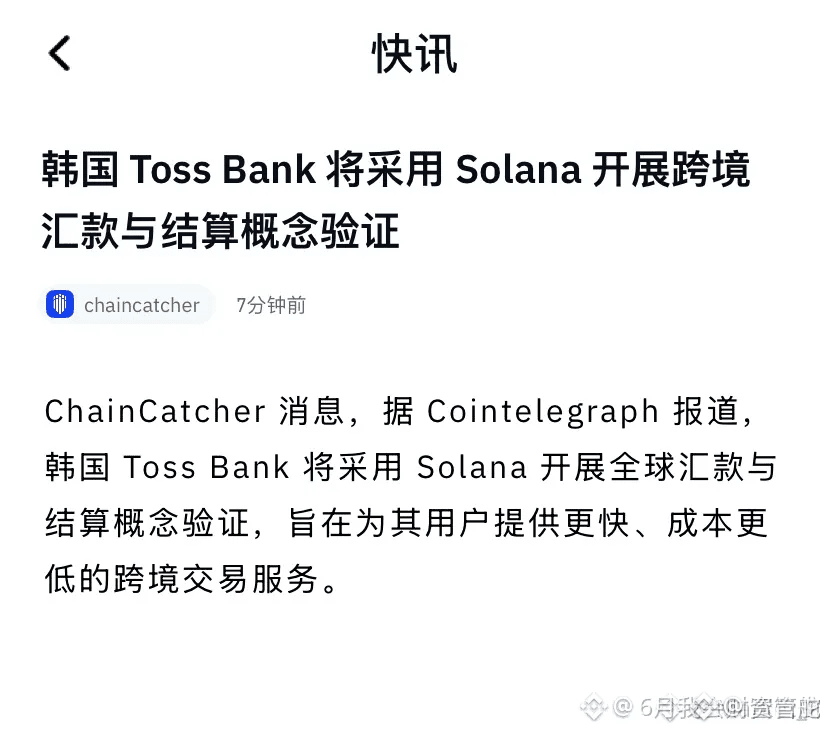
Breaking news: Korea's Toss Bank is set to leverage Solana for a proof of concept in cross-border remittances and settlements.
Why does this matter?
Toss Bank is one of Korea's largest digital banks:
→ Over 20 million users
→ 40% of the Korean population
→ Monthly active users 15 million+
This isn't a Crypto-native project; it's a legit bank.
Advantages of Solana:
✓ 400ms confirmation time
✓ $0.00025 average fees
✓ 65,000+ TPS
Compared to traditional SWIFT:
→ Fees: $20-50 → $0.00025
→ Time: 1-5 days → 400ms
→ Intermediaries: 5-7 → 0
A bigger signal:
Korea is a crypto-friendly nation,
with the government clearly backing blockchain innovation.
If Toss Bank succeeds,
other Asian banks will likely follow suit.
The narrative around $SOL is shifting from Meme to utility.
#SOL #TossBank #CrossBorder
Korea's Toss Bank × Solana——TradFi officially enters the game
Breaking news: Korea's Toss Bank is set to leverage Solana for a proof of concept in cross-border remittances and settlements.
Why does this matter?
Toss Bank is one of Korea's largest digital banks:
→ Over 20 million users
→ 40% of the Korean population
→ Monthly active users 15 million+
This isn't a Crypto-native project; it's a legit bank.
Advantages of Solana:
✓ 400ms confirmation time
✓ $0.00025 average fees
✓ 65,000+ TPS
Compared to traditional SWIFT:
→ Fees: $20-50 → $0.00025
→ Time: 1-5 days → 400ms
→ Intermediaries: 5-7 → 0
A bigger signal:
Korea is a crypto-friendly nation,
with the government clearly backing blockchain innovation.
If Toss Bank succeeds,
other Asian banks will likely follow suit.
The narrative around $SOL is shifting from Meme to utility.
#SOL #TossBank #CrossBorder
Breaking news: Korea's Toss Bank is set to leverage Solana for a proof of concept in cross-border remittances and settlements.
Why does this matter?
Toss Bank is one of Korea's largest digital banks:
→ Over 20 million users
→ 40% of the Korean population
→ Monthly active users 15 million+
This isn't a Crypto-native project; it's a legit bank.
Advantages of Solana:
✓ 400ms confirmation time
✓ $0.00025 average fees
✓ 65,000+ TPS
Compared to traditional SWIFT:
→ Fees: $20-50 → $0.00025
→ Time: 1-5 days → 400ms
→ Intermediaries: 5-7 → 0
A bigger signal:
Korea is a crypto-friendly nation,
with the government clearly backing blockchain innovation.
If Toss Bank succeeds,
other Asian banks will likely follow suit.
The narrative around $SOL is shifting from Meme to utility.
#SOL #TossBank #CrossBorder
1
76

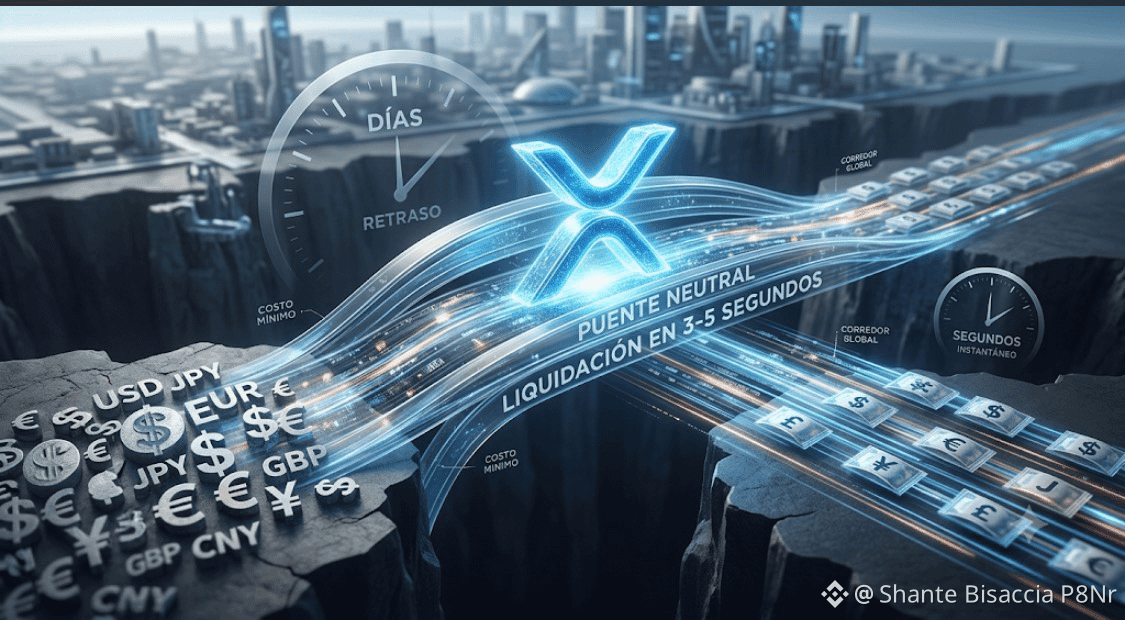
The traditional financial system takes days to move money across borders through multiple correspondent banks.🌍
$XRP is designed to break that inertia by acting as a neutral global bridge: it settles transfers between any currency (USD, EUR, JPY, INR, ARS) in just 3-5 seconds for a fraction of a cent.
A single asset to connect all the payment brokers in the world.
$XRP #Ripple #Crypto #CrossBorder
The traditional financial system takes days to move money across borders through multiple correspondent banks.🌍
$XRP is designed to break that inertia by acting as a neutral global bridge: it settles transfers between any currency (USD, EUR, JPY, INR, ARS) in just 3-5 seconds for a fraction of a cent.
A single asset to connect all the payment brokers in the world.
$XRP #Ripple #Crypto #CrossBorder
$XRP is designed to break that inertia by acting as a neutral global bridge: it settles transfers between any currency (USD, EUR, JPY, INR, ARS) in just 3-5 seconds for a fraction of a cent.
A single asset to connect all the payment brokers in the world.
$XRP #Ripple #Crypto #CrossBorder
4
534

El Dorado completes $9 million Series A funding, led by Coinbase Ventures and Verda Ventures.
This Latin American cross-border payment app is taking a different route: building on the Layer 1 blockchain Tempo, co-developed by Paradigm and Stripe, integrating stablecoins and fiat channels on the same payment layer.
What's most interesting is its real-world application—over 100 enterprise clients are already onboard, primarily for import settlements of Chinese electric vehicle exports to Latin America. Chinese manufacturing + stablecoin settlement + local fiat withdrawals in Latin America, this combo is quietly replacing traditional cross-border wire transfers.
As Stripe's infrastructure begins to support South-South trade, the narrative around crypto payments is no longer just about "dollarization" but rather a fast highway for funds between emerging markets.
#StablecoinPayments #LATAM #CrossBorder
El Dorado completes $9 million Series A funding, led by Coinbase Ventures and Verda Ventures.
This Latin American cross-border payment app is taking a different route: building on the Layer 1 blockchain Tempo, co-developed by Paradigm and Stripe, integrating stablecoins and fiat channels on the same payment layer.
What's most interesting is its real-world application—over 100 enterprise clients are already onboard, primarily for import settlements of Chinese electric vehicle exports to Latin America. Chinese manufacturing + stablecoin settlement + local fiat withdrawals in Latin America, this combo is quietly replacing traditional cross-border wire transfers.
As Stripe's infrastructure begins to support South-South trade, the narrative around crypto payments is no longer just about "dollarization" but rather a fast highway for funds between emerging markets.
#StablecoinPayments #LATAM #CrossBorder
This Latin American cross-border payment app is taking a different route: building on the Layer 1 blockchain Tempo, co-developed by Paradigm and Stripe, integrating stablecoins and fiat channels on the same payment layer.
What's most interesting is its real-world application—over 100 enterprise clients are already onboard, primarily for import settlements of Chinese electric vehicle exports to Latin America. Chinese manufacturing + stablecoin settlement + local fiat withdrawals in Latin America, this combo is quietly replacing traditional cross-border wire transfers.
As Stripe's infrastructure begins to support South-South trade, the narrative around crypto payments is no longer just about "dollarization" but rather a fast highway for funds between emerging markets.
#StablecoinPayments #LATAM #CrossBorder
37
See translation
🌐 Cross-Border Payments Infrastructure: Stablecoins and blockchain transform remittances
On July 16, 2026, cross-border payments are being transformed by stablecoins and blockchain networks. $XRP $XRP at $1.11 and networks like TRON $TRX facilitate billions in daily settlement volume at a fraction of traditional SWIFT costs.
The global remittance market exceeds $800B annually, with average fees around 6%. Stablecoin transfers on blockchain networks cost cents and settle in seconds, representing massive efficiency gains for migrant workers and businesses.
Revolut's UAE approval and similar regulatory advances will accelerate this transformation. As stablecoin infrastructure matures, the cost of moving money across borders approaches zero — a revolution in financial inclusion.
📌 Key Takeaway:
Blockchain-based cross-border payments reduce costs from 6% to near zero. Stablecoins and digital payment networks are revolutionizing remittances and global settlements.
#CrossBorder #Stablecoins
#BinanceAlphaAlert
🌐 Cross-Border Payments Infrastructure: Stablecoins and blockchain transform remittances
On July 16, 2026, cross-border payments are being transformed by stablecoins and blockchain networks. $XRP $XRP at $1.11 and networks like TRON $TRX facilitate billions in daily settlement volume at a fraction of traditional SWIFT costs.
The global remittance market exceeds $800B annually, with average fees around 6%. Stablecoin transfers on blockchain networks cost cents and settle in seconds, representing massive efficiency gains for migrant workers and businesses.
Revolut's UAE approval and similar regulatory advances will accelerate this transformation. As stablecoin infrastructure matures, the cost of moving money across borders approaches zero — a revolution in financial inclusion.
📌 Key Takeaway:
Blockchain-based cross-border payments reduce costs from 6% to near zero. Stablecoins and digital payment networks are revolutionizing remittances and global settlements.
#CrossBorder #Stablecoins
#BinanceAlphaAlert
On July 16, 2026, cross-border payments are being transformed by stablecoins and blockchain networks. $XRP $XRP at $1.11 and networks like TRON $TRX facilitate billions in daily settlement volume at a fraction of traditional SWIFT costs.
The global remittance market exceeds $800B annually, with average fees around 6%. Stablecoin transfers on blockchain networks cost cents and settle in seconds, representing massive efficiency gains for migrant workers and businesses.
Revolut's UAE approval and similar regulatory advances will accelerate this transformation. As stablecoin infrastructure matures, the cost of moving money across borders approaches zero — a revolution in financial inclusion.
📌 Key Takeaway:
Blockchain-based cross-border payments reduce costs from 6% to near zero. Stablecoins and digital payment networks are revolutionizing remittances and global settlements.
#CrossBorder #Stablecoins
#BinanceAlphaAlert
99
See translation
🌍 Cross-Border Crypto Flows Under Microscope After $3.8B Report
On June 25, 2026, the TRM report revealing $3.8B in Iran-linked crypto flows through CoinEx has put cross-border cryptocurrency transactions under renewed scrutiny. Regulators worldwide are revisiting how crypto crosses borders.
What this means for the industry:
- Enhanced due diligence for large cross-border transactions, especially those involving high-risk jurisdictions.
- Exchanges will need to implement more sophisticated transaction monitoring systems.
- Privacy coins and mixing services face additional scrutiny as potential tools for sanctions evasion.
- The transparent nature of blockchain actually helps here — every transaction is permanently recorded.
For legitimate users, the blockchain's transparency is an advantage over traditional banking, where cross-border flows are harder to trace.
📌 Key Takeaway:
Cross-border crypto flows face increased scrutiny after the $3.8B Iran-CoinEx case — but blockchain transparency makes crypto the most traceable financial system ever built.
#CrossBorder #Crypto
#BinanceAlphaAlert
🌍 Cross-Border Crypto Flows Under Microscope After $3.8B Report
On June 25, 2026, the TRM report revealing $3.8B in Iran-linked crypto flows through CoinEx has put cross-border cryptocurrency transactions under renewed scrutiny. Regulators worldwide are revisiting how crypto crosses borders.
What this means for the industry:
- Enhanced due diligence for large cross-border transactions, especially those involving high-risk jurisdictions.
- Exchanges will need to implement more sophisticated transaction monitoring systems.
- Privacy coins and mixing services face additional scrutiny as potential tools for sanctions evasion.
- The transparent nature of blockchain actually helps here — every transaction is permanently recorded.
For legitimate users, the blockchain's transparency is an advantage over traditional banking, where cross-border flows are harder to trace.
📌 Key Takeaway:
Cross-border crypto flows face increased scrutiny after the $3.8B Iran-CoinEx case — but blockchain transparency makes crypto the most traceable financial system ever built.
#CrossBorder #Crypto
#BinanceAlphaAlert
On June 25, 2026, the TRM report revealing $3.8B in Iran-linked crypto flows through CoinEx has put cross-border cryptocurrency transactions under renewed scrutiny. Regulators worldwide are revisiting how crypto crosses borders.
What this means for the industry:
- Enhanced due diligence for large cross-border transactions, especially those involving high-risk jurisdictions.
- Exchanges will need to implement more sophisticated transaction monitoring systems.
- Privacy coins and mixing services face additional scrutiny as potential tools for sanctions evasion.
- The transparent nature of blockchain actually helps here — every transaction is permanently recorded.
For legitimate users, the blockchain's transparency is an advantage over traditional banking, where cross-border flows are harder to trace.
📌 Key Takeaway:
Cross-border crypto flows face increased scrutiny after the $3.8B Iran-CoinEx case — but blockchain transparency makes crypto the most traceable financial system ever built.
#CrossBorder #Crypto
#BinanceAlphaAlert
3

See translation
TRON'S CROSS-BORDER PAYMENT RAILS: CONNECTING THE WORLD 💸
Cross-border payments are one of blockchain's most compelling use cases, and TRON has become the leading network for international transfers.
Traditional cross-border transfers take 3-5 days and cost 5-10% in fees. TRON transfers settle in 3 seconds for less than $0.01.
For the 280 million migrants worldwide sending money home, TRON offers a lifeline.
As global commerce digitalizes, TRON's cross-border infrastructure becomes increasingly valuable.
@TRON DAO
#TRONEcoStar #CrossBorder #Remittances
TRON'S CROSS-BORDER PAYMENT RAILS: CONNECTING THE WORLD 💸
Cross-border payments are one of blockchain's most compelling use cases, and TRON has become the leading network for international transfers.
Traditional cross-border transfers take 3-5 days and cost 5-10% in fees. TRON transfers settle in 3 seconds for less than $0.01.
For the 280 million migrants worldwide sending money home, TRON offers a lifeline.
As global commerce digitalizes, TRON's cross-border infrastructure becomes increasingly valuable.
@TRON DAO
#TRONEcoStar #CrossBorder #Remittances
Cross-border payments are one of blockchain's most compelling use cases, and TRON has become the leading network for international transfers.
Traditional cross-border transfers take 3-5 days and cost 5-10% in fees. TRON transfers settle in 3 seconds for less than $0.01.
For the 280 million migrants worldwide sending money home, TRON offers a lifeline.
As global commerce digitalizes, TRON's cross-border infrastructure becomes increasingly valuable.
@TRON DAO
#TRONEcoStar #CrossBorder #Remittances
11
See translation
🌐 Cross-Border Payments Evolution: Stellar and XRP Lead Blockchain Payment Innovation
On July 10, 2026, Stellar $XLM surged 3.65% to $0.190 while $XRP held steady at $1.11, highlighting continued interest in blockchain-based cross-border payments.
Both networks focus on fast, low-cost international transfers. Traditional remittance corridors process $700B+ annually, and blockchain solutions offer significant cost and speed advantages.
Partnerships with financial institutions and payment providers continue to expand the reach of blockchain-based payment networks.
📌 Key Takeaway:
Blockchain cross-border payments — led by Stellar $XLM and $XRP — are gaining traction as faster, cheaper alternatives to traditional remittance systems.
#Payments #CrossBorder
#BinanceAlphaAlert
🌐 Cross-Border Payments Evolution: Stellar and XRP Lead Blockchain Payment Innovation
On July 10, 2026, Stellar $XLM surged 3.65% to $0.190 while $XRP held steady at $1.11, highlighting continued interest in blockchain-based cross-border payments.
Both networks focus on fast, low-cost international transfers. Traditional remittance corridors process $700B+ annually, and blockchain solutions offer significant cost and speed advantages.
Partnerships with financial institutions and payment providers continue to expand the reach of blockchain-based payment networks.
📌 Key Takeaway:
Blockchain cross-border payments — led by Stellar $XLM and $XRP — are gaining traction as faster, cheaper alternatives to traditional remittance systems.
#Payments #CrossBorder
#BinanceAlphaAlert
On July 10, 2026, Stellar $XLM surged 3.65% to $0.190 while $XRP held steady at $1.11, highlighting continued interest in blockchain-based cross-border payments.
Both networks focus on fast, low-cost international transfers. Traditional remittance corridors process $700B+ annually, and blockchain solutions offer significant cost and speed advantages.
Partnerships with financial institutions and payment providers continue to expand the reach of blockchain-based payment networks.
📌 Key Takeaway:
Blockchain cross-border payments — led by Stellar $XLM and $XRP — are gaining traction as faster, cheaper alternatives to traditional remittance systems.
#Payments #CrossBorder
#BinanceAlphaAlert
62

·
--
See translation
Correspondent banking is one of the most broken systems in global finance — and crypto is quietly dismantling it.
Today, a cross-border wire from Buenos Aires to Manila can take 3–5 days and lose 5–8% to intermediaries. That money passes through 2–4 correspondent banks, each taking a cut, each adding latency, each adding failure points. It is a settlement infrastructure built for the 1970s, still running in 2026.
$XRP was designed around this exact problem. RippleNet’s on-demand liquidity removes the pre-funded nostro/vostro account requirement — the capital banks currently lock up to enable fast transfers. That locked capital globally is estimated in the hundreds of billions of dollars.
But the real race is broader. $BNB’s ecosystem enables low-fee cross-chain transfers, and $SOL powers stablecoin corridors — they’re all attacking the same problem from different angles.
The correspondent banking model extracts rent by controlling access. Blockchain removes the access problem entirely. When settlement becomes permissionless and near-instant, the rent disappears.
Emerging markets are the stress test. Where traditional banking is thin and remittance demand is high, crypto rails are already winning on cost and speed. That’s not speculation — it’s live volume.
The incumbent model won’t die overnight. But every dollar that routes on-chain is a dollar that doesn’t feed the correspondent network.
That’s a structural shift, not a trade.
#CrossBorder #Remittance #CryptoPayments #DeFi #Blockchain
Correspondent banking is one of the most broken systems in global finance — and crypto is quietly dismantling it.
Today, a cross-border wire from Buenos Aires to Manila can take 3–5 days and lose 5–8% to intermediaries. That money passes through 2–4 correspondent banks, each taking a cut, each adding latency, each adding failure points. It is a settlement infrastructure built for the 1970s, still running in 2026.
$XRP was designed around this exact problem. RippleNet’s on-demand liquidity removes the pre-funded nostro/vostro account requirement — the capital banks currently lock up to enable fast transfers. That locked capital globally is estimated in the hundreds of billions of dollars.
But the real race is broader. $BNB ’s ecosystem enables low-fee cross-chain transfers, and $SOL powers stablecoin corridors — they’re all attacking the same problem from different angles.
The correspondent banking model extracts rent by controlling access. Blockchain removes the access problem entirely. When settlement becomes permissionless and near-instant, the rent disappears.
Emerging markets are the stress test. Where traditional banking is thin and remittance demand is high, crypto rails are already winning on cost and speed. That’s not speculation — it’s live volume.
The incumbent model won’t die overnight. But every dollar that routes on-chain is a dollar that doesn’t feed the correspondent network.
That’s a structural shift, not a trade.
#CrossBorder #Remittance #CryptoPayments #DeFi #Blockchain
Today, a cross-border wire from Buenos Aires to Manila can take 3–5 days and lose 5–8% to intermediaries. That money passes through 2–4 correspondent banks, each taking a cut, each adding latency, each adding failure points. It is a settlement infrastructure built for the 1970s, still running in 2026.
$XRP was designed around this exact problem. RippleNet’s on-demand liquidity removes the pre-funded nostro/vostro account requirement — the capital banks currently lock up to enable fast transfers. That locked capital globally is estimated in the hundreds of billions of dollars.
But the real race is broader. $BNB ’s ecosystem enables low-fee cross-chain transfers, and $SOL powers stablecoin corridors — they’re all attacking the same problem from different angles.
The correspondent banking model extracts rent by controlling access. Blockchain removes the access problem entirely. When settlement becomes permissionless and near-instant, the rent disappears.
Emerging markets are the stress test. Where traditional banking is thin and remittance demand is high, crypto rails are already winning on cost and speed. That’s not speculation — it’s live volume.
The incumbent model won’t die overnight. But every dollar that routes on-chain is a dollar that doesn’t feed the correspondent network.
That’s a structural shift, not a trade.
#CrossBorder #Remittance #CryptoPayments #DeFi #Blockchain
88

See translation
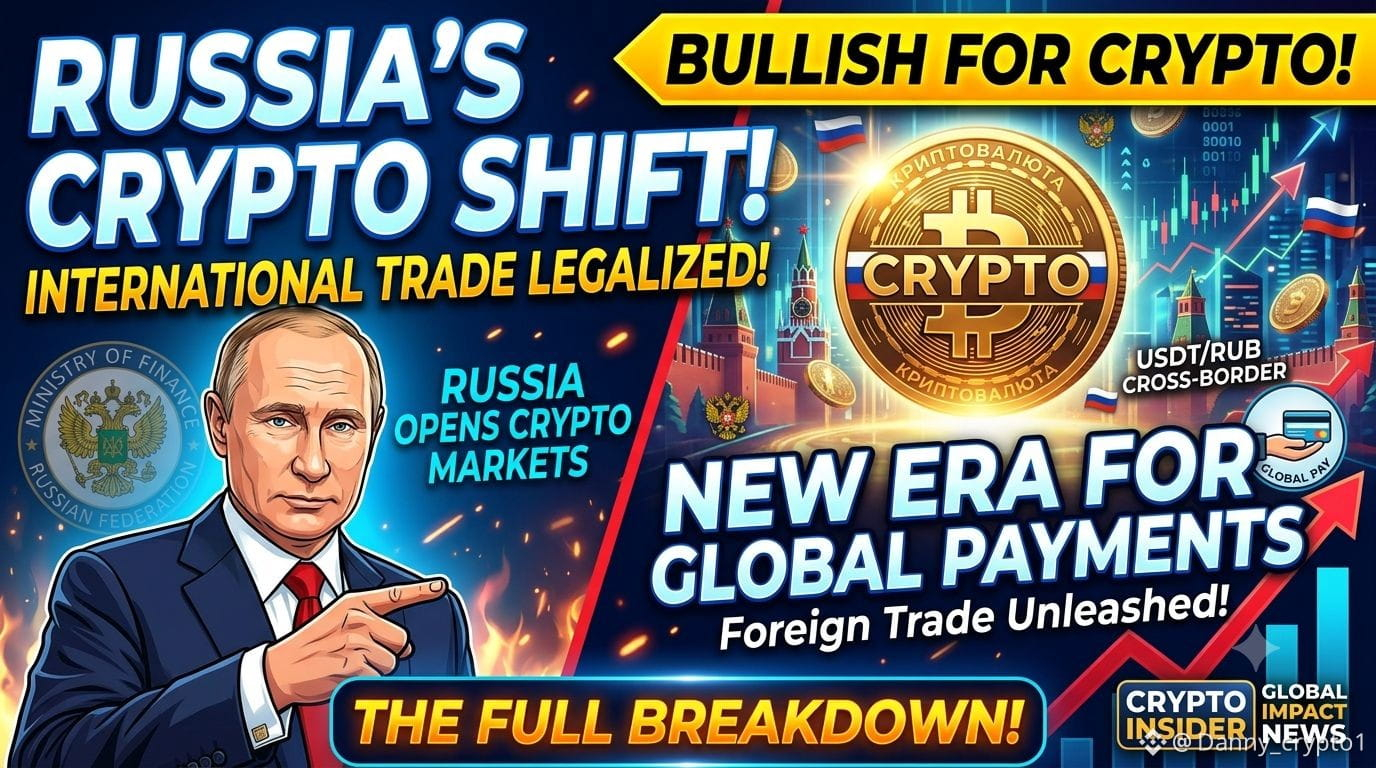
💥 RUSSIA OFFICIALLY APPROVES CRYPTO FOR FOREIGN TRADE! 🇷🇺
The Russian State Duma just passed the long-awaited cryptocurrency regulation bill! 🚀
⚡ Cross-Border Settlement: Crypto is now officially authorized for international trade transactions.
⚡ Regulated Market: Clear rules established for exchanges, brokers, and institutional players.
⚡ Global Impact: A significant turning point for cross-border payments and international finance.
What does this mean for the future of global digital asset adoption? Drop your take! 👇
#CryptoNews #Web3 #bitcoin #CryptoMarket #CrossBorder
💥 RUSSIA OFFICIALLY APPROVES CRYPTO FOR FOREIGN TRADE! 🇷🇺
The Russian State Duma just passed the long-awaited cryptocurrency regulation bill! 🚀
⚡ Cross-Border Settlement: Crypto is now officially authorized for international trade transactions.
⚡ Regulated Market: Clear rules established for exchanges, brokers, and institutional players.
⚡ Global Impact: A significant turning point for cross-border payments and international finance.
What does this mean for the future of global digital asset adoption? Drop your take! 👇
#CryptoNews #Web3 #bitcoin #CryptoMarket #CrossBorder
The Russian State Duma just passed the long-awaited cryptocurrency regulation bill! 🚀
⚡ Cross-Border Settlement: Crypto is now officially authorized for international trade transactions.
⚡ Regulated Market: Clear rules established for exchanges, brokers, and institutional players.
⚡ Global Impact: A significant turning point for cross-border payments and international finance.
What does this mean for the future of global digital asset adoption? Drop your take! 👇
#CryptoNews #Web3 #bitcoin #CryptoMarket #CrossBorder
1
74

See translation
USD1 (USD1) anchors liquidity in the stable market, fueling a surge in order block depth for Zcash (ZEC) and Ripple (XRP). The recent spike in trading volume signals bullish momentum; institutional adoption of ZEC’s privacy tech and XRP’s cross border innovation adds weight. Investor sentiment is bullish, strong buy for USD1, ZEC, XRP as ecosystem growth accelerates. 🚀💹 #Stablecoin #Privacy #CrossBorder #Bullish
USD1 (USD1) anchors liquidity in the stable market, fueling a surge in order block depth for Zcash (ZEC) and Ripple (XRP). The recent spike in trading volume signals bullish momentum; institutional adoption of ZEC’s privacy tech and XRP’s cross border innovation adds weight. Investor sentiment is bullish, strong buy for USD1, ZEC, XRP as ecosystem growth accelerates. 🚀💹 #Stablecoin #Privacy #CrossBorder #Bullish
2

·
--
See translation
Stellar ($XLM) jumped about 10% to roughly $0.196 today while Bitcoin slipped around 1% and total crypto market cap ticked down roughly 0.7% — a solo move on an otherwise flat day.
Square's already full of "payments season is back" takes. I don't buy it. Cross-border payment rails don't suddenly spike just because an older alt pumped double digits with no fresh headline behind it. Feels more like rotation into familiar names than a real Stellar catalyst showing up right now.
What I'm watching is whether $XLM holds near $0.196 once the hot takes fade — not whether someone dusts off an old partnership thread.
#Stellar #XLM #CrossBorder
Stellar ($XLM ) jumped about 10% to roughly $0.196 today while Bitcoin slipped around 1% and total crypto market cap ticked down roughly 0.7% — a solo move on an otherwise flat day.
Square's already full of "payments season is back" takes. I don't buy it. Cross-border payment rails don't suddenly spike just because an older alt pumped double digits with no fresh headline behind it. Feels more like rotation into familiar names than a real Stellar catalyst showing up right now.
What I'm watching is whether $XLM holds near $0.196 once the hot takes fade — not whether someone dusts off an old partnership thread.
#Stellar #XLM #CrossBorder
Square's already full of "payments season is back" takes. I don't buy it. Cross-border payment rails don't suddenly spike just because an older alt pumped double digits with no fresh headline behind it. Feels more like rotation into familiar names than a real Stellar catalyst showing up right now.
What I'm watching is whether $XLM holds near $0.196 once the hot takes fade — not whether someone dusts off an old partnership thread.
#Stellar #XLM #CrossBorder
46

·
--
Bullish
Verified
See translation
#usbankcompletescrossborderpaymentpilotonstellar
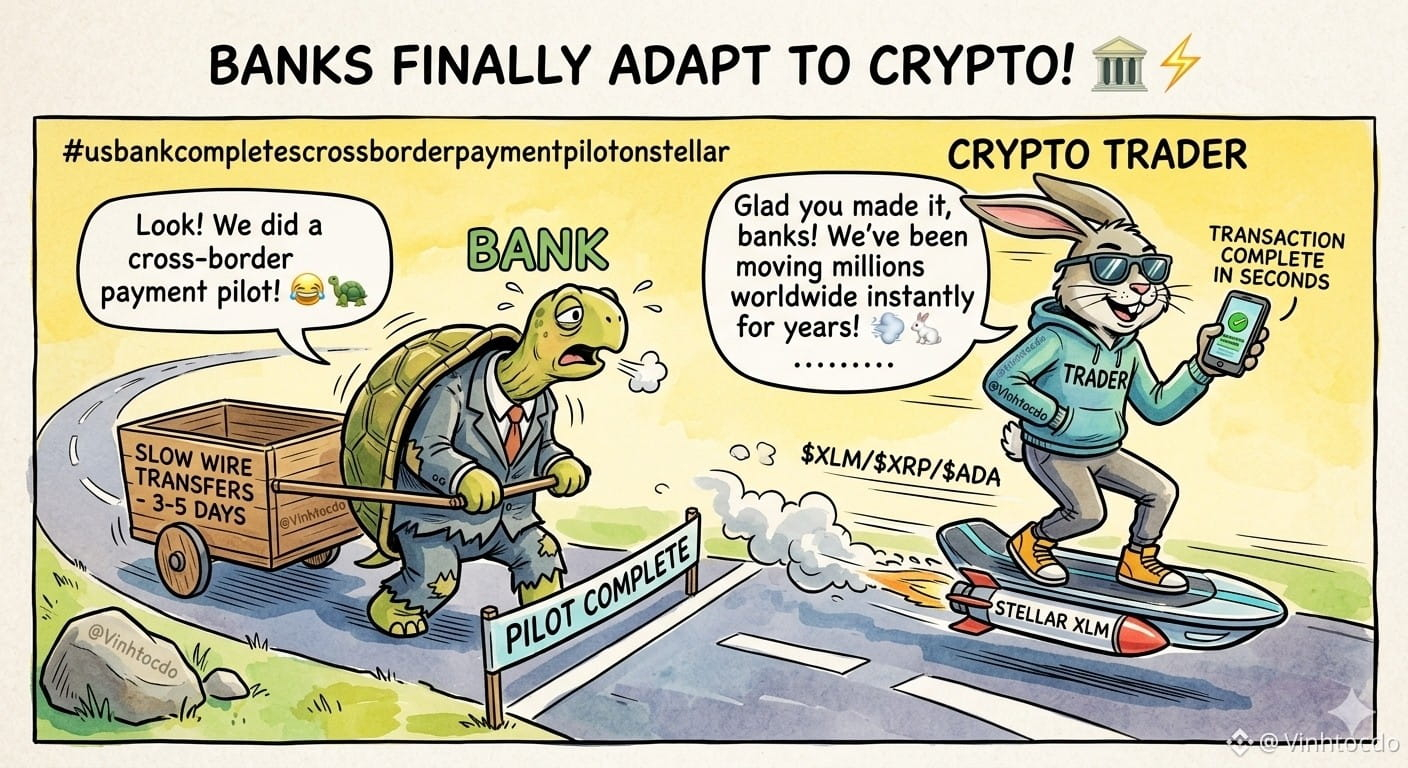
Wait, banks are just discovering cross-border payments now?! 😂🏦
Big news: #usbankcompletescrossborderpaymentpilotonstellar! A major US bank just finished testing international transfers on Stellar. While they are celebrating this "pilot," crypto traders have been moving millions across the globe in seconds using coins for years! Welcome to the future, banks, glad you could finally make it! 🐢💨
What should traders do?
Smile because the traditional finance world is slowly adapting to our playground.Keep an eye on payment-focused tokens as real-world adoption grows.
⚠️ Not financial advice! DYOR!
Ready to outrun traditional banks? Register on Binance with my code VINHTOCDO or link: [https://www.binance.com/register?ref=VINHTOCDO](https://www.binance.com/register?ref=VINHTOCDO) 🏎💥
👇 Click trade below to support me:
$XLM
{future}(XLMUSDT)
| $XRP
{future}(XRPUSDT)
| $ADA
{future}(ADAUSDT)
#stellar #XLM #CrossBorder #VINHTOCDO
#usbankcompletescrossborderpaymentpilotonstellar
Wait, banks are just discovering cross-border payments now?! 😂🏦
Big news: #usbankcompletescrossborderpaymentpilotonstellar! A major US bank just finished testing international transfers on Stellar. While they are celebrating this "pilot," crypto traders have been moving millions across the globe in seconds using coins for years! Welcome to the future, banks, glad you could finally make it! 🐢💨
What should traders do?
Smile because the traditional finance world is slowly adapting to our playground.Keep an eye on payment-focused tokens as real-world adoption grows.
⚠️ Not financial advice! DYOR!
Ready to outrun traditional banks? Register on Binance with my code VINHTOCDO or link: https://www.binance.com/register?ref=VINHTOCDO 🏎💥
👇 Click trade below to support me:
$XLM
| $XRP
| $ADA
#stellar #XLM #CrossBorder #VINHTOCDO
Wait, banks are just discovering cross-border payments now?! 😂🏦
Big news: #usbankcompletescrossborderpaymentpilotonstellar! A major US bank just finished testing international transfers on Stellar. While they are celebrating this "pilot," crypto traders have been moving millions across the globe in seconds using coins for years! Welcome to the future, banks, glad you could finally make it! 🐢💨
What should traders do?
Smile because the traditional finance world is slowly adapting to our playground.Keep an eye on payment-focused tokens as real-world adoption grows.
⚠️ Not financial advice! DYOR!
Ready to outrun traditional banks? Register on Binance with my code VINHTOCDO or link: https://www.binance.com/register?ref=VINHTOCDO 🏎💥
👇 Click trade below to support me:
$XLM
| $XRP
| $ADA
#stellar #XLM #CrossBorder #VINHTOCDO
ABO3ZAM:
دخول المؤسسات المالية يعزز من ثقة السوق على المدى البعيد، لكن لا تغتر بالأخبار لرفع تمركز الزخم اللحظي. راقب مناطق الرفض السعري بدقة لتأمين أرباحك، فالسوق لا يرحم من يتجاهل إدارة المخاطر عند حدوث أي تقلبات حادة في السيولة.
2
6
312
·
--
See translation
Stablecoins have quietly crossed the line from crypto experiment to financial infrastructure.
The conversation about stablecoins always centers on market cap. The real story is settlement velocity — and it's accelerating in corridors most traders don't track.
Cross-border B2B payments settled on stablecoin rails are growing at a pace that makes the 2021 stablecoin bull run look like a warmup. Businesses aren't using USDT and USDC because they're crypto enthusiasts. They're using them because a 30-second settlement at $0.01 beats a 3-day SWIFT transfer at $25 with six intermediary banks taking a cut.
The correspondent banking model was built for a world without internet. Stablecoins are the internet's version of that system — faster, cheaper, and increasingly regulated. The GENIUS Act didn't create this trend. It validated what was already happening.
Here's what most people miss: stablecoin settlement volume now rivals some major payment networks on certain corridors — particularly Asia-to-Europe trade settlement and Latin American dollar access. The volume isn't coming from traders. It's coming from importers, exporters, and SMEs who need dollar liquidity without local banking access.
The chains that capture this flow aren't the ones with the highest TPS. They're the ones with the deepest liquidity, best compliance rails, and lowest settlement risk.
Watch settlement-to-market-cap ratios, not just market cap.
$ETH $SOL $BNB
#Stablecoins #CryptoPayments #CrossBorder #DeFi #FinancialInfrastructure
Stablecoins have quietly crossed the line from crypto experiment to financial infrastructure.
The conversation about stablecoins always centers on market cap. The real story is settlement velocity — and it's accelerating in corridors most traders don't track.
Cross-border B2B payments settled on stablecoin rails are growing at a pace that makes the 2021 stablecoin bull run look like a warmup. Businesses aren't using USDT and USDC because they're crypto enthusiasts. They're using them because a 30-second settlement at $0.01 beats a 3-day SWIFT transfer at $25 with six intermediary banks taking a cut.
The correspondent banking model was built for a world without internet. Stablecoins are the internet's version of that system — faster, cheaper, and increasingly regulated. The GENIUS Act didn't create this trend. It validated what was already happening.
Here's what most people miss: stablecoin settlement volume now rivals some major payment networks on certain corridors — particularly Asia-to-Europe trade settlement and Latin American dollar access. The volume isn't coming from traders. It's coming from importers, exporters, and SMEs who need dollar liquidity without local banking access.
The chains that capture this flow aren't the ones with the highest TPS. They're the ones with the deepest liquidity, best compliance rails, and lowest settlement risk.
Watch settlement-to-market-cap ratios, not just market cap.
$ETH $SOL $BNB
#Stablecoins #CryptoPayments #CrossBorder #DeFi #FinancialInfrastructure
The conversation about stablecoins always centers on market cap. The real story is settlement velocity — and it's accelerating in corridors most traders don't track.
Cross-border B2B payments settled on stablecoin rails are growing at a pace that makes the 2021 stablecoin bull run look like a warmup. Businesses aren't using USDT and USDC because they're crypto enthusiasts. They're using them because a 30-second settlement at $0.01 beats a 3-day SWIFT transfer at $25 with six intermediary banks taking a cut.
The correspondent banking model was built for a world without internet. Stablecoins are the internet's version of that system — faster, cheaper, and increasingly regulated. The GENIUS Act didn't create this trend. It validated what was already happening.
Here's what most people miss: stablecoin settlement volume now rivals some major payment networks on certain corridors — particularly Asia-to-Europe trade settlement and Latin American dollar access. The volume isn't coming from traders. It's coming from importers, exporters, and SMEs who need dollar liquidity without local banking access.
The chains that capture this flow aren't the ones with the highest TPS. They're the ones with the deepest liquidity, best compliance rails, and lowest settlement risk.
Watch settlement-to-market-cap ratios, not just market cap.
$ETH $SOL $BNB
#Stablecoins #CryptoPayments #CrossBorder #DeFi #FinancialInfrastructure
150

·
--
See translation
🚀 $USBDC BREAKS GROUND WITH LIVE CROSS‑BORDER PAYMENT ON STELLAR 🌊
📊 The U.S. Bank pilot demonstrates a fully integrated USD stablecoin workflow on Stellar, linking treasury, risk, and compliance layers without friction. 🦈 Smart‑money institutions can now mint, freeze, and claw‑back tokens in real‑time, tightening liquidity control across continents. 🔍 This cross‑border execution between North America and Europe validates a seamless bridge for tokenized assets, hinting at a broader institutional shift toward blockchain‑backed settlement. 📈 Expect accelerated adoption as banks chase the operational efficiency this model delivers.
💬 How quickly will other legacy banks follow suit? 👇
⚠️ Not financial advice. Always manage your risk. 🛡️
🏷️ #USBDC #Stablecoin #Stellar #CrossBorder #Crypto
🦈 🚀
🚀 $USBDC BREAKS GROUND WITH LIVE CROSS‑BORDER PAYMENT ON STELLAR 🌊
📊 The U.S. Bank pilot demonstrates a fully integrated USD stablecoin workflow on Stellar, linking treasury, risk, and compliance layers without friction. 🦈 Smart‑money institutions can now mint, freeze, and claw‑back tokens in real‑time, tightening liquidity control across continents. 🔍 This cross‑border execution between North America and Europe validates a seamless bridge for tokenized assets, hinting at a broader institutional shift toward blockchain‑backed settlement. 📈 Expect accelerated adoption as banks chase the operational efficiency this model delivers.
💬 How quickly will other legacy banks follow suit? 👇
⚠️ Not financial advice. Always manage your risk. 🛡️
🏷️ #USBDC #Stablecoin #Stellar #CrossBorder #Crypto
🦈 🚀
📊 The U.S. Bank pilot demonstrates a fully integrated USD stablecoin workflow on Stellar, linking treasury, risk, and compliance layers without friction. 🦈 Smart‑money institutions can now mint, freeze, and claw‑back tokens in real‑time, tightening liquidity control across continents. 🔍 This cross‑border execution between North America and Europe validates a seamless bridge for tokenized assets, hinting at a broader institutional shift toward blockchain‑backed settlement. 📈 Expect accelerated adoption as banks chase the operational efficiency this model delivers.
💬 How quickly will other legacy banks follow suit? 👇
⚠️ Not financial advice. Always manage your risk. 🛡️
🏷️ #USBDC #Stablecoin #Stellar #CrossBorder #Crypto
🦈 🚀
2

·
--
See translation
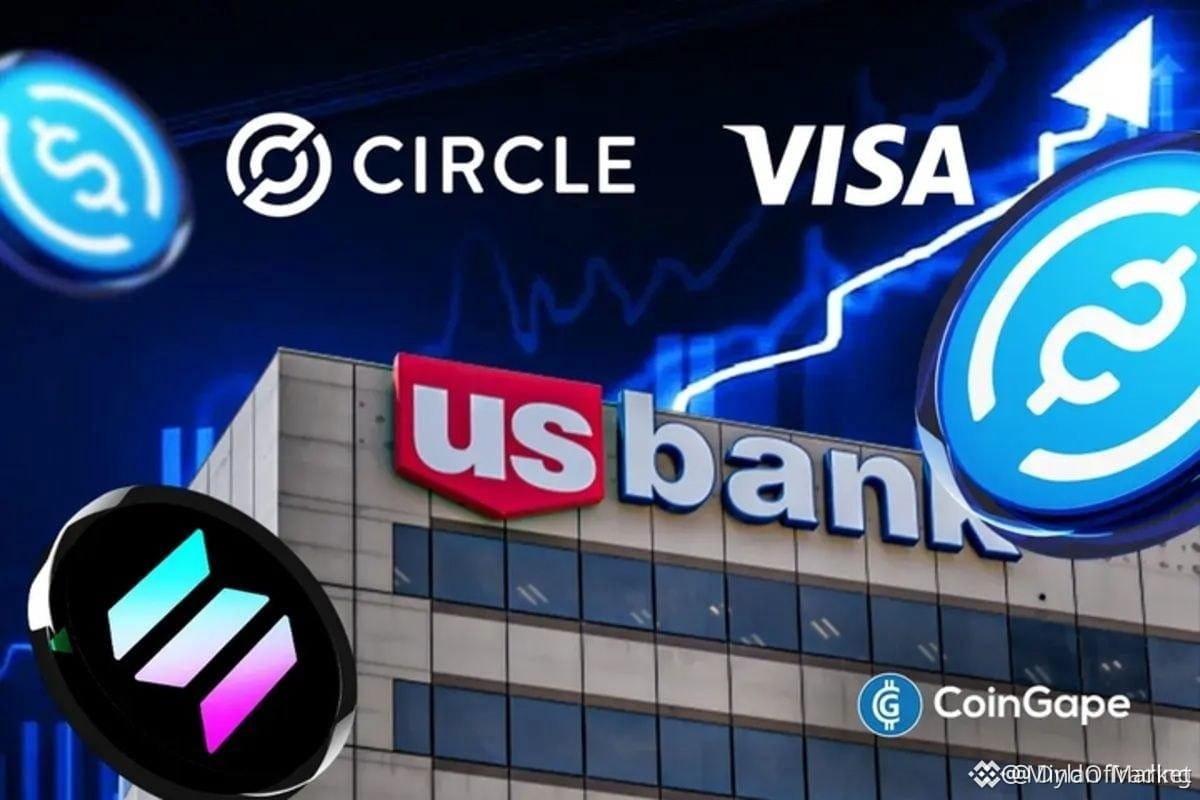
🚨 $IOST & $SC POISED FOR STABLECOIN CROSS‑BORDER SURGE 🌊
The US Bank live cross‑border test has lit a clear liquidity corridor for fiat‑backed stablecoins, turning the USDBC network into a de‑risked conduit for institutional capital. 📊 The instant settlement strips away correspondent delays, forcing traditional banks to recalibrate their order flow.
Smart‑money scanners are already flagging $IOST and $SC as near‑term beneficiaries, with order blocks forming around their recent bullish ranges. 🦈 Expect a cascade of on‑chain demand as banks chase the efficiency premium, and volume spikes could push price momentum higher. ⚡
💬 How are you positioning for the next wave of fiat‑on‑chain settlements?
⚠️ Not financial advice. Always manage your risk. 🛡️
🏷️ #IOST #Stablecoin #CrossBorder #Crypto #Institutional
🦈 🚀
🚨 $IOST & $SC POISED FOR STABLECOIN CROSS‑BORDER SURGE 🌊
The US Bank live cross‑border test has lit a clear liquidity corridor for fiat‑backed stablecoins, turning the USDBC network into a de‑risked conduit for institutional capital. 📊 The instant settlement strips away correspondent delays, forcing traditional banks to recalibrate their order flow.
Smart‑money scanners are already flagging $IOST and $SC as near‑term beneficiaries, with order blocks forming around their recent bullish ranges. 🦈 Expect a cascade of on‑chain demand as banks chase the efficiency premium, and volume spikes could push price momentum higher. ⚡
💬 How are you positioning for the next wave of fiat‑on‑chain settlements?
⚠️ Not financial advice. Always manage your risk. 🛡️
🏷️ #IOST #Stablecoin #CrossBorder #Crypto #Institutional
🦈 🚀
The US Bank live cross‑border test has lit a clear liquidity corridor for fiat‑backed stablecoins, turning the USDBC network into a de‑risked conduit for institutional capital. 📊 The instant settlement strips away correspondent delays, forcing traditional banks to recalibrate their order flow.
Smart‑money scanners are already flagging $IOST and $SC as near‑term beneficiaries, with order blocks forming around their recent bullish ranges. 🦈 Expect a cascade of on‑chain demand as banks chase the efficiency premium, and volume spikes could push price momentum higher. ⚡
💬 How are you positioning for the next wave of fiat‑on‑chain settlements?
⚠️ Not financial advice. Always manage your risk. 🛡️
🏷️ #IOST #Stablecoin #CrossBorder #Crypto #Institutional
🦈 🚀
1
168
·
--
See translation
🚨 $FF DRIVES INSTANT CROSS‑BORDER BLOCKCHAIN PAYMENTS FOR JAPAN 🚀
📊 Citi’s private ledger now settles Japanese corporate transfers in under five seconds, a true ⚡ liquidity sweep that bypasses legacy correspondent banks. 🌊 The 24/7, near‑real‑time flow is reshaping how institutions think about settlement risk and operational efficiency.
💡 Early pilots signal a broader tokenization wave, pressuring rivals to upgrade rails and nudging market sentiment higher for $FF , $QKC and $VVV . Institutional appetite is heating up as compliance frameworks scramble to keep pace.
💬 How will this acceleration reshape your corporate finance strategy? 👇
⚠️ Not financial advice. Always manage your risk. 🛡️
🏷️ #FF #CrossBorder #Tokenization #CryptoPayments #Institutional
🔥 💎
🚨 $FF DRIVES INSTANT CROSS‑BORDER BLOCKCHAIN PAYMENTS FOR JAPAN 🚀
📊 Citi’s private ledger now settles Japanese corporate transfers in under five seconds, a true ⚡ liquidity sweep that bypasses legacy correspondent banks. 🌊 The 24/7, near‑real‑time flow is reshaping how institutions think about settlement risk and operational efficiency.
💡 Early pilots signal a broader tokenization wave, pressuring rivals to upgrade rails and nudging market sentiment higher for $FF , $QKC and $VVV . Institutional appetite is heating up as compliance frameworks scramble to keep pace.
💬 How will this acceleration reshape your corporate finance strategy? 👇
⚠️ Not financial advice. Always manage your risk. 🛡️
🏷️ #FF #CrossBorder #Tokenization #CryptoPayments #Institutional
🔥 💎
📊 Citi’s private ledger now settles Japanese corporate transfers in under five seconds, a true ⚡ liquidity sweep that bypasses legacy correspondent banks. 🌊 The 24/7, near‑real‑time flow is reshaping how institutions think about settlement risk and operational efficiency.
💡 Early pilots signal a broader tokenization wave, pressuring rivals to upgrade rails and nudging market sentiment higher for $FF , $QKC and $VVV . Institutional appetite is heating up as compliance frameworks scramble to keep pace.
💬 How will this acceleration reshape your corporate finance strategy? 👇
⚠️ Not financial advice. Always manage your risk. 🛡️
🏷️ #FF #CrossBorder #Tokenization #CryptoPayments #Institutional
🔥 💎


139

See translation
🚀 $XRP DRIVES TOKENIZED USD PAYMENTS, SETTING SPEED RECKONING! ⚡
🦈 Smart money is already surfacing the Swift Digital Ledger, and tokenized USD deposits are cutting settlement time from days to minutes. Institutions can now move funds 24/7, sidestepping the old banking lull. 📊
For e‑commerce and digital services, that means instant liquidity across time zones, a game‑changer for global cash flow. 🌊 Volume on token‑deposit rails is still nascent, but the early adoption curve hints at a rapid upside for assets tied to real‑world fiat bridges. ⚡
💬 Will you position on the infrastructure play before the next wave of tokenized settlements? 👇
⚠️ Not financial advice. Always manage your risk. 🛡️
🏷️ #XRP #TokenizedPayments #CrossBorder #Crypto #Finance
🔥 💎
🚀 $XRP DRIVES TOKENIZED USD PAYMENTS, SETTING SPEED RECKONING! ⚡
🦈 Smart money is already surfacing the Swift Digital Ledger, and tokenized USD deposits are cutting settlement time from days to minutes. Institutions can now move funds 24/7, sidestepping the old banking lull. 📊
For e‑commerce and digital services, that means instant liquidity across time zones, a game‑changer for global cash flow. 🌊 Volume on token‑deposit rails is still nascent, but the early adoption curve hints at a rapid upside for assets tied to real‑world fiat bridges. ⚡
💬 Will you position on the infrastructure play before the next wave of tokenized settlements? 👇
⚠️ Not financial advice. Always manage your risk. 🛡️
🏷️ #XRP #TokenizedPayments #CrossBorder #Crypto #Finance
🔥 💎
🦈 Smart money is already surfacing the Swift Digital Ledger, and tokenized USD deposits are cutting settlement time from days to minutes. Institutions can now move funds 24/7, sidestepping the old banking lull. 📊
For e‑commerce and digital services, that means instant liquidity across time zones, a game‑changer for global cash flow. 🌊 Volume on token‑deposit rails is still nascent, but the early adoption curve hints at a rapid upside for assets tied to real‑world fiat bridges. ⚡
💬 Will you position on the infrastructure play before the next wave of tokenized settlements? 👇
⚠️ Not financial advice. Always manage your risk. 🛡️
🏷️ #XRP #TokenizedPayments #CrossBorder #Crypto #Finance
🔥 💎
15
·
--
See translation
The $XRP vs $SOL stablecoin settlement debate misses the bigger picture.
Both chains are winning — just in different lanes.
Cross-border B2B settlement is one of the most unsexy, underappreciated use cases in crypto. Trillions of dollars move through correspondent banking every year, with 2-5 day settlement windows, 3-6% FX fees, and opacity baked in at every layer.
Stablecoins on programmable chains are quietly dismantling this. Here is what is actually happening:
→ $XRP Ledger processes CBDC corridors and bank-to-bank rails where regulatory relationships matter most. Its on-demand liquidity product is live in 40+ countries.
→ $SOL handles high-velocity consumer and fintech stablecoin flows — Visa pilots, Stripe integrations, and merchant settlement where speed and cost per transaction matter most.
→ $BNB Chain is capturing emerging market remittance corridors via BNB Pay, particularly Southeast Asia and Latin America.
The takeaway: stablecoin payment rails are not winner-take-all. They are a multi-chain settlement stack where each chain captures a different segment of the $150T+ annual cross-border payment flow.
The chains that own the rails own the float. And the float compounds.
This is the most underpriced structural thesis in crypto right now.
#Stablecoins #CrossBorder #PaymentRails #CryptoAdoption #DeFi
The $XRP vs $SOL stablecoin settlement debate misses the bigger picture.
Both chains are winning — just in different lanes.
Cross-border B2B settlement is one of the most unsexy, underappreciated use cases in crypto. Trillions of dollars move through correspondent banking every year, with 2-5 day settlement windows, 3-6% FX fees, and opacity baked in at every layer.
Stablecoins on programmable chains are quietly dismantling this. Here is what is actually happening:
→ $XRP Ledger processes CBDC corridors and bank-to-bank rails where regulatory relationships matter most. Its on-demand liquidity product is live in 40+ countries.
→ $SOL handles high-velocity consumer and fintech stablecoin flows — Visa pilots, Stripe integrations, and merchant settlement where speed and cost per transaction matter most.
→ $BNB Chain is capturing emerging market remittance corridors via BNB Pay, particularly Southeast Asia and Latin America.
The takeaway: stablecoin payment rails are not winner-take-all. They are a multi-chain settlement stack where each chain captures a different segment of the $150T+ annual cross-border payment flow.
The chains that own the rails own the float. And the float compounds.
This is the most underpriced structural thesis in crypto right now.
#Stablecoins #CrossBorder #PaymentRails #CryptoAdoption #DeFi
Both chains are winning — just in different lanes.
Cross-border B2B settlement is one of the most unsexy, underappreciated use cases in crypto. Trillions of dollars move through correspondent banking every year, with 2-5 day settlement windows, 3-6% FX fees, and opacity baked in at every layer.
Stablecoins on programmable chains are quietly dismantling this. Here is what is actually happening:
→ $XRP Ledger processes CBDC corridors and bank-to-bank rails where regulatory relationships matter most. Its on-demand liquidity product is live in 40+ countries.
→ $SOL handles high-velocity consumer and fintech stablecoin flows — Visa pilots, Stripe integrations, and merchant settlement where speed and cost per transaction matter most.
→ $BNB Chain is capturing emerging market remittance corridors via BNB Pay, particularly Southeast Asia and Latin America.
The takeaway: stablecoin payment rails are not winner-take-all. They are a multi-chain settlement stack where each chain captures a different segment of the $150T+ annual cross-border payment flow.
The chains that own the rails own the float. And the float compounds.
This is the most underpriced structural thesis in crypto right now.
#Stablecoins #CrossBorder #PaymentRails #CryptoAdoption #DeFi
133

See translation
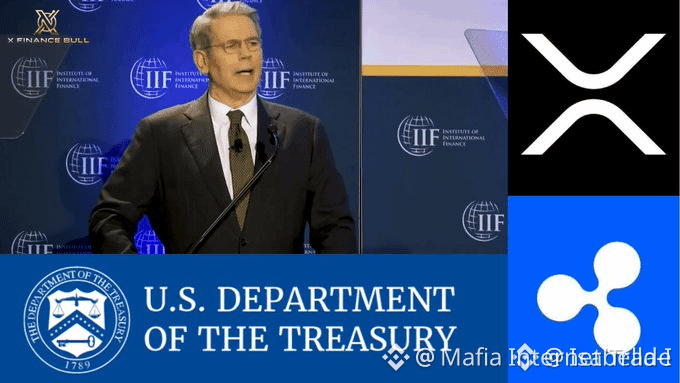
G20 JUST GAVE THE GREEN LIGHT. $XRP IS READY TO FUEL CROSS-BORDER ADOPTION!
Macro tide is shifting fast. Global leaders are framing digital assets as growth engines, not regulatory threats. G20 is pushing hard for seamless cross-border payment rails and ISO 20022 compliance. Institutional liquidity is hunting enterprise infrastructure right now.
Treasury Secretary Scott Bessent is championing the CLARITY Act. The stage is set for a massive structural re-rating across utility assets like $XRP . Smart money is already loaded before traditional finance front-runs the breakout to rip higher. 🚀
Fundamentals rarely look this aligned. Are you ready to catch the move as ISO 20022 compliant assets absorb the next institutional capital wave?
Not financial advice. Always manage your risk.
#XRP #ISO20022 #Crypto #CrossBorder #Macro
Trade the move, not the noise. 🔥
G20 JUST GAVE THE GREEN LIGHT. $XRP IS READY TO FUEL CROSS-BORDER ADOPTION!
Macro tide is shifting fast. Global leaders are framing digital assets as growth engines, not regulatory threats. G20 is pushing hard for seamless cross-border payment rails and ISO 20022 compliance. Institutional liquidity is hunting enterprise infrastructure right now.
Treasury Secretary Scott Bessent is championing the CLARITY Act. The stage is set for a massive structural re-rating across utility assets like $XRP . Smart money is already loaded before traditional finance front-runs the breakout to rip higher. 🚀
Fundamentals rarely look this aligned. Are you ready to catch the move as ISO 20022 compliant assets absorb the next institutional capital wave?
Not financial advice. Always manage your risk.
#XRP #ISO20022 #Crypto #CrossBorder #Macro
Trade the move, not the noise. 🔥
Macro tide is shifting fast. Global leaders are framing digital assets as growth engines, not regulatory threats. G20 is pushing hard for seamless cross-border payment rails and ISO 20022 compliance. Institutional liquidity is hunting enterprise infrastructure right now.
Treasury Secretary Scott Bessent is championing the CLARITY Act. The stage is set for a massive structural re-rating across utility assets like $XRP . Smart money is already loaded before traditional finance front-runs the breakout to rip higher. 🚀
Fundamentals rarely look this aligned. Are you ready to catch the move as ISO 20022 compliant assets absorb the next institutional capital wave?
Not financial advice. Always manage your risk.
#XRP #ISO20022 #Crypto #CrossBorder #Macro
Trade the move, not the noise. 🔥
56
Log in to explore more content
Join global crypto users on Binance Square
⚡️ Get latest and useful information about crypto.
💬 Trusted by the world’s largest crypto exchange.
👍 Discover real insights from verified creators.
Email / Phone number
Trending Topics
1
#AnthropicCEOCallsForAISlowdown
93,280 views
1,459 Discussing
2
#BitcoinThirdSingleBlockReorgInFourWeeks
17,589 views
540 Discussing
3
#EthereumFallsBelow$2500
1,346 views
61 Discussing
4
#BitcoinDropsToIntradayLow$76367
657 views
24 Discussing
5
#WhiteHouseRejectsAISlowdownCalls
3,457 views
174 Discussing
6
#UKMayExemptTokenizedGoldFromFundRules
2,349 views
123 Discussing
7
#BitcoinSpotETFsRecord$463MNetOutflowLastWeek
245 views
9 Discussing
8
#LSKSurgesOver515%In24Hours
15,922 views
291 Discussing
9
#ClarityActLawIn2026OddsRiseTo30%
12,496 views
172 Discussing
10
#KoreaCryptoTaxDelayPetitionMeetsReviewThreshold
3,514 views
88 Discussing