

#atom
atom
6.6M views
9,431 Discussing
Hot
Latest

·
--
Bearish
See translation
🔴 $ATOM #ATOM
Entry 1.648 -+ 1.656
Targets 1.638 1.625 1.611
St 1.674
SHORT is the priority: higher moving averages are pressing down, and the daily trend is weak.
$ATOM
{future}(ATOMUSDT)
🔴 $ATOM #ATOM
Entry 1.648 -+ 1.656
Targets 1.638 1.625 1.611
St 1.674
SHORT is the priority: higher moving averages are pressing down, and the daily trend is weak.
$ATOM
Entry 1.648 -+ 1.656
Targets 1.638 1.625 1.611
St 1.674
SHORT is the priority: higher moving averages are pressing down, and the daily trend is weak.
$ATOM
3
222

See translation
$ATOM AT $1.62! BREAKDOWN OR MASSIVE COMEBACK?
Cosmos is down 5%+ this week, and sellers remain in control!
🔹 Price: ~$1.62
🔹 RSI: 40.5 — Weak momentum.
🔹 Support: $1.59 — Critical level!
🔹 Resistance: $1.69 — First recovery target.
📊 My Take: Bearish short-term. A volume-backed breakout above $1.69 could change the outlook.
⚠️ Below $1.59? More downside risk!
{future}(ATOMUSDT)
🔥 Tap $ATOM to watch the next move!
#ATOM #Cosmos #EarningsSeason #BinanceSquare
$ATOM AT $1.62! BREAKDOWN OR MASSIVE COMEBACK?
Cosmos is down 5%+ this week, and sellers remain in control!
🔹 Price: ~$1.62
🔹 RSI: 40.5 — Weak momentum.
🔹 Support: $1.59 — Critical level!
🔹 Resistance: $1.69 — First recovery target.
📊 My Take: Bearish short-term. A volume-backed breakout above $1.69 could change the outlook.
⚠️ Below $1.59? More downside risk!
🔥 Tap $ATOM to watch the next move!
#ATOM #Cosmos #EarningsSeason #BinanceSquare
33


·
--
See translation
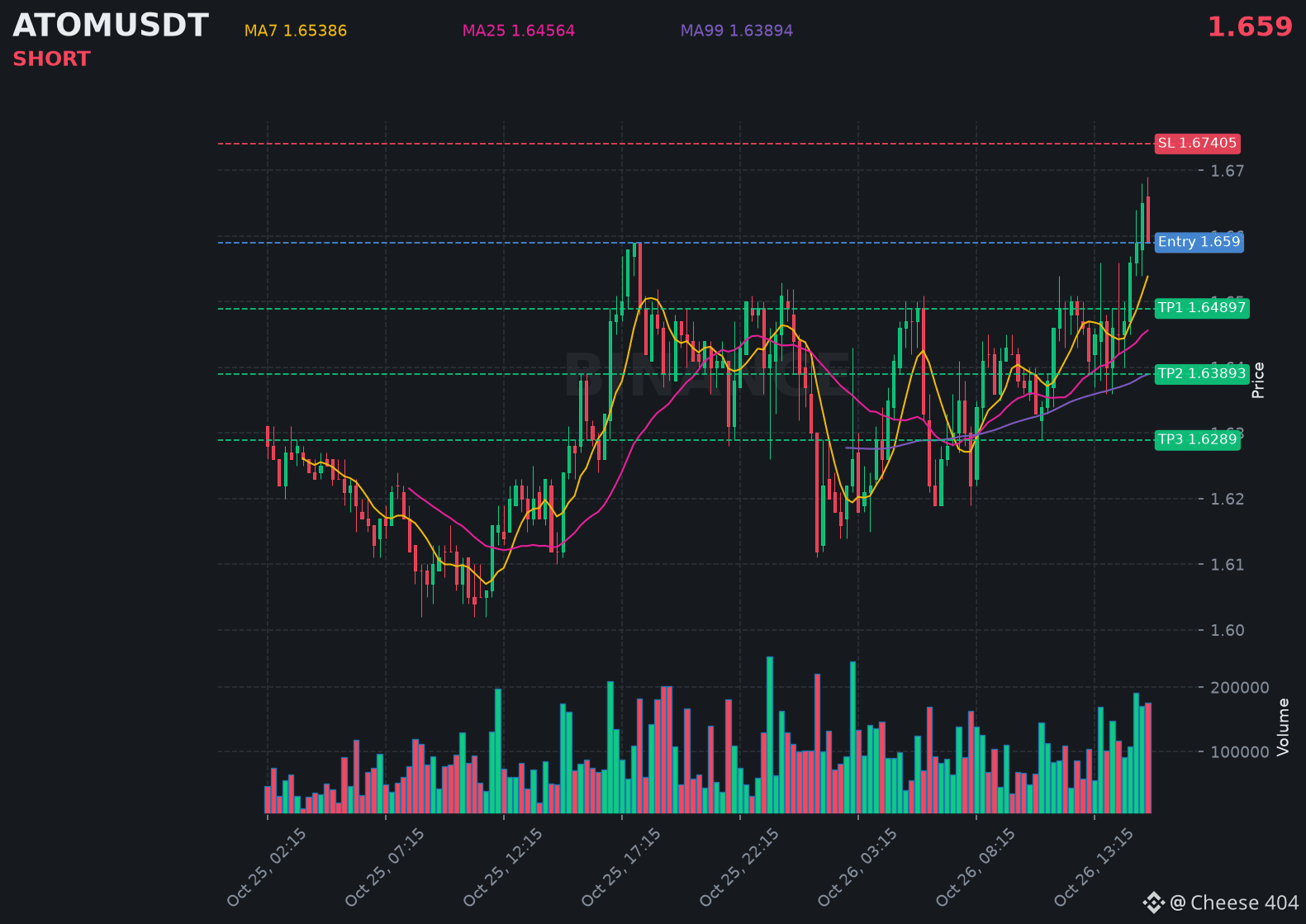
$ATOM just printed a strong bearish candle, signaling more downside pressure building right now.
📍 @ 1.659 | Volume: 0.29M USD
RSI 61 | EMA20: 1.64859 USD
📈 Trade Plan:
📈 Entry: 1.65599 – 1.66201
🛑 Stop Loss: 1.67405
🎯 TP1: 1.64897
🎯 TP2: 1.63893
🎯 TP3: 1.6289
Waiting for confirmation, then riding the downtrend.
👉 $ATOM 👈 Catch it
#ATOM
📍 @ 1.659 | Volume: 0.29M USD
RSI 61 | EMA20: 1.64859 USD
📈 Trade Plan:
📈 Entry: 1.65599 – 1.66201
🛑 Stop Loss: 1.67405
🎯 TP1: 1.64897
🎯 TP2: 1.63893
🎯 TP3: 1.6289
Waiting for confirmation, then riding the downtrend.
👉 $ATOM 👈 Catch it
#ATOM
79

See translation
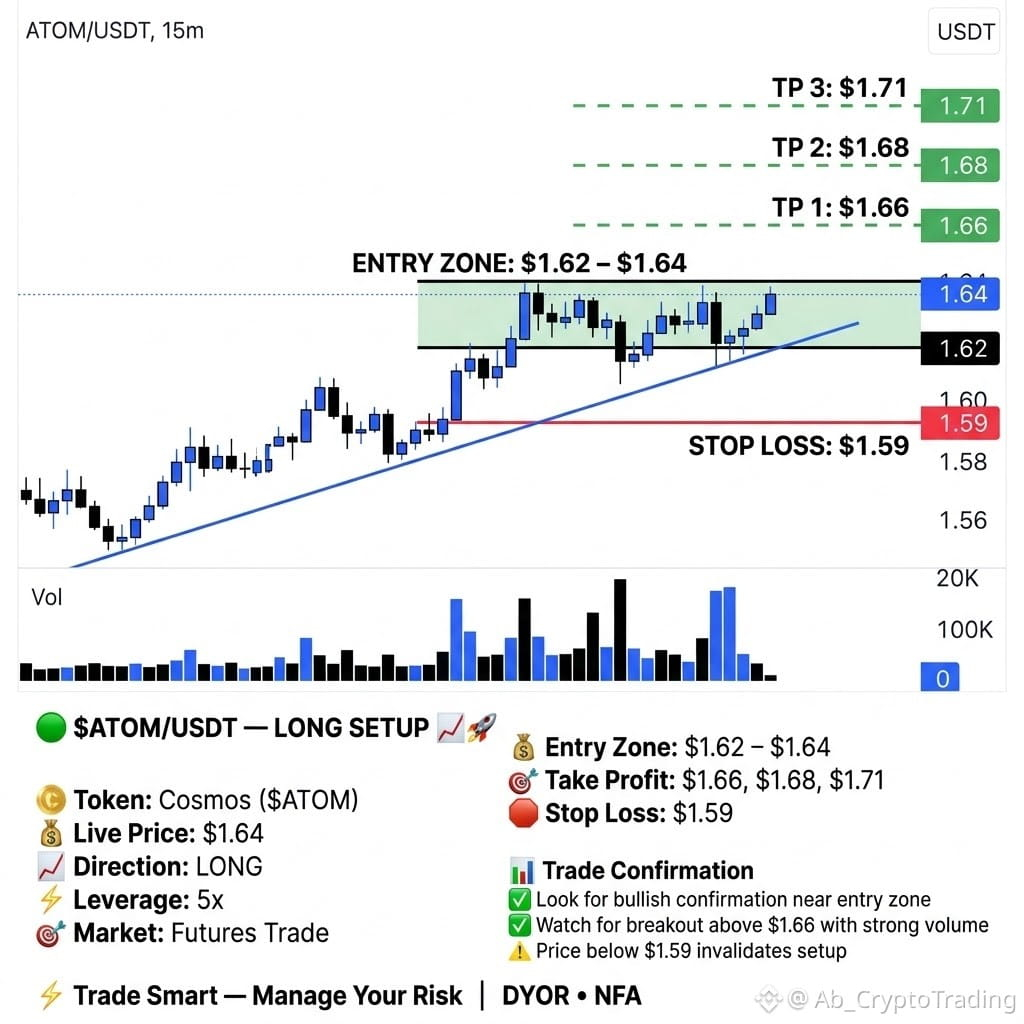
🟢 $ATOM /USDT — LONG SETUP 📈🚀
━━━━━━━━━━━━━━
💰 Entry Zone: $1.62 – $1.64
🎯 Take Profit 1: $1.66
🎯 Take Profit 2: $1.68
🎯 Take Profit 3: $1.71
🛑 Stop Loss: $1.59
━━━━━━━━━━━━━━
📊 Trade Confirmation: ✅ Look for bullish confirmation near the entry zone
✅ Watch for a breakout above $1.66 with strong volume
⚠️ If price breaks below $1.59, the setup is invalidated
⚡ Trade Smart — Manage Your Risk
📚 DYOR • NFA
#ATOM #BinancePick #EarningsSeason #EarningsSeason #EarningsSeason
━━━━━━━━━━━━━━
💰 Entry Zone: $1.62 – $1.64
🎯 Take Profit 1: $1.66
🎯 Take Profit 2: $1.68
🎯 Take Profit 3: $1.71
🛑 Stop Loss: $1.59
━━━━━━━━━━━━━━
📊 Trade Confirmation: ✅ Look for bullish confirmation near the entry zone
✅ Watch for a breakout above $1.66 with strong volume
⚠️ If price breaks below $1.59, the setup is invalidated
⚡ Trade Smart — Manage Your Risk
📚 DYOR • NFA
#ATOM #BinancePick #EarningsSeason #EarningsSeason #EarningsSeason
Specialhyips:
Good luck bro
1
3
125

See translation
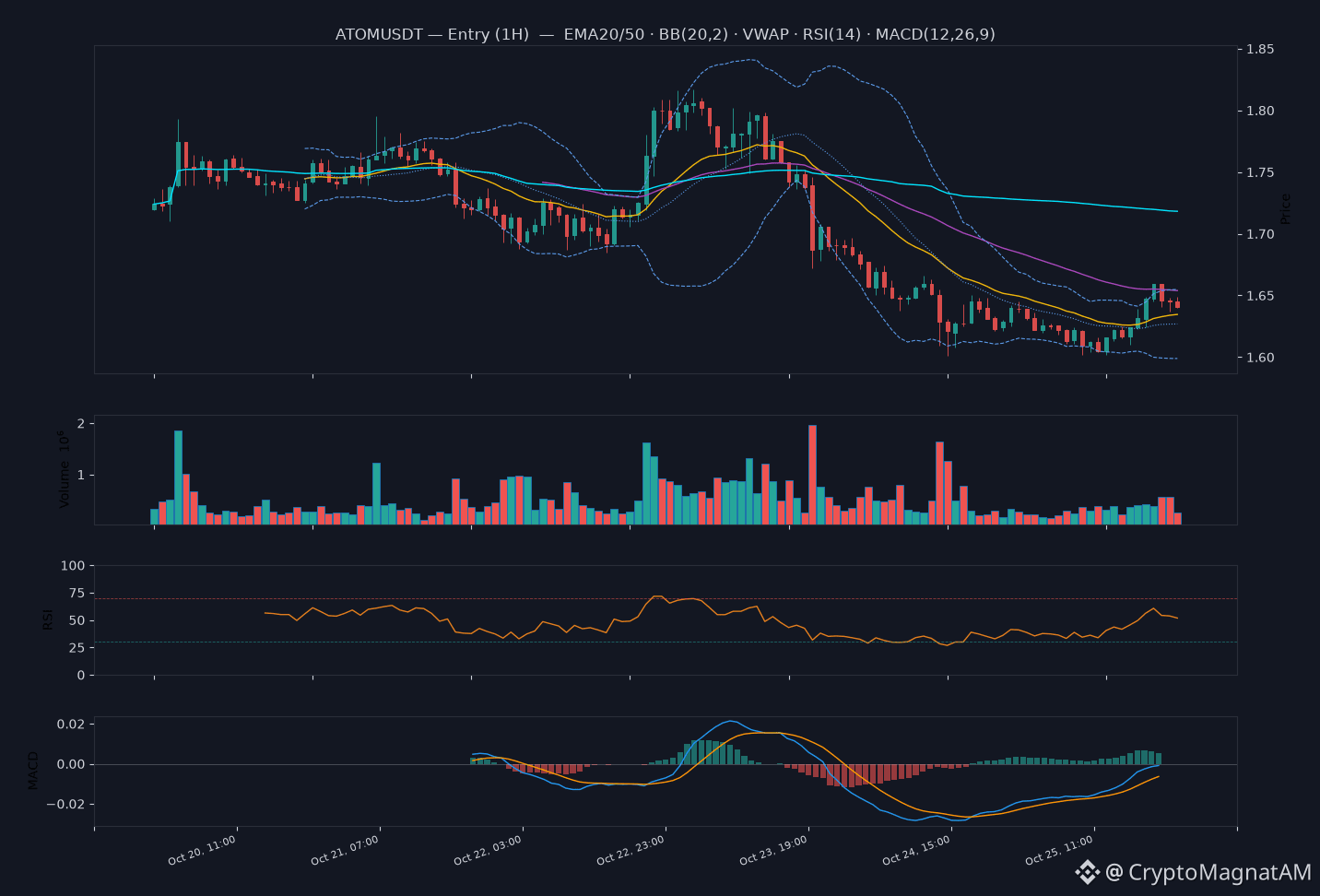
🟢 $ATOM — LONG
📍 Entry 1.64
🛑 Stop 1.60 (-2.86%)
🎯 TP1 1.72 (+4.81%)
🎯 TP2 1.75 (+6.64%)
🎯 TP3 1.80 (+9.81%)
⚖️ R:R 2.2 · double bottom
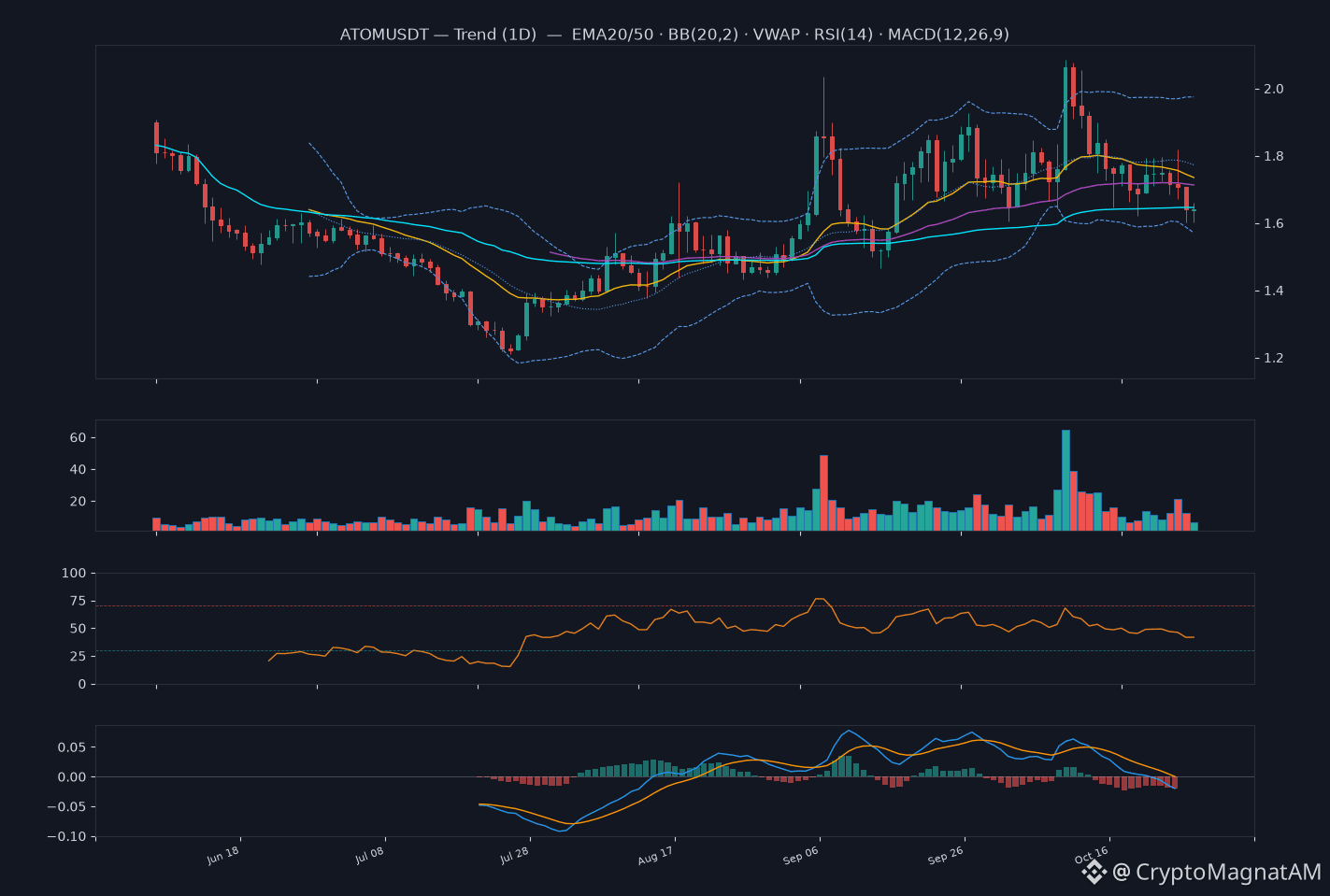
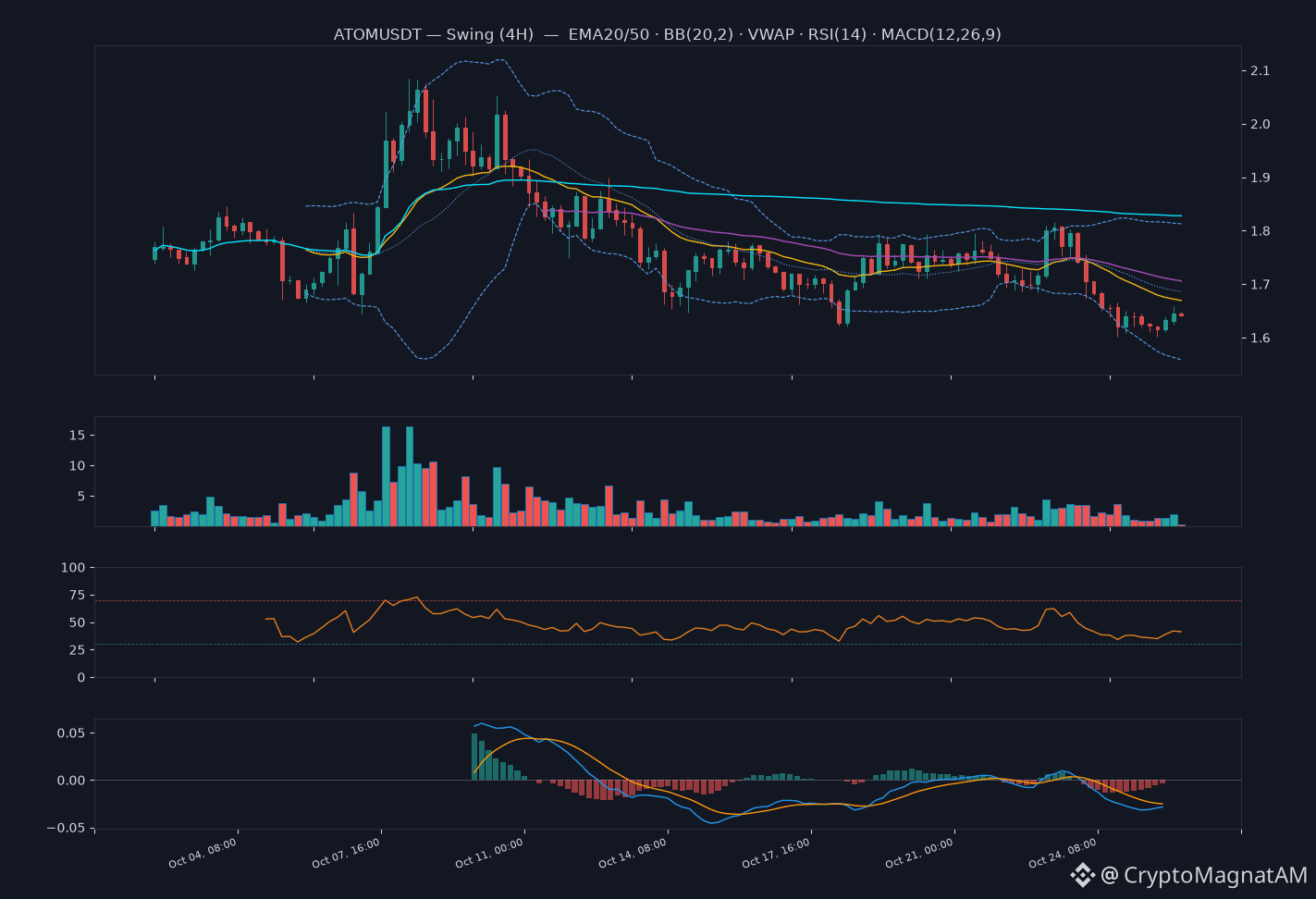
🧠 Price has held the four-touch 4h:S:1 zone three times at 1.601-1.602, and the 1h chart is now turning up: EMA20 slope positive, MACD histogram rising, volume 1.8x. The stop sits below the zone at 1.594, about 0.047 of risk, against about 0.079 to TP1 just under 1h:R:1. TP2 and TP3 front-run 4h:R:1 and 4h:R:2. The entry is not stretched, but this is a countertrend bounce inside a 4h downtrend.
📊 1D / 4H / 1H charts attached.
#atom #crypto #signals
111

·
--
Quick Reference Card: Byzantine Fault Tolerance
The “Byzantine Generals Problem” was introduced by Lamport, Shostak, and Pease in a 1982 paper, which explored how to reach agreement in the presence of traitors.
Byzantine fault tolerance (BFT) means that a system can continue operating normally and remain consistent even when some nodes fail or deliberately lie.
When holding large amounts of assets on a chain with very few validators, be aware that a small number of colluding nodes could sway the ledger.
$ATOM is the native coin of Cosmos Hub, a chain that uses a Byzantine fault-tolerant consensus mechanism.
#ATOM
2

·
--
How can a group of mutually distrustful nodes agree on the same ledger?
Byzantine Fault Tolerance (BFT) means that a system can continue operating normally and remain consistent even when some nodes fail or deliberately lie.
PBFT (Practical Byzantine Fault Tolerance), published by Castro and Liskov in 1999, made BFT consensus practical for real-world systems.
The key thing to remember when managing your positions: if you store large amounts of assets on a chain with very few validators, be aware that a small number of colluding nodes could affect the ledger.
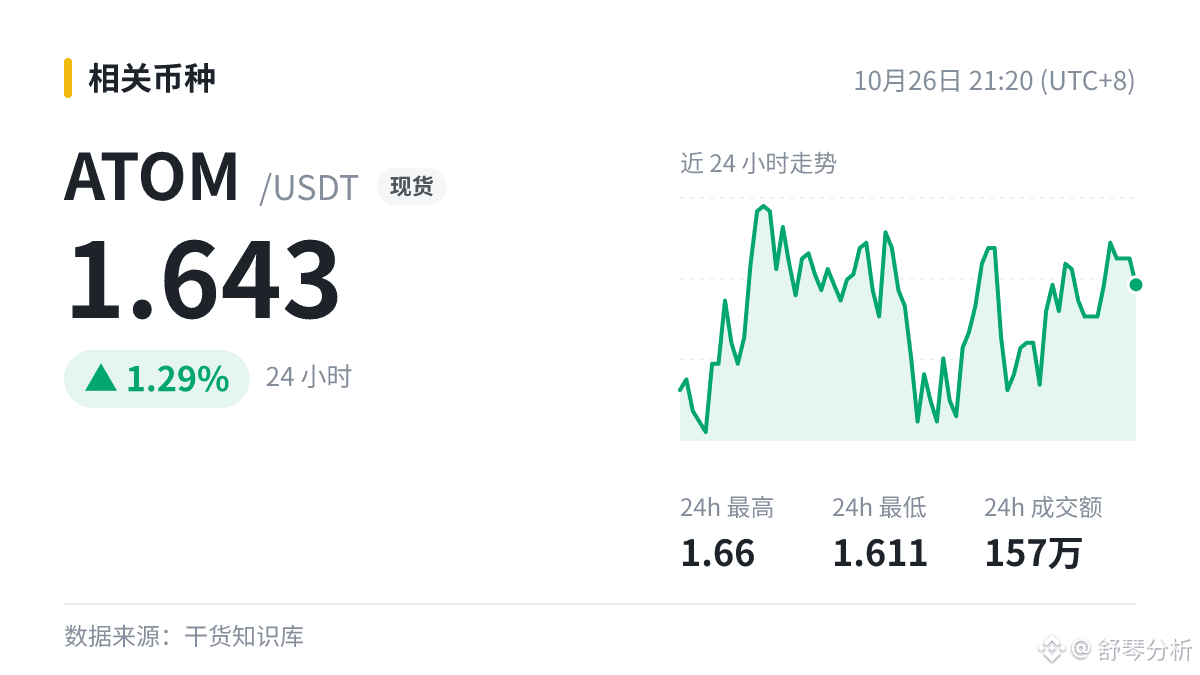
$ATOM 1.643 (+1.29%)
#ATOM
Any idea can be wrong at any time. Manage your risk accordingly.
2

·
--
Knowledge Notes | Byzantine Fault Tolerance
① The “Byzantine Generals Problem” was formally described by Lamport, Shostak, and Pease in a 1982 paper, which explored how to reach agreement in the presence of traitors.
② PBFT (Practical Byzantine Fault Tolerance), published by Castro and Liskov in 1999, made BFT consensus viable in real-world systems.
③ When assessing a chain’s security, pay attention to the number of validators and whether voting power is overly concentrated in the hands of a few nodes.
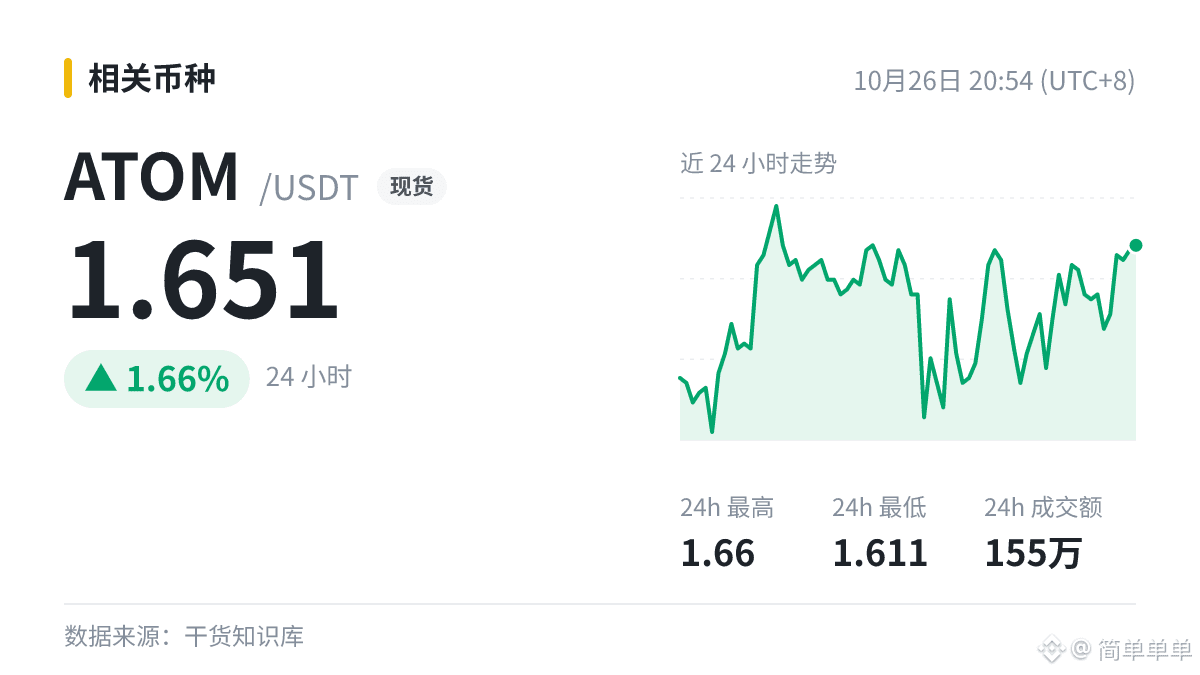
$ATOM 1.651 (+1.66%)
#ATOM
1

·
--
🔥 Tech deep dive: Byzantine fault tolerance
Many proof-of-stake chains combine BFT voting with staking: voting power is calculated based on the amount staked, and validators who break the rules have their stake slashed.
To assess a chain’s security, look at how many validators it has and whether voting power is overly concentrated in the hands of a few nodes.
$ATOM is the native token of Cosmos Hub, a chain that uses Byzantine fault-tolerant consensus.
Have you heard of this before?
#ATOM
Data is sourced from public information. Please verify it yourself.
1

·
--
Crypto 101 📚 Byzantine Fault Tolerance
Byzantine Fault Tolerance (BFT) means that a system can continue operating normally and remain consistent even when some nodes fail or deliberately lie.
Tendermint (now called CometBFT) is a consensus engine based on Byzantine Fault Tolerance. Chains such as Cosmos Hub use it.
Understanding this won’t make me money right away, but it might help me avoid a basic mistake.
$ATOM is the native coin of Cosmos Hub, a chain that uses a Byzantine Fault Tolerance-based consensus mechanism.
#ATOM
This is not investment advice.

·
--
How can a group of mutually distrustful nodes agree on the same ledger? Many people can't explain it clearly!
PBFT (Practical Byzantine Fault Tolerance) was proposed by Castro and Liskov in 1999, making BFT consensus practical for real-world systems.
Many proof-of-stake chains combine BFT voting with staking: voting power is calculated based on the amount staked, and validators who violate the rules have their stake slashed.
Make a decision only after the information has been verified by multiple parties—don't just take one party's word for it.
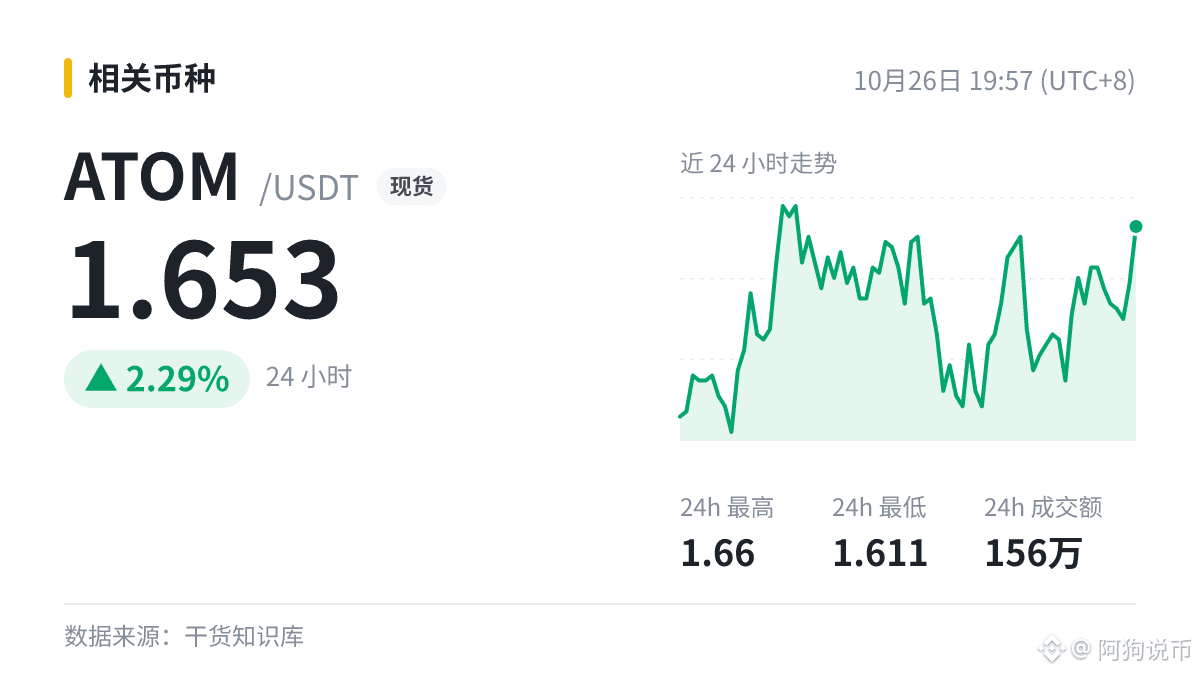
$ATOM 1.652(+2.29%)
#ATOM

·
--
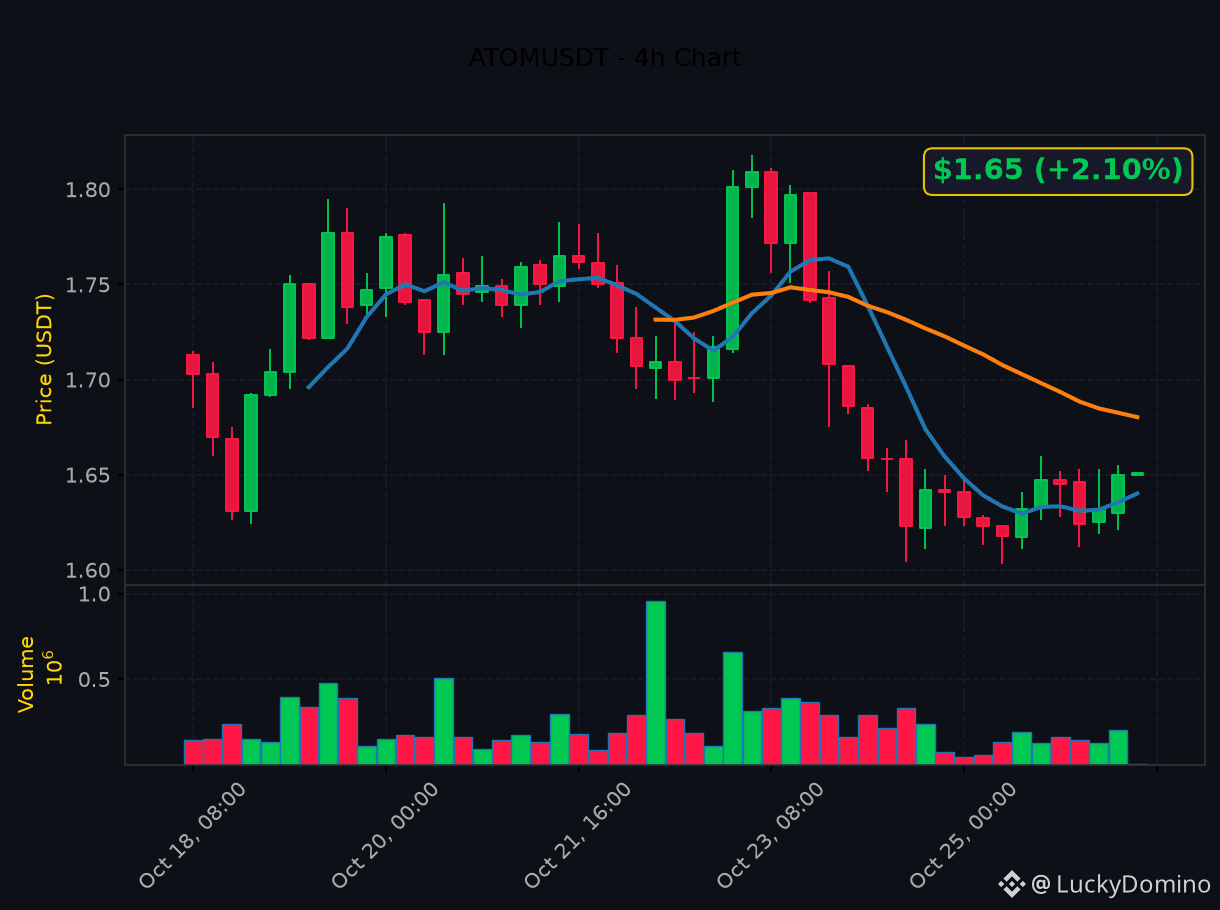
📈 $ATOM — Quick technical read
💰 Price: $1.65 (+2.10%)
📊 24h range: $1.61 - $1.66 (3.0%)
🔍 Indicator check:
• RSI: 47.5 | Trend: strong downtrend
• Price vs. EMA20: Below ❌ ($1.66)
• MACD: Rising ✅
⚡ Conclusion: A moderately bullish setup is forming
Save now. Share your analysis below.
$ATOM $DOT
#ATOM #Crypto #Trading
💰 Price: $1.65 (+2.10%)
📊 24h range: $1.61 - $1.66 (3.0%)
🔍 Indicator check:
• RSI: 47.5 | Trend: strong downtrend
• Price vs. EMA20: Below ❌ ($1.66)
• MACD: Rising ✅
⚡ Conclusion: A moderately bullish setup is forming
Save now. Share your analysis below.
$ATOM $DOT
#ATOM #Crypto #Trading
3

·
--
Technical principles: Byzantine fault tolerance
· Classic BFT protocols require the total number of nodes to be at least three times the number of malicious nodes plus one; in other words, malicious nodes must make up less than one-third of the total.
· The “Byzantine Generals Problem” was systematically described in a 1982 paper by Lamport, Shostak, and Pease. It discusses how to reach consensus in the presence of traitors.
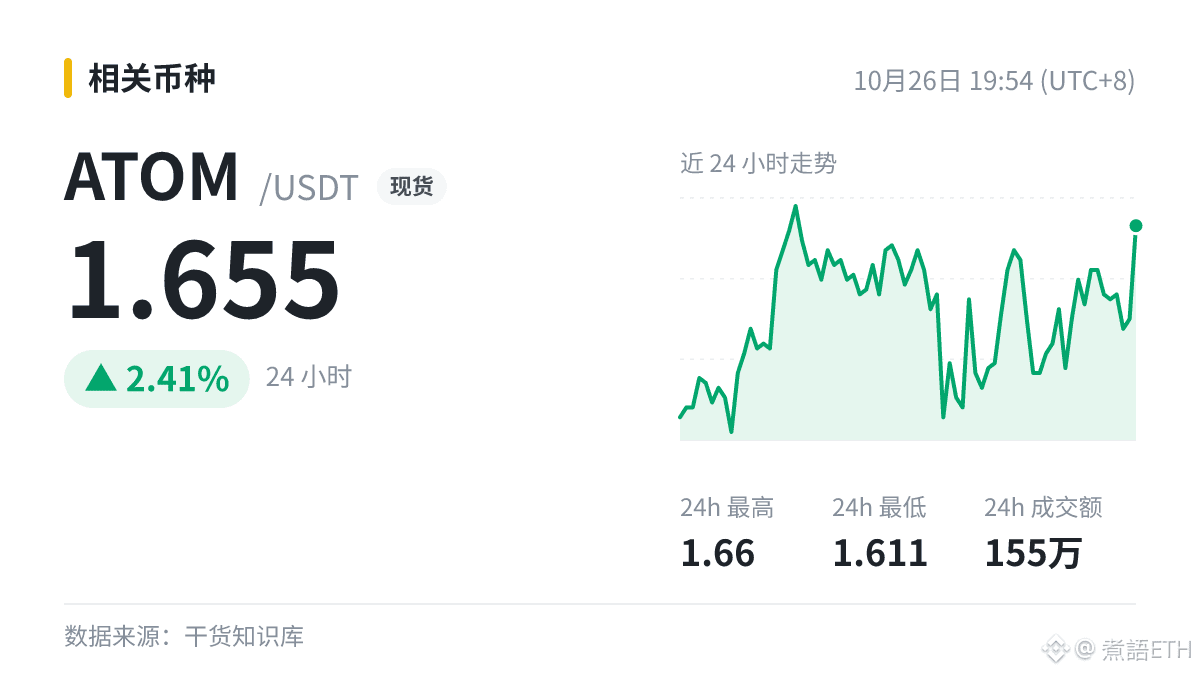
$ATOM is the native coin of Cosmos Hub, a blockchain that uses a Byzantine fault-tolerant consensus mechanism. The current price is 1.655.
#ATOM
4

·
--
Not understanding this back then cost me enough money to buy bubble tea for several months.
Today's topic: Byzantine fault tolerance
Classic BFT protocols require the total number of nodes to be at least three times the number of malicious nodes plus one—in other words, malicious nodes must make up less than one-third of the total.
If you store large amounts of assets on a chain with very few validators, keep in mind that just a handful of nodes colluding could sway the ledger.
$ATOM is the native coin of Cosmos Hub, a chain that uses a Byzantine fault-tolerant consensus mechanism.
#ATOM
It's up to you how you proceed; I'm just sharing this.
1

·
--
Let's talk about Byzantine fault tolerance.
Tendermint (now called CometBFT) is a consensus engine based on Byzantine fault tolerance, and chains such as Cosmos Hub use it.
To be honest, I hadn't noticed this before either: when holding large amounts of assets on a chain with very few validators, be aware that a handful of nodes colluding could affect the ledger.
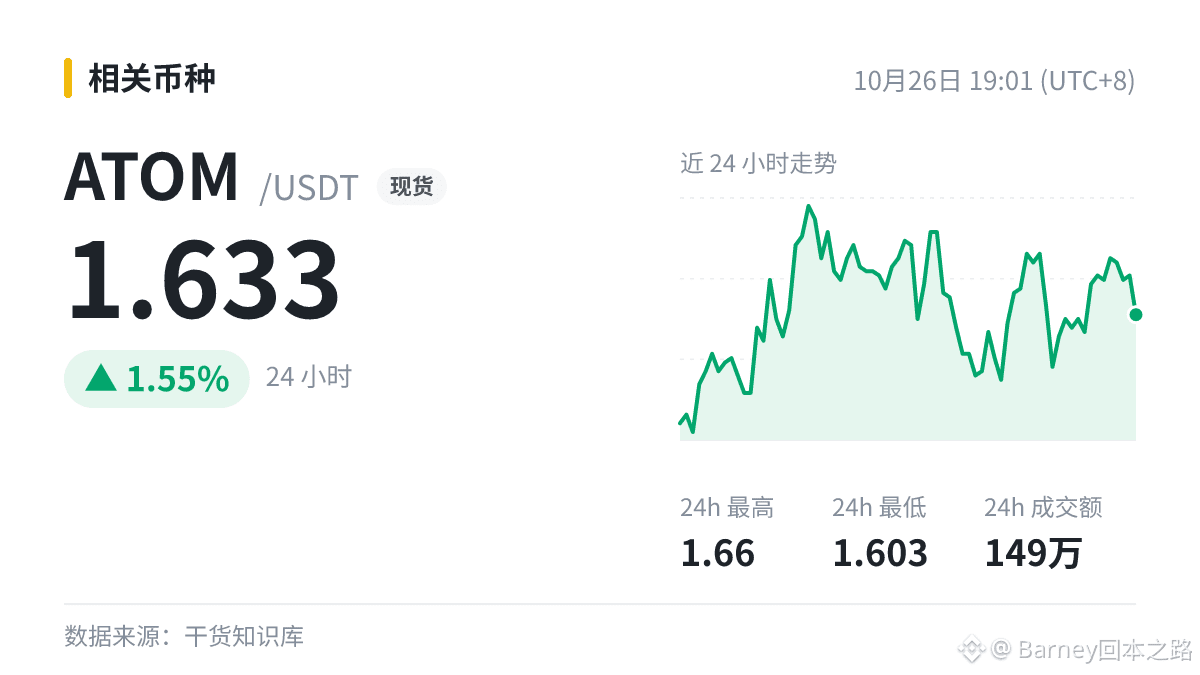
$ATOM is the native token of Cosmos Hub, a chain that uses a Byzantine fault-tolerant consensus mechanism.
Don't trade with borrowed money; the pressure can push you into making bad decisions.
#ATOM
Use this as a reference, but don't take it all on trust.

·
--
How can a group of mutually distrustful nodes agree on the same ledger? Many people can’t explain it!
Bitcoin’s proof of work uses computing-power competition to determine who creates the next block, keeping the ledger consistent as long as the honest side controls the majority of the computing power.
BFT-style consensus requires multiple rounds of voting and communication between nodes. The more validators there are, the greater the communication overhead, so the number of validators that can participate directly in consensus is usually capped.
Knowledge can help you avoid pitfalls, but it can’t replace risk management.
$ATOM 1.637(+1.8%)
#ATOM
These are purely personal opinions; please consider them rationally.
1

How can a group of mutually distrustful nodes agree on the same ledger?
The “Byzantine Generals Problem” was formally described by Lamport, Shostak, and Pease in a 1982 paper, which studied how to reach consensus in the presence of traitors.
Bitcoin’s proof of work uses competition for computing power to determine who produces each block, keeping the ledger consistent as long as the honest side controls the majority of the computing power.
The key thing to remember when managing your positions: if you hold large amounts of assets on a chain with very few validators, be aware that collusion among just a few nodes could affect the ledger.
$ATOM 1.64 (+1.99%)
#ATOM
1

·
--
Let’s talk about Byzantine fault tolerance.
Bitcoin’s proof of work uses competition over computing power to decide who produces the next block, keeping the ledger consistent as long as the honest side controls the majority of the computing power.
Honestly, I only understood this later: when assessing a blockchain’s security, pay attention to how many validators there are and whether voting power is too concentrated in the hands of a few nodes.
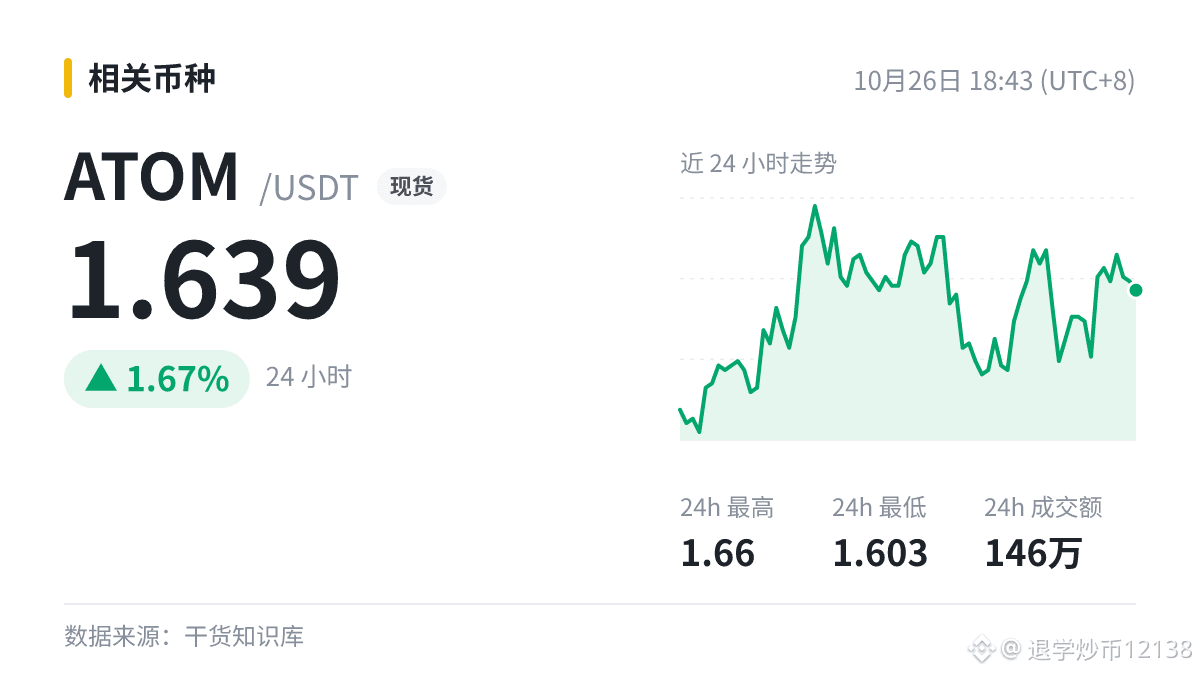
$ATOM is the native coin of Cosmos Hub, a blockchain that uses a Byzantine fault-tolerant consensus mechanism.
Make sure you understand the principles before taking action; don’t make decisions based on gut feeling.
#ATOM
21

·
--
Technical principles | How can a group of mutually distrustful nodes agree on the same ledger?
Classic BFT protocols require the total number of nodes to be at least three times the number of malicious nodes plus one—in other words, malicious nodes must make up less than one-third of the total.
BFT-style consensus requires multiple rounds of voting and communication between nodes. The more validators there are, the greater the volume of messages, so the number of validators directly participating in consensus is often capped.
$ATOM is the native coin of Cosmos Hub, a blockchain that uses Byzantine fault-tolerant consensus.
Don’t put all your savings into a single project.
#ATOM
18

·
--
If a few nodes that lie get mixed into the network, can the other nodes still arrive at the same ledger?
Tendermint (now called CometBFT) is a Byzantine fault-tolerant consensus engine used by chains such as Cosmos Hub.
Key takeaway: When assessing a chain’s security, pay attention to how many validators it has and whether voting power is too concentrated in the hands of a few nodes.
$ATOM is the native coin of Cosmos Hub. The chain uses a Byzantine fault-tolerant consensus mechanism. Currently 1.647.
There are always surprises in the market, so decide in advance what you’ll do if you’re wrong.
#ATOM
4
Log in to explore more content
Join global crypto users on Binance Square
⚡️ Get latest and useful information about crypto.
💬 Trusted by the world’s largest crypto exchange.
👍 Discover real insights from verified creators.
Email / Phone number
Trending Topics
1
#BinancePick
3M views
152,288 Discussing
2
#EarningsSeason
5.3M views
25,887 Discussing
3
#AnthropicTTMRevenueGrewAbout1200%
24,782 views
369 Discussing
4
#AnthropicS1ExpectedToday
23,745 views
313 Discussing
5
#SouthKoreaReportedlyWeighsFourthCryptoTaxDelay
28,399 views
436 Discussing
6
#FranklinTempletonFilesForTwoDividendToBitcoinETFs
37,348 views
521 Discussing
7
#StrategyMSTRSurpassesNasdaqInMarketCap
28,076 views
375 Discussing
8
#CanadaProposesStablecoinRedemptionWithin3BusinessDays
1,260 views
36 Discussing
9
#ElectrumWalletBugLetRogueServersStealFunds
29,543 views
454 Discussing
10
#ArgentineCourtDismissesLIBRACaseAgainstMilei
44,460 views
560 Discussing