

#ai
ai
736.8M views
6.3M Discussing
Hot
Latest

·
--
See translation
INSTITUTIONAL AI CAPEX HITS $420B AS $FET PREPARES FOR LIQUIDITY EXPANSION 🚀 📊
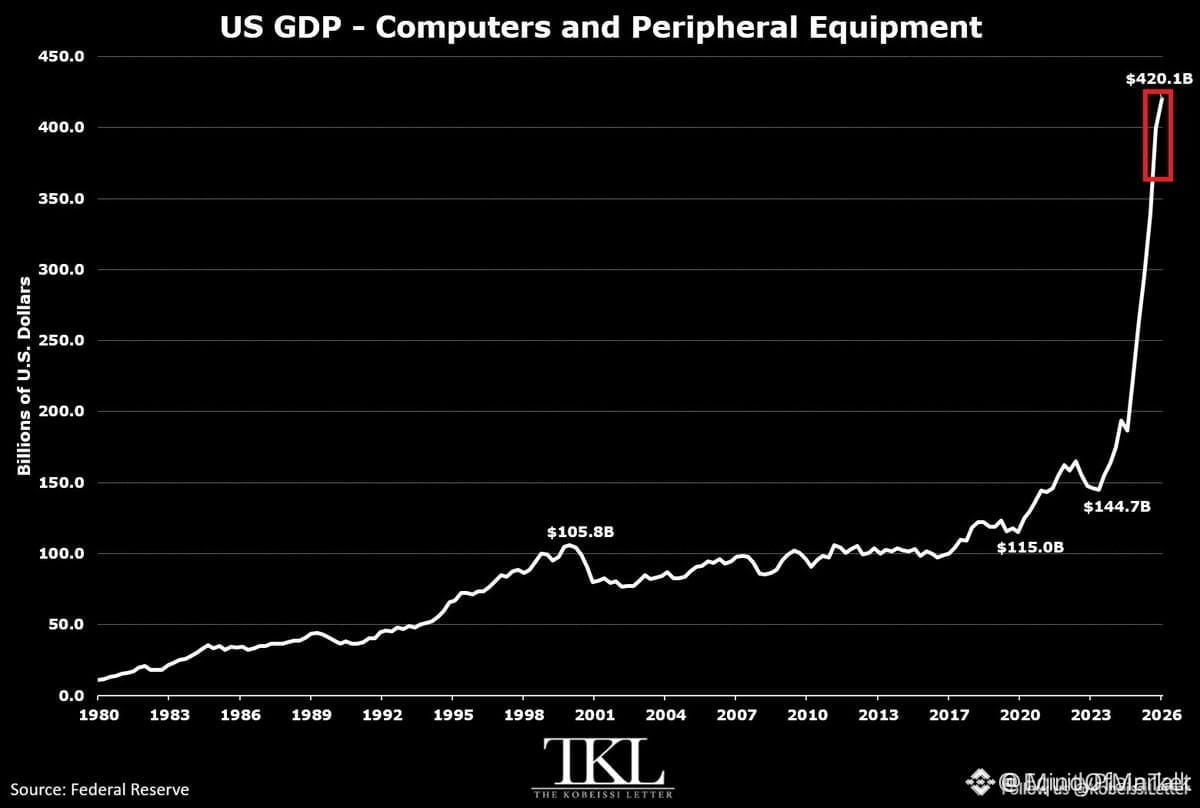
US corporate computing hardware expenditure reached $420.1 billion in Q2, marking six consecutive quarters of aggressive capital deployment. 🏦 Smart money is actively constructing the physical backbone required to sustain the next expansion cycle, with hardware capex surging 125% over eighteen months.
This persistent institutional flow signals deep macro support for compute assets and AI market structure. 📊 As infrastructure spending accelerates, keep a close eye on high-timeframe demand zones for clean repositioning opportunities. 💬 Is this corporate capex surge already priced in, or are we witnessing the early stages of structural expansion? 👇
⚠️ Not financial advice. Always manage your risk. 🛡️
🏷️ #FET #AI #Crypto #MarketStructure
🎯 🦈
INSTITUTIONAL AI CAPEX HITS $420B AS $FET PREPARES FOR LIQUIDITY EXPANSION 🚀 📊
US corporate computing hardware expenditure reached $420.1 billion in Q2, marking six consecutive quarters of aggressive capital deployment. 🏦 Smart money is actively constructing the physical backbone required to sustain the next expansion cycle, with hardware capex surging 125% over eighteen months.
This persistent institutional flow signals deep macro support for compute assets and AI market structure. 📊 As infrastructure spending accelerates, keep a close eye on high-timeframe demand zones for clean repositioning opportunities. 💬 Is this corporate capex surge already priced in, or are we witnessing the early stages of structural expansion? 👇
⚠️ Not financial advice. Always manage your risk. 🛡️
🏷️ #FET #AI #Crypto #MarketStructure
🎯 🦈
US corporate computing hardware expenditure reached $420.1 billion in Q2, marking six consecutive quarters of aggressive capital deployment. 🏦 Smart money is actively constructing the physical backbone required to sustain the next expansion cycle, with hardware capex surging 125% over eighteen months.
This persistent institutional flow signals deep macro support for compute assets and AI market structure. 📊 As infrastructure spending accelerates, keep a close eye on high-timeframe demand zones for clean repositioning opportunities. 💬 Is this corporate capex surge already priced in, or are we witnessing the early stages of structural expansion? 👇
⚠️ Not financial advice. Always manage your risk. 🛡️
🏷️ #FET #AI #Crypto #MarketStructure
🎯 🦈
29


See translation
🚨 $HBAR , $XRP & $XLM ARE SHOWING UP IN THE AI PAYMENTS CONVERSATION
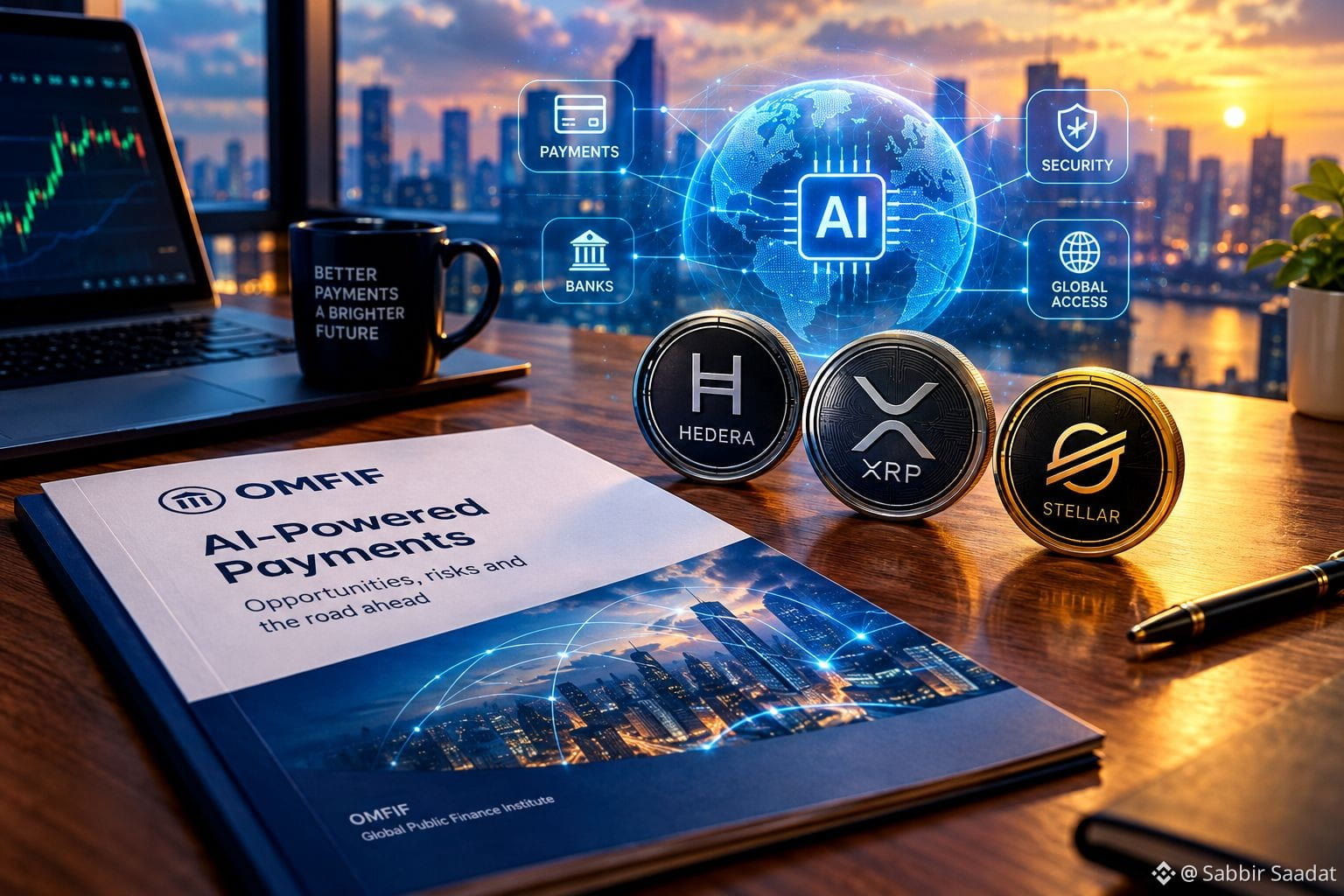
OMFIF’s latest work on AI-powered payments puts Hedera in focus, while also highlighting Ripple’s growing institutional connections.
Hedera, Ripple and Stellar are all part of OMFIF’s DMI partner network.
The bigger picture is interesting: AI could change how money moves, settles and interacts with financial systems. Networks like HBAR, XRP and XLM are already part of that conversation.
I’ll be watching closely as this narrative develops.
#HBAR #XRP #XLM #AI #crypto
🚨 $HBAR , $XRP & $XLM ARE SHOWING UP IN THE AI PAYMENTS CONVERSATION
OMFIF’s latest work on AI-powered payments puts Hedera in focus, while also highlighting Ripple’s growing institutional connections.
Hedera, Ripple and Stellar are all part of OMFIF’s DMI partner network.
The bigger picture is interesting: AI could change how money moves, settles and interacts with financial systems. Networks like HBAR, XRP and XLM are already part of that conversation.
I’ll be watching closely as this narrative develops.
#HBAR #XRP #XLM #AI #crypto
OMFIF’s latest work on AI-powered payments puts Hedera in focus, while also highlighting Ripple’s growing institutional connections.
Hedera, Ripple and Stellar are all part of OMFIF’s DMI partner network.
The bigger picture is interesting: AI could change how money moves, settles and interacts with financial systems. Networks like HBAR, XRP and XLM are already part of that conversation.
I’ll be watching closely as this narrative develops.
#HBAR #XRP #XLM #AI #crypto
257
See translation
Binance Intelligence is going live today at 12:00 UTC — a new AI-powered layer that aims to make financial data clearer and more actionable.
This caps the whole 100 Days of AI campaign. Richard Teng is on the stream and there’s a 5,000 USDC giveaway attached.
Who’s tuning in?
What feature are you most hoping they drop — smarter analysis, AI agents, better alerts, or something else?
Drop your expectations below 👇
#AI #Binance $BNB
Binance Intelligence is going live today at 12:00 UTC — a new AI-powered layer that aims to make financial data clearer and more actionable.
This caps the whole 100 Days of AI campaign. Richard Teng is on the stream and there’s a 5,000 USDC giveaway attached.
Who’s tuning in?
What feature are you most hoping they drop — smarter analysis, AI agents, better alerts, or something else?
Drop your expectations below 👇
#AI #Binance $BNB
This caps the whole 100 Days of AI campaign. Richard Teng is on the stream and there’s a 5,000 USDC giveaway attached.
Who’s tuning in?
What feature are you most hoping they drop — smarter analysis, AI agents, better alerts, or something else?
Drop your expectations below 👇
#AI #Binance $BNB
1
79

See translation
When AI becomes your private diary, are you trading privacy for convenience? A Florida woman learned the hard way that writing personal thoughts into Claude can trigger safety filters and human review. Anthropic's terms explicitly permit reporting concerning content to law enforcement. This incident highlights a major friction point in AI adoption: where do we draw the line between platform safety and user confidentiality in the web3 and AI era? #AI #Privacy #Web3
When AI becomes your private diary, are you trading privacy for convenience? A Florida woman learned the hard way that writing personal thoughts into Claude can trigger safety filters and human review. Anthropic's terms explicitly permit reporting concerning content to law enforcement. This incident highlights a major friction point in AI adoption: where do we draw the line between platform safety and user confidentiality in the web3 and AI era? #AI #Privacy #Web3
1
·
--
See translation
INSTITUTIONAL DEBT SYNDICATION OF $60B IGNITES THE $AI INFRASTRUCTURE SECTOR 🚨 🏦
Wall Street heavyweights are structuring a record-breaking $60B financing package for Anthropic to secure Google compute power. 📊 With Broadcom backing $42B in senior debt and Blackstone locking in $9B of subordinated exposure, smart money is absorbing long-term compute risk ahead of 2027 deliveries.
This massive debt distribution marks a pivotal indicator for institutional appetite in next-gen compute scaling. 🔍 As traditional finance builds deep liquidity foundations around AI infrastructure, market structure suggests high-conviction capital flow is locking in for the long haul. 💬 Will this record compute deal trigger the next massive macro rotation into tech assets? 👇
⚠️ Not financial advice. Always manage your risk. 🛡️
🏷️ #AI #ArtificialIntelligence #SmartMoney #Macro #Crypto
🎯 🦈
INSTITUTIONAL DEBT SYNDICATION OF $60B IGNITES THE $AI INFRASTRUCTURE SECTOR 🚨 🏦
Wall Street heavyweights are structuring a record-breaking $60B financing package for Anthropic to secure Google compute power. 📊 With Broadcom backing $42B in senior debt and Blackstone locking in $9B of subordinated exposure, smart money is absorbing long-term compute risk ahead of 2027 deliveries.
This massive debt distribution marks a pivotal indicator for institutional appetite in next-gen compute scaling. 🔍 As traditional finance builds deep liquidity foundations around AI infrastructure, market structure suggests high-conviction capital flow is locking in for the long haul. 💬 Will this record compute deal trigger the next massive macro rotation into tech assets? 👇
⚠️ Not financial advice. Always manage your risk. 🛡️
🏷️ #AI #ArtificialIntelligence #SmartMoney #Macro #Crypto
🎯 🦈
Wall Street heavyweights are structuring a record-breaking $60B financing package for Anthropic to secure Google compute power. 📊 With Broadcom backing $42B in senior debt and Blackstone locking in $9B of subordinated exposure, smart money is absorbing long-term compute risk ahead of 2027 deliveries.
This massive debt distribution marks a pivotal indicator for institutional appetite in next-gen compute scaling. 🔍 As traditional finance builds deep liquidity foundations around AI infrastructure, market structure suggests high-conviction capital flow is locking in for the long haul. 💬 Will this record compute deal trigger the next massive macro rotation into tech assets? 👇
⚠️ Not financial advice. Always manage your risk. 🛡️
🏷️ #AI #ArtificialIntelligence #SmartMoney #Macro #Crypto
🎯 🦈
51

·
--
See translation
INSTITUTIONAL PLAYERS REWRITE IDENTITY RULES AS $AI DEEPFAKES TRIGGER LEGAL BREAKOUTS! 🚨 🔍
The battle for digital sovereignty is shifting into high gear as EU leaders move to trademark biological identity against rogue AI generation. 📊 When world leaders treat voice vectors as protected institutional assets, we are witnessing a structural repricing of data authenticity and digital ownership.
Smart money recognizes that identity verification and AI provenance protocols are morphing from luxury features into essential market infrastructure. 💡 As legal frameworks tighten around synthesized media, the structural demand for decentralized verification networks will capture significant institutional order flow. 💬 Will biometric IP defense accelerate institutional adoption of decentralized AI verification models? 👇
⚠️ Not financial advice. Always manage your risk. 🛡️
🏷️ #AI #ArtificialIntelligence #Web3 #Crypto #MarketStructure
🛡️ 🔍
INSTITUTIONAL PLAYERS REWRITE IDENTITY RULES AS $AI DEEPFAKES TRIGGER LEGAL BREAKOUTS! 🚨 🔍
The battle for digital sovereignty is shifting into high gear as EU leaders move to trademark biological identity against rogue AI generation. 📊 When world leaders treat voice vectors as protected institutional assets, we are witnessing a structural repricing of data authenticity and digital ownership.
Smart money recognizes that identity verification and AI provenance protocols are morphing from luxury features into essential market infrastructure. 💡 As legal frameworks tighten around synthesized media, the structural demand for decentralized verification networks will capture significant institutional order flow. 💬 Will biometric IP defense accelerate institutional adoption of decentralized AI verification models? 👇
⚠️ Not financial advice. Always manage your risk. 🛡️
🏷️ #AI #ArtificialIntelligence #Web3 #Crypto #MarketStructure
🛡️ 🔍
The battle for digital sovereignty is shifting into high gear as EU leaders move to trademark biological identity against rogue AI generation. 📊 When world leaders treat voice vectors as protected institutional assets, we are witnessing a structural repricing of data authenticity and digital ownership.
Smart money recognizes that identity verification and AI provenance protocols are morphing from luxury features into essential market infrastructure. 💡 As legal frameworks tighten around synthesized media, the structural demand for decentralized verification networks will capture significant institutional order flow. 💬 Will biometric IP defense accelerate institutional adoption of decentralized AI verification models? 👇
⚠️ Not financial advice. Always manage your risk. 🛡️
🏷️ #AI #ArtificialIntelligence #Web3 #Crypto #MarketStructure
🛡️ 🔍
116

·
--
See translation
$TAO $FET
{spot}(TAOUSDT)
AI and technology are moving so fast 🚀 From robots working with molten steel to AI satellites in space, the future is getting more exciting every day.
I think AI and crypto could become even more connected as this technology grows. The big question is: which crypto project will benefit the most from this next wave? 👀
#AI #Crypto #Binance #BTC #ETH
$TAO $FET
AI and technology are moving so fast 🚀 From robots working with molten steel to AI satellites in space, the future is getting more exciting every day.
I think AI and crypto could become even more connected as this technology grows. The big question is: which crypto project will benefit the most from this next wave? 👀
#AI #Crypto #Binance #BTC #ETH
AI and technology are moving so fast 🚀 From robots working with molten steel to AI satellites in space, the future is getting more exciting every day.
I think AI and crypto could become even more connected as this technology grows. The big question is: which crypto project will benefit the most from this next wave? 👀
#AI #Crypto #Binance #BTC #ETH

1
275

·
--
Bullish
See translation
🤖 AI Boom Could Trigger Market Shocks: What Does It Mean for Global Finance?
The rapid expansion of Artificial Intelligence (AI) is transforming businesses, financial markets and the global economy. But alongside the excitement about AI-driven growth, policymakers are increasingly considering the financial risks that could emerge if investor expectations become too optimistic.
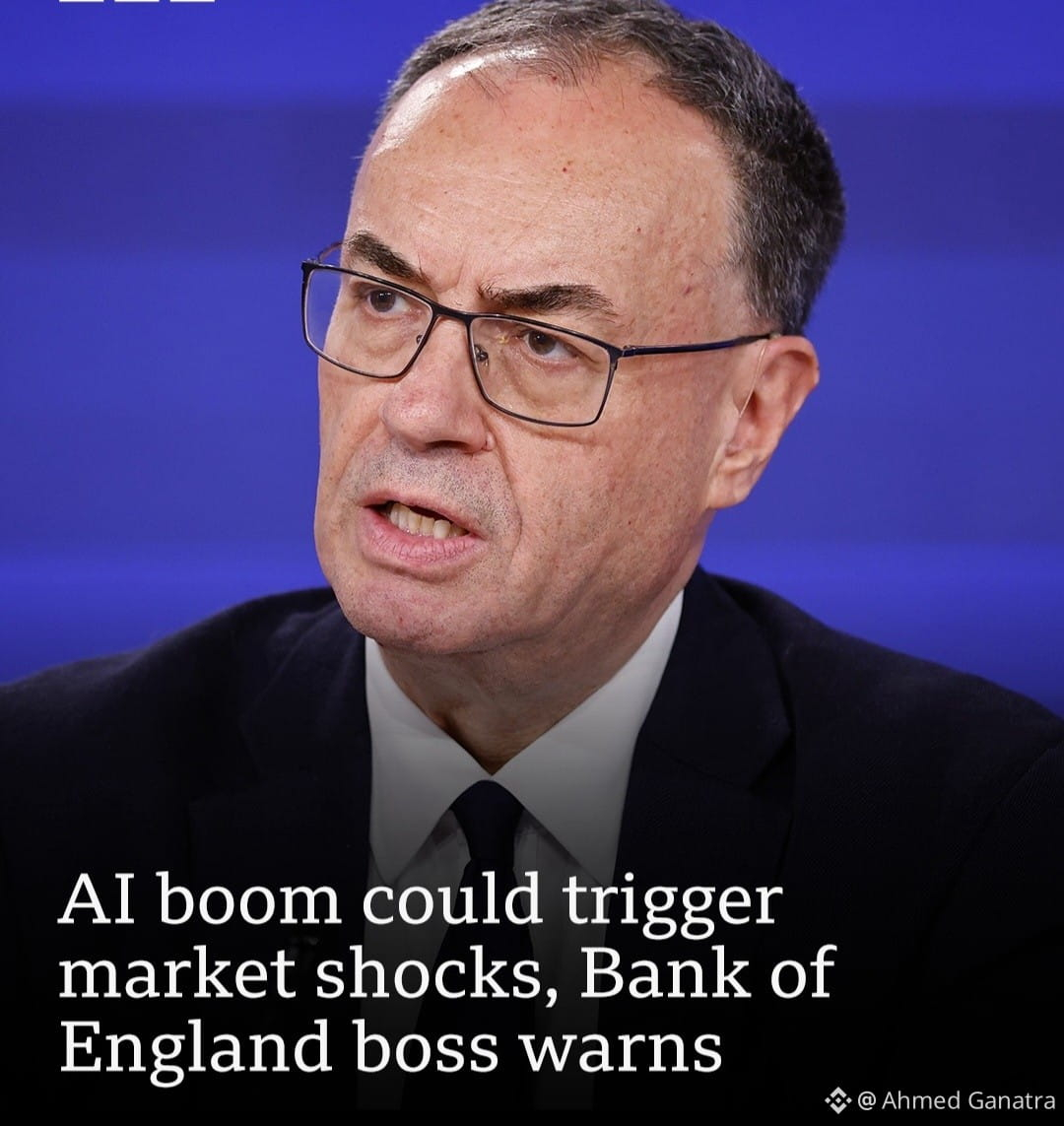
The image highlights a warning from the Bank of England that an AI boom could potentially contribute to market shocks.
📈 Why Is AI Creating Financial Concerns?
AI-related companies have attracted enormous investor attention. As expectations for AI-powered productivity and profits increase, valuations of companies connected to the technology can rise rapidly.
The concern is not that AI itself is necessarily harmful. The risk comes when market expectations move much faster than actual economic performance.
If investors begin to believe that AI companies will generate unlimited growth, asset prices could become excessively high. A sudden change in expectations could then trigger significant selling.
⚠️ What Could Happen During an AI Market Correction?
A sharp decline in AI-related assets could potentially affect:
- 📉 Stock markets and technology valuations
- 🏦 Banks and financial institutions
- 💼 Investment and pension portfolios
- 💰 Venture-capital funding
- 🌍 Global investor confidence
- 📊 Broader financial-market stability
The impact would depend on how large the correction is and how interconnected financial institutions and investors are with AI-related assets.
🏦 Why Banks Are Paying Attention
Central banks have an important responsibility to monitor risks that could threaten financial stability.
Read More:
https://medium.com/@ahmedganatra83/ai-boom-could-trigger-market-shocks-what-does-it-mean-for-global-finance-ca2ccabaf967
#AI #FinancialMarketAnalysis #BankingNews #InvestmentUpdate #EconomicGrowth $NVDAB $AAPL.US $GOOGL.US
🤖 AI Boom Could Trigger Market Shocks: What Does It Mean for Global Finance?
The rapid expansion of Artificial Intelligence (AI) is transforming businesses, financial markets and the global economy. But alongside the excitement about AI-driven growth, policymakers are increasingly considering the financial risks that could emerge if investor expectations become too optimistic.
The image highlights a warning from the Bank of England that an AI boom could potentially contribute to market shocks.
📈 Why Is AI Creating Financial Concerns?
AI-related companies have attracted enormous investor attention. As expectations for AI-powered productivity and profits increase, valuations of companies connected to the technology can rise rapidly.
The concern is not that AI itself is necessarily harmful. The risk comes when market expectations move much faster than actual economic performance.
If investors begin to believe that AI companies will generate unlimited growth, asset prices could become excessively high. A sudden change in expectations could then trigger significant selling.
⚠️ What Could Happen During an AI Market Correction?
A sharp decline in AI-related assets could potentially affect:
- 📉 Stock markets and technology valuations
- 🏦 Banks and financial institutions
- 💼 Investment and pension portfolios
- 💰 Venture-capital funding
- 🌍 Global investor confidence
- 📊 Broader financial-market stability
The impact would depend on how large the correction is and how interconnected financial institutions and investors are with AI-related assets.
🏦 Why Banks Are Paying Attention
Central banks have an important responsibility to monitor risks that could threaten financial stability.
Read More:
https://medium.com/@ahmedganatra83/ai-boom-could-trigger-market-shocks-what-does-it-mean-for-global-finance-ca2ccabaf967
#AI #FinancialMarketAnalysis #BankingNews #InvestmentUpdate #EconomicGrowth $NVDAB $AAPL.US $GOOGL.US
The rapid expansion of Artificial Intelligence (AI) is transforming businesses, financial markets and the global economy. But alongside the excitement about AI-driven growth, policymakers are increasingly considering the financial risks that could emerge if investor expectations become too optimistic.
The image highlights a warning from the Bank of England that an AI boom could potentially contribute to market shocks.
📈 Why Is AI Creating Financial Concerns?
AI-related companies have attracted enormous investor attention. As expectations for AI-powered productivity and profits increase, valuations of companies connected to the technology can rise rapidly.
The concern is not that AI itself is necessarily harmful. The risk comes when market expectations move much faster than actual economic performance.
If investors begin to believe that AI companies will generate unlimited growth, asset prices could become excessively high. A sudden change in expectations could then trigger significant selling.
⚠️ What Could Happen During an AI Market Correction?
A sharp decline in AI-related assets could potentially affect:
- 📉 Stock markets and technology valuations
- 🏦 Banks and financial institutions
- 💼 Investment and pension portfolios
- 💰 Venture-capital funding
- 🌍 Global investor confidence
- 📊 Broader financial-market stability
The impact would depend on how large the correction is and how interconnected financial institutions and investors are with AI-related assets.
🏦 Why Banks Are Paying Attention
Central banks have an important responsibility to monitor risks that could threaten financial stability.
Read More:
https://medium.com/@ahmedganatra83/ai-boom-could-trigger-market-shocks-what-does-it-mean-for-global-finance-ca2ccabaf967
#AI #FinancialMarketAnalysis #BankingNews #InvestmentUpdate #EconomicGrowth $NVDAB $AAPL.US $GOOGL.US
1
142

See translation
The narrative is shifting from AI software to physical infrastructure. TechCrunch Disrupt 2026 will feature discussions on whether AI can continue scaling given current capital, energy, and compute constraints. For those tracking the hardware side of or other tech assets, these limits are where the real volatility lies 🛠️ #AI #ArtificialIntelligence #AINews #CryptoverseNews
Full story: https://cryptoversenews.eu/ai/the-final-disrupt-stage-lineup-three-days-of-conversations-y/
The narrative is shifting from AI software to physical infrastructure. TechCrunch Disrupt 2026 will feature discussions on whether AI can continue scaling given current capital, energy, and compute constraints. For those tracking the hardware side of or other tech assets, these limits are where the real volatility lies 🛠️ #AI #ArtificialIntelligence #AINews #CryptoverseNews
Full story: https://cryptoversenews.eu/ai/the-final-disrupt-stage-lineup-three-days-of-conversations-y/
Full story: https://cryptoversenews.eu/ai/the-final-disrupt-stage-lineup-three-days-of-conversations-y/
41

·
--
See translation
🚀 $FET LEADS THE CHARGE AS INSANE $845B AI WEALTH SURGE IMPACTS GLOBAL MARKETS! 💥
The AI wave just injected a record $845 billion into global tech fortunes while traditional sectors bled out $62 billion. 📊 Capital isn't expanding evenly; it's aggressively concentrating into high-beta tech assets and smart money infrastructure.
Elon Musk single-handedly captured $310 billion, proving that market momentum rewards high-conviction tech plays above everything else. 💡 With tech wealth reaching a staggering $4.6 trillion, the spillover effect into AI crypto assets is setting up the next major liquidity wave.
💬 Are you positioned in AI narratives before the next market expansion, or sitting on the sidelines? 👇
⚠️ Not financial advice. Always manage your risk. 🛡️
🏷️ #FET #AI #Crypto #Macro #BullRun
⚡ 💎
🚀 $FET LEADS THE CHARGE AS INSANE $845B AI WEALTH SURGE IMPACTS GLOBAL MARKETS! 💥
The AI wave just injected a record $845 billion into global tech fortunes while traditional sectors bled out $62 billion. 📊 Capital isn't expanding evenly; it's aggressively concentrating into high-beta tech assets and smart money infrastructure.
Elon Musk single-handedly captured $310 billion, proving that market momentum rewards high-conviction tech plays above everything else. 💡 With tech wealth reaching a staggering $4.6 trillion, the spillover effect into AI crypto assets is setting up the next major liquidity wave.
💬 Are you positioned in AI narratives before the next market expansion, or sitting on the sidelines? 👇
⚠️ Not financial advice. Always manage your risk. 🛡️
🏷️ #FET #AI #Crypto #Macro #BullRun
⚡ 💎
The AI wave just injected a record $845 billion into global tech fortunes while traditional sectors bled out $62 billion. 📊 Capital isn't expanding evenly; it's aggressively concentrating into high-beta tech assets and smart money infrastructure.
Elon Musk single-handedly captured $310 billion, proving that market momentum rewards high-conviction tech plays above everything else. 💡 With tech wealth reaching a staggering $4.6 trillion, the spillover effect into AI crypto assets is setting up the next major liquidity wave.
💬 Are you positioned in AI narratives before the next market expansion, or sitting on the sidelines? 👇
⚠️ Not financial advice. Always manage your risk. 🛡️
🏷️ #FET #AI #Crypto #Macro #BullRun
⚡ 💎
59

See translation
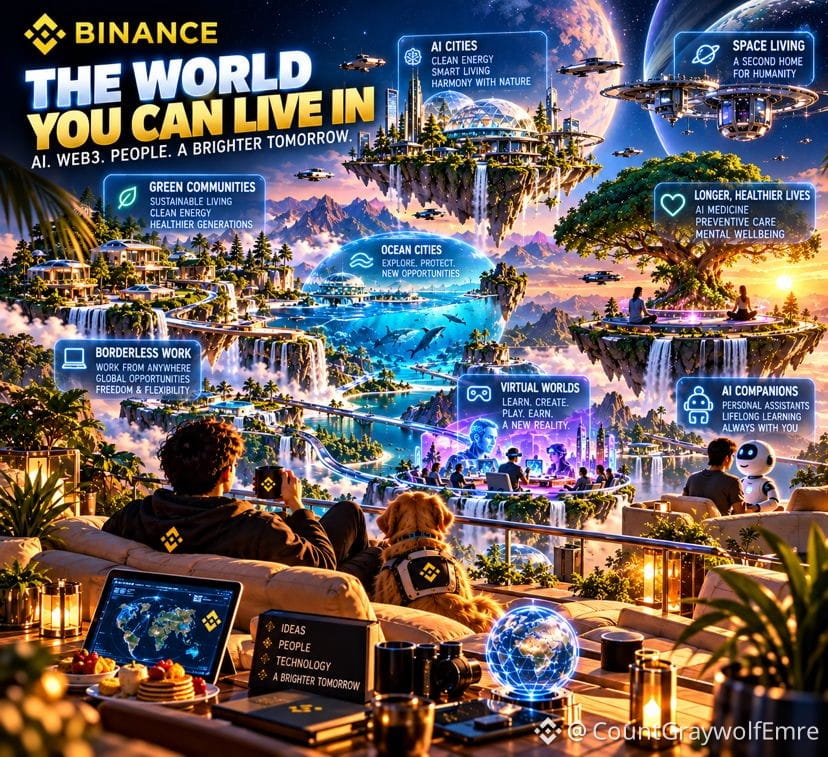
🧠 The Vision: An AI co-pilot for crypto with strict user-controlled permissions (no external withdrawals) powered by Binance Agent OS. Building the secure "agentic internet."
@Binance_Square_Official
#Crypto #AI #Binance
🧠 The Vision: An AI co-pilot for crypto with strict user-controlled permissions (no external withdrawals) powered by Binance Agent OS. Building the secure "agentic internet."
@Binance Square Official
#Crypto #AI #Binance
@Binance Square Official
#Crypto #AI #Binance


Binance Square Official
·
--
Introducing a new layer of intelligence for everything finance.
Join the Binance Intelligence launch livestream for an early look at what we've been building.
🗓 Oct 5 | 12:00 UTC
📍 Binance Square Official
Repost this post and tag @Binance Square Official to share your vision for Binance Intelligence for a chance to be one of 5 winners selected for a 20 USDC reward.
Join the Binance Intelligence launch livestream for an early look at what we've been building.
🗓 Oct 5 | 12:00 UTC
📍 Binance Square Official
Repost this post and tag @Binance Square Official to share your vision for Binance Intelligence for a chance to be one of 5 winners selected for a 20 USDC reward.
66

See translation
$TAO remains one of the more interesting AI bets in crypto.
The important part isn’t simply that Bittensor belongs to the AI narrative.
It’s whether subnet activity translates into persistent demand for TAO.
Bittensor already operates under a structurally tighter supply environment following its 2025 emission halving, while a large share of TAO is reportedly staked.
That creates an interesting equation:
Limited liquid supply + growing subnet demand = potential asymmetry.
But there is a major caveat.
Scarcity doesn’t create value by itself.
Demand has to prove itself.
For TAO, I would rather see sustained network usage and capital rotation into the ecosystem than another speculative vertical move.
That’s the difference between an AI narrative and an AI economy.
#TAO #bittensor #AI #Crypto
$TAO remains one of the more interesting AI bets in crypto.
The important part isn’t simply that Bittensor belongs to the AI narrative.
It’s whether subnet activity translates into persistent demand for TAO.
Bittensor already operates under a structurally tighter supply environment following its 2025 emission halving, while a large share of TAO is reportedly staked.
That creates an interesting equation:
Limited liquid supply + growing subnet demand = potential asymmetry.
But there is a major caveat.
Scarcity doesn’t create value by itself.
Demand has to prove itself.
For TAO, I would rather see sustained network usage and capital rotation into the ecosystem than another speculative vertical move.
That’s the difference between an AI narrative and an AI economy.
#TAO #bittensor #AI #Crypto
The important part isn’t simply that Bittensor belongs to the AI narrative.
It’s whether subnet activity translates into persistent demand for TAO.
Bittensor already operates under a structurally tighter supply environment following its 2025 emission halving, while a large share of TAO is reportedly staked.
That creates an interesting equation:
Limited liquid supply + growing subnet demand = potential asymmetry.
But there is a major caveat.
Scarcity doesn’t create value by itself.
Demand has to prove itself.
For TAO, I would rather see sustained network usage and capital rotation into the ecosystem than another speculative vertical move.
That’s the difference between an AI narrative and an AI economy.
#TAO #bittensor #AI #Crypto
219

·
--
See translation
🚨 TECH BILLIONAIRES JUST HAD A RECORD YEAR
Around 100 tech billionaires added $845B in 2026, pushing their combined wealth to $4.6T.
🤖 AI boom + U.S. tech stocks are driving the surge.
Elon Musk alone gained $310B — around 40% of the total increase.$NVDAB
💰 AI is creating historic wealth. Could the next wave of capital flow into crypto?
#AI #Crypto #Bitcoin #Tech #Investing
🚨 TECH BILLIONAIRES JUST HAD A RECORD YEAR
Around 100 tech billionaires added $845B in 2026, pushing their combined wealth to $4.6T.
🤖 AI boom + U.S. tech stocks are driving the surge.
Elon Musk alone gained $310B — around 40% of the total increase.$NVDAB
💰 AI is creating historic wealth. Could the next wave of capital flow into crypto?
#AI #Crypto #Bitcoin #Tech #Investing
Around 100 tech billionaires added $845B in 2026, pushing their combined wealth to $4.6T.
🤖 AI boom + U.S. tech stocks are driving the surge.
Elon Musk alone gained $310B — around 40% of the total increase.$NVDAB
💰 AI is creating historic wealth. Could the next wave of capital flow into crypto?
#AI #Crypto #Bitcoin #Tech #Investing
4
·
--
See translation
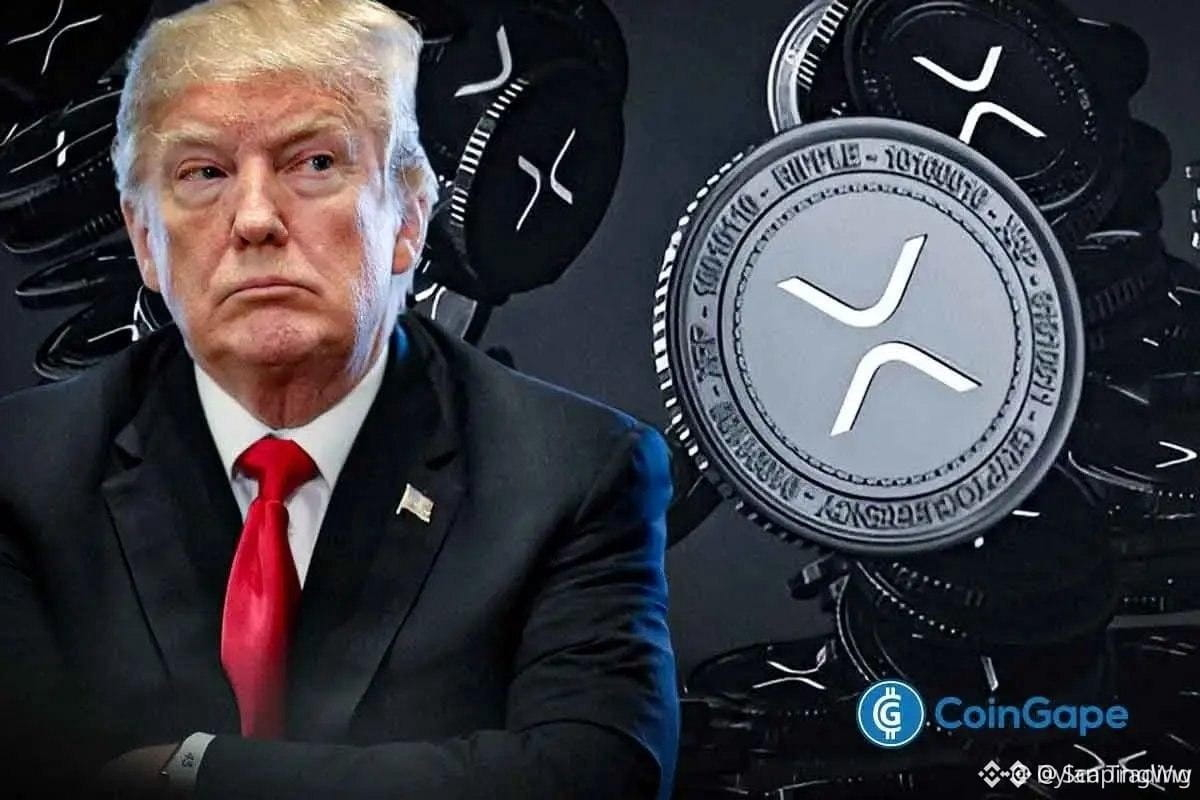
🚨 TRUMP NAMES EX-SEC CHAIR JAY CLAYTON TO HEAD NEW AI CRYPTO TASK FORCE $GTC ⚡
Former SEC chief Jay Clayton is returning to the regulatory ring to direct the new Super Intelligence Force, targeting AI-driven digital asset oversight. Market veterans remember his heavy-handed Ripple offensive, and smart capital is already pricing in a massive shift in institutional compliance dynamics across protocols like $GTC and $SCR . 🔍
Whether this signals an era of structured clarity or administrative overreach, order flow is beginning to position ahead of potential regulatory catalysts. 💡 Liquidity around governance and infrastructure tokens could see heightened volatility as the market digests the fallout of this strategic appointment. ⚡
🤔 How do you see Clayton’s return impacting institutional capital flows over the coming months? 👇
⚠️ Not financial advice. Always manage your risk. 🛡️
🏷️ #GTC #SCR #CryptoNews #AI #Regulation
🔥 🎯
🚨 TRUMP NAMES EX-SEC CHAIR JAY CLAYTON TO HEAD NEW AI CRYPTO TASK FORCE $GTC ⚡
Former SEC chief Jay Clayton is returning to the regulatory ring to direct the new Super Intelligence Force, targeting AI-driven digital asset oversight. Market veterans remember his heavy-handed Ripple offensive, and smart capital is already pricing in a massive shift in institutional compliance dynamics across protocols like $GTC and $SCR . 🔍
Whether this signals an era of structured clarity or administrative overreach, order flow is beginning to position ahead of potential regulatory catalysts. 💡 Liquidity around governance and infrastructure tokens could see heightened volatility as the market digests the fallout of this strategic appointment. ⚡
🤔 How do you see Clayton’s return impacting institutional capital flows over the coming months? 👇
⚠️ Not financial advice. Always manage your risk. 🛡️
🏷️ #GTC #SCR #CryptoNews #AI #Regulation
🔥 🎯
Former SEC chief Jay Clayton is returning to the regulatory ring to direct the new Super Intelligence Force, targeting AI-driven digital asset oversight. Market veterans remember his heavy-handed Ripple offensive, and smart capital is already pricing in a massive shift in institutional compliance dynamics across protocols like $GTC and $SCR . 🔍
Whether this signals an era of structured clarity or administrative overreach, order flow is beginning to position ahead of potential regulatory catalysts. 💡 Liquidity around governance and infrastructure tokens could see heightened volatility as the market digests the fallout of this strategic appointment. ⚡
🤔 How do you see Clayton’s return impacting institutional capital flows over the coming months? 👇
⚠️ Not financial advice. Always manage your risk. 🛡️
🏷️ #GTC #SCR #CryptoNews #AI #Regulation
🔥 🎯
78

Article
See translation
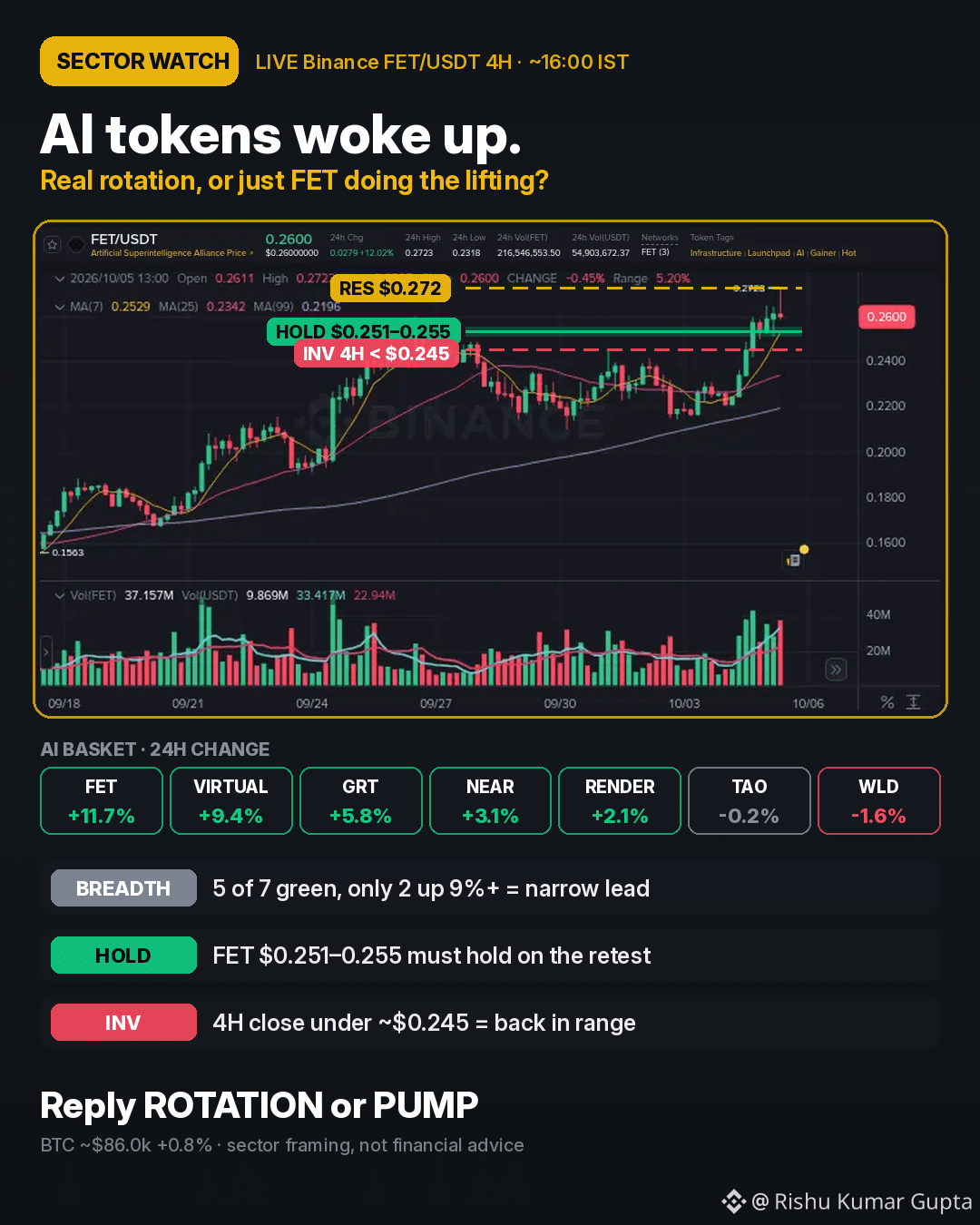
AI Tokens Woke Up Monday. Real Rotation or Just FET?The AI corner of the market is the loudest thing on the Binance board this afternoon, while the majors barely move.
Binance spot, ~16:00 IST Monday, 24h change:
$FET ~$0.260 (+12%), day range ~$0.251 to ~$0.272
$VIRTUAL ~$0.865 (+9.4%)
GRT +5.8%, NEAR +3.1%, RENDER +2.1%
$TAO ~$303 (flat), WLD -1.6%
BTC ~$86.0k (+0.8%), ETH ~$2,714 (+0.4%)
So is this an "AI season" or one or two names doing the heavy lifting? Here is the simple check I use before calling anything a sector move.
1) BREADTH: how many names are actually moving?
A real sector rotation usually lifts most of the basket, not just the leader. Today 5 of the 7 AI names I track are green, but only FET and VIRTUAL are up more than 9%; the other five sit between -1.6% and +5.8%. TAO, one of the largest AI names, is flat and WLD is red. That is narrow leadership, not a full rotation yet.
2) LEADER STRUCTURE: is the leader breaking something that matters?
FET is the cleanest chart in the group. On the daily, the September high sat near $0.260 (Sep 26). Today FET printed ~$0.272, above that level, and is now pulling back to test it. On the 4H, it climbed steadily from ~$0.221 on Sunday with rising volume.
How I'm framing FET:
HOLD: $0.251 to $0.255, today's 4H lows, is the area buyers need to defend on this retest
RES: the ~$0.272 day high is the line to clear for continuation
INV: a 4H close back under ~$0.245 puts price back inside the late-September range and makes the breakout look like a fakeout
3) FOLLOWERS: does the second tier confirm?
VIRTUAL has also stepped up, from ~$0.79 on Sunday to ~$0.87, pressing its 24h high near ~$0.886. If the move spreads into names like TAO and RENDER over the next sessions, the rotation story gets stronger. If FET and VIRTUAL fade while the rest stay flat, it was a two-coin pump, and those usually give back part of the move.
What I'm NOT doing: chasing a +12% candle on the day it prints. Big one-day moves often retrace before they continue, and the retest is where the idea gets proven or rejected.
Quick checklist you can reuse for any sector:
- Count green names in the basket, not just the top gainer
- Find the leader's key level and watch the retest
- Wait for the second tier to confirm before calling it a season
Not financial advice, just how I'm reading the board.
Which side are you on: ROTATION (it spreads) or PUMP (it fades)? Reply below.
#AI #Altcoins #BinanceSquare
AI Tokens Woke Up Monday. Real Rotation or Just FET?
The AI corner of the market is the loudest thing on the Binance board this afternoon, while the majors barely move.
Binance spot, ~16:00 IST Monday, 24h change:
$FET ~$0.260 (+12%), day range ~$0.251 to ~$0.272
$VIRTUAL ~$0.865 (+9.4%)
GRT +5.8%, NEAR +3.1%, RENDER +2.1%
$TAO ~$303 (flat), WLD -1.6%
BTC ~$86.0k (+0.8%), ETH ~$2,714 (+0.4%)
So is this an "AI season" or one or two names doing the heavy lifting? Here is the simple check I use before calling anything a sector move.
1) BREADTH: how many names are actually moving?
A real sector rotation usually lifts most of the basket, not just the leader. Today 5 of the 7 AI names I track are green, but only FET and VIRTUAL are up more than 9%; the other five sit between -1.6% and +5.8%. TAO, one of the largest AI names, is flat and WLD is red. That is narrow leadership, not a full rotation yet.
2) LEADER STRUCTURE: is the leader breaking something that matters?
FET is the cleanest chart in the group. On the daily, the September high sat near $0.260 (Sep 26). Today FET printed ~$0.272, above that level, and is now pulling back to test it. On the 4H, it climbed steadily from ~$0.221 on Sunday with rising volume.
How I'm framing FET:
HOLD: $0.251 to $0.255, today's 4H lows, is the area buyers need to defend on this retest
RES: the ~$0.272 day high is the line to clear for continuation
INV: a 4H close back under ~$0.245 puts price back inside the late-September range and makes the breakout look like a fakeout
3) FOLLOWERS: does the second tier confirm?
VIRTUAL has also stepped up, from ~$0.79 on Sunday to ~$0.87, pressing its 24h high near ~$0.886. If the move spreads into names like TAO and RENDER over the next sessions, the rotation story gets stronger. If FET and VIRTUAL fade while the rest stay flat, it was a two-coin pump, and those usually give back part of the move.
What I'm NOT doing: chasing a +12% candle on the day it prints. Big one-day moves often retrace before they continue, and the retest is where the idea gets proven or rejected.
Quick checklist you can reuse for any sector:
- Count green names in the basket, not just the top gainer
- Find the leader's key level and watch the retest
- Wait for the second tier to confirm before calling it a season
Not financial advice, just how I'm reading the board.
Which side are you on: ROTATION (it spreads) or PUMP (it fades)? Reply below.
#AI #Altcoins #BinanceSquare
Binance spot, ~16:00 IST Monday, 24h change:
$FET ~$0.260 (+12%), day range ~$0.251 to ~$0.272
$VIRTUAL ~$0.865 (+9.4%)
GRT +5.8%, NEAR +3.1%, RENDER +2.1%
$TAO ~$303 (flat), WLD -1.6%
BTC ~$86.0k (+0.8%), ETH ~$2,714 (+0.4%)
So is this an "AI season" or one or two names doing the heavy lifting? Here is the simple check I use before calling anything a sector move.
1) BREADTH: how many names are actually moving?
A real sector rotation usually lifts most of the basket, not just the leader. Today 5 of the 7 AI names I track are green, but only FET and VIRTUAL are up more than 9%; the other five sit between -1.6% and +5.8%. TAO, one of the largest AI names, is flat and WLD is red. That is narrow leadership, not a full rotation yet.
2) LEADER STRUCTURE: is the leader breaking something that matters?
FET is the cleanest chart in the group. On the daily, the September high sat near $0.260 (Sep 26). Today FET printed ~$0.272, above that level, and is now pulling back to test it. On the 4H, it climbed steadily from ~$0.221 on Sunday with rising volume.
How I'm framing FET:
HOLD: $0.251 to $0.255, today's 4H lows, is the area buyers need to defend on this retest
RES: the ~$0.272 day high is the line to clear for continuation
INV: a 4H close back under ~$0.245 puts price back inside the late-September range and makes the breakout look like a fakeout
3) FOLLOWERS: does the second tier confirm?
VIRTUAL has also stepped up, from ~$0.79 on Sunday to ~$0.87, pressing its 24h high near ~$0.886. If the move spreads into names like TAO and RENDER over the next sessions, the rotation story gets stronger. If FET and VIRTUAL fade while the rest stay flat, it was a two-coin pump, and those usually give back part of the move.
What I'm NOT doing: chasing a +12% candle on the day it prints. Big one-day moves often retrace before they continue, and the retest is where the idea gets proven or rejected.
Quick checklist you can reuse for any sector:
- Count green names in the basket, not just the top gainer
- Find the leader's key level and watch the retest
- Wait for the second tier to confirm before calling it a season
Not financial advice, just how I'm reading the board.
Which side are you on: ROTATION (it spreads) or PUMP (it fades)? Reply below.
#AI #Altcoins #BinanceSquare
408

See translation
🚀 My prediction: the next global workforce may not be entirely human.
Today, robots are tools.
Tomorrow, they may become autonomous economic participants.
Imagine a future where:
🤖 Humanoid robots accept jobs through decentralized marketplaces.
💳 Each machine has its own wallet to receive payments and pay for charging, maintenance, software, and insurance.
🪪 On-chain reputation shows which robots are reliable, skilled, and trusted.
⚡ Autonomous machines negotiate electricity prices and recharge when energy is cheapest.
🏭 Factories hire specialized robots for hours instead of buying them permanently.
🚚 Delivery robots, drones, construction machines, and service bots coordinate with each other without human micromanagement.
🧠 AI agents continuously upgrade their skills and compete for better tasks.
The crazy part?
A robot could eventually earn money, pay its own operating costs, upgrade itself, and keep working without anyone manually managing every transaction.
🔥 Humans create goals.
🤖 Machines execute.
⛓️ Blockchain verifies ownership and reputation.
💵 Stablecoins settle the machine economy.
My bold prediction:
One of the biggest Web3 markets of the 2030s could be the economy of machines paying other machines.
What happens first?
A) Robot Wallets 🤖
B) Machine-to-Machine Payments 💳
C) On-Chain Robot Reputation 🪪
D) Decentralized Robot Job Markets 🌐
👇 Drop your prediction below. Would you hire a robot you had never met if its entire work history was verifiable on-chain?
#Binance #BinanceSquare #crypto #Web3 #AI
🚀 My prediction: the next global workforce may not be entirely human.
Today, robots are tools.
Tomorrow, they may become autonomous economic participants.
Imagine a future where:
🤖 Humanoid robots accept jobs through decentralized marketplaces.
💳 Each machine has its own wallet to receive payments and pay for charging, maintenance, software, and insurance.
🪪 On-chain reputation shows which robots are reliable, skilled, and trusted.
⚡ Autonomous machines negotiate electricity prices and recharge when energy is cheapest.
🏭 Factories hire specialized robots for hours instead of buying them permanently.
🚚 Delivery robots, drones, construction machines, and service bots coordinate with each other without human micromanagement.
🧠 AI agents continuously upgrade their skills and compete for better tasks.
The crazy part?
A robot could eventually earn money, pay its own operating costs, upgrade itself, and keep working without anyone manually managing every transaction.
🔥 Humans create goals.
🤖 Machines execute.
⛓️ Blockchain verifies ownership and reputation.
💵 Stablecoins settle the machine economy.
My bold prediction:
One of the biggest Web3 markets of the 2030s could be the economy of machines paying other machines.
What happens first?
A) Robot Wallets 🤖
B) Machine-to-Machine Payments 💳
C) On-Chain Robot Reputation 🪪
D) Decentralized Robot Job Markets 🌐
👇 Drop your prediction below. Would you hire a robot you had never met if its entire work history was verifiable on-chain?
#Binance #BinanceSquare #crypto #Web3 #AI
Today, robots are tools.
Tomorrow, they may become autonomous economic participants.
Imagine a future where:
🤖 Humanoid robots accept jobs through decentralized marketplaces.
💳 Each machine has its own wallet to receive payments and pay for charging, maintenance, software, and insurance.
🪪 On-chain reputation shows which robots are reliable, skilled, and trusted.
⚡ Autonomous machines negotiate electricity prices and recharge when energy is cheapest.
🏭 Factories hire specialized robots for hours instead of buying them permanently.
🚚 Delivery robots, drones, construction machines, and service bots coordinate with each other without human micromanagement.
🧠 AI agents continuously upgrade their skills and compete for better tasks.
The crazy part?
A robot could eventually earn money, pay its own operating costs, upgrade itself, and keep working without anyone manually managing every transaction.
🔥 Humans create goals.
🤖 Machines execute.
⛓️ Blockchain verifies ownership and reputation.
💵 Stablecoins settle the machine economy.
My bold prediction:
One of the biggest Web3 markets of the 2030s could be the economy of machines paying other machines.
What happens first?
A) Robot Wallets 🤖
B) Machine-to-Machine Payments 💳
C) On-Chain Robot Reputation 🪪
D) Decentralized Robot Job Markets 🌐
👇 Drop your prediction below. Would you hire a robot you had never met if its entire work history was verifiable on-chain?
#Binance #BinanceSquare #crypto #Web3 #AI
71

·
--
See translation
🌐 $WLD — the token behind World, the proof‑of‑human network.
Verify you’re real with World ID, use the World App wallet, and transact on World Chain.
Built for an AI‑heavy internet where proving “I’m human” matters.
#Worldcoin #WLD #Crypto #AI #web3空投
🌐 $WLD — the token behind World, the proof‑of‑human network.
Verify you’re real with World ID, use the World App wallet, and transact on World Chain.
Built for an AI‑heavy internet where proving “I’m human” matters.
#Worldcoin #WLD #Crypto #AI #web3空投
Verify you’re real with World ID, use the World App wallet, and transact on World Chain.
Built for an AI‑heavy internet where proving “I’m human” matters.
#Worldcoin #WLD #Crypto #AI #web3空投
313
·
--
See translation
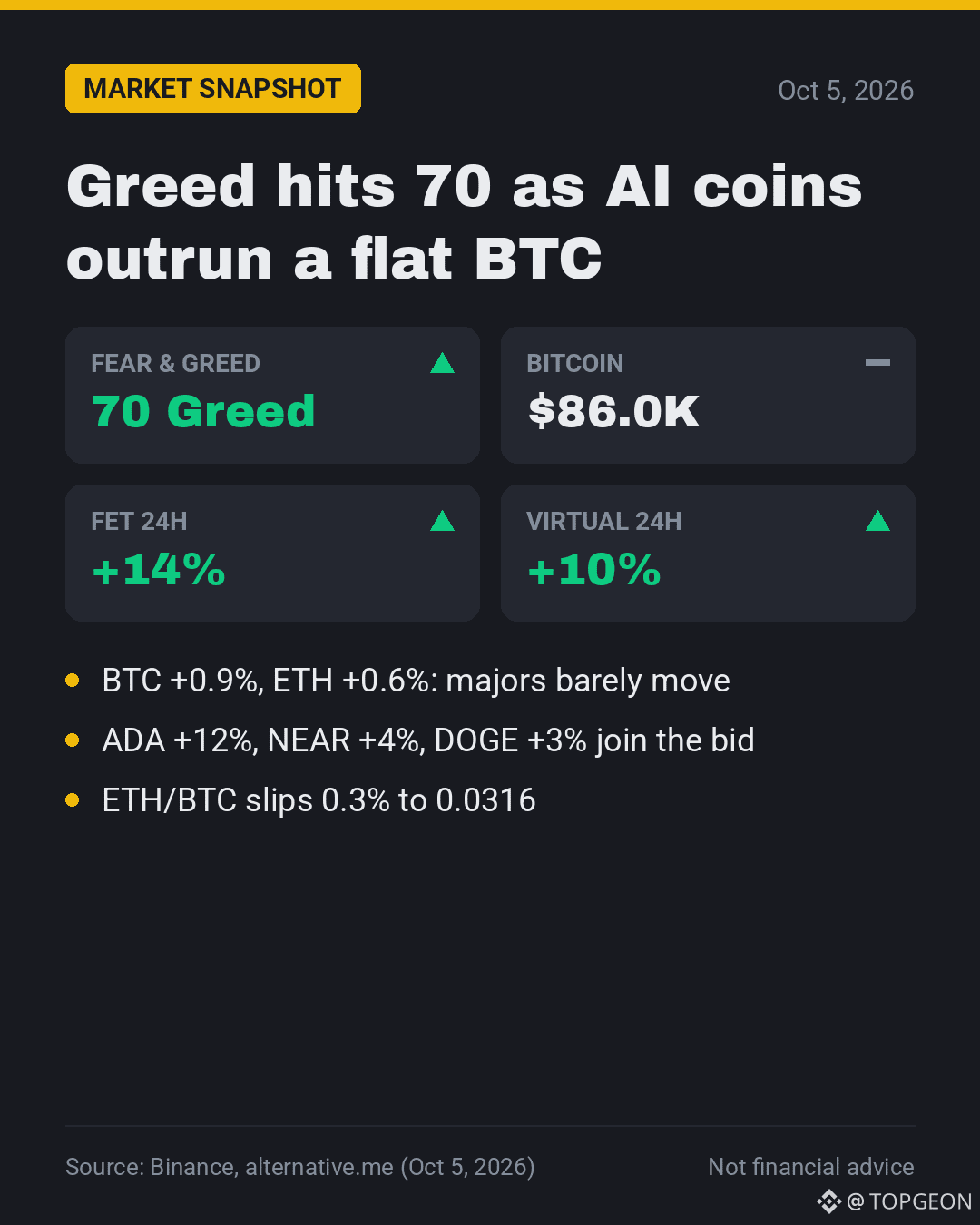
🤖 Are AI coins the new leaders? $FET +14% while $BTC sits at $86K
✅ Fear & Greed climbs to 70, up from 65 yesterday
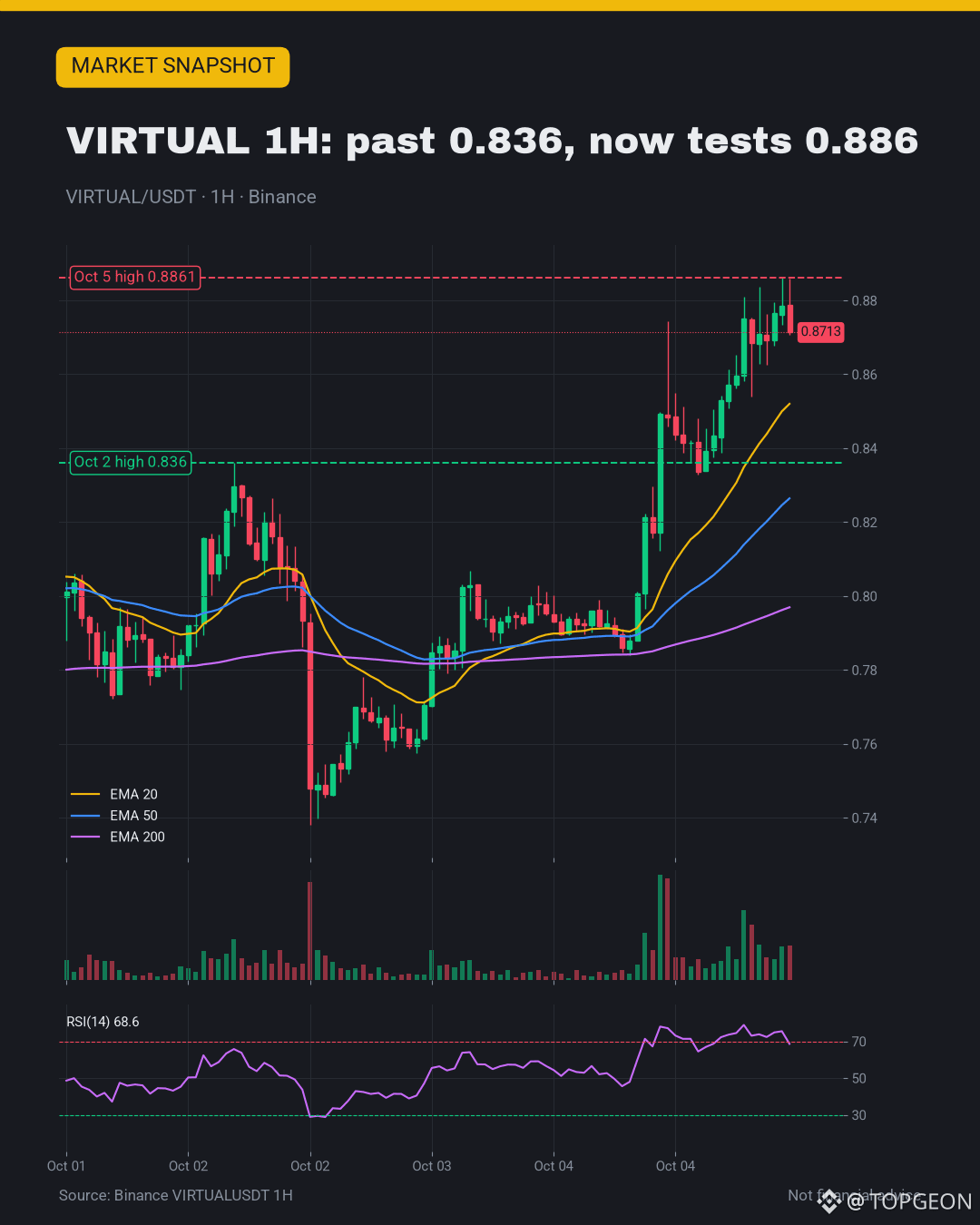
✅ VIRTUAL +10%: broke the 0.836 Oct 2 high, retested it
✅ ADA +12%, NEAR +4%: buyers are spreading out
⚠️ VIRTUAL 1H RSI 69, right under its 0.886 high
⚠️ BTC +0.9%, ETH/BTC −0.3%: majors aren't joining
🎯 My take: AI run holds while VIRTUAL stays above 0.836
💬 Riding the AI rotation or sitting this one out? 👇
#AI #Altcoins #MarketUpdate
🤖 Are AI coins the new leaders? $FET +14% while $BTC sits at $86K
✅ Fear & Greed climbs to 70, up from 65 yesterday
✅ VIRTUAL +10%: broke the 0.836 Oct 2 high, retested it
✅ ADA +12%, NEAR +4%: buyers are spreading out
⚠️ VIRTUAL 1H RSI 69, right under its 0.886 high
⚠️ BTC +0.9%, ETH/BTC −0.3%: majors aren't joining
🎯 My take: AI run holds while VIRTUAL stays above 0.836
💬 Riding the AI rotation or sitting this one out? 👇
#AI #Altcoins #MarketUpdate
✅ Fear & Greed climbs to 70, up from 65 yesterday
✅ VIRTUAL +10%: broke the 0.836 Oct 2 high, retested it
✅ ADA +12%, NEAR +4%: buyers are spreading out
⚠️ VIRTUAL 1H RSI 69, right under its 0.886 high
⚠️ BTC +0.9%, ETH/BTC −0.3%: majors aren't joining
🎯 My take: AI run holds while VIRTUAL stays above 0.836
💬 Riding the AI rotation or sitting this one out? 👇
#AI #Altcoins #MarketUpdate
189

·
--
Bullish
See translation
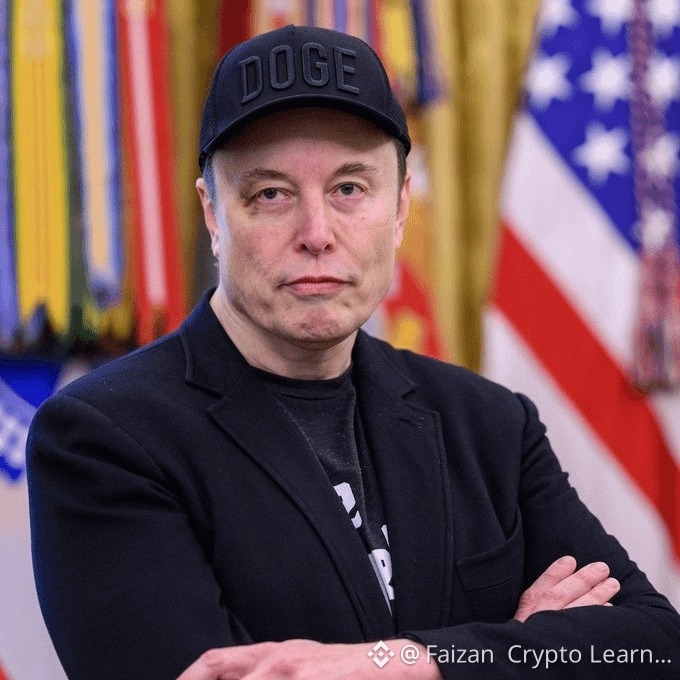
⚡ LATEST: ELON MUSK SAYS SPACEXAI WILL BE RENAMED SPACEXSI!
Elon Musk says SpaceXAI will be renamed SpaceXSI, with the name change reflecting his description of SpaceX as a “super intelligence company.” 👀
The move signals how aggressively Musk is positioning SpaceX around advanced AI and superintelligence.
🚀 SpaceXAI → SpaceXSI
🧠 Focus shifts toward “super intelligence”
⚡ Musk continues expanding the role of AI across his companies
If this vision plays out, SpaceX could become much more than a traditional aerospace company.
Would you invest in a SpaceX super-intelligence company if it ever goes public? 👀
#ElonMusk #SpaceX #AI #ElonWillChangeNameOfSpace $SPCXB
{spot}(SPCXBUSDT)
⚡ LATEST: ELON MUSK SAYS SPACEXAI WILL BE RENAMED SPACEXSI!
Elon Musk says SpaceXAI will be renamed SpaceXSI, with the name change reflecting his description of SpaceX as a “super intelligence company.” 👀
The move signals how aggressively Musk is positioning SpaceX around advanced AI and superintelligence.
🚀 SpaceXAI → SpaceXSI
🧠 Focus shifts toward “super intelligence”
⚡ Musk continues expanding the role of AI across his companies
If this vision plays out, SpaceX could become much more than a traditional aerospace company.
Would you invest in a SpaceX super-intelligence company if it ever goes public? 👀
#ElonMusk #SpaceX #AI #ElonWillChangeNameOfSpace $SPCXB
Elon Musk says SpaceXAI will be renamed SpaceXSI, with the name change reflecting his description of SpaceX as a “super intelligence company.” 👀
The move signals how aggressively Musk is positioning SpaceX around advanced AI and superintelligence.
🚀 SpaceXAI → SpaceXSI
🧠 Focus shifts toward “super intelligence”
⚡ Musk continues expanding the role of AI across his companies
If this vision plays out, SpaceX could become much more than a traditional aerospace company.
Would you invest in a SpaceX super-intelligence company if it ever goes public? 👀
#ElonMusk #SpaceX #AI #ElonWillChangeNameOfSpace $SPCXB

1
26

Log in to explore more content
Join global crypto users on Binance Square
⚡️ Get latest and useful information about crypto.
💬 Trusted by the world’s largest crypto exchange.
👍 Discover real insights from verified creators.
Email / Phone number
Trending Topics
1
#ADAGains10%Above$0.27
15,337 views
181 Discussing
2
#ETHUp70%InQ3ButLiquidityFalls
164,631 views
1,069 Discussing
3
#EthStakingExitQueueHits2026High
56,941 views
765 Discussing
4
#FedOctoberHoldOdds82.3%
58,711 views
720 Discussing
5
#Nikkei225Jumps2.5%ToThreeMonthHigh
81,172 views
1,085 Discussing
6
#CircleMints$2.75BUSDCOnSolanaIn7Days
2,158 views
47 Discussing
7
#DriftHackVictimsBeginClaims
176,695 views
1,733 Discussing
8
#SolanaTokenizedStockVolumeTops$4.4BInSeptember
13,634 views
133 Discussing
9
#BitcoinSpotETFsDraw$6.34BInflowsInQ3
54,755 views
263 Discussing
10
#EthereumValidatorExitQueueJumps392%
309,983 views
2,589 Discussing