

#financialmarketanalysis
financialmarketanalysis
37 views
2 Discussing
Hot
Latest

·
--
Bullish
🤖 AI Boom Could Trigger Market Shocks: What Does It Mean for Global Finance?
The rapid expansion of Artificial Intelligence (AI) is transforming businesses, financial markets and the global economy. But alongside the excitement about AI-driven growth, policymakers are increasingly considering the financial risks that could emerge if investor expectations become too optimistic.
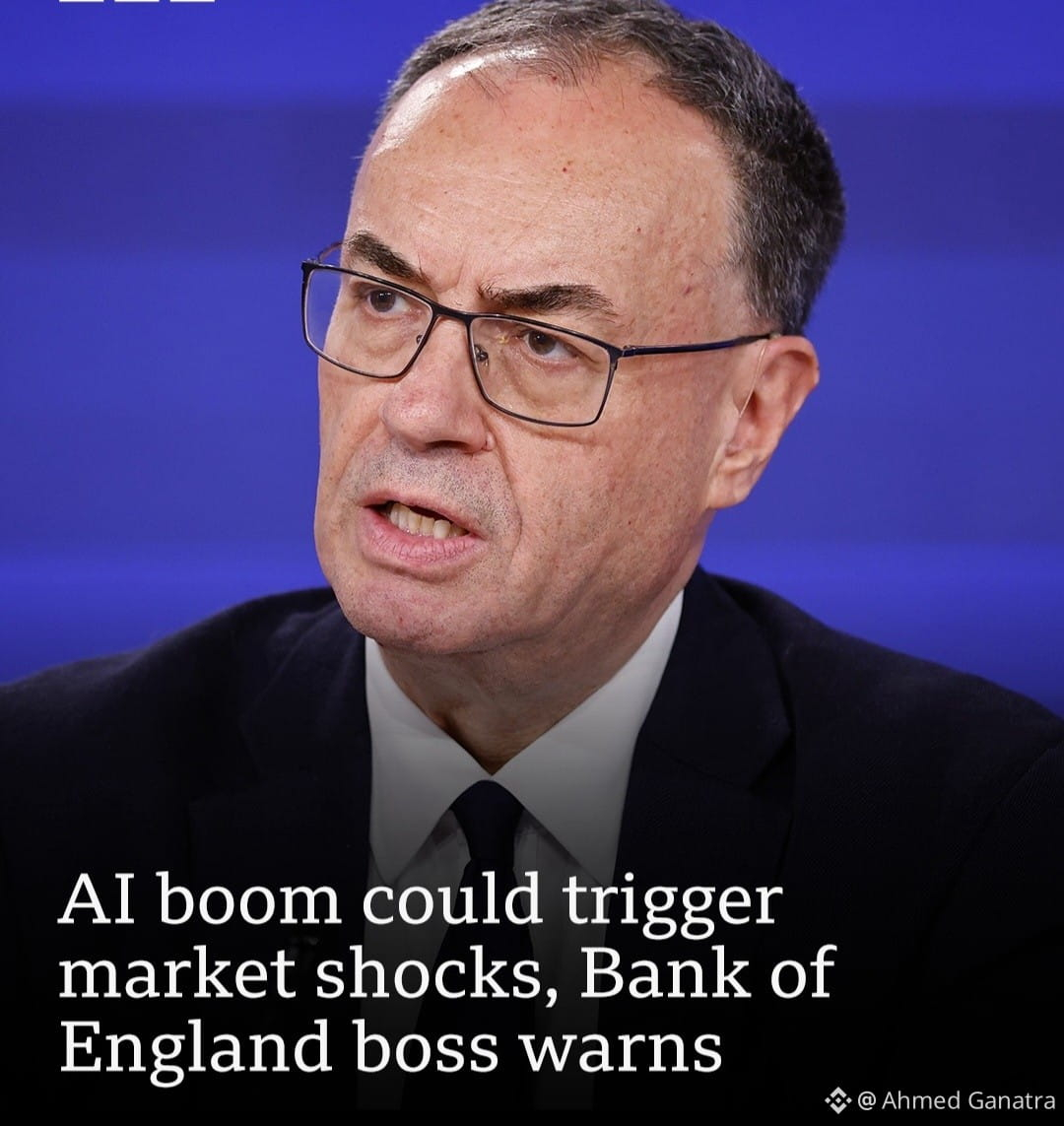
The image highlights a warning from the Bank of England that an AI boom could potentially contribute to market shocks.
📈 Why Is AI Creating Financial Concerns?
AI-related companies have attracted enormous investor attention. As expectations for AI-powered productivity and profits increase, valuations of companies connected to the technology can rise rapidly.
The concern is not that AI itself is necessarily harmful. The risk comes when market expectations move much faster than actual economic performance.
If investors begin to believe that AI companies will generate unlimited growth, asset prices could become excessively high. A sudden change in expectations could then trigger significant selling.
⚠️ What Could Happen During an AI Market Correction?
A sharp decline in AI-related assets could potentially affect:
- 📉 Stock markets and technology valuations
- 🏦 Banks and financial institutions
- 💼 Investment and pension portfolios
- 💰 Venture-capital funding
- 🌍 Global investor confidence
- 📊 Broader financial-market stability
The impact would depend on how large the correction is and how interconnected financial institutions and investors are with AI-related assets.
🏦 Why Banks Are Paying Attention
Central banks have an important responsibility to monitor risks that could threaten financial stability.
Read More:
https://medium.com/@ahmedganatra83/ai-boom-could-trigger-market-shocks-what-does-it-mean-for-global-finance-ca2ccabaf967
#AI #FinancialMarketAnalysis #BankingNews #InvestmentUpdate #EconomicGrowth $NVDAB $AAPL.US $GOOGL.US
🤖 AI Boom Could Trigger Market Shocks: What Does It Mean for Global Finance?
The rapid expansion of Artificial Intelligence (AI) is transforming businesses, financial markets and the global economy. But alongside the excitement about AI-driven growth, policymakers are increasingly considering the financial risks that could emerge if investor expectations become too optimistic.
The image highlights a warning from the Bank of England that an AI boom could potentially contribute to market shocks.
📈 Why Is AI Creating Financial Concerns?
AI-related companies have attracted enormous investor attention. As expectations for AI-powered productivity and profits increase, valuations of companies connected to the technology can rise rapidly.
The concern is not that AI itself is necessarily harmful. The risk comes when market expectations move much faster than actual economic performance.
If investors begin to believe that AI companies will generate unlimited growth, asset prices could become excessively high. A sudden change in expectations could then trigger significant selling.
⚠️ What Could Happen During an AI Market Correction?
A sharp decline in AI-related assets could potentially affect:
- 📉 Stock markets and technology valuations
- 🏦 Banks and financial institutions
- 💼 Investment and pension portfolios
- 💰 Venture-capital funding
- 🌍 Global investor confidence
- 📊 Broader financial-market stability
The impact would depend on how large the correction is and how interconnected financial institutions and investors are with AI-related assets.
🏦 Why Banks Are Paying Attention
Central banks have an important responsibility to monitor risks that could threaten financial stability.
Read More:
https://medium.com/@ahmedganatra83/ai-boom-could-trigger-market-shocks-what-does-it-mean-for-global-finance-ca2ccabaf967
#AI #FinancialMarketAnalysis #BankingNews #InvestmentUpdate #EconomicGrowth $NVDAB $AAPL.US $GOOGL.US
The rapid expansion of Artificial Intelligence (AI) is transforming businesses, financial markets and the global economy. But alongside the excitement about AI-driven growth, policymakers are increasingly considering the financial risks that could emerge if investor expectations become too optimistic.
The image highlights a warning from the Bank of England that an AI boom could potentially contribute to market shocks.
📈 Why Is AI Creating Financial Concerns?
AI-related companies have attracted enormous investor attention. As expectations for AI-powered productivity and profits increase, valuations of companies connected to the technology can rise rapidly.
The concern is not that AI itself is necessarily harmful. The risk comes when market expectations move much faster than actual economic performance.
If investors begin to believe that AI companies will generate unlimited growth, asset prices could become excessively high. A sudden change in expectations could then trigger significant selling.
⚠️ What Could Happen During an AI Market Correction?
A sharp decline in AI-related assets could potentially affect:
- 📉 Stock markets and technology valuations
- 🏦 Banks and financial institutions
- 💼 Investment and pension portfolios
- 💰 Venture-capital funding
- 🌍 Global investor confidence
- 📊 Broader financial-market stability
The impact would depend on how large the correction is and how interconnected financial institutions and investors are with AI-related assets.
🏦 Why Banks Are Paying Attention
Central banks have an important responsibility to monitor risks that could threaten financial stability.
Read More:
https://medium.com/@ahmedganatra83/ai-boom-could-trigger-market-shocks-what-does-it-mean-for-global-finance-ca2ccabaf967
#AI #FinancialMarketAnalysis #BankingNews #InvestmentUpdate #EconomicGrowth $NVDAB $AAPL.US $GOOGL.US
1
159
Log in to explore more content
Join global crypto users on Binance Square
⚡️ Get latest and useful information about crypto.
💬 Trusted by the world’s largest crypto exchange.
👍 Discover real insights from verified creators.
Email / Phone number
Trending Topics
1
#BinanceLaunchesBinanceIntelligence
819,876 views
5,101 Discussing
2
#BTCFallsBelow$84K
49,522 views
150 Discussing
3
#DubaiVARAIssuesReserveAssetAuditCircular
19,179 views
606 Discussing
4
#SECApproves3XBitcoinETF
16,822 views
518 Discussing
5
#WinklevossFilesSpotZcashETFApplication
25,754 views
622 Discussing
6
#SouthKoreaAITradeLiftsWorldcoinTo$7.41B
2,968 views
47 Discussing
7
#StrategyEstimates$4.1BIncomeTaxBenefit
1,736 views
25 Discussing
8
#IglooShutsDownAbstractBlockchain
12,056 views
337 Discussing
9
#StrategyMarketCapSurpassesRumble
57,105 views
1,086 Discussing
10
#StriveBuys2000BTCFor$169M
19,353 views
166 Discussing