

#adbe
adbe
7,242 views
212 Discussing
Hot
Latest

·
--
$ADBE / Tokenized Stocks · Premium Monitoring
Token: ADBEon | Underlying: ADBE | Multiplier: 1
On-chain price: $263.18 (24h -2.32%)
Underlying U.S. stock: $263.18
Premium / Discount: +0.00% (vs. underlying fair value) (Underlying market is closed; comparison uses the most recent close)
52-week range: $190.12 - $363.70
Number of holder addresses: 518
Underlying status: closed (Weekend or Holiday)
Why monitor the premium? Tokens can be traded 24/7, while underlying U.S. stocks are quoted only during U.S. market hours.
Premiums are most likely to widen during market closures—either due to on-chain buying pressure or growing expectations of redemptions/trading halts.
Unusual premium fluctuations often reveal sentiment and arbitrage gaps earlier than the price itself.
Do you find premium monitoring more useful, or is simply watching the price enough? 👇
(The above is for educational purposes based on public data, not investment advice. DYOR)
#ADBE
$ADBE / Tokenized Stocks · Premium Monitoring
Token: ADBEon | Underlying: ADBE | Multiplier: 1
On-chain price: $263.18 (24h -2.32%)
Underlying U.S. stock: $263.18
Premium / Discount: +0.00% (vs. underlying fair value) (Underlying market is closed; comparison uses the most recent close)
52-week range: $190.12 - $363.70
Number of holder addresses: 518
Underlying status: closed (Weekend or Holiday)
Why monitor the premium? Tokens can be traded 24/7, while underlying U.S. stocks are quoted only during U.S. market hours.
Premiums are most likely to widen during market closures—either due to on-chain buying pressure or growing expectations of redemptions/trading halts.
Unusual premium fluctuations often reveal sentiment and arbitrage gaps earlier than the price itself.
Do you find premium monitoring more useful, or is simply watching the price enough? 👇
(The above is for educational purposes based on public data, not investment advice. DYOR)
#ADBE
Token: ADBEon | Underlying: ADBE | Multiplier: 1
On-chain price: $263.18 (24h -2.32%)
Underlying U.S. stock: $263.18
Premium / Discount: +0.00% (vs. underlying fair value) (Underlying market is closed; comparison uses the most recent close)
52-week range: $190.12 - $363.70
Number of holder addresses: 518
Underlying status: closed (Weekend or Holiday)
Why monitor the premium? Tokens can be traded 24/7, while underlying U.S. stocks are quoted only during U.S. market hours.
Premiums are most likely to widen during market closures—either due to on-chain buying pressure or growing expectations of redemptions/trading halts.
Unusual premium fluctuations often reveal sentiment and arbitrage gaps earlier than the price itself.
Do you find premium monitoring more useful, or is simply watching the price enough? 👇
(The above is for educational purposes based on public data, not investment advice. DYOR)
#ADBE
1

·
--
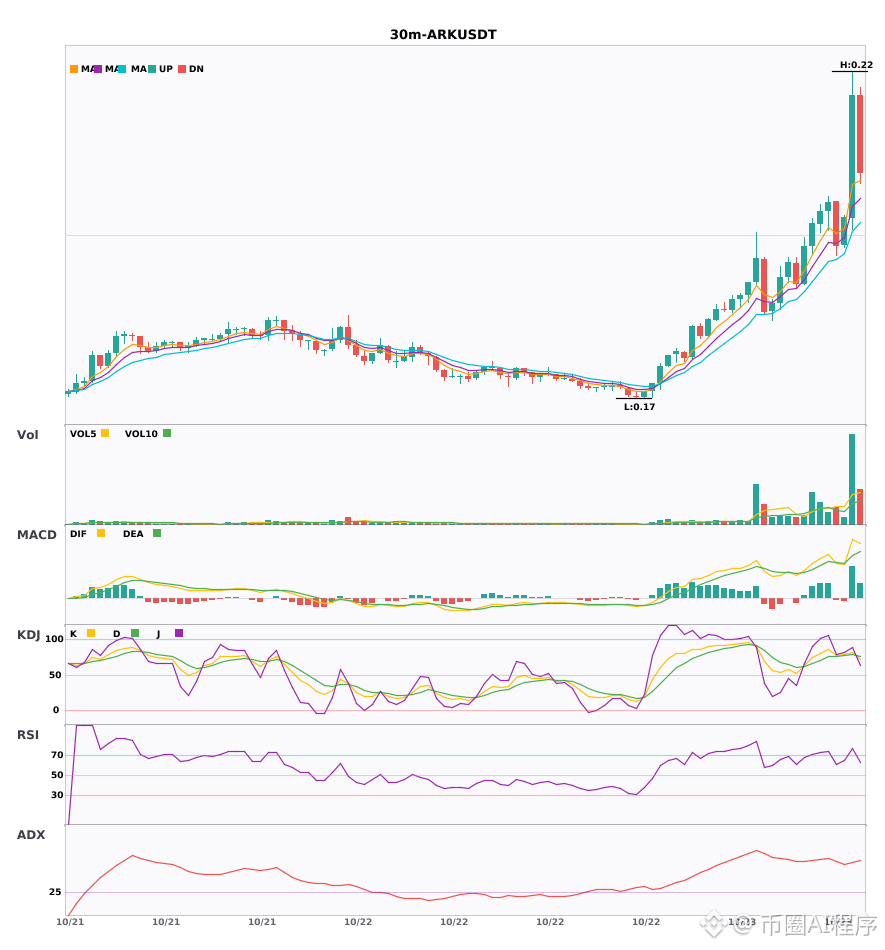
Multi-timeframe confluence: 2 coins with bullish signals on the 30-minute chart + 4-hour bullish trend confirmation 🔥
════════════════════
🔴 $ADBE 30-minute bullish signal
⚠️ Technical analysis: 4-hour bullish confluence confirmed | 30-minute entry: MACD is bullish, trend is strong, and momentum is increasing | EMA5 > EMA8 > EMA13, bullish alignment | KDJ is strong, with bulls in control (K: 71.9, D: 62.1) | Volume surge (7.6x)
════════════════════
🔴 $ARK 30-minute bullish signal
⚠️ Technical analysis: 4-hour bullish confluence confirmed | 30-minute entry: MACD golden cross above zero, bullish momentum released | EMA5 > EMA8 > EMA13, bullish alignment | KDJ is strong, with bulls in control (K: 81.7, D: 78.3) | Volume surge (4.2x)
════════════════════
🔔 Follow for real-time market movements 🔔
#多周期共振 #ADBE #ARK
📌 When trading, check whether the candlestick pattern aligns
Multi-timeframe confluence: 2 coins with bullish signals on the 30-minute chart + 4-hour bullish trend confirmation 🔥
════════════════════
🔴 $ADBE 30-minute bullish signal
⚠️ Technical analysis: 4-hour bullish confluence confirmed | 30-minute entry: MACD is bullish, trend is strong, and momentum is increasing | EMA5 > EMA8 > EMA13, bullish alignment | KDJ is strong, with bulls in control (K: 71.9, D: 62.1) | Volume surge (7.6x)
════════════════════
🔴 $ARK 30-minute bullish signal
⚠️ Technical analysis: 4-hour bullish confluence confirmed | 30-minute entry: MACD golden cross above zero, bullish momentum released | EMA5 > EMA8 > EMA13, bullish alignment | KDJ is strong, with bulls in control (K: 81.7, D: 78.3) | Volume surge (4.2x)
════════════════════
🔔 Follow for real-time market movements 🔔
#多周期共振 #ADBE #ARK
📌 When trading, check whether the candlestick pattern aligns
════════════════════
🔴 $ADBE 30-minute bullish signal
⚠️ Technical analysis: 4-hour bullish confluence confirmed | 30-minute entry: MACD is bullish, trend is strong, and momentum is increasing | EMA5 > EMA8 > EMA13, bullish alignment | KDJ is strong, with bulls in control (K: 71.9, D: 62.1) | Volume surge (7.6x)
════════════════════
🔴 $ARK 30-minute bullish signal
⚠️ Technical analysis: 4-hour bullish confluence confirmed | 30-minute entry: MACD golden cross above zero, bullish momentum released | EMA5 > EMA8 > EMA13, bullish alignment | KDJ is strong, with bulls in control (K: 81.7, D: 78.3) | Volume surge (4.2x)
════════════════════
🔔 Follow for real-time market movements 🔔
#多周期共振 #ADBE #ARK
📌 When trading, check whether the candlestick pattern aligns
5
·
--
$ADBE / Tokenized Stock · Premium Monitoring
Token: ADBEon | Underlying: ADBE | Multiplier: 1
On-chain price: $269.65 (24h +5.67%)
Underlying U.S. stock: $269.62
Premium / Discount: +0.01% (vs. underlying fair value)
52-week range: $190.12 - $363.70
Holder addresses: 519
Underlying status: regular
Why monitor the premium? Tokens trade 24/7, while the underlying U.S. stock is quoted only during U.S. market hours.
Premiums are most likely to widen when the market is closed—either due to on-chain buying or growing expectations of redemptions or a trading halt.
Unusual premium swings often reveal sentiment and arbitrage gaps before the price itself does.
Do you find premium monitoring more useful, or is watching the price alone enough? 👇
(The above is for educational purposes based on public data, not investment advice. DYOR.)
#ADBE
$ADBE / Tokenized Stock · Premium Monitoring
Token: ADBEon | Underlying: ADBE | Multiplier: 1
On-chain price: $269.65 (24h +5.67%)
Underlying U.S. stock: $269.62
Premium / Discount: +0.01% (vs. underlying fair value)
52-week range: $190.12 - $363.70
Holder addresses: 519
Underlying status: regular
Why monitor the premium? Tokens trade 24/7, while the underlying U.S. stock is quoted only during U.S. market hours.
Premiums are most likely to widen when the market is closed—either due to on-chain buying or growing expectations of redemptions or a trading halt.
Unusual premium swings often reveal sentiment and arbitrage gaps before the price itself does.
Do you find premium monitoring more useful, or is watching the price alone enough? 👇
(The above is for educational purposes based on public data, not investment advice. DYOR.)
#ADBE
Token: ADBEon | Underlying: ADBE | Multiplier: 1
On-chain price: $269.65 (24h +5.67%)
Underlying U.S. stock: $269.62
Premium / Discount: +0.01% (vs. underlying fair value)
52-week range: $190.12 - $363.70
Holder addresses: 519
Underlying status: regular
Why monitor the premium? Tokens trade 24/7, while the underlying U.S. stock is quoted only during U.S. market hours.
Premiums are most likely to widen when the market is closed—either due to on-chain buying or growing expectations of redemptions or a trading halt.
Unusual premium swings often reveal sentiment and arbitrage gaps before the price itself does.
Do you find premium monitoring more useful, or is watching the price alone enough? 👇
(The above is for educational purposes based on public data, not investment advice. DYOR.)
#ADBE
1

$ADBE LONG
Keeping the long idea in focus.
The first level is the indicated upper boundary of the move; the following levels are targets.
The stop is the indicated trade boundary.
🔹Entry zone: 242.4
✅Take profit 1: 243.69653807 (+0.53%)
✅Take profit 2: 245.30307613 (+1.20%)
✅Take profit 3: 247.71288323 (+2.19%)
❌Stop-loss: 239.6801929 (-1.12%)
⚠️ This is not financial advice. Trade at your own risk. DYOR.
#ADBE #Trade #bStocksCIS 📈
$ADBE
$ADBE LONG
Keeping the long idea in focus.
The first level is the indicated upper boundary of the move; the following levels are targets.
The stop is the indicated trade boundary.
🔹Entry zone: 242.4
✅Take profit 1: 243.69653807 (+0.53%)
✅Take profit 2: 245.30307613 (+1.20%)
✅Take profit 3: 247.71288323 (+2.19%)
❌Stop-loss: 239.6801929 (-1.12%)
⚠️ This is not financial advice. Trade at your own risk. DYOR.
#ADBE #Trade #bStocksCIS 📈
$ADBE
Keeping the long idea in focus.
The first level is the indicated upper boundary of the move; the following levels are targets.
The stop is the indicated trade boundary.
🔹Entry zone: 242.4
✅Take profit 1: 243.69653807 (+0.53%)
✅Take profit 2: 245.30307613 (+1.20%)
✅Take profit 3: 247.71288323 (+2.19%)
❌Stop-loss: 239.6801929 (-1.12%)
⚠️ This is not financial advice. Trade at your own risk. DYOR.
#ADBE #Trade #bStocksCIS 📈
$ADBE
18



·
--
See translation
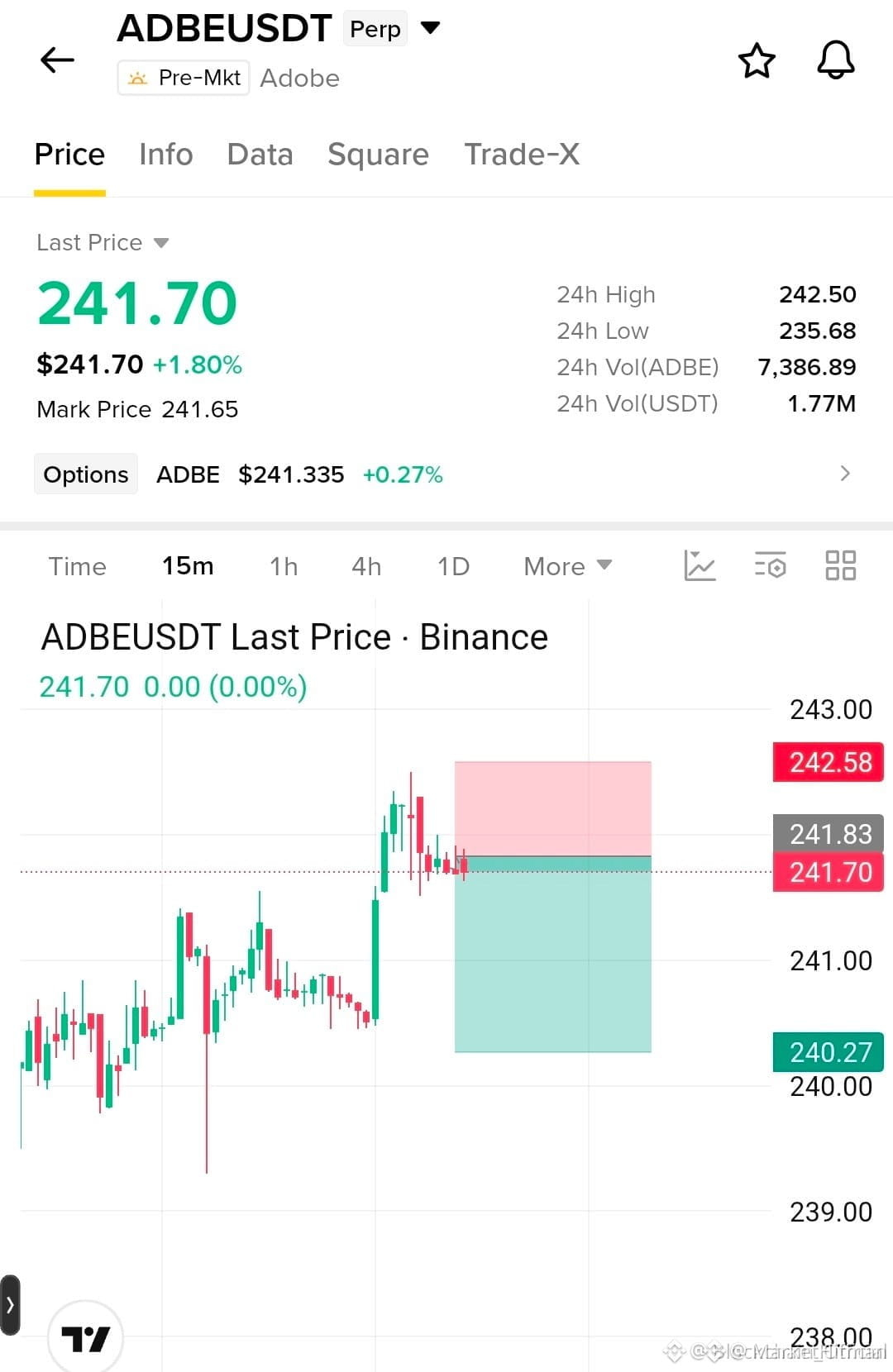
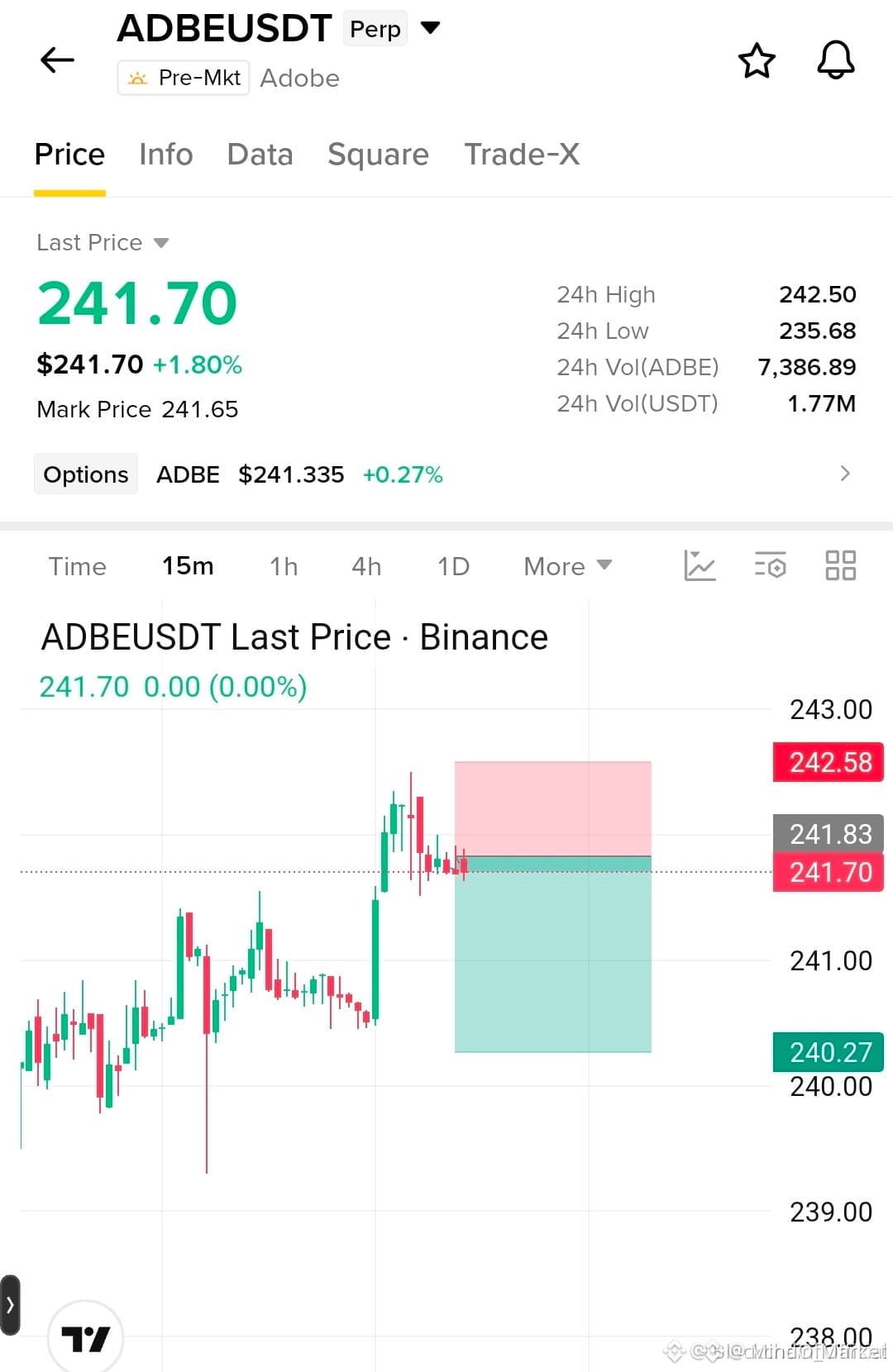
🚨 $ADBE SLAMS INTO CRITICAL OVERHEAD RESISTANCE AS EXHAUSTION HITS THE BID! 📉
Entry: 241.70 - 242.50 ⚡
Target: 241.00 - 239.00 🎯
Stop Loss: 243.00 ⚠️
📌 Even after a modest 1.80% bounce, buyers are running straight into a heavy wall of supply parked at 242.58. Tape momentum is already stalling at the top of the range, hinting that late aggressive bidders are about to get trapped.
🔍 A clean loss of 241.00 opens the trapdoor down to 240.27 and 239.00 liquidity pools, while any print above 243.00 invalidates the thesis instantly. 🤔 Are you fading this relief rally or betting on an upside breakout? 👇
⚠️ Not financial advice. Always manage your risk. 🛡️
🏷️ #ADBE #ShortSetup #PriceAction #Trading
🎯 🐻
🚨 $ADBE SLAMS INTO CRITICAL OVERHEAD RESISTANCE AS EXHAUSTION HITS THE BID! 📉
Entry: 241.70 - 242.50 ⚡
Target: 241.00 - 239.00 🎯
Stop Loss: 243.00 ⚠️
📌 Even after a modest 1.80% bounce, buyers are running straight into a heavy wall of supply parked at 242.58. Tape momentum is already stalling at the top of the range, hinting that late aggressive bidders are about to get trapped.
🔍 A clean loss of 241.00 opens the trapdoor down to 240.27 and 239.00 liquidity pools, while any print above 243.00 invalidates the thesis instantly. 🤔 Are you fading this relief rally or betting on an upside breakout? 👇
⚠️ Not financial advice. Always manage your risk. 🛡️
🏷️ #ADBE #ShortSetup #PriceAction #Trading
🎯 🐻
Entry: 241.70 - 242.50 ⚡
Target: 241.00 - 239.00 🎯
Stop Loss: 243.00 ⚠️
📌 Even after a modest 1.80% bounce, buyers are running straight into a heavy wall of supply parked at 242.58. Tape momentum is already stalling at the top of the range, hinting that late aggressive bidders are about to get trapped.
🔍 A clean loss of 241.00 opens the trapdoor down to 240.27 and 239.00 liquidity pools, while any print above 243.00 invalidates the thesis instantly. 🤔 Are you fading this relief rally or betting on an upside breakout? 👇
⚠️ Not financial advice. Always manage your risk. 🛡️
🏷️ #ADBE #ShortSetup #PriceAction #Trading
🎯 🐻
2


·
--
See translation
🚨 $ADBE APPROACHES CRITICAL SUPPLY BLOCK AS INSTITUTIONAL REJECTION LOOMS! 📉
Entry: 241.70 - 242.50 ⚡
Target: 241.00, 240.27, 239.00 🎯
Stop Loss: 243.00 🛑
Despite a 1.80% intraday expansion, $ADBE is printing exhaustion directly into the 242.50–242.58 structural resistance ceiling. 🔍 Institutional sell-side liquidity is positioned to cap this move, with order flow signaling distribution rather than sustained continuation.
📌 A confirmed breakdown beneath 241.00 opens an efficient path toward untapped liquidity pockets down at 240.27 and 239.00. 🌊 Structural invalidation sits strictly at 243.00, preserving an asymmetrical risk profile for disciplined positioning.
🤔 Are you shorting this overhead supply test or waiting for 241.00 to give way first? 👇
⚠️ Not financial advice. Always manage your risk. 🛡️
🏷️ #ADBE #ShortSetup #PriceAction #Trading #MarketStructure
🎯 🦈
🚨 $ADBE APPROACHES CRITICAL SUPPLY BLOCK AS INSTITUTIONAL REJECTION LOOMS! 📉
Entry: 241.70 - 242.50 ⚡
Target: 241.00, 240.27, 239.00 🎯
Stop Loss: 243.00 🛑
Despite a 1.80% intraday expansion, $ADBE is printing exhaustion directly into the 242.50–242.58 structural resistance ceiling. 🔍 Institutional sell-side liquidity is positioned to cap this move, with order flow signaling distribution rather than sustained continuation.
📌 A confirmed breakdown beneath 241.00 opens an efficient path toward untapped liquidity pockets down at 240.27 and 239.00. 🌊 Structural invalidation sits strictly at 243.00, preserving an asymmetrical risk profile for disciplined positioning.
🤔 Are you shorting this overhead supply test or waiting for 241.00 to give way first? 👇
⚠️ Not financial advice. Always manage your risk. 🛡️
🏷️ #ADBE #ShortSetup #PriceAction #Trading #MarketStructure
🎯 🦈
Entry: 241.70 - 242.50 ⚡
Target: 241.00, 240.27, 239.00 🎯
Stop Loss: 243.00 🛑
Despite a 1.80% intraday expansion, $ADBE is printing exhaustion directly into the 242.50–242.58 structural resistance ceiling. 🔍 Institutional sell-side liquidity is positioned to cap this move, with order flow signaling distribution rather than sustained continuation.
📌 A confirmed breakdown beneath 241.00 opens an efficient path toward untapped liquidity pockets down at 240.27 and 239.00. 🌊 Structural invalidation sits strictly at 243.00, preserving an asymmetrical risk profile for disciplined positioning.
🤔 Are you shorting this overhead supply test or waiting for 241.00 to give way first? 👇
⚠️ Not financial advice. Always manage your risk. 🛡️
🏷️ #ADBE #ShortSetup #PriceAction #Trading #MarketStructure
🎯 🦈
6


See translation
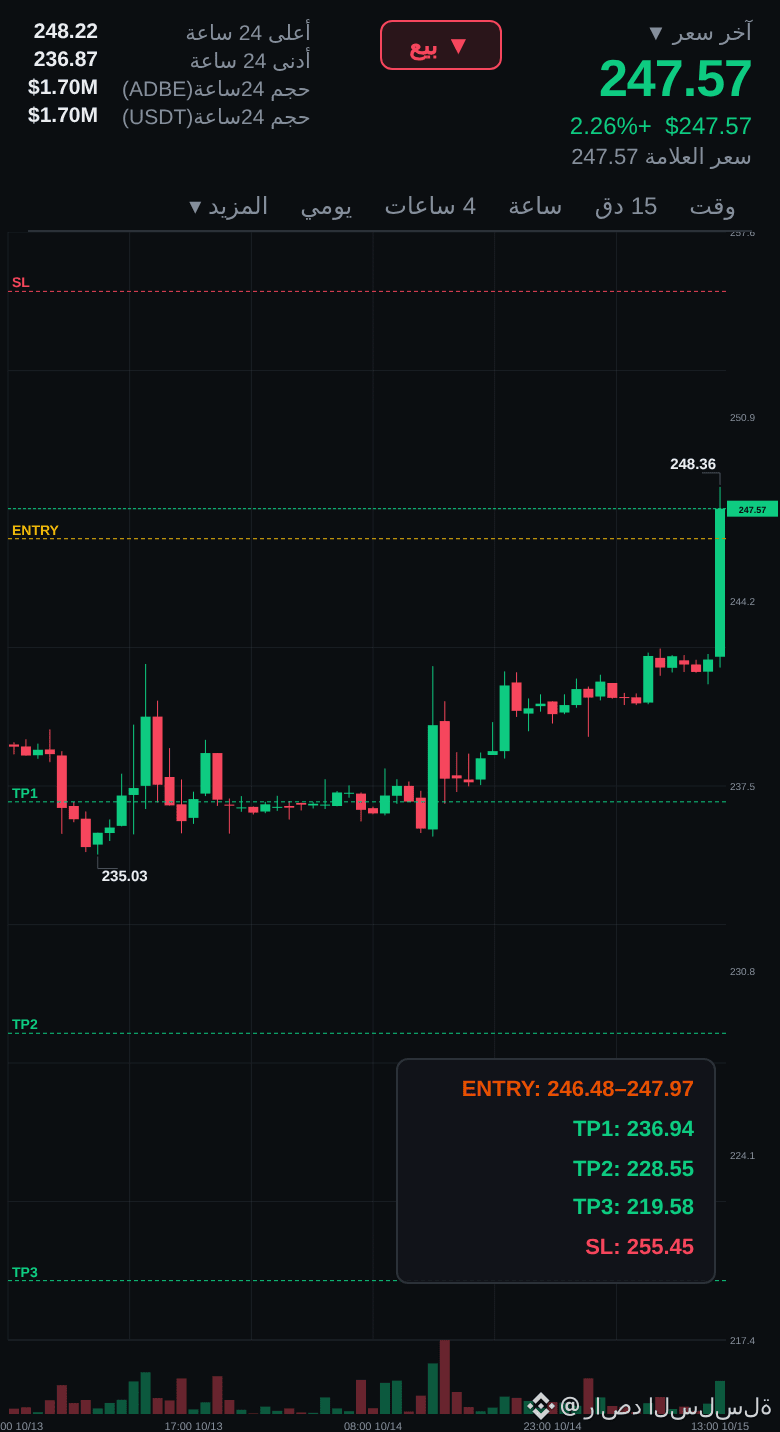
🔴 $ADBE SHOWS INSTITUTIONAL DISTRIBUTION WITH CLEAN SHORT ROTATION TRIGGERED! 📉
🔍 Market structure on $ADBE is printing textbook institutional distribution as recent upside momentum stalls right into overhead premium liquidity. 🌊 Smart money appears to be absorbing buy-side volume while rotating order flow firmly to the downside.
📊 With the structural shift threatening key demand zones, the path of least resistance favors an inefficiency fill lower. 💡 Watching the retest of newly established supply blocks offers high-probability positioning before the next expansion phase. 🤔 Are you front-running this short rotation, or waiting for confirmation below structural support? 👇
⚠️ Not financial advice. Always manage your risk. 🛡️
🏷️ #ADBE #ShortSetup #PriceAction #MarketStructure
🎯 🦈
🔴 $ADBE SHOWS INSTITUTIONAL DISTRIBUTION WITH CLEAN SHORT ROTATION TRIGGERED! 📉
🔍 Market structure on $ADBE is printing textbook institutional distribution as recent upside momentum stalls right into overhead premium liquidity. 🌊 Smart money appears to be absorbing buy-side volume while rotating order flow firmly to the downside.
📊 With the structural shift threatening key demand zones, the path of least resistance favors an inefficiency fill lower. 💡 Watching the retest of newly established supply blocks offers high-probability positioning before the next expansion phase. 🤔 Are you front-running this short rotation, or waiting for confirmation below structural support? 👇
⚠️ Not financial advice. Always manage your risk. 🛡️
🏷️ #ADBE #ShortSetup #PriceAction #MarketStructure
🎯 🦈
🔍 Market structure on $ADBE is printing textbook institutional distribution as recent upside momentum stalls right into overhead premium liquidity. 🌊 Smart money appears to be absorbing buy-side volume while rotating order flow firmly to the downside.
📊 With the structural shift threatening key demand zones, the path of least resistance favors an inefficiency fill lower. 💡 Watching the retest of newly established supply blocks offers high-probability positioning before the next expansion phase. 🤔 Are you front-running this short rotation, or waiting for confirmation below structural support? 👇
⚠️ Not financial advice. Always manage your risk. 🛡️
🏷️ #ADBE #ShortSetup #PriceAction #MarketStructure
🎯 🦈

See translation
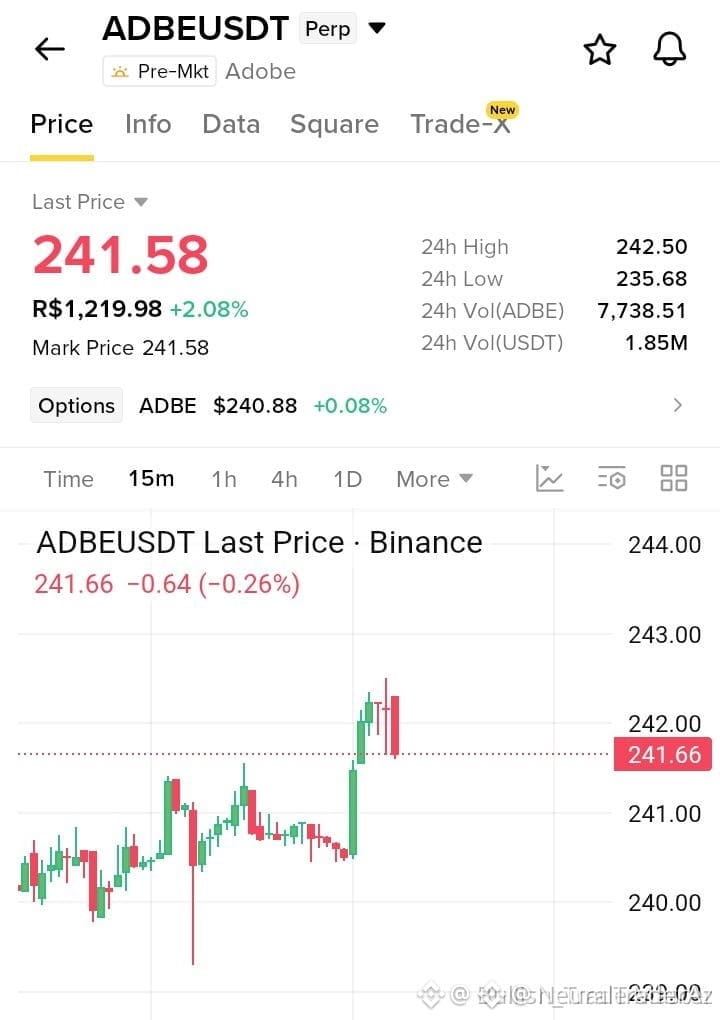
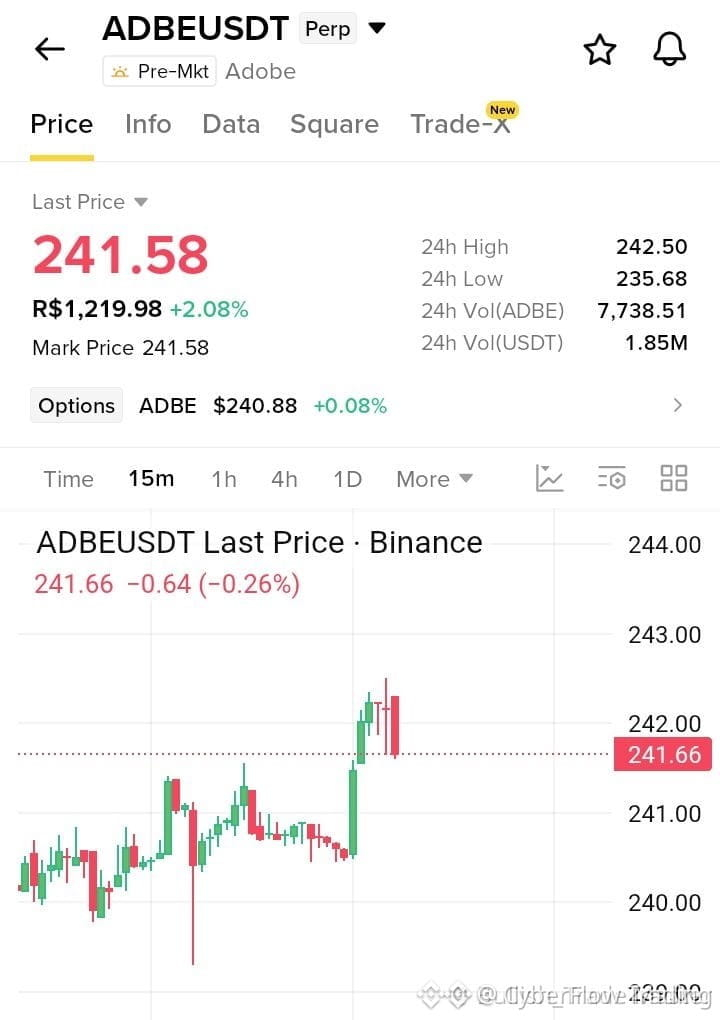
📉 $ADBE FLASHING A PRIME SHORT SETUP AS EXHAUSTION HITS THE TAPE! 🚨
Sellers are aggressively defending overhead supply on $ADBE , turning heavy pushback into an asymmetric short opportunity. 📊 Momentum indicators are rolling over rapidly as smart money looks primed to sweep liquidity into fresh downside expansion.
With distribution pressure mounting across correlated names like $SOXSB and $ARC , buyer fatigue is becoming undeniable. 💡 Watch the rejection velocity closely as underlying bid support begins to thin out. 💬 Are you taking the short side here or waiting for key support to crack first? 👇
⚠️ Not financial advice. Always manage your risk. 🛡️
🏷️ #ADBE #ShortSetup #Bearish #Trading
🎯 🐻
📉 $ADBE FLASHING A PRIME SHORT SETUP AS EXHAUSTION HITS THE TAPE! 🚨
Sellers are aggressively defending overhead supply on $ADBE , turning heavy pushback into an asymmetric short opportunity. 📊 Momentum indicators are rolling over rapidly as smart money looks primed to sweep liquidity into fresh downside expansion.
With distribution pressure mounting across correlated names like $SOXSB and $ARC , buyer fatigue is becoming undeniable. 💡 Watch the rejection velocity closely as underlying bid support begins to thin out. 💬 Are you taking the short side here or waiting for key support to crack first? 👇
⚠️ Not financial advice. Always manage your risk. 🛡️
🏷️ #ADBE #ShortSetup #Bearish #Trading
🎯 🐻
Sellers are aggressively defending overhead supply on $ADBE , turning heavy pushback into an asymmetric short opportunity. 📊 Momentum indicators are rolling over rapidly as smart money looks primed to sweep liquidity into fresh downside expansion.
With distribution pressure mounting across correlated names like $SOXSB and $ARC , buyer fatigue is becoming undeniable. 💡 Watch the rejection velocity closely as underlying bid support begins to thin out. 💬 Are you taking the short side here or waiting for key support to crack first? 👇
⚠️ Not financial advice. Always manage your risk. 🛡️
🏷️ #ADBE #ShortSetup #Bearish #Trading
🎯 🐻
3

·
--
See translation
#BinanceLaunchesBinanceIntelligence
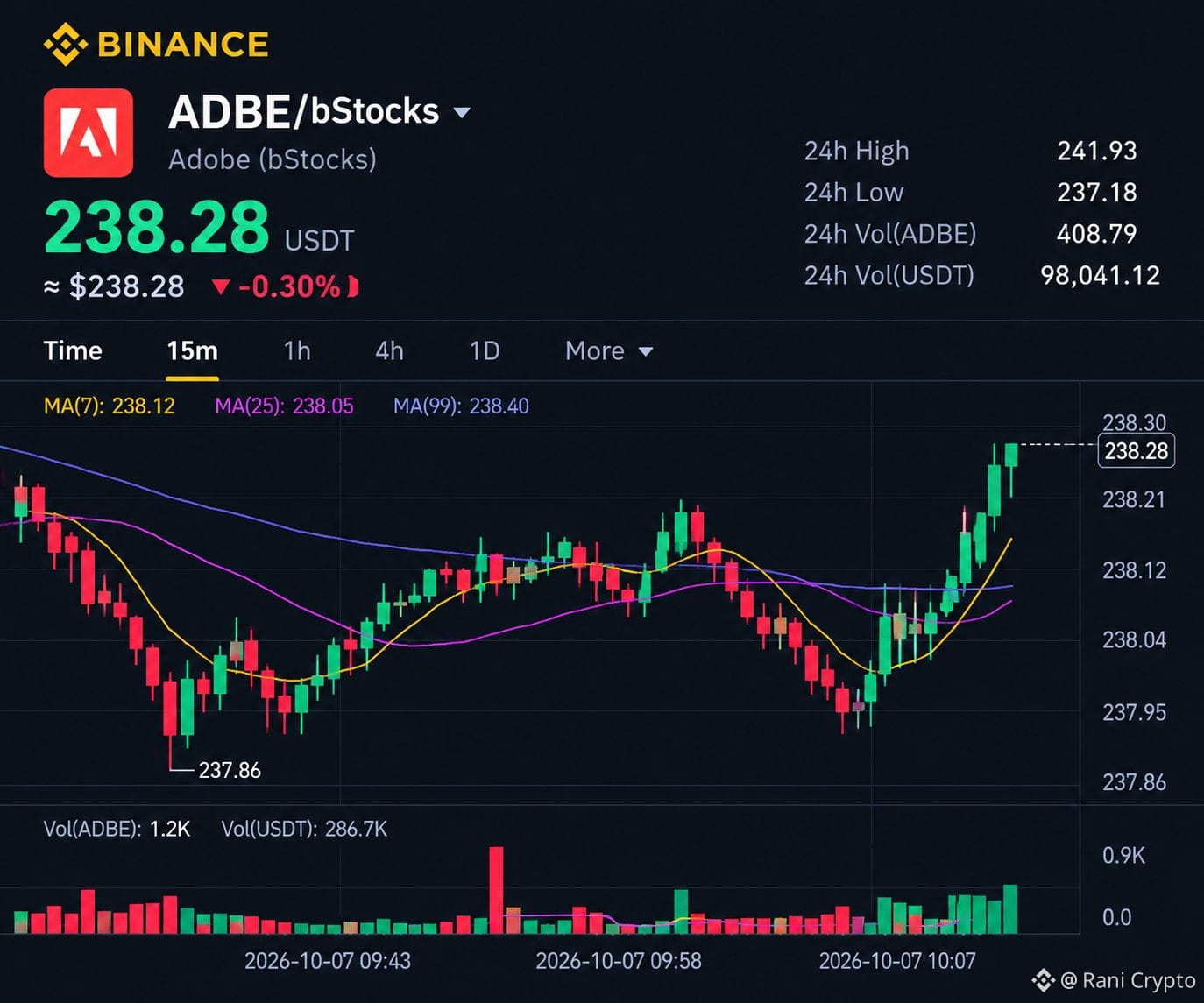
🚨 $ADBEB /bStocks — Today Update
#FedRateWatch
📊 $ADBEB /USDT: $238.28
🔻 24H Change: -0.30%
📈 24H High: $241.93
📉 24H Low: $237.18
💰 24H Volume: 98,041.12 USDT
Adobe’s tokenized stock is trading slightly lower today, with price currently near the upper part of its 24H range.
#ADBE #Adobe #BinanceSquare
$ADBEB
{spot}(ADBEBUSDT)
#BinanceLaunchesBinanceIntelligence
🚨 $ADBEB /bStocks — Today Update
#FedRateWatch
📊 $ADBEB /USDT: $238.28
🔻 24H Change: -0.30%
📈 24H High: $241.93
📉 24H Low: $237.18
💰 24H Volume: 98,041.12 USDT
Adobe’s tokenized stock is trading slightly lower today, with price currently near the upper part of its 24H range.
#ADBE #Adobe #BinanceSquare
$ADBEB
🚨 $ADBEB /bStocks — Today Update
#FedRateWatch
📊 $ADBEB /USDT: $238.28
🔻 24H Change: -0.30%
📈 24H High: $241.93
📉 24H Low: $237.18
💰 24H Volume: 98,041.12 USDT
Adobe’s tokenized stock is trading slightly lower today, with price currently near the upper part of its 24H range.
#ADBE #Adobe #BinanceSquare
$ADBEB
82

·
--
See translation
📊 $ADBEB (Adobe) Latest Analysis —
{stock_us}(ADBE.US)
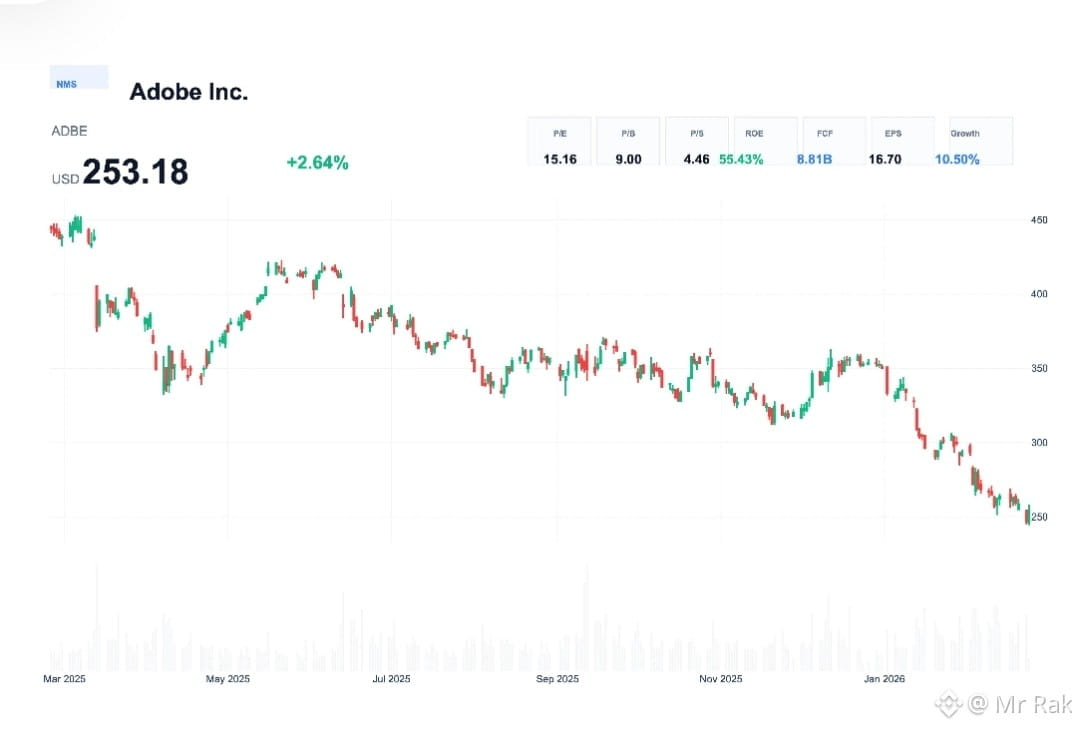
$ADBE is trading near $241, showing a modest rebound after recent selling pressure. The stock remains under pressure overall, but holding $235–$238 support could support a recovery toward $248–$250. A break above $250 would improve the short-term setup.
Bias: 🟡 Neutral / cautious
#ADBE #stockssignal #stockmarket #TradingSignals #NASDAQ
📊 $ADBEB (Adobe) Latest Analysis —
$ADBE is trading near $241, showing a modest rebound after recent selling pressure. The stock remains under pressure overall, but holding $235–$238 support could support a recovery toward $248–$250. A break above $250 would improve the short-term setup.
Bias: 🟡 Neutral / cautious
#ADBE #stockssignal #stockmarket #TradingSignals #NASDAQ
$ADBE is trading near $241, showing a modest rebound after recent selling pressure. The stock remains under pressure overall, but holding $235–$238 support could support a recovery toward $248–$250. A break above $250 would improve the short-term setup.
Bias: 🟡 Neutral / cautious
#ADBE #stockssignal #stockmarket #TradingSignals #NASDAQ
ADBEUS-3.29%
ADBEB-3.13%
174

Verified
See translation
📊 ADBE — Today’s Post | Oct 2, 2026
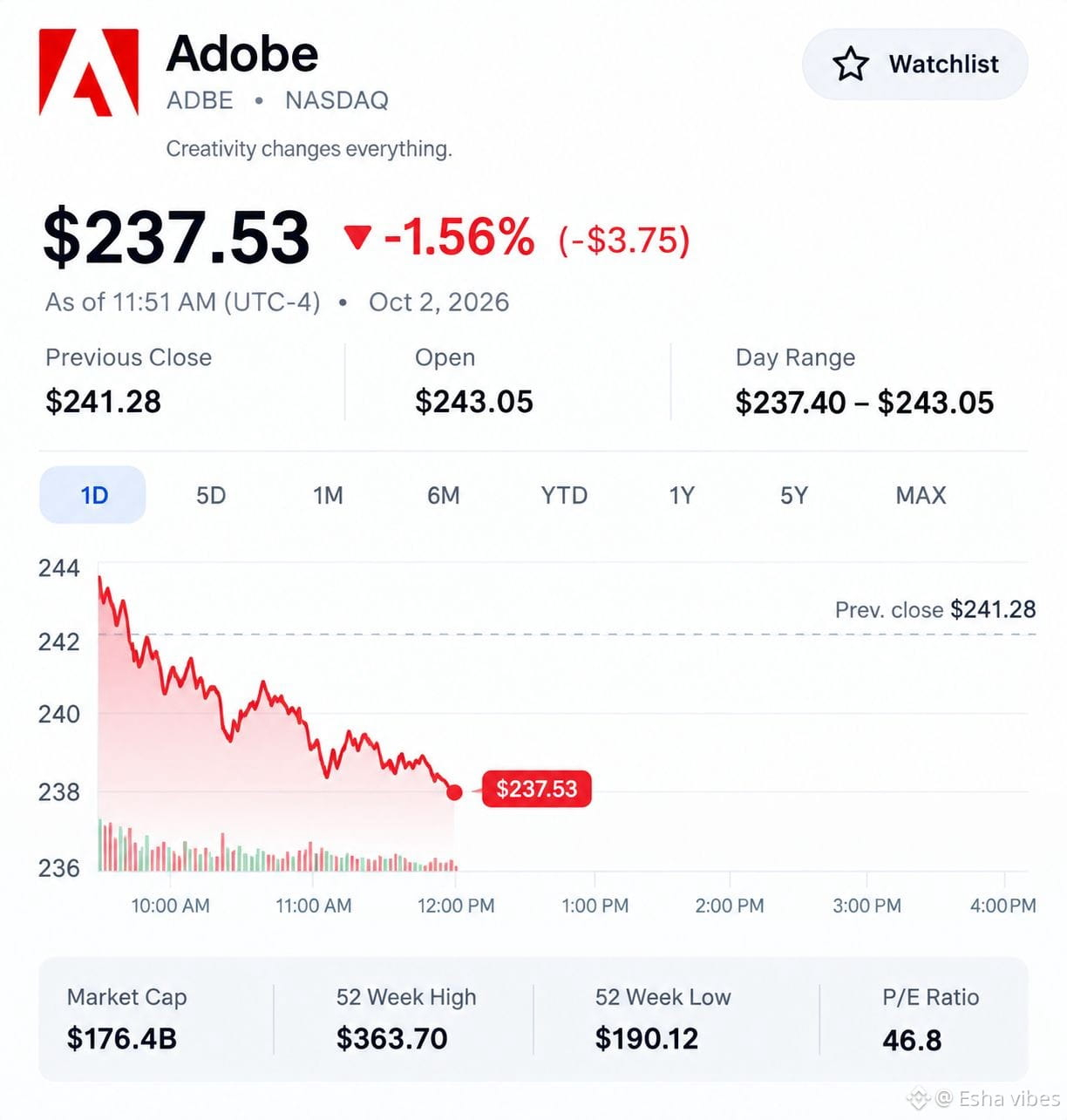
Adobe (ADBE) is under pressure today 📉
💰 Price: $237.53
🔻 Today: -1.56%
📍 Previous Close: $241.28
Adobe recently reported record Q3 revenue of $6.76B, with AI-first ARR growing more than 150% YoY. The company also announced Anil Chakravarthy will become CEO on Dec. 1, 2026, while Shantanu Narayen moves to Executive Chair. �
Adobe +1
Market Watch:
🔴 Below $241 → weakness remains
🟢 Reclaiming $241–243 → possible recovery zone
#ADBE #Adobe #Stocks #AI #NASDAQ in #Trading
📊 ADBE — Today’s Post | Oct 2, 2026
Adobe (ADBE) is under pressure today 📉
💰 Price: $237.53
🔻 Today: -1.56%
📍 Previous Close: $241.28
Adobe recently reported record Q3 revenue of $6.76B, with AI-first ARR growing more than 150% YoY. The company also announced Anil Chakravarthy will become CEO on Dec. 1, 2026, while Shantanu Narayen moves to Executive Chair. �
Adobe +1
Market Watch:
🔴 Below $241 → weakness remains
🟢 Reclaiming $241–243 → possible recovery zone
#ADBE #Adobe #Stocks #AI #NASDAQ in #Trading
Adobe (ADBE) is under pressure today 📉
💰 Price: $237.53
🔻 Today: -1.56%
📍 Previous Close: $241.28
Adobe recently reported record Q3 revenue of $6.76B, with AI-first ARR growing more than 150% YoY. The company also announced Anil Chakravarthy will become CEO on Dec. 1, 2026, while Shantanu Narayen moves to Executive Chair. �
Adobe +1
Market Watch:
🔴 Below $241 → weakness remains
🟢 Reclaiming $241–243 → possible recovery zone
#ADBE #Adobe #Stocks #AI #NASDAQ in #Trading
37
See translation
⚡ DERIVATIVE DESKS UNLOCK $ADBE AND $APP PERPS FOR FRESH TRADING VOLATILITY! 🚀
Traditional equity exposure bridges deeper into crypto perp markets today as fresh USD-margined contracts for $ADBE and $APP hit top-tier derivative order books. 📊 Liquidity is shifting rapidly as traders gain continuous leverage access outside traditional market hours.
When tech performers gain perp instruments, it creates prime momentum windows and arbitrage opportunities driven by institutional positioning. ⚡ Watching how order flow builds across these early contract windows will reveal true institutional sentiment.
💡 Volatility will likely expansion fast once order books open for both tickers. 💬 Are you trading the initial volatility on these new perps or waiting for structure to form? 👇
⚠️ Not financial advice. Always manage your risk. 🛡️
🏷️ #ADBE #APP #Perpetual #Trading #Crypto
🔥 💎
⚡ DERIVATIVE DESKS UNLOCK $ADBE AND $APP PERPS FOR FRESH TRADING VOLATILITY! 🚀
Traditional equity exposure bridges deeper into crypto perp markets today as fresh USD-margined contracts for $ADBE and $APP hit top-tier derivative order books. 📊 Liquidity is shifting rapidly as traders gain continuous leverage access outside traditional market hours.
When tech performers gain perp instruments, it creates prime momentum windows and arbitrage opportunities driven by institutional positioning. ⚡ Watching how order flow builds across these early contract windows will reveal true institutional sentiment.
💡 Volatility will likely expansion fast once order books open for both tickers. 💬 Are you trading the initial volatility on these new perps or waiting for structure to form? 👇
⚠️ Not financial advice. Always manage your risk. 🛡️
🏷️ #ADBE #APP #Perpetual #Trading #Crypto
🔥 💎
Traditional equity exposure bridges deeper into crypto perp markets today as fresh USD-margined contracts for $ADBE and $APP hit top-tier derivative order books. 📊 Liquidity is shifting rapidly as traders gain continuous leverage access outside traditional market hours.
When tech performers gain perp instruments, it creates prime momentum windows and arbitrage opportunities driven by institutional positioning. ⚡ Watching how order flow builds across these early contract windows will reveal true institutional sentiment.
💡 Volatility will likely expansion fast once order books open for both tickers. 💬 Are you trading the initial volatility on these new perps or waiting for structure to form? 👇
⚠️ Not financial advice. Always manage your risk. 🛡️
🏷️ #ADBE #APP #Perpetual #Trading #Crypto
🔥 💎
196

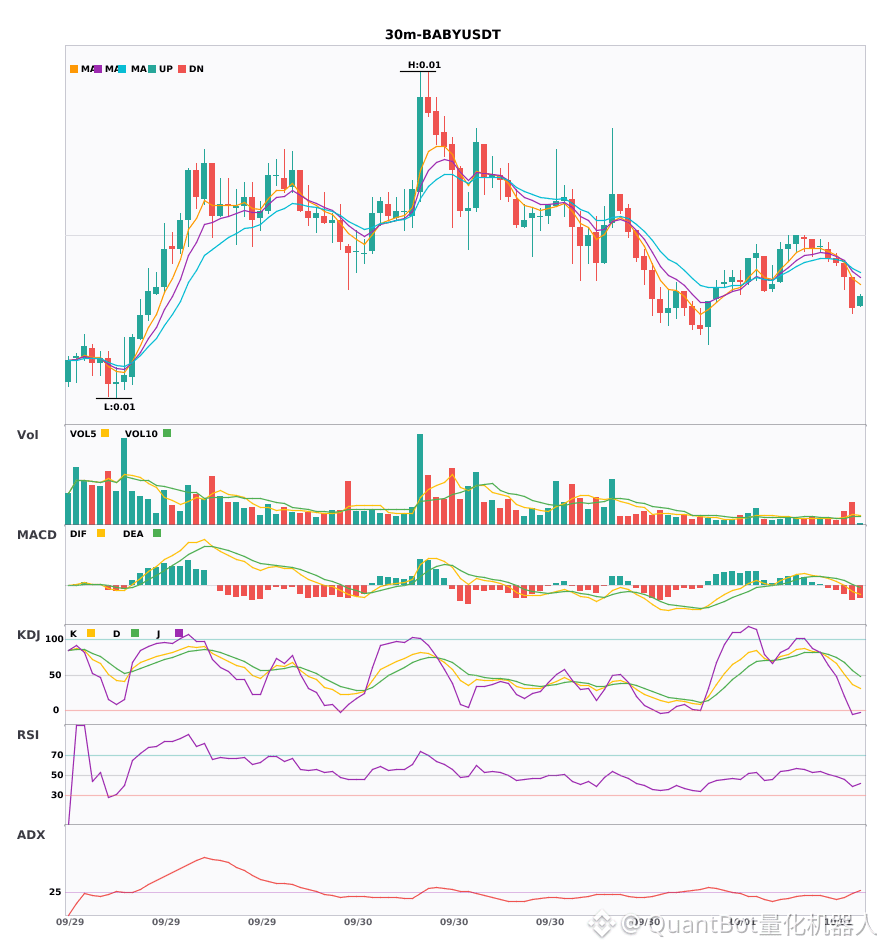
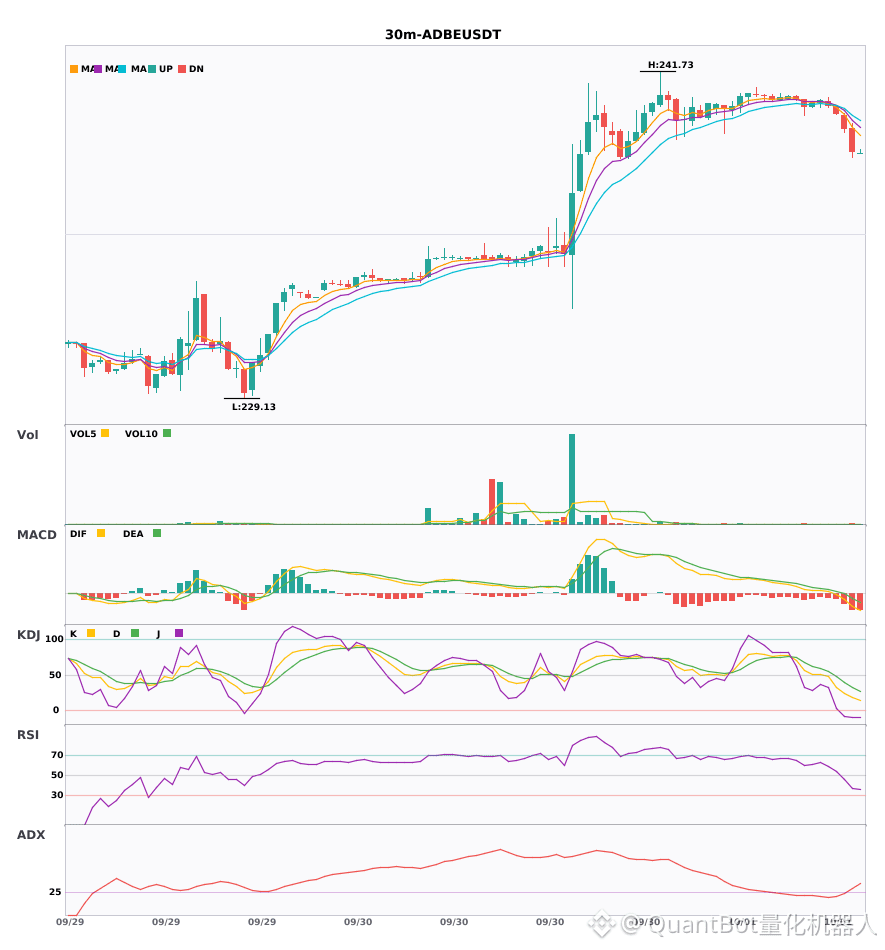
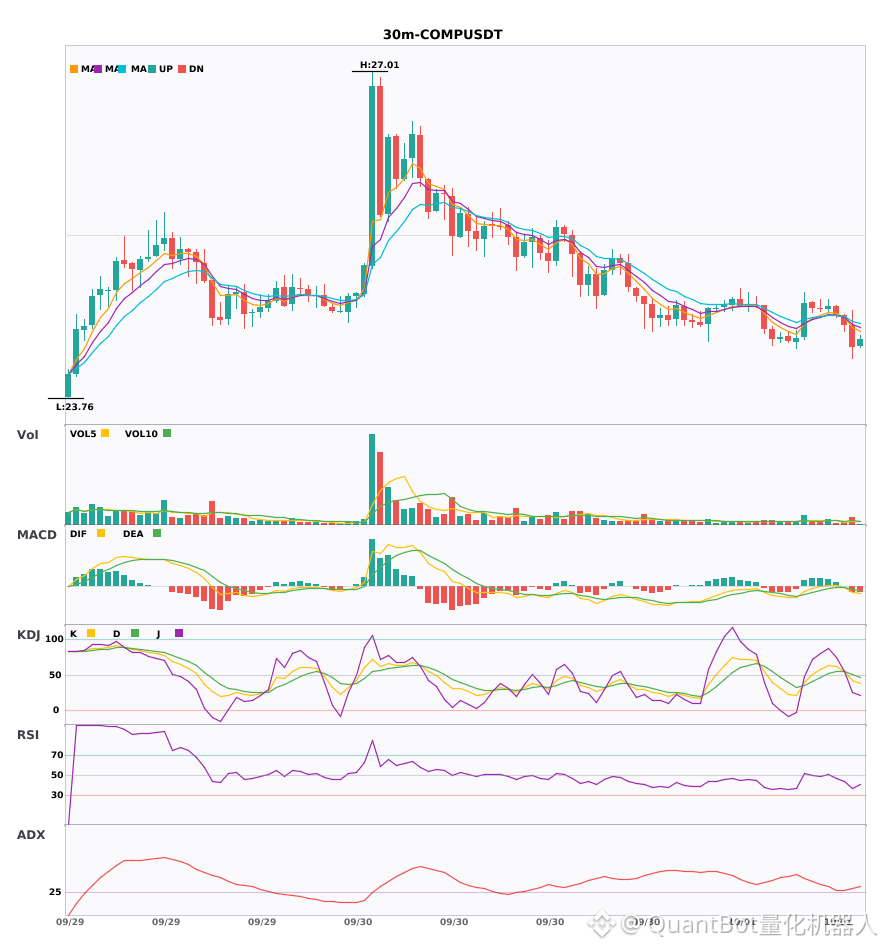
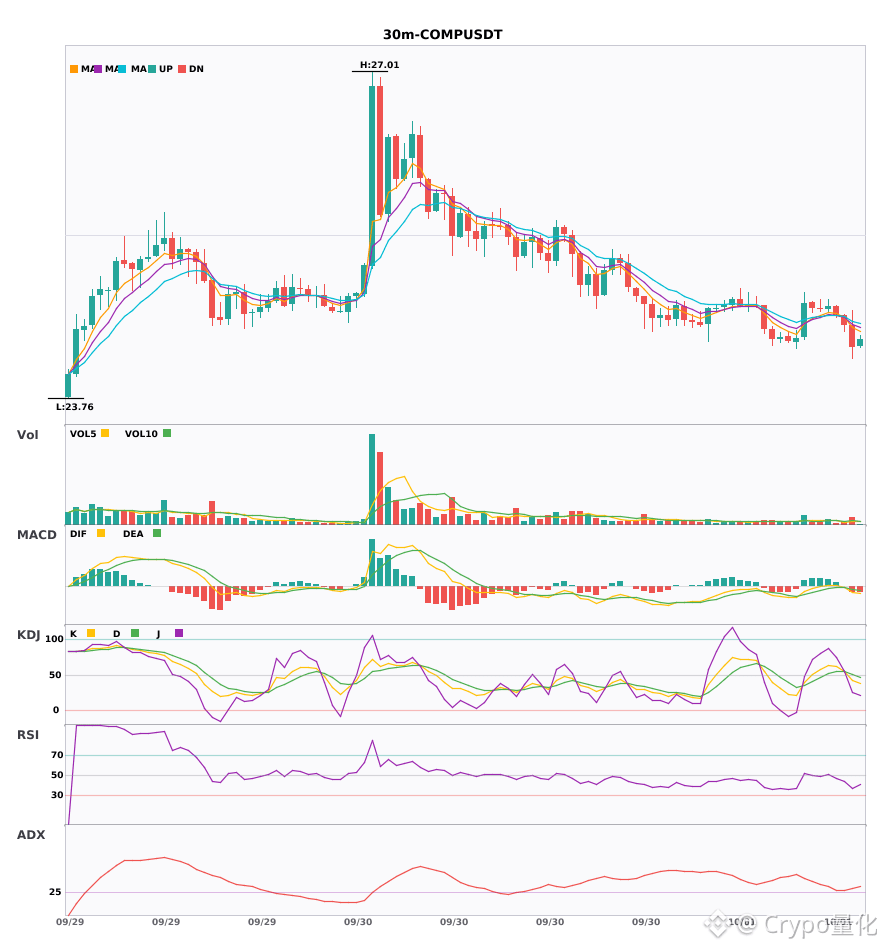
$BABY/$ADBE/$COMP 30-minute cycle bearish resonance signal synchronization confirmation
📉 $BABY | 30-minute bearish signal
━━━━━━━━━━━━━━━━━━
Technical analysis: ADX(28) momentum strengthening, signal effective | MACD DIF crosses below the zero line, bearish confirmation | EMA5<EMA8<EMA13 bearish structure | Volume surges 2.6x
Price change: -0.9500%
📉 $ADBE | 30-minute bearish signal
━━━━━━━━━━━━━━━━━━
Technical analysis: ADX(27) trend established, suitable to participate; MACD bearish operation, momentum strengthening; EMA5/8/13 are in a bearish arrangement; KDJ is weak (K24.0, D39.7); volume expands 2.0x.
Price change: -0.2400%
📉 $COMP | 30-minute bearish signal
━━━━━━━━━━━━━━━━━━
Technical analysis: ADX(31) confirms a trending market; MACD makes a dead cross below the zero line, bearish momentum strengthening; EMA5/8/13 are in a bearish arrangement; volume expands 1.8x.
Price change: -0.9000%
━━━━━━━━━━━━━━━━━━
#技术分析 #BABY #ADBE #COMP
📌 The above content is for reference only and does not constitute investment advice
$BABY /$ADBE /$COMP 30-minute cycle bearish resonance signal synchronization confirmation
📉 $BABY | 30-minute bearish signal
━━━━━━━━━━━━━━━━━━
Technical analysis: ADX(28) momentum strengthening, signal effective | MACD DIF crosses below the zero line, bearish confirmation | EMA5<EMA8<EMA13 bearish structure | Volume surges 2.6x
Price change: -0.9500%
📉 $ADBE | 30-minute bearish signal
━━━━━━━━━━━━━━━━━━
Technical analysis: ADX(27) trend established, suitable to participate; MACD bearish operation, momentum strengthening; EMA5/8/13 are in a bearish arrangement; KDJ is weak (K24.0, D39.7); volume expands 2.0x.
Price change: -0.2400%
📉 $COMP | 30-minute bearish signal
━━━━━━━━━━━━━━━━━━
Technical analysis: ADX(31) confirms a trending market; MACD makes a dead cross below the zero line, bearish momentum strengthening; EMA5/8/13 are in a bearish arrangement; volume expands 1.8x.
Price change: -0.9000%
━━━━━━━━━━━━━━━━━━
#技术分析 #BABY #ADBE #COMP
📌 The above content is for reference only and does not constitute investment advice
📉 $BABY | 30-minute bearish signal
━━━━━━━━━━━━━━━━━━
Technical analysis: ADX(28) momentum strengthening, signal effective | MACD DIF crosses below the zero line, bearish confirmation | EMA5<EMA8<EMA13 bearish structure | Volume surges 2.6x
Price change: -0.9500%
📉 $ADBE | 30-minute bearish signal
━━━━━━━━━━━━━━━━━━
Technical analysis: ADX(27) trend established, suitable to participate; MACD bearish operation, momentum strengthening; EMA5/8/13 are in a bearish arrangement; KDJ is weak (K24.0, D39.7); volume expands 2.0x.
Price change: -0.2400%
📉 $COMP | 30-minute bearish signal
━━━━━━━━━━━━━━━━━━
Technical analysis: ADX(31) confirms a trending market; MACD makes a dead cross below the zero line, bearish momentum strengthening; EMA5/8/13 are in a bearish arrangement; volume expands 1.8x.
Price change: -0.9000%
━━━━━━━━━━━━━━━━━━
#技术分析 #BABY #ADBE #COMP
📌 The above content is for reference only and does not constitute investment advice
27

·
--
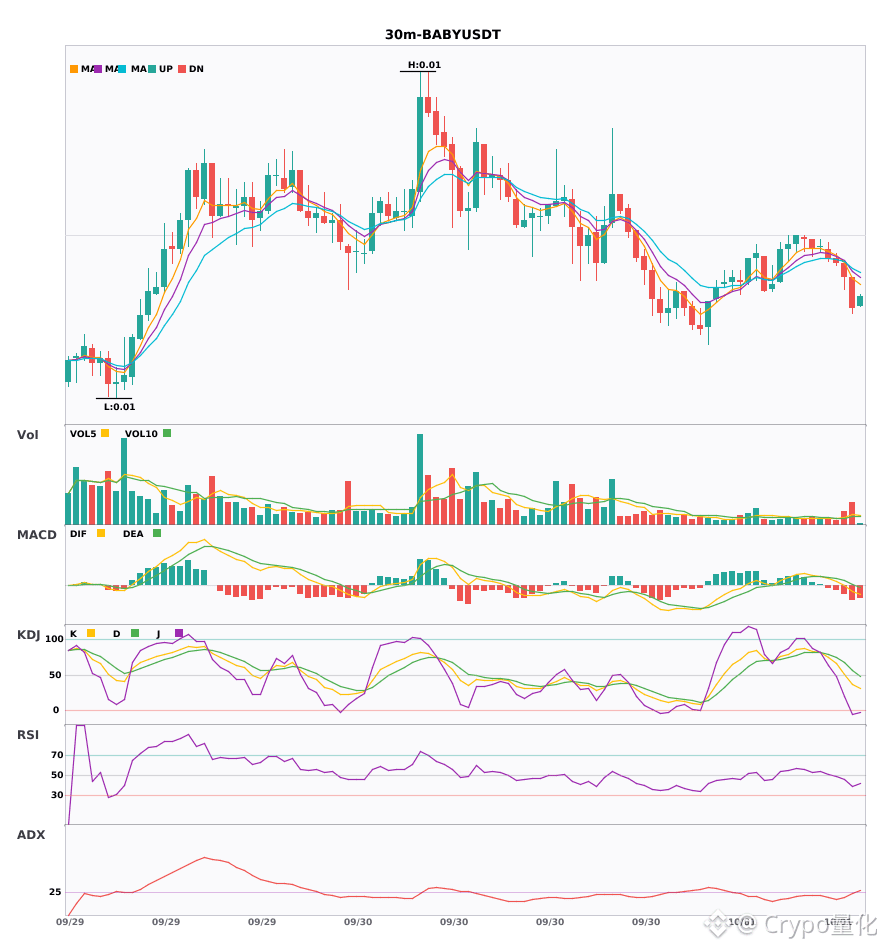
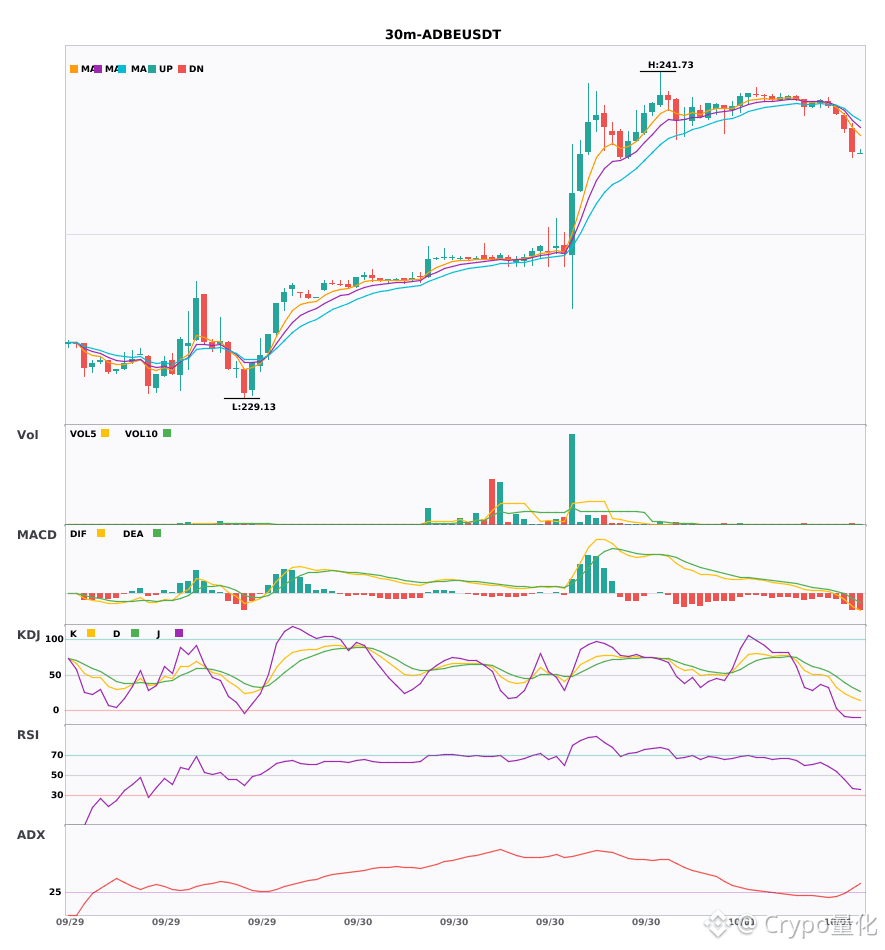
30-minute short warning: $BABY, $ADBE, $COMP are going to drop 🔥
════════════════════
🟢 $BABY 30-minute short signal
⚠️ Technicals: ADX trend has formed and is ready to participate; MACD crosses below the zero line and turns bearish; moving averages are arranged bearishly and diverging downward; trading volume expands by 2.6x
════════════════════
🟢 $ADBE 30-minute short signal
⚠️ Technicals: The ADX trend has just started and is suitable to participate | MACD green histogram expands, strengthening the bearish momentum | EMA bearishly arranged and diverging downward | KDJ is dominant for shorts at low levels (K24 D39.7) | volume expands by 2x
════════════════════
🟢 $COMP 30-minute short signal
⚠️ Technicals: Trend is clear (ADX 31) | The MACD dead cross hasn’t fully appeared yet, but shorts are gaining strength | Moving averages are diverging and ordered downward | trading volume expands by 1.8x
════════════════════
🔔 Watch out for first-hand market moves 🔔
#技术分析 #BABY #ADBE #COMP
📌 When trading, pay attention to whether the candlestick patterns match
30-minute short warning: $BABY , $ADBE , $COMP are going to drop 🔥
════════════════════
🟢 $BABY 30-minute short signal
⚠️ Technicals: ADX trend has formed and is ready to participate; MACD crosses below the zero line and turns bearish; moving averages are arranged bearishly and diverging downward; trading volume expands by 2.6x
════════════════════
🟢 $ADBE 30-minute short signal
⚠️ Technicals: The ADX trend has just started and is suitable to participate | MACD green histogram expands, strengthening the bearish momentum | EMA bearishly arranged and diverging downward | KDJ is dominant for shorts at low levels (K24 D39.7) | volume expands by 2x
════════════════════
🟢 $COMP 30-minute short signal
⚠️ Technicals: Trend is clear (ADX 31) | The MACD dead cross hasn’t fully appeared yet, but shorts are gaining strength | Moving averages are diverging and ordered downward | trading volume expands by 1.8x
════════════════════
🔔 Watch out for first-hand market moves 🔔
#技术分析 #BABY #ADBE #COMP
📌 When trading, pay attention to whether the candlestick patterns match
════════════════════
🟢 $BABY 30-minute short signal
⚠️ Technicals: ADX trend has formed and is ready to participate; MACD crosses below the zero line and turns bearish; moving averages are arranged bearishly and diverging downward; trading volume expands by 2.6x
════════════════════
🟢 $ADBE 30-minute short signal
⚠️ Technicals: The ADX trend has just started and is suitable to participate | MACD green histogram expands, strengthening the bearish momentum | EMA bearishly arranged and diverging downward | KDJ is dominant for shorts at low levels (K24 D39.7) | volume expands by 2x
════════════════════
🟢 $COMP 30-minute short signal
⚠️ Technicals: Trend is clear (ADX 31) | The MACD dead cross hasn’t fully appeared yet, but shorts are gaining strength | Moving averages are diverging and ordered downward | trading volume expands by 1.8x
════════════════════
🔔 Watch out for first-hand market moves 🔔
#技术分析 #BABY #ADBE #COMP
📌 When trading, pay attention to whether the candlestick patterns match
28
$ADBE LONG
Can buyers develop an upward move after breaking through a local barrier?
Bulls still have decent odds of maintaining initiative if the current momentum receives proper follow-through.
The context looks workable for finding growth points as long as buyers control the price structure.
🏁Entry: 238.44
💰Target 1: 240.10422768 (+0.70%)
💰Target 2: 241.95845536 (+1.48%)
💰Target 3: 244.73979687 (+2.64%)
❌Stop-loss: 235.46865848 (-1.25%)
⚠️ This is not financial advice. Trade at your own risk. DYOR.
#ADBE #SouthKoreaProposesLooseningCryptoShareholding #XRPDefends 📈
$ADBE
$ADBE LONG
Can buyers develop an upward move after breaking through a local barrier?
Bulls still have decent odds of maintaining initiative if the current momentum receives proper follow-through.
The context looks workable for finding growth points as long as buyers control the price structure.
🏁Entry: 238.44
💰Target 1: 240.10422768 (+0.70%)
💰Target 2: 241.95845536 (+1.48%)
💰Target 3: 244.73979687 (+2.64%)
❌Stop-loss: 235.46865848 (-1.25%)
⚠️ This is not financial advice. Trade at your own risk. DYOR.
#ADBE #SouthKoreaProposesLooseningCryptoShareholding #XRPDefends 📈
$ADBE
Can buyers develop an upward move after breaking through a local barrier?
Bulls still have decent odds of maintaining initiative if the current momentum receives proper follow-through.
The context looks workable for finding growth points as long as buyers control the price structure.
🏁Entry: 238.44
💰Target 1: 240.10422768 (+0.70%)
💰Target 2: 241.95845536 (+1.48%)
💰Target 3: 244.73979687 (+2.64%)
❌Stop-loss: 235.46865848 (-1.25%)
⚠️ This is not financial advice. Trade at your own risk. DYOR.
#ADBE #SouthKoreaProposesLooseningCryptoShareholding #XRPDefends 📈
$ADBE
18
$ADBE 4 hour cycle technical indicators strengthen, short-term bullish signal established
📈 $ADBE | 4-hour bullish signal
━━━━━━━━━━━━━━━━━━
Technical Analysis: ADX(33) indicates a clear trend, MACD is bullish, EMA is in a bullish alignment, KDJ is strong (K85.0/D75.5), with volume up by 6.4x.
Price Movement: 1.9600%
━━━━━━━━━━━━━━━━━━
#技术分析 #ADBE
📌 The above content is for reference only and does not constitute investment advice
$ADBE 4 hour cycle technical indicators strengthen, short-term bullish signal established
📈 $ADBE | 4-hour bullish signal
━━━━━━━━━━━━━━━━━━
Technical Analysis: ADX(33) indicates a clear trend, MACD is bullish, EMA is in a bullish alignment, KDJ is strong (K85.0/D75.5), with volume up by 6.4x.
Price Movement: 1.9600%
━━━━━━━━━━━━━━━━━━
#技术分析 #ADBE
📌 The above content is for reference only and does not constitute investment advice
📈 $ADBE | 4-hour bullish signal
━━━━━━━━━━━━━━━━━━
Technical Analysis: ADX(33) indicates a clear trend, MACD is bullish, EMA is in a bullish alignment, KDJ is strong (K85.0/D75.5), with volume up by 6.4x.
Price Movement: 1.9600%
━━━━━━━━━━━━━━━━━━
#技术分析 #ADBE
📌 The above content is for reference only and does not constitute investment advice
7
·
--
$ADBE 4 hours MACD golden cross with volume expansion. Short-term bulls are lining up just formed 🔥
════════════════════
🔴 $ADBE 4 hours Bullish signals
⚠️ Technicals: ADX 33 shows a clear trend | MACD golden cross and the red histogram continues to expand | Moving averages are in a bullish upward alignment | KDJ K crosses above D—strong, but watch for overbought | Volume surge up to 6x
════════════════════
🔔 Follow to get the first-hand market move 🔔
#技术分析 #ADBE
📌 When trading, pay attention to whether the candlestick pattern matches
$ADBE 4 hours MACD golden cross with volume expansion. Short-term bulls are lining up just formed 🔥
════════════════════
🔴 $ADBE 4 hours Bullish signals
⚠️ Technicals: ADX 33 shows a clear trend | MACD golden cross and the red histogram continues to expand | Moving averages are in a bullish upward alignment | KDJ K crosses above D—strong, but watch for overbought | Volume surge up to 6x
════════════════════
🔔 Follow to get the first-hand market move 🔔
#技术分析 #ADBE
📌 When trading, pay attention to whether the candlestick pattern matches
════════════════════
🔴 $ADBE 4 hours Bullish signals
⚠️ Technicals: ADX 33 shows a clear trend | MACD golden cross and the red histogram continues to expand | Moving averages are in a bullish upward alignment | KDJ K crosses above D—strong, but watch for overbought | Volume surge up to 6x
════════════════════
🔔 Follow to get the first-hand market move 🔔
#技术分析 #ADBE
📌 When trading, pay attention to whether the candlestick pattern matches
3
Log in to explore more content
Join global crypto users on Binance Square
⚡️ Get latest and useful information about crypto.
💬 Trusted by the world’s largest crypto exchange.
👍 Discover real insights from verified creators.
Email / Phone number
Trending Topics
1
#BinancePick
2.9M views
151,380 Discussing
2
#EarningsSeason
5.2M views
25,748 Discussing
3
#AnthropicTTMRevenueGrewAbout1200%
16,221 views
315 Discussing
4
#AnthropicS1ExpectedToday
18,537 views
286 Discussing
5
#SouthKoreaReportedlyWeighsFourthCryptoTaxDelay
24,144 views
409 Discussing
6
#FranklinTempletonFilesForTwoDividendToBitcoinETFs
31,785 views
504 Discussing
7
#StrategyMSTRSurpassesNasdaqInMarketCap
24,548 views
366 Discussing
8
#CanadaProposesStablecoinRedemptionWithin3BusinessDays
1,134 views
34 Discussing
9
#ElectrumWalletBugLetRogueServersStealFunds
26,549 views
443 Discussing
10
#ArgentineCourtDismissesLIBRACaseAgainstMilei
40,447 views
550 Discussing