

#educational_post
educational_post
738,742 views
1,152 Discussing
Hot
Latest

·
--
See translation
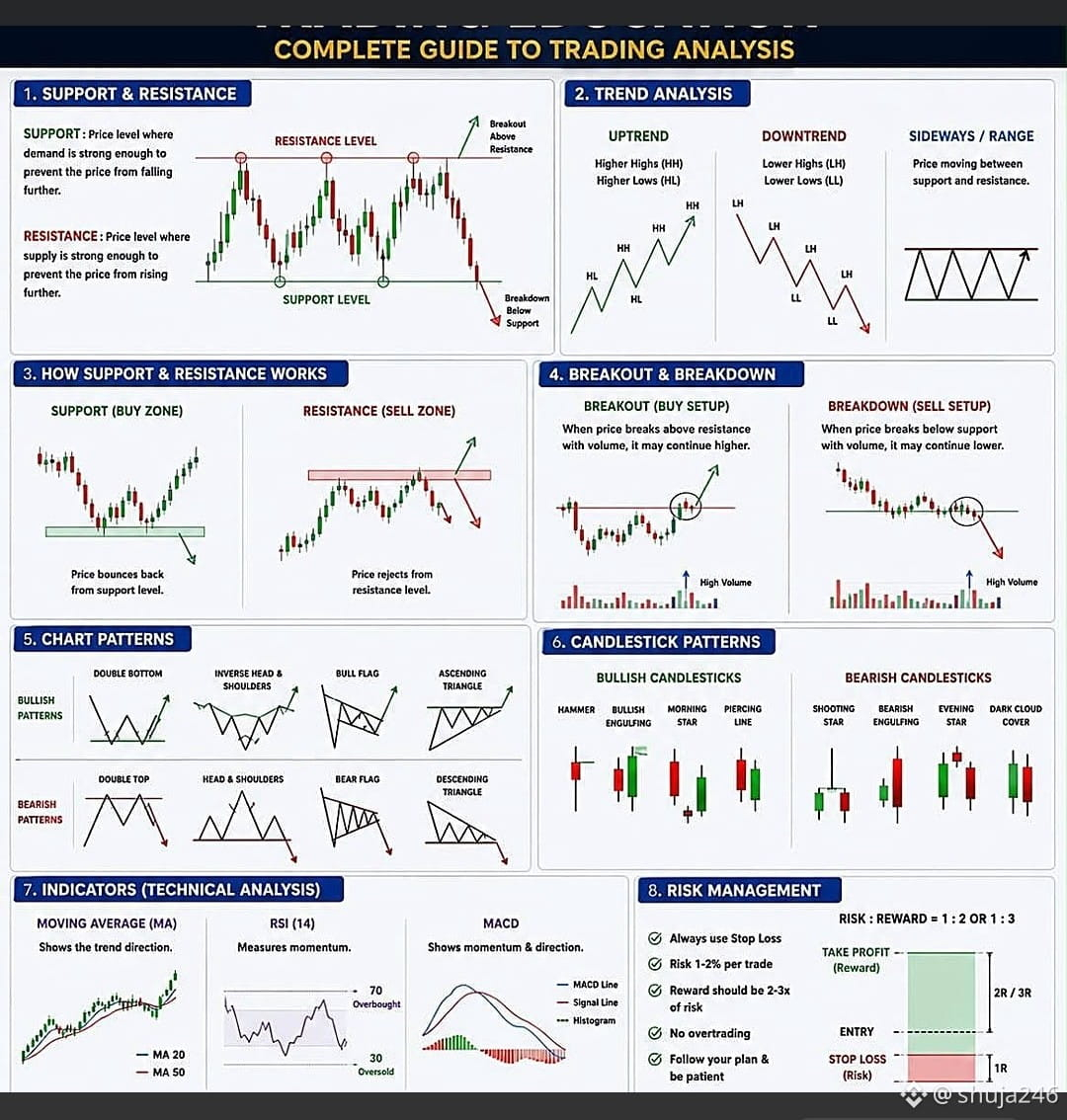
COMPLETE GUIDE TO TRADING ANALYSIS — Save This Post
After losing trades in the beginning, I realized trading is not about guessing. It's about these 8 rules. This one image fixed my trading.
1. SUPPORT & RESISTANCE
Support is where buyers defend. Resistance is where sellers defend. Break above resistance = breakout. Break below support = breakdown. Like $BTC defending $108K and rejecting at $126K.
2. TREND ANALYSIS
Uptrend = Higher Highs + Higher Lows. Downtrend = Lower Highs + Lower Lows. Sideways = price stuck between support and resistance. Never trade against the trend.
3. HOW S/R WORKS
Support = Buy Zone. Price bounces. Resistance = Sell Zone. Price rejects. Wait for confirmation, don't anticipate.
4. BREAKOUT & BREAKDOWN
Real breakout needs volume. No volume = fakeout. Your $QUSDT crash from $0.122 to $0.0554 on Oct 25 was a breakdown with 164M volume spike — textbook sell.
5. CHART PATTERNS
Bullish: Double Bottom, Inverse Head & Shoulders, Bull Flag, Ascending Triangle.
Bearish: Double Top, Head & Shoulders, Bear Flag, Descending Triangle. Learn to spot just these 8.
6. CANDLESTICK PATTERNS
Bullish: Hammer, Bullish Engulfing, Morning Star, Piercing Line — buyers taking control.
Bearish: Shooting Star, Bearish Engulfing, Evening Star, Dark Cloud Cover — sellers taking control.
7. INDICATORS
MA shows trend direction. RSI (14) shows overbought above 70 and oversold below 30. MACD shows momentum shift. Don't use more than 2-3.
8. RISK MANAGEMENT — Most Important
Always use Stop Loss. Risk only 1-2% per trade. Reward should be 2-3x risk. No overtrading. Follow your plan and be patient. Risk : Reward = 1:2 or 1:3 is how pros survive.
90% of traders know 1-7 but ignore 8 and blow accounts.
Which part do you struggle with most? Comment below.
Save this guide and follow me @shuja246 I break down BTC ETH and altcoins daily using this exact framework.
Tap $BTC to practice this live.
{future}(BTCUSDT)
#cryptoguide #LearnFromMistakes #EducationalContent #educational_post
COMPLETE GUIDE TO TRADING ANALYSIS — Save This Post
After losing trades in the beginning, I realized trading is not about guessing. It's about these 8 rules. This one image fixed my trading.
1. SUPPORT & RESISTANCE
Support is where buyers defend. Resistance is where sellers defend. Break above resistance = breakout. Break below support = breakdown. Like $BTC defending $108K and rejecting at $126K.
2. TREND ANALYSIS
Uptrend = Higher Highs + Higher Lows. Downtrend = Lower Highs + Lower Lows. Sideways = price stuck between support and resistance. Never trade against the trend.
3. HOW S/R WORKS
Support = Buy Zone. Price bounces. Resistance = Sell Zone. Price rejects. Wait for confirmation, don't anticipate.
4. BREAKOUT & BREAKDOWN
Real breakout needs volume. No volume = fakeout. Your $QUSDT crash from $0.122 to $0.0554 on Oct 25 was a breakdown with 164M volume spike — textbook sell.
5. CHART PATTERNS
Bullish: Double Bottom, Inverse Head & Shoulders, Bull Flag, Ascending Triangle.
Bearish: Double Top, Head & Shoulders, Bear Flag, Descending Triangle. Learn to spot just these 8.
6. CANDLESTICK PATTERNS
Bullish: Hammer, Bullish Engulfing, Morning Star, Piercing Line — buyers taking control.
Bearish: Shooting Star, Bearish Engulfing, Evening Star, Dark Cloud Cover — sellers taking control.
7. INDICATORS
MA shows trend direction. RSI (14) shows overbought above 70 and oversold below 30. MACD shows momentum shift. Don't use more than 2-3.
8. RISK MANAGEMENT — Most Important
Always use Stop Loss. Risk only 1-2% per trade. Reward should be 2-3x risk. No overtrading. Follow your plan and be patient. Risk : Reward = 1:2 or 1:3 is how pros survive.
90% of traders know 1-7 but ignore 8 and blow accounts.
Which part do you struggle with most? Comment below.
Save this guide and follow me @shuja246 I break down BTC ETH and altcoins daily using this exact framework.
Tap $BTC to practice this live.
#cryptoguide #LearnFromMistakes #EducationalContent #educational_post
After losing trades in the beginning, I realized trading is not about guessing. It's about these 8 rules. This one image fixed my trading.
1. SUPPORT & RESISTANCE
Support is where buyers defend. Resistance is where sellers defend. Break above resistance = breakout. Break below support = breakdown. Like $BTC defending $108K and rejecting at $126K.
2. TREND ANALYSIS
Uptrend = Higher Highs + Higher Lows. Downtrend = Lower Highs + Lower Lows. Sideways = price stuck between support and resistance. Never trade against the trend.
3. HOW S/R WORKS
Support = Buy Zone. Price bounces. Resistance = Sell Zone. Price rejects. Wait for confirmation, don't anticipate.
4. BREAKOUT & BREAKDOWN
Real breakout needs volume. No volume = fakeout. Your $QUSDT crash from $0.122 to $0.0554 on Oct 25 was a breakdown with 164M volume spike — textbook sell.
5. CHART PATTERNS
Bullish: Double Bottom, Inverse Head & Shoulders, Bull Flag, Ascending Triangle.
Bearish: Double Top, Head & Shoulders, Bear Flag, Descending Triangle. Learn to spot just these 8.
6. CANDLESTICK PATTERNS
Bullish: Hammer, Bullish Engulfing, Morning Star, Piercing Line — buyers taking control.
Bearish: Shooting Star, Bearish Engulfing, Evening Star, Dark Cloud Cover — sellers taking control.
7. INDICATORS
MA shows trend direction. RSI (14) shows overbought above 70 and oversold below 30. MACD shows momentum shift. Don't use more than 2-3.
8. RISK MANAGEMENT — Most Important
Always use Stop Loss. Risk only 1-2% per trade. Reward should be 2-3x risk. No overtrading. Follow your plan and be patient. Risk : Reward = 1:2 or 1:3 is how pros survive.
90% of traders know 1-7 but ignore 8 and blow accounts.
Which part do you struggle with most? Comment below.
Save this guide and follow me @shuja246 I break down BTC ETH and altcoins daily using this exact framework.
Tap $BTC to practice this live.
#cryptoguide #LearnFromMistakes #EducationalContent #educational_post
95

·
--
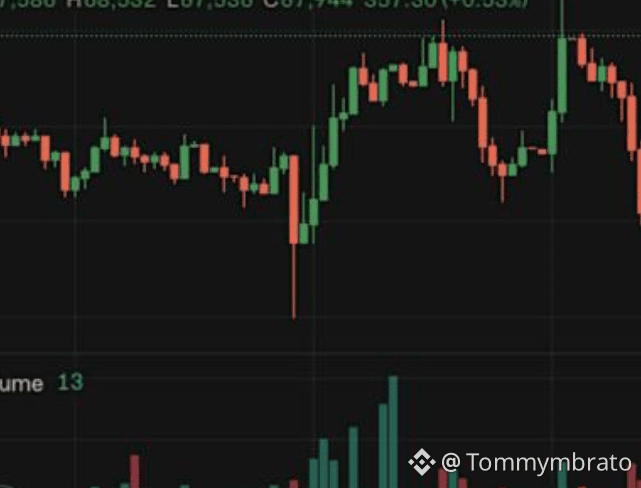
How do you read a candlestick chart? Learn these 4 elements before analyzing the price!
📊 HOW TO READ A JAPANESE CANDLESTICK CHART?
If you’ve ever opened a Bitcoin chart, you’ve probably seen lots of green and red candles.
But do you really know what they mean?
Let’s break it down! 👇
🕯️ 1. THE CANDLE BODY
The body shows the difference between the opening and closing prices over a given period.
🟢 A bullish candle generally indicates that the closing price was higher than the opening price.
🔴 A bearish candle generally indicates that the closing price was lower than the opening price.
The color can vary depending on the platform’s settings.
📍 2. THE WICKS
The thin lines above and below the body are called shadows or wicks.
The upper wick shows the highest price reached during the period; the lower wick shows the lowest price.
These extremes help you understand how far the price moved.
⏱️ 3. THE TIMEFRAME
A 1-hour candle represents price activity over one hour. A daily candle represents one trading day.
The same asset can show different signals depending on the timeframe being analyzed.
📈 4. THE CONTEXT
A single candle can’t predict the future!
To interpret a chart, also consider the trend, support and resistance levels, and, when relevant, trading volume.
⚠️ Remember: technical analysis helps organize information and assess scenarios. It doesn’t eliminate risk or guarantee accurate predictions.
$
💬 COMMUNITY CHALLENGE:
When you open a chart, what’s the first thing you look at?
A) The color and size of the candles
B) Support and resistance
C) Trading volume
D) The overall trend
Share your answer and explain why. Let’s learn together! 👇
#TechnicalAnalysis #Bitcoin #educational_post
#Binance #Biginners
How do you read a candlestick chart? Learn these 4 elements before analyzing the price!
📊 HOW TO READ A JAPANESE CANDLESTICK CHART?
If you’ve ever opened a Bitcoin chart, you’ve probably seen lots of green and red candles.
But do you really know what they mean?
Let’s break it down! 👇
🕯️ 1. THE CANDLE BODY
The body shows the difference between the opening and closing prices over a given period.
🟢 A bullish candle generally indicates that the closing price was higher than the opening price.
🔴 A bearish candle generally indicates that the closing price was lower than the opening price.
The color can vary depending on the platform’s settings.
📍 2. THE WICKS
The thin lines above and below the body are called shadows or wicks.
The upper wick shows the highest price reached during the period; the lower wick shows the lowest price.
These extremes help you understand how far the price moved.
⏱️ 3. THE TIMEFRAME
A 1-hour candle represents price activity over one hour. A daily candle represents one trading day.
The same asset can show different signals depending on the timeframe being analyzed.
📈 4. THE CONTEXT
A single candle can’t predict the future!
To interpret a chart, also consider the trend, support and resistance levels, and, when relevant, trading volume.
⚠️ Remember: technical analysis helps organize information and assess scenarios. It doesn’t eliminate risk or guarantee accurate predictions.
$
💬 COMMUNITY CHALLENGE:
When you open a chart, what’s the first thing you look at?
A) The color and size of the candles
B) Support and resistance
C) Trading volume
D) The overall trend
Share your answer and explain why. Let’s learn together! 👇
#TechnicalAnalysis #Bitcoin #educational_post
#Binance #Biginners
📊 HOW TO READ A JAPANESE CANDLESTICK CHART?
If you’ve ever opened a Bitcoin chart, you’ve probably seen lots of green and red candles.
But do you really know what they mean?
Let’s break it down! 👇
🕯️ 1. THE CANDLE BODY
The body shows the difference between the opening and closing prices over a given period.
🟢 A bullish candle generally indicates that the closing price was higher than the opening price.
🔴 A bearish candle generally indicates that the closing price was lower than the opening price.
The color can vary depending on the platform’s settings.
📍 2. THE WICKS
The thin lines above and below the body are called shadows or wicks.
The upper wick shows the highest price reached during the period; the lower wick shows the lowest price.
These extremes help you understand how far the price moved.
⏱️ 3. THE TIMEFRAME
A 1-hour candle represents price activity over one hour. A daily candle represents one trading day.
The same asset can show different signals depending on the timeframe being analyzed.
📈 4. THE CONTEXT
A single candle can’t predict the future!
To interpret a chart, also consider the trend, support and resistance levels, and, when relevant, trading volume.
⚠️ Remember: technical analysis helps organize information and assess scenarios. It doesn’t eliminate risk or guarantee accurate predictions.
$
💬 COMMUNITY CHALLENGE:
When you open a chart, what’s the first thing you look at?
A) The color and size of the candles
B) Support and resistance
C) Trading volume
D) The overall trend
Share your answer and explain why. Let’s learn together! 👇
#TechnicalAnalysis #Bitcoin #educational_post
#Binance #Biginners
65


Article
🚨 You placed a buy order at a great price… but Binance rejected it! Why? 😳Imagine you want to buy a coin, the price looks good, and you have enough balance…
However, your order is canceled immediately!
Was there an error with the platform? 🤔
Not necessarily. You may have selected Post Only.
🎓 BINANCE MASTERCLASS | Lesson 14
🧩 Post Only — an order that aims to add liquidity, not take it immediately!
💡 ① The basic idea
There are two types of participants in the order book:
🟢 Maker: Places an order that waits in the order book, adding liquidity.
🚨 You placed a buy order at a great price… but Binance rejected it! Why? 😳
Imagine you want to buy a coin, the price looks good, and you have enough balance…
However, your order is canceled immediately!
Was there an error with the platform? 🤔
Not necessarily. You may have selected Post Only.
🎓 BINANCE MASTERCLASS | Lesson 14
🧩 Post Only — an order that aims to add liquidity, not take it immediately!
💡 ① The basic idea
There are two types of participants in the order book:
🟢 Maker: Places an order that waits in the order book, adding liquidity.
However, your order is canceled immediately!
Was there an error with the platform? 🤔
Not necessarily. You may have selected Post Only.
🎓 BINANCE MASTERCLASS | Lesson 14
🧩 Post Only — an order that aims to add liquidity, not take it immediately!
💡 ① The basic idea
There are two types of participants in the order book:
🟢 Maker: Places an order that waits in the order book, adding liquidity.
90

·
--
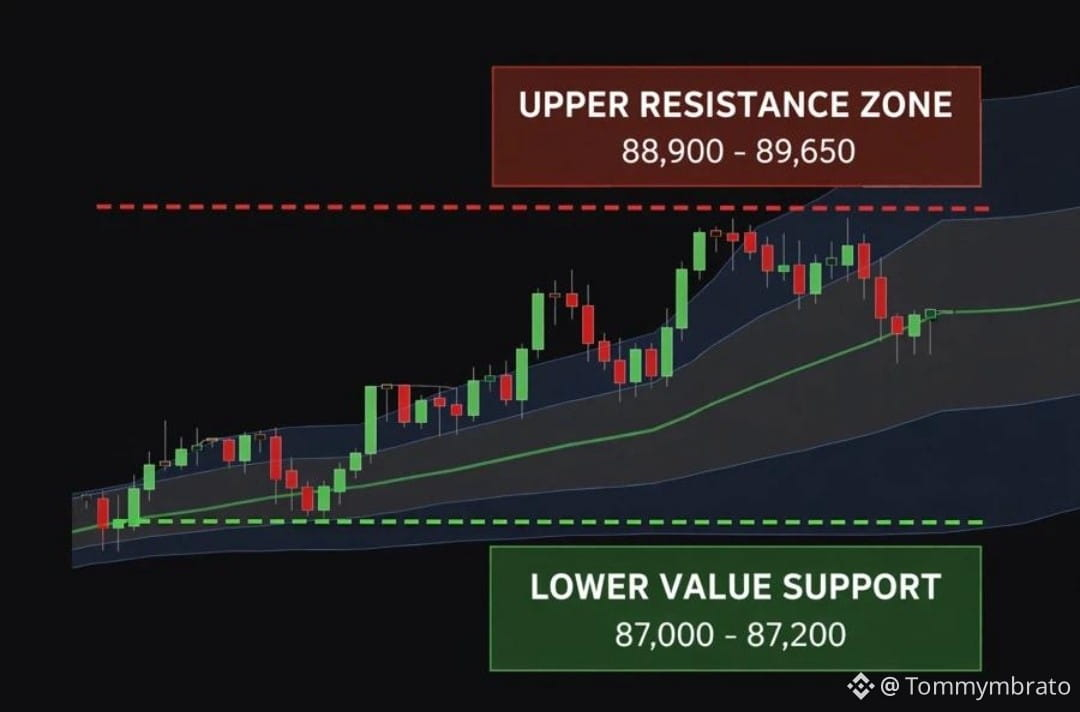
📚 TRADING TIP: How to identify strong support? 💡
It happens to many people: they buy at a "support" level, and the price keeps falling 📉. How can you avoid this?
True support follows three key rules: 1️⃣ Multiple touches: The price has bounced at least 2 or 3 times in the same area. 2️⃣ Buying volume: Green candles with long lower wicks are visible (showing the price being rejected to the downside). 3️⃣ Confluence: It coincides with moving averages (e.g., the 200 EMA on the 4-hour timeframe).
🛑 Remember: Never enter just because the price has reached the line; wait for a confirmation candle before trading.
Do you usually use the 200 EMA to identify support levels? 👇 #TradingTales #educational_post $
📚 TRADING TIP: How to identify strong support? 💡
It happens to many people: they buy at a "support" level, and the price keeps falling 📉. How can you avoid this?
True support follows three key rules: 1️⃣ Multiple touches: The price has bounced at least 2 or 3 times in the same area. 2️⃣ Buying volume: Green candles with long lower wicks are visible (showing the price being rejected to the downside). 3️⃣ Confluence: It coincides with moving averages (e.g., the 200 EMA on the 4-hour timeframe).
🛑 Remember: Never enter just because the price has reached the line; wait for a confirmation candle before trading.
Do you usually use the 200 EMA to identify support levels? 👇 #TradingTales #educational_post $
It happens to many people: they buy at a "support" level, and the price keeps falling 📉. How can you avoid this?
True support follows three key rules: 1️⃣ Multiple touches: The price has bounced at least 2 or 3 times in the same area. 2️⃣ Buying volume: Green candles with long lower wicks are visible (showing the price being rejected to the downside). 3️⃣ Confluence: It coincides with moving averages (e.g., the 200 EMA on the 4-hour timeframe).
🛑 Remember: Never enter just because the price has reached the line; wait for a confirmation candle before trading.
Do you usually use the 200 EMA to identify support levels? 👇 #TradingTales #educational_post $
104
·
--
Article
¿𝐖𝐡𝐞𝐧 𝐢𝐬 𝐭𝐡𝐞 𝐛𝐞𝐬𝐭 𝐭𝐢𝐦𝐞 𝐭𝐨 𝐢𝐧𝐯𝐞𝐬𝐭?What mistakes do you make when looking for it?
Generally, this question comes with incorrect answers, simply because it’s asked of the wrong people and because you don’t take the initiative to learn the art of investing wisely. Now I’ll explain why:
1. When you look for the best time to invest, you waste time, effort, and money if you don’t have the right information and education to help you take the first step.
2. You’ll probably expose yourself to others while trying to get advice from your “friend” or “cousin” who may have more education or life experience; however, in some cases (in most of Latin America), envy shows up quickly, and their answers won’t always be sincere, or they’ll simply show apathy with phrases like:
¿𝐖𝐡𝐞𝐧 𝐢𝐬 𝐭𝐡𝐞 𝐛𝐞𝐬𝐭 𝐭𝐢𝐦𝐞 𝐭𝐨 𝐢𝐧𝐯𝐞𝐬𝐭?
What mistakes do you make when looking for it?
Generally, this question comes with incorrect answers, simply because it’s asked of the wrong people and because you don’t take the initiative to learn the art of investing wisely. Now I’ll explain why:
1. When you look for the best time to invest, you waste time, effort, and money if you don’t have the right information and education to help you take the first step.
2. You’ll probably expose yourself to others while trying to get advice from your “friend” or “cousin” who may have more education or life experience; however, in some cases (in most of Latin America), envy shows up quickly, and their answers won’t always be sincere, or they’ll simply show apathy with phrases like:
Generally, this question comes with incorrect answers, simply because it’s asked of the wrong people and because you don’t take the initiative to learn the art of investing wisely. Now I’ll explain why:
1. When you look for the best time to invest, you waste time, effort, and money if you don’t have the right information and education to help you take the first step.
2. You’ll probably expose yourself to others while trying to get advice from your “friend” or “cousin” who may have more education or life experience; however, in some cases (in most of Latin America), envy shows up quickly, and their answers won’t always be sincere, or they’ll simply show apathy with phrases like:
199

·
--
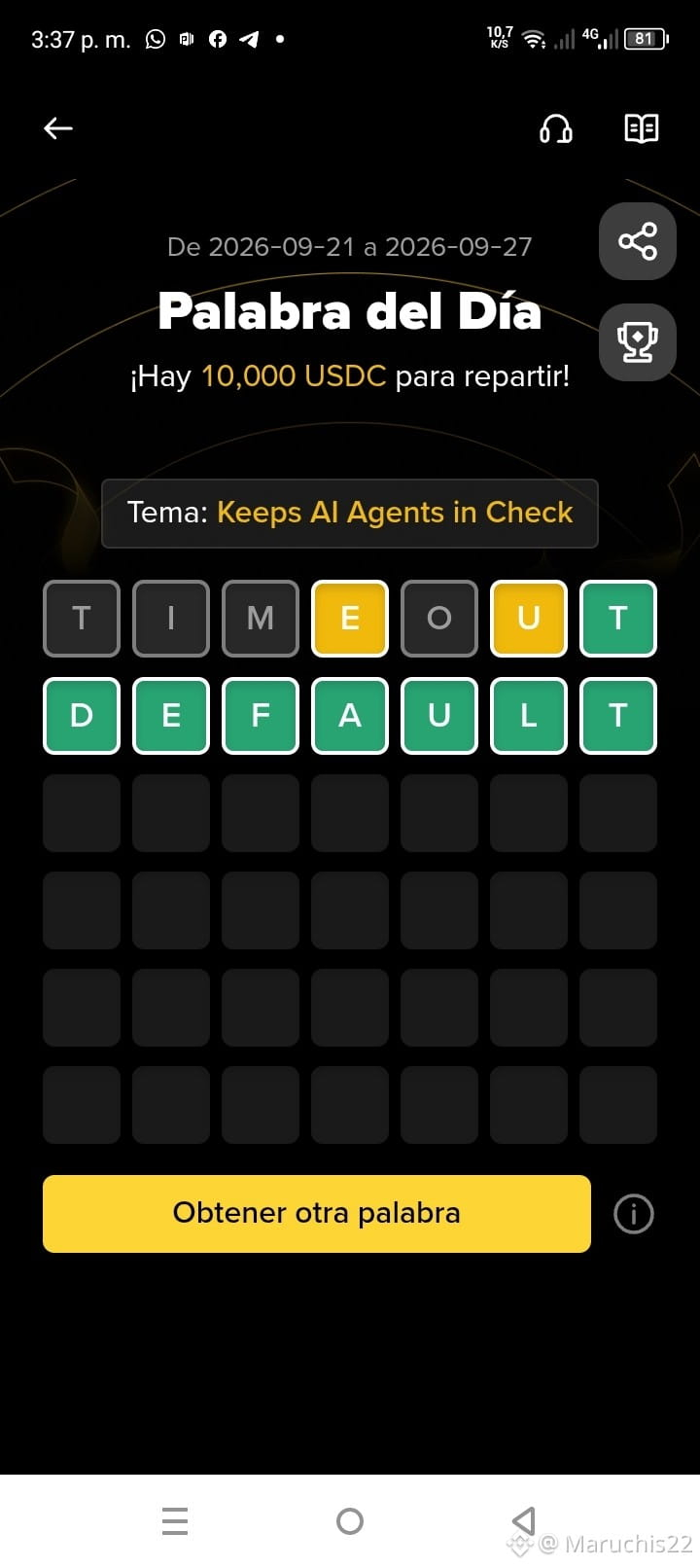
Useful concepts for beginners, DEFAULT in the crypto and financial world? In simple terms, a Default (or "payment default") occurs when an individual, company, or even a DeFi protocol cannot meet its financial obligations, such as paying a debt or repaying a loan on the agreed date. In the crypto ecosystem, this concept is seen mainly in: DeFi / CeFi Loans: If a user takes out a loan on a platform (such as Binance Loans) and the value of their collateral drops too much without adding more funds, they are at risk of default, which triggers an automatic liquidation to protect the platform’s funds. Smart Contracts: If a DeFi project suffers a software error and cannot release funds to pay its investors, a default status is generated.
💡 Lesson of the day: In the crypto market, the risk of default is managed automatically through algorithms. That’s why maintaining a good collateral margin and auditing smart contracts is vital to protect your capital. #BinanceSquare #WriteandLearn #Write2Earn #educational_post
Useful concepts for beginners, DEFAULT in the crypto and financial world? In simple terms, a Default (or "payment default") occurs when an individual, company, or even a DeFi protocol cannot meet its financial obligations, such as paying a debt or repaying a loan on the agreed date. In the crypto ecosystem, this concept is seen mainly in: DeFi / CeFi Loans: If a user takes out a loan on a platform (such as Binance Loans) and the value of their collateral drops too much without adding more funds, they are at risk of default, which triggers an automatic liquidation to protect the platform’s funds. Smart Contracts: If a DeFi project suffers a software error and cannot release funds to pay its investors, a default status is generated.
💡 Lesson of the day: In the crypto market, the risk of default is managed automatically through algorithms. That’s why maintaining a good collateral margin and auditing smart contracts is vital to protect your capital. #BinanceSquare #WriteandLearn #Write2Earn #educational_post
💡 Lesson of the day: In the crypto market, the risk of default is managed automatically through algorithms. That’s why maintaining a good collateral margin and auditing smart contracts is vital to protect your capital. #BinanceSquare #WriteandLearn #Write2Earn #educational_post
256

·
--
Article
See translation
Binance Feature #2: Add Funds
(Quiz Material)Before you can trade, invest, or earn rewards on Binance, you need to fund your account.
The Add Funds feature is the starting point of every crypto journey. It gives you multiple ways to deposit money or cryptocurrency into your Binance account safely and conveniently.
Let's explore how it works.
[ Learn & Earn : Quiz 🧠
Get trading related education and win crypto rewards 🎉
Join upcoming quiz. Topic : "Add Funds"
Fun way to learn ✨ ]
What Is Add Funds?
The Add Funds section allows you to add assets to your Binance account using different methods, depending on your country and preferred payment option.
Common methods include:
• Deposit Crypto
• Buy with Card (Debit/Credit Card)
• Bank Transfer (where available)
• Binance P2P
• Third-Party Payment Providers (available in selected regions)
Choose the method that best suits your needs.
Method 1: Deposit Crypto
If you already own cryptocurrency in another wallet or exchange, you can transfer it to Binance.
Steps
Open Add FundsSelect Deposit CryptoChoose the cryptocurrency you want to deposit.Select the correct blockchain network.Copy your deposit address or scan the QR code.Send the crypto from your external wallet.
⚠️ Important: Always select the correct network. Sending assets to the wrong blockchain may result in permanent loss of funds.
Method 2: Buy with Card
If you're new to crypto, this is one of the easiest options.
Simply:
• Choose your local currency.
• Enter the amount.
• Select the cryptocurrency you want to buy.
• Complete the payment with your debit or credit card.
Your purchased crypto will be credited to your Binance account after the payment is processed.
Method 3: Binance P2P
Binance P2P allows users to buy and sell crypto directly with other users through Binance's escrow system.
While it's convenient, you should always follow safe trading practices.
P2P Safety Tips
✅ Never communicate or make deals outside the Binance P2P chat.
✅ Never send or receive payments outside the official Binance order.
✅ Keep all conversations inside Binance.
✅ Save payment receipts and transaction records until the trade is completed.
✅ If you're buying crypto, upload proof of payment after sending the funds.
✅ If you're selling crypto, never release your crypto until you have personally confirmed the money has arrived in your bank or payment account. Do not rely only on screenshots or messages from the buyer.
✅ If there's any issue, use Binance's Appeal feature instead of resolving the dispute privately.
Remember: Binance's escrow protection works best when the entire transaction stays within the platform.
Why Is Add Funds Important?
Without funding your account, you cannot:
• Buy cryptocurrencies
• Trade in Spot or Futures
• Invest in Binance Earn
• Participate in Launchpool or other Binance products
It is the first step before exploring the rest of the Binance ecosystem.
Common Mistakes to Avoid
❌ Sending crypto to the wrong blockchain network.
❌ Releasing crypto before confirming payment in your account.
❌ Trusting edited payment screenshots.
❌ Completing P2P deals outside Binance.
❌ Ignoring transaction details before confirming.
Taking a few extra minutes to verify each transaction can help prevent costly mistakes.
Final Thoughts
Adding funds is simple, but security should always come first.
Whether you're depositing crypto, buying with a card, or using Binance P2P, take your time, double-check every detail, and use Binance's built-in protections.
A secure investor isn't just someone who grows their portfolio—it's someone who protects it.
VRTrader Insight
The first investment you should make isn't into a coin—it's into good habits. Learn the platform, follow safe practices, and always verify before you confirm.
Learn today. Invest smarter tomorrow.
#Binance #EducationalContent #educational_post $BTC $NVDAB $SIREN
Binance Feature #2: Add Funds (Quiz Material)
Before you can trade, invest, or earn rewards on Binance, you need to fund your account.
The Add Funds feature is the starting point of every crypto journey. It gives you multiple ways to deposit money or cryptocurrency into your Binance account safely and conveniently.
Let's explore how it works.
[ Learn & Earn : Quiz 🧠
Get trading related education and win crypto rewards 🎉
Join upcoming quiz. Topic : "Add Funds"
Fun way to learn ✨ ]
What Is Add Funds?
The Add Funds section allows you to add assets to your Binance account using different methods, depending on your country and preferred payment option.
Common methods include:
• Deposit Crypto
• Buy with Card (Debit/Credit Card)
• Bank Transfer (where available)
• Binance P2P
• Third-Party Payment Providers (available in selected regions)
Choose the method that best suits your needs.
Method 1: Deposit Crypto
If you already own cryptocurrency in another wallet or exchange, you can transfer it to Binance.
Steps
Open Add FundsSelect Deposit CryptoChoose the cryptocurrency you want to deposit.Select the correct blockchain network.Copy your deposit address or scan the QR code.Send the crypto from your external wallet.
⚠️ Important: Always select the correct network. Sending assets to the wrong blockchain may result in permanent loss of funds.
Method 2: Buy with Card
If you're new to crypto, this is one of the easiest options.
Simply:
• Choose your local currency.
• Enter the amount.
• Select the cryptocurrency you want to buy.
• Complete the payment with your debit or credit card.
Your purchased crypto will be credited to your Binance account after the payment is processed.
Method 3: Binance P2P
Binance P2P allows users to buy and sell crypto directly with other users through Binance's escrow system.
While it's convenient, you should always follow safe trading practices.
P2P Safety Tips
✅ Never communicate or make deals outside the Binance P2P chat.
✅ Never send or receive payments outside the official Binance order.
✅ Keep all conversations inside Binance.
✅ Save payment receipts and transaction records until the trade is completed.
✅ If you're buying crypto, upload proof of payment after sending the funds.
✅ If you're selling crypto, never release your crypto until you have personally confirmed the money has arrived in your bank or payment account. Do not rely only on screenshots or messages from the buyer.
✅ If there's any issue, use Binance's Appeal feature instead of resolving the dispute privately.
Remember: Binance's escrow protection works best when the entire transaction stays within the platform.
Why Is Add Funds Important?
Without funding your account, you cannot:
• Buy cryptocurrencies
• Trade in Spot or Futures
• Invest in Binance Earn
• Participate in Launchpool or other Binance products
It is the first step before exploring the rest of the Binance ecosystem.
Common Mistakes to Avoid
❌ Sending crypto to the wrong blockchain network.
❌ Releasing crypto before confirming payment in your account.
❌ Trusting edited payment screenshots.
❌ Completing P2P deals outside Binance.
❌ Ignoring transaction details before confirming.
Taking a few extra minutes to verify each transaction can help prevent costly mistakes.
Final Thoughts
Adding funds is simple, but security should always come first.
Whether you're depositing crypto, buying with a card, or using Binance P2P, take your time, double-check every detail, and use Binance's built-in protections.
A secure investor isn't just someone who grows their portfolio—it's someone who protects it.
VRTrader Insight
The first investment you should make isn't into a coin—it's into good habits. Learn the platform, follow safe practices, and always verify before you confirm.
Learn today. Invest smarter tomorrow.
#Binance #EducationalContent #educational_post $BTC $NVDAB $SIREN
The Add Funds feature is the starting point of every crypto journey. It gives you multiple ways to deposit money or cryptocurrency into your Binance account safely and conveniently.
Let's explore how it works.
[ Learn & Earn : Quiz 🧠
Get trading related education and win crypto rewards 🎉
Join upcoming quiz. Topic : "Add Funds"
Fun way to learn ✨ ]
What Is Add Funds?
The Add Funds section allows you to add assets to your Binance account using different methods, depending on your country and preferred payment option.
Common methods include:
• Deposit Crypto
• Buy with Card (Debit/Credit Card)
• Bank Transfer (where available)
• Binance P2P
• Third-Party Payment Providers (available in selected regions)
Choose the method that best suits your needs.
Method 1: Deposit Crypto
If you already own cryptocurrency in another wallet or exchange, you can transfer it to Binance.
Steps
Open Add FundsSelect Deposit CryptoChoose the cryptocurrency you want to deposit.Select the correct blockchain network.Copy your deposit address or scan the QR code.Send the crypto from your external wallet.
⚠️ Important: Always select the correct network. Sending assets to the wrong blockchain may result in permanent loss of funds.
Method 2: Buy with Card
If you're new to crypto, this is one of the easiest options.
Simply:
• Choose your local currency.
• Enter the amount.
• Select the cryptocurrency you want to buy.
• Complete the payment with your debit or credit card.
Your purchased crypto will be credited to your Binance account after the payment is processed.
Method 3: Binance P2P
Binance P2P allows users to buy and sell crypto directly with other users through Binance's escrow system.
While it's convenient, you should always follow safe trading practices.
P2P Safety Tips
✅ Never communicate or make deals outside the Binance P2P chat.
✅ Never send or receive payments outside the official Binance order.
✅ Keep all conversations inside Binance.
✅ Save payment receipts and transaction records until the trade is completed.
✅ If you're buying crypto, upload proof of payment after sending the funds.
✅ If you're selling crypto, never release your crypto until you have personally confirmed the money has arrived in your bank or payment account. Do not rely only on screenshots or messages from the buyer.
✅ If there's any issue, use Binance's Appeal feature instead of resolving the dispute privately.
Remember: Binance's escrow protection works best when the entire transaction stays within the platform.
Why Is Add Funds Important?
Without funding your account, you cannot:
• Buy cryptocurrencies
• Trade in Spot or Futures
• Invest in Binance Earn
• Participate in Launchpool or other Binance products
It is the first step before exploring the rest of the Binance ecosystem.
Common Mistakes to Avoid
❌ Sending crypto to the wrong blockchain network.
❌ Releasing crypto before confirming payment in your account.
❌ Trusting edited payment screenshots.
❌ Completing P2P deals outside Binance.
❌ Ignoring transaction details before confirming.
Taking a few extra minutes to verify each transaction can help prevent costly mistakes.
Final Thoughts
Adding funds is simple, but security should always come first.
Whether you're depositing crypto, buying with a card, or using Binance P2P, take your time, double-check every detail, and use Binance's built-in protections.
A secure investor isn't just someone who grows their portfolio—it's someone who protects it.
VRTrader Insight
The first investment you should make isn't into a coin—it's into good habits. Learn the platform, follow safe practices, and always verify before you confirm.
Learn today. Invest smarter tomorrow.
#Binance #EducationalContent #educational_post $BTC $NVDAB $SIREN
708
5
32
708

crypto wallets: where to securely store your assetsNow that you can read the market, it's time to gear up with the right tools — starting with the most fundamental: the crypto wallet.
📌 CUSTODIAL WALLET (on an exchange)
→ Your cryptos are managed by the platform (Binance, etc.)
→ Easy to use, no keys to manage yourself
→ But: "not your keys, not your coins" — you are entirely dependent on the platform
📌 NON-CUSTODIAL WALLET (you hold your keys)
→ Only you possess the seed phrase (12 or 24 words)
crypto wallets: where to securely store your assets
Now that you can read the market, it's time to gear up with the right tools — starting with the most fundamental: the crypto wallet.
📌 CUSTODIAL WALLET (on an exchange)
→ Your cryptos are managed by the platform (Binance, etc.)
→ Easy to use, no keys to manage yourself
→ But: "not your keys, not your coins" — you are entirely dependent on the platform
📌 NON-CUSTODIAL WALLET (you hold your keys)
→ Only you possess the seed phrase (12 or 24 words)
📌 CUSTODIAL WALLET (on an exchange)
→ Your cryptos are managed by the platform (Binance, etc.)
→ Easy to use, no keys to manage yourself
→ But: "not your keys, not your coins" — you are entirely dependent on the platform
📌 NON-CUSTODIAL WALLET (you hold your keys)
→ Only you possess the seed phrase (12 or 24 words)
1
1
239
·
--
See translation
#Binance #educational_post $NVDAB $BTC $BNB
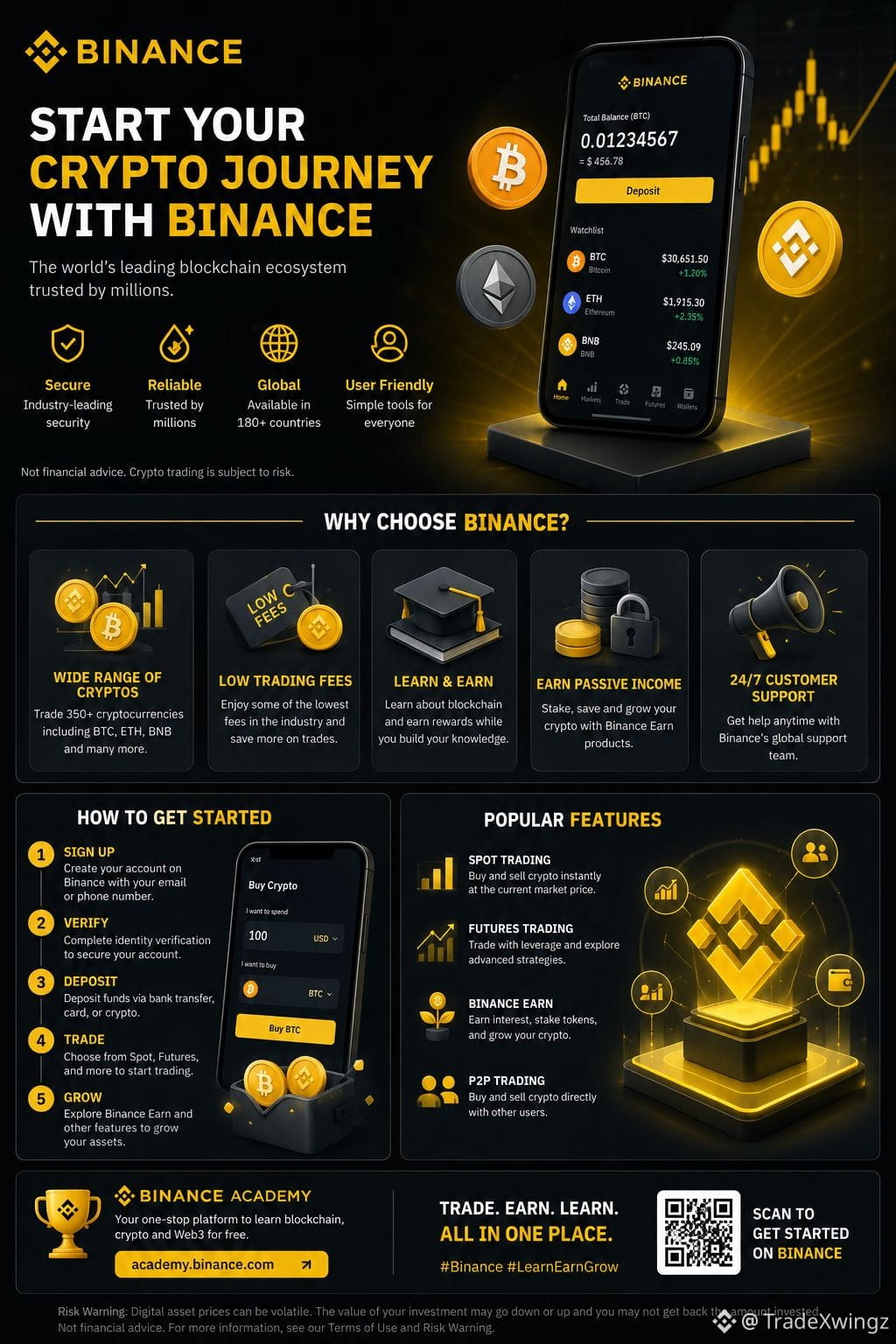
🚀 **Start Your Crypto Journey with Binance!** 📚
Understanding cryptocurrency is the first step toward making informed financial decisions. In this educational post, you'll learn:
✅ What Binance is and how it works
✅ How to create and secure your account
✅ The basics of Spot Trading, Binance Earn, and P2P Trading
✅ Essential security tips to help protect your digital assets
✅ Why continuous learning is important before investing
Remember: **Knowledge comes before investment.** Always do your own research (DYOR), understand the risks, and never invest more than you can afford to lose.
💡 Learning today can help you make smarter decisions tomorrow.
#Binance #BinanceCreatorChallenge #BinanceAcademy #CryptoEducation #Blockchain #Web3 #LearnCrypto #DYOR #FinancialEducation #CryptoBasics
#Binance #educational_post $NVDAB $BTC $BNB
🚀 **Start Your Crypto Journey with Binance!** 📚
Understanding cryptocurrency is the first step toward making informed financial decisions. In this educational post, you'll learn:
✅ What Binance is and how it works
✅ How to create and secure your account
✅ The basics of Spot Trading, Binance Earn, and P2P Trading
✅ Essential security tips to help protect your digital assets
✅ Why continuous learning is important before investing
Remember: **Knowledge comes before investment.** Always do your own research (DYOR), understand the risks, and never invest more than you can afford to lose.
💡 Learning today can help you make smarter decisions tomorrow.
#Binance #BinanceCreatorChallenge #BinanceAcademy #CryptoEducation #Blockchain #Web3 #LearnCrypto #DYOR #FinancialEducation #CryptoBasics
🚀 **Start Your Crypto Journey with Binance!** 📚
Understanding cryptocurrency is the first step toward making informed financial decisions. In this educational post, you'll learn:
✅ What Binance is and how it works
✅ How to create and secure your account
✅ The basics of Spot Trading, Binance Earn, and P2P Trading
✅ Essential security tips to help protect your digital assets
✅ Why continuous learning is important before investing
Remember: **Knowledge comes before investment.** Always do your own research (DYOR), understand the risks, and never invest more than you can afford to lose.
💡 Learning today can help you make smarter decisions tomorrow.
#Binance #BinanceCreatorChallenge #BinanceAcademy #CryptoEducation #Blockchain #Web3 #LearnCrypto #DYOR #FinancialEducation #CryptoBasics
120

·
--
See translation
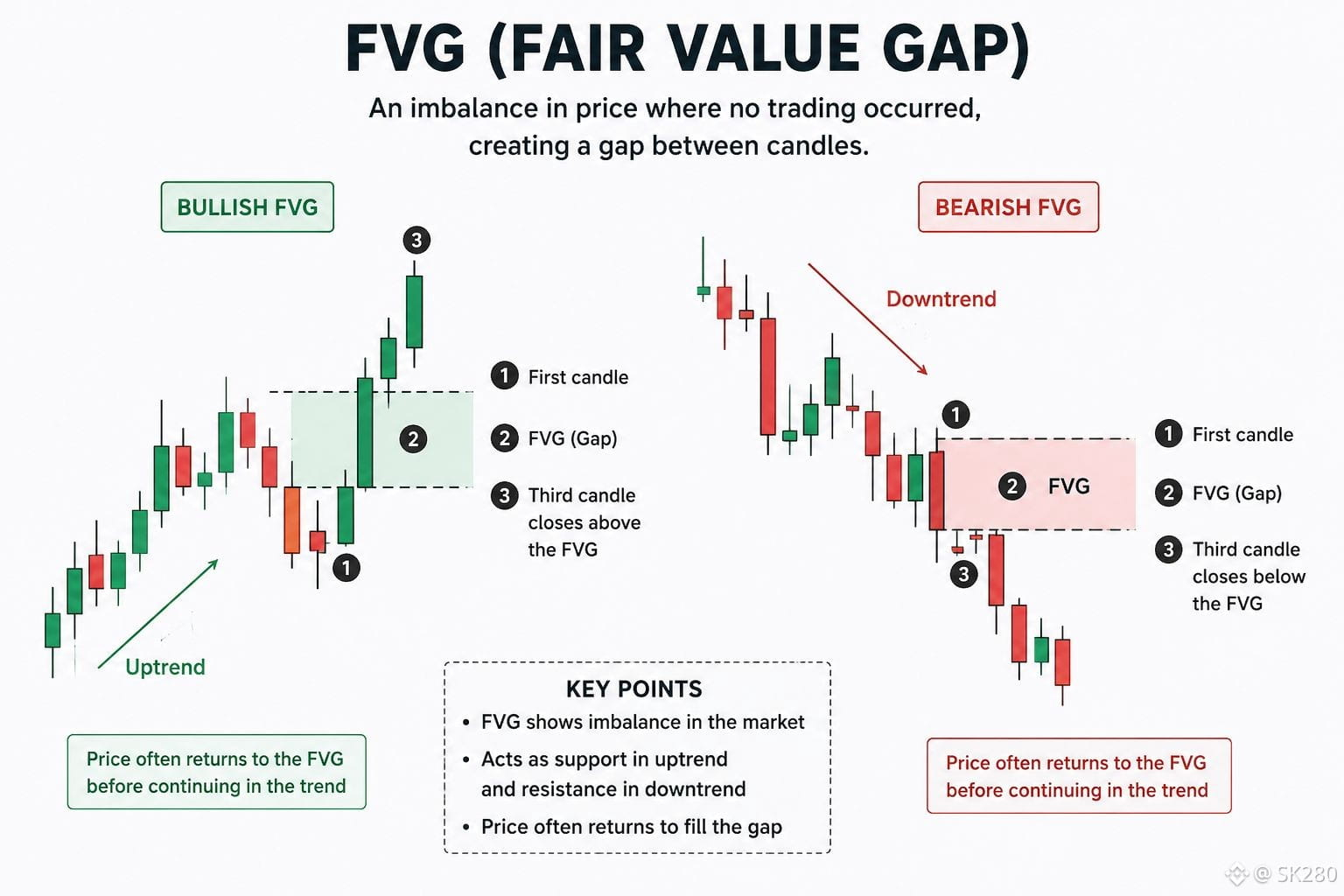
FVG
Fair Value Gap strategy is one of the best strategies in the world of trading. Here I'm giving you a free pro tip if you trade #FVG . As you know we wait for rejection and then for momentum candle, remember, that momentum candle must have lower volume than the previous candle. It increases your winning chance to 90%.
#educational_post #SkillPays
FVG
Fair Value Gap strategy is one of the best strategies in the world of trading. Here I'm giving you a free pro tip if you trade #FVG . As you know we wait for rejection and then for momentum candle, remember, that momentum candle must have lower volume than the previous candle. It increases your winning chance to 90%.
#educational_post #SkillPays
Fair Value Gap strategy is one of the best strategies in the world of trading. Here I'm giving you a free pro tip if you trade #FVG . As you know we wait for rejection and then for momentum candle, remember, that momentum candle must have lower volume than the previous candle. It increases your winning chance to 90%.
#educational_post #SkillPays
215


Article
🔍 THE CONFIRMATION BIAS: WHY YOU ONLY SEE WHAT CONFIRMS WHAT YOU HOPEYou buy a crypto because you believe in its potential. From that exact moment on, something strange happens in your head, without you even realizing it. You start to see reasons
to be optimistic everywhere. A positive tweet, a slight price increase, a partnership rumor. Everything seems to confirm that you made the right choice. Meanwhile, the negative signals, for their part, slip
almost without leaving a trace. This mechanism has a name in psychology: the confirmation bias. And it affects absolutely everyone, even the most
🔍 THE CONFIRMATION BIAS: WHY YOU ONLY SEE WHAT CONFIRMS WHAT YOU HOPE
You buy a crypto because you believe in its potential. From that exact moment on, something strange happens in your head, without you even realizing it. You start to see reasons
to be optimistic everywhere. A positive tweet, a slight price increase, a partnership rumor. Everything seems to confirm that you made the right choice. Meanwhile, the negative signals, for their part, slip
almost without leaving a trace. This mechanism has a name in psychology: the confirmation bias. And it affects absolutely everyone, even the most
to be optimistic everywhere. A positive tweet, a slight price increase, a partnership rumor. Everything seems to confirm that you made the right choice. Meanwhile, the negative signals, for their part, slip
almost without leaving a trace. This mechanism has a name in psychology: the confirmation bias. And it affects absolutely everyone, even the most
1
306

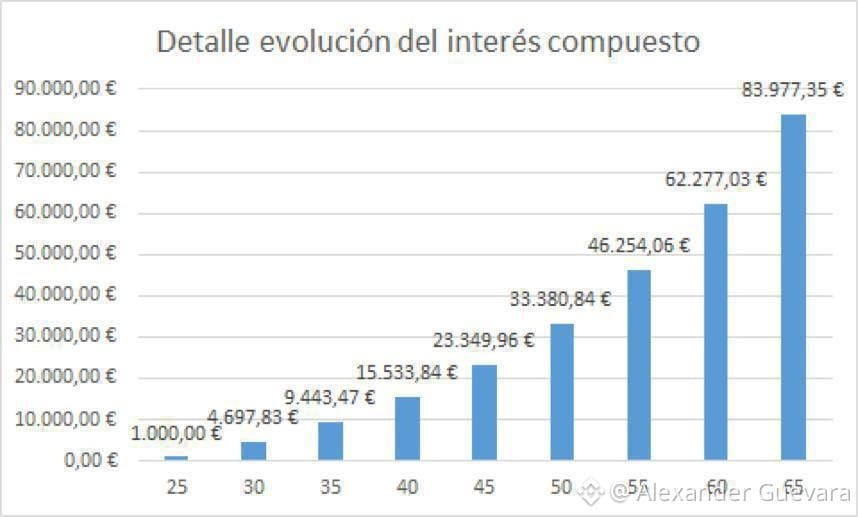
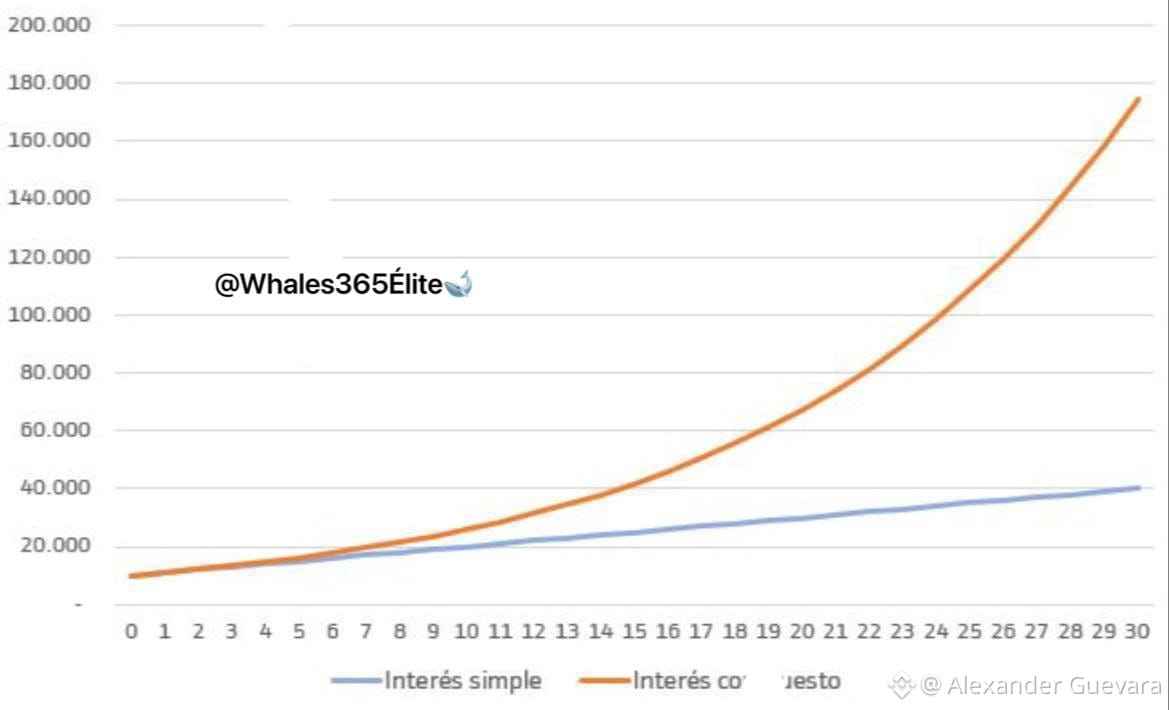
🐳:COMPOUND INTEREST
At the beginning, the capital is like a small snowball, and the more time passes, the larger the mass becomes and the faster it grows—that’s the well-known snowball effect ❄️
Exponential growth through compound interest is a great force that can be harnessed in automated trading
To do this, you have to reinvest—deposit more to increase the account size and trade with increasingly larger amounts ↗️
A key factor that anyone can take advantage of!
💹 Don’t withdraw quickly—let your account grow until it becomes big
Compound interest is a very relevant factor in the world of trading.
Thanks to it, even starting from the bottom by accumulating and reinvesting, you can reach large figures over time 💰
Keys of compound interest, what can change your life, read 📑👨🏫
#educational_post #EducationalContent #market #estrategia #BinanceSquare $BTC $ETH $POP
🐳:COMPOUND INTEREST
At the beginning, the capital is like a small snowball, and the more time passes, the larger the mass becomes and the faster it grows—that’s the well-known snowball effect ❄️
Exponential growth through compound interest is a great force that can be harnessed in automated trading
To do this, you have to reinvest—deposit more to increase the account size and trade with increasingly larger amounts ↗️
A key factor that anyone can take advantage of!
💹 Don’t withdraw quickly—let your account grow until it becomes big
Compound interest is a very relevant factor in the world of trading.
Thanks to it, even starting from the bottom by accumulating and reinvesting, you can reach large figures over time 💰
Keys of compound interest, what can change your life, read 📑👨🏫
#educational_post #EducationalContent #market #estrategia #BinanceSquare $BTC $ETH $POP
At the beginning, the capital is like a small snowball, and the more time passes, the larger the mass becomes and the faster it grows—that’s the well-known snowball effect ❄️
Exponential growth through compound interest is a great force that can be harnessed in automated trading
To do this, you have to reinvest—deposit more to increase the account size and trade with increasingly larger amounts ↗️
A key factor that anyone can take advantage of!
💹 Don’t withdraw quickly—let your account grow until it becomes big
Compound interest is a very relevant factor in the world of trading.
Thanks to it, even starting from the bottom by accumulating and reinvesting, you can reach large figures over time 💰
Keys of compound interest, what can change your life, read 📑👨🏫
#educational_post #EducationalContent #market #estrategia #BinanceSquare $BTC $ETH $POP

3
176

See translation
How I Find The Best Coins To Trade From The Losers ListMost beginners see a coin down 10% and immediately think it is a buying opportunity. I used to think the same way. I learned the hard way that not every red coin bounces.
After losing money on the wrong coins, I developed a simple method. Now I only pick coins that show specific signs before entering. Let me share exactly what I look for.
Step One — Find The Right Drop Size
Open Binance futures and sort by 24 hour change, lowest first. Ignore coins down more than 20 percent. Those are danger zones. Ignore coins down less than 5 percent. Not enough opportunity. The sweet spot is coins down 8 to 15 percent. Big enough drop to create a bounce, not big enough to keep falling forever.
Step Two — Check The Volume
Open the chart and look at the volume bars at the bottom. If volume was massive during the drop but is now getting smaller and smaller, that means sellers are exhausting. Less selling pressure equals bounce coming. If volume is still high and active on red candles, sellers are not done yet. Skip that coin and move to the next one.
Step Three — Check RSI
RSI is a simple indicator that tells you if a coin is oversold. Below 30 means oversold. Below 20 means extremely oversold. I personally look for RSI below 20 to 25 on the losers list. This means the coin has been sold too hard too fast and a recovery becomes very likely in the next few hours.
Step Four — Check Supertrend
Supertrend is the red or green line on your chart. Red means sellers in control. Green means buyers in control. On a bouncing coin from the losers list, Supertrend will be red but starting to flatten. When it stops going down and starts moving sideways, buyers are getting ready to take over. A flip to green confirms the bounce.
Step Five — Find A Support Level
Every coin has price levels where buyers historically stepped in before. Look for a previous low on the chart that held before. If current price is sitting exactly on that level with RSI oversold and volume drying up, that is your entry zone.
The Checklist I Use Every Time
Drop between 8 to 15 percent — yes or no
Volume drying up on recent candles — yes or no
RSI below 25 — yes or no
Supertrend flattening or about to flip — yes or no
Price sitting on a clear support level — yes or no
If a coin scores 4 or 5 out of 5, I take the trade seriously. If it scores 2 or less, I move to the next coin on the list.
One More Important Rule
Never enter the moment you see these signs. Wait for one strong green candle with volume to confirm buyers are actually stepping in. That confirmation candle is your signal. Without it you are just guessing.
Real Example From Today
I checked EIGEN on the losers list today. Down 10 percent, RSI at 15, volume completely dried up, price sitting on 0.2666 support. It scored 5 out of 5 on the checklist. That is the kind of setup worth watching closely.
SAHARA was also on the losers list. Down 8 percent, RSI at 15 but volume still active on red candles and no clear support nearby. It scored only 1 out of 5. I skipped it completely.
Same losers list. Completely different quality of setups
The Bottom Line
Any coin can bounce. But not every bounce is worth trading. Learn to be selective, use the checklist, wait for confirmation and you will avoid the biggest mistake most beginners make which is buying just because something looks cheap.
Red does not mean ready. The checklist decides.
Trade safe. Manage risk always.
$BTC #educational_post #EducationalContent
How I Find The Best Coins To Trade From The Losers List
Most beginners see a coin down 10% and immediately think it is a buying opportunity. I used to think the same way. I learned the hard way that not every red coin bounces.
After losing money on the wrong coins, I developed a simple method. Now I only pick coins that show specific signs before entering. Let me share exactly what I look for.
Step One — Find The Right Drop Size
Open Binance futures and sort by 24 hour change, lowest first. Ignore coins down more than 20 percent. Those are danger zones. Ignore coins down less than 5 percent. Not enough opportunity. The sweet spot is coins down 8 to 15 percent. Big enough drop to create a bounce, not big enough to keep falling forever.
Step Two — Check The Volume
Open the chart and look at the volume bars at the bottom. If volume was massive during the drop but is now getting smaller and smaller, that means sellers are exhausting. Less selling pressure equals bounce coming. If volume is still high and active on red candles, sellers are not done yet. Skip that coin and move to the next one.
Step Three — Check RSI
RSI is a simple indicator that tells you if a coin is oversold. Below 30 means oversold. Below 20 means extremely oversold. I personally look for RSI below 20 to 25 on the losers list. This means the coin has been sold too hard too fast and a recovery becomes very likely in the next few hours.
Step Four — Check Supertrend
Supertrend is the red or green line on your chart. Red means sellers in control. Green means buyers in control. On a bouncing coin from the losers list, Supertrend will be red but starting to flatten. When it stops going down and starts moving sideways, buyers are getting ready to take over. A flip to green confirms the bounce.
Step Five — Find A Support Level
Every coin has price levels where buyers historically stepped in before. Look for a previous low on the chart that held before. If current price is sitting exactly on that level with RSI oversold and volume drying up, that is your entry zone.
The Checklist I Use Every Time
Drop between 8 to 15 percent — yes or no
Volume drying up on recent candles — yes or no
RSI below 25 — yes or no
Supertrend flattening or about to flip — yes or no
Price sitting on a clear support level — yes or no
If a coin scores 4 or 5 out of 5, I take the trade seriously. If it scores 2 or less, I move to the next coin on the list.
One More Important Rule
Never enter the moment you see these signs. Wait for one strong green candle with volume to confirm buyers are actually stepping in. That confirmation candle is your signal. Without it you are just guessing.
Real Example From Today
I checked EIGEN on the losers list today. Down 10 percent, RSI at 15, volume completely dried up, price sitting on 0.2666 support. It scored 5 out of 5 on the checklist. That is the kind of setup worth watching closely.
SAHARA was also on the losers list. Down 8 percent, RSI at 15 but volume still active on red candles and no clear support nearby. It scored only 1 out of 5. I skipped it completely.
Same losers list. Completely different quality of setups
The Bottom Line
Any coin can bounce. But not every bounce is worth trading. Learn to be selective, use the checklist, wait for confirmation and you will avoid the biggest mistake most beginners make which is buying just because something looks cheap.
Red does not mean ready. The checklist decides.
Trade safe. Manage risk always.
$BTC #educational_post #EducationalContent
After losing money on the wrong coins, I developed a simple method. Now I only pick coins that show specific signs before entering. Let me share exactly what I look for.
Step One — Find The Right Drop Size
Open Binance futures and sort by 24 hour change, lowest first. Ignore coins down more than 20 percent. Those are danger zones. Ignore coins down less than 5 percent. Not enough opportunity. The sweet spot is coins down 8 to 15 percent. Big enough drop to create a bounce, not big enough to keep falling forever.
Step Two — Check The Volume
Open the chart and look at the volume bars at the bottom. If volume was massive during the drop but is now getting smaller and smaller, that means sellers are exhausting. Less selling pressure equals bounce coming. If volume is still high and active on red candles, sellers are not done yet. Skip that coin and move to the next one.
Step Three — Check RSI
RSI is a simple indicator that tells you if a coin is oversold. Below 30 means oversold. Below 20 means extremely oversold. I personally look for RSI below 20 to 25 on the losers list. This means the coin has been sold too hard too fast and a recovery becomes very likely in the next few hours.
Step Four — Check Supertrend
Supertrend is the red or green line on your chart. Red means sellers in control. Green means buyers in control. On a bouncing coin from the losers list, Supertrend will be red but starting to flatten. When it stops going down and starts moving sideways, buyers are getting ready to take over. A flip to green confirms the bounce.
Step Five — Find A Support Level
Every coin has price levels where buyers historically stepped in before. Look for a previous low on the chart that held before. If current price is sitting exactly on that level with RSI oversold and volume drying up, that is your entry zone.
The Checklist I Use Every Time
Drop between 8 to 15 percent — yes or no
Volume drying up on recent candles — yes or no
RSI below 25 — yes or no
Supertrend flattening or about to flip — yes or no
Price sitting on a clear support level — yes or no
If a coin scores 4 or 5 out of 5, I take the trade seriously. If it scores 2 or less, I move to the next coin on the list.
One More Important Rule
Never enter the moment you see these signs. Wait for one strong green candle with volume to confirm buyers are actually stepping in. That confirmation candle is your signal. Without it you are just guessing.
Real Example From Today
I checked EIGEN on the losers list today. Down 10 percent, RSI at 15, volume completely dried up, price sitting on 0.2666 support. It scored 5 out of 5 on the checklist. That is the kind of setup worth watching closely.
SAHARA was also on the losers list. Down 8 percent, RSI at 15 but volume still active on red candles and no clear support nearby. It scored only 1 out of 5. I skipped it completely.
Same losers list. Completely different quality of setups
The Bottom Line
Any coin can bounce. But not every bounce is worth trading. Learn to be selective, use the checklist, wait for confirmation and you will avoid the biggest mistake most beginners make which is buying just because something looks cheap.
Red does not mean ready. The checklist decides.
Trade safe. Manage risk always.
$BTC #educational_post #EducationalContent
371

·
--
Article
See translation
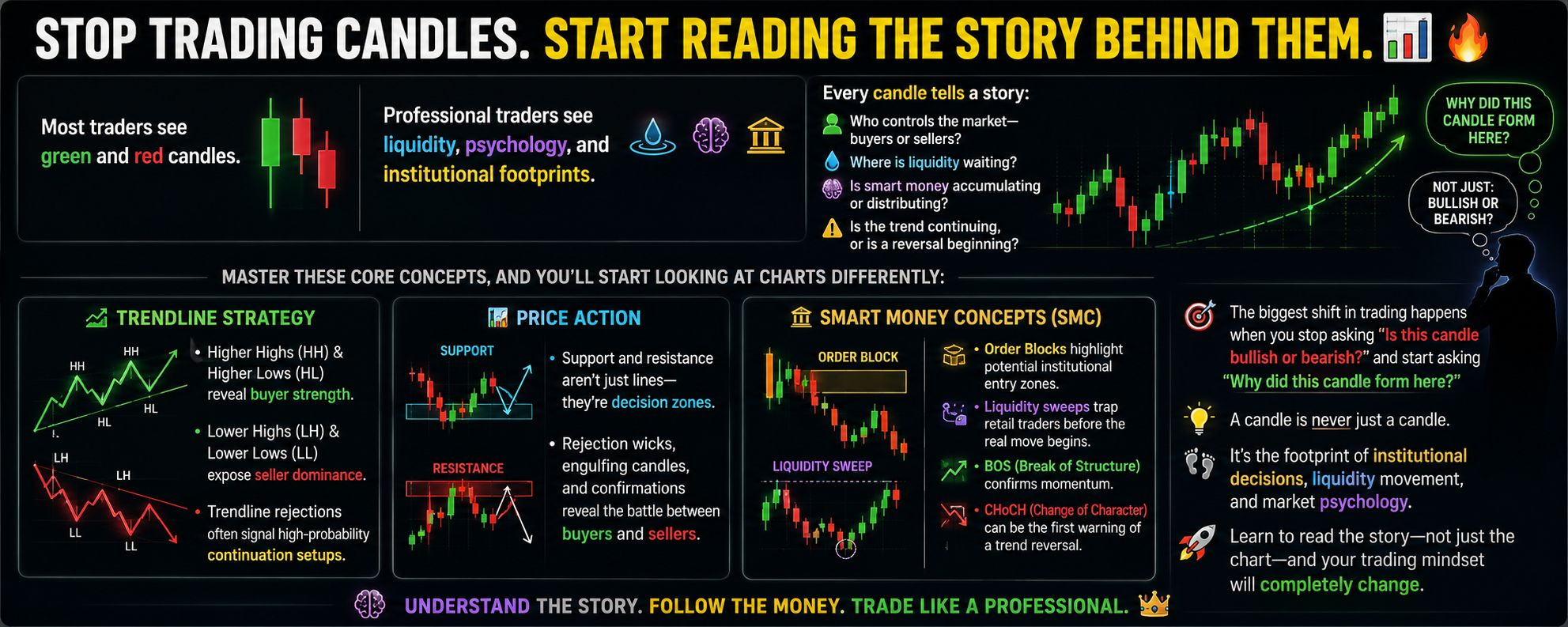
Stop Trading Candles. Start Reading the Story Behind Them. 📊🔥Most traders see green and red candles.
Professional traders see liquidity, psychology, and institutional footprints. 💡
Every candle tells a story:
🔹 Who controls the market—buyers or sellers?
🔹 Where is liquidity waiting?
🔹 Is smart money accumulating or distributing?
🔹 Is the trend continuing, or is a reversal beginning?
Master these core concepts, and you'll start looking at charts differently:
📈 Trendline Strategy
• Higher Highs (HH) & Higher Lows (HL) reveal buyer strength.
• Lower Highs (LH) & Lower Lows (LL) expose seller dominance.
• Trendline rejections often signal high-probability continuation setups.
📊 Price Action
• Support and resistance aren't just lines—they're decision zones.
• Rejection wicks, engulfing candles, and confirmations reveal the battle between buyers and sellers.
🏦 Smart Money Concepts (SMC)
• Order Blocks highlight potential institutional entry zones.
• Liquidity sweeps trap retail traders before the real move begins.
• BOS (Break of Structure) confirms momentum.
• CHoCH (Change of Character) can be the first warning of a trend reversal.
The biggest shift in trading happens when you stop asking "Is this candle bullish or bearish?" and start asking "Why did this candle form here?"
A candle is never just a candle.
It's the footprint of institutional decisions, liquidity movement, and market psychology. Learn to read the story—not just the chart—and your trading mindset will completely change. 🚀
💬 Which concept has improved your trading the most: Price Action, Trendlines, or Smart Money Concepts (SMC)? Share your answer below!
If you found this alpha valuable, hit that Like ❤️ button and Follow 🚀 for daily elite crypto insights!
$XAU
{future}(XAUUSDT)
{spot}(XAUTUSDT)
#GOLD #XAU #xaut #educational_post $HFT $ACE #GoldBreaksOutFromJanuaryDowntrend
Stop Trading Candles. Start Reading the Story Behind Them. 📊🔥
Most traders see green and red candles.
Professional traders see liquidity, psychology, and institutional footprints. 💡
Every candle tells a story:
🔹 Who controls the market—buyers or sellers?
🔹 Where is liquidity waiting?
🔹 Is smart money accumulating or distributing?
🔹 Is the trend continuing, or is a reversal beginning?
Master these core concepts, and you'll start looking at charts differently:
📈 Trendline Strategy
• Higher Highs (HH) & Higher Lows (HL) reveal buyer strength.
• Lower Highs (LH) & Lower Lows (LL) expose seller dominance.
• Trendline rejections often signal high-probability continuation setups.
📊 Price Action
• Support and resistance aren't just lines—they're decision zones.
• Rejection wicks, engulfing candles, and confirmations reveal the battle between buyers and sellers.
🏦 Smart Money Concepts (SMC)
• Order Blocks highlight potential institutional entry zones.
• Liquidity sweeps trap retail traders before the real move begins.
• BOS (Break of Structure) confirms momentum.
• CHoCH (Change of Character) can be the first warning of a trend reversal.
The biggest shift in trading happens when you stop asking "Is this candle bullish or bearish?" and start asking "Why did this candle form here?"
A candle is never just a candle.
It's the footprint of institutional decisions, liquidity movement, and market psychology. Learn to read the story—not just the chart—and your trading mindset will completely change. 🚀
💬 Which concept has improved your trading the most: Price Action, Trendlines, or Smart Money Concepts (SMC)? Share your answer below!
If you found this alpha valuable, hit that Like ❤️ button and Follow 🚀 for daily elite crypto insights!
$XAU
#GOLD #XAU #xaut #educational_post $HFT $ACE #GoldBreaksOutFromJanuaryDowntrend
Professional traders see liquidity, psychology, and institutional footprints. 💡
Every candle tells a story:
🔹 Who controls the market—buyers or sellers?
🔹 Where is liquidity waiting?
🔹 Is smart money accumulating or distributing?
🔹 Is the trend continuing, or is a reversal beginning?
Master these core concepts, and you'll start looking at charts differently:
📈 Trendline Strategy
• Higher Highs (HH) & Higher Lows (HL) reveal buyer strength.
• Lower Highs (LH) & Lower Lows (LL) expose seller dominance.
• Trendline rejections often signal high-probability continuation setups.
📊 Price Action
• Support and resistance aren't just lines—they're decision zones.
• Rejection wicks, engulfing candles, and confirmations reveal the battle between buyers and sellers.
🏦 Smart Money Concepts (SMC)
• Order Blocks highlight potential institutional entry zones.
• Liquidity sweeps trap retail traders before the real move begins.
• BOS (Break of Structure) confirms momentum.
• CHoCH (Change of Character) can be the first warning of a trend reversal.
The biggest shift in trading happens when you stop asking "Is this candle bullish or bearish?" and start asking "Why did this candle form here?"
A candle is never just a candle.
It's the footprint of institutional decisions, liquidity movement, and market psychology. Learn to read the story—not just the chart—and your trading mindset will completely change. 🚀
💬 Which concept has improved your trading the most: Price Action, Trendlines, or Smart Money Concepts (SMC)? Share your answer below!
If you found this alpha valuable, hit that Like ❤️ button and Follow 🚀 for daily elite crypto insights!
$XAU
#GOLD #XAU #xaut #educational_post $HFT $ACE #GoldBreaksOutFromJanuaryDowntrend
2
223

·
--
Article
See translation
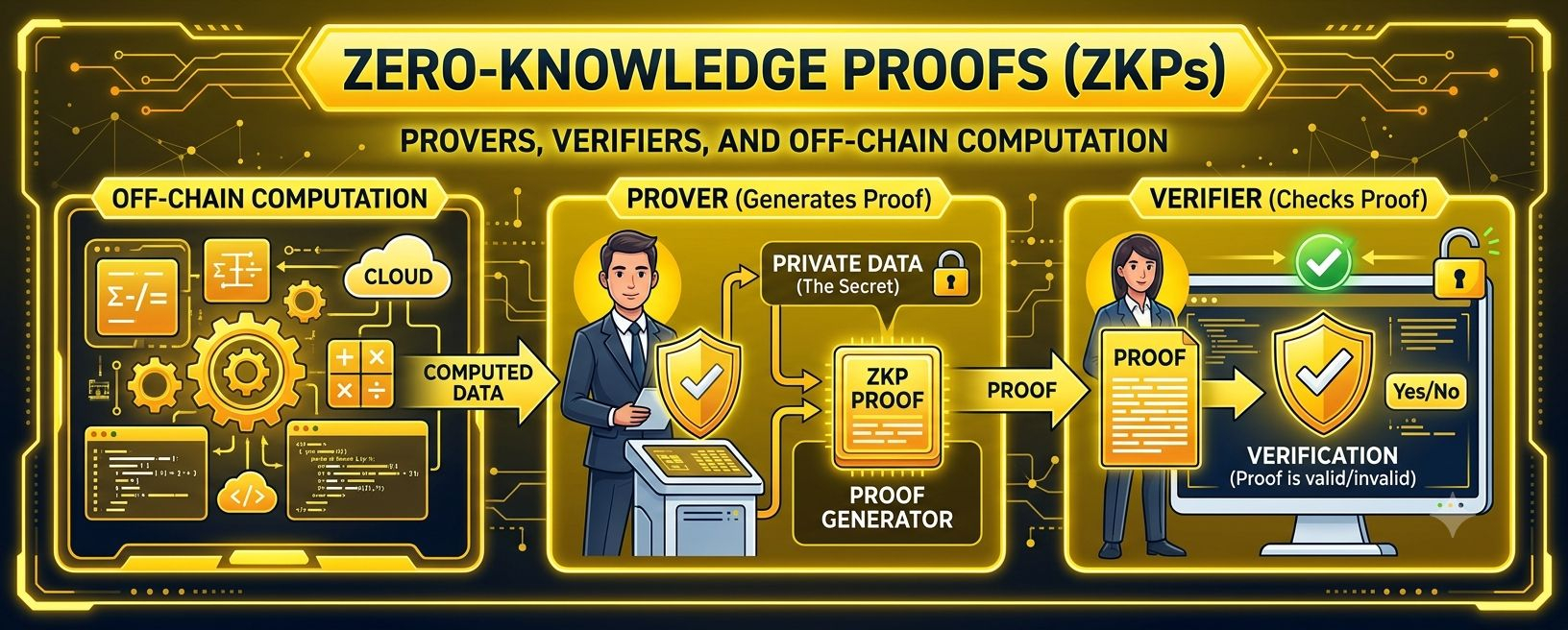
Zero-Knowledge Proofs (ZKPs) — Provers, Verifiers, and Off-Chain ComputationHow can a party prove a computation is correct without revealing the underlying data or re-executing the task?
Zero-Knowledge Proofs (ZKPs) represent a fundamental cryptographic primitive enabling verifiable computing. They allow a Prover to mathematically convince a Verifier that a statement is true without disclosing sensitive information or forcing the Verifier to repeat the underlying execution.
---
The Prover / Verifier Cycle Step-by-Step
1. Computation Execution (Off-Chain)
The Prover executes complex computational work off-chain (e.g., bundling 10,000 rollup transactions into a single state change).
2. Proof Generation
The Prover processes the transaction trace through cryptographic circuit logic to generate a compact, cryptographically secure proof (π).
3. Verification (On-Chain)
The Proof (π) and final state update are submitted to an on-chain smart contract (the Verifier).
4. State Update
The Verifier runs a simple mathematical check on π. If valid, the state is updated instantly, requiring minimal gas compared to re-executing all 10,000 transactions.
---
Comparing Key ZKP Frameworks
Attribute zk-SNARKs zk-STARKs
Full Name Succinct Non-Interactive Argument of Knowledge Scalable Transparent Argument of Knowledge
Proof Size Extremely Small (~200–500 bytes) Larger (~10–100 KB)
Trusted Setup Required? Yes (Historically required multi-party ceremony) No (Transparent, zero trusted setup)
Quantum Resistance Low (Vulnerable to quantum computing algorithms) High (Post-quantum secure)
Verification Cost Constant and extremely low gas cost Higher gas cost due to larger proof size
---
The Core Takeaway
ZKPs shift the computational burden off-chain while keeping security guarantees on-chain. As proving times decrease through hardware acceleration (GPUs and ASICs), ZK technology forms the core infrastructure for scaling zero-trust privacy and Layer-2 rollups.
Why It Matters: ZKPs are the backbone of next-generation scaling solutions—enabling Ethereum to process thousands of transactions per second without sacrificing decentralization or security.
#educational_post #Insights
Zero-Knowledge Proofs (ZKPs) — Provers, Verifiers, and Off-Chain Computation
How can a party prove a computation is correct without revealing the underlying data or re-executing the task?
Zero-Knowledge Proofs (ZKPs) represent a fundamental cryptographic primitive enabling verifiable computing. They allow a Prover to mathematically convince a Verifier that a statement is true without disclosing sensitive information or forcing the Verifier to repeat the underlying execution.
---
The Prover / Verifier Cycle Step-by-Step
1. Computation Execution (Off-Chain)
The Prover executes complex computational work off-chain (e.g., bundling 10,000 rollup transactions into a single state change).
2. Proof Generation
The Prover processes the transaction trace through cryptographic circuit logic to generate a compact, cryptographically secure proof (π).
3. Verification (On-Chain)
The Proof (π) and final state update are submitted to an on-chain smart contract (the Verifier).
4. State Update
The Verifier runs a simple mathematical check on π. If valid, the state is updated instantly, requiring minimal gas compared to re-executing all 10,000 transactions.
---
Comparing Key ZKP Frameworks
Attribute zk-SNARKs zk-STARKs
Full Name Succinct Non-Interactive Argument of Knowledge Scalable Transparent Argument of Knowledge
Proof Size Extremely Small (~200–500 bytes) Larger (~10–100 KB)
Trusted Setup Required? Yes (Historically required multi-party ceremony) No (Transparent, zero trusted setup)
Quantum Resistance Low (Vulnerable to quantum computing algorithms) High (Post-quantum secure)
Verification Cost Constant and extremely low gas cost Higher gas cost due to larger proof size
---
The Core Takeaway
ZKPs shift the computational burden off-chain while keeping security guarantees on-chain. As proving times decrease through hardware acceleration (GPUs and ASICs), ZK technology forms the core infrastructure for scaling zero-trust privacy and Layer-2 rollups.
Why It Matters: ZKPs are the backbone of next-generation scaling solutions—enabling Ethereum to process thousands of transactions per second without sacrificing decentralization or security.
#educational_post #Insights
Zero-Knowledge Proofs (ZKPs) represent a fundamental cryptographic primitive enabling verifiable computing. They allow a Prover to mathematically convince a Verifier that a statement is true without disclosing sensitive information or forcing the Verifier to repeat the underlying execution.
---
The Prover / Verifier Cycle Step-by-Step
1. Computation Execution (Off-Chain)
The Prover executes complex computational work off-chain (e.g., bundling 10,000 rollup transactions into a single state change).
2. Proof Generation
The Prover processes the transaction trace through cryptographic circuit logic to generate a compact, cryptographically secure proof (π).
3. Verification (On-Chain)
The Proof (π) and final state update are submitted to an on-chain smart contract (the Verifier).
4. State Update
The Verifier runs a simple mathematical check on π. If valid, the state is updated instantly, requiring minimal gas compared to re-executing all 10,000 transactions.
---
Comparing Key ZKP Frameworks
Attribute zk-SNARKs zk-STARKs
Full Name Succinct Non-Interactive Argument of Knowledge Scalable Transparent Argument of Knowledge
Proof Size Extremely Small (~200–500 bytes) Larger (~10–100 KB)
Trusted Setup Required? Yes (Historically required multi-party ceremony) No (Transparent, zero trusted setup)
Quantum Resistance Low (Vulnerable to quantum computing algorithms) High (Post-quantum secure)
Verification Cost Constant and extremely low gas cost Higher gas cost due to larger proof size
---
The Core Takeaway
ZKPs shift the computational burden off-chain while keeping security guarantees on-chain. As proving times decrease through hardware acceleration (GPUs and ASICs), ZK technology forms the core infrastructure for scaling zero-trust privacy and Layer-2 rollups.
Why It Matters: ZKPs are the backbone of next-generation scaling solutions—enabling Ethereum to process thousands of transactions per second without sacrificing decentralization or security.
#educational_post #Insights
1
94
·
--
Article
See translation
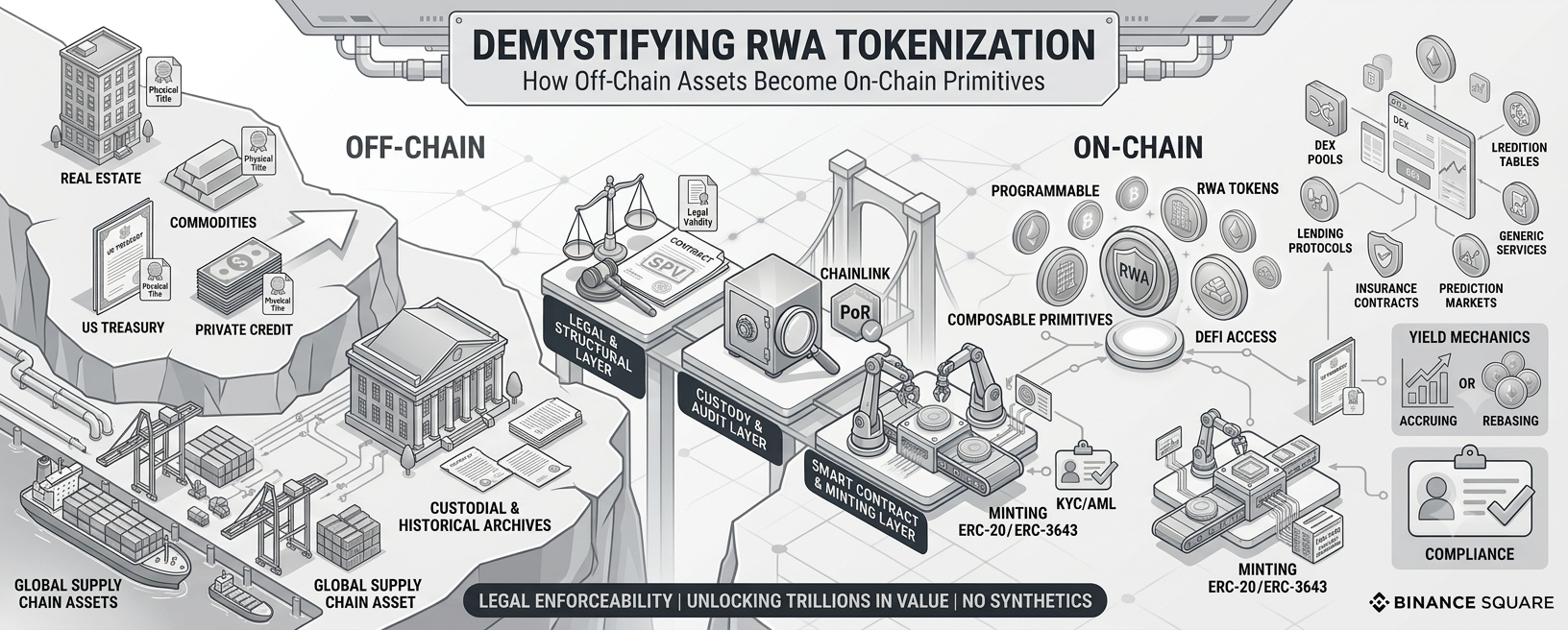
Demystifying RWA Tokenization — How Off-Chain Assets Become On-Chain PrimitivesHow do physical and traditional assets transition onto blockchain ledgers without losing legal validity?
Real-World Asset (RWA) tokenization bridges physical title, legal frameworks, and smart contract execution. Rather than creating synthetic claims, modern RWA protocols construct legally enforceable digital representations of underlying off-chain assets such as U.S. Treasuries, private credit, and commodities.
---
The Four Architecture Layers of RWA Tokenization
1. Legal & Structural Layer
A Special Purpose Vehicle (SPV) or licensed fund issuer holds title to the off-chain asset. The token represents an explicit contractual right—such as beneficial equity, debt obligation, or fractional ownership in the SPV.
2. Custody & Audit Layer
The underlying asset is secured by a regulated custodian (e.g., licensed banks, vault operators). Independent third-party auditors and Chainlink Proof of Reserve (PoR) oracles verify off-chain collateral in real time.
3. Smart Contract & Minting Layer
Upon verified deposit of collateral, smart contracts mint ERC-20 or regulatory-compliant tokens (e.g., ERC-3643) embedded with automated KYC/AML transfer restrictions.
4. Settlement & Yield Mechanics Layer
Yield distribution is coded directly into the token design via two main models:
· Accruing Tokens: Token price increases relative to the underlying basket as interest accrues.
· Rebasing Tokens: Token quantity in investor wallets increases algorithmically as yields are paid out.
---
RWA Tokenization Models Compared
Model Legal Structure Primary Utility Regulatory Classification
SPV / Fund Representation SPV/Trust holds underlying asset; tokens = legal claims on SPV Institutional yield, Treasury access Security / MiCA Asset-Referenced Token
Direct DLT Native Registry Asset is directly issued on-chain under DLT legislation (e.g., EU DLT Pilot) On-chain corporate bonds & equities Regulated Financial Instrument
Commodity Receipt Token Licensed warehouse holds physical asset (e.g., gold bullion) Inflation hedge, settlement collateral Commodity-backed / EMT Token
---
The Bottom Line: RWA tokenization transforms traditional assets into programmable, composable primitives while maintaining legal enforceability—unlocking trillions in illiquid value for DeFi ecosystems.
#educational_post #TradingCommunity
Demystifying RWA Tokenization — How Off-Chain Assets Become On-Chain Primitives
How do physical and traditional assets transition onto blockchain ledgers without losing legal validity?
Real-World Asset (RWA) tokenization bridges physical title, legal frameworks, and smart contract execution. Rather than creating synthetic claims, modern RWA protocols construct legally enforceable digital representations of underlying off-chain assets such as U.S. Treasuries, private credit, and commodities.
---
The Four Architecture Layers of RWA Tokenization
1. Legal & Structural Layer
A Special Purpose Vehicle (SPV) or licensed fund issuer holds title to the off-chain asset. The token represents an explicit contractual right—such as beneficial equity, debt obligation, or fractional ownership in the SPV.
2. Custody & Audit Layer
The underlying asset is secured by a regulated custodian (e.g., licensed banks, vault operators). Independent third-party auditors and Chainlink Proof of Reserve (PoR) oracles verify off-chain collateral in real time.
3. Smart Contract & Minting Layer
Upon verified deposit of collateral, smart contracts mint ERC-20 or regulatory-compliant tokens (e.g., ERC-3643) embedded with automated KYC/AML transfer restrictions.
4. Settlement & Yield Mechanics Layer
Yield distribution is coded directly into the token design via two main models:
· Accruing Tokens: Token price increases relative to the underlying basket as interest accrues.
· Rebasing Tokens: Token quantity in investor wallets increases algorithmically as yields are paid out.
---
RWA Tokenization Models Compared
Model Legal Structure Primary Utility Regulatory Classification
SPV / Fund Representation SPV/Trust holds underlying asset; tokens = legal claims on SPV Institutional yield, Treasury access Security / MiCA Asset-Referenced Token
Direct DLT Native Registry Asset is directly issued on-chain under DLT legislation (e.g., EU DLT Pilot) On-chain corporate bonds & equities Regulated Financial Instrument
Commodity Receipt Token Licensed warehouse holds physical asset (e.g., gold bullion) Inflation hedge, settlement collateral Commodity-backed / EMT Token
---
The Bottom Line: RWA tokenization transforms traditional assets into programmable, composable primitives while maintaining legal enforceability—unlocking trillions in illiquid value for DeFi ecosystems.
#educational_post #TradingCommunity
Real-World Asset (RWA) tokenization bridges physical title, legal frameworks, and smart contract execution. Rather than creating synthetic claims, modern RWA protocols construct legally enforceable digital representations of underlying off-chain assets such as U.S. Treasuries, private credit, and commodities.
---
The Four Architecture Layers of RWA Tokenization
1. Legal & Structural Layer
A Special Purpose Vehicle (SPV) or licensed fund issuer holds title to the off-chain asset. The token represents an explicit contractual right—such as beneficial equity, debt obligation, or fractional ownership in the SPV.
2. Custody & Audit Layer
The underlying asset is secured by a regulated custodian (e.g., licensed banks, vault operators). Independent third-party auditors and Chainlink Proof of Reserve (PoR) oracles verify off-chain collateral in real time.
3. Smart Contract & Minting Layer
Upon verified deposit of collateral, smart contracts mint ERC-20 or regulatory-compliant tokens (e.g., ERC-3643) embedded with automated KYC/AML transfer restrictions.
4. Settlement & Yield Mechanics Layer
Yield distribution is coded directly into the token design via two main models:
· Accruing Tokens: Token price increases relative to the underlying basket as interest accrues.
· Rebasing Tokens: Token quantity in investor wallets increases algorithmically as yields are paid out.
---
RWA Tokenization Models Compared
Model Legal Structure Primary Utility Regulatory Classification
SPV / Fund Representation SPV/Trust holds underlying asset; tokens = legal claims on SPV Institutional yield, Treasury access Security / MiCA Asset-Referenced Token
Direct DLT Native Registry Asset is directly issued on-chain under DLT legislation (e.g., EU DLT Pilot) On-chain corporate bonds & equities Regulated Financial Instrument
Commodity Receipt Token Licensed warehouse holds physical asset (e.g., gold bullion) Inflation hedge, settlement collateral Commodity-backed / EMT Token
---
The Bottom Line: RWA tokenization transforms traditional assets into programmable, composable primitives while maintaining legal enforceability—unlocking trillions in illiquid value for DeFi ecosystems.
#educational_post #TradingCommunity
2
279
·
--
Article
See translation
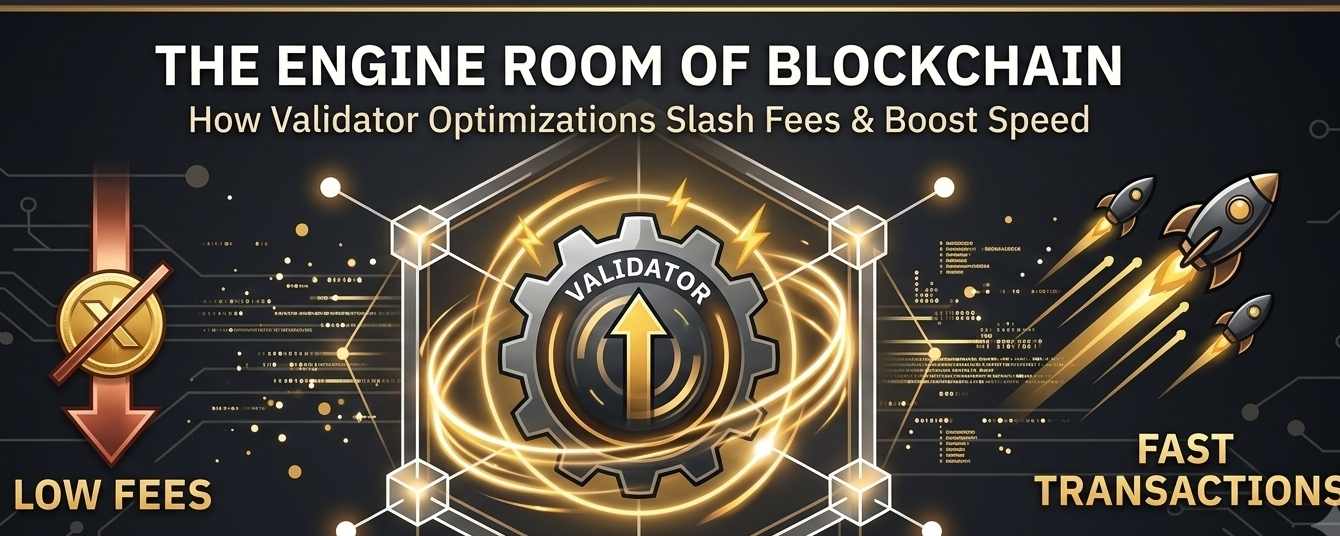
The Engine Room of Blockchain: How Validator Optimizations Slash Fees & Boost SpeedBlockchain scalability is often misattributed solely to block size. In reality, the true bottleneck—and the key to unlocking superior performance—lies within the software architecture of node clients. Recent infrastructure overhauls, such as Solana's Agave validator updates and Ethereum's ongoing client forks, demonstrate that code-level efficiency is the primary driver of reduced costs and increased throughput.
Core Technical Levers for Network Optimization
· State Rent & Storage Reduction
Blockchains maintain a massive state footprint across all nodes. Modern client updates, like those in the Agave validator, have revolutionized state indexing and storage logic. By minimizing memory overhead, these optimizations have successfully reduced state rent fees by up to 90%, making network participation significantly cheaper for validators and end-users alike.
· Consensus Client Efficiency
Latency in block propagation is a primary barrier to speed. Through enhancements like BLS signature aggregation, consensus algorithms now require fewer network hops to confirm block validity. This streamlined verification process drastically reduces propagation latency, allowing the network to reach consensus faster without sacrificing security.
· Parallel Execution Environments
Legacy execution engines process transactions sequentially, creating a computational bottleneck. By leveraging parallel execution, modern runtimes can process non-overlapping transactions concurrently. This approach dramatically increases Transactions Per Second (TPS) without demanding proportional increases in hardware resources.
---
The Educational Takeaway
Ultimately, network performance is not a function of physical limits but of software intelligence. Optimizations in state management, consensus efficiency, and execution logic lower the barrier to entry and reduce operational costs. These infrastructure upgrades are pivotal in making decentralized networks more accessible, efficient, and scalable for mass adoption.
#insights #TradingTales #educational_post
The Engine Room of Blockchain: How Validator Optimizations Slash Fees & Boost Speed
Blockchain scalability is often misattributed solely to block size. In reality, the true bottleneck—and the key to unlocking superior performance—lies within the software architecture of node clients. Recent infrastructure overhauls, such as Solana's Agave validator updates and Ethereum's ongoing client forks, demonstrate that code-level efficiency is the primary driver of reduced costs and increased throughput.
Core Technical Levers for Network Optimization
· State Rent & Storage Reduction
Blockchains maintain a massive state footprint across all nodes. Modern client updates, like those in the Agave validator, have revolutionized state indexing and storage logic. By minimizing memory overhead, these optimizations have successfully reduced state rent fees by up to 90%, making network participation significantly cheaper for validators and end-users alike.
· Consensus Client Efficiency
Latency in block propagation is a primary barrier to speed. Through enhancements like BLS signature aggregation, consensus algorithms now require fewer network hops to confirm block validity. This streamlined verification process drastically reduces propagation latency, allowing the network to reach consensus faster without sacrificing security.
· Parallel Execution Environments
Legacy execution engines process transactions sequentially, creating a computational bottleneck. By leveraging parallel execution, modern runtimes can process non-overlapping transactions concurrently. This approach dramatically increases Transactions Per Second (TPS) without demanding proportional increases in hardware resources.
---
The Educational Takeaway
Ultimately, network performance is not a function of physical limits but of software intelligence. Optimizations in state management, consensus efficiency, and execution logic lower the barrier to entry and reduce operational costs. These infrastructure upgrades are pivotal in making decentralized networks more accessible, efficient, and scalable for mass adoption.
#insights #TradingTales #educational_post
Core Technical Levers for Network Optimization
· State Rent & Storage Reduction
Blockchains maintain a massive state footprint across all nodes. Modern client updates, like those in the Agave validator, have revolutionized state indexing and storage logic. By minimizing memory overhead, these optimizations have successfully reduced state rent fees by up to 90%, making network participation significantly cheaper for validators and end-users alike.
· Consensus Client Efficiency
Latency in block propagation is a primary barrier to speed. Through enhancements like BLS signature aggregation, consensus algorithms now require fewer network hops to confirm block validity. This streamlined verification process drastically reduces propagation latency, allowing the network to reach consensus faster without sacrificing security.
· Parallel Execution Environments
Legacy execution engines process transactions sequentially, creating a computational bottleneck. By leveraging parallel execution, modern runtimes can process non-overlapping transactions concurrently. This approach dramatically increases Transactions Per Second (TPS) without demanding proportional increases in hardware resources.
---
The Educational Takeaway
Ultimately, network performance is not a function of physical limits but of software intelligence. Optimizations in state management, consensus efficiency, and execution logic lower the barrier to entry and reduce operational costs. These infrastructure upgrades are pivotal in making decentralized networks more accessible, efficient, and scalable for mass adoption.
#insights #TradingTales #educational_post
1
78

·
--
#5 Fatal Errors Every Crypto Trader Should Avoid:
The cryptocurrency market offers constant opportunities, but trading without a solid plan usually ends up costing you. Whether you’re a beginner or you’ve been trading on Binance for a while, controlling these five mistakes will protect your capital and improve your long-term results.
Buying out of FOMO (Fear of missing out): Entering a position in the middle of a bullish peak just because the coin is trending often ends in losses. Wait for support zones, pullbacks, or technical confirmations before taking a position.
Trading without a Stop Loss: A Stop Loss doesn’t cap your profits—it protects your liquidity. Define your maximum risk tolerance level before opening any trade.
Abusing leverage: Using high leverage (x20, x50, or more) dramatically reduces your margin for error. If you trade Futures, prioritize lower leverage (x2 to x5) and manage your margin prudently.
Not diversifying the portfolio: Keeping 100% of your funds in a single narrative or a low-cap altcoin increases your exposure to severe drawdowns. Build a balanced allocation among major assets (like BTC and ETH), projects with solid fundamentals and liquidity in stablecoins.
Letting emotions take over: Impatience after a loss often leads to revenge trading (trading out of spite to recover quickly). Accept controlled losses as part of the process and stick to your original strategy.
💡 Golden rule: In trading, consistency and capital preservation always come before quick profit.
#Binance #cryptouniverseofficial #TradingShot #educational_post #Web3
#5 Fatal Errors Every Crypto Trader Should Avoid:
The cryptocurrency market offers constant opportunities, but trading without a solid plan usually ends up costing you. Whether you’re a beginner or you’ve been trading on Binance for a while, controlling these five mistakes will protect your capital and improve your long-term results.
Buying out of FOMO (Fear of missing out): Entering a position in the middle of a bullish peak just because the coin is trending often ends in losses. Wait for support zones, pullbacks, or technical confirmations before taking a position.
Trading without a Stop Loss: A Stop Loss doesn’t cap your profits—it protects your liquidity. Define your maximum risk tolerance level before opening any trade.
Abusing leverage: Using high leverage (x20, x50, or more) dramatically reduces your margin for error. If you trade Futures, prioritize lower leverage (x2 to x5) and manage your margin prudently.
Not diversifying the portfolio: Keeping 100% of your funds in a single narrative or a low-cap altcoin increases your exposure to severe drawdowns. Build a balanced allocation among major assets (like BTC and ETH), projects with solid fundamentals and liquidity in stablecoins.
Letting emotions take over: Impatience after a loss often leads to revenge trading (trading out of spite to recover quickly). Accept controlled losses as part of the process and stick to your original strategy.
💡 Golden rule: In trading, consistency and capital preservation always come before quick profit.
#Binance #cryptouniverseofficial #TradingShot #educational_post #Web3
The cryptocurrency market offers constant opportunities, but trading without a solid plan usually ends up costing you. Whether you’re a beginner or you’ve been trading on Binance for a while, controlling these five mistakes will protect your capital and improve your long-term results.
Buying out of FOMO (Fear of missing out): Entering a position in the middle of a bullish peak just because the coin is trending often ends in losses. Wait for support zones, pullbacks, or technical confirmations before taking a position.
Trading without a Stop Loss: A Stop Loss doesn’t cap your profits—it protects your liquidity. Define your maximum risk tolerance level before opening any trade.
Abusing leverage: Using high leverage (x20, x50, or more) dramatically reduces your margin for error. If you trade Futures, prioritize lower leverage (x2 to x5) and manage your margin prudently.
Not diversifying the portfolio: Keeping 100% of your funds in a single narrative or a low-cap altcoin increases your exposure to severe drawdowns. Build a balanced allocation among major assets (like BTC and ETH), projects with solid fundamentals and liquidity in stablecoins.
Letting emotions take over: Impatience after a loss often leads to revenge trading (trading out of spite to recover quickly). Accept controlled losses as part of the process and stick to your original strategy.
💡 Golden rule: In trading, consistency and capital preservation always come before quick profit.
#Binance #cryptouniverseofficial #TradingShot #educational_post #Web3
102

The secret with small accounts: Prioritize the percentage (%) over the dollars 🧠📊
When you trade with a small margin (e.g., $0.40 USDT), the goal isn’t to get rich from a single transaction, but to build habits and discipline:
Focus on ROI (%): A steady +4% or +10% is better than trying to find a “miracle” trade.
Leverage control: Using moderate levels helps you avoid quick liquidations when volatility spikes create wicks.
Stick to the plan: The discipline you build with $2 USDT is the same discipline that will protect you when you manage a larger capital.
👇 What’s the hardest part for you when handling small trades? Comment below!
#educational_post
The secret with small accounts: Prioritize the percentage (%) over the dollars 🧠📊
When you trade with a small margin (e.g., $0.40 USDT), the goal isn’t to get rich from a single transaction, but to build habits and discipline:
Focus on ROI (%): A steady +4% or +10% is better than trying to find a “miracle” trade.
Leverage control: Using moderate levels helps you avoid quick liquidations when volatility spikes create wicks.
Stick to the plan: The discipline you build with $2 USDT is the same discipline that will protect you when you manage a larger capital.
👇 What’s the hardest part for you when handling small trades? Comment below!
#educational_post
When you trade with a small margin (e.g., $0.40 USDT), the goal isn’t to get rich from a single transaction, but to build habits and discipline:
Focus on ROI (%): A steady +4% or +10% is better than trying to find a “miracle” trade.
Leverage control: Using moderate levels helps you avoid quick liquidations when volatility spikes create wicks.
Stick to the plan: The discipline you build with $2 USDT is the same discipline that will protect you when you manage a larger capital.
👇 What’s the hardest part for you when handling small trades? Comment below!
#educational_post
92

The Magic of Compound Interest:
Each Penny Adds Up in Building a Portfolio 📈 of
Many hope to land a "stroke of luck" in the market to watch their capital grow, but true financial health is built consistently and progressively. 🧘♀️✨
Watch your portfolio grow penny by penny (+0,04 USDT today) may seem like a small step, but in finance, consistency is everything:
Snowball Effect: Daily returns generated in flexible products like Binance Earn are added to the base capital, creating interest on interest.
Emotional Control: Keeping a passive accumulation strategy helps you avoid the stress of daily volatility and protects your core capital.
Goals Perspective: Defining a target figure with a clear date lets you measure real progress and stay focused without straying from the plan.
The key isn’t how fast you move, but how firmly you protect and multiply each resource. 🪙📊
#Binance #educational_post #BinanceSquareFamily #InterestRateDecision #CPIReport
The Magic of Compound Interest:
Each Penny Adds Up in Building a Portfolio 📈 of
Many hope to land a "stroke of luck" in the market to watch their capital grow, but true financial health is built consistently and progressively. 🧘♀️✨
Watch your portfolio grow penny by penny (+0,04 USDT today) may seem like a small step, but in finance, consistency is everything:
Snowball Effect: Daily returns generated in flexible products like Binance Earn are added to the base capital, creating interest on interest.
Emotional Control: Keeping a passive accumulation strategy helps you avoid the stress of daily volatility and protects your core capital.
Goals Perspective: Defining a target figure with a clear date lets you measure real progress and stay focused without straying from the plan.
The key isn’t how fast you move, but how firmly you protect and multiply each resource. 🪙📊
#Binance #educational_post #BinanceSquareFamily #InterestRateDecision #CPIReport
Each Penny Adds Up in Building a Portfolio 📈 of
Many hope to land a "stroke of luck" in the market to watch their capital grow, but true financial health is built consistently and progressively. 🧘♀️✨
Watch your portfolio grow penny by penny (+0,04 USDT today) may seem like a small step, but in finance, consistency is everything:
Snowball Effect: Daily returns generated in flexible products like Binance Earn are added to the base capital, creating interest on interest.
Emotional Control: Keeping a passive accumulation strategy helps you avoid the stress of daily volatility and protects your core capital.
Goals Perspective: Defining a target figure with a clear date lets you measure real progress and stay focused without straying from the plan.
The key isn’t how fast you move, but how firmly you protect and multiply each resource. 🪙📊
#Binance #educational_post #BinanceSquareFamily #InterestRateDecision #CPIReport

138
Log in to explore more content
Join global crypto users on Binance Square
⚡️ Get latest and useful information about crypto.
💬 Trusted by the world’s largest crypto exchange.
👍 Discover real insights from verified creators.
Email / Phone number
Trending Topics
1
#CanMicrosoftDeliverOnAI
138,886 views
1,074 Discussing
2
#CanGoogleDefindItsCore
67,144 views
746 Discussing
3
#FOMCWatch
9.1M views
28,337 Discussing
4
#SKHynixUnveils$45BShareholderReturns
2 views
2 Discussing
5
#OSMOPlansToBurn100MTokensFromCommunityPool
1,490 views
73 Discussing
6
#EthereumDropsBelow$2300
12,383 views
165 Discussing
7
#BitcoinSlipsBelow$80KAgain
34,932 views
131 Discussing
8
#ThailandLaunchesWORPTStablecoinToQRPaymentApp
76,335 views
900 Discussing
9
#StrategySkipsBitcoinPurchasesSpends$205MOnSTRCBuybacks
13,805 views
99 Discussing
10
#BitmineAdds10452ETH
127,918 views
1,332 Discussing