
#cryptohistory
cryptohistory
2.4M views
2,567 Discussing
Hot
Latest
·
--
See translation
Ever wonder how a single hack can split a whole community? Back in 2016 The DAO lost about 3.6 million ETH in an exploit. The core developers hard-forked Ethereum to roll back the loss; those who didn't accept the change stayed on the original chain, now called Ethereum Classic.
Today $BTC $73,610 up 0.08% and $BNB $674.01 down 0.46%. Was the fork the right call?
#CryptoHistory #Bitcoin
Today $BTC $73,610 up 0.08% and $BNB $674.01 down 0.46%. Was the fork the right call?
#CryptoHistory #Bitcoin

92

·
--
See translation
₿ WHO CREATED BITCOIN? THE MYSTERY OF SATOSHI NAKAMOTO
Bitcoin changed the way the world thinks about digital money.
But do you know who created it?
Here are 5 fascinating facts:
1️⃣ THE CREATOR
Bitcoin was introduced by an anonymous person or group using the name Satoshi Nakamoto.
2️⃣ THE WHITEPAPER
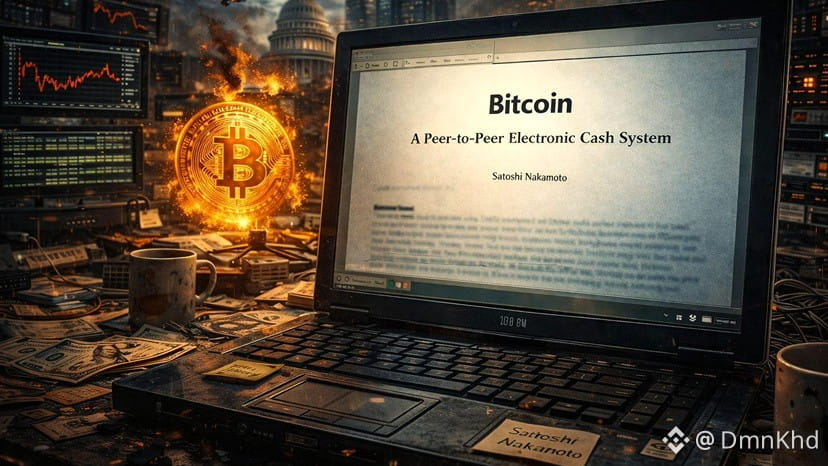
On October 31, 2008, Satoshi published the famous Bitcoin whitepaper titled "Bitcoin: A Peer-to-Peer Electronic Cash System."
3️⃣ FIRST BLOCK
On January 3, 2009, the first Bitcoin block, known as the Genesis Block, was mined.
4️⃣ NO CENTRAL AUTHORITY
Bitcoin operates through a decentralized network rather than a central bank.
5️⃣ THE MYSTERY
Satoshi Nakamoto's real identity remains unknown.
💡 KEY LESSON:
Bitcoin is not just a digital currency. It represents a new approach to transferring value through a decentralized network.
Sometimes, the greatest innovations come from ideas that challenge traditional systems.
Learn the history. Understand the technology. Think independently.
#bitcoin $BTC #SatoshiNakamoto #CryptoHistory #blockchain #BinanceSquare
2
86

·
--
See translation
Fun fact: the most expensive pizza order in history was paid in bitcoin 🍕
May 22, 2010. A programmer offered 10,000 BTC on a forum to anyone who would get him two pizzas. Someone took the deal, and it became the first well-known purchase of a real-world item with bitcoin.
Back then 10,000 BTC was worth about $41.
With $BTC near $75K today, those two pizzas would be worth around $750 million.
That's why May 22 is Bitcoin Pizza Day.
Would you have spent it or held? 👇
#bitcoin #CryptoHistory #crypto #Binance
21

·
--
See translation
First ever Bitcoin payment.
On Jan 12 2009 Satoshi sent 10 BTC to Hal Finney, right after Hal's "Running bitcoin" tweet.
$BTC $75,981 down 0.02% • $BNB $699.07 up 0.60% 🤔
Who gets more credit for kick-starting crypto, Satoshi or Finney?
#CryptoHistory #Bitcoin
First ever Bitcoin payment.
On Jan 12 2009 Satoshi sent 10 BTC to Hal Finney, right after Hal's "Running bitcoin" tweet.
$BTC $75,981 down 0.02% • $BNB $699.07 up 0.60% 🤔
Who gets more credit for kick-starting crypto, Satoshi or Finney?
#CryptoHistory #Bitcoin
On Jan 12 2009 Satoshi sent 10 BTC to Hal Finney, right after Hal's "Running bitcoin" tweet.
$BTC $75,981 down 0.02% • $BNB $699.07 up 0.60% 🤔
Who gets more credit for kick-starting crypto, Satoshi or Finney?
#CryptoHistory #Bitcoin
173

·
--
See translation
Wow, looking back to July 30, 2015 when Ethereum launched still blows my mind, smart contracts opened DeFi and NFTs.
Right now $BTC $75,780 up 0.10% and $ETH $2,234 up 0.30%.
What's your favorite thing built on Ethereum?
#CryptoHistory #Bitcoin
Wow, looking back to July 30, 2015 when Ethereum launched still blows my mind, smart contracts opened DeFi and NFTs.
Right now $BTC $75,780 up 0.10% and $ETH $2,234 up 0.30%.
What's your favorite thing built on Ethereum?
#CryptoHistory #Bitcoin
Right now $BTC $75,780 up 0.10% and $ETH $2,234 up 0.30%.
What's your favorite thing built on Ethereum?
#CryptoHistory #Bitcoin
130

🚀 The Complete Story of Binance — Episode 03
🔥 The world’s No. 1 crypto exchange in just 165 days!
Did you know Binance began its journey in July 2017 and shook up the crypto world in just a few months?
💰 $15 million in initial funding
CZ raised around $15 million through the initial sale of the BNB token (ICO).
⚡ The secrets behind Binance’s success:
1️⃣ Low trading fees 2️⃣ A high-speed trading system 3️⃣ An easy-to-use platform 4️⃣ A wide range of cryptocurrencies
📅 Regular trading on Binance began on July 14, 2017.
📈 In January 2018, Binance became the world’s largest crypto exchange by trading volume.
But this success story wasn’t so easy!
The Chinese government began cracking down on crypto exchanges and ICOs.
❓ Was Binance about to come to an end?
Or did CZ make a decision that changed the company’s fate?
🔥 PART 04 — China’s ban and Binance’s first major test!
💬 Are you looking forward to the next episode?
#BinanceSquareFamily #CZProject #CryptoHistory #bitcoin #BNB #CryptoUrdu #BinanceSquare

54
·
--
See translation
10 BTC moved from Satoshi to Hal Finney on Jan 12 2009, the first peer-to-peer Bitcoin transaction.
$BTC $75,993 down 0.46% and $BNB $697.41 up 0.68%. Who do you think deserves more credit in crypto history?
#CryptoHistory #Bitcoin
10 BTC moved from Satoshi to Hal Finney on Jan 12 2009, the first peer-to-peer Bitcoin transaction.
$BTC $75,993 down 0.46% and $BNB $697.41 up 0.68%. Who do you think deserves more credit in crypto history?
#CryptoHistory #Bitcoin
$BTC $75,993 down 0.46% and $BNB $697.41 up 0.68%. Who do you think deserves more credit in crypto history?
#CryptoHistory #Bitcoin
76
·
--
See translation
📜 Just scrolling past the usual price chatter, I found myself thinking about where it all began. Back on Oct 31 2008, Satoshi dropped a 9-page whitepaper titled 'A Peer-to-Peer Electronic Cash System.' Those few pages sparked an entire industry.
Right now $BTC is $80,308 up 2.33% and $ETH $2,418 up 3.86%. I skimmed the BTC paper once - the math still feels dense.
Did anyone actually read the original doc?
#CryptoHistory #Bitcoin
Right now $BTC is $80,308 up 2.33% and $ETH $2,418 up 3.86%. I skimmed the BTC paper once - the math still feels dense.
Did anyone actually read the original doc?
#CryptoHistory #Bitcoin
92


See translation
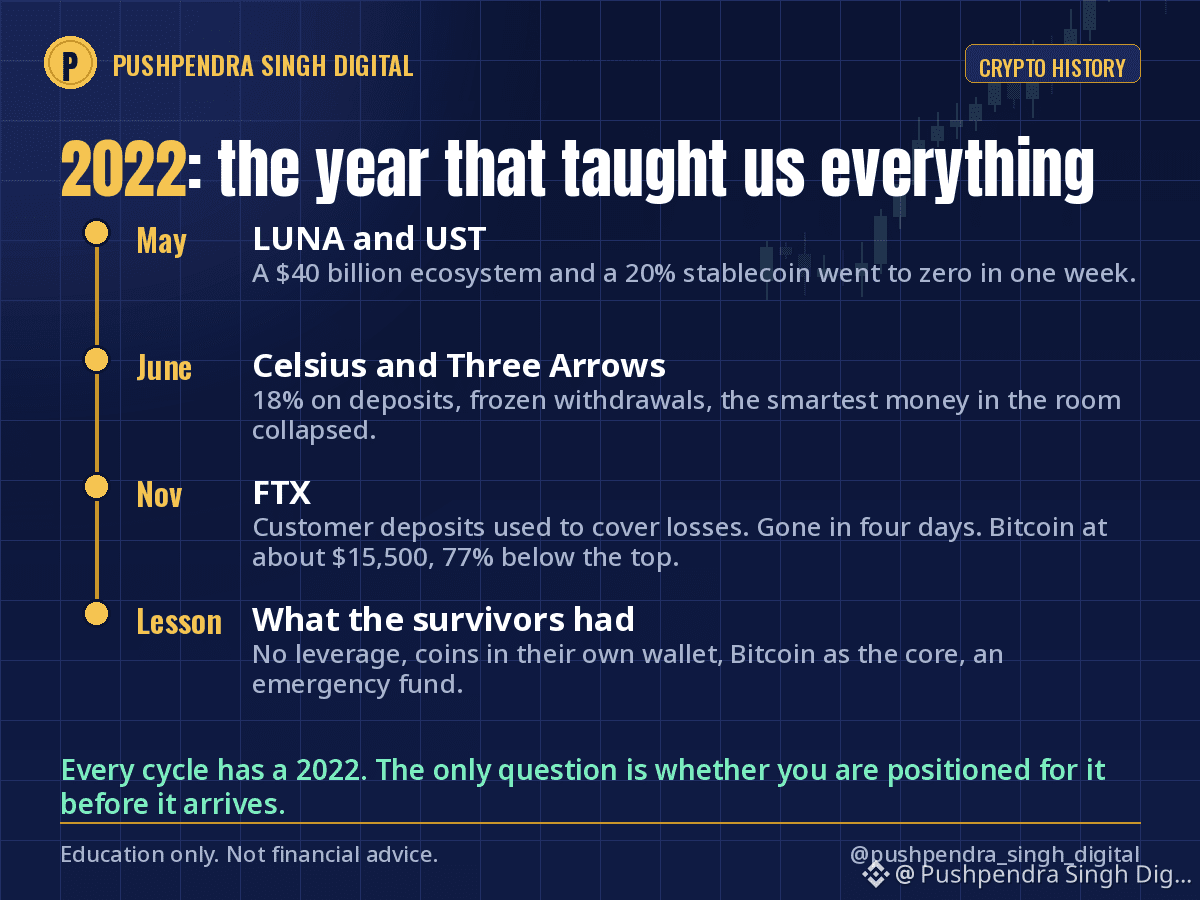
If you joined crypto after 2022, you missed the year that taught the rest of us everything. The short version, for the next time someone says "this time is different."
May 2022: LUNA and UST. A $40 billion ecosystem, a "stablecoin" paying 20% a year, backed by the most confident community on Twitter. It went to zero in one week. People who held it as their savings lost everything.
June 2022: Celsius and Three Arrows. A lender offering up to 18% on deposits froze withdrawals. A hedge fund that everyone called the smartest money in the room collapsed. Both had the same problem: leverage you could not see.
November 2022: FTX. The second largest exchange in the world, the one with the stadium name and the Super Bowl ad, was using customer deposits to cover losses. Gone in four days. Bitcoin fell to about $15,500, 77% below its top.
What the survivors had in common: no leverage, coins in their own wallet, Bitcoin as the core, and an emergency fund that meant they never had to sell the bottom.
Why I tell this story now: a lot of people joined in the last year, and the "guaranteed yield" offers always come back with a new name. Every cycle has a 2022. The only question is whether you are positioned for it before it arrives.
Were you here in 2022? What did it teach you?
Education only, not financial advice.
$BTC #CryptoHistory #FTX #RiskManagement
5
2.9k

See translation
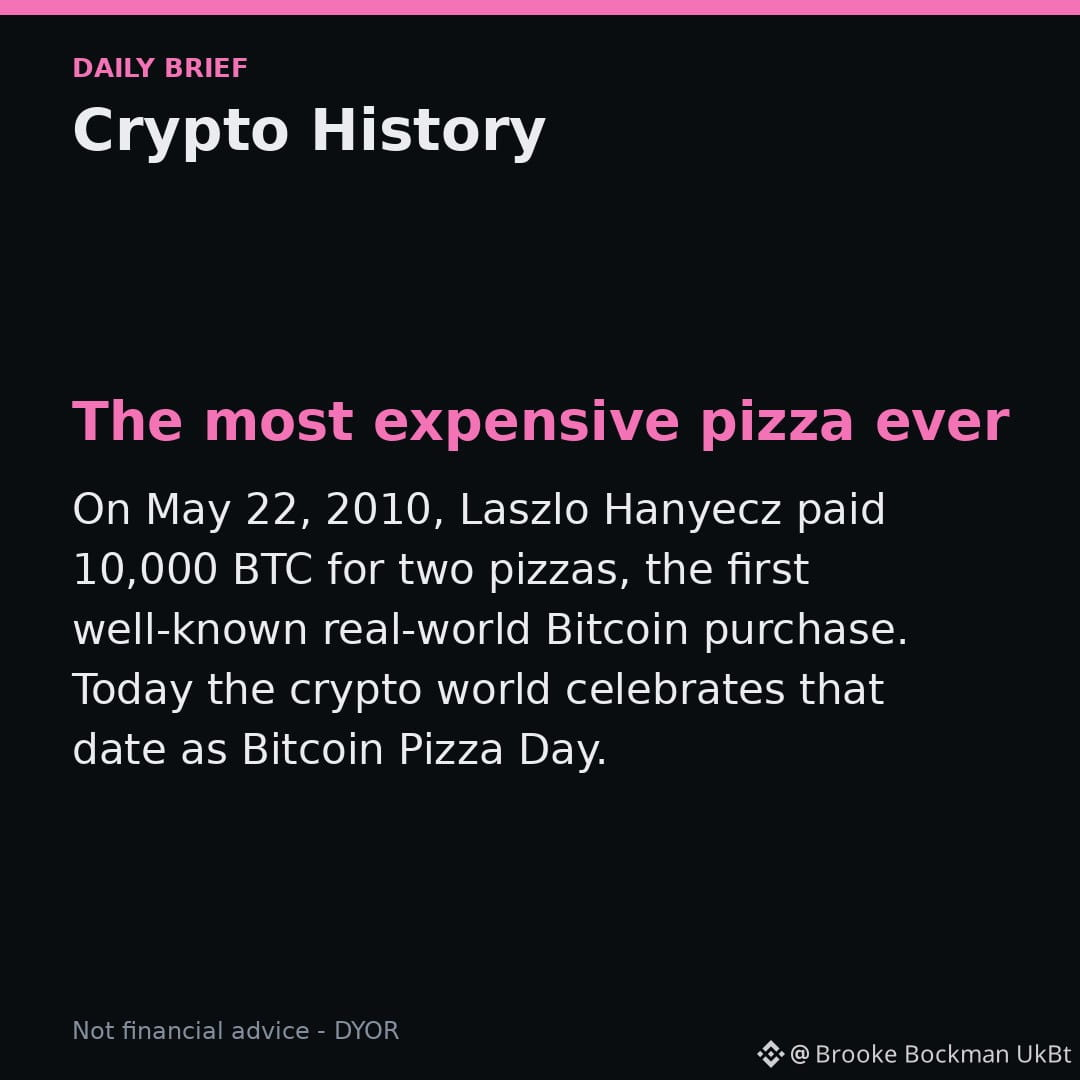
10,000 BTC bought two pizzas back on May 22, 2010 - that's the story behind Bitcoin Pizza Day. If you'd held those coins since then, you'd be looking at a crazy number today.
Now $BTC sits around $76,852, down 0.23%, and $SOL is $91.38, down 1.19%.
What other crypto milestones have stuck with you?
#CryptoHistory #Bitcoin
Now $BTC sits around $76,852, down 0.23%, and $SOL is $91.38, down 1.19%.
What other crypto milestones have stuck with you?
#CryptoHistory #Bitcoin
115

·
--
Article
See translation
Crypto Curiosities: 3 Surprising Moments That Still Shape Our PlaygroundsEver wonder why a meme coin can sprint ahead while a blue-chip token chills? I've been tracking the charts, chatting with traders, and today I'm turning three jaw-dropping crypto stories into a mini-quiz you can't resist. Grab your favorite brew, and let's spin the wheel of history while the market ticks along.
Bitcoin's First Real-World Transaction
Back in 2010 a programmer paid 10,000 BTC for two pizzas, a deal that would later be worth billions. That moment proved digital cash could leave the screen and buy a bite. It also taught the community that scarcity and community hype can turn a joke into a global phenomenon. I still smile thinking about that slice, especially as $BTC now trades at $77,705, up 0.54% in the last 24 hours.
Ethereum's DAO Hack and the Birth of a Fork
The DAO was meant to be a decentralized venture fund, but a clever exploit drained a huge chunk of ether. The community voted to roll back the chain, creating two parallel networks: the original Ethereum and the fork we now call Ethereum Classic. That split showed how governance can be both democratic and chaotic. Today $ETH sits at $2,299, climbing 1.53% over the past day.
Hot Tokens Heat Up While Fear Lurks
If you've been scrolling feeds, you've seen $HOT surge +24.59% to $0.000532, leading today's top gainers. Yet the Fear & Greed Index reads 26, signaling fear dominates the mood. It's a reminder that volatility can bring both opportunity and caution. Meanwhile SOL is holding steady at $93.67, up 1.41% in 24 hours, and BNB hovers around $698.10, slipping just 0.39% today.
Now it's your turn: Which of these moments do you think had the biggest impact on how we trade today, Bitcoin's pizza, the DAO fork, or the recent meme-coin rally? Drop your answer in the comments and tell me why!
Not financial advice
#CryptoQuiz #CryptoHistory #MarketFun
Crypto Curiosities: 3 Surprising Moments That Still Shape Our Playgrounds
Ever wonder why a meme coin can sprint ahead while a blue-chip token chills? I've been tracking the charts, chatting with traders, and today I'm turning three jaw-dropping crypto stories into a mini-quiz you can't resist. Grab your favorite brew, and let's spin the wheel of history while the market ticks along.
Bitcoin's First Real-World Transaction
Back in 2010 a programmer paid 10,000 BTC for two pizzas, a deal that would later be worth billions. That moment proved digital cash could leave the screen and buy a bite. It also taught the community that scarcity and community hype can turn a joke into a global phenomenon. I still smile thinking about that slice, especially as $BTC now trades at $77,705, up 0.54% in the last 24 hours.
Ethereum's DAO Hack and the Birth of a Fork
The DAO was meant to be a decentralized venture fund, but a clever exploit drained a huge chunk of ether. The community voted to roll back the chain, creating two parallel networks: the original Ethereum and the fork we now call Ethereum Classic. That split showed how governance can be both democratic and chaotic. Today $ETH sits at $2,299, climbing 1.53% over the past day.
Hot Tokens Heat Up While Fear Lurks
If you've been scrolling feeds, you've seen $HOT surge +24.59% to $0.000532, leading today's top gainers. Yet the Fear & Greed Index reads 26, signaling fear dominates the mood. It's a reminder that volatility can bring both opportunity and caution. Meanwhile SOL is holding steady at $93.67, up 1.41% in 24 hours, and BNB hovers around $698.10, slipping just 0.39% today.
Now it's your turn: Which of these moments do you think had the biggest impact on how we trade today, Bitcoin's pizza, the DAO fork, or the recent meme-coin rally? Drop your answer in the comments and tell me why!
Not financial advice
#CryptoQuiz #CryptoHistory #MarketFun
283

·
--
See translation
🚨 **The $250M Secret Taken to the Grave: The Bizarre Saga of QuadrigaCX** 🔐✈️
In December 2018, Gerald Cotten, the 30-year-old CEO of Canada’s largest cryptocurrency exchange, QuadrigaCX, suddenly passed away while on his honeymoon in India.
The immediate fallout shocked the industry: Cotten was supposedly the sole custodian of the exchange's cold storage, locking away roughly **$250 million** in user assets behind encrypted passwords only he knew. Over 115,000 users were left unable to withdraw their funds.
However, forensic investigations soon uncovered a far darker reality. QuadrigaCX was virtually insolvent long before Cotten’s demise. Regulators discovered the platform operated like an old-fashioned Ponzi scheme—Cotten had set up fake accounts with fabricated balances and gambled user deposits on rival exchanges, incurring massive losses. When investigators finally cracked into the cold wallets, they found them empty.
To this day, skepticism remains widespread across Web3. Did Gerald Cotten truly die, or did he fake his death with forged documents and pull off one of the greatest exit scams in financial history?
What’s your take—tragic twist of fate or the ultimate staged vanishing act? Drop your thoughts below! 👇
$CL $SOL $SKHY
#CryptoHistory #Cryptoscam #BinanceSquare #ColdStorage #security
{future}(SKHYUSDT)
{future}(CLUSDT)
{future}(SOLUSDT)
🚨 **The $250M Secret Taken to the Grave: The Bizarre Saga of QuadrigaCX** 🔐✈️
In December 2018, Gerald Cotten, the 30-year-old CEO of Canada’s largest cryptocurrency exchange, QuadrigaCX, suddenly passed away while on his honeymoon in India.
The immediate fallout shocked the industry: Cotten was supposedly the sole custodian of the exchange's cold storage, locking away roughly **$250 million** in user assets behind encrypted passwords only he knew. Over 115,000 users were left unable to withdraw their funds.
However, forensic investigations soon uncovered a far darker reality. QuadrigaCX was virtually insolvent long before Cotten’s demise. Regulators discovered the platform operated like an old-fashioned Ponzi scheme—Cotten had set up fake accounts with fabricated balances and gambled user deposits on rival exchanges, incurring massive losses. When investigators finally cracked into the cold wallets, they found them empty.
To this day, skepticism remains widespread across Web3. Did Gerald Cotten truly die, or did he fake his death with forged documents and pull off one of the greatest exit scams in financial history?
What’s your take—tragic twist of fate or the ultimate staged vanishing act? Drop your thoughts below! 👇
$CL $SOL $SKHY
#CryptoHistory #Cryptoscam #BinanceSquare #ColdStorage #security

1
63

·
--
See translation
The Civil War of Distributed Networks: When Scaling Limits Split a CommunityEvery decentralized network eventually reaches a moment when its own success becomes its biggest problem. When more users arrive, blocks fill up, fees climb, and confirmations slow down. At that point, a technical limitation stops being a technical limitation and becomes a question of identity: what is this network actually for? Because no central authority exists to answer that question, the community has to settle it itself, and that is where the friction begins.
Bitcoin gave us the clearest example. Between 2015 and 2017, $BTC faced a bitter dispute over its block size limit. One camp argued that larger blocks would keep fees low and preserve Bitcoin as everyday digital cash. On the other hand, the opposing camp feared that bigger blocks would raise the cost of running a node and slowly push ordinary participants out, which would weaken decentralization. As a result, the debate moved from forums into mining pools, exchanges, and businesses, each picking a side. In August 2017, the disagreement finally broke the network apart when $BCH forked away with larger blocks, while Bitcoin continued with SegWit and a focus on being a settlement layer. The story did not stop there, because Bitcoin Cash later split again in 2018, which proved that a fork rarely ends a quarrel and often just creates new ones.
Ethereum faced its own tests, though they looked different. The 2016 DAO hack forced the community to choose between preserving “code is law” and reversing the damage, and the split produced Ethereum and Ethereum Classic. Years later, during the surge in activity of 2020 and 2021, $ETH gas fees climbed so high that small users were priced out of their own network. Instead of forking, the community leaned into a rollup-centered roadmap, while competing Layer 1 chains rose to challenge it, arguing that scaling should happen on the base layer. Because of this, the ideological divide simply moved from one chain to an entire ecosystem of rivals.
What these episodes teach us is that scaling is never only about throughput. Every solution carries a trade-off between speed, cost, security, and decentralization, and people naturally weigh those priorities differently. That is why the most resilient networks are not the ones that avoid conflict, but the ones that survive it and keep building afterward. As a trader, I treat these fault lines as signals, since governance disputes and fee spikes often move markets long before the headlines catch up. If you would like to follow how I navigate these cycles with discipline, you can copy my trades directly on Binance here: [https://www.binance.com/en/copy-trading/lead-details/5293024773212277505?timeRange=365D](https://www.binance.com/en/copy-trading/lead-details/5293024773212277505?timeRange=365D)
#CryptoHistory #bitcoin #Ethereum #blockchain #Copytrading
The Civil War of Distributed Networks: When Scaling Limits Split a Community
Every decentralized network eventually reaches a moment when its own success becomes its biggest problem. When more users arrive, blocks fill up, fees climb, and confirmations slow down. At that point, a technical limitation stops being a technical limitation and becomes a question of identity: what is this network actually for? Because no central authority exists to answer that question, the community has to settle it itself, and that is where the friction begins.
Bitcoin gave us the clearest example. Between 2015 and 2017, $BTC faced a bitter dispute over its block size limit. One camp argued that larger blocks would keep fees low and preserve Bitcoin as everyday digital cash. On the other hand, the opposing camp feared that bigger blocks would raise the cost of running a node and slowly push ordinary participants out, which would weaken decentralization. As a result, the debate moved from forums into mining pools, exchanges, and businesses, each picking a side. In August 2017, the disagreement finally broke the network apart when $BCH forked away with larger blocks, while Bitcoin continued with SegWit and a focus on being a settlement layer. The story did not stop there, because Bitcoin Cash later split again in 2018, which proved that a fork rarely ends a quarrel and often just creates new ones.
Ethereum faced its own tests, though they looked different. The 2016 DAO hack forced the community to choose between preserving “code is law” and reversing the damage, and the split produced Ethereum and Ethereum Classic. Years later, during the surge in activity of 2020 and 2021, $ETH gas fees climbed so high that small users were priced out of their own network. Instead of forking, the community leaned into a rollup-centered roadmap, while competing Layer 1 chains rose to challenge it, arguing that scaling should happen on the base layer. Because of this, the ideological divide simply moved from one chain to an entire ecosystem of rivals.
What these episodes teach us is that scaling is never only about throughput. Every solution carries a trade-off between speed, cost, security, and decentralization, and people naturally weigh those priorities differently. That is why the most resilient networks are not the ones that avoid conflict, but the ones that survive it and keep building afterward. As a trader, I treat these fault lines as signals, since governance disputes and fee spikes often move markets long before the headlines catch up. If you would like to follow how I navigate these cycles with discipline, you can copy my trades directly on Binance here: https://www.binance.com/en/copy-trading/lead-details/5293024773212277505?timeRange=365D
#CryptoHistory #bitcoin #Ethereum #blockchain #Copytrading
123

·
--
See translation
🔥 ON THIS DAY: BITCOIN'S FIRST BIG DEBATE! $ESPORTS
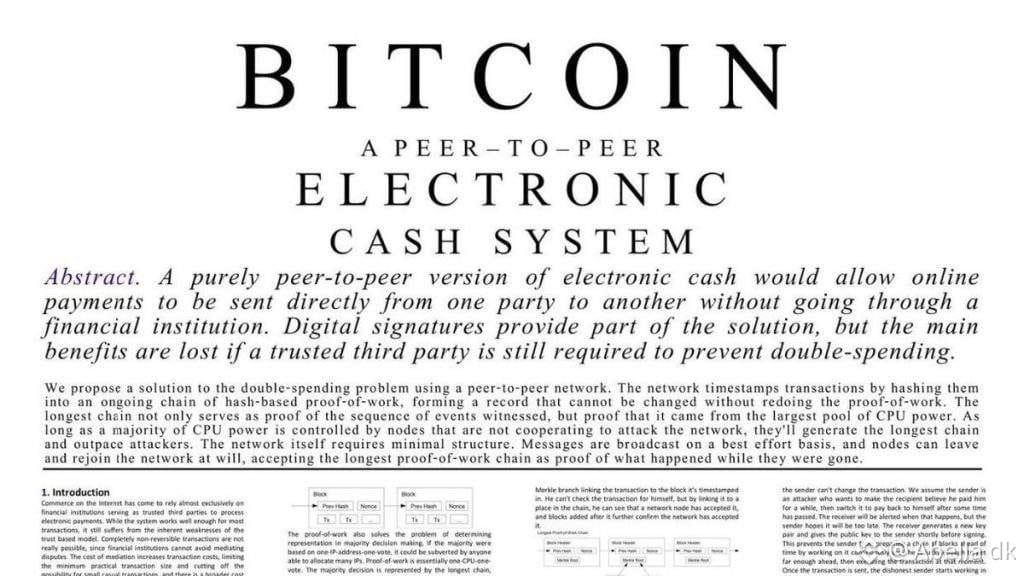
On November 2, 2008, Bitcoin received its first public response just two days after Satoshi Nakamoto shared the whitepaper.
$IDOL
💬 "We very, very much need such a system… it does not seem to scale to the required size."
Interestingly, Bitcoin's first major criticism was about SCALABILITY.
$BTC
That single concern eventually sparked:
⚡ The 2017 Block Size Wars
⚡ Lightning Network
⚡ Bitcoin Layer 2 solutions
Nearly 18 years later, Bitcoin is still evolving.
The question is: Has Bitcoin finally solved its scaling problem, or is the biggest challenge still ahead? 👀
#Bitcoin #BTC #SatoshiNakamoto #CryptoHistory
1
717
·
--
See translation
🚨 The Ultimate Rug Pull: The SQUID Token’s $3.3M Heist! 🦑📉
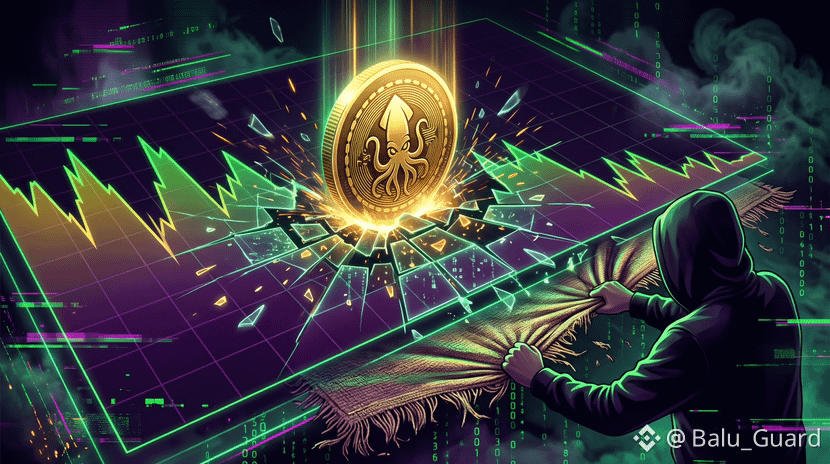
In the fall of 2021, the crypto market witnessed one of the most brutal and instantaneous scams in history. Riding the massive hype of the hit TV show, the SQUID token skyrocketed from a mere $0.01 to an astonishing $2,861 in just a few days.
FOMO completely blinded retail investors. The hype was so overwhelming that buyers ignored a glaring, fatal red flag: the smart contract was hardcoded to prevent them from selling their tokens!
At the absolute peak of the frenzy, the anonymous developers made their move. They drained the liquidity pool of approximately $3.3 million, crashing the chart from $2,861 straight to $0 in a single second.
It remains a painful reminder to always check contract logic and never blindly chase pop-culture hype. Did you watch the SQUID chart crash live back in 2021? Let us know your thoughts below! 👇
$1000PEPE $NEAR $XRP
#Cryptoscam #Rugpull #Squid #CryptoHistory #BinanceSquare
{future}(XRPUSDT)
{future}(NEARUSDT)
{future}(1000PEPEUSDT)
🚨 The Ultimate Rug Pull: The SQUID Token’s $3.3M Heist! 🦑📉
In the fall of 2021, the crypto market witnessed one of the most brutal and instantaneous scams in history. Riding the massive hype of the hit TV show, the SQUID token skyrocketed from a mere $0.01 to an astonishing $2,861 in just a few days.
FOMO completely blinded retail investors. The hype was so overwhelming that buyers ignored a glaring, fatal red flag: the smart contract was hardcoded to prevent them from selling their tokens!
At the absolute peak of the frenzy, the anonymous developers made their move. They drained the liquidity pool of approximately $3.3 million, crashing the chart from $2,861 straight to $0 in a single second.
It remains a painful reminder to always check contract logic and never blindly chase pop-culture hype. Did you watch the SQUID chart crash live back in 2021? Let us know your thoughts below! 👇
$1000PEPE $NEAR $XRP
#Cryptoscam #Rugpull #Squid #CryptoHistory #BinanceSquare
1
27

·
--
See translation
💵 The Untold Story Behind USDC
In 2018, Jeremy Allaire and Sean Neville of Circle joined forces with Coinbase's leadership to solve a hidden problem in crypto: how to move real-world dollars across blockchains. Their vision wasn't to create another Bitcoin, but to bring traditional money into a borderless digital economy.
$USDC #CryptoHistory
{spot}(USDCUSDT)
💵 The Untold Story Behind USDC
In 2018, Jeremy Allaire and Sean Neville of Circle joined forces with Coinbase's leadership to solve a hidden problem in crypto: how to move real-world dollars across blockchains. Their vision wasn't to create another Bitcoin, but to bring traditional money into a borderless digital economy.
$USDC #CryptoHistory
2
140
·
--
See translation
🚨 The Vanishing Cryptoqueen: A $4 Billion Mystery! 🚨
In one of the most notorious scams in financial history, Ruja Ignatova founded OneCoin, heavily promoting it as the ultimate "Bitcoin killer." She successfully lured global investors into pouring an estimated $4 billion into the project. The shocking truth? OneCoin was a massive Ponzi scheme running on a standard centralized database, with absolutely no real blockchain technology behind it.
In 2017, just as international authorities were closing in, Ignatova boarded a flight to Athens and vanished without a trace. Today, the elusive "Cryptoqueen" remains on the FBI’s Ten Most Wanted Fugitives list, with a massive reward offered for information leading to her capture.
Do you think she is still living under a new identity, or is there a darker end to this $4B mystery? Drop your theories below! 👇
$TRUMP $FLOCK $POWR
#cryptoqueen #OneCoin #Cryptoscam #CryptoHistory #BinanceSquare
{future}(POWRUSDT)
{future}(FLOCKUSDT)
{future}(TRUMPUSDT)
🚨 The Vanishing Cryptoqueen: A $4 Billion Mystery! 🚨
In one of the most notorious scams in financial history, Ruja Ignatova founded OneCoin, heavily promoting it as the ultimate "Bitcoin killer." She successfully lured global investors into pouring an estimated $4 billion into the project. The shocking truth? OneCoin was a massive Ponzi scheme running on a standard centralized database, with absolutely no real blockchain technology behind it.
In 2017, just as international authorities were closing in, Ignatova boarded a flight to Athens and vanished without a trace. Today, the elusive "Cryptoqueen" remains on the FBI’s Ten Most Wanted Fugitives list, with a massive reward offered for information leading to her capture.
Do you think she is still living under a new identity, or is there a darker end to this $4B mystery? Drop your theories below! 👇
$TRUMP $FLOCK $POWR
#cryptoqueen #OneCoin #Cryptoscam #CryptoHistory #BinanceSquare

1
58
·
--
See translation
🚨 The $610M Hack That Ended with a Refund: The Tale of Mr. White Hat! 🎩💰
In August 2021, the crypto world witnessed one of the most astonishing security incidents in DeFi history. An anonymous attacker successfully exploited a vulnerability in the cross-chain protocol Poly Network, draining a staggering $610 million in cryptocurrency across multiple blockchains.
Instead of disappearing with the massive fortune, the story took a bizarre and unexpected turn. The developers publicly pleaded with the hacker, and to everyone's shock, the attacker agreed to give the money back. Communicating through transaction data fields, the hacker—later dubbed "Mr. White Hat"—claimed the heist was done merely to expose the network's security flaws and "save" the project from real malicious actors.
Over the following days, Mr. White Hat systematically returned practically all the stolen funds. The situation got so surreal that Poly Network even offered the hacker a $500,000 bug bounty and a position as their Chief Security Advisor!
It remains a legendary moment where a catastrophic exploit turned into the ultimate white-hat stress test. Do you think the hacker was a genuine hero, or just someone who realized that $610 million is nearly impossible to launder? Share your thoughts below! 👇
$AKE $SIREN $LAB
#PolyNetwork #cryptohacks #defi #BinanceSquare #CryptoHistory
{future}(LABUSDT)
{future}(SIRENUSDT)
{future}(AKEUSDT)
🚨 The $610M Hack That Ended with a Refund: The Tale of Mr. White Hat! 🎩💰
In August 2021, the crypto world witnessed one of the most astonishing security incidents in DeFi history. An anonymous attacker successfully exploited a vulnerability in the cross-chain protocol Poly Network, draining a staggering $610 million in cryptocurrency across multiple blockchains.
Instead of disappearing with the massive fortune, the story took a bizarre and unexpected turn. The developers publicly pleaded with the hacker, and to everyone's shock, the attacker agreed to give the money back. Communicating through transaction data fields, the hacker—later dubbed "Mr. White Hat"—claimed the heist was done merely to expose the network's security flaws and "save" the project from real malicious actors.
Over the following days, Mr. White Hat systematically returned practically all the stolen funds. The situation got so surreal that Poly Network even offered the hacker a $500,000 bug bounty and a position as their Chief Security Advisor!
It remains a legendary moment where a catastrophic exploit turned into the ultimate white-hat stress test. Do you think the hacker was a genuine hero, or just someone who realized that $610 million is nearly impossible to launder? Share your thoughts below! 👇
$AKE $SIREN $LAB
#PolyNetwork #cryptohacks #defi #BinanceSquare #CryptoHistory

1
93
·
--
See translation
🚨 The Mt. Gox Catastrophe: The Hack That Shook Crypto History! 🚨
Back in early 2014, Mt. Gox was the undisputed giant of the crypto world, handling over 70% of all global Bitcoin transactions. But everything collapsed when the exchange abruptly suspended trading and filed for bankruptcy.
The shocking truth? Hackers had quietly breached the exchange's systems years earlier, slowly draining an unbelievable 850,000 BTC (worth roughly $500 million at the time, and tens of billions today). The theft wiped out customer funds and triggered a deep, prolonged market crash.
This disaster became the ultimate cautionary tale, forcing the crypto industry to rethink custody risks and paving the way for modern "proof of reserves" standards.
Despite the collapse happening over a decade ago, the saga is still unfolding. While partial repayments to affected users finally began in July 2024, the process remains heavily delayed, with the final distribution deadline now pushed to October 2027.
Do you keep your assets on centralized exchanges, or do you rely entirely on cold storage? Share your strategy in the comments! 👇
$AIOT $BTC $ETH
#MtGox #CryptoHistory #bitcoin #BTC #BinanceSquare
{future}(ETHUSDT)
{future}(BTCUSDT)
{future}(AIOTUSDT)
🚨 The Mt. Gox Catastrophe: The Hack That Shook Crypto History! 🚨
Back in early 2014, Mt. Gox was the undisputed giant of the crypto world, handling over 70% of all global Bitcoin transactions. But everything collapsed when the exchange abruptly suspended trading and filed for bankruptcy.
The shocking truth? Hackers had quietly breached the exchange's systems years earlier, slowly draining an unbelievable 850,000 BTC (worth roughly $500 million at the time, and tens of billions today). The theft wiped out customer funds and triggered a deep, prolonged market crash.
This disaster became the ultimate cautionary tale, forcing the crypto industry to rethink custody risks and paving the way for modern "proof of reserves" standards.
Despite the collapse happening over a decade ago, the saga is still unfolding. While partial repayments to affected users finally began in July 2024, the process remains heavily delayed, with the final distribution deadline now pushed to October 2027.
Do you keep your assets on centralized exchanges, or do you rely entirely on cold storage? Share your strategy in the comments! 👇
$AIOT $BTC $ETH
#MtGox #CryptoHistory #bitcoin #BTC #BinanceSquare

39
·
--
See translation
Fun fact: the first 50 BTC ever mined can never be spent 🔒
Bitcoin's genesis block went live on January 3, 2009. Its 50 BTC reward was never added to the list of spendable coins, so those coins are stuck forever.
The block also carries a line of text:
"The Times 03/Jan/2009 Chancellor on brink of second bailout for banks"
A newspaper headline about bank bailouts, written into block #0. People still send small amounts to that address as a tribute, and those coins are stuck too.
Did you know this one? 👇
$BTC #bitcoin #CryptoHistory #crypto #Binance
20
Log in to explore more content
Join global crypto users on Binance Square
⚡️ Get latest and useful information about crypto.
💬 Trusted by the world’s largest crypto exchange.
👍 Discover real insights from verified creators.
Email / Phone number
Trending Topics
1
#HuangRisksOusterOverReportedAffairWithSubordinate
63,830 views
871 Discussing
2
#AnthropicRejectsIPODelayValuationinQuestion
522,345 views
4,264 Discussing
3
#CoreWeaveJumps10%On168%RevenueGrowth
93,624 views
1,092 Discussing
4
#ZcashFallsBelow$1000ForFirstTimeSinceSeptember
50,687 views
218 Discussing
5
#MSCIRemovalMayCurbStrategy’sBitcoinBuying
12,081 views
208 Discussing
6
#HKSFCSaysTokenizationMovingToCommercialUse
949 views
35 Discussing
7
#CanNvidiaEarningsEaseMarketConcerns?
201,767 views
1,995 Discussing
8
#SouthKoreaToLetExchangesSuspendWithdrawalsOnSuspectedHacks
204 views
12 Discussing
9
#PythAddsNYSERealTimeDataToMarketplace
5,803 views
138 Discussing
10
#SolanaCompanyReports$3.4MQ3Revenue
1,489 views
30 Discussing