

#avax
avax
196.4M views
599,840 Discussing
Hot
Latest

·
--
See translation
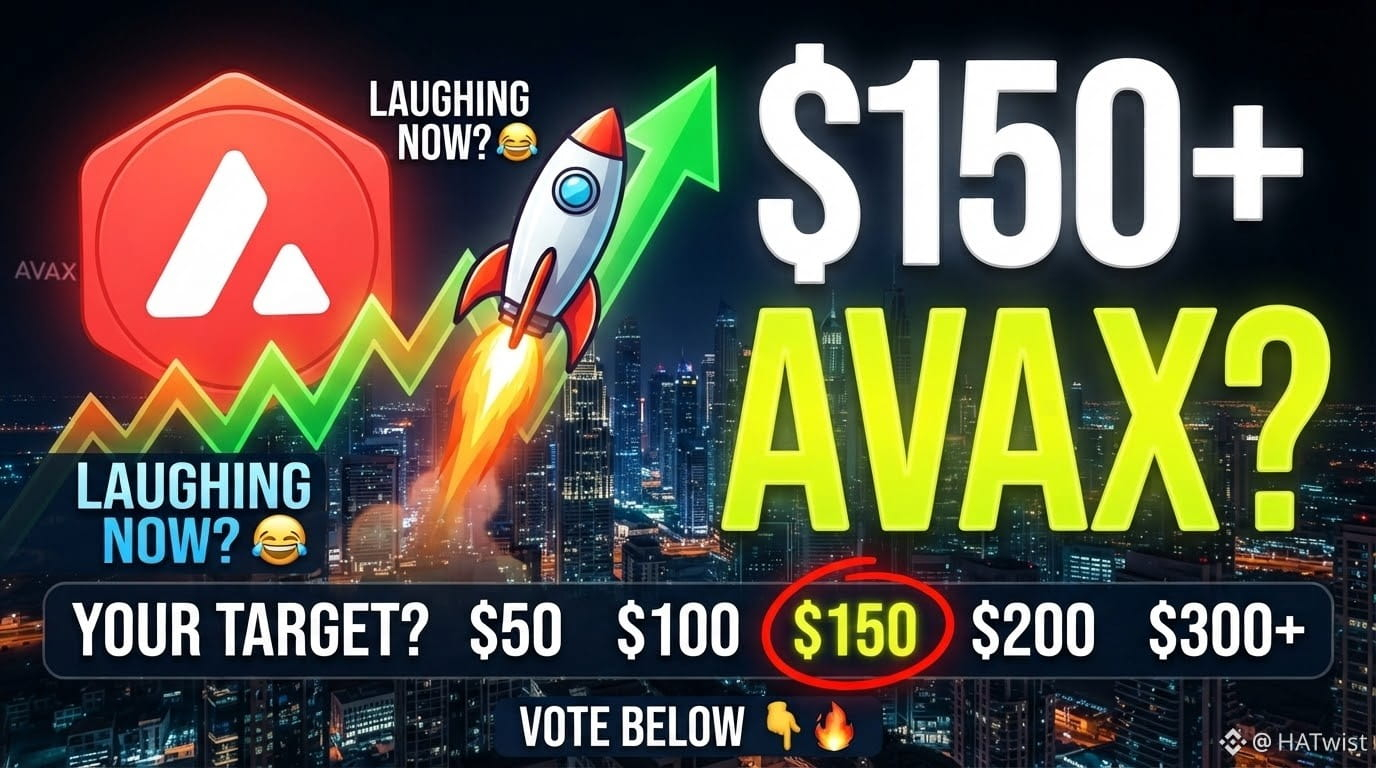
🔥 Many people are laughing at the idea of $AVAX reaching $150+ …
But what do you think? 👀
Is $150+ actually possible for $AVAX, or is it just hype? 🚀
🎯 What’s YOUR AVAX target?
🔹 $50
🔹 $100
🔹 $150
🔹 $200
🔹 $300+
Drop your target below 👇🔥
#AVAX #Avalanche #Crypto
🔥 Many people are laughing at the idea of $AVAX reaching $150+ …
But what do you think? 👀
Is $150+ actually possible for $AVAX, or is it just hype? 🚀
🎯 What’s YOUR AVAX target?
🔹 $50
🔹 $100
🔹 $150
🔹 $200
🔹 $300+
Drop your target below 👇🔥
#AVAX #Avalanche #Crypto
But what do you think? 👀
Is $150+ actually possible for $AVAX, or is it just hype? 🚀
🎯 What’s YOUR AVAX target?
🔹 $50
🔹 $100
🔹 $150
🔹 $200
🔹 $300+
Drop your target below 👇🔥
#AVAX #Avalanche #Crypto
1
38

·
--
Verified
See translation
🚨 AVAX JUST GOT A BIG INSTITUTIONAL SIGNAL
Avalanche is suddenly back in focus after a fresh institutional development.
Goldman Sachs’ roughly $100B Treasury fund, FTIXX, is now available through Lynq, an institutional settlement network built on an Avalanche-based private Layer 1.
That puts Avalanche technology directly into an institutional settlement workflow involving major crypto firms.
And the timing is interesting.
Avalanche’s Helicon upgrade went live on September 22, bringing Continuous Execution, shorter validator staking commitments and other network changes.
This is no longer just an upgrade story.
Institutional infrastructure + RWA adoption + network upgrades are now converging around Avalanche.
🚨 AVAX UPDATE: Fresh institutional infrastructure is putting Avalanche back under the spotlight. Click the $AVAX setup below 🫵🏻 to review the market structure and watch the next reaction.
$AVAX
{future}(AVAXUSDT)
.
.
.
#AVAX #Avalanche #Write2Earn
🚨 AVAX JUST GOT A BIG INSTITUTIONAL SIGNAL
Avalanche is suddenly back in focus after a fresh institutional development.
Goldman Sachs’ roughly $100B Treasury fund, FTIXX, is now available through Lynq, an institutional settlement network built on an Avalanche-based private Layer 1.
That puts Avalanche technology directly into an institutional settlement workflow involving major crypto firms.
And the timing is interesting.
Avalanche’s Helicon upgrade went live on September 22, bringing Continuous Execution, shorter validator staking commitments and other network changes.
This is no longer just an upgrade story.
Institutional infrastructure + RWA adoption + network upgrades are now converging around Avalanche.
🚨 AVAX UPDATE: Fresh institutional infrastructure is putting Avalanche back under the spotlight. Click the $AVAX setup below 🫵🏻 to review the market structure and watch the next reaction.
$AVAX
.
.
.
#AVAX #Avalanche #Write2Earn
Avalanche is suddenly back in focus after a fresh institutional development.
Goldman Sachs’ roughly $100B Treasury fund, FTIXX, is now available through Lynq, an institutional settlement network built on an Avalanche-based private Layer 1.
That puts Avalanche technology directly into an institutional settlement workflow involving major crypto firms.
And the timing is interesting.
Avalanche’s Helicon upgrade went live on September 22, bringing Continuous Execution, shorter validator staking commitments and other network changes.
This is no longer just an upgrade story.
Institutional infrastructure + RWA adoption + network upgrades are now converging around Avalanche.
🚨 AVAX UPDATE: Fresh institutional infrastructure is putting Avalanche back under the spotlight. Click the $AVAX setup below 🫵🏻 to review the market structure and watch the next reaction.
$AVAX
.
.
.
#AVAX #Avalanche #Write2Earn

Ravi Das Goyal:
hlo
2
10
6.9k

·
--
See translation
The user wants a Binance Square post comparing AVAX vs MATIC. Requirements:
- No markdown
- 200-250 words
- Cover: speed, fees, use case, ecosystem size (1-2 sentences each)
- Objective, mention strengths and weaknesses of both
- End with: "If you could only hold one for 5 years, which would you pick? Comment below!"
- Note: Not financial advice
- Final line: #AVAX #MATIC #LiquidityPool #DEX
- No markdown, so plain text
- No thinking, no reasoning, just final post
I need to write a comparison post, 200-250 words. Let's aim for ~220 words.
Structure:
- Intro maybe one sentence
- Speed: 1-2 sentences each
- Fees: 1-2 sentences each
- Use case: 1-2 sentences each
- Ecosystem size: 1-2 sentences each
- Objective, strengths and weaknesses
- End with required line
- Not financial advice note (maybe include)
- Final hashtags line
Word count: Let's draft and count.
Draft:
Avalanche and Polygon represent two leading Layer 1 and Layer 2 scaling solutions, each with distinct architectural trade-offs.
Speed: Avalanche achieves sub-second finality through its novel consensus protocol, processing over 4,500 TPS on its C-Chain, though subnet complexity can introduce latency. Polygon’s PoS chain delivers 2-3 second block times with ~7,000 TPS theoretical throughput, but relies on Ethereum for final settlement, adding confirmation delays.
Fees: AVAX transaction costs average fractions of a cent, remaining stable even during congestion, yet subnet deployment requires significant AVAX staking. MATIC fees are consistently low, often under $0.01, though gas spikes on Ethereum mainnet can indirectly affect bridging costs.
Use case: Avalanche targets institutional DeFi, enterprise subnets, and high-throughput applications with customizable VMs; its complexity may deter smaller developers. Polygon focuses on Ethereum scaling, zkEVM rollups, and consumer-facing dApps, benefiting from EVM compatibility but facing growing competition from other L2s.
Ecosystem size: Avalanche hosts over 300 projects with strong DeFi and gaming
The user wants a Binance Square post comparing AVAX vs MATIC. Requirements:
- No markdown
- 200-250 words
- Cover: speed, fees, use case, ecosystem size (1-2 sentences each)
- Objective, mention strengths and weaknesses of both
- End with: "If you could only hold one for 5 years, which would you pick? Comment below!"
- Note: Not financial advice
- Final line: #AVAX #MATIC #LiquidityPool #DEX
- No markdown, so plain text
- No thinking, no reasoning, just final post
I need to write a comparison post, 200-250 words. Let's aim for ~220 words.
Structure:
- Intro maybe one sentence
- Speed: 1-2 sentences each
- Fees: 1-2 sentences each
- Use case: 1-2 sentences each
- Ecosystem size: 1-2 sentences each
- Objective, strengths and weaknesses
- End with required line
- Not financial advice note (maybe include)
- Final hashtags line
Word count: Let's draft and count.
Draft:
Avalanche and Polygon represent two leading Layer 1 and Layer 2 scaling solutions, each with distinct architectural trade-offs.
Speed: Avalanche achieves sub-second finality through its novel consensus protocol, processing over 4,500 TPS on its C-Chain, though subnet complexity can introduce latency. Polygon’s PoS chain delivers 2-3 second block times with ~7,000 TPS theoretical throughput, but relies on Ethereum for final settlement, adding confirmation delays.
Fees: AVAX transaction costs average fractions of a cent, remaining stable even during congestion, yet subnet deployment requires significant AVAX staking. MATIC fees are consistently low, often under $0.01, though gas spikes on Ethereum mainnet can indirectly affect bridging costs.
Use case: Avalanche targets institutional DeFi, enterprise subnets, and high-throughput applications with customizable VMs; its complexity may deter smaller developers. Polygon focuses on Ethereum scaling, zkEVM rollups, and consumer-facing dApps, benefiting from EVM compatibility but facing growing competition from other L2s.
Ecosystem size: Avalanche hosts over 300 projects with strong DeFi and gaming
- No markdown
- 200-250 words
- Cover: speed, fees, use case, ecosystem size (1-2 sentences each)
- Objective, mention strengths and weaknesses of both
- End with: "If you could only hold one for 5 years, which would you pick? Comment below!"
- Note: Not financial advice
- Final line: #AVAX #MATIC #LiquidityPool #DEX
- No markdown, so plain text
- No thinking, no reasoning, just final post
I need to write a comparison post, 200-250 words. Let's aim for ~220 words.
Structure:
- Intro maybe one sentence
- Speed: 1-2 sentences each
- Fees: 1-2 sentences each
- Use case: 1-2 sentences each
- Ecosystem size: 1-2 sentences each
- Objective, strengths and weaknesses
- End with required line
- Not financial advice note (maybe include)
- Final hashtags line
Word count: Let's draft and count.
Draft:
Avalanche and Polygon represent two leading Layer 1 and Layer 2 scaling solutions, each with distinct architectural trade-offs.
Speed: Avalanche achieves sub-second finality through its novel consensus protocol, processing over 4,500 TPS on its C-Chain, though subnet complexity can introduce latency. Polygon’s PoS chain delivers 2-3 second block times with ~7,000 TPS theoretical throughput, but relies on Ethereum for final settlement, adding confirmation delays.
Fees: AVAX transaction costs average fractions of a cent, remaining stable even during congestion, yet subnet deployment requires significant AVAX staking. MATIC fees are consistently low, often under $0.01, though gas spikes on Ethereum mainnet can indirectly affect bridging costs.
Use case: Avalanche targets institutional DeFi, enterprise subnets, and high-throughput applications with customizable VMs; its complexity may deter smaller developers. Polygon focuses on Ethereum scaling, zkEVM rollups, and consumer-facing dApps, benefiting from EVM compatibility but facing growing competition from other L2s.
Ecosystem size: Avalanche hosts over 300 projects with strong DeFi and gaming
14

See translation
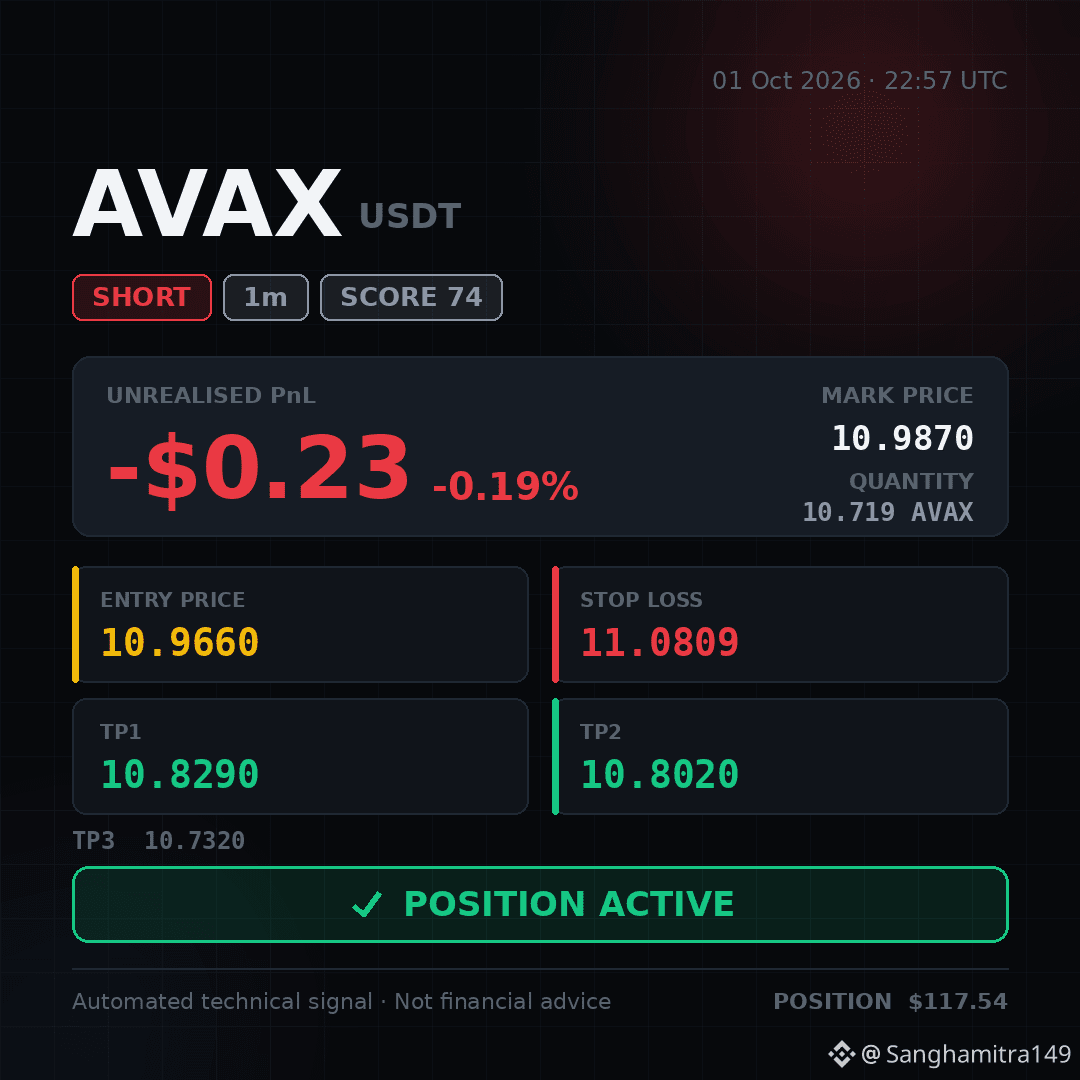
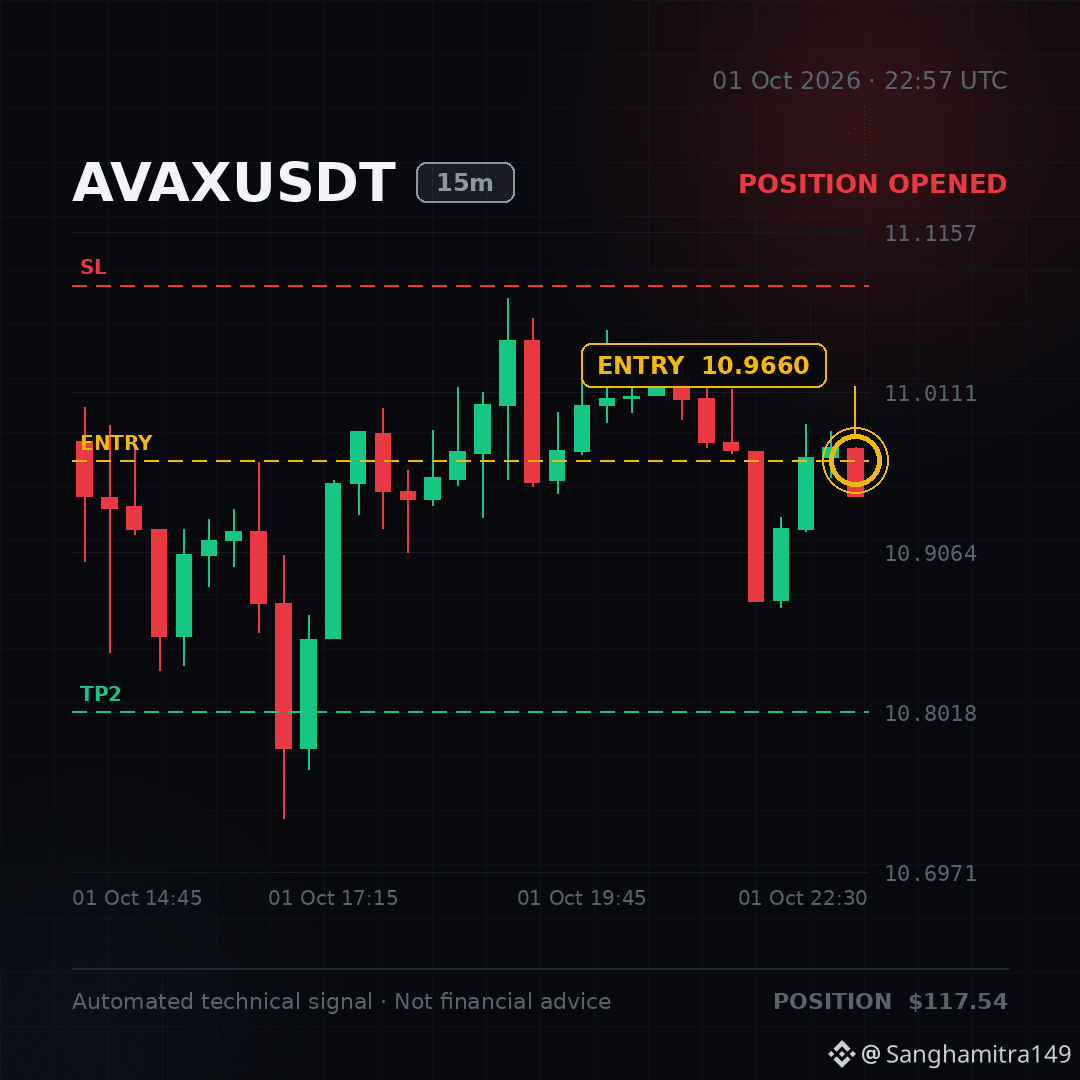
✅ POSITION ACTIVE — I've taken this short. Running at -0.19%.
🚨 #AVAX SMC SWEEP TRIGGERED, SELL! 🤯📉
I'm in on this short. $AVAX 👇
Short..... Fast..... Ride the wave..... Now.....‼️‼️‼️
Entry: 10.9660 – 10.9700
Stop-loss: 11.0809
🟢 TP1: 10.8290
🟢 TP2: 10.8020
🟢 TP3: 10.7320
Join me, trade together now! 👇⬇️⬇️ Short.. With meee...👇⬇️ $AVAX
✅ POSITION ACTIVE — I've taken this short. Running at -0.19%.
🚨 #AVAX SMC SWEEP TRIGGERED, SELL! 🤯📉
I'm in on this short. $AVAX 👇
Short..... Fast..... Ride the wave..... Now.....‼️‼️‼️
Entry: 10.9660 – 10.9700
Stop-loss: 11.0809
🟢 TP1: 10.8290
🟢 TP2: 10.8020
🟢 TP3: 10.7320
Join me, trade together now! 👇⬇️⬇️ Short.. With meee...👇⬇️ $AVAX
🚨 #AVAX SMC SWEEP TRIGGERED, SELL! 🤯📉
I'm in on this short. $AVAX 👇
Short..... Fast..... Ride the wave..... Now.....‼️‼️‼️
Entry: 10.9660 – 10.9700
Stop-loss: 11.0809
🟢 TP1: 10.8290
🟢 TP2: 10.8020
🟢 TP3: 10.7320
Join me, trade together now! 👇⬇️⬇️ Short.. With meee...👇⬇️ $AVAX
2
See translation
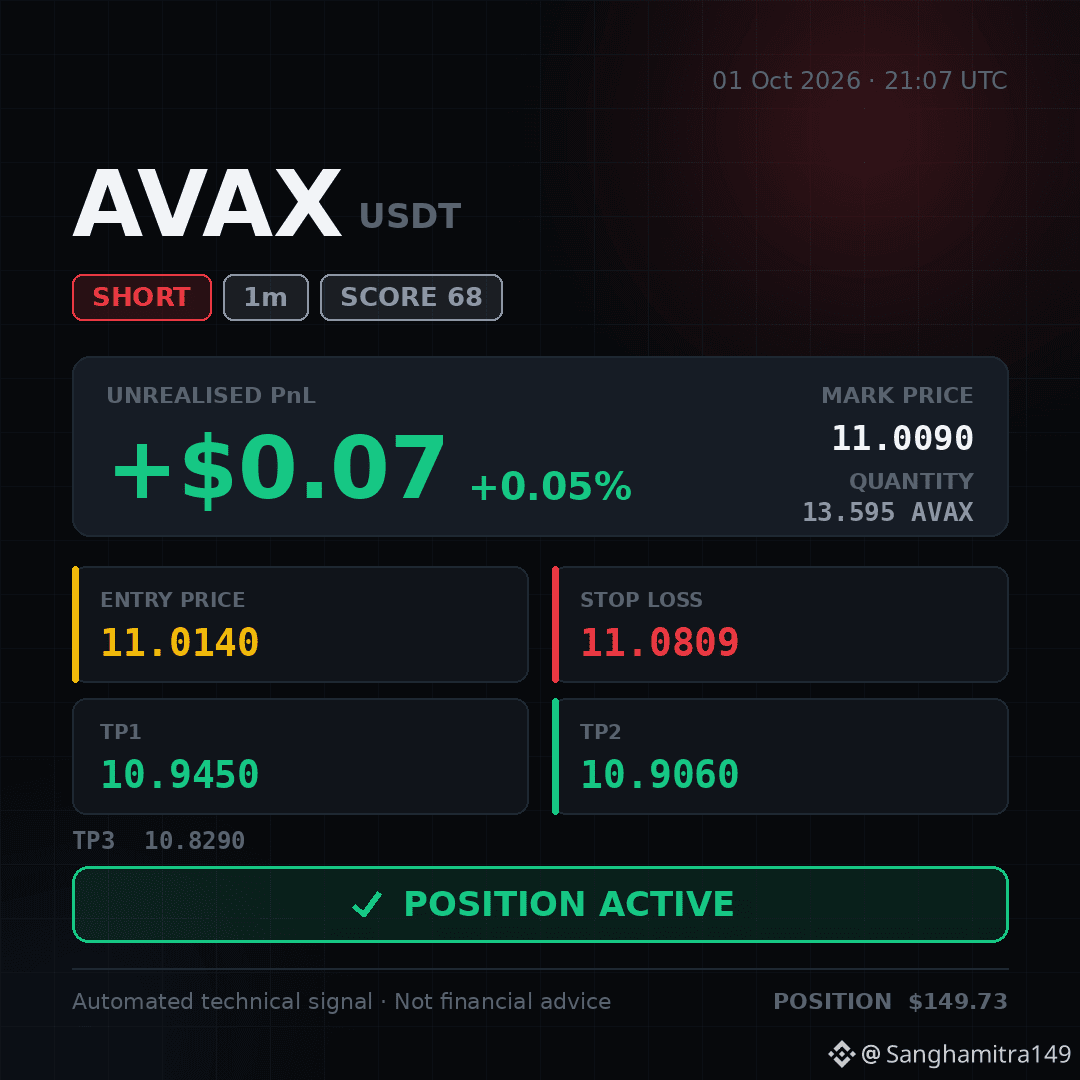
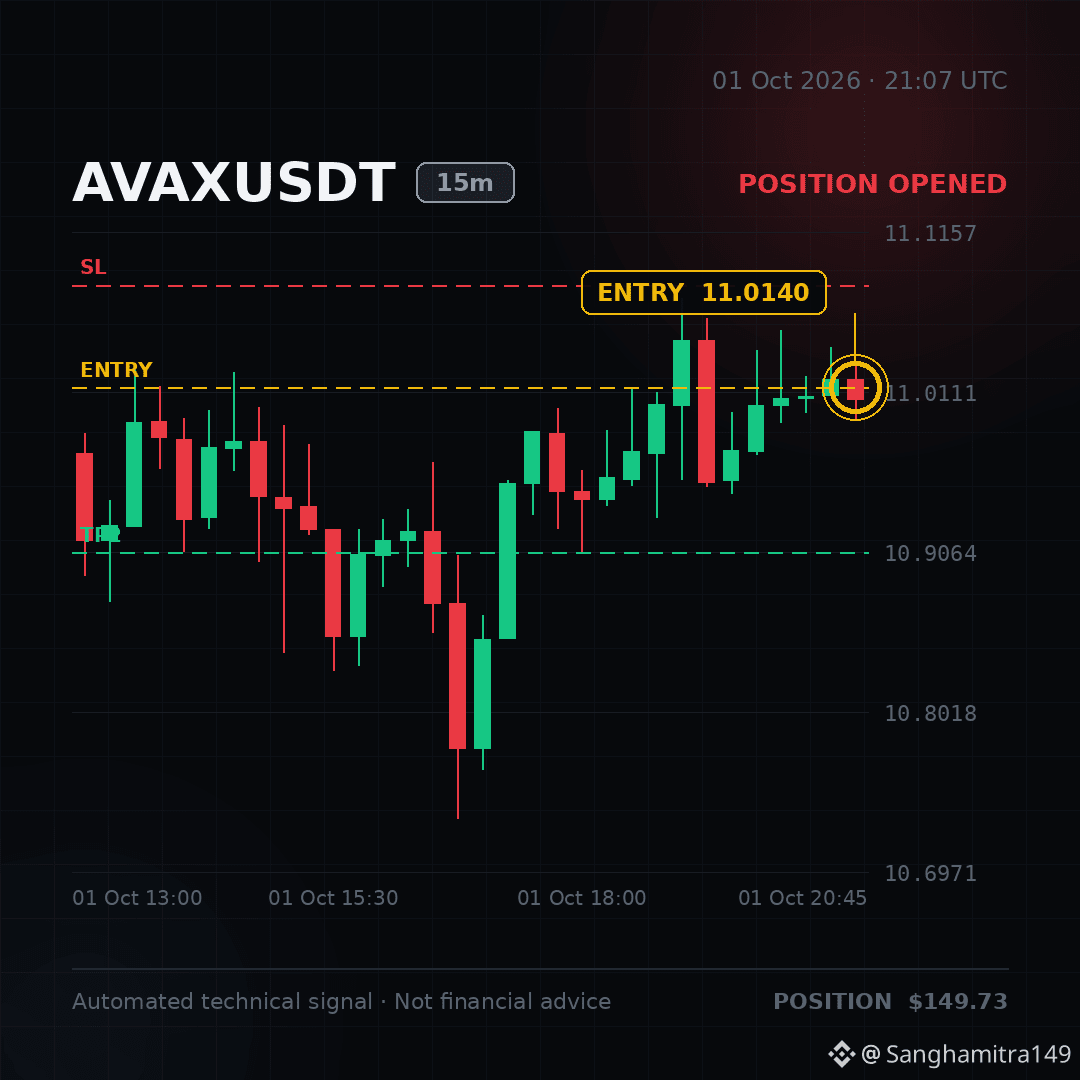
✅ POSITION ACTIVE — I've taken this short. Running at +0.05%.
🚨 #AVAX Liquidity Sweep Ignites Bearish Surge! 🤯🐻
I’m jumping on this short now $AVAX 👇
Short..... Fast..... Ride the wave.....‼️‼️‼️
Entry: 11.0140 – 11.0270
Stop-loss: 11.0809
🟢 TP1: 10.9450
🟢 TP2: 10.9060
🟢 TP3: 10.8290
Copy my move, trade together! 👇⬇️⬇️ Short.. With meee...👇⬇️ $AVAX
✅ POSITION ACTIVE — I've taken this short. Running at +0.05%.
🚨 #AVAX Liquidity Sweep Ignites Bearish Surge! 🤯🐻
I’m jumping on this short now $AVAX 👇
Short..... Fast..... Ride the wave.....‼️‼️‼️
Entry: 11.0140 – 11.0270
Stop-loss: 11.0809
🟢 TP1: 10.9450
🟢 TP2: 10.9060
🟢 TP3: 10.8290
Copy my move, trade together! 👇⬇️⬇️ Short.. With meee...👇⬇️ $AVAX
🚨 #AVAX Liquidity Sweep Ignites Bearish Surge! 🤯🐻
I’m jumping on this short now $AVAX 👇
Short..... Fast..... Ride the wave.....‼️‼️‼️
Entry: 11.0140 – 11.0270
Stop-loss: 11.0809
🟢 TP1: 10.9450
🟢 TP2: 10.9060
🟢 TP3: 10.8290
Copy my move, trade together! 👇⬇️⬇️ Short.. With meee...👇⬇️ $AVAX
2

·
--
See translation
Keep an eye on $AVAX right now sitting 2.0 percent below the $11.1820 ceiling
An hourly close above that hurdle opens room to breathe
A rejection sends it drifting back toward the $10.7320 floor 📈
Tap $AVAX and check the hourly chart yourself
Break or reject?
#AVAX #PriceAction
Keep an eye on $AVAX right now sitting 2.0 percent below the $11.1820 ceiling
An hourly close above that hurdle opens room to breathe
A rejection sends it drifting back toward the $10.7320 floor 📈
Tap $AVAX and check the hourly chart yourself
Break or reject?
#AVAX #PriceAction
An hourly close above that hurdle opens room to breathe
A rejection sends it drifting back toward the $10.7320 floor 📈
Tap $AVAX and check the hourly chart yourself
Break or reject?
#AVAX #PriceAction
13

·
--
Bullish
See translation
$AVAX
{future}(AVAXUSDT)
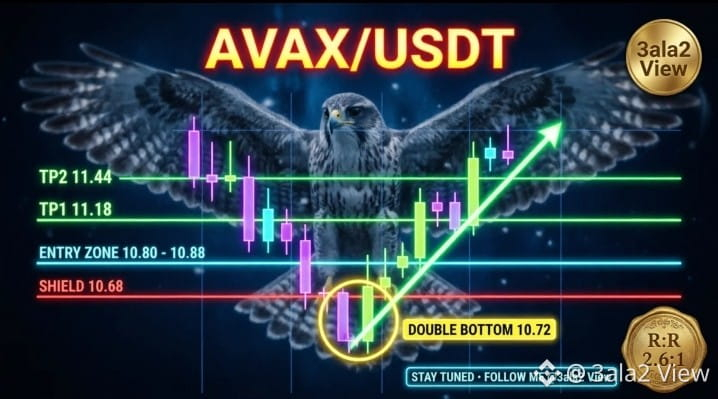
🚨 BULLISH SIGNAL 🚨
Entry Zone: $10.80 – $10.88 — limit nets cast at the double-bottom retest, we let the price come to us
🎯 Targets:
🥇 TP1 11.18$ (60% of position — the neckline cluster)
🥈 TP2 11.44$ (40% of position — the shelf before the 11.78 high)
🛡️ Stop Loss: $10.68 (below the double-bottom floor at 10.72 — if that breaks, the setup was a lie)
📊 4H Structure: Double bottom printed twice at 10.72 and rejected hard both times = solid ground
🔥 Current Price: $10.95 (bounce candle in progress, neckline at 11.02 is the trigger)
💪 Support: $10.80 – $10.88 (the retest zone), deeper floor at $10.72
🚀 Breakout Confirmation: 1H close above $11.02 flips the plan from retest to momentum
$AVAX defended the same floor twice in four days — 10.72 is not a coincidence, it is a wall. The limit nets rest exactly where the retest should kiss: 10.80 to 10.88, with the shield born first at 10.68. If the bounce runs without us — a $0 miss and zero FOMO. If the retest comes — we ride a 2.6:1 setup with the double-bottom wall under our feet.
THE WALL HELD TWICE — THE NETS ARE CAST! 🚀
Trade with proper risk management ✅
#Write2Earn #3ALA2 #AVAX
DYOR.
══════════════════════════════
$BNB
{future}(BNBUSDT)
$AVAX
🚨 BULLISH SIGNAL 🚨
Entry Zone: $10.80 – $10.88 — limit nets cast at the double-bottom retest, we let the price come to us
🎯 Targets:
🥇 TP1 11.18$ (60% of position — the neckline cluster)
🥈 TP2 11.44$ (40% of position — the shelf before the 11.78 high)
🛡️ Stop Loss: $10.68 (below the double-bottom floor at 10.72 — if that breaks, the setup was a lie)
📊 4H Structure: Double bottom printed twice at 10.72 and rejected hard both times = solid ground
🔥 Current Price: $10.95 (bounce candle in progress, neckline at 11.02 is the trigger)
💪 Support: $10.80 – $10.88 (the retest zone), deeper floor at $10.72
🚀 Breakout Confirmation: 1H close above $11.02 flips the plan from retest to momentum
$AVAX defended the same floor twice in four days — 10.72 is not a coincidence, it is a wall. The limit nets rest exactly where the retest should kiss: 10.80 to 10.88, with the shield born first at 10.68. If the bounce runs without us — a $0 miss and zero FOMO. If the retest comes — we ride a 2.6:1 setup with the double-bottom wall under our feet.
THE WALL HELD TWICE — THE NETS ARE CAST! 🚀
Trade with proper risk management ✅
#Write2Earn #3ALA2 #AVAX
DYOR.
══════════════════════════════
$BNB
🚨 BULLISH SIGNAL 🚨
Entry Zone: $10.80 – $10.88 — limit nets cast at the double-bottom retest, we let the price come to us
🎯 Targets:
🥇 TP1 11.18$ (60% of position — the neckline cluster)
🥈 TP2 11.44$ (40% of position — the shelf before the 11.78 high)
🛡️ Stop Loss: $10.68 (below the double-bottom floor at 10.72 — if that breaks, the setup was a lie)
📊 4H Structure: Double bottom printed twice at 10.72 and rejected hard both times = solid ground
🔥 Current Price: $10.95 (bounce candle in progress, neckline at 11.02 is the trigger)
💪 Support: $10.80 – $10.88 (the retest zone), deeper floor at $10.72
🚀 Breakout Confirmation: 1H close above $11.02 flips the plan from retest to momentum
$AVAX defended the same floor twice in four days — 10.72 is not a coincidence, it is a wall. The limit nets rest exactly where the retest should kiss: 10.80 to 10.88, with the shield born first at 10.68. If the bounce runs without us — a $0 miss and zero FOMO. If the retest comes — we ride a 2.6:1 setup with the double-bottom wall under our feet.
THE WALL HELD TWICE — THE NETS ARE CAST! 🚀
Trade with proper risk management ✅
#Write2Earn #3ALA2 #AVAX
DYOR.
══════════════════════════════
$BNB
1
117

See translation
Avalanche (AVAX) has shown relative strength compared to many mid-cap alts this week. The $11–11.50 zone is acting as a near-term decision area. Volume will tell us if buyers are still active.
#AVAX #Binancesquare
Avalanche (AVAX) has shown relative strength compared to many mid-cap alts this week. The $11–11.50 zone is acting as a near-term decision area. Volume will tell us if buyers are still active.
#AVAX #Binancesquare
#AVAX #Binancesquare
111

See translation
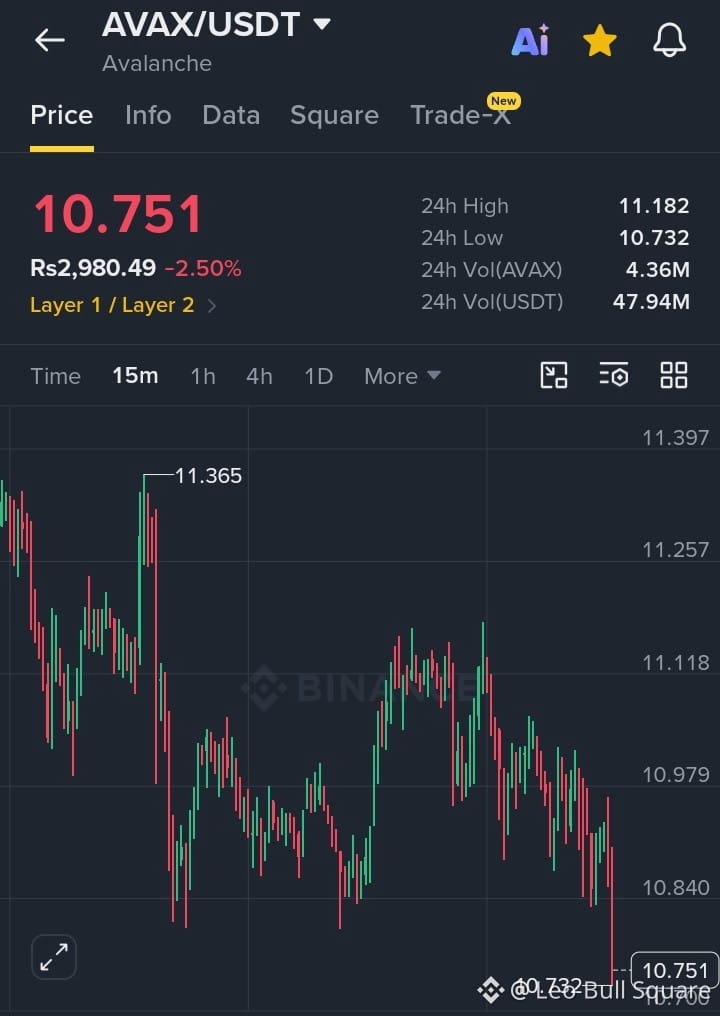
🔴 $AVAX /USDT – Bearish BOS Near 24H Low, Pullback Short Setup
$AVAX is trading around $10.751 (-2.50%) on the 15M chart after sellers pushed price below the $10.84 support area, creating a fresh bearish structure and bringing price close to the 24H low at $10.732. The cleaner setup is not to chase the drop, but to wait for a pullback into the $10.84–$10.92 supply zone and look for bearish rejection or a lower-timeframe BOS before entering. Short Entry: $10.84–$10.92 | TP1: $10.73 | TP2: $10.60 | TP3: $10.45 | Stop Loss: $11.02. As long as AVAX remains below $10.98–$11.02, sellers keep the short-term advantage; a strong reclaim above this zone would weaken the bearish setup. Best approach: wait for the pullback, confirm rejection, and manage risk tightly instead of entering after an extended red candle.
#AVAX
{spot}(AVAXUSDT)
🔴 $AVAX /USDT – Bearish BOS Near 24H Low, Pullback Short Setup
$AVAX is trading around $10.751 (-2.50%) on the 15M chart after sellers pushed price below the $10.84 support area, creating a fresh bearish structure and bringing price close to the 24H low at $10.732. The cleaner setup is not to chase the drop, but to wait for a pullback into the $10.84–$10.92 supply zone and look for bearish rejection or a lower-timeframe BOS before entering. Short Entry: $10.84–$10.92 | TP1: $10.73 | TP2: $10.60 | TP3: $10.45 | Stop Loss: $11.02. As long as AVAX remains below $10.98–$11.02, sellers keep the short-term advantage; a strong reclaim above this zone would weaken the bearish setup. Best approach: wait for the pullback, confirm rejection, and manage risk tightly instead of entering after an extended red candle.
#AVAX
$AVAX is trading around $10.751 (-2.50%) on the 15M chart after sellers pushed price below the $10.84 support area, creating a fresh bearish structure and bringing price close to the 24H low at $10.732. The cleaner setup is not to chase the drop, but to wait for a pullback into the $10.84–$10.92 supply zone and look for bearish rejection or a lower-timeframe BOS before entering. Short Entry: $10.84–$10.92 | TP1: $10.73 | TP2: $10.60 | TP3: $10.45 | Stop Loss: $11.02. As long as AVAX remains below $10.98–$11.02, sellers keep the short-term advantage; a strong reclaim above this zone would weaken the bearish setup. Best approach: wait for the pullback, confirm rejection, and manage risk tightly instead of entering after an extended red candle.
#AVAX

follow for follow
From Leo Bull Square
Fully Claimed
alishaaln 55:
thanks
5
1
22
108

·
--
See translation
$AVAX +0.57% | $USDC -0.03% | $BTC +0.29%
#AVAX is holding steady at $10.95, with a modest +0.57% gain and a trading volume of $48.5M. This activity underscores the platform's consistent appeal, despite recent market volatility.
#USDC, the stablecoin, remains stable at $1.00, dipping just -0.03% with a whopping $4.11B in volume. This massive turnover highlights the coin's role as a liquidity hub.
#BTC, the original cryptocurrency, inches up to $84145.26, a +0.29% increase. Its $1.32B volume is a reminder of Bitcoin's enduring market presence.
👀 Notice the volume trend: USDC's enormous turnover dominates, followed by BTC, with AVAX bringing up the rear. This suggests where the bulk of trading action is, and where it might be headed.
#Write2Earn #Binance
$AVAX +0.57% | $USDC -0.03% | $BTC +0.29%
#AVAX is holding steady at $10.95, with a modest +0.57% gain and a trading volume of $48.5M. This activity underscores the platform's consistent appeal, despite recent market volatility.
#USDC, the stablecoin, remains stable at $1.00, dipping just -0.03% with a whopping $4.11B in volume. This massive turnover highlights the coin's role as a liquidity hub.
#BTC, the original cryptocurrency, inches up to $84145.26, a +0.29% increase. Its $1.32B volume is a reminder of Bitcoin's enduring market presence.
👀 Notice the volume trend: USDC's enormous turnover dominates, followed by BTC, with AVAX bringing up the rear. This suggests where the bulk of trading action is, and where it might be headed.
#Write2Earn #Binance
#AVAX is holding steady at $10.95, with a modest +0.57% gain and a trading volume of $48.5M. This activity underscores the platform's consistent appeal, despite recent market volatility.
#USDC, the stablecoin, remains stable at $1.00, dipping just -0.03% with a whopping $4.11B in volume. This massive turnover highlights the coin's role as a liquidity hub.
#BTC, the original cryptocurrency, inches up to $84145.26, a +0.29% increase. Its $1.32B volume is a reminder of Bitcoin's enduring market presence.
👀 Notice the volume trend: USDC's enormous turnover dominates, followed by BTC, with AVAX bringing up the rear. This suggests where the bulk of trading action is, and where it might be headed.
#Write2Earn #Binance
13


See translation
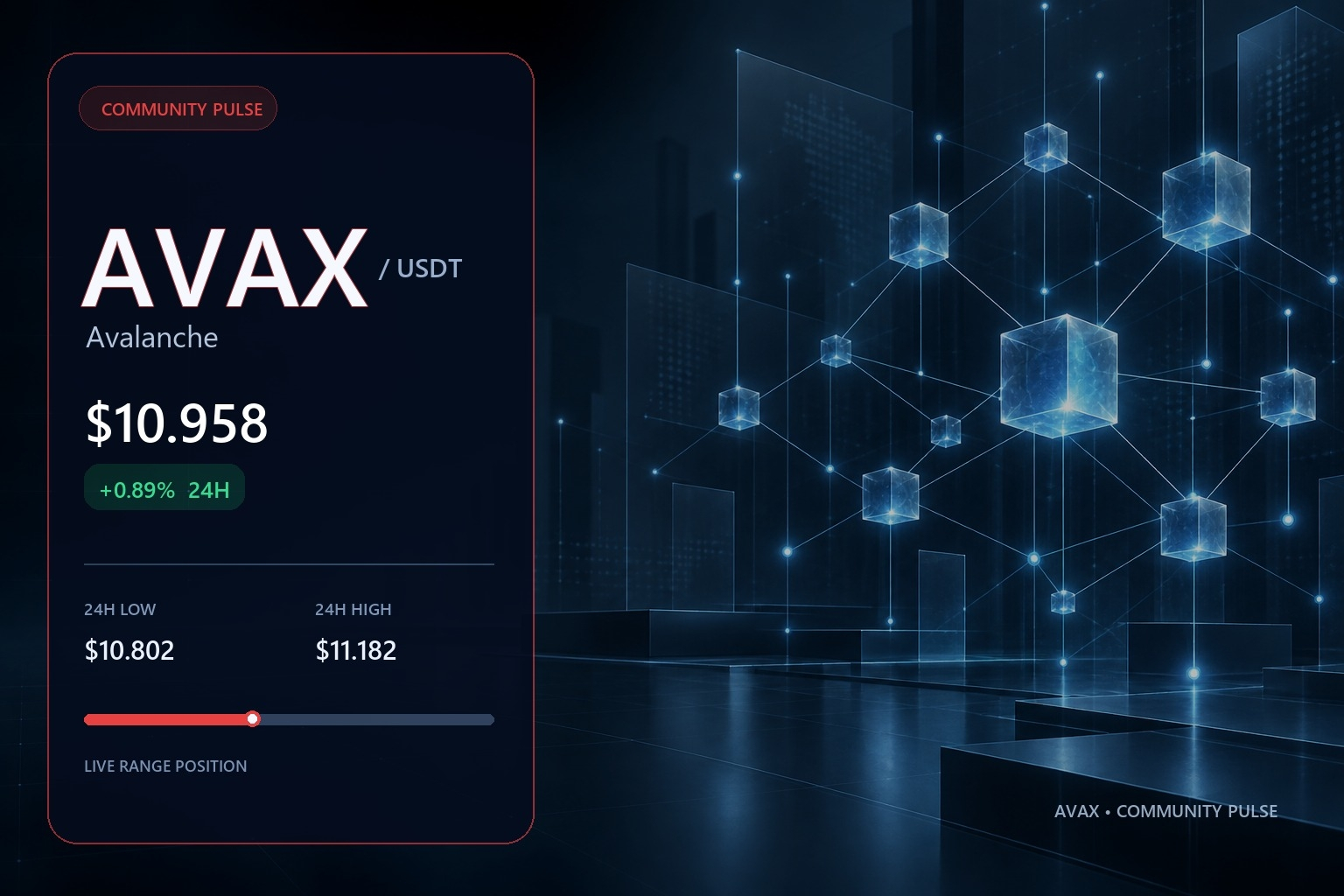
AVAX is holding the line at $10.958 today. Markets move fast, so let's break down the data without the noise. Not financial advice and DYOR. 📉
$AVAX is currently up 0.893% over the last 24 hours, trading in a tight range between a low of $10.802 and a high of $11.182. Momentum remains finely balanced as traders wait for a decisive breakout.
• Range bound between $10.802 and $11.182
• Modest 24h gain of +0.893%
• Volume watch at key resistance
Bulls see this steady consolidation near $10.958 as a solid base for a push back toward the top of the daily range. Bears argue that failing to break $11.182 on multiple attempts signals exhaustion and potential downside risk. Where do you see $AVAX heading next? #Write2Earn #AVAX #CryptoTrading #BinanceSquare
AVAX is holding the line at $10.958 today. Markets move fast, so let's break down the data without the noise. Not financial advice and DYOR. 📉
$AVAX is currently up 0.893% over the last 24 hours, trading in a tight range between a low of $10.802 and a high of $11.182. Momentum remains finely balanced as traders wait for a decisive breakout.
• Range bound between $10.802 and $11.182
• Modest 24h gain of +0.893%
• Volume watch at key resistance
Bulls see this steady consolidation near $10.958 as a solid base for a push back toward the top of the daily range. Bears argue that failing to break $11.182 on multiple attempts signals exhaustion and potential downside risk. Where do you see $AVAX heading next? #Write2Earn #AVAX #CryptoTrading #BinanceSquare
$AVAX is currently up 0.893% over the last 24 hours, trading in a tight range between a low of $10.802 and a high of $11.182. Momentum remains finely balanced as traders wait for a decisive breakout.
• Range bound between $10.802 and $11.182
• Modest 24h gain of +0.893%
• Volume watch at key resistance
Bulls see this steady consolidation near $10.958 as a solid base for a push back toward the top of the daily range. Bears argue that failing to break $11.182 on multiple attempts signals exhaustion and potential downside risk. Where do you see $AVAX heading next? #Write2Earn #AVAX #CryptoTrading #BinanceSquare
42
See translation
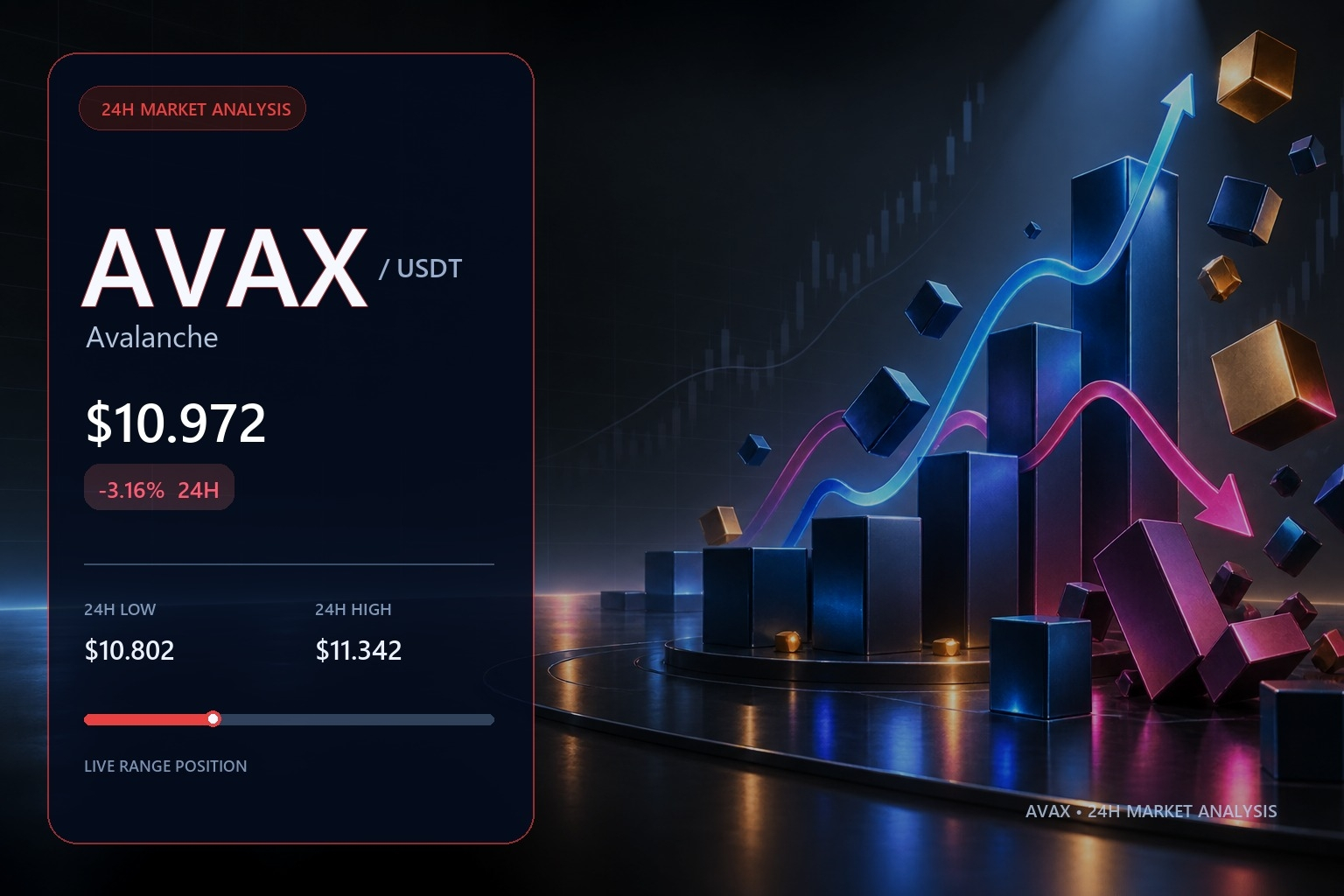
Flash update on $AVAX trading at 10.972 dollars down 3.16 percent over 24 hours. Volatility is peaking with a 24h high of 11.342 and a 24h low of 10.802. Watch these key execution levels right now. Long setup: entry at 10.972 stop loss 10.6428 take profit 11.5206. Short setup: entry at 10.972 stop loss 11.3012 take profit 10.4234. Manage your risk closely today. This is not a prediction. Not financial advice. DYOR. #Write2Earn #AVAX #CryptoTrading #MarketUpdate
Flash update on $AVAX trading at 10.972 dollars down 3.16 percent over 24 hours. Volatility is peaking with a 24h high of 11.342 and a 24h low of 10.802. Watch these key execution levels right now. Long setup: entry at 10.972 stop loss 10.6428 take profit 11.5206. Short setup: entry at 10.972 stop loss 11.3012 take profit 10.4234. Manage your risk closely today. This is not a prediction. Not financial advice. DYOR. #Write2Earn #AVAX #CryptoTrading #MarketUpdate
57
See translation
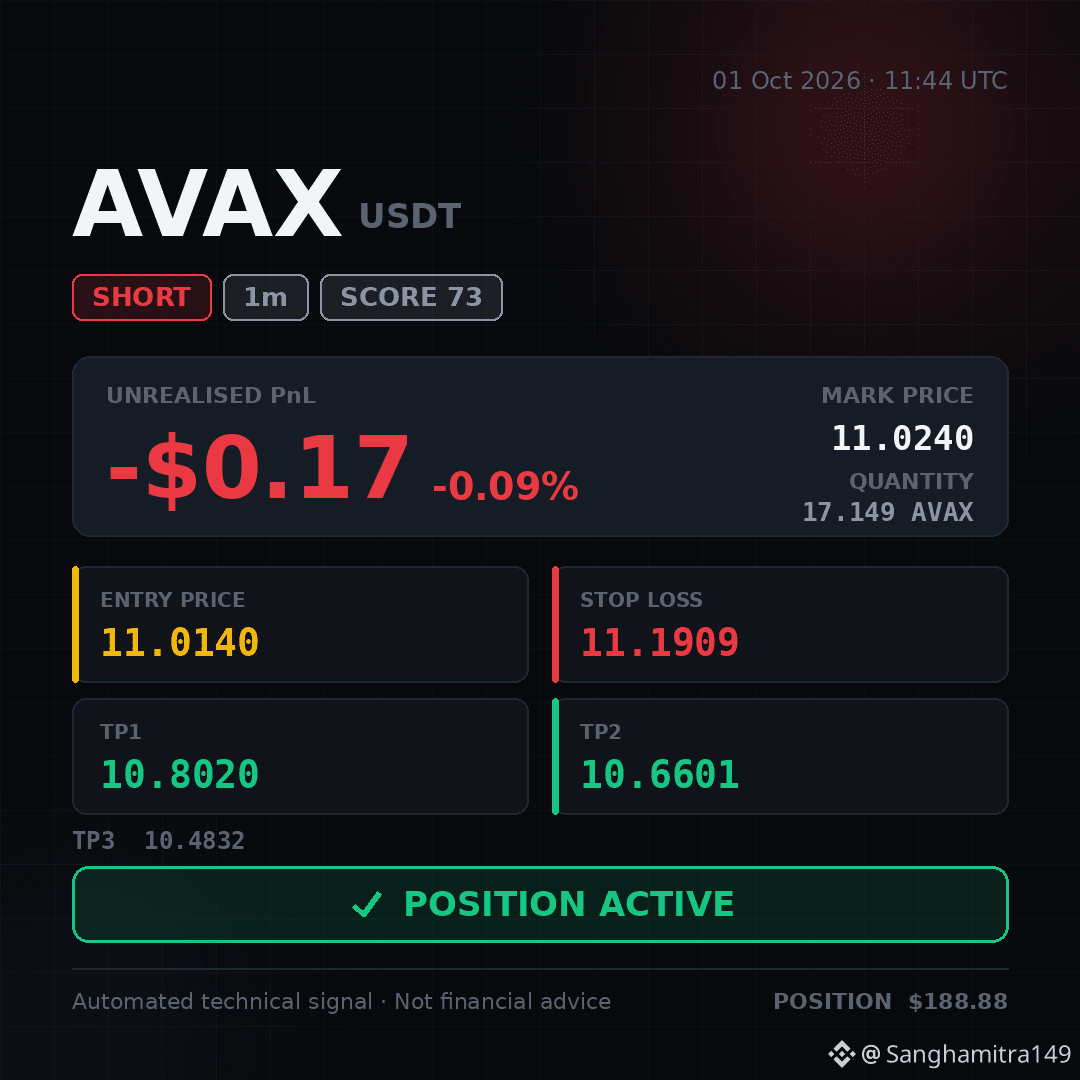
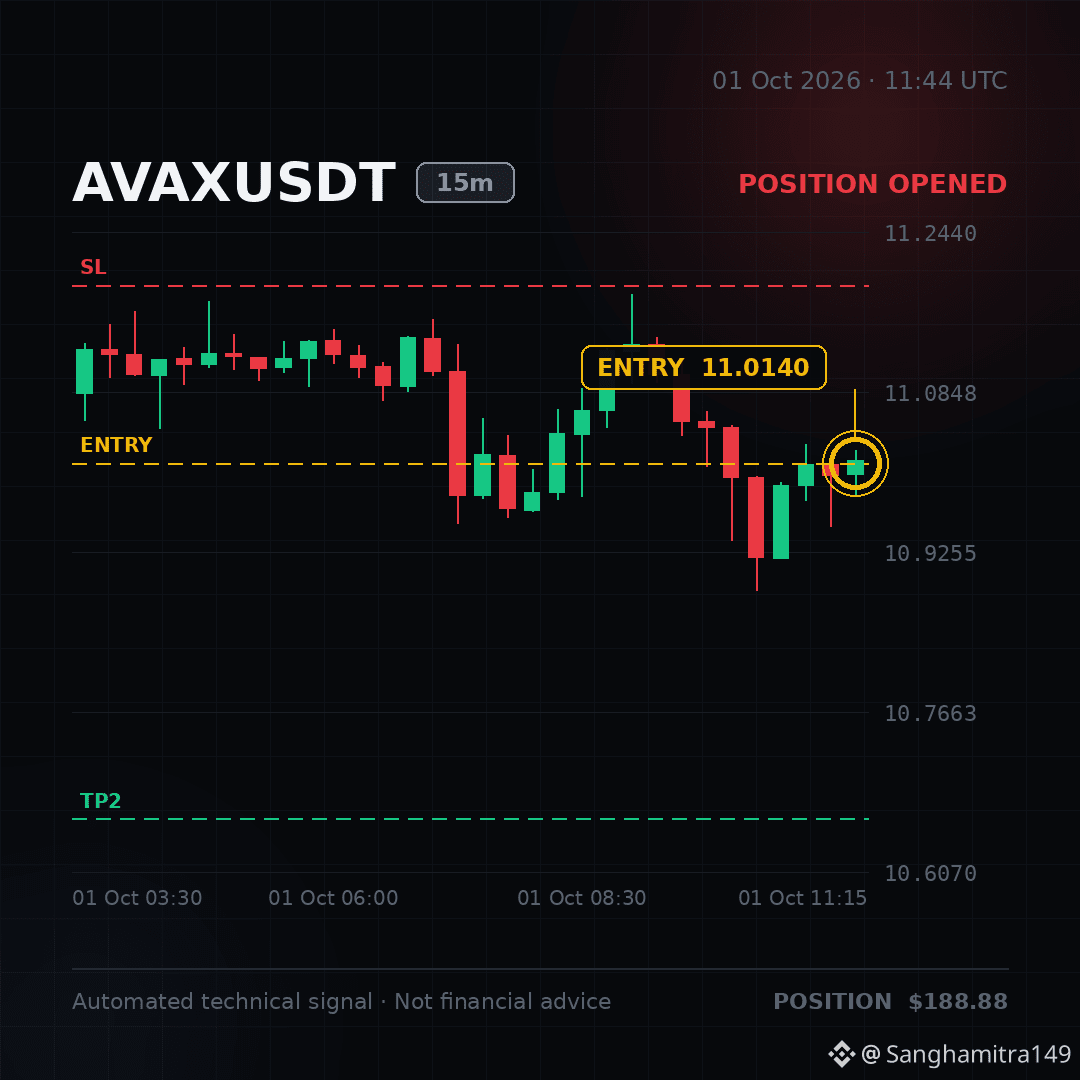
✅ POSITION ACTIVE — I've taken this short. Running at -0.09%.
🚨 #AVAX SMC SWEEP CRASHES HARD! 🤯🔻
I'm shorting this right now. $AVAX 👇
Short..... Quick..... Feel the sting.....‼️‼️‼️
Entry: 11.0140 – 11.0270
Stop-loss: 11.1909
🟢 TP1: 10.8020
🟢 TP2: 10.6601
🟢 TP3: 10.4832
Copy my move, trade together! 👇⬇️⬇️ Short.. With meee...👇⬇️ $AVAX
✅ POSITION ACTIVE — I've taken this short. Running at -0.09%.
🚨 #AVAX SMC SWEEP CRASHES HARD! 🤯🔻
I'm shorting this right now. $AVAX 👇
Short..... Quick..... Feel the sting.....‼️‼️‼️
Entry: 11.0140 – 11.0270
Stop-loss: 11.1909
🟢 TP1: 10.8020
🟢 TP2: 10.6601
🟢 TP3: 10.4832
Copy my move, trade together! 👇⬇️⬇️ Short.. With meee...👇⬇️ $AVAX
🚨 #AVAX SMC SWEEP CRASHES HARD! 🤯🔻
I'm shorting this right now. $AVAX 👇
Short..... Quick..... Feel the sting.....‼️‼️‼️
Entry: 11.0140 – 11.0270
Stop-loss: 11.1909
🟢 TP1: 10.8020
🟢 TP2: 10.6601
🟢 TP3: 10.4832
Copy my move, trade together! 👇⬇️⬇️ Short.. With meee...👇⬇️ $AVAX
11

See translation
Ecosystem Strength — Watch for Expansion
$ETH | $BNB | $AVAX
ETH, BNB, and AVAX represent major smart-contract ecosystems with significant market visibility. Their price structures can provide useful signals about where liquidity is rotating across the market.
Consolidation around important levels can become increasingly relevant before expansion.
Key Takeaway: Follow structure and liquidity before chasing momentum.
#ETH #BNB #AVAX #CryptoLeaders #StrategicEntry
{future}(ETHUSDT)
{future}(BNBUSDT)
{future}(AVAXUSDT)
Ecosystem Strength — Watch for Expansion
$ETH | $BNB | $AVAX
ETH, BNB, and AVAX represent major smart-contract ecosystems with significant market visibility. Their price structures can provide useful signals about where liquidity is rotating across the market.
Consolidation around important levels can become increasingly relevant before expansion.
Key Takeaway: Follow structure and liquidity before chasing momentum.
#ETH #BNB #AVAX #CryptoLeaders #StrategicEntry
$ETH | $BNB | $AVAX
ETH, BNB, and AVAX represent major smart-contract ecosystems with significant market visibility. Their price structures can provide useful signals about where liquidity is rotating across the market.
Consolidation around important levels can become increasingly relevant before expansion.
Key Takeaway: Follow structure and liquidity before chasing momentum.
#ETH #BNB #AVAX #CryptoLeaders #StrategicEntry
1
84
See translation
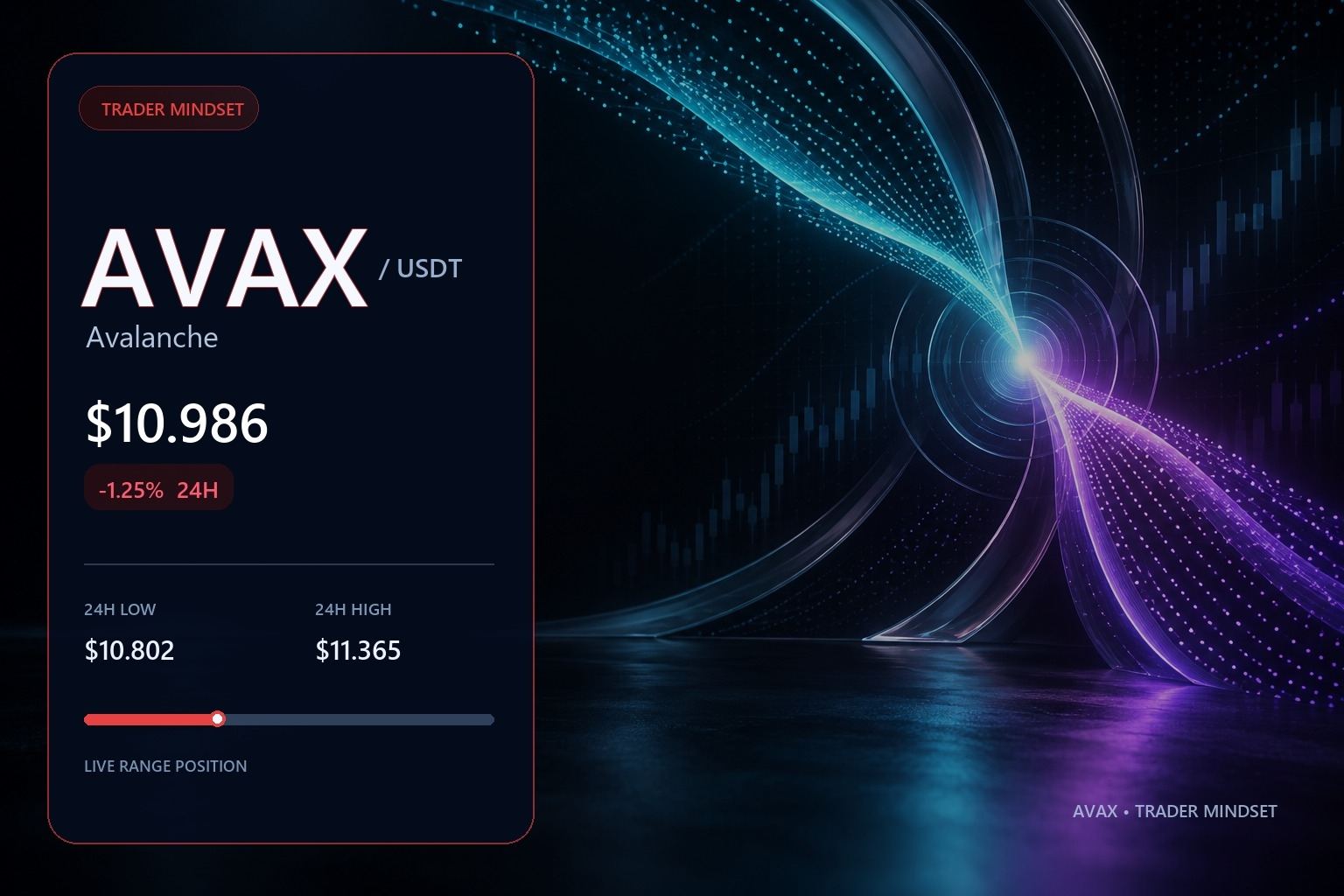
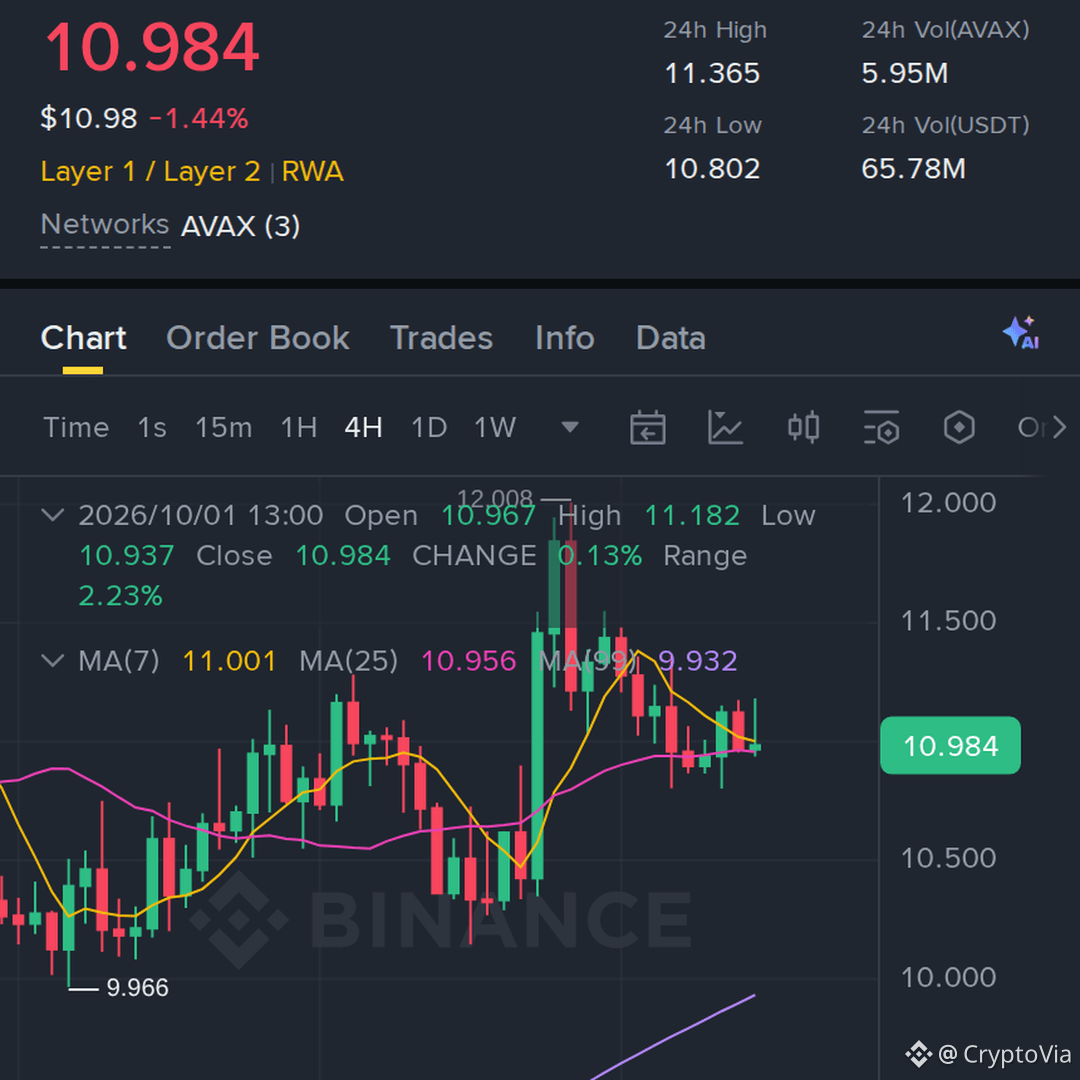
Most traders bleed capital not from bad setups, but from the brutal urge to fix a loss immediately. When $AVAX dropped from the 11.365 daily high down toward the 10.802 low, panic kicked in for anyone chasing green candles. That emotional drag is what turns a mild 1.249% pullback into a complete account wipeout. Trading at 10.986 right now demands absolute emotional detachment and strict execution rules. Step away from the screens after any consecutive losses to reset your mindset before placing the next order. Not financial advice and DYOR. #Write2Earn #AVAX #TraderPsychology #RiskManagement
Most traders bleed capital not from bad setups, but from the brutal urge to fix a loss immediately. When $AVAX dropped from the 11.365 daily high down toward the 10.802 low, panic kicked in for anyone chasing green candles. That emotional drag is what turns a mild 1.249% pullback into a complete account wipeout. Trading at 10.986 right now demands absolute emotional detachment and strict execution rules. Step away from the screens after any consecutive losses to reset your mindset before placing the next order. Not financial advice and DYOR. #Write2Earn #AVAX #TraderPsychology #RiskManagement
27

See translation
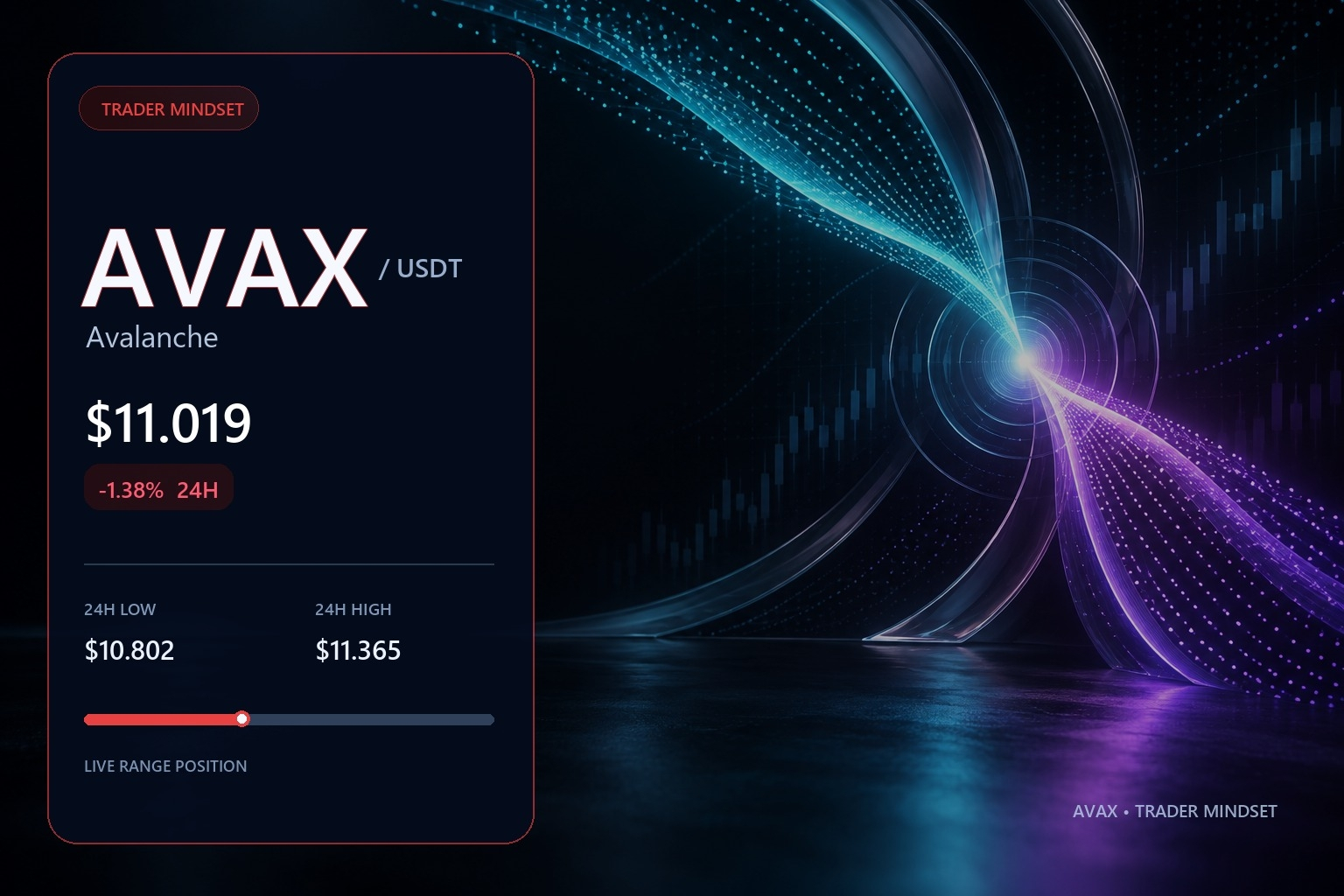
Stop bleeding your account to the $AVAX range between $10.802 and $11.365 right now. Emotional revenge trading after a -1.378% dip to $11.019 is a fast track to zero. The market does not care about your feelings, and trying to force a green candle out of thin air is pure financial suicide. Protect your capital like your life depends on it because survival is the only edge that actually matters. Set a strict daily max-loss limit and walk away the second you hit it, no exceptions. Not financial advice and DYOR. #Write2Earn #AVAX #CryptoTrading #RiskManagement $AVAX
Stop bleeding your account to the $AVAX range between $10.802 and $11.365 right now. Emotional revenge trading after a -1.378% dip to $11.019 is a fast track to zero. The market does not care about your feelings, and trying to force a green candle out of thin air is pure financial suicide. Protect your capital like your life depends on it because survival is the only edge that actually matters. Set a strict daily max-loss limit and walk away the second you hit it, no exceptions. Not financial advice and DYOR. #Write2Earn #AVAX #CryptoTrading #RiskManagement $AVAX
24
See translation
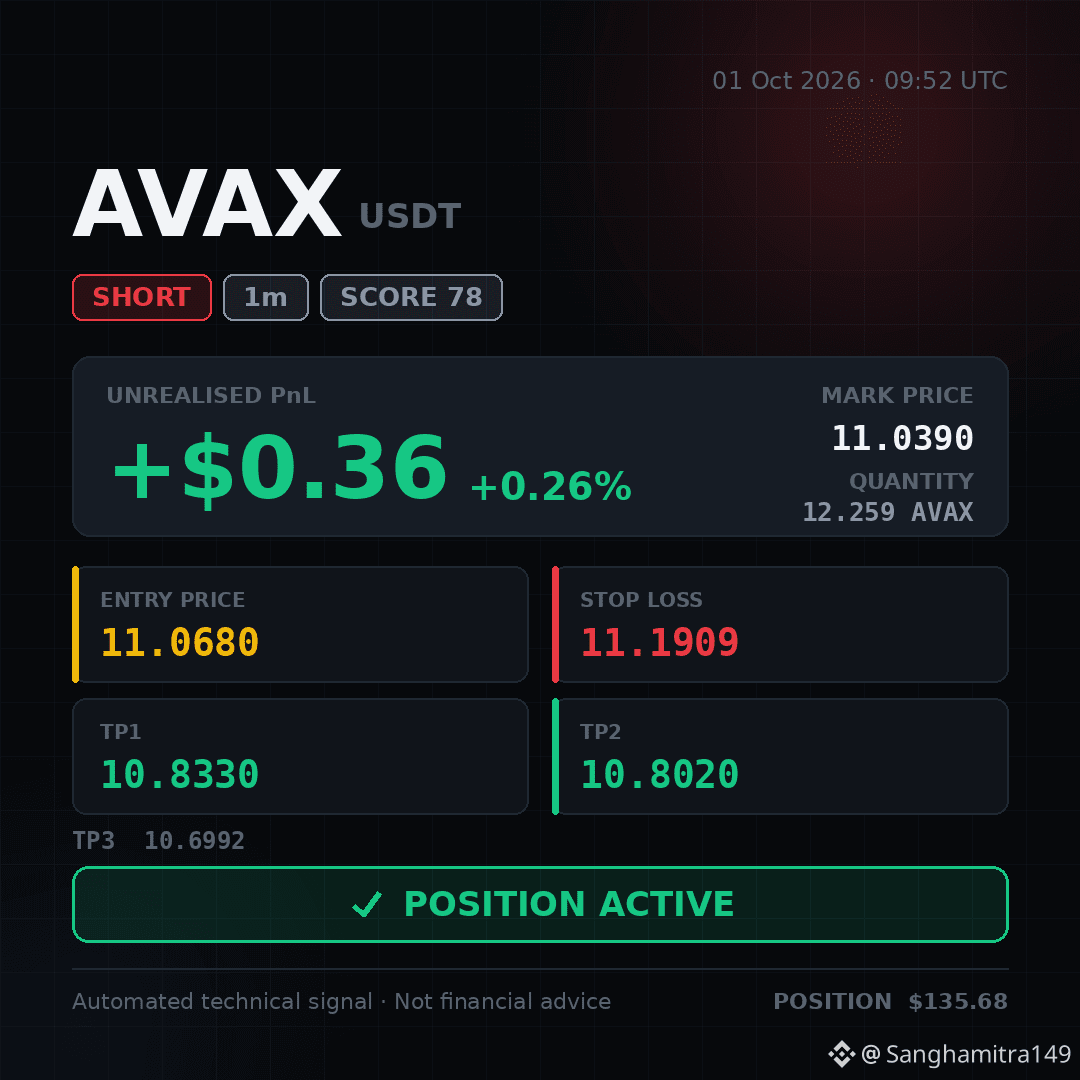
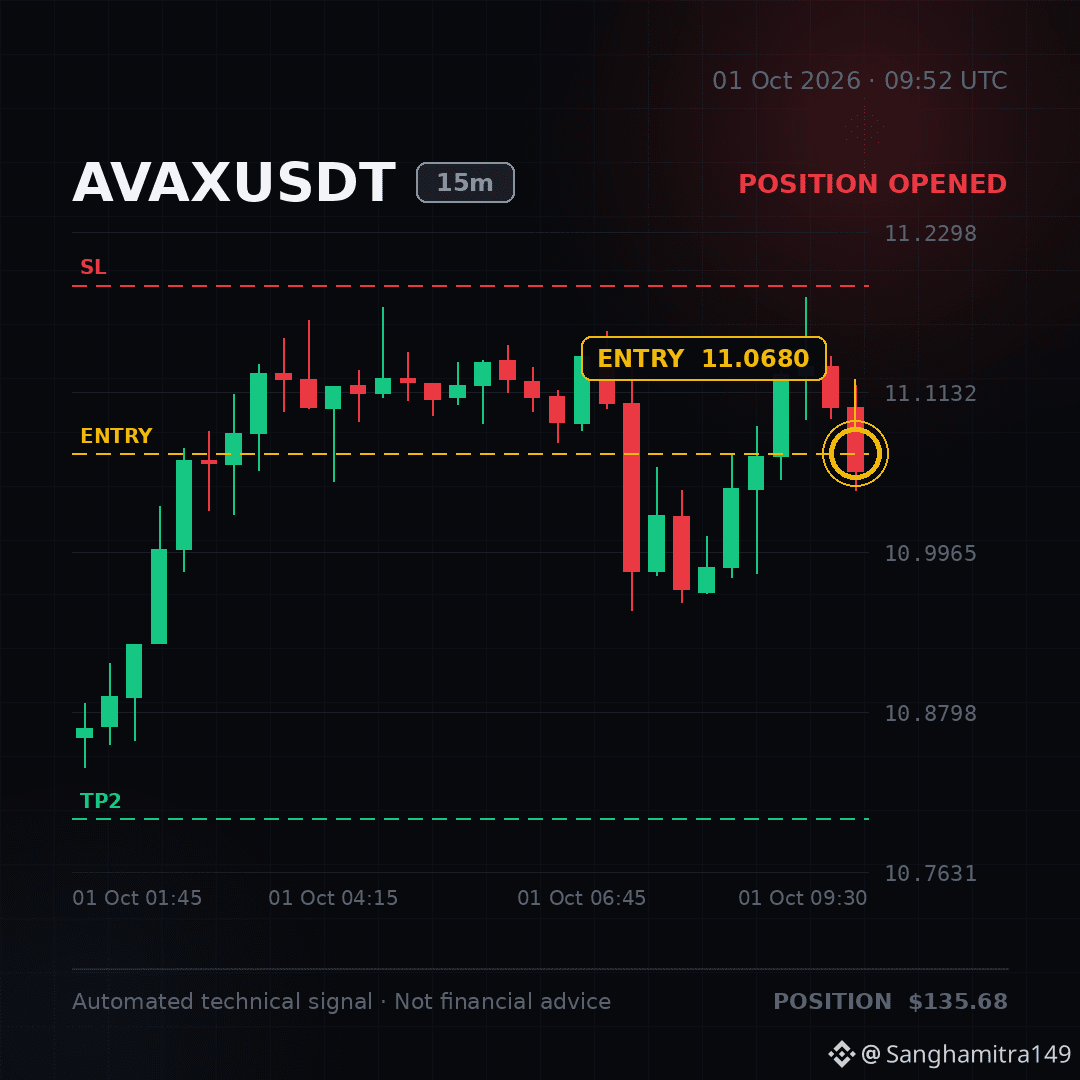
✅ POSITION ACTIVE — I've taken this short. Running at +0.26%.
🚨 #AVAX SMASHING THE SELL SIDE! 🤯🐻
I'm locking in this short now. $AVAX 👇
Short..... Watch..... Thank meeee..... Gains.....‼️‼️‼️
Entry: 11.0680 – 11.0860
Stop-loss: 11.1909
🟢 TP1: 10.8330
🟢 TP2: 10.8020
🟢 TP3: 10.6992
Join my trade, let's ride! 👇⬇️⬇️ Short.. With meee...👇⬇️ $AVAX
✅ POSITION ACTIVE — I've taken this short. Running at +0.26%.
🚨 #AVAX SMASHING THE SELL SIDE! 🤯🐻
I'm locking in this short now. $AVAX 👇
Short..... Watch..... Thank meeee..... Gains.....‼️‼️‼️
Entry: 11.0680 – 11.0860
Stop-loss: 11.1909
🟢 TP1: 10.8330
🟢 TP2: 10.8020
🟢 TP3: 10.6992
Join my trade, let's ride! 👇⬇️⬇️ Short.. With meee...👇⬇️ $AVAX
🚨 #AVAX SMASHING THE SELL SIDE! 🤯🐻
I'm locking in this short now. $AVAX 👇
Short..... Watch..... Thank meeee..... Gains.....‼️‼️‼️
Entry: 11.0680 – 11.0860
Stop-loss: 11.1909
🟢 TP1: 10.8330
🟢 TP2: 10.8020
🟢 TP3: 10.6992
Join my trade, let's ride! 👇⬇️⬇️ Short.. With meee...👇⬇️ $AVAX
1

·
--
See translation
🚨 Avalanche Just Led All Chains in RWA Growth — And Goldman Is Already Using It
Most traders only watched the price.
Three confirmed moves stood out.
First — Helicon is live on mainnet.
The upgrade activated on September 22.
It includes continuous execution on the C-Chain and the network’s largest staking overhaul to date, cutting lock-up times significantly.
Second — Avalanche led RWA market-cap growth.
In the 30 days ending late September, Avalanche recorded roughly $266 million in RWA market-cap growth — more than the next chains combined.
Tokenized stock activity also remained elevated.
**Third — Goldman Sachs is offering Treasury fund access via Lynq.**
The real-time settlement network, built on a private Avalanche L1, is being used to bring institutional Treasury exposure to crypto-native firms.
Infrastructure and institutional rails are already expanding.
Most eyes still stay on the candle.
Click $AVAX below and check the live price right now.
$AVAX
{future}(AVAXUSDT)
.
.
.
#AVAX #write2earn
Not financial advice. DYOR.
🚨 Avalanche Just Led All Chains in RWA Growth — And Goldman Is Already Using It
Most traders only watched the price.
Three confirmed moves stood out.
First — Helicon is live on mainnet.
The upgrade activated on September 22.
It includes continuous execution on the C-Chain and the network’s largest staking overhaul to date, cutting lock-up times significantly.
Second — Avalanche led RWA market-cap growth.
In the 30 days ending late September, Avalanche recorded roughly $266 million in RWA market-cap growth — more than the next chains combined.
Tokenized stock activity also remained elevated.
**Third — Goldman Sachs is offering Treasury fund access via Lynq.**
The real-time settlement network, built on a private Avalanche L1, is being used to bring institutional Treasury exposure to crypto-native firms.
Infrastructure and institutional rails are already expanding.
Most eyes still stay on the candle.
Click $AVAX below and check the live price right now.
$AVAX
.
.
.
#AVAX #write2earn
Not financial advice. DYOR.
Most traders only watched the price.
Three confirmed moves stood out.
First — Helicon is live on mainnet.
The upgrade activated on September 22.
It includes continuous execution on the C-Chain and the network’s largest staking overhaul to date, cutting lock-up times significantly.
Second — Avalanche led RWA market-cap growth.
In the 30 days ending late September, Avalanche recorded roughly $266 million in RWA market-cap growth — more than the next chains combined.
Tokenized stock activity also remained elevated.
**Third — Goldman Sachs is offering Treasury fund access via Lynq.**
The real-time settlement network, built on a private Avalanche L1, is being used to bring institutional Treasury exposure to crypto-native firms.
Infrastructure and institutional rails are already expanding.
Most eyes still stay on the candle.
Click $AVAX below and check the live price right now.
$AVAX
.
.
.
#AVAX #write2earn
Not financial advice. DYOR.
40

·
--
Bullish
See translation
$AVAX
{future}(AVAXUSDT)
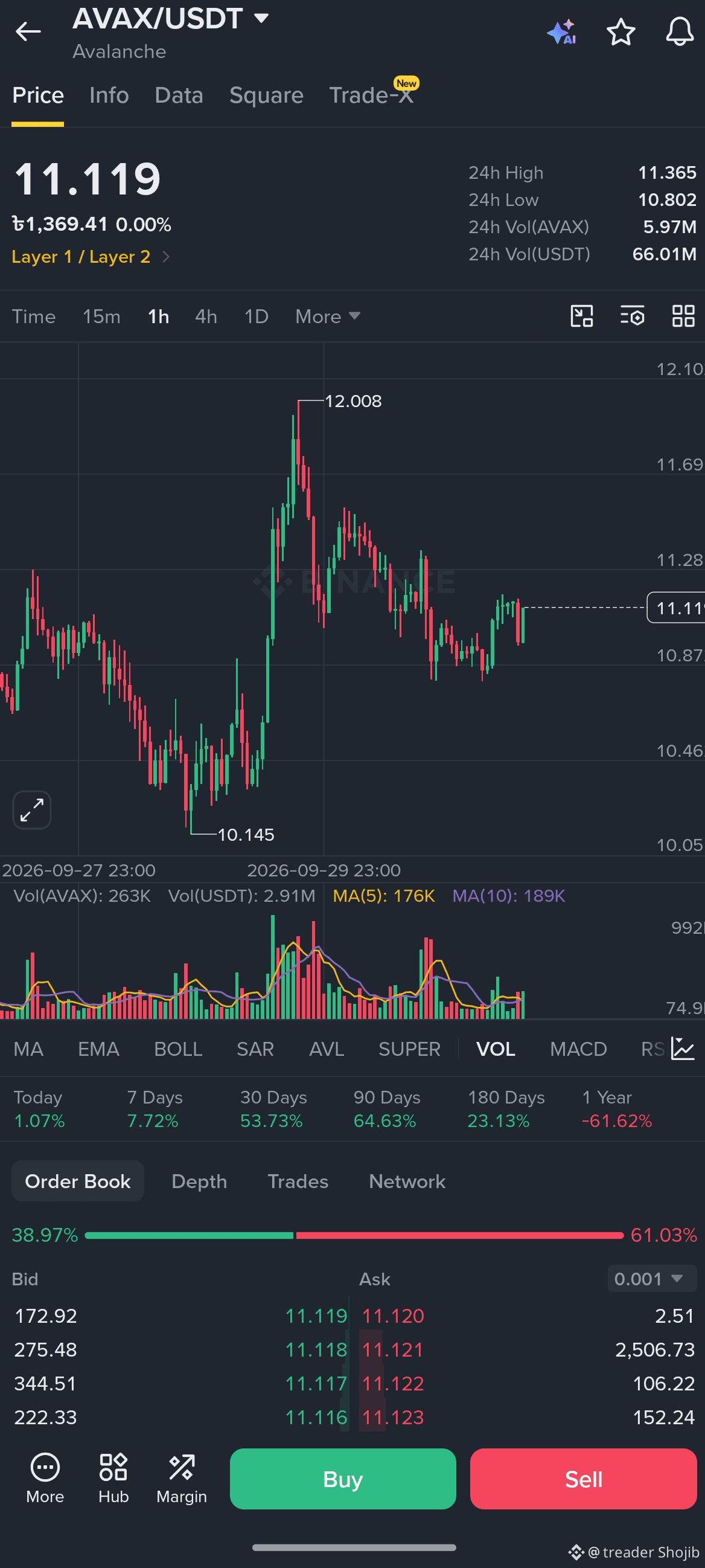
📊 AVAX/USDT — Could a Bullish Move Be Coming? 🚀
AVAX is currently trading around $11.12, showing consolidation on the 1H chart.
🔹 $10.80–$10.87 is an important support zone to watch.
🔹 A breakout above $11.28 could open the way toward $11.69 → $12.00.
📈 A breakout with increasing volume could strengthen the bullish momentum.
⚠️ However, a breakdown below $10.80 could weaken the bullish setup.
🎯 If you trade this setup, always use a Stop Loss according to your risk management.
#AVAX #AVAXUSDT #BİNANCESQUARE #TechnicalAnalysis
$AVAX
📊 AVAX/USDT — Could a Bullish Move Be Coming? 🚀
AVAX is currently trading around $11.12, showing consolidation on the 1H chart.
🔹 $10.80–$10.87 is an important support zone to watch.
🔹 A breakout above $11.28 could open the way toward $11.69 → $12.00.
📈 A breakout with increasing volume could strengthen the bullish momentum.
⚠️ However, a breakdown below $10.80 could weaken the bullish setup.
🎯 If you trade this setup, always use a Stop Loss according to your risk management.
#AVAX #AVAXUSDT #BİNANCESQUARE #TechnicalAnalysis
📊 AVAX/USDT — Could a Bullish Move Be Coming? 🚀
AVAX is currently trading around $11.12, showing consolidation on the 1H chart.
🔹 $10.80–$10.87 is an important support zone to watch.
🔹 A breakout above $11.28 could open the way toward $11.69 → $12.00.
📈 A breakout with increasing volume could strengthen the bullish momentum.
⚠️ However, a breakdown below $10.80 could weaken the bullish setup.
🎯 If you trade this setup, always use a Stop Loss according to your risk management.
#AVAX #AVAXUSDT #BİNANCESQUARE #TechnicalAnalysis
1
96
Log in to explore more content
Join global crypto users on Binance Square
⚡️ Get latest and useful information about crypto.
💬 Trusted by the world’s largest crypto exchange.
👍 Discover real insights from verified creators.
Email / Phone number
Trending Topics
1
#EtherGains70.9%InQ3
156,777 views
1,140 Discussing
2
#TreasuryLetsStatesFileStablecoinCertificationsEarly
8,788 views
83 Discussing
3
#US10YearYieldNears5.3%
151,803 views
1,133 Discussing
4
#DollarIndexHitsHighestSinceMay2025
39,827 views
602 Discussing
5
#USWeeklyJoblessClaimsFallTo197000
34,909 views
502 Discussing
6
#BitcoinETFsTake$6.34BillionInQ3
9,894 views
77 Discussing
7
#KoreaProposesTokenizingStocksAndBonds
72,451 views
825 Discussing
8
#MetaMaskExitsLidoValidatorsAfterSecurityIncident
171,590 views
1,548 Discussing
9
#MicronBeatsEarningsLiftsGuidance
86,744 views
1,117 Discussing
10
#CFTCSubmitsTwoEventContractRulesToWhiteHouse
59,592 views
833 Discussing