

Ummueaman
63 Posts
Ummueaman
Report
Block User
51 Following
44 Followers
99 Liked
Posts
·
--
⭐️ One Swap. Across Chains: More Miles, More Rewards
Stonfiers, the “One Swap. Across Chains” campaign just got more rewarding.
Selected missions and routes now offer increased miles, giving users more opportunities to boost their campaign rewards.
💎 All-Chains Mission: 300 → 3,000 Miles
Complete swaps across all supported chains and earn 3,000 miles, up from 300.
🌉 TRON Volume Miles: 25% → 100%
Eligible cross-chain swaps to or from TRON now earn miles based on 100% of swap volume, instead of 25%.
For example:
A qualifying $100 cross-chain swap involving TRON = 100 miles.
For other supported networks, volume-based rewards remain at 25%.
Already completed the All-Chains mission or made eligible TRON swaps during the campaign? The additional miles will be credited to your balance automatically.
Check your missions, explore supported cross-chain routes, and visit Flight Deals before the available offers refresh.
🔗 Join the campaign and start earning more miles.
Stay tuned for more updates from STON.fi.
@ummujaapar
⭐️ One Swap. Across Chains: More Miles, More Rewards
Stonfiers, the “One Swap. Across Chains” campaign just got more rewarding.
Selected missions and routes now offer increased miles, giving users more opportunities to boost their campaign rewards.
💎 All-Chains Mission: 300 → 3,000 Miles
Complete swaps across all supported chains and earn 3,000 miles, up from 300.
🌉 TRON Volume Miles: 25% → 100%
Eligible cross-chain swaps to or from TRON now earn miles based on 100% of swap volume, instead of 25%.
For example:
A qualifying $100 cross-chain swap involving TRON = 100 miles.
For other supported networks, volume-based rewards remain at 25%.
Already completed the All-Chains mission or made eligible TRON swaps during the campaign? The additional miles will be credited to your balance automatically.
Check your missions, explore supported cross-chain routes, and visit Flight Deals before the available offers refresh.
🔗 Join the campaign and start earning more miles.
Stay tuned for more updates from STON.fi.
@ummujaapar
Stonfiers, the “One Swap. Across Chains” campaign just got more rewarding.
Selected missions and routes now offer increased miles, giving users more opportunities to boost their campaign rewards.
💎 All-Chains Mission: 300 → 3,000 Miles
Complete swaps across all supported chains and earn 3,000 miles, up from 300.
🌉 TRON Volume Miles: 25% → 100%
Eligible cross-chain swaps to or from TRON now earn miles based on 100% of swap volume, instead of 25%.
For example:
A qualifying $100 cross-chain swap involving TRON = 100 miles.
For other supported networks, volume-based rewards remain at 25%.
Already completed the All-Chains mission or made eligible TRON swaps during the campaign? The additional miles will be credited to your balance automatically.
Check your missions, explore supported cross-chain routes, and visit Flight Deals before the available offers refresh.
🔗 Join the campaign and start earning more miles.
Stay tuned for more updates from STON.fi.
@ummujaapar
1
74
·
--
🛠️ New Omniston Integration Example: TON <> EVM in a Telegram Mini App
STON.fi has released a new open-source integration example showing how builders can bring EVM-based products closer to TON users through Telegram Mini Apps.
The concept is simple: reduce cross-chain complexity for users while keeping the integration flexible for builders.
🔹 How it works
Users connect their TON wallet through TonConnect, while a Dynamic embedded EVM wallet is created behind the scenes. Omniston handles the cross-chain execution.
The example demonstrates:
TON USDT ↔ Arbitrum USDT0
This approach allows EVM-native protocols to make their products accessible to TON users without becoming fully TON-native.
👀 Already shipping similar experiences:
• Polymarket via Predict — users can deposit USDT on TON and access Polymarket markets without manually bridging to Polygon.
• WenLong — users can deposit from TON and access Hyperliquid on Arbitrum through a simplified cross-chain flow.
For builders working on TON <> EVM experiences, Telegram Mini Apps, or EVM-native products, this open-source reference integration provides a practical starting point.
🔗 Explore the GitHub repository and start building.
The bigger idea: cross-chain infrastructure should feel invisible to the user.
#TON #Omniston
@ummujaapar
🛠️ New Omniston Integration Example: TON <> EVM in a Telegram Mini App
STON.fi has released a new open-source integration example showing how builders can bring EVM-based products closer to TON users through Telegram Mini Apps.
The concept is simple: reduce cross-chain complexity for users while keeping the integration flexible for builders.
🔹 How it works
Users connect their TON wallet through TonConnect, while a Dynamic embedded EVM wallet is created behind the scenes. Omniston handles the cross-chain execution.
The example demonstrates:
TON USDT ↔ Arbitrum USDT0
This approach allows EVM-native protocols to make their products accessible to TON users without becoming fully TON-native.
👀 Already shipping similar experiences:
• Polymarket via Predict — users can deposit USDT on TON and access Polymarket markets without manually bridging to Polygon.
• WenLong — users can deposit from TON and access Hyperliquid on Arbitrum through a simplified cross-chain flow.
For builders working on TON <> EVM experiences, Telegram Mini Apps, or EVM-native products, this open-source reference integration provides a practical starting point.
🔗 Explore the GitHub repository and start building.
The bigger idea: cross-chain infrastructure should feel invisible to the user.
#TON #Omniston
@ummujaapar
STON.fi has released a new open-source integration example showing how builders can bring EVM-based products closer to TON users through Telegram Mini Apps.
The concept is simple: reduce cross-chain complexity for users while keeping the integration flexible for builders.
🔹 How it works
Users connect their TON wallet through TonConnect, while a Dynamic embedded EVM wallet is created behind the scenes. Omniston handles the cross-chain execution.
The example demonstrates:
TON USDT ↔ Arbitrum USDT0
This approach allows EVM-native protocols to make their products accessible to TON users without becoming fully TON-native.
👀 Already shipping similar experiences:
• Polymarket via Predict — users can deposit USDT on TON and access Polymarket markets without manually bridging to Polygon.
• WenLong — users can deposit from TON and access Hyperliquid on Arbitrum through a simplified cross-chain flow.
For builders working on TON <> EVM experiences, Telegram Mini Apps, or EVM-native products, this open-source reference integration provides a practical starting point.
🔗 Explore the GitHub repository and start building.
The bigger idea: cross-chain infrastructure should feel invisible to the user.
#TON #Omniston
@ummujaapar
1
83
·
--
🌉 STON.fi Adds Arc to Its Cross-Chain Swap Network
Circle’s new Layer-1 network Arc is now integrated with STON.fi’s cross-chain swap infrastructure.
Users can now swap USDC on Arc across TON and other supported networks through a single transaction flow powered by Omniston.
🔹 What is Arc?
Arc is an EVM-compatible Layer-1 designed for stablecoin-based financial applications. It uses USDC as native gas and targets payments, foreign exchange, capital markets, and tokenized assets.
🔹 Supported stablecoins & networks
• USDT — TON, TRON
• USDT / USDC — Ethereum, BNB Chain, Base, Avalanche
• USDC / USDT0 — Arbitrum
• PUSD / USDC — Polygon
• USDG — Robinhood Chain
• USDC / USDT0 — X Layer
• USDC — Arc
🔹 Why it matters
Cross-chain liquidity is becoming increasingly interconnected.
Instead of manually moving assets between networks, users can access supported liquidity through a unified swap experience while Omniston coordinates the route from quote to settlement.
⚠️ Current limit: Cross-chain swap volume is temporarily capped at $1,000 per transaction during the initial stage.
As more networks and stablecoins are connected, the underlying chain becomes less important to the end user.
One swap. Across chains.
@ummujaapar
🌉 STON.fi Adds Arc to Its Cross-Chain Swap Network
Circle’s new Layer-1 network Arc is now integrated with STON.fi’s cross-chain swap infrastructure.
Users can now swap USDC on Arc across TON and other supported networks through a single transaction flow powered by Omniston.
🔹 What is Arc?
Arc is an EVM-compatible Layer-1 designed for stablecoin-based financial applications. It uses USDC as native gas and targets payments, foreign exchange, capital markets, and tokenized assets.
🔹 Supported stablecoins & networks
• USDT — TON, TRON
• USDT / USDC — Ethereum, BNB Chain, Base, Avalanche
• USDC / USDT0 — Arbitrum
• PUSD / USDC — Polygon
• USDG — Robinhood Chain
• USDC / USDT0 — X Layer
• USDC — Arc
🔹 Why it matters
Cross-chain liquidity is becoming increasingly interconnected.
Instead of manually moving assets between networks, users can access supported liquidity through a unified swap experience while Omniston coordinates the route from quote to settlement.
⚠️ Current limit: Cross-chain swap volume is temporarily capped at $1,000 per transaction during the initial stage.
As more networks and stablecoins are connected, the underlying chain becomes less important to the end user.
One swap. Across chains.
@ummujaapar
Circle’s new Layer-1 network Arc is now integrated with STON.fi’s cross-chain swap infrastructure.
Users can now swap USDC on Arc across TON and other supported networks through a single transaction flow powered by Omniston.
🔹 What is Arc?
Arc is an EVM-compatible Layer-1 designed for stablecoin-based financial applications. It uses USDC as native gas and targets payments, foreign exchange, capital markets, and tokenized assets.
🔹 Supported stablecoins & networks
• USDT — TON, TRON
• USDT / USDC — Ethereum, BNB Chain, Base, Avalanche
• USDC / USDT0 — Arbitrum
• PUSD / USDC — Polygon
• USDG — Robinhood Chain
• USDC / USDT0 — X Layer
• USDC — Arc
🔹 Why it matters
Cross-chain liquidity is becoming increasingly interconnected.
Instead of manually moving assets between networks, users can access supported liquidity through a unified swap experience while Omniston coordinates the route from quote to settlement.
⚠️ Current limit: Cross-chain swap volume is temporarily capped at $1,000 per transaction during the initial stage.
As more networks and stablecoins are connected, the underlying chain becomes less important to the end user.
One swap. Across chains.
@ummujaapar
1
50
·
--
🗿 STON.fi Weekly Round-Up: Cross-Chain Is Moving
A lot happened this week across the STON.fi ecosystem. Here are the key updates 👇
🔹 One Swap. Across Chains is now LIVE
The 6-week campaign has started, with cross-chain and partner missions, miles, and weekly Flight Deals.
🔹 TONCO × Omniston
TONCO now supports Omniston cross-chain swaps directly, making cross-chain execution more accessible to TON DeFi users.
🔹 6 ecosystem partners joined
My Wallet, Gram Wallet, Mira, Getgems, SafePal & WenLong are bringing new missions to the campaign.
🔹 Stonbassadors August results
12,406 STON distributed, with 30 participants receiving larger rewards.
🔹 Dev AMA — Sept 23
The STON.fi Dev team will discuss cross-chain swaps and the “One Swap. Across Chains” campaign.
📊 Weekly stats
• Swap volume: $11.6M
• TVL: $25.8M
• LP rewards: ~$23K
🔥 Active farm APRs
USD₮/JETTON — 90%
GRAM/JETTON — 55%
STON/USD₮ — 13%
Boost — up to 27%
The bigger picture?
Cross-chain infrastructure is becoming easier to access, while users are gradually getting a simpler DeFi experience.
🗿 One Swap. Across Chains.
@ummujaapar
🗿 STON.fi Weekly Round-Up: Cross-Chain Is Moving
A lot happened this week across the STON.fi ecosystem. Here are the key updates 👇
🔹 One Swap. Across Chains is now LIVE
The 6-week campaign has started, with cross-chain and partner missions, miles, and weekly Flight Deals.
🔹 TONCO × Omniston
TONCO now supports Omniston cross-chain swaps directly, making cross-chain execution more accessible to TON DeFi users.
🔹 6 ecosystem partners joined
My Wallet, Gram Wallet, Mira, Getgems, SafePal & WenLong are bringing new missions to the campaign.
🔹 Stonbassadors August results
12,406 STON distributed, with 30 participants receiving larger rewards.
🔹 Dev AMA — Sept 23
The STON.fi Dev team will discuss cross-chain swaps and the “One Swap. Across Chains” campaign.
📊 Weekly stats
• Swap volume: $11.6M
• TVL: $25.8M
• LP rewards: ~$23K
🔥 Active farm APRs
USD₮/JETTON — 90%
GRAM/JETTON — 55%
STON/USD₮ — 13%
Boost — up to 27%
The bigger picture?
Cross-chain infrastructure is becoming easier to access, while users are gradually getting a simpler DeFi experience.
🗿 One Swap. Across Chains.
@ummujaapar
A lot happened this week across the STON.fi ecosystem. Here are the key updates 👇
🔹 One Swap. Across Chains is now LIVE
The 6-week campaign has started, with cross-chain and partner missions, miles, and weekly Flight Deals.
🔹 TONCO × Omniston
TONCO now supports Omniston cross-chain swaps directly, making cross-chain execution more accessible to TON DeFi users.
🔹 6 ecosystem partners joined
My Wallet, Gram Wallet, Mira, Getgems, SafePal & WenLong are bringing new missions to the campaign.
🔹 Stonbassadors August results
12,406 STON distributed, with 30 participants receiving larger rewards.
🔹 Dev AMA — Sept 23
The STON.fi Dev team will discuss cross-chain swaps and the “One Swap. Across Chains” campaign.
📊 Weekly stats
• Swap volume: $11.6M
• TVL: $25.8M
• LP rewards: ~$23K
🔥 Active farm APRs
USD₮/JETTON — 90%
GRAM/JETTON — 55%
STON/USD₮ — 13%
Boost — up to 27%
The bigger picture?
Cross-chain infrastructure is becoming easier to access, while users are gradually getting a simpler DeFi experience.
🗿 One Swap. Across Chains.
@ummujaapar
1
59
·
--
🗿 STON.fi Weekly Round-Up: Cross-Chain Is Moving
A lot happened this week across the STON.fi ecosystem. Here are the key updates 👇
🔹 One Swap. Across Chains is now LIVE
The 6-week campaign has started, with cross-chain and partner missions, miles, and weekly Flight Deals.
🔹 TONCO × Omniston
TONCO now supports Omniston cross-chain swaps directly, making cross-chain execution more accessible to TON DeFi users.
🔹 6 ecosystem partners joined
My Wallet, Gram Wallet, Mira, Getgems, SafePal & WenLong are bringing new missions to the campaign.
🔹 Stonbassadors August results
12,406 STON distributed, with 30 participants receiving larger rewards.
🔹 Dev AMA — Sept 23
The STON.fi Dev team will discuss cross-chain swaps and the “One Swap. Across Chains” campaign.
📊 Weekly stats
• Swap volume: $11.6M
• TVL: $25.8M
• LP rewards: ~$23K
🔥 Active farm APRs
USD₮/JETTON — 90%
GRAM/JETTON — 55%
STON/USD₮ — 13%
Boost — up to 27%
The bigger picture?
Cross-chain infrastructure is becoming easier to access, while users are gradually getting a simpler DeFi experience.
🗿 One Swap. Across Chains.
@ummujaapar
🗿 STON.fi Weekly Round-Up: Cross-Chain Is Moving
A lot happened this week across the STON.fi ecosystem. Here are the key updates 👇
🔹 One Swap. Across Chains is now LIVE
The 6-week campaign has started, with cross-chain and partner missions, miles, and weekly Flight Deals.
🔹 TONCO × Omniston
TONCO now supports Omniston cross-chain swaps directly, making cross-chain execution more accessible to TON DeFi users.
🔹 6 ecosystem partners joined
My Wallet, Gram Wallet, Mira, Getgems, SafePal & WenLong are bringing new missions to the campaign.
🔹 Stonbassadors August results
12,406 STON distributed, with 30 participants receiving larger rewards.
🔹 Dev AMA — Sept 23
The STON.fi Dev team will discuss cross-chain swaps and the “One Swap. Across Chains” campaign.
📊 Weekly stats
• Swap volume: $11.6M
• TVL: $25.8M
• LP rewards: ~$23K
🔥 Active farm APRs
USD₮/JETTON — 90%
GRAM/JETTON — 55%
STON/USD₮ — 13%
Boost — up to 27%
The bigger picture?
Cross-chain infrastructure is becoming easier to access, while users are gradually getting a simpler DeFi experience.
🗿 One Swap. Across Chains.
@ummujaapar
A lot happened this week across the STON.fi ecosystem. Here are the key updates 👇
🔹 One Swap. Across Chains is now LIVE
The 6-week campaign has started, with cross-chain and partner missions, miles, and weekly Flight Deals.
🔹 TONCO × Omniston
TONCO now supports Omniston cross-chain swaps directly, making cross-chain execution more accessible to TON DeFi users.
🔹 6 ecosystem partners joined
My Wallet, Gram Wallet, Mira, Getgems, SafePal & WenLong are bringing new missions to the campaign.
🔹 Stonbassadors August results
12,406 STON distributed, with 30 participants receiving larger rewards.
🔹 Dev AMA — Sept 23
The STON.fi Dev team will discuss cross-chain swaps and the “One Swap. Across Chains” campaign.
📊 Weekly stats
• Swap volume: $11.6M
• TVL: $25.8M
• LP rewards: ~$23K
🔥 Active farm APRs
USD₮/JETTON — 90%
GRAM/JETTON — 55%
STON/USD₮ — 13%
Boost — up to 27%
The bigger picture?
Cross-chain infrastructure is becoming easier to access, while users are gradually getting a simpler DeFi experience.
🗿 One Swap. Across Chains.
@ummujaapar
65
·
--
🗿 Cross-Chain Swaps Are Now Live on TONCO
TONCO has integrated Omniston cross-chain swaps directly into its interface, giving users a smoother way to swap assets across networks while accessing TON liquidity.
Built on TON with concentrated liquidity, TONCO is designed to improve capital efficiency for LPs and provide deeper liquidity with lower slippage for traders.
The integration also strengthens the growing connection between TONCO, STON.fi, and Omniston:
🔹 TONCO pools are available on STON.fi
🔹 TONCO now supports Omniston cross-chain functionality
🔹 DeFi builders can integrate cross-chain swaps without building the full execution layer from scratch
This is the kind of infrastructure that can make cross-chain DeFi simpler and more accessible.
For builders on TON, STON.fi SDK and Omniston provide the tools to connect with TON liquidity and cross-chain execution more efficiently.
DYOR and always assess the risks before interacting with third-party protocols.
#TON #TONCO
@ummujaapar
🗿 Cross-Chain Swaps Are Now Live on TONCO
TONCO has integrated Omniston cross-chain swaps directly into its interface, giving users a smoother way to swap assets across networks while accessing TON liquidity.
Built on TON with concentrated liquidity, TONCO is designed to improve capital efficiency for LPs and provide deeper liquidity with lower slippage for traders.
The integration also strengthens the growing connection between TONCO, STON.fi, and Omniston:
🔹 TONCO pools are available on STON.fi
🔹 TONCO now supports Omniston cross-chain functionality
🔹 DeFi builders can integrate cross-chain swaps without building the full execution layer from scratch
This is the kind of infrastructure that can make cross-chain DeFi simpler and more accessible.
For builders on TON, STON.fi SDK and Omniston provide the tools to connect with TON liquidity and cross-chain execution more efficiently.
DYOR and always assess the risks before interacting with third-party protocols.
#TON #TONCO
@ummujaapar
TONCO has integrated Omniston cross-chain swaps directly into its interface, giving users a smoother way to swap assets across networks while accessing TON liquidity.
Built on TON with concentrated liquidity, TONCO is designed to improve capital efficiency for LPs and provide deeper liquidity with lower slippage for traders.
The integration also strengthens the growing connection between TONCO, STON.fi, and Omniston:
🔹 TONCO pools are available on STON.fi
🔹 TONCO now supports Omniston cross-chain functionality
🔹 DeFi builders can integrate cross-chain swaps without building the full execution layer from scratch
This is the kind of infrastructure that can make cross-chain DeFi simpler and more accessible.
For builders on TON, STON.fi SDK and Omniston provide the tools to connect with TON liquidity and cross-chain execution more efficiently.
DYOR and always assess the risks before interacting with third-party protocols.
#TON #TONCO
@ummujaapar
1
60
·
--
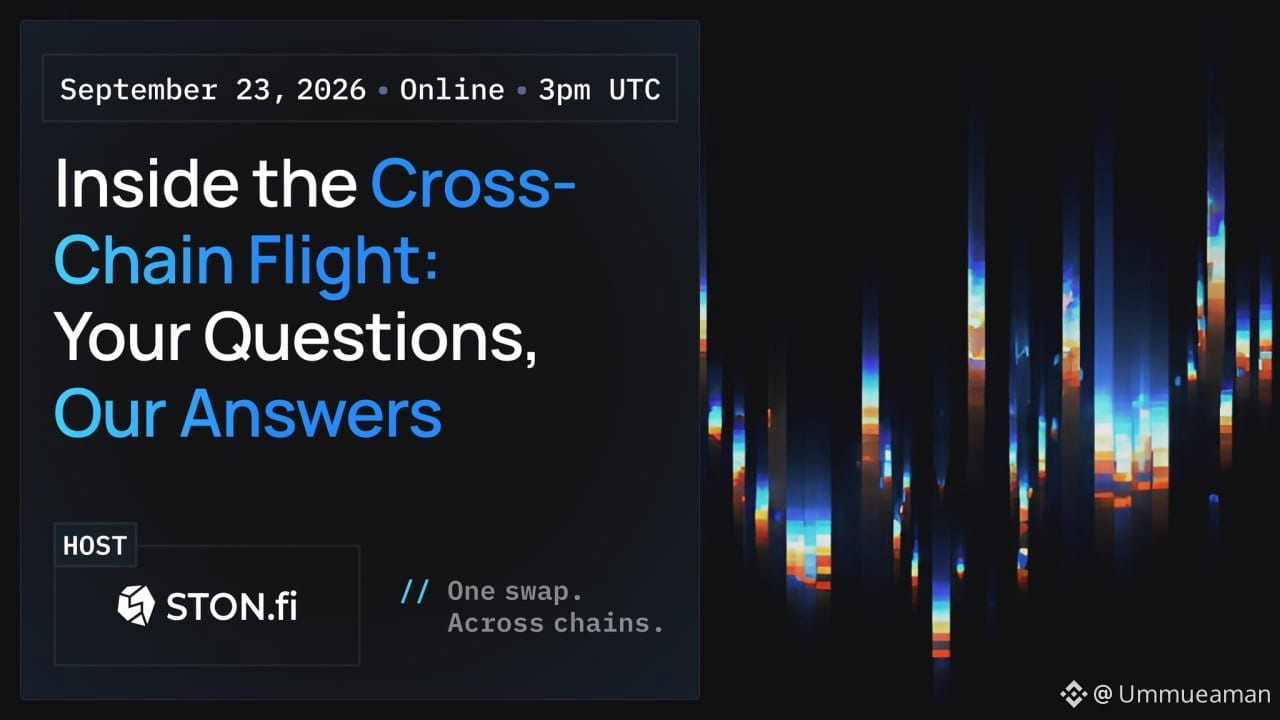
✈️ Cross-chain swaps, explained. One Swap. Across Chains.
How does a cross-chain swap actually work?
How are routes built?
What happens behind the scenes when assets move across networks?
On September 23, the STON.fi Dev Team is going live to answer the community’s biggest questions about the “One Swap. Across Chains” campaign.
📅 September 23
🕒 3:00 PM UTC | 5:00 PM CEST
🎁 Your questions can earn rewards
Before the AMA:
• Submit your question by September 21
• 10 selected questions will be answered live
• Authors of the 3 best questions will receive 50 STON each
During the AMA:
🔐 A new secret word will be revealed
🎯 Enter it in the dedicated campaign task to earn extra miles
And if you saved the secret word from the first cross-chain session, it’s still valid for the #1 AMA campaign task.
If you’re curious about how cross-chain infrastructure works under the hood, this is one AMA worth joining.
Mark your calendar. Ask the questions. Learn how the swap happens. 🪨
@ummujaapar
✈️ Cross-chain swaps, explained. One Swap. Across Chains.
How does a cross-chain swap actually work?
How are routes built?
What happens behind the scenes when assets move across networks?
On September 23, the STON.fi Dev Team is going live to answer the community’s biggest questions about the “One Swap. Across Chains” campaign.
📅 September 23
🕒 3:00 PM UTC | 5:00 PM CEST
🎁 Your questions can earn rewards
Before the AMA:
• Submit your question by September 21
• 10 selected questions will be answered live
• Authors of the 3 best questions will receive 50 STON each
During the AMA:
🔐 A new secret word will be revealed
🎯 Enter it in the dedicated campaign task to earn extra miles
And if you saved the secret word from the first cross-chain session, it’s still valid for the #1 AMA campaign task.
If you’re curious about how cross-chain infrastructure works under the hood, this is one AMA worth joining.
Mark your calendar. Ask the questions. Learn how the swap happens. 🪨
@ummujaapar
How does a cross-chain swap actually work?
How are routes built?
What happens behind the scenes when assets move across networks?
On September 23, the STON.fi Dev Team is going live to answer the community’s biggest questions about the “One Swap. Across Chains” campaign.
📅 September 23
🕒 3:00 PM UTC | 5:00 PM CEST
🎁 Your questions can earn rewards
Before the AMA:
• Submit your question by September 21
• 10 selected questions will be answered live
• Authors of the 3 best questions will receive 50 STON each
During the AMA:
🔐 A new secret word will be revealed
🎯 Enter it in the dedicated campaign task to earn extra miles
And if you saved the secret word from the first cross-chain session, it’s still valid for the #1 AMA campaign task.
If you’re curious about how cross-chain infrastructure works under the hood, this is one AMA worth joining.
Mark your calendar. Ask the questions. Learn how the swap happens. 🪨
@ummujaapar
1
161
·
--
⚠️ Important TON Bridge Update: Shutdown on September 1, 2026
If you’ve ever used the Toncoin & Token Bridge, this update is for you.
The bridge at bridge-v3.ton.org will permanently shut down on September 1, 2026. After the shutdown, no further transfers will be possible.
If you still hold bridged assets, consider withdrawing them before the deadline.
🔎 Check your wallets for:
• Wrapped Toncoin on Ethereum or BNB Smart Chain → bridge it back to TON
• jUSDT, jUSDC, jWBTC and other j-tokens on TON → bridge them back to Ethereum
💡 Good to know:
All percentage-based transfer fees have been waived during the remaining withdrawal period.
The bridge oracles began withdrawing their stakes from the bridge contracts in June 2026, while transfers will continue to be processed until the final shutdown.
📌 Key takeaway:
If you have assets on the bridge, don’t wait until the last day. Check your wallets and complete any necessary withdrawals before September 1.
🔗 Bridge: bridge-v3.ton.org
Stay safe and stay informed. DYOR.
#TON #TONcoin #DeFi
@ummujaapar
⚠️ Important TON Bridge Update: Shutdown on September 1, 2026
If you’ve ever used the Toncoin & Token Bridge, this update is for you.
The bridge at bridge-v3.ton.org will permanently shut down on September 1, 2026. After the shutdown, no further transfers will be possible.
If you still hold bridged assets, consider withdrawing them before the deadline.
🔎 Check your wallets for:
• Wrapped Toncoin on Ethereum or BNB Smart Chain → bridge it back to TON
• jUSDT, jUSDC, jWBTC and other j-tokens on TON → bridge them back to Ethereum
💡 Good to know:
All percentage-based transfer fees have been waived during the remaining withdrawal period.
The bridge oracles began withdrawing their stakes from the bridge contracts in June 2026, while transfers will continue to be processed until the final shutdown.
📌 Key takeaway:
If you have assets on the bridge, don’t wait until the last day. Check your wallets and complete any necessary withdrawals before September 1.
🔗 Bridge: bridge-v3.ton.org
Stay safe and stay informed. DYOR.
#TON #TONcoin #DeFi
@ummujaapar
If you’ve ever used the Toncoin & Token Bridge, this update is for you.
The bridge at bridge-v3.ton.org will permanently shut down on September 1, 2026. After the shutdown, no further transfers will be possible.
If you still hold bridged assets, consider withdrawing them before the deadline.
🔎 Check your wallets for:
• Wrapped Toncoin on Ethereum or BNB Smart Chain → bridge it back to TON
• jUSDT, jUSDC, jWBTC and other j-tokens on TON → bridge them back to Ethereum
💡 Good to know:
All percentage-based transfer fees have been waived during the remaining withdrawal period.
The bridge oracles began withdrawing their stakes from the bridge contracts in June 2026, while transfers will continue to be processed until the final shutdown.
📌 Key takeaway:
If you have assets on the bridge, don’t wait until the last day. Check your wallets and complete any necessary withdrawals before September 1.
🔗 Bridge: bridge-v3.ton.org
Stay safe and stay informed. DYOR.
#TON #TONcoin #DeFi
@ummujaapar
1
85
·
--
You shouldn’t feel like you’re stuck on a connecting flight.
Some old travel habits are ready to be retired.
The next generation of crypto routes is making cross-chain movement simpler, faster, and more seamless.
Early travelers may have the most to gain.
Stay tuned. 👀
@ummujaapar
You shouldn’t feel like you’re stuck on a connecting flight.
Some old travel habits are ready to be retired.
The next generation of crypto routes is making cross-chain movement simpler, faster, and more seamless.
Early travelers may have the most to gain.
Stay tuned. 👀
@ummujaapar
Some old travel habits are ready to be retired.
The next generation of crypto routes is making cross-chain movement simpler, faster, and more seamless.
Early travelers may have the most to gain.
Stay tuned. 👀
@ummujaapar
1
79
·
--
🗿 STON.fi Weekly Round-Up
Another strong week for the TON DeFi ecosystem.
STON.fi continues to expand access to DeFi with new Telegram integrations, cross-chain connections, and smarter swap routing powered by Omniston.
Here are this week’s key highlights 👇
1️⃣ Hyperliquid Perps on Telegram
WenLong now brings leveraged Hyperliquid trading directly to Telegram, with Omniston powering the TON → Arbitrum cross-chain route.
2️⃣ Smarter Swaps on My Wallet
Omniston now helps My Wallet compare DEX liquidity in real time and select competitive routes, while also supporting tokenized assets like AAPLx, NVDAx, and TSLAx.
3️⃣ X Layer Joins the Ecosystem
USDC and USDT0 on X Layer are now available for cross-chain swaps across TON and other supported networks.
4️⃣ Gram Wallet & the Future of Telegram DeFi
STON.fi joined WenLong, Gram Store, and DTrade to discuss how trading, token launches, and DeFi are evolving within Telegram — and what Gram Wallet could unlock for builders.
📊 This Week’s Numbers
• Weekly swap volume: $20.9M
• TVL: $26.9M
• LP earnings: ~$38,179
• #4 among 100 TON apps by monthly financially active wallets
• #1 among DeFi protocols on TON
🔥 Active Farm APR
• USD₮/JETTON — 50%
• GRAM/JETTON — 27%
• STON/USD₮ — 14%
• STON/USD₮ Boost Farm — up to 28%
The direction is clear: more liquidity, more chains, and simpler access to DeFi.
TON DeFi is building — and STON.fi is right in the middle of it. 🗿🔥
#STONfi #TON
@ummujaapar
🗿 STON.fi Weekly Round-Up
Another strong week for the TON DeFi ecosystem.
STON.fi continues to expand access to DeFi with new Telegram integrations, cross-chain connections, and smarter swap routing powered by Omniston.
Here are this week’s key highlights 👇
1️⃣ Hyperliquid Perps on Telegram
WenLong now brings leveraged Hyperliquid trading directly to Telegram, with Omniston powering the TON → Arbitrum cross-chain route.
2️⃣ Smarter Swaps on My Wallet
Omniston now helps My Wallet compare DEX liquidity in real time and select competitive routes, while also supporting tokenized assets like AAPLx, NVDAx, and TSLAx.
3️⃣ X Layer Joins the Ecosystem
USDC and USDT0 on X Layer are now available for cross-chain swaps across TON and other supported networks.
4️⃣ Gram Wallet & the Future of Telegram DeFi
STON.fi joined WenLong, Gram Store, and DTrade to discuss how trading, token launches, and DeFi are evolving within Telegram — and what Gram Wallet could unlock for builders.
📊 This Week’s Numbers
• Weekly swap volume: $20.9M
• TVL: $26.9M
• LP earnings: ~$38,179
• #4 among 100 TON apps by monthly financially active wallets
• #1 among DeFi protocols on TON
🔥 Active Farm APR
• USD₮/JETTON — 50%
• GRAM/JETTON — 27%
• STON/USD₮ — 14%
• STON/USD₮ Boost Farm — up to 28%
The direction is clear: more liquidity, more chains, and simpler access to DeFi.
TON DeFi is building — and STON.fi is right in the middle of it. 🗿🔥
#STONfi #TON
@ummujaapar
Another strong week for the TON DeFi ecosystem.
STON.fi continues to expand access to DeFi with new Telegram integrations, cross-chain connections, and smarter swap routing powered by Omniston.
Here are this week’s key highlights 👇
1️⃣ Hyperliquid Perps on Telegram
WenLong now brings leveraged Hyperliquid trading directly to Telegram, with Omniston powering the TON → Arbitrum cross-chain route.
2️⃣ Smarter Swaps on My Wallet
Omniston now helps My Wallet compare DEX liquidity in real time and select competitive routes, while also supporting tokenized assets like AAPLx, NVDAx, and TSLAx.
3️⃣ X Layer Joins the Ecosystem
USDC and USDT0 on X Layer are now available for cross-chain swaps across TON and other supported networks.
4️⃣ Gram Wallet & the Future of Telegram DeFi
STON.fi joined WenLong, Gram Store, and DTrade to discuss how trading, token launches, and DeFi are evolving within Telegram — and what Gram Wallet could unlock for builders.
📊 This Week’s Numbers
• Weekly swap volume: $20.9M
• TVL: $26.9M
• LP earnings: ~$38,179
• #4 among 100 TON apps by monthly financially active wallets
• #1 among DeFi protocols on TON
🔥 Active Farm APR
• USD₮/JETTON — 50%
• GRAM/JETTON — 27%
• STON/USD₮ — 14%
• STON/USD₮ Boost Farm — up to 28%
The direction is clear: more liquidity, more chains, and simpler access to DeFi.
TON DeFi is building — and STON.fi is right in the middle of it. 🗿🔥
#STONfi #TON
@ummujaapar
1
95
·
--
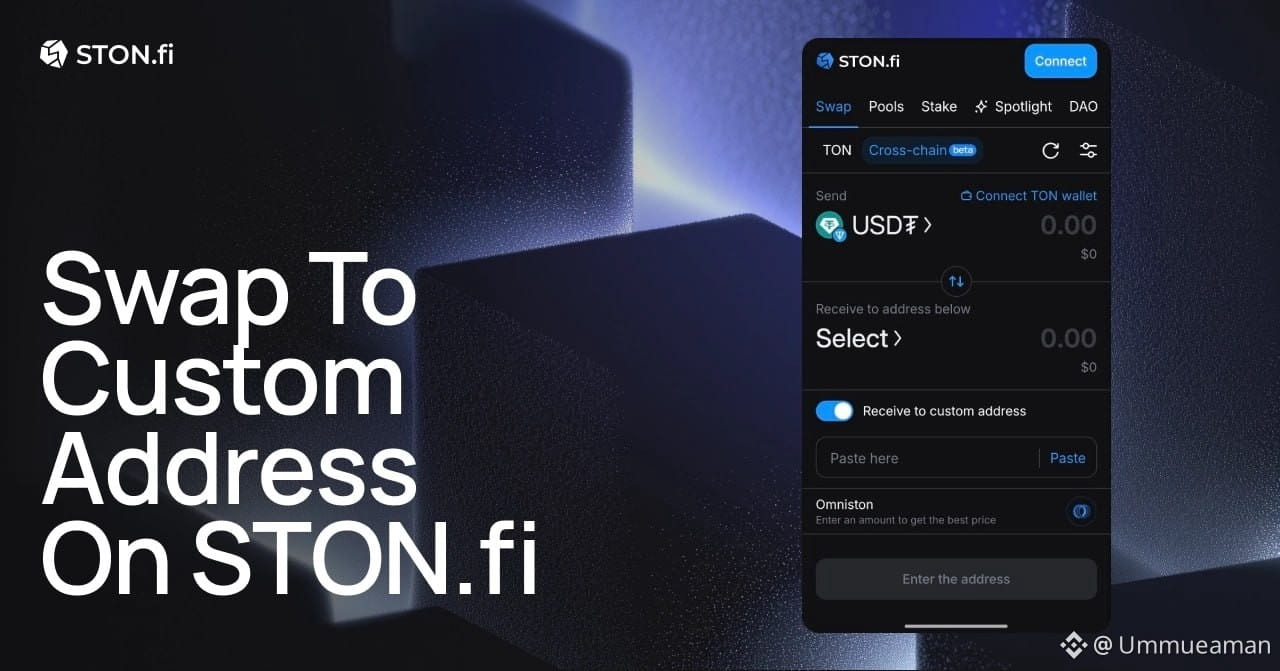
Cross-Chain Swaps, Simplified
STON.fi is making cross-chain swaps more flexible with Custom Address.
You no longer need to connect wallets on both chains.
Simply connect the wallet you’re swapping from, then enter the wallet address you want to receive the assets. Omniston will route the swap and send the tokens directly to the specified destination.
💡 How it works:
1. Connect your source wallet
2. Enable “Receive to custom address”
3. Enter the destination wallet address
4. Confirm the swap
Supported assets include:
• USDT on TON & TRON
• USDT/USDC on Ethereum, BNB Chain, Base & Avalanche
• USDT0/USDC on Arbitrum
• PUSD/USDC on Polygon
• USDG on Robinhood Chain
⚠️ Always verify the destination address and network before confirming your transaction.
Fewer wallet connections. More flexibility. Smoother cross-chain swaps.
Ready to try it? Explore cross-chain swaps on STON.fi.
@Ummujaapar
Cross-Chain Swaps, Simplified
STON.fi is making cross-chain swaps more flexible with Custom Address.
You no longer need to connect wallets on both chains.
Simply connect the wallet you’re swapping from, then enter the wallet address you want to receive the assets. Omniston will route the swap and send the tokens directly to the specified destination.
💡 How it works:
1. Connect your source wallet
2. Enable “Receive to custom address”
3. Enter the destination wallet address
4. Confirm the swap
Supported assets include:
• USDT on TON & TRON
• USDT/USDC on Ethereum, BNB Chain, Base & Avalanche
• USDT0/USDC on Arbitrum
• PUSD/USDC on Polygon
• USDG on Robinhood Chain
⚠️ Always verify the destination address and network before confirming your transaction.
Fewer wallet connections. More flexibility. Smoother cross-chain swaps.
Ready to try it? Explore cross-chain swaps on STON.fi.
@Ummujaapar
STON.fi is making cross-chain swaps more flexible with Custom Address.
You no longer need to connect wallets on both chains.
Simply connect the wallet you’re swapping from, then enter the wallet address you want to receive the assets. Omniston will route the swap and send the tokens directly to the specified destination.
💡 How it works:
1. Connect your source wallet
2. Enable “Receive to custom address”
3. Enter the destination wallet address
4. Confirm the swap
Supported assets include:
• USDT on TON & TRON
• USDT/USDC on Ethereum, BNB Chain, Base & Avalanche
• USDT0/USDC on Arbitrum
• PUSD/USDC on Polygon
• USDG on Robinhood Chain
⚠️ Always verify the destination address and network before confirming your transaction.
Fewer wallet connections. More flexibility. Smoother cross-chain swaps.
Ready to try it? Explore cross-chain swaps on STON.fi.
@Ummujaapar
1
67
·
--
🔍 Deepen Your DeFi Knowledge with the STON.fi Blog
The DeFi ecosystem is evolving rapidly, making it increasingly important to stay informed. Whether you're new to decentralised finance or an experienced on-chain user, the STON.fi Blog provides valuable insights to help you better understand blockchain technology, market trends, and the TON ecosystem.
📚 What You'll Discover
📰 STONchronicles
Stay updated with the latest product releases, ecosystem developments, and protocol improvements directly from the STON.fi team.
🎓 STON.fi Academy
Build a strong DeFi foundation with easy-to-follow guides covering swaps, liquidity pools, staking, yield farming, and essential blockchain concepts.
🌉 Cross-Chain Insights
Learn how cross-chain infrastructure works, optimise asset routing, understand liquidity strategies, and explore the opportunities and risks of multi-chain DeFi.
🌍 Blockchain Pop
Go beyond the technology and discover the culture, narratives, and trends shaping the Web3 ecosystem.
💡 Featured Articles
• How to optimise cross-chain asset routing based on changing market conditions.
• How TON's latest network upgrades improved tsTON pool APR dynamics.
• Understanding the role of market psychology in crypto price movements.
Why It Matters
In crypto, knowledge is one of the most valuable assets. Staying informed helps you make better decisions, understand emerging innovations, and confidently navigate the evolving DeFi landscape.
📖 Explore the STON.fi Blog, strengthen your understanding of TON and decentralised finance, and stay ahead of the curve.
Which DeFi topic would you like STON.fi to cover next? Share your suggestions in the comments.
@ummujaapar
🔍 Deepen Your DeFi Knowledge with the STON.fi Blog
The DeFi ecosystem is evolving rapidly, making it increasingly important to stay informed. Whether you're new to decentralised finance or an experienced on-chain user, the STON.fi Blog provides valuable insights to help you better understand blockchain technology, market trends, and the TON ecosystem.
📚 What You'll Discover
📰 STONchronicles
Stay updated with the latest product releases, ecosystem developments, and protocol improvements directly from the STON.fi team.
🎓 STON.fi Academy
Build a strong DeFi foundation with easy-to-follow guides covering swaps, liquidity pools, staking, yield farming, and essential blockchain concepts.
🌉 Cross-Chain Insights
Learn how cross-chain infrastructure works, optimise asset routing, understand liquidity strategies, and explore the opportunities and risks of multi-chain DeFi.
🌍 Blockchain Pop
Go beyond the technology and discover the culture, narratives, and trends shaping the Web3 ecosystem.
💡 Featured Articles
• How to optimise cross-chain asset routing based on changing market conditions.
• How TON's latest network upgrades improved tsTON pool APR dynamics.
• Understanding the role of market psychology in crypto price movements.
Why It Matters
In crypto, knowledge is one of the most valuable assets. Staying informed helps you make better decisions, understand emerging innovations, and confidently navigate the evolving DeFi landscape.
📖 Explore the STON.fi Blog, strengthen your understanding of TON and decentralised finance, and stay ahead of the curve.
Which DeFi topic would you like STON.fi to cover next? Share your suggestions in the comments.
@ummujaapar
The DeFi ecosystem is evolving rapidly, making it increasingly important to stay informed. Whether you're new to decentralised finance or an experienced on-chain user, the STON.fi Blog provides valuable insights to help you better understand blockchain technology, market trends, and the TON ecosystem.
📚 What You'll Discover
📰 STONchronicles
Stay updated with the latest product releases, ecosystem developments, and protocol improvements directly from the STON.fi team.
🎓 STON.fi Academy
Build a strong DeFi foundation with easy-to-follow guides covering swaps, liquidity pools, staking, yield farming, and essential blockchain concepts.
🌉 Cross-Chain Insights
Learn how cross-chain infrastructure works, optimise asset routing, understand liquidity strategies, and explore the opportunities and risks of multi-chain DeFi.
🌍 Blockchain Pop
Go beyond the technology and discover the culture, narratives, and trends shaping the Web3 ecosystem.
💡 Featured Articles
• How to optimise cross-chain asset routing based on changing market conditions.
• How TON's latest network upgrades improved tsTON pool APR dynamics.
• Understanding the role of market psychology in crypto price movements.
Why It Matters
In crypto, knowledge is one of the most valuable assets. Staying informed helps you make better decisions, understand emerging innovations, and confidently navigate the evolving DeFi landscape.
📖 Explore the STON.fi Blog, strengthen your understanding of TON and decentralised finance, and stay ahead of the curve.
Which DeFi topic would you like STON.fi to cover next? Share your suggestions in the comments.
@ummujaapar
1
76
·
--
STON.fi Farming Digest: Top Yield Opportunities This Week
Looking to put your assets to work on TON? Here's a quick overview of some of the strongest active farming pools currently available on STON.fi.
🗿 STON/USDT
The protocol's native STON token remains one of the platform's core liquidity pairs, offering consistent farming rewards.
Highlights:
Monthly Rewards: 10,000 STON
Farm Status: Ongoing
LP Lock-up: None
Boost Farm APR: Up to 2× for eligible STON stakers (available until July 31)
🎮 JETTON/USDT & JETTON/GRAM
Powered by JetTon Games, a cross-platform GameFi ecosystem on TON, these pools continue to offer boosted incentives.
Highlights:
Monthly Rewards: 200,000 JETTON per farm
Farm Duration: Active through December 31, 2026
LP Lock-up: None
⚡ STORM/GRAM
The STORM token, backed by one of TON's leading perpetual DEX ecosystems, continues to provide stable daily farming rewards.
Highlights:
Daily Rewards: 30,000 STORM
Farm Status: Ongoing
LP Lock-up: None
Key Takeaway
STON.fi continues to expand yield opportunities across its ecosystem with flexible farming, no LP lock-up requirements, and reward incentives for both native and ecosystem tokens. For liquidity providers seeking exposure to the TON DeFi landscape, these pools may be worth monitoring.
As always, conduct your own research (DYOR), assess liquidity and impermanent loss risks, and understand the underlying projects before providing liquidity or participating in farming.
#STONfi #TON
STON.fi Farming Digest: Top Yield Opportunities This Week
Looking to put your assets to work on TON? Here's a quick overview of some of the strongest active farming pools currently available on STON.fi.
🗿 STON/USDT
The protocol's native STON token remains one of the platform's core liquidity pairs, offering consistent farming rewards.
Highlights:
Monthly Rewards: 10,000 STON
Farm Status: Ongoing
LP Lock-up: None
Boost Farm APR: Up to 2× for eligible STON stakers (available until July 31)
🎮 JETTON/USDT & JETTON/GRAM
Powered by JetTon Games, a cross-platform GameFi ecosystem on TON, these pools continue to offer boosted incentives.
Highlights:
Monthly Rewards: 200,000 JETTON per farm
Farm Duration: Active through December 31, 2026
LP Lock-up: None
⚡ STORM/GRAM
The STORM token, backed by one of TON's leading perpetual DEX ecosystems, continues to provide stable daily farming rewards.
Highlights:
Daily Rewards: 30,000 STORM
Farm Status: Ongoing
LP Lock-up: None
Key Takeaway
STON.fi continues to expand yield opportunities across its ecosystem with flexible farming, no LP lock-up requirements, and reward incentives for both native and ecosystem tokens. For liquidity providers seeking exposure to the TON DeFi landscape, these pools may be worth monitoring.
As always, conduct your own research (DYOR), assess liquidity and impermanent loss risks, and understand the underlying projects before providing liquidity or participating in farming.
#STONfi #TON
Looking to put your assets to work on TON? Here's a quick overview of some of the strongest active farming pools currently available on STON.fi.
🗿 STON/USDT
The protocol's native STON token remains one of the platform's core liquidity pairs, offering consistent farming rewards.
Highlights:
Monthly Rewards: 10,000 STON
Farm Status: Ongoing
LP Lock-up: None
Boost Farm APR: Up to 2× for eligible STON stakers (available until July 31)
🎮 JETTON/USDT & JETTON/GRAM
Powered by JetTon Games, a cross-platform GameFi ecosystem on TON, these pools continue to offer boosted incentives.
Highlights:
Monthly Rewards: 200,000 JETTON per farm
Farm Duration: Active through December 31, 2026
LP Lock-up: None
⚡ STORM/GRAM
The STORM token, backed by one of TON's leading perpetual DEX ecosystems, continues to provide stable daily farming rewards.
Highlights:
Daily Rewards: 30,000 STORM
Farm Status: Ongoing
LP Lock-up: None
Key Takeaway
STON.fi continues to expand yield opportunities across its ecosystem with flexible farming, no LP lock-up requirements, and reward incentives for both native and ecosystem tokens. For liquidity providers seeking exposure to the TON DeFi landscape, these pools may be worth monitoring.
As always, conduct your own research (DYOR), assess liquidity and impermanent loss risks, and understand the underlying projects before providing liquidity or participating in farming.
#STONfi #TON
1
176
·
--
Three DeFi Tools That Can Improve Decision-Making
One of the biggest challenges in DeFi isn't accessing opportunities—it's evaluating them.
Before providing liquidity or staking, users should understand three key variables:
- Potential yield (APR)
- How rewards change over time
- The impact of impermanent loss
STON.fi has introduced a set of tools designed to help users make more informed decisions before deploying capital.
1. APR Calculator
Estimate potential returns by adjusting deposit size, APR, and investment duration. The calculator models both simple and compound interest scenarios, making it easier to compare different strategies.
2. Pool APR Updates
Instead of manually monitoring liquidity pools, users can follow daily APR updates to track changing yield opportunities more efficiently.
3. Impermanent Loss Calculator
Impermanent loss remains one of the most misunderstood risks in liquidity provision. A calculator helps users estimate how price divergence between paired assets may affect returns compared with simply holding the tokens.
The important takeaway is that calculators don't predict future performance—they provide frameworks for evaluating risk and potential outcomes.
In DeFi, better decisions rarely come from chasing the highest APR alone. They come from understanding both potential rewards and the risks behind them.
Education and risk management remain the strongest edge any participant can have.
@ummujaapar
Three DeFi Tools That Can Improve Decision-Making
One of the biggest challenges in DeFi isn't accessing opportunities—it's evaluating them.
Before providing liquidity or staking, users should understand three key variables:
- Potential yield (APR)
- How rewards change over time
- The impact of impermanent loss
STON.fi has introduced a set of tools designed to help users make more informed decisions before deploying capital.
1. APR Calculator
Estimate potential returns by adjusting deposit size, APR, and investment duration. The calculator models both simple and compound interest scenarios, making it easier to compare different strategies.
2. Pool APR Updates
Instead of manually monitoring liquidity pools, users can follow daily APR updates to track changing yield opportunities more efficiently.
3. Impermanent Loss Calculator
Impermanent loss remains one of the most misunderstood risks in liquidity provision. A calculator helps users estimate how price divergence between paired assets may affect returns compared with simply holding the tokens.
The important takeaway is that calculators don't predict future performance—they provide frameworks for evaluating risk and potential outcomes.
In DeFi, better decisions rarely come from chasing the highest APR alone. They come from understanding both potential rewards and the risks behind them.
Education and risk management remain the strongest edge any participant can have.
@ummujaapar
One of the biggest challenges in DeFi isn't accessing opportunities—it's evaluating them.
Before providing liquidity or staking, users should understand three key variables:
- Potential yield (APR)
- How rewards change over time
- The impact of impermanent loss
STON.fi has introduced a set of tools designed to help users make more informed decisions before deploying capital.
1. APR Calculator
Estimate potential returns by adjusting deposit size, APR, and investment duration. The calculator models both simple and compound interest scenarios, making it easier to compare different strategies.
2. Pool APR Updates
Instead of manually monitoring liquidity pools, users can follow daily APR updates to track changing yield opportunities more efficiently.
3. Impermanent Loss Calculator
Impermanent loss remains one of the most misunderstood risks in liquidity provision. A calculator helps users estimate how price divergence between paired assets may affect returns compared with simply holding the tokens.
The important takeaway is that calculators don't predict future performance—they provide frameworks for evaluating risk and potential outcomes.
In DeFi, better decisions rarely come from chasing the highest APR alone. They come from understanding both potential rewards and the risks behind them.
Education and risk management remain the strongest edge any participant can have.
@ummujaapar
1
78
·
--
The future of DeFi won't be built overnight.
It grows through consistent innovation, reliable infrastructure, and products that make on-chain finance easier to use.
Every improvement—whether it's better liquidity, smoother swaps, or a better user experience—helps lower the barrier for new users entering Web3.
Projects focused on solving real problems and improving usability are worth watching as the ecosystem continues to evolve.
What do you think is the most important feature a DeFi platform should prioritize?
The future of DeFi won't be built overnight.
It grows through consistent innovation, reliable infrastructure, and products that make on-chain finance easier to use.
Every improvement—whether it's better liquidity, smoother swaps, or a better user experience—helps lower the barrier for new users entering Web3.
Projects focused on solving real problems and improving usability are worth watching as the ecosystem continues to evolve.
What do you think is the most important feature a DeFi platform should prioritize?
It grows through consistent innovation, reliable infrastructure, and products that make on-chain finance easier to use.
Every improvement—whether it's better liquidity, smoother swaps, or a better user experience—helps lower the barrier for new users entering Web3.
Projects focused on solving real problems and improving usability are worth watching as the ecosystem continues to evolve.
What do you think is the most important feature a DeFi platform should prioritize?
1
77
·
--
You don't need to use STON.fi directly to benefit from its infrastructure.
When tokens graduate from Grambo's bonding curve, liquidity moves into STON.fi V2 pools. RedoTrade also relies on the same infrastructure for swap execution.
Two different products. One shared foundation.
This is how strong DeFi infrastructure grows — not by chasing attention, but by quietly powering the tools and experiences users interact with every day.
Infrastructure may not always be the most visible layer, but it often becomes the most important one.
Grambo and RedoTrade are independent projects. Always do your own research.
You don't need to use STON.fi directly to benefit from its infrastructure.
When tokens graduate from Grambo's bonding curve, liquidity moves into STON.fi V2 pools. RedoTrade also relies on the same infrastructure for swap execution.
Two different products. One shared foundation.
This is how strong DeFi infrastructure grows — not by chasing attention, but by quietly powering the tools and experiences users interact with every day.
Infrastructure may not always be the most visible layer, but it often becomes the most important one.
Grambo and RedoTrade are independent projects. Always do your own research.
When tokens graduate from Grambo's bonding curve, liquidity moves into STON.fi V2 pools. RedoTrade also relies on the same infrastructure for swap execution.
Two different products. One shared foundation.
This is how strong DeFi infrastructure grows — not by chasing attention, but by quietly powering the tools and experiences users interact with every day.
Infrastructure may not always be the most visible layer, but it often becomes the most important one.
Grambo and RedoTrade are independent projects. Always do your own research.
1
85
·
--
Web3 keeps evolving, but one challenge has remained constant: too many people have ideas, yet too few feel confident enough to build them.
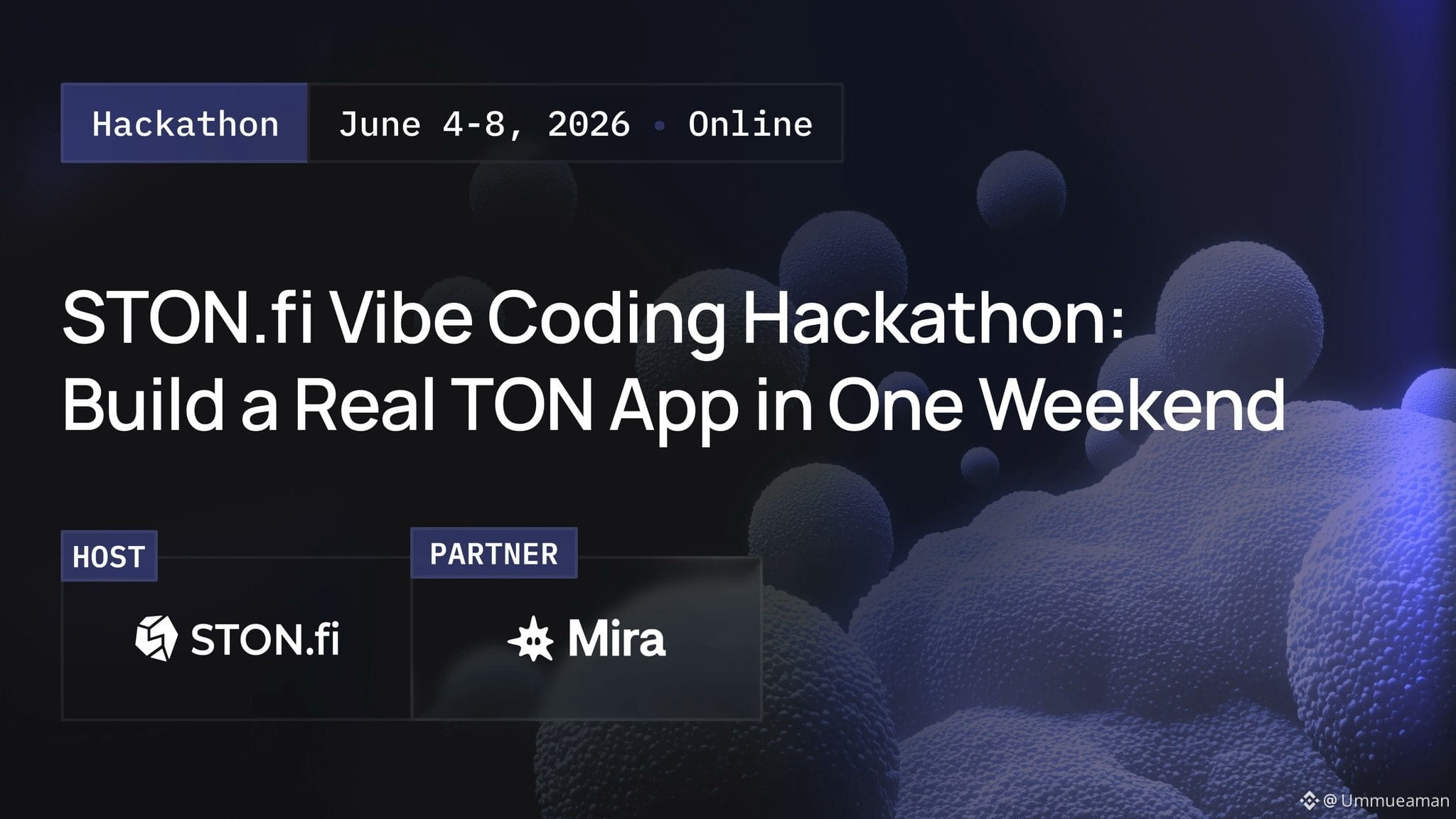
The STON.fi Vibe Coding Hackathon is trying to reduce that gap.
A full weekend focused on shipping real TON applications with the help of AI coding agents, mentorship, and community support is a strong example of where the industry is heading.
More accessible. More collaborative. More execution-focused.
And honestly, this trend could reshape how new talent enters crypto.
Not everyone starts as an expert developer. Some people start as creators, marketers, designers, researchers, or curious learners. AI-powered development now gives those people a better chance to participate directly in building products.
That’s powerful.
Because ecosystems grow strongest when opportunities are open to more than just a small technical circle.
The next breakout idea in Web3 may not come from a giant company. It may come from someone joining a hackathon with nothing more than curiosity, ambition, and one bold idea.
Sometimes the biggest step is simply deciding to start.
t.me/Ummujaapar
Web3 keeps evolving, but one challenge has remained constant: too many people have ideas, yet too few feel confident enough to build them.
The STON.fi Vibe Coding Hackathon is trying to reduce that gap.
A full weekend focused on shipping real TON applications with the help of AI coding agents, mentorship, and community support is a strong example of where the industry is heading.
More accessible. More collaborative. More execution-focused.
And honestly, this trend could reshape how new talent enters crypto.
Not everyone starts as an expert developer. Some people start as creators, marketers, designers, researchers, or curious learners. AI-powered development now gives those people a better chance to participate directly in building products.
That’s powerful.
Because ecosystems grow strongest when opportunities are open to more than just a small technical circle.
The next breakout idea in Web3 may not come from a giant company. It may come from someone joining a hackathon with nothing more than curiosity, ambition, and one bold idea.
Sometimes the biggest step is simply deciding to start.
t.me/Ummujaapar
The STON.fi Vibe Coding Hackathon is trying to reduce that gap.
A full weekend focused on shipping real TON applications with the help of AI coding agents, mentorship, and community support is a strong example of where the industry is heading.
More accessible. More collaborative. More execution-focused.
And honestly, this trend could reshape how new talent enters crypto.
Not everyone starts as an expert developer. Some people start as creators, marketers, designers, researchers, or curious learners. AI-powered development now gives those people a better chance to participate directly in building products.
That’s powerful.
Because ecosystems grow strongest when opportunities are open to more than just a small technical circle.
The next breakout idea in Web3 may not come from a giant company. It may come from someone joining a hackathon with nothing more than curiosity, ambition, and one bold idea.
Sometimes the biggest step is simply deciding to start.
t.me/Ummujaapar
1
7
·
--
Everyone on Binance thinks they're trading smart.
But you don't own anything on Binance.
Your funds. Their servers. Their rules.
One wrong move from them
your account is frozen. Your money is gone.
STON.fi is different.
No KYC. No middleman. No permission needed.
You connect your wallet.
You trade directly onchain.
You stay in control always.
That's not just DeFi.
That's financial freedom they can't take from you.
t.me/Ummujaapar
#DeFi #STONFI
Everyone on Binance thinks they're trading smart.
But you don't own anything on Binance.
Your funds. Their servers. Their rules.
One wrong move from them
your account is frozen. Your money is gone.
STON.fi is different.
No KYC. No middleman. No permission needed.
You connect your wallet.
You trade directly onchain.
You stay in control always.
That's not just DeFi.
That's financial freedom they can't take from you.
t.me/Ummujaapar
#DeFi #STONFI
But you don't own anything on Binance.
Your funds. Their servers. Their rules.
One wrong move from them
your account is frozen. Your money is gone.
STON.fi is different.
No KYC. No middleman. No permission needed.
You connect your wallet.
You trade directly onchain.
You stay in control always.
That's not just DeFi.
That's financial freedom they can't take from you.
t.me/Ummujaapar
#DeFi #STONFI
1
3
·
--
Most DeFi users know the pain: you’ve got the token, but you’re stuck because you don’t have native gas. It’s the blocker that slows down adoption and frustrates users.
Omniston introduces a new model.
Instead of requiring users to hold gas, it enables a gasless UX through order settlement.
👉 You sign a message in your wallet
👉 A resolver covers the gas and submits the transaction
👉 Smart contracts verify and execute
This is more than convenience — it’s a shift from swap aggregation toward a cross-chain execution layer.
Currently, the sandbox supports EVM chains. TON still requires gas, but the roadmap is clear.
The future of DeFi is smoother, more accessible, and powered by execution layers like Omniston.
t.me/Ummujaapar
Most DeFi users know the pain: you’ve got the token, but you’re stuck because you don’t have native gas. It’s the blocker that slows down adoption and frustrates users.
Omniston introduces a new model.
Instead of requiring users to hold gas, it enables a gasless UX through order settlement.
👉 You sign a message in your wallet
👉 A resolver covers the gas and submits the transaction
👉 Smart contracts verify and execute
This is more than convenience — it’s a shift from swap aggregation toward a cross-chain execution layer.
Currently, the sandbox supports EVM chains. TON still requires gas, but the roadmap is clear.
The future of DeFi is smoother, more accessible, and powered by execution layers like Omniston.
t.me/Ummujaapar
Omniston introduces a new model.
Instead of requiring users to hold gas, it enables a gasless UX through order settlement.
👉 You sign a message in your wallet
👉 A resolver covers the gas and submits the transaction
👉 Smart contracts verify and execute
This is more than convenience — it’s a shift from swap aggregation toward a cross-chain execution layer.
Currently, the sandbox supports EVM chains. TON still requires gas, but the roadmap is clear.
The future of DeFi is smoother, more accessible, and powered by execution layers like Omniston.
t.me/Ummujaapar
1
3
·
--
TON is growing fast, but the important part is seeing which teams continue building after the spotlight fades.
Glad to see STONfi bringing actual builders together to share what works, what breaks, and what users truly respond to 👀
t.me/Ummujaapar
TON is growing fast, but the important part is seeing which teams continue building after the spotlight fades.
Glad to see STONfi bringing actual builders together to share what works, what breaks, and what users truly respond to 👀
t.me/Ummujaapar
Glad to see STONfi bringing actual builders together to share what works, what breaks, and what users truly respond to 👀
t.me/Ummujaapar
1
6
Log in to explore more content
Join global crypto users on Binance Square
⚡️ Get latest and useful information about crypto.
💬 Trusted by the world’s largest crypto exchange.
👍 Discover real insights from verified creators.
Email / Phone number
Trending Topics
ZcashETFPostsFirstWeeklyOutflow$93.6M
49,664 views
146 Discussing
Zcash ETF Records First $93.6M Weekly Outflow: What Does It Mean for ZEC?
Crypto Ninja
·0 Likes
·68 views
GreekPoliceBustCryptoScamRingArrest17
136,374 views
964 Discussing
BitcoinRejectedAt$87K
147,326 views
202 Discussing