

AK shab
1.4k Posts

AK shab
Report
Block User
1 Following
3.7K+ Followers
1.1K+ Liked
Posts
All
Quotes
Live
·
--
Last Chance to Join Binance Traders League Season 4!
Trade your way into a share of the massive $4M prize pool 🎯
New users can earn rewards of up to $40!
Getting started is simple: 1️⃣ Create your Binance account
2️⃣ Enter my Referral Code: **1205249432
Last Chance to Join Binance Traders League Season 4!
Trade your way into a share of the massive $4M prize pool 🎯
New users can earn rewards of up to $40!
Getting started is simple: 1️⃣ Create your Binance account
2️⃣ Enter my Referral Code: **1205249432
Trade your way into a share of the massive $4M prize pool 🎯
New users can earn rewards of up to $40!
Getting started is simple: 1️⃣ Create your Binance account
2️⃣ Enter my Referral Code: **1205249432
1
3
924
·
--
Bearish
@Dusk_Foundation #dusk $DUSK
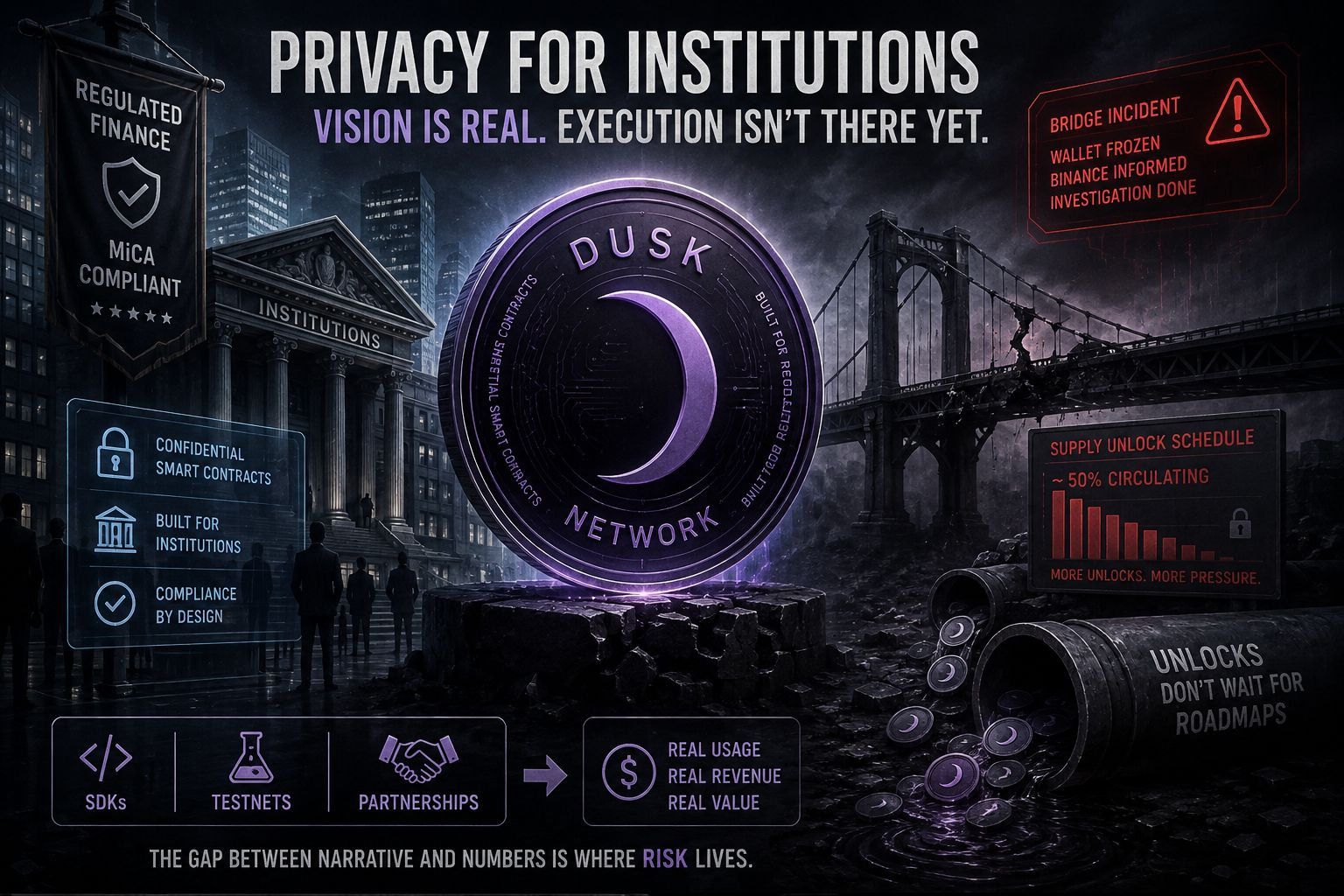
Dusk Network is the one I keep coming back to when people ask me what "privacy for institutions" actually looks like once the marketing wears off. On paper it's clean: a layer-1 built for confidential smart contracts, going after regulated finance, playing nice with things like MiCA instead of dodging them. That's a real niche, and I respect that they picked a lane instead of chasing every trend. But then I remember the bridge incident from a couple weeks ago, quietly patched over with a wallet freeze and a call to Binance, and I can't unsee it. A chain pitching itself to banks and custodians can't afford a moment where its own money-in-money-out pipe looks shaky, even briefly. Institutions don't grade on a curve for "we caught it fast."
Dusk Then there's the supply, sitting there like a slow leak nobody wants to point at. Half the tokens already circulating, the rest still queued up to hit a market that's thin enough to feel every drop. Real usage — actual institutions paying real fees, real settlement volume — is still mostly a promise sitting a few upgrades away, while the unlocks don't wait for anyone's roadmap to catch up. Right now the story is being carried by SDKs, testnets, and partnership announcements, not by revenue that actually justifies the token's design.
I'm not saying the Dusk is fake. I'm saying the balance sheet hasn't caught up to the narrative yet, and that gap is exactly where I get nervous holding anything.
{spot}(DUSKUSDT)
@Dusk #dusk $DUSK
Dusk Network is the one I keep coming back to when people ask me what "privacy for institutions" actually looks like once the marketing wears off. On paper it's clean: a layer-1 built for confidential smart contracts, going after regulated finance, playing nice with things like MiCA instead of dodging them. That's a real niche, and I respect that they picked a lane instead of chasing every trend. But then I remember the bridge incident from a couple weeks ago, quietly patched over with a wallet freeze and a call to Binance, and I can't unsee it. A chain pitching itself to banks and custodians can't afford a moment where its own money-in-money-out pipe looks shaky, even briefly. Institutions don't grade on a curve for "we caught it fast."
Dusk Then there's the supply, sitting there like a slow leak nobody wants to point at. Half the tokens already circulating, the rest still queued up to hit a market that's thin enough to feel every drop. Real usage — actual institutions paying real fees, real settlement volume — is still mostly a promise sitting a few upgrades away, while the unlocks don't wait for anyone's roadmap to catch up. Right now the story is being carried by SDKs, testnets, and partnership announcements, not by revenue that actually justifies the token's design.
I'm not saying the Dusk is fake. I'm saying the balance sheet hasn't caught up to the narrative yet, and that gap is exactly where I get nervous holding anything.
Dusk Network is the one I keep coming back to when people ask me what "privacy for institutions" actually looks like once the marketing wears off. On paper it's clean: a layer-1 built for confidential smart contracts, going after regulated finance, playing nice with things like MiCA instead of dodging them. That's a real niche, and I respect that they picked a lane instead of chasing every trend. But then I remember the bridge incident from a couple weeks ago, quietly patched over with a wallet freeze and a call to Binance, and I can't unsee it. A chain pitching itself to banks and custodians can't afford a moment where its own money-in-money-out pipe looks shaky, even briefly. Institutions don't grade on a curve for "we caught it fast."
Dusk Then there's the supply, sitting there like a slow leak nobody wants to point at. Half the tokens already circulating, the rest still queued up to hit a market that's thin enough to feel every drop. Real usage — actual institutions paying real fees, real settlement volume — is still mostly a promise sitting a few upgrades away, while the unlocks don't wait for anyone's roadmap to catch up. Right now the story is being carried by SDKs, testnets, and partnership announcements, not by revenue that actually justifies the token's design.
I'm not saying the Dusk is fake. I'm saying the balance sheet hasn't caught up to the narrative yet, and that gap is exactly where I get nervous holding anything.
92
·
--
Bullish
@Dusk_Foundation #dusk $DUSK
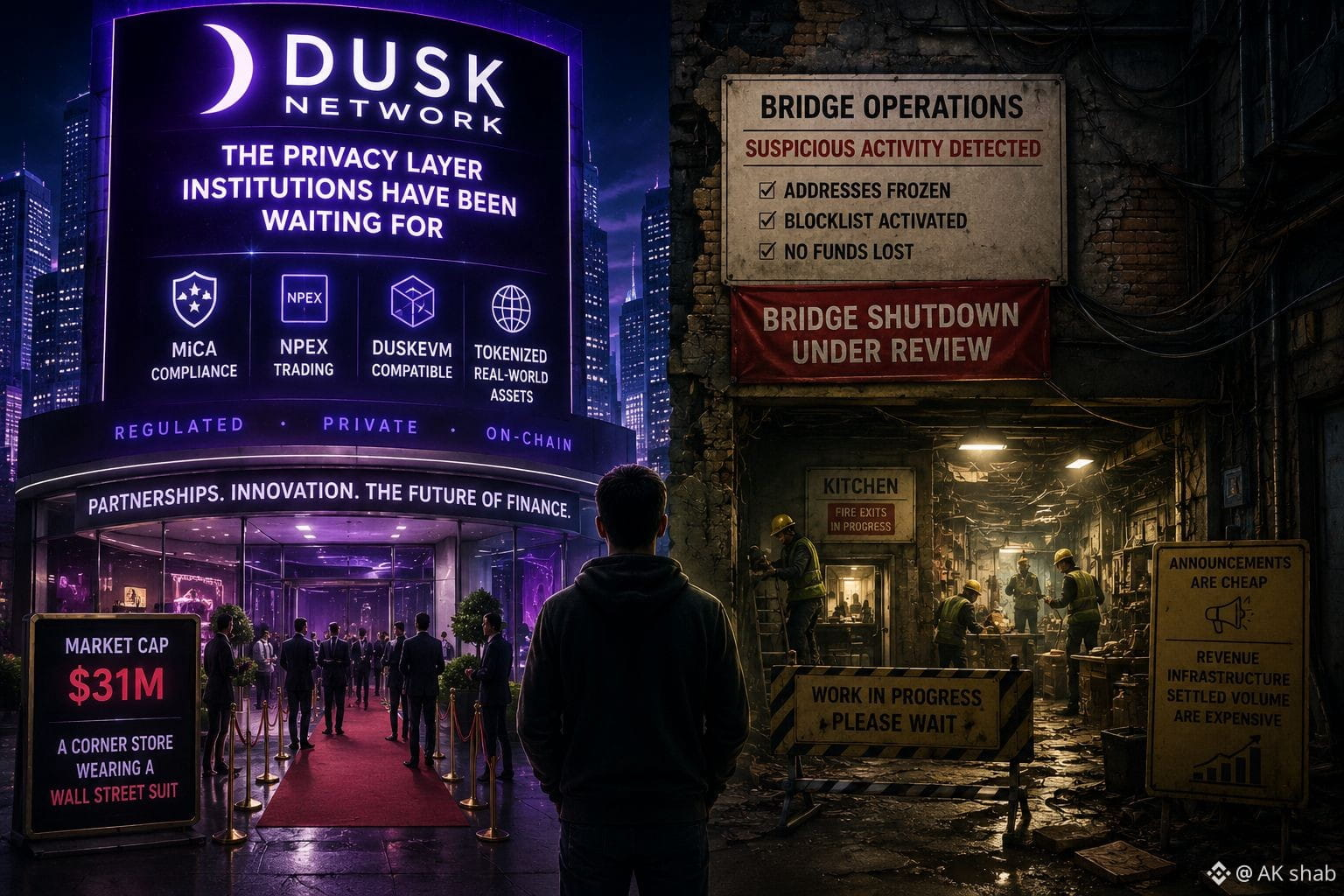
Dusk Network keeps showing up in my feed with a shinier pitch every week, and I can't stop noticing the gap between the language and the numbers. It's supposed to be the privacy layer institutions have been waiting for, the place where regulated securities finally settle on-chain without exposing every trade to the world. MiCA compliance, NPEX, DuskEVM, tokenized real-world assets — the vocabulary is all grown-up finance. Then you check the market cap and it's sitting around thirty-one million dollars. That's not a number that matches the ambition. That's a corner store wearing a Wall Street suit.
What really sticks with me is the bridge. Mid-August, the team caught suspicious activity on a wallet tied to bridge operations, froze the addresses, threw up a blocklist, and said no funds were lost. Maybe that's exactly what happened. But a chain whose entire selling point is confidentiality and finality just had to publicly walk everyone through an emergency shutdown of its own plumbing. That's not a footnote, that's the headline underneath the headline.
Dusk I keep thinking of it like a restaurant that keeps announcing a new menu while the kitchen's still figuring out its fire exits. The partnerships are real, the tech is real, the ambition might even be justified eventually. But announcements are cheap — they cost a press release and buy a week of attention. Revenue, working infrastructure, actual settled volume, those are expensive, and right now Dusk is spending a lot more on the first than proving out the second.
{spot}(DUSKUSDT)
@Dusk #dusk $DUSK
Dusk Network keeps showing up in my feed with a shinier pitch every week, and I can't stop noticing the gap between the language and the numbers. It's supposed to be the privacy layer institutions have been waiting for, the place where regulated securities finally settle on-chain without exposing every trade to the world. MiCA compliance, NPEX, DuskEVM, tokenized real-world assets — the vocabulary is all grown-up finance. Then you check the market cap and it's sitting around thirty-one million dollars. That's not a number that matches the ambition. That's a corner store wearing a Wall Street suit.
What really sticks with me is the bridge. Mid-August, the team caught suspicious activity on a wallet tied to bridge operations, froze the addresses, threw up a blocklist, and said no funds were lost. Maybe that's exactly what happened. But a chain whose entire selling point is confidentiality and finality just had to publicly walk everyone through an emergency shutdown of its own plumbing. That's not a footnote, that's the headline underneath the headline.
Dusk I keep thinking of it like a restaurant that keeps announcing a new menu while the kitchen's still figuring out its fire exits. The partnerships are real, the tech is real, the ambition might even be justified eventually. But announcements are cheap — they cost a press release and buy a week of attention. Revenue, working infrastructure, actual settled volume, those are expensive, and right now Dusk is spending a lot more on the first than proving out the second.
Dusk Network keeps showing up in my feed with a shinier pitch every week, and I can't stop noticing the gap between the language and the numbers. It's supposed to be the privacy layer institutions have been waiting for, the place where regulated securities finally settle on-chain without exposing every trade to the world. MiCA compliance, NPEX, DuskEVM, tokenized real-world assets — the vocabulary is all grown-up finance. Then you check the market cap and it's sitting around thirty-one million dollars. That's not a number that matches the ambition. That's a corner store wearing a Wall Street suit.
What really sticks with me is the bridge. Mid-August, the team caught suspicious activity on a wallet tied to bridge operations, froze the addresses, threw up a blocklist, and said no funds were lost. Maybe that's exactly what happened. But a chain whose entire selling point is confidentiality and finality just had to publicly walk everyone through an emergency shutdown of its own plumbing. That's not a footnote, that's the headline underneath the headline.
Dusk I keep thinking of it like a restaurant that keeps announcing a new menu while the kitchen's still figuring out its fire exits. The partnerships are real, the tech is real, the ambition might even be justified eventually. But announcements are cheap — they cost a press release and buy a week of attention. Revenue, working infrastructure, actual settled volume, those are expensive, and right now Dusk is spending a lot more on the first than proving out the second.
3
4
119
·
--
Bullish
@Dusk_Foundation #dusk $DUSK
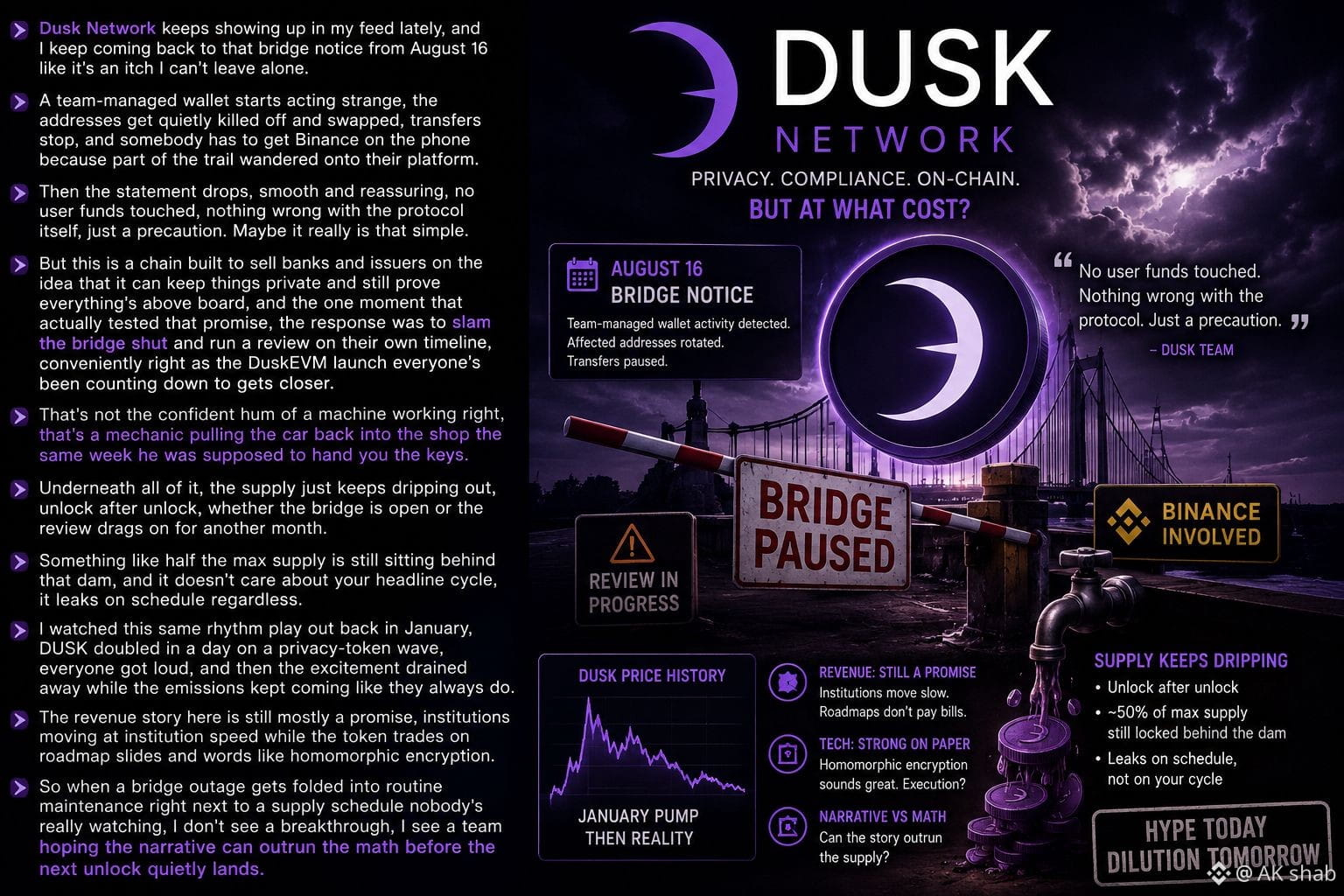
Dusk Network keeps showing up in my feed lately, and I keep coming back to that bridge notice from August 16 like it's an itch I can't leave alone. A team-managed wallet starts acting strange, the addresses get quietly killed off and swapped, transfers stop, and somebody has to get Binance on the phone because part of the trail wandered onto their platform. Then the statement drops, smooth and reassuring, no user funds touched, nothing wrong with the protocol itself, just a precaution. Maybe it really is that simple. But this is a chain built to sell banks and issuers on the idea that it can keep things private and still prove everything's above board, and the one moment that actually tested that promise, the response was to slam the bridge shut and run a review on their own timeline, conveniently right as the DuskEVM launch everyone's been counting down to gets closer. That's not the confident hum of a machine working right, that's a mechanic pulling the car back into the shop the same week he was supposed to hand you the keys.
Underneath all of it, the supply just keeps dripping out, unlock after unlock, whether the bridge is open or the review drags on for another month. Something like half the max supply is still sitting behind that dam, and it doesn't care about your headline cycle, it leaks on schedule regardless. I watched this same rhythm play out back in January, DUSK doubled in a day on a privacy-token wave, everyone got loud, and then the excitement drained away while the emissions kept coming like they always do. The revenue story here is still mostly a promise, institutions moving at institution speed while the token trades on roadmap slides and words like homomorphic encryption. So when a bridge outage gets folded into routine maintenance right next to a supply schedule nobody's really watching, I don't see a breakthrough, I see a team hoping the narrative can outrun the math before the next unlock quietly lands.
{spot}(DUSKUSDT)
@Dusk #dusk $DUSK
Dusk Network keeps showing up in my feed lately, and I keep coming back to that bridge notice from August 16 like it's an itch I can't leave alone. A team-managed wallet starts acting strange, the addresses get quietly killed off and swapped, transfers stop, and somebody has to get Binance on the phone because part of the trail wandered onto their platform. Then the statement drops, smooth and reassuring, no user funds touched, nothing wrong with the protocol itself, just a precaution. Maybe it really is that simple. But this is a chain built to sell banks and issuers on the idea that it can keep things private and still prove everything's above board, and the one moment that actually tested that promise, the response was to slam the bridge shut and run a review on their own timeline, conveniently right as the DuskEVM launch everyone's been counting down to gets closer. That's not the confident hum of a machine working right, that's a mechanic pulling the car back into the shop the same week he was supposed to hand you the keys.
Underneath all of it, the supply just keeps dripping out, unlock after unlock, whether the bridge is open or the review drags on for another month. Something like half the max supply is still sitting behind that dam, and it doesn't care about your headline cycle, it leaks on schedule regardless. I watched this same rhythm play out back in January, DUSK doubled in a day on a privacy-token wave, everyone got loud, and then the excitement drained away while the emissions kept coming like they always do. The revenue story here is still mostly a promise, institutions moving at institution speed while the token trades on roadmap slides and words like homomorphic encryption. So when a bridge outage gets folded into routine maintenance right next to a supply schedule nobody's really watching, I don't see a breakthrough, I see a team hoping the narrative can outrun the math before the next unlock quietly lands.
Dusk Network keeps showing up in my feed lately, and I keep coming back to that bridge notice from August 16 like it's an itch I can't leave alone. A team-managed wallet starts acting strange, the addresses get quietly killed off and swapped, transfers stop, and somebody has to get Binance on the phone because part of the trail wandered onto their platform. Then the statement drops, smooth and reassuring, no user funds touched, nothing wrong with the protocol itself, just a precaution. Maybe it really is that simple. But this is a chain built to sell banks and issuers on the idea that it can keep things private and still prove everything's above board, and the one moment that actually tested that promise, the response was to slam the bridge shut and run a review on their own timeline, conveniently right as the DuskEVM launch everyone's been counting down to gets closer. That's not the confident hum of a machine working right, that's a mechanic pulling the car back into the shop the same week he was supposed to hand you the keys.
Underneath all of it, the supply just keeps dripping out, unlock after unlock, whether the bridge is open or the review drags on for another month. Something like half the max supply is still sitting behind that dam, and it doesn't care about your headline cycle, it leaks on schedule regardless. I watched this same rhythm play out back in January, DUSK doubled in a day on a privacy-token wave, everyone got loud, and then the excitement drained away while the emissions kept coming like they always do. The revenue story here is still mostly a promise, institutions moving at institution speed while the token trades on roadmap slides and words like homomorphic encryption. So when a bridge outage gets folded into routine maintenance right next to a supply schedule nobody's really watching, I don't see a breakthrough, I see a team hoping the narrative can outrun the math before the next unlock quietly lands.
3
2
162
·
--
Bearish
$DUSK #dusk @Dusk_Foundation
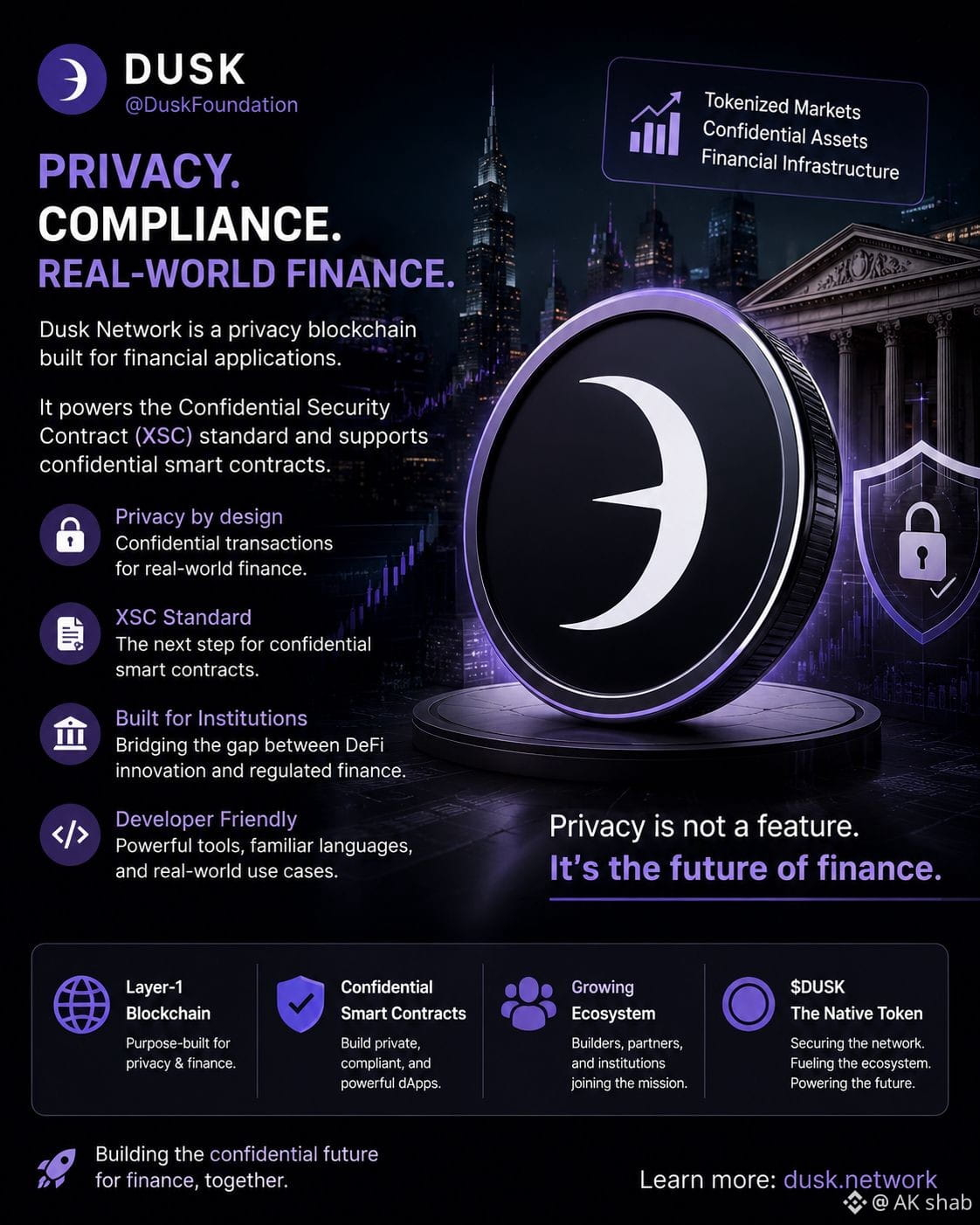
DUSK @DuskFoundation is one of those projects I keep watching because the idea is bigger than the usual “another L1” pitch. It is trying to build infrastructure for regulated finance where privacy, compliance, and onchain settlement have to work together. That part makes sense to me. What I’m still asking is the part the market usually skips. How much real activity is coming through Dusk, and how much of the current attention is still driven by the story? The network keeps pushing toward tokenized markets, financial workflows, and a more usable developer stack, which is the right direction. But a good narrative can run ahead of actual usage very quickly. I keep thinking about the gap between building impressive infrastructure and turning that infrastructure into sustainable demand for DUSK. That gap is where I get cautious. The chart can move like a match in dry grass, but price action alone doesn’t prove the fire will last. I want to see users, transactions, applications, institutional activity, and eventually economics that make the token matter because the network matters. DUSK has a serious use case. Privacy for regulated finance is not a gimmick. But the market has a habit of pricing tomorrow’s success before today’s numbers confirm it. So I’m watching DUSK closely, not blindly bullish. The next leg of the story should come from adoption, not just attention. That distinction matters because durable networks are built when economic activity pulls the token forward, not when speculation pushes the token ahead eventually.
{spot}(DUSKUSDT)
$DUSK #dusk @Dusk
DUSK @DuskFoundation is one of those projects I keep watching because the idea is bigger than the usual “another L1” pitch. It is trying to build infrastructure for regulated finance where privacy, compliance, and onchain settlement have to work together. That part makes sense to me. What I’m still asking is the part the market usually skips. How much real activity is coming through Dusk, and how much of the current attention is still driven by the story? The network keeps pushing toward tokenized markets, financial workflows, and a more usable developer stack, which is the right direction. But a good narrative can run ahead of actual usage very quickly. I keep thinking about the gap between building impressive infrastructure and turning that infrastructure into sustainable demand for DUSK. That gap is where I get cautious. The chart can move like a match in dry grass, but price action alone doesn’t prove the fire will last. I want to see users, transactions, applications, institutional activity, and eventually economics that make the token matter because the network matters. DUSK has a serious use case. Privacy for regulated finance is not a gimmick. But the market has a habit of pricing tomorrow’s success before today’s numbers confirm it. So I’m watching DUSK closely, not blindly bullish. The next leg of the story should come from adoption, not just attention. That distinction matters because durable networks are built when economic activity pulls the token forward, not when speculation pushes the token ahead eventually.
DUSK @DuskFoundation is one of those projects I keep watching because the idea is bigger than the usual “another L1” pitch. It is trying to build infrastructure for regulated finance where privacy, compliance, and onchain settlement have to work together. That part makes sense to me. What I’m still asking is the part the market usually skips. How much real activity is coming through Dusk, and how much of the current attention is still driven by the story? The network keeps pushing toward tokenized markets, financial workflows, and a more usable developer stack, which is the right direction. But a good narrative can run ahead of actual usage very quickly. I keep thinking about the gap between building impressive infrastructure and turning that infrastructure into sustainable demand for DUSK. That gap is where I get cautious. The chart can move like a match in dry grass, but price action alone doesn’t prove the fire will last. I want to see users, transactions, applications, institutional activity, and eventually economics that make the token matter because the network matters. DUSK has a serious use case. Privacy for regulated finance is not a gimmick. But the market has a habit of pricing tomorrow’s success before today’s numbers confirm it. So I’m watching DUSK closely, not blindly bullish. The next leg of the story should come from adoption, not just attention. That distinction matters because durable networks are built when economic activity pulls the token forward, not when speculation pushes the token ahead eventually.
5
4
197
·
--
$DUSK #dusk @Dusk_Foundation
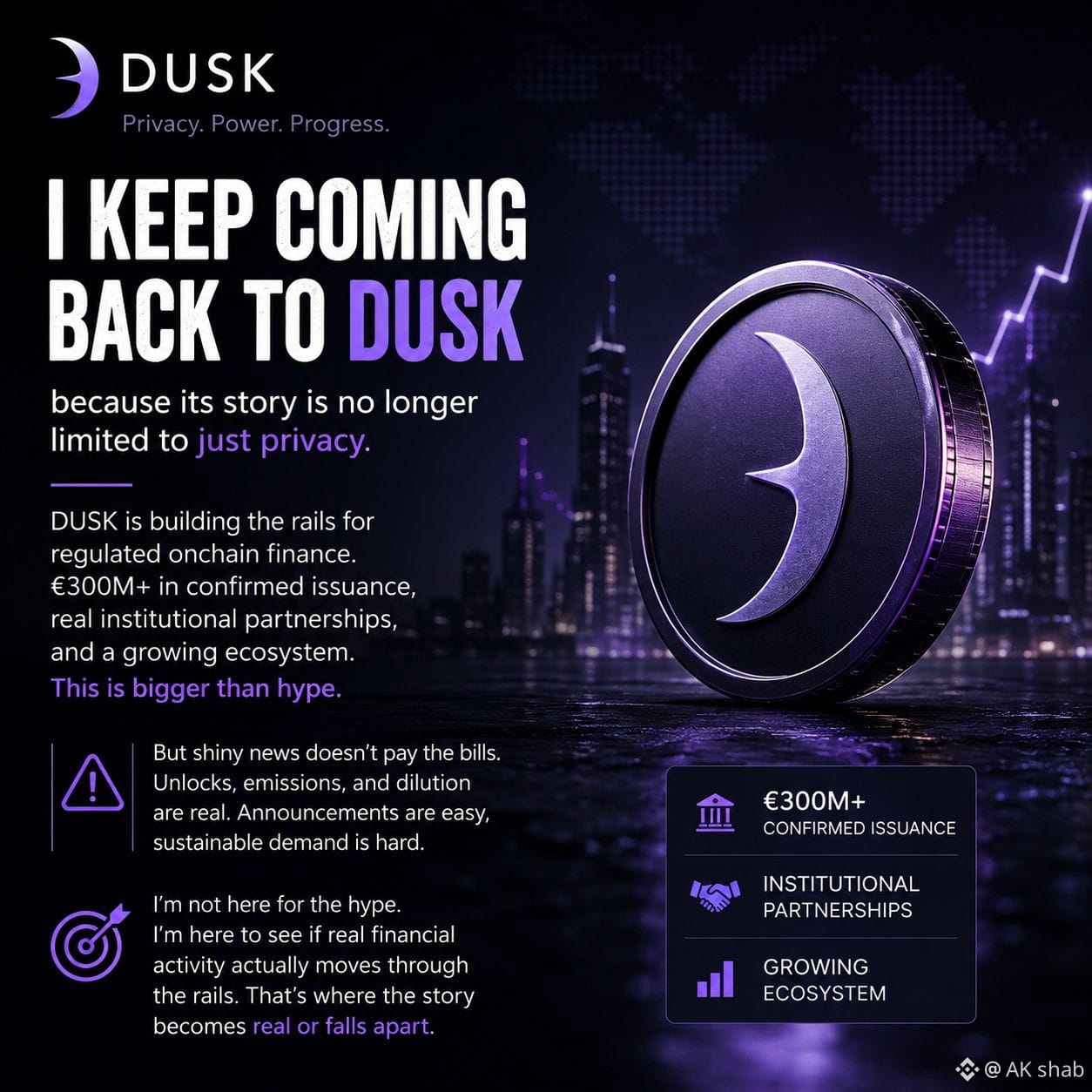
I keep coming back to Dusk because its story is no longer limited to just privicy.” Dusk is now positioning itself around regulated onchain finance, with €300M+ in confirmed issuance and a growing institutional stack. But that’s exactly where I get cautious. The shiny narrative is easy; the hard part is turning partnerships and tokenized assets into real network activity, sustainable fees, and demand for DUSK. The token can be the fuel, but emissions are still a long-term sup
ply pressure. For me, the next signal isn’t another announcement—it’s whether actual financial activity starts moving through the rails. That’s where the story either becomes real or turns into smoke. can you have see anything in the Dusk privacy
who focus on him
$DUSK #dusk @Dusk
I keep coming back to Dusk because its story is no longer limited to just privicy.” Dusk is now positioning itself around regulated onchain finance, with €300M+ in confirmed issuance and a growing institutional stack. But that’s exactly where I get cautious. The shiny narrative is easy; the hard part is turning partnerships and tokenized assets into real network activity, sustainable fees, and demand for DUSK. The token can be the fuel, but emissions are still a long-term sup
ply pressure. For me, the next signal isn’t another announcement—it’s whether actual financial activity starts moving through the rails. That’s where the story either becomes real or turns into smoke. can you have see anything in the Dusk privacy
who focus on him
I keep coming back to Dusk because its story is no longer limited to just privicy.” Dusk is now positioning itself around regulated onchain finance, with €300M+ in confirmed issuance and a growing institutional stack. But that’s exactly where I get cautious. The shiny narrative is easy; the hard part is turning partnerships and tokenized assets into real network activity, sustainable fees, and demand for DUSK. The token can be the fuel, but emissions are still a long-term sup
ply pressure. For me, the next signal isn’t another announcement—it’s whether actual financial activity starts moving through the rails. That’s where the story either becomes real or turns into smoke. can you have see anything in the Dusk privacy
who focus on him
2
2
111
·
--
Bearish
Partly True
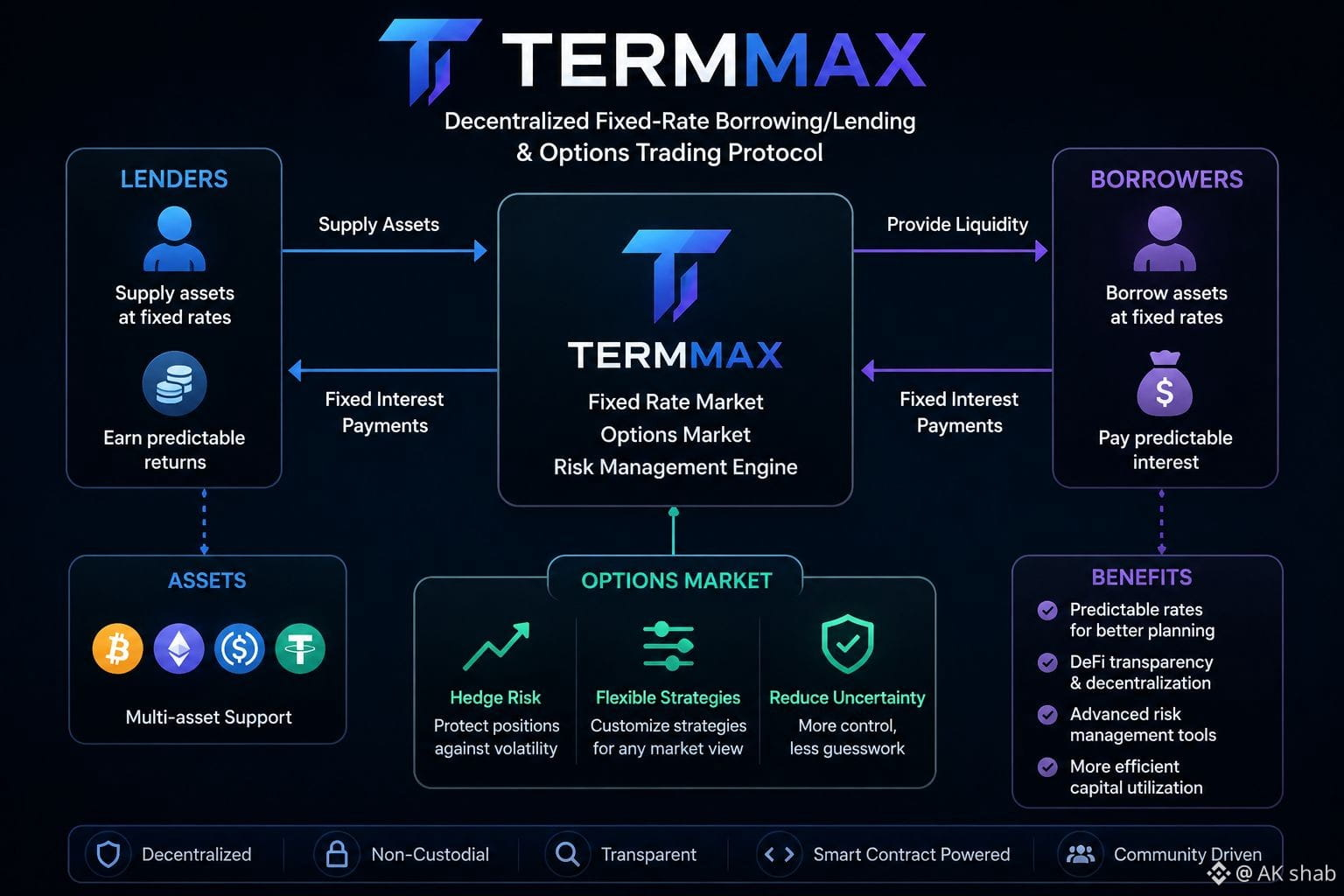
TermMax is one of those DeFi ideas that makes me stop and think about a problem people often overlook: uncertainty around borrowing and lending costs. @TermMax is building a decentralized protocol focused on fixed-rate borrowing and lending alongside options trading, which creates a more structured way to approach DeFi positions.
What stands out to me is the focus on fixed rates. In a market where floating rates can move quickly, having a clearer borrowing or lending cost could make planning strategies much easier. That becomes even more interesting when options are part of the same framework, because users can think beyond simply supplying or borrowing assets and explore more defined strategies.
I also think the broader concept matters. DeFi has grown around flexibility, but flexibility without predictability can make risk management difficult. A protocol like TermMax is trying to bring more structure into that equation without leaving the decentralized model behind.
I’m still watching how the ecosystem develops and, more importantly, how real users choose to use these tools as markets evolve. The technology is interesting, but adoption will ultimately be the real test.
What do you think matters more for the next stage of DeFi: flexible rates, predictable rates, or having both in one protocol?
#termmax @termmax
TermMax is one of those DeFi ideas that makes me stop and think about a problem people often overlook: uncertainty around borrowing and lending costs. @TermMax is building a decentralized protocol focused on fixed-rate borrowing and lending alongside options trading, which creates a more structured way to approach DeFi positions.
What stands out to me is the focus on fixed rates. In a market where floating rates can move quickly, having a clearer borrowing or lending cost could make planning strategies much easier. That becomes even more interesting when options are part of the same framework, because users can think beyond simply supplying or borrowing assets and explore more defined strategies.
I also think the broader concept matters. DeFi has grown around flexibility, but flexibility without predictability can make risk management difficult. A protocol like TermMax is trying to bring more structure into that equation without leaving the decentralized model behind.
I’m still watching how the ecosystem develops and, more importantly, how real users choose to use these tools as markets evolve. The technology is interesting, but adoption will ultimately be the real test.
What do you think matters more for the next stage of DeFi: flexible rates, predictable rates, or having both in one protocol?
#termmax @TermMax
What stands out to me is the focus on fixed rates. In a market where floating rates can move quickly, having a clearer borrowing or lending cost could make planning strategies much easier. That becomes even more interesting when options are part of the same framework, because users can think beyond simply supplying or borrowing assets and explore more defined strategies.
I also think the broader concept matters. DeFi has grown around flexibility, but flexibility without predictability can make risk management difficult. A protocol like TermMax is trying to bring more structure into that equation without leaving the decentralized model behind.
I’m still watching how the ecosystem develops and, more importantly, how real users choose to use these tools as markets evolve. The technology is interesting, but adoption will ultimately be the real test.
What do you think matters more for the next stage of DeFi: flexible rates, predictable rates, or having both in one protocol?
#termmax @TermMax
5
5
272
·
--
Verified
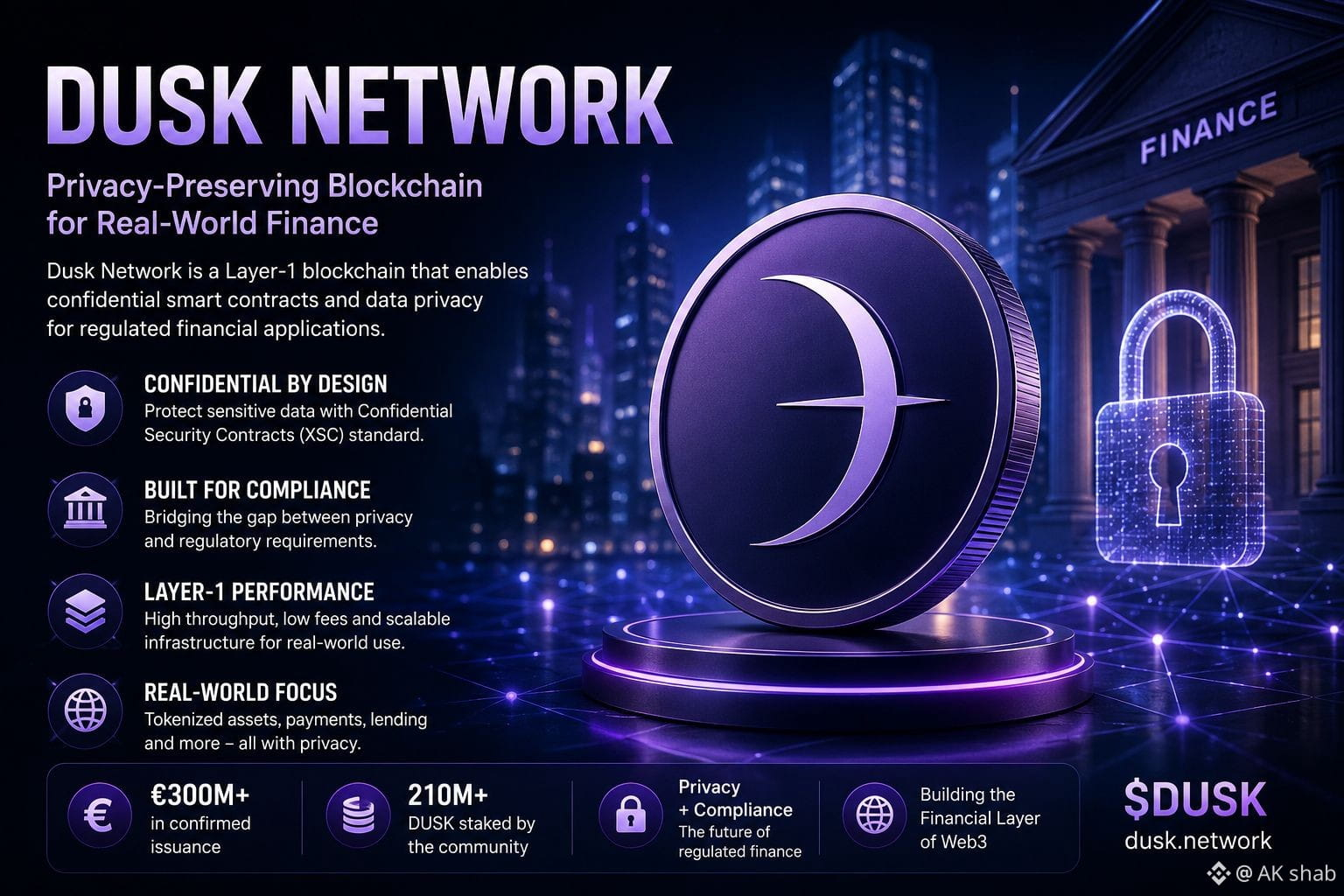
#dusk @Dusk_Foundation $DUSK Network keeps making me think about how different the next phase of crypto could look if financial markets actually move onchain. Dusk isn’t chasing the usual narrative. It is building a Layer-1 focused on regulated financial applications, with confidential smart contracts, zero-knowledge technology and selective disclosure at the center of the design. That matters because institutions don’t necessarily want everything exposed on a public ledger. They need privacy, but they also need compliance, transparency where required, and predictable settlement. Dusk is trying to sit in that uncomfortable middle ground. What catches my attention most is the project’s push toward tokenized real-world financial assets and regulated markets. If that turns into real issuance, trading and settlement, Dusk could have a much stronger use case than another blockchain simply competing for liquidity. But I’m not willing to buy the story just because the story sounds good. Crypto is full of projects with impressive partnerships, beautiful roadmaps and big promises that never became meaningful network activity. The real question for Dusk is simple: can the technology attract sustained users and financial volume? I’m watching transaction activity, adoption, ecosystem growth and actual demand for $DUSK. Those numbers matter more to me than another headline. Dusk has an interesting thesis. Now it needs to prove that the market actually needs what it is building.
#dusk @Dusk $DUSK Network keeps making me think about how different the next phase of crypto could look if financial markets actually move onchain. Dusk isn’t chasing the usual narrative. It is building a Layer-1 focused on regulated financial applications, with confidential smart contracts, zero-knowledge technology and selective disclosure at the center of the design. That matters because institutions don’t necessarily want everything exposed on a public ledger. They need privacy, but they also need compliance, transparency where required, and predictable settlement. Dusk is trying to sit in that uncomfortable middle ground. What catches my attention most is the project’s push toward tokenized real-world financial assets and regulated markets. If that turns into real issuance, trading and settlement, Dusk could have a much stronger use case than another blockchain simply competing for liquidity. But I’m not willing to buy the story just because the story sounds good. Crypto is full of projects with impressive partnerships, beautiful roadmaps and big promises that never became meaningful network activity. The real question for Dusk is simple: can the technology attract sustained users and financial volume? I’m watching transaction activity, adoption, ecosystem growth and actual demand for $DUSK . Those numbers matter more to me than another headline. Dusk has an interesting thesis. Now it needs to prove that the market actually needs what it is building.
7
6
752
·
--
Bullish
Verified
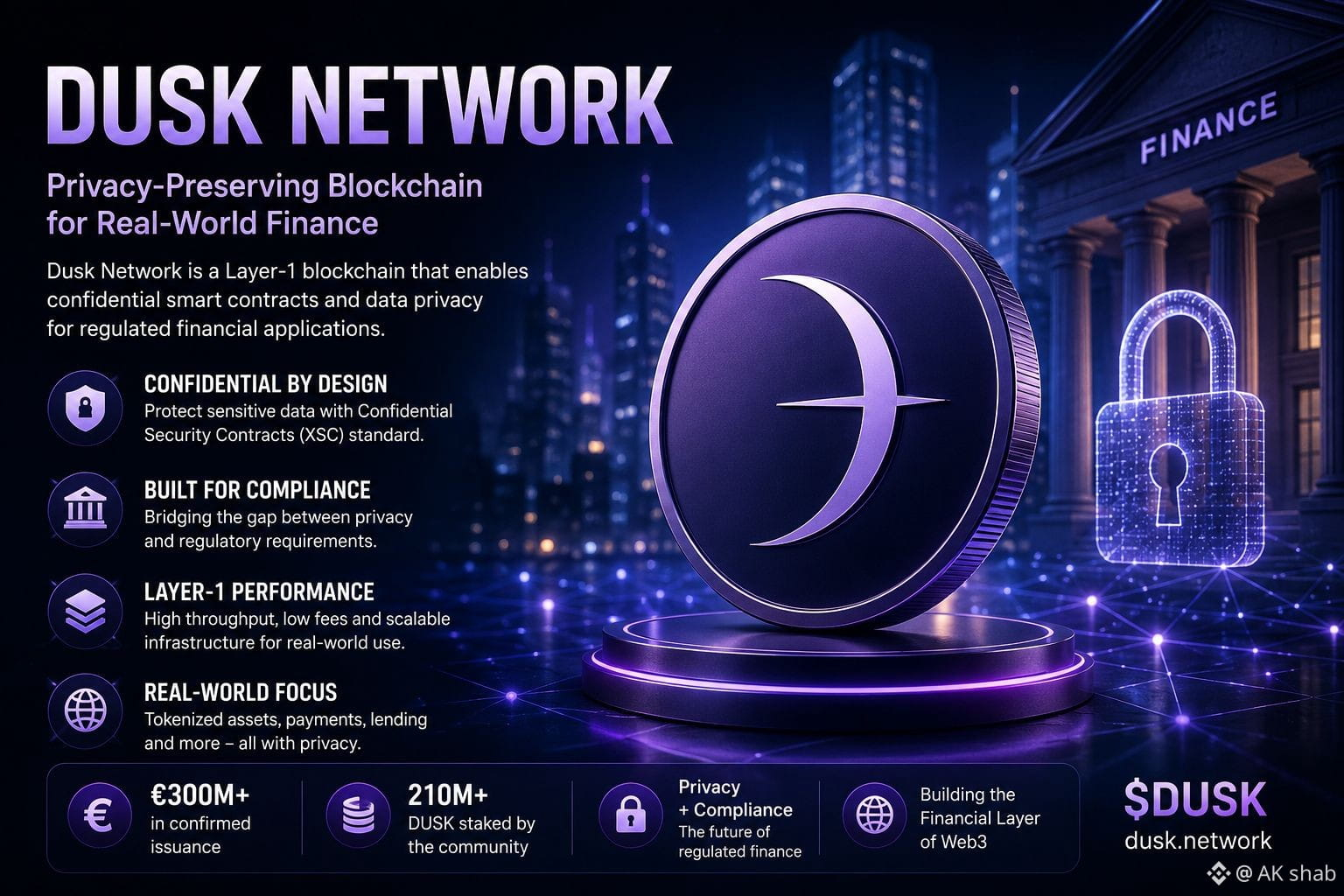
$DUSK Network is one of those projects I keep coming back to because the problem it is tackling feels bigger than another DeFi narrative. Dusk is building a Layer-1 around privacy and compliance, aiming to make financial applications work with sensitive data without simply putting everything on a public ledger.
What interests me most is the Confidential Security Contract approach. The idea is simple enough to understand: financial activity can remain private while still supporting the transparency and rules that regulated markets demand. That balance is difficult, and I think it is where Dusk has a genuinely interesting angle.
But I’m not looking at Dusk through rose-colored glasses. A strong technology story is only the beginning. The real test is whether institutions, issuers, developers and users actually choose to build and transact on the network. Announcements can create attention, but sustained usage creates value.
That’s the part I’m watching closely.
If Dusk can turn privacy, compliance and real-world financial infrastructure into actual network activity, the project could become much more interesting than its current market narrative suggests. But if adoption stays ahead only in presentations and headlines, the token story becomes much harder to justify.
For me, $DUSK is a project to watch for execution, not hype. The technology may be the engine, but real adoption is what decides whether it actually moves#dusk $DUSK #dusk
{spot}(DUSKUSDT)
{spot}(ALLOUSDT)
$DUSK Network is one of those projects I keep coming back to because the problem it is tackling feels bigger than another DeFi narrative. Dusk is building a Layer-1 around privacy and compliance, aiming to make financial applications work with sensitive data without simply putting everything on a public ledger.
What interests me most is the Confidential Security Contract approach. The idea is simple enough to understand: financial activity can remain private while still supporting the transparency and rules that regulated markets demand. That balance is difficult, and I think it is where Dusk has a genuinely interesting angle.
But I’m not looking at Dusk through rose-colored glasses. A strong technology story is only the beginning. The real test is whether institutions, issuers, developers and users actually choose to build and transact on the network. Announcements can create attention, but sustained usage creates value.
That’s the part I’m watching closely.
If Dusk can turn privacy, compliance and real-world financial infrastructure into actual network activity, the project could become much more interesting than its current market narrative suggests. But if adoption stays ahead only in presentations and headlines, the token story becomes much harder to justify.
For me, $DUSK is a project to watch for execution, not hype. The technology may be the engine, but real adoption is what decides whether it actually moves#dusk $DUSK #dusk
What interests me most is the Confidential Security Contract approach. The idea is simple enough to understand: financial activity can remain private while still supporting the transparency and rules that regulated markets demand. That balance is difficult, and I think it is where Dusk has a genuinely interesting angle.
But I’m not looking at Dusk through rose-colored glasses. A strong technology story is only the beginning. The real test is whether institutions, issuers, developers and users actually choose to build and transact on the network. Announcements can create attention, but sustained usage creates value.
That’s the part I’m watching closely.
If Dusk can turn privacy, compliance and real-world financial infrastructure into actual network activity, the project could become much more interesting than its current market narrative suggests. But if adoption stays ahead only in presentations and headlines, the token story becomes much harder to justify.
For me, $DUSK is a project to watch for execution, not hype. The technology may be the engine, but real adoption is what decides whether it actually moves#dusk $DUSK #dusk
9
7
472
·
--
Bullish
TermMax is an interesting DeFi idea because it focuses on something markets rarely give you for free: certainty.
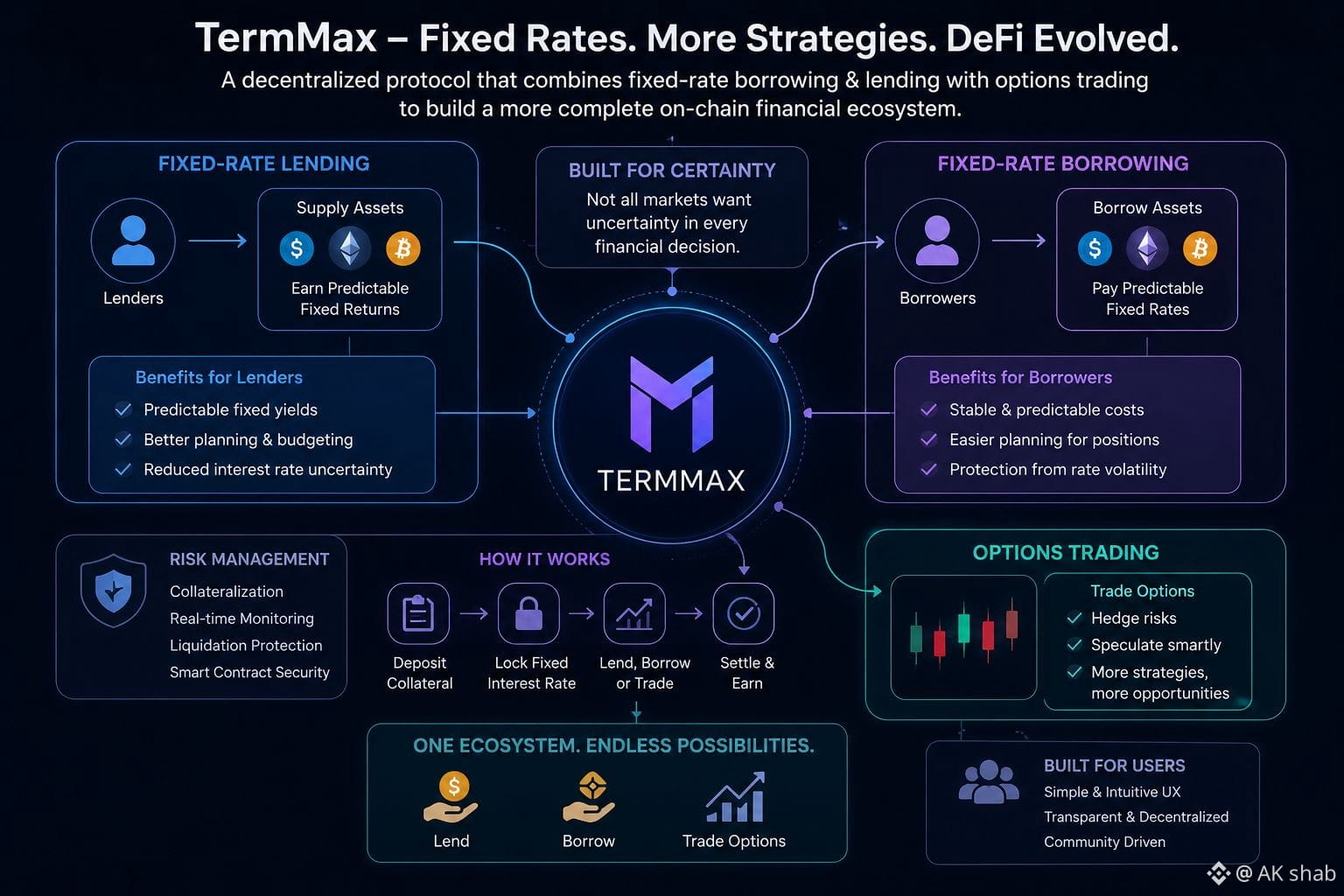
@TermMax combines decentralized fixed-rate borrowing and lending with options trading, creating a framework where users can think beyond constantly changing floating rates. For borrowers, fixed rates can make costs easier to understand. For lenders, they can offer a clearer structure for planning returns.
The options component is what makes the protocol even more interesting to me. Instead of treating lending, borrowing, and market strategies as completely separate activities, TermMax is bringing them into one broader financial ecosystem.
That doesn’t automatically make the model successful. DeFi still comes down to liquidity, risk controls, user experience, and whether real users find the product useful.
But the problem TermMax is targeting is real: not every market participant wants uncertainty built into every financial decision.
If fixed-rate DeFi keeps gaining relevance, @TermMax is a project I’ll be watching closely.
#termmax @termmax
$RE
{spot}(REUSDT)
$SKYAI
{alpha}(560x92aa03137385f18539301349dcfc9ebc923ffb10)
$BB
{spot}(BBUSDT)
TermMax is an interesting DeFi idea because it focuses on something markets rarely give you for free: certainty.
@TermMax combines decentralized fixed-rate borrowing and lending with options trading, creating a framework where users can think beyond constantly changing floating rates. For borrowers, fixed rates can make costs easier to understand. For lenders, they can offer a clearer structure for planning returns.
The options component is what makes the protocol even more interesting to me. Instead of treating lending, borrowing, and market strategies as completely separate activities, TermMax is bringing them into one broader financial ecosystem.
That doesn’t automatically make the model successful. DeFi still comes down to liquidity, risk controls, user experience, and whether real users find the product useful.
But the problem TermMax is targeting is real: not every market participant wants uncertainty built into every financial decision.
If fixed-rate DeFi keeps gaining relevance, @TermMax is a project I’ll be watching closely.
#termmax @TermMax
$RE
$SKYAI
$BB
@TermMax combines decentralized fixed-rate borrowing and lending with options trading, creating a framework where users can think beyond constantly changing floating rates. For borrowers, fixed rates can make costs easier to understand. For lenders, they can offer a clearer structure for planning returns.
The options component is what makes the protocol even more interesting to me. Instead of treating lending, borrowing, and market strategies as completely separate activities, TermMax is bringing them into one broader financial ecosystem.
That doesn’t automatically make the model successful. DeFi still comes down to liquidity, risk controls, user experience, and whether real users find the product useful.
But the problem TermMax is targeting is real: not every market participant wants uncertainty built into every financial decision.
If fixed-rate DeFi keeps gaining relevance, @TermMax is a project I’ll be watching closely.
#termmax @TermMax
$RE
$SKYAI
$BB
8
6
1.5k
·
--
Bullish
Verified
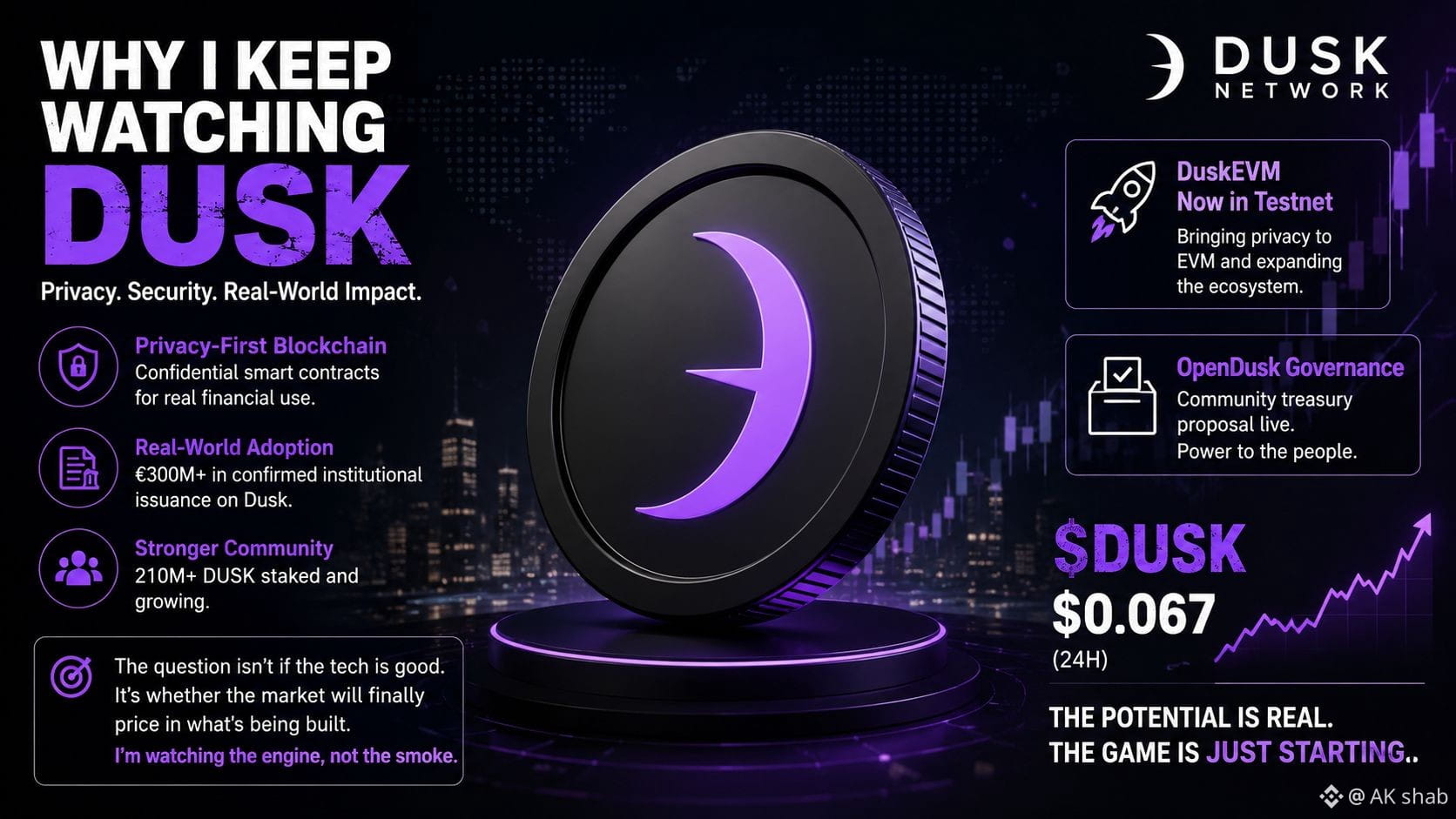
I keep coming back to @DuskFoundation because the story is getting interesting, but I’m still looking for the part the market can’t fake. Dusk just moved DuskEVM into testnet, while OpenDusk is putting a community treasury proposal in front of voters. That sounds bullish on the surface. But markets don’t pay for roadmaps forever. They pay when real usage starts creating real demand for $DUSK.
The risk I’m watching is simple: RWA headlines can become a shiny coat of paint if issuance, settlement and users don’t translate into token value. DUSK also has a long emission schedule, so supply pressure still matters. The chart can look quiet while the fundamentals fight underneath.
For me, this is no longer about believing the narrative. I want to see the network earn its valuation. If Dusk turns regulated finance into actual on-chain activity, the market may eventually notice. Until then, I’m watching the engine—not the smoke. $DUSK #dusk @Dusk_Foundation
{spot}(DUSKUSDT)
$ALLO
{spot}(ALLOUSDT)
I keep coming back to @DuskFoundation because the story is getting interesting, but I’m still looking for the part the market can’t fake. Dusk just moved DuskEVM into testnet, while OpenDusk is putting a community treasury proposal in front of voters. That sounds bullish on the surface. But markets don’t pay for roadmaps forever. They pay when real usage starts creating real demand for $DUSK .
The risk I’m watching is simple: RWA headlines can become a shiny coat of paint if issuance, settlement and users don’t translate into token value. DUSK also has a long emission schedule, so supply pressure still matters. The chart can look quiet while the fundamentals fight underneath.
For me, this is no longer about believing the narrative. I want to see the network earn its valuation. If Dusk turns regulated finance into actual on-chain activity, the market may eventually notice. Until then, I’m watching the engine—not the smoke. $DUSK #dusk @Dusk
$ALLO
The risk I’m watching is simple: RWA headlines can become a shiny coat of paint if issuance, settlement and users don’t translate into token value. DUSK also has a long emission schedule, so supply pressure still matters. The chart can look quiet while the fundamentals fight underneath.
For me, this is no longer about believing the narrative. I want to see the network earn its valuation. If Dusk turns regulated finance into actual on-chain activity, the market may eventually notice. Until then, I’m watching the engine—not the smoke. $DUSK #dusk @Dusk
$ALLO
4
4
1.5k
·
--
Bullish
Verified
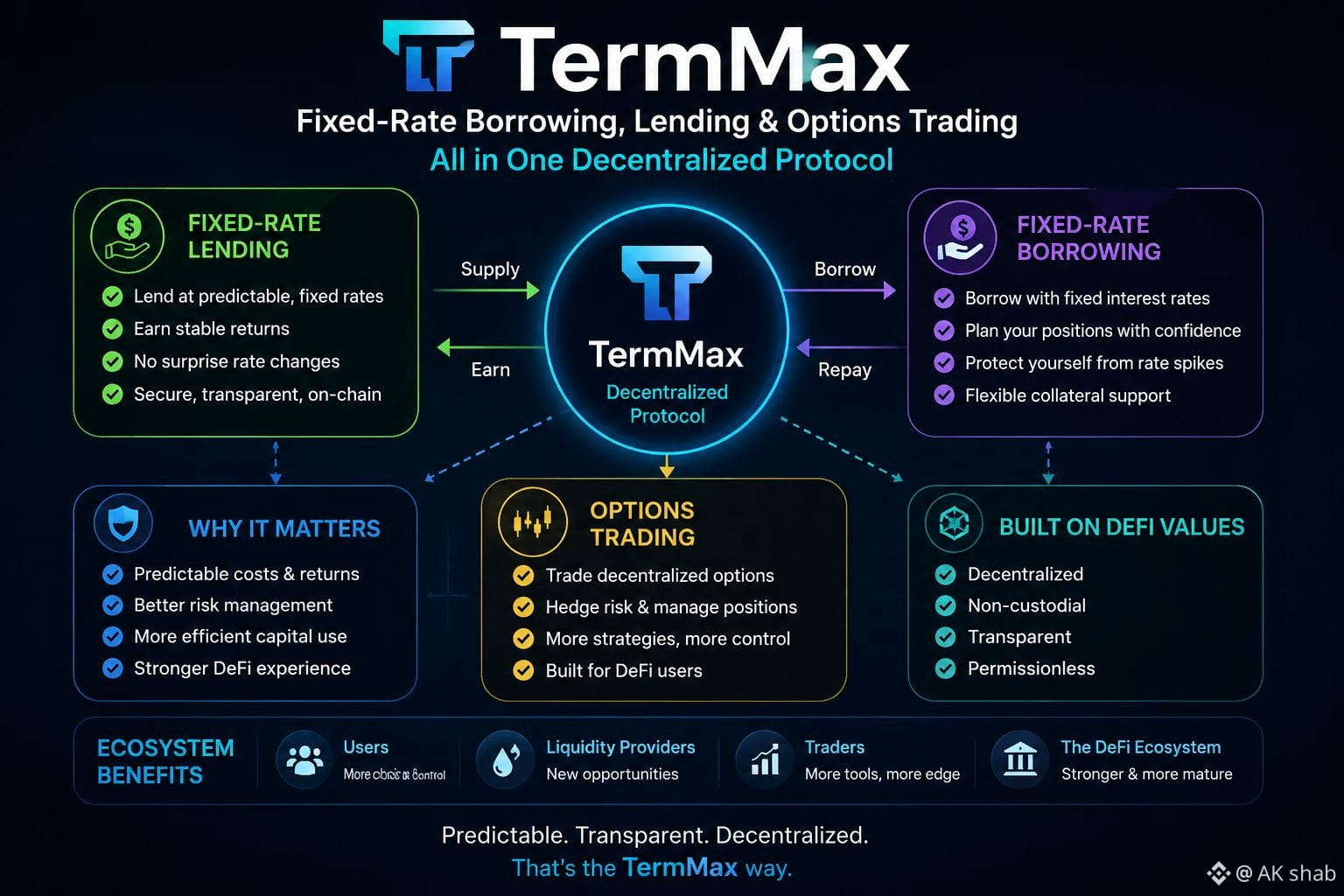
TermMax is the kind of DeFi project that makes me stop and look beyond the usual yield and leverage narrative. @TermMax is building a decentralized protocol focused on fixed-rate borrowing and lending, while also bringing options trading into the same picture.
What interests me here is the focus on predictability. In DeFi, floating rates can change quickly, making it difficult to plan borrowing costs or lending returns with confidence. A fixed-rate approach could make financial decisions more structured, especially for users who care about knowing their costs in advance rather than constantly watching market rates.
The options side adds another layer. Instead of treating lending, borrowing, and derivatives as completely separate activities, TermMax is creating infrastructure where these financial tools can work within one decentralized ecosystem.
Of course, the real question for me is adoption. A good protocol design only becomes meaningful when people actually use it, liquidity develops, and the products prove useful through different market conditions.
That is what I’ll be watching with TermMax—not just the narrative, but whether the technology can turn into genuine utility for DeFi users.
#termmax @termmax
$ACE
{spot}(ACEUSDT)
$BTW
{future}(BTWUSDT)
$ACM
{spot}(ACMUSDT)
TermMax is the kind of DeFi project that makes me stop and look beyond the usual yield and leverage narrative. @TermMax is building a decentralized protocol focused on fixed-rate borrowing and lending, while also bringing options trading into the same picture.
What interests me here is the focus on predictability. In DeFi, floating rates can change quickly, making it difficult to plan borrowing costs or lending returns with confidence. A fixed-rate approach could make financial decisions more structured, especially for users who care about knowing their costs in advance rather than constantly watching market rates.
The options side adds another layer. Instead of treating lending, borrowing, and derivatives as completely separate activities, TermMax is creating infrastructure where these financial tools can work within one decentralized ecosystem.
Of course, the real question for me is adoption. A good protocol design only becomes meaningful when people actually use it, liquidity develops, and the products prove useful through different market conditions.
That is what I’ll be watching with TermMax—not just the narrative, but whether the technology can turn into genuine utility for DeFi users.
#termmax @TermMax
$ACE
$BTW
$ACM
What interests me here is the focus on predictability. In DeFi, floating rates can change quickly, making it difficult to plan borrowing costs or lending returns with confidence. A fixed-rate approach could make financial decisions more structured, especially for users who care about knowing their costs in advance rather than constantly watching market rates.
The options side adds another layer. Instead of treating lending, borrowing, and derivatives as completely separate activities, TermMax is creating infrastructure where these financial tools can work within one decentralized ecosystem.
Of course, the real question for me is adoption. A good protocol design only becomes meaningful when people actually use it, liquidity develops, and the products prove useful through different market conditions.
That is what I’ll be watching with TermMax—not just the narrative, but whether the technology can turn into genuine utility for DeFi users.
#termmax @TermMax
$ACE
$BTW
$ACM
5
2
574
·
--
Bullish
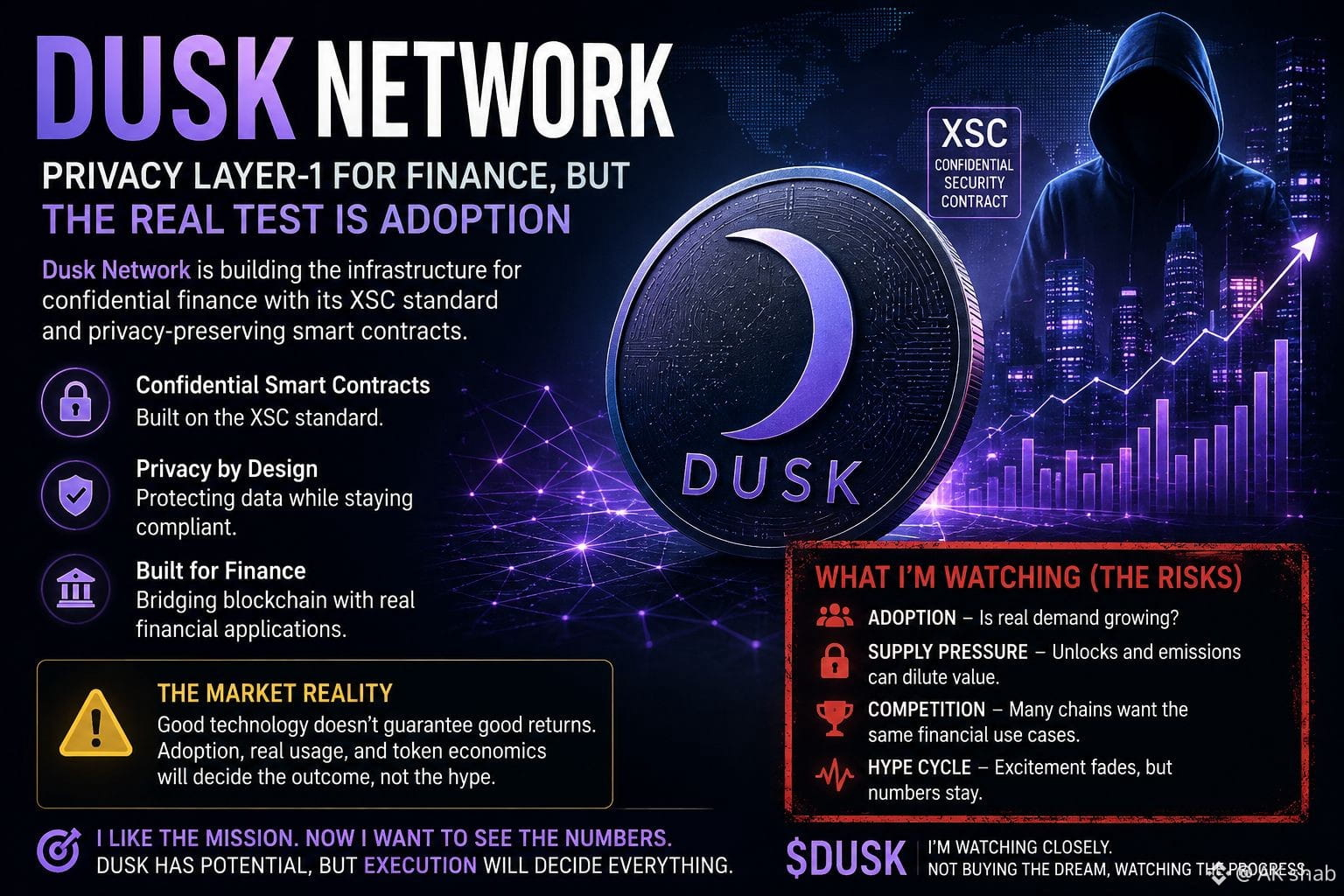
@Dusk_Foundation #dusk $DUSK
Dusk Network is one of those projects I keep watching because the idea behind it feels bigger than the usual crypto hype. It is building a privacy-focused Layer 1 for financial applications, aiming to let businesses use blockchain while keeping sensitive information protected. That sounds great on paper, but this is where I start looking beyond the shiny narrative.
For me, the real test is not how impressive the technology sounds. It is whether Dusk can turn that technology into actual usage, actual users, and actual demand for $DUSK. Financial markets are not easy to break into, and privacy alone will not guarantee adoption. The project still has to prove that companies genuinely need what it is building and are willing to use it at scale.
I also think token economics deserve attention. A promising network can still face pressure when supply, incentives, and market expectations move faster than organic demand. That is the part traders often ignore when the story gets exciting.
What makes Dusk interesting to me is that it is chasing a real problem rather than creating another copy-paste blockchain narrative. But I do not want to buy the dream alone. I want to see the dream turning into measurable activity.
For now, I am watching Dusk closely. The technology may open the door, but adoption will decide whether the market stays inside.
$ALLO
{spot}(ALLOUSDT)
$LAB
{future}(LABUSDT)
@Dusk #dusk $DUSK
Dusk Network is one of those projects I keep watching because the idea behind it feels bigger than the usual crypto hype. It is building a privacy-focused Layer 1 for financial applications, aiming to let businesses use blockchain while keeping sensitive information protected. That sounds great on paper, but this is where I start looking beyond the shiny narrative.
For me, the real test is not how impressive the technology sounds. It is whether Dusk can turn that technology into actual usage, actual users, and actual demand for $DUSK . Financial markets are not easy to break into, and privacy alone will not guarantee adoption. The project still has to prove that companies genuinely need what it is building and are willing to use it at scale.
I also think token economics deserve attention. A promising network can still face pressure when supply, incentives, and market expectations move faster than organic demand. That is the part traders often ignore when the story gets exciting.
What makes Dusk interesting to me is that it is chasing a real problem rather than creating another copy-paste blockchain narrative. But I do not want to buy the dream alone. I want to see the dream turning into measurable activity.
For now, I am watching Dusk closely. The technology may open the door, but adoption will decide whether the market stays inside.
$ALLO
$LAB
Dusk Network is one of those projects I keep watching because the idea behind it feels bigger than the usual crypto hype. It is building a privacy-focused Layer 1 for financial applications, aiming to let businesses use blockchain while keeping sensitive information protected. That sounds great on paper, but this is where I start looking beyond the shiny narrative.
For me, the real test is not how impressive the technology sounds. It is whether Dusk can turn that technology into actual usage, actual users, and actual demand for $DUSK . Financial markets are not easy to break into, and privacy alone will not guarantee adoption. The project still has to prove that companies genuinely need what it is building and are willing to use it at scale.
I also think token economics deserve attention. A promising network can still face pressure when supply, incentives, and market expectations move faster than organic demand. That is the part traders often ignore when the story gets exciting.
What makes Dusk interesting to me is that it is chasing a real problem rather than creating another copy-paste blockchain narrative. But I do not want to buy the dream alone. I want to see the dream turning into measurable activity.
For now, I am watching Dusk closely. The technology may open the door, but adoption will decide whether the market stays inside.
$ALLO
$LAB
8
7
1.4k
·
--
Bullish
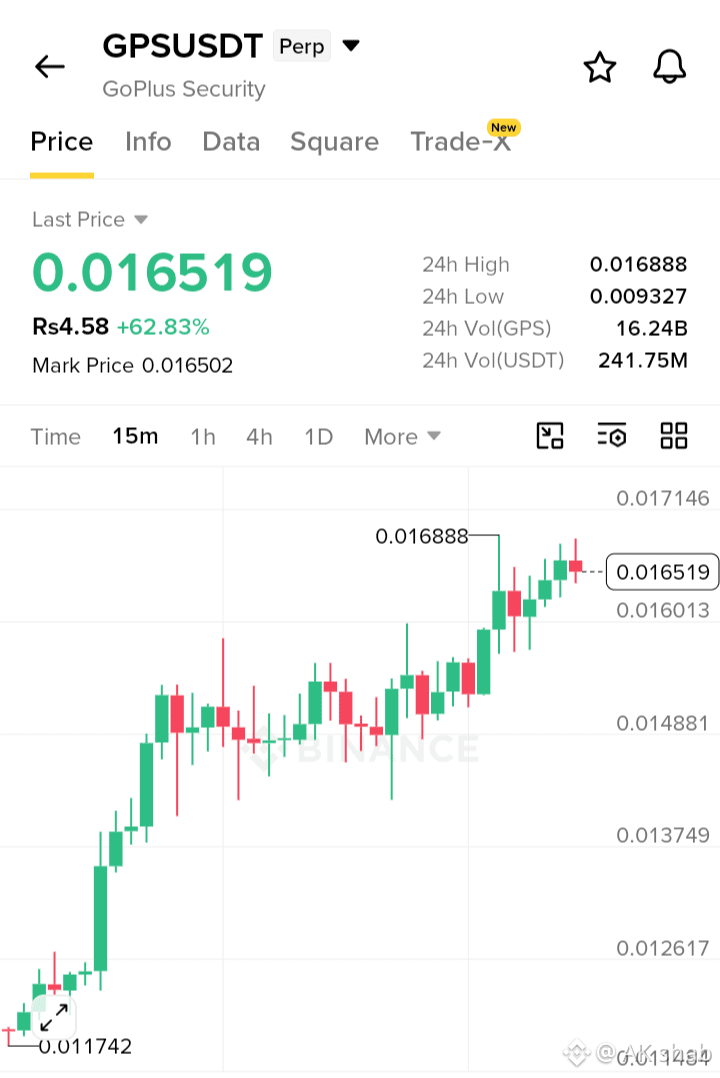
$GPS
USDT is moving with serious momentum. A clean climb from the lower range has pushed price toward 0.01688. The next move could get explosive if buyers reclaim the recent high. Watching this one closely.
#GPS #GPSUSDT
{spot}(GPSUSDT)
#ALPHA
#HotTrends
#altcoins
$GPS
USDT is moving with serious momentum. A clean climb from the lower range has pushed price toward 0.01688. The next move could get explosive if buyers reclaim the recent high. Watching this one closely.
#GPS #GPSUSDT
#ALPHA
#HotTrends
#altcoins
USDT is moving with serious momentum. A clean climb from the lower range has pushed price toward 0.01688. The next move could get explosive if buyers reclaim the recent high. Watching this one closely.
#GPS #GPSUSDT
#ALPHA
#HotTrends
#altcoins
330
·
--
Bullish
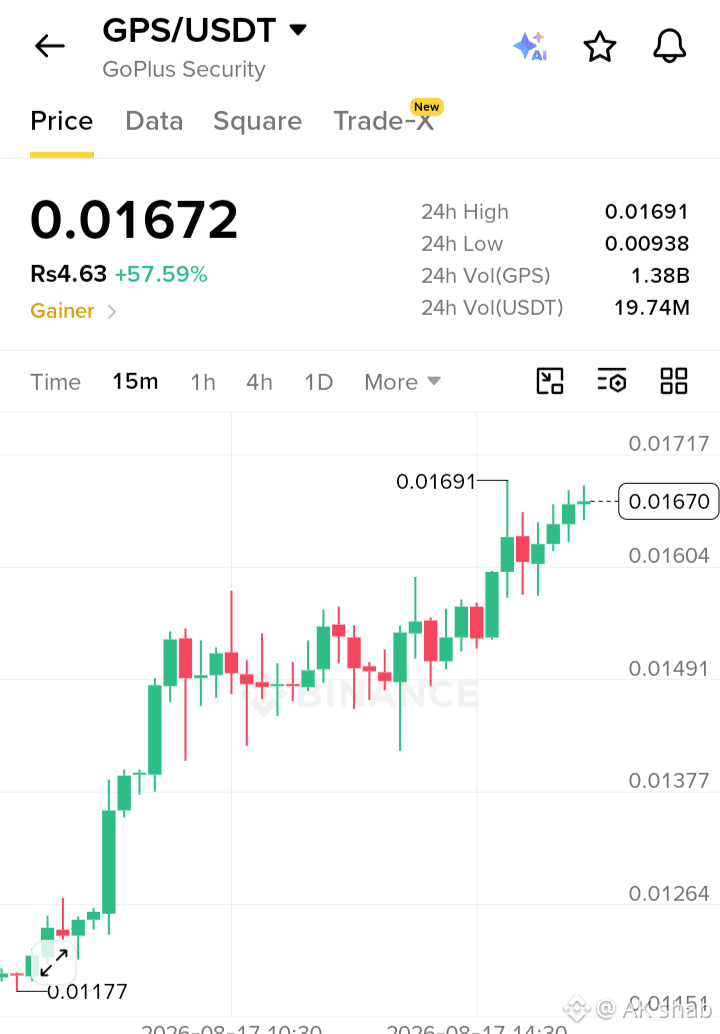
$GPS /USDT is moving with serious momentum. After breaking through the recent range, buyers are pushing price toward the 0.01691 high. The candles are still holding strong near the top. If this momentum continues, the next breakout could get interesting.
{spot}(GPSUSDT)
#CardanoSplitsDijkstraUpgradeIntoTwoPhases #SECCancelsCryptoRulemakingMeeting #CMESeptemberHikeOddsFallTo30.6% #SP500TopsRecord7800 #SECReviewsSix3xLeveragedCommodityETFs
$GPS /USDT is moving with serious momentum. After breaking through the recent range, buyers are pushing price toward the 0.01691 high. The candles are still holding strong near the top. If this momentum continues, the next breakout could get interesting.
#CardanoSplitsDijkstraUpgradeIntoTwoPhases #SECCancelsCryptoRulemakingMeeting #CMESeptemberHikeOddsFallTo30.6% #SP500TopsRecord7800 #SECReviewsSix3xLeveragedCommodityETFs
#CardanoSplitsDijkstraUpgradeIntoTwoPhases #SECCancelsCryptoRulemakingMeeting #CMESeptemberHikeOddsFallTo30.6% #SP500TopsRecord7800 #SECReviewsSix3xLeveragedCommodityETFs
345
·
--
Bullish
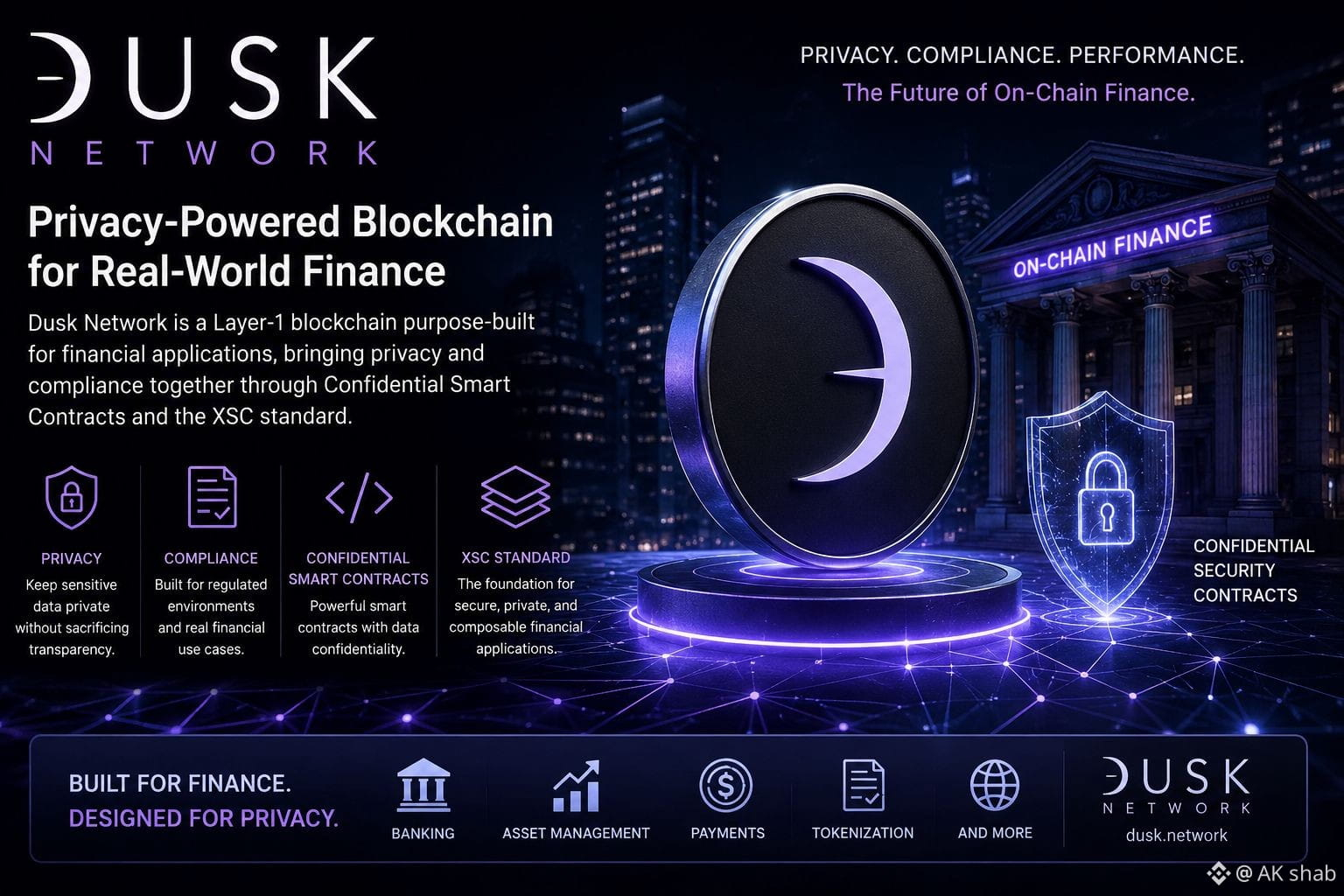
@Dusk_Foundation #dusk $DUSK
Dusk Network keeps catching my attention because it is not trying to build another blockchain just for the sake of it. The project is focused on a problem that could become increasingly important as finance moves on-chain: how to use blockchain while keeping sensitive financial information private.
Dusk is building a Layer-1 designed around privacy, with confidential smart contracts and the XSC standard at the center of its vision. That gives the project a different angle from chains mainly competing on speed, fees, or hype.
What I find interesting is the bigger picture. Financial institutions cannot simply put every piece of sensitive data into public view. If blockchain is going to become serious financial infrastructure, privacy and compliance have to work together.
But I’m also keeping my expectations realistic. Strong technology alone doesn’t guarantee adoption. Dusk still needs developers, real applications, users, and meaningful network activity to prove that the vision can translate into demand.
For me, Dusk is less about chasing the next shiny narrative and more about watching whether privacy becomes a genuine requirement for on-chain finance. The technology may be the foundation, but real usage will decide how far this project can go.
{spot}(DUSKUSDT)
@Dusk #dusk $DUSK
Dusk Network keeps catching my attention because it is not trying to build another blockchain just for the sake of it. The project is focused on a problem that could become increasingly important as finance moves on-chain: how to use blockchain while keeping sensitive financial information private.
Dusk is building a Layer-1 designed around privacy, with confidential smart contracts and the XSC standard at the center of its vision. That gives the project a different angle from chains mainly competing on speed, fees, or hype.
What I find interesting is the bigger picture. Financial institutions cannot simply put every piece of sensitive data into public view. If blockchain is going to become serious financial infrastructure, privacy and compliance have to work together.
But I’m also keeping my expectations realistic. Strong technology alone doesn’t guarantee adoption. Dusk still needs developers, real applications, users, and meaningful network activity to prove that the vision can translate into demand.
For me, Dusk is less about chasing the next shiny narrative and more about watching whether privacy becomes a genuine requirement for on-chain finance. The technology may be the foundation, but real usage will decide how far this project can go.
Dusk Network keeps catching my attention because it is not trying to build another blockchain just for the sake of it. The project is focused on a problem that could become increasingly important as finance moves on-chain: how to use blockchain while keeping sensitive financial information private.
Dusk is building a Layer-1 designed around privacy, with confidential smart contracts and the XSC standard at the center of its vision. That gives the project a different angle from chains mainly competing on speed, fees, or hype.
What I find interesting is the bigger picture. Financial institutions cannot simply put every piece of sensitive data into public view. If blockchain is going to become serious financial infrastructure, privacy and compliance have to work together.
But I’m also keeping my expectations realistic. Strong technology alone doesn’t guarantee adoption. Dusk still needs developers, real applications, users, and meaningful network activity to prove that the vision can translate into demand.
For me, Dusk is less about chasing the next shiny narrative and more about watching whether privacy becomes a genuine requirement for on-chain finance. The technology may be the foundation, but real usage will decide how far this project can go.
6
3
386
·
--
Bullish
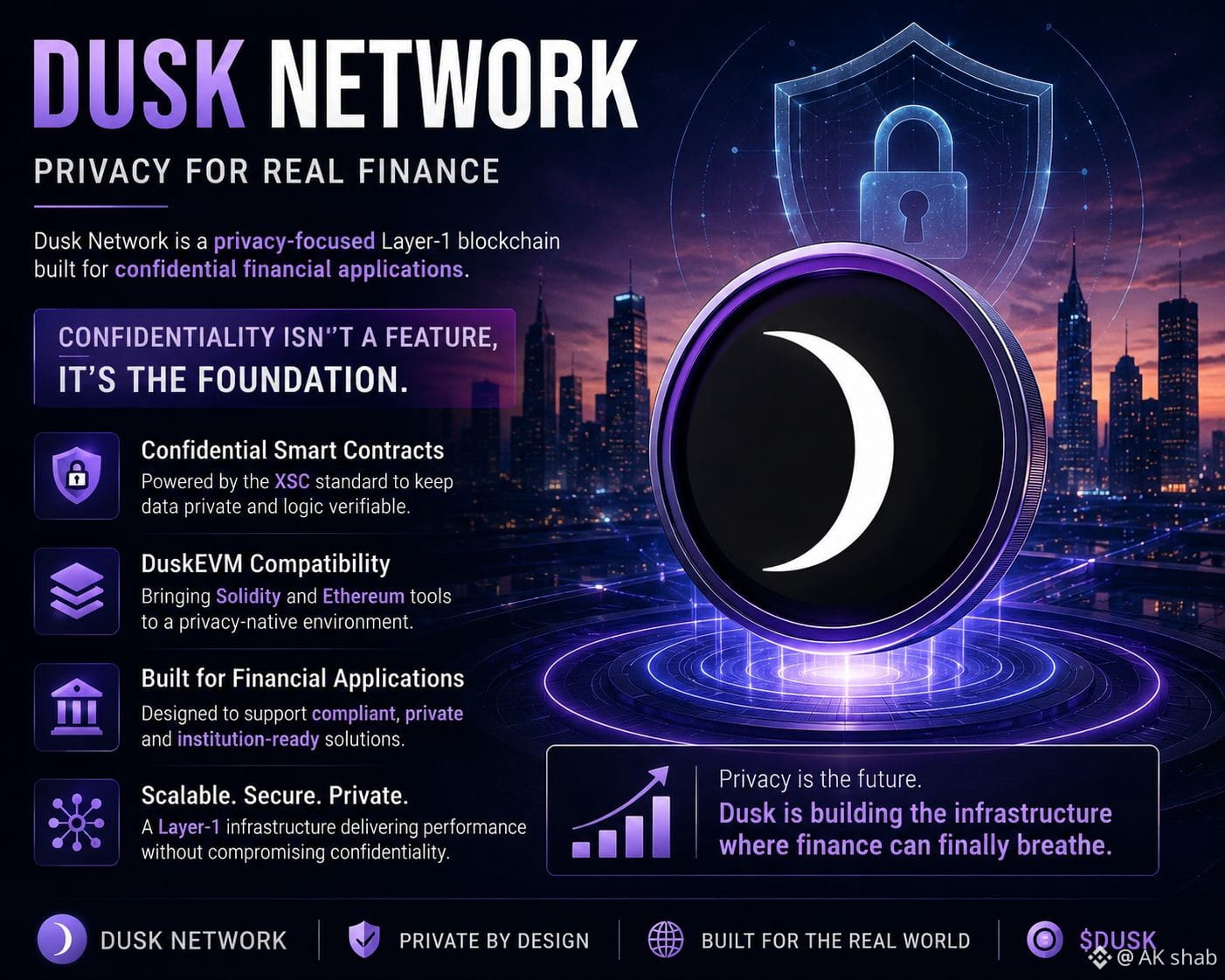
Dusk Network keeps standing out to me because it is building around a problem that feels increasingly important: financial applications need privacy without giving up the benefits of blockchain. Instead of treating transparency as the only answer, Dusk is focused on confidential smart contracts and privacy-preserving infrastructure for regulated finance. What interests me most is the practical side of the project. If Dusk can bring developers, financial applications and real users onto the network, the privacy narrative could become something much bigger than a headline. I’m watching the ecosystem grow, how DuskEVM attracts developers, and whether network activity turns into sustainable demand for $DUSK. The technology is interesting, but adoption is where the real story begins. For me, Dusk is not about chasing noise; it is about watching whether privacy can become useful infrastructure for the next generation of on-chain finance. @Dusk_Foundation $DUSK
{spot}(DUSKUSDT)
#dusk
Dusk Network keeps standing out to me because it is building around a problem that feels increasingly important: financial applications need privacy without giving up the benefits of blockchain. Instead of treating transparency as the only answer, Dusk is focused on confidential smart contracts and privacy-preserving infrastructure for regulated finance. What interests me most is the practical side of the project. If Dusk can bring developers, financial applications and real users onto the network, the privacy narrative could become something much bigger than a headline. I’m watching the ecosystem grow, how DuskEVM attracts developers, and whether network activity turns into sustainable demand for $DUSK . The technology is interesting, but adoption is where the real story begins. For me, Dusk is not about chasing noise; it is about watching whether privacy can become useful infrastructure for the next generation of on-chain finance. @Dusk $DUSK
#dusk
#dusk
249
·
--
Bullish
#dusk $DUSK @Dusk_Foundation Dusk is entering an interesting phase. $DUSK has a strong narrative around privacy, compliance, and real-world finance, giving it a different edge from many altcoins. If momentum returns to the market, Dusk could attract fresh attention quickly. I’m watching the chart closely for signs of a stronger breakout. @DuskFoundation #dusk$DUSK @Dusk_Foundation #COWRises55.77%In24h #LMECopperStocksFall42DaysLongestSince2014 #USToPressNationsToPickUSOrChinaAICoalition #USJulyRetailSalesFall0.6%
{future}(DUSKUSDT)
#dusk $DUSK @Dusk Dusk is entering an interesting phase. $DUSK has a strong narrative around privacy, compliance, and real-world finance, giving it a different edge from many altcoins. If momentum returns to the market, Dusk could attract fresh attention quickly. I’m watching the chart closely for signs of a stronger breakout. @DuskFoundation #dusk$DUSK @Dusk #COWRises55.77%In24h #LMECopperStocksFall42DaysLongestSince2014 #USToPressNationsToPickUSOrChinaAICoalition #USJulyRetailSalesFall0.6%
2
3
184
·
--
Bullish
#dusk $DUSK @Dusk_Foundation Dusk is quietly building where privacy meets real-world finance. @DuskFoundation is taking a different path, focusing on compliant blockchain infrastructure without sacrificing privacy. $DUSK is one project I’m keeping on my radar. The next move could be interesting. #dusk@Dusk_Foundation #PolymarketOddsIranBlockadeEndFallTo23% #BerkshireAddsToDeltaAndAlphabetHoldings #AnthropicQ2RevenueRoseOver14Fold #UkraineSaysOdesaBlackSeaPortsEffectivelyClosed
{spot}(DUSKUSDT)
#dusk $DUSK @Dusk Dusk is quietly building where privacy meets real-world finance. @DuskFoundation is taking a different path, focusing on compliant blockchain infrastructure without sacrificing privacy. $DUSK is one project I’m keeping on my radar. The next move could be interesting. #dusk@Dusk #PolymarketOddsIranBlockadeEndFallTo23% #BerkshireAddsToDeltaAndAlphabetHoldings #AnthropicQ2RevenueRoseOver14Fold #UkraineSaysOdesaBlackSeaPortsEffectivelyClosed
168
·
--
#dusk $DUSK @Dusk_Foundation Dusk is one of those projects I’m watching for the tech, not the noise. Its focus on privacy, compliance, and real-world finance gives $DUSK an interesting angle in the blockchain space. If @DuskFoundation keeps delivering, the next move could be worth watching closely. #dusk$DUSK @Dusk_Foundation #EthereumFoundationDropsPoseidonForL1 #IranRequiresPermissionToTransitHormuz #KospiEntersTechnicalBullMarket #SpaceXShortInterestFallsTo11%
{spot}(DUSKUSDT)
#dusk $DUSK @Dusk Dusk is one of those projects I’m watching for the tech, not the noise. Its focus on privacy, compliance, and real-world finance gives $DUSK an interesting angle in the blockchain space. If @DuskFoundation keeps delivering, the next move could be worth watching closely. #dusk$DUSK @Dusk #EthereumFoundationDropsPoseidonForL1 #IranRequiresPermissionToTransitHormuz #KospiEntersTechnicalBullMarket #SpaceXShortInterestFallsTo11%
162
Log in to explore more content
Join global crypto users on Binance Square
⚡️ Get latest and useful information about crypto.
💬 Trusted by the world’s largest crypto exchange.
👍 Discover real insights from verified creators.
Email / Phone number
Trending Topics
QNTRises39%
34,700 views
1,068 Discussing
🚨 QNT IS SURGING! 📈
$QNT is making a huge move today, climbing nearly 40% as buying pressure accelerates.
The rally has put Quant firmly back in the spotlight, with traders watching to see whether this momentum can continue or if a pullback comes next.
🔥 Key things to watch:
• Strong trading volume
• Momentum above recent highs
• The $100 psychological level
• Whether buyers can maintain control
Big moves bring big volatility. Stay alert and manage risk.
Are you watching $QNT? 👀
#QNT #altcoins #CryptoNews
#qntrises39% $QNT
The07
·4 Likes
·4k views
EthereumBreaksAbove$2700
3,193 views
107 Discussing
BitgetBreachForgedRequestsNotStolenKeys
32,339 views
841 Discussing