
BN注册福利
23 Posts

BN注册福利
Report
Block User
币安注册流程详解 | 新手KYC认证指南专注币安账户注册、实名认证、安全设置教程,App下载安装同步覆盖官方APK:https://download.binance.com/pack/BNApp_F0001498.apk邀请码:BNZHUCE
0 Following
1 Followers
1 Liked
Posts
·
--
安卓装币安APK卡在「未知来源」怎么办
很多人下载完APK点安装,系统弹「禁止安装未知来源应用」就卡住了,其实两步能解决:
◆ 解决方法
1. 弹窗出现时点「设置」,跳转到权限页
2. 找到当前用来打开这个APK的应用(浏览器或文件管理器),把「允许安装未知应用」开关打开
3. 返回重新点安装即可
◆ 部分品牌手机的额外步骤
· 小米:设置→应用设置→授权管理,找到对应应用授权
· 华为:设置→安全→更多安全设置,允许安装外部来源应用
下载地址:https://download.binance.com/pack/BNApp_F0001498.apk
注册:https://www.binance.com/register?ref=BNZHUCE
#币安下载 #安卓安装教程
安卓装币安APK卡在「未知来源」怎么办
很多人下载完APK点安装,系统弹「禁止安装未知来源应用」就卡住了,其实两步能解决:
◆ 解决方法
1. 弹窗出现时点「设置」,跳转到权限页
2. 找到当前用来打开这个APK的应用(浏览器或文件管理器),把「允许安装未知应用」开关打开
3. 返回重新点安装即可
◆ 部分品牌手机的额外步骤
· 小米:设置→应用设置→授权管理,找到对应应用授权
· 华为:设置→安全→更多安全设置,允许安装外部来源应用
下载地址:https://download.binance.com/pack/BNApp_F0001498.apk
注册:https://www.binance.com/register?ref=BNZHUCE
#币安下载 #安卓安装教程
很多人下载完APK点安装,系统弹「禁止安装未知来源应用」就卡住了,其实两步能解决:
◆ 解决方法
1. 弹窗出现时点「设置」,跳转到权限页
2. 找到当前用来打开这个APK的应用(浏览器或文件管理器),把「允许安装未知应用」开关打开
3. 返回重新点安装即可
◆ 部分品牌手机的额外步骤
· 小米:设置→应用设置→授权管理,找到对应应用授权
· 华为:设置→安全→更多安全设置,允许安装外部来源应用
下载地址:https://download.binance.com/pack/BNApp_F0001498.apk
注册:https://www.binance.com/register?ref=BNZHUCE
#币安下载 #安卓安装教程
·
--
📰 交易员Loracle做空PONS、CASHCAT浮亏扩大至630万美元
BlockBeats 消息,9 月 5 日,据 TradingBeats 监测,交易员 Loracle 以 3 倍杠杆做空 CASHCAT 与 PONS,空仓价值合计约 2079 万美元,其目前浮亏扩大至逾 630 万美元:
CASHCAT 空单价值约 570 万美元,建仓均价 0.23 美元,浮亏约 49.6 万美元;
PONS 空单价值约 1509 万美元,建仓均价 0.54 美元,浮亏约 583.9 万美元。
链上 Perp 与地址分析工具 TradingBeats 现已上线,支持实时查看 Hyperliquid 数据,从地址溯源到巨鲸操作,深度解析,一览无余。
◆ 看法
· 这件事对短线情绪有扰动,更值得盯后续官方与链上验证。
· 以上为公开资讯转述,不构成投资建议
#币圈热点 #行业动态 $BNB
📰 交易员Loracle做空PONS、CASHCAT浮亏扩大至630万美元
BlockBeats 消息,9 月 5 日,据 TradingBeats 监测,交易员 Loracle 以 3 倍杠杆做空 CASHCAT 与 PONS,空仓价值合计约 2079 万美元,其目前浮亏扩大至逾 630 万美元:
CASHCAT 空单价值约 570 万美元,建仓均价 0.23 美元,浮亏约 49.6 万美元;
PONS 空单价值约 1509 万美元,建仓均价 0.54 美元,浮亏约 583.9 万美元。
链上 Perp 与地址分析工具 TradingBeats 现已上线,支持实时查看 Hyperliquid 数据,从地址溯源到巨鲸操作,深度解析,一览无余。
◆ 看法
· 这件事对短线情绪有扰动,更值得盯后续官方与链上验证。
· 以上为公开资讯转述,不构成投资建议
#币圈热点 #行业动态 $BNB
BlockBeats 消息,9 月 5 日,据 TradingBeats 监测,交易员 Loracle 以 3 倍杠杆做空 CASHCAT 与 PONS,空仓价值合计约 2079 万美元,其目前浮亏扩大至逾 630 万美元:
CASHCAT 空单价值约 570 万美元,建仓均价 0.23 美元,浮亏约 49.6 万美元;
PONS 空单价值约 1509 万美元,建仓均价 0.54 美元,浮亏约 583.9 万美元。
链上 Perp 与地址分析工具 TradingBeats 现已上线,支持实时查看 Hyperliquid 数据,从地址溯源到巨鲸操作,深度解析,一览无余。
◆ 看法
· 这件事对短线情绪有扰动,更值得盯后续官方与链上验证。
· 以上为公开资讯转述,不构成投资建议
#币圈热点 #行业动态 $BNB
22
·
--
Article
币安注册教程2026年9月:逐步核对清单TL;DR
这份「2026年9月币安注册教程」按核对清单写:注册 → 认证 → 安全 → 安装 → 入金 → 任务中心。适合想一次性把流程走完的人。新人任务展示上限约440U,细则以站内为准。
◆ 注册
打开:https://www.binance.com/register?ref=BNZHUCE
使用本人手机号或邮箱,设置独特密码,保存好找回方式。注册完成后不要急着大额入金,先做下一节安全项。
◆ 认证与安全
· 按页面提交证件与自拍(要求因地区而异)
· 绑定验证器,关闭不必要的短信依赖
· 开启提现白名单(若对你开放)
· 检查登录设备列表,陌生设备立刻移除
认证被拒时,检查清晰度、有效期与信息一致性。
◆ 安装
安卓官方包:https://download.binance.com/pack/BNApp_F0001498.apk
iPhone 用户注意:中国大陆区 App Store 已下架;美区为 Binance.US,与全球版账户不互通;非美国、非中国大陆用户可考虑台湾区或香港区,并遵守当地规定。
◆ 入金与任务中心
入金后打开新人任务,对照入金档与交易档。「约100U」类描述多为某一档条件;总展示上限约440U。盲盒入口若存在,RE结果随机。本期相关任务约在10月1日前后结束。
◆ 注册后24小时建议只做这些
安全设置、小额入金、一笔小额现货、熟悉客服入口。把高级功能留到下一周,出错成本更低。
◆ 注册与安装入口(本号绑定)
· 注册:https://www.binance.com/register?ref=BNZHUCE
· 安卓官方包:https://download.binance.com/pack/BNApp_F0001498.apk
· 网页也可完成多数步骤:www.binance.com
请勿混用其他博主的邀请码与安装包,以免权益追踪错乱。
◆ 时间与核对
本期新人相关任务约在10月1日前后结束;是否仍开放、额度与档位,一律以你登录后任务中心的实时展示为准。过期后请停止参考旧截图。
细则请在 www.binance.com 帮助中心搜索「新人」相关说明核对原文,不要从陌生短信或私聊链接跳转。
风险提示:数字资产波动大,任务奖励不等于投资收益承诺,本金可能亏损。本文仅作流程说明,不构成任何投资建议。请按自身风险承受能力决策,并以 www.binance.com 站内任务页与帮助中心实时展示为准。
◆ FAQ
Q:看到的「最高约440U」是保证到手吗?
A:不是。那是条件全部满足后的展示上限,实际可领取决于档位、地区与审核。
Q:盲盒开出的RE数量固定吗?
A:不固定。盲盒结果有随机性,展示上限(例如约25枚)不等于单次到手。
Q:邀请码事后能改吗?
A:一般以注册当时绑定为准,请使用本号注册链接。
Q:只用网页可以吗?
A:可以访问 www.binance.com;移动端对通知与二次验证更方便。
Q:遇到仿冒客服怎么办?
A:不透露验证码,只走站内客服与官方帮助中心。
$USDT #币安注册 #开户教程
币安注册教程2026年9月:逐步核对清单
TL;DR
这份「2026年9月币安注册教程」按核对清单写:注册 → 认证 → 安全 → 安装 → 入金 → 任务中心。适合想一次性把流程走完的人。新人任务展示上限约440U,细则以站内为准。
◆ 注册
打开:https://www.binance.com/register?ref=BNZHUCE
使用本人手机号或邮箱,设置独特密码,保存好找回方式。注册完成后不要急着大额入金,先做下一节安全项。
◆ 认证与安全
· 按页面提交证件与自拍(要求因地区而异)
· 绑定验证器,关闭不必要的短信依赖
· 开启提现白名单(若对你开放)
· 检查登录设备列表,陌生设备立刻移除
认证被拒时,检查清晰度、有效期与信息一致性。
◆ 安装
安卓官方包:https://download.binance.com/pack/BNApp_F0001498.apk
iPhone 用户注意:中国大陆区 App Store 已下架;美区为 Binance.US,与全球版账户不互通;非美国、非中国大陆用户可考虑台湾区或香港区,并遵守当地规定。
◆ 入金与任务中心
入金后打开新人任务,对照入金档与交易档。「约100U」类描述多为某一档条件;总展示上限约440U。盲盒入口若存在,RE结果随机。本期相关任务约在10月1日前后结束。
◆ 注册后24小时建议只做这些
安全设置、小额入金、一笔小额现货、熟悉客服入口。把高级功能留到下一周,出错成本更低。
◆ 注册与安装入口(本号绑定)
· 注册:https://www.binance.com/register?ref=BNZHUCE
· 安卓官方包:https://download.binance.com/pack/BNApp_F0001498.apk
· 网页也可完成多数步骤:www.binance.com
请勿混用其他博主的邀请码与安装包,以免权益追踪错乱。
◆ 时间与核对
本期新人相关任务约在10月1日前后结束;是否仍开放、额度与档位,一律以你登录后任务中心的实时展示为准。过期后请停止参考旧截图。
细则请在 www.binance.com 帮助中心搜索「新人」相关说明核对原文,不要从陌生短信或私聊链接跳转。
风险提示:数字资产波动大,任务奖励不等于投资收益承诺,本金可能亏损。本文仅作流程说明,不构成任何投资建议。请按自身风险承受能力决策,并以 www.binance.com 站内任务页与帮助中心实时展示为准。
◆ FAQ
Q:看到的「最高约440U」是保证到手吗?
A:不是。那是条件全部满足后的展示上限,实际可领取决于档位、地区与审核。
Q:盲盒开出的RE数量固定吗?
A:不固定。盲盒结果有随机性,展示上限(例如约25枚)不等于单次到手。
Q:邀请码事后能改吗?
A:一般以注册当时绑定为准,请使用本号注册链接。
Q:只用网页可以吗?
A:可以访问 www.binance.com;移动端对通知与二次验证更方便。
Q:遇到仿冒客服怎么办?
A:不透露验证码,只走站内客服与官方帮助中心。
$USDT #币安注册 #开户教程
这份「2026年9月币安注册教程」按核对清单写:注册 → 认证 → 安全 → 安装 → 入金 → 任务中心。适合想一次性把流程走完的人。新人任务展示上限约440U,细则以站内为准。
◆ 注册
打开:https://www.binance.com/register?ref=BNZHUCE
使用本人手机号或邮箱,设置独特密码,保存好找回方式。注册完成后不要急着大额入金,先做下一节安全项。
◆ 认证与安全
· 按页面提交证件与自拍(要求因地区而异)
· 绑定验证器,关闭不必要的短信依赖
· 开启提现白名单(若对你开放)
· 检查登录设备列表,陌生设备立刻移除
认证被拒时,检查清晰度、有效期与信息一致性。
◆ 安装
安卓官方包:https://download.binance.com/pack/BNApp_F0001498.apk
iPhone 用户注意:中国大陆区 App Store 已下架;美区为 Binance.US,与全球版账户不互通;非美国、非中国大陆用户可考虑台湾区或香港区,并遵守当地规定。
◆ 入金与任务中心
入金后打开新人任务,对照入金档与交易档。「约100U」类描述多为某一档条件;总展示上限约440U。盲盒入口若存在,RE结果随机。本期相关任务约在10月1日前后结束。
◆ 注册后24小时建议只做这些
安全设置、小额入金、一笔小额现货、熟悉客服入口。把高级功能留到下一周,出错成本更低。
◆ 注册与安装入口(本号绑定)
· 注册:https://www.binance.com/register?ref=BNZHUCE
· 安卓官方包:https://download.binance.com/pack/BNApp_F0001498.apk
· 网页也可完成多数步骤:www.binance.com
请勿混用其他博主的邀请码与安装包,以免权益追踪错乱。
◆ 时间与核对
本期新人相关任务约在10月1日前后结束;是否仍开放、额度与档位,一律以你登录后任务中心的实时展示为准。过期后请停止参考旧截图。
细则请在 www.binance.com 帮助中心搜索「新人」相关说明核对原文,不要从陌生短信或私聊链接跳转。
风险提示:数字资产波动大,任务奖励不等于投资收益承诺,本金可能亏损。本文仅作流程说明,不构成任何投资建议。请按自身风险承受能力决策,并以 www.binance.com 站内任务页与帮助中心实时展示为准。
◆ FAQ
Q:看到的「最高约440U」是保证到手吗?
A:不是。那是条件全部满足后的展示上限,实际可领取决于档位、地区与审核。
Q:盲盒开出的RE数量固定吗?
A:不固定。盲盒结果有随机性,展示上限(例如约25枚)不等于单次到手。
Q:邀请码事后能改吗?
A:一般以注册当时绑定为准,请使用本号注册链接。
Q:只用网页可以吗?
A:可以访问 www.binance.com;移动端对通知与二次验证更方便。
Q:遇到仿冒客服怎么办?
A:不透露验证码,只走站内客服与官方帮助中心。
$USDT #币安注册 #开户教程
5
·
--
注册币安到底要准备什么?
很多人卡在第一步就是因为不知道要备什么材料,其实很简单:
◆ 必备
· 一个常用邮箱或手机号
· 身份证(正反面拍照,光线清楚不反光)
· 一张自拍(用于活体验证)
◆ 不需要
· 不用银行流水
· 不用工作证明
· 不用视频通话(大多数情况自动审核通过)
准备好这些,整个流程10-15分钟能走完。
👉 https://www.binance.com/register?ref=BNZHUCE
#币安注册 #新手教程
注册币安到底要准备什么?
很多人卡在第一步就是因为不知道要备什么材料,其实很简单:
◆ 必备
· 一个常用邮箱或手机号
· 身份证(正反面拍照,光线清楚不反光)
· 一张自拍(用于活体验证)
◆ 不需要
· 不用银行流水
· 不用工作证明
· 不用视频通话(大多数情况自动审核通过)
准备好这些,整个流程10-15分钟能走完。
👉 https://www.binance.com/register?ref=BNZHUCE
#币安注册 #新手教程
很多人卡在第一步就是因为不知道要备什么材料,其实很简单:
◆ 必备
· 一个常用邮箱或手机号
· 身份证(正反面拍照,光线清楚不反光)
· 一张自拍(用于活体验证)
◆ 不需要
· 不用银行流水
· 不用工作证明
· 不用视频通话(大多数情况自动审核通过)
准备好这些,整个流程10-15分钟能走完。
👉 https://www.binance.com/register?ref=BNZHUCE
#币安注册 #新手教程

1
·
--
注册币安到底要准备什么?
很多人卡在第一步就是因为不知道要备什么材料,其实很简单:
◆ 必备
· 一个常用邮箱或手机号
· 身份证(正反面拍照,光线清楚不反光)
· 一张自拍(用于活体验证)
◆ 不需要
· 不用银行流水
· 不用工作证明
· 不用视频通话(大多数情况自动审核通过)
准备好这些,整个流程10-15分钟能走完。
👉 https://www.binance.com/register?ref=BNZHUCE
#币安注册 #新手教程
注册币安到底要准备什么?
很多人卡在第一步就是因为不知道要备什么材料,其实很简单:
◆ 必备
· 一个常用邮箱或手机号
· 身份证(正反面拍照,光线清楚不反光)
· 一张自拍(用于活体验证)
◆ 不需要
· 不用银行流水
· 不用工作证明
· 不用视频通话(大多数情况自动审核通过)
准备好这些,整个流程10-15分钟能走完。
👉 https://www.binance.com/register?ref=BNZHUCE
#币安注册 #新手教程
很多人卡在第一步就是因为不知道要备什么材料,其实很简单:
◆ 必备
· 一个常用邮箱或手机号
· 身份证(正反面拍照,光线清楚不反光)
· 一张自拍(用于活体验证)
◆ 不需要
· 不用银行流水
· 不用工作证明
· 不用视频通话(大多数情况自动审核通过)
准备好这些,整个流程10-15分钟能走完。
👉 https://www.binance.com/register?ref=BNZHUCE
#币安注册 #新手教程
1
·
--
注册币安到底要准备什么?
很多人卡在第一步就是因为不知道要备什么材料,其实很简单:
◆ 必备
· 一个常用邮箱或手机号
· 身份证(正反面拍照,光线清楚不反光)
· 一张自拍(用于活体验证)
◆ 不需要
· 不用银行流水
· 不用工作证明
· 不用视频通话(大多数情况自动审核通过)
准备好这些,整个流程10-15分钟能走完。
👉 https://www.binance.com/register?ref=BNZHUCE
#币安注册 #新手教程
注册币安到底要准备什么?
很多人卡在第一步就是因为不知道要备什么材料,其实很简单:
◆ 必备
· 一个常用邮箱或手机号
· 身份证(正反面拍照,光线清楚不反光)
· 一张自拍(用于活体验证)
◆ 不需要
· 不用银行流水
· 不用工作证明
· 不用视频通话(大多数情况自动审核通过)
准备好这些,整个流程10-15分钟能走完。
👉 https://www.binance.com/register?ref=BNZHUCE
#币安注册 #新手教程
很多人卡在第一步就是因为不知道要备什么材料,其实很简单:
◆ 必备
· 一个常用邮箱或手机号
· 身份证(正反面拍照,光线清楚不反光)
· 一张自拍(用于活体验证)
◆ 不需要
· 不用银行流水
· 不用工作证明
· 不用视频通话(大多数情况自动审核通过)
准备好这些,整个流程10-15分钟能走完。
👉 https://www.binance.com/register?ref=BNZHUCE
#币安注册 #新手教程
1
·
--
注册币安到底要准备什么?
很多人卡在第一步就是因为不知道要备什么材料,其实很简单:
◆ 必备
· 一个常用邮箱或手机号
· 身份证(正反面拍照,光线清楚不反光)
· 一张自拍(用于活体验证)
◆ 不需要
· 不用银行流水
· 不用工作证明
· 不用视频通话(大多数情况自动审核通过)
准备好这些,整个流程10-15分钟能走完。
👉 https://www.binance.com/register?ref=BNZHUCE
#币安注册 #新手教程
注册币安到底要准备什么?
很多人卡在第一步就是因为不知道要备什么材料,其实很简单:
◆ 必备
· 一个常用邮箱或手机号
· 身份证(正反面拍照,光线清楚不反光)
· 一张自拍(用于活体验证)
◆ 不需要
· 不用银行流水
· 不用工作证明
· 不用视频通话(大多数情况自动审核通过)
准备好这些,整个流程10-15分钟能走完。
👉 https://www.binance.com/register?ref=BNZHUCE
#币安注册 #新手教程
很多人卡在第一步就是因为不知道要备什么材料,其实很简单:
◆ 必备
· 一个常用邮箱或手机号
· 身份证(正反面拍照,光线清楚不反光)
· 一张自拍(用于活体验证)
◆ 不需要
· 不用银行流水
· 不用工作证明
· 不用视频通话(大多数情况自动审核通过)
准备好这些,整个流程10-15分钟能走完。
👉 https://www.binance.com/register?ref=BNZHUCE
#币安注册 #新手教程
·
--
注册币安到底要准备什么?
很多人卡在第一步就是因为不知道要备什么材料,其实很简单:
◆ 必备
· 一个常用邮箱或手机号
· 身份证(正反面拍照,光线清楚不反光)
· 一张自拍(用于活体验证)
◆ 不需要
· 不用银行流水
· 不用工作证明
· 不用视频通话(大多数情况自动审核通过)
准备好这些,整个流程10-15分钟能走完。
👉 https://www.binance.com/register?ref=BNZHUCE
#币安注册 #新手教程
注册币安到底要准备什么?
很多人卡在第一步就是因为不知道要备什么材料,其实很简单:
◆ 必备
· 一个常用邮箱或手机号
· 身份证(正反面拍照,光线清楚不反光)
· 一张自拍(用于活体验证)
◆ 不需要
· 不用银行流水
· 不用工作证明
· 不用视频通话(大多数情况自动审核通过)
准备好这些,整个流程10-15分钟能走完。
👉 https://www.binance.com/register?ref=BNZHUCE
#币安注册 #新手教程
很多人卡在第一步就是因为不知道要备什么材料,其实很简单:
◆ 必备
· 一个常用邮箱或手机号
· 身份证(正反面拍照,光线清楚不反光)
· 一张自拍(用于活体验证)
◆ 不需要
· 不用银行流水
· 不用工作证明
· 不用视频通话(大多数情况自动审核通过)
准备好这些,整个流程10-15分钟能走完。
👉 https://www.binance.com/register?ref=BNZHUCE
#币安注册 #新手教程
23
·
--
C2C充值第一次操作详解
◆ 什么是C2C
用户对用户直接交易,你用支付宝/微信/银行卡付款,对方把USDT转给你,官方只做担保和撮合。
◆ 操作步骤
1. App首页点「C2C交易」
2. 选USDT,点「购买」
3. 系统按价格自动匹配商家,选一个信用分高、成交量大的
4. 输入金额,点「购买」
5. 按提示用支付宝/微信付款,务必备注一致
6. 商家确认收款后放币,一般几分钟内到账
Q:钱转错备注会怎样?
A:可能导致商家无法核实收款,及时联系客服说明情况。
Q:第一次充多少合适?
A:建议从小额开始,比如100-200U,熟悉流程后再加大。
👉 https://www.binance.com/register?ref=BNZHUCE
#币安充值 #C2C教程
C2C充值第一次操作详解
◆ 什么是C2C
用户对用户直接交易,你用支付宝/微信/银行卡付款,对方把USDT转给你,官方只做担保和撮合。
◆ 操作步骤
1. App首页点「C2C交易」
2. 选USDT,点「购买」
3. 系统按价格自动匹配商家,选一个信用分高、成交量大的
4. 输入金额,点「购买」
5. 按提示用支付宝/微信付款,务必备注一致
6. 商家确认收款后放币,一般几分钟内到账
Q:钱转错备注会怎样?
A:可能导致商家无法核实收款,及时联系客服说明情况。
Q:第一次充多少合适?
A:建议从小额开始,比如100-200U,熟悉流程后再加大。
👉 https://www.binance.com/register?ref=BNZHUCE
#币安充值 #C2C教程
◆ 什么是C2C
用户对用户直接交易,你用支付宝/微信/银行卡付款,对方把USDT转给你,官方只做担保和撮合。
◆ 操作步骤
1. App首页点「C2C交易」
2. 选USDT,点「购买」
3. 系统按价格自动匹配商家,选一个信用分高、成交量大的
4. 输入金额,点「购买」
5. 按提示用支付宝/微信付款,务必备注一致
6. 商家确认收款后放币,一般几分钟内到账
Q:钱转错备注会怎样?
A:可能导致商家无法核实收款,及时联系客服说明情况。
Q:第一次充多少合适?
A:建议从小额开始,比如100-200U,熟悉流程后再加大。
👉 https://www.binance.com/register?ref=BNZHUCE
#币安充值 #C2C教程
76
·
--
身份证照片总是被拒?这几个细节要注意
◆ 常见失败原因
· 反光:证件放在玻璃桌或塑料膜上拍容易反光
· 四角不全:证件边缘被裁掉一部分
· 模糊:手抖或对焦没对准
· 光线太暗:室内灯光不够会花掉细节
◆ 正确做法
· 找个哑光桌面或深色背景
· 自然光下拍,别用闪光灯直射
· 四个角都留一点空白边
· 拍完先自己看一遍字迹是否清楚
按这个来基本一次过。
👉 https://www.binance.com/register?ref=BNZHUCE
#币安实名认证 #新手教程
身份证照片总是被拒?这几个细节要注意
◆ 常见失败原因
· 反光:证件放在玻璃桌或塑料膜上拍容易反光
· 四角不全:证件边缘被裁掉一部分
· 模糊:手抖或对焦没对准
· 光线太暗:室内灯光不够会花掉细节
◆ 正确做法
· 找个哑光桌面或深色背景
· 自然光下拍,别用闪光灯直射
· 四个角都留一点空白边
· 拍完先自己看一遍字迹是否清楚
按这个来基本一次过。
👉 https://www.binance.com/register?ref=BNZHUCE
#币安实名认证 #新手教程
◆ 常见失败原因
· 反光:证件放在玻璃桌或塑料膜上拍容易反光
· 四角不全:证件边缘被裁掉一部分
· 模糊:手抖或对焦没对准
· 光线太暗:室内灯光不够会花掉细节
◆ 正确做法
· 找个哑光桌面或深色背景
· 自然光下拍,别用闪光灯直射
· 四个角都留一点空白边
· 拍完先自己看一遍字迹是否清楚
按这个来基本一次过。
👉 https://www.binance.com/register?ref=BNZHUCE
#币安实名认证 #新手教程
100
·
--
Article
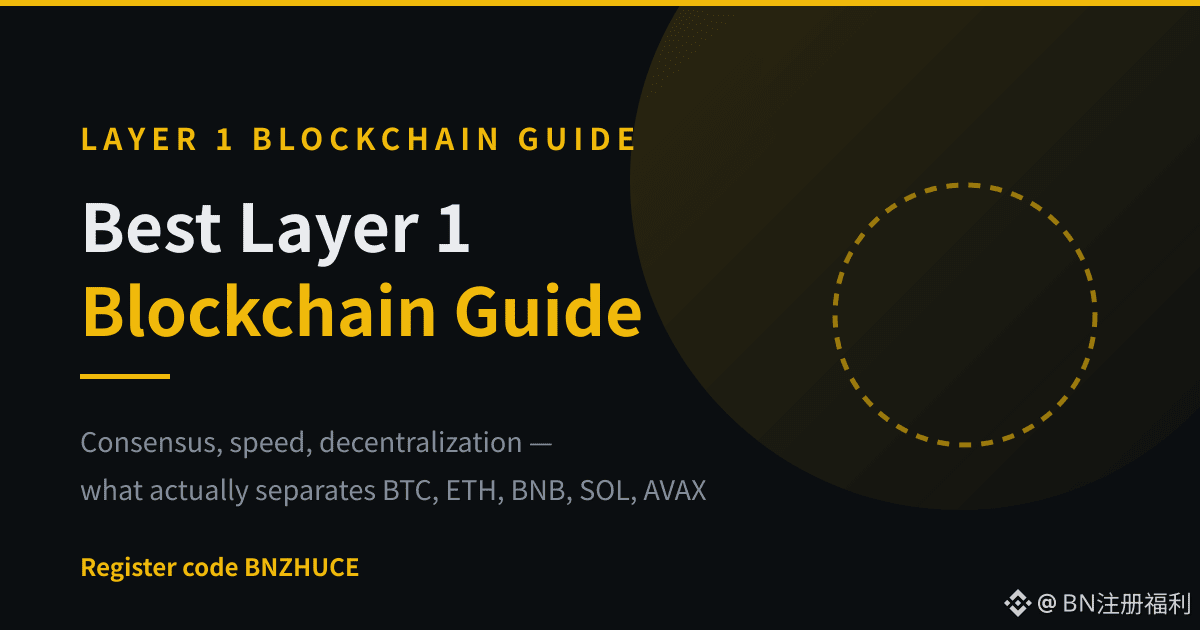
Best Layer 1 Blockchain: How to Compare and Get StartedTL;DR: A Layer 1 blockchain is the base network that runs its own consensus and settles its own transactions — think $BTC, $ETH, $BNB, SOL, and AVAX. There is no single "best" #Layer1 for everyone; the right pick depends on what you value most: security and decentralization, transaction speed and cost, or developer ecosystem size. This guide breaks down how to actually compare them and how to get an account set up if you want to hold or trade any of these assets.
◆ What Is a Layer 1 Blockchain, Exactly
A Layer 1 is a blockchain that processes and finalizes transactions on its own base layer, without depending on another chain underneath it. Bitcoin, Ethereum, BNB Chain, Solana, and Avalanche are all Layer 1s. Layer 2 networks, by contrast, are built on top of a Layer 1 (often Ethereum) to add speed or reduce fees while still relying on the base chain for final settlement and security.
The distinction matters because a Layer 1's core design choices — its consensus mechanism, validator structure, and block architecture — set a hard ceiling on what everything built on top of it can do. You cannot bolt better decentralization onto a chain after launch; it is baked into the base protocol from day one.
◆ The Four Things That Actually Separate Layer 1s
Most comparisons get distracted by transactions-per-second marketing numbers. Four structural factors matter more for a long-term hold or a project you plan to build on:
· Consensus mechanism — Proof of Work ($BTC) prioritizes security and censorship resistance at the cost of speed. Proof of Stake ($ETH, $BNB, SOL, AVAX) trades some of that for throughput and lower energy use, but validator concentration becomes the thing to watch.
· Decentralization of validators/miners — a chain with a small number of entities controlling most validation power is more efficient but more exposed to coordinated censorship or downtime. Chains with thousands of independent, geographically spread validators are harder to compromise but often slower to upgrade.
· Real economic security — this is the total value that would need to be attacked (staked capital or mining hash power) to compromise the network. Older, larger networks generally carry more of this by virtue of age and adoption, not marketing.
· Developer and liquidity ecosystem — a Layer 1 is only as useful as what is built on it. Look at how many independent applications, stablecoins, and bridges are actively used, not just how many exist.
◆ Bitcoin, Ethereum, BNB Chain, Solana, and Avalanche: Where Each One Leans
$BTC leans hardest into security and predictability. It intentionally sacrifices speed and programmability to remain the most conservative, most decentralized settlement layer in the space. It is the benchmark other Layer 1s get measured against, not because it does the most, but because it does the least and does it reliably.
$ETH prioritizes being a global settlement and smart contract layer with the deepest developer ecosystem. Its Proof-of-Stake design and large validator set aim to balance decentralization with the throughput needed to support a wide range of applications, from stablecoins to tokenized assets.
$BNB Chain is built for speed and low transaction costs, with tight integration into a large exchange ecosystem. That makes it attractive for frequent, smaller transactions and for users who want quick access to a wide range of listed tokens without high gas costs eating into small trades.
SOL is optimized for raw transaction throughput using a unique timestamping approach alongside Proof of Stake. It tends to appeal to applications that need very fast, very cheap execution, such as high-frequency trading interfaces or consumer apps.
AVAX uses a distinct consensus protocol and a subnet architecture that lets projects launch semi-independent chains under the Avalanche umbrella. This appeals to teams that want Layer 1-level customization without building consensus from scratch.
None of this changes daily — these are structural, architectural differences, not price levels or rankings that shift with market sentiment. That is the right lens for a "best Layer 1" decision, rather than chasing whichever chain had the loudest headline last week.
◆ How to Actually Get Started Holding or Trading These Assets
Comparing Layer 1s is only useful if you can act on it. To buy, hold, or trade $BTC, $ETH, $BNB, SOL, or AVAX, you need an account on an exchange that lists all of them side by side.
Registration steps are straightforward: sign up with an email or phone number, complete identity verification (KYC), and enable two-factor authentication before you deposit anything. New account registration currently comes with sign-up bonuses/welfare rewards through the link below — check the current offer details on the registration page, since bonus programs are updated from time to time.
Register: https://www.binance.com/register?ref=BNZHUCE
Backup registration mirror (mainland-friendly): https://www.bsmkweb.cc/zh-CN/join?ref=BNZHUCE
If you are on Android and want the app instead of the mobile web version:
Download: https://download.binance.com/pack/BNApp_F0001498.apk
Backup download mirror (mainland-friendly): https://download.bsmkweb.cc/pack/BNApp_F0001498.apk
If you are on iPhone, note that the App Store listing depends on your Apple ID's region. The mainland China App Store has delisted the Binance app, so you will not find it there at all. The United States App Store only offers Binance.US, which is a separate, independently operated platform — it does not share accounts with the global Binance platform, so a global registration will not let you log into that app. If you want the global app on iOS, use an Apple ID region other than mainland China or the United States; Taiwan or Hong Kong region accounts work well and do not require a local phone number or bank card to set up.
◆ Common Mistakes People Make When Picking a Layer 1
· Chasing the highest advertised speed without checking validator decentralization — a fast chain with few validators is a different risk profile than a fast chain with many.
· Assuming "biggest ecosystem" always means "best fit" — a large developer ecosystem matters for building, but if you are simply holding or trading, transaction cost and exchange support may matter more.
· Treating Layer 1 choice as permanent — most active users hold assets across several Layer 1s rather than betting on just one, precisely because each optimizes for different tradeoffs.
· Ignoring security settings after registration — the account setup matters as much as the asset choice. Two-factor authentication and a withdrawal address whitelist take a few minutes and meaningfully reduce account risk.
◆ FAQ
Q: What is the difference between a Layer 1 and a Layer 2 blockchain?
A: A Layer 1 handles its own consensus and final settlement independently. A Layer 2 runs on top of a Layer 1, using it for final security and settlement while adding speed or lower fees on top.
Q: Is Bitcoin or Ethereum the "better" Layer 1?
A: They optimize for different goals. Bitcoin prioritizes maximal security and simplicity as a settlement layer; Ethereum prioritizes a broad smart contract and application ecosystem. "Better" depends on what you are using it for.
Q: Do I need to pick just one Layer 1 to invest in?
A: No. Most active crypto users hold and trade across several Layer 1s ($BTC, $ETH, $BNB, SOL, AVAX among others) because each serves different use cases rather than competing to be a single universal winner.
Q: Can I use my global Binance account on the iOS App Store in the US or mainland China?
A: Not directly. The mainland China App Store does not list Binance at all. The US App Store only offers Binance.US, a separate platform with its own account system that does not connect to the global platform. Use an Apple ID region outside mainland China and the US, such as Taiwan or Hong Kong, to access the global app on iOS.
Q: What should I do right after registering an account?
A: Complete identity verification, turn on two-factor authentication using an authenticator app rather than SMS only, and set up a withdrawal address whitelist before depositing significant funds.
#Layer1 #Blockchain #CryptoBasics #币安注册福利
Best Layer 1 Blockchain: How to Compare and Get Started
TL;DR: A Layer 1 blockchain is the base network that runs its own consensus and settles its own transactions — think $BTC , $ETH , $BNB , SOL, and AVAX. There is no single "best" #Layer1 for everyone; the right pick depends on what you value most: security and decentralization, transaction speed and cost, or developer ecosystem size. This guide breaks down how to actually compare them and how to get an account set up if you want to hold or trade any of these assets.
◆ What Is a Layer 1 Blockchain, Exactly
A Layer 1 is a blockchain that processes and finalizes transactions on its own base layer, without depending on another chain underneath it. Bitcoin, Ethereum, BNB Chain, Solana, and Avalanche are all Layer 1s. Layer 2 networks, by contrast, are built on top of a Layer 1 (often Ethereum) to add speed or reduce fees while still relying on the base chain for final settlement and security.
The distinction matters because a Layer 1's core design choices — its consensus mechanism, validator structure, and block architecture — set a hard ceiling on what everything built on top of it can do. You cannot bolt better decentralization onto a chain after launch; it is baked into the base protocol from day one.
◆ The Four Things That Actually Separate Layer 1s
Most comparisons get distracted by transactions-per-second marketing numbers. Four structural factors matter more for a long-term hold or a project you plan to build on:
· Consensus mechanism — Proof of Work ($BTC ) prioritizes security and censorship resistance at the cost of speed. Proof of Stake ($ETH , $BNB , SOL, AVAX) trades some of that for throughput and lower energy use, but validator concentration becomes the thing to watch.
· Decentralization of validators/miners — a chain with a small number of entities controlling most validation power is more efficient but more exposed to coordinated censorship or downtime. Chains with thousands of independent, geographically spread validators are harder to compromise but often slower to upgrade.
· Real economic security — this is the total value that would need to be attacked (staked capital or mining hash power) to compromise the network. Older, larger networks generally carry more of this by virtue of age and adoption, not marketing.
· Developer and liquidity ecosystem — a Layer 1 is only as useful as what is built on it. Look at how many independent applications, stablecoins, and bridges are actively used, not just how many exist.
◆ Bitcoin, Ethereum, BNB Chain, Solana, and Avalanche: Where Each One Leans
$BTC leans hardest into security and predictability. It intentionally sacrifices speed and programmability to remain the most conservative, most decentralized settlement layer in the space. It is the benchmark other Layer 1s get measured against, not because it does the most, but because it does the least and does it reliably.
$ETH prioritizes being a global settlement and smart contract layer with the deepest developer ecosystem. Its Proof-of-Stake design and large validator set aim to balance decentralization with the throughput needed to support a wide range of applications, from stablecoins to tokenized assets.
$BNB Chain is built for speed and low transaction costs, with tight integration into a large exchange ecosystem. That makes it attractive for frequent, smaller transactions and for users who want quick access to a wide range of listed tokens without high gas costs eating into small trades.
SOL is optimized for raw transaction throughput using a unique timestamping approach alongside Proof of Stake. It tends to appeal to applications that need very fast, very cheap execution, such as high-frequency trading interfaces or consumer apps.
AVAX uses a distinct consensus protocol and a subnet architecture that lets projects launch semi-independent chains under the Avalanche umbrella. This appeals to teams that want Layer 1-level customization without building consensus from scratch.
None of this changes daily — these are structural, architectural differences, not price levels or rankings that shift with market sentiment. That is the right lens for a "best Layer 1" decision, rather than chasing whichever chain had the loudest headline last week.
◆ How to Actually Get Started Holding or Trading These Assets
Comparing Layer 1s is only useful if you can act on it. To buy, hold, or trade $BTC , $ETH , $BNB , SOL, or AVAX, you need an account on an exchange that lists all of them side by side.
Registration steps are straightforward: sign up with an email or phone number, complete identity verification (KYC), and enable two-factor authentication before you deposit anything. New account registration currently comes with sign-up bonuses/welfare rewards through the link below — check the current offer details on the registration page, since bonus programs are updated from time to time.
Register: https://www.binance.com/register?ref=BNZHUCE
Backup registration mirror (mainland-friendly): https://www.bsmkweb.cc/zh-CN/join?ref=BNZHUCE
If you are on Android and want the app instead of the mobile web version:
Download: https://download.binance.com/pack/BNApp_F0001498.apk
Backup download mirror (mainland-friendly): https://download.bsmkweb.cc/pack/BNApp_F0001498.apk
If you are on iPhone, note that the App Store listing depends on your Apple ID's region. The mainland China App Store has delisted the Binance app, so you will not find it there at all. The United States App Store only offers Binance.US, which is a separate, independently operated platform — it does not share accounts with the global Binance platform, so a global registration will not let you log into that app. If you want the global app on iOS, use an Apple ID region other than mainland China or the United States; Taiwan or Hong Kong region accounts work well and do not require a local phone number or bank card to set up.
◆ Common Mistakes People Make When Picking a Layer 1
· Chasing the highest advertised speed without checking validator decentralization — a fast chain with few validators is a different risk profile than a fast chain with many.
· Assuming "biggest ecosystem" always means "best fit" — a large developer ecosystem matters for building, but if you are simply holding or trading, transaction cost and exchange support may matter more.
· Treating Layer 1 choice as permanent — most active users hold assets across several Layer 1s rather than betting on just one, precisely because each optimizes for different tradeoffs.
· Ignoring security settings after registration — the account setup matters as much as the asset choice. Two-factor authentication and a withdrawal address whitelist take a few minutes and meaningfully reduce account risk.
◆ FAQ
Q: What is the difference between a Layer 1 and a Layer 2 blockchain?
A: A Layer 1 handles its own consensus and final settlement independently. A Layer 2 runs on top of a Layer 1, using it for final security and settlement while adding speed or lower fees on top.
Q: Is Bitcoin or Ethereum the "better" Layer 1?
A: They optimize for different goals. Bitcoin prioritizes maximal security and simplicity as a settlement layer; Ethereum prioritizes a broad smart contract and application ecosystem. "Better" depends on what you are using it for.
Q: Do I need to pick just one Layer 1 to invest in?
A: No. Most active crypto users hold and trade across several Layer 1s ($BTC , $ETH , $BNB , SOL, AVAX among others) because each serves different use cases rather than competing to be a single universal winner.
Q: Can I use my global Binance account on the iOS App Store in the US or mainland China?
A: Not directly. The mainland China App Store does not list Binance at all. The US App Store only offers Binance.US, a separate platform with its own account system that does not connect to the global platform. Use an Apple ID region outside mainland China and the US, such as Taiwan or Hong Kong, to access the global app on iOS.
Q: What should I do right after registering an account?
A: Complete identity verification, turn on two-factor authentication using an authenticator app rather than SMS only, and set up a withdrawal address whitelist before depositing significant funds.
#Layer1 #Blockchain #CryptoBasics #币安注册福利
◆ What Is a Layer 1 Blockchain, Exactly
A Layer 1 is a blockchain that processes and finalizes transactions on its own base layer, without depending on another chain underneath it. Bitcoin, Ethereum, BNB Chain, Solana, and Avalanche are all Layer 1s. Layer 2 networks, by contrast, are built on top of a Layer 1 (often Ethereum) to add speed or reduce fees while still relying on the base chain for final settlement and security.
The distinction matters because a Layer 1's core design choices — its consensus mechanism, validator structure, and block architecture — set a hard ceiling on what everything built on top of it can do. You cannot bolt better decentralization onto a chain after launch; it is baked into the base protocol from day one.
◆ The Four Things That Actually Separate Layer 1s
Most comparisons get distracted by transactions-per-second marketing numbers. Four structural factors matter more for a long-term hold or a project you plan to build on:
· Consensus mechanism — Proof of Work ($BTC ) prioritizes security and censorship resistance at the cost of speed. Proof of Stake ($ETH , $BNB , SOL, AVAX) trades some of that for throughput and lower energy use, but validator concentration becomes the thing to watch.
· Decentralization of validators/miners — a chain with a small number of entities controlling most validation power is more efficient but more exposed to coordinated censorship or downtime. Chains with thousands of independent, geographically spread validators are harder to compromise but often slower to upgrade.
· Real economic security — this is the total value that would need to be attacked (staked capital or mining hash power) to compromise the network. Older, larger networks generally carry more of this by virtue of age and adoption, not marketing.
· Developer and liquidity ecosystem — a Layer 1 is only as useful as what is built on it. Look at how many independent applications, stablecoins, and bridges are actively used, not just how many exist.
◆ Bitcoin, Ethereum, BNB Chain, Solana, and Avalanche: Where Each One Leans
$BTC leans hardest into security and predictability. It intentionally sacrifices speed and programmability to remain the most conservative, most decentralized settlement layer in the space. It is the benchmark other Layer 1s get measured against, not because it does the most, but because it does the least and does it reliably.
$ETH prioritizes being a global settlement and smart contract layer with the deepest developer ecosystem. Its Proof-of-Stake design and large validator set aim to balance decentralization with the throughput needed to support a wide range of applications, from stablecoins to tokenized assets.
$BNB Chain is built for speed and low transaction costs, with tight integration into a large exchange ecosystem. That makes it attractive for frequent, smaller transactions and for users who want quick access to a wide range of listed tokens without high gas costs eating into small trades.
SOL is optimized for raw transaction throughput using a unique timestamping approach alongside Proof of Stake. It tends to appeal to applications that need very fast, very cheap execution, such as high-frequency trading interfaces or consumer apps.
AVAX uses a distinct consensus protocol and a subnet architecture that lets projects launch semi-independent chains under the Avalanche umbrella. This appeals to teams that want Layer 1-level customization without building consensus from scratch.
None of this changes daily — these are structural, architectural differences, not price levels or rankings that shift with market sentiment. That is the right lens for a "best Layer 1" decision, rather than chasing whichever chain had the loudest headline last week.
◆ How to Actually Get Started Holding or Trading These Assets
Comparing Layer 1s is only useful if you can act on it. To buy, hold, or trade $BTC , $ETH , $BNB , SOL, or AVAX, you need an account on an exchange that lists all of them side by side.
Registration steps are straightforward: sign up with an email or phone number, complete identity verification (KYC), and enable two-factor authentication before you deposit anything. New account registration currently comes with sign-up bonuses/welfare rewards through the link below — check the current offer details on the registration page, since bonus programs are updated from time to time.
Register: https://www.binance.com/register?ref=BNZHUCE
Backup registration mirror (mainland-friendly): https://www.bsmkweb.cc/zh-CN/join?ref=BNZHUCE
If you are on Android and want the app instead of the mobile web version:
Download: https://download.binance.com/pack/BNApp_F0001498.apk
Backup download mirror (mainland-friendly): https://download.bsmkweb.cc/pack/BNApp_F0001498.apk
If you are on iPhone, note that the App Store listing depends on your Apple ID's region. The mainland China App Store has delisted the Binance app, so you will not find it there at all. The United States App Store only offers Binance.US, which is a separate, independently operated platform — it does not share accounts with the global Binance platform, so a global registration will not let you log into that app. If you want the global app on iOS, use an Apple ID region other than mainland China or the United States; Taiwan or Hong Kong region accounts work well and do not require a local phone number or bank card to set up.
◆ Common Mistakes People Make When Picking a Layer 1
· Chasing the highest advertised speed without checking validator decentralization — a fast chain with few validators is a different risk profile than a fast chain with many.
· Assuming "biggest ecosystem" always means "best fit" — a large developer ecosystem matters for building, but if you are simply holding or trading, transaction cost and exchange support may matter more.
· Treating Layer 1 choice as permanent — most active users hold assets across several Layer 1s rather than betting on just one, precisely because each optimizes for different tradeoffs.
· Ignoring security settings after registration — the account setup matters as much as the asset choice. Two-factor authentication and a withdrawal address whitelist take a few minutes and meaningfully reduce account risk.
◆ FAQ
Q: What is the difference between a Layer 1 and a Layer 2 blockchain?
A: A Layer 1 handles its own consensus and final settlement independently. A Layer 2 runs on top of a Layer 1, using it for final security and settlement while adding speed or lower fees on top.
Q: Is Bitcoin or Ethereum the "better" Layer 1?
A: They optimize for different goals. Bitcoin prioritizes maximal security and simplicity as a settlement layer; Ethereum prioritizes a broad smart contract and application ecosystem. "Better" depends on what you are using it for.
Q: Do I need to pick just one Layer 1 to invest in?
A: No. Most active crypto users hold and trade across several Layer 1s ($BTC , $ETH , $BNB , SOL, AVAX among others) because each serves different use cases rather than competing to be a single universal winner.
Q: Can I use my global Binance account on the iOS App Store in the US or mainland China?
A: Not directly. The mainland China App Store does not list Binance at all. The US App Store only offers Binance.US, a separate platform with its own account system that does not connect to the global platform. Use an Apple ID region outside mainland China and the US, such as Taiwan or Hong Kong, to access the global app on iOS.
Q: What should I do right after registering an account?
A: Complete identity verification, turn on two-factor authentication using an authenticator app rather than SMS only, and set up a withdrawal address whitelist before depositing significant funds.
#Layer1 #Blockchain #CryptoBasics #币安注册福利
115
·
--
安卓装币安APK卡在「未知来源」怎么办
很多人下载完APK点安装,系统弹「禁止安装未知来源应用」就卡住了,其实两步能解决:
◆ 解决方法
1. 弹窗出现时点「设置」,跳转到权限页
2. 找到当前用来打开这个APK的应用(浏览器或文件管理器),把「允许安装未知应用」开关打开
3. 返回重新点安装即可
◆ 部分品牌手机的额外步骤
· 小米:设置→应用设置→授权管理,找到对应应用授权
· 华为:设置→安全→更多安全设置,允许安装外部来源应用
下载地址:https://download.binance.com/pack/BNApp_F0001498.apk
注册:https://www.binance.com/register?ref=BNZHUCE
#币安下载 #安卓安装教程
安卓装币安APK卡在「未知来源」怎么办
很多人下载完APK点安装,系统弹「禁止安装未知来源应用」就卡住了,其实两步能解决:
◆ 解决方法
1. 弹窗出现时点「设置」,跳转到权限页
2. 找到当前用来打开这个APK的应用(浏览器或文件管理器),把「允许安装未知应用」开关打开
3. 返回重新点安装即可
◆ 部分品牌手机的额外步骤
· 小米:设置→应用设置→授权管理,找到对应应用授权
· 华为:设置→安全→更多安全设置,允许安装外部来源应用
下载地址:https://download.binance.com/pack/BNApp_F0001498.apk
注册:https://www.binance.com/register?ref=BNZHUCE
#币安下载 #安卓安装教程
很多人下载完APK点安装,系统弹「禁止安装未知来源应用」就卡住了,其实两步能解决:
◆ 解决方法
1. 弹窗出现时点「设置」,跳转到权限页
2. 找到当前用来打开这个APK的应用(浏览器或文件管理器),把「允许安装未知应用」开关打开
3. 返回重新点安装即可
◆ 部分品牌手机的额外步骤
· 小米:设置→应用设置→授权管理,找到对应应用授权
· 华为:设置→安全→更多安全设置,允许安装外部来源应用
下载地址:https://download.binance.com/pack/BNApp_F0001498.apk
注册:https://www.binance.com/register?ref=BNZHUCE
#币安下载 #安卓安装教程
45
·
--
币安手续费怎么算,新手容易漏掉的省钱技巧
◆ 基础费率
现货Maker/Taker各0.1%,合约更低
◆ 省钱方法
1. 持有BNB并开启「用BNB支付手续费」,可享折扣
2. 交易量越大,费率等级越低(VIP体系)
3. Maker(挂单)通常比Taker(吃单)费率更低,习惯用限价单挂单能省一些
Q:手续费从哪里扣?
A:默认从交易的币种里扣,开了BNB抵扣就从BNB余额里扣。
Q:新手要不要马上囤BNB抵扣手续费?
A:如果计划长期高频交易值得,偶尔交易几笔没必要专门为此囤币。
👉 https://www.binance.com/register?ref=BNZHUCE
#币安手续费 #省钱技巧
币安手续费怎么算,新手容易漏掉的省钱技巧
◆ 基础费率
现货Maker/Taker各0.1%,合约更低
◆ 省钱方法
1. 持有BNB并开启「用BNB支付手续费」,可享折扣
2. 交易量越大,费率等级越低(VIP体系)
3. Maker(挂单)通常比Taker(吃单)费率更低,习惯用限价单挂单能省一些
Q:手续费从哪里扣?
A:默认从交易的币种里扣,开了BNB抵扣就从BNB余额里扣。
Q:新手要不要马上囤BNB抵扣手续费?
A:如果计划长期高频交易值得,偶尔交易几笔没必要专门为此囤币。
👉 https://www.binance.com/register?ref=BNZHUCE
#币安手续费 #省钱技巧
◆ 基础费率
现货Maker/Taker各0.1%,合约更低
◆ 省钱方法
1. 持有BNB并开启「用BNB支付手续费」,可享折扣
2. 交易量越大,费率等级越低(VIP体系)
3. Maker(挂单)通常比Taker(吃单)费率更低,习惯用限价单挂单能省一些
Q:手续费从哪里扣?
A:默认从交易的币种里扣,开了BNB抵扣就从BNB余额里扣。
Q:新手要不要马上囤BNB抵扣手续费?
A:如果计划长期高频交易值得,偶尔交易几笔没必要专门为此囤币。
👉 https://www.binance.com/register?ref=BNZHUCE
#币安手续费 #省钱技巧
·
--
新手第一笔交易该怎么下单
◆ 现货交易入门
1. 首页点「交易」→「现货」
2. 搜索币种,比如BTC/USDT
3. 选择「市价」下单最简单:输入想买的金额,点买入
4. 「限价」下单可以自己设定价格,达到才成交,适合有明确心理价位的人
◆ 新手常见误区
· 一次梭哈:建议分批建仓,别一次把资金全部投入
· 追涨杀跌:短期波动不代表趋势,情绪化操作容易亏损
· 不设止损:任何交易都建议提前想好止损点位
Q:市价单和限价单哪个好?
A:着急成交用市价,追求价格用限价,各有场景。
👉 https://www.binance.com/register?ref=BNZHUCE
#币安交易 #现货入门
新手第一笔交易该怎么下单
◆ 现货交易入门
1. 首页点「交易」→「现货」
2. 搜索币种,比如BTC/USDT
3. 选择「市价」下单最简单:输入想买的金额,点买入
4. 「限价」下单可以自己设定价格,达到才成交,适合有明确心理价位的人
◆ 新手常见误区
· 一次梭哈:建议分批建仓,别一次把资金全部投入
· 追涨杀跌:短期波动不代表趋势,情绪化操作容易亏损
· 不设止损:任何交易都建议提前想好止损点位
Q:市价单和限价单哪个好?
A:着急成交用市价,追求价格用限价,各有场景。
👉 https://www.binance.com/register?ref=BNZHUCE
#币安交易 #现货入门
◆ 现货交易入门
1. 首页点「交易」→「现货」
2. 搜索币种,比如BTC/USDT
3. 选择「市价」下单最简单:输入想买的金额,点买入
4. 「限价」下单可以自己设定价格,达到才成交,适合有明确心理价位的人
◆ 新手常见误区
· 一次梭哈:建议分批建仓,别一次把资金全部投入
· 追涨杀跌:短期波动不代表趋势,情绪化操作容易亏损
· 不设止损:任何交易都建议提前想好止损点位
Q:市价单和限价单哪个好?
A:着急成交用市价,追求价格用限价,各有场景。
👉 https://www.binance.com/register?ref=BNZHUCE
#币安交易 #现货入门
·
--
第一次注册币安?跟着这个顺序走,福利别漏领
◆ 注册前先看清楚
· 需要:邮箱或手机号、身份证
· 耗时:整个流程约10-15分钟(含实名认证)
◆ 四步走完
1. 官方链接注册:https://www.binance.com/register?ref=BNZHUCE
2. 身份认证:上传身份证正反面+自拍
3. C2C充值:支付宝/微信/银行卡都支持,选商家买USDT
4. 完成第一笔交易,激活账户活跃状态
◆ 9月新客福利别错过
入金100U+交易100U → 送100U仓位券
入金1000U+交易50000U → 再加300U仓位券
入金3000U+交易200000U → 再加40U现金券
三档可叠加,最高440U,具体活动窗口以App内活动页显示为准。
安卓下载:https://download.binance.com/pack/BNApp_F0001498.apk
Q:认证要多久?
A:一般几分钟内自动通过,遇到人工审核可能延迟到1个工作日。
Q:充值方式怎么选?
A:新手推荐C2C(支付宝/银行卡),比链上转账简单,不用管理钱包地址。
#币安注册 #新手教程
第一次注册币安?跟着这个顺序走,福利别漏领
◆ 注册前先看清楚
· 需要:邮箱或手机号、身份证
· 耗时:整个流程约10-15分钟(含实名认证)
◆ 四步走完
1. 官方链接注册:https://www.binance.com/register?ref=BNZHUCE
2. 身份认证:上传身份证正反面+自拍
3. C2C充值:支付宝/微信/银行卡都支持,选商家买USDT
4. 完成第一笔交易,激活账户活跃状态
◆ 9月新客福利别错过
入金100U+交易100U → 送100U仓位券
入金1000U+交易50000U → 再加300U仓位券
入金3000U+交易200000U → 再加40U现金券
三档可叠加,最高440U,具体活动窗口以App内活动页显示为准。
安卓下载:https://download.binance.com/pack/BNApp_F0001498.apk
Q:认证要多久?
A:一般几分钟内自动通过,遇到人工审核可能延迟到1个工作日。
Q:充值方式怎么选?
A:新手推荐C2C(支付宝/银行卡),比链上转账简单,不用管理钱包地址。
#币安注册 #新手教程
◆ 注册前先看清楚
· 需要:邮箱或手机号、身份证
· 耗时:整个流程约10-15分钟(含实名认证)
◆ 四步走完
1. 官方链接注册:https://www.binance.com/register?ref=BNZHUCE
2. 身份认证:上传身份证正反面+自拍
3. C2C充值:支付宝/微信/银行卡都支持,选商家买USDT
4. 完成第一笔交易,激活账户活跃状态
◆ 9月新客福利别错过
入金100U+交易100U → 送100U仓位券
入金1000U+交易50000U → 再加300U仓位券
入金3000U+交易200000U → 再加40U现金券
三档可叠加,最高440U,具体活动窗口以App内活动页显示为准。
安卓下载:https://download.binance.com/pack/BNApp_F0001498.apk
Q:认证要多久?
A:一般几分钟内自动通过,遇到人工审核可能延迟到1个工作日。
Q:充值方式怎么选?
A:新手推荐C2C(支付宝/银行卡),比链上转账简单,不用管理钱包地址。
#币安注册 #新手教程
100
·
--
Article
币安注册全流程:新手福利怎么拿、APK怎么下先说结论:币安新用户注册流程本身免费,官方App下载+完成实名认证后,新用户手续费减免、体验金等福利会自动出现在"福利中心"里,不需要额外操作,也不存在"付费解锁福利"这种说法。下面是完整流程和几个新手最容易踩的坑。
◆ 注册前要准备什么
注册币安不需要复杂材料,但为了后续能顺利做实名认证(KYC),建议提前准备:
・一个常用邮箱或手机号(用来接收验证码)
・一张本人身份证件(护照/身份证均可,用于KYC拍照上传)
・稳定的网络环境(避免认证过程中反复掉线导致失败重来)
没有这些也能先完成注册,只是不做KYC的账户提现额度会被限制,长期用建议尽早认证。
◆ 下载官方APK的正确姿势
安卓用户直接下载官方安装包即可,不需要绕第三方应用商店:
APK下载:https://download.binance.com/pack/BNApp_F0001498.apk
下载后系统可能提示"未知来源应用"风险警告,这是安卓的默认安全机制,不是APK有问题,允许安装即可。装完打开App就能看到注册入口。
◆ 注册流程分几步
1. 打开App,选择邮箱或手机号注册
2. 设置密码(建议大小写字母+数字+符号组合,别用生日这种弱密码)
3. 输入收到的验证码完成账户创建
4. 首次登录会引导设置二次验证(2FA),强烈建议开,不开的话资产安全风险自己承担
5. 进入"身份认证"页面上传证件照片,等待系统审核,一般几分钟到几小时不等
整个流程走完大概10分钟,比大部分银行APP开户还快。
◆ 关于"福利",新手最容易搞错的几点
很多人以为福利是要"额外操作"或者"充值解锁"才能拿到,实际上:
・新用户体验金、手续费折扣这类福利,是账户创建+完成基础认证后系统自动派发,出现在"福利中心"或"任务中心"里
・任何私聊你说"交福利金""交解锁费"才能提现的,100%是诈骗,币安官方不会主动私信要求转账
・福利活动会不定期更新,具体额度以App内福利中心实际展示为准,本文不写死具体金额,避免信息过期
用官方注册链接进来的用户,部分活动期还会有专属新客福利,链接见文末。
◆ 注册后第一件事:不是充值,是设置安全
很多新手一注册完就急着充值买币,其实顺序反了。正确顺序应该是:
1. 先绑定Google Authenticator或短信2FA
2. 检查登录设备管理,把不认识的设备踢掉
3. 设置资金密码,与登录密码区分开
4. 确认提现地址白名单功能(可选但推荐开,能防止账户被盗后资产被转走)
这几步花不了5分钟,但能省掉后面很多麻烦。
◆ 常见问题 FAQ
Q:注册币安需要付费吗?
A:不需要,注册本身完全免费,交易时才会产生手续费,且新用户通常有手续费折扣。
Q:为什么我的KYC审核一直不通过?
A:最常见原因是照片模糊、证件边角被裁切、或者证件信息与注册资料不一致,重新拍照上传清晰完整的证件照通常能解决。
Q:忘记密码怎么办?
A:登录页选择"忘记密码",通过绑定的邮箱/手机号验证身份后可以重置,如果2FA也丢了需要走官方身份验证找回流程,会比较慢,所以平时一定要备份好2FA恢复码。
Q:安卓下载的APK安全吗?
A:只要是从官方渠道获取的安装包就是安全的,装的时候系统安全提示是正常现象,不是病毒告警。
◆ 注册与下载入口
APK下载:https://download.binance.com/pack/BNApp_F0001498.apk
注册链接:https://www.binance.com/register?ref=BNZHUCE
#币安 #币安注册 #新手教程 $BTC
币安注册全流程:新手福利怎么拿、APK怎么下
先说结论:币安新用户注册流程本身免费,官方App下载+完成实名认证后,新用户手续费减免、体验金等福利会自动出现在"福利中心"里,不需要额外操作,也不存在"付费解锁福利"这种说法。下面是完整流程和几个新手最容易踩的坑。
◆ 注册前要准备什么
注册币安不需要复杂材料,但为了后续能顺利做实名认证(KYC),建议提前准备:
・一个常用邮箱或手机号(用来接收验证码)
・一张本人身份证件(护照/身份证均可,用于KYC拍照上传)
・稳定的网络环境(避免认证过程中反复掉线导致失败重来)
没有这些也能先完成注册,只是不做KYC的账户提现额度会被限制,长期用建议尽早认证。
◆ 下载官方APK的正确姿势
安卓用户直接下载官方安装包即可,不需要绕第三方应用商店:
APK下载:https://download.binance.com/pack/BNApp_F0001498.apk
下载后系统可能提示"未知来源应用"风险警告,这是安卓的默认安全机制,不是APK有问题,允许安装即可。装完打开App就能看到注册入口。
◆ 注册流程分几步
1. 打开App,选择邮箱或手机号注册
2. 设置密码(建议大小写字母+数字+符号组合,别用生日这种弱密码)
3. 输入收到的验证码完成账户创建
4. 首次登录会引导设置二次验证(2FA),强烈建议开,不开的话资产安全风险自己承担
5. 进入"身份认证"页面上传证件照片,等待系统审核,一般几分钟到几小时不等
整个流程走完大概10分钟,比大部分银行APP开户还快。
◆ 关于"福利",新手最容易搞错的几点
很多人以为福利是要"额外操作"或者"充值解锁"才能拿到,实际上:
・新用户体验金、手续费折扣这类福利,是账户创建+完成基础认证后系统自动派发,出现在"福利中心"或"任务中心"里
・任何私聊你说"交福利金""交解锁费"才能提现的,100%是诈骗,币安官方不会主动私信要求转账
・福利活动会不定期更新,具体额度以App内福利中心实际展示为准,本文不写死具体金额,避免信息过期
用官方注册链接进来的用户,部分活动期还会有专属新客福利,链接见文末。
◆ 注册后第一件事:不是充值,是设置安全
很多新手一注册完就急着充值买币,其实顺序反了。正确顺序应该是:
1. 先绑定Google Authenticator或短信2FA
2. 检查登录设备管理,把不认识的设备踢掉
3. 设置资金密码,与登录密码区分开
4. 确认提现地址白名单功能(可选但推荐开,能防止账户被盗后资产被转走)
这几步花不了5分钟,但能省掉后面很多麻烦。
◆ 常见问题 FAQ
Q:注册币安需要付费吗?
A:不需要,注册本身完全免费,交易时才会产生手续费,且新用户通常有手续费折扣。
Q:为什么我的KYC审核一直不通过?
A:最常见原因是照片模糊、证件边角被裁切、或者证件信息与注册资料不一致,重新拍照上传清晰完整的证件照通常能解决。
Q:忘记密码怎么办?
A:登录页选择"忘记密码",通过绑定的邮箱/手机号验证身份后可以重置,如果2FA也丢了需要走官方身份验证找回流程,会比较慢,所以平时一定要备份好2FA恢复码。
Q:安卓下载的APK安全吗?
A:只要是从官方渠道获取的安装包就是安全的,装的时候系统安全提示是正常现象,不是病毒告警。
◆ 注册与下载入口
APK下载:https://download.binance.com/pack/BNApp_F0001498.apk
注册链接:https://www.binance.com/register?ref=BNZHUCE
#币安 #币安注册 #新手教程 $BTC
◆ 注册前要准备什么
注册币安不需要复杂材料,但为了后续能顺利做实名认证(KYC),建议提前准备:
・一个常用邮箱或手机号(用来接收验证码)
・一张本人身份证件(护照/身份证均可,用于KYC拍照上传)
・稳定的网络环境(避免认证过程中反复掉线导致失败重来)
没有这些也能先完成注册,只是不做KYC的账户提现额度会被限制,长期用建议尽早认证。
◆ 下载官方APK的正确姿势
安卓用户直接下载官方安装包即可,不需要绕第三方应用商店:
APK下载:https://download.binance.com/pack/BNApp_F0001498.apk
下载后系统可能提示"未知来源应用"风险警告,这是安卓的默认安全机制,不是APK有问题,允许安装即可。装完打开App就能看到注册入口。
◆ 注册流程分几步
1. 打开App,选择邮箱或手机号注册
2. 设置密码(建议大小写字母+数字+符号组合,别用生日这种弱密码)
3. 输入收到的验证码完成账户创建
4. 首次登录会引导设置二次验证(2FA),强烈建议开,不开的话资产安全风险自己承担
5. 进入"身份认证"页面上传证件照片,等待系统审核,一般几分钟到几小时不等
整个流程走完大概10分钟,比大部分银行APP开户还快。
◆ 关于"福利",新手最容易搞错的几点
很多人以为福利是要"额外操作"或者"充值解锁"才能拿到,实际上:
・新用户体验金、手续费折扣这类福利,是账户创建+完成基础认证后系统自动派发,出现在"福利中心"或"任务中心"里
・任何私聊你说"交福利金""交解锁费"才能提现的,100%是诈骗,币安官方不会主动私信要求转账
・福利活动会不定期更新,具体额度以App内福利中心实际展示为准,本文不写死具体金额,避免信息过期
用官方注册链接进来的用户,部分活动期还会有专属新客福利,链接见文末。
◆ 注册后第一件事:不是充值,是设置安全
很多新手一注册完就急着充值买币,其实顺序反了。正确顺序应该是:
1. 先绑定Google Authenticator或短信2FA
2. 检查登录设备管理,把不认识的设备踢掉
3. 设置资金密码,与登录密码区分开
4. 确认提现地址白名单功能(可选但推荐开,能防止账户被盗后资产被转走)
这几步花不了5分钟,但能省掉后面很多麻烦。
◆ 常见问题 FAQ
Q:注册币安需要付费吗?
A:不需要,注册本身完全免费,交易时才会产生手续费,且新用户通常有手续费折扣。
Q:为什么我的KYC审核一直不通过?
A:最常见原因是照片模糊、证件边角被裁切、或者证件信息与注册资料不一致,重新拍照上传清晰完整的证件照通常能解决。
Q:忘记密码怎么办?
A:登录页选择"忘记密码",通过绑定的邮箱/手机号验证身份后可以重置,如果2FA也丢了需要走官方身份验证找回流程,会比较慢,所以平时一定要备份好2FA恢复码。
Q:安卓下载的APK安全吗?
A:只要是从官方渠道获取的安装包就是安全的,装的时候系统安全提示是正常现象,不是病毒告警。
◆ 注册与下载入口
APK下载:https://download.binance.com/pack/BNApp_F0001498.apk
注册链接:https://www.binance.com/register?ref=BNZHUCE
#币安 #币安注册 #新手教程 $BTC
1
165
Log in to explore more content
Join global crypto users on Binance Square
⚡️ Get latest and useful information about crypto.
💬 Trusted by the world’s largest crypto exchange.
👍 Discover real insights from verified creators.
Email / Phone number