
Sunny3555
32 Posts

Sunny3555
Report
Block User
Open Trade

BNB Holder
Occasional Trader
2.1 Years
5 Following
29 Followers
43 Liked
Posts
Portfolio
All
Quotes
·
--
Bearish
#CanBTCReboundAfterFallingBelow60K? $BTC #CanGTA6'sLaunchLiftTTWOShares?
it's that possible one game ? or BTC will rise ?So confused about the time changes
#CanBTCReboundAfterFallingBelow60K? $BTC #CanGTA6'sLaunchLiftTTWOShares?
it's that possible one game ? or BTC will rise ?So confused about the time changes
it's that possible one game ? or BTC will rise ?So confused about the time changes
48
·
--

Article
Above the market#XPL $XPL
{spot}(XPLUSDT)
@Plasma today me don’t want write anything because me is the stuck since last night to see ups and down about market and suddenly realise Risk and luck are make you stronger and have their places and part of your life in between them also one thing remains it’s a strategy a person who thinks and plans and act it’s the basis of his knowledge and the wait during this period he face these two things are called Risk and luck when these things combined and he gets the results let me ask one question who wins luck Risk or plans ? So it was my thought I sharing with you. Please let me know your opinion. $XPL $XRP @Plasma
Above the market
#XPL $XPL
@Plasma today me don’t want write anything because me is the stuck since last night to see ups and down about market and suddenly realise Risk and luck are make you stronger and have their places and part of your life in between them also one thing remains it’s a strategy a person who thinks and plans and act it’s the basis of his knowledge and the wait during this period he face these two things are called Risk and luck when these things combined and he gets the results let me ask one question who wins luck Risk or plans ? So it was my thought I sharing with you. Please let me know your opinion. $XPL $XRP @Plasma
@Plasma today me don’t want write anything because me is the stuck since last night to see ups and down about market and suddenly realise Risk and luck are make you stronger and have their places and part of your life in between them also one thing remains it’s a strategy a person who thinks and plans and act it’s the basis of his knowledge and the wait during this period he face these two things are called Risk and luck when these things combined and he gets the results let me ask one question who wins luck Risk or plans ? So it was my thought I sharing with you. Please let me know your opinion. $XPL $XRP @Plasma
41

·
--
Article
News makes me Confuse@Plasma #plasm $XPL
The new global financial system is here.As I watched and experienced during my journey of trade by the passing time I realised it can be joyful or painful it’s all depends on your ability or skills if you can handle your emotions or make your decisions at the right time you will be the Future hero afcours luck exists but hard work have own place so Don’t worry Make your decisions and believe your self and get right knowledge right time you will never lose $XPL #Plasma @Plasma in the last want share my way of trading me is not a expert just have small sense which was given by Allah me also don’t know me using it wrong or right way so get point I start with plasma here is some points
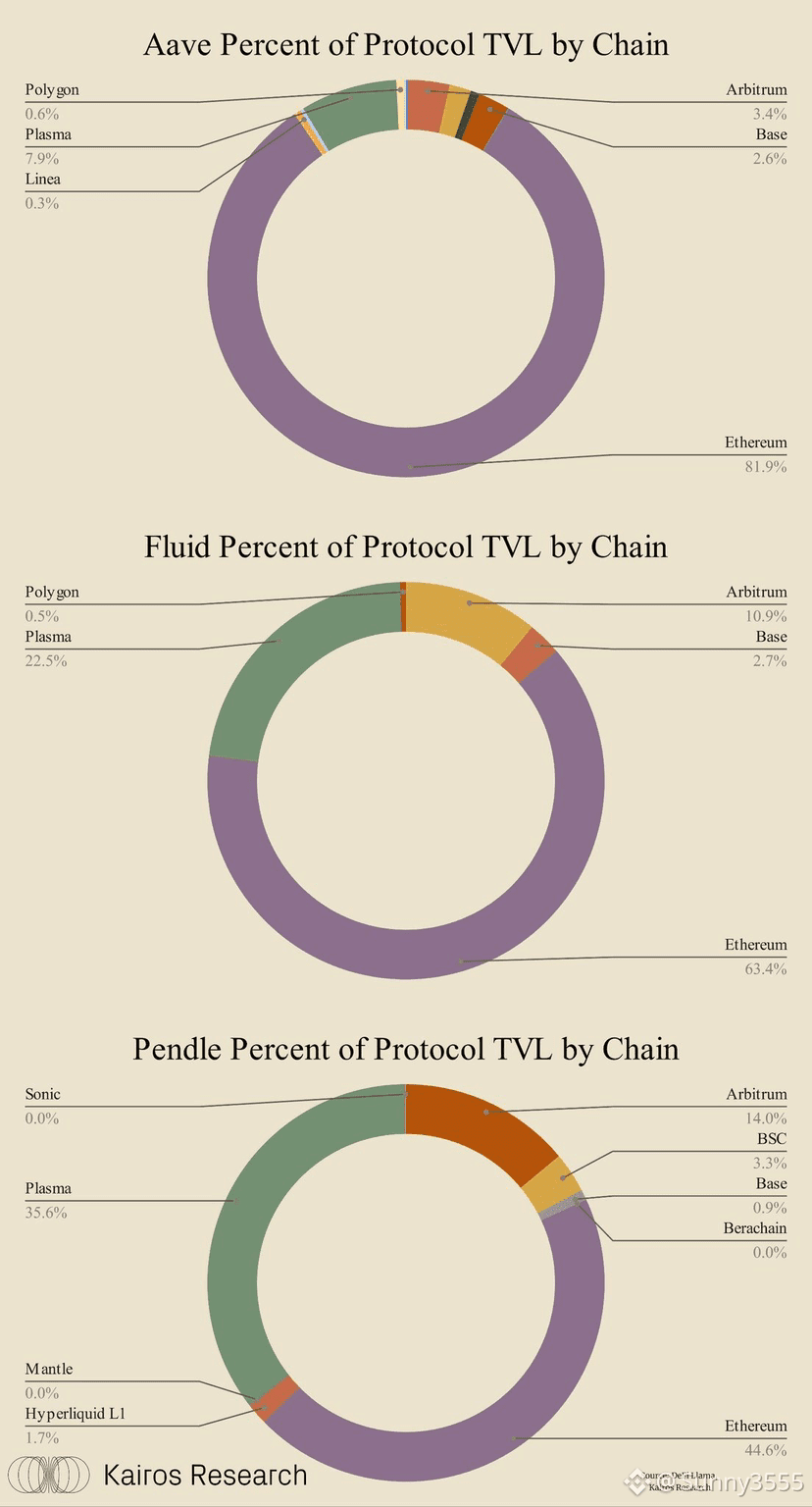
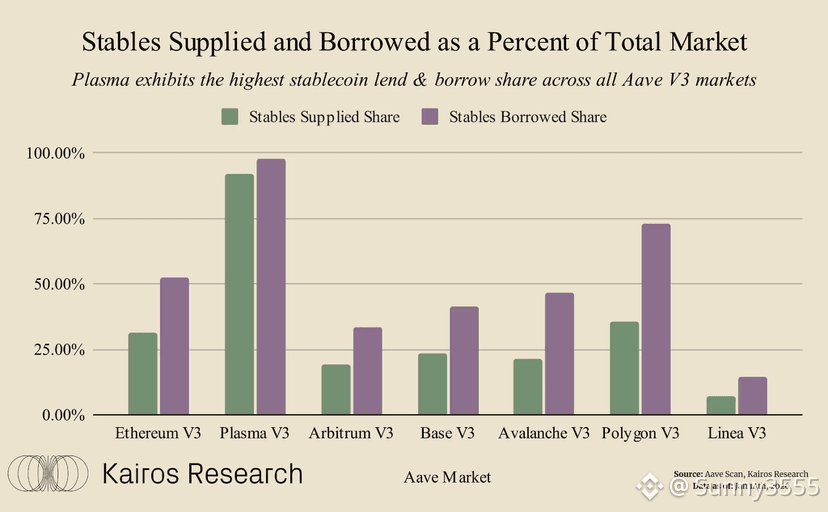
Plasma now has the second largest onchain lending market in the world. If you're building new financial primitives with stablecoins, build alongside us on Plasma.
News makes me Confuse
@Plasma #plasm $XPL
The new global financial system is here.As I watched and experienced during my journey of trade by the passing time I realised it can be joyful or painful it’s all depends on your ability or skills if you can handle your emotions or make your decisions at the right time you will be the Future hero afcours luck exists but hard work have own place so Don’t worry Make your decisions and believe your self and get right knowledge right time you will never lose $XPL #Plasma @Plasma in the last want share my way of trading me is not a expert just have small sense which was given by Allah me also don’t know me using it wrong or right way so get point I start with plasma here is some points
Plasma now has the second largest onchain lending market in the world. If you're building new financial primitives with stablecoins, build alongside us on Plasma.
1
22
·
--
@Plasma #BinanceSquareTalks it was a good decision give me your opinion i am the new one thanks
@Plasma #BinanceSquareTalks it was a good decision give me your opinion i am the new one thanks
20
·
--
Article
Is it Future?Ask yourself@Plasma #Plasma $XPL
Deep stablecoin liquidity is what every payments business, card issuer, and fintech needs.
People and businesses holding dollars on gain access to institutional grade arbitrage returns on the same rails that move their money.Deep liquidity is the backbone of real payments.
When stablecoins move easily and reliably, builders can focus on creating great products instead of fighting rails.
That’s the kind of foundation I think aligned with scalable, efficient, and built for real-world usage.This is what real product market fit looks like in DeFi.
6 days to $1B market size, $1.9B all-time volume, and Fluid already driving ~64.8% of Plasma DEX volume. That is not a “campaign”, that’s a liquidity engine powering real payments rails.
The next step is making this kind of scale safe and boring for fintech. Controlled execution beats vibes, every time. @Plasma #Plasma $XPL
Is it Future?Ask yourself
@Plasma #Plasma $XPL
Deep stablecoin liquidity is what every payments business, card issuer, and fintech needs.
People and businesses holding dollars on gain access to institutional grade arbitrage returns on the same rails that move their money.Deep liquidity is the backbone of real payments.
When stablecoins move easily and reliably, builders can focus on creating great products instead of fighting rails.
That’s the kind of foundation I think aligned with scalable, efficient, and built for real-world usage.This is what real product market fit looks like in DeFi.
6 days to $1B market size, $1.9B all-time volume, and Fluid already driving ~64.8% of Plasma DEX volume. That is not a “campaign”, that’s a liquidity engine powering real payments rails.
The next step is making this kind of scale safe and boring for fintech. Controlled execution beats vibes, every time. @Plasma #Plasma $XPL
19
·
--
@Plasma #plasma $XPL Are you a creator looking to get rewarded for your content? …..$XPL #Plasma Deep liquidity is the backbone of real payments.
When stablecoins move easily and reliably, builders can focus on creating great products instead of fighting rails.
That’s the kind of foundation we’re aligned with scalable, efficient, and built for real-world usage.
When stablecoins move easily and reliably, builders can focus on creating great products instead of fighting rails.
That’s the kind of foundation we’re aligned with scalable, efficient, and built for real-world usage.
27
·
--
@LorenzoProtocol $BANK its time to hold the coin for the future you will get rward soon so make a wise decision☺️
@Lorenzo Protocol $BANK its time to hold the coin for the future you will get rward soon so make a wise decision☺️

2
331
·
--

Article
The Future.@WalrusProtocol $WAL #Walrus
{spot}(WALUSDT)
The digital world is heavy. Every day, humanity generates roughly 328.77 million terabytes of data. We are no longer just sending text emails; we are training massive Artificial Intelligence (AI) models, streaming 4K video, and building complex 3D metaverses.For the last decade, the solution to this data explosion has been simple but flawed: The Cloud. We handed our digital lives over to Amazon (AWS), Google, and Microsoft. While convenient, this centralization has created a fragile internet. These tech giants act as gatekeepers—they can censor content, raise prices unilaterally, and introduce single points of failure.Web3 promised a better way: decentralized storage. Networks like Filecoin and Arweave showed us that a distributed network of hard drives could work. However, they struggled with the "Blockchain Trilemma," often sacrificing speed or low costs to achieve decentralization.Now, a new contender has emerged to solve these legacy issues. Built on the blazing-fast Sui blockchain, the Walrus Protocol is redefining what it means to store data on-chain. It is not just a "Dropbox for crypto"; it is a programmable, cryptographically secure data layer designed for the AI era.The Architecture of Efficiency: Understanding "Red Stuff"To understand why Walrus is a game-changer, you have to look at the math. Traditional decentralized storage often relies on "full replication." If you want to store a 1GB file securely on a legacy network, that network might copy your file 50 to 100 times across different nodes. This is secure, but it is incredibly wasteful and expensive.Walrus takes a different approach. It utilizes a novel implementation of 2D erasure coding affectionately named "Red Stuff" (based on RaptorQ fountain codes).When a user uploads a "Blob" (Binary Large Object) to Walrus, the protocol does not store the file in one piece. Instead, it breaks the file into a mathematical grid of "slivers." These slivers are then distributed across a vast network of storage nodes. Efficiency: Because of this advanced math, Walrus achieves extreme durability with a replication factor of only 4x to 5x. This means storing 1GB of data only uses about 4GB of network capacity, compared to the hundreds of gigabytes required by older competitors. Robustness: The network is "Byzantine Fault Tolerant." Even if a significant portion of the nodes go offline or turn malicious, the original file can be perfectly reconstructed from the remaining slivers.The Sui Advantage: Speed Meets StorageWalrus is unique because it separates the "Control Plane" from the "Data Plane."Most blockchains try to do everything at once—process transactions and store data—which leads to congestion and high fees. Walrus uses the Sui blockchain strictly for management. The metadata (who owns the file, how big it is, and the proof that it exists) lives on Sui. The actual heavy data lives on the specialized Walrus nodes.This synergy allows Walrus to inherit the lightning-fast speed of Sui. Managing your storage, transferring ownership of a dataset, or updating permissions feels instant. It transforms storage from a static "hard drive" into a dynamic, programmable asset that can interact with smart contracts in real-time.The $WAL Token EconomyA decentralized network is only as strong as its incentives. The Walrus economy is designed to align the interests of users, storage providers, and token holders using the native $WAL token. Storage Payments: To store data, users must pay in $WAL. This creates a direct correlation between the network's adoption and the demand for the token. Staking and Security: Storage nodes operate on a Delegated Proof-of-Stake (DPoS) model. They must stake WAL to participate. If they lose data or go offline, they face slashing penalties. This financial stake ensures that providers are motivated to keep their servers running 24/7. * The Storage Fund: Perhaps the most innovative feature is the "Storage Fund." When a user pays for storage (e.g., for 5 years), the WAL tokens are not paid to the provider all at once. Instead, they are locked in a smart contract and released slowly over time. This mechanism guarantees that providers have a long-term incentive to host the data, while also removing tokens from the circulating supply, creating deflationary pressure as the network grows.Use Cases: Why the World Needs WalrusWalrus is not building technology for technology's sake. It is solving critical problems for the next generation of the internet.1. The AI Data CrisisTraining Large Language Models (LLMs) requires petabytes of text and imagery. Storing this on AWS is prohibitively expensive for open-source researchers. Walrus provides a decentralized "Data Lake" where researchers can store massive datasets cheaply. Because the metadata is on-chain, data can be cryptographically signed, proving its origin—a crucial feature in an era of deepfakes and AI-generated misinformation.2. Unstoppable "Walrus Sites"One of the most exciting developer tools is "Walrus Sites." Currently, most Decentralized Applications (dApps) still rely on centralized servers (like Vercel or AWS) for their frontend websites. If those servers go down, the dApp is inaccessible. Walrus allows developers to host their entire website—HTML, CSS, and JavaScript—directly on the decentralized network. This creates truly "unstoppable applications" that are resistant to censorship and platform de-risking.3. Dynamic NFTsThe NFT market has a dirty secret: many high-value digital collectibles are just links pointing to a centralized server. If the startup behind the project goes bankrupt, the image disappears. Walrus solves this by storing the actual media asset on-chain. Furthermore, because Walrus integrates with Sui Move, these assets can be dynamic. Imagine a gaming sword that changes its appearance as you use it in-game, with the visual updates permanently written to the storage layer.ConclusionWe are witnessing the transition from the "Cloud Era" to the "Fog Era." The centralized cloud served us well, but its limitations in privacy, cost, and censorship resistance are becoming undeniable.The Walrus Protocol represents the maturation of decentralized storage. By solving the efficiency problems of the past with "Red Stuff" and leveraging the speed of Sui, it offers a solution that is finally ready for mass adoption. It is cheaper than the competition, faster than the legacy chains, and more secure than the centralized giants.As we build a world of autonomous AI agents, censorship-resistant media, and true digital ownership, we need a foundation that can hold the weight of our digital future. Walrus is that foundation.@Walrus 🦭/acc $WAL #walrus
The Future.
@Walrus 🦭/acc $WAL #Walrus
The digital world is heavy. Every day, humanity generates roughly 328.77 million terabytes of data. We are no longer just sending text emails; we are training massive Artificial Intelligence (AI) models, streaming 4K video, and building complex 3D metaverses.For the last decade, the solution to this data explosion has been simple but flawed: The Cloud. We handed our digital lives over to Amazon (AWS), Google, and Microsoft. While convenient, this centralization has created a fragile internet. These tech giants act as gatekeepers—they can censor content, raise prices unilaterally, and introduce single points of failure.Web3 promised a better way: decentralized storage. Networks like Filecoin and Arweave showed us that a distributed network of hard drives could work. However, they struggled with the "Blockchain Trilemma," often sacrificing speed or low costs to achieve decentralization.Now, a new contender has emerged to solve these legacy issues. Built on the blazing-fast Sui blockchain, the Walrus Protocol is redefining what it means to store data on-chain. It is not just a "Dropbox for crypto"; it is a programmable, cryptographically secure data layer designed for the AI era.The Architecture of Efficiency: Understanding "Red Stuff"To understand why Walrus is a game-changer, you have to look at the math. Traditional decentralized storage often relies on "full replication." If you want to store a 1GB file securely on a legacy network, that network might copy your file 50 to 100 times across different nodes. This is secure, but it is incredibly wasteful and expensive.Walrus takes a different approach. It utilizes a novel implementation of 2D erasure coding affectionately named "Red Stuff" (based on RaptorQ fountain codes).When a user uploads a "Blob" (Binary Large Object) to Walrus, the protocol does not store the file in one piece. Instead, it breaks the file into a mathematical grid of "slivers." These slivers are then distributed across a vast network of storage nodes. Efficiency: Because of this advanced math, Walrus achieves extreme durability with a replication factor of only 4x to 5x. This means storing 1GB of data only uses about 4GB of network capacity, compared to the hundreds of gigabytes required by older competitors. Robustness: The network is "Byzantine Fault Tolerant." Even if a significant portion of the nodes go offline or turn malicious, the original file can be perfectly reconstructed from the remaining slivers.The Sui Advantage: Speed Meets StorageWalrus is unique because it separates the "Control Plane" from the "Data Plane."Most blockchains try to do everything at once—process transactions and store data—which leads to congestion and high fees. Walrus uses the Sui blockchain strictly for management. The metadata (who owns the file, how big it is, and the proof that it exists) lives on Sui. The actual heavy data lives on the specialized Walrus nodes.This synergy allows Walrus to inherit the lightning-fast speed of Sui. Managing your storage, transferring ownership of a dataset, or updating permissions feels instant. It transforms storage from a static "hard drive" into a dynamic, programmable asset that can interact with smart contracts in real-time.The $WAL Token EconomyA decentralized network is only as strong as its incentives. The Walrus economy is designed to align the interests of users, storage providers, and token holders using the native $WAL token. Storage Payments: To store data, users must pay in $WAL . This creates a direct correlation between the network's adoption and the demand for the token. Staking and Security: Storage nodes operate on a Delegated Proof-of-Stake (DPoS) model. They must stake WAL to participate. If they lose data or go offline, they face slashing penalties. This financial stake ensures that providers are motivated to keep their servers running 24/7. * The Storage Fund: Perhaps the most innovative feature is the "Storage Fund." When a user pays for storage (e.g., for 5 years), the WAL tokens are not paid to the provider all at once. Instead, they are locked in a smart contract and released slowly over time. This mechanism guarantees that providers have a long-term incentive to host the data, while also removing tokens from the circulating supply, creating deflationary pressure as the network grows.Use Cases: Why the World Needs WalrusWalrus is not building technology for technology's sake. It is solving critical problems for the next generation of the internet.1. The AI Data CrisisTraining Large Language Models (LLMs) requires petabytes of text and imagery. Storing this on AWS is prohibitively expensive for open-source researchers. Walrus provides a decentralized "Data Lake" where researchers can store massive datasets cheaply. Because the metadata is on-chain, data can be cryptographically signed, proving its origin—a crucial feature in an era of deepfakes and AI-generated misinformation.2. Unstoppable "Walrus Sites"One of the most exciting developer tools is "Walrus Sites." Currently, most Decentralized Applications (dApps) still rely on centralized servers (like Vercel or AWS) for their frontend websites. If those servers go down, the dApp is inaccessible. Walrus allows developers to host their entire website—HTML, CSS, and JavaScript—directly on the decentralized network. This creates truly "unstoppable applications" that are resistant to censorship and platform de-risking.3. Dynamic NFTsThe NFT market has a dirty secret: many high-value digital collectibles are just links pointing to a centralized server. If the startup behind the project goes bankrupt, the image disappears. Walrus solves this by storing the actual media asset on-chain. Furthermore, because Walrus integrates with Sui Move, these assets can be dynamic. Imagine a gaming sword that changes its appearance as you use it in-game, with the visual updates permanently written to the storage layer.ConclusionWe are witnessing the transition from the "Cloud Era" to the "Fog Era." The centralized cloud served us well, but its limitations in privacy, cost, and censorship resistance are becoming undeniable.The Walrus Protocol represents the maturation of decentralized storage. By solving the efficiency problems of the past with "Red Stuff" and leveraging the speed of Sui, it offers a solution that is finally ready for mass adoption. It is cheaper than the competition, faster than the legacy chains, and more secure than the centralized giants.As we build a world of autonomous AI agents, censorship-resistant media, and true digital ownership, we need a foundation that can hold the weight of our digital future. Walrus is that foundation.@Walrus 🦭/acc $WAL #walrus
The digital world is heavy. Every day, humanity generates roughly 328.77 million terabytes of data. We are no longer just sending text emails; we are training massive Artificial Intelligence (AI) models, streaming 4K video, and building complex 3D metaverses.For the last decade, the solution to this data explosion has been simple but flawed: The Cloud. We handed our digital lives over to Amazon (AWS), Google, and Microsoft. While convenient, this centralization has created a fragile internet. These tech giants act as gatekeepers—they can censor content, raise prices unilaterally, and introduce single points of failure.Web3 promised a better way: decentralized storage. Networks like Filecoin and Arweave showed us that a distributed network of hard drives could work. However, they struggled with the "Blockchain Trilemma," often sacrificing speed or low costs to achieve decentralization.Now, a new contender has emerged to solve these legacy issues. Built on the blazing-fast Sui blockchain, the Walrus Protocol is redefining what it means to store data on-chain. It is not just a "Dropbox for crypto"; it is a programmable, cryptographically secure data layer designed for the AI era.The Architecture of Efficiency: Understanding "Red Stuff"To understand why Walrus is a game-changer, you have to look at the math. Traditional decentralized storage often relies on "full replication." If you want to store a 1GB file securely on a legacy network, that network might copy your file 50 to 100 times across different nodes. This is secure, but it is incredibly wasteful and expensive.Walrus takes a different approach. It utilizes a novel implementation of 2D erasure coding affectionately named "Red Stuff" (based on RaptorQ fountain codes).When a user uploads a "Blob" (Binary Large Object) to Walrus, the protocol does not store the file in one piece. Instead, it breaks the file into a mathematical grid of "slivers." These slivers are then distributed across a vast network of storage nodes. Efficiency: Because of this advanced math, Walrus achieves extreme durability with a replication factor of only 4x to 5x. This means storing 1GB of data only uses about 4GB of network capacity, compared to the hundreds of gigabytes required by older competitors. Robustness: The network is "Byzantine Fault Tolerant." Even if a significant portion of the nodes go offline or turn malicious, the original file can be perfectly reconstructed from the remaining slivers.The Sui Advantage: Speed Meets StorageWalrus is unique because it separates the "Control Plane" from the "Data Plane."Most blockchains try to do everything at once—process transactions and store data—which leads to congestion and high fees. Walrus uses the Sui blockchain strictly for management. The metadata (who owns the file, how big it is, and the proof that it exists) lives on Sui. The actual heavy data lives on the specialized Walrus nodes.This synergy allows Walrus to inherit the lightning-fast speed of Sui. Managing your storage, transferring ownership of a dataset, or updating permissions feels instant. It transforms storage from a static "hard drive" into a dynamic, programmable asset that can interact with smart contracts in real-time.The $WAL Token EconomyA decentralized network is only as strong as its incentives. The Walrus economy is designed to align the interests of users, storage providers, and token holders using the native $WAL token. Storage Payments: To store data, users must pay in $WAL . This creates a direct correlation between the network's adoption and the demand for the token. Staking and Security: Storage nodes operate on a Delegated Proof-of-Stake (DPoS) model. They must stake WAL to participate. If they lose data or go offline, they face slashing penalties. This financial stake ensures that providers are motivated to keep their servers running 24/7. * The Storage Fund: Perhaps the most innovative feature is the "Storage Fund." When a user pays for storage (e.g., for 5 years), the WAL tokens are not paid to the provider all at once. Instead, they are locked in a smart contract and released slowly over time. This mechanism guarantees that providers have a long-term incentive to host the data, while also removing tokens from the circulating supply, creating deflationary pressure as the network grows.Use Cases: Why the World Needs WalrusWalrus is not building technology for technology's sake. It is solving critical problems for the next generation of the internet.1. The AI Data CrisisTraining Large Language Models (LLMs) requires petabytes of text and imagery. Storing this on AWS is prohibitively expensive for open-source researchers. Walrus provides a decentralized "Data Lake" where researchers can store massive datasets cheaply. Because the metadata is on-chain, data can be cryptographically signed, proving its origin—a crucial feature in an era of deepfakes and AI-generated misinformation.2. Unstoppable "Walrus Sites"One of the most exciting developer tools is "Walrus Sites." Currently, most Decentralized Applications (dApps) still rely on centralized servers (like Vercel or AWS) for their frontend websites. If those servers go down, the dApp is inaccessible. Walrus allows developers to host their entire website—HTML, CSS, and JavaScript—directly on the decentralized network. This creates truly "unstoppable applications" that are resistant to censorship and platform de-risking.3. Dynamic NFTsThe NFT market has a dirty secret: many high-value digital collectibles are just links pointing to a centralized server. If the startup behind the project goes bankrupt, the image disappears. Walrus solves this by storing the actual media asset on-chain. Furthermore, because Walrus integrates with Sui Move, these assets can be dynamic. Imagine a gaming sword that changes its appearance as you use it in-game, with the visual updates permanently written to the storage layer.ConclusionWe are witnessing the transition from the "Cloud Era" to the "Fog Era." The centralized cloud served us well, but its limitations in privacy, cost, and censorship resistance are becoming undeniable.The Walrus Protocol represents the maturation of decentralized storage. By solving the efficiency problems of the past with "Red Stuff" and leveraging the speed of Sui, it offers a solution that is finally ready for mass adoption. It is cheaper than the competition, faster than the legacy chains, and more secure than the centralized giants.As we build a world of autonomous AI agents, censorship-resistant media, and true digital ownership, we need a foundation that can hold the weight of our digital future. Walrus is that foundation.@Walrus 🦭/acc $WAL #walrus
·
--

Article
FutureThe digital world is heavy. Every day, humanity generates roughly 328.77 million terabytes of data. We are no longer just sending text emails; we are training massive Artificial Intelligence (AI) models, streaming 4K video, and building complex 3D metaverses.For the last decade, the solution to this data explosion has been simple but flawed: The Cloud. We handed our digital lives over to Amazon (AWS), Google, and Microsoft. While convenient, this centralization has created a fragile internet. These tech giants act as gatekeepers—they can censor content, raise prices unilaterally, and introduce single points of failure.Web3 promised a better way: decentralized storage. Networks like Filecoin and Arweave showed us that a distributed network of hard drives could work. However, they struggled with the "Blockchain Trilemma," often sacrificing speed or low costs to achieve decentralization.Now, a new contender has emerged to solve these legacy issues. Built on the blazing-fast Sui blockchain, the Walrus Protocol is redefining what it means to store data on-chain. It is not just a "Dropbox for crypto"; it is a programmable, cryptographically secure data layer designed for the AI era.The Architecture of Efficiency: Understanding "Red Stuff"To understand why Walrus is a game-changer, you have to look at the math. Traditional decentralized storage often relies on "full replication." If you want to store a 1GB file securely on a legacy network, that network might copy your file 50 to 100 times across different nodes. This is secure, but it is incredibly wasteful and expensive.Walrus takes a different approach. It utilizes a novel implementation of 2D erasure coding affectionately named "Red Stuff" (based on RaptorQ fountain codes).When a user uploads a "Blob" (Binary Large Object) to Walrus, the protocol does not store the file in one piece. Instead, it breaks the file into a mathematical grid of "slivers." These slivers are then distributed across a vast network of storage nodes. Efficiency: Because of this advanced math, Walrus achieves extreme durability with a replication factor of only 4x to 5x. This means storing 1GB of data only uses about 4GB of network capacity, compared to the hundreds of gigabytes required by older competitors. Robustness: The network is "Byzantine Fault Tolerant." Even if a significant portion of the nodes go offline or turn malicious, the original file can be perfectly reconstructed from the remaining slivers.The Sui Advantage: Speed Meets StorageWalrus is unique because it separates the "Control Plane" from the "Data Plane."Most blockchains try to do everything at once—process transactions and store data—which leads to congestion and high fees. Walrus uses the Sui blockchain strictly for management. The metadata (who owns the file, how big it is, and the proof that it exists) lives on Sui. The actual heavy data lives on the specialized Walrus nodes.This synergy allows Walrus to inherit the lightning-fast speed of Sui. Managing your storage, transferring ownership of a dataset, or updating permissions feels instant. It transforms storage from a static "hard drive" into a dynamic, programmable asset that can interact with smart contracts in real-time.The $WAL Token EconomyA decentralized network is only as strong as its incentives. The Walrus economy is designed to align the interests of users, storage providers, and token holders using the native $WAL token. Storage Payments: To store data, users must pay in $WAL. This creates a direct correlation between the network's adoption and the demand for the token. Staking and Security: Storage nodes operate on a Delegated Proof-of-Stake (DPoS) model. They must stake WAL to participate. If they lose data or go offline, they face slashing penalties. This financial stake ensures that providers are motivated to keep their servers running 24/7. * The Storage Fund: Perhaps the most innovative feature is the "Storage Fund." When a user pays for storage (e.g., for 5 years), the WAL tokens are not paid to the provider all at once. Instead, they are locked in a smart contract and released slowly over time. This mechanism guarantees that providers have a long-term incentive to host the data, while also removing tokens from the circulating supply, creating deflationary pressure as the network grows.Use Cases: Why the World Needs WalrusWalrus is not building technology for technology's sake. It is solving critical problems for the next generation of the internet.1. The AI Data CrisisTraining Large Language Models (LLMs) requires petabytes of text and imagery. Storing this on AWS is prohibitively expensive for open-source researchers. Walrus provides a decentralized "Data Lake" where researchers can store massive datasets cheaply. Because the metadata is on-chain, data can be cryptographically signed, proving its origin—a crucial feature in an era of deepfakes and AI-generated misinformation.2. Unstoppable "Walrus Sites"One of the most exciting developer tools is "Walrus Sites." Currently, most Decentralized Applications (dApps) still rely on centralized servers (like Vercel or AWS) for their frontend websites. If those servers go down, the dApp is inaccessible. Walrus allows developers to host their entire website—HTML, CSS, and JavaScript—directly on the decentralized network. This creates truly "unstoppable applications" that are resistant to censorship and platform de-risking.3. Dynamic NFTsThe NFT market has a dirty secret: many high-value digital collectibles are just links pointing to a centralized server. If the startup behind the project goes bankrupt, the image disappears. Walrus solves this by storing the actual media asset on-chain. Furthermore, because Walrus integrates with Sui Move, these assets can be dynamic. Imagine a gaming sword that changes its appearance as you use it in-game, with the visual updates permanently written to the storage layer.ConclusionWe are witnessing the transition from the "Cloud Era" to the "Fog Era." The centralized cloud served us well, but its limitations in privacy, cost, and censorship resistance are becoming undeniable.The Walrus Protocol represents the maturation of decentralized storage. By solving the efficiency problems of the past with "Red Stuff" and leveraging the speed of Sui, it offers a solution that is finally ready for mass adoption. It is cheaper than the competition, faster than the legacy chains, and more secure than the centralized giants.As we build a world of autonomous AI agents, censorship-resistant media, and true digital ownership, we need a foundation that can hold the weight of our digital future. Walrus is that foundation.@Walrus 🦭/acc $WAL @WalrusProtocol #Walrus
Future
The digital world is heavy. Every day, humanity generates roughly 328.77 million terabytes of data. We are no longer just sending text emails; we are training massive Artificial Intelligence (AI) models, streaming 4K video, and building complex 3D metaverses.For the last decade, the solution to this data explosion has been simple but flawed: The Cloud. We handed our digital lives over to Amazon (AWS), Google, and Microsoft. While convenient, this centralization has created a fragile internet. These tech giants act as gatekeepers—they can censor content, raise prices unilaterally, and introduce single points of failure.Web3 promised a better way: decentralized storage. Networks like Filecoin and Arweave showed us that a distributed network of hard drives could work. However, they struggled with the "Blockchain Trilemma," often sacrificing speed or low costs to achieve decentralization.Now, a new contender has emerged to solve these legacy issues. Built on the blazing-fast Sui blockchain, the Walrus Protocol is redefining what it means to store data on-chain. It is not just a "Dropbox for crypto"; it is a programmable, cryptographically secure data layer designed for the AI era.The Architecture of Efficiency: Understanding "Red Stuff"To understand why Walrus is a game-changer, you have to look at the math. Traditional decentralized storage often relies on "full replication." If you want to store a 1GB file securely on a legacy network, that network might copy your file 50 to 100 times across different nodes. This is secure, but it is incredibly wasteful and expensive.Walrus takes a different approach. It utilizes a novel implementation of 2D erasure coding affectionately named "Red Stuff" (based on RaptorQ fountain codes).When a user uploads a "Blob" (Binary Large Object) to Walrus, the protocol does not store the file in one piece. Instead, it breaks the file into a mathematical grid of "slivers." These slivers are then distributed across a vast network of storage nodes. Efficiency: Because of this advanced math, Walrus achieves extreme durability with a replication factor of only 4x to 5x. This means storing 1GB of data only uses about 4GB of network capacity, compared to the hundreds of gigabytes required by older competitors. Robustness: The network is "Byzantine Fault Tolerant." Even if a significant portion of the nodes go offline or turn malicious, the original file can be perfectly reconstructed from the remaining slivers.The Sui Advantage: Speed Meets StorageWalrus is unique because it separates the "Control Plane" from the "Data Plane."Most blockchains try to do everything at once—process transactions and store data—which leads to congestion and high fees. Walrus uses the Sui blockchain strictly for management. The metadata (who owns the file, how big it is, and the proof that it exists) lives on Sui. The actual heavy data lives on the specialized Walrus nodes.This synergy allows Walrus to inherit the lightning-fast speed of Sui. Managing your storage, transferring ownership of a dataset, or updating permissions feels instant. It transforms storage from a static "hard drive" into a dynamic, programmable asset that can interact with smart contracts in real-time.The $WAL Token EconomyA decentralized network is only as strong as its incentives. The Walrus economy is designed to align the interests of users, storage providers, and token holders using the native $WAL token. Storage Payments: To store data, users must pay in $WAL . This creates a direct correlation between the network's adoption and the demand for the token. Staking and Security: Storage nodes operate on a Delegated Proof-of-Stake (DPoS) model. They must stake WAL to participate. If they lose data or go offline, they face slashing penalties. This financial stake ensures that providers are motivated to keep their servers running 24/7. * The Storage Fund: Perhaps the most innovative feature is the "Storage Fund." When a user pays for storage (e.g., for 5 years), the WAL tokens are not paid to the provider all at once. Instead, they are locked in a smart contract and released slowly over time. This mechanism guarantees that providers have a long-term incentive to host the data, while also removing tokens from the circulating supply, creating deflationary pressure as the network grows.Use Cases: Why the World Needs WalrusWalrus is not building technology for technology's sake. It is solving critical problems for the next generation of the internet.1. The AI Data CrisisTraining Large Language Models (LLMs) requires petabytes of text and imagery. Storing this on AWS is prohibitively expensive for open-source researchers. Walrus provides a decentralized "Data Lake" where researchers can store massive datasets cheaply. Because the metadata is on-chain, data can be cryptographically signed, proving its origin—a crucial feature in an era of deepfakes and AI-generated misinformation.2. Unstoppable "Walrus Sites"One of the most exciting developer tools is "Walrus Sites." Currently, most Decentralized Applications (dApps) still rely on centralized servers (like Vercel or AWS) for their frontend websites. If those servers go down, the dApp is inaccessible. Walrus allows developers to host their entire website—HTML, CSS, and JavaScript—directly on the decentralized network. This creates truly "unstoppable applications" that are resistant to censorship and platform de-risking.3. Dynamic NFTsThe NFT market has a dirty secret: many high-value digital collectibles are just links pointing to a centralized server. If the startup behind the project goes bankrupt, the image disappears. Walrus solves this by storing the actual media asset on-chain. Furthermore, because Walrus integrates with Sui Move, these assets can be dynamic. Imagine a gaming sword that changes its appearance as you use it in-game, with the visual updates permanently written to the storage layer.ConclusionWe are witnessing the transition from the "Cloud Era" to the "Fog Era." The centralized cloud served us well, but its limitations in privacy, cost, and censorship resistance are becoming undeniable.The Walrus Protocol represents the maturation of decentralized storage. By solving the efficiency problems of the past with "Red Stuff" and leveraging the speed of Sui, it offers a solution that is finally ready for mass adoption. It is cheaper than the competition, faster than the legacy chains, and more secure than the centralized giants.As we build a world of autonomous AI agents, censorship-resistant media, and true digital ownership, we need a foundation that can hold the weight of our digital future. Walrus is that foundation.@Walrus 🦭/acc $WAL @Walrus 🦭/acc #Walrus
1
·
--

Article
what you SayThe digital world is heavy. Every day, humanity generates roughly 328.77 million terabytes of data. We are no longer just sending text emails; we are training massive Artificial Intelligence (AI) models, streaming 4K video, and building complex 3D metaverses.For the last decade, the solution to this data explosion has been simple but flawed: The Cloud. We handed our digital lives over to Amazon (AWS), Google, and Microsoft. While convenient, this centralization has created a fragile internet. These tech giants act as gatekeepers—they can censor content, raise prices unilaterally, and introduce single points of failure.Web3 promised a better way: decentralized storage. Networks like Filecoin and Arweave showed us that a distributed network of hard drives could work. However, they struggled with the "Blockchain Trilemma," often sacrificing speed or low costs to achieve decentralization.Now, a new contender has emerged to solve these legacy issues. Built on the blazing-fast Sui blockchain, the Walrus Protocol is redefining what it means to store data on-chain. It is not just a "Dropbox for crypto"; it is a programmable, cryptographically secure data layer designed for the AI era.The Architecture of Efficiency: Understanding "Red Stuff"To understand why Walrus is a game-changer, you have to look at the math. Traditional decentralized storage often relies on "full replication." If you want to store a 1GB file securely on a legacy network, that network might copy your file 50 to 100 times across different nodes. This is secure, but it is incredibly wasteful and expensive.Walrus takes a different approach. It utilizes a novel implementation of 2D erasure coding affectionately named "Red Stuff" (based on RaptorQ fountain codes).When a user uploads a "Blob" (Binary Large Object) to Walrus, the protocol does not store the file in one piece. Instead, it breaks the file into a mathematical grid of "slivers." These slivers are then distributed across a vast network of storage nodes. Efficiency: Because of this advanced math, Walrus achieves extreme durability with a replication factor of only 4x to 5x. This means storing 1GB of data only uses about 4GB of network capacity, compared to the hundreds of gigabytes required by older competitors. Robustness: The network is "Byzantine Fault Tolerant." Even if a significant portion of the nodes go offline or turn malicious, the original file can be perfectly reconstructed from the remaining slivers.The Sui Advantage: Speed Meets StorageWalrus is unique because it separates the "Control Plane" from the "Data Plane."Most blockchains try to do everything at once—process transactions and store data—which leads to congestion and high fees. Walrus uses the Sui blockchain strictly for management. The metadata (who owns the file, how big it is, and the proof that it exists) lives on Sui. The actual heavy data lives on the specialized Walrus nodes.This synergy allows Walrus to inherit the lightning-fast speed of Sui. Managing your storage, transferring ownership of a dataset, or updating permissions feels instant. It transforms storage from a static "hard drive" into a dynamic, programmable asset that can interact with smart contracts in real-time.The $WAL Token EconomyA decentralized network is only as strong as its incentives. The Walrus economy is designed to align the interests of users, storage providers, and token holders using the native $WAL token. Storage Payments: To store data, users must pay in $WAL. This creates a direct correlation between the network's adoption and the demand for the token. Staking and Security: Storage nodes operate on a Delegated Proof-of-Stake (DPoS) model. They must stake WAL to participate. If they lose data or go offline, they face slashing penalties. This financial stake ensures that providers are motivated to keep their servers running 24/7. * The Storage Fund: Perhaps the most innovative feature is the "Storage Fund." When a user pays for storage (e.g., for 5 years), the WAL tokens are not paid to the provider all at once. Instead, they are locked in a smart contract and released slowly over time. This mechanism guarantees that providers have a long-term incentive to host the data, while also removing tokens from the circulating supply, creating deflationary pressure as the network grows.Use Cases: Why the World Needs WalrusWalrus is not building technology for technology's sake. It is solving critical problems for the next generation of the internet.1. The AI Data CrisisTraining Large Language Models (LLMs) requires petabytes of text and imagery. Storing this on AWS is prohibitively expensive for open-source researchers. Walrus provides a decentralized "Data Lake" where researchers can store massive datasets cheaply. Because the metadata is on-chain, data can be cryptographically signed, proving its origin—a crucial feature in an era of deepfakes and AI-generated misinformation.2. Unstoppable "Walrus Sites"One of the most exciting developer tools is "Walrus Sites." Currently, most Decentralized Applications (dApps) still rely on centralized servers (like Vercel or AWS) for their frontend websites. If those servers go down, the dApp is inaccessible. Walrus allows developers to host their entire website—HTML, CSS, and JavaScript—directly on the decentralized network. This creates truly "unstoppable applications" that are resistant to censorship and platform de-risking.3. Dynamic NFTsThe NFT market has a dirty secret: many high-value digital collectibles are just links pointing to a centralized server. If the startup behind the project goes bankrupt, the image disappears. Walrus solves this by storing the actual media asset on-chain. Furthermore, because Walrus integrates with Sui Move, these assets can be dynamic. Imagine a gaming sword that changes its appearance as you use it in-game, with the visual updates permanently written to the storage layer.ConclusionWe are witnessing the transition from the "Cloud Era" to the "Fog Era." The centralized cloud served us well, but its limitations in privacy, cost, and censorship resistance are becoming undeniable.The Walrus Protocol represents the maturation of decentralized storage. By solving the efficiency problems of the past with "Red Stuff" and leveraging the speed of Sui, it offers a solution that is finally ready for mass adoption. It is cheaper than the competition, faster than the legacy chains, and more secure than the centralized giants.As we build a world of autonomous AI agents, censorship-resistant media, and true digital ownership, we need a foundation that can hold the weight of our digital future. Walrus is that foundation.@Walrus 🦭/acc $WAL #walrus
what you Say
The digital world is heavy. Every day, humanity generates roughly 328.77 million terabytes of data. We are no longer just sending text emails; we are training massive Artificial Intelligence (AI) models, streaming 4K video, and building complex 3D metaverses.For the last decade, the solution to this data explosion has been simple but flawed: The Cloud. We handed our digital lives over to Amazon (AWS), Google, and Microsoft. While convenient, this centralization has created a fragile internet. These tech giants act as gatekeepers—they can censor content, raise prices unilaterally, and introduce single points of failure.Web3 promised a better way: decentralized storage. Networks like Filecoin and Arweave showed us that a distributed network of hard drives could work. However, they struggled with the "Blockchain Trilemma," often sacrificing speed or low costs to achieve decentralization.Now, a new contender has emerged to solve these legacy issues. Built on the blazing-fast Sui blockchain, the Walrus Protocol is redefining what it means to store data on-chain. It is not just a "Dropbox for crypto"; it is a programmable, cryptographically secure data layer designed for the AI era.The Architecture of Efficiency: Understanding "Red Stuff"To understand why Walrus is a game-changer, you have to look at the math. Traditional decentralized storage often relies on "full replication." If you want to store a 1GB file securely on a legacy network, that network might copy your file 50 to 100 times across different nodes. This is secure, but it is incredibly wasteful and expensive.Walrus takes a different approach. It utilizes a novel implementation of 2D erasure coding affectionately named "Red Stuff" (based on RaptorQ fountain codes).When a user uploads a "Blob" (Binary Large Object) to Walrus, the protocol does not store the file in one piece. Instead, it breaks the file into a mathematical grid of "slivers." These slivers are then distributed across a vast network of storage nodes. Efficiency: Because of this advanced math, Walrus achieves extreme durability with a replication factor of only 4x to 5x. This means storing 1GB of data only uses about 4GB of network capacity, compared to the hundreds of gigabytes required by older competitors. Robustness: The network is "Byzantine Fault Tolerant." Even if a significant portion of the nodes go offline or turn malicious, the original file can be perfectly reconstructed from the remaining slivers.The Sui Advantage: Speed Meets StorageWalrus is unique because it separates the "Control Plane" from the "Data Plane."Most blockchains try to do everything at once—process transactions and store data—which leads to congestion and high fees. Walrus uses the Sui blockchain strictly for management. The metadata (who owns the file, how big it is, and the proof that it exists) lives on Sui. The actual heavy data lives on the specialized Walrus nodes.This synergy allows Walrus to inherit the lightning-fast speed of Sui. Managing your storage, transferring ownership of a dataset, or updating permissions feels instant. It transforms storage from a static "hard drive" into a dynamic, programmable asset that can interact with smart contracts in real-time.The $WAL Token EconomyA decentralized network is only as strong as its incentives. The Walrus economy is designed to align the interests of users, storage providers, and token holders using the native $WAL token. Storage Payments: To store data, users must pay in $WAL. This creates a direct correlation between the network's adoption and the demand for the token. Staking and Security: Storage nodes operate on a Delegated Proof-of-Stake (DPoS) model. They must stake WAL to participate. If they lose data or go offline, they face slashing penalties. This financial stake ensures that providers are motivated to keep their servers running 24/7. * The Storage Fund: Perhaps the most innovative feature is the "Storage Fund." When a user pays for storage (e.g., for 5 years), the WAL tokens are not paid to the provider all at once. Instead, they are locked in a smart contract and released slowly over time. This mechanism guarantees that providers have a long-term incentive to host the data, while also removing tokens from the circulating supply, creating deflationary pressure as the network grows.Use Cases: Why the World Needs WalrusWalrus is not building technology for technology's sake. It is solving critical problems for the next generation of the internet.1. The AI Data CrisisTraining Large Language Models (LLMs) requires petabytes of text and imagery. Storing this on AWS is prohibitively expensive for open-source researchers. Walrus provides a decentralized "Data Lake" where researchers can store massive datasets cheaply. Because the metadata is on-chain, data can be cryptographically signed, proving its origin—a crucial feature in an era of deepfakes and AI-generated misinformation.2. Unstoppable "Walrus Sites"One of the most exciting developer tools is "Walrus Sites." Currently, most Decentralized Applications (dApps) still rely on centralized servers (like Vercel or AWS) for their frontend websites. If those servers go down, the dApp is inaccessible. Walrus allows developers to host their entire website—HTML, CSS, and JavaScript—directly on the decentralized network. This creates truly "unstoppable applications" that are resistant to censorship and platform de-risking.3. Dynamic NFTsThe NFT market has a dirty secret: many high-value digital collectibles are just links pointing to a centralized server. If the startup behind the project goes bankrupt, the image disappears. Walrus solves this by storing the actual media asset on-chain. Furthermore, because Walrus integrates with Sui Move, these assets can be dynamic. Imagine a gaming sword that changes its appearance as you use it in-game, with the visual updates permanently written to the storage layer.ConclusionWe are witnessing the transition from the "Cloud Era" to the "Fog Era." The centralized cloud served us well, but its limitations in privacy, cost, and censorship resistance are becoming undeniable.The Walrus Protocol represents the maturation of decentralized storage. By solving the efficiency problems of the past with "Red Stuff" and leveraging the speed of Sui, it offers a solution that is finally ready for mass adoption. It is cheaper than the competition, faster than the legacy chains, and more secure than the centralized giants.As we build a world of autonomous AI agents, censorship-resistant media, and true digital ownership, we need a foundation that can hold the weight of our digital future. Walrus is that foundation.@Walrus 🦭/acc $WAL #walrus
25
·
--
#walrus $WAL @WalrusProtocol hi everyone its the time to earn the points to join the walrus and complete its task and get the points Maybe it’s helpful in future for the trade or saving so please give me also ur best opinion thanks and good wishes for the best.
#walrus $WAL @Walrus 🦭/acc hi everyone its the time to earn the points to join the walrus and complete its task and get the points Maybe it’s helpful in future for the trade or saving so please give me also ur best opinion thanks and good wishes for the best.

1
2
18
·
--

Article
(WAL) what u think…?Walrus (WAL) is a native cryptocurrency token used within the Walrus protocol, a decentralized finance (DeFi) platform that focuses on secure and private blockchain-based interactions. The protocol supports private transactions and provides tools for users to engage with decentralized applications (dApps), governance, and staking activities. The Walrus protocol is designed to facilitate decentralized and privacy-preserving data storage and transactions. It operates on the Sui blockchain and utilizes a combination of erasure coding and blob storage to distribute large files across a decentralized network. This infrastructure is intended to offer cost-efficient, censorship-resistant storage suitable for applications, enterprises, and individuals seeking decentralized alternatives to traditional cloud solutions.
Event Period
2026-01-06 - 2026-02-09
Total participants
(WAL) what u think…?
Walrus (WAL) is a native cryptocurrency token used within the Walrus protocol, a decentralized finance (DeFi) platform that focuses on secure and private blockchain-based interactions. The protocol supports private transactions and provides tools for users to engage with decentralized applications (dApps), governance, and staking activities. The Walrus protocol is designed to facilitate decentralized and privacy-preserving data storage and transactions. It operates on the Sui blockchain and utilizes a combination of erasure coding and blob storage to distribute large files across a decentralized network. This infrastructure is intended to offer cost-efficient, censorship-resistant storage suitable for applications, enterprises, and individuals seeking decentralized alternatives to traditional cloud solutions.
Event Period
2026-01-06 - 2026-02-09
Total participants
Event Period
2026-01-06 - 2026-02-09
Total participants
·
--
#walrus $WAL hi everyone is time to learn how we get the point
#walrus $WAL hi everyone is time to learn how we get the point


·
--

Article
is this project profitable?🔥 Mainnet went live. Developers started building. Privacy became programmable.
2025 was just the start.
is this project profitable?
🔥 Mainnet went live. Developers started building. Privacy became programmable.
2025 was just the start.
2025 was just the start.
1
124
·
--
#walrus $WAL 🔥 Mainnet went live. Developers started building. Privacy became programmable.
2025 was just the start.
#walrus $WAL 🔥 Mainnet went live. Developers started building. Privacy became programmable.
2025 was just the start.
2025 was just the start.

1
36
·
--
Bullish
https://stocks.apple.com/symbol/BANK36296-USD
https://stocks.apple.com/symbol/BANK36296-USD

1
·
--
Bullish
$BNB $Lorenzo
$BNB $Lorenzo


Lorenzo Protocol
·
--
2025 has been a year of significant milestones for Lorenzo Protocol $BANK .
We successfully completed our Token Generation Event (TGE) in April, launching $BANK via @Binance Wallet followed by listings on leading exchanges including @Binance, @Bitget, @PancakeSwap , and more — delivering exceptional liquidity and global accessibility.
Key milestones included the launch of our On-Chain Traded Fund (OTF) product line, led by sUSD1+ OTF — our flagship yield product using USD1 by @WorldLibertyFi's as its settlement asset, marking the beginning of Lorenzo’s OTF product suite, with more diversified OTFs to follow, alongside steady progress in our core infrastructure, real and sustainable yield strategies, and strategic ecosystem partnerships.
Our strategy prioritized focused, intentional building with a long-term mindset.
As we look toward 2026, our commitment remains strong: to scale institutional-grade on-chain asset management and deliver real, sustainable yield solutions that drive broader adoption in the DeFi space.
Deepest thanks to our incredible ecosystem partners and community for your continued trust and support. Let's build the future together. 🚀
Log in to explore more content
Join global crypto users on Binance Square
⚡️ Get latest and useful information about crypto.
💬 Trusted by the world’s largest crypto exchange.
👍 Discover real insights from verified creators.
Email / Phone number
Trending Topics
CanBTCReboundAfterFallingBelow60K?
0 views
63 Discussing
Bitcoin News | Bitcoin Falls Below $60,000 for the First Time Since July as IBIT Posts Record $541 Million Outflow
Binance News
·8 Likes
·7.9k views
GlobalStocksFaceLongestLosingStreakSince2023
0 views
234 Discussing
AnthropicPlungesTowardIPOPriceonDay2
0 views
17 Discussing