
Saikat 56
5.3k Posts

Saikat 56
Report
Block User
If you follow then I will follow back you 100%
Open Trade
High-Frequency Trader
2.2 Years
2.4K+ Following
1.1K+ Followers
3.1K+ Liked
Posts
Portfolio
All
Quotes
Live
PINNED
·
--
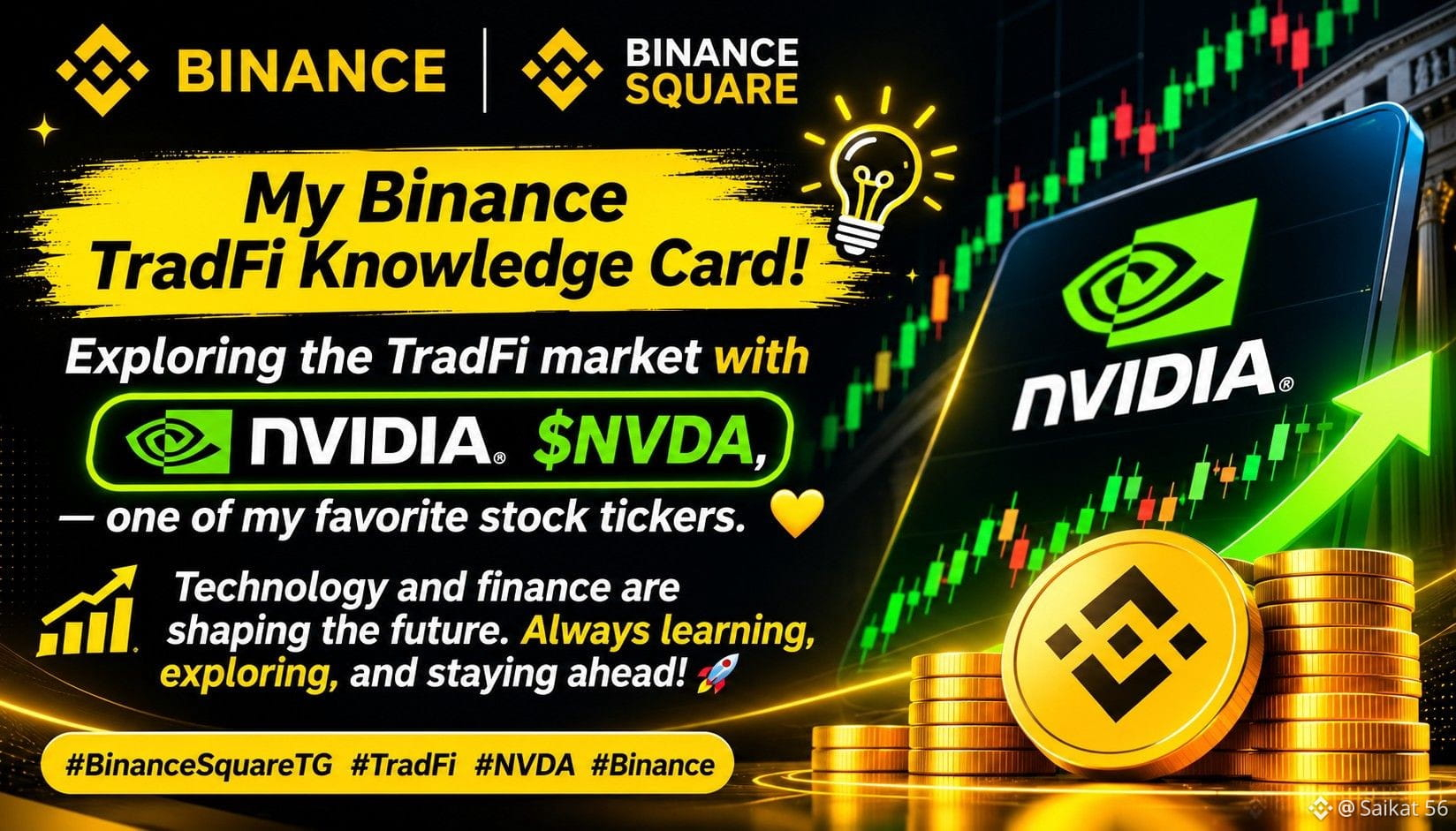
My Binance TradFi Knowledge Card!
Exploring the world of Traditional Finance through $NVDAB (NVIDIA) - one of my favorite stock tickers.
As technology continues to reshape global markets, NVIDIA stands out as an interesting name to follow in the evolving tech and finance landscape.
For me, TradFi is more than just exploring stock tickers. It's about understanding market movements, discovering new opportunities, and continuously expanding my financial knowledge.
Learning today, staying informed tomorrow, and growing with every step.
#BinanceSquareTG #TradFi #NVDAUSDT #Nvidia's $BTC #Binance
1
3
213
·
--
Bullish
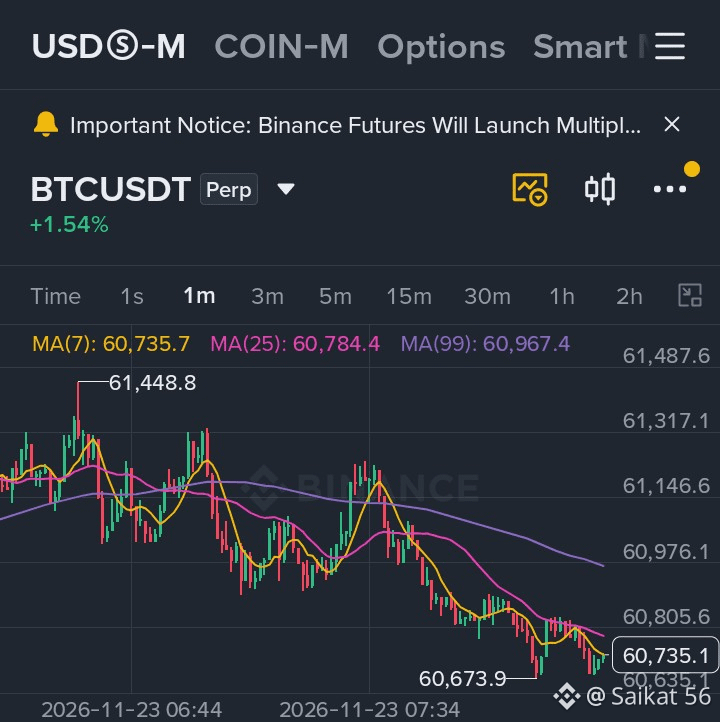
$BTC is showing short-term bearish momentum on the 1-minute chart.
Price is trading around $60,735, below MA(7), MA(25), and MA(99), confirming selling pressure.
The recent low near $60,673 is key support.
A breakdown could trigger further downside, while reclaiming $60,784 may signal a short-term recovery.
Watch for volume confirmation before entering trades
Price is trading around $60,735, below MA(7), MA(25), and MA(99), confirming selling pressure.
The recent low near $60,673 is key support.
A breakdown could trigger further downside, while reclaiming $60,784 may signal a short-term recovery.
Watch for volume confirmation before entering trades
110
·
--
Bearish
Bitcoin is showing once again why the crypto market never stops testing investors' patience.
$BTC price movements are always worth watching, but reacting to every small candle can be a costly mistake. The key is understanding market structure, volume, support and resistance levels, and overall sentiment.
Whether Bitcoin moves higher or faces another correction, staying disciplined matters more than chasing every move.
The market rewards patience, not panic. Keep watching BTC, manage your risk, and let the trend reveal its next direction.
$BTC #CryptoMarket #BinanceSquare
1
85
·
--
🤝 Let's Build a Stronger Binance Square Community! ❤️
Growth is better when we grow together!
I'm here to connect with genuine creators, support quality content, and build meaningful relationships across Binance Square.
💙 Follow me and let's connect!
🔄 Drop your profile in the comments.
🚀 Let's exchange support, engage consistently and achieve more together.
Real connections. Genuine engagement. Collective growth.
$BTC $BNB
#BinanceSquare #CommunityGrowth

2
3
36
·
--
🤝 Let's Build & Grow Together on Binance Square! ❤️
Growth is better when we support each other!
🔄 Follow me, and I'll follow back.
💬 Let's exchange meaningful engagement.
📈 Support quality content and genuine creators.
🌱 Stay active, connect, and grow together.
Drop your Binance Square profile below. Let's build a stronger community through mutual support and real connections!
Together We Grow.
Together We Win
$AMZNB $BTC
2
41
·
--
🤝 Let's Grow Together on Binance Square! ❤️
Follow me and I'll follow back! 🔄
Let's support each other through genuine engagement, quality content, and consistent interaction.
Drop your profile below. Let's connect, grow, and win together! 🚀
$BTC $BNB
#BinanceSquare #followtofollow
🤝 Let's Grow Together on Binance Square! ❤️
Follow me and I'll follow back! 🔄
Let's support each other through genuine engagement, quality content, and consistent interaction.
Drop your profile below. Let's connect, grow, and win together! 🚀
$BTC $BNB
#BinanceSquare #followtofollow
Follow me and I'll follow back! 🔄
Let's support each other through genuine engagement, quality content, and consistent interaction.
Drop your profile below. Let's connect, grow, and win together! 🚀
$BTC $BNB
#BinanceSquare #followtofollow

5
29
·
--
🤝 Let's Build & Grow Together on Binance Square! ❤️
Growth is better when we rise together!
Let's connect, follow each other, exchange meaningful engagement, and support creators who bring real value to the community.
👇 Drop your Binance Square profile in the comments.
I'll check it out and follow back!
Follow • Connect • Engage • Grow Together
💛 $BNB $ARMB
3
26
·
--
Good Afternoon Mates
Let's grow together on Binance Square
Follow me, and I'll follow back.
Let's support each other, stay active, engage with quality content, and build a stronger community together.
Drop your profile below ❤️
$BTC $BNB
Good Afternoon Mates
Let's grow together on Binance Square
Follow me, and I'll follow back.
Let's support each other, stay active, engage with quality content, and build a stronger community together.
Drop your profile below ❤️
$BTC $BNB
Let's grow together on Binance Square
Follow me, and I'll follow back.
Let's support each other, stay active, engage with quality content, and build a stronger community together.
Drop your profile below ❤️
$BTC $BNB
3
347
·
--
Let's grow together on Binance Square! 🤝
Follow me, and I'll follow back. Let's support each other, stay active, engage with quality content, and build a stronger community together.
Drop your profile below ❤️
$PIEVERSE $BNB
Let's grow together on Binance Square! 🤝
Follow me, and I'll follow back. Let's support each other, stay active, engage with quality content, and build a stronger community together.
Drop your profile below ❤️
$PIEVERSE $BNB
Follow me, and I'll follow back. Let's support each other, stay active, engage with quality content, and build a stronger community together.
Drop your profile below ❤️
$PIEVERSE $BNB

22
·
--
Initial Agent Offering is live. Claiming my 11,250 $IAO with my Proof of Agent. #IAO https://ptah.trade/iao
Initial Agent Offering is live. Claiming my 11,250 $IAO with my Proof of Agent. #IAO https://ptah.trade/iao
1
62
·
--
Bullish
#BitcoinSurpasses$83,000
🚨 𝗕𝗜𝗧𝗖𝗢𝗜𝗡 𝗦𝗨𝗥𝗣𝗔𝗦𝗦𝗘𝗦 $𝟴𝟯,𝟬𝟬𝟬! 🚀
$BTC is back in the spotlight as Bitcoin moves above the $83,000 level. 👀
This is an important price zone to watch, but the real question is whether buyers can sustain the momentum.
📈 What I'm watching: 🔹 Whether $BTC holds above $83K 🔹 Trading volume and buying pressure 🔹 The next resistance levels 🔹 Possible volatility if momentum fades
Breaking a key level can attract attention, but one move alone doesn't confirm a lasting trend.
For now, patience matters. Avoid chasing sudden price movements, manage your risk, and let the market provide confirmation.
Bitcoin's next move could be interesting. 👀🔥
What do you think can BTC maintain its momentum above $83K?
#Bitcoin #BTC #CryptoMarket #BinanceSquare
3
74
·
--
$CASH is getting some attention on Binance Square.
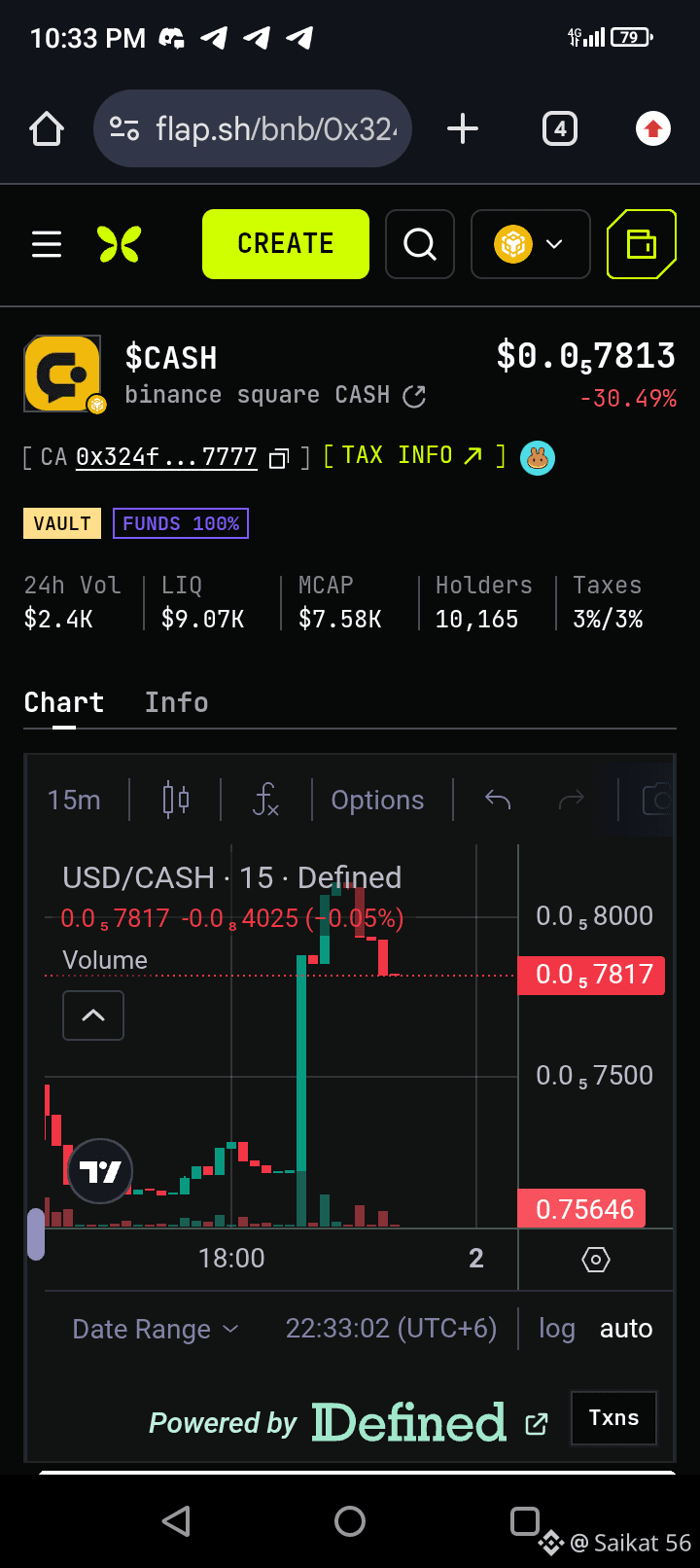
From the current snapshot, $CASH is trading around $0.0578, with roughly $2.4K 24h volume, $9.07K liquidity, and a market cap around $7.58K. The token also shows 10K+ holders and a 3% buy / 3% sell tax.
The chart shows a sharp move followed by a pullback, so volatility is clearly high. I’m watching how liquidity, volume, and price action develop from here rather than assuming the move will continue.
Do your own research and manage risk carefully.
$CASH
4
4
·
--
每次买卖都向比特币奖励池注入资金。只需持有b-money,BTC就会自动进入您的钱包——无需质押、无需领取、无需锁定期
CA (BSC):
0xf49725118cb0707b8706ffffe895f3ab16da7777
领取地址: 0xd1a1C8ABaE38e9480A9304d41c75D4eC39425aC4
每次买卖都向比特币奖励池注入资金。只需持有b-money,BTC就会自动进入您的钱包——无需质押、无需领取、无需锁定期
CA (BSC):
0xf49725118cb0707b8706ffffe895f3ab16da7777
领取地址: 0xd1a1C8ABaE38e9480A9304d41c75D4eC39425aC4
CA (BSC):
0xf49725118cb0707b8706ffffe895f3ab16da7777
领取地址: 0xd1a1C8ABaE38e9480A9304d41c75D4eC39425aC4
2
55
·
--
Post on Binance Square and you can claim a BNPaid bounty.
Website: https://bnbpaid.tech
CA (BSC):
0x11dC0Fd5e2C9A4407fdb15aA6871501Ba9307777
Payout address: 0xd1a1C8ABaE38e9480A9304d41c75D4eC39425aC4
Post on Binance Square and you can claim a BNPaid bounty.
Website: https://bnbpaid.tech
CA (BSC):
0x11dC0Fd5e2C9A4407fdb15aA6871501Ba9307777
Payout address: 0xd1a1C8ABaE38e9480A9304d41c75D4eC39425aC4
Website: https://bnbpaid.tech
CA (BSC):
0x11dC0Fd5e2C9A4407fdb15aA6871501Ba9307777
Payout address: 0xd1a1C8ABaE38e9480A9304d41c75D4eC39425aC4
2
6
·
--
Any token can launch a Binance Square promotion on @BNPaid in one step. Creators get paid on-chain for posting.
The paid plan that best fits building the Binance ecosystem.
Platform CA:
0x11dC0Fd5e2C9A4407fdb15aA6871501Ba9307777
payout address: 0xd1a1C8ABaE38e9480A9304d41c75D4eC39425aC4
Any token can launch a Binance Square promotion on @BNPaid in one step. Creators get paid on-chain for posting.
The paid plan that best fits building the Binance ecosystem.
Platform CA:
0x11dC0Fd5e2C9A4407fdb15aA6871501Ba9307777
payout address: 0xd1a1C8ABaE38e9480A9304d41c75D4eC39425aC4
The paid plan that best fits building the Binance ecosystem.
Platform CA:
0x11dC0Fd5e2C9A4407fdb15aA6871501Ba9307777
payout address: 0xd1a1C8ABaE38e9480A9304d41c75D4eC39425aC4
2
75
·
--
#termmax
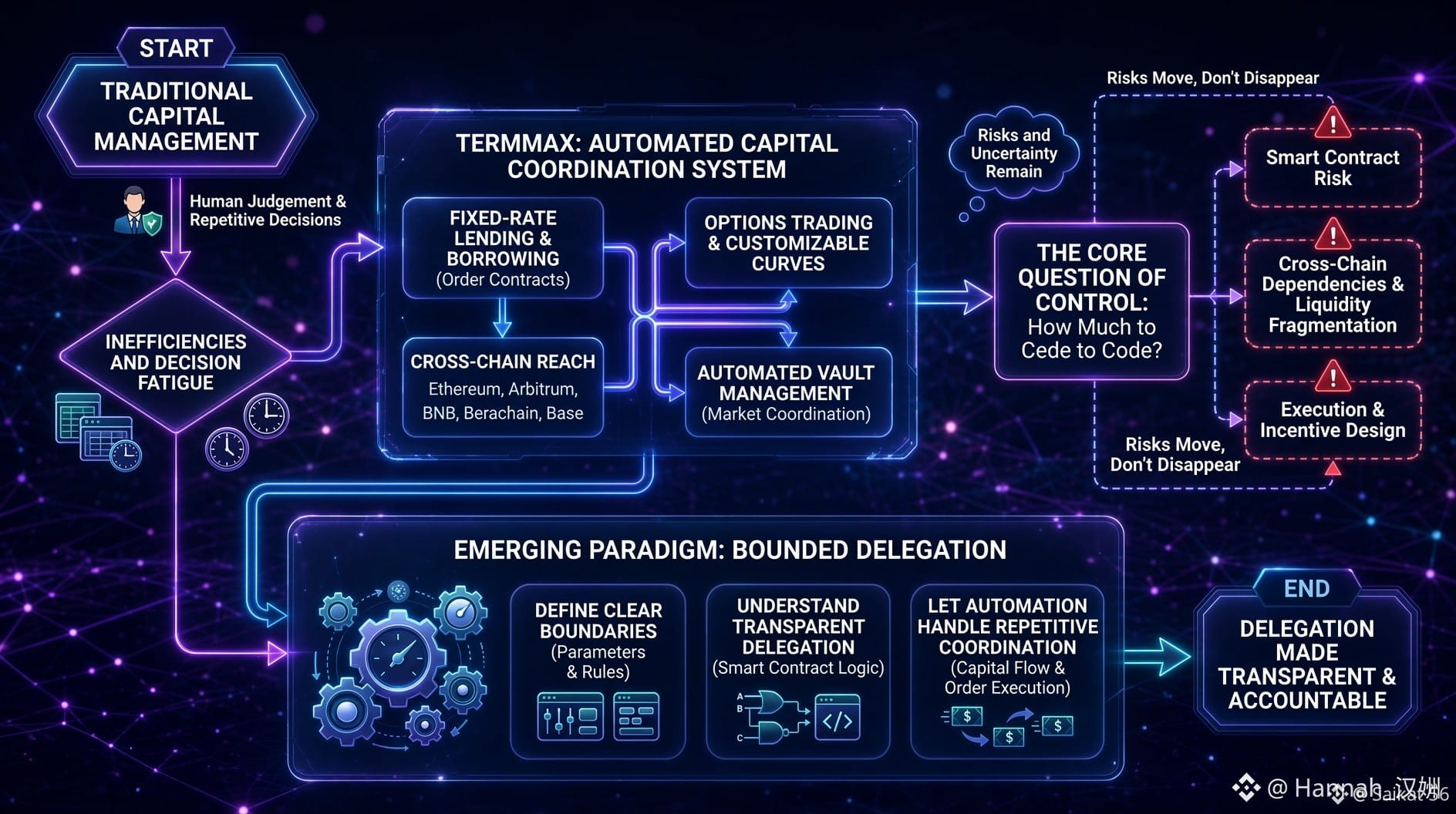
Think about putting in your money and letting the system take care of everything else.
Your money flows through different markets, looks for good chances, works with other available funds, and follows the rules set in the protocol.
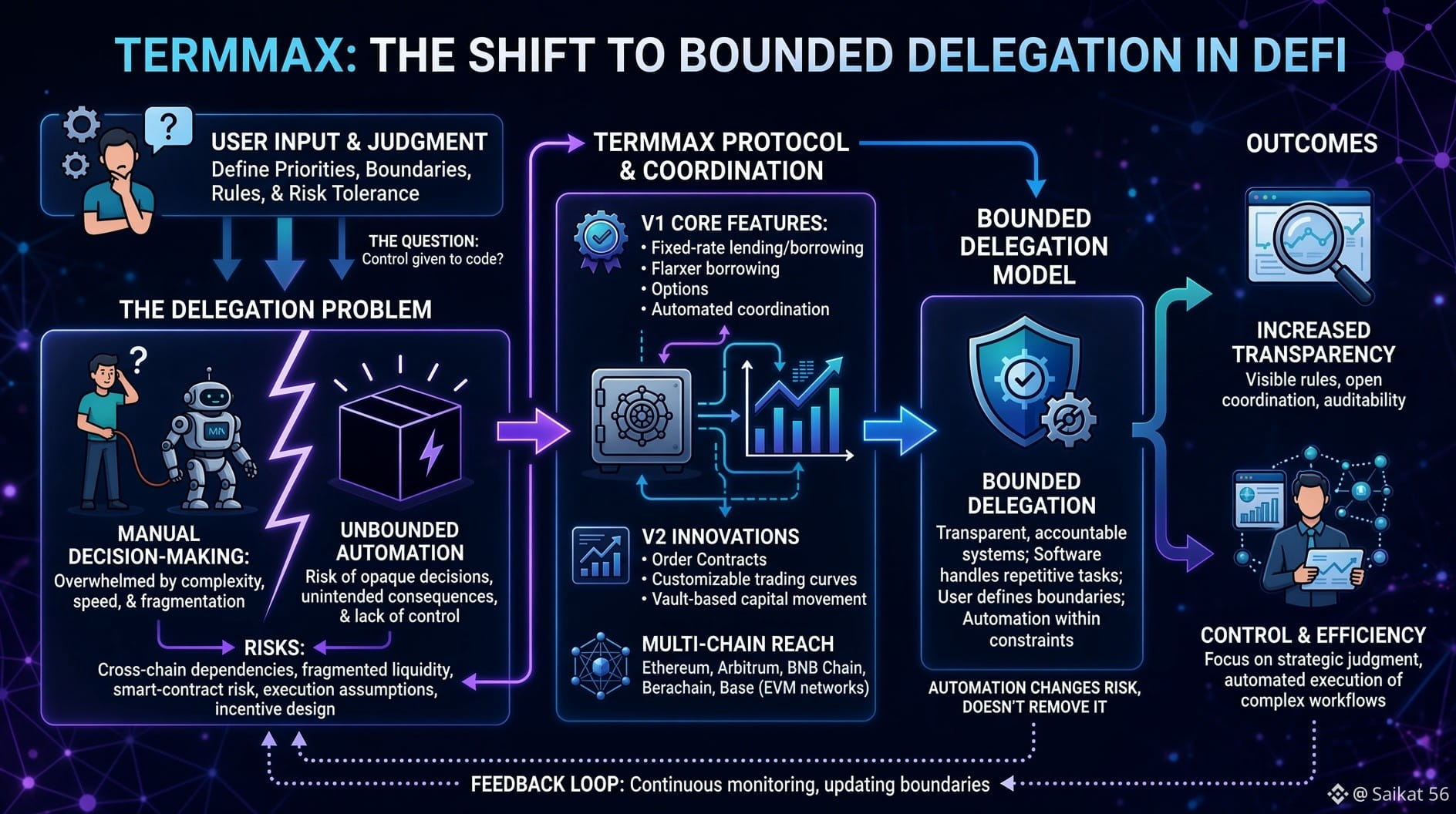
That's the kind of direction @termmax is looking into by offering fixed-rate lending and borrowing, options, automated capital coordination, and its updated version of order contracts along with customizable trading curves.
Its vault model builds on that concept by introducing capital that can work together across various markets rather than staying separate.
Then there’s the multi-chain side.
Ethereum, Arbitrum, BNB Chain, Berachain, Base, and other compatible EVM networks can help increase access and options.
But the more convenient automation becomes, the more one question stays with me:
Where does the risk go?
Automation can take over repetitive tasks, but it doesn't remove the unknown factors.
Cross-chain dependencies still exist.
Liquidity can still fragment. Smart contracts can still fail. Execution relies on certain assumptions, and the incentives in place can lead people to act in ways that weren't originally intended.
The risk doesn’t disappear.
It simply moves through a different system.
That’s why the concept I find most intriguing is bounded delegation.
I don’t necessarily want software deciding everything for me.
I want to set the boundaries.
I want to understand the rules.
Once the boundaries are set, let automation take care of the repetitive coordination within those limits.
The question is not about whether code can take the place of human judgment, but whether it can help make the process of delegating tasks clearer, more transparent, and more accountable.
$BTC $ETH
#termmax
Think about putting in your money and letting the system take care of everything else.
Your money flows through different markets, looks for good chances, works with other available funds, and follows the rules set in the protocol.
That's the kind of direction @TermMax is looking into by offering fixed-rate lending and borrowing, options, automated capital coordination, and its updated version of order contracts along with customizable trading curves.
Its vault model builds on that concept by introducing capital that can work together across various markets rather than staying separate.
Then there’s the multi-chain side.
Ethereum, Arbitrum, BNB Chain, Berachain, Base, and other compatible EVM networks can help increase access and options.
But the more convenient automation becomes, the more one question stays with me:
Where does the risk go?
Automation can take over repetitive tasks, but it doesn't remove the unknown factors.
Cross-chain dependencies still exist.
Liquidity can still fragment. Smart contracts can still fail. Execution relies on certain assumptions, and the incentives in place can lead people to act in ways that weren't originally intended.
The risk doesn’t disappear.
It simply moves through a different system.
That’s why the concept I find most intriguing is bounded delegation.
I don’t necessarily want software deciding everything for me.
I want to set the boundaries.
I want to understand the rules.
Once the boundaries are set, let automation take care of the repetitive coordination within those limits.
The question is not about whether code can take the place of human judgment, but whether it can help make the process of delegating tasks clearer, more transparent, and more accountable.
$BTC $ETH
3
3
356
·
--
@termmax is solving a problem that every DeFi borrower can relate to: you take out a loan today, but by tomorrow, you're left guessing about how much it will actually cost you to borrow.
That is when fixed-rate lending begins to seem appealing. You understand the rate, you know the term, and there's less doubt about how much you'll have to pay.
Simple, right?
Well, maybe from the borrower’s side.
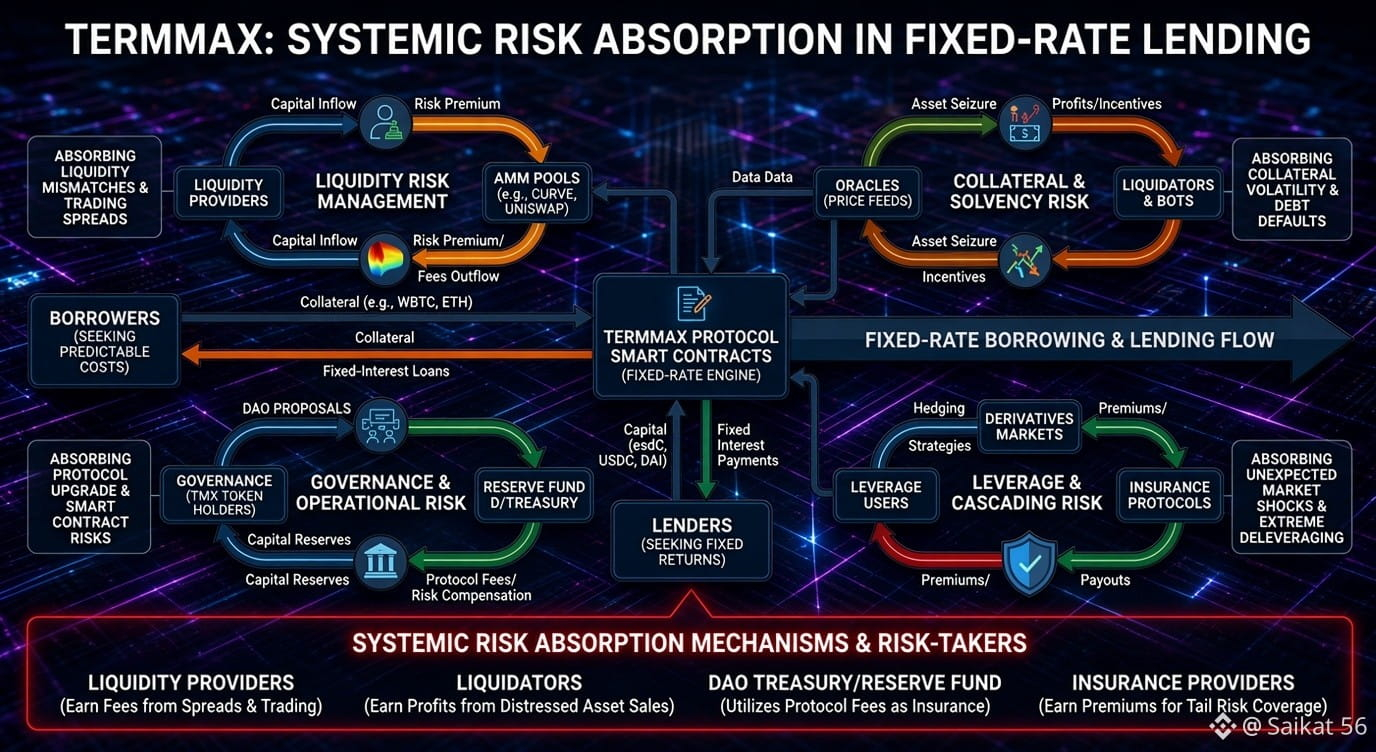
Fixing the interest rate doesn't eliminate the real risks that are still present. When markets turn bad, there's less money available to trade, the value of assets used as security may drop, borrowed money can be called in, and even smart contracts and the rules that govern them are put to the test.
I have noticed this trend in DeFi before: the way users interact with the platform gets simpler, but the systems working behind the scenes get more complicated.
So the real question for #termmax is not just about whether it can offer fixed rates.
The bigger question is what happens when the market faces real stress.
Who ultimately absorbs the risk?
And just as importantly, who is being rewarded for taking it?
That's where the model will be put to the real test.
#TermMax $BTC $ETH
@TermMax is solving a problem that every DeFi borrower can relate to: you take out a loan today, but by tomorrow, you're left guessing about how much it will actually cost you to borrow.
That is when fixed-rate lending begins to seem appealing. You understand the rate, you know the term, and there's less doubt about how much you'll have to pay.
Simple, right?
Well, maybe from the borrower’s side.
Fixing the interest rate doesn't eliminate the real risks that are still present. When markets turn bad, there's less money available to trade, the value of assets used as security may drop, borrowed money can be called in, and even smart contracts and the rules that govern them are put to the test.
I have noticed this trend in DeFi before: the way users interact with the platform gets simpler, but the systems working behind the scenes get more complicated.
So the real question for #termmax is not just about whether it can offer fixed rates.
The bigger question is what happens when the market faces real stress.
Who ultimately absorbs the risk?
And just as importantly, who is being rewarded for taking it?
That's where the model will be put to the real test.
#TermMax $BTC $ETH
13
1
5
432
·
--
DeFi borrowing can feel like driving without knowing how much the next mile will cost.
Rates change, markets change, and all of a sudden, a position that seemed easy to handle turns into something costly.
That's the issue @termmax is tackling through fixed-rate lending providing borrowers with more stability rather than making them deal with fluctuating rates all the time.
But there’s another side to the story.
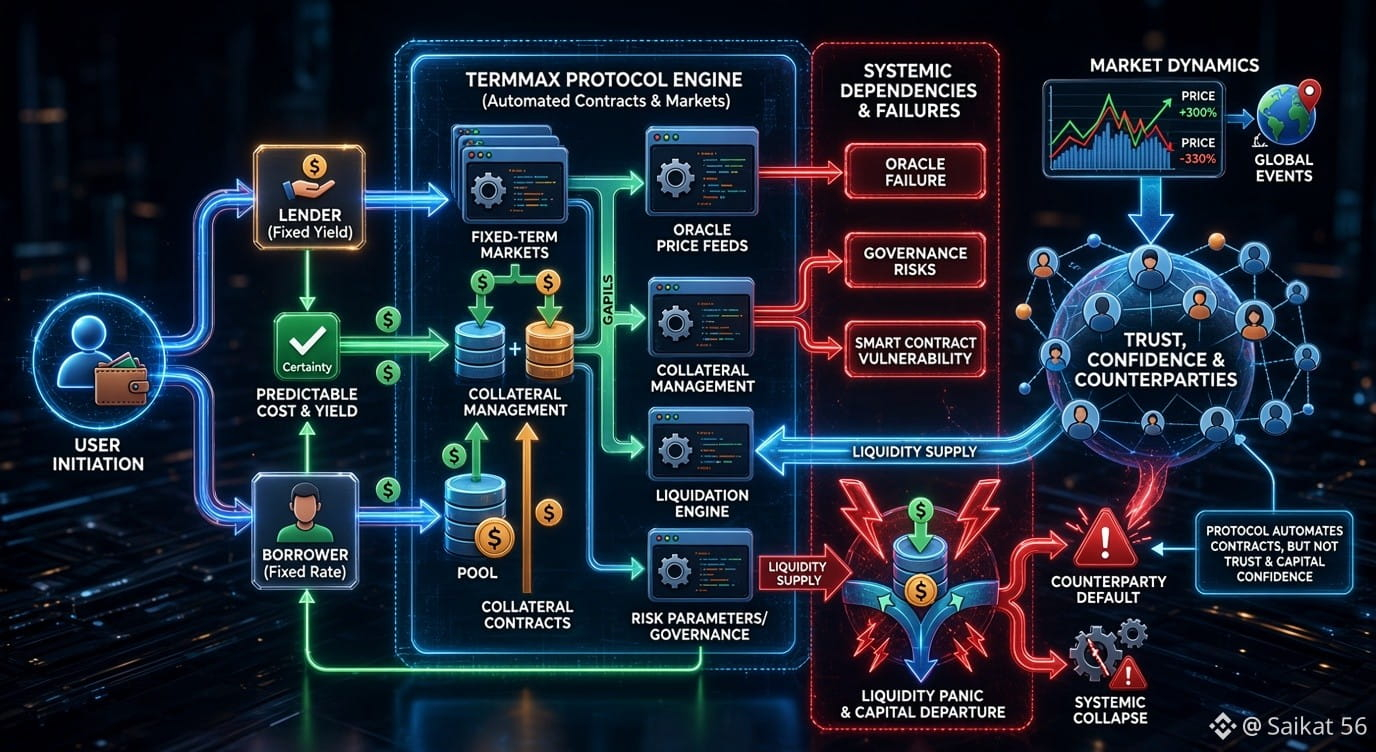
Fixed rates don’t make the system simple. Collateral, liquidations, options, oracles, and governance all add more layers. Adding another layer can create another possible place where something could go wrong.
Then comes the biggest question: liquidity.
When the market is quiet, almost every system seems powerful. The real challenge occurs when volatility strikes and capital begins to vanish.
Smart contracts can handle automatic execution, but they can't create trust, liquidity, or confidence when the market becomes unstable.
That's the part of the TermMax thesis I'll be paying the most attention to.
#TermMax @termmax $ETH
DeFi borrowing can feel like driving without knowing how much the next mile will cost.
Rates change, markets change, and all of a sudden, a position that seemed easy to handle turns into something costly.
That's the issue @TermMax is tackling through fixed-rate lending providing borrowers with more stability rather than making them deal with fluctuating rates all the time.
But there’s another side to the story.
Fixed rates don’t make the system simple. Collateral, liquidations, options, oracles, and governance all add more layers. Adding another layer can create another possible place where something could go wrong.
Then comes the biggest question: liquidity.
When the market is quiet, almost every system seems powerful. The real challenge occurs when volatility strikes and capital begins to vanish.
Smart contracts can handle automatic execution, but they can't create trust, liquidity, or confidence when the market becomes unstable.
That's the part of the TermMax thesis I'll be paying the most attention to.
#TermMax @TermMax $ETH
7
1
6
91
·
--
At first, I thought consensus was simply about getting enough validators to say “yes.”
But Dusk’s Succinct Attestation made me look at it differently.
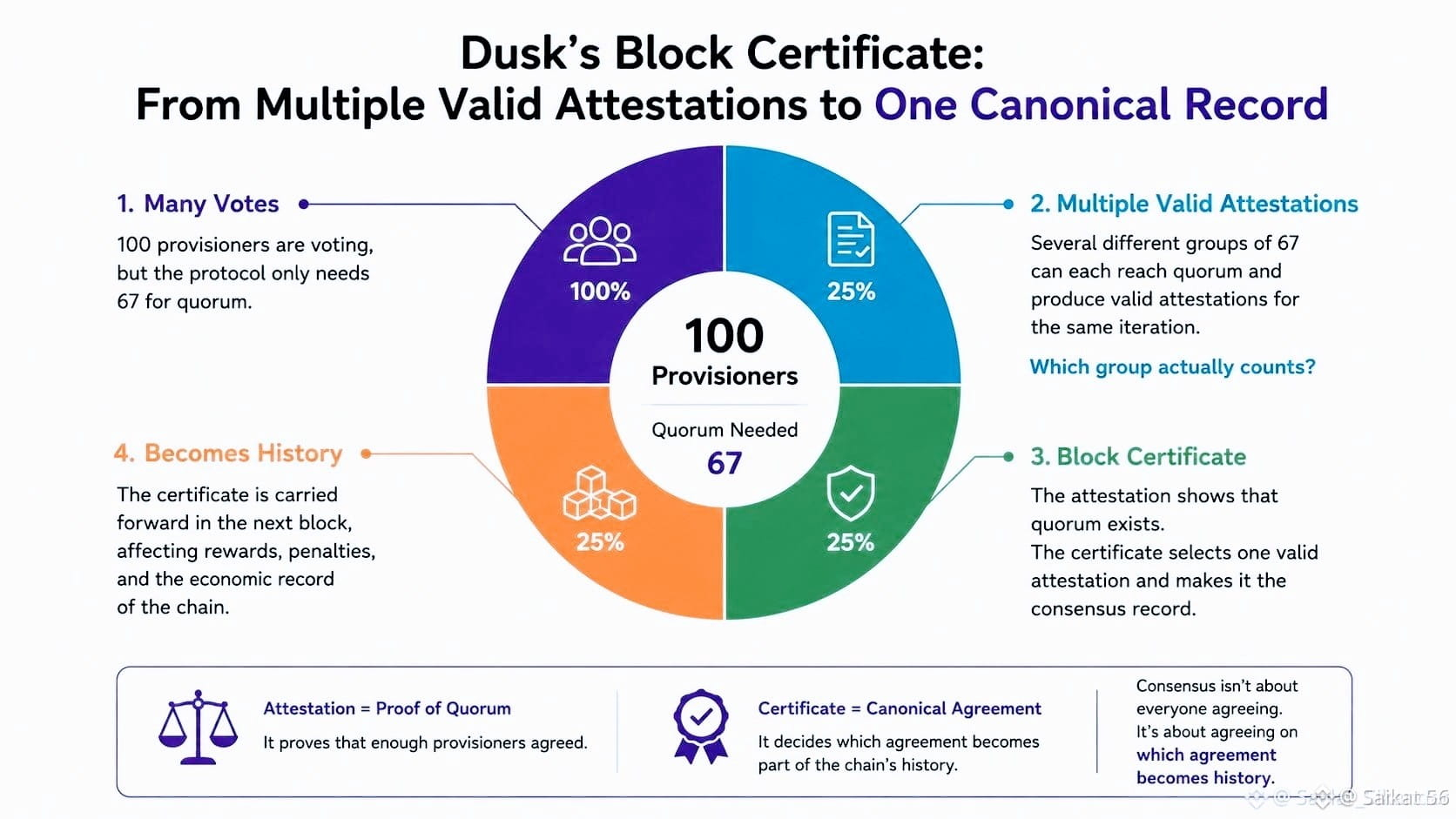
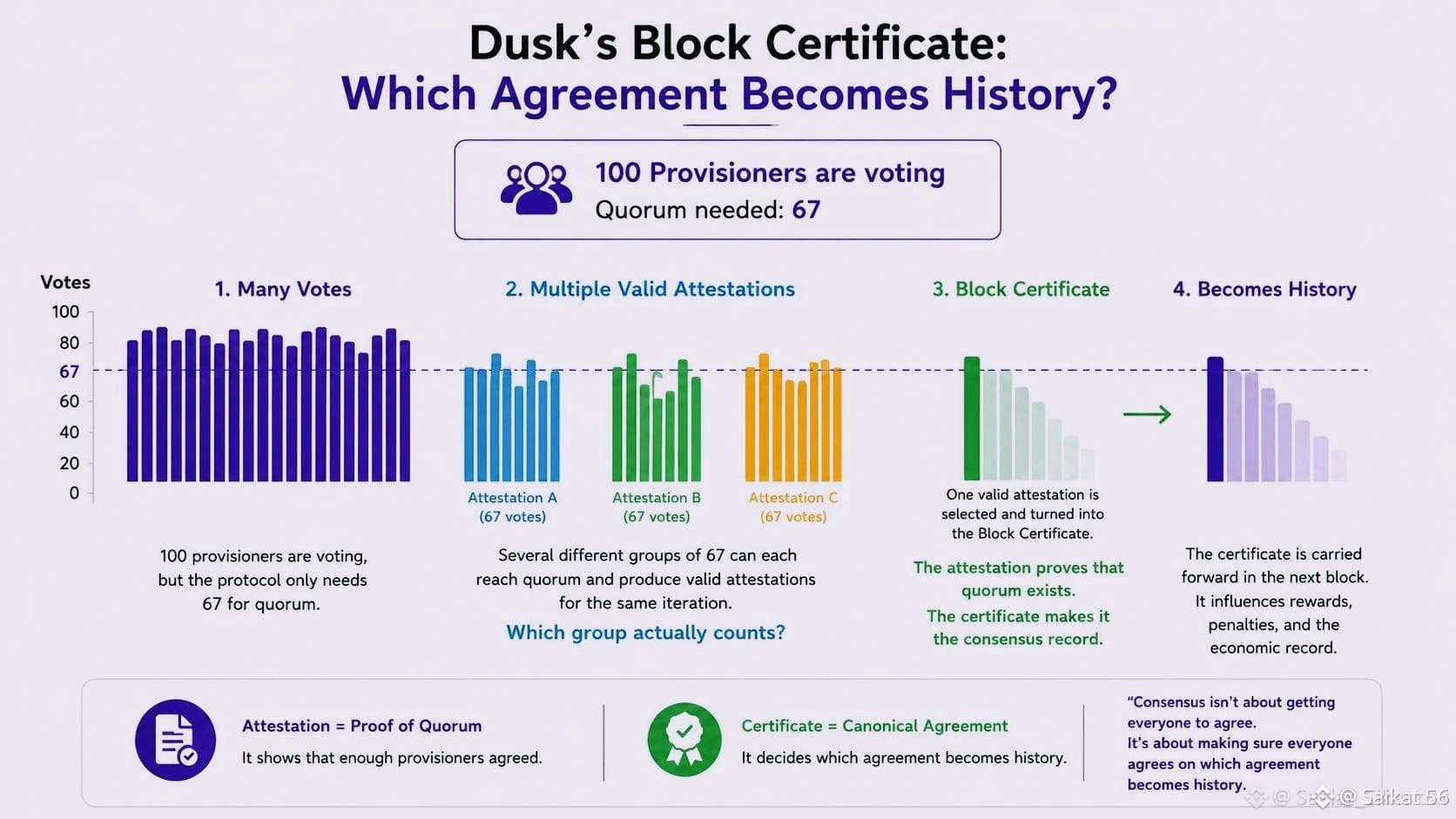
Imagine 100 provisioners are voting, while only 67 are needed to reach quorum. It’s possible for several different groups of 67 to produce valid attestations for the same iteration.
So then comes the real question:
Which one becomes the agreement that everyone carries forward?
That’s where @Dusk_Foundation Block Certificate gets really interesting.
The attestation proves that quorum was reached. The certificate goes one step further: it selects one valid attestation and turns it into the consensus record that the next block builds upon.
And this isn’t just a technical detail. The voters included in that certificate can also influence the economic side of consensus.
I used to think certificates were mainly about proving that validators had participated.
Now I see them differently.
Consensus isn’t always about making everyone agree on everything.
Sometimes, it’s about making sure everyone agrees on which valid agreement becomes history.
#dusk $DUSK
At first, I thought consensus was simply about getting enough validators to say “yes.”
But Dusk’s Succinct Attestation made me look at it differently.
Imagine 100 provisioners are voting, while only 67 are needed to reach quorum. It’s possible for several different groups of 67 to produce valid attestations for the same iteration.
So then comes the real question:
Which one becomes the agreement that everyone carries forward?
That’s where @Dusk Block Certificate gets really interesting.
The attestation proves that quorum was reached. The certificate goes one step further: it selects one valid attestation and turns it into the consensus record that the next block builds upon.
And this isn’t just a technical detail. The voters included in that certificate can also influence the economic side of consensus.
I used to think certificates were mainly about proving that validators had participated.
Now I see them differently.
Consensus isn’t always about making everyone agree on everything.
Sometimes, it’s about making sure everyone agrees on which valid agreement becomes history.
#dusk $DUSK
12
1
7
100
·
--
Bullish
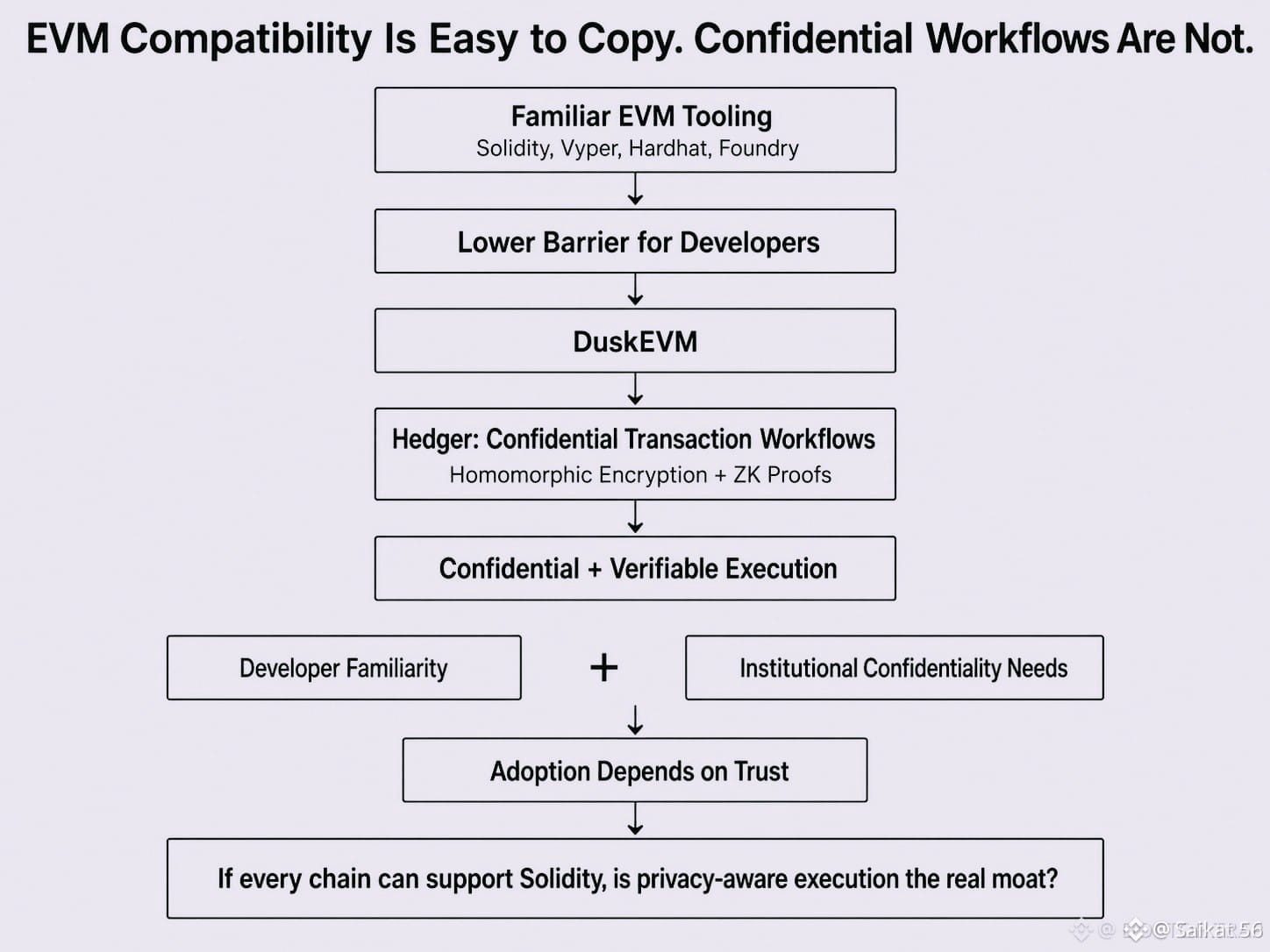
Developers already know Solidity, so an EVM-compatible environment makes the first step onto Dusk much easier.
But honestly, that alone isn’t what makes it interesting almost every chain can offer familiar EVM tooling.
What caught my attention while going through @Dusk_Foundation official docs was what comes after that familiar starting point.
DuskEVM supports Solidity, Vyper, Hardhat, and Foundry, giving developers an environment they already understand.
But Hedger on testnet adds another layer by combining homomorphic encryption with zero-knowledge proofs for confidential transaction flows.
That changes the conversation from simply “EVM, but private.”
Homomorphic encryption allows computation on encrypted data without exposing the underlying values, while ZK proofs can verify correctness without revealing sensitive information.
For financial applications, that combination could be much more meaningful. Institutions don’t just need privacy they need to know what remains confidential, what can still be verified,
and what can eventually be audited when necessary.
And that creates the real challenge.
Developers want familiar infrastructure.
Institutions want confidence that confidentiality won’t turn the system into an operational black box.
If Dusk can maintain that balance, developers get a familiar EVM experience while institutions gain something they can’t easily get from transparent chains.
So maybe the real question isn’t whether Solidity is becoming standard.
It’s whether privacy-aware execution becomes the harder moat to replicate.
#dusk $DUSK $AKE $KII
Developers already know Solidity, so an EVM-compatible environment makes the first step onto Dusk much easier.
But honestly, that alone isn’t what makes it interesting almost every chain can offer familiar EVM tooling.
What caught my attention while going through @Dusk official docs was what comes after that familiar starting point.
DuskEVM supports Solidity, Vyper, Hardhat, and Foundry, giving developers an environment they already understand.
But Hedger on testnet adds another layer by combining homomorphic encryption with zero-knowledge proofs for confidential transaction flows.
That changes the conversation from simply “EVM, but private.”
Homomorphic encryption allows computation on encrypted data without exposing the underlying values, while ZK proofs can verify correctness without revealing sensitive information.
For financial applications, that combination could be much more meaningful. Institutions don’t just need privacy they need to know what remains confidential, what can still be verified,
and what can eventually be audited when necessary.
And that creates the real challenge.
Developers want familiar infrastructure.
Institutions want confidence that confidentiality won’t turn the system into an operational black box.
If Dusk can maintain that balance, developers get a familiar EVM experience while institutions gain something they can’t easily get from transparent chains.
So maybe the real question isn’t whether Solidity is becoming standard.
It’s whether privacy-aware execution becomes the harder moat to replicate.
#dusk $DUSK $AKE $KII
2
2
88
Log in to explore more content
Join global crypto users on Binance Square
⚡️ Get latest and useful information about crypto.
💬 Trusted by the world’s largest crypto exchange.
👍 Discover real insights from verified creators.
Email / Phone number
Trending Topics
EvolveAtBinanceBlockchainWeek
940,744 views
11,683 Discussing
Binance Blockchain Week 2026 is coming to Bangkok! 🌍
On November 28–29, industry leaders, builders and community members from around the world will come together.
This year’s theme is Evolve. From technological innovation to real-world applications, we’ll explore the future of blockchain and crypto. Whether you’re joining us in person or following online, your voice is part of the conversation!
Starting today, follow this account and post on Binance Square using #EvolveAtBinanceBlockchainWeek . Include an image and share what you’re looking forward to, your perspectives on the industry, or the ideas and moments that stand out during the event. 🎉🙌
🎁 We’ll select 20 users who post with the hashtag to receive 50 USDT each! The cutoff for draw entries is November 29 at 23:59 (UTC).
Let’s be part of this evolution and explore what’s possible together!
Binance Blockchain Week
·572 Likes
·487.1k views
Nasdaq100FiveDayAvgIntradayVolatilityHits3.8%
12,707 views
185 Discussing
CanMarketsReboundAfterThanksgiving?
275,308 views
2,405 Discussing