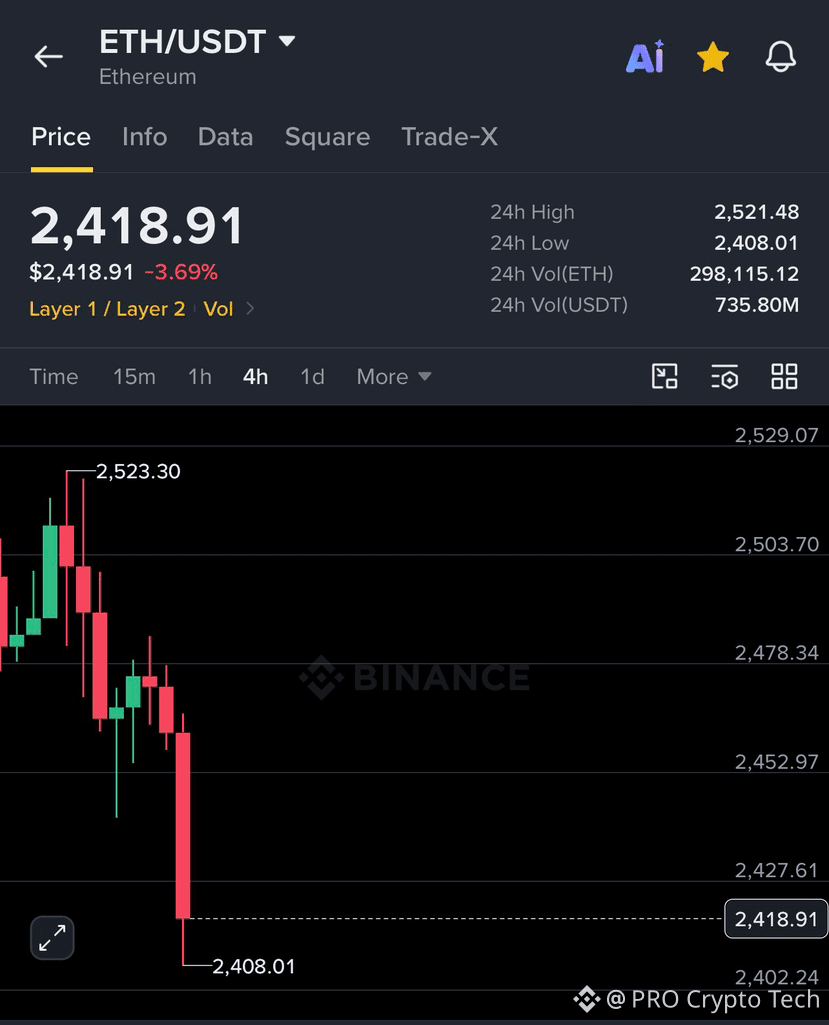
$ETH bounced from 1,938 and is pushing back above 2,100 โ the $2K level held and bulls are slowly regaining confidence. But the real wall is just above. ๐
๐จ Chart Analysis:
โข Strong bounce from 1,938 โ buyers defended the key demand zone
โข Price now back above 2,100 โ sentiment shifting positive
โข Daily candle green but volume light at 740M โ needs more conviction
๐ Bullish โ Hold 2,097 and break 2,154 = retest of 2,199 and push toward 2,212+ โ ๏ธ Bearish โ Lose 2,097 = back to 2,040 and risk of retesting 1,983
๐ฆ Bottom Line:
ETH clawed back above 2,100 โ thatโs a win for bulls. But 2,154 is the real test. Break it with volume and ETH is back in business. ๐๐ฅ
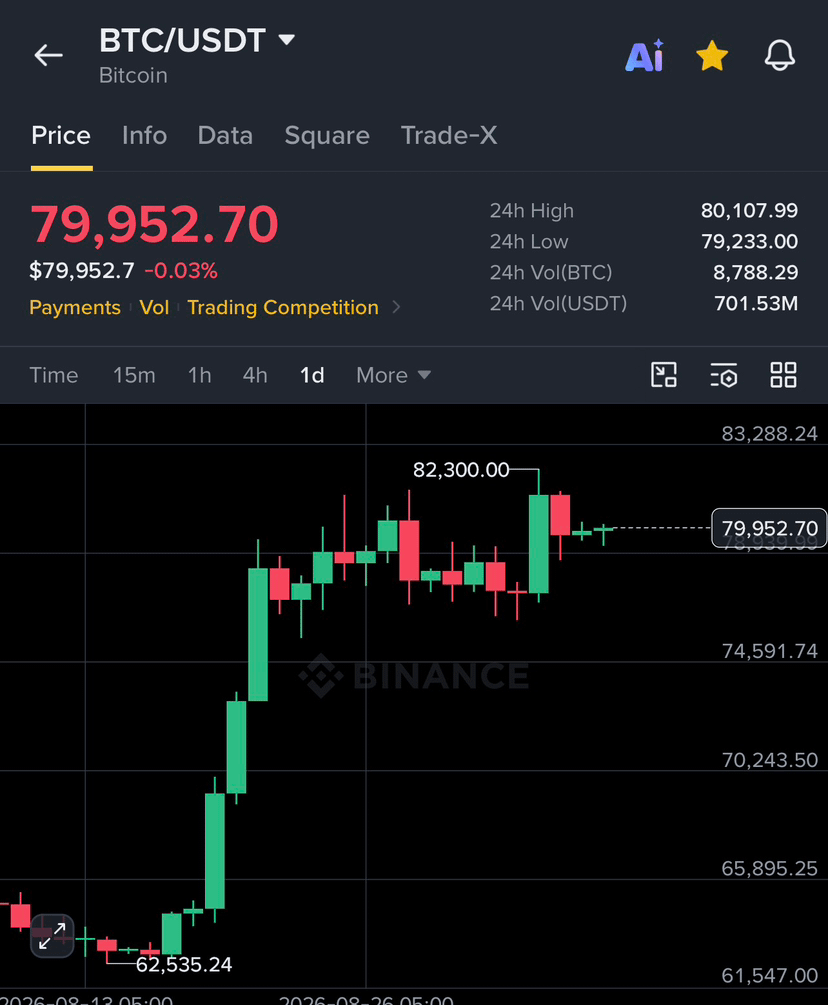
$BTC bounced hard from exactly 65,000 and is pushing back toward 68K โ that round number support saved the bulls once again. Recovery is on but the real test is ahead. ๐
๐จ Chart Analysis:
โข 65,000 held perfectly as daily support โ third time defending this level โข MA(5) below MA(10) โ still bearish on daily but momentum shifting โข Current candle trying to close green โ first positive daily in a while
๐ Bullish โ Daily close above 69,285 = trend shift confirmed, 70,831 next target โ ๏ธ Bearish โ Fail to hold 67,740 = back to 66,194 and 65,000 retest risk
๐ฆ Bottom Line:
65,000 is proving to be an iron floor. Bulls need a daily close above 69,285 to flip the structure bullish. Until then โ cautiously optimistic. ๐๐ฅ
What Happens When 20 Countries Are All On the Same Layer ๐ฅ
Network effects get talked about a lot in crypto. Usually in the context of users. More users attract more users. More liquidity attracts more liquidity. More developers attract more developers. The flywheel spins and the leading network pulls further ahead of everything behind it. That version of network effects is real. But it is also the most competed-for dynamic in the entire space. Every project is trying to trigger it. Most fail. The ones that succeed often find that the lead they built evaporates faster than expected when a better product or a bigger incentive program shows up. There is a different kind of network effect that almost nobody models. It is slower to develop. It is harder to see from the outside. And once it starts compounding, it is significantly more durable than anything driven by user preference. It is the network effect that happens when sovereign nations share infrastructure. What Changes When the First Country Deploys When the first country builds on a shared infrastructure layer, the effect is mostly technical. The system gets stress tested at real scale. The edge cases that only appear in production get identified and addressed. The security model gets validated against real adversarial conditions rather than simulated ones. The team learns things that no whitepaper process could have taught them. That is valuable. But it is not yet a network effect. It is proof of concept at sovereign scale. Sierra Leone was that first major step for $SIGN . A national digital ID system โ the digital Green Card โ running on live infrastructure with real citizens. UAE followed. The technology got proven in the most demanding environment possible. ๐ What Changes When the Fifth Country Deploys By the time a handful of countries are running on the same infrastructure layer, something starts to shift. Cross-border credential recognition becomes possible in a way it never was before. A citizen of one country can have their credentials verified by an institution in another country without either party needing to build a bespoke integration. The shared layer handles it. That is not just a convenience feature. For governments thinking about regional economic integration, cross-border labor mobility, international trade, and digital diplomacy โ interoperability at the identity layer is infrastructure that enables everything else. And here is where the network effect starts to become real. A country that is not on the shared layer starts to feel the cost of that absence. Not through any explicit pressure. Through the practical reality that the systems their citizens and institutions need to interact with are increasingly built on a layer they are not part of. What Changes When Twenty Countries Deploy This is the part I think almost nobody is modeling right now. Twenty sovereign nations all running identity, verification, and credential infrastructure on the same foundational layer creates something that has never existed before in the digital world. A genuinely interoperable trust network at sovereign scale. Think about what that means in practice. A business operating across multiple countries on the network can verify supplier credentials, employee qualifications, and contractual agreements without rebuilding trust from scratch in every jurisdiction. A citizen moving between countries on the network carries credentials that are recognized before they arrive. An institution in one country can extend services to verified users from another country without a separate compliance process for each one. Each additional country that joins makes the network more valuable for every country already in it. And simultaneously raises the cost of being outside it. That is a compounding dynamic. And unlike user-driven network effects, it does not reverse easily. Countries do not leave shared infrastructure networks the way users leave apps. ๐๏ธ Where $SIGN Sits Right Now 20+ countries are actively in the deployment pipeline right now. UAE and Sierra Leone are already live. That means the network effect I am describing is not a projection. It is already beginning to develop. The question is not whether it happens โ it is how fast the pipeline converts and how quickly the compounding becomes visible enough for the broader market to price it in. $32M from Sequoia, Binance Labs, Circle and IDG Capital. $15M real annual revenue. $4B+ distributed through TokenTable across 40M+ wallets. The institutional conviction is already there. What the market has not fully priced in yet is what the network looks like when the pipeline finishes converting. Not two countries. Not five. Twenty plus sovereign nations all sharing the same verification and identity layer. The Part Worth Sitting With Network effects in consumer products are visible and fast. You can watch them develop in real time through user numbers, engagement metrics, and market share data. Sovereign network effects are invisible and slow. They develop through procurement processes, government decisions, and institutional integrations that do not show up in any dashboard. By the time they are visible to the outside, most of the compounding has already happened. That is exactly the kind of dynamic that gets mispriced. Not because people are irrational. Because the signal is hard to read until it is obvious. And by the time it is obvious, the window has already closed. Twenty countries on the same sovereign infrastructure layer. That is the number worth thinking about. Not because it is guaranteed โ but because the pipeline is real and the compounding is already starting. ๐ #SignDigitalSovereignInfra $SIGN @SignOfficial -
The Difference Between a Project That Needs Adoption and Infrastructure That Gets Depended On
There is a category distinction in technology that almost nobody talks about clearly. Some products need you to choose them. Every day, every cycle, every decision point is another moment where you could choose something else instead. The product has to keep earning your preference. It has to keep being relevant. The moment a better option appears or the narrative shifts, the switching cost is low enough that people move. Infrastructure is different. Infrastructure does not earn your preference. It earns your dependence. And dependence is a completely different relationship. That distinction is the most important thing I keep coming back to when I think about SIGN and @SignOfficial. Because the entire question of whether this project matters long term comes down to which category it actually ends up in. What Adoption Actually Looks Like Adoption is fragile in ways that look fine on the surface. A project can have millions of users, billions in TVL, a thriving community and genuine product market fit โ and still be one bad cycle away from irrelevance. Because adoption is driven by preference, and preference changes. Better yields appear somewhere else. A newer narrative pulls attention. A competitor launches with slightly lower fees and a bigger marketing budget. The users who chose you can unchoose you. That is the fundamental vulnerability of anything that lives in the adoption category. Most crypto projects are here. Even very successful ones. And there is nothing wrong with that โ adoption-driven products can be enormously valuable. But they require constant energy to maintain. The flywheel needs to keep spinning. What Dependence Actually Looks Like Dependence looks completely different. When a government builds its national digital identity system on a foundation, that foundation does not get replaced because sentiment shifted. The switching cost is not a spreadsheet calculation โ it is a years-long migration project with real consequences for real citizens if anything breaks during the transition. When an institution integrates verification into its core operations โ when the credential check becomes part of how loans get approved, how contracts get executed, how identity gets confirmed at scale โ walking away from that is not a product decision. It is an operational restructuring. Dependence creates a completely different durability profile. Not because the product is perfect. But because the cost of leaving has become real in a way that preference alone never creates. Where $SIGN Is Trying to Land This is the category SIGN is explicitly building toward. And the deployments are the evidence that it is getting there. Sierra Leone did not launch a pilot program. They launched live national digital ID infrastructure with real citizens, real credentials, and real institutional weight behind the decision. That is not adoption. A government does not build its national identity system on something it is casually trying out. UAE deployed. Not announced โ deployed. The procurement process that preceded that decision involved security audits, technical evaluations, and institutional sign-off at levels that most crypto projects never interact with. They went through all of it and built on SIGN anyway. 20+ additional countries are moving through active deployment pipeline. Each one that goes live adds to a network where the cost of non-alignment quietly rises for everyone outside it. ๐๏ธ The Numbers That Tell the Real Story $15 million in real annual revenue is not an adoption number. Adoption numbers are driven by incentives, yield farming, token emissions โ things that go away when the incentive does. Revenue from institutions that have integrated your infrastructure into their operations is a dependence number. They are paying because they need it to keep working. $4 billion distributed through TokenTable across 40 million plus wallets for 200 plus projects. When that volume of institutional asset distribution runs through a single infrastructure layer, the switching cost for those 200 projects is not a preference decision anymore. $32 million from Sequoia Capital, Binance Labs, Circle and IDG Capital. These institutions invest in infrastructure plays differently than they invest in consumer products. They are not betting on adoption curves. They are betting on dependence โ on the structural position a technology occupies once the network around it is built. The Part That Is Still Being Answered I want to be honest about what is not settled yet. The transition from adoption to dependence is not automatic. Projects that have early government deployments and institutional revenue still fail to reach the scale where dependence becomes structural. The pipeline has to convert. The 20+ countries have to actually deploy. The network has to grow to the point where being outside it carries real cost. That is still in progress. The foundation is more solid than most. The deployments are real. The revenue is real. But the full dependence dynamic โ the point where the infrastructure is genuinely load-bearing for enough of the world that it becomes irreplaceable โ that is still being built. What I keep coming back to is that the trajectory is pointed in the right direction. And in infrastructure, trajectory matters more than current position. Projects that need adoption have to keep earning it. Infrastructure that earns dependence operates on a different timeline entirely. That is the bet Sign is making. And so far, the evidence suggests it is not a bad one. ๐ #SignDigitalSovereignInfra $SIGN @SignOfficial .
SOL just dropped off a cliff โ from 83.88 straight down to 81.53 in back to back red candles. No bounce, no support, just pure selling pressure. Bears are in full control right now. ๐
๐จ Chart Analysis:
โข Clean staircase selloff on 15M โ every level broke without a fight โข 81.53 just printed as new low โ buyers nowhere to be seen โข 1.98B USDT volume โ real selling, not just noise
$BTC wicked down to exactly 65,000 โ that round number support held perfectly. But the recovery is struggling. Every push up gets sold. Is this consolidation or a trap? ๐
๐จ Chart Analysis:
โข 65,000 psychological level held as support โ clean wick, buyers defended it โข Bounce to 68,408 got rejected โ sellers still active at highs โข Now ranging between 67K and 68K with low volume โ indecision
๐ Bullish โ Hold 67,079 and break 68,578 = trend reversal confirmed, 70K back in play โ ๏ธ Bearish โ Lose 67,079 = 66,329 next stop, risk of retesting 65,000 again
๐ฆ Bottom Line:
65,000 held but bulls have not taken control yet. 68,578 is the key breakout level โ until that breaks, this is just noise. Watch closely. ๐๐ฅ
There is a difference between a project that needs adoption and infrastructure that gets depended on.
Most crypto projects are chasing the first one. They need users to choose them. They need liquidity to flow toward them. They need narrative cycles to keep attention on them. The moment the cycle moves on, the project has to find a new reason to exist.
Infrastructure does not work that way. Once a government builds its national identity system on a foundation, that foundation does not get swapped out because sentiment changed.
Once an institution integrates verification into its core operations, the switching cost is not a spreadsheet decision โ it is a years-long migration with real consequences if anything breaks in between. ๐๏ธ
That is the category $SIGN and @SignOfficial are trying to occupy. Not the project people choose when they feel like it. The infrastructure people cannot easily walk away from.
Sierra Leone did not launch a pilot. They launched live national digital ID infrastructure. UAE did not run a test environment.
They deployed. Those decisions carry institutional weight that no marketing campaign produces. Governments with serious procurement processes looked at the architecture and decided it was solid enough to build something that matters on top of it. ๐
$32M from Sequoia, Binance Labs and Circle. $15M real annual revenue. $4B+ through TokenTable. These are not adoption numbers. These are dependence numbers.
The difference between the two is everything. ๐
The Middle East Is Quietly Rebuilding Its Digital Backbone And SIGN Is at the Center ๐ฅโก๏ธ
Most people in crypto are chasing noise. Bull runs. Meme coins. Short-term narratives. But something much bigger is happening in the background. And almost no one is paying attention. Governments are rebuilding their digital infrastructure from the ground up. And this time, the foundation is blockchain. The Middle East is leading this shift. And one project keeps showing up at the center of it โ SIGN. Why the Middle East Is Moving First ๐ This region is no longer experimenting. It is executing. The UAE has made digital sovereignty a national priority. Saudi Arabia, through Vision 2030, is redesigning its economy around digital infrastructure. These are not small initiatives. These are multi-billion dollar transformations. Smart cities are being built. Digital economies are being designed. Entire systems are being restructured. But there is a problem most people ignore. None of this works without trust. Right now, much of the underlying infrastructure is outdated. Land records still exist in physical form. Documents can be forged. Agreements are difficult to verify. Identity systems are fragmented. Digital trust is weak. And without trust, a digital economy cannot scale. What SIGN Is Actually Building ๐ธ SIGN is not just another token. It is infrastructure. S.I.G.N stands for Sovereign Infrastructure for Global Nations. That is exactly what it is building. At the core is Sign Protocol. This is the layer that handles digital identity and attestations. It allows governments and institutions to verify documents, identities, and agreements on-chain. Everything becomes tamper-proof. Everything becomes permanently verifiable. Zero-knowledge proofs are used to ensure that verification happens without exposing sensitive data. This creates a balance between privacy and transparency. TokenTable is another key component. It has already distributed over 4 billion dollars across more than 40 million wallet addresses, supporting over 200 projects. This is not theoretical scale. This is real usage. EthSign handles digital agreements. Contracts, business deals, and even sovereign-level agreements can be signed and stored on-chain. Once recorded, they cannot be altered. That fundamentally changes how trust works. Real Deployments That Prove It Works ๐ฉ This is where SIGN separates itself from most crypto projects. Many projects are still in whitepaper stage. SIGN is already live with governments. The UAE has integrated this infrastructure as part of its digital push. These decisions go through strict regulatory, security, and technical evaluations. Sierra Leone launched a national digital ID system using SIGN infrastructure, known as the Digital Green Card. This is not a pilot. This is live national infrastructure. And it does not stop there. More than 20 countries are currently in the deployment pipeline. The demand is already there. The Numbers Behind the Project SIGN has raised 32 million dollars from major investors including Sequoia Capital, Binance Labs, Circle, and IDG Capital. These are not hype-driven investors. These firms focus on long-term infrastructure. The project is generating around 15 million dollars in annual revenue. That matters. Most crypto projects rely on token emissions to create artificial growth. SIGN is generating real income from real usage. The community is also strong, with over 400,000 members globally. The architecture is designed for scale. A public Layer-2 built on BNB Chain handles around 4,000 transactions per second. A private Hyperledger layer manages sensitive government operations and can scale up to 20,000 TPS. This hybrid structure allows transparency where needed and privacy where required. Why Infrastructure Always Wins ๐ฅ Infrastructure projects rarely look exciting in the early stages. They are quiet. They focus on complex problems. They do not rely on hype. But over time, everything starts depending on them. By the time the market realizes their importance, the early opportunity is gone. Digital sovereign infrastructure is not a trend. It is the next layer of how nations will operate. The Middle East is already moving. Governments are committed. Billions are being deployed. This shift does not wait for market cycles. SIGN is building the foundation for it. Already deployed. Already trusted. Already generating revenue. The only question is simple. Do you see it early, or do you wait until it becomes obvious?
There is no meeting where a government signs over its authority. No contract where independence gets formally surrendered. Power shifts happen differently โ through small alignments that each feel reasonable in isolation.
Through the quiet realization that standing apart has become more expensive than going along. That is the dynamic I keep sitting with when I think about $SIGN
Not because the project is doing something wrong. Because the question it is navigating is genuinely one of the hardest in infrastructure. Sovereignty does not get tested at the point of issuance. It gets tested at the point of recognition.
A credential can be completely valid inside the system that created it and still mean very little if the rest of the network chooses not to recognize it. And over time, systems that want their credentials to actually function feel a quiet pull toward alignment โ not because anyone forced them, but because the cost of being invisible to the institutions their citizens need is its own kind of pressure. ๐
That tension is real in any shared infrastructure system. What pulls me back to SIGN is that the architecture takes it seriously in ways that are not obvious on the surface. Governments with serious procurement processes decided the sovereignty promise was credible enough to build on. UAE live. Sierra Leone national ID deployed.
20+ countries in pipeline. $32M from Sequoia and Binance Labs. $15M real annual revenue. Whether that holds as the network scales to dozens of countries โ that question is still being answered in real time.
But the fact that it is being asked seriously, and that the deployments are real enough to make the answer matter โ that is what makes this worth watching closely. ๐
$SOL failed to hold $100 and has been bleeding ever since โ dumped from 97.68 all the way to 82.02. The dream of 3 digits is fading fast. Bulls need to wake up NOW. ๐
๐จ Chart Analysis
โข Clear lower highs forming โ downtrend structure on daily โข Failed recovery attempt at 90.89 got rejected hard โข Now sitting at 82.02 with very low volume โ no buyers in sight
๐ Bullish โ Hold 80.26 and reclaim 87.05 = recovery back toward 90+ โ ๏ธ Bearish โ Lose 80.26 = 79.38 breaks and SOL heads toward 75 zone
๐ฆ Bottom Line
$SOL is at a dangerous level. 80.26 is the last major support โ lose it and the daily chart gets much uglier. Bulls must defend here or itโs over for the short term. ๐ฅ
Why the Most Dangerous Shift in Power Happens Quietly โ Not Formally
Nobody announces the moment they lose influence. There is no meeting where a government signs over its authority. No contract where an institution formally surrenders its independence. No single decision that marks the turning point. Power shifts happen differently. They happen through accumulation. Through small alignments that each feel reasonable in isolation. Through the gradual realization that the cost of standing apart has quietly become higher than the cost of going along. That is the dynamic I keep thinking about when I look at $SIGN and @SignOfficial. Not because the project is doing something wrong. But because the question it is navigating is one of the hardest in infrastructure โ and I am not sure enough people are sitting with it seriously. The Formal Story and the Real Story The formal story of sovereign infrastructure is reassuring. Every government keeps its own rules. Every institution issues its own credentials. Every network participant retains authority over what it creates. Nobody is forced to comply with anything. The system is designed to enable connection without demanding merger. That story is true as far as it goes. The real story is more complicated. Because sovereignty does not get tested at the point of issuance. It gets tested at the point of recognition. And recognition is never neutral. When Recognition Becomes the Real Power A credential can be completely legitimate inside the system that created it and still mean very little outside of it. Another institution can choose to fully trust it, partially accept it, or ignore it entirely. And that choice โ made at the receiving end, not the issuing end โ is where actual influence starts to concentrate. Think about what that means in practice. If a government issues credentials that most of the network does not recognize, those credentials have limited value regardless of how technically valid they are. The issuer still has formal authority. But formal authority without practical recognition is not the same as real sovereignty. Over time, systems that want their credentials to actually function across the network feel a quiet pull toward alignment. Not because anyone forced them. Because the alternative โ being effectively invisible to the institutions their citizens need to interact with โ carries its own cost. Standards Are Never Neutral Forever This is where shared infrastructure always gets complicated. For systems to recognize each other, they need shared formats. Common schemas. Aligned expectations about what a valid credential looks like, what a legitimate attestation contains, what verification actually means. Those standards have to come from somewhere. And in practice, they come from whoever is already in the room โ the early adopters, the largest networks, the most active institutional participants. Not through explicit authority. Through the practical reality that the systems already using a standard have the most influence over how it evolves. So the question I keep returning to is not whether Sign Protocol intends to concentrate power. I do not think it does. The question is whether the architecture makes concentration structurally difficult โ or whether it just relies on good intentions staying good over time. Why This Actually Makes $SIGN More Interesting Here is the part that keeps pulling me back. Most infrastructure projects do not engage with this tension at all. They describe connection and interoperability as pure positives and move on. The complicated downstream questions about who shapes standards, who benefits from network effects, who bears the cost of non-alignment โ those get left for later. SIGN is operating in the space where those questions cannot be deferred. Sovereign governments are not going to deploy national identity infrastructure on a system that does not take these dynamics seriously. The institutional deployments that are already live โ UAE, Sierra Leone, 20+ countries in active pipeline โ did not happen because the pitch deck was clean. They happened because governments with serious procurement processes looked at the architecture and decided the sovereignty promise was credible enough to build on. $32M from Sequoia, Binance Labs, Circle and IDG Capital happened for the same reason. That does not mean every question is answered. $15M in real annual revenue and $4B+ distributed through TokenTable tells you the business works. It does not fully resolve the tension between shared infrastructure and genuine independence at scale. The Honest Place I Land Power does not shift through formal announcements. It shifts through the quiet accumulation of alignment, recognition, and dependence. That dynamic is real in any shared infrastructure system. It is not unique to SIGN. But it matters more here than in most places because the stakes โ national identity, sovereign credentials, government-level trust โ are higher than almost anything else being built in this space. The project is more honest about this tension than most. The architecture takes it seriously in ways that are not obvious on the surface. Whether that is enough as the network scales to dozens of countries and hundreds of institutions is a question still being answered in real time. But I think the fact that it is being asked at all โ and that the deployments are real enough to make the answer matter โ is what makes this worth paying close attention to right now. The quiet shifts are always the ones that matter most. ๐ #SignDigitalSovereignInfra $SIGN @SignOfficial -
I have a habit with projects that get a lot of attention.
Before I take them seriously, I try to break them. Look for where the logic gets soft. Where the narrative is doing more work than the technology.
Where the claims sound clean but fall apart the moment you actually stress test them. I went into $SIGN expecting to find that gap pretty quickly.
What surprised me is that the more I pulled, the less it came apart.
The core claim โ verify without exposing, prove without revealing โ holds up better than I expected when you actually look at the architecture.
The dual blockchain design is not an afterthought. The private Hyperledger layer handling sensitive government operations separately from the public chain is a deliberate response to exactly the metadata problem that ZK proofs alone do not fully solve. ๐
The deployments are more real than most. Sierra Leone did not announce a pilot. They launched live national digital ID infrastructure. UAE deployed, not announced. That distinction matters more than people realize.
The revenue is real. $15M annual. $4B+ distributed through TokenTable. $32M from Sequoia and Binance Labs. The business model question โ where most infrastructure narratives collapse โ actually has an answer here.
The weak point I did find is the sovereignty tension. When systems share infrastructure, whoever shapes the recognition standards quietly accumulates influence no one formally granted them. That is a real question. The technology alone cannot fully resolve it.
But that is a tension built into shared infrastructure itself โ not a failure of execution.
I kept looking for the crack. What I found was a project that had already done most of that work itself. ๐
I Kept Trying to Find the Weak Point in $SIGN. Here Is What I Actually Found.
I have a habit with projects that get a lot of attention. Before I take them seriously, I try to break them. Not aggressively, not with bad faith โ just methodically. I look for where the logic gets soft. Where the claims outrun the reality. Where the narrative is doing more work than the technology. I went into $SIGN and @SignOfficial expecting to find that gap fairly quickly. Most projects have one if you look long enough. And the infrastructure angle, the sovereign deployment framing, the government partnership narrative โ it all sounded a little too clean to hold up under pressure. So I started pulling. The First Thing I Tested: Is the Technology Actually Doing What It Claims The core claim of Sign Protocol is that it separates verification from exposure. Instead of storing your data on chain, it issues attestations โ structured proofs tied to schemas that confirm something is true without revealing the underlying information.
Zero knowledge proofs handle the privacy layer. You prove what needs to be proven. The blockchain confirms the proof is valid. Nobody sees what is behind it. I expected to find some version of the usual gap here. The place where the privacy claim is technically accurate but practically hollow โ where metadata, timing patterns, or on-chain behavior still tells the story the system was supposed to protect. And to be honest, that tension does exist. ZK proofs protect content. They do not make systems invisible. Patterns of interaction, frequency of verification requests, timing correlations โ these are real considerations that any serious deployment has to think about. But here is what I did not expect. The architecture accounts for this. The dual blockchain design โ public Layer-2 for open operations, private Hyperledger for sensitive government functions โ is not an afterthought. It is a deliberate response to exactly this problem. Sensitive operations do not live where patterns can be read. The technical claim mostly holds. The nuance is real, but it is not a fatal flaw. The Second Thing I Tested: Are the Deployments Real or Just Announcements This is where most infrastructure projects fall apart for me. The pattern is familiar. A government partnership gets announced. A press release goes out. The project gets credited with a sovereign deployment. And then nothing. No actual usage. No citizens interacting with the system. No institutional dependence. Just a logo on a website and a claim that does not survive contact with reality.
Sierra Leone did not follow that pattern. They launched a full national digital ID system on SIGN infrastructure and called it the digital Green Card. That is not an MOU. That is not a pilot environment with ten test users. That is live national infrastructure with real citizens, real credentials, and real consequences if it stops working. UAE is live. Not announced โ deployed. 20+ additional countries moving through active pipeline right now. I tried to find the gap between the claim and the reality here. The gap is smaller than I expected. The Third Thing I Tested: Does the Business Actually Work Revenue is where narratives go to die. A project can have beautiful technology, impressive partnerships and a compelling vision โ and still be running entirely on token emissions and investor capital with no real business underneath it. That is not infrastructure. That is a grant program with a whitepaper. $15 million in real annual revenue. Not incentivized volume. Not TVL inflated by yield farming. Actual revenue from actual institutions paying for infrastructure they depend on.
TokenTable has distributed over $4 billion across 40 million plus wallets for 200 plus projects. That is not a projection. That is usage. $32 million raised from Sequoia Capital, Binance Labs, Circle and IDG Capital. These institutions do not back projects that cannot answer the business model question. They backed this one. The business works. That was the hardest thing for me to find a counter-argument to. The Weak Point I Actually Found I did find something. The sovereignty question is real and it does not have a clean answer yet. When governments build on shared infrastructure, sovereignty gets tested not at the point of issuance but at the point of recognition. A credential issued by one system can be fully valid internally and still mean very little if other systems in the network choose not to recognize it. And as the network grows โ as more governments, more institutions, more systems begin relying on shared verification standards โ whoever shapes those standards quietly accumulates influence that no formal authority ever explicitly granted them. That is not a flaw unique to SIGN. It is a fundamental tension in any shared infrastructure play. But it is a tension that matters more as the network scales. And it is one that the technology alone cannot fully resolve.
I do not think it is fatal. But I think it is the part of this that deserves more honest conversation than it currently gets. Where I Actually Landed I went in looking for the crack in the foundation. The technology is more honest than I expected. The deployments are more real than most projects I have looked at. The business model is proven in a way that is genuinely rare at this stage. And the sovereign question โ the actual weak point โ is a tension built into the nature of shared infrastructure itself, not a failure of execution. That does not mean everything works perfectly or that the hard questions disappear. It means the foundation is more solid than the usual infrastructure narrative in crypto, and the risks that remain are the kind worth understanding rather than dismissing. I kept trying to find the weak point. What I found instead was a project that had already done most of that work itself. That is not something you see very often. ๐ #SignDigitalSovereignInfra $SIGN @SignOfficial -
Honestly been sitting with something that most people skip over when they look at $SIGN . Everyone talks about the deployments. UAE live. Sierra Leone national ID. 20+ countries in pipeline. And those matter โ they matter a lot. But the part that actually keeps pulling me back is something quieter than that.
The system does not store your data. It proves it. That distinction sounds small until you think about what it actually means. Every institution you have ever interacted with holds a piece of you somewhere in a database. Your bank. Your government. Your employer. Each one sitting on information that belongs to you, that you cannot take back, that you had no real choice but to hand over.
Sign Protocol flips that. Instead of storing raw data on chain, it issues attestations โ structured verifiable proofs that something is true. Your credential exists. It can be checked. But the underlying information stays where it belongs. With you. ๐
The question I keep coming back to is whether utility alone sustains a system like this, or whether trust assumptions that cannot be fully eliminated end up mattering more than the technology itself. Zero knowledge proofs handle the content. But metadata patterns still exist. And in sovereign deployments, that tension does not disappear just because the architecture is clean.
$32M from Sequoia and Binance Labs. $15M real annual revenue. The institutional conviction is clear. Whether the sovereignty promise holds at full scale โ that is still being proven in real time. And that is exactly why it is worth watching closely right now. ๐