

NEXA VAULT
4.8k Posts

NEXA VAULT
Report
Block User
Coffee, code & crypto that’s the vibe | Dream. Build. Repeat...
Occasional Trader
1.1 Years
54 Following
24.1K+ Followers
15.8K+ Liked
Posts
All
Live
·
--
$BNB is heating up!
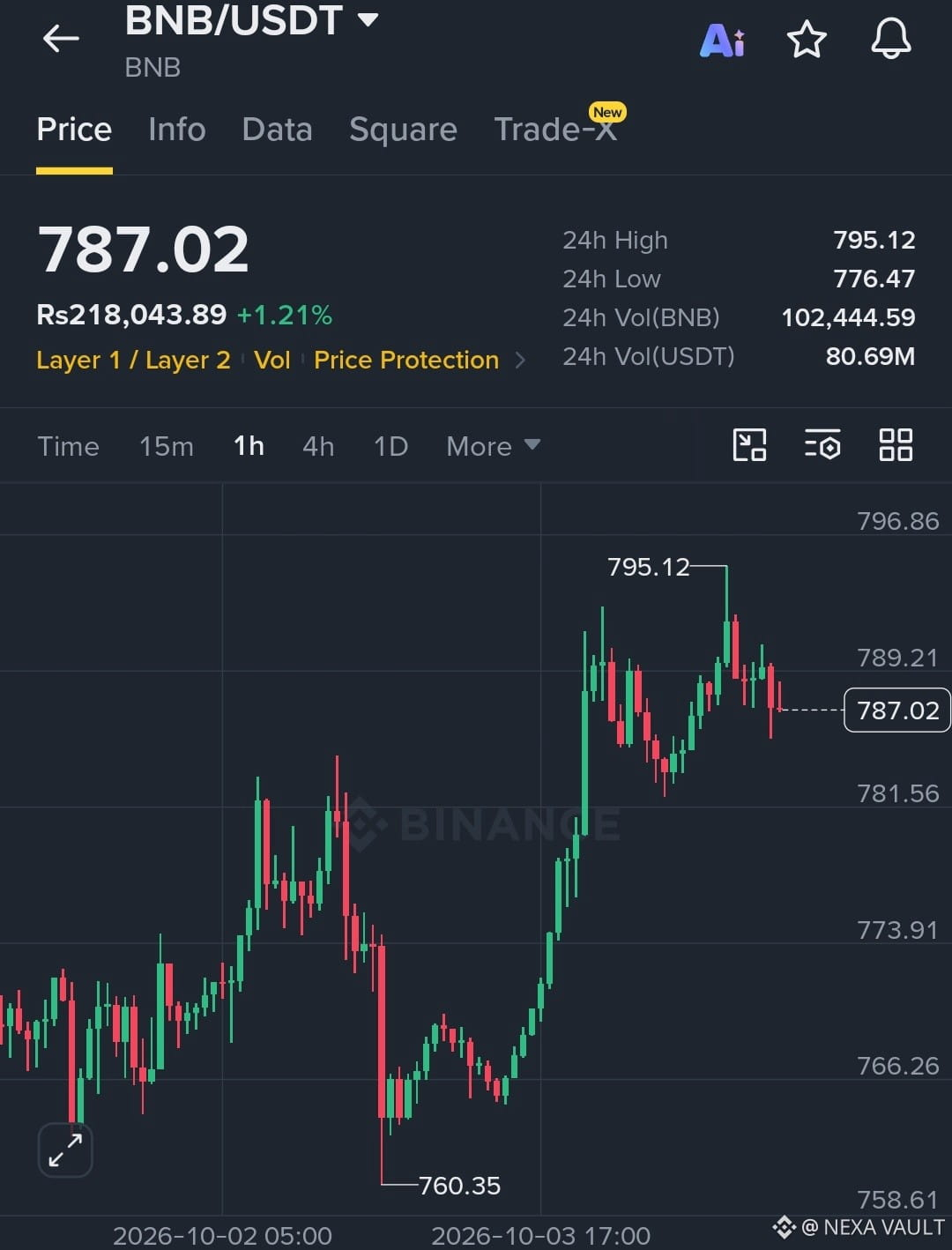
BNB is trading at $787.02 (+1.21%), after pushing to a 24h high of $795.12. Bulls are pressing resistance, but price is now cooling around $787.
Key levels: $795.12 resistance | $781.56 support
24h volume: $80.69M
A breakout above $795 could get explosive. Lose $781 and the momentum starts fading.
$BNB is heating up!
BNB is trading at $787.02 (+1.21%), after pushing to a 24h high of $795.12. Bulls are pressing resistance, but price is now cooling around $787.
Key levels: $795.12 resistance | $781.56 support
24h volume: $80.69M
A breakout above $795 could get explosive. Lose $781 and the momentum starts fading.
BNB is trading at $787.02 (+1.21%), after pushing to a 24h high of $795.12. Bulls are pressing resistance, but price is now cooling around $787.
Key levels: $795.12 resistance | $781.56 support
24h volume: $80.69M
A breakout above $795 could get explosive. Lose $781 and the momentum starts fading.
93
·
--
$BTC IS MOVING!
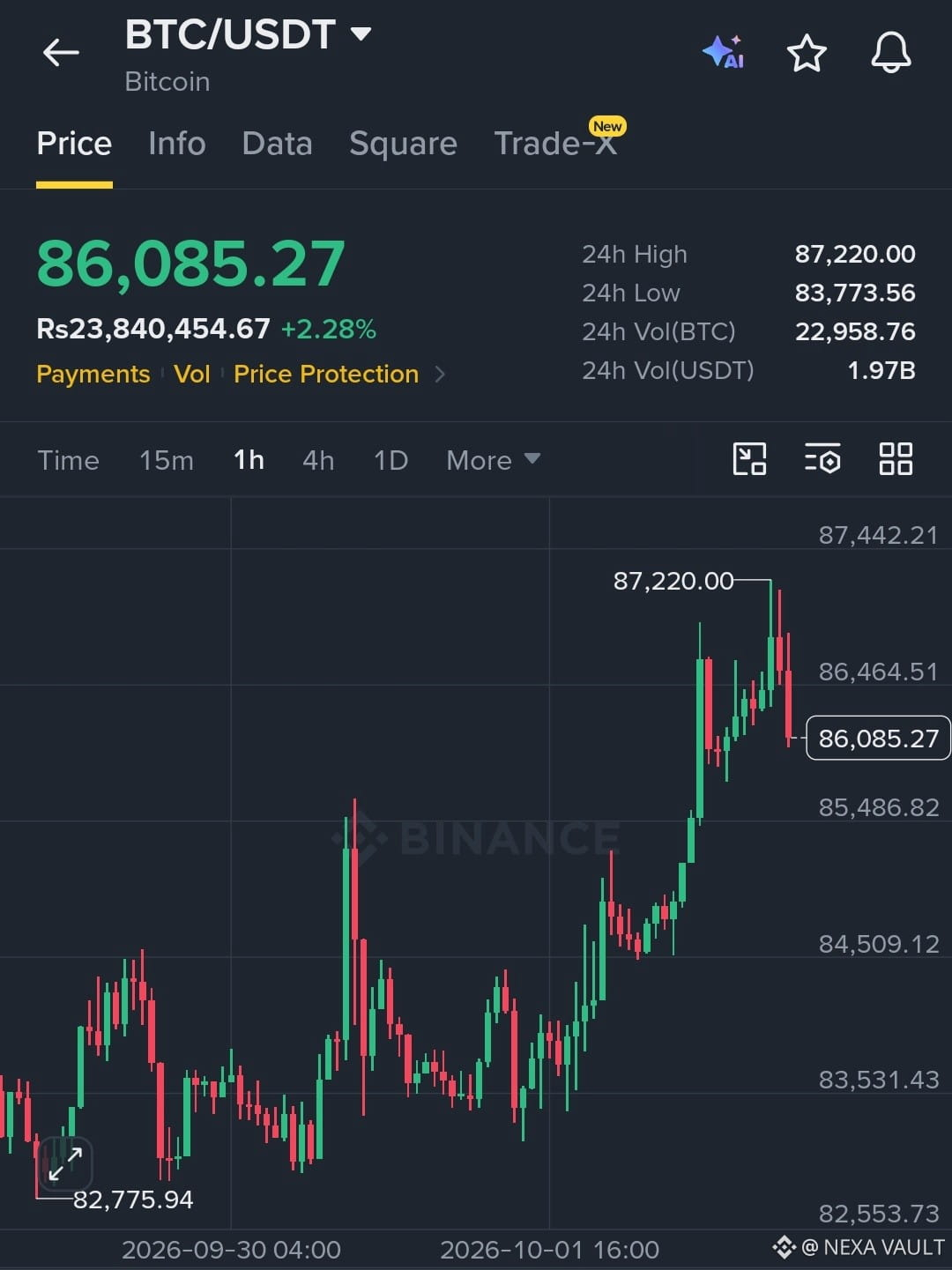
Bitcoin is trading around $86,085, up 2.28%, after tagging $87,220.
24H range: $83,773 → $87,220
24H volume: $1.97B
BTC just pushed hard above $86K. Now the question is whether bulls can reclaim $87.2K or sellers hit back again.
$BTC IS MOVING!
Bitcoin is trading around $86,085, up 2.28%, after tagging $87,220.
24H range: $83,773 → $87,220
24H volume: $1.97B
BTC just pushed hard above $86K. Now the question is whether bulls can reclaim $87.2K or sellers hit back again.
Bitcoin is trading around $86,085, up 2.28%, after tagging $87,220.
24H range: $83,773 → $87,220
24H volume: $1.97B
BTC just pushed hard above $86K. Now the question is whether bulls can reclaim $87.2K or sellers hit back again.
135
·
--
$BTC is moving FAST.
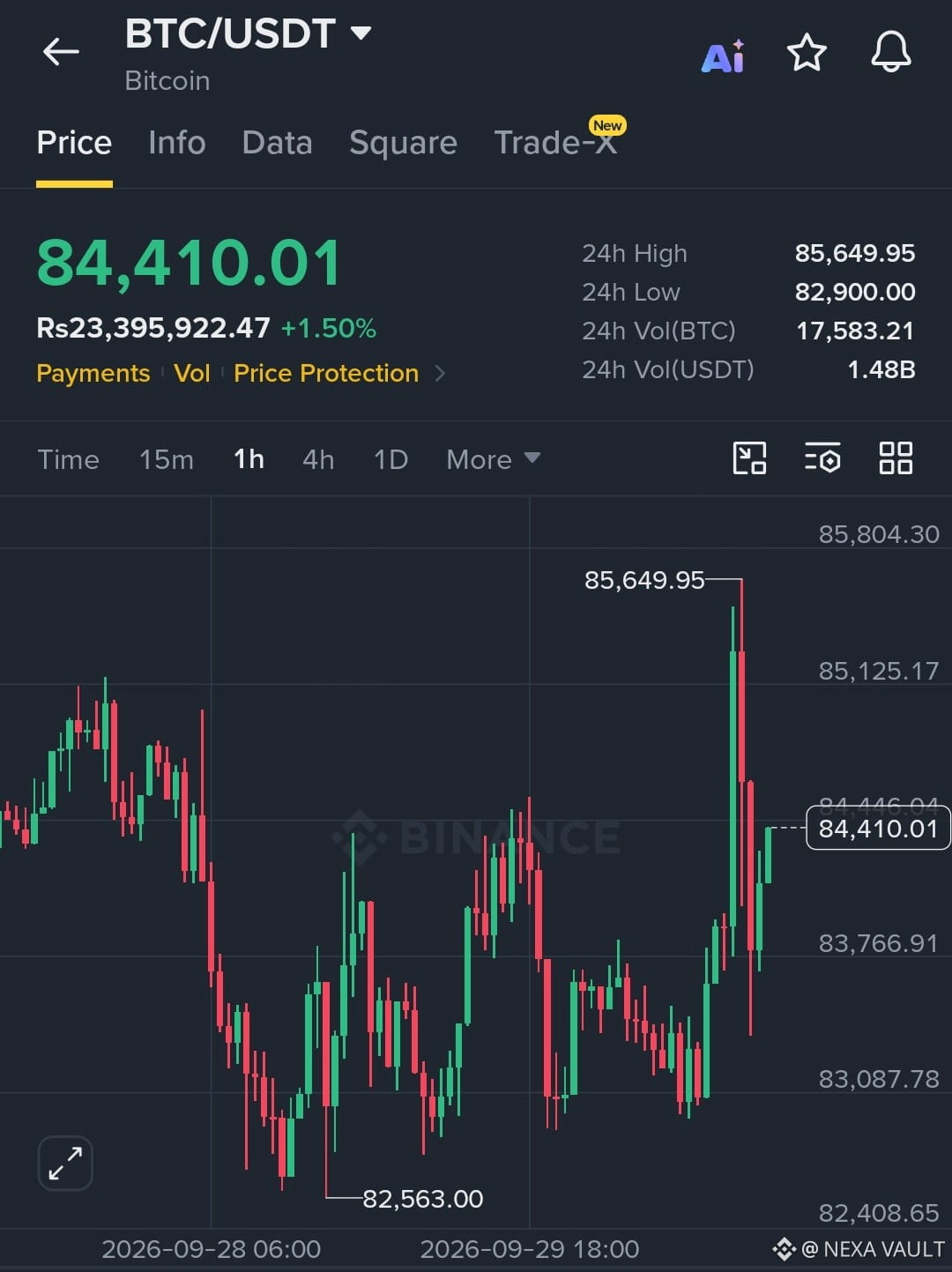
Bitcoin is at $84,410, up 1.50%, after ripping to a 24H high of $85,649.95.
That spike got rejected hard, but buyers are pushing back near $84.4K.
24H range: $82,900 → $85,650
24H volume: 17.58K BTC / $1.48B
$85.65K is the level to watch. Break it, and the next move could get wild.
$BTC is moving FAST.
Bitcoin is at $84,410, up 1.50%, after ripping to a 24H high of $85,649.95.
That spike got rejected hard, but buyers are pushing back near $84.4K.
24H range: $82,900 → $85,650
24H volume: 17.58K BTC / $1.48B
$85.65K is the level to watch. Break it, and the next move could get wild.
Bitcoin is at $84,410, up 1.50%, after ripping to a 24H high of $85,649.95.
That spike got rejected hard, but buyers are pushing back near $84.4K.
24H range: $82,900 → $85,650
24H volume: 17.58K BTC / $1.48B
$85.65K is the level to watch. Break it, and the next move could get wild.
142
·
--
$BNB is under pressure.
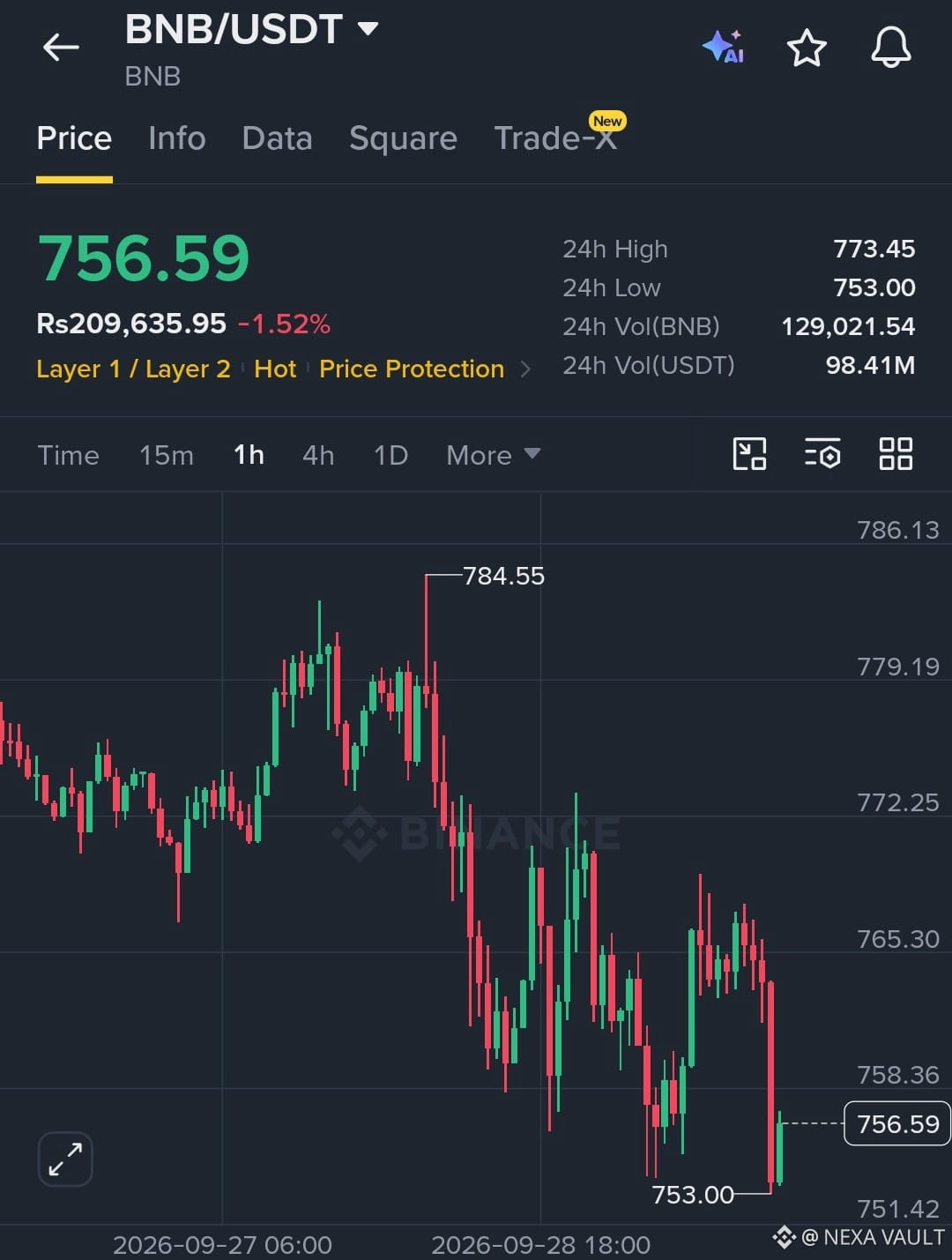
Price: $756.59
24H High: $773.45
24H Low: $753.00
24H Volume: $98.41M
BNB just swept $753 and bounced. Now $765-$773 is the key zone. Lose $753 and things could get ugly fast.
$BNB is under pressure.
Price: $756.59
24H High: $773.45
24H Low: $753.00
24H Volume: $98.41M
BNB just swept $753 and bounced. Now $765-$773 is the key zone. Lose $753 and things could get ugly fast.
Price: $756.59
24H High: $773.45
24H Low: $753.00
24H Volume: $98.41M
BNB just swept $753 and bounced. Now $765-$773 is the key zone. Lose $753 and things could get ugly fast.
99
·
--
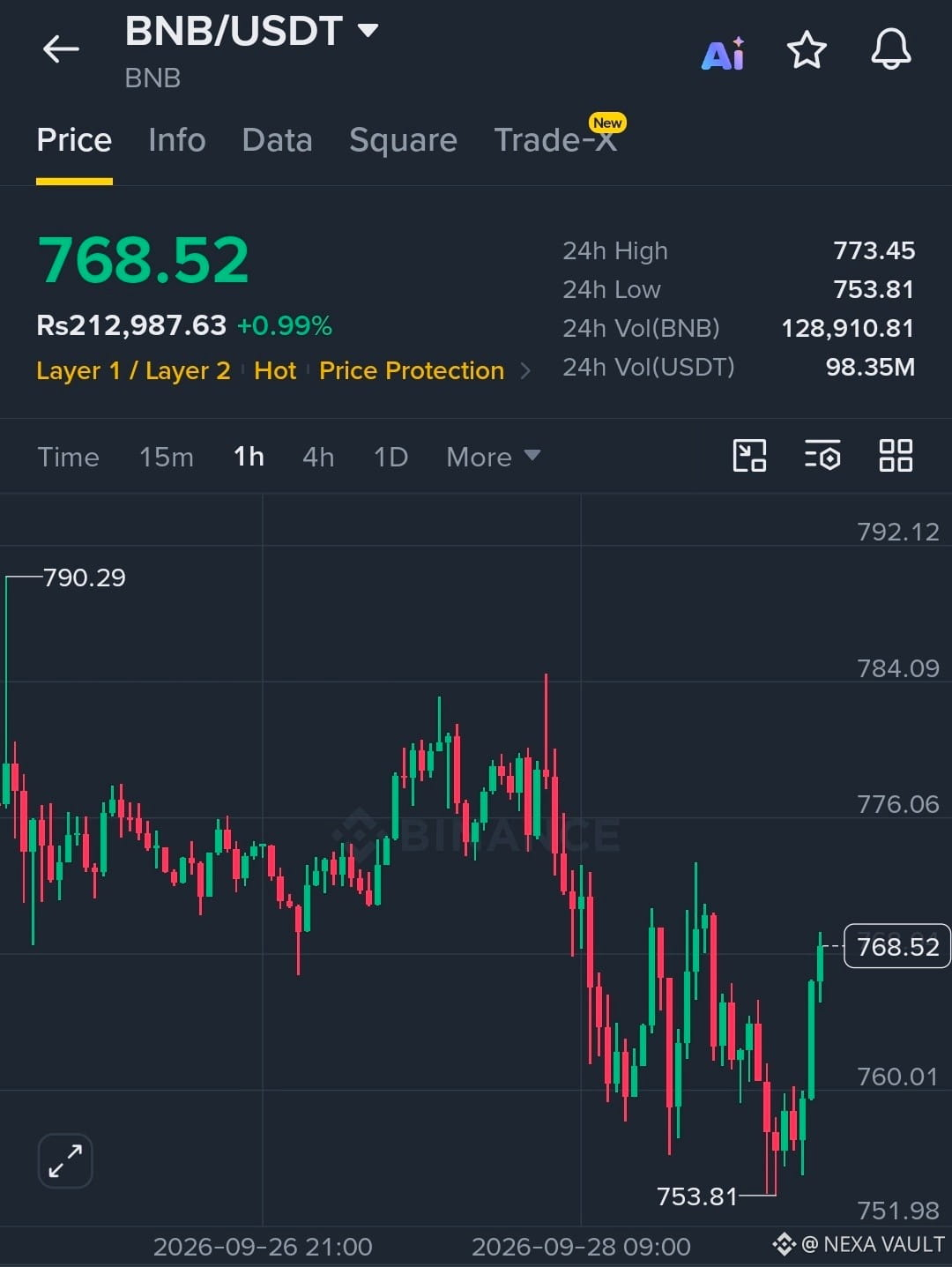
$BNB is waking up.
Price: $768.52
24H High: $773.45
24H Low: $753.81
BNB bounced hard from $753.81 and is pushing back toward $773.45.
Break $773.45 → momentum could accelerate.
Lose $760 → bulls may face pressure again.
The next move is getting interesting.
$BNB is waking up.
Price: $768.52
24H High: $773.45
24H Low: $753.81
BNB bounced hard from $753.81 and is pushing back toward $773.45.
Break $773.45 → momentum could accelerate.
Lose $760 → bulls may face pressure again.
The next move is getting interesting.
Price: $768.52
24H High: $773.45
24H Low: $753.81
BNB bounced hard from $753.81 and is pushing back toward $773.45.
Break $773.45 → momentum could accelerate.
Lose $760 → bulls may face pressure again.
The next move is getting interesting.
87
·
--
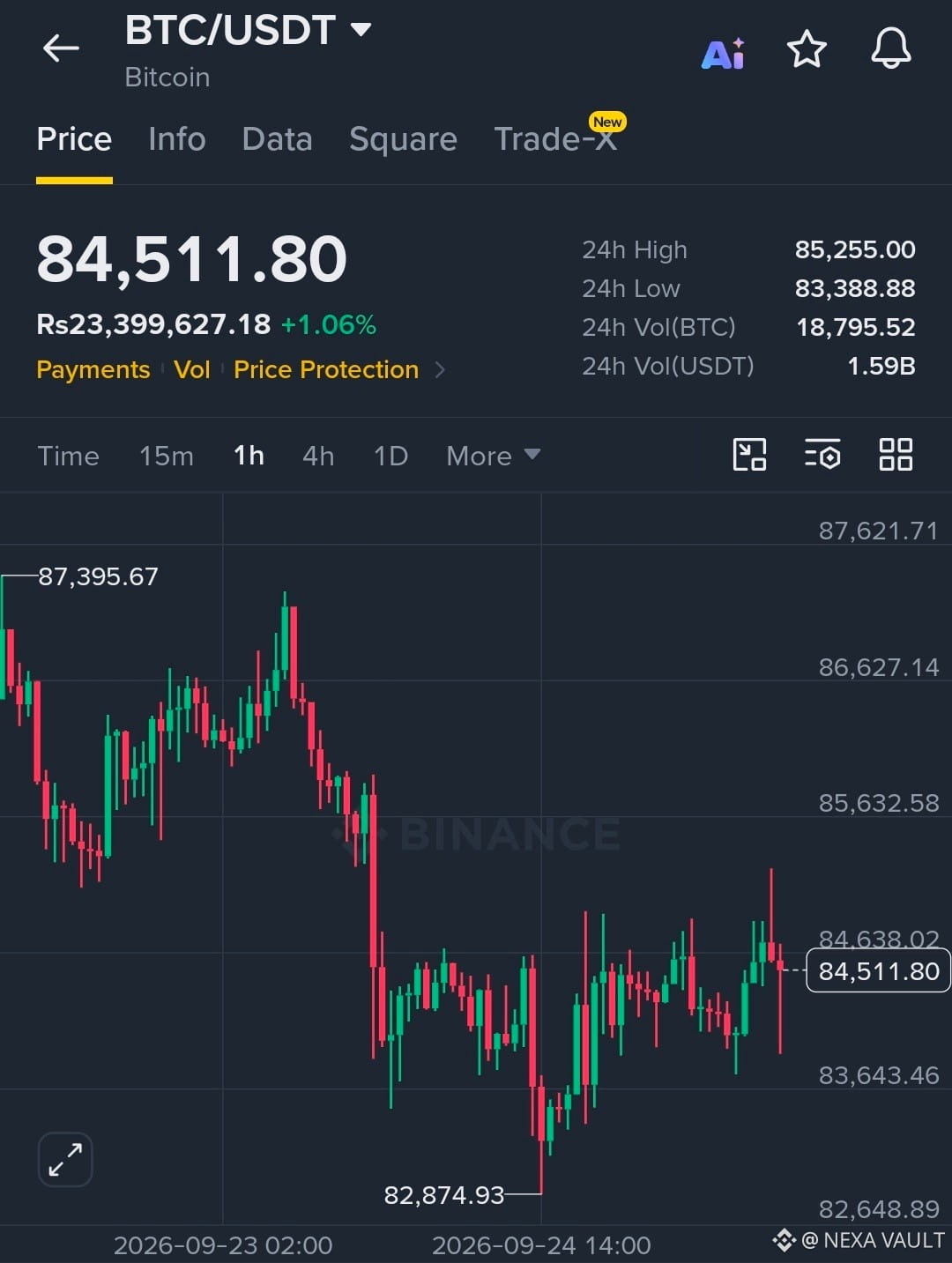
$BTC is waking up.
Trading at $84,511, up 1.06%, with $1.59B in 24h volume.
After bouncing from $82,874, BTC is holding near $84.5K.
$85,632 is the next key resistance — reclaim it, and things could get interesting fast.
$BTC is waking up.
Trading at $84,511, up 1.06%, with $1.59B in 24h volume.
After bouncing from $82,874, BTC is holding near $84.5K.
$85,632 is the next key resistance — reclaim it, and things could get interesting fast.
Trading at $84,511, up 1.06%, with $1.59B in 24h volume.
After bouncing from $82,874, BTC is holding near $84.5K.
$85,632 is the next key resistance — reclaim it, and things could get interesting fast.
81
·
--
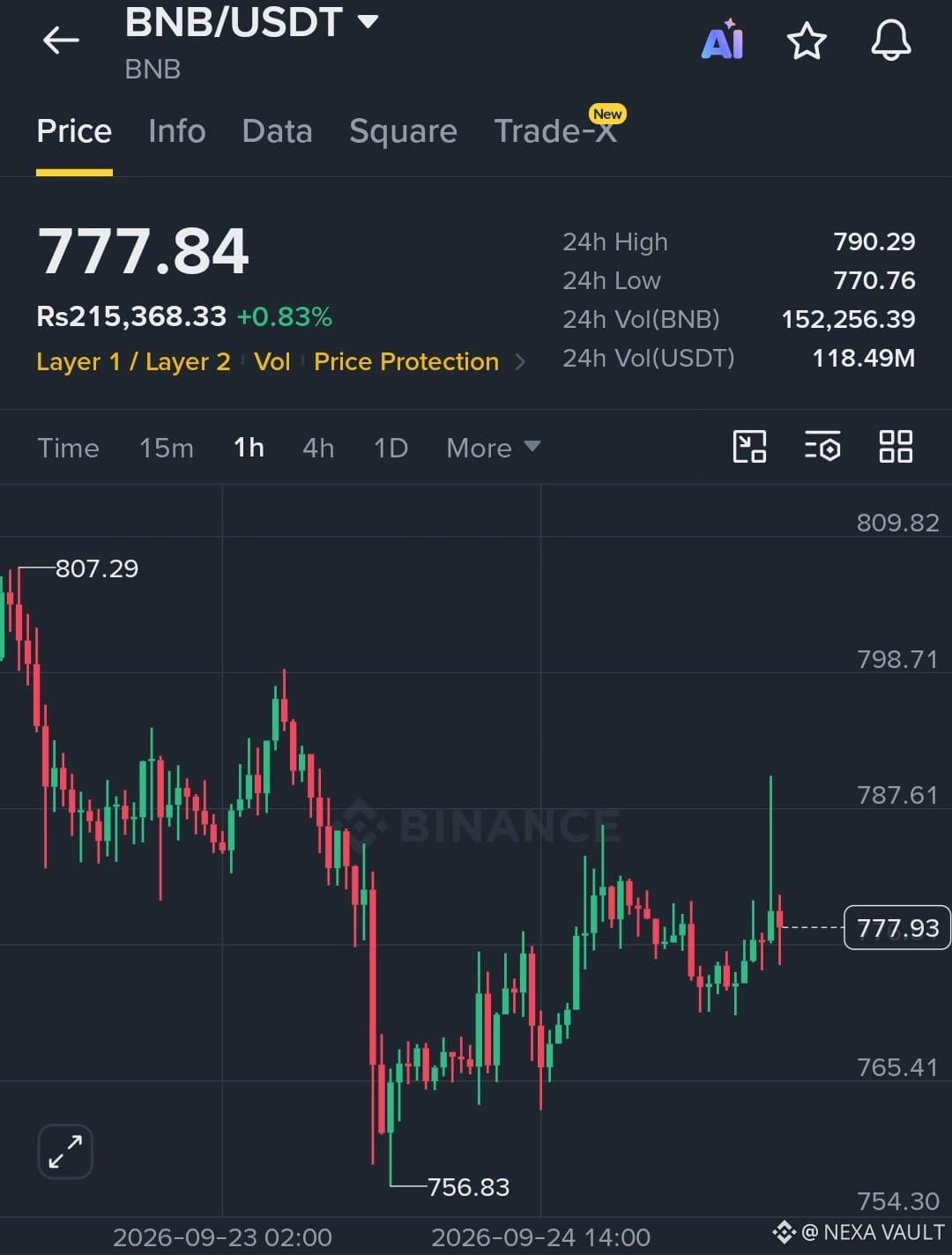
$BNB is showing strength
Trading around $777.84, up 0.83% with $118.49M in 24h volume.
After bouncing from $756.83, BNB is back near $778.
$787.61 is the key resistance — break it, and momentum could get interesting.
$BNB is showing strength
Trading around $777.84, up 0.83% with $118.49M in 24h volume.
After bouncing from $756.83, BNB is back near $778.
$787.61 is the key resistance — break it, and momentum could get interesting.
Trading around $777.84, up 0.83% with $118.49M in 24h volume.
After bouncing from $756.83, BNB is back near $778.
$787.61 is the key resistance — break it, and momentum could get interesting.
121
·
--
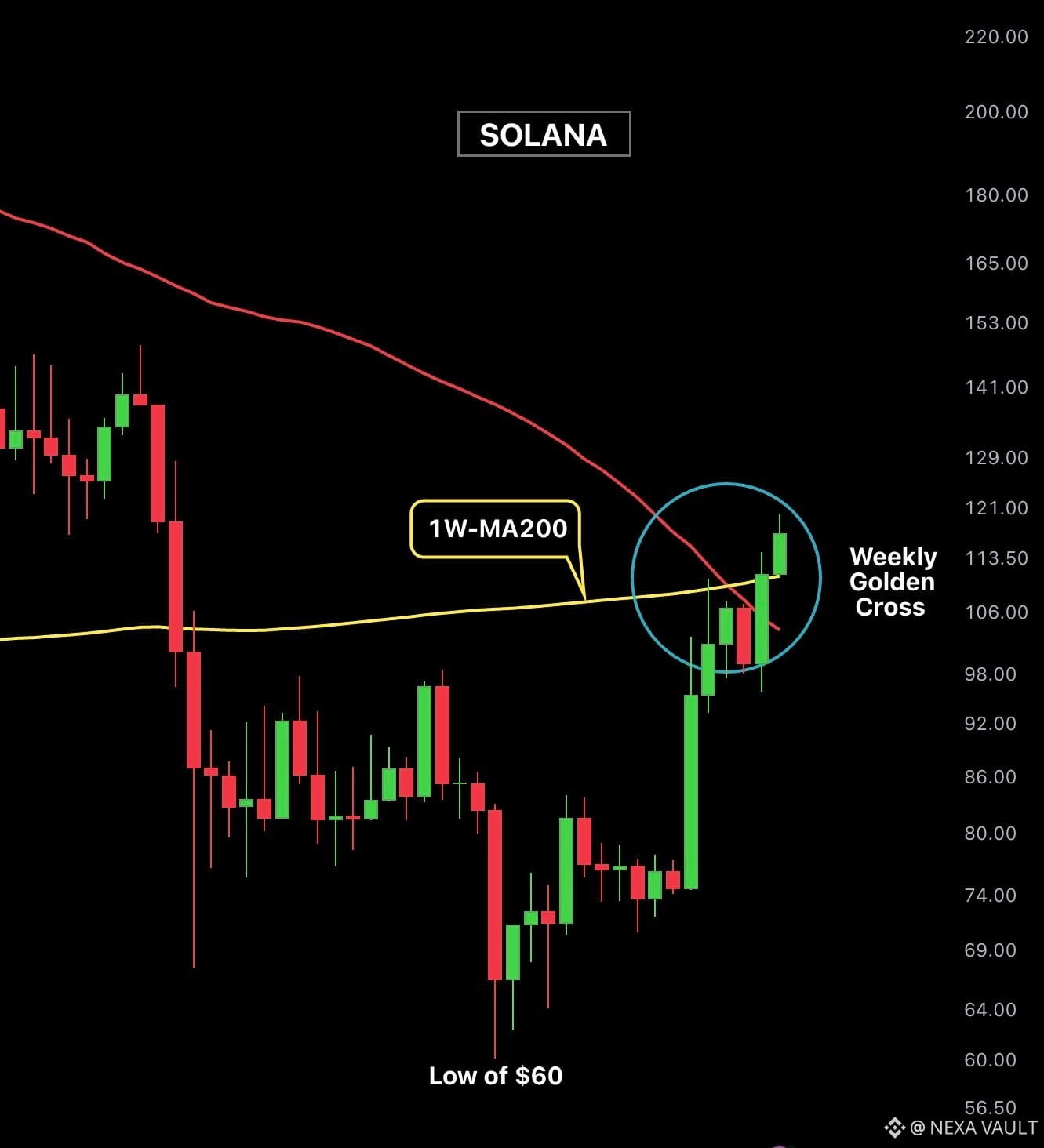
$SOL has one of the most bullish setups among altcoins right now.
- Reclaimed the weekly MA200.
- Hit $120 for the first time in 8 months.
- Weekly golden cross is forming.
Solana may have already bottomed.
$SOL has one of the most bullish setups among altcoins right now.
- Reclaimed the weekly MA200.
- Hit $120 for the first time in 8 months.
- Weekly golden cross is forming.
Solana may have already bottomed.
- Reclaimed the weekly MA200.
- Hit $120 for the first time in 8 months.
- Weekly golden cross is forming.
Solana may have already bottomed.
98
·
--
$ETH is pushing back hard.
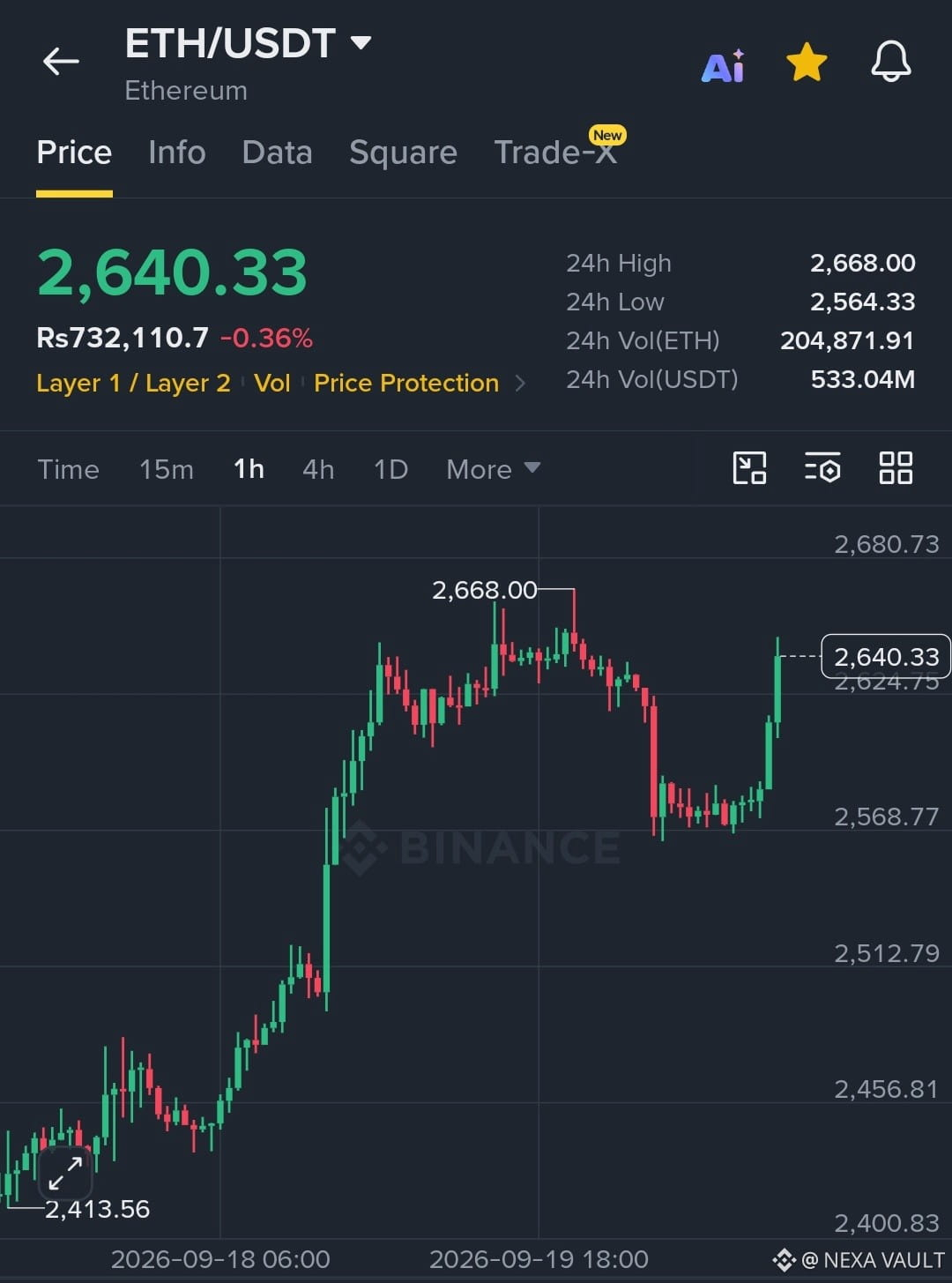
Trading around $2,640.33, ETH bounced from $2,413.56 and reclaimed the $2,600 area. The 24H range is $2,564.33–$2,668, with $533.04M in volume.
Now $2,668 is the key resistance. A clean breakout could bring the next wave of momentum.
$ETH is pushing back hard.
Trading around $2,640.33, ETH bounced from $2,413.56 and reclaimed the $2,600 area. The 24H range is $2,564.33–$2,668, with $533.04M in volume.
Now $2,668 is the key resistance. A clean breakout could bring the next wave of momentum.
Trading around $2,640.33, ETH bounced from $2,413.56 and reclaimed the $2,600 area. The 24H range is $2,564.33–$2,668, with $533.04M in volume.
Now $2,668 is the key resistance. A clean breakout could bring the next wave of momentum.
1
136
·
--
$BTC is showing some serious strength.
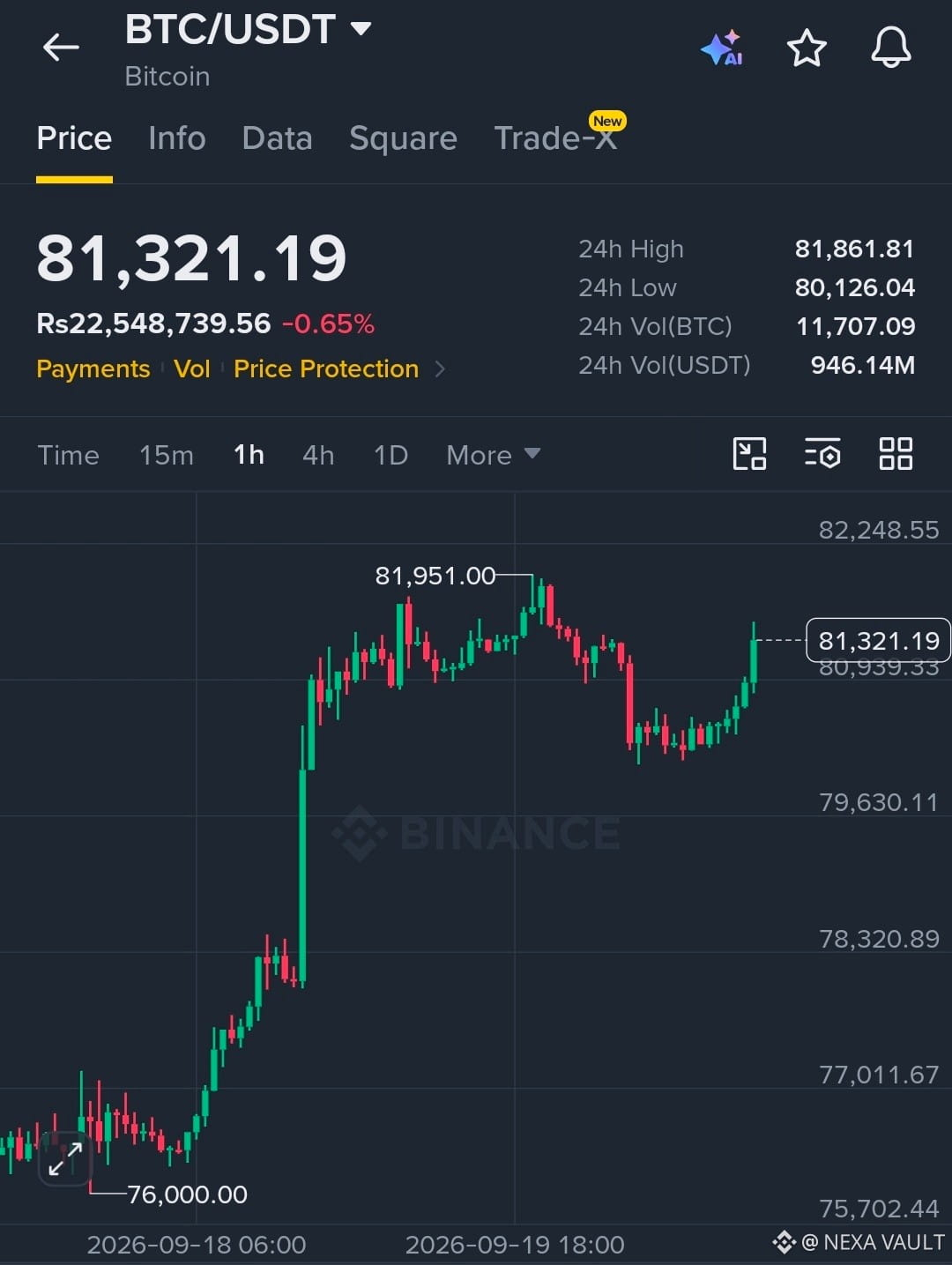
Trading around $81,321, BTC bounced hard from the $76,000 area and pushed back above $81K. The 24H range is $80,126–$81,862, with nearly $946M in volume.
The key level now is $81,951 — a clean break could bring fresh momentum.
$BTC is showing some serious strength.
Trading around $81,321, BTC bounced hard from the $76,000 area and pushed back above $81K. The 24H range is $80,126–$81,862, with nearly $946M in volume.
The key level now is $81,951 — a clean break could bring fresh momentum.
Trading around $81,321, BTC bounced hard from the $76,000 area and pushed back above $81K. The 24H range is $80,126–$81,862, with nearly $946M in volume.
The key level now is $81,951 — a clean break could bring fresh momentum.
1
113
·
--
Bullish
$ZEC is not slowing down.
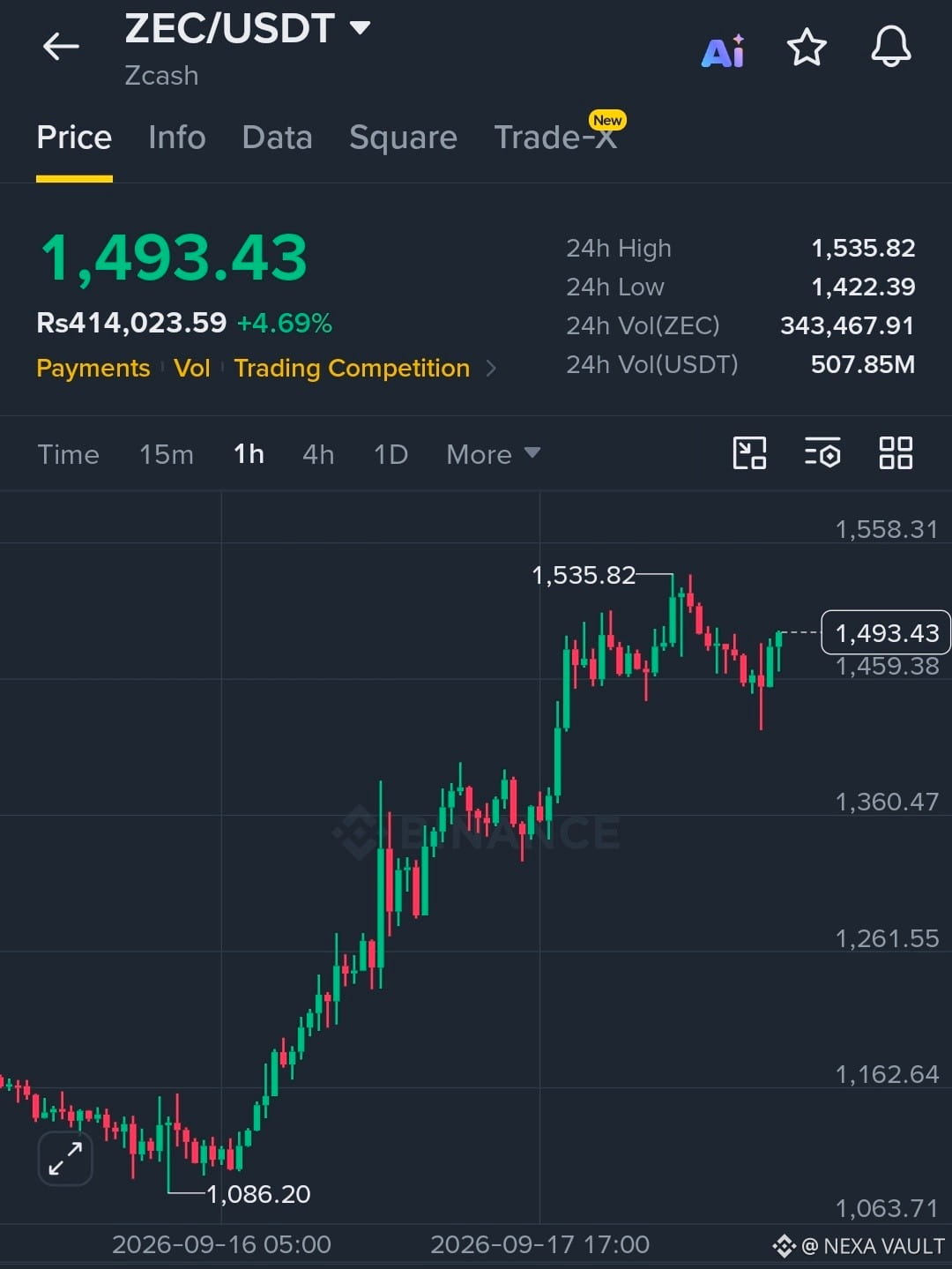
$ZEC is trading around $1,493.43, up +4.69% in 24H. Price pushed from a $1,422.39 low to a $1,535.82 high, showing some serious volatility.
24H volume: 343,467.91 ZEC / $507.85M
After the pullback, ZEC is pushing back toward $1.5K. The $1,535.82 high is the level to watch next.
$ZEC is not slowing down.
$ZEC is trading around $1,493.43, up +4.69% in 24H. Price pushed from a $1,422.39 low to a $1,535.82 high, showing some serious volatility.
24H volume: 343,467.91 ZEC / $507.85M
After the pullback, ZEC is pushing back toward $1.5K. The $1,535.82 high is the level to watch next.
$ZEC is trading around $1,493.43, up +4.69% in 24H. Price pushed from a $1,422.39 low to a $1,535.82 high, showing some serious volatility.
24H volume: 343,467.91 ZEC / $507.85M
After the pullback, ZEC is pushing back toward $1.5K. The $1,535.82 high is the level to watch next.
99
·
--
Bullish
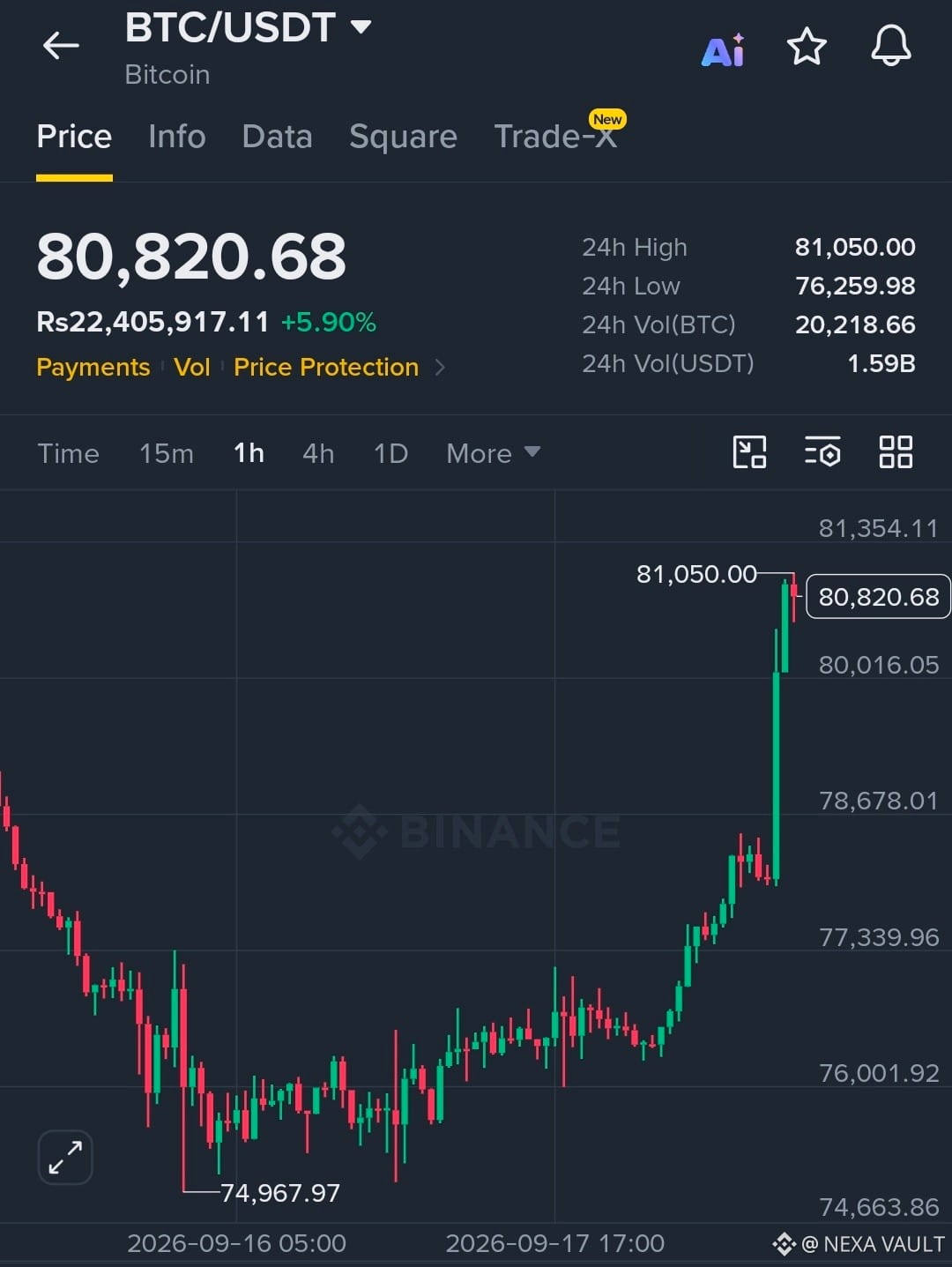
$BTC is at $80,820.68, up +5.90% in 24H, after ripping from $76,259.98 to a $81,050 high.
24H volume: 20,218.66 BTC / $1.59B
Bulls are back in control — $81K is the key level now.
$BTC is at $80,820.68, up +5.90% in 24H, after ripping from $76,259.98 to a $81,050 high.
24H volume: 20,218.66 BTC / $1.59B
Bulls are back in control — $81K is the key level now.
24H volume: 20,218.66 BTC / $1.59B
Bulls are back in control — $81K is the key level now.
118
·
--
FOMO is building around the September Fed meeting… and that’s exactly what makes it dangerous.
The FOMC meets Sept. 15–16, and the market has flipped hard toward a 25 bps hike. Reuters now has 86 of 101 economists expecting a hike to 3.75%–4.00%.
But here’s the part I’m watching.
Everyone is already talking about the hike.
So what happens if the Fed actually delivers it, but Powell sounds less aggressive than expected?
That could trigger a violent move in both directions.
Hike + hawkish Fed = risk-off pressure.
Hike + “we’re done” message = FOMO can hit fast.
BTC doesn’t need a perfect setup. It just needs the market to be positioned too heavily on one side.
September FOMC isn’t just about the rate.
It’s about who gets trapped when the FOMO meets reality.
That’s where the real move could start.
#FedRateWatch
FOMO is building around the September Fed meeting… and that’s exactly what makes it dangerous.
The FOMC meets Sept. 15–16, and the market has flipped hard toward a 25 bps hike. Reuters now has 86 of 101 economists expecting a hike to 3.75%–4.00%.
But here’s the part I’m watching.
Everyone is already talking about the hike.
So what happens if the Fed actually delivers it, but Powell sounds less aggressive than expected?
That could trigger a violent move in both directions.
Hike + hawkish Fed = risk-off pressure.
Hike + “we’re done” message = FOMO can hit fast.
BTC doesn’t need a perfect setup. It just needs the market to be positioned too heavily on one side.
September FOMC isn’t just about the rate.
It’s about who gets trapped when the FOMO meets reality.
That’s where the real move could start.
#FedRateWatch
The FOMC meets Sept. 15–16, and the market has flipped hard toward a 25 bps hike. Reuters now has 86 of 101 economists expecting a hike to 3.75%–4.00%.
But here’s the part I’m watching.
Everyone is already talking about the hike.
So what happens if the Fed actually delivers it, but Powell sounds less aggressive than expected?
That could trigger a violent move in both directions.
Hike + hawkish Fed = risk-off pressure.
Hike + “we’re done” message = FOMO can hit fast.
BTC doesn’t need a perfect setup. It just needs the market to be positioned too heavily on one side.
September FOMC isn’t just about the rate.
It’s about who gets trapped when the FOMO meets reality.
That’s where the real move could start.
#FedRateWatch

3
7
110
·
--
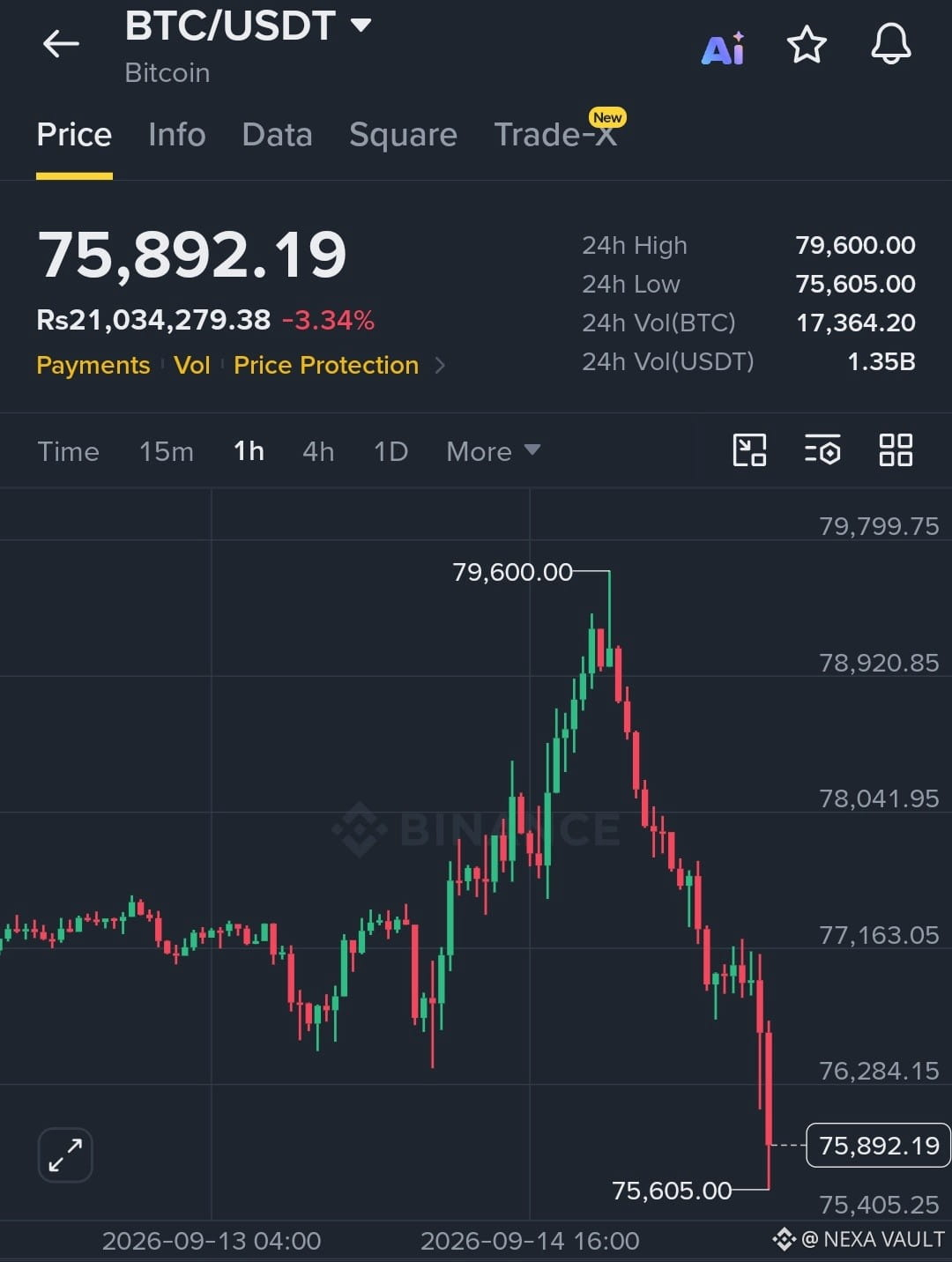
$BTC is taking a serious hit
Price: $75,892.19 (-3.34%)
24h High: $79,600
24h Low: $75,605
24h Volume: $1.35B
BTC rejected hard from $79.6K and slid to $75.6K. Bears have control for now — $75K is the key zone to watch.
$BTC is taking a serious hit
Price: $75,892.19 (-3.34%)
24h High: $79,600
24h Low: $75,605
24h Volume: $1.35B
BTC rejected hard from $79.6K and slid to $75.6K. Bears have control for now — $75K is the key zone to watch.
Price: $75,892.19 (-3.34%)
24h High: $79,600
24h Low: $75,605
24h Volume: $1.35B
BTC rejected hard from $79.6K and slid to $75.6K. Bears have control for now — $75K is the key zone to watch.
85
·
--
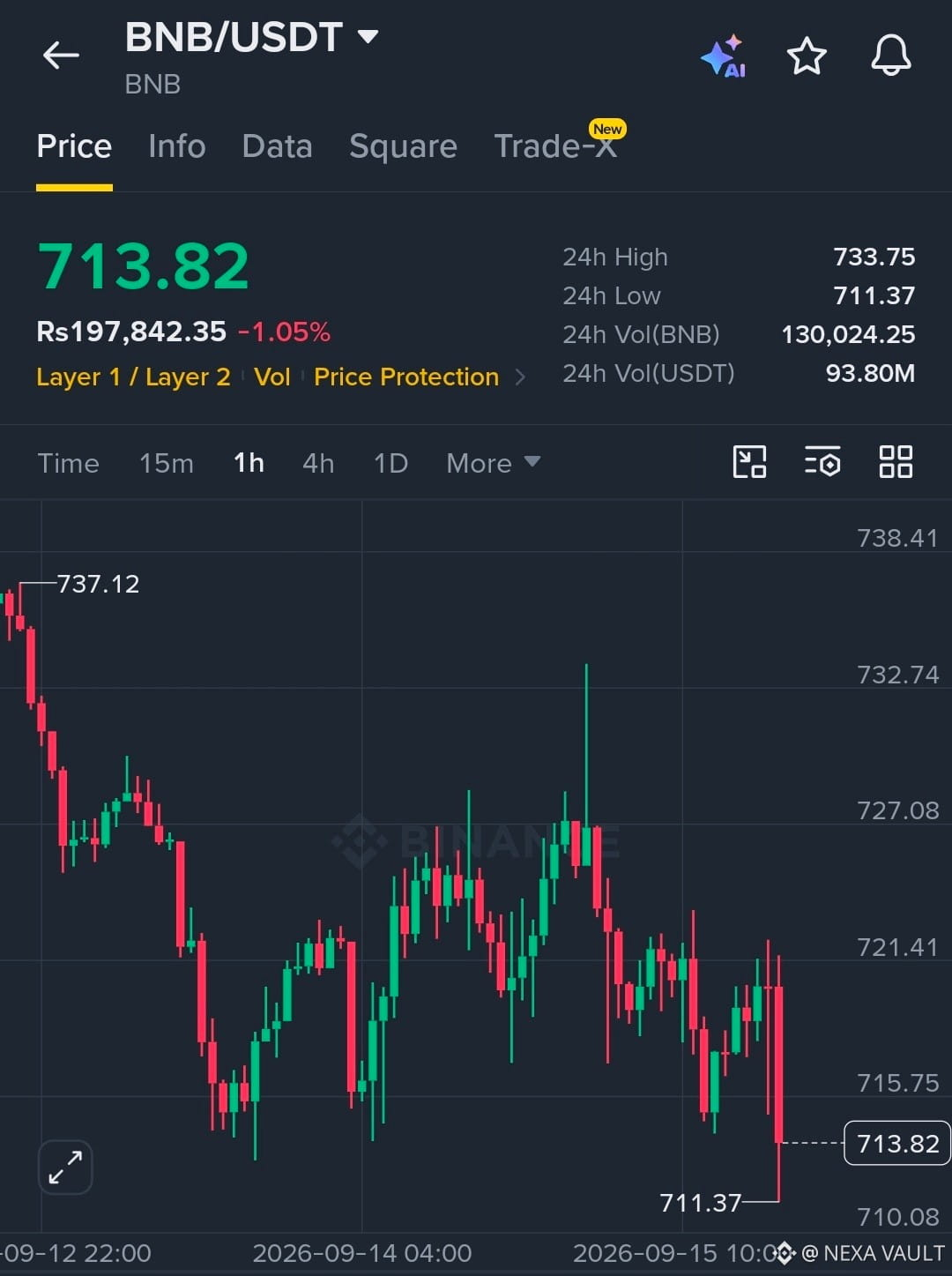
$BNB is under pressure
Price: $713.82 (-1.05%)
24h High: $733.75
24h Low: $711.37
24h Volume: $93.80M
After rejection near $727–$733, BNB dropped to $711.37. Bulls need to reclaim $721+ or sellers could push lower.
$BNB is under pressure
Price: $713.82 (-1.05%)
24h High: $733.75
24h Low: $711.37
24h Volume: $93.80M
After rejection near $727–$733, BNB dropped to $711.37. Bulls need to reclaim $721+ or sellers could push lower.
Price: $713.82 (-1.05%)
24h High: $733.75
24h Low: $711.37
24h Volume: $93.80M
After rejection near $727–$733, BNB dropped to $711.37. Bulls need to reclaim $721+ or sellers could push lower.
114
·
--
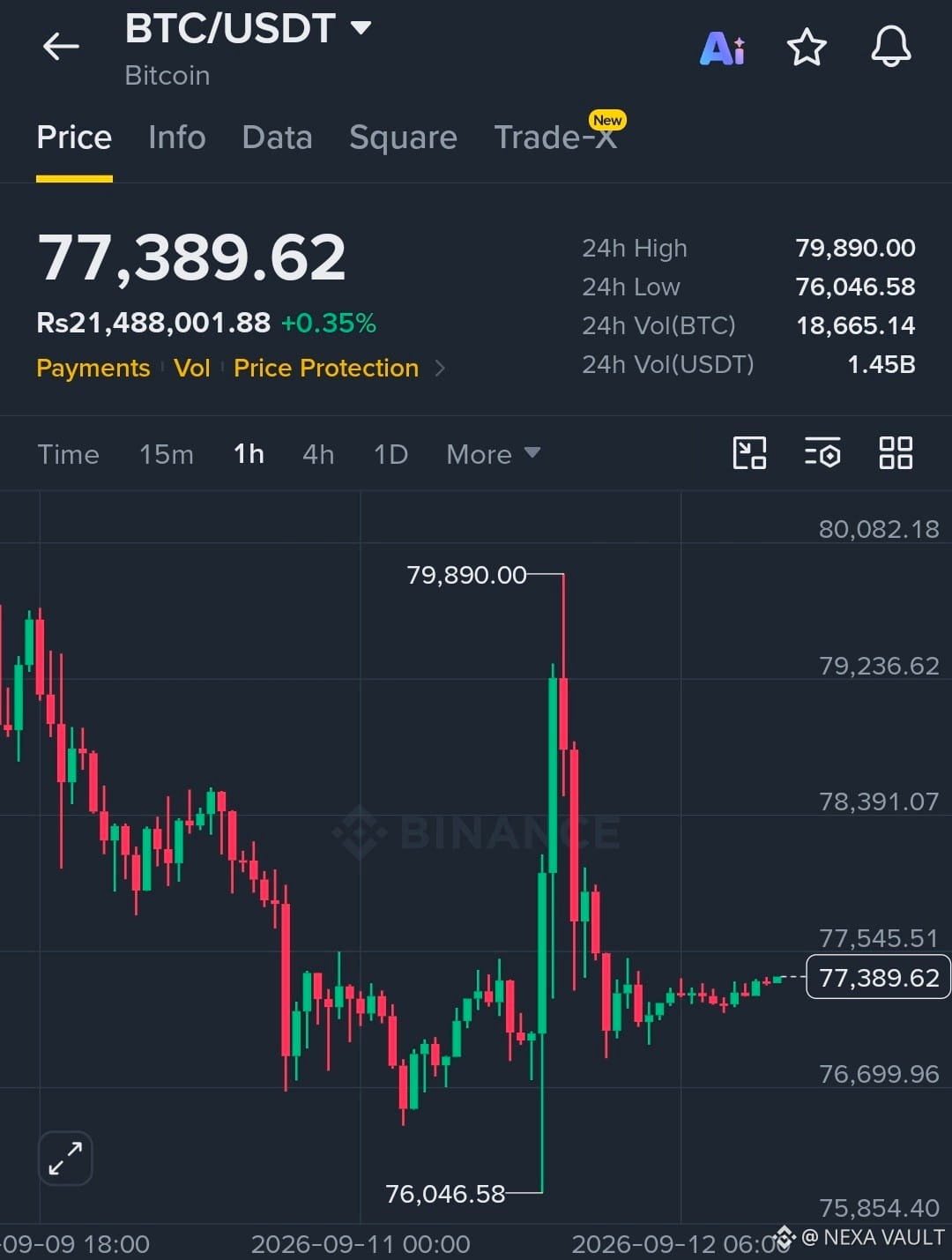
$BTC update: $77,389.62, up 0.35%.
24H High: $79,890
24H Low: $76,046.58
Volume: 18,665 BTC | $1.45B USDT
After that violent rejection, all eyes are on the next breakout.
$BTC update: $77,389.62, up 0.35%.
24H High: $79,890
24H Low: $76,046.58
Volume: 18,665 BTC | $1.45B USDT
After that violent rejection, all eyes are on the next breakout.
24H High: $79,890
24H Low: $76,046.58
Volume: 18,665 BTC | $1.45B USDT
After that violent rejection, all eyes are on the next breakout.
114
·
--
Bullish
CPI could decide whether Bitcoin gets relief or another hit.
Markets are already leaning toward a Fed hike next week, with odds around 67–72%. That means today’s number matters even more than usual.
The current setup is simple:
Hot CPI → yields + dollar rise → BTC could get squeezed
Near expectations → expect sharp two-way moves
Cool CPI → hike bets could fade → BTC gets room to breathe
Headline CPI is expected around 3.4% YoY, with core near 2.4%. But I’ll be watching the core number closely — especially whether monthly inflation comes in above expectations.
Oil is already adding pressure, with Brent back above $100. So a hot CPI print could give the Fed even more reason to stay tough.
My view: don’t trade the headline alone. Watch how BTC reacts after the first move.
The real signal is what the market does with the number.
NFA • DYOR
#CPIWatch
CPI could decide whether Bitcoin gets relief or another hit.
Markets are already leaning toward a Fed hike next week, with odds around 67–72%. That means today’s number matters even more than usual.
The current setup is simple:
Hot CPI → yields + dollar rise → BTC could get squeezed
Near expectations → expect sharp two-way moves
Cool CPI → hike bets could fade → BTC gets room to breathe
Headline CPI is expected around 3.4% YoY, with core near 2.4%. But I’ll be watching the core number closely — especially whether monthly inflation comes in above expectations.
Oil is already adding pressure, with Brent back above $100. So a hot CPI print could give the Fed even more reason to stay tough.
My view: don’t trade the headline alone. Watch how BTC reacts after the first move.
The real signal is what the market does with the number.
NFA • DYOR
#CPIWatch
Markets are already leaning toward a Fed hike next week, with odds around 67–72%. That means today’s number matters even more than usual.
The current setup is simple:
Hot CPI → yields + dollar rise → BTC could get squeezed
Near expectations → expect sharp two-way moves
Cool CPI → hike bets could fade → BTC gets room to breathe
Headline CPI is expected around 3.4% YoY, with core near 2.4%. But I’ll be watching the core number closely — especially whether monthly inflation comes in above expectations.
Oil is already adding pressure, with Brent back above $100. So a hot CPI print could give the Fed even more reason to stay tough.
My view: don’t trade the headline alone. Watch how BTC reacts after the first move.
The real signal is what the market does with the number.
NFA • DYOR
#CPIWatch

7
11
340
·
--
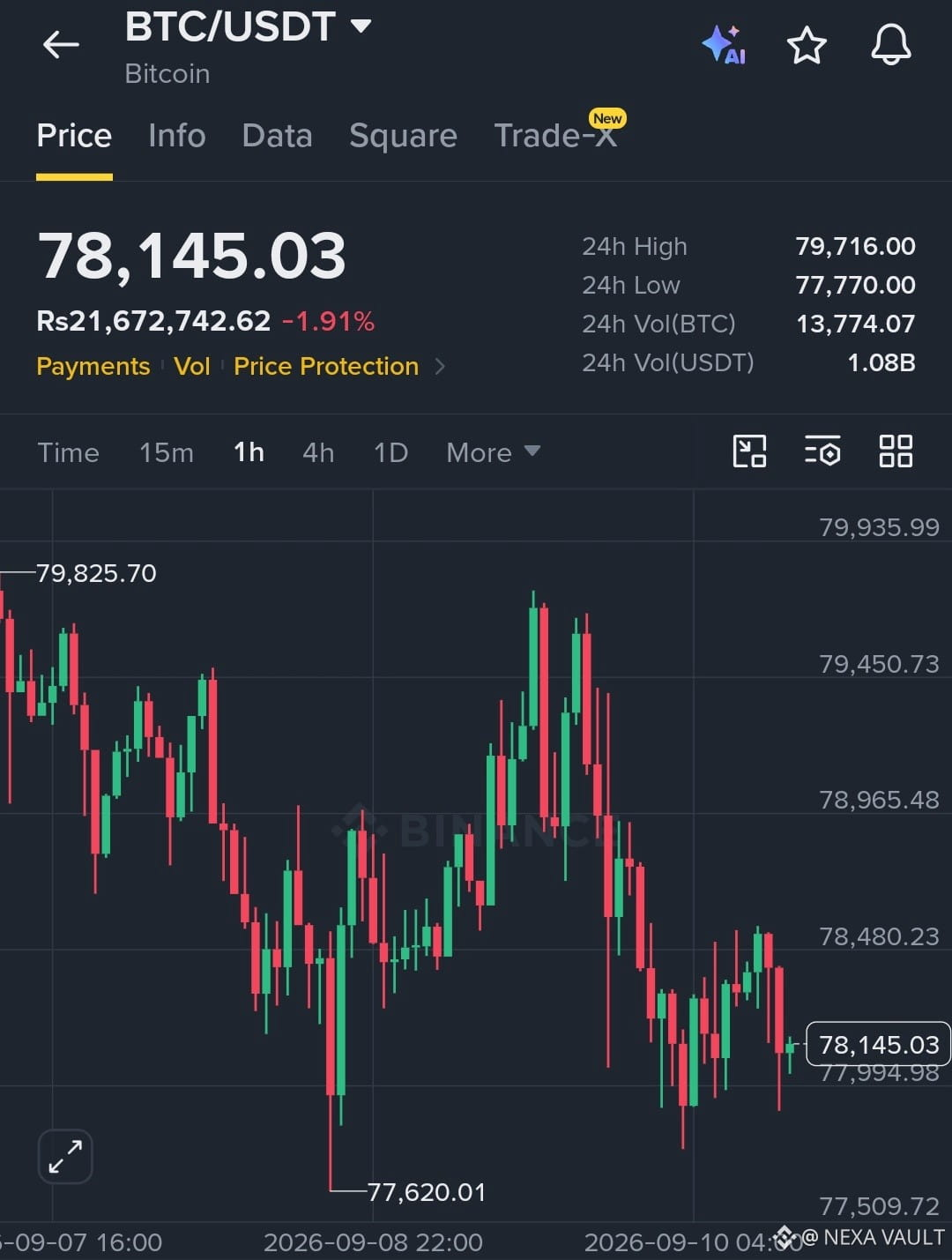
$BTC is under pressure right now.
BTC sits at $78,145.03, down 1.91%, after trading between $77,770 and $79,716 in the last 24 hours. The 24h volume is around 13,774 BTC / $1.08B USDT.
On the 1H chart, price keeps struggling to reclaim $78.48K, while $77.62K stands out as a key support from the recent low.
If BTC loses that zone, things could get ugly fast. But a clean move back above $78.48K–$78.97K could bring the bulls back into the fight.
Right now, Bitcoin looks stuck in a battle between support and sellers.
$BTC is under pressure right now.
BTC sits at $78,145.03, down 1.91%, after trading between $77,770 and $79,716 in the last 24 hours. The 24h volume is around 13,774 BTC / $1.08B USDT.
On the 1H chart, price keeps struggling to reclaim $78.48K, while $77.62K stands out as a key support from the recent low.
If BTC loses that zone, things could get ugly fast. But a clean move back above $78.48K–$78.97K could bring the bulls back into the fight.
Right now, Bitcoin looks stuck in a battle between support and sellers.
BTC sits at $78,145.03, down 1.91%, after trading between $77,770 and $79,716 in the last 24 hours. The 24h volume is around 13,774 BTC / $1.08B USDT.
On the 1H chart, price keeps struggling to reclaim $78.48K, while $77.62K stands out as a key support from the recent low.
If BTC loses that zone, things could get ugly fast. But a clean move back above $78.48K–$78.97K could bring the bulls back into the fight.
Right now, Bitcoin looks stuck in a battle between support and sellers.
97
·
--
$BNB is holding the line!
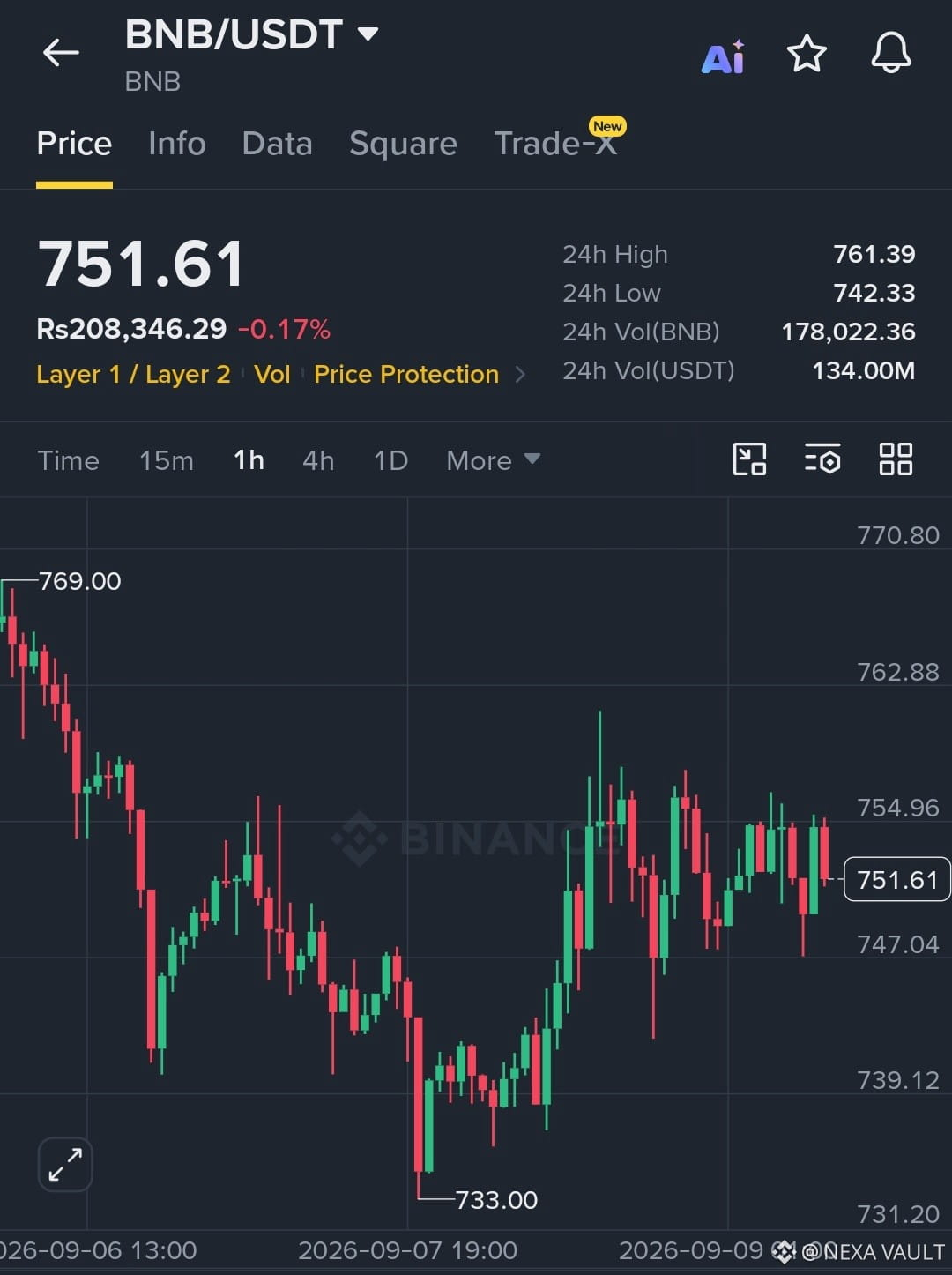
BNB trades at $751.61, down 0.17%, after bouncing from the $733.00 low. The 24H range sits at $742.33–$761.39, with 178,022 BNB traded and $134M USDT in volume.
A break above $755–$761 could bring fresh momentum, while $742 remains key support.
$BNB is holding the line!
BNB trades at $751.61, down 0.17%, after bouncing from the $733.00 low. The 24H range sits at $742.33–$761.39, with 178,022 BNB traded and $134M USDT in volume.
A break above $755–$761 could bring fresh momentum, while $742 remains key support.
BNB trades at $751.61, down 0.17%, after bouncing from the $733.00 low. The 24H range sits at $742.33–$761.39, with 178,022 BNB traded and $134M USDT in volume.
A break above $755–$761 could bring fresh momentum, while $742 remains key support.
69
·
--
$BTC is fighting back!
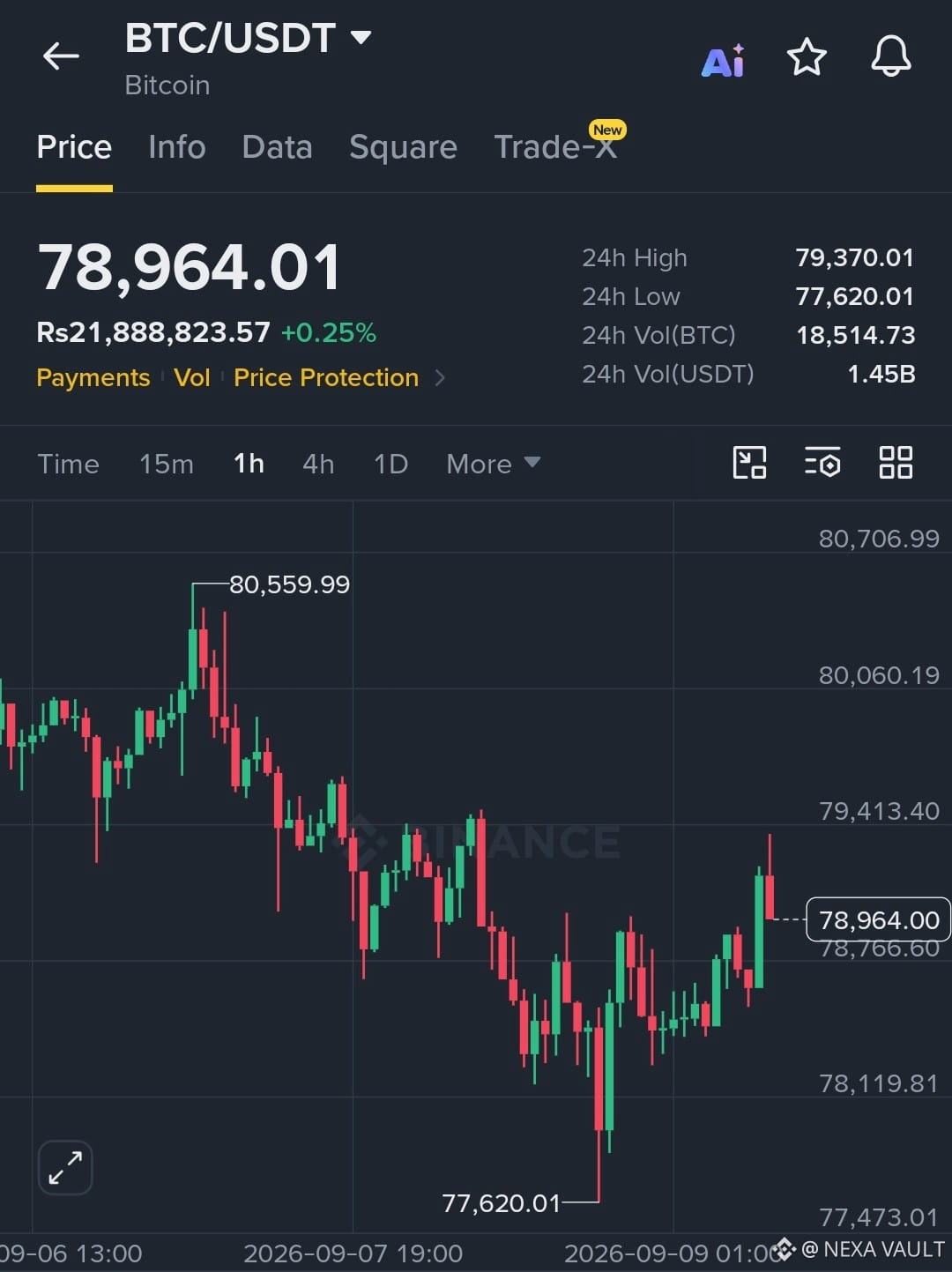
Bitcoin is trading at $78,964.01, up 0.25% on the 1H chart. After dipping to $77,620.01, BTC bounced sharply and is now pushing toward the $79,370.01 24H high.
24H volume: 18,514.73 BTC / 1.45B USDT
The recovery is heating up — $79.4K is the next key level to watch.
$BTC is fighting back!
Bitcoin is trading at $78,964.01, up 0.25% on the 1H chart. After dipping to $77,620.01, BTC bounced sharply and is now pushing toward the $79,370.01 24H high.
24H volume: 18,514.73 BTC / 1.45B USDT
The recovery is heating up — $79.4K is the next key level to watch.
Bitcoin is trading at $78,964.01, up 0.25% on the 1H chart. After dipping to $77,620.01, BTC bounced sharply and is now pushing toward the $79,370.01 24H high.
24H volume: 18,514.73 BTC / 1.45B USDT
The recovery is heating up — $79.4K is the next key level to watch.
79
Log in to explore more content
Join global crypto users on Binance Square
⚡️ Get latest and useful information about crypto.
💬 Trusted by the world’s largest crypto exchange.
👍 Discover real insights from verified creators.
Email / Phone number