
MJR786
1.9k Posts

MJR786
Report
Block User
Crypto | Web3 | AI | Daily insights & market updates | #MJR786 🚀
Passionate about crypto, DeFi & AI. Follow for insights. #MJR786

BABY Holder
High-Frequency Trader
1.8 Years
660 Following
22.4K+ Followers
12.1K+ Liked
Posts
All
Quotes
Videos
Live
PINNED
·
--

Article
CPI Is Out: What Happens to Stocks, Gold and Rates Now?CPI is one of those numbers that can completely change the mood of the market in a few minutes.
Before the data comes out, everyone has an opinion. Some people are expecting inflation to cool down. Others are worried that the stronger jobs data could mean the Fed has to stay tough for longer.
I'm somewhere in the middle.
The recent payrolls number definitely got my attention. A stronger labour market gives the Fed less reason to rush into easier policy. But at the same time, I don't think we should look at payrolls alone and assume the next Fed decision is already decided.
That's why CPI matters so much.
If inflation comes in hotter than expected, the first reaction from the market could be pretty straightforward. Traders may start pricing in a higher chance of another rate hike, Treasury yields could move up, and stocks could feel some pressure.
But here's where I think things get interesting.
The market doesn't react to whether CPI is simply "high" or "low." It reacts to how the number compares with what people were expecting.
Imagine everyone is expecting a bad inflation number and it comes in slightly better. That could actually be positive for stocks, even if inflation is still higher than the Fed would ideally like.
The opposite can happen too.
A number can look fairly normal on its own, but if traders were expecting something much better, the market can still sell off.
That's why I don't like making a trade just from a headline.
Personally, I'm more interested in what happens after the initial reaction.
If CPI comes in hot and stocks immediately drop, I want to see whether sellers can actually keep control. If the market recovers quickly, that tells me something too.
Maybe the bad news was already priced in.
Maybe traders were expecting an even worse number.
Or maybe buyers simply don't want to give up their positions.
The same thing applies to gold.
Gold has been interesting because it can react to several different stories at the same time. Inflation concerns can support the metal, but higher interest rates and a stronger dollar can work against it.
So I wouldn't simply say "CPI high, buy gold."
That's too easy.
What matters to me is how yields, the dollar and gold move together after the release.
If inflation comes in stronger and yields jump while gold struggles, that would make sense.
But if inflation is strong and gold still holds its ground, I'd pay attention to that as well. It could mean buyers are more worried about inflation, uncertainty or something else happening in the economy.
This is also why I think the Fed has a difficult job right now.
On one side, inflation needs to come under control.
On the other side, keeping rates high for too long can eventually put pressure on economic activity.
The Fed can't just look at one chart and make the decision.
They have to consider employment, inflation, consumer spending, financial conditions and what they expect to happen over the next few months.
For traders, though, we often want a simple answer.
Hike or hold?
Bullish or bearish?
Buy or sell?
The market doesn't always give us one.
And honestly, I think that's okay.
There are times when the best trade is to wait.
If the CPI number surprises the market, volatility can increase quickly. Chasing the first move isn't always the smartest thing to do. Sometimes the first candle looks convincing and then completely reverses.
I've seen that happen more than once.
That's why I'm trying not to get too attached to one prediction this time.
My current bias is slightly cautious on stocks. The stronger payrolls data combined with any upside surprise in inflation would make me more concerned about higher rates staying around for longer.
But I wouldn't turn that into an aggressive bearish call without seeing the actual reaction.
There is a big difference between being cautious and being convinced that the market is going to crash.
I'm definitely not in the second camp.
If CPI comes in softer than expected, the whole conversation can change very quickly.
A softer inflation reading could give investors more confidence that the Fed doesn't need to become more aggressive. That could help stocks, especially if bond yields respond positively.
Gold could also get an interesting reaction depending on what happens with the dollar and yields.
So for me, there are really two things to watch.
First, the CPI number itself.
Second, the market's response to that number.
The second one might actually tell us more.
If everyone expects a hot CPI and we get exactly that, but stocks barely move, I'd rather know why than blindly short the market.
Maybe investors already priced it in.
And if we get a soft number but stocks fail to rally, that would also make me cautious. Good news that can't push the market higher can sometimes be more interesting than bad news that causes a normal sell-off.
That's the kind of thing I want to watch.
I'm also curious about how traders position themselves ahead of the Fed decision. CPI can change expectations, but the Fed still has to decide how much weight to give the latest data.
One report doesn't erase the bigger economic picture.
For anyone trading stocks or gold around this event, I think risk management matters more than trying to guess the exact number.
There is nothing wrong with waiting for confirmation.
There is also nothing wrong with missing the first move if the alternative is taking a trade you don't really understand.
Personally, I'd rather enter late with a clearer picture than enter early just because I want to catch every candle.
Right now, my view is simple.
I'm not comfortable calling the market strongly bullish before we see how inflation and rate expectations develop. At the same time, I'm not expecting every hot CPI reading to automatically turn into a major sell-off.
There are too many moving parts.
Payrolls have already made the Fed's decision more interesting.
Now CPI gets its turn.
If inflation surprises to the upside, I'll be watching stocks and gold for signs that higher-rate expectations are becoming a bigger problem.
If inflation comes in softer, I'll be looking to see whether buyers actually have enough confidence to push the market higher.
Either way, I don't think the smartest move is to react emotionally to the headline.
Let the number come out.
Let the first reaction happen.
Then see what the market is actually telling us.
That's my plan for CPI.
What about you?
Are you expecting the Fed to hike or hold?
And if CPI surprises, which one are you watching more closely: stocks or gold?
#CPIWatch
$LSK
{future}(LSKUSDT)
$GRIFFAIN
{future}(GRIFFAINUSDT)
$UAI
{future}(UAIUSDT)
CPI Is Out: What Happens to Stocks, Gold and Rates Now?
CPI is one of those numbers that can completely change the mood of the market in a few minutes.
Before the data comes out, everyone has an opinion. Some people are expecting inflation to cool down. Others are worried that the stronger jobs data could mean the Fed has to stay tough for longer.
I'm somewhere in the middle.
The recent payrolls number definitely got my attention. A stronger labour market gives the Fed less reason to rush into easier policy. But at the same time, I don't think we should look at payrolls alone and assume the next Fed decision is already decided.
That's why CPI matters so much.
If inflation comes in hotter than expected, the first reaction from the market could be pretty straightforward. Traders may start pricing in a higher chance of another rate hike, Treasury yields could move up, and stocks could feel some pressure.
But here's where I think things get interesting.
The market doesn't react to whether CPI is simply "high" or "low." It reacts to how the number compares with what people were expecting.
Imagine everyone is expecting a bad inflation number and it comes in slightly better. That could actually be positive for stocks, even if inflation is still higher than the Fed would ideally like.
The opposite can happen too.
A number can look fairly normal on its own, but if traders were expecting something much better, the market can still sell off.
That's why I don't like making a trade just from a headline.
Personally, I'm more interested in what happens after the initial reaction.
If CPI comes in hot and stocks immediately drop, I want to see whether sellers can actually keep control. If the market recovers quickly, that tells me something too.
Maybe the bad news was already priced in.
Maybe traders were expecting an even worse number.
Or maybe buyers simply don't want to give up their positions.
The same thing applies to gold.
Gold has been interesting because it can react to several different stories at the same time. Inflation concerns can support the metal, but higher interest rates and a stronger dollar can work against it.
So I wouldn't simply say "CPI high, buy gold."
That's too easy.
What matters to me is how yields, the dollar and gold move together after the release.
If inflation comes in stronger and yields jump while gold struggles, that would make sense.
But if inflation is strong and gold still holds its ground, I'd pay attention to that as well. It could mean buyers are more worried about inflation, uncertainty or something else happening in the economy.
This is also why I think the Fed has a difficult job right now.
On one side, inflation needs to come under control.
On the other side, keeping rates high for too long can eventually put pressure on economic activity.
The Fed can't just look at one chart and make the decision.
They have to consider employment, inflation, consumer spending, financial conditions and what they expect to happen over the next few months.
For traders, though, we often want a simple answer.
Hike or hold?
Bullish or bearish?
Buy or sell?
The market doesn't always give us one.
And honestly, I think that's okay.
There are times when the best trade is to wait.
If the CPI number surprises the market, volatility can increase quickly. Chasing the first move isn't always the smartest thing to do. Sometimes the first candle looks convincing and then completely reverses.
I've seen that happen more than once.
That's why I'm trying not to get too attached to one prediction this time.
My current bias is slightly cautious on stocks. The stronger payrolls data combined with any upside surprise in inflation would make me more concerned about higher rates staying around for longer.
But I wouldn't turn that into an aggressive bearish call without seeing the actual reaction.
There is a big difference between being cautious and being convinced that the market is going to crash.
I'm definitely not in the second camp.
If CPI comes in softer than expected, the whole conversation can change very quickly.
A softer inflation reading could give investors more confidence that the Fed doesn't need to become more aggressive. That could help stocks, especially if bond yields respond positively.
Gold could also get an interesting reaction depending on what happens with the dollar and yields.
So for me, there are really two things to watch.
First, the CPI number itself.
Second, the market's response to that number.
The second one might actually tell us more.
If everyone expects a hot CPI and we get exactly that, but stocks barely move, I'd rather know why than blindly short the market.
Maybe investors already priced it in.
And if we get a soft number but stocks fail to rally, that would also make me cautious. Good news that can't push the market higher can sometimes be more interesting than bad news that causes a normal sell-off.
That's the kind of thing I want to watch.
I'm also curious about how traders position themselves ahead of the Fed decision. CPI can change expectations, but the Fed still has to decide how much weight to give the latest data.
One report doesn't erase the bigger economic picture.
For anyone trading stocks or gold around this event, I think risk management matters more than trying to guess the exact number.
There is nothing wrong with waiting for confirmation.
There is also nothing wrong with missing the first move if the alternative is taking a trade you don't really understand.
Personally, I'd rather enter late with a clearer picture than enter early just because I want to catch every candle.
Right now, my view is simple.
I'm not comfortable calling the market strongly bullish before we see how inflation and rate expectations develop. At the same time, I'm not expecting every hot CPI reading to automatically turn into a major sell-off.
There are too many moving parts.
Payrolls have already made the Fed's decision more interesting.
Now CPI gets its turn.
If inflation surprises to the upside, I'll be watching stocks and gold for signs that higher-rate expectations are becoming a bigger problem.
If inflation comes in softer, I'll be looking to see whether buyers actually have enough confidence to push the market higher.
Either way, I don't think the smartest move is to react emotionally to the headline.
Let the number come out.
Let the first reaction happen.
Then see what the market is actually telling us.
That's my plan for CPI.
What about you?
Are you expecting the Fed to hike or hold?
And if CPI surprises, which one are you watching more closely: stocks or gold?
#CPIWatch
$LSK
$GRIFFAIN
$UAI
Before the data comes out, everyone has an opinion. Some people are expecting inflation to cool down. Others are worried that the stronger jobs data could mean the Fed has to stay tough for longer.
I'm somewhere in the middle.
The recent payrolls number definitely got my attention. A stronger labour market gives the Fed less reason to rush into easier policy. But at the same time, I don't think we should look at payrolls alone and assume the next Fed decision is already decided.
That's why CPI matters so much.
If inflation comes in hotter than expected, the first reaction from the market could be pretty straightforward. Traders may start pricing in a higher chance of another rate hike, Treasury yields could move up, and stocks could feel some pressure.
But here's where I think things get interesting.
The market doesn't react to whether CPI is simply "high" or "low." It reacts to how the number compares with what people were expecting.
Imagine everyone is expecting a bad inflation number and it comes in slightly better. That could actually be positive for stocks, even if inflation is still higher than the Fed would ideally like.
The opposite can happen too.
A number can look fairly normal on its own, but if traders were expecting something much better, the market can still sell off.
That's why I don't like making a trade just from a headline.
Personally, I'm more interested in what happens after the initial reaction.
If CPI comes in hot and stocks immediately drop, I want to see whether sellers can actually keep control. If the market recovers quickly, that tells me something too.
Maybe the bad news was already priced in.
Maybe traders were expecting an even worse number.
Or maybe buyers simply don't want to give up their positions.
The same thing applies to gold.
Gold has been interesting because it can react to several different stories at the same time. Inflation concerns can support the metal, but higher interest rates and a stronger dollar can work against it.
So I wouldn't simply say "CPI high, buy gold."
That's too easy.
What matters to me is how yields, the dollar and gold move together after the release.
If inflation comes in stronger and yields jump while gold struggles, that would make sense.
But if inflation is strong and gold still holds its ground, I'd pay attention to that as well. It could mean buyers are more worried about inflation, uncertainty or something else happening in the economy.
This is also why I think the Fed has a difficult job right now.
On one side, inflation needs to come under control.
On the other side, keeping rates high for too long can eventually put pressure on economic activity.
The Fed can't just look at one chart and make the decision.
They have to consider employment, inflation, consumer spending, financial conditions and what they expect to happen over the next few months.
For traders, though, we often want a simple answer.
Hike or hold?
Bullish or bearish?
Buy or sell?
The market doesn't always give us one.
And honestly, I think that's okay.
There are times when the best trade is to wait.
If the CPI number surprises the market, volatility can increase quickly. Chasing the first move isn't always the smartest thing to do. Sometimes the first candle looks convincing and then completely reverses.
I've seen that happen more than once.
That's why I'm trying not to get too attached to one prediction this time.
My current bias is slightly cautious on stocks. The stronger payrolls data combined with any upside surprise in inflation would make me more concerned about higher rates staying around for longer.
But I wouldn't turn that into an aggressive bearish call without seeing the actual reaction.
There is a big difference between being cautious and being convinced that the market is going to crash.
I'm definitely not in the second camp.
If CPI comes in softer than expected, the whole conversation can change very quickly.
A softer inflation reading could give investors more confidence that the Fed doesn't need to become more aggressive. That could help stocks, especially if bond yields respond positively.
Gold could also get an interesting reaction depending on what happens with the dollar and yields.
So for me, there are really two things to watch.
First, the CPI number itself.
Second, the market's response to that number.
The second one might actually tell us more.
If everyone expects a hot CPI and we get exactly that, but stocks barely move, I'd rather know why than blindly short the market.
Maybe investors already priced it in.
And if we get a soft number but stocks fail to rally, that would also make me cautious. Good news that can't push the market higher can sometimes be more interesting than bad news that causes a normal sell-off.
That's the kind of thing I want to watch.
I'm also curious about how traders position themselves ahead of the Fed decision. CPI can change expectations, but the Fed still has to decide how much weight to give the latest data.
One report doesn't erase the bigger economic picture.
For anyone trading stocks or gold around this event, I think risk management matters more than trying to guess the exact number.
There is nothing wrong with waiting for confirmation.
There is also nothing wrong with missing the first move if the alternative is taking a trade you don't really understand.
Personally, I'd rather enter late with a clearer picture than enter early just because I want to catch every candle.
Right now, my view is simple.
I'm not comfortable calling the market strongly bullish before we see how inflation and rate expectations develop. At the same time, I'm not expecting every hot CPI reading to automatically turn into a major sell-off.
There are too many moving parts.
Payrolls have already made the Fed's decision more interesting.
Now CPI gets its turn.
If inflation surprises to the upside, I'll be watching stocks and gold for signs that higher-rate expectations are becoming a bigger problem.
If inflation comes in softer, I'll be looking to see whether buyers actually have enough confidence to push the market higher.
Either way, I don't think the smartest move is to react emotionally to the headline.
Let the number come out.
Let the first reaction happen.
Then see what the market is actually telling us.
That's my plan for CPI.
What about you?
Are you expecting the Fed to hike or hold?
And if CPI surprises, which one are you watching more closely: stocks or gold?
#CPIWatch
$LSK
$GRIFFAIN
$UAI
1
3
112
PINNED
·
--
Verified
CPI is next and the market is already watching closely. 👀
With payrolls coming in stronger than expected the big question is whether inflation gives the Fed enough reason to keep rates higher.
My view? I’m leaning toward a hold but CPI could quickly change that narrative. A hotter print may pressure stocks and gold while softer inflation could bring back rate cut hopes.
Personally I’m keeping things simple and waiting for the CPI number before making any big move.
Let’s see what the data brings. 👀
#CPIWatch
CPI is next and the market is already watching closely. 👀
With payrolls coming in stronger than expected the big question is whether inflation gives the Fed enough reason to keep rates higher.
My view? I’m leaning toward a hold but CPI could quickly change that narrative. A hotter print may pressure stocks and gold while softer inflation could bring back rate cut hopes.
Personally I’m keeping things simple and waiting for the CPI number before making any big move.
Let’s see what the data brings. 👀
#CPIWatch
With payrolls coming in stronger than expected the big question is whether inflation gives the Fed enough reason to keep rates higher.
My view? I’m leaning toward a hold but CPI could quickly change that narrative. A hotter print may pressure stocks and gold while softer inflation could bring back rate cut hopes.
Personally I’m keeping things simple and waiting for the CPI number before making any big move.
Let’s see what the data brings. 👀
#CPIWatch

5
102
·
--

AlphaKING11
·
--
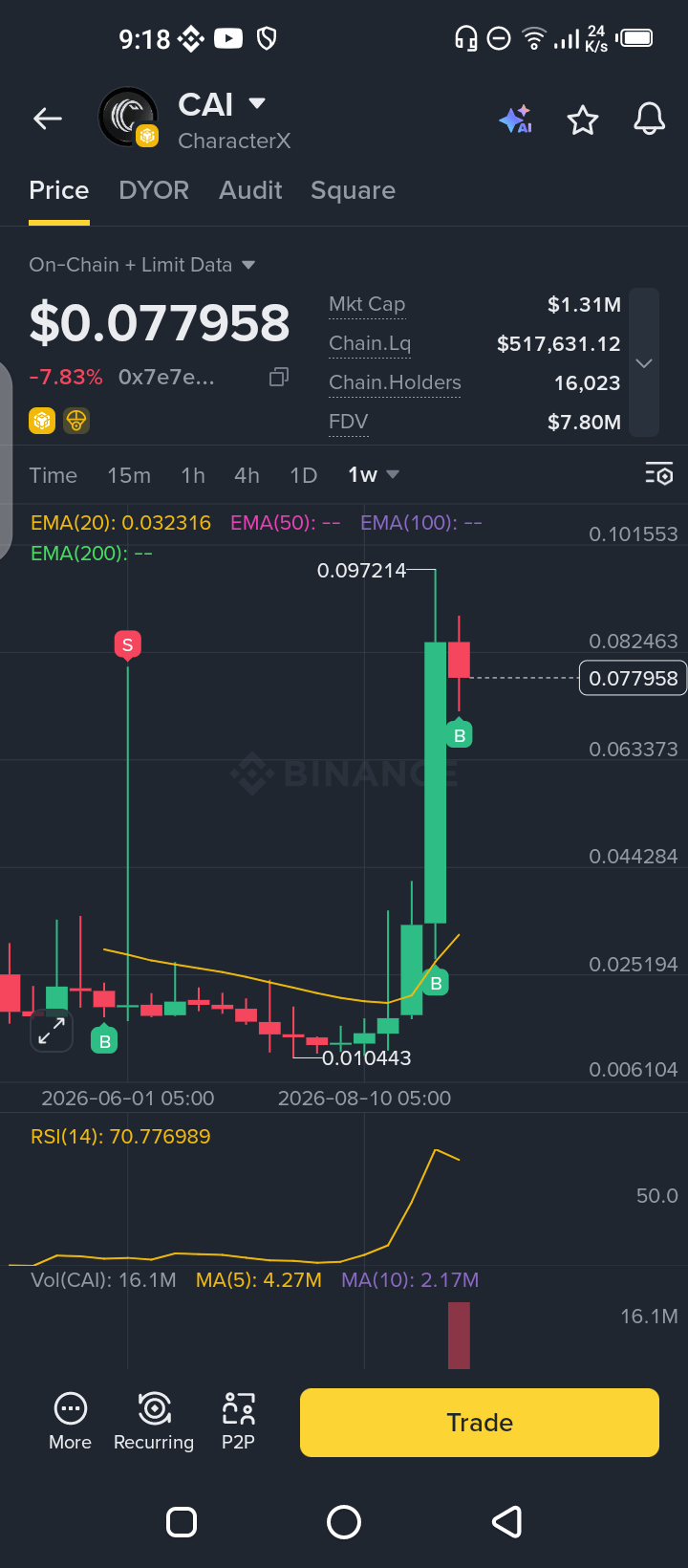
BullishBUY $CAI NOW
BUY ICNT
BUY TRADOOR
BUY 1 0.0004
BUY VELVET,TAC
BUY BIRB
BUY BASED
BUY RIVER 0.93$ & 0.73$
BUY FIDA 0.0175
BUY B2,CYS
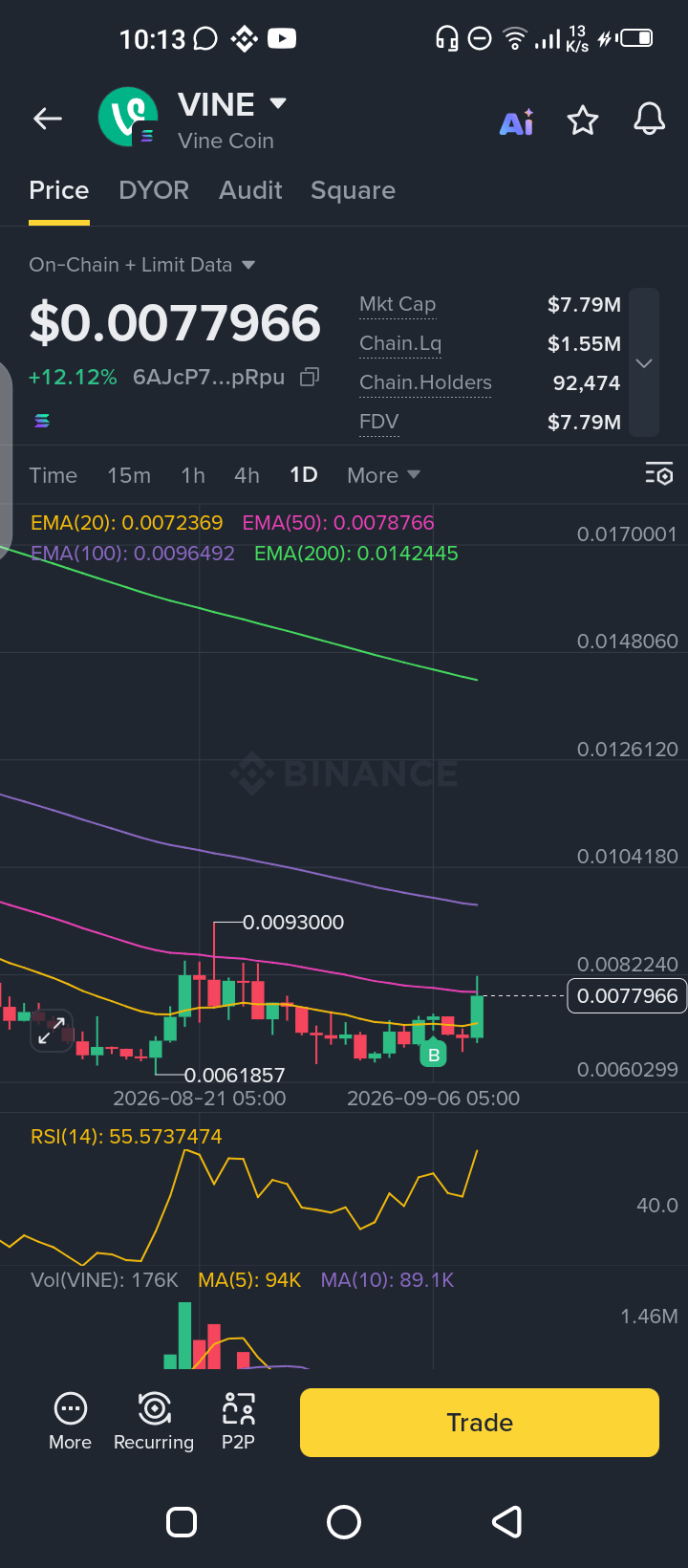
BUY R2,BUY VINE 0.0071$
BUY CLANKER,TST$
BUY MGP CKP FARTCOIN 0.09$
KONSEY TOKENS APNA ATH LAGHANEY JAYENGEY JAB BTC 50K PER HOGHA?Haan!SIRF ALPHAKING11 Hee Bach Payeghi.NoMore11z
$CAI $TRADOOR
#BinanceAlphaAlert #BINANCEFELLOWS
BUY ICNT
BUY TRADOOR
BUY 1 0.0004
BUY VELVET,TAC
BUY BIRB
BUY BASED
BUY RIVER 0.93$ & 0.73$
BUY FIDA 0.0175
BUY B2,CYS
BUY R2,BUY VINE 0.0071$
BUY CLANKER,TST$
BUY MGP CKP FARTCOIN 0.09$
KONSEY TOKENS APNA ATH LAGHANEY JAYENGEY JAB BTC 50K PER HOGHA?Haan!SIRF ALPHAKING11 Hee Bach Payeghi.NoMore11z
$CAI $TRADOOR
#BinanceAlphaAlert #BINANCEFELLOWS
1
62
·
--
Verified
#dusk $DUSK @Dusk_Foundation
BLS Signatures and the Compression of Dusk Consensus
BLS signatures are one of those things you probably won’t notice when using a blockchain.
And that’s kind of the point.
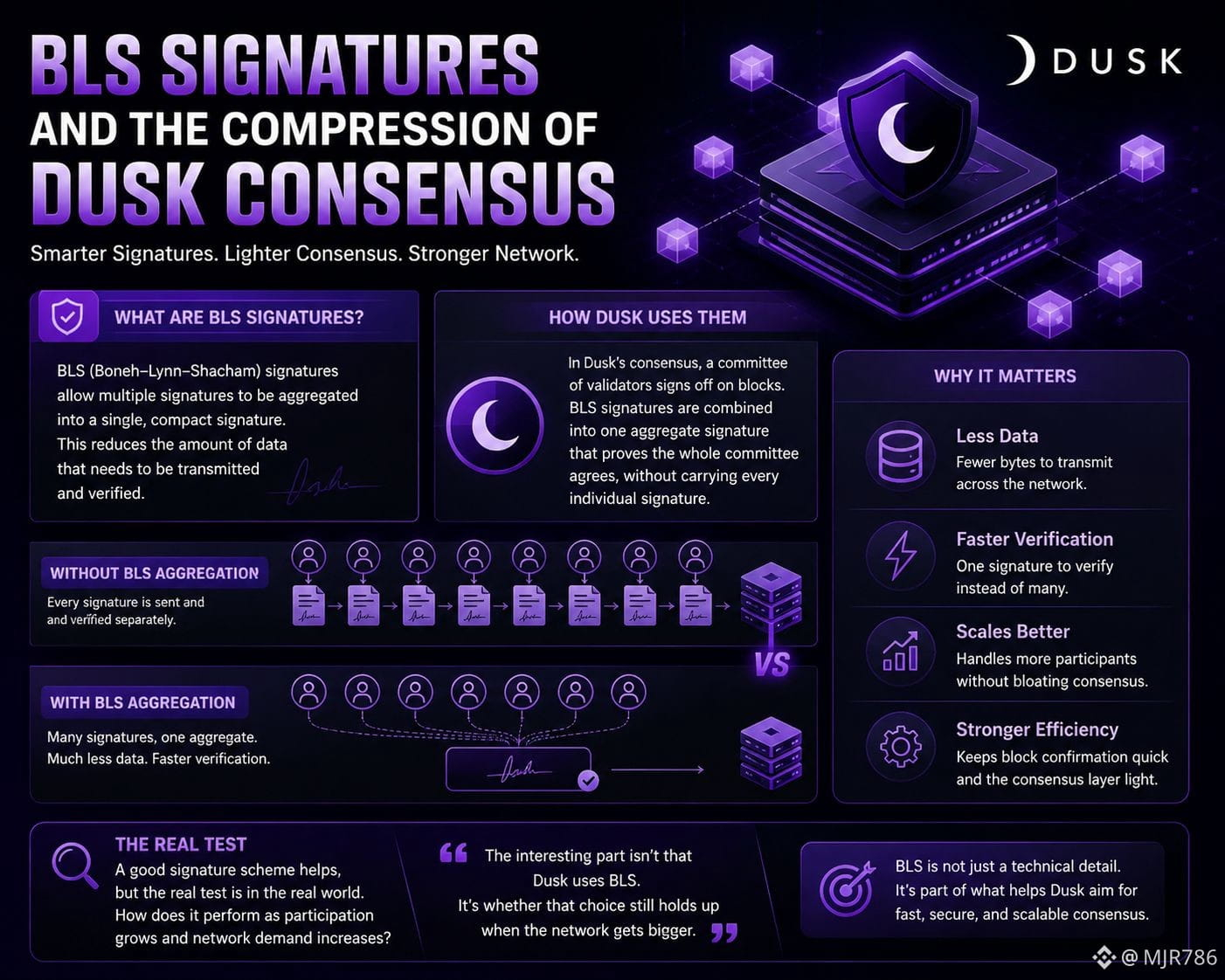
Dusk uses BLS signatures as part of its consensus process, where committee members sign off on blocks. The useful bit is that those signatures can be combined instead of making the network carry every signature around separately.
That sounds like a small technical detail.
It isn’t, especially when a consensus committee has a lot of participants. Less signature data means less stuff being passed around and checked during the process.
For Dusk, that fits the bigger goal of keeping block confirmation quick without making the consensus layer unnecessarily heavy.
But I’d be careful about giving BLS all the credit.
A clever signature scheme can reduce some overhead. It doesn’t automatically mean consensus will scale perfectly.
What I’d actually want to see is how this behaves as participation grows and the network has more work to process.
The interesting part isn’t that Dusk uses BLS. It’s whether that choice still holds up when the network gets bigger.
$BTR
{future}(BTRUSDT)
$TAC
{future}(TACUSDT)
#dusk $DUSK @Dusk
BLS Signatures and the Compression of Dusk Consensus
BLS signatures are one of those things you probably won’t notice when using a blockchain.
And that’s kind of the point.
Dusk uses BLS signatures as part of its consensus process, where committee members sign off on blocks. The useful bit is that those signatures can be combined instead of making the network carry every signature around separately.
That sounds like a small technical detail.
It isn’t, especially when a consensus committee has a lot of participants. Less signature data means less stuff being passed around and checked during the process.
For Dusk, that fits the bigger goal of keeping block confirmation quick without making the consensus layer unnecessarily heavy.
But I’d be careful about giving BLS all the credit.
A clever signature scheme can reduce some overhead. It doesn’t automatically mean consensus will scale perfectly.
What I’d actually want to see is how this behaves as participation grows and the network has more work to process.
The interesting part isn’t that Dusk uses BLS. It’s whether that choice still holds up when the network gets bigger.
$BTR
$TAC
BLS Signatures and the Compression of Dusk Consensus
BLS signatures are one of those things you probably won’t notice when using a blockchain.
And that’s kind of the point.
Dusk uses BLS signatures as part of its consensus process, where committee members sign off on blocks. The useful bit is that those signatures can be combined instead of making the network carry every signature around separately.
That sounds like a small technical detail.
It isn’t, especially when a consensus committee has a lot of participants. Less signature data means less stuff being passed around and checked during the process.
For Dusk, that fits the bigger goal of keeping block confirmation quick without making the consensus layer unnecessarily heavy.
But I’d be careful about giving BLS all the credit.
A clever signature scheme can reduce some overhead. It doesn’t automatically mean consensus will scale perfectly.
What I’d actually want to see is how this behaves as participation grows and the network has more work to process.
The interesting part isn’t that Dusk uses BLS. It’s whether that choice still holds up when the network gets bigger.
$BTR
$TAC
2
112
·
--
everyone Join this Live
everyone Join this Live

CQ 企业家
·
--
[Ended] 🎙️ DUSK Live: Let’s Break Down the Price Action 📊
128 listens
1
130
·
--
#dusk $DUSK @Dusk_Foundation
Zero Knowledge Is Impressive. Can Dusk Make It Boring?
I actually think ZK becomes more useful when people stop talking about it so much.
The cryptography behind it can get complicated very quickly That’s fine.
Developers building an application shouldn’t have to deal with all of that every time they want to use a privacy feature.
That’s why Dusk’s recent work around its zk-tools caught my attention.
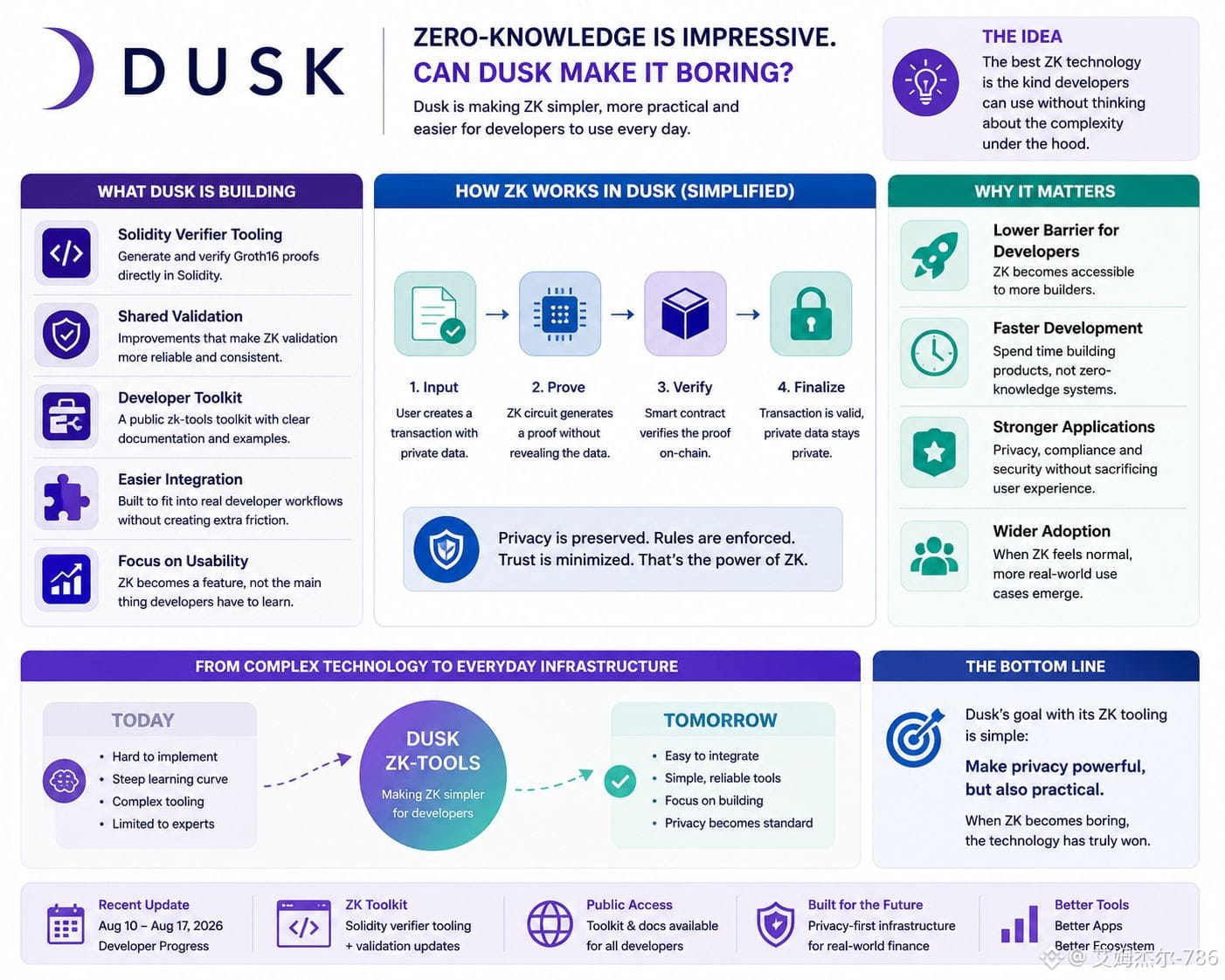
The toolkit has been getting more practical, including Solidity verifier tooling validation improvements and a public toolkit site.
For me, that’s a better direction than simply adding more impressive terminology to the ZK conversation.
If a developer can pick up the tools, understand what they need, integrate them and get back to building, then the complicated part is doing its job quietly in the background.
And that’s probably the point.
I don’t want ZK to be the reason people talk about an application.
I want it to be one of the reasons the application works.
If Dusk can make privacy infrastructure feel this ordinary that could be more important than making it look impressive.
#dusk $DUSK @Dusk
Zero Knowledge Is Impressive. Can Dusk Make It Boring?
I actually think ZK becomes more useful when people stop talking about it so much.
The cryptography behind it can get complicated very quickly That’s fine.
Developers building an application shouldn’t have to deal with all of that every time they want to use a privacy feature.
That’s why Dusk’s recent work around its zk-tools caught my attention.
The toolkit has been getting more practical, including Solidity verifier tooling validation improvements and a public toolkit site.
For me, that’s a better direction than simply adding more impressive terminology to the ZK conversation.
If a developer can pick up the tools, understand what they need, integrate them and get back to building, then the complicated part is doing its job quietly in the background.
And that’s probably the point.
I don’t want ZK to be the reason people talk about an application.
I want it to be one of the reasons the application works.
If Dusk can make privacy infrastructure feel this ordinary that could be more important than making it look impressive.
Zero Knowledge Is Impressive. Can Dusk Make It Boring?
I actually think ZK becomes more useful when people stop talking about it so much.
The cryptography behind it can get complicated very quickly That’s fine.
Developers building an application shouldn’t have to deal with all of that every time they want to use a privacy feature.
That’s why Dusk’s recent work around its zk-tools caught my attention.
The toolkit has been getting more practical, including Solidity verifier tooling validation improvements and a public toolkit site.
For me, that’s a better direction than simply adding more impressive terminology to the ZK conversation.
If a developer can pick up the tools, understand what they need, integrate them and get back to building, then the complicated part is doing its job quietly in the background.
And that’s probably the point.
I don’t want ZK to be the reason people talk about an application.
I want it to be one of the reasons the application works.
If Dusk can make privacy infrastructure feel this ordinary that could be more important than making it look impressive.
3
119
·
--
#dusk $DUSK
{future}(DUSKUSDT)
@Dusk_Foundation
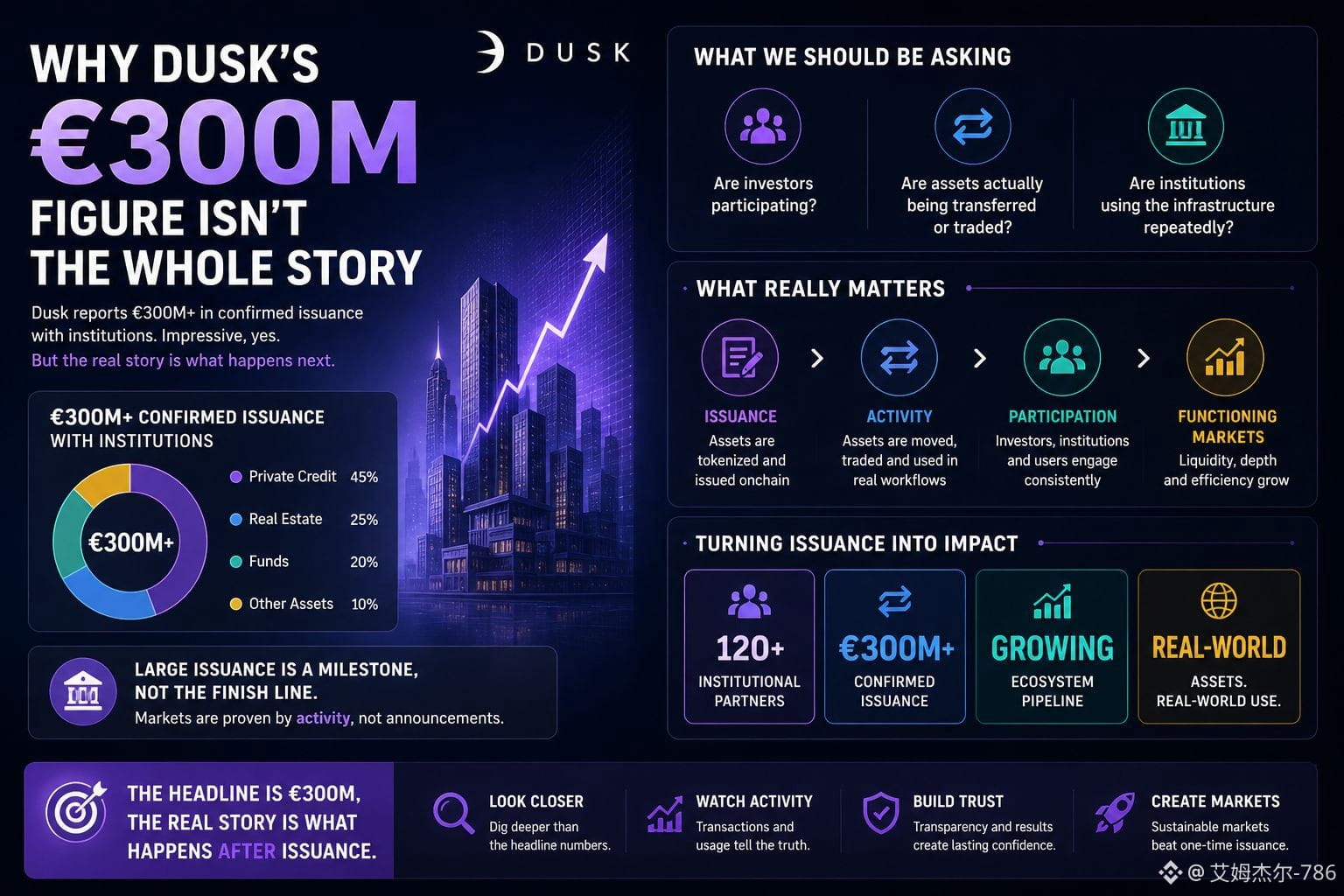
Why Dusk’s €300M Figure Isn’t the Whole Story
€300M+ in confirmed issuance sounds impressive.
But I'd rather ask what sits behind that number.
Dusk says its ecosystem has surpassed €300M in confirmed issuance with institutions. That's certainly worth paying attention to, but a headline figure alone doesn't tell us how much real activity is happening around those assets.
Are investors participating?
Are assets actually being transferred or traded?
Are institutions using the infrastructure repeatedly?
Those questions matter because issuance is only one part of a financial market.
A project can put a large amount of value onchain and still have limited activity afterward.
That's why I wouldn't use the €300M figure as proof that Dusk has already “won” the institutional market.
I'd use it as a reason to look closer.
If that issuance eventually translates into recurring users, transactions and functioning markets, then the number becomes much more meaningful.
The headline is €300M. The real story is what happens after issuance.
$TUT
{future}(TUTUSDT)
$ENA
{future}(ENAUSDT)
#dusk $DUSK
@Dusk
Why Dusk’s €300M Figure Isn’t the Whole Story
€300M+ in confirmed issuance sounds impressive.
But I'd rather ask what sits behind that number.
Dusk says its ecosystem has surpassed €300M in confirmed issuance with institutions. That's certainly worth paying attention to, but a headline figure alone doesn't tell us how much real activity is happening around those assets.
Are investors participating?
Are assets actually being transferred or traded?
Are institutions using the infrastructure repeatedly?
Those questions matter because issuance is only one part of a financial market.
A project can put a large amount of value onchain and still have limited activity afterward.
That's why I wouldn't use the €300M figure as proof that Dusk has already “won” the institutional market.
I'd use it as a reason to look closer.
If that issuance eventually translates into recurring users, transactions and functioning markets, then the number becomes much more meaningful.
The headline is €300M. The real story is what happens after issuance.
$TUT
$ENA
@Dusk
Why Dusk’s €300M Figure Isn’t the Whole Story
€300M+ in confirmed issuance sounds impressive.
But I'd rather ask what sits behind that number.
Dusk says its ecosystem has surpassed €300M in confirmed issuance with institutions. That's certainly worth paying attention to, but a headline figure alone doesn't tell us how much real activity is happening around those assets.
Are investors participating?
Are assets actually being transferred or traded?
Are institutions using the infrastructure repeatedly?
Those questions matter because issuance is only one part of a financial market.
A project can put a large amount of value onchain and still have limited activity afterward.
That's why I wouldn't use the €300M figure as proof that Dusk has already “won” the institutional market.
I'd use it as a reason to look closer.
If that issuance eventually translates into recurring users, transactions and functioning markets, then the number becomes much more meaningful.
The headline is €300M. The real story is what happens after issuance.
$TUT
$ENA
1
2
106
·
--
Verified
#dusk $DUSK @Dusk_Foundation
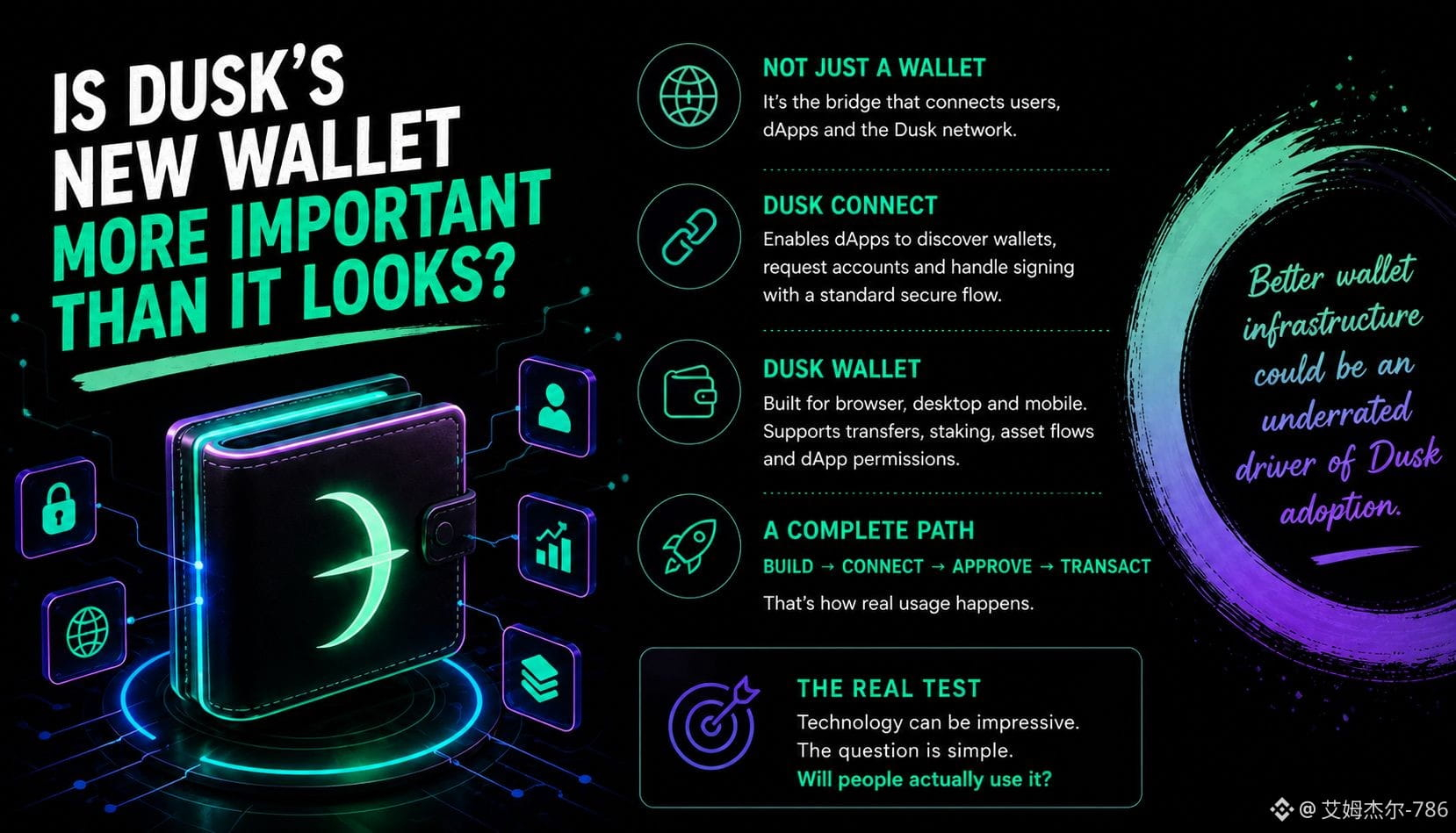
Is Dusk’s New Wallet More Important Than It Looks?
A wallet launch can sound like a minor update.
But I think the interesting part of Dusk’s new wallet is what it enables around it.
Dusk Connect gives dApps a standard way to discover compatible wallets request accounts, and handle signing. The new first-party Dusk Wallet is designed for browser extensions desktop and mobile, with support for transfers staking asset flows and dApp permissions.
That matters because a network can have strong technology and still be difficult to actually use.
For Dusk this creates a more complete path
build → connect → approve → transact.
And that is a very different conversation from simply saying We launched a wallet.
I’m more interested in whether developers actually build around it and whether users find the experience simple enough to keep using.
The technology can be impressive.
The real test is whether people stop thinking about the technology and simply use it.
Could better wallet infrastructure become an underrated driver of Dusk adoption
$TRUMP $POL
#dusk $DUSK @Dusk
Is Dusk’s New Wallet More Important Than It Looks?
A wallet launch can sound like a minor update.
But I think the interesting part of Dusk’s new wallet is what it enables around it.
Dusk Connect gives dApps a standard way to discover compatible wallets request accounts, and handle signing. The new first-party Dusk Wallet is designed for browser extensions desktop and mobile, with support for transfers staking asset flows and dApp permissions.
That matters because a network can have strong technology and still be difficult to actually use.
For Dusk this creates a more complete path
build → connect → approve → transact.
And that is a very different conversation from simply saying We launched a wallet.
I’m more interested in whether developers actually build around it and whether users find the experience simple enough to keep using.
The technology can be impressive.
The real test is whether people stop thinking about the technology and simply use it.
Could better wallet infrastructure become an underrated driver of Dusk adoption
$TRUMP $POL
Is Dusk’s New Wallet More Important Than It Looks?
A wallet launch can sound like a minor update.
But I think the interesting part of Dusk’s new wallet is what it enables around it.
Dusk Connect gives dApps a standard way to discover compatible wallets request accounts, and handle signing. The new first-party Dusk Wallet is designed for browser extensions desktop and mobile, with support for transfers staking asset flows and dApp permissions.
That matters because a network can have strong technology and still be difficult to actually use.
For Dusk this creates a more complete path
build → connect → approve → transact.
And that is a very different conversation from simply saying We launched a wallet.
I’m more interested in whether developers actually build around it and whether users find the experience simple enough to keep using.
The technology can be impressive.
The real test is whether people stop thinking about the technology and simply use it.
Could better wallet infrastructure become an underrated driver of Dusk adoption
$TRUMP $POL
1
3
106
·
--
Bullish
$MIRA Trade Setup
{future}(MIRAUSDT)
Direction: 🟢 LONG
Entry: 0.04415 – 0.04440
Stop Loss: 0.04270
Take Profit:
TP1: 0.04600
TP2: 0.04800
TP3: 0.05000
TP4: 0.05350
Invalidation: If MIRA loses 0.04270, cancel the long setup.
Key point: 0.04410 is the breakout level. I would prefer a confirmed break and hold above it rather than entering blindly at resistance.
Current bias: Short-term bullish, but the daily trend is still not fully bullish. Stoch RSI is already high, so a pullback is possible.
#BitcoinBestWeekSinceMarch2023
$MIRA Trade Setup
Direction: 🟢 LONG
Entry: 0.04415 – 0.04440
Stop Loss: 0.04270
Take Profit:
TP1: 0.04600
TP2: 0.04800
TP3: 0.05000
TP4: 0.05350
Invalidation: If MIRA loses 0.04270, cancel the long setup.
Key point: 0.04410 is the breakout level. I would prefer a confirmed break and hold above it rather than entering blindly at resistance.
Current bias: Short-term bullish, but the daily trend is still not fully bullish. Stoch RSI is already high, so a pullback is possible.
#BitcoinBestWeekSinceMarch2023
Direction: 🟢 LONG
Entry: 0.04415 – 0.04440
Stop Loss: 0.04270
Take Profit:
TP1: 0.04600
TP2: 0.04800
TP3: 0.05000
TP4: 0.05350
Invalidation: If MIRA loses 0.04270, cancel the long setup.
Key point: 0.04410 is the breakout level. I would prefer a confirmed break and hold above it rather than entering blindly at resistance.
Current bias: Short-term bullish, but the daily trend is still not fully bullish. Stoch RSI is already high, so a pullback is possible.
#BitcoinBestWeekSinceMarch2023
107
·
--
#dusk $DUSK @Dusk_Foundation
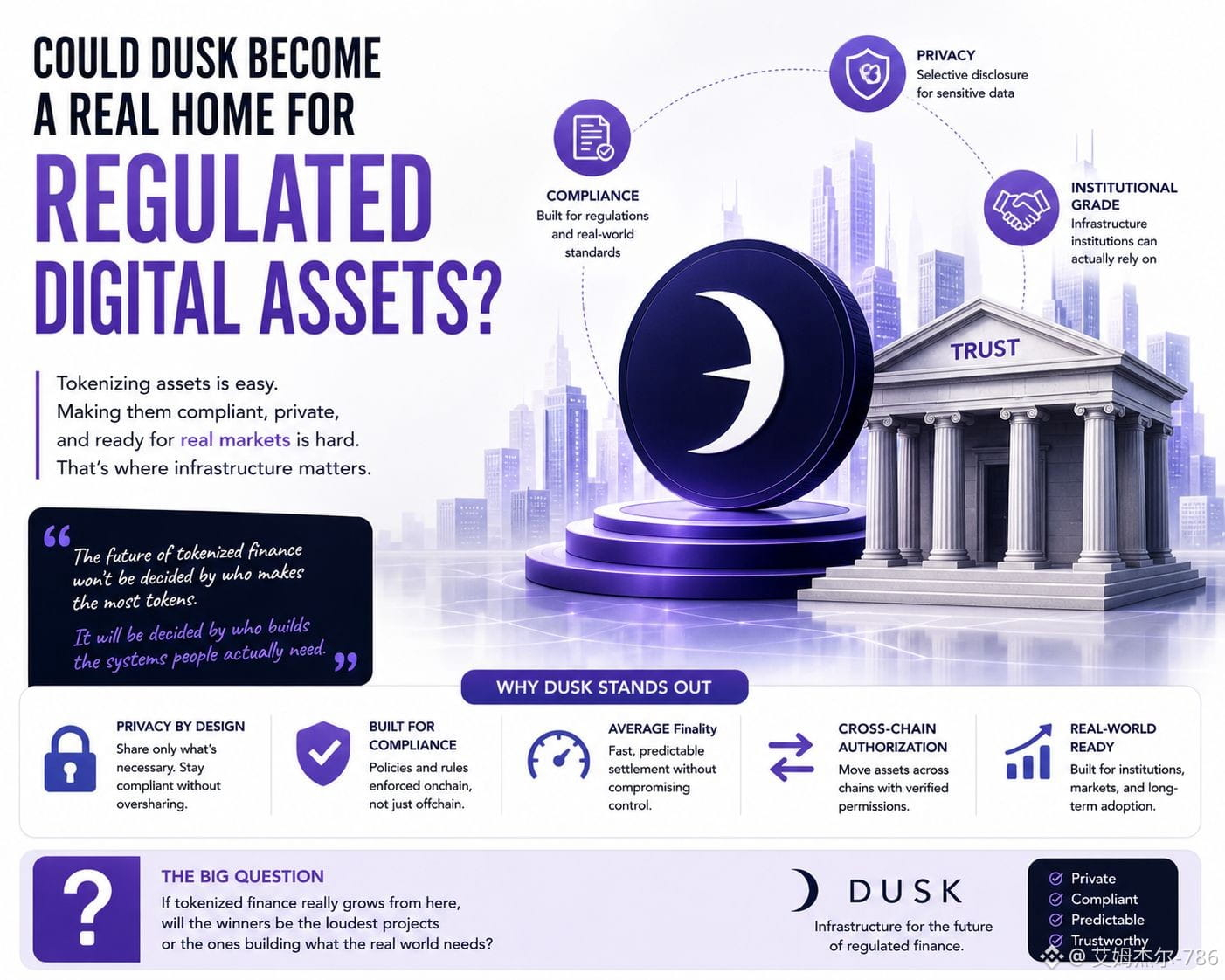
Could DUSK become a real home for regulated digital assets?
I keep coming back to one question when I look at DUSK.
What happens when financial assets start moving onchain in a serious way?
Creating a token is probably the easy part. The difficult part starts after that.
An institution still has to deal with privacy compliance ownership transfers and settlement. And these things cannot simply be pushed aside because the asset is now on a blockchain.
That is the part of DUSK I find worth watching.
Its design is focused on regulated markets rather than trying to solve every possible blockchain use case. Privacy and selective disclosure are important here because financial information is not something institutions can just expose publicly.
I don't think that means DUSK automatically wins.
It still needs real users, real activity and real adoption to prove the idea.
But the infrastructure question is interesting.
If tokenized finance really grows from here, the winners may not be the projects making the most noise.
They may be the ones quietly building the systems people actually need.
$HEMI
{future}(HEMIUSDT)
$ETH
{future}(ETHUSDT)
#dusk $DUSK @Dusk
Could DUSK become a real home for regulated digital assets?
I keep coming back to one question when I look at DUSK.
What happens when financial assets start moving onchain in a serious way?
Creating a token is probably the easy part. The difficult part starts after that.
An institution still has to deal with privacy compliance ownership transfers and settlement. And these things cannot simply be pushed aside because the asset is now on a blockchain.
That is the part of DUSK I find worth watching.
Its design is focused on regulated markets rather than trying to solve every possible blockchain use case. Privacy and selective disclosure are important here because financial information is not something institutions can just expose publicly.
I don't think that means DUSK automatically wins.
It still needs real users, real activity and real adoption to prove the idea.
But the infrastructure question is interesting.
If tokenized finance really grows from here, the winners may not be the projects making the most noise.
They may be the ones quietly building the systems people actually need.
$HEMI
$ETH
Could DUSK become a real home for regulated digital assets?
I keep coming back to one question when I look at DUSK.
What happens when financial assets start moving onchain in a serious way?
Creating a token is probably the easy part. The difficult part starts after that.
An institution still has to deal with privacy compliance ownership transfers and settlement. And these things cannot simply be pushed aside because the asset is now on a blockchain.
That is the part of DUSK I find worth watching.
Its design is focused on regulated markets rather than trying to solve every possible blockchain use case. Privacy and selective disclosure are important here because financial information is not something institutions can just expose publicly.
I don't think that means DUSK automatically wins.
It still needs real users, real activity and real adoption to prove the idea.
But the infrastructure question is interesting.
If tokenized finance really grows from here, the winners may not be the projects making the most noise.
They may be the ones quietly building the systems people actually need.
$HEMI
$ETH
93
·
--
Bullish
#termmax @termmax
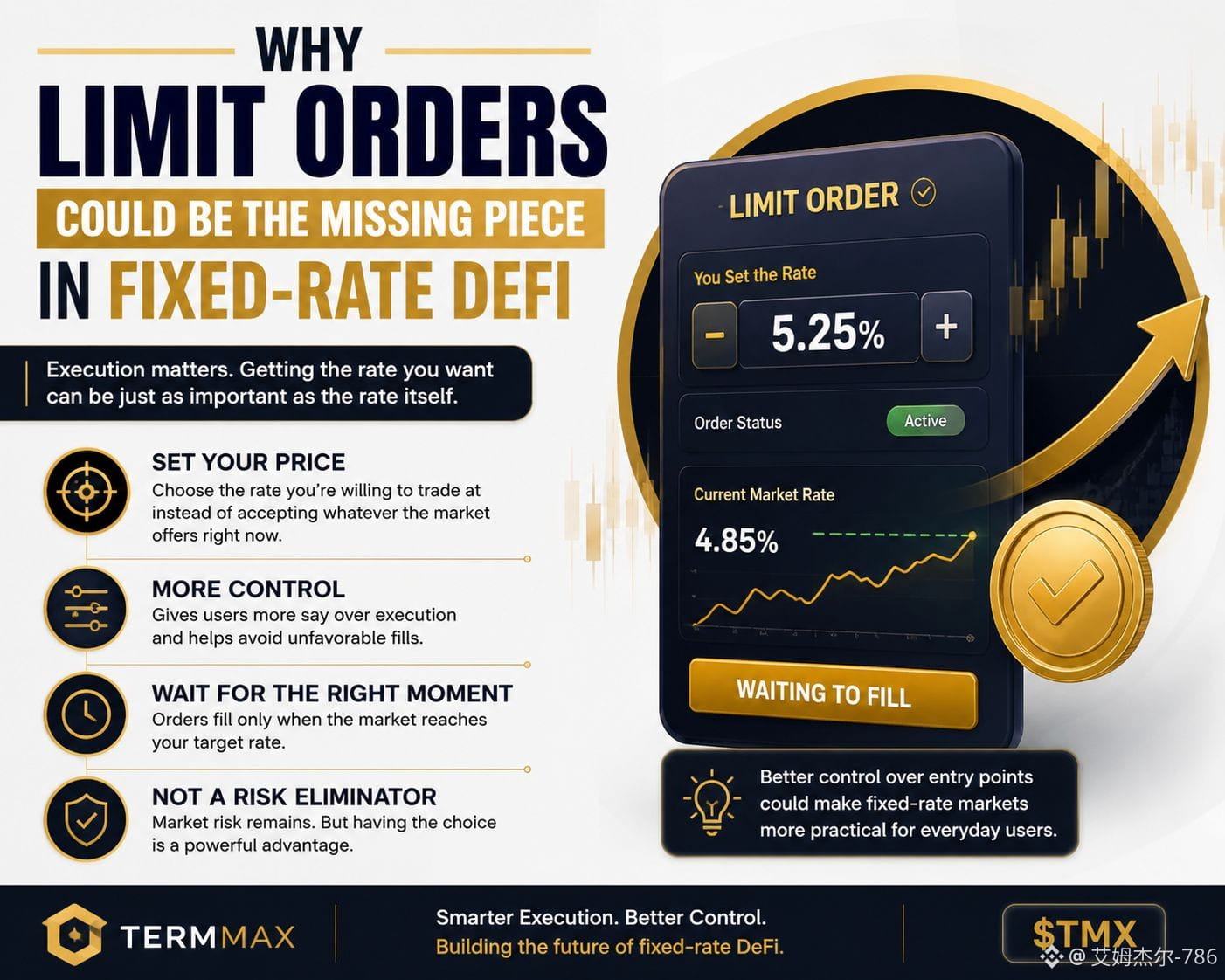
Most DeFi conversations focus on yield but I think execution deserves more attention.
Getting a position at the rate you actually want can matter just as much as the rate itself. That’s why the limit order approach in TermMax caught my eye.
Instead of simply accepting whatever the market is offering at that moment a limit order lets you set the price you’re willing to trade at and wait for the market to reach it.
That small difference can give users more control over execution.
It doesn’t mean every order will fill, and it certainly doesn’t remove market risk. But having the choice between taking the available rate immediately and waiting for a specific level is useful.
As fixed-rate DeFi develops I think these execution tools could become increasingly important.
The interesting question is whether better control over entry points can make fixed rate markets more practical for everyday users.
I’m watching how TermMax develops this side of the market.
$HEMI
{future}(HEMIUSDT)
$XPIN
{future}(XPINUSDT)
$ETH
{future}(ETHUSDT)
#termmax @TermMax
Most DeFi conversations focus on yield but I think execution deserves more attention.
Getting a position at the rate you actually want can matter just as much as the rate itself. That’s why the limit order approach in TermMax caught my eye.
Instead of simply accepting whatever the market is offering at that moment a limit order lets you set the price you’re willing to trade at and wait for the market to reach it.
That small difference can give users more control over execution.
It doesn’t mean every order will fill, and it certainly doesn’t remove market risk. But having the choice between taking the available rate immediately and waiting for a specific level is useful.
As fixed-rate DeFi develops I think these execution tools could become increasingly important.
The interesting question is whether better control over entry points can make fixed rate markets more practical for everyday users.
I’m watching how TermMax develops this side of the market.
$HEMI
$XPIN
$ETH
Most DeFi conversations focus on yield but I think execution deserves more attention.
Getting a position at the rate you actually want can matter just as much as the rate itself. That’s why the limit order approach in TermMax caught my eye.
Instead of simply accepting whatever the market is offering at that moment a limit order lets you set the price you’re willing to trade at and wait for the market to reach it.
That small difference can give users more control over execution.
It doesn’t mean every order will fill, and it certainly doesn’t remove market risk. But having the choice between taking the available rate immediately and waiting for a specific level is useful.
As fixed-rate DeFi develops I think these execution tools could become increasingly important.
The interesting question is whether better control over entry points can make fixed rate markets more practical for everyday users.
I’m watching how TermMax develops this side of the market.
$HEMI
$XPIN
$ETH
143
·
--
#termmax @termmax
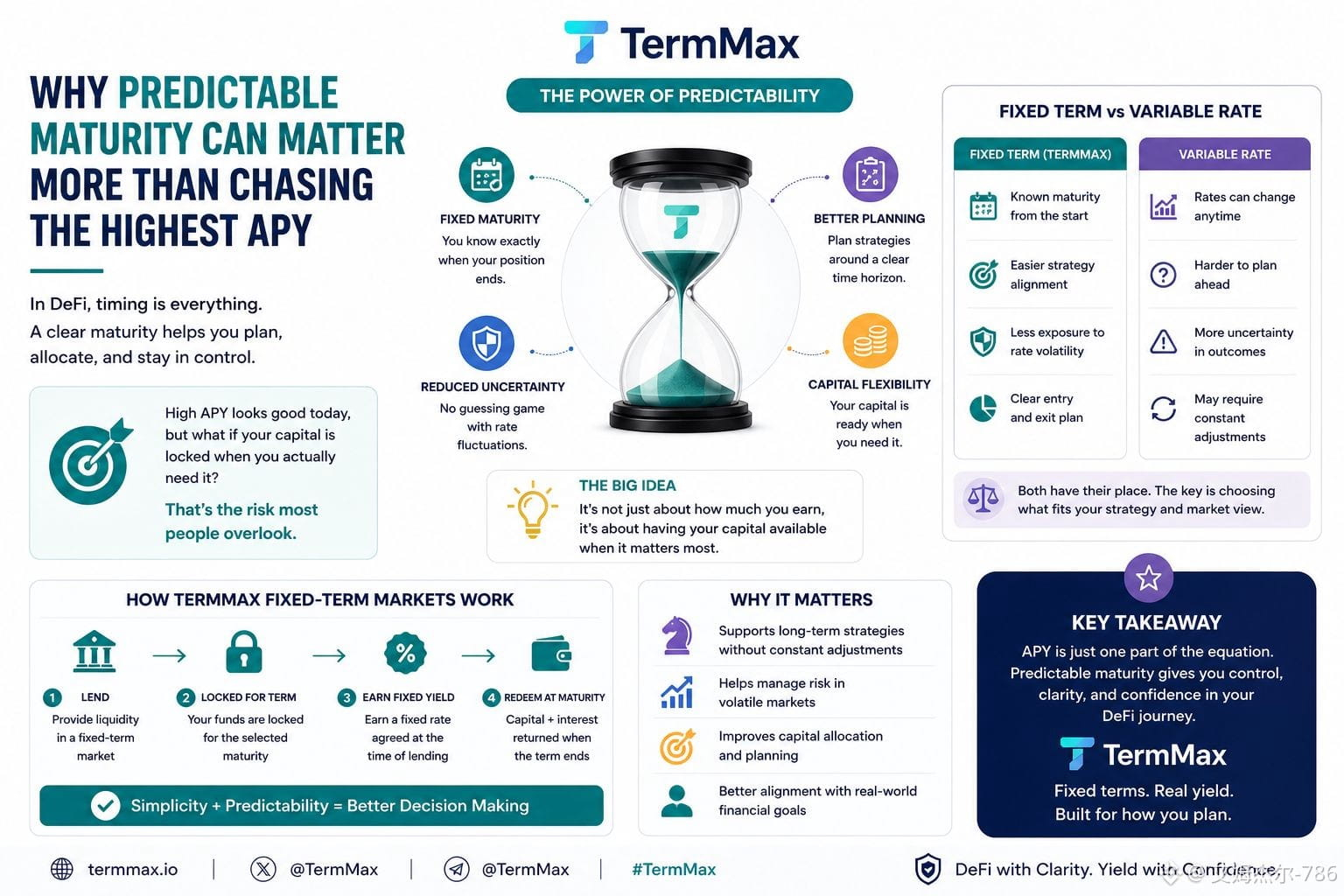
Why Predictable Maturity Can Matter More Than Chasing the Highest APY
One thing I’ve started paying more attention to in DeFi is timing.
A high APY can look great on a screen, but what happens if your capital is tied up when you actually need it? That part is easy to overlook when comparing different lending opportunities.
This is what makes TermMax interesting to me. Its fixed-term approach gives users a defined maturity, so the timeline is known before entering the position.
I don’t think fixed terms are automatically better than variable rates. Both have their place, depending on the strategy and market conditions.
But having a clear maturity can make planning much easier. You can think about where your capital needs to be at a specific point instead of constantly adjusting to changing rates.
As DeFi keeps evolving, I think predictable time horizons could become just as important as the yield itself.
That’s the part of TermMax I’ll be watching.
$RE
{future}(REUSDT)
$BTW
{future}(BTWUSDT)
$ETH
{future}(ETHUSDT)
#termmax @TermMax
Why Predictable Maturity Can Matter More Than Chasing the Highest APY
One thing I’ve started paying more attention to in DeFi is timing.
A high APY can look great on a screen, but what happens if your capital is tied up when you actually need it? That part is easy to overlook when comparing different lending opportunities.
This is what makes TermMax interesting to me. Its fixed-term approach gives users a defined maturity, so the timeline is known before entering the position.
I don’t think fixed terms are automatically better than variable rates. Both have their place, depending on the strategy and market conditions.
But having a clear maturity can make planning much easier. You can think about where your capital needs to be at a specific point instead of constantly adjusting to changing rates.
As DeFi keeps evolving, I think predictable time horizons could become just as important as the yield itself.
That’s the part of TermMax I’ll be watching.
$RE
$BTW
$ETH
Why Predictable Maturity Can Matter More Than Chasing the Highest APY
One thing I’ve started paying more attention to in DeFi is timing.
A high APY can look great on a screen, but what happens if your capital is tied up when you actually need it? That part is easy to overlook when comparing different lending opportunities.
This is what makes TermMax interesting to me. Its fixed-term approach gives users a defined maturity, so the timeline is known before entering the position.
I don’t think fixed terms are automatically better than variable rates. Both have their place, depending on the strategy and market conditions.
But having a clear maturity can make planning much easier. You can think about where your capital needs to be at a specific point instead of constantly adjusting to changing rates.
As DeFi keeps evolving, I think predictable time horizons could become just as important as the yield itself.
That’s the part of TermMax I’ll be watching.
$RE
$BTW
$ETH
3
4
50
·
--
$XRP
{future}(XRPUSDT)
🟢 LONG
Entry: $1.095 – $1.105
🎯 TP1: $1.120
🎯 TP2: $1.136
🎯 TP3: $1.160
🛑 SL: $1.078
📌 Short only below: $1.078 with confirmation.
Bias: Bullish. Price is holding above EMA20/50/100/200, but Stoch RSI is elevated, so chasing the current price is less attractive. Pullback entry is cleaner.
DYOR. Not financial advice.
$XRP
🟢 LONG
Entry: $1.095 – $1.105
🎯 TP1: $1.120
🎯 TP2: $1.136
🎯 TP3: $1.160
🛑 SL: $1.078
📌 Short only below: $1.078 with confirmation.
Bias: Bullish. Price is holding above EMA20/50/100/200, but Stoch RSI is elevated, so chasing the current price is less attractive. Pullback entry is cleaner.
DYOR. Not financial advice.
🟢 LONG
Entry: $1.095 – $1.105
🎯 TP1: $1.120
🎯 TP2: $1.136
🎯 TP3: $1.160
🛑 SL: $1.078
📌 Short only below: $1.078 with confirmation.
Bias: Bullish. Price is holding above EMA20/50/100/200, but Stoch RSI is elevated, so chasing the current price is less attractive. Pullback entry is cleaner.
DYOR. Not financial advice.
71
·
--
$SKYAI
{future}(SKYAIUSDT)
🔴 SHORT
Entry: $0.0708 – $0.0718
🎯 TP1: $0.0698
🎯 TP2: $0.0675
🎯 TP3: $0.0667
🛑 SL: $0.0730
📌 Bias: Bearish while price stays below EMA20. MACD is negative and momentum is weakening. No Long unless $0.0730 is reclaimed and holds.
DYOR. Not financial advice.
$SKYAI
🔴 SHORT
Entry: $0.0708 – $0.0718
🎯 TP1: $0.0698
🎯 TP2: $0.0675
🎯 TP3: $0.0667
🛑 SL: $0.0730
📌 Bias: Bearish while price stays below EMA20. MACD is negative and momentum is weakening. No Long unless $0.0730 is reclaimed and holds.
DYOR. Not financial advice.
🔴 SHORT
Entry: $0.0708 – $0.0718
🎯 TP1: $0.0698
🎯 TP2: $0.0675
🎯 TP3: $0.0667
🛑 SL: $0.0730
📌 Bias: Bearish while price stays below EMA20. MACD is negative and momentum is weakening. No Long unless $0.0730 is reclaimed and holds.
DYOR. Not financial advice.
45
·
--
$HYPE
{future}(HYPEUSDT)
🟢 LONG
Entry: $69.90 – $70.30
🎯 TP1: $72.00
🎯 TP2: $72.68
🎯 TP3: $74.50
🛑 SL: $69.20
📌 Short only below: $69.20 with 15M confirmation.
Bias: Bullish, but Stoch RSI is heavily overbought, so better to avoid chasing at $70.93 and wait for a pullback.
DYOR. Not financial advice.
$HYPE
🟢 LONG
Entry: $69.90 – $70.30
🎯 TP1: $72.00
🎯 TP2: $72.68
🎯 TP3: $74.50
🛑 SL: $69.20
📌 Short only below: $69.20 with 15M confirmation.
Bias: Bullish, but Stoch RSI is heavily overbought, so better to avoid chasing at $70.93 and wait for a pullback.
DYOR. Not financial advice.
🟢 LONG
Entry: $69.90 – $70.30
🎯 TP1: $72.00
🎯 TP2: $72.68
🎯 TP3: $74.50
🛑 SL: $69.20
📌 Short only below: $69.20 with 15M confirmation.
Bias: Bullish, but Stoch RSI is heavily overbought, so better to avoid chasing at $70.93 and wait for a pullback.
DYOR. Not financial advice.
49
·
--
$SKHYNIX
🟢 LONG
Entry: 1,195 – 1,205
🎯 TP1: 1,233
🎯 TP2: 1,260
🎯 TP3: 1,300
🛑 SL: 1,180
📌 Short only below: 1,180 with 15M confirmation.
Bias: Bullish, but current pullback needs to hold EMA20.
DYOR. Not financial advice.
#SKHYNIXUSDT
$SKHYNIX
🟢 LONG
Entry: 1,195 – 1,205
🎯 TP1: 1,233
🎯 TP2: 1,260
🎯 TP3: 1,300
🛑 SL: 1,180
📌 Short only below: 1,180 with 15M confirmation.
Bias: Bullish, but current pullback needs to hold EMA20.
DYOR. Not financial advice.
#SKHYNIXUSDT
🟢 LONG
Entry: 1,195 – 1,205
🎯 TP1: 1,233
🎯 TP2: 1,260
🎯 TP3: 1,300
🛑 SL: 1,180
📌 Short only below: 1,180 with 15M confirmation.
Bias: Bullish, but current pullback needs to hold EMA20.
DYOR. Not financial advice.
#SKHYNIXUSDT
31
·
--
Bullish
$BOME
{future}(BOMEUSDT)
🟢 LONG
Entry: $0.000885 – $0.000900
🎯 TP1: $0.000918
🎯 TP2: $0.000950
🎯 TP3: $0.001000
🛑 SL: $0.000865
📌 Short: Not favored currently. Price is above all major EMAs and MACD is positive. Stoch RSI is overbought, so chasing the current price is risky.
DYOR. Not financial advice.
$BOME
🟢 LONG
Entry: $0.000885 – $0.000900
🎯 TP1: $0.000918
🎯 TP2: $0.000950
🎯 TP3: $0.001000
🛑 SL: $0.000865
📌 Short: Not favored currently. Price is above all major EMAs and MACD is positive. Stoch RSI is overbought, so chasing the current price is risky.
DYOR. Not financial advice.
🟢 LONG
Entry: $0.000885 – $0.000900
🎯 TP1: $0.000918
🎯 TP2: $0.000950
🎯 TP3: $0.001000
🛑 SL: $0.000865
📌 Short: Not favored currently. Price is above all major EMAs and MACD is positive. Stoch RSI is overbought, so chasing the current price is risky.
DYOR. Not financial advice.
57
·
--
$RED
{future}(REDUSDT)
⚠️ Current: NO TRADE
📌 Long: Only above $0.1130 with confirmation
🎯 TP1: $0.1200
🎯 TP2: $0.1300
🛑 SL: $0.1060
📉 Short: Only below $0.0998 with confirmation
🎯 TP1: $0.0962
🎯 TP2: $0.0929
🛑 SL: $0.1030
Reason: Trend is bullish, but price is extended near $0.1130 resistance. Chasing a Long here isn't clean, and Shorting against the EMA structure isn't clean either.
DYOR. Not financial advice.
$RED
⚠️ Current: NO TRADE
📌 Long: Only above $0.1130 with confirmation
🎯 TP1: $0.1200
🎯 TP2: $0.1300
🛑 SL: $0.1060
📉 Short: Only below $0.0998 with confirmation
🎯 TP1: $0.0962
🎯 TP2: $0.0929
🛑 SL: $0.1030
Reason: Trend is bullish, but price is extended near $0.1130 resistance. Chasing a Long here isn't clean, and Shorting against the EMA structure isn't clean either.
DYOR. Not financial advice.
⚠️ Current: NO TRADE
📌 Long: Only above $0.1130 with confirmation
🎯 TP1: $0.1200
🎯 TP2: $0.1300
🛑 SL: $0.1060
📉 Short: Only below $0.0998 with confirmation
🎯 TP1: $0.0962
🎯 TP2: $0.0929
🛑 SL: $0.1030
Reason: Trend is bullish, but price is extended near $0.1130 resistance. Chasing a Long here isn't clean, and Shorting against the EMA structure isn't clean either.
DYOR. Not financial advice.
33
·
--
Bullish
$MET 15M Setup 📊
{future}(METUSDT)
🟢 Buy Zone: $0.2130 – $0.2160
🎯 TP1: $0.2257
🎯 TP2: $0.2350
🎯 TP3: $0.2500
🛑 SL: $0.2020
🔴 Sell/Short: Below $0.2020 with confirmation.
DYOR. Not financial advice.
$MET 15M Setup 📊
🟢 Buy Zone: $0.2130 – $0.2160
🎯 TP1: $0.2257
🎯 TP2: $0.2350
🎯 TP3: $0.2500
🛑 SL: $0.2020
🔴 Sell/Short: Below $0.2020 with confirmation.
DYOR. Not financial advice.
🟢 Buy Zone: $0.2130 – $0.2160
🎯 TP1: $0.2257
🎯 TP2: $0.2350
🎯 TP3: $0.2500
🛑 SL: $0.2020
🔴 Sell/Short: Below $0.2020 with confirmation.
DYOR. Not financial advice.
67
·
--
Bullish
$HAEDAL | 1H Setup 📊
{future}(HAEDALUSDT)
🟢 Buy Zone: $0.01792 – $0.01810
🎯 TP1: $0.01843
🎯 TP2: $0.01919
🎯 TP3: $0.01977
🛑 SL: $0.01760
🔴 Sell/Short only if: $0.01760 breaks with confirmation.
DYOR. Educational setup, not financial advice.
#CryptoRally #FOMCWatch #FedMinutesShowNoSupportForRateCuts
$HAEDAL | 1H Setup 📊
🟢 Buy Zone: $0.01792 – $0.01810
🎯 TP1: $0.01843
🎯 TP2: $0.01919
🎯 TP3: $0.01977
🛑 SL: $0.01760
🔴 Sell/Short only if: $0.01760 breaks with confirmation.
DYOR. Educational setup, not financial advice.
#CryptoRally #FOMCWatch #FedMinutesShowNoSupportForRateCuts
🟢 Buy Zone: $0.01792 – $0.01810
🎯 TP1: $0.01843
🎯 TP2: $0.01919
🎯 TP3: $0.01977
🛑 SL: $0.01760
🔴 Sell/Short only if: $0.01760 breaks with confirmation.
DYOR. Educational setup, not financial advice.
#CryptoRally #FOMCWatch #FedMinutesShowNoSupportForRateCuts
112
Log in to explore more content
Join global crypto users on Binance Square
⚡️ Get latest and useful information about crypto.
💬 Trusted by the world’s largest crypto exchange.
👍 Discover real insights from verified creators.
Email / Phone number
Trending Topics
FedRateWatch
1.3M views
6,371 Discussing
Share & Win Traffic Reward in our Trending Hashtag Campaign
✨Topic: FOMC September, What's The Fed's Next Move?
👉How to Join:
Publish a short post or article with hashtag #FedRateWatch
Create content based on the below angles:
- August core CPI rose 0.3% month-over-month, and the odds of a 25bp hike this week are now close to 90%. Do you anticipate a rate hike this week? Is it a one-off, or the start of a longer hiking cycle?
- If the hike lands, how does it play out for BTC, tech stocks, and gold? Bullish or bearish?
- How are you planning to trade next? Share your BTC, stocks or gold trade/holdings with our trade sharing widget.
⏰Campaign Period:
- 2026-09-15 11:00 - 2026-09-17 3:00 UTC
🎁Reward:
- Qualified posts that comply with the above guidelines and contain more than 100 words will be reviewed and may receive a random traffic boost of 500 to 3,000 views. You will receive a notification from your feed secretary if your post is selected.
- Get a chance to have your article featured on Binance Square Official
Need ideas for your post? Visit the topic page #FedRateWatch or the Square Guide on How to Post for Better Reach.
Binance Square Official
·633 Likes
·1.6M views
ZcashRises6%
32,277 views
504 Discussing
XRPSinks10%
21,118 views
328 Discussing