

AL Roo
4.8k Posts

AL Roo
 Square Verified+
Report
Block User
Crypto Trader | Web3 Enthusiast | Binance Square KoL
54 Following
31.4K+ Followers
41.5K+ Liked
Posts
All
Quotes
Live
·
--
Bullish
🚨 US ECONOMY JUST MADE THE FED’S JOB HARDER.
September ISM Manufacturing PMI came in at 54.5 — the 9th straight month of expansion.
Demand remains strong, while the ISM Prices Index surged to 77.9, signaling serious cost pressure.
Now the Fed faces a tough trade-off:
Hold rates → inflation pressure and yields could stay elevated.
Hike rates → inflation may cool, but economic growth faces more pressure.
The economy is still running hot enough to keep the Fed trapped between inflation and growth.
No easy path from here.
🚨 US ECONOMY JUST MADE THE FED’S JOB HARDER.
September ISM Manufacturing PMI came in at 54.5 — the 9th straight month of expansion.
Demand remains strong, while the ISM Prices Index surged to 77.9, signaling serious cost pressure.
Now the Fed faces a tough trade-off:
Hold rates → inflation pressure and yields could stay elevated.
Hike rates → inflation may cool, but economic growth faces more pressure.
The economy is still running hot enough to keep the Fed trapped between inflation and growth.
No easy path from here.
September ISM Manufacturing PMI came in at 54.5 — the 9th straight month of expansion.
Demand remains strong, while the ISM Prices Index surged to 77.9, signaling serious cost pressure.
Now the Fed faces a tough trade-off:
Hold rates → inflation pressure and yields could stay elevated.
Hike rates → inflation may cool, but economic growth faces more pressure.
The economy is still running hot enough to keep the Fed trapped between inflation and growth.
No easy path from here.
94
·
--
Partly True
BREAKING 🇺🇸
US Q2 GDP growth came in at 2.2%, smashing expectations of 1.5%.
That’s a 0.7 percentage-point beat.
The US economy is running hotter than expected. Markets are watching closely. 👀🔥
BREAKING 🇺🇸
US Q2 GDP growth came in at 2.2%, smashing expectations of 1.5%.
That’s a 0.7 percentage-point beat.
The US economy is running hotter than expected. Markets are watching closely. 👀🔥
US Q2 GDP growth came in at 2.2%, smashing expectations of 1.5%.
That’s a 0.7 percentage-point beat.
The US economy is running hotter than expected. Markets are watching closely. 👀🔥
1
2
3.7k
·
--
Verified
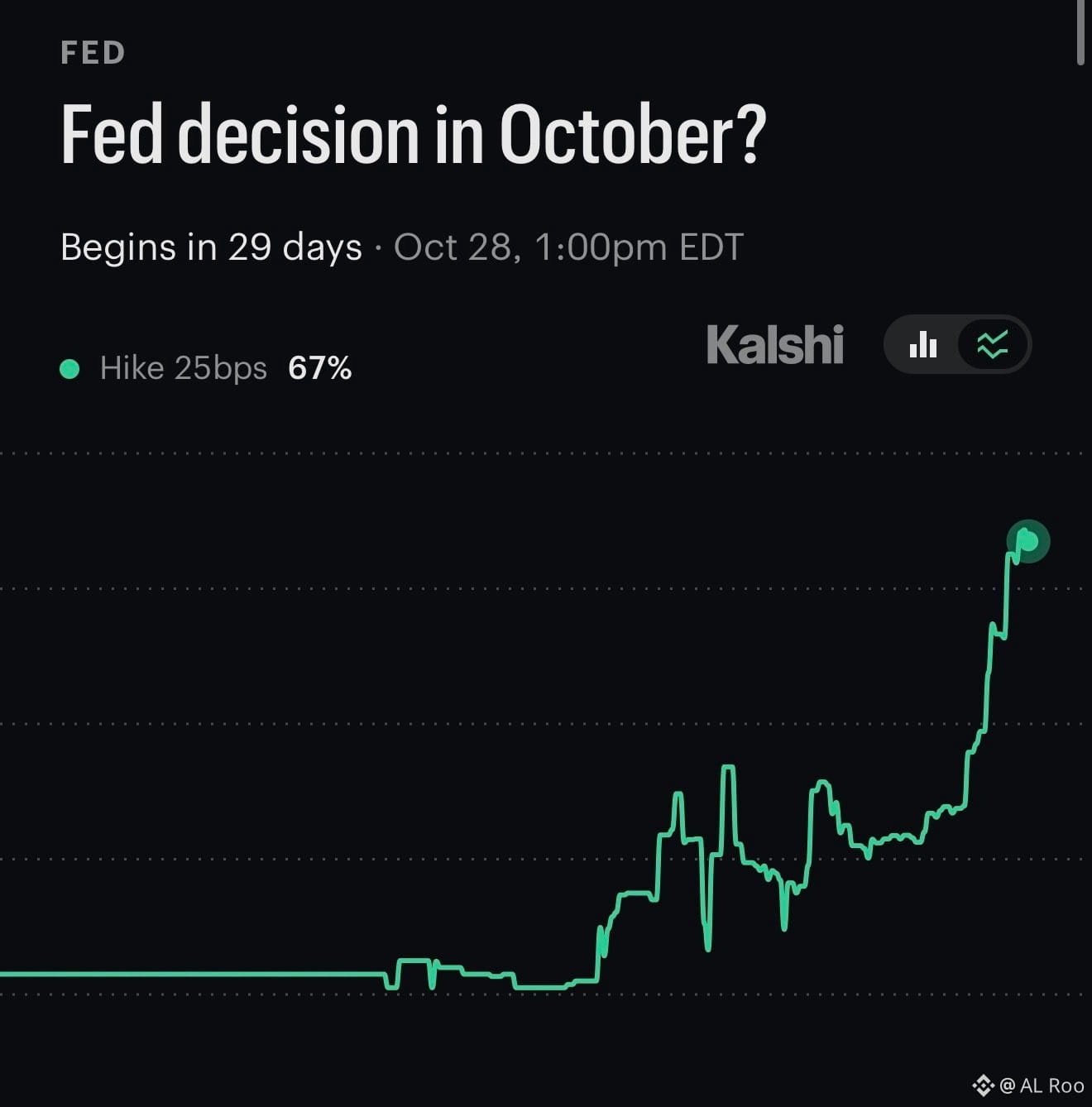
🚨 BREAKING: 🇺🇸 RATE HIKE ODDS SURGE!
Kalshi now puts the odds of an October Fed rate hike at 67% as U.S. job openings came in weaker than expected.
📉 Job openings: 7.079M
🎯 Expected: ~7.225M
🏦 October hike odds: 67%
Markets are bracing for the Fed’s next move. 👀🔥
:::
🚨 BREAKING: 🇺🇸 RATE HIKE ODDS SURGE!
Kalshi now puts the odds of an October Fed rate hike at 67% as U.S. job openings came in weaker than expected.
📉 Job openings: 7.079M
🎯 Expected: ~7.225M
🏦 October hike odds: 67%
Markets are bracing for the Fed’s next move. 👀🔥
:::
Kalshi now puts the odds of an October Fed rate hike at 67% as U.S. job openings came in weaker than expected.
📉 Job openings: 7.079M
🎯 Expected: ~7.225M
🏦 October hike odds: 67%
Markets are bracing for the Fed’s next move. 👀🔥
:::

2
1
16
12.2k
·
--
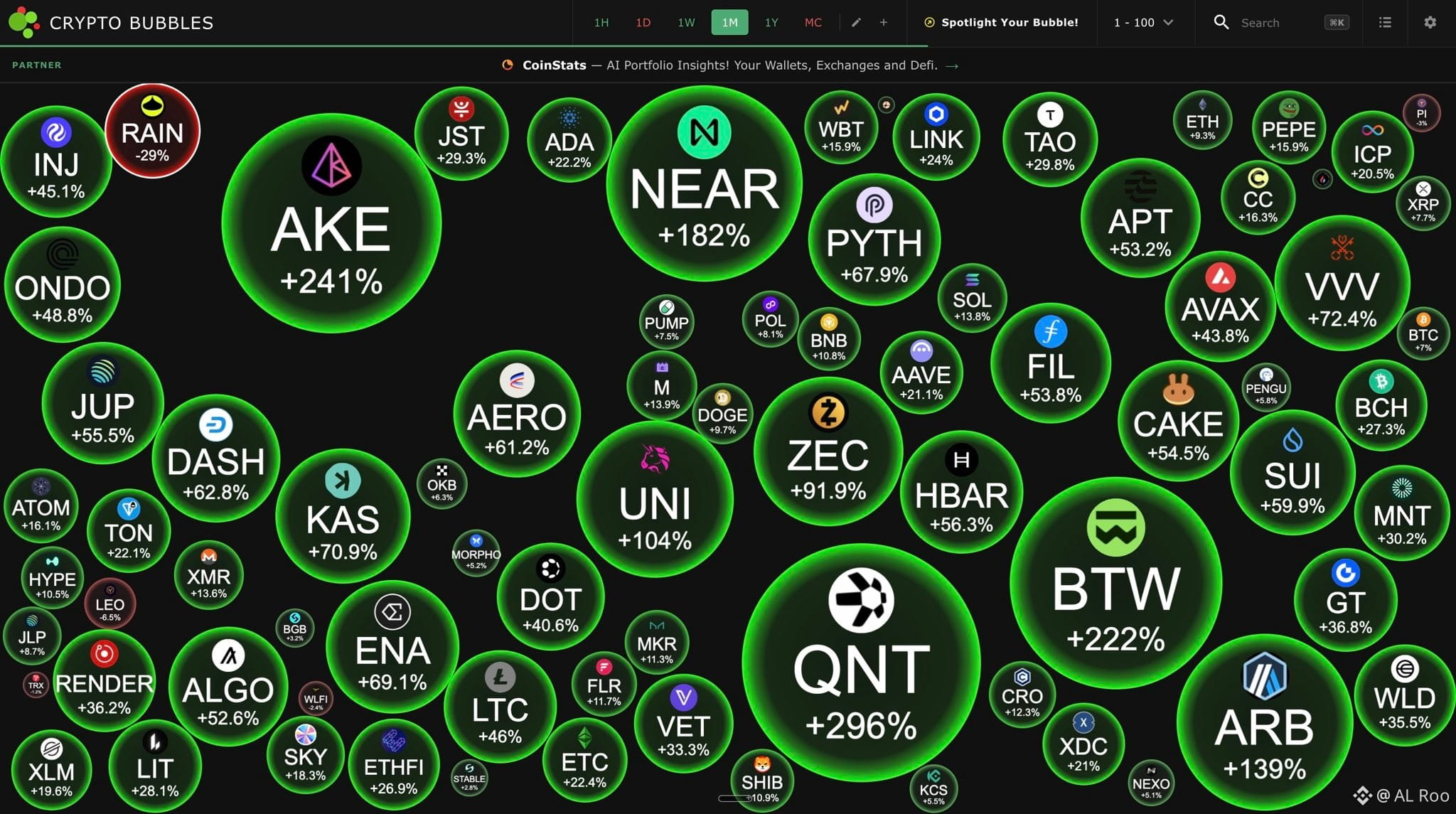
Altcoins are exploding everywhere.
I’ve got $100,000 ready to deploy.
The market is heating up, volatility is rising, and opportunities are showing up fast.
Now comes the big question:
What are we buying?
Drop your strongest altcoin conviction below.
Altcoins are exploding everywhere.
I’ve got $100,000 ready to deploy.
The market is heating up, volatility is rising, and opportunities are showing up fast.
Now comes the big question:
What are we buying?
Drop your strongest altcoin conviction below.
I’ve got $100,000 ready to deploy.
The market is heating up, volatility is rising, and opportunities are showing up fast.
Now comes the big question:
What are we buying?
Drop your strongest altcoin conviction below.
1
1
2
4.6k
·
--
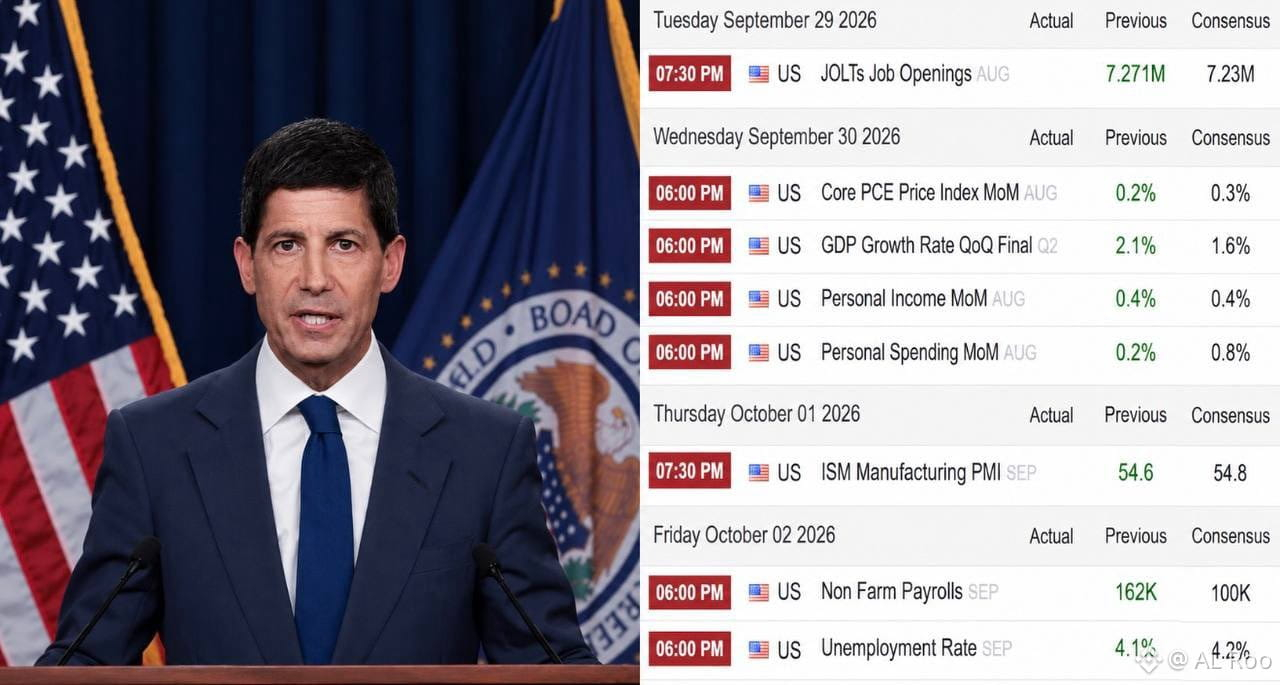
🚨 NEXT WEEK COULD RESHAPE THE FED’S OCTOBER DECISION.
Monday: Markets reopen with the Iran conflict, oil prices, and inflation risks in focus.
Tuesday: August JOLTS drops, revealing whether the labor market is cooling or holding strong.
Wednesday: August PCE inflation and the final Q2 GDP estimate hit together — fresh inflation and growth signals on the same morning.
Thursday: September ISM Manufacturing PMI lands, offering another read on economic momentum.
Friday: September jobs data and unemployment rate arrive — potentially the biggest labor-market test of the week.
Inflation. GDP. Manufacturing. Jobs.
If inflation stays hot and the labor market remains strong, expectations for another 25 bps Fed hike in October could rise sharply.
One massive week for markets.
🚨 NEXT WEEK COULD RESHAPE THE FED’S OCTOBER DECISION.
Monday: Markets reopen with the Iran conflict, oil prices, and inflation risks in focus.
Tuesday: August JOLTS drops, revealing whether the labor market is cooling or holding strong.
Wednesday: August PCE inflation and the final Q2 GDP estimate hit together — fresh inflation and growth signals on the same morning.
Thursday: September ISM Manufacturing PMI lands, offering another read on economic momentum.
Friday: September jobs data and unemployment rate arrive — potentially the biggest labor-market test of the week.
Inflation. GDP. Manufacturing. Jobs.
If inflation stays hot and the labor market remains strong, expectations for another 25 bps Fed hike in October could rise sharply.
One massive week for markets.
Monday: Markets reopen with the Iran conflict, oil prices, and inflation risks in focus.
Tuesday: August JOLTS drops, revealing whether the labor market is cooling or holding strong.
Wednesday: August PCE inflation and the final Q2 GDP estimate hit together — fresh inflation and growth signals on the same morning.
Thursday: September ISM Manufacturing PMI lands, offering another read on economic momentum.
Friday: September jobs data and unemployment rate arrive — potentially the biggest labor-market test of the week.
Inflation. GDP. Manufacturing. Jobs.
If inflation stays hot and the labor market remains strong, expectations for another 25 bps Fed hike in October could rise sharply.
One massive week for markets.
1
4
240
·
--
Brian Armstrong just made the AI-stablecoin connection crystal clear.
AI agents can’t open bank accounts or move through traditional banking rails like humans.
They need money that works the way they do: programmable, instant, global, and able to move like code.
Armstrong’s answer is stablecoins.
If AI agents become a major part of the digital economy, stablecoins could become the money they naturally transact with.
Brian Armstrong just made the AI-stablecoin connection crystal clear.
AI agents can’t open bank accounts or move through traditional banking rails like humans.
They need money that works the way they do: programmable, instant, global, and able to move like code.
Armstrong’s answer is stablecoins.
If AI agents become a major part of the digital economy, stablecoins could become the money they naturally transact with.
AI agents can’t open bank accounts or move through traditional banking rails like humans.
They need money that works the way they do: programmable, instant, global, and able to move like code.
Armstrong’s answer is stablecoins.
If AI agents become a major part of the digital economy, stablecoins could become the money they naturally transact with.


8
10
230
·
--
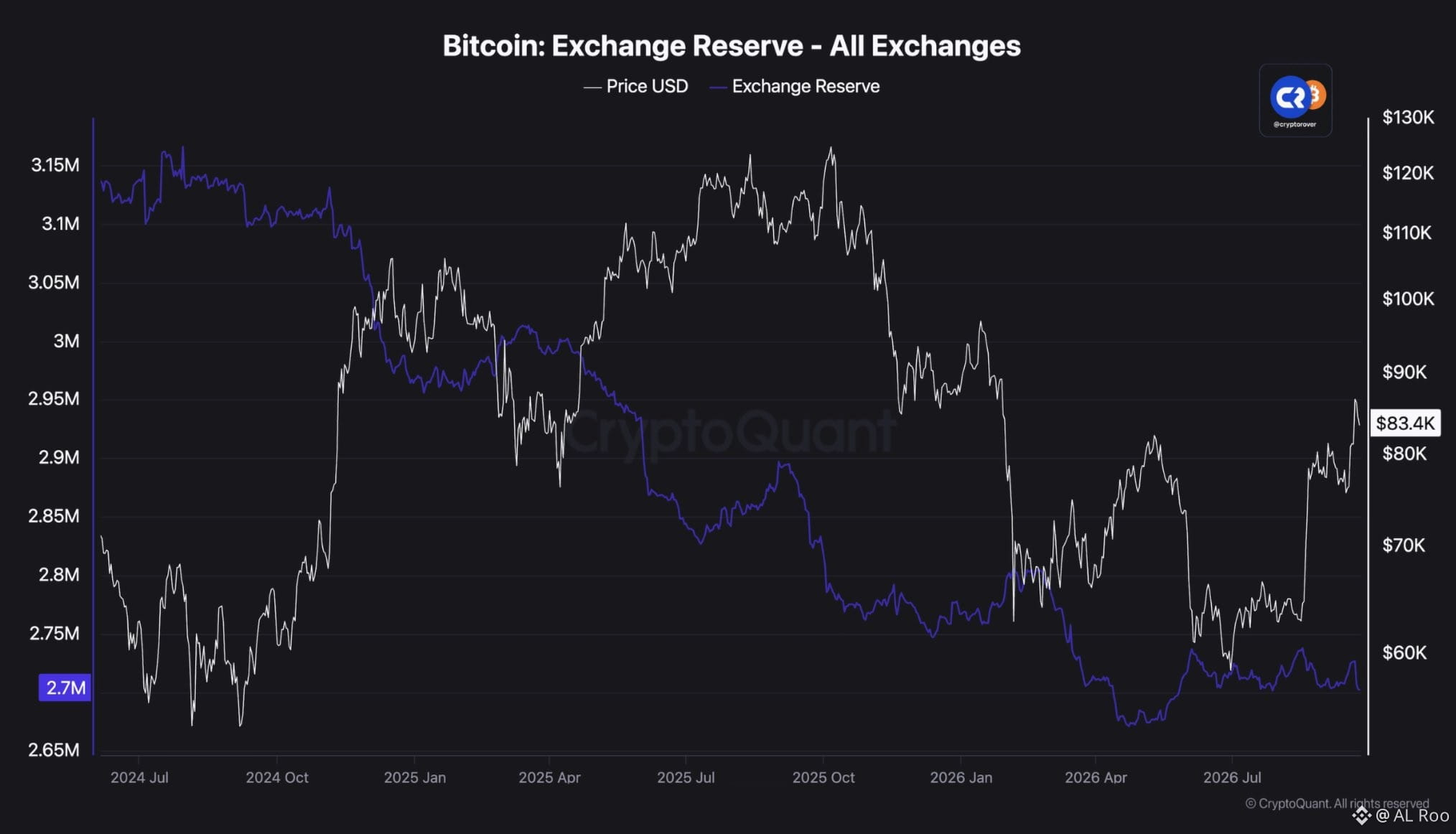
$BTC price is climbing while Bitcoin is leaving exchanges.
Less BTC sitting on exchanges means less immediately available supply for sellers. Recent data showed a 4,036 BTC reserve drop alongside strong price momentum.
Demand rising.
Available supply tightening.
If exchange outflows continue while buyers keep stepping in, the setup for a real supply squeeze gets much stronger.
Supply shock could be loading.
$BTC price is climbing while Bitcoin is leaving exchanges.
Less BTC sitting on exchanges means less immediately available supply for sellers. Recent data showed a 4,036 BTC reserve drop alongside strong price momentum.
Demand rising.
Available supply tightening.
If exchange outflows continue while buyers keep stepping in, the setup for a real supply squeeze gets much stronger.
Supply shock could be loading.
Less BTC sitting on exchanges means less immediately available supply for sellers. Recent data showed a 4,036 BTC reserve drop alongside strong price momentum.
Demand rising.
Available supply tightening.
If exchange outflows continue while buyers keep stepping in, the setup for a real supply squeeze gets much stronger.
Supply shock could be loading.
1
2
367
·
--
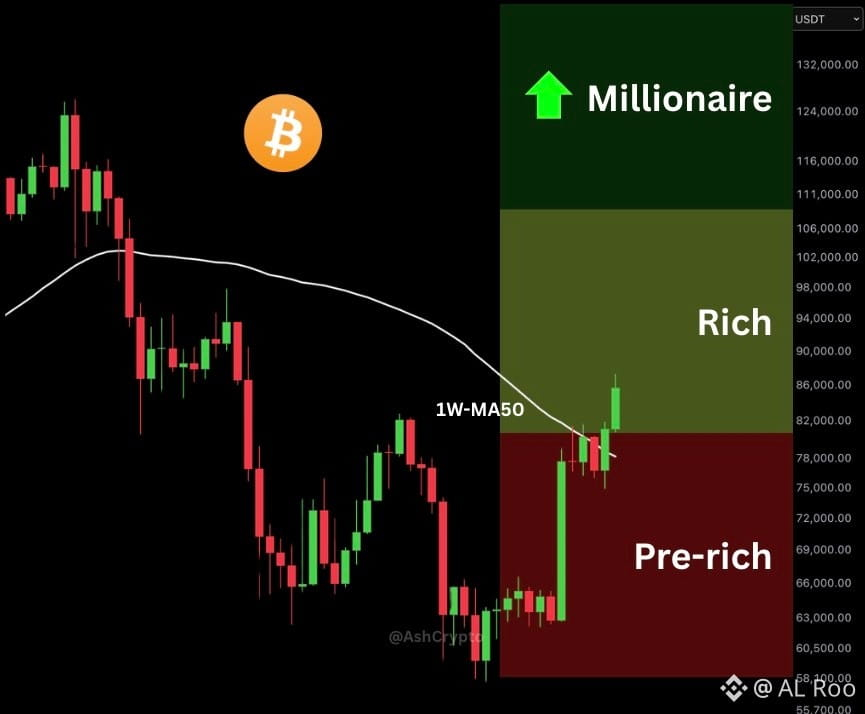
PRE-RICH ERA IS ALMOST OVER BOYZ!!
The market is heating up, momentum is building, and the next big move could be closer than most expect.
Stay focused. Stay ready. Our time is coming.
THE RICH ERA IS LOADING.
PRE-RICH ERA IS ALMOST OVER BOYZ!!
The market is heating up, momentum is building, and the next big move could be closer than most expect.
Stay focused. Stay ready. Our time is coming.
THE RICH ERA IS LOADING.
The market is heating up, momentum is building, and the next big move could be closer than most expect.
Stay focused. Stay ready. Our time is coming.
THE RICH ERA IS LOADING.
8
13
1.6k
·
--
Bullish
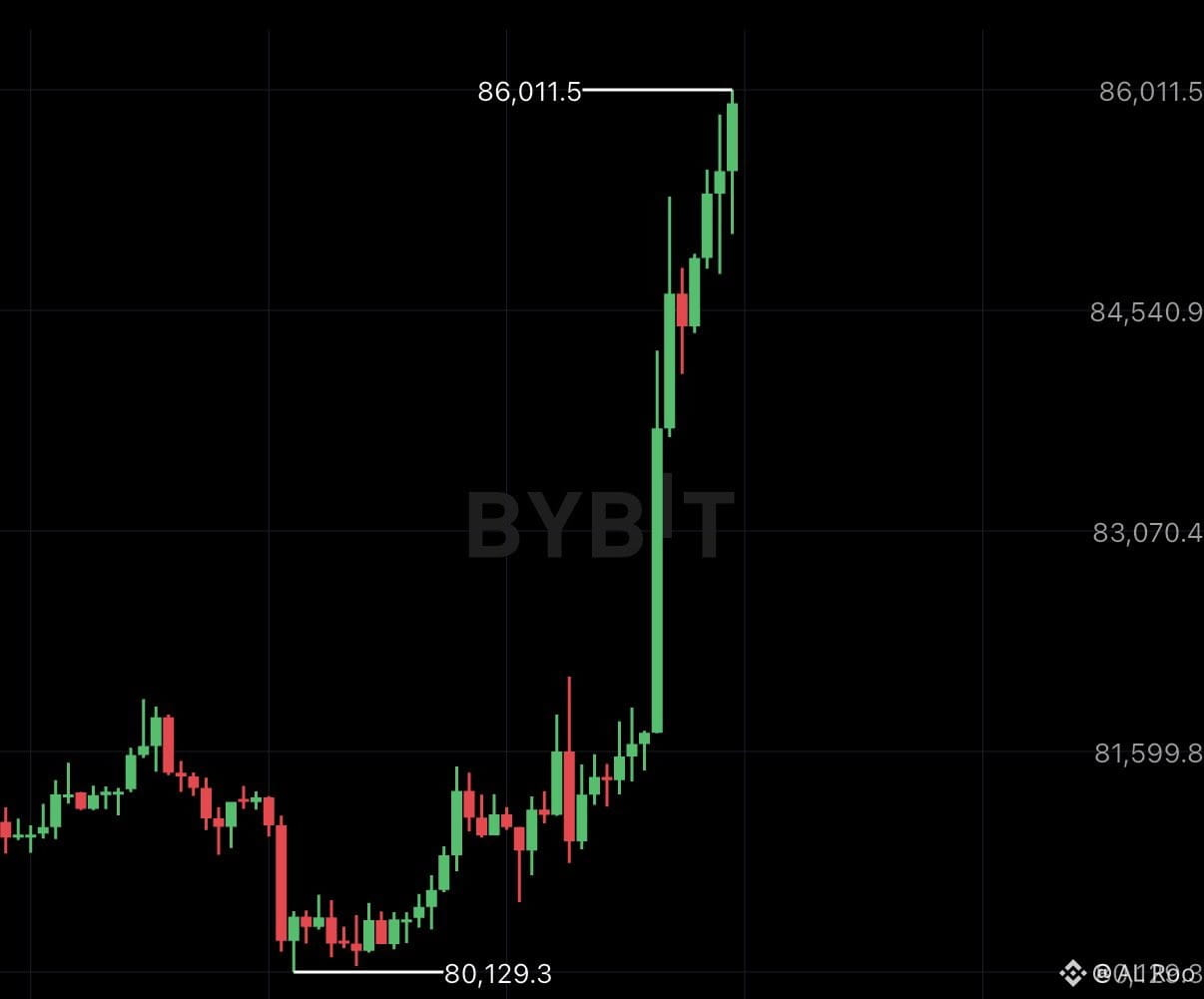
BITCOIN IS EXPLODING.
BTC just surged to its highest level since January 2026, smashing past $85,000 as bearish positions get wiped out.
The bulls are back.
The shorts are getting REKT.
Bitcoin is heating up FAST.
BEARS ARE TOTALLY FCKED.
$BTC
BITCOIN IS EXPLODING.
BTC just surged to its highest level since January 2026, smashing past $85,000 as bearish positions get wiped out.
The bulls are back.
The shorts are getting REKT.
Bitcoin is heating up FAST.
BEARS ARE TOTALLY FCKED.
$BTC
BTC just surged to its highest level since January 2026, smashing past $85,000 as bearish positions get wiped out.
The bulls are back.
The shorts are getting REKT.
Bitcoin is heating up FAST.
BEARS ARE TOTALLY FCKED.
$BTC
7
18
4.1k
·
--
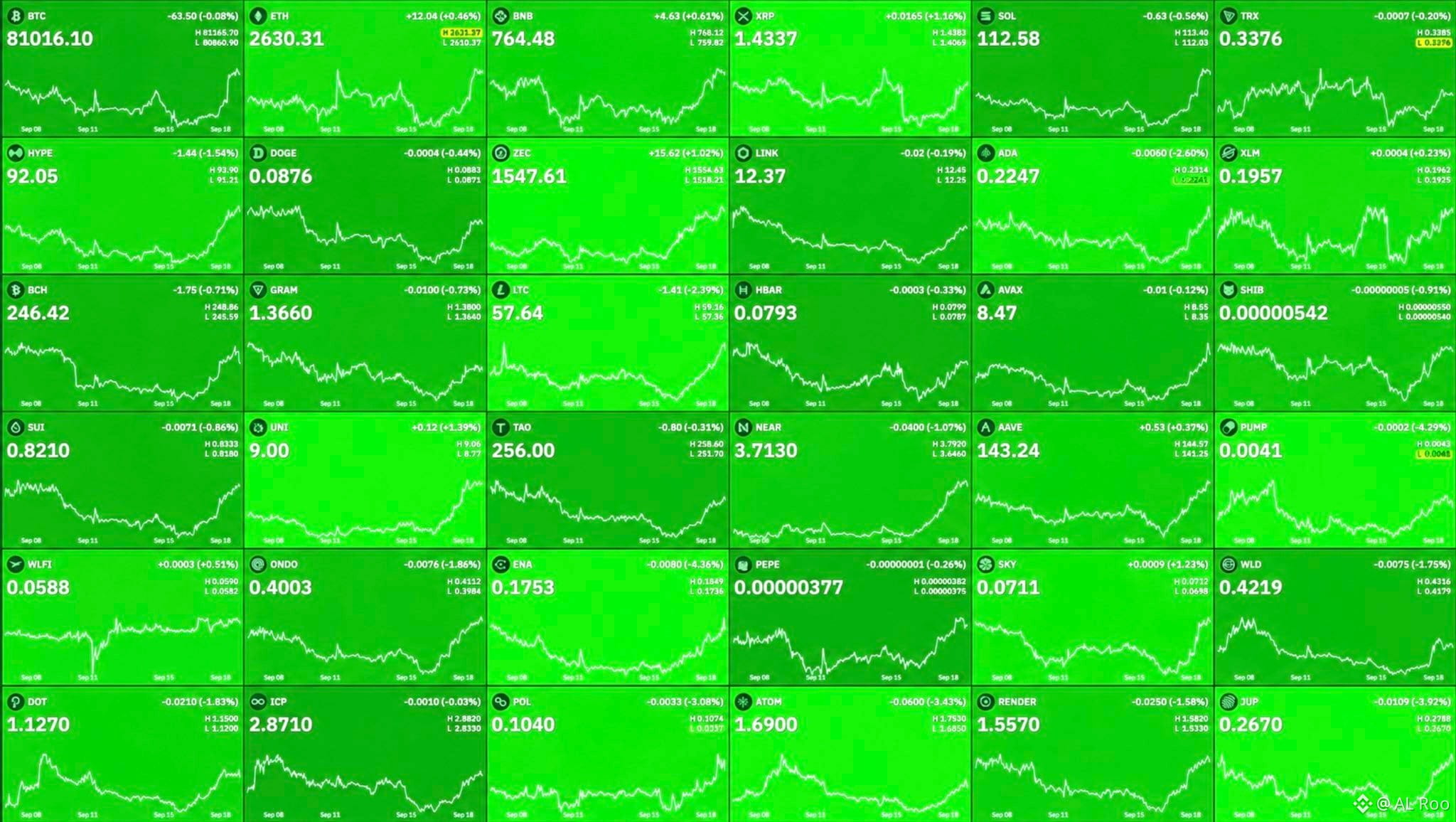
OVER $500 MILLION IN SHORTS LIQUIDATED AS THE CRYPTO MARKET EXPLODES HIGHER!
In just 24 hours, around $170 BILLION has been added to the total crypto market cap, putting serious pressure on traders betting against the market.
As prices pushed higher, leveraged short positions were forced to close, adding even more buying pressure and accelerating the move.
This is exactly how a short squeeze can turn a strong rally into an explosive one.
Bears are getting punished.
Momentum is heating up.
Short squeezes are back, and the crypto market is moving fast.
The big question now: is this just the beginning of an even bigger move?
OVER $500 MILLION IN SHORTS LIQUIDATED AS THE CRYPTO MARKET EXPLODES HIGHER!
In just 24 hours, around $170 BILLION has been added to the total crypto market cap, putting serious pressure on traders betting against the market.
As prices pushed higher, leveraged short positions were forced to close, adding even more buying pressure and accelerating the move.
This is exactly how a short squeeze can turn a strong rally into an explosive one.
Bears are getting punished.
Momentum is heating up.
Short squeezes are back, and the crypto market is moving fast.
The big question now: is this just the beginning of an even bigger move?
In just 24 hours, around $170 BILLION has been added to the total crypto market cap, putting serious pressure on traders betting against the market.
As prices pushed higher, leveraged short positions were forced to close, adding even more buying pressure and accelerating the move.
This is exactly how a short squeeze can turn a strong rally into an explosive one.
Bears are getting punished.
Momentum is heating up.
Short squeezes are back, and the crypto market is moving fast.
The big question now: is this just the beginning of an even bigger move?
8
14
5.9k
·
--
Verified
HUGE: BITCOIN IS MOVING CLOSER TO THE HEART OF U.S. STRATEGY.
Coinbase is reportedly in talks with the U.S. Treasury and Commerce Departments around advancing the Strategic Bitcoin Reserve.
The reserve already exists under a 2025 executive order, while lawmakers are now moving legislation that could put it on a more permanent statutory footing.
Bitcoin as a strategic U.S. reserve asset.
IT’S GETTING REAL.
HUGE: BITCOIN IS MOVING CLOSER TO THE HEART OF U.S. STRATEGY.
Coinbase is reportedly in talks with the U.S. Treasury and Commerce Departments around advancing the Strategic Bitcoin Reserve.
The reserve already exists under a 2025 executive order, while lawmakers are now moving legislation that could put it on a more permanent statutory footing.
Bitcoin as a strategic U.S. reserve asset.
IT’S GETTING REAL.
Coinbase is reportedly in talks with the U.S. Treasury and Commerce Departments around advancing the Strategic Bitcoin Reserve.
The reserve already exists under a 2025 executive order, while lawmakers are now moving legislation that could put it on a more permanent statutory footing.
Bitcoin as a strategic U.S. reserve asset.
IT’S GETTING REAL.


8
1
12
1.8k
·
--
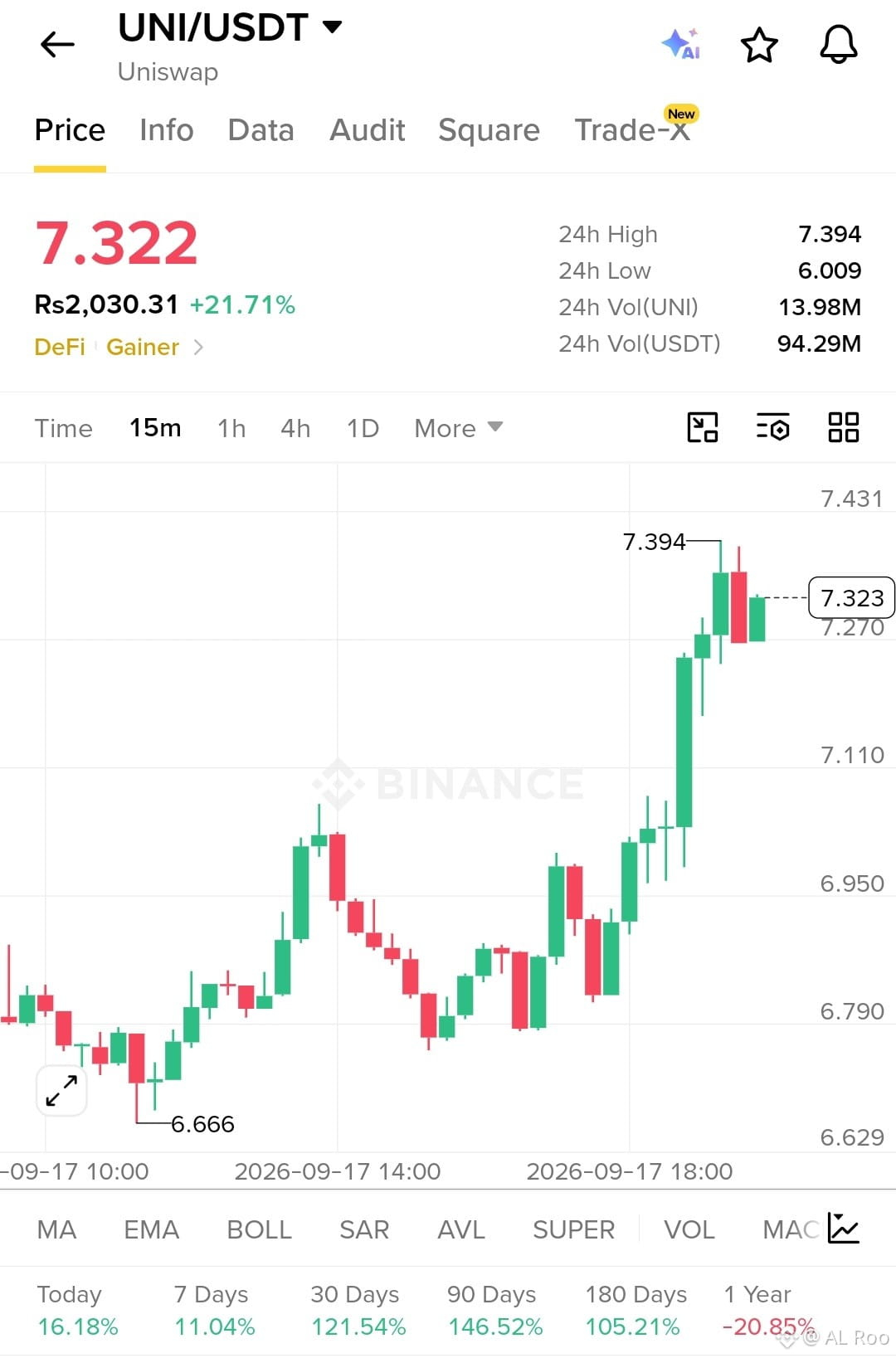
$UNI is showing strong bullish momentum.
Buyers remain in control as the structure continues to hold.
EP 7.27 - 7.32
TP 7.40 7.50 7.65
SL 7.18
Liquidity is building above the recent high, while reactions from lower levels remain strong. Holding the current structure could open the door for further upside.
Let’s go $UNI
$UNI is showing strong bullish momentum.
Buyers remain in control as the structure continues to hold.
EP 7.27 - 7.32
TP 7.40 7.50 7.65
SL 7.18
Liquidity is building above the recent high, while reactions from lower levels remain strong. Holding the current structure could open the door for further upside.
Let’s go $UNI
Buyers remain in control as the structure continues to hold.
EP 7.27 - 7.32
TP 7.40 7.50 7.65
SL 7.18
Liquidity is building above the recent high, while reactions from lower levels remain strong. Holding the current structure could open the door for further upside.
Let’s go $UNI
1
513
·
--
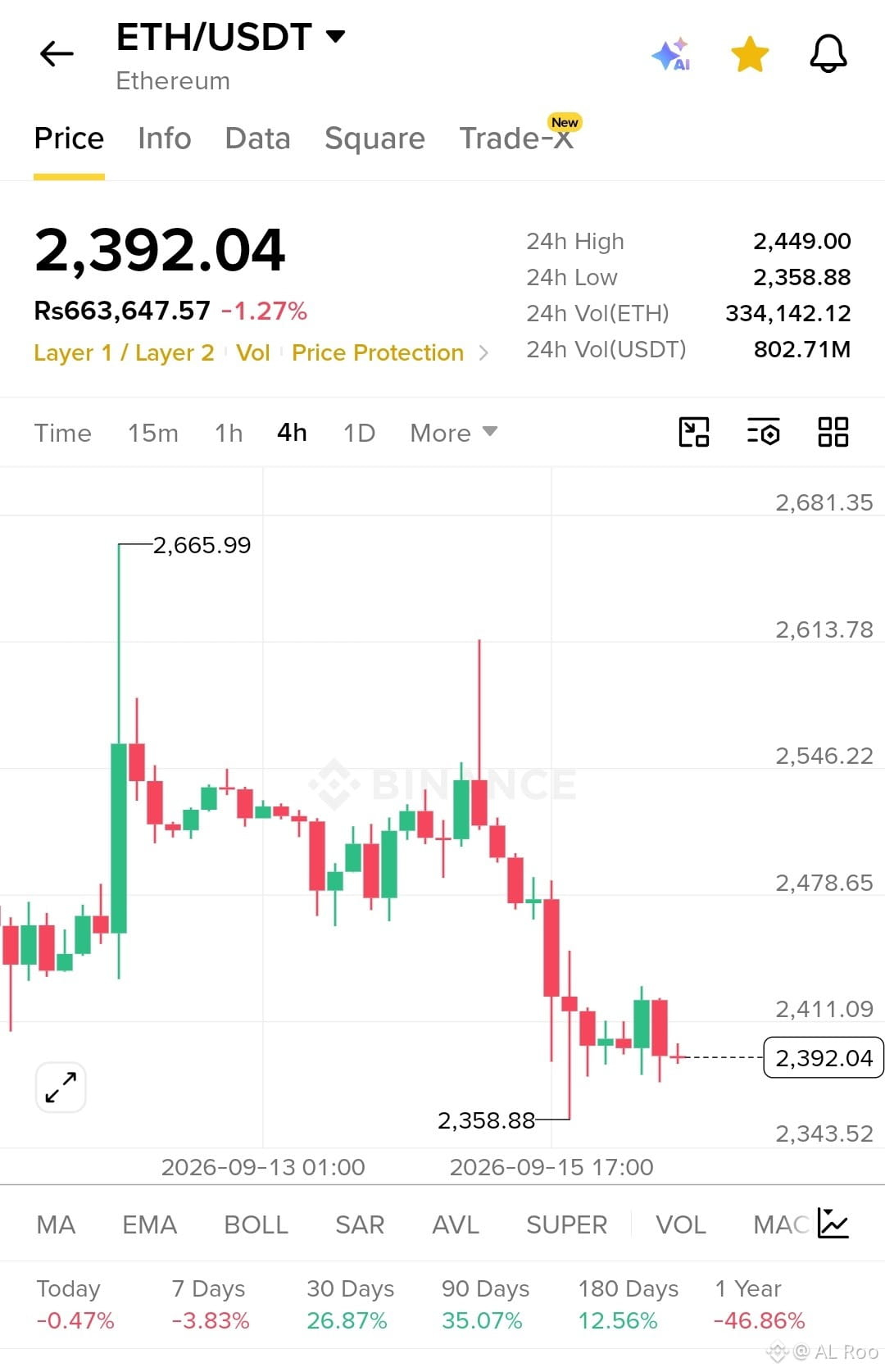
$ETH is showing strength around the current support zone. Buyers are confirming control after the liquidity sweep.
EP 2,385 - 2,400
TP 2,411 2,478 2,546
SL 2,355
Liquidity below 2,360 has been tested, followed by a clear reaction from buyers. Holding this zone keeps the structure intact and opens room for a move toward the next liquidity levels.
Let’s go $ETH
$ETH is showing strength around the current support zone. Buyers are confirming control after the liquidity sweep.
EP 2,385 - 2,400
TP 2,411 2,478 2,546
SL 2,355
Liquidity below 2,360 has been tested, followed by a clear reaction from buyers. Holding this zone keeps the structure intact and opens room for a move toward the next liquidity levels.
Let’s go $ETH
EP 2,385 - 2,400
TP 2,411 2,478 2,546
SL 2,355
Liquidity below 2,360 has been tested, followed by a clear reaction from buyers. Holding this zone keeps the structure intact and opens room for a move toward the next liquidity levels.
Let’s go $ETH
1
1
486
·
--
Bullish
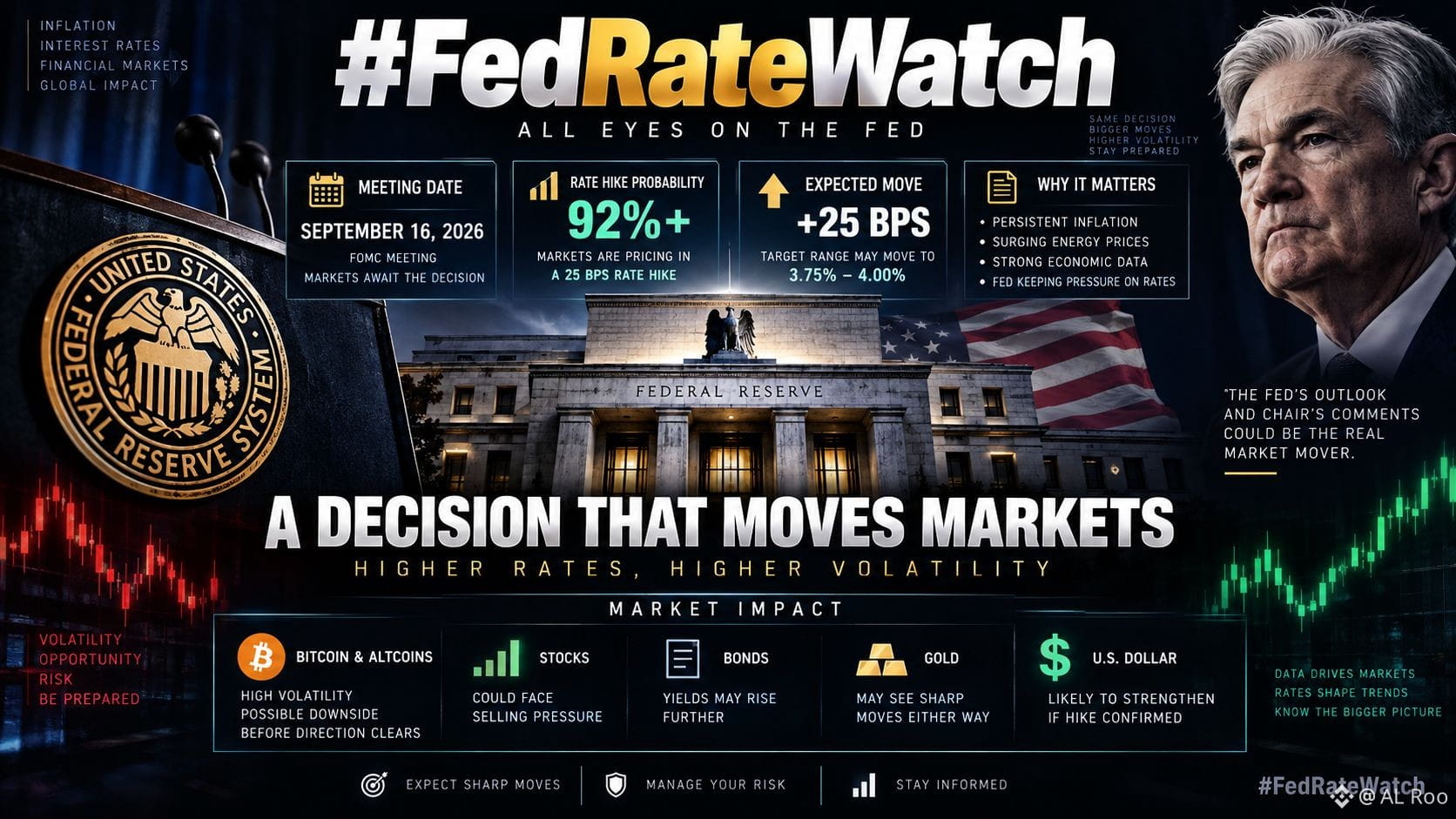
FED DECISION IS ALMOST HERE, AND MARKETS ARE ON HIGH ALERT.
Traders are now pricing in more than a 92% probability of a 25 bps rate hike at the September 16 FOMC meeting.
A hike would push the target range toward 3.75%–4.00%, as persistent inflation and surging energy prices keep pressure on the Fed.
This decision could trigger serious volatility across Bitcoin, altcoins, stocks, bonds, gold, and the dollar.
But the real market mover may be what comes next: the Fed’s outlook, future rate path, and Chair Kevin Warsh’s comments.
Expect sharp moves. Risk management matters.
#FedRateWatch
FED DECISION IS ALMOST HERE, AND MARKETS ARE ON HIGH ALERT.
Traders are now pricing in more than a 92% probability of a 25 bps rate hike at the September 16 FOMC meeting.
A hike would push the target range toward 3.75%–4.00%, as persistent inflation and surging energy prices keep pressure on the Fed.
This decision could trigger serious volatility across Bitcoin, altcoins, stocks, bonds, gold, and the dollar.
But the real market mover may be what comes next: the Fed’s outlook, future rate path, and Chair Kevin Warsh’s comments.
Expect sharp moves. Risk management matters.
#FedRateWatch
Traders are now pricing in more than a 92% probability of a 25 bps rate hike at the September 16 FOMC meeting.
A hike would push the target range toward 3.75%–4.00%, as persistent inflation and surging energy prices keep pressure on the Fed.
This decision could trigger serious volatility across Bitcoin, altcoins, stocks, bonds, gold, and the dollar.
But the real market mover may be what comes next: the Fed’s outlook, future rate path, and Chair Kevin Warsh’s comments.
Expect sharp moves. Risk management matters.
#FedRateWatch
7
11
366
·
--
Bearish
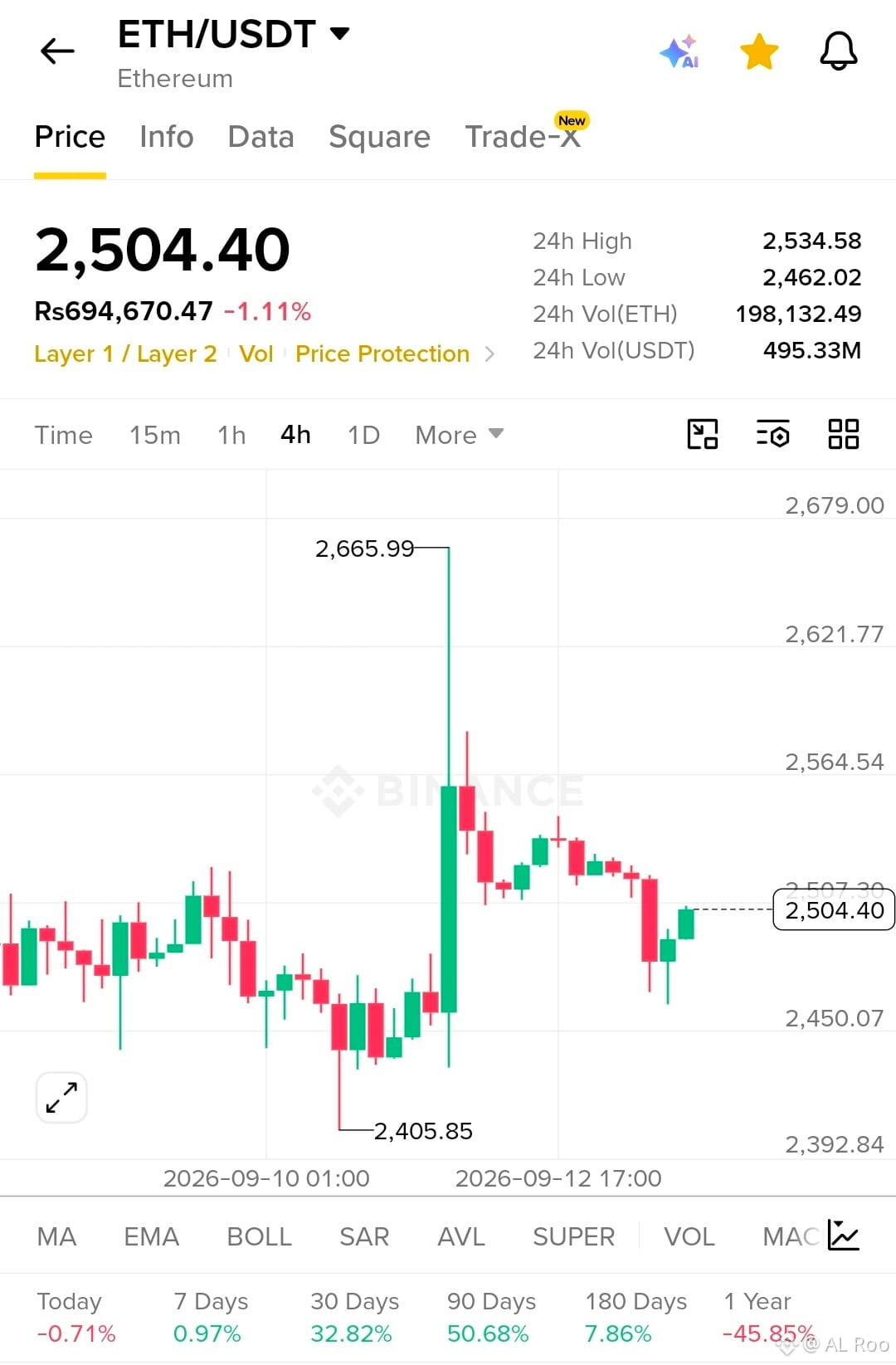
$ETH is showing strength around the current zone. Buyers are regaining control as structure holds.
EP 2,490 - 2,505
TP 2,535 2,565 2,620
SL 2,450
Liquidity below has been reacted to, with price reclaiming the range and holding structure. Continued buyer control can push price toward the next liquidity zones.
Let’s go $ETH
{future}(ETHUSDT)
$ETH is showing strength around the current zone. Buyers are regaining control as structure holds.
EP 2,490 - 2,505
TP 2,535 2,565 2,620
SL 2,450
Liquidity below has been reacted to, with price reclaiming the range and holding structure. Continued buyer control can push price toward the next liquidity zones.
Let’s go $ETH
EP 2,490 - 2,505
TP 2,535 2,565 2,620
SL 2,450
Liquidity below has been reacted to, with price reclaiming the range and holding structure. Continued buyer control can push price toward the next liquidity zones.
Let’s go $ETH
1
2
430
·
--
Bullish
🚨Inflation is heating up again!
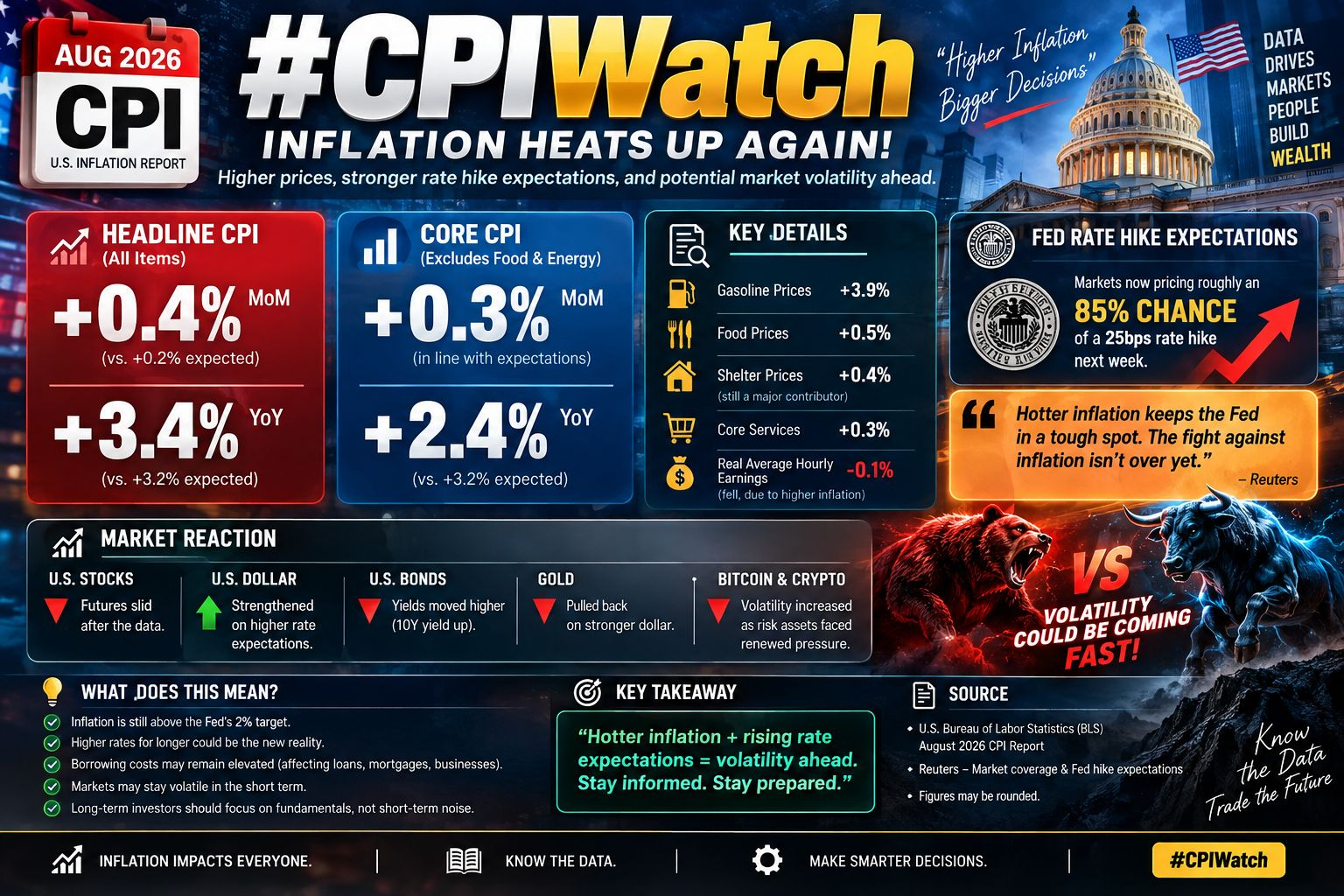
🇺🇸 August CPI: +0.4% MoM | +3.4% YoY
🔥 Core CPI: +0.3% MoM | +2.4% YoY
⛽ Gasoline jumped 3.9%
📉 Real average hourly earnings fell 0.1%
🏦 Markets are now pricing roughly an 85% chance of a 25bps Fed rate hike next week.
Hotter inflation + rising rate expectations = volatility could be coming fast. 👀📊
#CPIWatch
🚨Inflation is heating up again!
🇺🇸 August CPI: +0.4% MoM | +3.4% YoY
🔥 Core CPI: +0.3% MoM | +2.4% YoY
⛽ Gasoline jumped 3.9%
📉 Real average hourly earnings fell 0.1%
🏦 Markets are now pricing roughly an 85% chance of a 25bps Fed rate hike next week.
Hotter inflation + rising rate expectations = volatility could be coming fast. 👀📊
#CPIWatch
🇺🇸 August CPI: +0.4% MoM | +3.4% YoY
🔥 Core CPI: +0.3% MoM | +2.4% YoY
⛽ Gasoline jumped 3.9%
📉 Real average hourly earnings fell 0.1%
🏦 Markets are now pricing roughly an 85% chance of a 25bps Fed rate hike next week.
Hotter inflation + rising rate expectations = volatility could be coming fast. 👀📊
#CPIWatch
1
287
·
--
Bearish
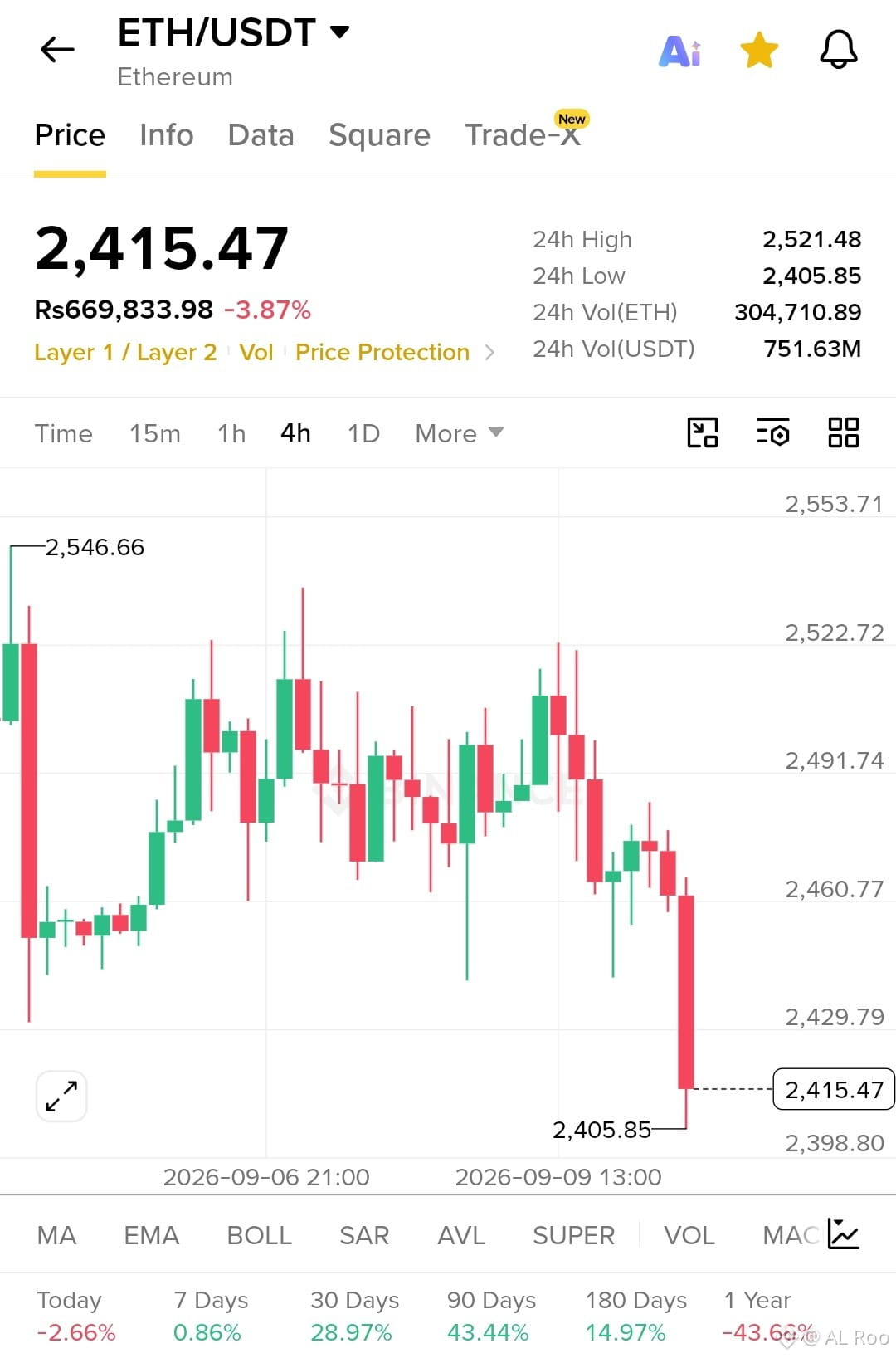
$ETH is showing strength around a key support zone. Buyers need to confirm control with a strong reaction from this structure.
EP 2405 - 2420
TP TP1 2460 TP2 2492 TP3 2522
SL 2385
Liquidity has been swept near the lows, and a strong reaction from this zone could shift momentum back toward buyers while keeping the structure intact.
Let’s go $ETH
{future}(ETHUSDT)
$ETH is showing strength around a key support zone. Buyers need to confirm control with a strong reaction from this structure.
EP 2405 - 2420
TP TP1 2460 TP2 2492 TP3 2522
SL 2385
Liquidity has been swept near the lows, and a strong reaction from this zone could shift momentum back toward buyers while keeping the structure intact.
Let’s go $ETH
EP 2405 - 2420
TP TP1 2460 TP2 2492 TP3 2522
SL 2385
Liquidity has been swept near the lows, and a strong reaction from this zone could shift momentum back toward buyers while keeping the structure intact.
Let’s go $ETH
5
13
9.4k
·
--
Bullish
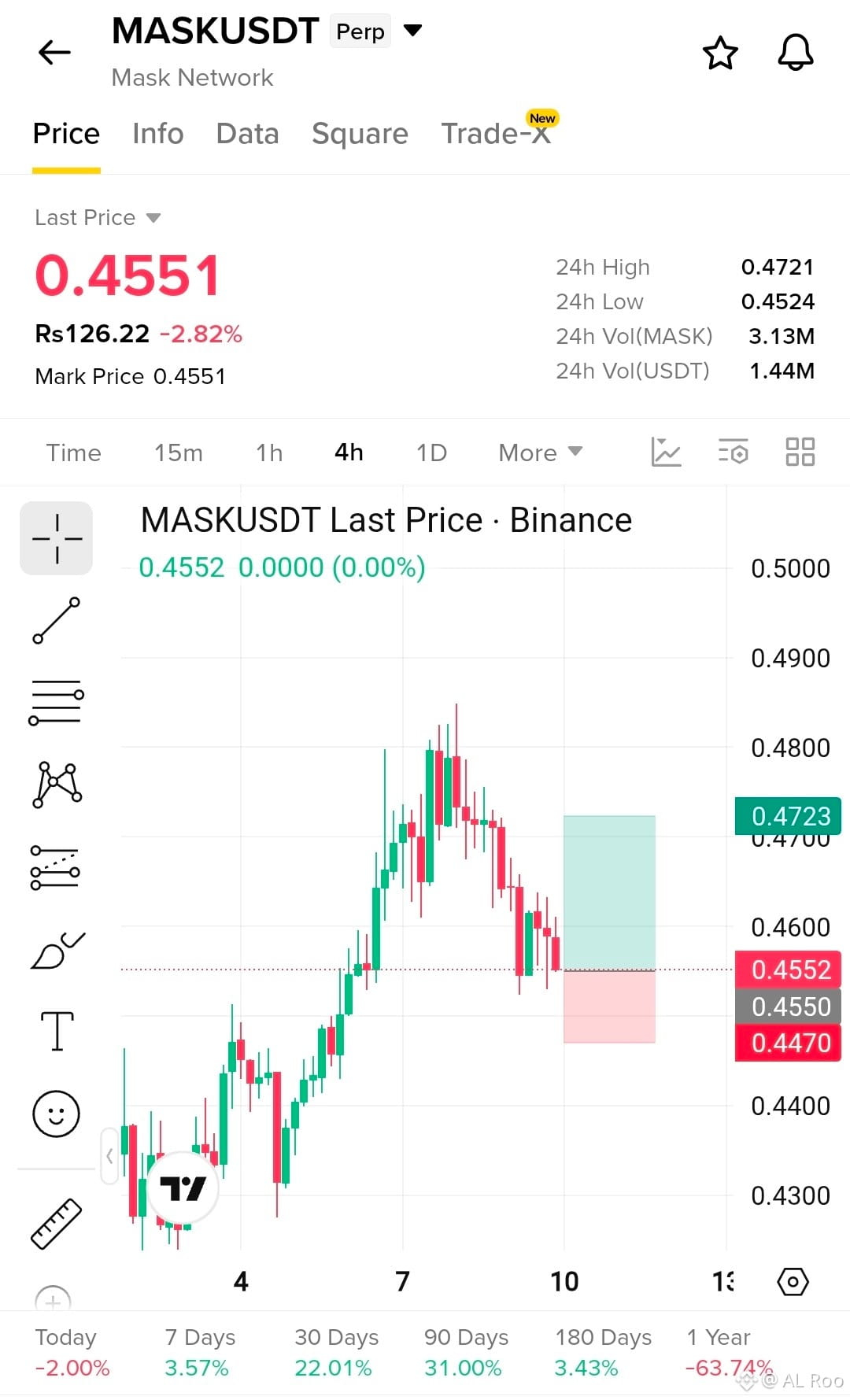
$MASK is testing a key 4H support zone — buyers may have a rebound opportunity here.
Entry: 0.453–0.456
SL: 0.447
TP1: 0.460
TP2: 0.470
TP3: 0.472
Price has pulled back from the 0.48 area and is now holding around 0.455. A successful defense here could open the door for another push toward recent resistance.
Long $MASK 👇
{future}(MASKUSDT)
$MASK is testing a key 4H support zone — buyers may have a rebound opportunity here.
Entry: 0.453–0.456
SL: 0.447
TP1: 0.460
TP2: 0.470
TP3: 0.472
Price has pulled back from the 0.48 area and is now holding around 0.455. A successful defense here could open the door for another push toward recent resistance.
Long $MASK 👇
Entry: 0.453–0.456
SL: 0.447
TP1: 0.460
TP2: 0.470
TP3: 0.472
Price has pulled back from the 0.48 area and is now holding around 0.455. A successful defense here could open the door for another push toward recent resistance.
Long $MASK 👇
5
8
3.8k
·
--
Bullish
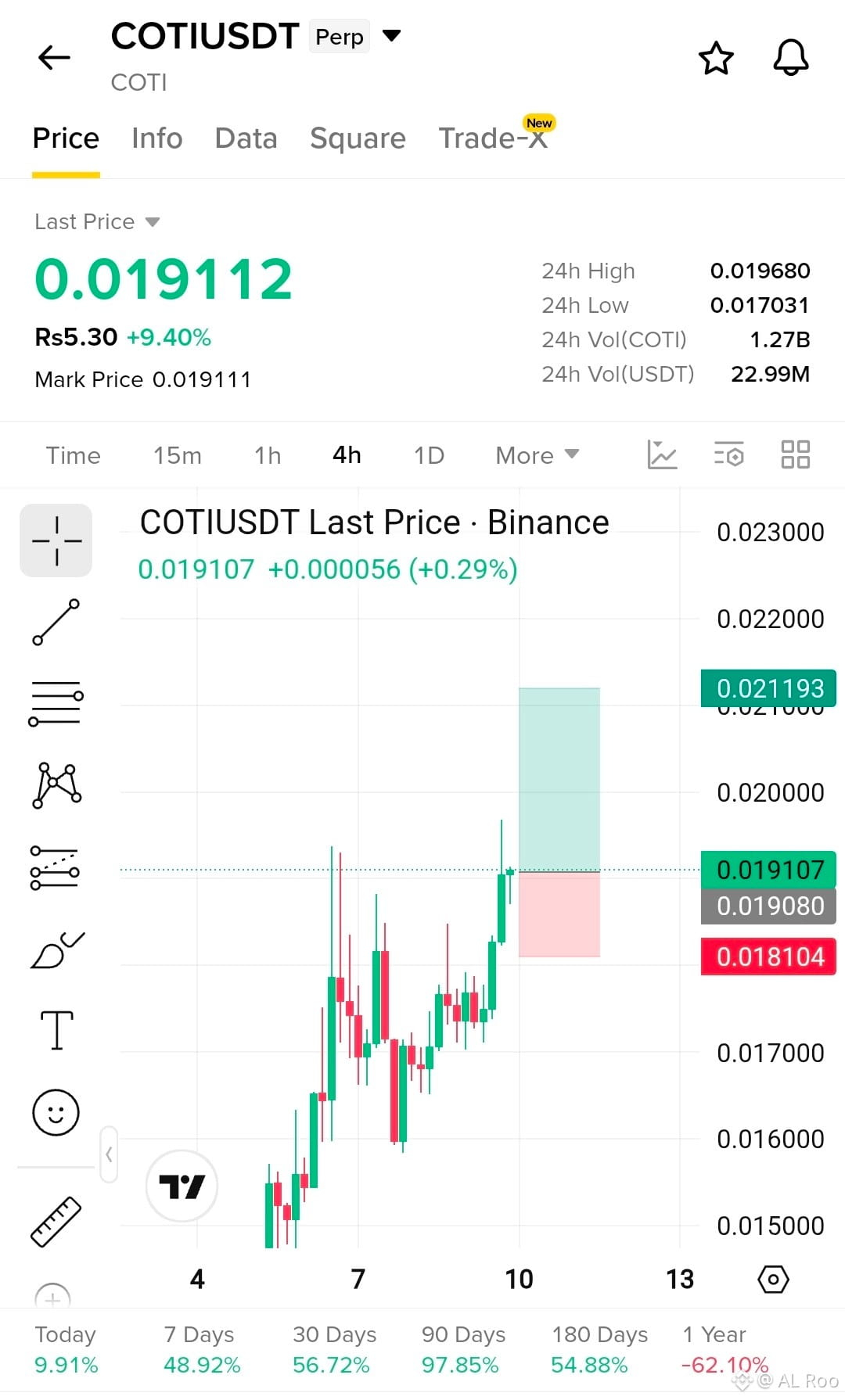
$COTI is pushing into breakout territory with buyers in control.
Entry: 0.0188–0.0191
SL: 0.0181
TP1: 0.0197
TP2: 0.0205
TP3: 0.02119
The 4H structure is printing higher lows, while the latest bullish push is testing the recent highs. Holding above the entry zone keeps the upside setup intact.
Long $COTI 👇
{future}(COTIUSDT)
$COTI is pushing into breakout territory with buyers in control.
Entry: 0.0188–0.0191
SL: 0.0181
TP1: 0.0197
TP2: 0.0205
TP3: 0.02119
The 4H structure is printing higher lows, while the latest bullish push is testing the recent highs. Holding above the entry zone keeps the upside setup intact.
Long $COTI 👇
Entry: 0.0188–0.0191
SL: 0.0181
TP1: 0.0197
TP2: 0.0205
TP3: 0.02119
The 4H structure is printing higher lows, while the latest bullish push is testing the recent highs. Holding above the entry zone keeps the upside setup intact.
Long $COTI 👇
7
1.1k
·
--
Bullish
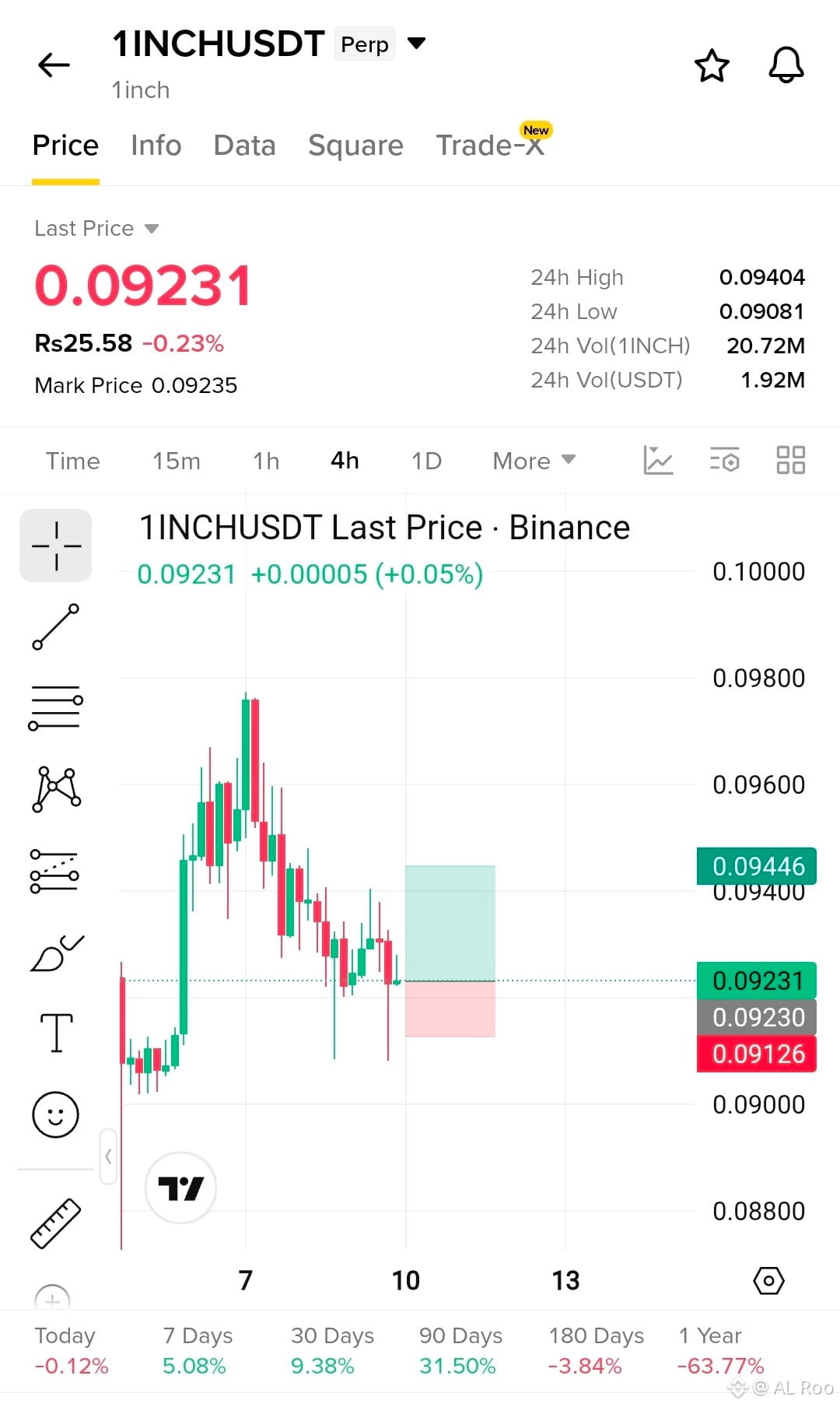
$1INCH is holding the 0.092 area and a long setup is forming.
Entry: 0.0920–0.0924
SL: 0.09126
TP1: 0.0932
TP2: 0.0940
TP3: 0.09446
Price is repeatedly defending the current support zone after the pullback. Holding above 0.092 could open another push toward the recent resistance area.
Long $1INCH 👇
{future}(1INCHUSDT)
$1INCH is holding the 0.092 area and a long setup is forming.
Entry: 0.0920–0.0924
SL: 0.09126
TP1: 0.0932
TP2: 0.0940
TP3: 0.09446
Price is repeatedly defending the current support zone after the pullback. Holding above 0.092 could open another push toward the recent resistance area.
Long $1INCH 👇
Entry: 0.0920–0.0924
SL: 0.09126
TP1: 0.0932
TP2: 0.0940
TP3: 0.09446
Price is repeatedly defending the current support zone after the pullback. Holding above 0.092 could open another push toward the recent resistance area.
Long $1INCH 👇
8
351
Log in to explore more content
Join global crypto users on Binance Square
⚡️ Get latest and useful information about crypto.
💬 Trusted by the world’s largest crypto exchange.
👍 Discover real insights from verified creators.
Email / Phone number
Trending Topics
EtherGains70.9%InQ3
11,971 views
269 Discussing
#ethergains70.9%inq3
🚀 ETH Shatters Expectations with a Massive 70.9% Q3 Rally—Is Altseason Finally Here?🔥
Ethereum (ETH) just wrapped up one of the most explosive third quarters in its history, locking in a massive +70.9% gain! After a brutal first half of the year (Q1: -29.2% | Q2: -25.2%), ETH completely flipped the script, defying macro headwinds, rising Treasury yields, and a surging US Dollar Index.
$ETH
Institutional Inflows & Spot ETFs Acceleration 🏦
Spot Ethereum ETFs and corporate treasury allocations saw sustained net inflows throughout the quarter. Wall Street's institutional appetite for ETH as a yield-bearing, utility-driven asset has reached new record highs.
ETH Outperforms Bitcoin in Q3 ⚔️
While Bitcoin ($BTC) had a solid quarter, Ethereum significantly outpaced it. This strength is reigniting market discussions around an incoming Altseason, as capital historical flows from BTC into high-cap altcoins following major ETH breakouts.
$ZEC
Staking Dynamics & Supply Shock 🔒
Defi activity and Layer-2 expansion continue to lock up vast amounts of ETH. With staking yields remaining attractive and total supply held on centralized exchanges steadily dropping, market liquidity for physical ETH remains tight.
📊 Technical Landscape & What’s Next for Q4
Key Resistance Watch: ETH recently pushed past local highs around $2,775, with traders eyeing the psychological $3,000 zone as the primary Q4 target.
Macro Risk Factor: Keep an eye on short-position spikes on derivative exchanges and broader Fed monetary policy updates, as leverage wipeouts can create short-term volatility following quarterly closes.
💬 What do you think? Will Ethereum hit $3,000+ in Q4, or are we due for a short-term consolidation before the next leg up? Drop your predictions below! 👇
#US10YearYieldNears5.3% #Ethereum #ETH
Lily星星
·16 Likes
·16.6k views
TreasuryLetsStatesFileStablecoinCertificationsEarly
0 views
0 Discussing
US10YearYieldNears5.3%
51,493 views
483 Discussing