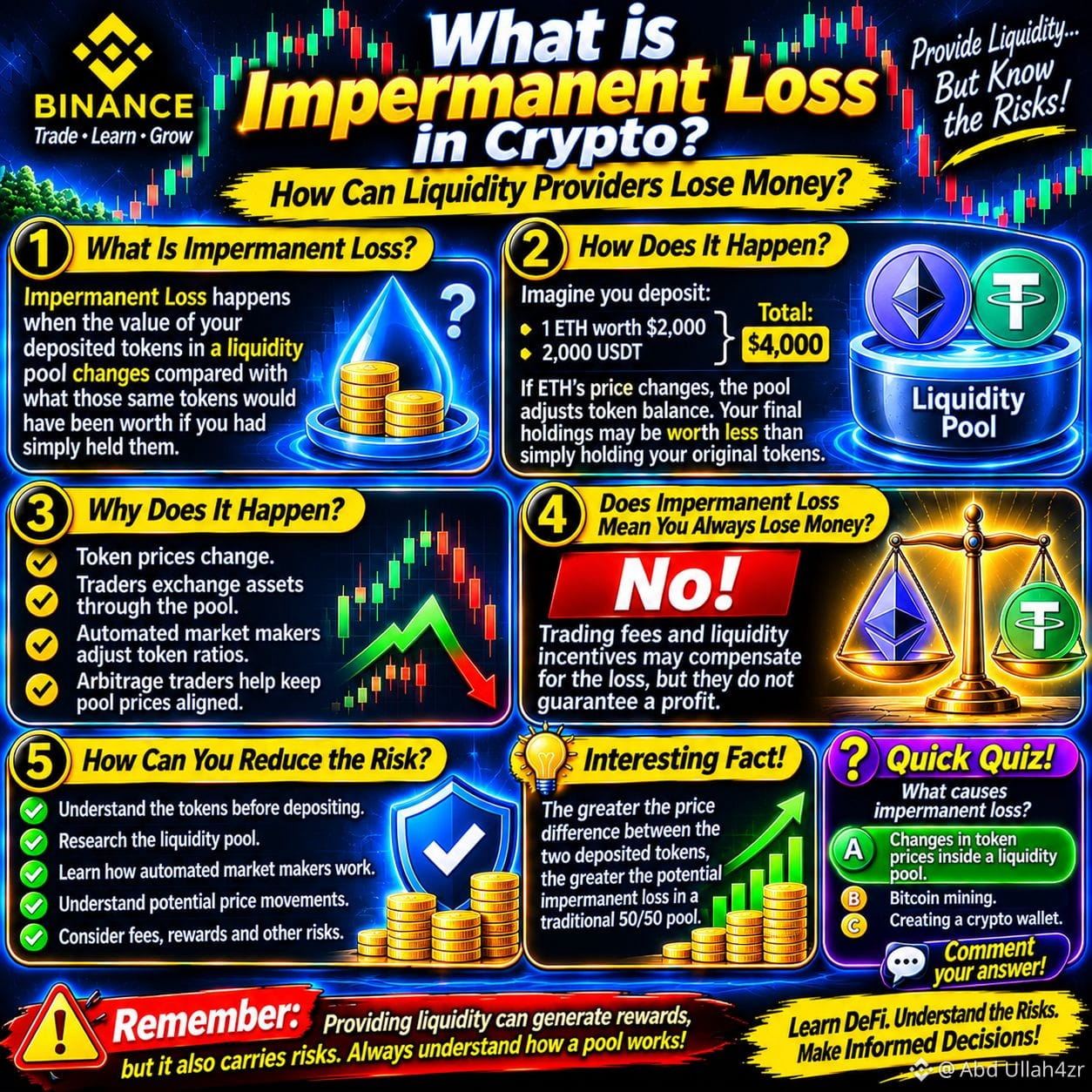
💧 WHAT IS IMPERMANENT LOSS IN CRYPTO? HOW CAN LIQUIDITY PROVIDERS LOSE MONEY?
Have you ever added your crypto to a liquidity pool to earn rewards, but later discovered that simply holding those coins might have been more profitable? 🤔
This situation is often called Impermanent Loss!
Let's understand it in simple words.
📌 1. What Is Impermanent Loss?
Impermanent Loss happens when the value of your deposited tokens in a liquidity pool changes compared with what those same tokens would have been worth if you had simply held them.
📌 2. How Does It Happen?
Imagine you deposit:
- 1 ETH worth $2,000.
- 2,000 USDT.
Your total deposit is worth $4,000.
If ETH's price changes significantly, the pool automatically adjusts its token balance through its trading mechanism.
Your final holdings may become worth less than simply holding your original tokens.
📌 3. Why Does It Happen?
🔹 Token prices change.
🔹 Traders exchange assets through the pool.
🔹 Automated market makers adjust token ratios.
🔹 Arbitrage traders help keep pool prices aligned with external markets.
📌 4. Does Impermanent Loss Mean You Always Lose Money?
No!
Trading fees and liquidity incentives may compensate for the loss, but they do not guarantee a profit.
📌 5. How Can You Reduce the Risk?
✅ Understand the tokens before depositing.
✅ Research the liquidity pool.
✅ Learn how automated market makers work.
✅ Understand potential price movements.
✅ Consider fees, rewards and other risks.
💡 INTERESTING FACT:
The greater the price difference between the two deposited tokens, the greater the potential impermanent loss in a traditional 50/50 constant-product liquidity pool.
🎯 QUICK QUIZ:
What causes impermanent loss?
A) Changes in token prices inside a liquidity pool.
B) Bitcoin mining.
C) Creating a crypto wallet.
👇 Comment your answer!
Remember: Providing liquidity can generate rewards, but it also carries risks. Always understand how a pool works before depositing your crypto.
#CryptoEducation #CryptoTrading #Blockchain #LearnCrypto