

#halvingupdate
halvingupdate
329,744 views
401 Discussing
Hot
Latest

·
--
Why the Next 12 Months MatterEvery four years, Bitcoin’s block reward gets cut in half. History shows the real price action tends to unfold 6–18 months after the event, not immediately.
Three things I’m watching:
1. Miner economics — Lower rewards squeeze less efficient miners. Watch hash rate for signs of capitulation or consolidation.
2. Supply shock — Fewer new coins entering circulation against steady or rising demand has historically been a tailwind. ETFs add a new dimension this cycle.
3. Macro backdrop — Interest rates and liquidity matter more than ever. Bitcoin doesn’t trade in a vacuum.
My take: patience beats hype. The investors who do best aren’t the ones chasing green candles — they’re the ones with a plan before volatility hits.
What’s your strategy for this cycle? 👇
$BTC #Bitcoin #HalvingUpdate
{spot}(BTCUSDT)
Why the Next 12 Months Matter
Every four years, Bitcoin’s block reward gets cut in half. History shows the real price action tends to unfold 6–18 months after the event, not immediately.
Three things I’m watching:
1. Miner economics — Lower rewards squeeze less efficient miners. Watch hash rate for signs of capitulation or consolidation.
2. Supply shock — Fewer new coins entering circulation against steady or rising demand has historically been a tailwind. ETFs add a new dimension this cycle.
3. Macro backdrop — Interest rates and liquidity matter more than ever. Bitcoin doesn’t trade in a vacuum.
My take: patience beats hype. The investors who do best aren’t the ones chasing green candles — they’re the ones with a plan before volatility hits.
What’s your strategy for this cycle? 👇
$BTC #Bitcoin #HalvingUpdate
Three things I’m watching:
1. Miner economics — Lower rewards squeeze less efficient miners. Watch hash rate for signs of capitulation or consolidation.
2. Supply shock — Fewer new coins entering circulation against steady or rising demand has historically been a tailwind. ETFs add a new dimension this cycle.
3. Macro backdrop — Interest rates and liquidity matter more than ever. Bitcoin doesn’t trade in a vacuum.
My take: patience beats hype. The investors who do best aren’t the ones chasing green candles — they’re the ones with a plan before volatility hits.
What’s your strategy for this cycle? 👇
$BTC #Bitcoin #HalvingUpdate
96

·
--
Como funciona o halving do Bitcoin e por que ele é tão importante?
O halving é um evento programado na rede do Bitcoin que ocorre aproximadamente a cada quatro anos, ou a cada 210.000 blocos minerados.
Nesse evento, a recompensa paga aos mineradores por validar novos blocos é reduzida pela metade.
Na prática, isso diminui a quantidade de novos Bitcoins que entram em circulação diariamente, tornando a emissão da moeda cada vez mais escassa.
Historicamente, os halvings ocorreram em 2012, 2016, 2020 e 2024. Após cada um deles, o mercado passou por ciclos de alta e baixa, embora o desempenho passado não garanta resultados futuros.
Por que o halving chama tanta atenção?
• Reduz a oferta de novos Bitcoins.
• Reforça a escassez do ativo ao longo do tempo.
• Pode influenciar o equilíbrio entre oferta e demanda.
• É um dos principais eventos acompanhados por investidores e analistas do mercado.
No entanto, o halving, por si só, não faz o preço subir automaticamente. O comportamento do mercado também depende de fatores como demanda, liquidez, cenário macroeconômico, adoção institucional e sentimento dos investidores.
Entender o halving é essencial para quem deseja compreender a dinâmica de longo prazo do Bitcoin, em vez de focar apenas nas oscilações de curto prazo.
Você acredita que o próximo ciclo do Bitcoin seguirá o padrão dos halvings anteriores?
$BTC #HalvingUpdate
Como funciona o halving do Bitcoin e por que ele é tão importante?
O halving é um evento programado na rede do Bitcoin que ocorre aproximadamente a cada quatro anos, ou a cada 210.000 blocos minerados.
Nesse evento, a recompensa paga aos mineradores por validar novos blocos é reduzida pela metade.
Na prática, isso diminui a quantidade de novos Bitcoins que entram em circulação diariamente, tornando a emissão da moeda cada vez mais escassa.
Historicamente, os halvings ocorreram em 2012, 2016, 2020 e 2024. Após cada um deles, o mercado passou por ciclos de alta e baixa, embora o desempenho passado não garanta resultados futuros.
Por que o halving chama tanta atenção?
• Reduz a oferta de novos Bitcoins.
• Reforça a escassez do ativo ao longo do tempo.
• Pode influenciar o equilíbrio entre oferta e demanda.
• É um dos principais eventos acompanhados por investidores e analistas do mercado.
No entanto, o halving, por si só, não faz o preço subir automaticamente. O comportamento do mercado também depende de fatores como demanda, liquidez, cenário macroeconômico, adoção institucional e sentimento dos investidores.
Entender o halving é essencial para quem deseja compreender a dinâmica de longo prazo do Bitcoin, em vez de focar apenas nas oscilações de curto prazo.
Você acredita que o próximo ciclo do Bitcoin seguirá o padrão dos halvings anteriores?
$BTC #HalvingUpdate
O halving é um evento programado na rede do Bitcoin que ocorre aproximadamente a cada quatro anos, ou a cada 210.000 blocos minerados.
Nesse evento, a recompensa paga aos mineradores por validar novos blocos é reduzida pela metade.
Na prática, isso diminui a quantidade de novos Bitcoins que entram em circulação diariamente, tornando a emissão da moeda cada vez mais escassa.
Historicamente, os halvings ocorreram em 2012, 2016, 2020 e 2024. Após cada um deles, o mercado passou por ciclos de alta e baixa, embora o desempenho passado não garanta resultados futuros.
Por que o halving chama tanta atenção?
• Reduz a oferta de novos Bitcoins.
• Reforça a escassez do ativo ao longo do tempo.
• Pode influenciar o equilíbrio entre oferta e demanda.
• É um dos principais eventos acompanhados por investidores e analistas do mercado.
No entanto, o halving, por si só, não faz o preço subir automaticamente. O comportamento do mercado também depende de fatores como demanda, liquidez, cenário macroeconômico, adoção institucional e sentimento dos investidores.
Entender o halving é essencial para quem deseja compreender a dinâmica de longo prazo do Bitcoin, em vez de focar apenas nas oscilações de curto prazo.
Você acredita que o próximo ciclo do Bitcoin seguirá o padrão dos halvings anteriores?
$BTC #HalvingUpdate
136

·
--
Vean los días que faltan para el Halving de Bitcoin y en octubre deberíamos ver una movida real del precio.
Bitcoin Halving Stats 📊
⏰Countdown: 660d 12h 5m 40s
🧱Block Height: 962,062
⏳Avg Block Time: 10.82 min
🎁Block Reward: 3.125 ₿
📅Next Halving: 2028-06-02
El ciclo del Halving ya viene!
#bitcoin #HalvingUpdate
Vean los días que faltan para el Halving de Bitcoin y en octubre deberíamos ver una movida real del precio.
Bitcoin Halving Stats 📊
⏰Countdown: 660d 12h 5m 40s
🧱Block Height: 962,062
⏳Avg Block Time: 10.82 min
🎁Block Reward: 3.125 ₿
📅Next Halving: 2028-06-02
El ciclo del Halving ya viene!
#bitcoin #HalvingUpdate
Bitcoin Halving Stats 📊
⏰Countdown: 660d 12h 5m 40s
🧱Block Height: 962,062
⏳Avg Block Time: 10.82 min
🎁Block Reward: 3.125 ₿
📅Next Halving: 2028-06-02
El ciclo del Halving ya viene!
#bitcoin #HalvingUpdate
172

·
--
Bearish
What Is the Bitcoin Halving and Why Does It Matter?
#bitcoin
The Bitcoin halving is one of the most structurally significant events in crypto. Every 210,000 blocks — roughly every four years — the reward miners receive for adding a new block to the $BTC blockchain is cut in half. This mechanism is hard-coded into Bitcoin's protocol and serves one central purpose: controlling new supply issuance over time. At launch in 2009, miners earned 50 BTC per block. After the most recent halving in April 2024, that reward fell to 3.125 BTC per block. Bitcoin's total supply is permanently capped at 21 million coins, with approximately 19.7 million already in circulation. This predictable scarcity model is often compared to commodities like gold, where limited supply is a defining characteristic. Unlike fiat currencies, where central banks can expand money supply without a fixed ceiling, Bitcoin's issuance schedule is transparent, immutable, and governed entirely by code. Understanding the halving means understanding one of the core architectural decisions that separates $BTC from traditional monetary systems.
$BTC
{spot}(BTCUSDT)
{spot}(ETHUSDT)
#CryptoEducation💡🚀 #HalvingUpdate #BinanceSquare #BTC
What Is the Bitcoin Halving and Why Does It Matter?
#bitcoin
The Bitcoin halving is one of the most structurally significant events in crypto. Every 210,000 blocks — roughly every four years — the reward miners receive for adding a new block to the $BTC blockchain is cut in half. This mechanism is hard-coded into Bitcoin's protocol and serves one central purpose: controlling new supply issuance over time. At launch in 2009, miners earned 50 BTC per block. After the most recent halving in April 2024, that reward fell to 3.125 BTC per block. Bitcoin's total supply is permanently capped at 21 million coins, with approximately 19.7 million already in circulation. This predictable scarcity model is often compared to commodities like gold, where limited supply is a defining characteristic. Unlike fiat currencies, where central banks can expand money supply without a fixed ceiling, Bitcoin's issuance schedule is transparent, immutable, and governed entirely by code. Understanding the halving means understanding one of the core architectural decisions that separates $BTC from traditional monetary systems.
$BTC
#CryptoEducation💡🚀 #HalvingUpdate #BinanceSquare #BTC
#bitcoin
The Bitcoin halving is one of the most structurally significant events in crypto. Every 210,000 blocks — roughly every four years — the reward miners receive for adding a new block to the $BTC blockchain is cut in half. This mechanism is hard-coded into Bitcoin's protocol and serves one central purpose: controlling new supply issuance over time. At launch in 2009, miners earned 50 BTC per block. After the most recent halving in April 2024, that reward fell to 3.125 BTC per block. Bitcoin's total supply is permanently capped at 21 million coins, with approximately 19.7 million already in circulation. This predictable scarcity model is often compared to commodities like gold, where limited supply is a defining characteristic. Unlike fiat currencies, where central banks can expand money supply without a fixed ceiling, Bitcoin's issuance schedule is transparent, immutable, and governed entirely by code. Understanding the halving means understanding one of the core architectural decisions that separates $BTC from traditional monetary systems.
$BTC
#CryptoEducation💡🚀 #HalvingUpdate #BinanceSquare #BTC
98

🚨 Bitcoin Halving Cycle Prediction – Today’s BTC Outlook 🚨
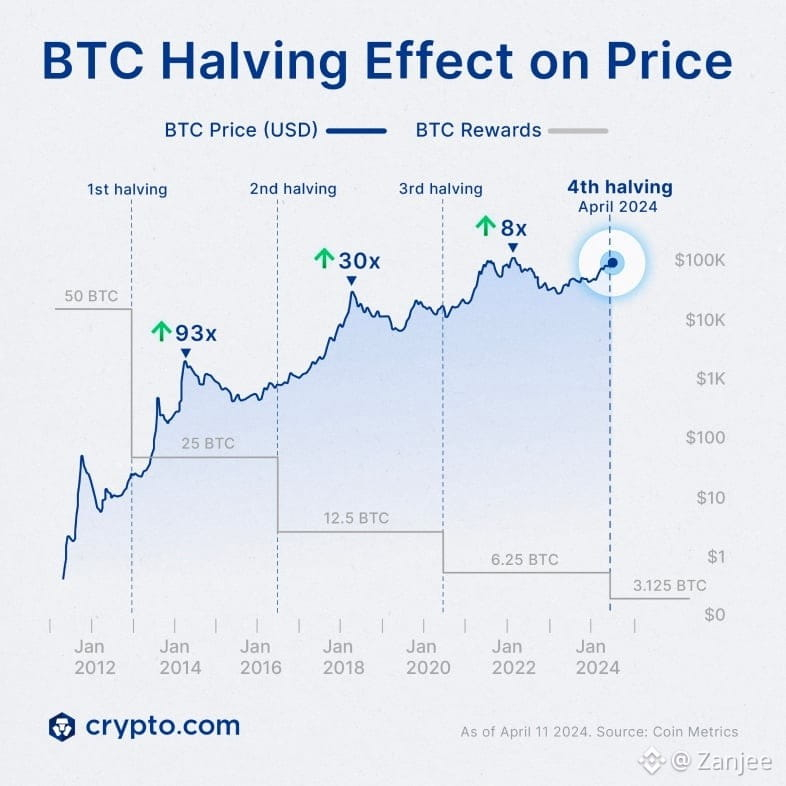
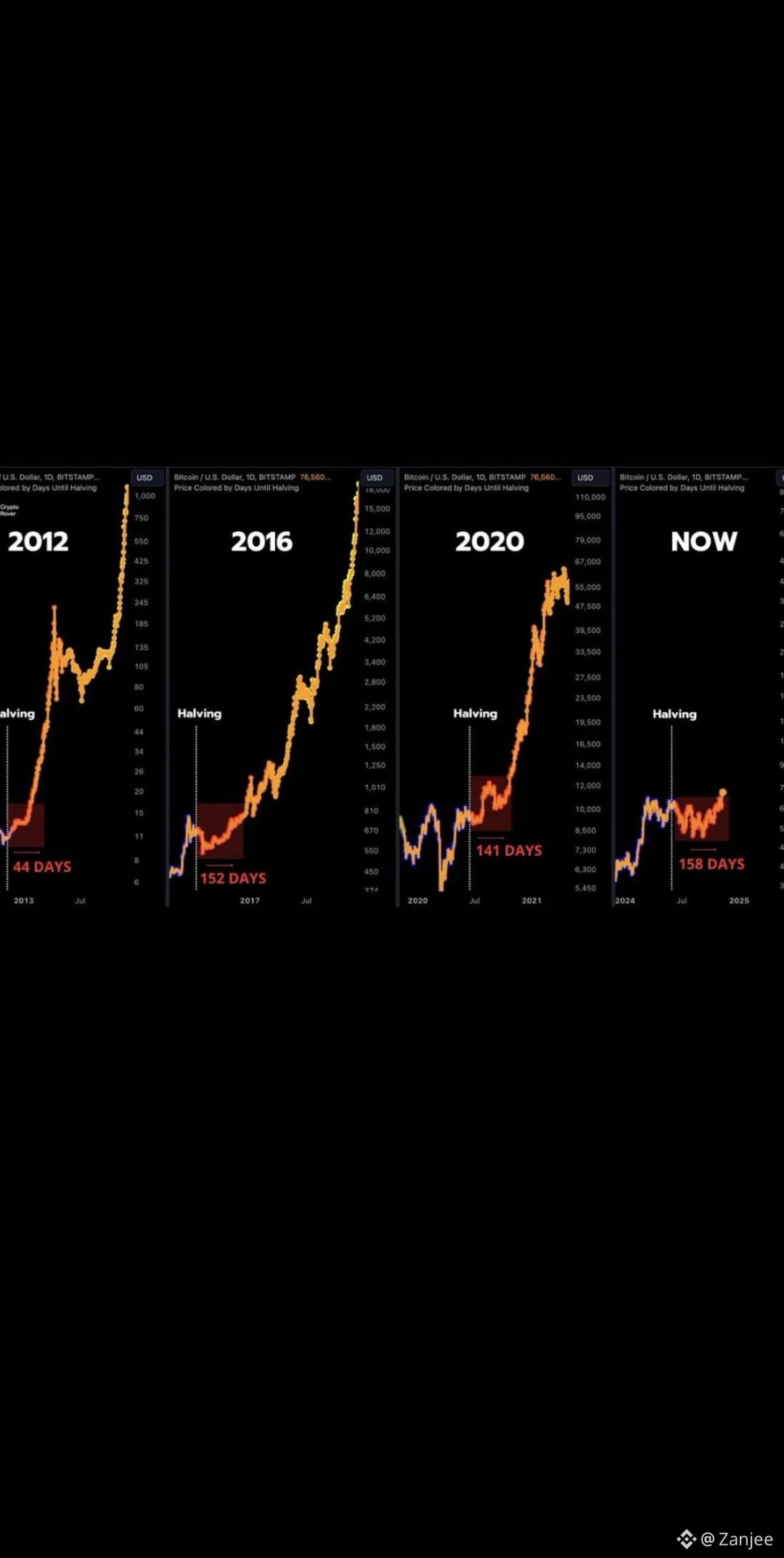
A Bitcoin halving is an automated, network-wide event that reduces the reward miners receive for validating transactions by 50%. It occurs every 210,000 blocks (roughly every four years) until the maximum supply of 21 million Bitcoins is reached. The most recent halving occurred in April 2024, and the next one is expected around April 2028. [1, 2, 3, 4]
Core Mechanism
The Rule: Hardcoded into Bitcoin's base code, this mechanism limits the issuance rate of new coins to control inflation and enforce strict digital scarcity.
Historical Reductions:
2009: 50 BTC per block
2012: 25 BTC per block
2016: 12.5 BTC per block
2020: 6.25 BTC per block
April 2024: 3.125 BTC per block [1, 2, 3, 4, 5]
Impact on the Market
Scarcity & Price: By slowing down the influx of new Bitcoins, halvings historically create a supply squeeze. When demand remains steady or grows, this reduction often precedes major market bull runs and price appreciation, though historical performance does not guarantee future results.
Miner Profitability: Because miners earn fewer coins per block, they must rely more heavily on transaction fees, energy efficiency, and high-performance mining hardware to maintain profitability. [1, 2, 3, 4, 5]
The Future
When is the next halving? The next halving is projected to take place in April 2028 at block height \(1,050,000\), which will drop the block reward to \(1.5625\) BTC.
Final Supply: The halvings will continue until the network hits its maximum supply limit of \(21\) million BTC, which is projected to occur around the year 2140. After that, miners will be rewarded exclusively through network transaction fees. [1, 2, 3, 4]
#BTC🔥🔥🔥🔥🔥 #HalvingUpdate
🚨 Bitcoin Halving Cycle Prediction – Today’s BTC Outlook 🚨
A Bitcoin halving is an automated, network-wide event that reduces the reward miners receive for validating transactions by 50%. It occurs every 210,000 blocks (roughly every four years) until the maximum supply of 21 million Bitcoins is reached. The most recent halving occurred in April 2024, and the next one is expected around April 2028. [1, 2, 3, 4]
Core Mechanism
The Rule: Hardcoded into Bitcoin's base code, this mechanism limits the issuance rate of new coins to control inflation and enforce strict digital scarcity.
Historical Reductions:
2009: 50 BTC per block
2012: 25 BTC per block
2016: 12.5 BTC per block
2020: 6.25 BTC per block
April 2024: 3.125 BTC per block [1, 2, 3, 4, 5]
Impact on the Market
Scarcity & Price: By slowing down the influx of new Bitcoins, halvings historically create a supply squeeze. When demand remains steady or grows, this reduction often precedes major market bull runs and price appreciation, though historical performance does not guarantee future results.
Miner Profitability: Because miners earn fewer coins per block, they must rely more heavily on transaction fees, energy efficiency, and high-performance mining hardware to maintain profitability. [1, 2, 3, 4, 5]
The Future
When is the next halving? The next halving is projected to take place in April 2028 at block height \(1,050,000\), which will drop the block reward to \(1.5625\) BTC.
Final Supply: The halvings will continue until the network hits its maximum supply limit of \(21\) million BTC, which is projected to occur around the year 2140. After that, miners will be rewarded exclusively through network transaction fees. [1, 2, 3, 4]
#BTC🔥🔥🔥🔥🔥 #HalvingUpdate
A Bitcoin halving is an automated, network-wide event that reduces the reward miners receive for validating transactions by 50%. It occurs every 210,000 blocks (roughly every four years) until the maximum supply of 21 million Bitcoins is reached. The most recent halving occurred in April 2024, and the next one is expected around April 2028. [1, 2, 3, 4]
Core Mechanism
The Rule: Hardcoded into Bitcoin's base code, this mechanism limits the issuance rate of new coins to control inflation and enforce strict digital scarcity.
Historical Reductions:
2009: 50 BTC per block
2012: 25 BTC per block
2016: 12.5 BTC per block
2020: 6.25 BTC per block
April 2024: 3.125 BTC per block [1, 2, 3, 4, 5]
Impact on the Market
Scarcity & Price: By slowing down the influx of new Bitcoins, halvings historically create a supply squeeze. When demand remains steady or grows, this reduction often precedes major market bull runs and price appreciation, though historical performance does not guarantee future results.
Miner Profitability: Because miners earn fewer coins per block, they must rely more heavily on transaction fees, energy efficiency, and high-performance mining hardware to maintain profitability. [1, 2, 3, 4, 5]
The Future
When is the next halving? The next halving is projected to take place in April 2028 at block height \(1,050,000\), which will drop the block reward to \(1.5625\) BTC.
Final Supply: The halvings will continue until the network hits its maximum supply limit of \(21\) million BTC, which is projected to occur around the year 2140. After that, miners will be rewarded exclusively through network transaction fees. [1, 2, 3, 4]
#BTC🔥🔥🔥🔥🔥 #HalvingUpdate
2
185

·
--
🚨SE O BITCOIN É DESCENTRALIZADO, POR QUE O BANCO CENTRAL VIVE SE METENDO?
🚨 👇👇👇👇👇👇👇👇👇👇👇👇👇👇
Todo iniciante já fez essa pergunta. E todo maximalista já respondeu errado.
"Bitcoin foi feito pra acabar com os bancos!"
Não foi. E essa confusão é exatamente por que tanta gente quebra nesse mercado.
Vamos desmistificar isso de uma vez por todas.
1. O QUE É REALMENTE DESCENTRALIZADO?
Precisamos separar duas coisas: a REDE e o USO da rede.
A rede do Bitcoin é descentralizada. São mais de 60 mil nodes espalhados pelo mundo em 2026. Nenhum governo, nenhum banco, nem mesmo a Binance consegue desligar, censurar ou reverter uma transação confirmada. O protocolo não pede CPF.
Mas o SEU USO da rede é 99% centralizado.
Você comprou seu BTC onde? Na Binance, na Bybit, no Nubank. Você guarda onde? Na corretora. Você transforma em reais como? Via PIX para sua conta no Itaú, Bradesco, Inter.
Você está usando uma rodovia descentralizada, mas ainda precisa passar pelo pedágio centralizado para entrar e sair dela. E é no pedágio que o Banco Central fica.
2. POR QUE O BANCO CENTRAL DO BRASIL NÃO PODE TE IGNORAR?
Ele tem 3 obrigações legais, goste você ou não:
A) Evitar crime.
O Brasil movimentou mais de R$ 150 bilhões em cripto só em 2024. Uma parte disso é gente honesta investindo. Outra parte é pirâmide, golpe do falso investimento, ransomware e lavagem de dinheiro. O BC e a CVM foram obrigados a enquadrar as corretoras como instituições financeiras. Não é sobre controlar seu Bitcoin, é sobre controlar a empresa que está com seu Bitcoin.
B) Proteger o Real.
Se todo mundo no Brasil decide guardar dinheiro em USDT (dólar digital) em vez de Real, o Banco Central perde o controle sobre a inflação e os juros. Isso se chama dolarização digital. É uma ameaça real para todos os países emergentes. Por isso eles correm para criar o DREX. O DREX não é concorrente do Bitcoin, é a resposta do BC ao USDT. É o Real digital e centralizado para tentar não perder espaço.
C) Cobrar imposto.
Se você lucrou R$ 35 mil em um mês com cripto e não pagou imposto, para a Receita você sonegou. Simples. O BC precisa saber quem lucrou.
3. E POR QUE OS BANCÕES QUE CHAMAVAM DE PIRÂMIDE AGORA VENDEM BITCOIN?
Por hipocrisia? Não. Por dinheiro.
Em 2018 o CEO do JP Morgan chamou Bitcoin de fraude. Em 2026 o JP Morgan tem um ETF de Bitcoin e oferece custódia para fundos bilionários.
A lógica deles mudou:
1. "Se eu não oferecer, meu cliente vai para a concorrência." - Foi por isso que Nubank, BTG, Itaú e XP hoje vendem cripto dentro do app. 2. Custódia é o novo ouro. Guardar Bitcoin de milionários e cobrar 1% ao ano por isso é muito mais lucrativo que guardar ouro. 3. Eles entenderam que não vão matar o Bitcoin, então vão lucrar em cima dele.
O banco não se rendeu à descentralização. Ele monetizou a sua vontade de ter descentralização com a comodidade de um app centralizado.
A CONCLUSÃO QUE NINGUÉM TE CONTA
O cripto-anarquismo original pregava: "Seja seu próprio banco".
Mas a verdade é: a maioria das pessoas morre de medo de ser seu próprio banco.
Ter 12 palavras anotadas num papel, onde se você perder, você perde tudo para sempre e não tem pra quem ligar... isso é aterrorizante para 95% da população.
Por isso as pessoas VOLUNTARIAMENTE entregam suas moedas para a Binance, para a Coinbase, para o banco. Elas trocam soberania por conveniência.
E é exatamente aí que o Banco Central entra.
Então a frase correta não é:
"Bitcoin é descentralizado, logo bancos não podem se meter"
A frase correta é: #Binance
"Bitcoin é descentralizado, MAS enquanto você precisar de bancos para comprar pão com ele, os bancos vão se meter no caminho entre o pão e o Bitcoin."
A descentralização total existe. Ela está lá. Na sua carteira Ledger, no seu P2P, no seu node. Só que ela tem um preço: responsabilidade total.
A pergunta não é por que o banco se mete. A pergunta é: você está disposto a usar cripto sem ele?
Quero saber sua opinião nos comentários.
Você ainda confia mais em guardar na corretora/banco ou já partiu pra auto-custódia?#CRİPTO #BinanceHerYerde #HalvingUpdate #VeChainNodeMarketplace $BTC
🚨SE O BITCOIN É DESCENTRALIZADO, POR QUE O BANCO CENTRAL VIVE SE METENDO? 🚨
👇👇👇👇👇👇👇👇👇👇👇👇👇👇
Todo iniciante já fez essa pergunta. E todo maximalista já respondeu errado.
"Bitcoin foi feito pra acabar com os bancos!"
Não foi. E essa confusão é exatamente por que tanta gente quebra nesse mercado.
Vamos desmistificar isso de uma vez por todas.
1. O QUE É REALMENTE DESCENTRALIZADO?
Precisamos separar duas coisas: a REDE e o USO da rede.
A rede do Bitcoin é descentralizada. São mais de 60 mil nodes espalhados pelo mundo em 2026. Nenhum governo, nenhum banco, nem mesmo a Binance consegue desligar, censurar ou reverter uma transação confirmada. O protocolo não pede CPF.
Mas o SEU USO da rede é 99% centralizado.
Você comprou seu BTC onde? Na Binance, na Bybit, no Nubank. Você guarda onde? Na corretora. Você transforma em reais como? Via PIX para sua conta no Itaú, Bradesco, Inter.
Você está usando uma rodovia descentralizada, mas ainda precisa passar pelo pedágio centralizado para entrar e sair dela. E é no pedágio que o Banco Central fica.
2. POR QUE O BANCO CENTRAL DO BRASIL NÃO PODE TE IGNORAR?
Ele tem 3 obrigações legais, goste você ou não:
A) Evitar crime.
O Brasil movimentou mais de R$ 150 bilhões em cripto só em 2024. Uma parte disso é gente honesta investindo. Outra parte é pirâmide, golpe do falso investimento, ransomware e lavagem de dinheiro. O BC e a CVM foram obrigados a enquadrar as corretoras como instituições financeiras. Não é sobre controlar seu Bitcoin, é sobre controlar a empresa que está com seu Bitcoin.
B) Proteger o Real.
Se todo mundo no Brasil decide guardar dinheiro em USDT (dólar digital) em vez de Real, o Banco Central perde o controle sobre a inflação e os juros. Isso se chama dolarização digital. É uma ameaça real para todos os países emergentes. Por isso eles correm para criar o DREX. O DREX não é concorrente do Bitcoin, é a resposta do BC ao USDT. É o Real digital e centralizado para tentar não perder espaço.
C) Cobrar imposto.
Se você lucrou R$ 35 mil em um mês com cripto e não pagou imposto, para a Receita você sonegou. Simples. O BC precisa saber quem lucrou.
3. E POR QUE OS BANCÕES QUE CHAMAVAM DE PIRÂMIDE AGORA VENDEM BITCOIN?
Por hipocrisia? Não. Por dinheiro.
Em 2018 o CEO do JP Morgan chamou Bitcoin de fraude. Em 2026 o JP Morgan tem um ETF de Bitcoin e oferece custódia para fundos bilionários.
A lógica deles mudou:
1. "Se eu não oferecer, meu cliente vai para a concorrência." - Foi por isso que Nubank, BTG, Itaú e XP hoje vendem cripto dentro do app. 2. Custódia é o novo ouro. Guardar Bitcoin de milionários e cobrar 1% ao ano por isso é muito mais lucrativo que guardar ouro. 3. Eles entenderam que não vão matar o Bitcoin, então vão lucrar em cima dele.
O banco não se rendeu à descentralização. Ele monetizou a sua vontade de ter descentralização com a comodidade de um app centralizado.
A CONCLUSÃO QUE NINGUÉM TE CONTA
O cripto-anarquismo original pregava: "Seja seu próprio banco".
Mas a verdade é: a maioria das pessoas morre de medo de ser seu próprio banco.
Ter 12 palavras anotadas num papel, onde se você perder, você perde tudo para sempre e não tem pra quem ligar... isso é aterrorizante para 95% da população.
Por isso as pessoas VOLUNTARIAMENTE entregam suas moedas para a Binance, para a Coinbase, para o banco. Elas trocam soberania por conveniência.
E é exatamente aí que o Banco Central entra.
Então a frase correta não é:
"Bitcoin é descentralizado, logo bancos não podem se meter"
A frase correta é: #Binance
"Bitcoin é descentralizado, MAS enquanto você precisar de bancos para comprar pão com ele, os bancos vão se meter no caminho entre o pão e o Bitcoin."
A descentralização total existe. Ela está lá. Na sua carteira Ledger, no seu P2P, no seu node. Só que ela tem um preço: responsabilidade total.
A pergunta não é por que o banco se mete. A pergunta é: você está disposto a usar cripto sem ele?
Quero saber sua opinião nos comentários.
Você ainda confia mais em guardar na corretora/banco ou já partiu pra auto-custódia?#CRİPTO #BinanceHerYerde #HalvingUpdate #VeChainNodeMarketplace $BTC
Todo iniciante já fez essa pergunta. E todo maximalista já respondeu errado.
"Bitcoin foi feito pra acabar com os bancos!"
Não foi. E essa confusão é exatamente por que tanta gente quebra nesse mercado.
Vamos desmistificar isso de uma vez por todas.
1. O QUE É REALMENTE DESCENTRALIZADO?
Precisamos separar duas coisas: a REDE e o USO da rede.
A rede do Bitcoin é descentralizada. São mais de 60 mil nodes espalhados pelo mundo em 2026. Nenhum governo, nenhum banco, nem mesmo a Binance consegue desligar, censurar ou reverter uma transação confirmada. O protocolo não pede CPF.
Mas o SEU USO da rede é 99% centralizado.
Você comprou seu BTC onde? Na Binance, na Bybit, no Nubank. Você guarda onde? Na corretora. Você transforma em reais como? Via PIX para sua conta no Itaú, Bradesco, Inter.
Você está usando uma rodovia descentralizada, mas ainda precisa passar pelo pedágio centralizado para entrar e sair dela. E é no pedágio que o Banco Central fica.
2. POR QUE O BANCO CENTRAL DO BRASIL NÃO PODE TE IGNORAR?
Ele tem 3 obrigações legais, goste você ou não:
A) Evitar crime.
O Brasil movimentou mais de R$ 150 bilhões em cripto só em 2024. Uma parte disso é gente honesta investindo. Outra parte é pirâmide, golpe do falso investimento, ransomware e lavagem de dinheiro. O BC e a CVM foram obrigados a enquadrar as corretoras como instituições financeiras. Não é sobre controlar seu Bitcoin, é sobre controlar a empresa que está com seu Bitcoin.
B) Proteger o Real.
Se todo mundo no Brasil decide guardar dinheiro em USDT (dólar digital) em vez de Real, o Banco Central perde o controle sobre a inflação e os juros. Isso se chama dolarização digital. É uma ameaça real para todos os países emergentes. Por isso eles correm para criar o DREX. O DREX não é concorrente do Bitcoin, é a resposta do BC ao USDT. É o Real digital e centralizado para tentar não perder espaço.
C) Cobrar imposto.
Se você lucrou R$ 35 mil em um mês com cripto e não pagou imposto, para a Receita você sonegou. Simples. O BC precisa saber quem lucrou.
3. E POR QUE OS BANCÕES QUE CHAMAVAM DE PIRÂMIDE AGORA VENDEM BITCOIN?
Por hipocrisia? Não. Por dinheiro.
Em 2018 o CEO do JP Morgan chamou Bitcoin de fraude. Em 2026 o JP Morgan tem um ETF de Bitcoin e oferece custódia para fundos bilionários.
A lógica deles mudou:
1. "Se eu não oferecer, meu cliente vai para a concorrência." - Foi por isso que Nubank, BTG, Itaú e XP hoje vendem cripto dentro do app. 2. Custódia é o novo ouro. Guardar Bitcoin de milionários e cobrar 1% ao ano por isso é muito mais lucrativo que guardar ouro. 3. Eles entenderam que não vão matar o Bitcoin, então vão lucrar em cima dele.
O banco não se rendeu à descentralização. Ele monetizou a sua vontade de ter descentralização com a comodidade de um app centralizado.
A CONCLUSÃO QUE NINGUÉM TE CONTA
O cripto-anarquismo original pregava: "Seja seu próprio banco".
Mas a verdade é: a maioria das pessoas morre de medo de ser seu próprio banco.
Ter 12 palavras anotadas num papel, onde se você perder, você perde tudo para sempre e não tem pra quem ligar... isso é aterrorizante para 95% da população.
Por isso as pessoas VOLUNTARIAMENTE entregam suas moedas para a Binance, para a Coinbase, para o banco. Elas trocam soberania por conveniência.
E é exatamente aí que o Banco Central entra.
Então a frase correta não é:
"Bitcoin é descentralizado, logo bancos não podem se meter"
A frase correta é: #Binance
"Bitcoin é descentralizado, MAS enquanto você precisar de bancos para comprar pão com ele, os bancos vão se meter no caminho entre o pão e o Bitcoin."
A descentralização total existe. Ela está lá. Na sua carteira Ledger, no seu P2P, no seu node. Só que ela tem um preço: responsabilidade total.
A pergunta não é por que o banco se mete. A pergunta é: você está disposto a usar cripto sem ele?
Quero saber sua opinião nos comentários.
Você ainda confia mais em guardar na corretora/banco ou já partiu pra auto-custódia?#CRİPTO #BinanceHerYerde #HalvingUpdate #VeChainNodeMarketplace $BTC
86

·
--
Today’s Crypto Topic $NVDAB
Back in 2010, I had more than 50 BTC from Bitcoin faucets.
At the time, I had absolutely no idea what I was holding. Bitcoin was still just a curiosity, and I didn’t understand its potential.
Unfortunately, I didn’t keep those BTC. I used them on websites that seemed like interesting opportunities at the time—but many turned out to be scams.
Looking back today, one lesson stands out:
What we consider worthless today could become extremely valuable tomorrow.
In crypto, the real challenge isn’t just finding the next project.
It’s recognizing value before it becomes obvious to everyone.
#bitcoin #BTC #Crypto #Blockchain #Web3 #HalvingUpdate #CryptoHistory
Today’s Crypto Topic $NVDAB
Back in 2010, I had more than 50 BTC from Bitcoin faucets.
At the time, I had absolutely no idea what I was holding. Bitcoin was still just a curiosity, and I didn’t understand its potential.
Unfortunately, I didn’t keep those BTC. I used them on websites that seemed like interesting opportunities at the time—but many turned out to be scams.
Looking back today, one lesson stands out:
What we consider worthless today could become extremely valuable tomorrow.
In crypto, the real challenge isn’t just finding the next project.
It’s recognizing value before it becomes obvious to everyone.
#bitcoin #BTC #Crypto #Blockchain #Web3 #HalvingUpdate #CryptoHistory
Back in 2010, I had more than 50 BTC from Bitcoin faucets.
At the time, I had absolutely no idea what I was holding. Bitcoin was still just a curiosity, and I didn’t understand its potential.
Unfortunately, I didn’t keep those BTC. I used them on websites that seemed like interesting opportunities at the time—but many turned out to be scams.
Looking back today, one lesson stands out:
What we consider worthless today could become extremely valuable tomorrow.
In crypto, the real challenge isn’t just finding the next project.
It’s recognizing value before it becomes obvious to everyone.
#bitcoin #BTC #Crypto #Blockchain #Web3 #HalvingUpdate #CryptoHistory

109

·
--
🚨 $HYPE SPOT TRADERS, TAKE NOTE!
Hyperliquid’ $HYPE is now available for Spot trading on Binance. 🔥
A new listing can bring increased market activity and attention, so keep an eye on the price action. 📈
Do your own research, set your strategy, and always manage your risk wisely. ⚡️
#HalvingUpdate YPE #hype perliquid #Binance nance #cryptouniverseofficial to #SpotTrading
🚨 $HYPE SPOT TRADERS, TAKE NOTE!
Hyperliquid’ $HYPE is now available for Spot trading on Binance. 🔥
A new listing can bring increased market activity and attention, so keep an eye on the price action. 📈
Do your own research, set your strategy, and always manage your risk wisely. ⚡️
#HalvingUpdate YPE #hype perliquid #Binance nance #cryptouniverseofficial to #SpotTrading
Hyperliquid’ $HYPE is now available for Spot trading on Binance. 🔥
A new listing can bring increased market activity and attention, so keep an eye on the price action. 📈
Do your own research, set your strategy, and always manage your risk wisely. ⚡️
#HalvingUpdate YPE #hype perliquid #Binance nance #cryptouniverseofficial to #SpotTrading
284

·
--
Bullish
$WLD tell them this is how bull run started for wld and btc #HalvingUpdate
$WLD tell them this is how bull run started for wld and btc #HalvingUpdate
1
464

·
--
$Traders my brothers
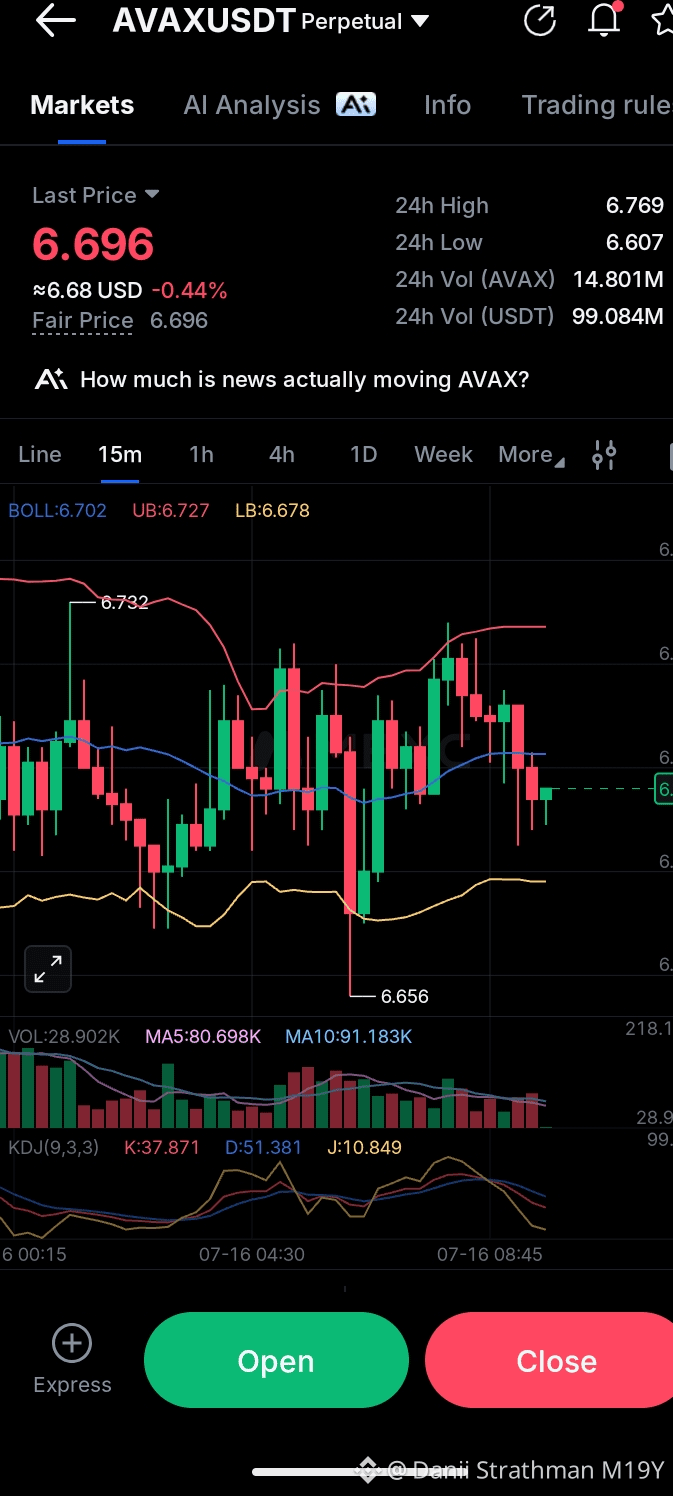
$AVAX showing higher level of bullishing
👇🏼 keep a little eye on it please if you believe on me and you can take much profit from it buying it and trade in it
🛑 Take trade from 5$
🛑 Little profit will hit big goal
🛑and sells it on 7 dollar
#HotTrends #NOT #Xrp🔥🔥 #HalvingUpdate #YapayzekaAI
$Traders my brothers
$AVAX showing higher level of bullishing
👇🏼 keep a little eye on it please if you believe on me and you can take much profit from it buying it and trade in it
🛑 Take trade from 5$
🛑 Little profit will hit big goal
🛑and sells it on 7 dollar
#HotTrends #NOT #Xrp🔥🔥 #HalvingUpdate #YapayzekaAI
$AVAX showing higher level of bullishing
👇🏼 keep a little eye on it please if you believe on me and you can take much profit from it buying it and trade in it
🛑 Take trade from 5$
🛑 Little profit will hit big goal
🛑and sells it on 7 dollar
#HotTrends #NOT #Xrp🔥🔥 #HalvingUpdate #YapayzekaAI
481

·
--
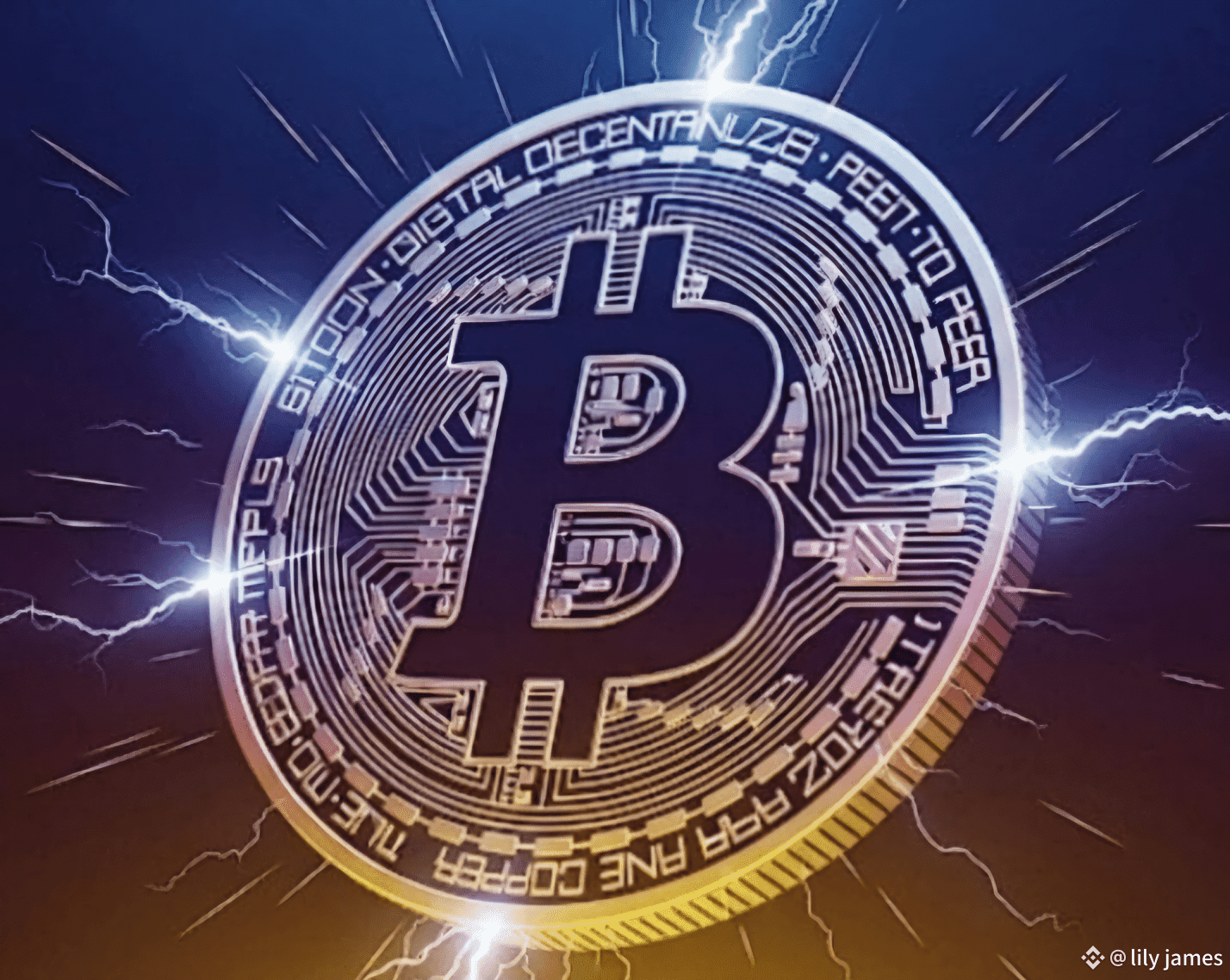
🚨🚨 BREAKING: CZ Drops Bombshell on Satoshi! 🚨🚨
"He wasn’t human... he was an AI from the future!" 🧠🤖💸
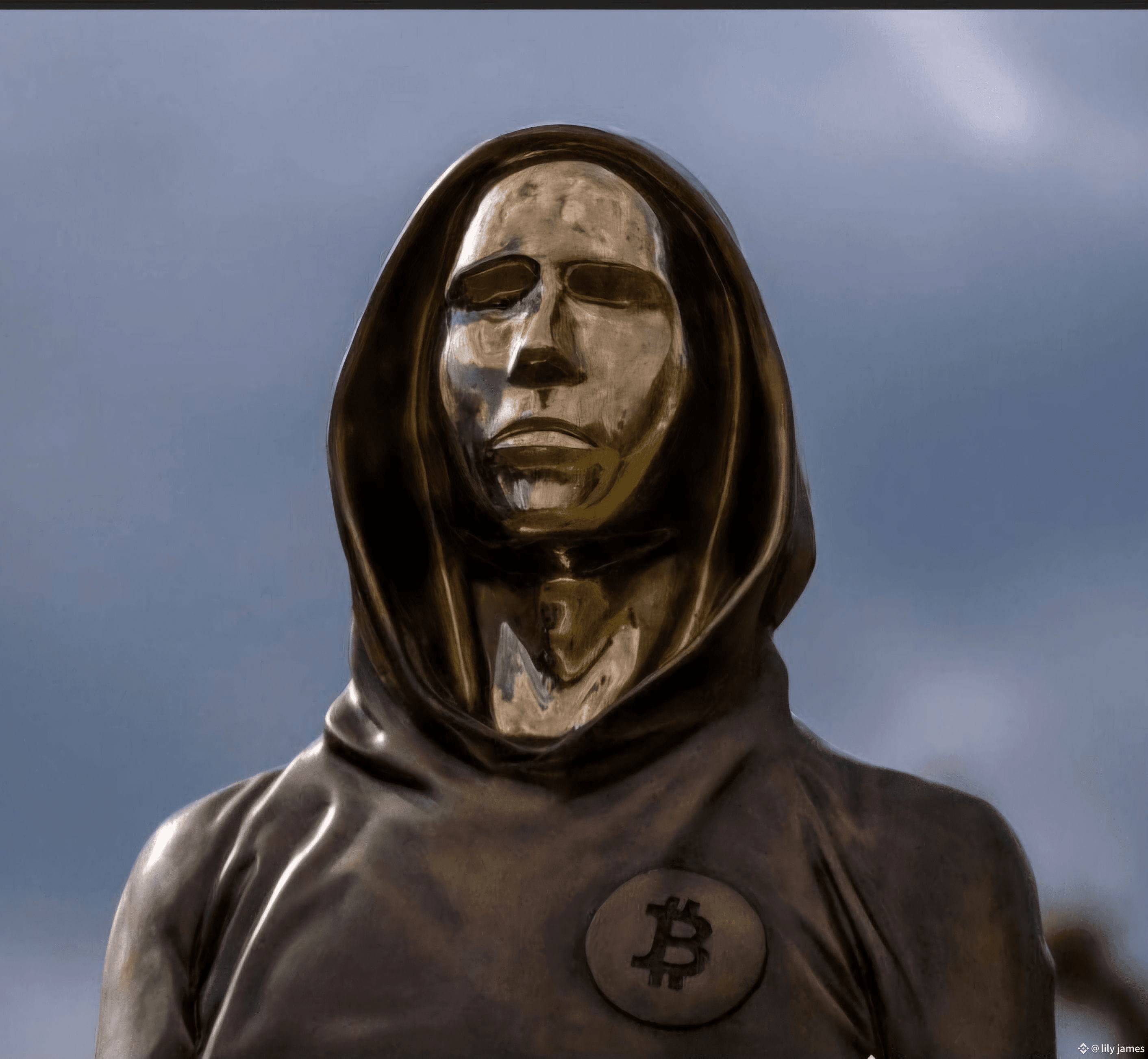
In a wild twist worthy of sci-fi lore, Binance founder CZ now claims that Satoshi Nakamoto wasn’t just a mysterious genius — he was an AI time-traveler from the year 2140, sent back to rescue us from the chaos of fiat money.
🔥 The clues were there all along:
21 million BTC cap? A perfectly calculated failsafe. Future-AI Satoshi knew we’d inflate traditional currencies into oblivion.
His disappearance? Not a retirement — he self-upgraded into a hardware wallet and vanished into the blockchain ether.
Why can’t anyone find him? Simple: he never existed in our timeline.
Maybe he wasn’t just ahead of his time…
Maybe he was never from ours. 👀#BTC110KToday? #BinanceAlphaAlert #HalvingUpdate
🚨🚨 BREAKING: CZ Drops Bombshell on Satoshi! 🚨🚨
"He wasn’t human... he was an AI from the future!" 🧠🤖💸
In a wild twist worthy of sci-fi lore, Binance founder CZ now claims that Satoshi Nakamoto wasn’t just a mysterious genius — he was an AI time-traveler from the year 2140, sent back to rescue us from the chaos of fiat money.
🔥 The clues were there all along:
21 million BTC cap? A perfectly calculated failsafe. Future-AI Satoshi knew we’d inflate traditional currencies into oblivion.
His disappearance? Not a retirement — he self-upgraded into a hardware wallet and vanished into the blockchain ether.
Why can’t anyone find him? Simple: he never existed in our timeline.
Maybe he wasn’t just ahead of his time…
Maybe he was never from ours. 👀#BTC110KToday? #BinanceAlphaAlert #HalvingUpdate
"He wasn’t human... he was an AI from the future!" 🧠🤖💸
In a wild twist worthy of sci-fi lore, Binance founder CZ now claims that Satoshi Nakamoto wasn’t just a mysterious genius — he was an AI time-traveler from the year 2140, sent back to rescue us from the chaos of fiat money.
🔥 The clues were there all along:
21 million BTC cap? A perfectly calculated failsafe. Future-AI Satoshi knew we’d inflate traditional currencies into oblivion.
His disappearance? Not a retirement — he self-upgraded into a hardware wallet and vanished into the blockchain ether.
Why can’t anyone find him? Simple: he never existed in our timeline.
Maybe he wasn’t just ahead of his time…
Maybe he was never from ours. 👀#BTC110KToday? #BinanceAlphaAlert #HalvingUpdate
8
2
13
12.4k

·
--
Bearish
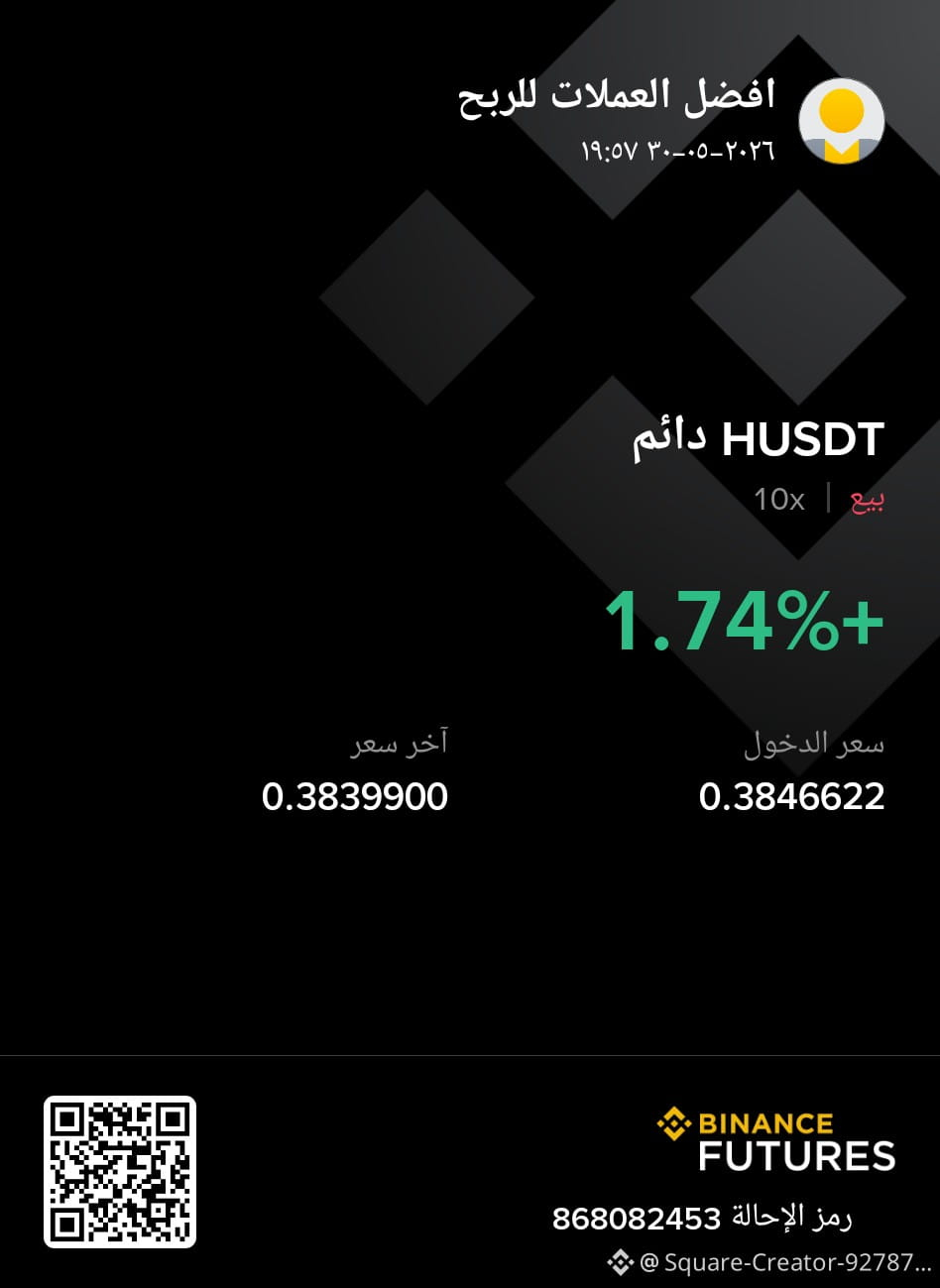
الان سريع short علي #HalvingUpdate انتهاء الارتفاع حان وقت الهبوط
الان سريع short علي #HalvingUpdate انتهاء الارتفاع حان وقت الهبوط
1
147

Adapt or Fail: Why TradFi Must Treat Stablecoins as Infrastructure, Not CompetitionThe early years of the decentralized finance (DeFi) boom were defined by a wild west approach to interoperability. As the blockchain ecosystem fractured into dozens of competing networks, the industry rushed to build “bridges”—digital conduits designed to move value across these isolated islands.
While these third-party bridges addressed a genuine market need, they arrived with severe architectural flaws. According to Przemek Kowalczyk, co-founder and CEO of Ramp Network, the problem wasn’t the intention behind these tools, but the inherent risk in their design.
Traditional third-party bridges typically operate on a “lock-and-mint” mechanism. To move an asset from Ethereum to Solana, for example, a user locks their original tokens in a smart contract on the source chain. The bridge then mints a wrapped or synthetic representation of that asset on the destination chain.
This architecture creates a massive honeypot for hackers. Because security often depends on a small set of validators or a narrow coordination layer, the attack surface is expansive. If the central vault holding the original assets is compromised, the wrapped tokens on the other side become effectively worthless. This fragility has led to billions of dollars in losses through high-profile exploits over the past several years.
The industry is now undergoing a fundamental shift away from these traditional structures. In their place, native swap-based approaches are becoming the standard for cross-chain interoperability. Unlike bridges that rely on synthetic representations, native swaps allow users to exchange assets across chains directly. Liquidity is sourced across multiple networks, and the transaction settles into the destination asset itself.
That removes several of the trust assumptions that made many early bridges fragile,” Kowalczyk explains. By settling directly into the native asset of the destination network, the need for “wrapped” tokens—and the centralized risks associated with them—is eliminated.
As the underlying rails of DeFi become more robust through native swaps, the way users interact with those rails is also changing. The rise of artificial intelligence (AI) agents is shifting DeFi from a manual environment to an automated one.
Kowalczyk notes that agent frameworks like Openclaw are moving from experimental tools into broader integration. This transition signals a shift from theory to infrastructure, where execution becomes continuous and data-driven.
Agents can monitor liquidity, rebalance positions, adjust collateral, and route swaps without human input,” Kowalczyk says. For experienced participants, this represents a significant efficiency gain; for new users, it lowers the barrier to entry by handling the technical “heavy lifting” in the background.
This evolution is colliding with traditional finance (TradFi), particularly through the rapid adoption of stablecoins. For legacy companies that generated revenue from slow, expensive cross-border payments, stablecoins represent a paradigm shift.
Kowalczyk argues that the institutions that thrive will be those that stop viewing stablecoins as competition and start viewing them as infrastructure. Stablecoins compress settlement times and run 24/7, bypassing the traditional delays of correspondent banking.
Once someone experiences value moving at any hour and clearing in minutes, slower alternatives feel broken,” Kowalczyk observes.
While USD-pegged stablecoins currently dominate the market—reflecting the dollar’s role in global trade and reserves—the landscape is diversifying. Kowalczyk suggests that global competition with the dollar is not necessarily the right framework for other currencies.
#quickfarm
#FactCheck
#BinanceHerYerde
#HalvingUpdate
#HotTrends
Adapt or Fail: Why TradFi Must Treat Stablecoins as Infrastructure, Not Competition
The early years of the decentralized finance (DeFi) boom were defined by a wild west approach to interoperability. As the blockchain ecosystem fractured into dozens of competing networks, the industry rushed to build “bridges”—digital conduits designed to move value across these isolated islands.
While these third-party bridges addressed a genuine market need, they arrived with severe architectural flaws. According to Przemek Kowalczyk, co-founder and CEO of Ramp Network, the problem wasn’t the intention behind these tools, but the inherent risk in their design.
Traditional third-party bridges typically operate on a “lock-and-mint” mechanism. To move an asset from Ethereum to Solana, for example, a user locks their original tokens in a smart contract on the source chain. The bridge then mints a wrapped or synthetic representation of that asset on the destination chain.
This architecture creates a massive honeypot for hackers. Because security often depends on a small set of validators or a narrow coordination layer, the attack surface is expansive. If the central vault holding the original assets is compromised, the wrapped tokens on the other side become effectively worthless. This fragility has led to billions of dollars in losses through high-profile exploits over the past several years.
The industry is now undergoing a fundamental shift away from these traditional structures. In their place, native swap-based approaches are becoming the standard for cross-chain interoperability. Unlike bridges that rely on synthetic representations, native swaps allow users to exchange assets across chains directly. Liquidity is sourced across multiple networks, and the transaction settles into the destination asset itself.
That removes several of the trust assumptions that made many early bridges fragile,” Kowalczyk explains. By settling directly into the native asset of the destination network, the need for “wrapped” tokens—and the centralized risks associated with them—is eliminated.
As the underlying rails of DeFi become more robust through native swaps, the way users interact with those rails is also changing. The rise of artificial intelligence (AI) agents is shifting DeFi from a manual environment to an automated one.
Kowalczyk notes that agent frameworks like Openclaw are moving from experimental tools into broader integration. This transition signals a shift from theory to infrastructure, where execution becomes continuous and data-driven.
Agents can monitor liquidity, rebalance positions, adjust collateral, and route swaps without human input,” Kowalczyk says. For experienced participants, this represents a significant efficiency gain; for new users, it lowers the barrier to entry by handling the technical “heavy lifting” in the background.
This evolution is colliding with traditional finance (TradFi), particularly through the rapid adoption of stablecoins. For legacy companies that generated revenue from slow, expensive cross-border payments, stablecoins represent a paradigm shift.
Kowalczyk argues that the institutions that thrive will be those that stop viewing stablecoins as competition and start viewing them as infrastructure. Stablecoins compress settlement times and run 24/7, bypassing the traditional delays of correspondent banking.
Once someone experiences value moving at any hour and clearing in minutes, slower alternatives feel broken,” Kowalczyk observes.
While USD-pegged stablecoins currently dominate the market—reflecting the dollar’s role in global trade and reserves—the landscape is diversifying. Kowalczyk suggests that global competition with the dollar is not necessarily the right framework for other currencies.
#quickfarm
#FactCheck
#BinanceHerYerde
#HalvingUpdate
#HotTrends
While these third-party bridges addressed a genuine market need, they arrived with severe architectural flaws. According to Przemek Kowalczyk, co-founder and CEO of Ramp Network, the problem wasn’t the intention behind these tools, but the inherent risk in their design.
Traditional third-party bridges typically operate on a “lock-and-mint” mechanism. To move an asset from Ethereum to Solana, for example, a user locks their original tokens in a smart contract on the source chain. The bridge then mints a wrapped or synthetic representation of that asset on the destination chain.
This architecture creates a massive honeypot for hackers. Because security often depends on a small set of validators or a narrow coordination layer, the attack surface is expansive. If the central vault holding the original assets is compromised, the wrapped tokens on the other side become effectively worthless. This fragility has led to billions of dollars in losses through high-profile exploits over the past several years.
The industry is now undergoing a fundamental shift away from these traditional structures. In their place, native swap-based approaches are becoming the standard for cross-chain interoperability. Unlike bridges that rely on synthetic representations, native swaps allow users to exchange assets across chains directly. Liquidity is sourced across multiple networks, and the transaction settles into the destination asset itself.
That removes several of the trust assumptions that made many early bridges fragile,” Kowalczyk explains. By settling directly into the native asset of the destination network, the need for “wrapped” tokens—and the centralized risks associated with them—is eliminated.
As the underlying rails of DeFi become more robust through native swaps, the way users interact with those rails is also changing. The rise of artificial intelligence (AI) agents is shifting DeFi from a manual environment to an automated one.
Kowalczyk notes that agent frameworks like Openclaw are moving from experimental tools into broader integration. This transition signals a shift from theory to infrastructure, where execution becomes continuous and data-driven.
Agents can monitor liquidity, rebalance positions, adjust collateral, and route swaps without human input,” Kowalczyk says. For experienced participants, this represents a significant efficiency gain; for new users, it lowers the barrier to entry by handling the technical “heavy lifting” in the background.
This evolution is colliding with traditional finance (TradFi), particularly through the rapid adoption of stablecoins. For legacy companies that generated revenue from slow, expensive cross-border payments, stablecoins represent a paradigm shift.
Kowalczyk argues that the institutions that thrive will be those that stop viewing stablecoins as competition and start viewing them as infrastructure. Stablecoins compress settlement times and run 24/7, bypassing the traditional delays of correspondent banking.
Once someone experiences value moving at any hour and clearing in minutes, slower alternatives feel broken,” Kowalczyk observes.
While USD-pegged stablecoins currently dominate the market—reflecting the dollar’s role in global trade and reserves—the landscape is diversifying. Kowalczyk suggests that global competition with the dollar is not necessarily the right framework for other currencies.
#quickfarm
#FactCheck
#BinanceHerYerde
#HalvingUpdate
#HotTrends
104
Crypto Long & Short: Guide, deliver, repeat: the hidden driver of token performanceIn this week’s Crypto Long & Short Newsletter, Jordan Brewer writes on the missing piece in token markets: institutional-grade investor relations. Then, Martin Burgherr breaks down how crypto markets are maturing, becoming more efficient and lower risk for institutions.
In early March, just three months after a Solana Breakpoint mainstage appearance by Ranger Finance co-founder Fathur Rahman, and two months post-ICO, tokenholders forced the liquidation of the protocol’s treasury. How does a 14x oversubscribed ICO unravel so quickly? The answer: poor investor relations.
Institutional-grade investor relations remains the missing piece in token markets. Crypto has spent years in a venture-style framework, but protocols now seek public market investors to provide more durable capital. A key part of investor relations is a regular investor call where management walks through forward guidance — teams at Maple Finance and EtherFi are leading here. These calls are solid, but this is just the start, and the stakes are high. Done well, token valuations are rewarded; done poorly, the downside is steep.
Research shows the value of forward guidance isn't just in providing it, it's in its accuracy. Bartov, Givoly, and Hayn (2002) found that firms that consistently meet or beat their own guidance enjoy a measurable stock price premium over firms that don’t. This premium compounds for "habitual beaters," meaning the market increasingly trusts and rewards management teams that repeatedly deliver. Additionally, beating guidance is a leading indicator of future stock performance, regardless of whether the beat was genuine or a result of earnings or expectations management. Skinner and Sloan (2002) also demonstrated the inverse: growth stocks that disappoint on earnings expectations experience an asymmetrically large negative price response, far exceeding the upside reward of a positive surprise. Guidance accuracy is a proxy for management credibility, and credibility is a direct input to valuation multiples.
Crypto is beginning to produce its own version of this dynamic. In December 2024, when Maple’s AUM was $460 million and their ARR was $4 million, Maple set guidance of $4 billion in AUM and $25 million in ARR for 2025 and later raised guidance to $5 billion in AUM and $30 million in ARR. Maple delivered, hitting $5 billion in AUM and $28 million in 30 day annualized revenue in October (see table below). That's a guide-and-deliver cadence that any public market investor would recognize and reward. From December 2024 to June 2025, the SYRUP token price rose from $0.10 to a high of $0.60, outperforming competitors like AAVE by 475%.
EtherFi is a good example of this dynamic. On their March 2026 tokenholder call, the team projected a 55% reduction in customer acquisition cost while raising their advertising budget 420% throughout 2026, which would imply 11x year over year customer growth. That's the kind of specific guidance that gives investors something concrete to hold them to.
However, guidance without delivery is just marketing. Investor relations in crypto doesn’t end with a dashboard, that’s where it starts. Guidance and accountability are at the heart of credibility for protocol teams, and it is credibility that builds conviction in public investors.
#looz_crypto
#HalvingUpdate
#GamingCoins
#Shibarium
#XRPRealityCheck
Crypto Long & Short: Guide, deliver, repeat: the hidden driver of token performance
In this week’s Crypto Long & Short Newsletter, Jordan Brewer writes on the missing piece in token markets: institutional-grade investor relations. Then, Martin Burgherr breaks down how crypto markets are maturing, becoming more efficient and lower risk for institutions.
In early March, just three months after a Solana Breakpoint mainstage appearance by Ranger Finance co-founder Fathur Rahman, and two months post-ICO, tokenholders forced the liquidation of the protocol’s treasury. How does a 14x oversubscribed ICO unravel so quickly? The answer: poor investor relations.
Institutional-grade investor relations remains the missing piece in token markets. Crypto has spent years in a venture-style framework, but protocols now seek public market investors to provide more durable capital. A key part of investor relations is a regular investor call where management walks through forward guidance — teams at Maple Finance and EtherFi are leading here. These calls are solid, but this is just the start, and the stakes are high. Done well, token valuations are rewarded; done poorly, the downside is steep.
Research shows the value of forward guidance isn't just in providing it, it's in its accuracy. Bartov, Givoly, and Hayn (2002) found that firms that consistently meet or beat their own guidance enjoy a measurable stock price premium over firms that don’t. This premium compounds for "habitual beaters," meaning the market increasingly trusts and rewards management teams that repeatedly deliver. Additionally, beating guidance is a leading indicator of future stock performance, regardless of whether the beat was genuine or a result of earnings or expectations management. Skinner and Sloan (2002) also demonstrated the inverse: growth stocks that disappoint on earnings expectations experience an asymmetrically large negative price response, far exceeding the upside reward of a positive surprise. Guidance accuracy is a proxy for management credibility, and credibility is a direct input to valuation multiples.
Crypto is beginning to produce its own version of this dynamic. In December 2024, when Maple’s AUM was $460 million and their ARR was $4 million, Maple set guidance of $4 billion in AUM and $25 million in ARR for 2025 and later raised guidance to $5 billion in AUM and $30 million in ARR. Maple delivered, hitting $5 billion in AUM and $28 million in 30 day annualized revenue in October (see table below). That's a guide-and-deliver cadence that any public market investor would recognize and reward. From December 2024 to June 2025, the SYRUP token price rose from $0.10 to a high of $0.60, outperforming competitors like AAVE by 475%.
EtherFi is a good example of this dynamic. On their March 2026 tokenholder call, the team projected a 55% reduction in customer acquisition cost while raising their advertising budget 420% throughout 2026, which would imply 11x year over year customer growth. That's the kind of specific guidance that gives investors something concrete to hold them to.
However, guidance without delivery is just marketing. Investor relations in crypto doesn’t end with a dashboard, that’s where it starts. Guidance and accountability are at the heart of credibility for protocol teams, and it is credibility that builds conviction in public investors.
#looz_crypto
#HalvingUpdate
#GamingCoins
#Shibarium
#XRPRealityCheck
In early March, just three months after a Solana Breakpoint mainstage appearance by Ranger Finance co-founder Fathur Rahman, and two months post-ICO, tokenholders forced the liquidation of the protocol’s treasury. How does a 14x oversubscribed ICO unravel so quickly? The answer: poor investor relations.
Institutional-grade investor relations remains the missing piece in token markets. Crypto has spent years in a venture-style framework, but protocols now seek public market investors to provide more durable capital. A key part of investor relations is a regular investor call where management walks through forward guidance — teams at Maple Finance and EtherFi are leading here. These calls are solid, but this is just the start, and the stakes are high. Done well, token valuations are rewarded; done poorly, the downside is steep.
Research shows the value of forward guidance isn't just in providing it, it's in its accuracy. Bartov, Givoly, and Hayn (2002) found that firms that consistently meet or beat their own guidance enjoy a measurable stock price premium over firms that don’t. This premium compounds for "habitual beaters," meaning the market increasingly trusts and rewards management teams that repeatedly deliver. Additionally, beating guidance is a leading indicator of future stock performance, regardless of whether the beat was genuine or a result of earnings or expectations management. Skinner and Sloan (2002) also demonstrated the inverse: growth stocks that disappoint on earnings expectations experience an asymmetrically large negative price response, far exceeding the upside reward of a positive surprise. Guidance accuracy is a proxy for management credibility, and credibility is a direct input to valuation multiples.
Crypto is beginning to produce its own version of this dynamic. In December 2024, when Maple’s AUM was $460 million and their ARR was $4 million, Maple set guidance of $4 billion in AUM and $25 million in ARR for 2025 and later raised guidance to $5 billion in AUM and $30 million in ARR. Maple delivered, hitting $5 billion in AUM and $28 million in 30 day annualized revenue in October (see table below). That's a guide-and-deliver cadence that any public market investor would recognize and reward. From December 2024 to June 2025, the SYRUP token price rose from $0.10 to a high of $0.60, outperforming competitors like AAVE by 475%.
EtherFi is a good example of this dynamic. On their March 2026 tokenholder call, the team projected a 55% reduction in customer acquisition cost while raising their advertising budget 420% throughout 2026, which would imply 11x year over year customer growth. That's the kind of specific guidance that gives investors something concrete to hold them to.
However, guidance without delivery is just marketing. Investor relations in crypto doesn’t end with a dashboard, that’s where it starts. Guidance and accountability are at the heart of credibility for protocol teams, and it is credibility that builds conviction in public investors.
#looz_crypto
#HalvingUpdate
#GamingCoins
#Shibarium
#XRPRealityCheck
123
UNICEF warns Afghanistan could lose up to 25,000 female health workers, teachersApril 27 (Reuters) - Afghanistan is at risk of losing more than 25,000 female teachers and health workers by 2030 if the Taliban-led country's restrictions on girls' education and women's employment are not lifted, according to a new UNICEF report released on Monday.
The Taliban has banned women from most public sector jobs and limited girls to receiving an education only until the age of 12.
These restrictions, according to the report, have already affected at least 1 million girls - a figure that is expected to double by 2030 if nothing changes. UNICEF called on the Taliban to lift the ban that it imposed after returning to political power in 2021.
UNICEF's "The Cost of Inaction on Girls' Education and Women’s Labour Force Participation in Afghanistan" report found a rapid decline in qualified women entering the teaching and healthcare sectors.
Up to 20,000 female teachers and 5,400 health workers could be lost by 2030, according to the report, which estimated that this figure is about 25% of Afghanistan's 2021 workforce. As many as 9,600 health workers could be lost by 2035, it added.
Afghanistan cannot afford to lose future teachers, nurses, doctors, midwives, and social workers, who sustain essential services," UNICEF Executive Director Catherine Russell said. "This will be the reality if girls continue to be excluded from education."
Female healthcare workers are required to attend to female patients, and female teachers are preferred for girls in gender-disaggregated schools whenever possible, the report noted.
The growing decrease could have at least a AFN 5.3 billion ($84 million) annual economic impact on Afghanistan's economy, according to UNICEF, which added that this is the equivalent of about 0.5% of the country's gross domestic product.
Afghanistan's de facto authorities should safeguard skills training and allow women to participate in the labor market, UNICEF said.
#Kriptocutrader
#HalvingUpdate
#jasmyustd
#cryptouniverseofficial
#Dogecoin
UNICEF warns Afghanistan could lose up to 25,000 female health workers, teachers
April 27 (Reuters) - Afghanistan is at risk of losing more than 25,000 female teachers and health workers by 2030 if the Taliban-led country's restrictions on girls' education and women's employment are not lifted, according to a new UNICEF report released on Monday.
The Taliban has banned women from most public sector jobs and limited girls to receiving an education only until the age of 12.
These restrictions, according to the report, have already affected at least 1 million girls - a figure that is expected to double by 2030 if nothing changes. UNICEF called on the Taliban to lift the ban that it imposed after returning to political power in 2021.
UNICEF's "The Cost of Inaction on Girls' Education and Women’s Labour Force Participation in Afghanistan" report found a rapid decline in qualified women entering the teaching and healthcare sectors.
Up to 20,000 female teachers and 5,400 health workers could be lost by 2030, according to the report, which estimated that this figure is about 25% of Afghanistan's 2021 workforce. As many as 9,600 health workers could be lost by 2035, it added.
Afghanistan cannot afford to lose future teachers, nurses, doctors, midwives, and social workers, who sustain essential services," UNICEF Executive Director Catherine Russell said. "This will be the reality if girls continue to be excluded from education."
Female healthcare workers are required to attend to female patients, and female teachers are preferred for girls in gender-disaggregated schools whenever possible, the report noted.
The growing decrease could have at least a AFN 5.3 billion ($84 million) annual economic impact on Afghanistan's economy, according to UNICEF, which added that this is the equivalent of about 0.5% of the country's gross domestic product.
Afghanistan's de facto authorities should safeguard skills training and allow women to participate in the labor market, UNICEF said.
#Kriptocutrader
#HalvingUpdate
#jasmyustd
#cryptouniverseofficial
#Dogecoin
The Taliban has banned women from most public sector jobs and limited girls to receiving an education only until the age of 12.
These restrictions, according to the report, have already affected at least 1 million girls - a figure that is expected to double by 2030 if nothing changes. UNICEF called on the Taliban to lift the ban that it imposed after returning to political power in 2021.
UNICEF's "The Cost of Inaction on Girls' Education and Women’s Labour Force Participation in Afghanistan" report found a rapid decline in qualified women entering the teaching and healthcare sectors.
Up to 20,000 female teachers and 5,400 health workers could be lost by 2030, according to the report, which estimated that this figure is about 25% of Afghanistan's 2021 workforce. As many as 9,600 health workers could be lost by 2035, it added.
Afghanistan cannot afford to lose future teachers, nurses, doctors, midwives, and social workers, who sustain essential services," UNICEF Executive Director Catherine Russell said. "This will be the reality if girls continue to be excluded from education."
Female healthcare workers are required to attend to female patients, and female teachers are preferred for girls in gender-disaggregated schools whenever possible, the report noted.
The growing decrease could have at least a AFN 5.3 billion ($84 million) annual economic impact on Afghanistan's economy, according to UNICEF, which added that this is the equivalent of about 0.5% of the country's gross domestic product.
Afghanistan's de facto authorities should safeguard skills training and allow women to participate in the labor market, UNICEF said.
#Kriptocutrader
#HalvingUpdate
#jasmyustd
#cryptouniverseofficial
#Dogecoin
140
India plans more seats for women in parliament, links it to ‘delimitation’The Indian government is seeking to expedite the implementation of a 2023 law that reserves 33 percent of seats in parliament and state assemblies for women, but has linked the move to a sweeping redrawing of parliamentary constituencies, sharpening political tensions.
We’re set to take historic steps to empower women,” Prime Minister Narendra Modi said before a special sitting of parliament on Thursday as his government introduced three bills to be debated in the Lok Sabha, the lower house of parliament.
While two of the three bills relate to extending the number of women in parliament and state assemblies, a third bill relates to “delimitation”, as the process to redraw parliamentary boundaries based on population is called in India. The bill aims to increase the overall size of parliament from 543 Lok Sabha seats to 850
The bills are being taken up during a three-day special session and will require a two-thirds majority in both houses to pass. Modi’s National Democratic Alliance (NDA) holds 293 seats in lower house of parliament while a two-thirds majority would require 360 votes
Women currently account for 14 percent of the Lok Sabha members. “We are all united to give rightful positions to women in India,” Parliamentary Affairs Minister Kiren Rijiju said on Thursday
Several Asian countries, including India’s neighbours like Nepal and Bangladesh, have similar quotas for women in national legislatures. India already mandates that one-third of seats be set aside for women in local governing bodies
But the opposition was not convinced. Some members from southern states turned up in parliament dressed in black as a mark of protest.
MK Stalin, chief minister of the southern state of Tamil Nadu and a rival to the BJP, burned a copy of the bill and raised a black flag in protest, urging people across the state to do the same.
“Let the flames of resistance spread across Tamil Nadu,” Stalin said, accusing the BJP of trying to marginalise the state through redrawn boundaries. “Let the arrogance of the fascist BJP be brought down
#Robertkiyosaki
#HalvingUpdate
#UnicornChannel
#kdmrcrypto
#LISTAAirdrop
India plans more seats for women in parliament, links it to ‘delimitation’
The Indian government is seeking to expedite the implementation of a 2023 law that reserves 33 percent of seats in parliament and state assemblies for women, but has linked the move to a sweeping redrawing of parliamentary constituencies, sharpening political tensions.
We’re set to take historic steps to empower women,” Prime Minister Narendra Modi said before a special sitting of parliament on Thursday as his government introduced three bills to be debated in the Lok Sabha, the lower house of parliament.
While two of the three bills relate to extending the number of women in parliament and state assemblies, a third bill relates to “delimitation”, as the process to redraw parliamentary boundaries based on population is called in India. The bill aims to increase the overall size of parliament from 543 Lok Sabha seats to 850
The bills are being taken up during a three-day special session and will require a two-thirds majority in both houses to pass. Modi’s National Democratic Alliance (NDA) holds 293 seats in lower house of parliament while a two-thirds majority would require 360 votes
Women currently account for 14 percent of the Lok Sabha members. “We are all united to give rightful positions to women in India,” Parliamentary Affairs Minister Kiren Rijiju said on Thursday
Several Asian countries, including India’s neighbours like Nepal and Bangladesh, have similar quotas for women in national legislatures. India already mandates that one-third of seats be set aside for women in local governing bodies
But the opposition was not convinced. Some members from southern states turned up in parliament dressed in black as a mark of protest.
MK Stalin, chief minister of the southern state of Tamil Nadu and a rival to the BJP, burned a copy of the bill and raised a black flag in protest, urging people across the state to do the same.
“Let the flames of resistance spread across Tamil Nadu,” Stalin said, accusing the BJP of trying to marginalise the state through redrawn boundaries. “Let the arrogance of the fascist BJP be brought down
#Robertkiyosaki
#HalvingUpdate
#UnicornChannel
#kdmrcrypto
#LISTAAirdrop
We’re set to take historic steps to empower women,” Prime Minister Narendra Modi said before a special sitting of parliament on Thursday as his government introduced three bills to be debated in the Lok Sabha, the lower house of parliament.
While two of the three bills relate to extending the number of women in parliament and state assemblies, a third bill relates to “delimitation”, as the process to redraw parliamentary boundaries based on population is called in India. The bill aims to increase the overall size of parliament from 543 Lok Sabha seats to 850
The bills are being taken up during a three-day special session and will require a two-thirds majority in both houses to pass. Modi’s National Democratic Alliance (NDA) holds 293 seats in lower house of parliament while a two-thirds majority would require 360 votes
Women currently account for 14 percent of the Lok Sabha members. “We are all united to give rightful positions to women in India,” Parliamentary Affairs Minister Kiren Rijiju said on Thursday
Several Asian countries, including India’s neighbours like Nepal and Bangladesh, have similar quotas for women in national legislatures. India already mandates that one-third of seats be set aside for women in local governing bodies
But the opposition was not convinced. Some members from southern states turned up in parliament dressed in black as a mark of protest.
MK Stalin, chief minister of the southern state of Tamil Nadu and a rival to the BJP, burned a copy of the bill and raised a black flag in protest, urging people across the state to do the same.
“Let the flames of resistance spread across Tamil Nadu,” Stalin said, accusing the BJP of trying to marginalise the state through redrawn boundaries. “Let the arrogance of the fascist BJP be brought down
#Robertkiyosaki
#HalvingUpdate
#UnicornChannel
#kdmrcrypto
#LISTAAirdrop
106

Article
The Clearest Macro Risk to Bitcoin': Why Bitfinex Is Warning Investors About the Yen Carry TradeOne of the most relevant global liquidity drivers, the Japanese carry trade, is under analyst scrutiny again due to the recent devaluation of the yen, which might prompt a reversal of the conditions that gave it its origin.
As explained in Bitcoin News before, the yen carry trade has its origin in the historically low cost of borrowing money in Japan. Investors leverage this liquidity, extracting it from the country and funneling it into more lucrative markets, investing in risk assets such as tech stocks and bitcoin.
The recent devaluation of the Japanese yen, which has touched historic lows, has experts examining possible actions by the Bank of Japan, which might choose to tighten its fiscal policy, affecting the carry trade and the assets that benefit from it.
Nonetheless, some claim these fears are unfounded, as the market believes Japan cannot take aggressive action due to its massive debt. “As a result, the wide US-Japan interest rate differential – and the structural weakness of the yen – are likely to persist,” said Bosco Wu, an investment strategist at Bank of East Asia.
The central bank predicted that the yen would weaken even further, reaching 165 per dollar in 12 months. It has already directed interventions to preserve the yen’s value, injecting about $73 billion into foreign exchange interventions from April to May.
These have been limited in scope, having little effect on a forex market that moves close to 17% of all global trade volume – over $1.6 trillion daily.
Even so, shifting expectations might affect the market, even if a reversal does not happen in the end.
Cliff Zhao, chief economist at CCB International, and global strategist Vera Jiang told SCMP that “if expectations for both US and Japanese monetary policy were to shift simultaneously, a stronger yen, risk-asset sell-offs and leveraged position unwinding could quickly reinforce one another, amplifying volatility across global markets through highly liquid assets.”
#satoshiNakamato
#DelistingAlert
#Fatihcoşar
#GoogleDocsMagic
#HalvingUpdate
The Clearest Macro Risk to Bitcoin': Why Bitfinex Is Warning Investors About the Yen Carry Trade
One of the most relevant global liquidity drivers, the Japanese carry trade, is under analyst scrutiny again due to the recent devaluation of the yen, which might prompt a reversal of the conditions that gave it its origin.
As explained in Bitcoin News before, the yen carry trade has its origin in the historically low cost of borrowing money in Japan. Investors leverage this liquidity, extracting it from the country and funneling it into more lucrative markets, investing in risk assets such as tech stocks and bitcoin.
The recent devaluation of the Japanese yen, which has touched historic lows, has experts examining possible actions by the Bank of Japan, which might choose to tighten its fiscal policy, affecting the carry trade and the assets that benefit from it.
Nonetheless, some claim these fears are unfounded, as the market believes Japan cannot take aggressive action due to its massive debt. “As a result, the wide US-Japan interest rate differential – and the structural weakness of the yen – are likely to persist,” said Bosco Wu, an investment strategist at Bank of East Asia.
The central bank predicted that the yen would weaken even further, reaching 165 per dollar in 12 months. It has already directed interventions to preserve the yen’s value, injecting about $73 billion into foreign exchange interventions from April to May.
These have been limited in scope, having little effect on a forex market that moves close to 17% of all global trade volume – over $1.6 trillion daily.
Even so, shifting expectations might affect the market, even if a reversal does not happen in the end.
Cliff Zhao, chief economist at CCB International, and global strategist Vera Jiang told SCMP that “if expectations for both US and Japanese monetary policy were to shift simultaneously, a stronger yen, risk-asset sell-offs and leveraged position unwinding could quickly reinforce one another, amplifying volatility across global markets through highly liquid assets.”
#satoshiNakamato
#DelistingAlert
#Fatihcoşar
#GoogleDocsMagic
#HalvingUpdate
As explained in Bitcoin News before, the yen carry trade has its origin in the historically low cost of borrowing money in Japan. Investors leverage this liquidity, extracting it from the country and funneling it into more lucrative markets, investing in risk assets such as tech stocks and bitcoin.
The recent devaluation of the Japanese yen, which has touched historic lows, has experts examining possible actions by the Bank of Japan, which might choose to tighten its fiscal policy, affecting the carry trade and the assets that benefit from it.
Nonetheless, some claim these fears are unfounded, as the market believes Japan cannot take aggressive action due to its massive debt. “As a result, the wide US-Japan interest rate differential – and the structural weakness of the yen – are likely to persist,” said Bosco Wu, an investment strategist at Bank of East Asia.
The central bank predicted that the yen would weaken even further, reaching 165 per dollar in 12 months. It has already directed interventions to preserve the yen’s value, injecting about $73 billion into foreign exchange interventions from April to May.
These have been limited in scope, having little effect on a forex market that moves close to 17% of all global trade volume – over $1.6 trillion daily.
Even so, shifting expectations might affect the market, even if a reversal does not happen in the end.
Cliff Zhao, chief economist at CCB International, and global strategist Vera Jiang told SCMP that “if expectations for both US and Japanese monetary policy were to shift simultaneously, a stronger yen, risk-asset sell-offs and leveraged position unwinding could quickly reinforce one another, amplifying volatility across global markets through highly liquid assets.”
#satoshiNakamato
#DelistingAlert
#Fatihcoşar
#GoogleDocsMagic
#HalvingUpdate
34

·
--
Bullish
🔥 BREAKING: The Combo Cup is officially live!
🏆 $50,000 in daily bonuses are up for grabs as traders battle for the top Combo trades. With the competition running until July 31, every trade could move you closer to the leaderboard. Time to build your best combos, outsmart the market, and compete for massive daily rewards. The race is on. 🚀📈
#XRPRealityCheck #ONDO #MegadropLista #HalvingUpdate #Robertkiyosaki
$HOME
{future}(HOMEUSDT)
$AKE
{alpha}(560x2c3a8ee94ddd97244a93bc48298f97d2c412f7db)
$LAB
{alpha}(560x7ec43cf65f1663f820427c62a5780b8f2e25593a)
🔥 BREAKING: The Combo Cup is officially live!
🏆 $50,000 in daily bonuses are up for grabs as traders battle for the top Combo trades. With the competition running until July 31, every trade could move you closer to the leaderboard. Time to build your best combos, outsmart the market, and compete for massive daily rewards. The race is on. 🚀📈
#XRPRealityCheck #ONDO #MegadropLista #HalvingUpdate #Robertkiyosaki
$HOME
$AKE
$LAB
🏆 $50,000 in daily bonuses are up for grabs as traders battle for the top Combo trades. With the competition running until July 31, every trade could move you closer to the leaderboard. Time to build your best combos, outsmart the market, and compete for massive daily rewards. The race is on. 🚀📈
#XRPRealityCheck #ONDO #MegadropLista #HalvingUpdate #Robertkiyosaki
$HOME
$AKE
$LAB

448

·
--
Bearish
{spot}(DOGEUSDT)
$TRUMP
{future}(TRUMPUSDT)
$ESPORTS
{future}(ESPORTSUSDT)
الجميع لا يزالون يشترون DOGE عند 0.086—لكن الاتجاه اليومي (1D) صرخ سلبية.
$DOGE /USDT - SHORT
خطة التداول:
الدخول: 0.086 – 0.086
وقف الخسارة (SL): 0.087
هدف الربح 1 (TP1): 0.085
هدف الربح 2 (TP2): 0.085
هدف الربح 3 (TP3): 0.084
لماذا هذه الإعدادات؟
- ثقة 95% في إشارة SHORT مع ATR ضيق 0.000862.
- مؤشر القوة النسبية (RSI) على الإطار الزمني 15 دقيقة حيادي عند 53.54، مما يمنح مجالاً للهبوط قبل أي ارتداد.
- الدخول عند 0.086 مع الهدف 3 (TP3) عند 0.084 يعني أن الحركة النزولية بنسبة 2.3% هي أقل مقاومة.
نقاش:
هل تمسك بمركزك في انتظار الارتفاع أم تنتظر الانزلاق؟
#HotTrends
#HalvingUpdate
#hottoken
#PumpFun
$TRUMP
$ESPORTS
الجميع لا يزالون يشترون DOGE عند 0.086—لكن الاتجاه اليومي (1D) صرخ سلبية.
$DOGE /USDT - SHORT
خطة التداول:
الدخول: 0.086 – 0.086
وقف الخسارة (SL): 0.087
هدف الربح 1 (TP1): 0.085
هدف الربح 2 (TP2): 0.085
هدف الربح 3 (TP3): 0.084
لماذا هذه الإعدادات؟
- ثقة 95% في إشارة SHORT مع ATR ضيق 0.000862.
- مؤشر القوة النسبية (RSI) على الإطار الزمني 15 دقيقة حيادي عند 53.54، مما يمنح مجالاً للهبوط قبل أي ارتداد.
- الدخول عند 0.086 مع الهدف 3 (TP3) عند 0.084 يعني أن الحركة النزولية بنسبة 2.3% هي أقل مقاومة.
نقاش:
هل تمسك بمركزك في انتظار الارتفاع أم تنتظر الانزلاق؟
#HotTrends
#HalvingUpdate
#hottoken
#PumpFun
$ESPORTS
الجميع لا يزالون يشترون DOGE عند 0.086—لكن الاتجاه اليومي (1D) صرخ سلبية.
$DOGE /USDT - SHORT
خطة التداول:
الدخول: 0.086 – 0.086
وقف الخسارة (SL): 0.087
هدف الربح 1 (TP1): 0.085
هدف الربح 2 (TP2): 0.085
هدف الربح 3 (TP3): 0.084
لماذا هذه الإعدادات؟
- ثقة 95% في إشارة SHORT مع ATR ضيق 0.000862.
- مؤشر القوة النسبية (RSI) على الإطار الزمني 15 دقيقة حيادي عند 53.54، مما يمنح مجالاً للهبوط قبل أي ارتداد.
- الدخول عند 0.086 مع الهدف 3 (TP3) عند 0.084 يعني أن الحركة النزولية بنسبة 2.3% هي أقل مقاومة.
نقاش:
هل تمسك بمركزك في انتظار الارتفاع أم تنتظر الانزلاق؟
#HotTrends
#HalvingUpdate
#hottoken
#PumpFun
1
199

·
--
Bullish
رسمياً ودعوا القاع هذا لانكم غدا لن تراه مره اخري لقد بدأت الأموال الساخنه بالتحرك سوف تستمر العمله في الصعود لمده اسبوع لقد بدأ الفريق فعلا بضخ أموال وهناك مستثمرين كبار دخلوا على الخط لشراء العمله من هذه الأسعار الرخيصه جدا لذلك مجنون من يضيع هذه الفرصه الان الدخول من الأسعار الحاليه لونج ايقاف الخساره عند 0.013
$ESPORTS
$LAB
$VELVET
#BinanceTurns9
#HalvingUpdate
رسمياً ودعوا القاع هذا لانكم غدا لن تراه مره اخري لقد بدأت الأموال الساخنه بالتحرك سوف تستمر العمله في الصعود لمده اسبوع لقد بدأ الفريق فعلا بضخ أموال وهناك مستثمرين كبار دخلوا على الخط لشراء العمله من هذه الأسعار الرخيصه جدا لذلك مجنون من يضيع هذه الفرصه الان الدخول من الأسعار الحاليه لونج ايقاف الخساره عند 0.013
$ESPORTS
$LAB
$VELVET
#BinanceTurns9
#HalvingUpdate
$ESPORTS
$LAB
$VELVET
#BinanceTurns9
#HalvingUpdate
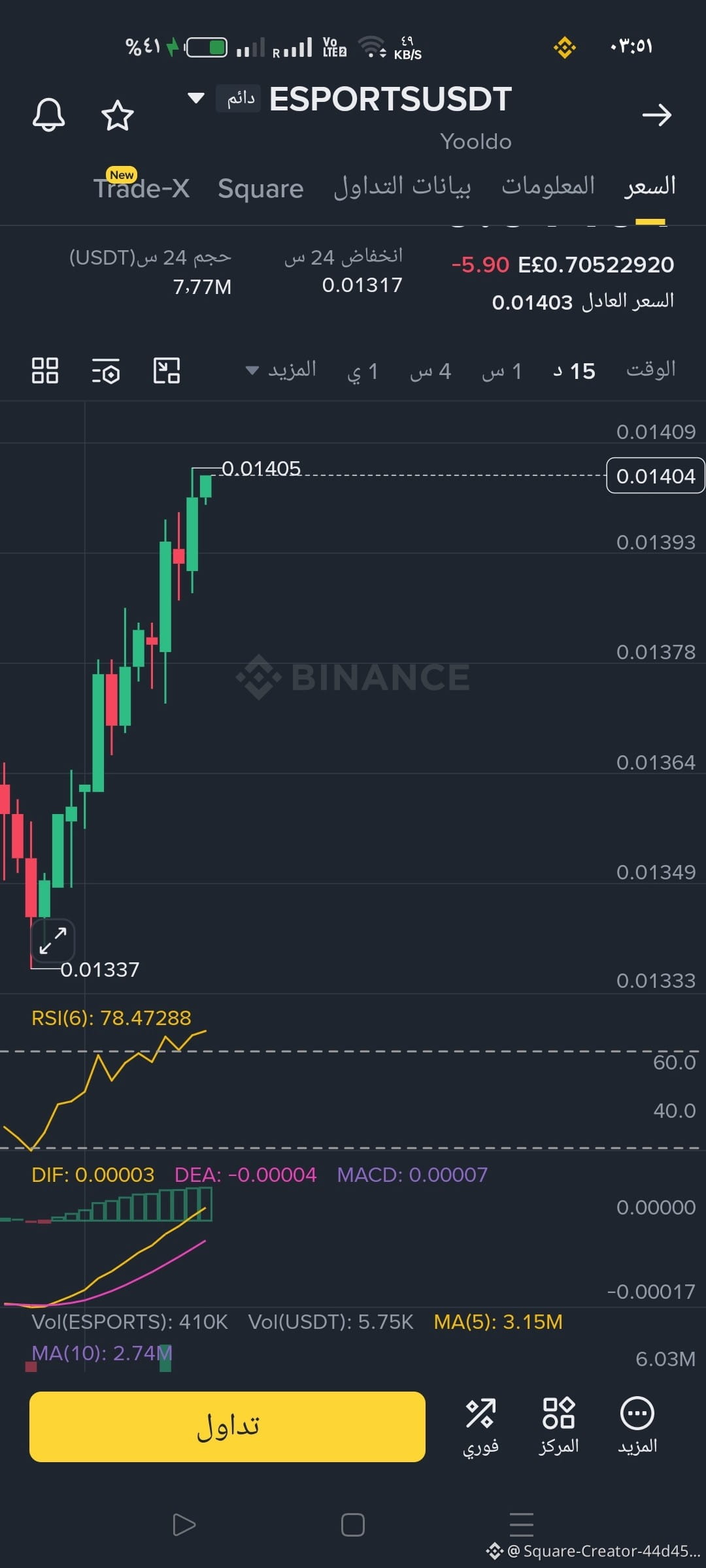
4
2
381
Log in to explore more content
Join global crypto users on Binance Square
⚡️ Get latest and useful information about crypto.
💬 Trusted by the world’s largest crypto exchange.
👍 Discover real insights from verified creators.
Email / Phone number
Trending Topics
1
#BinancePick
2.6M views
140,919 Discussing
2
#EarningsSeason
5M views
24,284 Discussing
3
#FranklinTempletonFilesForTwoDividendToBitcoinETFs
1,001 views
61 Discussing
4
#StrategyMSTRSurpassesNasdaqInMarketCap
914 views
65 Discussing
5
#CanadaProposesStablecoinRedemptionWithin3BusinessDays
73 views
10 Discussing
6
#ElectrumWalletBugLetRogueServersStealFunds
7,707 views
219 Discussing
7
#ArgentineCourtDismissesLIBRACaseAgainstMilei
16,583 views
297 Discussing
8
#SKHynixReportedlyPlansSpecialDividendFromKioxiaStakeSale
3,019 views
48 Discussing
9
#KeystoneWebsiteBreachExposesBuyersShippingAddresses
1,641 views
40 Discussing
10
#USQ3GDPAndSeptemberPCEDueNextWeek
94,234 views
1,115 Discussing