
#digitalinnovation
digitalinnovation
25,277 views
111 Discussing
Hot
Latest

·
--
Article
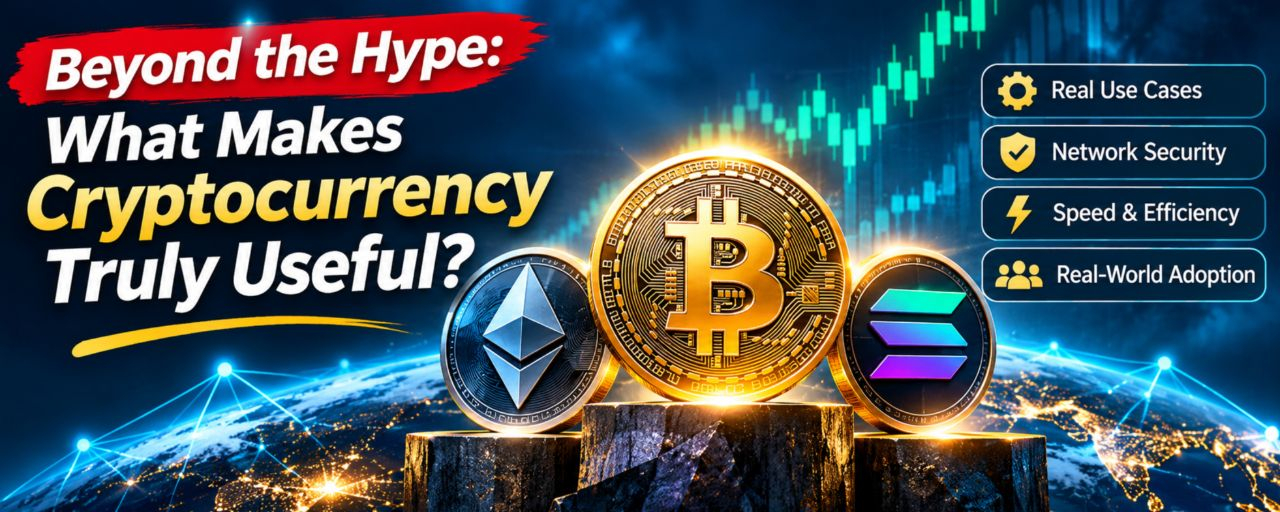
Beyond the Hype: What Makes Cryptocurrency Truly Useful?A cryptocurrency can become a trending topic overnight. But behind every exciting headline lies a more important question: what does the technology actually do?
Understanding the difference between popularity and practical utility is one of the most valuable lessons in cryptocurrency education.
1. Attention Is Not the Same as Value
Social media discussions can introduce people to new technologies. However, popularity does not automatically indicate reliability, security, or long-term usefulness.
Rather than following excitement alone, it is important to understand the purpose behind a digital asset.
2. Bitcoin: A Different Approach to Digital Value
Bitcoin introduced a decentralized system for transferring digital value.
Its maximum supply of 21 million coins, publicly verifiable transactions, and independent network distinguish it from many traditional financial systems.
Studying Bitcoin provides a foundation for understanding the development of cryptocurrency.
3. Ethereum: Beyond Digital Currency
Ethereum expanded the possibilities of blockchain technology through smart contracts.
These programmable agreements allow developers to create applications that operate according to predefined rules.
Potential applications include:
Digital ownershipDecentralized applicationsAutomated agreementsDigital record verification
Smart contracts demonstrate how blockchain technology can serve purposes beyond transferring digital money.
4. Solana: Exploring Network Efficiency
Solana focuses on high transaction throughput and relatively low transaction costs.
These characteristics can support applications that require frequent interactions, including digital payments and online services.
However, network performance should always be considered alongside reliability, decentralization, and security.
5. Five Questions Every Crypto Learner Should Ask
Before forming an opinion about any digital asset, consider these questions:
What problem does the technology address?Does it have practical applications?How does its network maintain security?What are its limitations?Is the available information independently verifiable?
These questions encourage research rather than emotional decision-making.
6. Useful Technology Does Not Guarantee Financial Returns
A blockchain may offer interesting technical features while its associated cryptocurrency remains financially volatile.
Practical utility does not guarantee higher prices, profits, or future adoption.
Recognizing this distinction is an essential part of responsible financial education.
Final Thoughts
The cryptocurrency ecosystem is about more than market prices and trending headlines.
Bitcoin, Ethereum, and Solana demonstrate different approaches to blockchain technology, each with its own characteristics and limitations.
The more we understand the technology, the better equipped we become to evaluate the information surrounding it.
Don't just follow the conversation. Understand what drives it.
Which matters most to you in blockchain technology: security, utility, or innovation?
Disclaimer: This article is for educational and informational purposes only. It does not constitute financial or investment advice.
$BTC $ETH $SOL
#CryptoEducation #BlockchainTechnology #DigitalAssets #FinancialLiteracy #CryptoKnowledge #DigitalInnovation
Beyond the Hype: What Makes Cryptocurrency Truly Useful?
A cryptocurrency can become a trending topic overnight. But behind every exciting headline lies a more important question: what does the technology actually do?
Understanding the difference between popularity and practical utility is one of the most valuable lessons in cryptocurrency education.
1. Attention Is Not the Same as Value
Social media discussions can introduce people to new technologies. However, popularity does not automatically indicate reliability, security, or long-term usefulness.
Rather than following excitement alone, it is important to understand the purpose behind a digital asset.
2. Bitcoin: A Different Approach to Digital Value
Bitcoin introduced a decentralized system for transferring digital value.
Its maximum supply of 21 million coins, publicly verifiable transactions, and independent network distinguish it from many traditional financial systems.
Studying Bitcoin provides a foundation for understanding the development of cryptocurrency.
3. Ethereum: Beyond Digital Currency
Ethereum expanded the possibilities of blockchain technology through smart contracts.
These programmable agreements allow developers to create applications that operate according to predefined rules.
Potential applications include:
Digital ownershipDecentralized applicationsAutomated agreementsDigital record verification
Smart contracts demonstrate how blockchain technology can serve purposes beyond transferring digital money.
4. Solana: Exploring Network Efficiency
Solana focuses on high transaction throughput and relatively low transaction costs.
These characteristics can support applications that require frequent interactions, including digital payments and online services.
However, network performance should always be considered alongside reliability, decentralization, and security.
5. Five Questions Every Crypto Learner Should Ask
Before forming an opinion about any digital asset, consider these questions:
What problem does the technology address?Does it have practical applications?How does its network maintain security?What are its limitations?Is the available information independently verifiable?
These questions encourage research rather than emotional decision-making.
6. Useful Technology Does Not Guarantee Financial Returns
A blockchain may offer interesting technical features while its associated cryptocurrency remains financially volatile.
Practical utility does not guarantee higher prices, profits, or future adoption.
Recognizing this distinction is an essential part of responsible financial education.
Final Thoughts
The cryptocurrency ecosystem is about more than market prices and trending headlines.
Bitcoin, Ethereum, and Solana demonstrate different approaches to blockchain technology, each with its own characteristics and limitations.
The more we understand the technology, the better equipped we become to evaluate the information surrounding it.
Don't just follow the conversation. Understand what drives it.
Which matters most to you in blockchain technology: security, utility, or innovation?
Disclaimer: This article is for educational and informational purposes only. It does not constitute financial or investment advice.
$BTC $ETH $SOL
#CryptoEducation #BlockchainTechnology #DigitalAssets #FinancialLiteracy #CryptoKnowledge #DigitalInnovation
78

OpenLedger: Powering the Future of Decentralized AI
Artificial Intelligence and blockchain technoloOpenLedger: Powering the Future of Decentralized AI
Artificial Intelligence and blockchain technology are two of the most transformative innovations of our time. OpenLedger is bringing these technologies together by creating a decentralized ecosystem where developers, data providers, and users can collaborate to build the future of AI in a transparent and rewarding way.
OpenLedger is designed to solve some of the biggest challenges facing the AI industry today, including centralized control, limited access to quality data, and unequal distribution of rewards. By leveraging blockchain technology, OpenLedger enables a more open and community-driven AI economy where contributions are recognized and rewarded fairly.
One of the key advantages of OpenLedger is its decentralized infrastructure. Instead of relying on a single company or organization, the platform distributes resources across a network of participants. This approach increases transparency, improves security, and reduces the risks associated with centralized systems.
OpenLedger also creates opportunities for developers to build innovative AI applications while accessing valuable datasets and computational resources. Data contributors can participate in the ecosystem and potentially earn rewards for providing high-quality data that helps improve AI models.
The platform aims to make AI development more accessible by encouraging collaboration among developers, researchers, businesses, and community members. This collaborative environment helps accelerate innovation while ensuring that the benefits of AI are shared more broadly across the ecosystem.
As the demand for AI-powered solutions continues to grow, decentralized AI platforms like OpenLedger are becoming increasingly important. They offer an alternative vision for the future of artificial intelligence—one that prioritizes openness, transparency, and community participation.
OpenLedger's mission aligns with the growing movement toward Web3 technologies, where users have greater ownership and control over digital assets and data. By combining blockchain infrastructure with AI innovation, OpenLedger is helping create a more decentralized and inclusive digital future.
For individuals interested in emerging technologies, OpenLedger represents an exciting opportunity to explore the intersection of blockchain and artificial intelligence. Whether you are a developer, investor, researcher, or technology enthusiast, the platform offers a unique environment for learning, building, and contributing to the next generation of AI solutions.
As the decentralized technology landscape continues to evolve, OpenLedger is positioning itself as a project worth watching. Its focus on transparency, collaboration, and innovation could play an important role in shaping the future of AI and blockchain integration.
#OpenLedger #AI #ArtificialIntelligence #Blockchain #Web3 #Crypto #DecentralizedAI #Innovation #Technology #CryptoCommunity #DataEconomy #FutureTech #openledger #DigitalInnovation
OpenLedger: Powering the Future of Decentralized AI Artificial Intelligence and blockchain technolo
OpenLedger: Powering the Future of Decentralized AI
Artificial Intelligence and blockchain technology are two of the most transformative innovations of our time. OpenLedger is bringing these technologies together by creating a decentralized ecosystem where developers, data providers, and users can collaborate to build the future of AI in a transparent and rewarding way.
OpenLedger is designed to solve some of the biggest challenges facing the AI industry today, including centralized control, limited access to quality data, and unequal distribution of rewards. By leveraging blockchain technology, OpenLedger enables a more open and community-driven AI economy where contributions are recognized and rewarded fairly.
One of the key advantages of OpenLedger is its decentralized infrastructure. Instead of relying on a single company or organization, the platform distributes resources across a network of participants. This approach increases transparency, improves security, and reduces the risks associated with centralized systems.
OpenLedger also creates opportunities for developers to build innovative AI applications while accessing valuable datasets and computational resources. Data contributors can participate in the ecosystem and potentially earn rewards for providing high-quality data that helps improve AI models.
The platform aims to make AI development more accessible by encouraging collaboration among developers, researchers, businesses, and community members. This collaborative environment helps accelerate innovation while ensuring that the benefits of AI are shared more broadly across the ecosystem.
As the demand for AI-powered solutions continues to grow, decentralized AI platforms like OpenLedger are becoming increasingly important. They offer an alternative vision for the future of artificial intelligence—one that prioritizes openness, transparency, and community participation.
OpenLedger's mission aligns with the growing movement toward Web3 technologies, where users have greater ownership and control over digital assets and data. By combining blockchain infrastructure with AI innovation, OpenLedger is helping create a more decentralized and inclusive digital future.
For individuals interested in emerging technologies, OpenLedger represents an exciting opportunity to explore the intersection of blockchain and artificial intelligence. Whether you are a developer, investor, researcher, or technology enthusiast, the platform offers a unique environment for learning, building, and contributing to the next generation of AI solutions.
As the decentralized technology landscape continues to evolve, OpenLedger is positioning itself as a project worth watching. Its focus on transparency, collaboration, and innovation could play an important role in shaping the future of AI and blockchain integration.
#OpenLedger #AI #ArtificialIntelligence #Blockchain #Web3 #Crypto #DecentralizedAI #Innovation #Technology #CryptoCommunity #DataEconomy #FutureTech #openledger #DigitalInnovation
85

Building Better Experiences for AI Creators
AI creation platforms can become more useful when creators have clear tools to experiment, share their work, and learn from user feedback.
Accessibility and usability are important parts of that process. As AI agents develop, the quality of the creator experience may help determine which applications people choose to revisit.
#MyShell #AICreators #DigitalInnovation
2
Trải nghiệm của creator cũng là một phần của sản phẩm
Các nền tảng sáng tạo AI có thể hữu ích hơn khi người tạo nội dung được tiếp cận công cụ rõ ràng, dễ thử nghiệm và có cơ hội nhận phản hồi từ người dùng.
Tính dễ sử dụng và khả năng tiếp cận là những yếu tố quan trọng. Khi AI agents tiếp tục phát triển, trải nghiệm của creator có thể góp phần quyết định ứng dụng nào được người dùng quay lại thường xuyên.
#MyShell #AICreators #DigitalInnovation
1

Verified
💭 - Sonic $S это не просто компания, это прорыв в блокчейн-индустрии. Уникальный подход Sonic к децентрализации и скорости создаёт пространство, где технологии работают на вас. Откройте для себя уникальность Sonic и узнайте, что делает их проект особенным 📊
#SonicInnovation #DecentralizedTech #BlockchainFuture #DigitalInnovation
#SonicInnovation #DecentralizedTech #BlockchainFuture #DigitalInnovation

2
1.2k

CreatorPad: Building My Future in Web3! 🌐
The world of Web3 and cryptocurrency is growing every day, creating exciting opportunities to learn, share ideas, and connect with people around the world. I’m happy to explore CreatorPad and become more active in this growing community. Through Write to Earn, I can share my thoughts, create meaningful content, and discover new projects in the crypto ecosystem. 💡
My goal is to keep learning, stay consistent, and improve my content while exploring the latest developments in blockchain technology. Every new post is an opportunity to share knowledge and connect with other creators. Together, let’s build, learn, and grow in the Web3 space! 🔥💛
#CreatorPad #Web3 #Crypto #Airdrop #Blockchain #CryptoCommunity #Web3Community #DigitalInnovation #CryptoJourney #Web3Growth
101
El Rol de la Mujer en la Revolución Web3: Liderando con Visión
La Web3 no tiene género, no tiene fronteras y no pide currículum, pero sí necesita con urgencia más voces femeninas liderando el cambio.
Históricamente, el mundo de las finanzas y la tecnología fue un terreno cerrado, pero la descentralización ha abierto una puerta que nadie puede volver a cerrar. Hoy, desde Binance Square, vemos cómo creadoras, desarrolladoras, traders y emprendedoras están redefiniendo las reglas del juego con una disciplina y visión estratégica admirables.
El empoderamiento digital a través de la blockchain permite que las mujeres tomen el control total de sus finanzas de forma independiente. La tecnología nos otorga las herramientas de soberanía, pero es nuestra capacidad de gestión y nuestra perspectiva única lo que realmente impulsa la adopción en las comunidades. No se trata solo de invertir; se trata de educar y de construir un ecosistema más inclusivo donde el talento sea el único requisito para brillar. Es nuestro momento de ocupar el espacio que el futuro nos tiene reservado.
Recomendación Pro: No tengas miedo de empezar desde cero. La educación es tu mejor aliada; únete a grupos de networking femenino para potenciar tus conocimientos.
💡 CTA: Etiqueta a esa mujer emprendedora y visionaria que necesita dar el salto al mundo cripto este año. ¡Hagamos crecer la red! 🚀
#CandelariaWilham #CRİPTO #web3兼职 #DigitalInnovation #Liderazgo
$BTC $ETH $BNB

98
🚀 My CreatorPad Web3 Journey! 🌐
CreatorPad is an exciting place to explore Web3, discover new crypto projects, and connect with a growing community. I’m excited to create content, share ideas, and learn more about blockchain technology. Through Write to Earn, I look forward to staying active, improving my creativity, and exploring new opportunities. Consistency and learning are important steps toward growth in the Web3 world. Let’s keep creating, supporting each other, and building a stronger crypto community together! 🔥💛
#CreatorPad #Web3 #Blockchain #CryptoCommunity #Web3Community #CryptoJourney #DigitalInnovation #Web3Creators #CryptoContent
93

·
--
$AMPLEE 🚀 Amplee Ecosystem – Together, We Grow! 🌍
In today’s digital world, success is driven by learning, collaboration, and innovation.
📚 Learn about blockchain and emerging technologies
🤝 Connect with a global community
🌐 Expand your network
💡 Discover opportunities in the digital economy
Amplee Ecosystem is focused on empowering individuals through education, teamwork, and community-driven growth.
✅ Action Step:
Follow Amplee updates, engage with the community, join discussions, and continue learning about blockchain and Web3. Every small step today can help you build valuable knowledge and connections for the future.
🌱 Learn. Connect. Grow.
#Blockchain #Web3 #CryptoCommunity #DigitalInnovation #Networking #CommunityGrowth #FutureTech #TogetherWeGrow
User-0e178 Santosh Kumar Shrestha:
Lets grow together
1
4
216

🚀 BNB Campaign is Live! 💛
The future of Web3 is being built today.
BNB continues to power innovation across the blockchain ecosystem—bringing together technology, digital finance, and new opportunities.
Stay informed. Stay ahead. Keep building. 🌐
#BNB #BNBChain #BinanceSquare #Web3 #Blockchain #Crypto #DeFi #DigitalInnovation
59
Log in to explore more content
Join global crypto users on Binance Square
⚡️ Get latest and useful information about crypto.
💬 Trusted by the world’s largest crypto exchange.
👍 Discover real insights from verified creators.
Email / Phone number
Trending Topics
1
#NvidiaLoses$2.7TrillionInMonthAndAHalf
15,593 views
110 Discussing
2
#CanBTCReboundAfterFallingBelow60K?
723,985 views
2,910 Discussing
3
#GlobalStocksFaceLongestLosingStreakSince2023
261,663 views
1,956 Discussing
4
#BlackRockIBITPostsRecord$541MSingleDayOutflow
29,831 views
88 Discussing
5
#AnthropicPlungesTowardIPOPriceonDay2
132,655 views
1,186 Discussing
6
#TwentyOneCapitalAdds172.25BTC
60,291 views
645 Discussing
7
#HKBillWouldExcludeTokenizedDepositsFromVirtualAssets
7,329 views
50 Discussing
8
#BNBDropsBelow540USDTWith8.46%DailyDecline
73,081 views
633 Discussing
9
#HKBillProposesHK$100KFineForUnauthorizedCryptoTitles
2,451 views
22 Discussing
10
#BitMineFaces$10.1BUnrealizedETHLoss
5,010 views
27 Discussing