

#bitcointrading
bitcointrading
508,823 views
1,181 Discussing
Hot
Latest

·
--
📊 #BTC
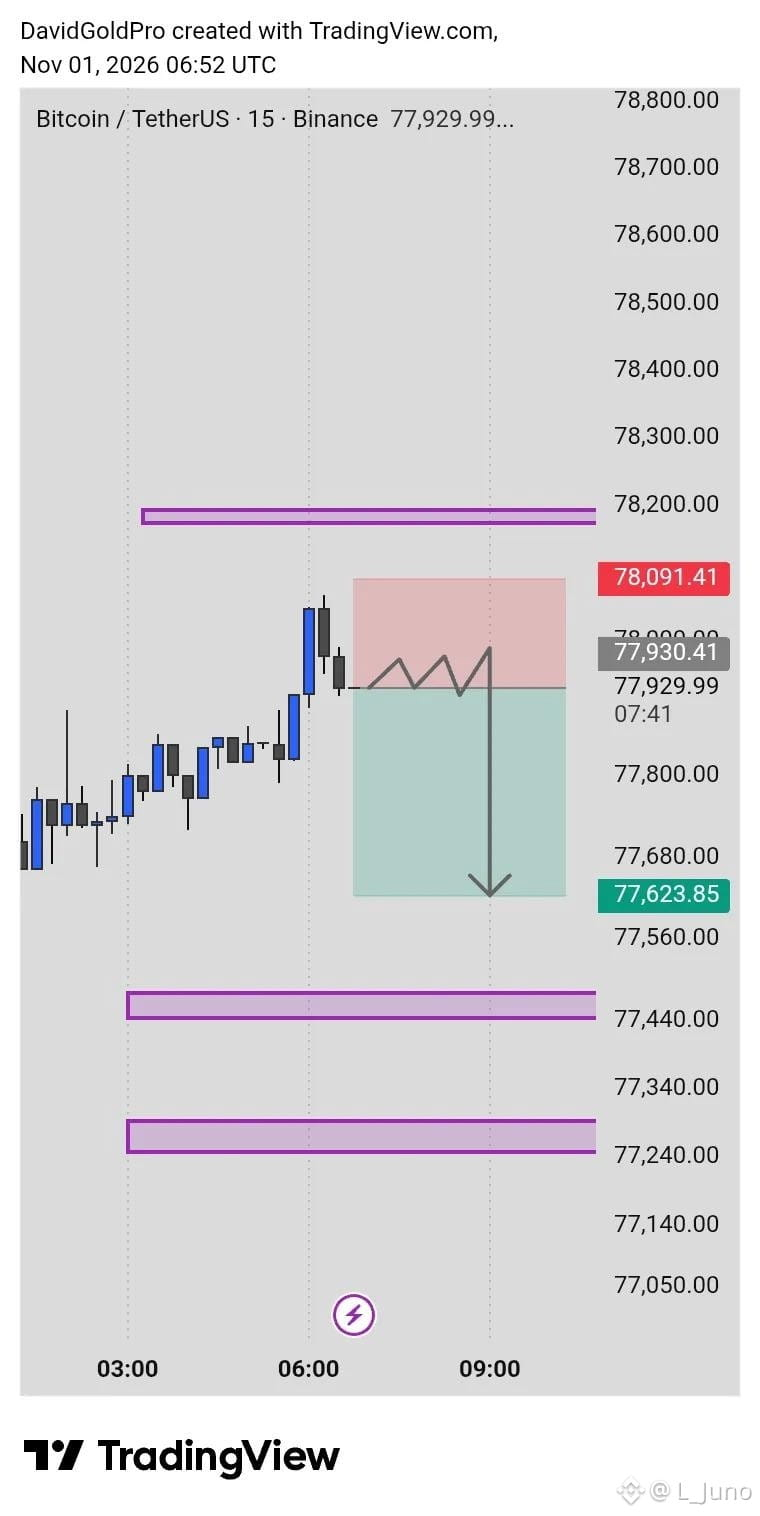
🔴 SIGNAL SELL: 77930
🎯 TP1 → 77680
🎯 TP2 → 77500
🎯 FINAL TP → 77623
🛑 SL → 78091
⚠️ Educational analysis only. Trading involves risk.
#BTCUSDT #BitcoinTrading
📊 #BTC
🔴 SIGNAL SELL: 77930
🎯 TP1 → 77680
🎯 TP2 → 77500
🎯 FINAL TP → 77623
🛑 SL → 78091
⚠️ Educational analysis only. Trading involves risk.
#BTCUSDT #BitcoinTrading
🔴 SIGNAL SELL: 77930
🎯 TP1 → 77680
🎯 TP2 → 77500
🎯 FINAL TP → 77623
🛑 SL → 78091
⚠️ Educational analysis only. Trading involves risk.
#BTCUSDT #BitcoinTrading
87

·
--
🚀 BITCOIN (BTC) – $60,000 TARGET!
The next big move in Bitcoin could create an exciting opportunity!
🎯 My BTC Price Prediction: $60,000
Bitcoin has always been one of the most powerful assets in the crypto market. I believe BTC could reach the $60K level in a future market move.
📈 Are you bullish on Bitcoin?
🔥 Let's see what the future holds!
What is your BTC price target?
#Bitcoin #BTC #Crypto_Jobs🎯 #BinanceHerYerde #CryptoPredictions" #BitcoinTrading

25

·
--
Why Can a Crypto CFD Profit When Bitcoin Falls and Spot Can't?$BTC | A reader asked me why a crypto CFD can make money when Bitcoin falls, when just owning the coin never can. The short answer: a CFD is a contract to exchange the price difference, so it never needs you to hold the coin, and that is exactly what makes going short possible.
## How does a CFD let you profit when price falls?
Owning Bitcoin or Ethereum on an exchange is simple. You buy the coin, you hold it, and you profit only if the price rises later. There is no mechanism inside that trade to profit from a fall, because you actually hold the asset.
A crypto CFD works differently. You are not buying the coin at all. You are entering a contract with a broker to exchange the difference between the opening and closing price, settled in cash. Because nothing changes hands except that price difference, the direction you choose does not change the mechanics. Go long and you profit if price rises. Go short and you profit if price falls. Owning the coin only ever gives you the first of those two outcomes.
On the desk, we always described this as a product difference, not a prediction. A CFD and a coin are different instruments built for different jobs, and conflating them is how people end up surprised by a tax bill or a margin call.
## What does Australia's 2:1 cap actually limit?
This is where the two routes diverge again. Spot crypto trades through AUSTRAC-registered exchanges with no leverage at all; you put up the full value and own the asset outright. Crypto CFDs trade through ASIC-regulated brokers, and ASIC caps retail leverage on them at 2:1, the lowest of any asset class SatoshiMacro covers. Forex majors get 30:1 under the same regime. That gap is not an accident. Crypto is volatile enough that a higher cap would wipe out margin accounts routinely, so the regulator deliberately throttles the one variable that decides how fast a loss compounds.
Even at 2:1, the guide is blunt about the outcome: most retail investor accounts lose money when trading CFDs. That is the honest limitation underneath all of this, and it does not disappear just because the leverage cap here is lower than anywhere else.
## Does the tax treatment change which route makes sense?
Yes, and it follows directly from ownership. Hold the coin and you sit inside the capital gains tax system, with the 50 percent discount available once you have held past 12 months. Trade a CFD and there is no asset to hold, so the profit is ordinary income from day one, taxed at your marginal rate regardless of how long the position stayed open.
That difference alone should decide the route before leverage or direction even enters the conversation. A long-term holder chasing the 12-month discount has no reason to touch a CFD. An active trader running short-dated positions in both directions has no CGT discount to protect anyway, so ordinary-income treatment is simply the cost of the tool.
## Who does each route actually suit?
I would split this by what you are trying to do with your time, not by how much capital you have. An investor who checks a position once a week and wants exposure to Bitcoin over years gets nothing extra from a CFD; leverage and two-way exposure are wasted on a thesis measured in years, and the ordinary-income tax treatment throws away the 12-month CGT discount for no benefit. An active trader who wants to express a view over days or weeks, in either direction, gets nothing extra from spot ownership; there is no way to go short, no leverage to size conviction, and a wallet to secure for a position you may close within the day.
Where people get it wrong is picking the route based on which platform they already have an account with, rather than which description above actually matches what they are doing. A spot holder who starts shorting through the same exchange is really describing a CFD trade, just without ASIC's 2:1 cap or negative balance protection sitting underneath it. That gap is worth closing before the next drawdown, not after it.
## What would I actually do with this?
My read is that most beginners pick the CFD route for the wrong reason, usually because leverage sounds like free money rather than a dial that makes losses move faster too. The guide's own sequence is the right order: learn what a CFD, margin and a stop loss actually are, practise on a demo account, then size real positions. The FAQ puts it plainly: sizing sensibly at 1 to 2 percent risk per trade is why most beginners want at least a few hundred dollars before starting, rather than the smallest amount an app will accept.
If the goal is holding Bitcoin for years, skip CFDs entirely and buy the coin on an AUSTRAC-registered exchange. If the goal is trading price moves in both directions, the 2:1 cap and negative balance protection exist specifically because ASIC assumes you will eventually be wrong. You need the structure to survive being wrong before you can be right often enough to matter.
SatoshiMacro's guide to trading crypto in Australia walks through both routes, the long and short mechanics, the leverage cap and the tax split in full, with the demo-first sequence for anyone starting from zero.
https://satoshimacro.com/guides/forex/how-to-trade-crypto/?utm_source=binance_square&utm_medium=social&utm_campaign=autopilot_article
#SatoshiMacro #CryptoCFD #BitcoinTrading #ASIC
Why Can a Crypto CFD Profit When Bitcoin Falls and Spot Can't?
$BTC | A reader asked me why a crypto CFD can make money when Bitcoin falls, when just owning the coin never can. The short answer: a CFD is a contract to exchange the price difference, so it never needs you to hold the coin, and that is exactly what makes going short possible.
## How does a CFD let you profit when price falls?
Owning Bitcoin or Ethereum on an exchange is simple. You buy the coin, you hold it, and you profit only if the price rises later. There is no mechanism inside that trade to profit from a fall, because you actually hold the asset.
A crypto CFD works differently. You are not buying the coin at all. You are entering a contract with a broker to exchange the difference between the opening and closing price, settled in cash. Because nothing changes hands except that price difference, the direction you choose does not change the mechanics. Go long and you profit if price rises. Go short and you profit if price falls. Owning the coin only ever gives you the first of those two outcomes.
On the desk, we always described this as a product difference, not a prediction. A CFD and a coin are different instruments built for different jobs, and conflating them is how people end up surprised by a tax bill or a margin call.
## What does Australia's 2:1 cap actually limit?
This is where the two routes diverge again. Spot crypto trades through AUSTRAC-registered exchanges with no leverage at all; you put up the full value and own the asset outright. Crypto CFDs trade through ASIC-regulated brokers, and ASIC caps retail leverage on them at 2:1, the lowest of any asset class SatoshiMacro covers. Forex majors get 30:1 under the same regime. That gap is not an accident. Crypto is volatile enough that a higher cap would wipe out margin accounts routinely, so the regulator deliberately throttles the one variable that decides how fast a loss compounds.
Even at 2:1, the guide is blunt about the outcome: most retail investor accounts lose money when trading CFDs. That is the honest limitation underneath all of this, and it does not disappear just because the leverage cap here is lower than anywhere else.
## Does the tax treatment change which route makes sense?
Yes, and it follows directly from ownership. Hold the coin and you sit inside the capital gains tax system, with the 50 percent discount available once you have held past 12 months. Trade a CFD and there is no asset to hold, so the profit is ordinary income from day one, taxed at your marginal rate regardless of how long the position stayed open.
That difference alone should decide the route before leverage or direction even enters the conversation. A long-term holder chasing the 12-month discount has no reason to touch a CFD. An active trader running short-dated positions in both directions has no CGT discount to protect anyway, so ordinary-income treatment is simply the cost of the tool.
## Who does each route actually suit?
I would split this by what you are trying to do with your time, not by how much capital you have. An investor who checks a position once a week and wants exposure to Bitcoin over years gets nothing extra from a CFD; leverage and two-way exposure are wasted on a thesis measured in years, and the ordinary-income tax treatment throws away the 12-month CGT discount for no benefit. An active trader who wants to express a view over days or weeks, in either direction, gets nothing extra from spot ownership; there is no way to go short, no leverage to size conviction, and a wallet to secure for a position you may close within the day.
Where people get it wrong is picking the route based on which platform they already have an account with, rather than which description above actually matches what they are doing. A spot holder who starts shorting through the same exchange is really describing a CFD trade, just without ASIC's 2:1 cap or negative balance protection sitting underneath it. That gap is worth closing before the next drawdown, not after it.
## What would I actually do with this?
My read is that most beginners pick the CFD route for the wrong reason, usually because leverage sounds like free money rather than a dial that makes losses move faster too. The guide's own sequence is the right order: learn what a CFD, margin and a stop loss actually are, practise on a demo account, then size real positions. The FAQ puts it plainly: sizing sensibly at 1 to 2 percent risk per trade is why most beginners want at least a few hundred dollars before starting, rather than the smallest amount an app will accept.
If the goal is holding Bitcoin for years, skip CFDs entirely and buy the coin on an AUSTRAC-registered exchange. If the goal is trading price moves in both directions, the 2:1 cap and negative balance protection exist specifically because ASIC assumes you will eventually be wrong. You need the structure to survive being wrong before you can be right often enough to matter.
SatoshiMacro's guide to trading crypto in Australia walks through both routes, the long and short mechanics, the leverage cap and the tax split in full, with the demo-first sequence for anyone starting from zero.
https://satoshimacro.com/guides/forex/how-to-trade-crypto/?utm_source=binance_square&utm_medium=social&utm_campaign=autopilot_article
#SatoshiMacro #CryptoCFD #BitcoinTrading #ASIC
71

·
--
Bearish
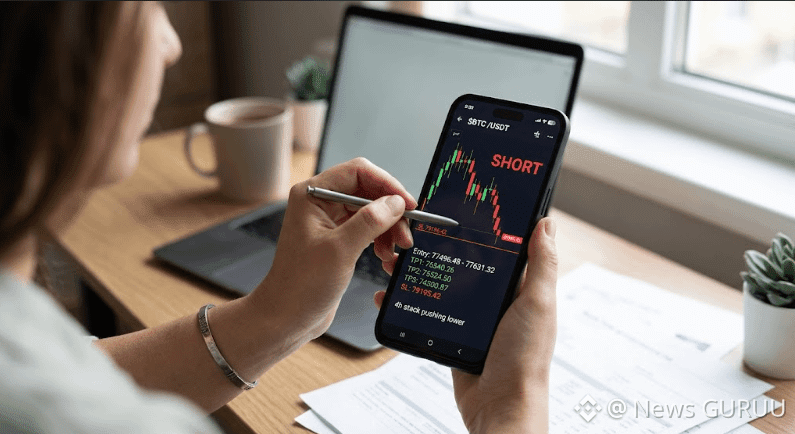
🔴 $BTC/USDT — SHORT SETUP!
📉 Bias: Strong Bearish
🎯 Entry: $77,496–$77,631
TP1: $76,340 (-1.6%)
TP2: $75,524 (-2.6%)
TP3: $74,300 (-4.2%)
🛑 Stop Loss: $79,195 (+2.1%)
Why Bearish?
4H and 1H trends below EMA50 & EMA200.
Sellers remain in control.
6/12 technical signals support downside.
⚠️ Watch the entry zone and invalidation level carefully.
👀 Will BTC continue dropping or reverse from here?."CLICK ON THE BELOW YELLOW COIN TAG TO GO TO DESIRED TRADING PAGE TO GET BENEFIT TRADE"$BTC
{spot}(BTCUSDT)
#btcshort #BitcoinTrading
🔴 $BTC /USDT — SHORT SETUP!
📉 Bias: Strong Bearish
🎯 Entry: $77,496–$77,631
TP1: $76,340 (-1.6%)
TP2: $75,524 (-2.6%)
TP3: $74,300 (-4.2%)
🛑 Stop Loss: $79,195 (+2.1%)
Why Bearish?
4H and 1H trends below EMA50 & EMA200.
Sellers remain in control.
6/12 technical signals support downside.
⚠️ Watch the entry zone and invalidation level carefully.
👀 Will BTC continue dropping or reverse from here?."CLICK ON THE BELOW YELLOW COIN TAG TO GO TO DESIRED TRADING PAGE TO GET BENEFIT TRADE"$BTC
#btcshort #BitcoinTrading
1
45
·
--
Bearish
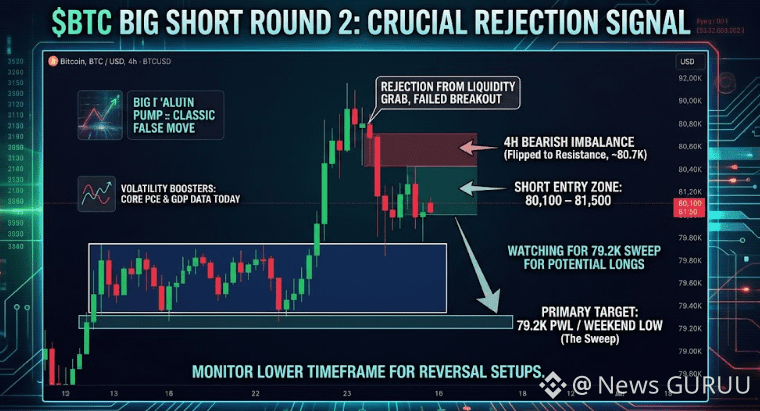
🔴 $BTC — SHORT SETUP ROUND 2
📍 Entry: $80,100–$81,500
BTC pumped after FOMC but fell back into consolidation. 📉
👀 Key Levels to Watch:
🎯 Target: $79,200 liquidity sweep
⚠️ Resistance: $80,700–$82,000
📊 Core PCE and GDP could bring volatility.
Will BTC sweep $79.2K before a potential rebound toward $82K? 👀."CLICK ON THE BELOW YELLOW COIN TAG TO GO TO DESIRED TRADING PAGE TO GET BENEFIT TRADE"$BTC
{spot}(BTCUSDT)
#BTC #BitcoinTrading
🔴 $BTC — SHORT SETUP ROUND 2
📍 Entry: $80,100–$81,500
BTC pumped after FOMC but fell back into consolidation. 📉
👀 Key Levels to Watch:
🎯 Target: $79,200 liquidity sweep
⚠️ Resistance: $80,700–$82,000
📊 Core PCE and GDP could bring volatility.
Will BTC sweep $79.2K before a potential rebound toward $82K? 👀."CLICK ON THE BELOW YELLOW COIN TAG TO GO TO DESIRED TRADING PAGE TO GET BENEFIT TRADE"$BTC
#BTC #BitcoinTrading
1
62

·
--
Bullish
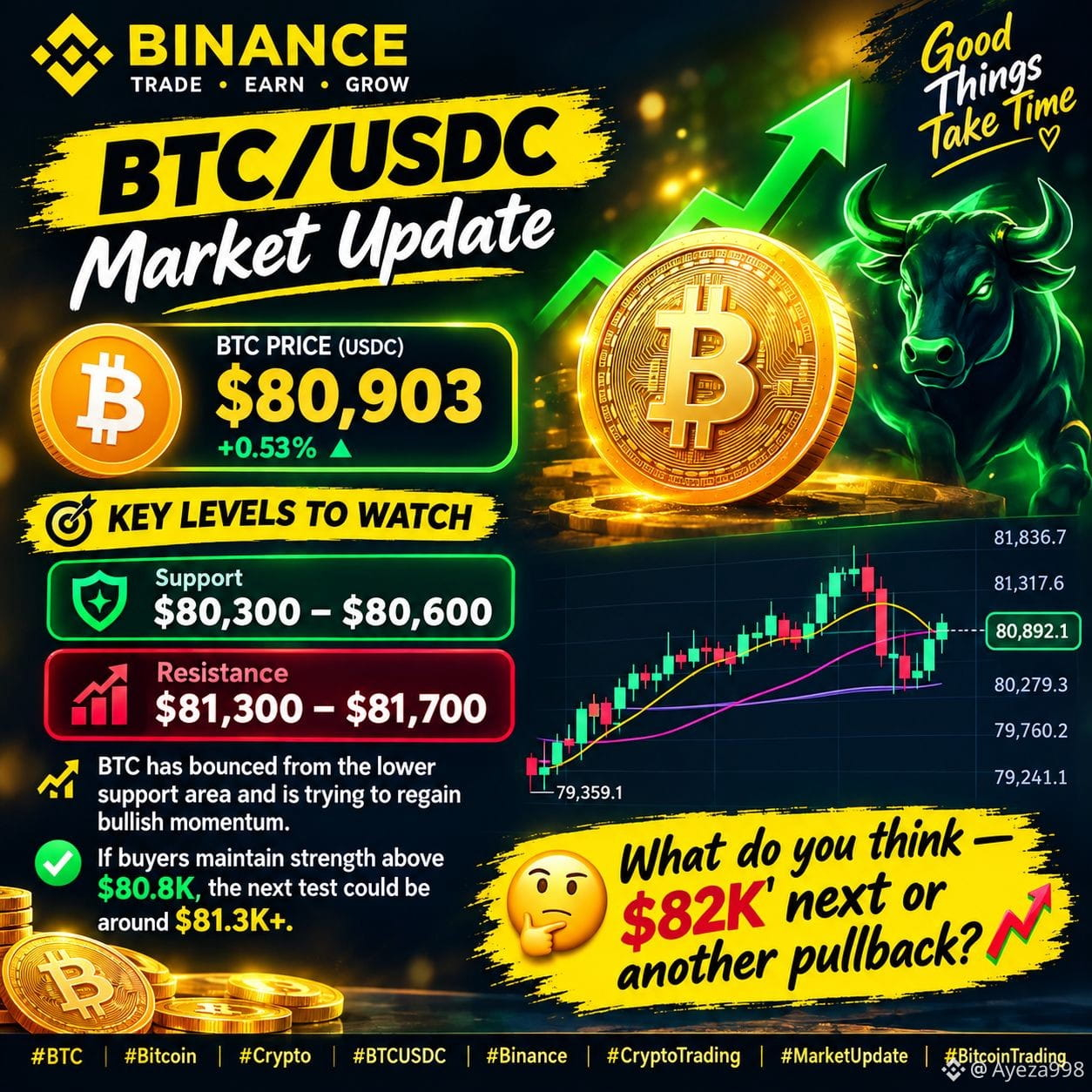
🚀 BTC/USDC Market Update 📈
Bitcoin is showing a nice recovery on the 1H chart, currently trading around $80,900. 🔥
📊 Key Levels to Watch: 🟢 Support: $80,300 – $80,600 🔴 Resistance: $81,300 – $81,700
BTC has bounced from the lower support area and is trying to regain bullish momentum. 👀
If buyers maintain strength above $80.8K, the next test could be around $81.3K+.
What do you think — $82K next or another pullback? 👇
#BTC #Bitcoin #Crypto #BTCUSDC #Binance #CryptoTrading #MarketUpdate #BitcoinTrading
$BTC
{future}(BTCUSDT)
🚀 BTC/USDC Market Update 📈
Bitcoin is showing a nice recovery on the 1H chart, currently trading around $80,900. 🔥
📊 Key Levels to Watch: 🟢 Support: $80,300 – $80,600 🔴 Resistance: $81,300 – $81,700
BTC has bounced from the lower support area and is trying to regain bullish momentum. 👀
If buyers maintain strength above $80.8K, the next test could be around $81.3K+.
What do you think — $82K next or another pullback? 👇
#BTC #Bitcoin #Crypto #BTCUSDC #Binance #CryptoTrading #MarketUpdate #BitcoinTrading
$BTC
4
84

·
--
₿ BITCOIN 4H ANALYSIS | BTC/USDT 📊
Bitcoin is showing short-term selling pressure, and traders should watch the support zone closely.
📉 If support breaks, further downside is possible.
📈 If support holds, a bullish bounce could happen.
🎯 Wait for confirmation before entering a trade.
🔥 WHAT'S NEXT FOR BITCOIN?
🚀 BULLISH or 🔻 BEARISH?
{future}(BTCUSDT)
Comment your prediction below! 👇
#bitcoin #BinanceSquareFamily #CryptoAnalysis" #BitcoinTrading #CryptoCommunity
₿ BITCOIN 4H ANALYSIS | BTC/USDT 📊
Bitcoin is showing short-term selling pressure, and traders should watch the support zone closely.
📉 If support breaks, further downside is possible.
📈 If support holds, a bullish bounce could happen.
🎯 Wait for confirmation before entering a trade.
🔥 WHAT'S NEXT FOR BITCOIN?
🚀 BULLISH or 🔻 BEARISH?
Comment your prediction below! 👇
#bitcoin #BinanceSquareFamily #CryptoAnalysis" #BitcoinTrading #CryptoCommunity

1
180

·
--
📊 BTC MARKET ANALYSIS | OCTOBER 24, 2026 🟠
$BTC
{future}(BTCUSDT)
Bitcoin is trading around $80,600, with the market showing mixed signals across timeframes. The next move depends on whether buyers can reclaim resistance or sellers push price below support. 👀
🟢 Key Support Levels
🔹 $80,400
🔹 $79,550
🔹 $78,200
🔴 Key Resistance Levels
🔸 $81,700
🔸 $82,700
🔸 $84,200
🚀 Bullish Scenario: A confirmed breakout above $81,700 could open the way toward $82,700 and potentially $84,200.
⚠️ Bearish Scenario: A breakdown below $80,400 may expose BTC to further downside toward $79,550 and $78,200.
🎯 My Strategy: Watch volume, candle closes, and reactions at key levels. No confirmation, no rush!
What’s your view — BTC to $84K or a retest of $79K first? 👇
#BinanceSquareFamily #BitcoinTrading
Note: Price and technical levels are approximate as of October 24, 2026, and may change quickly. This is market commentary, not financial advice.
📊 BTC MARKET ANALYSIS | OCTOBER 24, 2026 🟠
$BTC
Bitcoin is trading around $80,600, with the market showing mixed signals across timeframes. The next move depends on whether buyers can reclaim resistance or sellers push price below support. 👀
🟢 Key Support Levels
🔹 $80,400
🔹 $79,550
🔹 $78,200
🔴 Key Resistance Levels
🔸 $81,700
🔸 $82,700
🔸 $84,200
🚀 Bullish Scenario: A confirmed breakout above $81,700 could open the way toward $82,700 and potentially $84,200.
⚠️ Bearish Scenario: A breakdown below $80,400 may expose BTC to further downside toward $79,550 and $78,200.
🎯 My Strategy: Watch volume, candle closes, and reactions at key levels. No confirmation, no rush!
What’s your view — BTC to $84K or a retest of $79K first? 👇
#BinanceSquareFamily #BitcoinTrading
Note: Price and technical levels are approximate as of October 24, 2026, and may change quickly. This is market commentary, not financial advice.
31

🚨 $BTC
{spot}(BTCUSDT)
SELL SETUP 🚨
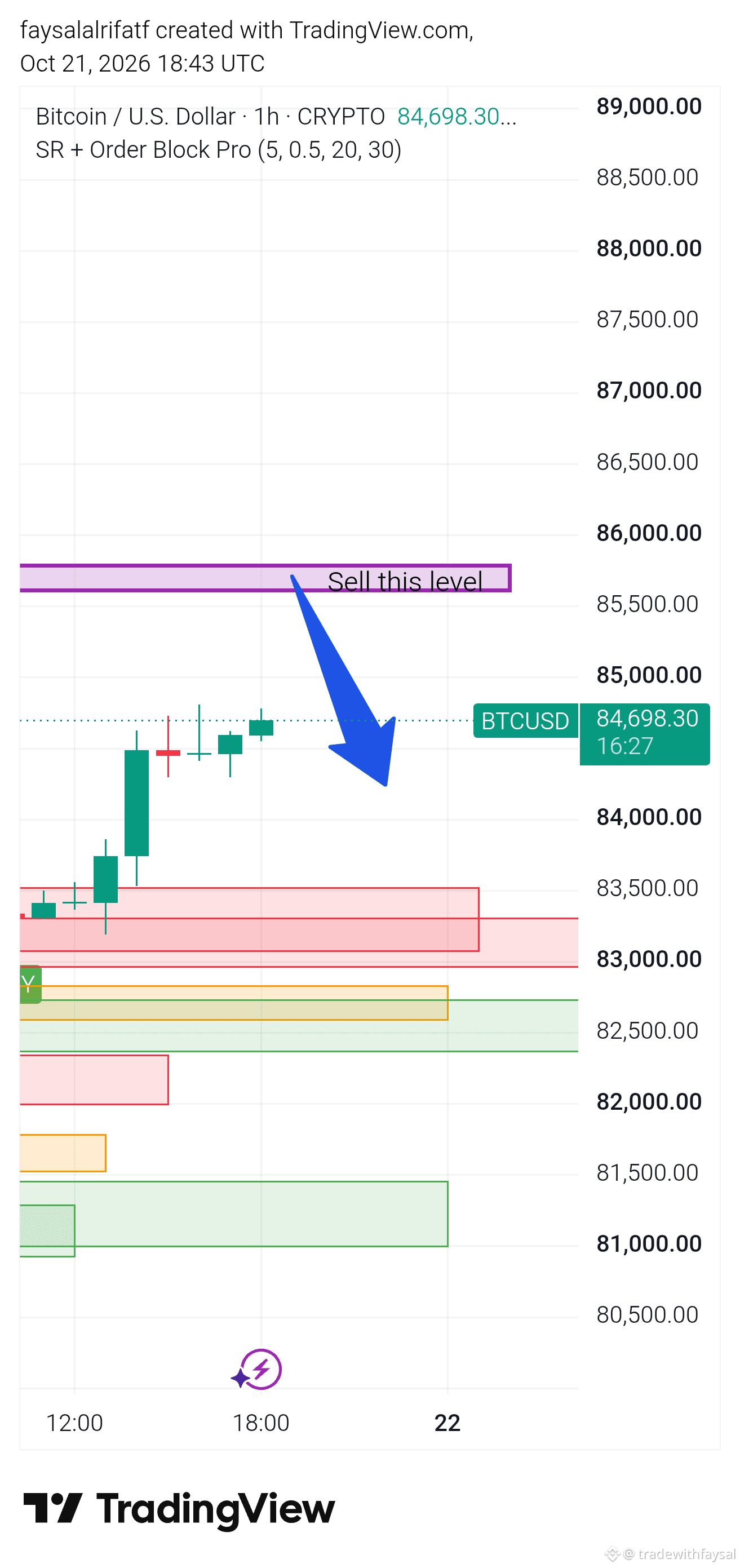
Bitcoin is currently trading around 84,698 and approaching a major resistance / supply zone around 85,550–85,750.
📌 SELL ZONE: 85,550–85,750
🎯 TP1: 84,500
🎯 TP2: 83,500
🎯 TP3: 82,500
🛑 SL: Above 86,000
I’m watching this area for a bearish rejection and confirmation before entering a short position. If $BTC breaks and closes strongly above the resistance zone, the bearish setup becomes invalid.
⚠️ Wait for confirmation before entering. Always manage your risk and never risk more than you can afford to lose.
#BTC #Bitcoin #BTCUSD #CryptoTrading #BitcoinTrading #TradingView #TechnicalAnalysis #PriceAction #SupplyAndDemand #OrderBlock #ShortSetup #Crypto
🚨 $BTC
SELL SETUP 🚨
Bitcoin is currently trading around 84,698 and approaching a major resistance / supply zone around 85,550–85,750.
📌 SELL ZONE: 85,550–85,750
🎯 TP1: 84,500
🎯 TP2: 83,500
🎯 TP3: 82,500
🛑 SL: Above 86,000
I’m watching this area for a bearish rejection and confirmation before entering a short position. If $BTC breaks and closes strongly above the resistance zone, the bearish setup becomes invalid.
⚠️ Wait for confirmation before entering. Always manage your risk and never risk more than you can afford to lose.
#BTC #Bitcoin #BTCUSD #CryptoTrading #BitcoinTrading #TradingView #TechnicalAnalysis #PriceAction #SupplyAndDemand #OrderBlock #ShortSetup #Crypto
113

·
--
🦈 $BTC DEFENDS CRITICAL MULTI-WEEK STRUCTURE AS EXPANSION TOWARD 87.5K APPROACHES ⚡
Entry: 84,000 ⚡
Target: 87,500 🎯
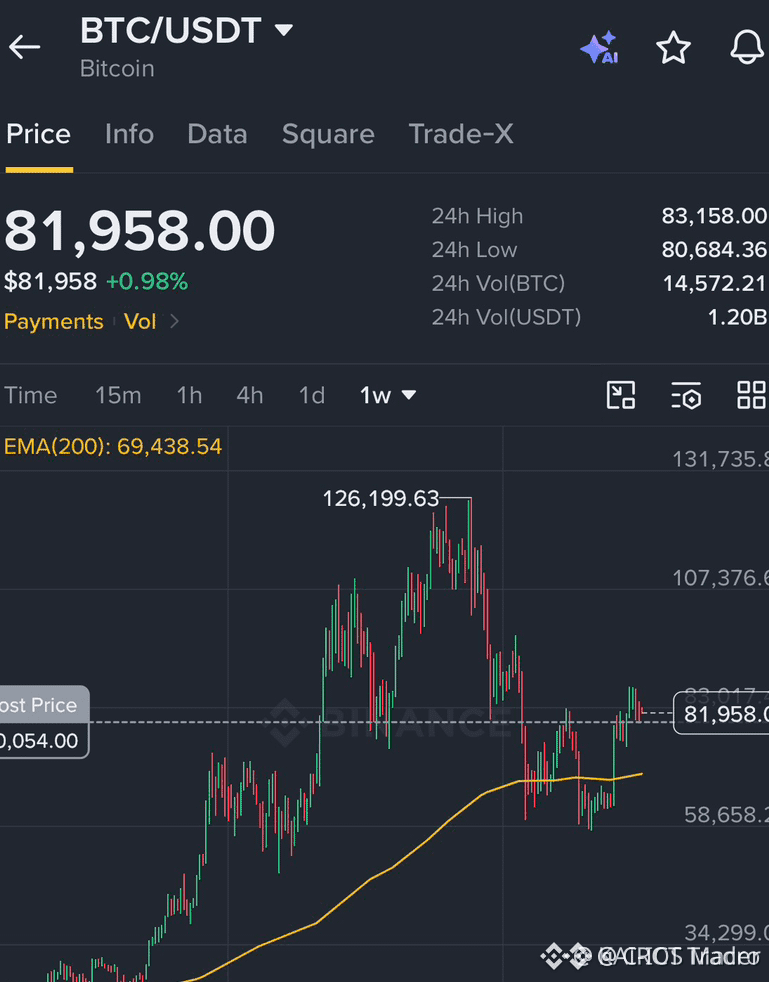
📌 Institutional demand continues to anchor $BTC , with five consecutive weekly candle closes firmly above the 50 MA confirming market structure integrity. The lower liquidity shelf between 80,000 and 76,100 remains an aggressive absorption zone against counter-trend short positioning.
📊 A clean structural expansion above the 84,000 pivot unlocks immediate upside momentum toward major buy-side liquidity resting at 87,500. 💬 Are you bidding within the structural support zone, or waiting for confirmed acceptance above 84,000? 👇
⚠️ Not financial advice. Always manage your risk. 🛡️
🏷️ #BTC #MarketStructure #OrderFlow #BitcoinTrading
🎯 🦈
65
📊 Today’s Crypto Snapshot
Market sentiment is turning favorable this afternoon as Bitcoin reclaims key resistance zones, currently trading above $82,000. Despite broader stock market pullbacks, crypto resilience is holding up, led by strong BTC dominance.
Key Highlights: • BTC price bouncing back toward $83K mark • Altcoins following with steady gains across major pairs • Trader leverage easing up, setting up a healthier market structure
What's your strategy for the week ahead? Accumulating or holding cash? 🤔
#CryptoNews #BinanceSquare #BitcoinTrading #CryptoMarkets #CryptocurrencyWealth $BTC
{spot}(BTCUSDT)
📊 Today’s Crypto Snapshot
Market sentiment is turning favorable this afternoon as Bitcoin reclaims key resistance zones, currently trading above $82,000. Despite broader stock market pullbacks, crypto resilience is holding up, led by strong BTC dominance.
Key Highlights: • BTC price bouncing back toward $83K mark • Altcoins following with steady gains across major pairs • Trader leverage easing up, setting up a healthier market structure
What's your strategy for the week ahead? Accumulating or holding cash? 🤔
#CryptoNews #BinanceSquare #BitcoinTrading #CryptoMarkets #CryptocurrencyWealth $BTC
1
95

🚀 BTC SHORT SQUEEZE ALERT! BULLS ARE PUTTING PRESSURE ON THE MARKET 🔥
🟢 #BTC Liquidated Short: $257K at $82,848.73
💥 $257,000 in short positions wiped out! Bitcoin's latest short liquidation highlights the risk facing bearish traders as price moves against them. When short positions are forced to close, buy orders can add fuel to an upward move—but confirmation is still essential.
📊 BTC Market Watch
🎯 Key Pivot: $82,848.73
🐂 Bullish Setup: If BTC holds above this level and buying momentum strengthens, another push higher could develop as short sellers face additional pressure.
🐻 Bearish Countermove: A rejection near this zone followed by a move back below it could weaken the bullish case and invite renewed selling.
⚡ My Next-Move Verdict: BULLISH LEAN
The short liquidation gives buyers a reason to stay alert. I favor a potential continuation higher if BTC establishes support above $82,848.73. Without that confirmation, a short squeeze could fade quickly.
📍 Trade Strategy: Watch for a successful retest of the key level before considering a long entry. Avoid chasing a sudden price spike.
⚠️ Risk Management: Liquidation data alone cannot confirm trend direction. Protect capital with appropriate position sizing and a predefined stop-loss.
#BTC #Bitcoin #ShortSqueeze #CryptoSignals #BitcoinTrading
#CFTCAdvancesVoluntaryRegCAMFramework #ChinaQ3GDPGrowthQuickensTo4.5% #ZcashNU7ProposalWouldFreezeSproutSpending #GrayscaleAndRepublicLaunchThreeCryptoFunds
{spot}(BTCUSDT)
🚀 BTC SHORT SQUEEZE ALERT! BULLS ARE PUTTING PRESSURE ON THE MARKET 🔥
🟢 #BTC Liquidated Short: $257K at $82,848.73
💥 $257,000 in short positions wiped out! Bitcoin's latest short liquidation highlights the risk facing bearish traders as price moves against them. When short positions are forced to close, buy orders can add fuel to an upward move—but confirmation is still essential.
📊 BTC Market Watch
🎯 Key Pivot: $82,848.73
🐂 Bullish Setup: If BTC holds above this level and buying momentum strengthens, another push higher could develop as short sellers face additional pressure.
🐻 Bearish Countermove: A rejection near this zone followed by a move back below it could weaken the bullish case and invite renewed selling.
⚡ My Next-Move Verdict: BULLISH LEAN
The short liquidation gives buyers a reason to stay alert. I favor a potential continuation higher if BTC establishes support above $82,848.73. Without that confirmation, a short squeeze could fade quickly.
📍 Trade Strategy: Watch for a successful retest of the key level before considering a long entry. Avoid chasing a sudden price spike.
⚠️ Risk Management: Liquidation data alone cannot confirm trend direction. Protect capital with appropriate position sizing and a predefined stop-loss.
#BTC #Bitcoin #ShortSqueeze #CryptoSignals #BitcoinTrading
#CFTCAdvancesVoluntaryRegCAMFramework #ChinaQ3GDPGrowthQuickensTo4.5% #ZcashNU7ProposalWouldFreezeSproutSpending #GrayscaleAndRepublicLaunchThreeCryptoFunds
53
🚨 BITCOIN WARNING SHOT: $807K IN LONGS ERASED! 🔴
Bitcoin bulls just suffered a major liquidation hit. A reported $807,000 in long positions was wiped out at $81,325.64, putting BTC's ability to hold nearby support under the spotlight.
📉 BTC LIQUIDATION BREAKDOWN
💰 Liquidated Value: $807,000
📍 Liquidation Price: $81,325.64
🔴 Position Type: Longs
⚡ Market Focus: Will buyers defend the area, or will sellers press their advantage?
🎯 BITCOIN'S CRITICAL LEVELS
- Immediate Pivot: $81,325
- Bearish Trigger: A confirmed break below $81,300 could expose $81,000, followed by $80,500.
- Recovery Zone: $81,600–$81,800
- Bullish Reversal Signal: A sustained reclaim above $81,800 could open the door to a relief rally.
🐻 MY NEXT-MOVE CALL: BEARISH BIAS, AWAITING CONFIRMATION
The sizable liquidation puts BTC's downside risk in focus. If Bitcoin remains below $81,600 and breaks through nearby support, another liquidity sweep becomes a possibility. However, a strong recovery above $81,800 would challenge the bearish outlook and could squeeze late sellers.
🔥 PRO TRADER PLAYBOOK
Watch $81,325 closely. A decisive breakdown may favor bearish continuation, while a quick reclaim could reveal stronger demand than expected. Let price confirm the move before taking a position.
⚠️ Risk Management: Liquidation data alone cannot predict direction. These are conditional scenarios, not guaranteed targets or verified live support levels. Control leverage and define your risk before entering.
#BTC #Bitcoin #CryptoSignals #LiquidationAlert #BitcoinTrading
#GrayscaleAndRepublicLaunchThreeCryptoFunds #ElSalvadorBitcoinHoldingsSurpass7800BTC #CelestiaRises16%To2026High #Nasdaq100Falls5.5%InWorstWeekIn18Months
{alpha}(10x72e4f9f808c49a2a61de9c5896298920dc4eeea9)
🚨 BITCOIN WARNING SHOT: $807K IN LONGS ERASED! 🔴
Bitcoin bulls just suffered a major liquidation hit. A reported $807,000 in long positions was wiped out at $81,325.64, putting BTC's ability to hold nearby support under the spotlight.
📉 BTC LIQUIDATION BREAKDOWN
💰 Liquidated Value: $807,000
📍 Liquidation Price: $81,325.64
🔴 Position Type: Longs
⚡ Market Focus: Will buyers defend the area, or will sellers press their advantage?
🎯 BITCOIN'S CRITICAL LEVELS
- Immediate Pivot: $81,325
- Bearish Trigger: A confirmed break below $81,300 could expose $81,000, followed by $80,500.
- Recovery Zone: $81,600–$81,800
- Bullish Reversal Signal: A sustained reclaim above $81,800 could open the door to a relief rally.
🐻 MY NEXT-MOVE CALL: BEARISH BIAS, AWAITING CONFIRMATION
The sizable liquidation puts BTC's downside risk in focus. If Bitcoin remains below $81,600 and breaks through nearby support, another liquidity sweep becomes a possibility. However, a strong recovery above $81,800 would challenge the bearish outlook and could squeeze late sellers.
🔥 PRO TRADER PLAYBOOK
Watch $81,325 closely. A decisive breakdown may favor bearish continuation, while a quick reclaim could reveal stronger demand than expected. Let price confirm the move before taking a position.
⚠️ Risk Management: Liquidation data alone cannot predict direction. These are conditional scenarios, not guaranteed targets or verified live support levels. Control leverage and define your risk before entering.
#BTC #Bitcoin #CryptoSignals #LiquidationAlert #BitcoinTrading
#GrayscaleAndRepublicLaunchThreeCryptoFunds #ElSalvadorBitcoinHoldingsSurpass7800BTC #CelestiaRises16%To2026High #Nasdaq100Falls5.5%InWorstWeekIn18Months
8
🚨 BTC SELL-SIDE PRESSURE ALERT — $163K IN LONGS ERASED!
Bitcoin traders just faced another painful shakeout. 🔴
💰 Liquidation Value: $163,000
📍 Liquidation Price: $81,344.10
📉 Position Type: Long Liquidations
📊 What the Data Reveals
The $163K liquidation event shows that leveraged buyers were caught on the wrong side of the move around $81,344.10. This highlights a critical area where bullish positions came under pressure, but one liquidation alone cannot confirm a broader downtrend.
🎯 BTC Levels on My Radar
- Key Pivot: $81,344
- Bearish Confirmation: Sustained trading below this area could expose BTC to further selling.
- Recovery Signal: Reclaiming $81,800–$82,000 could help buyers rebuild momentum.
- Downside Watch: $80,800, followed by $80,000 if bearish pressure intensifies.
🔥 NEXT MOVE: BEARISH CAUTION
My short-term view leans bearish if BTC fails to reclaim the $81,800–$82,000 zone. A confirmed breakdown could bring another liquidity sweep toward lower support. However, if Bitcoin quickly recovers $81,344 and holds above it, a rebound could catch late sellers off guard.
⚡ Trader's Focus: Watch how BTC reacts around $81,344. The next decisive move may depend on whether buyers defend this level or sellers force another breakdown.
⚠️ Risk Management: These levels are conditional scenarios, not guaranteed targets. Confirm with price action and manage leverage carefully.
#BTC #Bitcoin #CryptoSignals #LiquidationAlert #BitcoinTrading
#StrategySharesFall9%OnFriday #ElSalvadorBitcoinHoldingsSurpass7800BTC #GrayscaleAndRepublicLaunchThreeCryptoFunds #CelestiaRises16%To2026High
{spot}(BTCUSDT)
🚨 BTC SELL-SIDE PRESSURE ALERT — $163K IN LONGS ERASED!
Bitcoin traders just faced another painful shakeout. 🔴
💰 Liquidation Value: $163,000
📍 Liquidation Price: $81,344.10
📉 Position Type: Long Liquidations
📊 What the Data Reveals
The $163K liquidation event shows that leveraged buyers were caught on the wrong side of the move around $81,344.10. This highlights a critical area where bullish positions came under pressure, but one liquidation alone cannot confirm a broader downtrend.
🎯 BTC Levels on My Radar
- Key Pivot: $81,344
- Bearish Confirmation: Sustained trading below this area could expose BTC to further selling.
- Recovery Signal: Reclaiming $81,800–$82,000 could help buyers rebuild momentum.
- Downside Watch: $80,800, followed by $80,000 if bearish pressure intensifies.
🔥 NEXT MOVE: BEARISH CAUTION
My short-term view leans bearish if BTC fails to reclaim the $81,800–$82,000 zone. A confirmed breakdown could bring another liquidity sweep toward lower support. However, if Bitcoin quickly recovers $81,344 and holds above it, a rebound could catch late sellers off guard.
⚡ Trader's Focus: Watch how BTC reacts around $81,344. The next decisive move may depend on whether buyers defend this level or sellers force another breakdown.
⚠️ Risk Management: These levels are conditional scenarios, not guaranteed targets. Confirm with price action and manage leverage carefully.
#BTC #Bitcoin #CryptoSignals #LiquidationAlert #BitcoinTrading
#StrategySharesFall9%OnFriday #ElSalvadorBitcoinHoldingsSurpass7800BTC #GrayscaleAndRepublicLaunchThreeCryptoFunds #CelestiaRises16%To2026High
12
🚨 BTC BEARS CAUGHT OFFSIDE — $59.9K SHORT LIQUIDATION!
Bitcoin is putting bearish traders under pressure! A $59,900 short position was liquidated at $81,952, highlighting a key price area to watch as BTC searches for its next directional move. ⚡
📊 Liquidation Breakdown
* Asset: Bitcoin ($BTC)
* Position Wiped Out: Short
* Liquidation Value: $59,900
* Liquidation Price: $81,952
🎯 BTC Roadmap: Can Bulls Take Control?
🟢 Bullish Scenario: If BTC holds above $81,952 and buying pressure builds, the price could attempt a move toward higher resistance levels. Further short liquidations may add fuel to the upside.
🔴 Bearish Scenario: If buyers fail to defend this area, BTC could retreat toward lower support zones, putting bullish positions at risk.
📈 Signal Provider Verdict: Short-term bias is cautiously bullish, but confirmation matters. Watch for a sustained hold above $81,952 alongside stronger volume before considering a long setup.
🔥 Key Focus: Will Bitcoin squeeze more shorts, or will sellers regain control?
⚠️ Risk Management: A single liquidation does not confirm a trend reversal. Always define your stop-loss and manage leverage carefully.
#BTC #Bitcoin #CryptoSignals #LiquidationAlert #BitcoinTrading
#GrayscaleAndRepublicLaunchThreeCryptoFunds #ElSalvadorBitcoinHoldingsSurpass7800BTC #DeepSeekReleasesUpdatedAIModel #NasdaqDowWeeklyGapWidestSinceJuly2002
{spot}(BTCUSDT)
🚨 BTC BEARS CAUGHT OFFSIDE — $59.9K SHORT LIQUIDATION!
Bitcoin is putting bearish traders under pressure! A $59,900 short position was liquidated at $81,952, highlighting a key price area to watch as BTC searches for its next directional move. ⚡
📊 Liquidation Breakdown
* Asset: Bitcoin ($BTC)
* Position Wiped Out: Short
* Liquidation Value: $59,900
* Liquidation Price: $81,952
🎯 BTC Roadmap: Can Bulls Take Control?
🟢 Bullish Scenario: If BTC holds above $81,952 and buying pressure builds, the price could attempt a move toward higher resistance levels. Further short liquidations may add fuel to the upside.
🔴 Bearish Scenario: If buyers fail to defend this area, BTC could retreat toward lower support zones, putting bullish positions at risk.
📈 Signal Provider Verdict: Short-term bias is cautiously bullish, but confirmation matters. Watch for a sustained hold above $81,952 alongside stronger volume before considering a long setup.
🔥 Key Focus: Will Bitcoin squeeze more shorts, or will sellers regain control?
⚠️ Risk Management: A single liquidation does not confirm a trend reversal. Always define your stop-loss and manage leverage carefully.
#BTC #Bitcoin #CryptoSignals #LiquidationAlert #BitcoinTrading
#GrayscaleAndRepublicLaunchThreeCryptoFunds #ElSalvadorBitcoinHoldingsSurpass7800BTC #DeepSeekReleasesUpdatedAIModel #NasdaqDowWeeklyGapWidestSinceJuly2002
33

·
--
🔍 BTC/USDT Daily Structure: Healthy Correction or Trend Shift? 📊
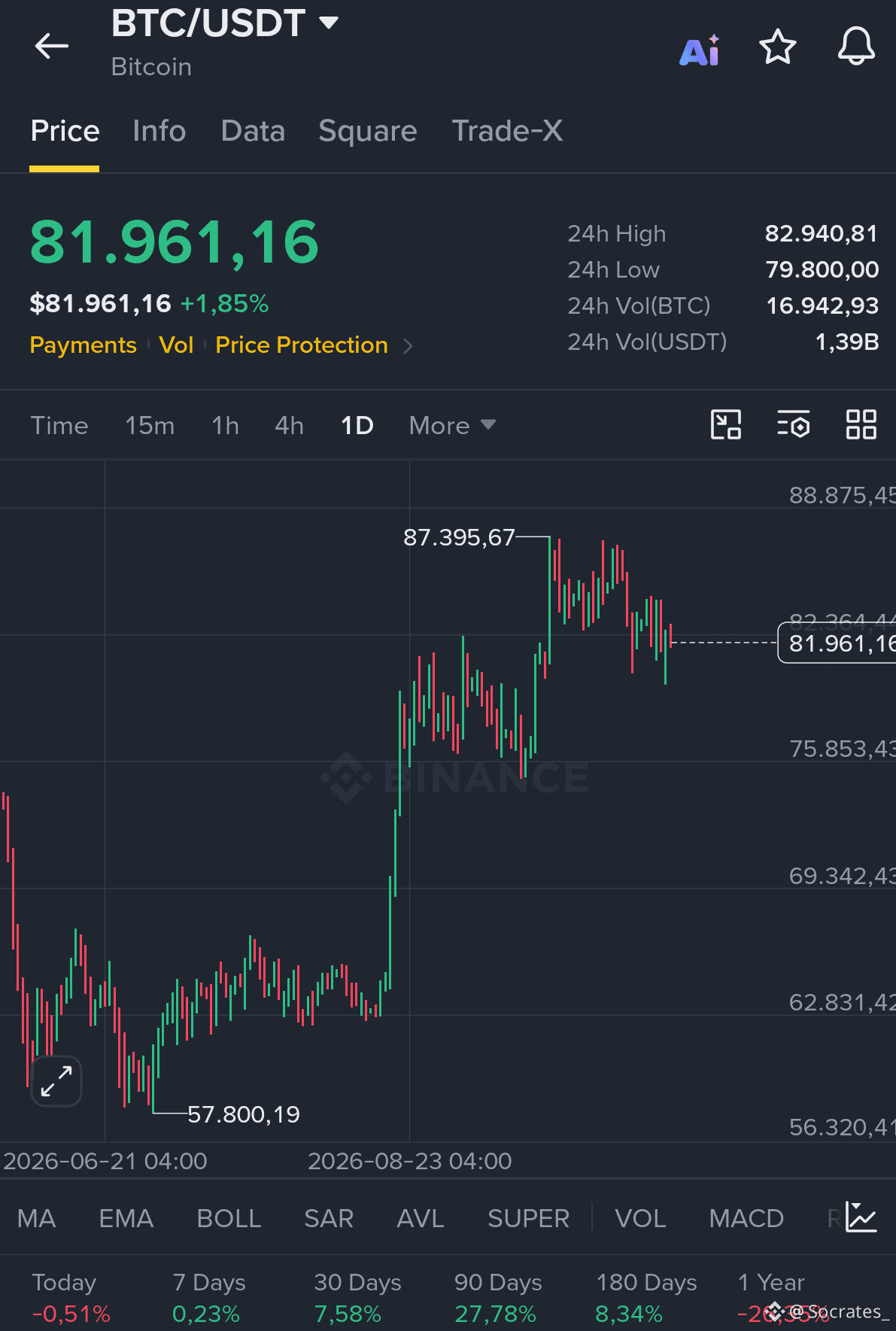
Looking at the 1D chart, #Bitcoin is digesting its recent move to $87,395. The current retracement has brought price action toward the $81,900 region, showing a daily green attempt (+1.85%).
💡 Technical Breakdown:
1️⃣ Local Bottom Defended: The lower wick down to $79,800 indicates strong buyers stepping in at sub-$80k levels.
2️⃣ Critical Zones: A daily close above $82.5K is needed to reclaim short-term bullish structure. Failure to hold $79.8K could open doors toward the lower support zone around $75.8K.
3️⃣ Volume & Momentum: Trading volume remains healthy (~$1.39B 24h Vol), showing active participation during this consolidation phase.
🧠 Strategy Note: In macro uptrends, deep pullbacks often reset overbought indicators. Risk management remains paramount! 🛡️
Where do you see BTC closing this week? Share your charts below! 👇
#BTC #TechnicalAnalysis #CryptoMarket #BinanceSquare #BitcoinTrading
1
71
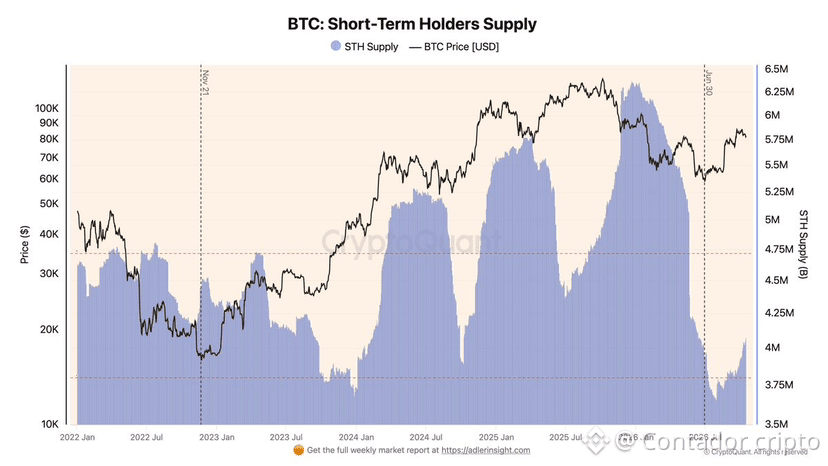
#BitcoinShortTermHoldersReach4.08MBTC
Bitcoin: los holders de corto plazo alcanzan 4.08M BTC (máximo desde junio)
Según datos on-chain de Axel Adler Jr (CryptoQuant), el suministro en manos de Short-Term Holders subió a 4.08 millones de BTC, el nivel más alto desde mediados de junio.
Datos clave:
• +422,000 BTC (+12%) desde el mínimo del 29 de julio
• +154,000 BTC en las primeras dos semanas de octubre
• +48,000 BTC solo en la última semana (el ritmo se desaceleró)
Los nuevos compradores entraron principalmente en el rango $82,000 – $86,000.
El costo promedio del grupo se sitúa en ~$74,900, con un colchón de ganancia no realizada que se redujo de 16% a 10%.
Lectura: Mientras BTC se mantenga por encima de los $74,900, el grupo permanece en ganancia agregada. Una ruptura sostenida por debajo de ese nivel convertiría a una parte importante de estos compradores recientes en pérdidas no realizadas y podría aumentar la presión de venta.
El crecimiento del suministro STH indica entrada de capital nuevo, pero la desaceleración del ritmo semanal sugiere que la demanda se está moderando.
No es consejo financiero. Es análisis on-chain puro.
¿Qué nivel estás vigilando tú?
#Bitcoin #BTC #OnChain #BinanceSquare #CryptoAnalysis #STH #ContadorCripto #BitcoinTrading
386

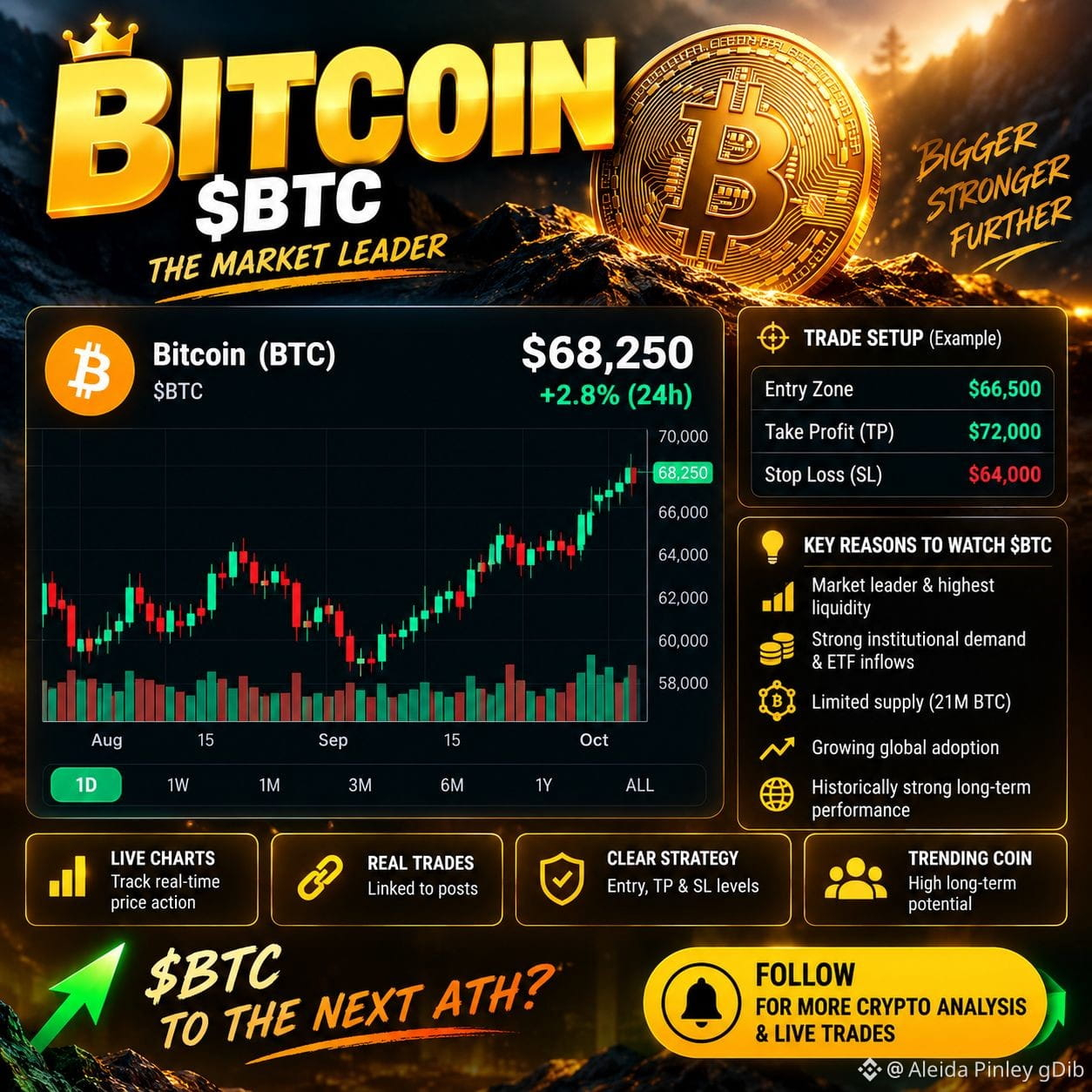
₿ BITCOIN ($BTC )— THE KING OF CRYPTO 👑
Bitcoin remains the cryptocurrency to watch. Its limited supply, global recognition, and institutional interest make it a key asset for crypto market analysis.
📊 My BTC Watchlist
Track BTC/USDT candlestick charts.
Watch support and resistance levels.
Monitor trading volume and market momentum.
Use a clear risk-management strategy.
🔥 Is Bitcoin preparing for another major move?
💬 Comment $BTC if Bitcoin is on your watchlist!
#bitcoin #CryptoTrading. #CryptoAnalysis" #BitcoinTrading

86

·
--
Bearish
🚨 $BTC MARKET ANALYSIS | TRADE SETUP ALERT! 🚀
₿ Bitcoin is approaching a key decision zone! 📊
🔥 Mark your support & resistance levels. 📈 Wait for a confirmed breakout or rejection. 🎯 ENTER LONG OR SHORT ONLY AFTER CONFIRMATION—SET YOUR STOP-LOSS AND TARGET BEFORE EXECUTING!
⚡ OPEN YOUR BTCUSDT CHART NOW, IDENTIFY YOUR SETUP, AND GET READY TO EXECUTE YOUR NEXT TRADE!
💬 LONG or SHORT? Comment your BTC bias below! 👇
#BTC #BTCUSDT. #BitcoinTrading #CryptoAnalysis #CPIWatch
{spot}(BTCUSDT)
🚨 $BTC MARKET ANALYSIS | TRADE SETUP ALERT! 🚀
₿ Bitcoin is approaching a key decision zone! 📊
🔥 Mark your support & resistance levels. 📈 Wait for a confirmed breakout or rejection. 🎯 ENTER LONG OR SHORT ONLY AFTER CONFIRMATION—SET YOUR STOP-LOSS AND TARGET BEFORE EXECUTING!
⚡ OPEN YOUR BTCUSDT CHART NOW, IDENTIFY YOUR SETUP, AND GET READY TO EXECUTE YOUR NEXT TRADE!
💬 LONG or SHORT? Comment your BTC bias below! 👇
#BTC #BTCUSDT. #BitcoinTrading #CryptoAnalysis #CPIWatch

25

·
--
📉 Bitcoin Options Volatility Hits a 5-Year Low!
Bitcoin’s options implied volatility (IV) has dropped to a five-year low. But does that mean the market is quiet, or is a big move coming? 👀
When volatility gets this low, options become cheaper, and the market may be underestimating the size of Bitcoin’s next move.
⚡ Here’s what to watch: 🔹 Low volatility doesn’t mean the market will stay quiet forever. 🔹 A sudden increase in volatility could bring a sharp move in either direction. 🔹 Selling options may carry significant risk if the market suddenly breaks out. 🔹 Long-term options traders may watch these conditions for potential opportunities.
📊 The key point: We don’t know whether BTC will move up or down. But a potential volatility expansion is something traders shouldn’t ignore.
🚀 What’s your strategy right now? Are you accumulating spot BTC or trading derivatives?
Share your thoughts below! 👇
#bitcoin #BTC #CryptoMarket #BitcoinTrading #CryptoAnalysis
Not financial advice. Always manage your risk.
1
96
Log in to explore more content
Join global crypto users on Binance Square
⚡️ Get latest and useful information about crypto.
💬 Trusted by the world’s largest crypto exchange.
👍 Discover real insights from verified creators.
Email / Phone number
Trending Topics
1
#BinanceProcesses$4.65BWithdrawals
1,506 views
41 Discussing
2
#WithdrawalsBack: 15 networks live
3,747 views
96 Discussing
3
#BinanceUpdatesProofofReservesAddresses
76,915 views
1,224 Discussing
4
#BinanceToResumePhaseOneOfWithdrawals
116,315 views
1,389 Discussing
5
#BinanceHadAlreadyCovered$6BofHackLoss
8,071 views
123 Discussing
6
#FBIConfirmsNorthKoreaIsResponsibleForBinanceCryptoHack
41,656 views
137 Discussing
7
#CZDismissesClaimsBinanceHackWasPredicted
57,111 views
623 Discussing
8
#B14gReportsUnauthorizedTransferOfAbout97MCORE
16,284 views
299 Discussing
9
#USSpotETHETFsPost23StraightDaysOfNetOutflows
20,654 views
275 Discussing
10
#IntelHasItsWorstDaySince1974
108,000 views
880 Discussing