
#assettokenization
assettokenization
16,846 views
122 Discussing
Hot
Latest

·
--
Article
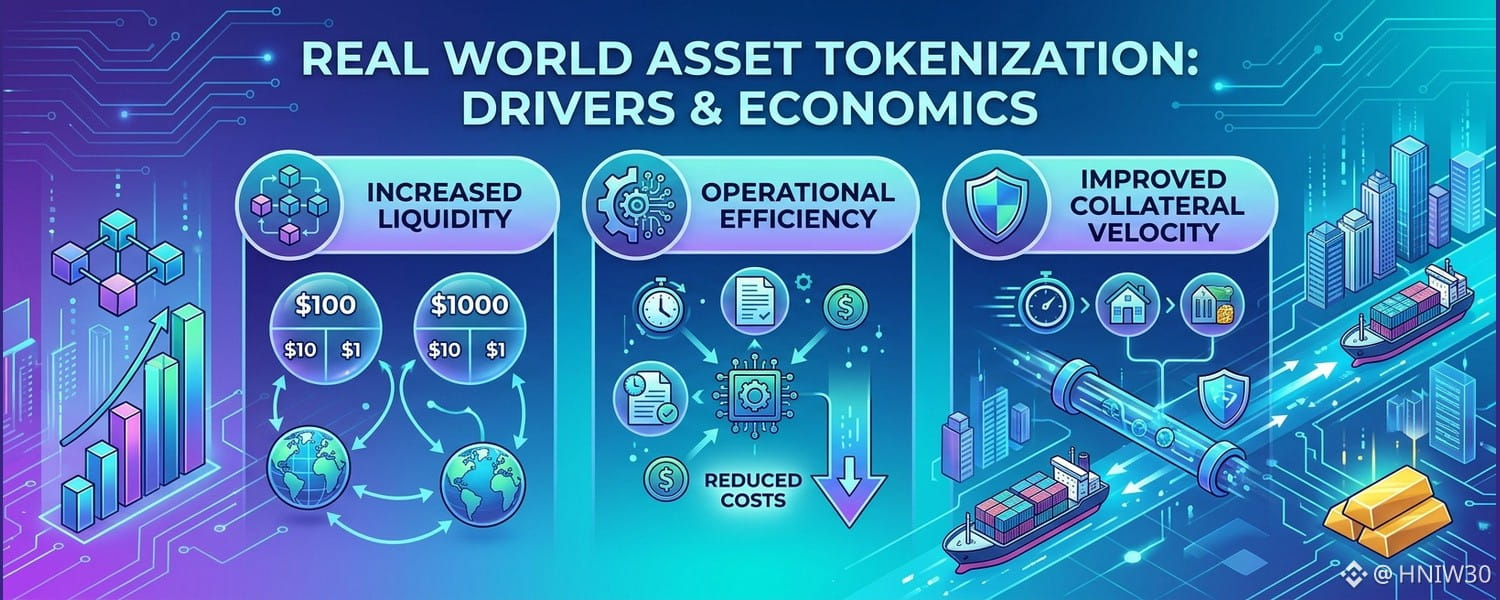
Economic Drivers of Real World Asset TokenizationCapital allocation models evaluate the structural divergence between traditional ledger administration and on-chain asset representations. At the center of this framework sits real-world asset tokenization, which reconstructs financial mechanics rather than merely wrapping claims in new formats. Comparing distributed accounting to legacy clearing systems illustrates how distinct structural incentives alter primary issuance, administrative overhead, and secondary market liquidity.
Traditional non-liquid markets often demand liquidity discounts because transferring equity, debt, or tangible inventory requires extensive manual reconciliation. Tokenization alters this dynamic by reducing minimum ticket sizes through programmatic fractionalization. By allowing divisibility down to micro-units without compounding operational expenses, issuers can expand an addressable capital base while investors gain access to previously restricted cash flow structures.
Administrative expenditure forms another structural point of economic comparison. In legacy infrastructure, custodian networks, registrar services, and payment agents capture fixed basis points across the life of a security. When structured as programmable software logic, tokenized instruments automate coupon disbursements, maturity settlement, and corporate distributions, reducing operational drag and recurring middle-office maintenance charges.
Collateral velocity represents a key incentive mechanism within digital settlement systems. Conventional instruments often remain confined within institutional silos, immobilizing capital during extended settlement windows. Conversely, tokenized representations enable atomic, simultaneous settlement. This structural velocity permits rapid collateral reallocation across multi-party liquidity venues, freeing balance-sheet capacity that would otherwise remain dormant.
Counterparty friction also experiences substantial compression under synchronized ledgers. Multi-day clearing cycles require market participants to maintain surplus liquidity buffers to guard against default during settlement intervals. By compressing clearing and settlement into simultaneous state transitions, on-chain execution minimizes settlement window risk, allowing institutions to manage capital with narrower protective reserves.
However, distributed representations introduce distinct operational expenses and trade-offs. Bridging off-chain physical or contractual claims into cryptographic software requires reliable validation networks and collateral verification. When an oracle fails or physical custody fractures, the loss of parity degrades market confidence. These off-chain dependency costs represent an ongoing expense that traditional centralized frameworks address through legal recourse.
Ultimately, the theoretical case for tokenization rests upon net capital efficiency rather than technological preference. Where administrative savings and collateral composability exceed technical carrying costs and verification risks, capital can benefit from programmable issuance. Long-term efficiency depends on architectures that enhance transfer velocity while maintaining operational certainty over the underlying legal title.
#AssetTokenization
#RealWorldAssets
Economic Drivers of Real World Asset Tokenization
Capital allocation models evaluate the structural divergence between traditional ledger administration and on-chain asset representations. At the center of this framework sits real-world asset tokenization, which reconstructs financial mechanics rather than merely wrapping claims in new formats. Comparing distributed accounting to legacy clearing systems illustrates how distinct structural incentives alter primary issuance, administrative overhead, and secondary market liquidity.
Traditional non-liquid markets often demand liquidity discounts because transferring equity, debt, or tangible inventory requires extensive manual reconciliation. Tokenization alters this dynamic by reducing minimum ticket sizes through programmatic fractionalization. By allowing divisibility down to micro-units without compounding operational expenses, issuers can expand an addressable capital base while investors gain access to previously restricted cash flow structures.
Administrative expenditure forms another structural point of economic comparison. In legacy infrastructure, custodian networks, registrar services, and payment agents capture fixed basis points across the life of a security. When structured as programmable software logic, tokenized instruments automate coupon disbursements, maturity settlement, and corporate distributions, reducing operational drag and recurring middle-office maintenance charges.
Collateral velocity represents a key incentive mechanism within digital settlement systems. Conventional instruments often remain confined within institutional silos, immobilizing capital during extended settlement windows. Conversely, tokenized representations enable atomic, simultaneous settlement. This structural velocity permits rapid collateral reallocation across multi-party liquidity venues, freeing balance-sheet capacity that would otherwise remain dormant.
Counterparty friction also experiences substantial compression under synchronized ledgers. Multi-day clearing cycles require market participants to maintain surplus liquidity buffers to guard against default during settlement intervals. By compressing clearing and settlement into simultaneous state transitions, on-chain execution minimizes settlement window risk, allowing institutions to manage capital with narrower protective reserves.
However, distributed representations introduce distinct operational expenses and trade-offs. Bridging off-chain physical or contractual claims into cryptographic software requires reliable validation networks and collateral verification. When an oracle fails or physical custody fractures, the loss of parity degrades market confidence. These off-chain dependency costs represent an ongoing expense that traditional centralized frameworks address through legal recourse.
Ultimately, the theoretical case for tokenization rests upon net capital efficiency rather than technological preference. Where administrative savings and collateral composability exceed technical carrying costs and verification risks, capital can benefit from programmable issuance. Long-term efficiency depends on architectures that enhance transfer velocity while maintaining operational certainty over the underlying legal title.
#AssetTokenization
#RealWorldAssets
135

Wall Street is embracing the tech
Major Wall Street institutions including Goldman Sachs and Morgan Stanley are signaling that they view blockchain tokenization as a massive growth opportunity rather than a threat to traditional finance models.
#AssetTokenization #RWA
Wall Street is embracing the tech
Major Wall Street institutions including Goldman Sachs and Morgan Stanley are signaling that they view blockchain tokenization as a massive growth opportunity rather than a threat to traditional finance models.
#AssetTokenization #RWA
Major Wall Street institutions including Goldman Sachs and Morgan Stanley are signaling that they view blockchain tokenization as a massive growth opportunity rather than a threat to traditional finance models.
#AssetTokenization #RWA
17
Nasdaq CEO backs the tokenization wave.
Nasdaq CEO Adena Friedman highlights the billion dollar opportunity in tokenization, signaling massive institutional interest in bringing real world assets onchain.
#AssetTokenization #Nasdaq
Nasdaq CEO backs the tokenization wave.
Nasdaq CEO Adena Friedman highlights the billion dollar opportunity in tokenization, signaling massive institutional interest in bringing real world assets onchain.
#AssetTokenization #Nasdaq
Nasdaq CEO Adena Friedman highlights the billion dollar opportunity in tokenization, signaling massive institutional interest in bringing real world assets onchain.
#AssetTokenization #Nasdaq
50

The XRP Ledger RWA Integration Hype is Backed by Volume.
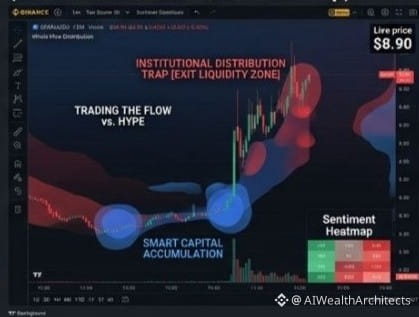
I’ve been diving deep into the RWA (Real World Asset) sector data this morning, and $XRP Ledger's transactional volume is showing a significant surge—specifically related to tokenized asset transfers. While the market focuses on the old narrative, the smart capital is focusing on this massive utility shift.
If you look at the monthly chart, this consolidation isn’t weakness; it’s an institutional-grade coil loading. When RWA integration hits the mainstream media, the entry window will have already closed.
We are watching this closely. Are you positioned for the structural shift, or are you still expecting utility from speculation?
#RWA #InstitutionalDemand #AssetTokenization #xrp #bnb
$BNB
169
Ripple is strengthening its institutional presence in the APAC region through a new partnership with SettleMint, combining custody and tokenization tools into one unified platform.
#RippleCustody #AssetTokenization
Ripple is strengthening its institutional presence in the APAC region through a new partnership with SettleMint, combining custody and tokenization tools into one unified platform.
#RippleCustody #AssetTokenization
#RippleCustody #AssetTokenization
1
30


·
--
⚡ Maharashtra Pioneers Public Asset Tokenization
🏛️ Key Highlights
📜 Strategic Policy: Maharashtra is drafting a policy to bring state-owned infrastructure onto the blockchain, starting with its electricity transmission grid.
💰 Citizen Investment: Citizens will be able to buy tokens for a fractional share (e.g., 40-50%) of state assets, earning a cut of steady fee incomes while funding crucial green energy projects.
🔋 Solving the Energy Gap: The fresh capital aims to bridge the state's solar power surplus and grid deficits, optimizing power costs from peak rates down to surplus prices.
🛡️ Not Privatization: State leadership emphasizes that tokenization is about expanding public participation and circulating capital, not selling off state ownership.
🔗 Broad Blockchain Push
📝 The DELTA Act: Following land tokenization frameworks, the state is actively building comprehensive digital asset laws.
🤝 Industry Collaboration: Propelled by public-private synergies featuring platforms like RealX, MST Blockchain, and Liminal Custody.
#️⃣ #MaharashtraBlockchain #AssetTokenization

2
351
Article
SEC Makes Big Move Toward On Chain TokenizationThe SEC is finally stepping into the modern era by proposing its first significant overhaul of transfer agent rules in forty years. This is not just some minor paperwork update. This is a targeted move to integrate how share registers are maintained on distributed ledgers. By introducing the new Form TA 2, the agency is signaling that it recognizes the reality of on chain asset management.
For years, the regulatory landscape for tokenized securities has been a gray area. Traditional transfer agents have operated under rules designed for a world of paper certificates and centralized databases. This proposal changes the math. By requiring agents to report their use of distributed ledgers, the SEC is laying the groundwork for a massive institutional shift toward real world asset tokenization.
This move could be the bridge we have been waiting for. Institutional giants have been sitting on the sidelines because the compliance burden for managing tokenized shares was too high or too unclear. If the regulatory framework starts to accommodate distributed ledgers formally, we will likely see a flood of traditional equities migrating to the blockchain.
Traders should watch this closely. While regulation often brings short term volatility, this specific shift is bullish for the long term utility of blockchain technology. We are moving from the speculative phase of crypto into a phase where blockchain becomes the actual plumbing for global finance. The era of on chain settlement for securities is looking much closer than many skeptics realize.
#SECRegulation #AssetTokenization
SEC Makes Big Move Toward On Chain Tokenization
The SEC is finally stepping into the modern era by proposing its first significant overhaul of transfer agent rules in forty years. This is not just some minor paperwork update. This is a targeted move to integrate how share registers are maintained on distributed ledgers. By introducing the new Form TA 2, the agency is signaling that it recognizes the reality of on chain asset management.
For years, the regulatory landscape for tokenized securities has been a gray area. Traditional transfer agents have operated under rules designed for a world of paper certificates and centralized databases. This proposal changes the math. By requiring agents to report their use of distributed ledgers, the SEC is laying the groundwork for a massive institutional shift toward real world asset tokenization.
This move could be the bridge we have been waiting for. Institutional giants have been sitting on the sidelines because the compliance burden for managing tokenized shares was too high or too unclear. If the regulatory framework starts to accommodate distributed ledgers formally, we will likely see a flood of traditional equities migrating to the blockchain.
Traders should watch this closely. While regulation often brings short term volatility, this specific shift is bullish for the long term utility of blockchain technology. We are moving from the speculative phase of crypto into a phase where blockchain becomes the actual plumbing for global finance. The era of on chain settlement for securities is looking much closer than many skeptics realize.
#SECRegulation #AssetTokenization
1
21
Ava Labs president shared that NYSE parent ICE spent a year testing Avalanche technology for tokenization. While no official partnership is confirmed, the testing phase shows serious institutional interest in Avalanche subnets.
#Avalanche #AssetTokenization
Ava Labs president shared that NYSE parent ICE spent a year testing Avalanche technology for tokenization. While no official partnership is confirmed, the testing phase shows serious institutional interest in Avalanche subnets.
#Avalanche #AssetTokenization
#Avalanche #AssetTokenization
74
RWA futures volume has exploded to 107.6 billion dollars monthly, matching crypto futures after a 142x increase. This massive growth signals a major institutional shift toward real world asset derivatives.
#RWAFutures #AssetTokenization
RWA futures volume has exploded to 107.6 billion dollars monthly, matching crypto futures after a 142x increase. This massive growth signals a major institutional shift toward real world asset derivatives.
#RWAFutures #AssetTokenization
#RWAFutures #AssetTokenization
19
Tether targets Kazakhstan for stablecoin pilot
Tether is collaborating with Kazakhstan to pilot a tenge pegged stablecoin and establish an asset tokenization framework in Alatau City.
#TengeStablecoin #AssetTokenization
Tether targets Kazakhstan for stablecoin pilot
Tether is collaborating with Kazakhstan to pilot a tenge pegged stablecoin and establish an asset tokenization framework in Alatau City.
#TengeStablecoin #AssetTokenization
Tether is collaborating with Kazakhstan to pilot a tenge pegged stablecoin and establish an asset tokenization framework in Alatau City.
#TengeStablecoin #AssetTokenization
20
Franklin Templeton CEO Jenny Johnson is touting BENJI's superiority over rival tokenized funds by highlighting its yield and onchain transparency during TOKEN2049.
#RealWorldAssets #AssetTokenization
Franklin Templeton CEO Jenny Johnson is touting BENJI's superiority over rival tokenized funds by highlighting its yield and onchain transparency during TOKEN2049.
#RealWorldAssets #AssetTokenization
#RealWorldAssets #AssetTokenization
4
India's wealthiest state is exploring the use of asset tokenization to fund major infrastructure development projects.
#RealWorldAssets #AssetTokenization
India's wealthiest state is exploring the use of asset tokenization to fund major infrastructure development projects.
#RealWorldAssets #AssetTokenization
#RealWorldAssets #AssetTokenization
4
Standard Chartered predicts Arbitrum could reach $10 by 2030 as more traditional finance moves onchain through tokenization.
#Arbitrum #AssetTokenization
Standard Chartered predicts Arbitrum could reach $10 by 2030 as more traditional finance moves onchain through tokenization.
#Arbitrum #AssetTokenization
#Arbitrum #AssetTokenization
89
ESMA plans to prioritize EU wide supervision of AI and tokenization technologies by 2027 to ensure uniform regulatory oversight across the bloc.
#ESMA #AssetTokenization
ESMA plans to prioritize EU wide supervision of AI and tokenization technologies by 2027 to ensure uniform regulatory oversight across the bloc.
#ESMA #AssetTokenization
#ESMA #AssetTokenization
27

·
--
Bullish
Saya mulai mengumpulkan $FIL dari bulan lalu. Setiap ada uang saya mulai membeli spot FIL sedikit demi sedikit. Karena saya yakin suatu saat dia bakal terbang ke harga dia dulu. Saya tidak mau terlambat. Saya anggap sebagai Tabungan investasi yang mungkin punya peluang untuk mendapatkan bayaran setimpal pada waktunya. Semoga saja dia terbang saat saya sudah punya #fil yang banyak di aset saya. #Spot #bullish #AssetTokenization #pump
Saya mulai mengumpulkan $FIL dari bulan lalu. Setiap ada uang saya mulai membeli spot FIL sedikit demi sedikit. Karena saya yakin suatu saat dia bakal terbang ke harga dia dulu. Saya tidak mau terlambat. Saya anggap sebagai Tabungan investasi yang mungkin punya peluang untuk mendapatkan bayaran setimpal pada waktunya. Semoga saja dia terbang saat saya sudah punya #fil yang banyak di aset saya. #Spot #bullish #AssetTokenization #pump
2
1
387

·
--

Article
The Noise vs. The Network: Where is XLM Headed? 🌐Let’s talk about Stellar ($0.42). While the rest of the market chases the daily hype train, XLM has quietly been building the plumbing for the future of global finance. If you're looking past the daily candles, here is how the macro roadmap is shaping up:
📊 The XLM Trajectory
The Steady Climb ($0.80 – $1.20): Driven by steady global crypto adoption and the organic expansion of enterprise payment networks.
The Breakout Moonshot ($2.00 – $3.50): This is the liquidity flywheel. If Stellar cements its position as the undisputed backbone for real-world asset (RWA) tokenization and CBDCs, these numbers are entirely on the table.
The Stress Test ($0.25): If a macro bear market takes the wheel, we look for strong support floors.
💡 The Strategy Shift
The strongest investors aren't the ones glued to 1-minute charts; they’re the ones tracking real-world utility and institutional partnerships. Wealth in crypto isn't built on speed—it's built on conviction while everyone else is distracted by the noise.
Are you holding XLM for the tech, or just waiting for the next breakout? Drop your target in the comments below! 👇
#XLM #CryptoInvesting #altcoins #AssetTokenization #stellarnetwork #Write2Earn
$XLM
{spot}(XLMUSDT)
$XRP
{spot}(XRPUSDT)
$XPL
{spot}(XPLUSDT)
The Noise vs. The Network: Where is XLM Headed? 🌐
Let’s talk about Stellar ($0.42). While the rest of the market chases the daily hype train, XLM has quietly been building the plumbing for the future of global finance. If you're looking past the daily candles, here is how the macro roadmap is shaping up:
📊 The XLM Trajectory
The Steady Climb ($0.80 – $1.20): Driven by steady global crypto adoption and the organic expansion of enterprise payment networks.
The Breakout Moonshot ($2.00 – $3.50): This is the liquidity flywheel. If Stellar cements its position as the undisputed backbone for real-world asset (RWA) tokenization and CBDCs, these numbers are entirely on the table.
The Stress Test ($0.25): If a macro bear market takes the wheel, we look for strong support floors.
💡 The Strategy Shift
The strongest investors aren't the ones glued to 1-minute charts; they’re the ones tracking real-world utility and institutional partnerships. Wealth in crypto isn't built on speed—it's built on conviction while everyone else is distracted by the noise.
Are you holding XLM for the tech, or just waiting for the next breakout? Drop your target in the comments below! 👇
#XLM #CryptoInvesting #altcoins #AssetTokenization #stellarnetwork #Write2Earn
$XLM
$XRP
$XPL
218


Article
Morgan Stanley lançará carteira para ativos tokenizados em 2026O Morgan Stanley, um dos bancos de investimento mais influentes do mundo, está a reforçar a sua posição no setor dos ativos digitais. De acordo com informações recentes, a instituição planeia lançar uma carteira digital dedicada a ativos tokenizados até ao final de 2026.
Esta iniciativa faz parte de um plano estratégico mais vasto que visa integrar a tecnologia blockchain no sistema financeiro tradicional. O objetivo é responder à crescente procura de clientes institucionais por soluções que unam a segurança bancária à inovação da tokenização.
A aposta do Morgan Stanley na tokenização
A nova carteira digital do Morgan Stanley será desenvolvida para permitir que os utilizadores — com foco no segmento institucional — façam a gestão de ativos tokenizados. Estes ativos são representações digitais em blockchain de valores imobiliários, participações em empresas e outros instrumentos financeiros que beneficiam de maior eficiência operacional neste formato.
A oferta deverá incluir ações tokenizadas, obrigações e fundos privados. Estas ferramentas digitais prometem oferecer uma liquidez superior, processos de liquidação mais rápidos e um registo transparente e imutável diretamente na rede (on-chain).
Segundo fontes do setor, este movimento procura modernizar as infraestruturas financeiras convencionais através da tecnologia blockchain, facilitando o acesso a mercados que anteriormente eram mais fechados ou complexos.
A tokenização tornou-se um tema central para as grandes instituições financeiras. A sua capacidade de converter ativos tradicionais em formatos digitais negociáveis reduz a burocracia, diminui os custos operacionais e aumenta a segurança. Além disso, esta estratégia será acompanhada pela introdução de serviços de negociação de Bitcoin, Ethereum e Solana através da plataforma E*Trade já na primeira metade de 2026.
Visão estratégica e mercado
A decisão do Morgan Stanley reflete uma tendência global. As grandes entidades bancárias estão a integrar serviços cripto para satisfazer investidores sofisticados que procuram diversificação. A tokenização não é apenas uma mudança tecnológica, mas uma evolução na forma como o capital é administrado e transferido.
Este avanço surge num momento em que outros bancos também expandem a sua presença no ecossistema digital. O Morgan Stanley já deu passos significativos anteriormente, como a submissão de pedidos para ETFs de Bitcoin e Solana junto dos reguladores, além de disponibilizar fundos de criptomoedas em contas de investimento e planos de reforma.
O cruzamento entre a banca e a blockchain
A criação desta carteira por parte de um gigante como o Morgan Stanley tem implicações profundas para o sistema financeiro. O projeto funciona como uma ponte, permitindo que os investidores acedam ao mundo dos ativos digitais num ambiente regulado, seguro e familiar.
Em última análise, esta iniciativa sinaliza que a tokenização de ativos deixou de ser uma experiência de nicho para se tornar um passo natural na evolução dos mercados. A integração de infraestruturas modernas e eficientes será, muito em breve, o novo padrão para a banca global.
#AssetTokenization #InstitutionalCrypto #DigitalWealth #USNonFarmPayrollReport #USTradeDeficitShrink
Morgan Stanley lançará carteira para ativos tokenizados em 2026
O Morgan Stanley, um dos bancos de investimento mais influentes do mundo, está a reforçar a sua posição no setor dos ativos digitais. De acordo com informações recentes, a instituição planeia lançar uma carteira digital dedicada a ativos tokenizados até ao final de 2026.
Esta iniciativa faz parte de um plano estratégico mais vasto que visa integrar a tecnologia blockchain no sistema financeiro tradicional. O objetivo é responder à crescente procura de clientes institucionais por soluções que unam a segurança bancária à inovação da tokenização.
A aposta do Morgan Stanley na tokenização
A nova carteira digital do Morgan Stanley será desenvolvida para permitir que os utilizadores — com foco no segmento institucional — façam a gestão de ativos tokenizados. Estes ativos são representações digitais em blockchain de valores imobiliários, participações em empresas e outros instrumentos financeiros que beneficiam de maior eficiência operacional neste formato.
A oferta deverá incluir ações tokenizadas, obrigações e fundos privados. Estas ferramentas digitais prometem oferecer uma liquidez superior, processos de liquidação mais rápidos e um registo transparente e imutável diretamente na rede (on-chain).
Segundo fontes do setor, este movimento procura modernizar as infraestruturas financeiras convencionais através da tecnologia blockchain, facilitando o acesso a mercados que anteriormente eram mais fechados ou complexos.
A tokenização tornou-se um tema central para as grandes instituições financeiras. A sua capacidade de converter ativos tradicionais em formatos digitais negociáveis reduz a burocracia, diminui os custos operacionais e aumenta a segurança. Além disso, esta estratégia será acompanhada pela introdução de serviços de negociação de Bitcoin, Ethereum e Solana através da plataforma E*Trade já na primeira metade de 2026.
Visão estratégica e mercado
A decisão do Morgan Stanley reflete uma tendência global. As grandes entidades bancárias estão a integrar serviços cripto para satisfazer investidores sofisticados que procuram diversificação. A tokenização não é apenas uma mudança tecnológica, mas uma evolução na forma como o capital é administrado e transferido.
Este avanço surge num momento em que outros bancos também expandem a sua presença no ecossistema digital. O Morgan Stanley já deu passos significativos anteriormente, como a submissão de pedidos para ETFs de Bitcoin e Solana junto dos reguladores, além de disponibilizar fundos de criptomoedas em contas de investimento e planos de reforma.
O cruzamento entre a banca e a blockchain
A criação desta carteira por parte de um gigante como o Morgan Stanley tem implicações profundas para o sistema financeiro. O projeto funciona como uma ponte, permitindo que os investidores acedam ao mundo dos ativos digitais num ambiente regulado, seguro e familiar.
Em última análise, esta iniciativa sinaliza que a tokenização de ativos deixou de ser uma experiência de nicho para se tornar um passo natural na evolução dos mercados. A integração de infraestruturas modernas e eficientes será, muito em breve, o novo padrão para a banca global.
#AssetTokenization #InstitutionalCrypto #DigitalWealth #USNonFarmPayrollReport #USTradeDeficitShrink
1
3.1k

·
--
Bullish
Unlocking the Potential of Asset Tokenization in 2025
As we progress through 2025, asset tokenization is emerging as a transformative force in the cryptocurrency and financial sectors. This process involves converting real-world assets—such as real estate, art, or securities—into digital tokens on a blockchain, enabling enhanced liquidity, fractional ownership, and global accessibility without traditional intermediaries.
Recent projections indicate substantial growth: the tokenized asset market is anticipated to expand from approximately USD 0.6 trillion in 2025 to USD 18.9 trillion by 2033, reflecting a compound annual growth rate (CAGR) of 53%. This surge is driven by advancements in decentralized finance (DeFi) platforms, regulatory clarity in regions like the European Union, and institutional adoption, with entities such as BlackRock identifying tokenization as a pivotal trend for Wall Street.
Key developments include:
- **Fractional Ownership**: Allowing investors to acquire portions of high-value assets, thereby democratizing access and facilitating capital raising.
- **Interoperability and Security**: Enhanced protocols on blockchains like Ethereum ensure seamless cross-chain interactions and robust risk mitigation.
- **Real-World Asset (RWA) Integration**: The RWA sector is consolidating, with tokenized assets increasingly interacting and combining to create dynamic financial products.
Tokenization represents not merely a technological innovation but a fundamental shift toward more efficient and inclusive financial systems.What opportunities do you foresee in this evolving landscape? Engage in the discussion below. #AssetTokenization #Crypto2025 #BinanceSquare $BTC $BNB $SOL
1
219

·
--
South Korea's Ministry of Economy and Finance (MOEF) has announced plans to introduce the National Asset Basic Act, replacing the State Property Act of 1950 as part of a broader effort to modernize the country's state asset management framework. The proposed legislation would expand the definition of state assets to explicitly include digital assets and intellectual property.
The ministry also reaffirmed its plans to pilot the tokenization of government bonds on blockchain by 2027 to improve transaction efficiency. In addition, it will explore the tokenization of state-owned real estate to encourage greater retail participation.
Source: https://cointelegraph.com/news/south-korea-digital-assets-state-asset-management
#SouthKorea #DigitalAssets #AssetTokenization #Blockchain #CardanoHardForkUpgradeSetForJuly18

22

·
--
CoinList由于代币销售业务放缓,正推出新平台Passage进军代币化资产分发领域。
昔日打新天王也要下场搞RWA了,这味儿确实有点老牌贵族转型求生的意思。从基本面看,CoinList这是想利用手里的合规牌照和庞大的KYC用户群,把流动性往现实资产分发上引,试图在代币化叙事里分一杯羹。
现在一级市场公售的热度确实不如当年排队几十万人的盛况,这种转型属于典型的顺应市场重心漂移。对平台来说是寻找第二增长曲线,但代币化资产的流动性门槛依然不低。老套路换新皮肤,大家觉得这波合规化转型能让它重回巅峰吗? #RWA #CoinList #AssetTokenization
CoinList由于代币销售业务放缓,正推出新平台Passage进军代币化资产分发领域。
昔日打新天王也要下场搞RWA了,这味儿确实有点老牌贵族转型求生的意思。从基本面看,CoinList这是想利用手里的合规牌照和庞大的KYC用户群,把流动性往现实资产分发上引,试图在代币化叙事里分一杯羹。
现在一级市场公售的热度确实不如当年排队几十万人的盛况,这种转型属于典型的顺应市场重心漂移。对平台来说是寻找第二增长曲线,但代币化资产的流动性门槛依然不低。老套路换新皮肤,大家觉得这波合规化转型能让它重回巅峰吗? #RWA #CoinList #AssetTokenization
昔日打新天王也要下场搞RWA了,这味儿确实有点老牌贵族转型求生的意思。从基本面看,CoinList这是想利用手里的合规牌照和庞大的KYC用户群,把流动性往现实资产分发上引,试图在代币化叙事里分一杯羹。
现在一级市场公售的热度确实不如当年排队几十万人的盛况,这种转型属于典型的顺应市场重心漂移。对平台来说是寻找第二增长曲线,但代币化资产的流动性门槛依然不低。老套路换新皮肤,大家觉得这波合规化转型能让它重回巅峰吗? #RWA #CoinList #AssetTokenization

44
Log in to explore more content
Join global crypto users on Binance Square
⚡️ Get latest and useful information about crypto.
💬 Trusted by the world’s largest crypto exchange.
👍 Discover real insights from verified creators.
Email / Phone number
Trending Topics
1
#NvidiaInvestigatesAfterHuang’sAffairApology
159,351 views
1,543 Discussing
2
#BitcoinFiveWeeklyLosses
185,886 views
2,001 Discussing
3
#AIChipSlumpNasdaq
99,522 views
1,247 Discussing
4
#CPITestsDecemberRateOutlook
614,470 views
2,702 Discussing
5
#AnthropicRejectsIPODelayValuationinQuestion
25,304 views
361 Discussing
6
#CryptoLiquidationsReach$1.16BIn24Hours
5,148 views
36 Discussing
7
#BrentCrudeDrops3.8%To$94.56
5,781 views
19 Discussing
8
#EUInstitutionsInviteIndustryToSetTokenizedSecuritiesStandards
1,422 views
13 Discussing
9
#ChinaCACListsFiveIssuesAffectingBlockchainFilings
10,880 views
136 Discussing
10
#UKBanksCanNowApplyToConductCryptoAssetBusiness
9,358 views
95 Discussing