

这tm拔穗
68 Posts

这tm拔穗
Report
Block User
Frequent Trader
3.6 Years
9 Following
109 Followers
72 Liked
Posts
All
Quotes
·
--
Beginner Lesson 7: The Most Common Crypto Scams—Read This and You Could Avoid Losing Money
You often get messages from strangers on Telegram, touting coins that will supposedly go up 100x or 1,000x, or “guaranteed-win” strategies. These are all phishing attempts. Newcomers and experienced users alike should stay alert!
Scammers really only use a handful of tricks, rebranding them and trying again. Today, I’ll explain the types beginners are most likely to encounter, one by one, and give you the simplest way to spot each one.
1. Fake customer support and fake official accounts
This is one of the most common scams. Someone messages you on Telegram, WeChat, or Twitter, claiming to be exchange support or a project representative. They say there’s a problem with your account, an airdrop is waiting to be claimed, or your funds have been frozen. Then they ask you to click a link to “verify” your account or transfer your coins to a “safe account.”
How to spot it: Legitimate exchange support won’t message you first, and they’ll never ask for your password, verification code, or recovery phrase. If you’re unsure, open the official app or website yourself and contact support to verify. Don’t click any links they send you. Binance also has an official verification channel where you can check whether someone’s contact details are genuine.
2. Phishing websites and fake apps
A domain name may differ by just one or two letters, while the page looks identical to the real one. As soon as you log in, your username and password are stolen. Or you download a “wallet app” from an unofficial source and import your recovery phrase—soon, the $USDT and $ETH in your wallet are gone.
How to spot it: Bookmark the official website and use that bookmark to visit it. Download apps only from official app stores or the official website. Use your recovery phrase only in a wallet you installed yourself. If a webpage asks you to “enter your recovery phrase,” close it immediately.
3. Signal groups and trading “gurus”
A “guru” posts screenshots of profits in a group every day. They start by sharing a few free calls to give you a taste of success, then ask you to pay a membership fee, buy some obscure coin, or download a “platform” they recommend. In the end, either the coin is pumped and dumped on you, or the platform won’t let you withdraw your money.
How to spot it: People who can really make consistent profits don’t need to invite strangers into groups every day. Profit screenshots can easily be faked. If you see claims like “your principal is guaranteed,” “guaranteed profits,” or “double your money,” you can leave the group right away.
4. Wallet approval phishing (specific to on-chain wallets)
If you use an on-chain wallet, pay extra attention. You visit a website to claim an airdrop or mint an NFT, and a wallet pop-up asks you to “approve” or “sign” something. You click confirm without reading closely. In reality, you may have granted the other party’s contract unlimited spending permission for a token, allowing them to transfer that token out of your wallet at any time. $USDT is a frequent target.
How to spot it: Don’t connect your wallet to websites you don’t recognize. Don’t approve signatures you don’t understand. Regularly use tools such as Revoke to check and revoke permissions you no longer need. Use a small-balance “interaction wallet” to try new projects, and keep larger amounts in a separate wallet that you don’t connect to random sites.
5. Your transfer address gets swapped (address poisoning)
Scammers send a zero-value or tiny transfer to your wallet from a fake address that starts and ends with the same characters as an address you use often. The next time you make a transfer, you might copy the address from your transaction history and send your funds to the scammer instead.
How to spot it: Copy transfer addresses from your own address book or the original source, not casually from your transaction history. Before sending, check the entire address from beginning to end—not just the first and last few characters. For large transfers, send a small test amount first.
6. High-yield investment schemes and “pig-butchering” scams
These may be investment projects promising “1% daily returns” or “stable annual returns of several hundred percent,” or an “online friend” who introduces you to an investment platform. At first, you may be able to withdraw small amounts. But once you invest more, they come up with excuses to block withdrawals and demand that you pay “taxes” or a “security deposit.”
How to spot it: Be wary if the returns sound outrageously high, the scheme relies on recruiting others, or you can only use a platform they specify. Any one of these should raise a red flag. Even mainstream assets like $BTC don’t offer “guaranteed profits”—and a platform you’ve never heard of certainly won’t.
7. Three rules every beginner should follow
1) Never give anyone your recovery phrase, private key, or verification code—not even “customer support.”
2) Don’t click unfamiliar links, install apps from untrusted sources, or connect to websites you don’t recognize.
3) If you’re asked to send money, stop for ten minutes and verify everything through official channels yourself.
Scams succeed mostly by exploiting greed and urgency. Slow down and ask one more question—most traps are avoidable.
Next time, we’ll talk about dollar-cost averaging and who it’s suitable for. Have you or someone you know encountered any of these scams? Share your experience in the comments to help other newcomers avoid them.
The content above is for educational purposes only and does not constitute investment advice.
#新手入门 #防骗指南 #币圈骗局 #资产安全 #BinanceSquare
203
·
--
Beginner Lesson 6: What’s the Difference Between an Exchange Account and an On-Chain Wallet?
(Example: The first time I withdrew $USDT from an exchange to my wallet, I chose the wrong network and my money was stuck for days. Or: I used to think “the coins in my exchange account are mine,” until I realized that’s not quite how it works.)
When people are just starting out, they often keep all their money and crypto on an exchange because it seems convenient. But “being able to see a balance in your account” and “truly controlling those assets” are two different things. Today, let’s clarify the difference between centralized exchanges (CEXs) and on-chain wallets, so you can avoid a few common pitfalls.
1. Centralized exchanges: convenient, but you don’t hold the keys
Platforms like Binance are called centralized exchanges. After registering, verifying your identity, and depositing funds, you can quickly trade $BTC, $ETH, and $USDT, and access features such as fiat deposits, C2C trading, and futures. For everyday trading, they really are convenient.
But remember the old saying: Not your keys, not your coins. The balance in your account is essentially a number the platform shows you in its own records. The actual coins are held in the platform’s hot and cold wallets, and the platform controls the private keys. As long as the platform is operating normally, you can withdraw at any time. But if the platform runs into trouble, gets hacked, freezes your account due to risk controls, or your account is compromised, recovering your assets can suddenly become much harder.
So exchanges are useful for frequent trading, swapping coins, and moving in and out of fiat. They’re not ideal for keeping your entire life savings in one place as if it were a “bank.”
2. On-chain wallets: you hold the private keys, and the responsibility is yours too
On-chain wallets (such as MetaMask, Trust Wallet, or a hardware wallet) work differently: your private key or recovery phrase is stored locally, so you’re the one who truly controls your assets. When you transfer $USDT or $ETH , you sign the transaction on-chain yourself, and the funds go directly from your address to the recipient’s address, without going through exchange customer support.
The benefit is clear: you’re not dependent on a single platform, and you can interact with on-chain apps yourself. The downside is just as clear: if you lose your recovery phrase, someone copies it, or you choose the wrong network or address for a transfer, there’s usually no one who can help you get your funds back. There’s no “reset password” button.
If you’re using a wallet for the first time, start with a small amount: back up your recovery phrase (write it down by hand, store the copies separately, and don’t screenshot it or upload it to cloud storage), then send a tiny amount of $USDT to check that the network and address match. Once you’ve confirmed it arrived, you can transfer a larger amount.
3. Three common points of confusion in practice
1) The deposit and withdrawal networks must match. The same $USDT can use different networks, such as TRC20, ERC20, and BEP20. When withdrawing from an exchange to a wallet, make sure the network selected on both ends matches, and that the address is for that network. Choose the wrong one, and at best you’ll have to deal with customer support; at worst, the funds may be unrecoverable.
2) The “wallet” on an exchange isn’t the same as an on-chain wallet. The balance you see in an exchange app is usually still in your platform account. With a true on-chain wallet, you’ll see an address, pay Gas fees yourself when sending transactions, and be able to look up transaction records on a blockchain explorer.
3) How to store larger amounts more safely. Many people keep funds they actively trade with on an exchange, and move funds they don’t plan to use for a while into a wallet they control (for larger amounts, consider a hardware wallet). There’s no one-size-fits-all answer, but keeping everything in one place is usually not a good habit.
(Example: I keep the coins I trade with on Binance and withdraw the rest to my own wallet. I wrote down two copies of my recovery phrase by hand and store them separately.)
4. How to choose, in a nutshell
For trading and moving in and out of fiat → a centralized exchange is more suitable.
For holding your own assets long-term, using on-chain apps, and not wanting to leave your fate entirely in a platform’s hands → learn to use an on-chain wallet, starting with small amounts, backing up your recovery phrase, and checking the network.
These two tools don’t replace each other; they work well together. Once you understand “who holds the private keys,” transfers, scam prevention, and diversifying where you keep your funds will all become much easier.
Next time, we’ll cover common scams that target beginners. When you first withdrew coins from an exchange to a wallet, what step did you get stuck on? Share in the comments.
This content is for educational purposes only and does not constitute investment advice.
#新手入门 #中心化交易所 #链上钱包 #USDT #BinanceSquare
Beginner Lesson 6: What’s the Difference Between an Exchange Account and an On-Chain Wallet?
(Example: The first time I withdrew $USDT from an exchange to my wallet, I chose the wrong network and my money was stuck for days. Or: I used to think “the coins in my exchange account are mine,” until I realized that’s not quite how it works.)
When people are just starting out, they often keep all their money and crypto on an exchange because it seems convenient. But “being able to see a balance in your account” and “truly controlling those assets” are two different things. Today, let’s clarify the difference between centralized exchanges (CEXs) and on-chain wallets, so you can avoid a few common pitfalls.
1. Centralized exchanges: convenient, but you don’t hold the keys
Platforms like Binance are called centralized exchanges. After registering, verifying your identity, and depositing funds, you can quickly trade $BTC , $ETH , and $USDT, and access features such as fiat deposits, C2C trading, and futures. For everyday trading, they really are convenient.
But remember the old saying: Not your keys, not your coins. The balance in your account is essentially a number the platform shows you in its own records. The actual coins are held in the platform’s hot and cold wallets, and the platform controls the private keys. As long as the platform is operating normally, you can withdraw at any time. But if the platform runs into trouble, gets hacked, freezes your account due to risk controls, or your account is compromised, recovering your assets can suddenly become much harder.
So exchanges are useful for frequent trading, swapping coins, and moving in and out of fiat. They’re not ideal for keeping your entire life savings in one place as if it were a “bank.”
2. On-chain wallets: you hold the private keys, and the responsibility is yours too
On-chain wallets (such as MetaMask, Trust Wallet, or a hardware wallet) work differently: your private key or recovery phrase is stored locally, so you’re the one who truly controls your assets. When you transfer $USDT or $ETH , you sign the transaction on-chain yourself, and the funds go directly from your address to the recipient’s address, without going through exchange customer support.
The benefit is clear: you’re not dependent on a single platform, and you can interact with on-chain apps yourself. The downside is just as clear: if you lose your recovery phrase, someone copies it, or you choose the wrong network or address for a transfer, there’s usually no one who can help you get your funds back. There’s no “reset password” button.
If you’re using a wallet for the first time, start with a small amount: back up your recovery phrase (write it down by hand, store the copies separately, and don’t screenshot it or upload it to cloud storage), then send a tiny amount of $USDT to check that the network and address match. Once you’ve confirmed it arrived, you can transfer a larger amount.
3. Three common points of confusion in practice
1) The deposit and withdrawal networks must match. The same $USDT can use different networks, such as TRC20, ERC20, and BEP20. When withdrawing from an exchange to a wallet, make sure the network selected on both ends matches, and that the address is for that network. Choose the wrong one, and at best you’ll have to deal with customer support; at worst, the funds may be unrecoverable.
2) The “wallet” on an exchange isn’t the same as an on-chain wallet. The balance you see in an exchange app is usually still in your platform account. With a true on-chain wallet, you’ll see an address, pay Gas fees yourself when sending transactions, and be able to look up transaction records on a blockchain explorer.
3) How to store larger amounts more safely. Many people keep funds they actively trade with on an exchange, and move funds they don’t plan to use for a while into a wallet they control (for larger amounts, consider a hardware wallet). There’s no one-size-fits-all answer, but keeping everything in one place is usually not a good habit.
(Example: I keep the coins I trade with on Binance and withdraw the rest to my own wallet. I wrote down two copies of my recovery phrase by hand and store them separately.)
4. How to choose, in a nutshell
For trading and moving in and out of fiat → a centralized exchange is more suitable.
For holding your own assets long-term, using on-chain apps, and not wanting to leave your fate entirely in a platform’s hands → learn to use an on-chain wallet, starting with small amounts, backing up your recovery phrase, and checking the network.
These two tools don’t replace each other; they work well together. Once you understand “who holds the private keys,” transfers, scam prevention, and diversifying where you keep your funds will all become much easier.
Next time, we’ll cover common scams that target beginners. When you first withdrew coins from an exchange to a wallet, what step did you get stuck on? Share in the comments.
This content is for educational purposes only and does not constitute investment advice.
#新手入门 #中心化交易所 #链上钱包 #USDT #BinanceSquare
193
·
--
Beginner Lesson 5: BTC, ETH, and Stablecoins—Get to Know These Three First
The previous few posts covered security, depositing funds, spot and futures trading, and candlestick charts. Now that you’ve got the tools, let’s talk about the three types of coins you’ll encounter most often. No matter what altcoins you explore later, you’ll almost always come across BTC, ETH, and stablecoins. Learn to tell them apart first, and a lot of things will make more sense.
1. BTC (Bitcoin)
Bitcoin was the first cryptocurrency, launched in 2009 by someone using the pseudonym “Satoshi Nakamoto.” Its most important feature is a fixed supply cap of 21 million coins. New bitcoins are gradually produced through mining, and the amount issued is cut in half roughly every four years. The most recent halving was in April 2024.
Many people call it “digital gold,” mainly because its supply is fixed, it’s decentralized, and it has the longest track record. Its use cases are relatively limited, primarily transferring money and storing value.
In terms of market trends, BTC is basically the barometer for the entire market. When BTC takes a big hit, it’s hard for most other coins to avoid the fallout. That’s what we meant in the previous post by “don’t just look at an individual coin—look at the bigger picture.”
2. ETH (Ethereum)
Ethereum launched in 2015. Its biggest difference from Bitcoin is that it can run “smart contracts”—simply put, programs that run on the blockchain. Many of the DeFi projects, NFTs, and various on-chain tokens you hear about today are built on Ethereum or on chains compatible with it.
Any operation on Ethereum requires a transaction fee called a gas fee, which is paid in ETH. Fees can rise noticeably when the network is busy.
In September 2022, Ethereum completed “The Merge,” switching from mining to staking to maintain the network. Also note that ETH doesn’t have a fixed supply cap like BTC—this is something people often get mixed up.
In broad terms: BTC is more like a store of value, while ETH is more like a platform, with ETH itself acting as the platform’s “fuel.”
3. Stablecoins
Stablecoins are designed to keep their price pegged to $1. The most common ones are USDT and USDC. On exchanges, they essentially play the role of “dollars”: you use USDT to buy coins after depositing funds, to place orders, and to convert back into when you sell and want to reduce your exposure to risk.
Major stablecoins like USDT and USDC claim to be backed by reserves of equivalent value, such as U.S. dollars and Treasury bonds. But they aren’t bank deposits, don’t have deposit insurance, and aren’t completely risk-free:
- In March 2023, Silicon Valley Bank in the U.S. ran into trouble. Some of USDC’s reserves were held there, and its price fell noticeably below $1 for a while before recovering.
- UST, in May 2022, fared much worse. It was an algorithmic stablecoin that maintained its price through an algorithm and didn’t have sufficient asset reserves. It eventually collapsed completely, leaving many people with nothing.
So “stablecoin” only means that the coin is designed to have a stable price; it doesn’t mean there’s zero risk. Beginners should stick to major stablecoins and avoid chasing high returns with stablecoins from unknown sources.
4. The Most Common Beginner Mistake: Choosing the Wrong Network When Transferring Coins
The same USDT can be issued on several different blockchains, such as Ethereum (ERC20), TRON (TRC20), and BNB Chain (BEP20). When withdrawing or depositing coins, the sender and recipient must select the same network, and the address must match. Choose the wrong one, and at best you’ll have to go through the hassle of contacting customer support; at worst, your funds may be impossible to recover.
For your first transfer, we recommend sending a small amount as a test. Once it arrives, you can send a larger amount. Fees also vary between networks, so check everything carefully before confirming a withdrawal.
In a nutshell: BTC is the market’s barometer, ETH is the foundation of an ecosystem, and stablecoins are your “dollars” in the crypto market. Understand these three, and exploring other coins will be much easier.
Next time, we’ll talk about the difference between centralized exchanges and on-chain wallets. Which coin do you currently hold the most of? Tell us in the comments.
The content above is for educational purposes only and does not constitute investment advice.
#新手入门 #BTC #ETH #稳定币 #BinanceSquare
227
·
--
Beginner Lesson 4: Candlesticks 101—Start by Understanding These Bars
At the end of the last article, I said to spend some time in spot trading and get comfortable with the basics, like candlesticks. When many people open a trading page for the first time, they see a sea of red and green bars and feel overwhelmed. But candlesticks aren’t that mysterious. Today, we’ll cover only the most basic and practical points.
1. What does a candlestick represent?
Each candlestick records price movements over a period of time. This period is called a “timeframe,” such as 15 minutes, 1 hour, 4 hours, or 1 day. If you select the daily chart, each candlestick represents one day.
Each candlestick contains four prices:
- Open: the price at the start of the period
- Close: the price at the end of the period
- High: the highest price reached during the period
- Low: the lowest price reached during the period
The thick part in the middle is called the body, connecting the open and close. The thin lines above and below it are called wicks: the top of the upper wick marks the high, and the bottom of the lower wick marks the low.
2. Don’t get the red and green colors mixed up
If the close is higher than the open, the price rose during that period, and the candle is called bullish. If the close is lower than the open, it’s called bearish.
Here’s a common gotcha: Binance uses green for rising prices and red for falling prices by default—the exact opposite of many stock-trading apps in China, where red means prices are rising and green means they’re falling. If you’re used to the stock market, it’s easy to read them the wrong way. You can change the color scheme in settings to suit your preference.
3. What do the wicks tell us?
Long wicks mean that the price surged or plunged during the period, but didn’t hold there by the end.
For example, a very long upper wick means the price rose sharply at one point, then sellers pushed it back down—there was selling pressure above. A long lower wick is the opposite: the price fell, then buyers pushed it back up.
But a single candlestick doesn’t tell you much on its own. Look at it alongside the surrounding price action and trading volume. The bars below the candlestick chart show volume; price moves on higher volume are more worth paying attention to than moves on lower volume.
4. Which timeframe should you choose?
The same coin might be in a steady downtrend on the 15-minute chart, while on the daily chart it’s just going through a pullback during an uptrend. The shorter the timeframe, the more volatility and noise you’ll see—and the more false signals you’ll encounter.
Beginners should start with the daily and 4-hour charts to get a sense of the broader direction, then look at shorter timeframes. Don’t immediately fixate on 1-minute or 5-minute charts—you’ll only make yourself more anxious.
Honestly, I still have a beginner’s mindset myself. I mostly watch the 15-minute and hourly charts. I can only hold short-term trades, not long-term ones 😂
5. A few common beginner mistakes
1) Treating a particular pattern as a signal that the price will “definitely go up” or “definitely go down.” The various patterns you see online are, at best, probability-based references. Nothing is 100% certain.
2) Looking only at candlesticks and ignoring the broader market. When the whole market is falling, even a great-looking pattern on an individual coin might not hold up.
3) Starting to trade frequently after learning to read a few candlesticks. There’s still a lot between reading charts and making money, including stop-losses and position sizing. We’ll cover those in a dedicated article later.
In short: candlesticks are a record of price movements. First learn to read them, then think about using them to judge market direction.
What was your first impression when you looked at a candlestick chart? Share in the comments.
The content above is for educational purposes only and does not constitute investment advice.
#新手入门 #K线 #技术分析 #币安广场 #cryptocurrency
137
·
--
Beginner Lesson 2: How to Open an Account, Verify Identity, and Deposit—What’s the Safest Way
In the previous post, I talked about asset security. Next, many new users get stuck on what to do next: How do I open the account? What information should I enter for identity verification? How do I deposit money? Today I’ll explain these three steps in the right order.
1. Open an account first—don’t rush to add funds
After choosing a reputable exchange, register with your email or phone number. Set your password separately if possible—don’t reuse a password from a common social account. After registering, immediately enable two-factor authentication (mentioned in the previous post), then move on to other tasks.
2. Identity verification (KYC) is a normal process—not because you’re being targeted
Most platforms require uploading documents such as an ID card or passport, and sometimes facial verification as well. This is a compliance requirement used to prevent money laundering and identity theft. Enter your real information. Don’t “help pass” using someone else’s documents—otherwise you’ll likely run into problems later with withdrawals and limits.
Reviews usually take a few minutes to one or two days. If it keeps getting rejected, it’s often because the photo is blurry, the border is cut off, or the lighting is too dim. Retake and reupload.
3. Depositing funds: start with a small test transfer
Common methods are roughly three types:
1) Use fiat currency (bank card, third-party payment) to buy stablecoins or buy crypto directly
2) Withdraw crypto in from another wallet/exchange (be sure to verify the network and the address)
3) Over-the-counter (OTC) P2P trades (buyer and seller are matched—be especially careful about payment and the order of transferring coins)
For the first deposit, it’s recommended to transfer a small amount only. Confirm that it arrives, and that you can see the balance, before increasing the amount. When depositing, you must double-check: the coin type, the network (for example, whether it’s the same chain), and the address. Missing even a single letter can result in lost funds, and the platform usually can’t recover them.
Let me share my own experience: my first deposit was done via Binance C2C. Non-official channels do exist and come with plenty of risk—new friends, be sure to identify and verify carefully!
4. A few easy-to-overlook details
- After your deposit arrives, don’t rush to open futures with full capital; first get familiar with the spot interface
- Withdrawals are also recommended to start with a small test amount, and confirm both the address and network are correct
- Save order details and screenshots of transfer receipts—these can help if a dispute comes up
One sentence: It’s okay to go slowly. Getting the process right on your first attempt is far more important than rushing in all at once.
When you opened your account or deposited funds, which step are you stuck on? Let’s discuss in the comments 👇
The information above is for educational purposes only and does not constitute any investment advice.
#新手入门 #交易所开户 #实名认证 #Binance Square
1
1.4k
·
--
🔐 First lesson for newcomers to crypto: learn to protect your coins before thinking about making money
Many friends just entering the crypto world do the first thing: research “what to buy that will go up.” But honestly, more important than choosing coins is making sure your assets don’t disappear out of thin air. Today I’ll share 5 essential security habits every beginner should do👇
1️⃣ Turn on Two-Factor Authentication (2FA)
A password alone isn’t enough. Bind your account with a Google Authenticator app or a Passkey. Even if your password is leaked, others won’t be able to log in. SMS verification can be used, but it’s less secure.
2️⃣ Write your recovery phrase only on paper
If you use your own wallet, your recovery phrase is the “master key” to your assets. Don’t screenshot it, don’t store it in the cloud, and don’t send it to anyone. Whoever gets your recovery phrase gets your coins.
3️⃣ Remember: no “customer support” will ever ask you for your password
Official staff will never DM you to request your password, verification code, or recovery phrase. If you see messages like “account abnormality—click the link” or “we’ll help you unfreeze your funds,” just ignore them.
4️⃣ Stick to the official website and app
Phishing sites are often only one letter different from the official site. Recommend adding the official site to your bookmarks, and only download the app from official channels.
5️⃣ Don’t touch projects you don’t understand; blacklist anything promising guaranteed profit
“Capital-protected high returns” and “guaranteed money with managed trades” are almost always scams. Before investing, ask yourself: Can I explain this project in one sentence? If you can’t, don’t invest—for now.
💡 One-sentence summary: In crypto, living long matters more than making quick money.
What pitfalls did you run into when you first joined? Feel free to share in the comments—help more newcomers avoid scams👇
#新手入门 #资产安全 #币安广场 #Cryptocurrency
The above content is for general educational purposes only and does not constitute any investment advice.
491
·
--
Bearish
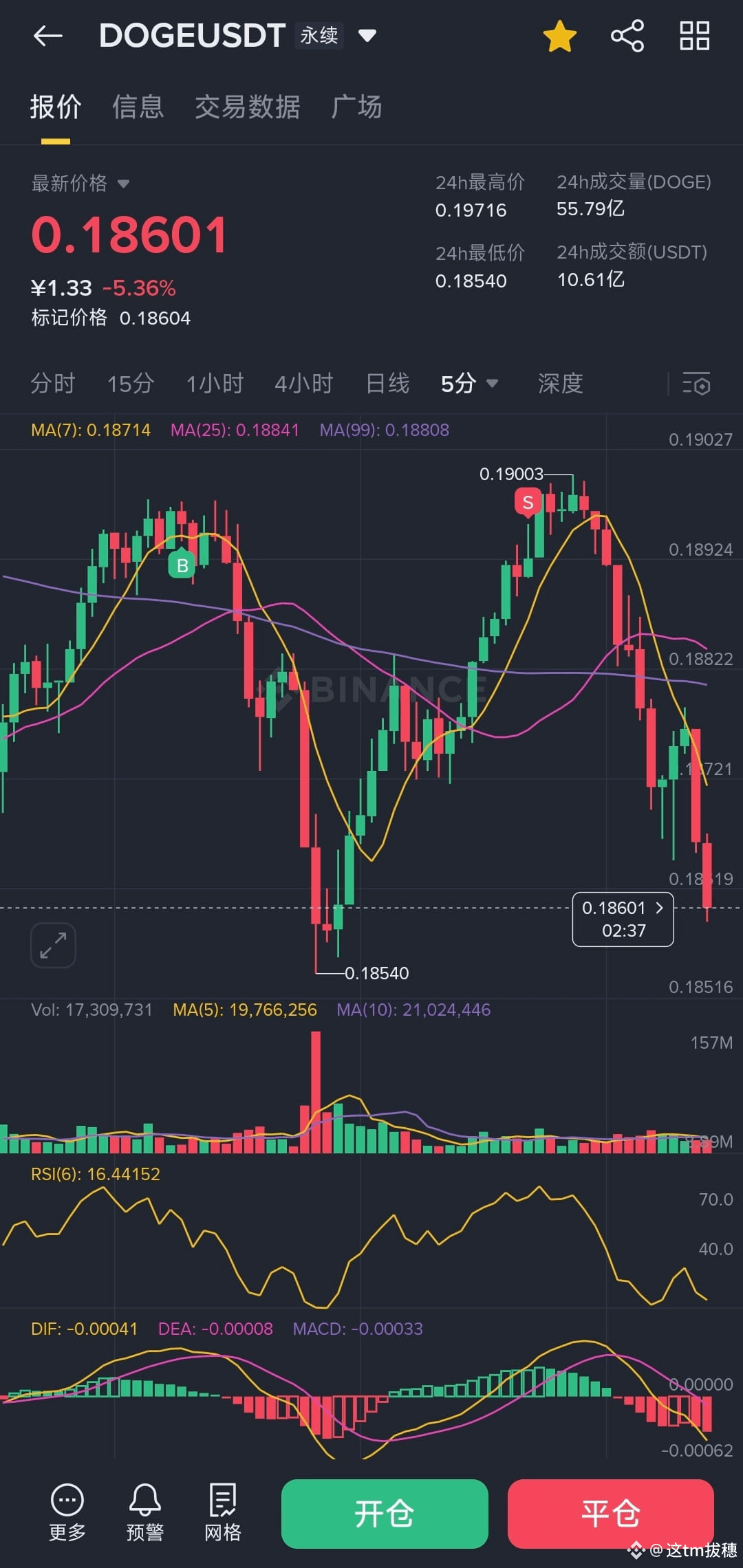
$DOGE It's Black Friday again, and there hasn't been any good news this week.
$DOGE It's Black Friday again, and there hasn't been any good news this week.
3
1
1
1.2k
·
--
Is this how you control the market, copying and pasting a copy?
Is this how you control the market, copying and pasting a copy?
2
2
1
983
Log in to explore more content
Join global crypto users on Binance Square
⚡️ Get latest and useful information about crypto.
💬 Trusted by the world’s largest crypto exchange.
👍 Discover real insights from verified creators.
Email / Phone number
Trending Topics
FedWatch
16.2M views
38,669 Discussing
🚨 BREAKING: THE US ECONOMY JUST BEAT ON EVERYTHING. THAT IS THE WORST NEWS FOR YOUR PORTFOLIO.
GDP Q3: 3.4% vs 3.2% expected. Previous: 2.2%
Jobless claims: 194K vs 199K expected. Previous: 194K
PCE inflation: 3.6%, as expected. Previous: 3.4%
Strong growth. Almost no layoffs. Inflation going UP, not down. The Fed has zero reason to stop, and a December hike is priced near 80%.
In this market, good news for the economy is bad news for stocks and crypto. PCE in line is not a relief, it is 0.2 points higher than last month.
Rate cut hopes are dead. Stay alert.
12 years in these markets. This is what I do.
Follow me and turn notifications on.
#FedWatch
#EarningsSeason
#Nasdaq100FuturesFall0.9%
$BTC
$SOL
$SUI
MARKET STRUCTURE GUIDE
·4 Likes
·1k views
EarningsSeason
6.3M views
31,422 Discussing
USMidtermElections
8,494 views
278 Discussing