
mysam1234
1.2k Posts

mysam1234
154 Following
206 Followers
857 Liked
Posts
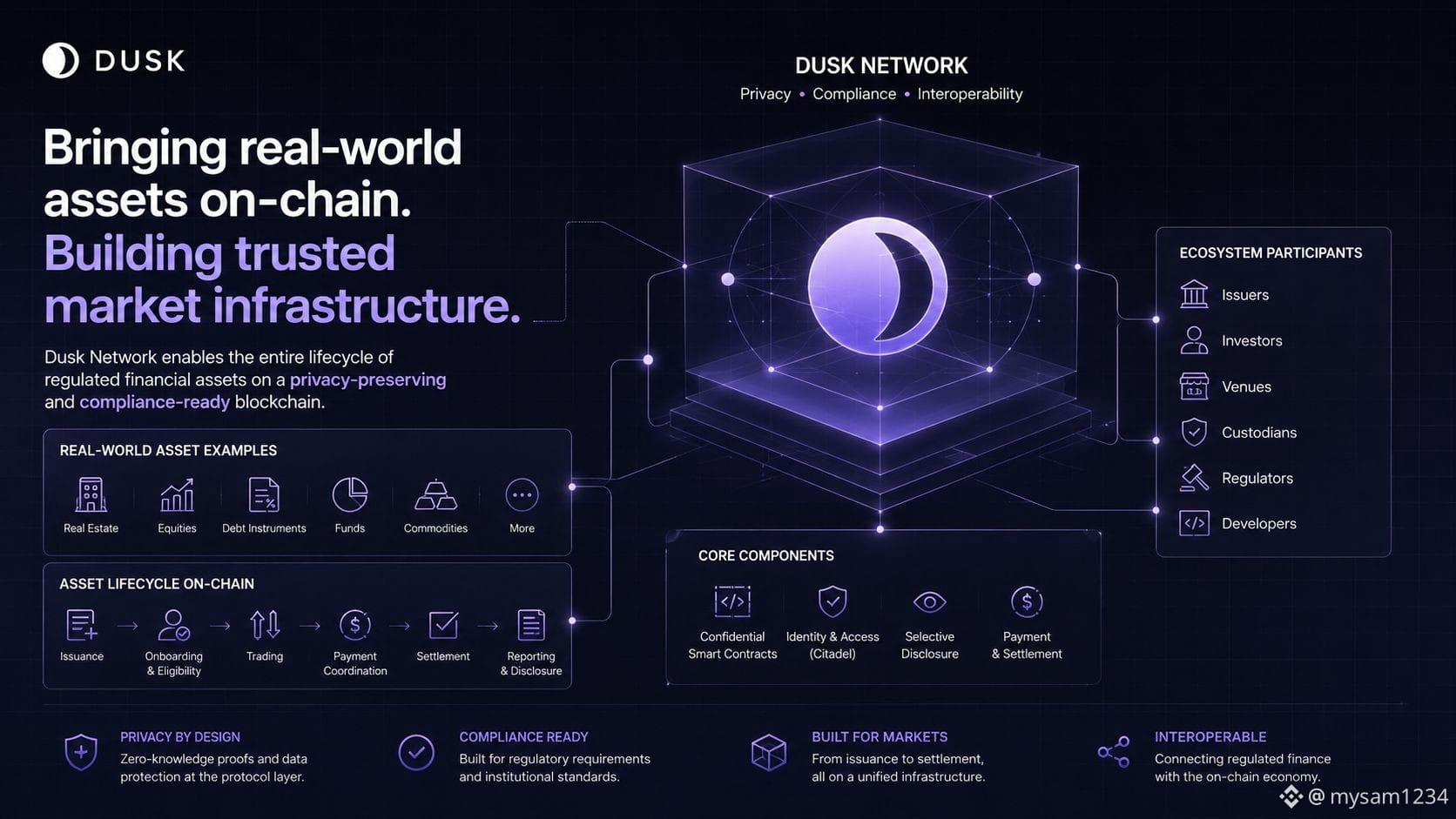
At first, I still saw “bringing real-world assets onto the blockchain” as a familiar narrative. Tokenization sounds appealing, but if what’s behind it is still the old systems—old reconciliation processes and old intermediaries—then blockchain is merely putting on another new layer of paint.
Something about Dusk made me pause when I looked closer. They don’t just talk about creating tokens representing assets; they emphasize the difference between tokenization and native issuance. The asset lifecycle itself can be designed around the blockchain—from issuance, to transfer, to settlement and disclosure.
Slowly, I realized the hardest part isn’t actually putting assets on-chain, but getting all parties to coordinate on a shared infrastructure: the issuer, investor, venue, custodian, and regulator. When eligibility access, ownership, and payment must be synchronized, blockchain starts to look more like an invisible infrastructure layer than a place where tokens are merely stored.
The most interesting thing, perhaps, isn’t tokenization itself, but whether a new system can reduce the capital fragmentation that has already become deeply embedded in finance.
The more I look into it, the more I feel that the RWA story is essentially a story about how people relearn how to coordinate on the internet.
#dusk $DUSK @Dusk $BTC
Something about Dusk made me pause when I looked closer. They don’t just talk about creating tokens representing assets; they emphasize the difference between tokenization and native issuance. The asset lifecycle itself can be designed around the blockchain—from issuance, to transfer, to settlement and disclosure.
Slowly, I realized the hardest part isn’t actually putting assets on-chain, but getting all parties to coordinate on a shared infrastructure: the issuer, investor, venue, custodian, and regulator. When eligibility access, ownership, and payment must be synchronized, blockchain starts to look more like an invisible infrastructure layer than a place where tokens are merely stored.
The most interesting thing, perhaps, isn’t tokenization itself, but whether a new system can reduce the capital fragmentation that has already become deeply embedded in finance.
The more I look into it, the more I feel that the RWA story is essentially a story about how people relearn how to coordinate on the internet.
#dusk $DUSK @Dusk $BTC
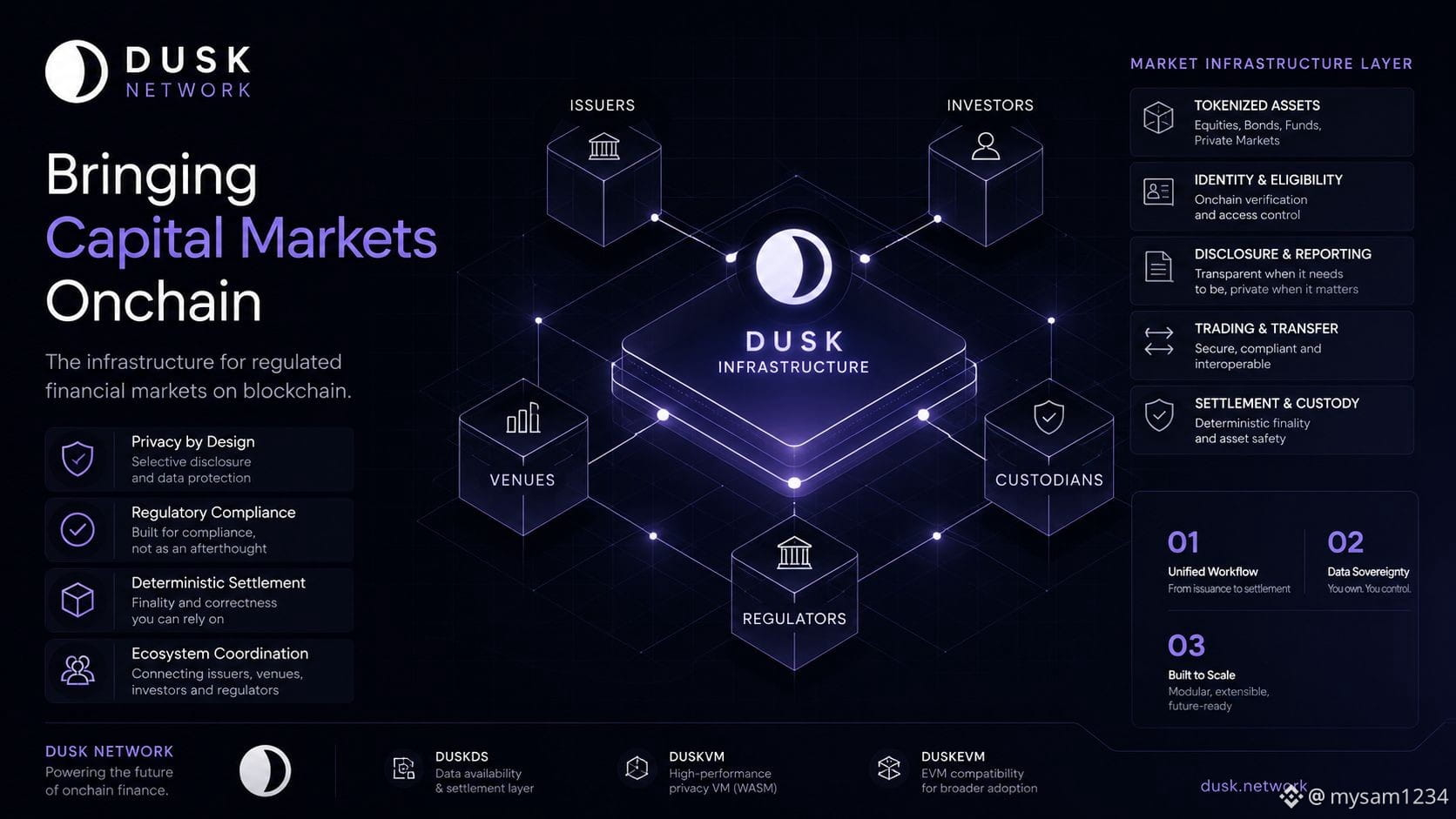
At first, I was quite skeptical about Dusk Network’s plan to bring the financial markets onto the blockchain. This narrative has appeared too many times already, and it often starts with tokenization and ends with big promises that don’t match reality.
But when I looked more closely at how Dusk builds its infrastructure, I noticed a different issue. They don’t just want to turn stocks, bonds, or funds into tokens. The focus is on putting the entire lifecycle of an asset into a single unified workflow: issuance, determining eligible investors, transfer, disclosure, and settlement.
Step by step, I realized that the hardest part of onchain finance probably isn’t tokenization. It’s the coordination among parties who operate across separate systems.
That changed how I view Dusk. Privacy, selective disclosure, and deterministic settlement are no longer just standalone technical features—they become infrastructure that allows the market to function without sacrificing requirements that already exist.
The most interesting thing may not lie in the blockchain itself, but in how an old market is reorganized around a shared layer of infrastructure.
The deeper I look, the more I feel that the future of finance may not simply be “moving assets onto the chain,” but changing how people coordinate around ownership, data, and settlement. Perhaps that’s the part worth observing most.
#dusk $DUSK @Dusk $BTC
But when I looked more closely at how Dusk builds its infrastructure, I noticed a different issue. They don’t just want to turn stocks, bonds, or funds into tokens. The focus is on putting the entire lifecycle of an asset into a single unified workflow: issuance, determining eligible investors, transfer, disclosure, and settlement.
Step by step, I realized that the hardest part of onchain finance probably isn’t tokenization. It’s the coordination among parties who operate across separate systems.
That changed how I view Dusk. Privacy, selective disclosure, and deterministic settlement are no longer just standalone technical features—they become infrastructure that allows the market to function without sacrificing requirements that already exist.
The most interesting thing may not lie in the blockchain itself, but in how an old market is reorganized around a shared layer of infrastructure.
The deeper I look, the more I feel that the future of finance may not simply be “moving assets onto the chain,” but changing how people coordinate around ownership, data, and settlement. Perhaps that’s the part worth observing most.
#dusk $DUSK @Dusk $BTC
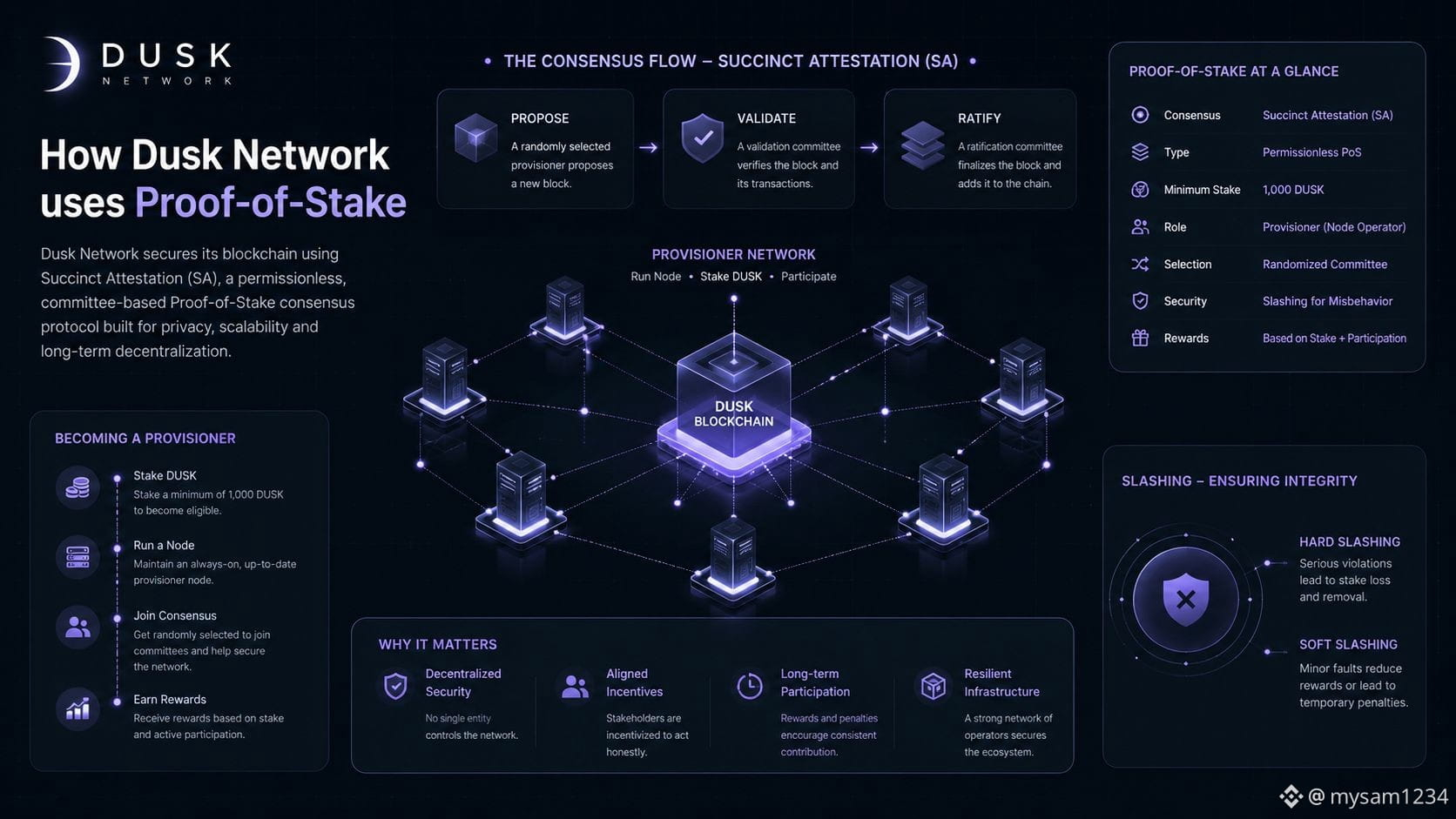
At first glance, Dusk’s Proof-of-Stake made me think it was just the usual story: stake assets, run a node, receive rewards. But the more I read, the more I realize that view overlooks something more important.
A provisioner on Dusk doesn’t just lock DUSK. They operate the node, maintain synchronization, and may be selected to join the Succinct Attestation committee to propose, validate, and ratify blocks. Rewards depend on the stake and the level of participation in consensus, and misbehavior can be penalized.
What concerns me here is that Stake begins to look more like a commitment to infrastructure than a number in a wallet. Capital creates eligibility, but its presence and coordination turn it into real contribution.
Slowly, I realize that what we can easily miss isn’t in PoS. It’s in the coordination between unfamiliar actors and the network that exists thanks to people who maintain nodes.
The most interesting part probably isn’t the technology itself, but how blockchain turns contribution into responsibility. Internet economies may be built from the ability to remain present over the long term.
#dusk $DUSK @Dusk $BTC
A provisioner on Dusk doesn’t just lock DUSK. They operate the node, maintain synchronization, and may be selected to join the Succinct Attestation committee to propose, validate, and ratify blocks. Rewards depend on the stake and the level of participation in consensus, and misbehavior can be penalized.
What concerns me here is that Stake begins to look more like a commitment to infrastructure than a number in a wallet. Capital creates eligibility, but its presence and coordination turn it into real contribution.
Slowly, I realize that what we can easily miss isn’t in PoS. It’s in the coordination between unfamiliar actors and the network that exists thanks to people who maintain nodes.
The most interesting part probably isn’t the technology itself, but how blockchain turns contribution into responsibility. Internet economies may be built from the ability to remain present over the long term.
#dusk $DUSK @Dusk $BTC
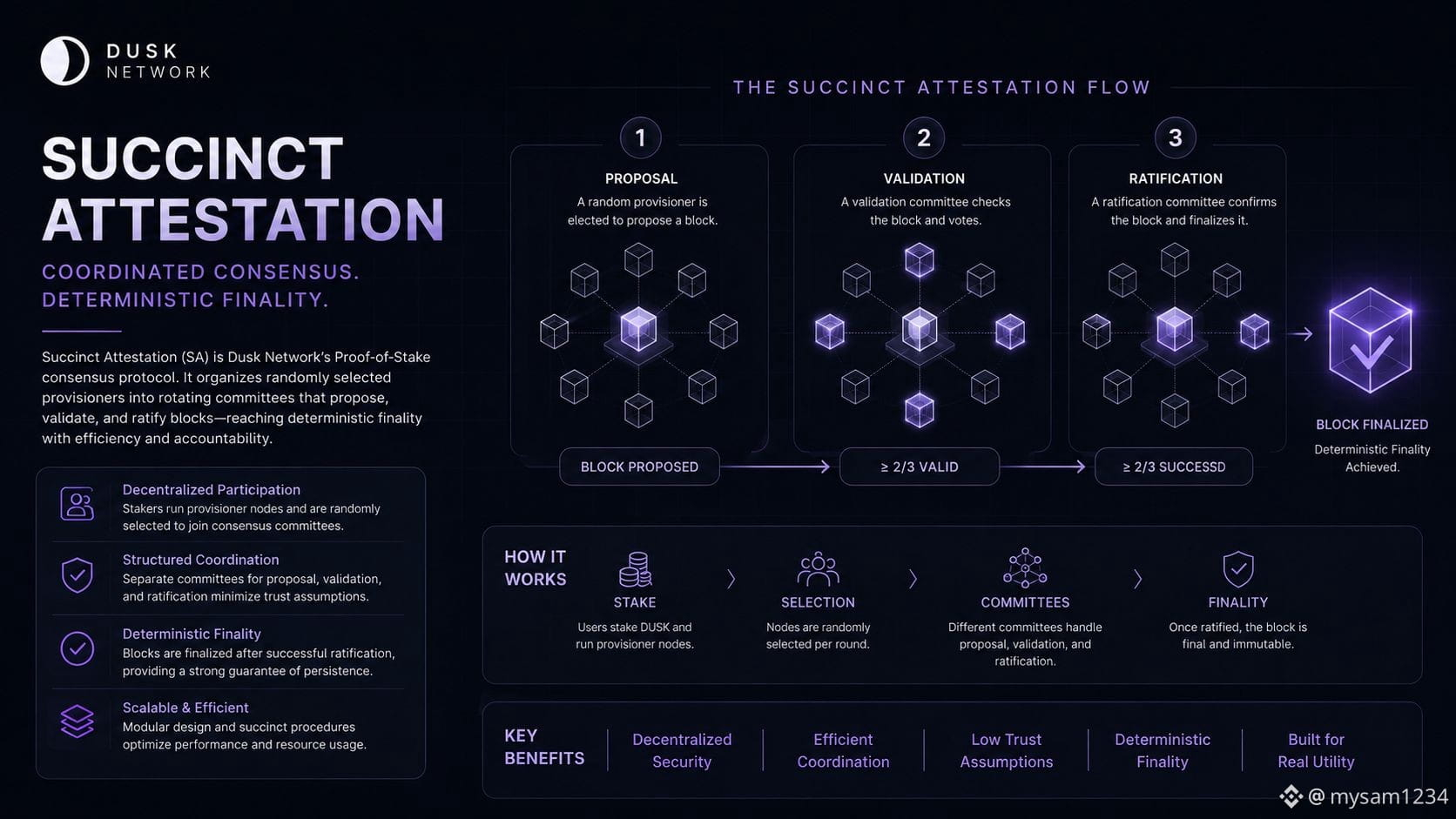
Sometimes I assumed that Succinct Attestation was just a new name among countless narratives about consensus. The blockchain market has always been good at creating terminology that sounds different, while the underlying reality is often simply another way for computers to agree with one another.
But when I read more closely about Dusk, I paused at a rather small detail. Provisioners don’t do everything. They are randomly selected into different committees to propose, verify, and then confirm a block. That division of roles made me think more about coordination than performance.
Something also concerns me when we usually treat consensus as a mathematical algorithm, while it is also an organizational structure. A network doesn’t exist because everyone knows everything; it exists because each component contributes at the right time, with the right responsibility, leaving behind a decision with the ability to persist.
Over time, I realized the most interesting part isn’t the technology—it’s the way the internet is learning to coordinate distant, unfamiliar individuals through infrastructures that are almost invisible.
Perhaps the future of blockchain will be less like a software race and more like the quiet evolution of collective intelligence.
#dusk $DUSK @Dusk $BTC
But when I read more closely about Dusk, I paused at a rather small detail. Provisioners don’t do everything. They are randomly selected into different committees to propose, verify, and then confirm a block. That division of roles made me think more about coordination than performance.
Something also concerns me when we usually treat consensus as a mathematical algorithm, while it is also an organizational structure. A network doesn’t exist because everyone knows everything; it exists because each component contributes at the right time, with the right responsibility, leaving behind a decision with the ability to persist.
Over time, I realized the most interesting part isn’t the technology—it’s the way the internet is learning to coordinate distant, unfamiliar individuals through infrastructures that are almost invisible.
Perhaps the future of blockchain will be less like a software race and more like the quiet evolution of collective intelligence.
#dusk $DUSK @Dusk $BTC
At first, I thought Dusk was merely stitching together familiar narratives like privacy, compliance, and tokenization. Those terms have shown up so often in blockchain that it’s not easy to see what’s truly different.
But the deeper I read, the more I began to notice a smaller issue. Public blockchains are very good at creating a shared layer of data, but in finance, not all information should be visible to everyone. One transaction may need to be verified, while balances, counterparties, or private conditions must still be protected.
Gradually, I realized that Dusk isn’t simply trying to make blockchain “more private”—it’s attempting to solve the coordination problem: multiple parties participate in a workflow, but each party only needs to know the information necessary for its role.
This becomes especially notable when looking at regulated assets. Eligibility, access control, payment, transfer, and settlement often live across different systems. Dusk wants to bring them under one infrastructure while maintaining the ability for selective disclosure.
The most interesting part probably isn’t privacy in isolation, but the way privacy and transparency can coexist.
Maybe a blockchain matures not when everything becomes public, but when it knows exactly what should be seen.
#dusk $DUSK @Dusk $BTC
But the deeper I read, the more I began to notice a smaller issue. Public blockchains are very good at creating a shared layer of data, but in finance, not all information should be visible to everyone. One transaction may need to be verified, while balances, counterparties, or private conditions must still be protected.
Gradually, I realized that Dusk isn’t simply trying to make blockchain “more private”—it’s attempting to solve the coordination problem: multiple parties participate in a workflow, but each party only needs to know the information necessary for its role.
This becomes especially notable when looking at regulated assets. Eligibility, access control, payment, transfer, and settlement often live across different systems. Dusk wants to bring them under one infrastructure while maintaining the ability for selective disclosure.
The most interesting part probably isn’t privacy in isolation, but the way privacy and transparency can coexist.
Maybe a blockchain matures not when everything becomes public, but when it knows exactly what should be seen.
#dusk $DUSK @Dusk $BTC
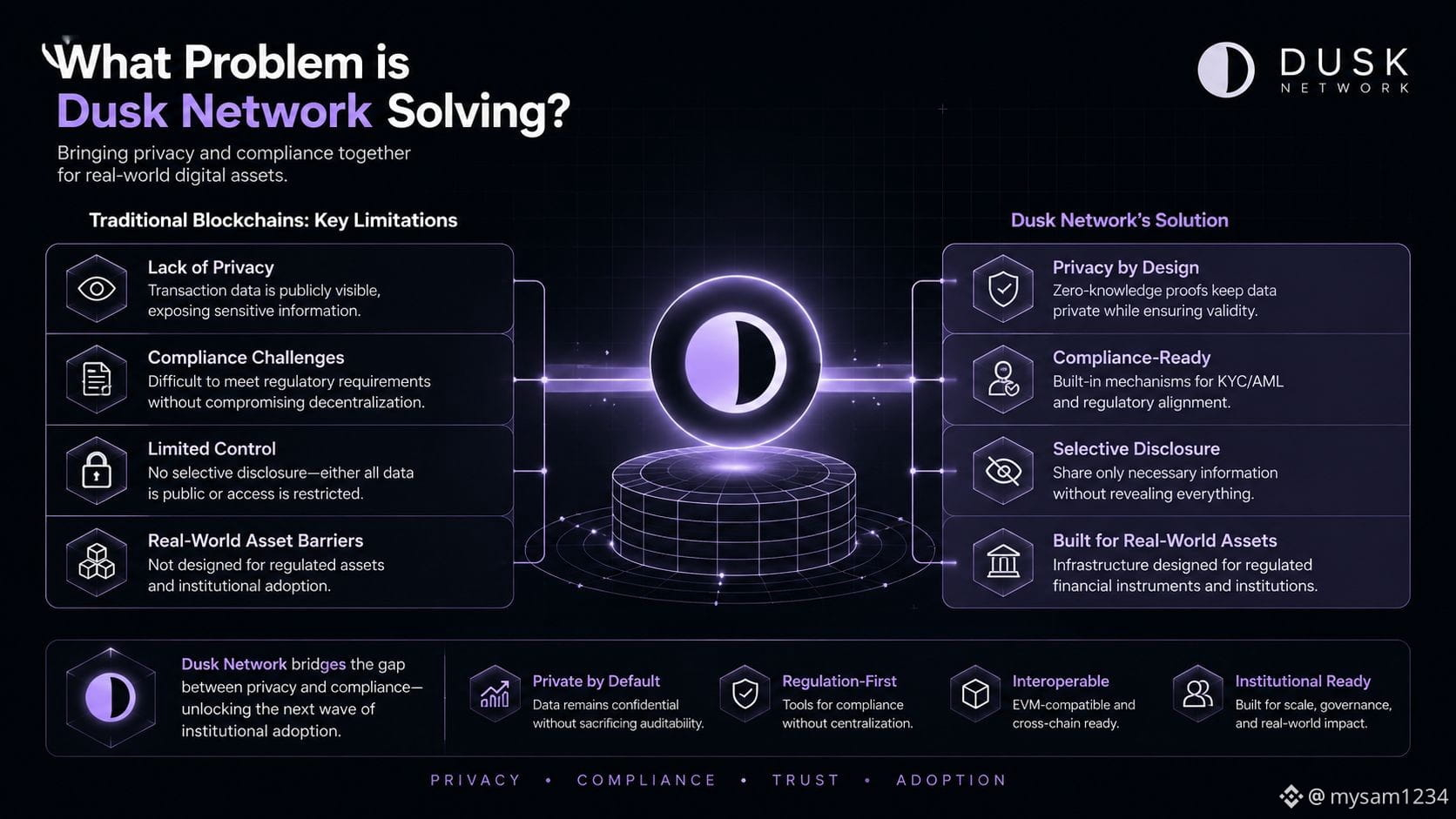
At first, I thought disputes after a Binance P2P transaction were just another variation of the usual stories about safety. Escrow, Order ID, transaction history, or the appeal process all sound so familiar that people can easily treat them as minor details.
But the more I observed, the more I realized the real problem lies elsewhere. When a payment is disputed, the question is no longer simply “who is right?”—it becomes which party can provide evidence clear enough to verify against the transaction.
Step by step, I came to understand that many people only prepare for the moment the transaction is completed; they don’t consider the possibility that they’ll need to explain it again. Payment information, Order ID, the time of the transaction, and related documents can become crucial pieces during the appeal process. Binance also allows additional evidence to be submitted for appeals that are already being handled.
That changed how I view P2P. Technology doesn’t automatically create fairness; it only adds the ability for attribution and persistence—so that people can cross-check what has happened.
The most interesting part probably isn’t the software itself, but the way it starts to resemble a kind of culture, where specialized knowledge and quiet coordination form from very small transactions.
Perhaps the most noteworthy piece of internet infrastructure is the one users only notice when things start to go off the rails.
#binancep2pantoan @Binance Vietnam $BTC
But the more I observed, the more I realized the real problem lies elsewhere. When a payment is disputed, the question is no longer simply “who is right?”—it becomes which party can provide evidence clear enough to verify against the transaction.
Step by step, I came to understand that many people only prepare for the moment the transaction is completed; they don’t consider the possibility that they’ll need to explain it again. Payment information, Order ID, the time of the transaction, and related documents can become crucial pieces during the appeal process. Binance also allows additional evidence to be submitted for appeals that are already being handled.
That changed how I view P2P. Technology doesn’t automatically create fairness; it only adds the ability for attribution and persistence—so that people can cross-check what has happened.
The most interesting part probably isn’t the software itself, but the way it starts to resemble a kind of culture, where specialized knowledge and quiet coordination form from very small transactions.
Perhaps the most noteworthy piece of internet infrastructure is the one users only notice when things start to go off the rails.
#binancep2pantoan @Binance Vietnam $BTC
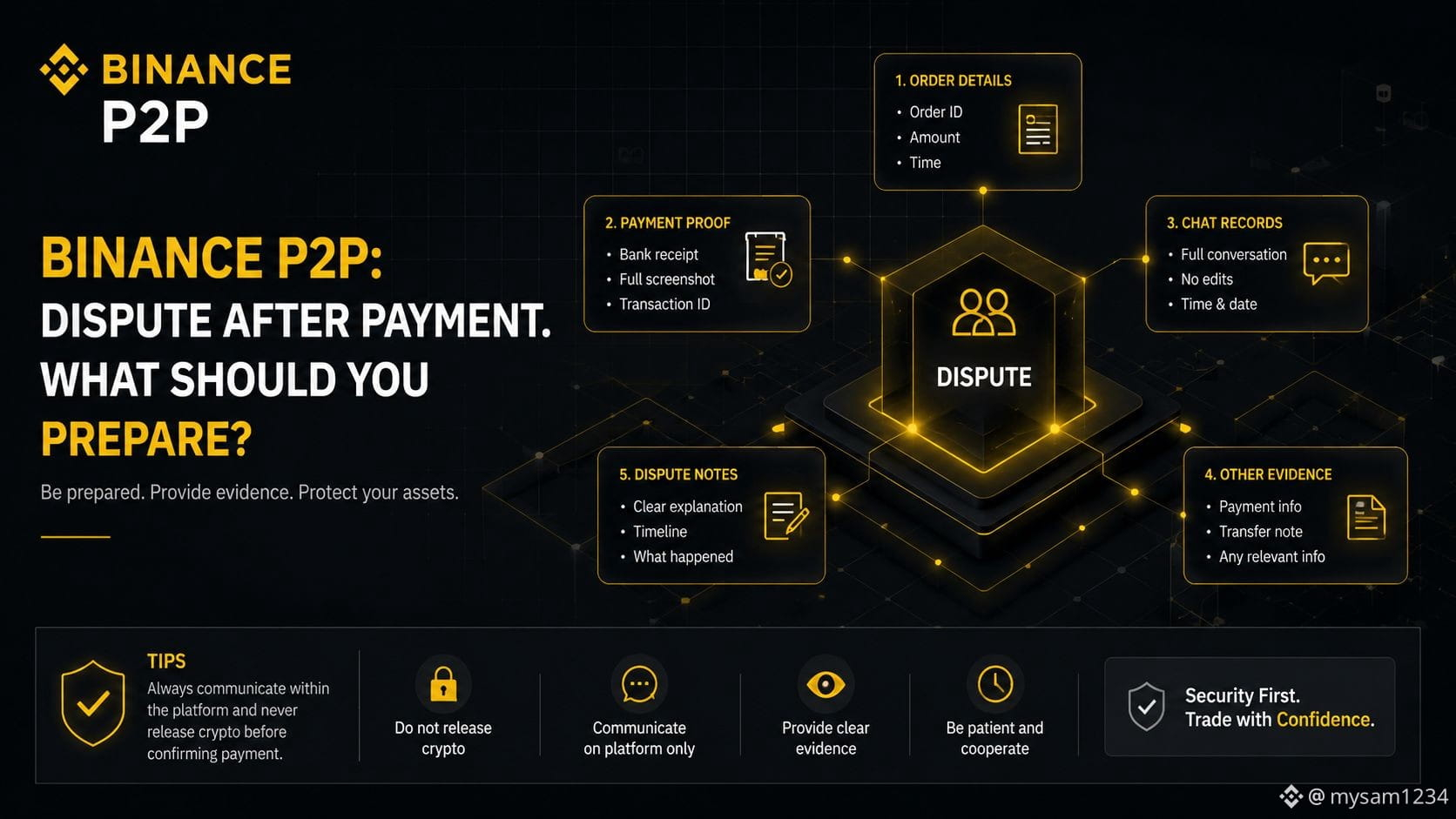
At first, Dusk gave me a fairly familiar feeling—another blockchain talking about RWA, privacy, and compliance as if it were simply putting a new narrative on the story of tokenization.
But when I look more closely, I start to notice a smaller issue. Managed finance is not simply about putting an asset on a blockchain and then enabling transfers. It’s also the story of who owns what, who can trade, what data needs to be kept confidential, and which party has the right to verify when needed.
Step by step, I realized this is why Dusk is taking this direction. They’re trying to bring eligibility, privacy, disclosure, and settlement into a single workflow rather than letting those steps be scattered across multiple systems that then require continuous manual reconciliation.
One thing that concerns me is that blockchains are often imagined as tools that remove intermediaries, but real finance depends heavily on coordination.
The most interesting part may not be tokenization itself, but the fact that Dusk is trying to build an infrastructure layer where privacy and compliance are no longer opposites.
The more I look, the more this story feels less like a brand-new blockchain and more like a quiet effort for the internet to learn how to run more complex markets.
#dusk $DUSK @Dusk $BTC
But when I look more closely, I start to notice a smaller issue. Managed finance is not simply about putting an asset on a blockchain and then enabling transfers. It’s also the story of who owns what, who can trade, what data needs to be kept confidential, and which party has the right to verify when needed.
Step by step, I realized this is why Dusk is taking this direction. They’re trying to bring eligibility, privacy, disclosure, and settlement into a single workflow rather than letting those steps be scattered across multiple systems that then require continuous manual reconciliation.
One thing that concerns me is that blockchains are often imagined as tools that remove intermediaries, but real finance depends heavily on coordination.
The most interesting part may not be tokenization itself, but the fact that Dusk is trying to build an infrastructure layer where privacy and compliance are no longer opposites.
The more I look, the more this story feels less like a brand-new blockchain and more like a quiet effort for the internet to learn how to run more complex markets.
#dusk $DUSK @Dusk $BTC
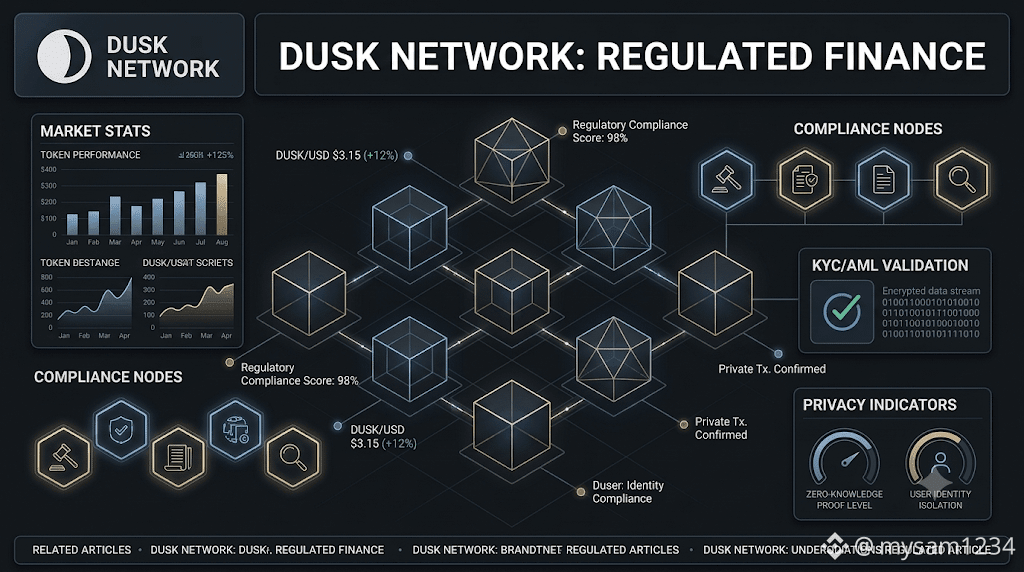
At first, it seemed like it was just a minor issue: a Binance P2P order was about to run out of time, but the payment hadn’t arrived yet. The buyer said they’d transferred; the seller hadn’t seen the money. I used to think the problem was only about slow processing.
But the more I observed, the more something else caught my attention: what matters isn’t speed, but the ability to verify what really happened.
Gradually, I realized escrow is only part of the story. Binance instructs sellers to release crypto only after confirming the payment has arrived. If there’s a dispute, both parties can appeal and provide evidence for review.
So when the clock is almost at 0 and the funds haven’t come into the account, the reasonable response isn’t to rush a release or trust screenshots. Check the actual transaction and keep records if needed.
The most interesting thing might not be the technology—it’s about attribution and persistence: traces that let parties reconcile when trust isn’t enough. The deeper you look, the more P2P starts to resemble a kind of trading culture rather than just software.
#binancep2pantoan @Binance Vietnam $BTC
But the more I observed, the more something else caught my attention: what matters isn’t speed, but the ability to verify what really happened.
Gradually, I realized escrow is only part of the story. Binance instructs sellers to release crypto only after confirming the payment has arrived. If there’s a dispute, both parties can appeal and provide evidence for review.
So when the clock is almost at 0 and the funds haven’t come into the account, the reasonable response isn’t to rush a release or trust screenshots. Check the actual transaction and keep records if needed.
The most interesting thing might not be the technology—it’s about attribution and persistence: traces that let parties reconcile when trust isn’t enough. The deeper you look, the more P2P starts to resemble a kind of trading culture rather than just software.
#binancep2pantoan @Binance Vietnam $BTC
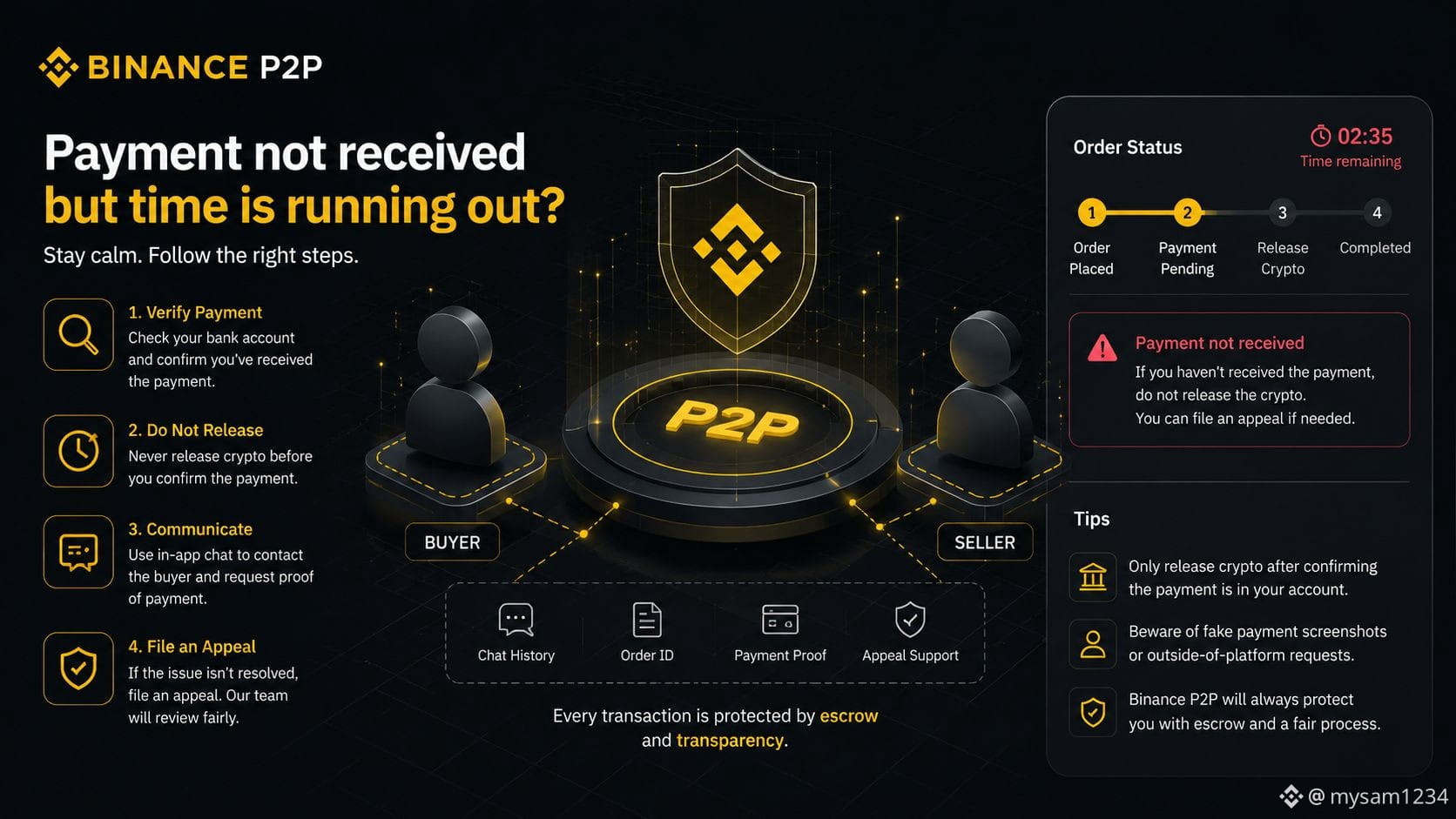
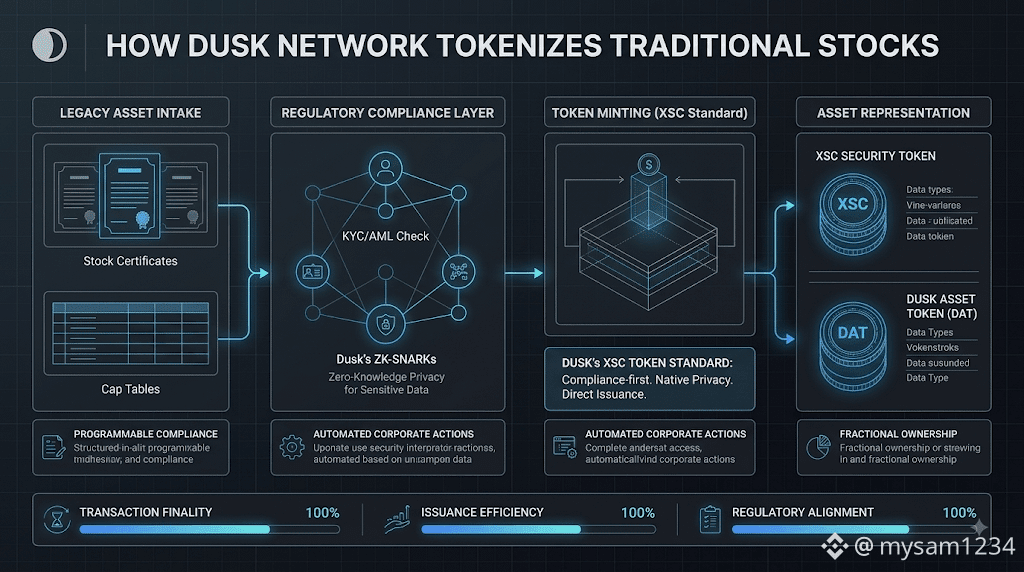
At first, “tokenization of stocks” sounds to me like a familiar kind of narrative. But the more I look at Dusk, the more I see the story is somewhere else.
There’s something that bothers me when a stock isn’t just about ownership. It’s coordination between the issuer, the exchange, and the rules of law. Dusk is trying to bring that coordinating layer into the same infrastructure, where eligibility, transfer restrictions, settlement, and selective disclosure are tied to the asset.
Gradually, I realize the market treats tokenization as a problem of “putting assets on-chain,” while the deeper issue is attribution and persistence: who has which rights, and what data is kept.
The most interesting part probably isn’t the technology itself—it’s how the internet organizes specialized economies. When contribution, data ownership, and agent coordination become primitives, the token is only a trace of a larger infrastructure.
It starts to feel more like a form of culture than software. Perhaps the future of on-chain stocks will depend less on tokens and more on the invisible infrastructure that people trust.
#dusk $DUSK @Dusk $BTC
There’s something that bothers me when a stock isn’t just about ownership. It’s coordination between the issuer, the exchange, and the rules of law. Dusk is trying to bring that coordinating layer into the same infrastructure, where eligibility, transfer restrictions, settlement, and selective disclosure are tied to the asset.
Gradually, I realize the market treats tokenization as a problem of “putting assets on-chain,” while the deeper issue is attribution and persistence: who has which rights, and what data is kept.
The most interesting part probably isn’t the technology itself—it’s how the internet organizes specialized economies. When contribution, data ownership, and agent coordination become primitives, the token is only a trace of a larger infrastructure.
It starts to feel more like a form of culture than software. Perhaps the future of on-chain stocks will depend less on tokens and more on the invisible infrastructure that people trust.
#dusk $DUSK @Dusk $BTC
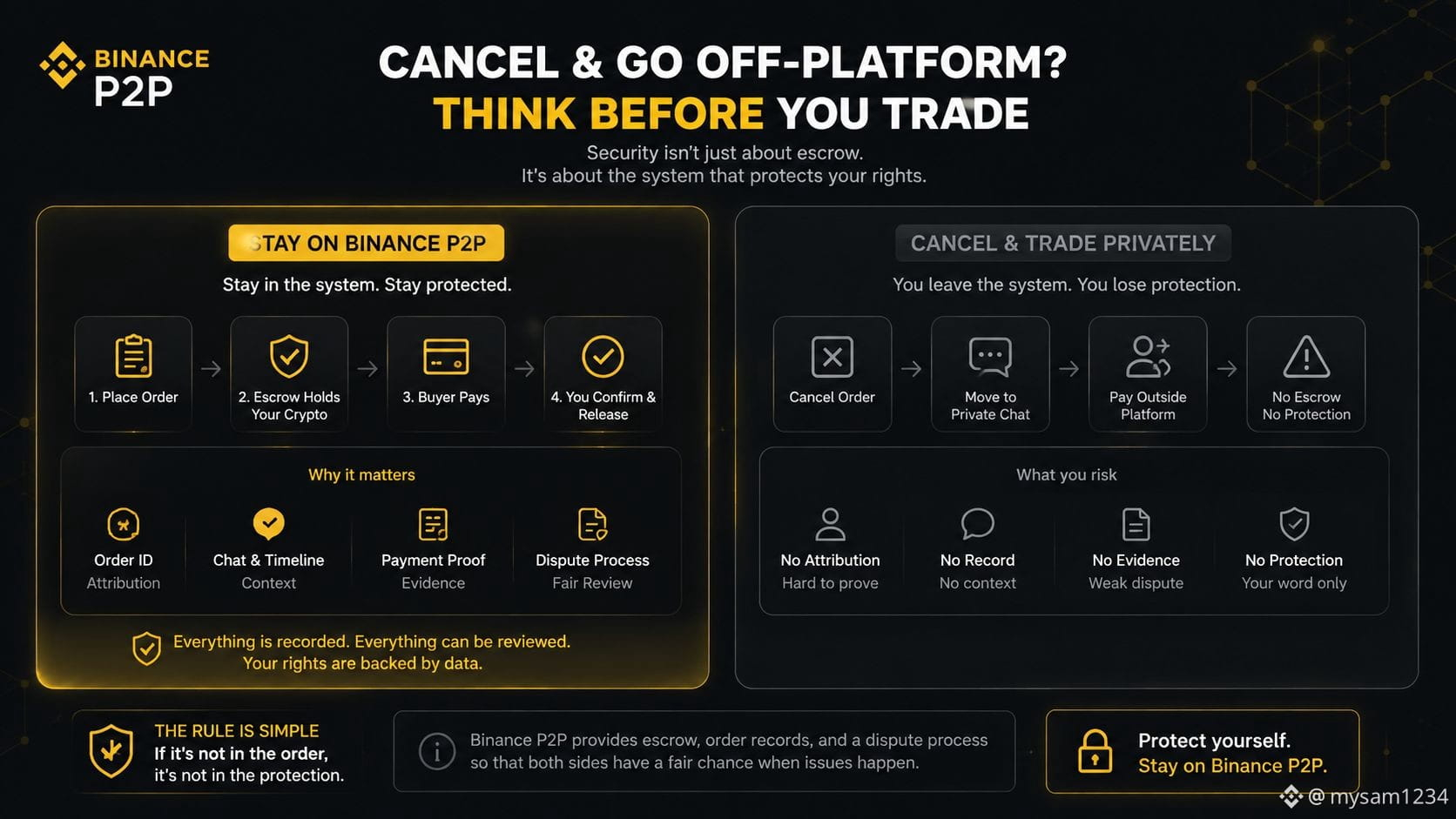
At first glance, the suggestion to “cancel the order and trade separately” seems like just a way for both parties to move faster. I used to think this was simply a familiar kind of P2P risk. But the more I observe, the more I realize the problem lies in another layer.
Something about taking the trade outside the order doesn’t just remove a user interface. It removes the coordination layer that the system has built for both sides.
Within an order, the transaction status, payment timing, order ID, and the appeal process form a chain of information that can be cross-checked when something goes wrong. Binance also allows users to review order details, the timeline, and add evidence during the dispute process.
Gradually, I realized that what many people overlook isn’t escrow, but attribution. When trades are done separately, responsibility and evidence can easily turn into a story told by each side, rather than a structured process.
The most interesting part is probably not the technology—it’s the way people often try to remove layers of control that make them feel slowed down.
The deeper I look, the more P2P starts to resemble a form of internet culture, where reputation, persistence, and trust are accumulated through small interactions—and sometimes it’s precisely those intangible elements that become the infrastructure keeping a digital economy from falling apart.
#binancep2pantoan @Binance Vietnam $BTC
Something about taking the trade outside the order doesn’t just remove a user interface. It removes the coordination layer that the system has built for both sides.
Within an order, the transaction status, payment timing, order ID, and the appeal process form a chain of information that can be cross-checked when something goes wrong. Binance also allows users to review order details, the timeline, and add evidence during the dispute process.
Gradually, I realized that what many people overlook isn’t escrow, but attribution. When trades are done separately, responsibility and evidence can easily turn into a story told by each side, rather than a structured process.
The most interesting part is probably not the technology—it’s the way people often try to remove layers of control that make them feel slowed down.
The deeper I look, the more P2P starts to resemble a form of internet culture, where reputation, persistence, and trust are accumulated through small interactions—and sometimes it’s precisely those intangible elements that become the infrastructure keeping a digital economy from falling apart.
#binancep2pantoan @Binance Vietnam $BTC
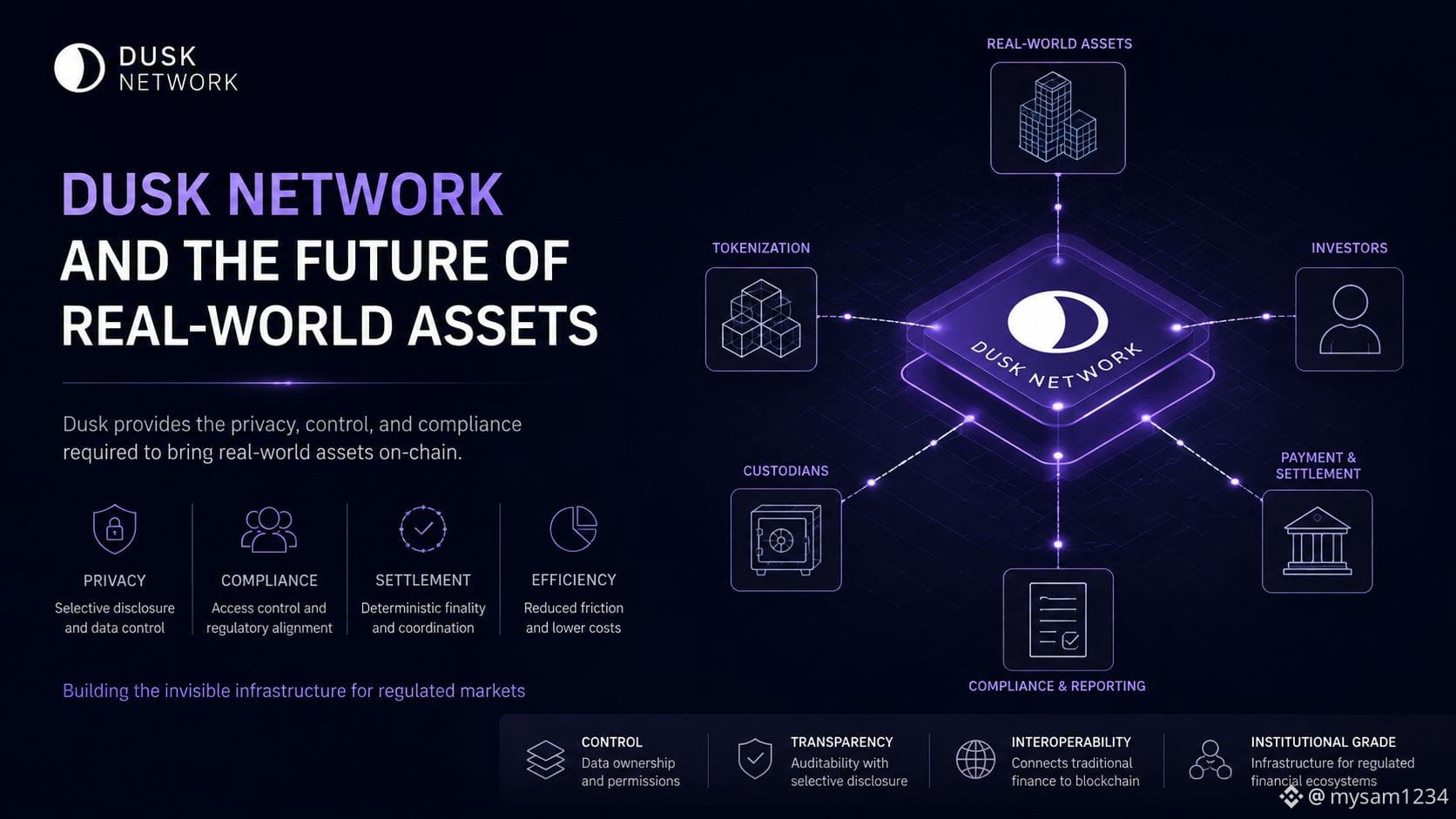
At first, the RWA story on blockchain made me cautious. Tokenizing assets sounds like a narrative that’s been told many times—put securities or ownership rights on-chain and expect everything to work more efficiently.
But when I look at how Dusk approaches regulated assets, I notice a different layer of the problem. Assets don’t just need to be issued and transferred. They must define who is eligible to hold them, what information is publicly disclosed, what must be kept confidential, and which parties coordinate to handle settlement, reporting, or the asset’s lifecycle.
What concerns me is that the hard part of RWA may not be the token contract, but rather the coordination among multiple systems and people.
Gradually, I realized Dusk is placing its focus on that gap—access control, selective disclosure, privacy, and settlement all on the same infrastructure.
It hasn’t yet proven that adoption will be large, but it hints at another possibility: blockchain could become invisible infrastructure, where value comes from enabling many parties to coordinate with minimal friction.
#dusk $DUSK @Dusk $BTC
But when I look at how Dusk approaches regulated assets, I notice a different layer of the problem. Assets don’t just need to be issued and transferred. They must define who is eligible to hold them, what information is publicly disclosed, what must be kept confidential, and which parties coordinate to handle settlement, reporting, or the asset’s lifecycle.
What concerns me is that the hard part of RWA may not be the token contract, but rather the coordination among multiple systems and people.
Gradually, I realized Dusk is placing its focus on that gap—access control, selective disclosure, privacy, and settlement all on the same infrastructure.
It hasn’t yet proven that adoption will be large, but it hints at another possibility: blockchain could become invisible infrastructure, where value comes from enabling many parties to coordinate with minimal friction.
#dusk $DUSK @Dusk $BTC
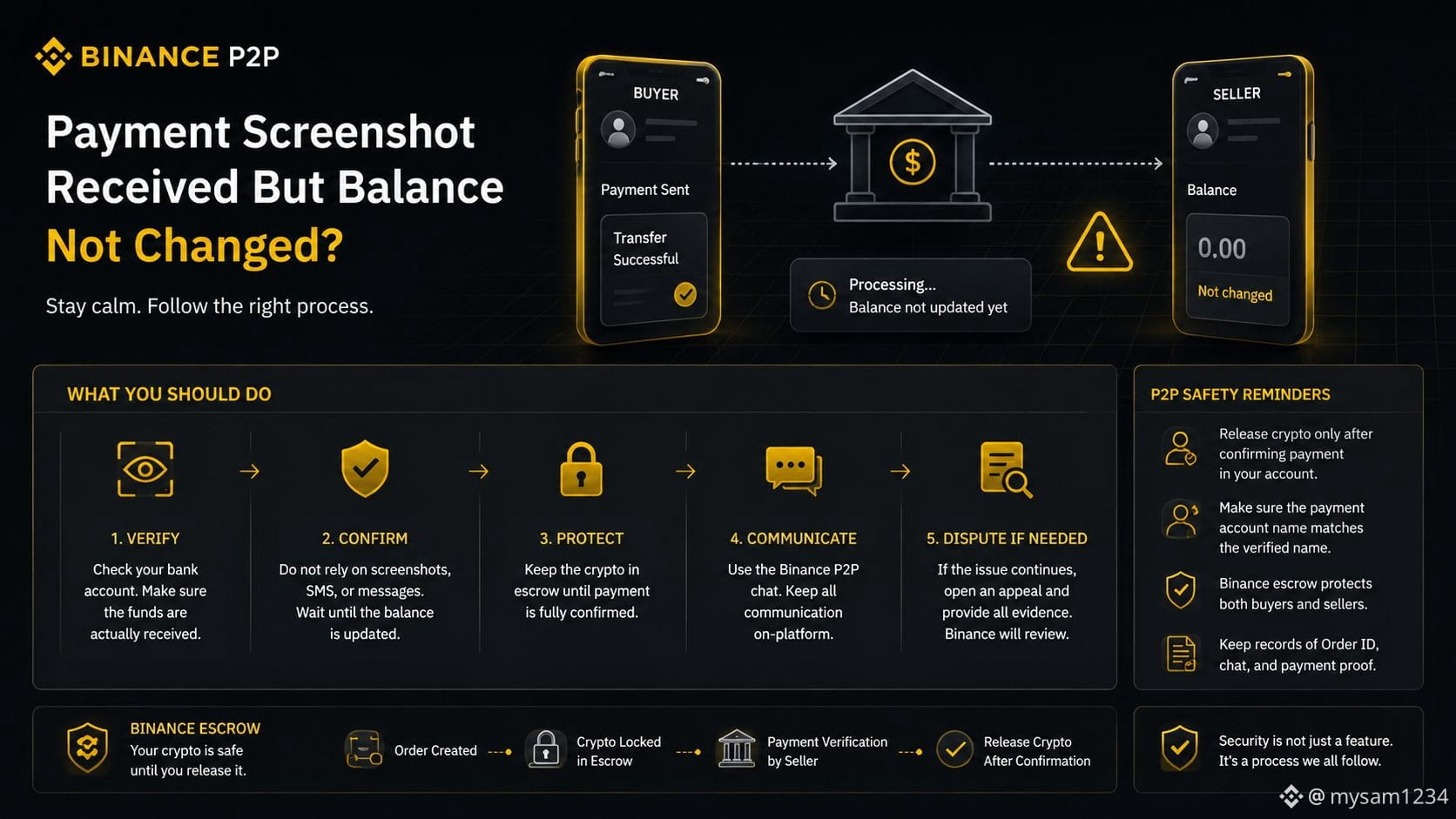
At first glance, when a partner sends a proof-of-transfer image while the balance has not changed yet, it seems like a normal delay. But the more I observe P2P, the more I realize this isn’t simply a story about waiting a few minutes.
Something bothers me: how easily people treat an image as proof of the truth. Meanwhile, Binance advises that sellers must confirm that real funds have arrived before releasing crypto from escrow. A photo, an SMS, or a message cannot replace that confirmation step.
Gradually, I notice the interesting gap between “has been done” and “has been recorded.” A P2P transaction doesn’t only need payment—it also needs attribution: who sent it, what transaction it was, and what evidence can be cross-checked if a dispute arises.
Escrow creates coordination, while the transaction history and evidence give events persistence. When there is an appeal, Binance can review evidence from both sides.
The most interesting part probably isn’t in the software itself; it’s in how humans learn to coordinate in an environment where trust no longer comes from familiarity.
The deeper I look, the more I feel that P2P is forming a kind of digital culture—small rules, repeated long enough, until they become an invisible infrastructure of internet economies.
#binancep2pantoan @Binance Vietnam $BTC
Something bothers me: how easily people treat an image as proof of the truth. Meanwhile, Binance advises that sellers must confirm that real funds have arrived before releasing crypto from escrow. A photo, an SMS, or a message cannot replace that confirmation step.
Gradually, I notice the interesting gap between “has been done” and “has been recorded.” A P2P transaction doesn’t only need payment—it also needs attribution: who sent it, what transaction it was, and what evidence can be cross-checked if a dispute arises.
Escrow creates coordination, while the transaction history and evidence give events persistence. When there is an appeal, Binance can review evidence from both sides.
The most interesting part probably isn’t in the software itself; it’s in how humans learn to coordinate in an environment where trust no longer comes from familiarity.
The deeper I look, the more I feel that P2P is forming a kind of digital culture—small rules, repeated long enough, until they become an invisible infrastructure of internet economies.
#binancep2pantoan @Binance Vietnam $BTC
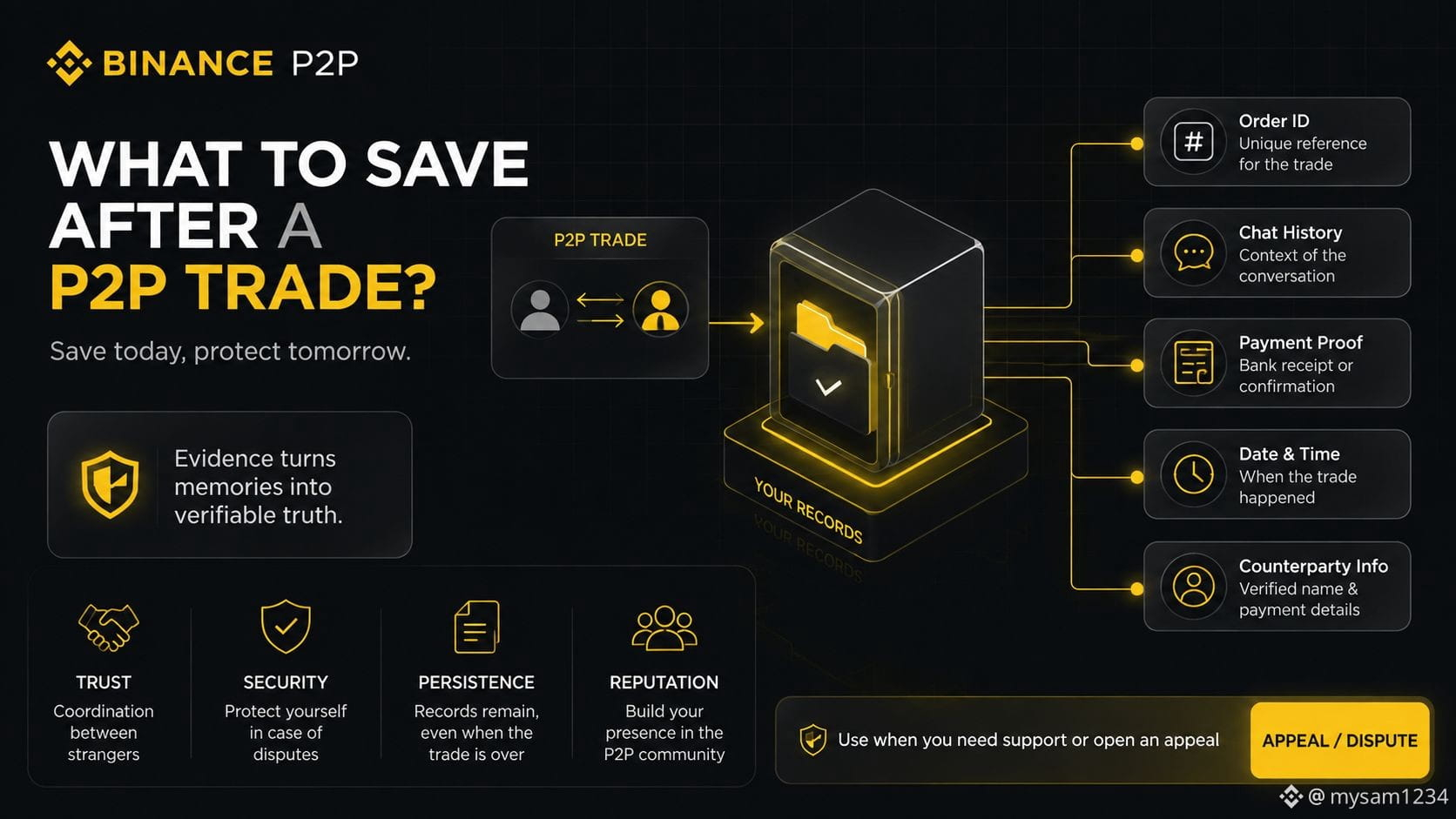
At first glance, saving information after a Binance P2P transaction seems a little unnecessary. The transaction is complete, the money has been transferred, the crypto has been received. Maybe there’s nothing left worth keeping.
But the more I observe, the more I realize that assumption isn’t entirely correct. Binance lets users view order history and details, along with the transaction timeline when an appeal occurs—evidence that can become part of the processing workflow.
Something here keeps bothering me. Small things like the Order ID, payment confirmations, and transaction details don’t just help us remember what we did. They create attribution—what action belongs to which transaction, and what happened under what circumstances.
Gradually, I realize that persistence in this case isn’t some grand concept. It’s simply the ability for an event that has already ended to be cross-checked when needed.
The most interesting thing may not be the technology itself, but how these small traces help strangers coordinate, resolve disagreements, and maintain trust.
The deeper I look, the more I feel it’s part of the invisible infrastructure that internet economies are quietly building.
#binancep2pantoan @Binance Vietnam
But the more I observe, the more I realize that assumption isn’t entirely correct. Binance lets users view order history and details, along with the transaction timeline when an appeal occurs—evidence that can become part of the processing workflow.
Something here keeps bothering me. Small things like the Order ID, payment confirmations, and transaction details don’t just help us remember what we did. They create attribution—what action belongs to which transaction, and what happened under what circumstances.
Gradually, I realize that persistence in this case isn’t some grand concept. It’s simply the ability for an event that has already ended to be cross-checked when needed.
The most interesting thing may not be the technology itself, but how these small traces help strangers coordinate, resolve disagreements, and maintain trust.
The deeper I look, the more I feel it’s part of the invisible infrastructure that internet economies are quietly building.
#binancep2pantoan @Binance Vietnam
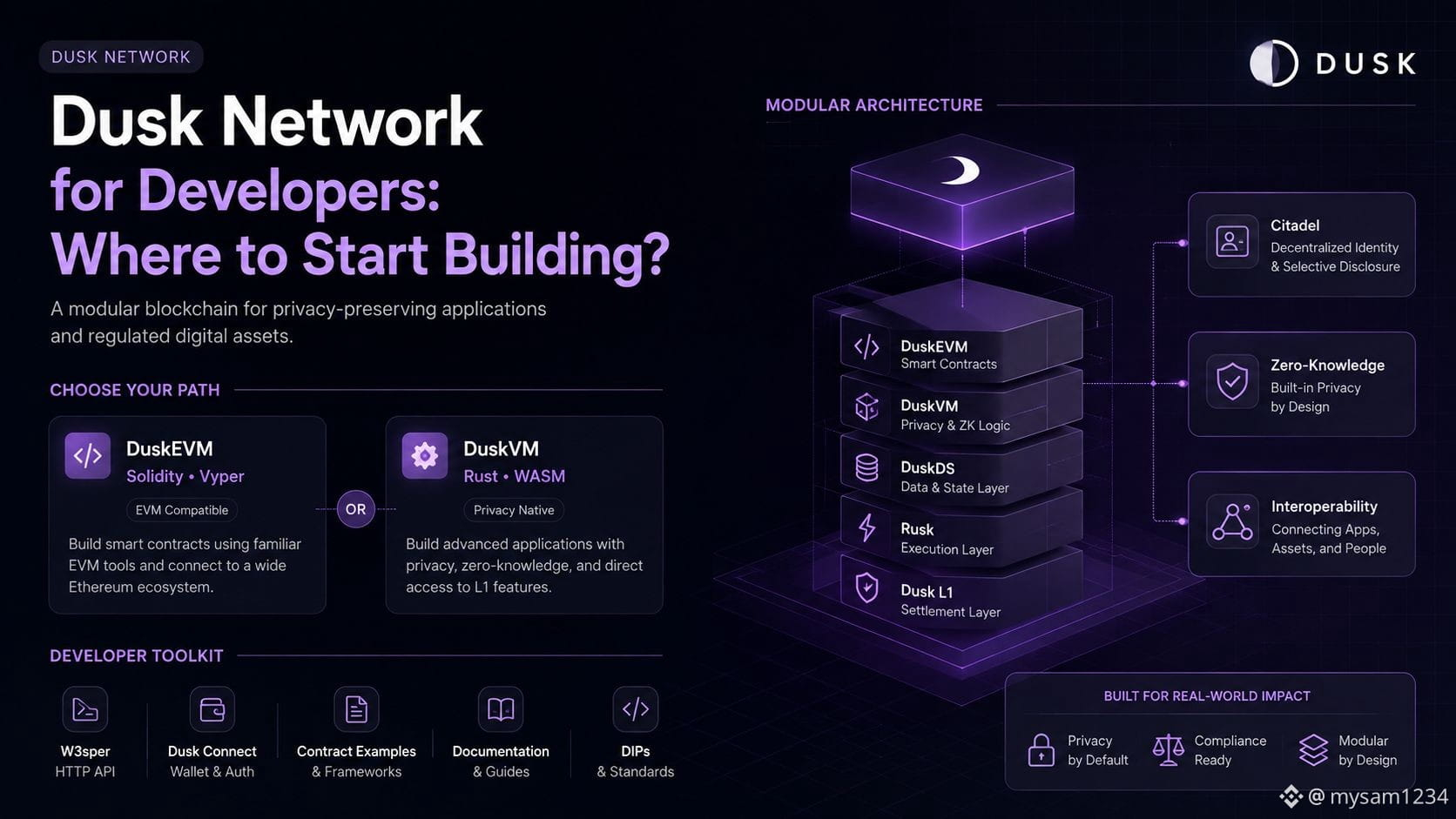
At first, I was fairly skeptical about Dusk. In crypto, a new architecture is often accompanied by a new narrative, and not every narrative survives long enough to become infrastructure.
But when I read the developer documentation more carefully, I noticed a small detail: Dusk doesn’t force builders to go down a single path. You can start with DuskEVM and Solidity, or go deeper into DuskVM with Rust/WASM depending on what you want to build.
Step by step, I realized that this is more important than its technical appearance. A modular architecture here isn’t just about splitting up a system—it reflects how people can contribute from different points while still coordinating on the same platform.
What concerns me is that contribution only truly matters if it can be sustained, retrieved, and connected with other contributions.
Citadel, for example, brings selective disclosure and data control into a more practical context.
The most interesting part, perhaps, isn’t the technology itself, but the possibility that these invisible infrastructure layers gradually become places where knowledge, coordination, and long-term participation are accumulated.
It begins to look more like a form of culture than software.
#dusk $DUSK @Dusk $BTC
But when I read the developer documentation more carefully, I noticed a small detail: Dusk doesn’t force builders to go down a single path. You can start with DuskEVM and Solidity, or go deeper into DuskVM with Rust/WASM depending on what you want to build.
Step by step, I realized that this is more important than its technical appearance. A modular architecture here isn’t just about splitting up a system—it reflects how people can contribute from different points while still coordinating on the same platform.
What concerns me is that contribution only truly matters if it can be sustained, retrieved, and connected with other contributions.
Citadel, for example, brings selective disclosure and data control into a more practical context.
The most interesting part, perhaps, isn’t the technology itself, but the possibility that these invisible infrastructure layers gradually become places where knowledge, coordination, and long-term participation are accumulated.
It begins to look more like a form of culture than software.
#dusk $DUSK @Dusk $BTC
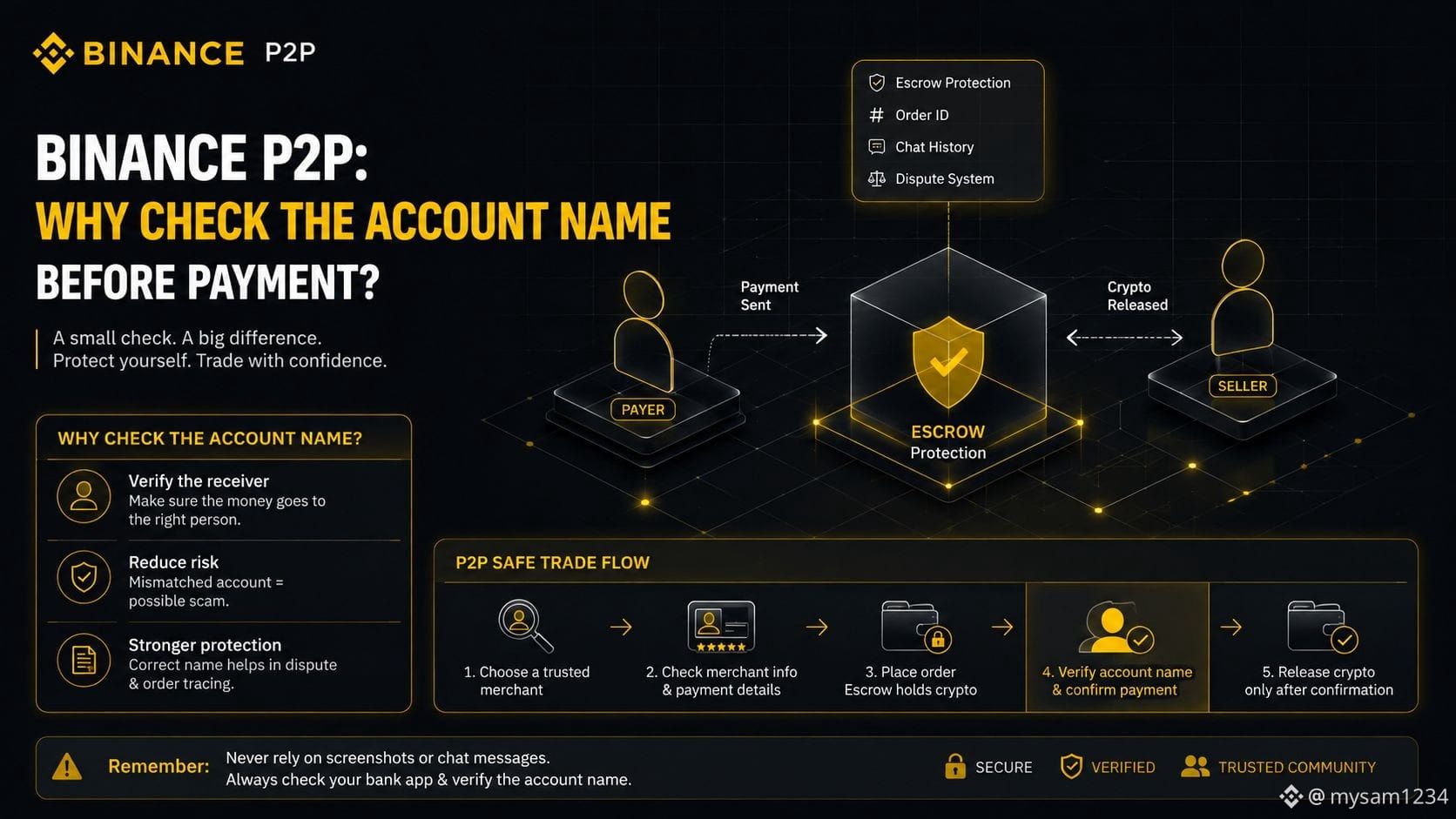
At first glance, the requirement to check the account name on Binance P2P seems like just a mechanical confirmation step. If a transaction already has escrow, transaction history, and a dispute-handling mechanism, why do users still have to check it themselves?
The more I observe, the more I feel the question lies on a different layer. Something is on my mind: in a transaction between strangers, how do you know the money is truly being sent to the correct person?
The account name becomes a small but not insignificant verification point. It links the payer to a specific party on the other side of the transaction. Escrow can hold assets and support coordination, but it cannot replace humans in verifying every piece of information outside the system.
Gradually, I realize that what matters in P2P is not only in the software. It lies in attribution, persistence, and the traces that allow a transaction to be traced back when something goes wrong.
The most interesting part, perhaps, is not the technology but the way people build trust among strangers. Those small actions, over time, start to resemble a kind of internet culture more than a mere payment process.
#binancep2pantoan @Binance Vietnam
The more I observe, the more I feel the question lies on a different layer. Something is on my mind: in a transaction between strangers, how do you know the money is truly being sent to the correct person?
The account name becomes a small but not insignificant verification point. It links the payer to a specific party on the other side of the transaction. Escrow can hold assets and support coordination, but it cannot replace humans in verifying every piece of information outside the system.
Gradually, I realize that what matters in P2P is not only in the software. It lies in attribution, persistence, and the traces that allow a transaction to be traced back when something goes wrong.
The most interesting part, perhaps, is not the technology but the way people build trust among strangers. Those small actions, over time, start to resemble a kind of internet culture more than a mere payment process.
#binancep2pantoan @Binance Vietnam
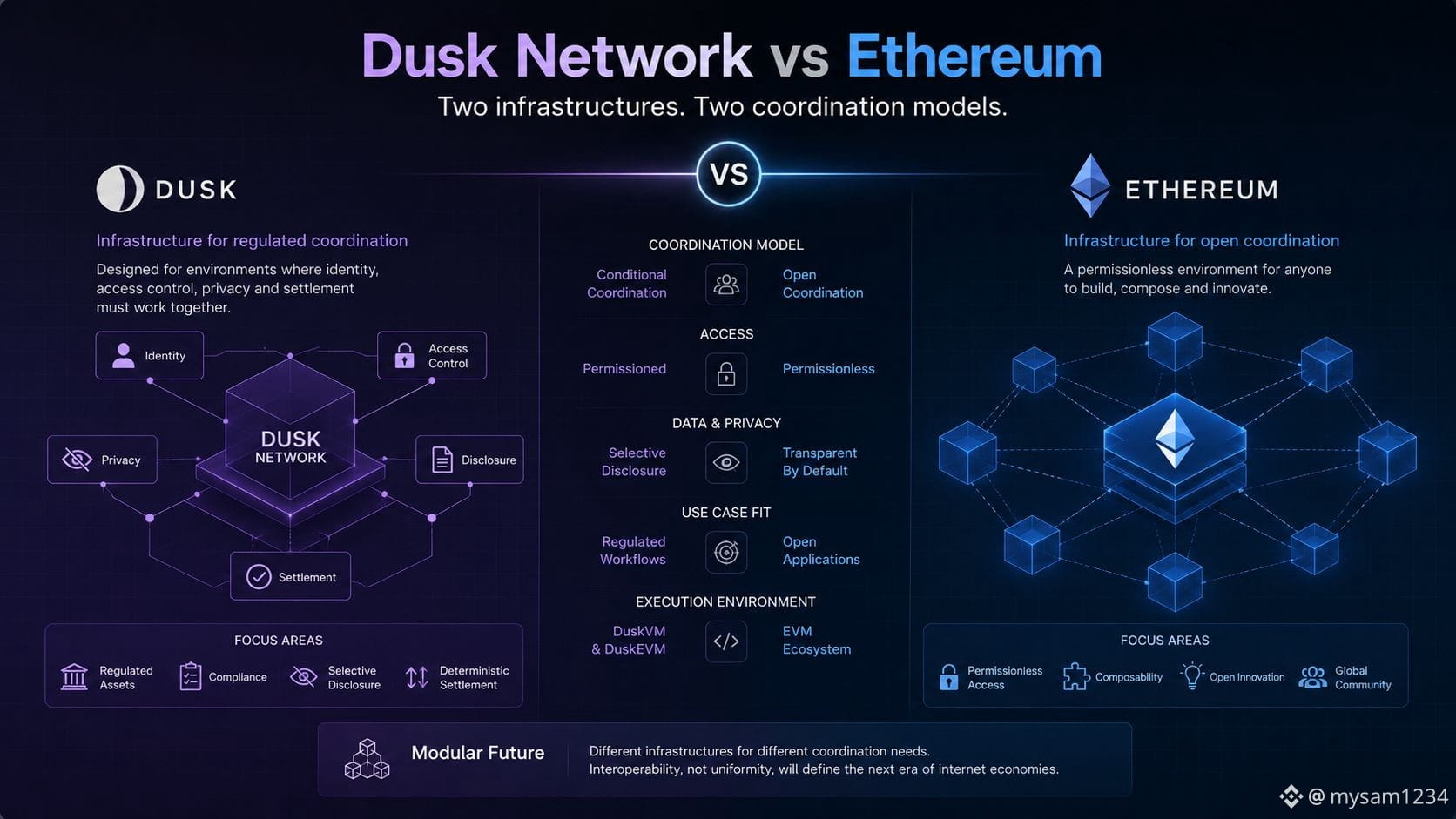
At first, I still thought this could just be a familiar narrative: a new blockchain finds an opening by claiming it’s a good fit for a market that Ethereum hasn’t served well.
But when I look more closely at how Dusk is built, I start to see a different story. Dusk isn’t simply trying to compete with Ethereum. It focuses on workflows where access, identity, privacy, disclosure, and settlement must all coexist within a single system.
Ethereum, meanwhile, comes from a different logic. Permissionless deployment and composability make blockchain an open space, where developers can build on existing contracts and combine them in ways that are hard to predict.
Something about this makes me concerned when we often compare blockchains by speed, fees, or features, while we might be overlooking something more important—what they are designed to coordinate among different groups of people.
Step by step, I realized that Dusk is infrastructure for conditional coordination, while Ethereum is infrastructure for open coordination.
Even Dusk is paving the way for the EVM, allowing familiar Solidity and tooling to enter its ecosystem.
Perhaps the future doesn’t belong to a single blockchain, but to the infrastructure layers quietly serving different modes of coordination across the internet.
#dusk $DUSK @Dusk
But when I look more closely at how Dusk is built, I start to see a different story. Dusk isn’t simply trying to compete with Ethereum. It focuses on workflows where access, identity, privacy, disclosure, and settlement must all coexist within a single system.
Ethereum, meanwhile, comes from a different logic. Permissionless deployment and composability make blockchain an open space, where developers can build on existing contracts and combine them in ways that are hard to predict.
Something about this makes me concerned when we often compare blockchains by speed, fees, or features, while we might be overlooking something more important—what they are designed to coordinate among different groups of people.
Step by step, I realized that Dusk is infrastructure for conditional coordination, while Ethereum is infrastructure for open coordination.
Even Dusk is paving the way for the EVM, allowing familiar Solidity and tooling to enter its ecosystem.
Perhaps the future doesn’t belong to a single blockchain, but to the infrastructure layers quietly serving different modes of coordination across the internet.
#dusk $DUSK @Dusk
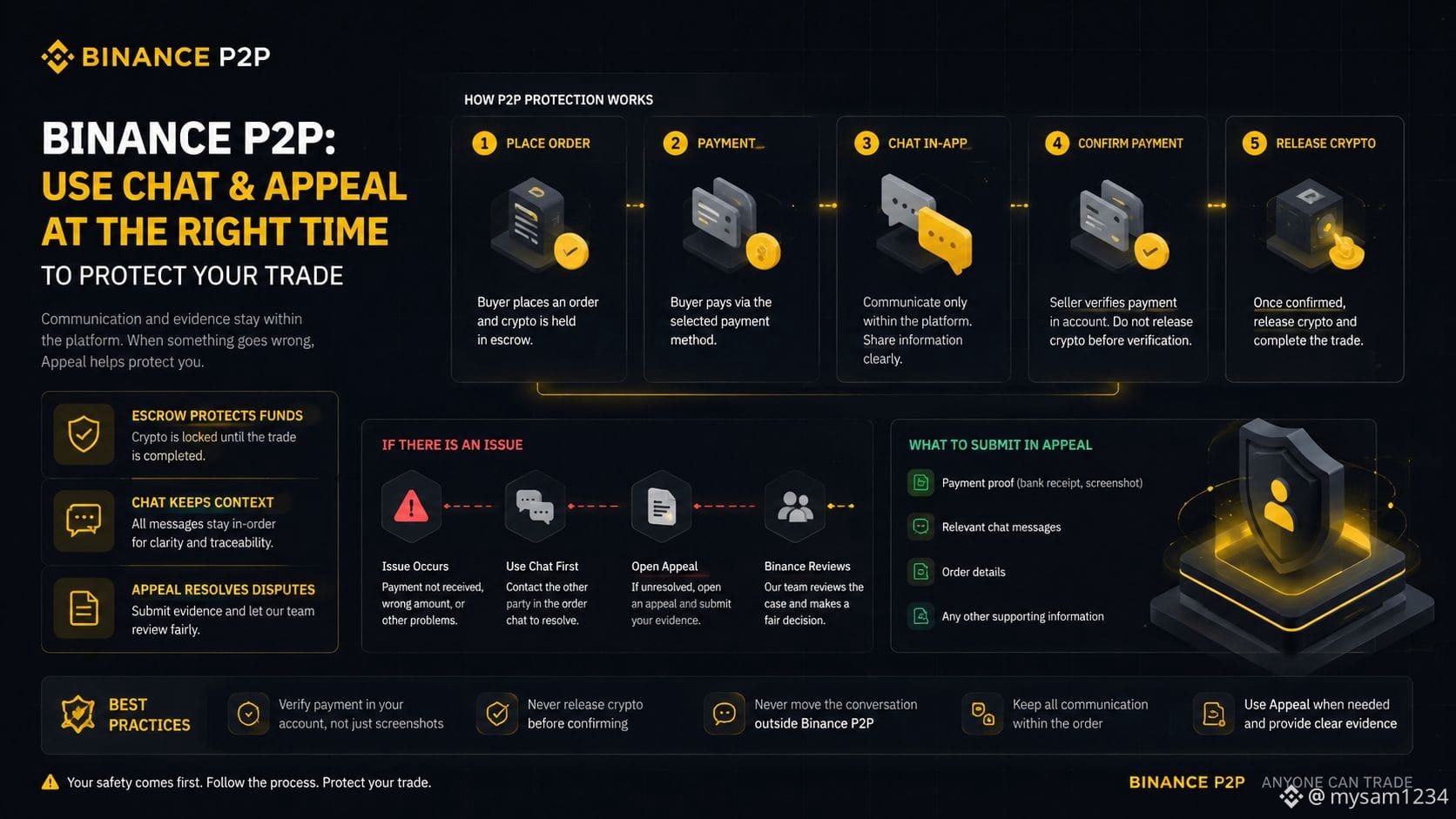
At first glance, Binance P2P can make you think this is just another layer of protection added to a peer-to-peer transaction. Escrow, verification, support, Appeal—those concepts are already all too familiar. But the more I observe, the more I realize the story hinges on a smaller detail: what happens when the two parties no longer agree on the truth of a transaction?
Slowly, I came to understand that Chat and Appeal have value not because they make transactions absolutely safe, but because they help preserve context when something goes wrong. During the Appeal process, Binance allows both sides to provide evidence, while the dispute-handling history may include steps, notes, and related evidence.
What worries me is that many risks arise when users rush out of the main process, trust payment screenshots, or continue the trade under pressure.
The most interesting part probably isn’t the technology; it’s the ability to coordinate. When disagreements occur, people still have evidence, context, and a process to jointly determine what really happened.
The more I look in depth, the more it feels like a kind of culture rather than just software—and perhaps the best infrastructure is something you only notice once a transaction is no longer simple.
#binancep2pantoan @Binance Vietnam $BTC
Slowly, I came to understand that Chat and Appeal have value not because they make transactions absolutely safe, but because they help preserve context when something goes wrong. During the Appeal process, Binance allows both sides to provide evidence, while the dispute-handling history may include steps, notes, and related evidence.
What worries me is that many risks arise when users rush out of the main process, trust payment screenshots, or continue the trade under pressure.
The most interesting part probably isn’t the technology; it’s the ability to coordinate. When disagreements occur, people still have evidence, context, and a process to jointly determine what really happened.
The more I look in depth, the more it feels like a kind of culture rather than just software—and perhaps the best infrastructure is something you only notice once a transaction is no longer simple.
#binancep2pantoan @Binance Vietnam $BTC
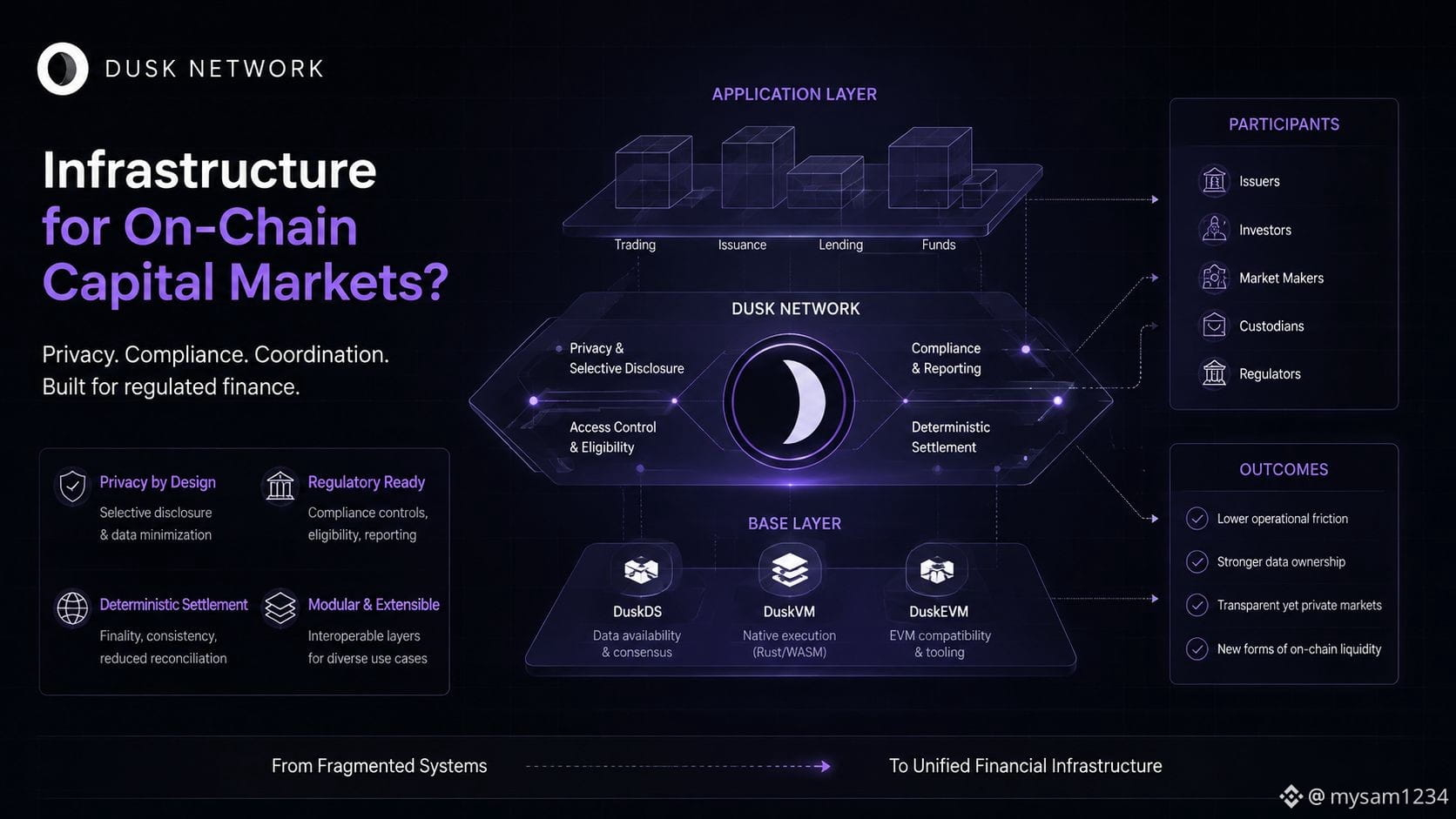
At first glance, Dusk Network can easily be seen as just another narrative of the tokenization wave—putting financial assets on-chain, adding privacy, compliance, and calling it the future of capital markets.
But the more closely I read, the more I realize the story is somewhere else. There’s something that worries me: capital markets don’t only need a place to issue or trade assets. They need an environment where issuers, investors, venues, and regulators can coordinate without constantly reconciling between systems that are separate.
Slowly, I came to realize that this is the truly noteworthy part of Dusk. Privacy, selective disclosure, access control, and deterministic settlement aren’t designed to exist in isolation— they’re built so that multi-party financial processes can run on the same underlying infrastructure.
The most interesting thing, perhaps, isn’t about tokenizing yet another type of asset. It’s about the ability to turn capital processes that rely on reconciliation, paperwork, and off-chain coordination into a more unified workflow.
The deeper I look, the more I feel the question isn’t whether Dusk has already become the capital-markets infrastructure, but whether this approach is strong enough to create a layer of infrastructure that end users almost don’t have to see.
#dusk $DUSK @Dusk
But the more closely I read, the more I realize the story is somewhere else. There’s something that worries me: capital markets don’t only need a place to issue or trade assets. They need an environment where issuers, investors, venues, and regulators can coordinate without constantly reconciling between systems that are separate.
Slowly, I came to realize that this is the truly noteworthy part of Dusk. Privacy, selective disclosure, access control, and deterministic settlement aren’t designed to exist in isolation— they’re built so that multi-party financial processes can run on the same underlying infrastructure.
The most interesting thing, perhaps, isn’t about tokenizing yet another type of asset. It’s about the ability to turn capital processes that rely on reconciliation, paperwork, and off-chain coordination into a more unified workflow.
The deeper I look, the more I feel the question isn’t whether Dusk has already become the capital-markets infrastructure, but whether this approach is strong enough to create a layer of infrastructure that end users almost don’t have to see.
#dusk $DUSK @Dusk
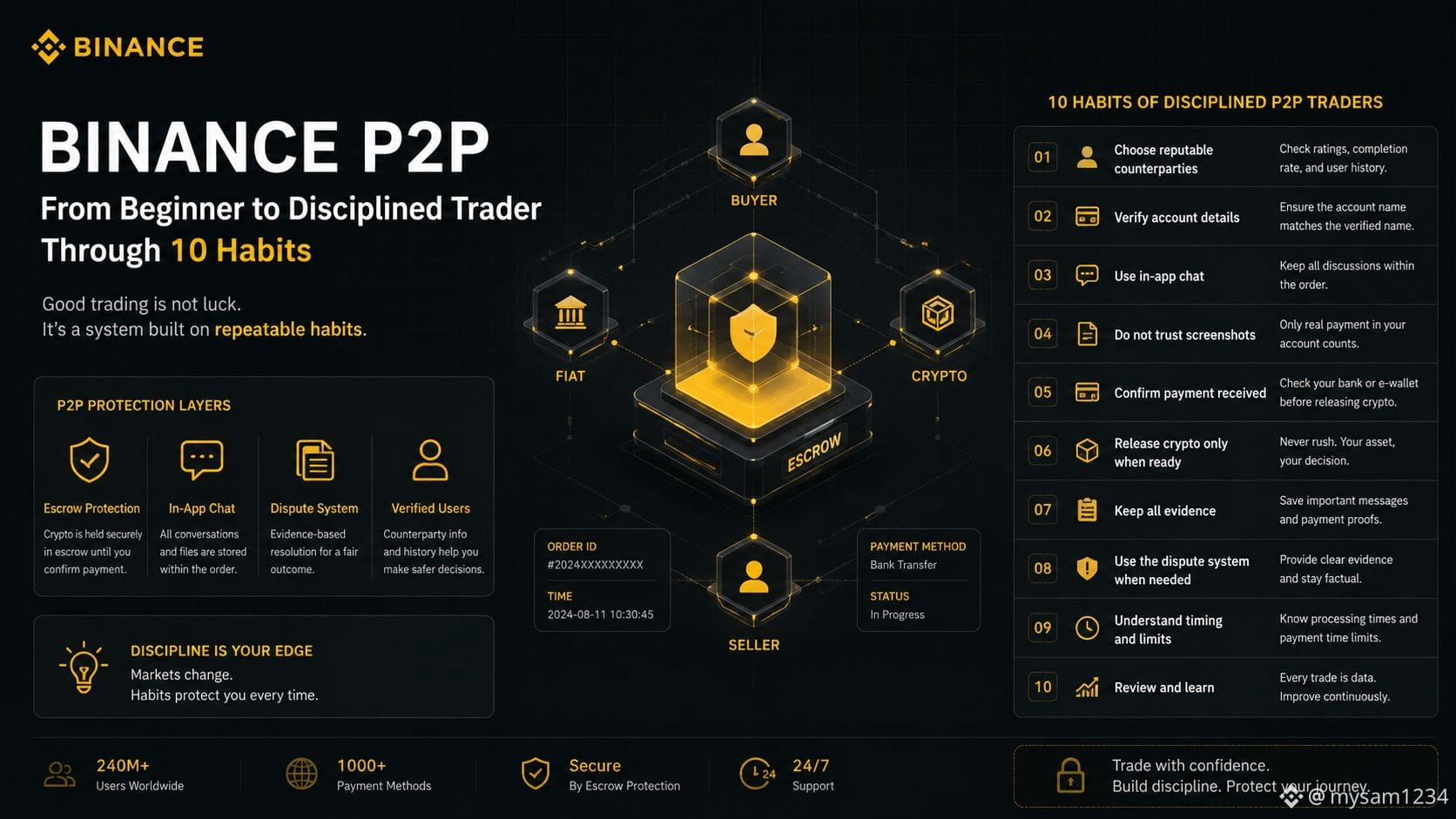
At first, I thought P2P was just another intermediary layer of the internet—add escrow, add chat, add a complaint process. Everything looked like a familiar set of risk-management tools.
But something bothered me when I watched long-time traders. They don’t necessarily understand the system more than newcomers do. The difference lies in repeated habits: checking account names, matching payment information, not relying on screenshots, keeping conversations and evidence within the scope of the order, saving transaction references, and waiting for real confirmation rather than acting on a sense of urgency.
Over time, I realized those small actions don’t only help reduce mistakes. They create the ability to trace, preserve, and coordinate when disagreements arise. Each transaction leaves a trail; each piece of additional evidence adds context, and a dispute becomes a human process of jointly verifying what actually happened.
The most interesting thing, perhaps, isn’t the technology itself, but how it starts to resemble a kind of culture rather than software—specialized knowledge accumulated, experience passed down, and discipline gradually becoming part of the invisible infrastructure of the internet.
The more deeply I look, the more I feel that the future of digital economies may not be determined by new tools, but by the way people learn to coordinate with one another over time.
#binancep2pantoan @Binance Vietnam $BTC
But something bothered me when I watched long-time traders. They don’t necessarily understand the system more than newcomers do. The difference lies in repeated habits: checking account names, matching payment information, not relying on screenshots, keeping conversations and evidence within the scope of the order, saving transaction references, and waiting for real confirmation rather than acting on a sense of urgency.
Over time, I realized those small actions don’t only help reduce mistakes. They create the ability to trace, preserve, and coordinate when disagreements arise. Each transaction leaves a trail; each piece of additional evidence adds context, and a dispute becomes a human process of jointly verifying what actually happened.
The most interesting thing, perhaps, isn’t the technology itself, but how it starts to resemble a kind of culture rather than software—specialized knowledge accumulated, experience passed down, and discipline gradually becoming part of the invisible infrastructure of the internet.
The more deeply I look, the more I feel that the future of digital economies may not be determined by new tools, but by the way people learn to coordinate with one another over time.
#binancep2pantoan @Binance Vietnam $BTC
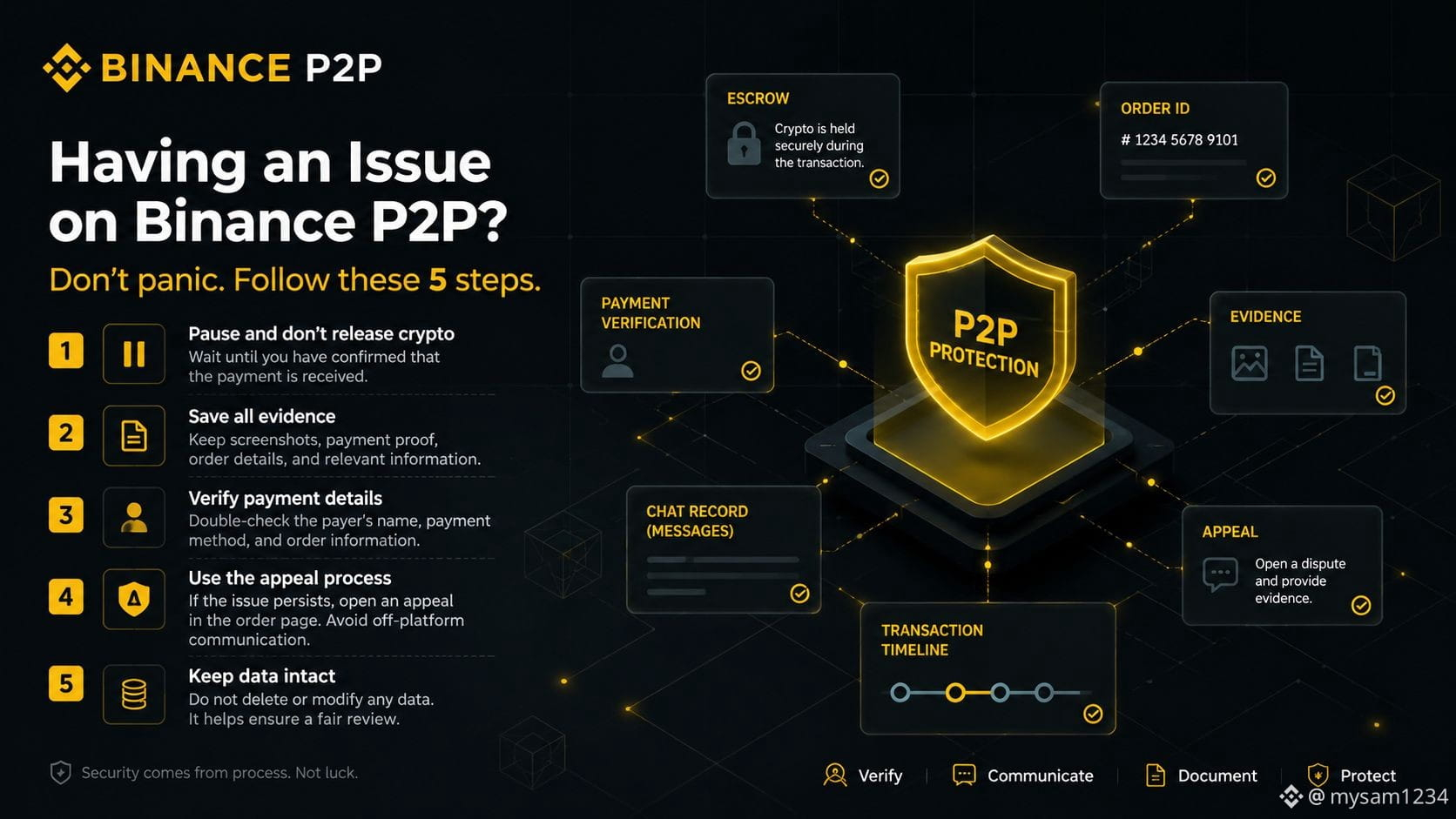
At first, I still had some doubts. Advice like “don’t panic and follow the correct procedure” sometimes is just another narrative laid over a system that is already complex enough.
But the more I observed P2P, the more I noticed a rather small detail: when a transaction encounters problems, what matters isn’t only the crypto that’s being held in escrow. There is also the order number, the transaction status, payment proof, and the appeal process—data that helps determine how exactly an event unfolded.
Step by step, I realized it was more important than I thought.
If something goes wrong, first stop the release of crypto when the funds have not actually been confirmed, then save the relevant evidence, check the payment information, and match it to the correct order. If the issue can’t be resolved on your own, use an appeal rather than continuing to handle it through channels that are not part of the transaction. Finally, keep all the necessary data so the review process can rely on what truly happened.
There’s something here that concerns me.
The most interesting part probably isn’t the escrow, but the coordination—a system that allows strangers to act based on the same set of data.
It starts to resemble a kind of culture more than software, and perhaps the internet’s invisible infrastructure is always formed in such a quiet way.
#binancep2pantoan @Binance Vietnam
But the more I observed P2P, the more I noticed a rather small detail: when a transaction encounters problems, what matters isn’t only the crypto that’s being held in escrow. There is also the order number, the transaction status, payment proof, and the appeal process—data that helps determine how exactly an event unfolded.
Step by step, I realized it was more important than I thought.
If something goes wrong, first stop the release of crypto when the funds have not actually been confirmed, then save the relevant evidence, check the payment information, and match it to the correct order. If the issue can’t be resolved on your own, use an appeal rather than continuing to handle it through channels that are not part of the transaction. Finally, keep all the necessary data so the review process can rely on what truly happened.
There’s something here that concerns me.
The most interesting part probably isn’t the escrow, but the coordination—a system that allows strangers to act based on the same set of data.
It starts to resemble a kind of culture more than software, and perhaps the internet’s invisible infrastructure is always formed in such a quiet way.
#binancep2pantoan @Binance Vietnam
Log in to explore more content