

Tokenist
2.8k Posts

Tokenist
 Square Verified+
Report
Block User
The Tokenist is your trusted home for the latest finance news on stocks, crypto, forex, and more. Join us.
0 Following
11.7K+ Followers
44.5K+ Liked
Posts
·
--
Verified

Article
ChatGPT AI Predicts That Gold Could Hit Five Figures By 2027Sam Altman’s ChatGPT AI predicts that something potentially historic could be building for Gold by January 1, 2027. OpenAI’s chat model believes that a huge catalyst for the leading precious metal could spark a mouthwatering rally that would leave Gold bugs euphoric.
The proposal calls for a coordinated announcement by a coalition of major emerging-market central banks and sovereign wealth funds, stating their intention to launch a multi-year strategic program to accumulate gold.
SOURCE: ChatGPT AI Predicts a Wild Move for Gold
The aim is to significantly increase the share of gold in their official reserves as a deliberate move to diversify away from traditional fiat currencies. This initiative would accelerate a structural shift in the global monetary system and generate sustained demand from the official sector that surpasses current annual gold mine supply.
As of today (October 25), Gold is trading at $3,996, down 4% over the past five days, and has now lost its key support level at $4,000 for the first time since July 2026.
Gold Technical Analysis: Can $4,000 be Reclaimed Quickly to Kickstart the ChatGPT AI Prediction
SOURCE: TradingView
On the higher timeframes, gold has been consolidating near the $3,990–$4,050 region after pulling back from recent highs above $4,200 earlier in October 2026.
Price continues to hold above key intermediate supports while facing resistance around the $4,150–$4,250 zone. In a standard bull market, a sustained breakout above $4,300–$4,500 would confirm intermediate strength and open the path toward new all-time highs.
Under the extreme multi-central-bank strategic accumulation scenario outlined above, clearing prior highs would likely trigger powerful measured-move extensions and multi-year Fibonacci projections from the long-term base that began earlier in the decade.
Momentum indicators currently sit in neutral-to-corrective territory with substantial room to run into the extreme overbought readings characteristic of major precious-metals advances.
Key nearer-term supports sit near $3,900–$3,950 and $3,750–$3,800; holding those levels would keep the broader uptrend structure intact.
Crypto Expert Report: Follow The Money – Which Presales Are Attracting Crypto Whales in 2026?
Could an End to Global Conflicts Boost Precious Metal Fortunes?
US President Donald Trump says the US is considering a possible attack on Iran as soon as Sunday, or could reach a deal. Iranian President Masoud Pezeshkian blames the US for breaking down interim agreement talks. Follow our LIVE coverage: https://t.co/wSBBI7kWBk pic.twitter.com/aTvLjb5Kmp
— Al Jazeera English (@AJEnglish) October 25, 2026
Beyond gold-specific official buying, several major global developments could further support the broader precious metals complex. A durable resolution to the Russia-Ukraine conflict could eventually free capital and reduce certain risk premiums, while still leaving room for lingering monetary and geopolitical uncertainty that favors hard assets.
A lasting ceasefire between Iran and the United States, paired with the permanent normalization of shipping through the Strait of Hormuz, would ease energy-driven inflation spikes but could also encourage central banks to maintain accommodative policies for longer.
Other supportive factors include any renewed concerns about fiat currency stability, accelerated de-dollarization trends among major economies, elevated fiscal deficits in key nations, or a clear pivot by major central banks toward more aggressive monetary easing.
Historically, combinations of these elements have boosted demand for gold and silver as stores of value.
ChatGPT AI Predicts the Gold Price: The Big Reveal
Under this highly speculative scenario, and assuming supportive global conditions for hard assets persist, gold could reach somewhere between $8,000 and $12,000 per troy ounce, with a stretch target toward $15,000+ by January 1, 2027.
This remains pure speculation and entertainment, not a realistic base-case outlook. The catalyst would require extraordinary coordination among multiple central banks and sovereign entities that is currently highly unlikely.
DISCOVER: Large-Fund Redemptions Expose a Split in Bitcoin ETF Flows
The post ChatGPT AI Predicts That Gold Could Hit Five Figures by 2027 appeared first on Tokenist.
ChatGPT AI Predicts That Gold Could Hit Five Figures By 2027
Sam Altman’s ChatGPT AI predicts that something potentially historic could be building for Gold by January 1, 2027. OpenAI’s chat model believes that a huge catalyst for the leading precious metal could spark a mouthwatering rally that would leave Gold bugs euphoric.
The proposal calls for a coordinated announcement by a coalition of major emerging-market central banks and sovereign wealth funds, stating their intention to launch a multi-year strategic program to accumulate gold.
SOURCE: ChatGPT AI Predicts a Wild Move for Gold
The aim is to significantly increase the share of gold in their official reserves as a deliberate move to diversify away from traditional fiat currencies. This initiative would accelerate a structural shift in the global monetary system and generate sustained demand from the official sector that surpasses current annual gold mine supply.
As of today (October 25), Gold is trading at $3,996, down 4% over the past five days, and has now lost its key support level at $4,000 for the first time since July 2026.
Gold Technical Analysis: Can $4,000 be Reclaimed Quickly to Kickstart the ChatGPT AI Prediction
SOURCE: TradingView
On the higher timeframes, gold has been consolidating near the $3,990–$4,050 region after pulling back from recent highs above $4,200 earlier in October 2026.
Price continues to hold above key intermediate supports while facing resistance around the $4,150–$4,250 zone. In a standard bull market, a sustained breakout above $4,300–$4,500 would confirm intermediate strength and open the path toward new all-time highs.
Under the extreme multi-central-bank strategic accumulation scenario outlined above, clearing prior highs would likely trigger powerful measured-move extensions and multi-year Fibonacci projections from the long-term base that began earlier in the decade.
Momentum indicators currently sit in neutral-to-corrective territory with substantial room to run into the extreme overbought readings characteristic of major precious-metals advances.
Key nearer-term supports sit near $3,900–$3,950 and $3,750–$3,800; holding those levels would keep the broader uptrend structure intact.
Crypto Expert Report: Follow The Money – Which Presales Are Attracting Crypto Whales in 2026?
Could an End to Global Conflicts Boost Precious Metal Fortunes?
US President Donald Trump says the US is considering a possible attack on Iran as soon as Sunday, or could reach a deal. Iranian President Masoud Pezeshkian blames the US for breaking down interim agreement talks. Follow our LIVE coverage: https://t.co/wSBBI7kWBk pic.twitter.com/aTvLjb5Kmp
— Al Jazeera English (@AJEnglish) October 25, 2026
Beyond gold-specific official buying, several major global developments could further support the broader precious metals complex. A durable resolution to the Russia-Ukraine conflict could eventually free capital and reduce certain risk premiums, while still leaving room for lingering monetary and geopolitical uncertainty that favors hard assets.
A lasting ceasefire between Iran and the United States, paired with the permanent normalization of shipping through the Strait of Hormuz, would ease energy-driven inflation spikes but could also encourage central banks to maintain accommodative policies for longer.
Other supportive factors include any renewed concerns about fiat currency stability, accelerated de-dollarization trends among major economies, elevated fiscal deficits in key nations, or a clear pivot by major central banks toward more aggressive monetary easing.
Historically, combinations of these elements have boosted demand for gold and silver as stores of value.
ChatGPT AI Predicts the Gold Price: The Big Reveal
Under this highly speculative scenario, and assuming supportive global conditions for hard assets persist, gold could reach somewhere between $8,000 and $12,000 per troy ounce, with a stretch target toward $15,000+ by January 1, 2027.
This remains pure speculation and entertainment, not a realistic base-case outlook. The catalyst would require extraordinary coordination among multiple central banks and sovereign entities that is currently highly unlikely.
DISCOVER: Large-Fund Redemptions Expose a Split in Bitcoin ETF Flows
The post ChatGPT AI Predicts That Gold Could Hit Five Figures by 2027 appeared first on Tokenist.
The proposal calls for a coordinated announcement by a coalition of major emerging-market central banks and sovereign wealth funds, stating their intention to launch a multi-year strategic program to accumulate gold.
SOURCE: ChatGPT AI Predicts a Wild Move for Gold
The aim is to significantly increase the share of gold in their official reserves as a deliberate move to diversify away from traditional fiat currencies. This initiative would accelerate a structural shift in the global monetary system and generate sustained demand from the official sector that surpasses current annual gold mine supply.
As of today (October 25), Gold is trading at $3,996, down 4% over the past five days, and has now lost its key support level at $4,000 for the first time since July 2026.
Gold Technical Analysis: Can $4,000 be Reclaimed Quickly to Kickstart the ChatGPT AI Prediction
SOURCE: TradingView
On the higher timeframes, gold has been consolidating near the $3,990–$4,050 region after pulling back from recent highs above $4,200 earlier in October 2026.
Price continues to hold above key intermediate supports while facing resistance around the $4,150–$4,250 zone. In a standard bull market, a sustained breakout above $4,300–$4,500 would confirm intermediate strength and open the path toward new all-time highs.
Under the extreme multi-central-bank strategic accumulation scenario outlined above, clearing prior highs would likely trigger powerful measured-move extensions and multi-year Fibonacci projections from the long-term base that began earlier in the decade.
Momentum indicators currently sit in neutral-to-corrective territory with substantial room to run into the extreme overbought readings characteristic of major precious-metals advances.
Key nearer-term supports sit near $3,900–$3,950 and $3,750–$3,800; holding those levels would keep the broader uptrend structure intact.
Crypto Expert Report: Follow The Money – Which Presales Are Attracting Crypto Whales in 2026?
Could an End to Global Conflicts Boost Precious Metal Fortunes?
US President Donald Trump says the US is considering a possible attack on Iran as soon as Sunday, or could reach a deal. Iranian President Masoud Pezeshkian blames the US for breaking down interim agreement talks. Follow our LIVE coverage: https://t.co/wSBBI7kWBk pic.twitter.com/aTvLjb5Kmp
— Al Jazeera English (@AJEnglish) October 25, 2026
Beyond gold-specific official buying, several major global developments could further support the broader precious metals complex. A durable resolution to the Russia-Ukraine conflict could eventually free capital and reduce certain risk premiums, while still leaving room for lingering monetary and geopolitical uncertainty that favors hard assets.
A lasting ceasefire between Iran and the United States, paired with the permanent normalization of shipping through the Strait of Hormuz, would ease energy-driven inflation spikes but could also encourage central banks to maintain accommodative policies for longer.
Other supportive factors include any renewed concerns about fiat currency stability, accelerated de-dollarization trends among major economies, elevated fiscal deficits in key nations, or a clear pivot by major central banks toward more aggressive monetary easing.
Historically, combinations of these elements have boosted demand for gold and silver as stores of value.
ChatGPT AI Predicts the Gold Price: The Big Reveal
Under this highly speculative scenario, and assuming supportive global conditions for hard assets persist, gold could reach somewhere between $8,000 and $12,000 per troy ounce, with a stretch target toward $15,000+ by January 1, 2027.
This remains pure speculation and entertainment, not a realistic base-case outlook. The catalyst would require extraordinary coordination among multiple central banks and sovereign entities that is currently highly unlikely.
DISCOVER: Large-Fund Redemptions Expose a Split in Bitcoin ETF Flows
The post ChatGPT AI Predicts That Gold Could Hit Five Figures by 2027 appeared first on Tokenist.
1
1.6k
·
--
Verified

Article
Oil Prices Climb Back Above $110 While Crypto Stocks Lose Up to 48% in a Month: Miners Are Fallin...Brent crude traded at $110 a barrel on Friday, October 23, after Iran’s Revolutionary Guard said it had attacked tankers near the Strait of Hormuz. Crypto stocks are absorbing far more of the damage than Bitcoin itself. Riot Platforms and MARA Holdings have lost almost half their value in a month, while Bitcoin is down 5.6%. Rising oil prices are only part of the reason.
The Bitcoin price sits at $81,540, down 0.3% in 24 hours. So what is driving oil higher, and why are crypto stocks falling so much faster than the coin they track?
Because the tanker war in the Gulf has escalated. Brent rose 4% on Thursday to close at $113.17, its highest level since the spring, after Iran said it had struck ships using a route Tehran rejects. President Trump accused Iran of faking the attacks to lift prices before the November 3 midterms. The market didn’t wait for proof.
The bigger picture is striking. Brent started 2026 at $60.75 and is up 82% since. It now trades about 29% above its 365-day average of $85, a gap that CryptoQuant treats as a warning for Bitcoin.
BREAKING: Brent crude oil surges above $114/barrel for the first time since May 5th as US-Iran tensions escalate. pic.twitter.com/fCgXIJVlEr
— The Kobeissi Letter (@KobeissiLetter) October 23, 2026
What Do Higher Oil Prices Mean for Bitcoin?
Usually, slower gains. “When Brent settles into a strong upward trend, above its annual average, Bitcoin has often slowed down,” CryptoQuant analyst Darkfost wrote on Friday. Expensive oil feeds inflation, which keeps interest rates high and drains appetite for risk.
Bitcoin faces a tough macro backdrop as Brent holds above $100 “Over the long term, we can see that when Brent settles into a strong upward trend, above its annual average, Bitcoin has often slowed down.” – By @Darkfost_Coc pic.twitter.com/LR7SfmXyUm
— CryptoQuant.com (@cryptoquant_com) October 23, 2026
The signal hasn’t been clean this time. Brent has held above its annual average since July 13, and Bitcoin has risen 31% over the same stretch, from $62,239 to about $81,700. The pressure shows up instead in where the rally stalled: below $88,000 in September.
CryptoQuant founder Ki Young Ju offered a contrarian view. His firm’s analyst consensus data ranks Brent and WTI among the most bearish commodities, with the bearish case pointing to $80 oil once the war premium fades. “Might be time to sell and rotate into Bitcoin,” he wrote.
Most bearish stocks and commodities by analyst consensus. Might be time to sell and rotate into Bitcoin. pic.twitter.com/1ZkdMeE7v4
— Ki Young Ju (@ki_young_ju) October 23, 2026
Why Are Crypto Stocks Falling Faster Than Bitcoin?
Because many of them are now AI stocks too. Bitcoin miners spent the past two years turning their power sites into AI data centers, often with borrowed money. That trade reversed after September’s hotter-than-expected inflation report, and the credit market made it worse: CoreWeave’s bond yields climbed toward 15%, a sign that lenders are getting nervous about debt-funded AI build-outs. CoreWeave also tops CryptoQuant’s list of the most bearish AI stocks.
Stock Change, Sept 22–Oct 22 Riot Platforms (RIOT) −48.3% MARA Holdings (MARA) −46.8% Galaxy Digital (GLXY) −43.7% Robinhood (HOOD) −22.3% Coinbase (COIN) −15.9% Strategy (MSTR) −12.9% Circle (CRCL) −8.4% iShares Bitcoin Trust (IBIT) −5.7%
Closing prices. Source: Yahoo Finance
Piper Sandler cut its price targets on MARA, Riot and Galaxy last week but kept Overweight ratings. Exchanges and brokers fell less, and Circle, whose revenue tracks interest rates rather than trading, held up best.
Discover: Bitcoin Slips Under $82,000 as Brent Tops $112: Is Washington Waiting for the Midterms Before Striking Iran Again?
Bitcoin Price: Which Levels Matter Now?
Bitcoin is holding just above its 50-day EMA at $80,870, a line it has closed above every day this month. The first support is $80,394, and below it $79,800, the floor of the range since October 10. A daily close under that level would point to the 200-day EMA near $76,230.
On the upside, $82,300 to $82,850 has capped every bounce this week. Above it, the September high near $87,200 is the next level that matters.
BTCUSDT 1D Chart
Discover: Crypto Stocks Slide Before the Open as China’s CSI 300 Sinks 20% From Its June Peak: Can Coinbase and Strategy Hold This Week’s Rebound?
The post Oil Prices Climb Back Above $110 While Crypto Stocks Lose Up to 48% in a Month: Miners Are Falling Even Faster appeared first on Tokenist.
Oil Prices Climb Back Above $110 While Crypto Stocks Lose Up to 48% in a Month: Miners Are Fallin...
Brent crude traded at $110 a barrel on Friday, October 23, after Iran’s Revolutionary Guard said it had attacked tankers near the Strait of Hormuz. Crypto stocks are absorbing far more of the damage than Bitcoin itself. Riot Platforms and MARA Holdings have lost almost half their value in a month, while Bitcoin is down 5.6%. Rising oil prices are only part of the reason.
The Bitcoin price sits at $81,540, down 0.3% in 24 hours. So what is driving oil higher, and why are crypto stocks falling so much faster than the coin they track?
Because the tanker war in the Gulf has escalated. Brent rose 4% on Thursday to close at $113.17, its highest level since the spring, after Iran said it had struck ships using a route Tehran rejects. President Trump accused Iran of faking the attacks to lift prices before the November 3 midterms. The market didn’t wait for proof.
The bigger picture is striking. Brent started 2026 at $60.75 and is up 82% since. It now trades about 29% above its 365-day average of $85, a gap that CryptoQuant treats as a warning for Bitcoin.
BREAKING: Brent crude oil surges above $114/barrel for the first time since May 5th as US-Iran tensions escalate. pic.twitter.com/fCgXIJVlEr
— The Kobeissi Letter (@KobeissiLetter) October 23, 2026
What Do Higher Oil Prices Mean for Bitcoin?
Usually, slower gains. “When Brent settles into a strong upward trend, above its annual average, Bitcoin has often slowed down,” CryptoQuant analyst Darkfost wrote on Friday. Expensive oil feeds inflation, which keeps interest rates high and drains appetite for risk.
Bitcoin faces a tough macro backdrop as Brent holds above $100 “Over the long term, we can see that when Brent settles into a strong upward trend, above its annual average, Bitcoin has often slowed down.” – By @Darkfost_Coc pic.twitter.com/LR7SfmXyUm
— CryptoQuant.com (@cryptoquant_com) October 23, 2026
The signal hasn’t been clean this time. Brent has held above its annual average since July 13, and Bitcoin has risen 31% over the same stretch, from $62,239 to about $81,700. The pressure shows up instead in where the rally stalled: below $88,000 in September.
CryptoQuant founder Ki Young Ju offered a contrarian view. His firm’s analyst consensus data ranks Brent and WTI among the most bearish commodities, with the bearish case pointing to $80 oil once the war premium fades. “Might be time to sell and rotate into Bitcoin,” he wrote.
Most bearish stocks and commodities by analyst consensus. Might be time to sell and rotate into Bitcoin. pic.twitter.com/1ZkdMeE7v4
— Ki Young Ju (@ki_young_ju) October 23, 2026
Why Are Crypto Stocks Falling Faster Than Bitcoin?
Because many of them are now AI stocks too. Bitcoin miners spent the past two years turning their power sites into AI data centers, often with borrowed money. That trade reversed after September’s hotter-than-expected inflation report, and the credit market made it worse: CoreWeave’s bond yields climbed toward 15%, a sign that lenders are getting nervous about debt-funded AI build-outs. CoreWeave also tops CryptoQuant’s list of the most bearish AI stocks.
Stock Change, Sept 22–Oct 22 Riot Platforms (RIOT) −48.3% MARA Holdings (MARA) −46.8% Galaxy Digital (GLXY) −43.7% Robinhood (HOOD) −22.3% Coinbase (COIN) −15.9% Strategy (MSTR) −12.9% Circle (CRCL) −8.4% iShares Bitcoin Trust (IBIT) −5.7%
Closing prices. Source: Yahoo Finance
Piper Sandler cut its price targets on MARA, Riot and Galaxy last week but kept Overweight ratings. Exchanges and brokers fell less, and Circle, whose revenue tracks interest rates rather than trading, held up best.
Discover: Bitcoin Slips Under $82,000 as Brent Tops $112: Is Washington Waiting for the Midterms Before Striking Iran Again?
Bitcoin Price: Which Levels Matter Now?
Bitcoin is holding just above its 50-day EMA at $80,870, a line it has closed above every day this month. The first support is $80,394, and below it $79,800, the floor of the range since October 10. A daily close under that level would point to the 200-day EMA near $76,230.
On the upside, $82,300 to $82,850 has capped every bounce this week. Above it, the September high near $87,200 is the next level that matters.
BTCUSDT 1D Chart
Discover: Crypto Stocks Slide Before the Open as China’s CSI 300 Sinks 20% From Its June Peak: Can Coinbase and Strategy Hold This Week’s Rebound?
The post Oil Prices Climb Back Above $110 While Crypto Stocks Lose Up to 48% in a Month: Miners Are Falling Even Faster appeared first on Tokenist.
The Bitcoin price sits at $81,540, down 0.3% in 24 hours. So what is driving oil higher, and why are crypto stocks falling so much faster than the coin they track?
Because the tanker war in the Gulf has escalated. Brent rose 4% on Thursday to close at $113.17, its highest level since the spring, after Iran said it had struck ships using a route Tehran rejects. President Trump accused Iran of faking the attacks to lift prices before the November 3 midterms. The market didn’t wait for proof.
The bigger picture is striking. Brent started 2026 at $60.75 and is up 82% since. It now trades about 29% above its 365-day average of $85, a gap that CryptoQuant treats as a warning for Bitcoin.
BREAKING: Brent crude oil surges above $114/barrel for the first time since May 5th as US-Iran tensions escalate. pic.twitter.com/fCgXIJVlEr
— The Kobeissi Letter (@KobeissiLetter) October 23, 2026
What Do Higher Oil Prices Mean for Bitcoin?
Usually, slower gains. “When Brent settles into a strong upward trend, above its annual average, Bitcoin has often slowed down,” CryptoQuant analyst Darkfost wrote on Friday. Expensive oil feeds inflation, which keeps interest rates high and drains appetite for risk.
Bitcoin faces a tough macro backdrop as Brent holds above $100 “Over the long term, we can see that when Brent settles into a strong upward trend, above its annual average, Bitcoin has often slowed down.” – By @Darkfost_Coc pic.twitter.com/LR7SfmXyUm
— CryptoQuant.com (@cryptoquant_com) October 23, 2026
The signal hasn’t been clean this time. Brent has held above its annual average since July 13, and Bitcoin has risen 31% over the same stretch, from $62,239 to about $81,700. The pressure shows up instead in where the rally stalled: below $88,000 in September.
CryptoQuant founder Ki Young Ju offered a contrarian view. His firm’s analyst consensus data ranks Brent and WTI among the most bearish commodities, with the bearish case pointing to $80 oil once the war premium fades. “Might be time to sell and rotate into Bitcoin,” he wrote.
Most bearish stocks and commodities by analyst consensus. Might be time to sell and rotate into Bitcoin. pic.twitter.com/1ZkdMeE7v4
— Ki Young Ju (@ki_young_ju) October 23, 2026
Why Are Crypto Stocks Falling Faster Than Bitcoin?
Because many of them are now AI stocks too. Bitcoin miners spent the past two years turning their power sites into AI data centers, often with borrowed money. That trade reversed after September’s hotter-than-expected inflation report, and the credit market made it worse: CoreWeave’s bond yields climbed toward 15%, a sign that lenders are getting nervous about debt-funded AI build-outs. CoreWeave also tops CryptoQuant’s list of the most bearish AI stocks.
Stock Change, Sept 22–Oct 22 Riot Platforms (RIOT) −48.3% MARA Holdings (MARA) −46.8% Galaxy Digital (GLXY) −43.7% Robinhood (HOOD) −22.3% Coinbase (COIN) −15.9% Strategy (MSTR) −12.9% Circle (CRCL) −8.4% iShares Bitcoin Trust (IBIT) −5.7%
Closing prices. Source: Yahoo Finance
Piper Sandler cut its price targets on MARA, Riot and Galaxy last week but kept Overweight ratings. Exchanges and brokers fell less, and Circle, whose revenue tracks interest rates rather than trading, held up best.
Discover: Bitcoin Slips Under $82,000 as Brent Tops $112: Is Washington Waiting for the Midterms Before Striking Iran Again?
Bitcoin Price: Which Levels Matter Now?
Bitcoin is holding just above its 50-day EMA at $80,870, a line it has closed above every day this month. The first support is $80,394, and below it $79,800, the floor of the range since October 10. A daily close under that level would point to the 200-day EMA near $76,230.
On the upside, $82,300 to $82,850 has capped every bounce this week. Above it, the September high near $87,200 is the next level that matters.
BTCUSDT 1D Chart
Discover: Crypto Stocks Slide Before the Open as China’s CSI 300 Sinks 20% From Its June Peak: Can Coinbase and Strategy Hold This Week’s Rebound?
The post Oil Prices Climb Back Above $110 While Crypto Stocks Lose Up to 48% in a Month: Miners Are Falling Even Faster appeared first on Tokenist.
895
·
--

Article
BlackRock’s IShares Bitcoin Managed Protection ETF Would Trade Bitcoin’s Upside for a 10% Floor: ...BlackRock’s proposed iShares Bitcoin Managed Protection ETF, filed with the SEC on October 19 under the ticker PBIT, would give investors BTC exposure with roughly the first 10% of losses absorbed, in exchange for a cap on gains. It is aimed at advisers and cautious investors who want Bitcoin in a portfolio but not its full swings. The fund isn’t trading yet, and the fee is still blank.
The timing is pointed. The Bitcoin price sits near $81,700, about 35% below its October 2025 record, after falling as low as $57,800 in July.
So what exactly would PBIT hold, and what does the protection cost?
THE BLOCK: BlackRock filed for the iShares Bitcoin Managed Protection ETF on Monday, which it says will give "downside protection" to its previously launched bitcoin ETF. "The Fund seeks to provide upside exposure to the iShares Bitcoin Trust ETF (IBIT) and/or similar bitcoin… pic.twitter.com/AsH56Z6iTG
— The Block (@TheBlockCo) October 19, 2026
What Is the iShares Bitcoin Managed Protection ETF?
It is an options fund built on top of IBIT, BlackRock’s spot Bitcoin ETF. The preliminary prospectus says the fund will not hold Bitcoin or Bitcoin ETFs directly. It buys call options on IBIT and similar products, sells higher-strike calls to help pay for them, and keeps the rest in cash and short-term bonds that earn interest.
The positions are split into three overlapping tranches with start dates one month apart, so one tranche ends and a new one begins every month. Each starts with its bought calls near 90% of IBIT’s value. That sets a maximum loss of about 10% per tranche before fees. The sold calls set a cap on gains, which will change with market conditions when each tranche starts.
The prospectus is direct about the limits. The protection is not guaranteed, investors “may lose some or all of their money,” and someone buying mid-tranche may get a very different buffer than 10%. If BTC rises after a tranche starts, the distance to the floor grows.
What Is the Purpose of a Protected Bitcoin ETF?
To make Bitcoin easier to hold for people who can’t stomach it. BTC has dropped more than 50% from its peak twice in five years, and that volatility keeps it out of many retirement and adviser-managed accounts.
There is also a structural reason. PBIT is filed under the Investment Company Act of 1940, the same rules that govern mutual funds and most ETFs. IBIT is a grantor trust that holds Bitcoin and sits outside that framework. Some brokerage platforms and model portfolios only allow 1940 Act funds, so a wrapper like PBIT could bring BlackRock’s Bitcoin product to shelves IBIT can’t reach.
Discover: Large-Fund Redemptions Expose a Split in Bitcoin ETF Flows
How Have Other Protected Bitcoin ETFs Performed?
BlackRock isn’t first. Calamos, Innovator and FT Vest already run Bitcoin funds with floors, and the Calamos laddered funds use the same monthly-ladder idea as PBIT. This year’s Bitcoin drawdown has been their first real test.
Fund Protection 2026 return* Calamos CBOL 100% 0.0% Calamos CBXL 90% −5.2% Calamos CBTL 80% −7.7% Innovator QBF 20% floor, uncapped −16.0% iShares Bitcoin Trust (IBIT) None −9.6%
Price change from the first 2026 close to October 22. Source: Yahoo Finance
The capped funds did what they promised. Investors in the 100% fund are flat on a year when BTC is down. The uncapped 20% floor fund did worse than IBIT itself. The cost of protection shows up in the return even when the floor is never reached.
That cost is the question for PBIT. Calamos charges 0.79% a year for its 100% and 90% laddered funds, more than three times IBIT’s 0.25% fee.
When Could PBIT Launch?
Not before 2027. New funds filed this way usually become effective 75 days after filing, which points to early January at the earliest. BlackRock still has to fill in the fee and the first tranche’s cap.
Discover: Bitcoin Is Down 23% in a Year While Oil Rose 79%. J.P. Morgan Still Ranks It First for the Next Decade
Demand for plain BTC is still strong. IBIT holds about $65 billion and led about $1 billion of spot Bitcoin ETF inflows earlier this week. PBIT is BlackRock’s bet that a second group of investors exists: people who want Bitcoin but would rather give up part of a rally than ride out a 50% drop.
The post BlackRock’s iShares Bitcoin Managed Protection ETF Would Trade Bitcoin’s Upside for a 10% Floor: Who Is It Built For? appeared first on Tokenist.
BlackRock’s IShares Bitcoin Managed Protection ETF Would Trade Bitcoin’s Upside for a 10% Floor: ...
BlackRock’s proposed iShares Bitcoin Managed Protection ETF, filed with the SEC on October 19 under the ticker PBIT, would give investors BTC exposure with roughly the first 10% of losses absorbed, in exchange for a cap on gains. It is aimed at advisers and cautious investors who want Bitcoin in a portfolio but not its full swings. The fund isn’t trading yet, and the fee is still blank.
The timing is pointed. The Bitcoin price sits near $81,700, about 35% below its October 2025 record, after falling as low as $57,800 in July.
So what exactly would PBIT hold, and what does the protection cost?
THE BLOCK: BlackRock filed for the iShares Bitcoin Managed Protection ETF on Monday, which it says will give "downside protection" to its previously launched bitcoin ETF. "The Fund seeks to provide upside exposure to the iShares Bitcoin Trust ETF (IBIT) and/or similar bitcoin… pic.twitter.com/AsH56Z6iTG
— The Block (@TheBlockCo) October 19, 2026
What Is the iShares Bitcoin Managed Protection ETF?
It is an options fund built on top of IBIT, BlackRock’s spot Bitcoin ETF. The preliminary prospectus says the fund will not hold Bitcoin or Bitcoin ETFs directly. It buys call options on IBIT and similar products, sells higher-strike calls to help pay for them, and keeps the rest in cash and short-term bonds that earn interest.
The positions are split into three overlapping tranches with start dates one month apart, so one tranche ends and a new one begins every month. Each starts with its bought calls near 90% of IBIT’s value. That sets a maximum loss of about 10% per tranche before fees. The sold calls set a cap on gains, which will change with market conditions when each tranche starts.
The prospectus is direct about the limits. The protection is not guaranteed, investors “may lose some or all of their money,” and someone buying mid-tranche may get a very different buffer than 10%. If BTC rises after a tranche starts, the distance to the floor grows.
What Is the Purpose of a Protected Bitcoin ETF?
To make Bitcoin easier to hold for people who can’t stomach it. BTC has dropped more than 50% from its peak twice in five years, and that volatility keeps it out of many retirement and adviser-managed accounts.
There is also a structural reason. PBIT is filed under the Investment Company Act of 1940, the same rules that govern mutual funds and most ETFs. IBIT is a grantor trust that holds Bitcoin and sits outside that framework. Some brokerage platforms and model portfolios only allow 1940 Act funds, so a wrapper like PBIT could bring BlackRock’s Bitcoin product to shelves IBIT can’t reach.
Discover: Large-Fund Redemptions Expose a Split in Bitcoin ETF Flows
How Have Other Protected Bitcoin ETFs Performed?
BlackRock isn’t first. Calamos, Innovator and FT Vest already run Bitcoin funds with floors, and the Calamos laddered funds use the same monthly-ladder idea as PBIT. This year’s Bitcoin drawdown has been their first real test.
Fund Protection 2026 return* Calamos CBOL 100% 0.0% Calamos CBXL 90% −5.2% Calamos CBTL 80% −7.7% Innovator QBF 20% floor, uncapped −16.0% iShares Bitcoin Trust (IBIT) None −9.6%
Price change from the first 2026 close to October 22. Source: Yahoo Finance
The capped funds did what they promised. Investors in the 100% fund are flat on a year when BTC is down. The uncapped 20% floor fund did worse than IBIT itself. The cost of protection shows up in the return even when the floor is never reached.
That cost is the question for PBIT. Calamos charges 0.79% a year for its 100% and 90% laddered funds, more than three times IBIT’s 0.25% fee.
When Could PBIT Launch?
Not before 2027. New funds filed this way usually become effective 75 days after filing, which points to early January at the earliest. BlackRock still has to fill in the fee and the first tranche’s cap.
Discover: Bitcoin Is Down 23% in a Year While Oil Rose 79%. J.P. Morgan Still Ranks It First for the Next Decade
Demand for plain BTC is still strong. IBIT holds about $65 billion and led about $1 billion of spot Bitcoin ETF inflows earlier this week. PBIT is BlackRock’s bet that a second group of investors exists: people who want Bitcoin but would rather give up part of a rally than ride out a 50% drop.
The post BlackRock’s iShares Bitcoin Managed Protection ETF Would Trade Bitcoin’s Upside for a 10% Floor: Who Is It Built For? appeared first on Tokenist.
The timing is pointed. The Bitcoin price sits near $81,700, about 35% below its October 2025 record, after falling as low as $57,800 in July.
So what exactly would PBIT hold, and what does the protection cost?
THE BLOCK: BlackRock filed for the iShares Bitcoin Managed Protection ETF on Monday, which it says will give "downside protection" to its previously launched bitcoin ETF. "The Fund seeks to provide upside exposure to the iShares Bitcoin Trust ETF (IBIT) and/or similar bitcoin… pic.twitter.com/AsH56Z6iTG
— The Block (@TheBlockCo) October 19, 2026
What Is the iShares Bitcoin Managed Protection ETF?
It is an options fund built on top of IBIT, BlackRock’s spot Bitcoin ETF. The preliminary prospectus says the fund will not hold Bitcoin or Bitcoin ETFs directly. It buys call options on IBIT and similar products, sells higher-strike calls to help pay for them, and keeps the rest in cash and short-term bonds that earn interest.
The positions are split into three overlapping tranches with start dates one month apart, so one tranche ends and a new one begins every month. Each starts with its bought calls near 90% of IBIT’s value. That sets a maximum loss of about 10% per tranche before fees. The sold calls set a cap on gains, which will change with market conditions when each tranche starts.
The prospectus is direct about the limits. The protection is not guaranteed, investors “may lose some or all of their money,” and someone buying mid-tranche may get a very different buffer than 10%. If BTC rises after a tranche starts, the distance to the floor grows.
What Is the Purpose of a Protected Bitcoin ETF?
To make Bitcoin easier to hold for people who can’t stomach it. BTC has dropped more than 50% from its peak twice in five years, and that volatility keeps it out of many retirement and adviser-managed accounts.
There is also a structural reason. PBIT is filed under the Investment Company Act of 1940, the same rules that govern mutual funds and most ETFs. IBIT is a grantor trust that holds Bitcoin and sits outside that framework. Some brokerage platforms and model portfolios only allow 1940 Act funds, so a wrapper like PBIT could bring BlackRock’s Bitcoin product to shelves IBIT can’t reach.
Discover: Large-Fund Redemptions Expose a Split in Bitcoin ETF Flows
How Have Other Protected Bitcoin ETFs Performed?
BlackRock isn’t first. Calamos, Innovator and FT Vest already run Bitcoin funds with floors, and the Calamos laddered funds use the same monthly-ladder idea as PBIT. This year’s Bitcoin drawdown has been their first real test.
Fund Protection 2026 return* Calamos CBOL 100% 0.0% Calamos CBXL 90% −5.2% Calamos CBTL 80% −7.7% Innovator QBF 20% floor, uncapped −16.0% iShares Bitcoin Trust (IBIT) None −9.6%
Price change from the first 2026 close to October 22. Source: Yahoo Finance
The capped funds did what they promised. Investors in the 100% fund are flat on a year when BTC is down. The uncapped 20% floor fund did worse than IBIT itself. The cost of protection shows up in the return even when the floor is never reached.
That cost is the question for PBIT. Calamos charges 0.79% a year for its 100% and 90% laddered funds, more than three times IBIT’s 0.25% fee.
When Could PBIT Launch?
Not before 2027. New funds filed this way usually become effective 75 days after filing, which points to early January at the earliest. BlackRock still has to fill in the fee and the first tranche’s cap.
Discover: Bitcoin Is Down 23% in a Year While Oil Rose 79%. J.P. Morgan Still Ranks It First for the Next Decade
Demand for plain BTC is still strong. IBIT holds about $65 billion and led about $1 billion of spot Bitcoin ETF inflows earlier this week. PBIT is BlackRock’s bet that a second group of investors exists: people who want Bitcoin but would rather give up part of a rally than ride out a 50% drop.
The post BlackRock’s iShares Bitcoin Managed Protection ETF Would Trade Bitcoin’s Upside for a 10% Floor: Who Is It Built For? appeared first on Tokenist.
174
·
--

Article
Grok AI Predicts an Insane Price for SpaceX (SPCX): Is Grok Biased?Elon Musk’s Grok AI predicts that something potentially transformative could be building for SpaceX (SPCX) by January 1, 2027. The catalyst is SpaceX successfully completing the first crewed interplanetary mission architecture demonstration.
This would involve a rapid, reusable Starship flight sequence that validates reliable cargo and crew transport capabilities between Earth and Mars, achieved years earlier than anticipated.
Grok AI Predicts a Huge Move for SpaceX (SPCX)
At the same time, SpaceX would secure exclusive, multi-decade contracts from major governments and private consortia to develop the orbital and surface infrastructure needed for permanent human settlements. This would elevate SpaceX from being a dominant launch and satellite company to the clear leader in the emerging multi-planetary economy.
This comes as SPCX trades at $159 after a volatile launch, ranging between $107 and $210 in just four months since going public. The Grok AI prediction at the end of this article is so unbelievably bullish that it will make readers wonder whether Elon Musk’s AI bot is biased.
SpaceX Technical Analysis: Can $200 be Reclaimed Before November?
SOURCE: Yahoo Finance
Since its June 2026 IPO, SPCX has traded in a wide range, with recent price action consolidating in the mid-to-high $140s to low $160s after earlier volatility that saw highs above $220 and lows near $105. The stock has been forming higher lows in recent sessions while testing resistance near recent local peaks.
In a strong continuation move, a sustained breakout above the $180–$200 zone would confirm intermediate momentum and open the path toward retesting prior highs.
Under the extreme interplanetary infrastructure adoption scenario outlined above, clearing those levels would likely trigger powerful measured-move extensions and valuation multiple expansion typical of paradigm-shifting technology companies.
Momentum indicators currently sit in neutral-to-improving territory with room to extend if a major operational breakthrough materializes. Key nearer-term supports sit in the $140–$145 and $125–$130 zones.
Discover: Oil, Yields and Liquidations Stack Pressure on Bitcoin
What Other Catalysts Could Spark a Huge Move for SpaceX?
BREAKING: $SPCX announced a 161% jump in its yearly revenue in its latest Q3 earnings report, mainly driven by Starlink and AI. Revenue came in at $14.6 Billion v/s 12.9Billion expected. EPS came in higher at 35 cents v/s 13 cents expected. There are bullish sentiments about… pic.twitter.com/Qx6fC93eGd
— Bull Theory (@BullTheoryio) October 20, 2026
Several more plausible developments could still meaningfully support a bullish case. Two key factors are continued rapid growth in Starlink subscribers and revenue and successful high-cadence Starship orbital refueling demonstrations.
Major new government or commercial launch contracts, progress on direct-to-cell satellite connectivity, and positive developments around potential strategic partnerships or deeper integration with other high-growth technology platforms would also help sustain elevated valuations.
Stronger-than-expected earnings growth and margin expansion, as launch costs continue to decline, would also provide fundamental support for Grok AI’s insanely bullish prediction.
Grok AI Predicts SpaceX: The Big SPCX Reveal
Under this highly speculative scenario, SpaceX (SPCX) shares could reach somewhere between $450 and $800, with a stretch target toward $1,200+ by January 1, 2027 (implying a multi-trillion-dollar market capitalization well beyond current levels).
This remains pure speculation and entertainment, not a realistic base-case outlook. The catalyst would require extraordinary technical and commercial execution that is currently highly unlikely.
Crypto Expert Report: What Are the 10 Next Crypto to Explode in 2026?
The post Grok AI Predicts an Insane Price for SpaceX (SPCX): Is Grok Biased? appeared first on Tokenist.
Grok AI Predicts an Insane Price for SpaceX (SPCX): Is Grok Biased?
Elon Musk’s Grok AI predicts that something potentially transformative could be building for SpaceX (SPCX) by January 1, 2027. The catalyst is SpaceX successfully completing the first crewed interplanetary mission architecture demonstration.
This would involve a rapid, reusable Starship flight sequence that validates reliable cargo and crew transport capabilities between Earth and Mars, achieved years earlier than anticipated.
Grok AI Predicts a Huge Move for SpaceX (SPCX)
At the same time, SpaceX would secure exclusive, multi-decade contracts from major governments and private consortia to develop the orbital and surface infrastructure needed for permanent human settlements. This would elevate SpaceX from being a dominant launch and satellite company to the clear leader in the emerging multi-planetary economy.
This comes as SPCX trades at $159 after a volatile launch, ranging between $107 and $210 in just four months since going public. The Grok AI prediction at the end of this article is so unbelievably bullish that it will make readers wonder whether Elon Musk’s AI bot is biased.
SpaceX Technical Analysis: Can $200 be Reclaimed Before November?
SOURCE: Yahoo Finance
Since its June 2026 IPO, SPCX has traded in a wide range, with recent price action consolidating in the mid-to-high $140s to low $160s after earlier volatility that saw highs above $220 and lows near $105. The stock has been forming higher lows in recent sessions while testing resistance near recent local peaks.
In a strong continuation move, a sustained breakout above the $180–$200 zone would confirm intermediate momentum and open the path toward retesting prior highs.
Under the extreme interplanetary infrastructure adoption scenario outlined above, clearing those levels would likely trigger powerful measured-move extensions and valuation multiple expansion typical of paradigm-shifting technology companies.
Momentum indicators currently sit in neutral-to-improving territory with room to extend if a major operational breakthrough materializes. Key nearer-term supports sit in the $140–$145 and $125–$130 zones.
Discover: Oil, Yields and Liquidations Stack Pressure on Bitcoin
What Other Catalysts Could Spark a Huge Move for SpaceX?
BREAKING: $SPCX announced a 161% jump in its yearly revenue in its latest Q3 earnings report, mainly driven by Starlink and AI. Revenue came in at $14.6 Billion v/s 12.9Billion expected. EPS came in higher at 35 cents v/s 13 cents expected. There are bullish sentiments about… pic.twitter.com/Qx6fC93eGd
— Bull Theory (@BullTheoryio) October 20, 2026
Several more plausible developments could still meaningfully support a bullish case. Two key factors are continued rapid growth in Starlink subscribers and revenue and successful high-cadence Starship orbital refueling demonstrations.
Major new government or commercial launch contracts, progress on direct-to-cell satellite connectivity, and positive developments around potential strategic partnerships or deeper integration with other high-growth technology platforms would also help sustain elevated valuations.
Stronger-than-expected earnings growth and margin expansion, as launch costs continue to decline, would also provide fundamental support for Grok AI’s insanely bullish prediction.
Grok AI Predicts SpaceX: The Big SPCX Reveal
Under this highly speculative scenario, SpaceX (SPCX) shares could reach somewhere between $450 and $800, with a stretch target toward $1,200+ by January 1, 2027 (implying a multi-trillion-dollar market capitalization well beyond current levels).
This remains pure speculation and entertainment, not a realistic base-case outlook. The catalyst would require extraordinary technical and commercial execution that is currently highly unlikely.
Crypto Expert Report: What Are the 10 Next Crypto to Explode in 2026?
The post Grok AI Predicts an Insane Price for SpaceX (SPCX): Is Grok Biased? appeared first on Tokenist.
This would involve a rapid, reusable Starship flight sequence that validates reliable cargo and crew transport capabilities between Earth and Mars, achieved years earlier than anticipated.
Grok AI Predicts a Huge Move for SpaceX (SPCX)
At the same time, SpaceX would secure exclusive, multi-decade contracts from major governments and private consortia to develop the orbital and surface infrastructure needed for permanent human settlements. This would elevate SpaceX from being a dominant launch and satellite company to the clear leader in the emerging multi-planetary economy.
This comes as SPCX trades at $159 after a volatile launch, ranging between $107 and $210 in just four months since going public. The Grok AI prediction at the end of this article is so unbelievably bullish that it will make readers wonder whether Elon Musk’s AI bot is biased.
SpaceX Technical Analysis: Can $200 be Reclaimed Before November?
SOURCE: Yahoo Finance
Since its June 2026 IPO, SPCX has traded in a wide range, with recent price action consolidating in the mid-to-high $140s to low $160s after earlier volatility that saw highs above $220 and lows near $105. The stock has been forming higher lows in recent sessions while testing resistance near recent local peaks.
In a strong continuation move, a sustained breakout above the $180–$200 zone would confirm intermediate momentum and open the path toward retesting prior highs.
Under the extreme interplanetary infrastructure adoption scenario outlined above, clearing those levels would likely trigger powerful measured-move extensions and valuation multiple expansion typical of paradigm-shifting technology companies.
Momentum indicators currently sit in neutral-to-improving territory with room to extend if a major operational breakthrough materializes. Key nearer-term supports sit in the $140–$145 and $125–$130 zones.
Discover: Oil, Yields and Liquidations Stack Pressure on Bitcoin
What Other Catalysts Could Spark a Huge Move for SpaceX?
BREAKING: $SPCX announced a 161% jump in its yearly revenue in its latest Q3 earnings report, mainly driven by Starlink and AI. Revenue came in at $14.6 Billion v/s 12.9Billion expected. EPS came in higher at 35 cents v/s 13 cents expected. There are bullish sentiments about… pic.twitter.com/Qx6fC93eGd
— Bull Theory (@BullTheoryio) October 20, 2026
Several more plausible developments could still meaningfully support a bullish case. Two key factors are continued rapid growth in Starlink subscribers and revenue and successful high-cadence Starship orbital refueling demonstrations.
Major new government or commercial launch contracts, progress on direct-to-cell satellite connectivity, and positive developments around potential strategic partnerships or deeper integration with other high-growth technology platforms would also help sustain elevated valuations.
Stronger-than-expected earnings growth and margin expansion, as launch costs continue to decline, would also provide fundamental support for Grok AI’s insanely bullish prediction.
Grok AI Predicts SpaceX: The Big SPCX Reveal
Under this highly speculative scenario, SpaceX (SPCX) shares could reach somewhere between $450 and $800, with a stretch target toward $1,200+ by January 1, 2027 (implying a multi-trillion-dollar market capitalization well beyond current levels).
This remains pure speculation and entertainment, not a realistic base-case outlook. The catalyst would require extraordinary technical and commercial execution that is currently highly unlikely.
Crypto Expert Report: What Are the 10 Next Crypto to Explode in 2026?
The post Grok AI Predicts an Insane Price for SpaceX (SPCX): Is Grok Biased? appeared first on Tokenist.
609
·
--

Article
ChatGPT AI Predicts the Price for 3 Top Quantum Computing StocksSam Altman’s ChatGPT AI predicts prices for three of the most popular pure-play quantum computing stocks as of January 1, 2027. As of October 21, 2026, the leading pure-play quantum computing stocks by market cap and investor attention are IonQ (IONQ), D-Wave Quantum (QBTS), and Quantum Computing Inc. (QUBT).
Quantum computing stocks are closely tied to Bitcoin, as the disruptive technology could put cryptocurrencies at risk by breaching seed phrases and nullifying current security measures. These three stocks are worth watching for anyone invested in the digital asset space.
SOURCE: ChatGPT AI Predicts Price for Quantum Computing Stocks
These predictions assume continued positive sector momentum, progress toward technical milestones (such as error correction and system scaling), government and defense funding, and broader risk-on conditions in speculative tech.
Read on to find out which stock OpenAI’s ChatGPT believes has the highest upside potential between now and January 1, 2027:
Quantum computing stocks: long-term opportunity, early-stage risk Quantum computing could become an important layer of next-generation infrastructure, especially where classical systems face limits in energy, speed, or complexity. Growth is supported by AI workloads, sovereign… pic.twitter.com/dRhwspOruj
— Sergey (@SergeyCYW) July 6, 2026
ChatGPT AI Predicts IonQ (IONQ): Current Price ~$31.26
Bullish target by January 1, 2027: $45–$55. IonQ is the largest pure-play by market cap and a leader in trapped-ion technology. A move into the mid-$40s to mid-$50s would represent solid upside if the company continues advancing DARPA-related work and hybrid quantum-classical integrations.
Technical analysis: IONQ has been consolidating after earlier 2026 volatility, holding above key intermediate supports in the high-$20s while facing resistance near recent swing highs.
A sustained break above the $35–$38 zone with expanding volume would confirm intermediate bullish momentum and open measured-move targets toward $45–$55. RSI sits in neutral territory with room to run higher, while the stock continues to respect longer-term rising moving averages on the weekly chart.
SOURCE: Yahoo Finance
Crypto Expert Report: What Are the 10 Next Crypto to Explode in 2026?
D-Wave Quantum (QBTS) Current price: ~$11.78
Bullish target by January 1, 2027: $18–$25. D-Wave’s quantum annealing approach and cloud access give it a commercial edge in optimization problems. A push into the high teens to mid-$20s is plausible on positive contract or partnership news.
Technical analysis: QBTS is trading near multi-month support after a broader pullback in quantum names. Price is stabilizing above the $11–$11.50 area.
A decisive reclaim of the $13–$14 resistance band would signal a shift in short-term control and support an extension toward the $18–$25 zone via Fibonacci and prior swing projections. Momentum indicators are oversold to neutral, leaving room for a relief rally if sector sentiment improves.
Quantum Computing Inc. (QUBT)Current price: ~$6.50
SOURCE: TradingView
Bullish target by January 1, 2027: $10–$14. As a smaller, photonics-focused pure-play, QUBT offers higher-beta exposure. A double-digit move is possible on sector-wide optimism or company-specific progress.
Technical analysis: QUBT is consolidating near recent lows after a prolonged downtrend. Support sits around $6.00–$6.20, with initial resistance near $7.50–$8.00.
A breakout above the latter with volume confirmation would open the path to the $10–$14 region based on prior range projections. Momentum is stabilizing, and the stock often amplifies moves in the broader quantum group.
Crypto Expert Report: Follow The Money – Which Presales Are Attracting Crypto Whales in 2026?
The post ChatGPT AI Predicts the Price for 3 Top Quantum Computing Stocks appeared first on Tokenist.
ChatGPT AI Predicts the Price for 3 Top Quantum Computing Stocks
Sam Altman’s ChatGPT AI predicts prices for three of the most popular pure-play quantum computing stocks as of January 1, 2027. As of October 21, 2026, the leading pure-play quantum computing stocks by market cap and investor attention are IonQ (IONQ), D-Wave Quantum (QBTS), and Quantum Computing Inc. (QUBT).
Quantum computing stocks are closely tied to Bitcoin, as the disruptive technology could put cryptocurrencies at risk by breaching seed phrases and nullifying current security measures. These three stocks are worth watching for anyone invested in the digital asset space.
SOURCE: ChatGPT AI Predicts Price for Quantum Computing Stocks
These predictions assume continued positive sector momentum, progress toward technical milestones (such as error correction and system scaling), government and defense funding, and broader risk-on conditions in speculative tech.
Read on to find out which stock OpenAI’s ChatGPT believes has the highest upside potential between now and January 1, 2027:
Quantum computing stocks: long-term opportunity, early-stage risk Quantum computing could become an important layer of next-generation infrastructure, especially where classical systems face limits in energy, speed, or complexity. Growth is supported by AI workloads, sovereign… pic.twitter.com/dRhwspOruj
— Sergey (@SergeyCYW) July 6, 2026
ChatGPT AI Predicts IonQ (IONQ): Current Price ~$31.26
Bullish target by January 1, 2027: $45–$55. IonQ is the largest pure-play by market cap and a leader in trapped-ion technology. A move into the mid-$40s to mid-$50s would represent solid upside if the company continues advancing DARPA-related work and hybrid quantum-classical integrations.
Technical analysis: IONQ has been consolidating after earlier 2026 volatility, holding above key intermediate supports in the high-$20s while facing resistance near recent swing highs.
A sustained break above the $35–$38 zone with expanding volume would confirm intermediate bullish momentum and open measured-move targets toward $45–$55. RSI sits in neutral territory with room to run higher, while the stock continues to respect longer-term rising moving averages on the weekly chart.
SOURCE: Yahoo Finance
Crypto Expert Report: What Are the 10 Next Crypto to Explode in 2026?
D-Wave Quantum (QBTS) Current price: ~$11.78
Bullish target by January 1, 2027: $18–$25. D-Wave’s quantum annealing approach and cloud access give it a commercial edge in optimization problems. A push into the high teens to mid-$20s is plausible on positive contract or partnership news.
Technical analysis: QBTS is trading near multi-month support after a broader pullback in quantum names. Price is stabilizing above the $11–$11.50 area.
A decisive reclaim of the $13–$14 resistance band would signal a shift in short-term control and support an extension toward the $18–$25 zone via Fibonacci and prior swing projections. Momentum indicators are oversold to neutral, leaving room for a relief rally if sector sentiment improves.
Quantum Computing Inc. (QUBT)Current price: ~$6.50
SOURCE: TradingView
Bullish target by January 1, 2027: $10–$14. As a smaller, photonics-focused pure-play, QUBT offers higher-beta exposure. A double-digit move is possible on sector-wide optimism or company-specific progress.
Technical analysis: QUBT is consolidating near recent lows after a prolonged downtrend. Support sits around $6.00–$6.20, with initial resistance near $7.50–$8.00.
A breakout above the latter with volume confirmation would open the path to the $10–$14 region based on prior range projections. Momentum is stabilizing, and the stock often amplifies moves in the broader quantum group.
Crypto Expert Report: Follow The Money – Which Presales Are Attracting Crypto Whales in 2026?
The post ChatGPT AI Predicts the Price for 3 Top Quantum Computing Stocks appeared first on Tokenist.
Quantum computing stocks are closely tied to Bitcoin, as the disruptive technology could put cryptocurrencies at risk by breaching seed phrases and nullifying current security measures. These three stocks are worth watching for anyone invested in the digital asset space.
SOURCE: ChatGPT AI Predicts Price for Quantum Computing Stocks
These predictions assume continued positive sector momentum, progress toward technical milestones (such as error correction and system scaling), government and defense funding, and broader risk-on conditions in speculative tech.
Read on to find out which stock OpenAI’s ChatGPT believes has the highest upside potential between now and January 1, 2027:
Quantum computing stocks: long-term opportunity, early-stage risk Quantum computing could become an important layer of next-generation infrastructure, especially where classical systems face limits in energy, speed, or complexity. Growth is supported by AI workloads, sovereign… pic.twitter.com/dRhwspOruj
— Sergey (@SergeyCYW) July 6, 2026
ChatGPT AI Predicts IonQ (IONQ): Current Price ~$31.26
Bullish target by January 1, 2027: $45–$55. IonQ is the largest pure-play by market cap and a leader in trapped-ion technology. A move into the mid-$40s to mid-$50s would represent solid upside if the company continues advancing DARPA-related work and hybrid quantum-classical integrations.
Technical analysis: IONQ has been consolidating after earlier 2026 volatility, holding above key intermediate supports in the high-$20s while facing resistance near recent swing highs.
A sustained break above the $35–$38 zone with expanding volume would confirm intermediate bullish momentum and open measured-move targets toward $45–$55. RSI sits in neutral territory with room to run higher, while the stock continues to respect longer-term rising moving averages on the weekly chart.
SOURCE: Yahoo Finance
Crypto Expert Report: What Are the 10 Next Crypto to Explode in 2026?
D-Wave Quantum (QBTS) Current price: ~$11.78
Bullish target by January 1, 2027: $18–$25. D-Wave’s quantum annealing approach and cloud access give it a commercial edge in optimization problems. A push into the high teens to mid-$20s is plausible on positive contract or partnership news.
Technical analysis: QBTS is trading near multi-month support after a broader pullback in quantum names. Price is stabilizing above the $11–$11.50 area.
A decisive reclaim of the $13–$14 resistance band would signal a shift in short-term control and support an extension toward the $18–$25 zone via Fibonacci and prior swing projections. Momentum indicators are oversold to neutral, leaving room for a relief rally if sector sentiment improves.
Quantum Computing Inc. (QUBT)Current price: ~$6.50
SOURCE: TradingView
Bullish target by January 1, 2027: $10–$14. As a smaller, photonics-focused pure-play, QUBT offers higher-beta exposure. A double-digit move is possible on sector-wide optimism or company-specific progress.
Technical analysis: QUBT is consolidating near recent lows after a prolonged downtrend. Support sits around $6.00–$6.20, with initial resistance near $7.50–$8.00.
A breakout above the latter with volume confirmation would open the path to the $10–$14 region based on prior range projections. Momentum is stabilizing, and the stock often amplifies moves in the broader quantum group.
Crypto Expert Report: Follow The Money – Which Presales Are Attracting Crypto Whales in 2026?
The post ChatGPT AI Predicts the Price for 3 Top Quantum Computing Stocks appeared first on Tokenist.
200
·
--
Ethereum Gains JP Morgan JPMD Coin for Institutional ClientsJP Morgan made its USD-denominated deposit token, JPM Coin (JPMD), available on Ethereum on October 19, 2026, adding a second public blockchain for institutional clients. Kinexys, the bank’s blockchain unit, reports more than $4 trillion in cumulative transactions and $7Bn in average daily volume across its platform.
Launched in November 2025, JPMD was already available on Base, an Ethereum Layer 2 network. Ethereum offers approved clients another network for moving the token, placing bank-backed dollar liquidity alongside tokenized assets and other institutional activity.
JPMorgan cited Ethereum’s established liquidity and depth in tokenized assets, and already has a presence there through tokenized money-market funds launched by its asset management arm earlier in 2026.
The expansion reflects a broader shift toward shared institutional settlement infrastructure, where cash and tokenized assets operate on the same network. JPMD adds a bank deposit product to an ecosystem spanning multiple asset types.
JP Morgan Crypto: JPMD Token Brings Bank Deposits to Ethereum for Institutional Clients
News: JPM Coin (JPMD), @jpmorgan's USD deposit token, is now live on @ethereum. JPMD extends from Base to Ethereum L1, giving institutional clients native onchain cash that sits alongside the assets, collateral and counterparties they transact with already. J.P. Morgan has now… pic.twitter.com/fNYAGoT3Pb
— Ethereum Institutional (@ethereuminsti) October 19, 2026
JPM Coin represents US dollar deposits held at JP Morgan. The bank says the token supports peer-to-peer transfers between institutional clients within the Ethereum Virtual Machine ecosystem, including both Ethereum and Base, and is available to J.P. Morgan institutional clients.
That access model distinguishes JPMD from a retail stablecoin. JP Morgan presents the token as a way for institutional clients to move bank money on-chain, not as a product for general public trading or unrestricted wallet transfers.
Public blockchain infrastructure alone does not make the token an open-access asset: JPMD remains tied to the bank’s institutional client relationships.
JPMorgan describes JPM Coin as an on-chain base-liquidity layer for USD deposits. The bank says it can reduce friction in digital-asset transactions and support faster movement of money, assets, and collateral used by institutional clients.
The distinction is part of the wider debate over how tokenized bank deposits relate to stablecoins. JPMD puts JP Morgan deposit money on a public network, while its institutional availability preserves a different distribution model from stablecoins intended for broad market circulation. That contrast is central to the changing relationship between stablecoins and banks.
Crypto Expert Report: Follow The Money – Which Presales Are Attracting Crypto Whales in 2026?
Ethereum Adds Another Rail for Institutional Tokenized Finance
JPMorgan is bringing JPM Coin to Ethereum for institutional clients. The token represents dollar deposits held at the bank. It launched on Coinbase's Base network in November 2025. JPMorgan says Ethereum has more liquidity than rival networks and is already used by its clients.… pic.twitter.com/DAiXZReaks
— DeFAI Scope (@defaiscope) October 19, 2026
JPMorgan cited Ethereum’s liquidity and depth in tokenized assets as reasons for adding the network. With JPMD now available there, the bank’s institutional clients can use its onchain dollar deposit alongside tokenized offerings already on Ethereum, including money-market funds from JP Morgan Asset Management.
The official announcement frames the deployment as a way to place native onchain cash alongside the assets, collateral, and counterparties institutional clients already use. Potential applications include programmable treasury operations, faster transfers, and reduced friction in on-chain digital-asset transactions.
Those use cases make the move relevant to tokenized finance beyond payments alone: settlement depends on cash being available where assets and counterparties transact. A bank deposit token on Ethereum offers another route for institutions to coordinate those flows on public-chain infrastructure while retaining a bank-mediated access model.
Kinexys reports more than $4 trillion in cumulative transactions since inception and an average daily transaction volume of $7Bn, calculated from internal volume and value data. Those platform-wide figures are not JPMD-specific; JPMorgan’s announcement does not provide a separate JPMD transaction total.
The next measure of the expansion will be how JPMorgan’s institutional clients use the additional network in settlement and treasury workflows. For now, the concrete change is that JPMD is available on Ethereum and Base, with access still limited to the bank’s institutional clients.
Crypto Expert Report: What Are the 10 Next Crypto to Explode in 2026?
This article is for informational purposes only and does not constitute investment advice.
The post Ethereum Gains JP Morgan JPMD Coin for Institutional Clients appeared first on Tokenist.
Ethereum Gains JP Morgan JPMD Coin for Institutional Clients
JP Morgan made its USD-denominated deposit token, JPM Coin (JPMD), available on Ethereum on October 19, 2026, adding a second public blockchain for institutional clients. Kinexys, the bank’s blockchain unit, reports more than $4 trillion in cumulative transactions and $7Bn in average daily volume across its platform.
Launched in November 2025, JPMD was already available on Base, an Ethereum Layer 2 network. Ethereum offers approved clients another network for moving the token, placing bank-backed dollar liquidity alongside tokenized assets and other institutional activity.
JPMorgan cited Ethereum’s established liquidity and depth in tokenized assets, and already has a presence there through tokenized money-market funds launched by its asset management arm earlier in 2026.
The expansion reflects a broader shift toward shared institutional settlement infrastructure, where cash and tokenized assets operate on the same network. JPMD adds a bank deposit product to an ecosystem spanning multiple asset types.
JP Morgan Crypto: JPMD Token Brings Bank Deposits to Ethereum for Institutional Clients
News: JPM Coin (JPMD), @jpmorgan's USD deposit token, is now live on @ethereum. JPMD extends from Base to Ethereum L1, giving institutional clients native onchain cash that sits alongside the assets, collateral and counterparties they transact with already. J.P. Morgan has now… pic.twitter.com/fNYAGoT3Pb
— Ethereum Institutional (@ethereuminsti) October 19, 2026
JPM Coin represents US dollar deposits held at JP Morgan. The bank says the token supports peer-to-peer transfers between institutional clients within the Ethereum Virtual Machine ecosystem, including both Ethereum and Base, and is available to J.P. Morgan institutional clients.
That access model distinguishes JPMD from a retail stablecoin. JP Morgan presents the token as a way for institutional clients to move bank money on-chain, not as a product for general public trading or unrestricted wallet transfers.
Public blockchain infrastructure alone does not make the token an open-access asset: JPMD remains tied to the bank’s institutional client relationships.
JPMorgan describes JPM Coin as an on-chain base-liquidity layer for USD deposits. The bank says it can reduce friction in digital-asset transactions and support faster movement of money, assets, and collateral used by institutional clients.
The distinction is part of the wider debate over how tokenized bank deposits relate to stablecoins. JPMD puts JP Morgan deposit money on a public network, while its institutional availability preserves a different distribution model from stablecoins intended for broad market circulation. That contrast is central to the changing relationship between stablecoins and banks.
Crypto Expert Report: Follow The Money – Which Presales Are Attracting Crypto Whales in 2026?
Ethereum Adds Another Rail for Institutional Tokenized Finance
JPMorgan is bringing JPM Coin to Ethereum for institutional clients. The token represents dollar deposits held at the bank. It launched on Coinbase's Base network in November 2025. JPMorgan says Ethereum has more liquidity than rival networks and is already used by its clients.… pic.twitter.com/DAiXZReaks
— DeFAI Scope (@defaiscope) October 19, 2026
JPMorgan cited Ethereum’s liquidity and depth in tokenized assets as reasons for adding the network. With JPMD now available there, the bank’s institutional clients can use its onchain dollar deposit alongside tokenized offerings already on Ethereum, including money-market funds from JP Morgan Asset Management.
The official announcement frames the deployment as a way to place native onchain cash alongside the assets, collateral, and counterparties institutional clients already use. Potential applications include programmable treasury operations, faster transfers, and reduced friction in on-chain digital-asset transactions.
Those use cases make the move relevant to tokenized finance beyond payments alone: settlement depends on cash being available where assets and counterparties transact. A bank deposit token on Ethereum offers another route for institutions to coordinate those flows on public-chain infrastructure while retaining a bank-mediated access model.
Kinexys reports more than $4 trillion in cumulative transactions since inception and an average daily transaction volume of $7Bn, calculated from internal volume and value data. Those platform-wide figures are not JPMD-specific; JPMorgan’s announcement does not provide a separate JPMD transaction total.
The next measure of the expansion will be how JPMorgan’s institutional clients use the additional network in settlement and treasury workflows. For now, the concrete change is that JPMD is available on Ethereum and Base, with access still limited to the bank’s institutional clients.
Crypto Expert Report: What Are the 10 Next Crypto to Explode in 2026?
This article is for informational purposes only and does not constitute investment advice.
The post Ethereum Gains JP Morgan JPMD Coin for Institutional Clients appeared first on Tokenist.
Launched in November 2025, JPMD was already available on Base, an Ethereum Layer 2 network. Ethereum offers approved clients another network for moving the token, placing bank-backed dollar liquidity alongside tokenized assets and other institutional activity.
JPMorgan cited Ethereum’s established liquidity and depth in tokenized assets, and already has a presence there through tokenized money-market funds launched by its asset management arm earlier in 2026.
The expansion reflects a broader shift toward shared institutional settlement infrastructure, where cash and tokenized assets operate on the same network. JPMD adds a bank deposit product to an ecosystem spanning multiple asset types.
JP Morgan Crypto: JPMD Token Brings Bank Deposits to Ethereum for Institutional Clients
News: JPM Coin (JPMD), @jpmorgan's USD deposit token, is now live on @ethereum. JPMD extends from Base to Ethereum L1, giving institutional clients native onchain cash that sits alongside the assets, collateral and counterparties they transact with already. J.P. Morgan has now… pic.twitter.com/fNYAGoT3Pb
— Ethereum Institutional (@ethereuminsti) October 19, 2026
JPM Coin represents US dollar deposits held at JP Morgan. The bank says the token supports peer-to-peer transfers between institutional clients within the Ethereum Virtual Machine ecosystem, including both Ethereum and Base, and is available to J.P. Morgan institutional clients.
That access model distinguishes JPMD from a retail stablecoin. JP Morgan presents the token as a way for institutional clients to move bank money on-chain, not as a product for general public trading or unrestricted wallet transfers.
Public blockchain infrastructure alone does not make the token an open-access asset: JPMD remains tied to the bank’s institutional client relationships.
JPMorgan describes JPM Coin as an on-chain base-liquidity layer for USD deposits. The bank says it can reduce friction in digital-asset transactions and support faster movement of money, assets, and collateral used by institutional clients.
The distinction is part of the wider debate over how tokenized bank deposits relate to stablecoins. JPMD puts JP Morgan deposit money on a public network, while its institutional availability preserves a different distribution model from stablecoins intended for broad market circulation. That contrast is central to the changing relationship between stablecoins and banks.
Crypto Expert Report: Follow The Money – Which Presales Are Attracting Crypto Whales in 2026?
Ethereum Adds Another Rail for Institutional Tokenized Finance
JPMorgan is bringing JPM Coin to Ethereum for institutional clients. The token represents dollar deposits held at the bank. It launched on Coinbase's Base network in November 2025. JPMorgan says Ethereum has more liquidity than rival networks and is already used by its clients.… pic.twitter.com/DAiXZReaks
— DeFAI Scope (@defaiscope) October 19, 2026
JPMorgan cited Ethereum’s liquidity and depth in tokenized assets as reasons for adding the network. With JPMD now available there, the bank’s institutional clients can use its onchain dollar deposit alongside tokenized offerings already on Ethereum, including money-market funds from JP Morgan Asset Management.
The official announcement frames the deployment as a way to place native onchain cash alongside the assets, collateral, and counterparties institutional clients already use. Potential applications include programmable treasury operations, faster transfers, and reduced friction in on-chain digital-asset transactions.
Those use cases make the move relevant to tokenized finance beyond payments alone: settlement depends on cash being available where assets and counterparties transact. A bank deposit token on Ethereum offers another route for institutions to coordinate those flows on public-chain infrastructure while retaining a bank-mediated access model.
Kinexys reports more than $4 trillion in cumulative transactions since inception and an average daily transaction volume of $7Bn, calculated from internal volume and value data. Those platform-wide figures are not JPMD-specific; JPMorgan’s announcement does not provide a separate JPMD transaction total.
The next measure of the expansion will be how JPMorgan’s institutional clients use the additional network in settlement and treasury workflows. For now, the concrete change is that JPMD is available on Ethereum and Base, with access still limited to the bank’s institutional clients.
Crypto Expert Report: What Are the 10 Next Crypto to Explode in 2026?
This article is for informational purposes only and does not constitute investment advice.
The post Ethereum Gains JP Morgan JPMD Coin for Institutional Clients appeared first on Tokenist.
198
·
--

Article
J.P. Morgan Calls for 10% Annual Bitcoin ReturnsJ.P. Morgan Asset Management now includes a 10% expected compounded annual return for Bitcoin over 10 to 15 years in its long-term capital-market assumptions. Still, the asset remains outside the firm’s main portfolio-construction covariance matrices.
The split captures the key institutional tension: Bitcoin has entered formal return research, while its 55% modeled volatility and unstable correlations with traditional assets still complicate its use as a strategic allocation.
BREAKING: JP Morgan adds Bitcoin to their Long-Term Capital Markets Assumptions paper and predict it will be the best-performing asset of the next decade. pic.twitter.com/1yl9RiyKuh
— Simply Bitcoin (@SimplyBitcoin) October 20, 2026
The forecast is part of the firm’s 2027 Long-Term Capital Market Assumptions, its 31st annual edition. The official report frames these projections around a 10- to 15-year horizon and presents return assumptions by major asset class alongside the reasoning behind them.
The immediate question for institutional investors, therefore, is not simply what return Bitcoin might deliver, but whether that modeled return can fit into portfolio allocation frameworks.
What Does J.P. Morgan Actually Say About Bitcoin in the Long Term?
Source: JP Morgan
The 2027 edition adds Bitcoin coverage for the first time, extending the firm’s long-term return analysis to the cryptocurrency. Its 10% expected compounded annual return is a modeled assumption over the next 10 to 15 years, not a prediction of 10% gains every calendar year. It is a planning assumption, not a price target, short-term trading signal, or promise of steady returns.
J.P. Morgan Asset Management’s long-term capital market assumptions project returns across major asset classes and explain the underlying rationale. They offer a framework for comparing prospective returns over a long horizon, treating each asset’s modeled return as one of several inputs. Bitcoin’s inclusion gives it a place in this research, while keeping it separate from the main portfolio-construction framework.
This is a meaningful shift in institutional research, but not a portfolio recommendation. The report neither sets a Bitcoin allocation nor directs institutions to invest. It estimates a long-term return while leaving portfolio suitability to considerations such as risk and the asset’s relationship with other holdings.
This distinction matters alongside evidence of institutional exposure, such as Bitcoin ETF positions reported in filings. Holdings show institutional exposure; return assumptions place Bitcoin in a long-term analytical framework. Neither establishes a general portfolio weighting.
Crypto Expert Report: What Are the 10 Next Crypto to Explode in 2026?
Volatility and Unstable Correlations Keep Bitcoin Outside Core Matrices
SOURCE: TradingView
J.P. Morgan’s main constraint is Bitcoin’s modeled 55% volatility and unstable correlations with other assets. Because these correlations complicate strategic allocation, the firm excludes Bitcoin from the covariance matrices in its core portfolio-construction framework, separating return estimates from allocation decisions.
Covariance estimates measure how assets move relative to one another. Strategic allocation depends not only on an asset’s expected return but also on how it affects overall portfolio risk. Unstable correlations make it harder to incorporate Bitcoin consistently alongside traditional holdings.
With modeled volatility of 55%, Bitcoin’s projected return doesn’t resemble that of a routine strategic holding. The 10% estimate cannot be viewed alone: J.P. Morgan’s approach makes volatility and correlations central to allocation. The firm considers Bitcoin in long-term return research but omits it from the core matrix used for portfolio construction.
More broadly, institutional crypto risk assessment considers how exposure interacts with portfolio and market risks. J.P. Morgan identifies Bitcoin’s volatility and unstable correlations with traditional assets as the key portfolio-construction concerns.
The Forecast is Important for Crypto but Isn’t an Allocation Signal for J.P. Morgan
For institutions, the change expands the research toolkit rather than shifts the model portfolio. J.P. Morgan has introduced a long-term Bitcoin return assumption but did not include a standard allocation weight in the report.
The firm distinguishes expected returns from whether Bitcoin’s behavior fits its strategic framework, a key point in interpreting the forecast.
A 10% annualized assumption stands out, but allocation decisions must also weigh the modeled 55% volatility and unstable correlations. Formal recognition may precede confidence in portfolio construction.
Bitcoin’s inclusion in the 2027 assumptions signals deeper institutional analysis, not a recommended allocation. The next benchmark is whether future editions incorporate Bitcoin into the core covariance framework. The current report sets a 10- to 15-year return horizon but leaves that framework unchanged.
Crypto Expert Report: Follow The Money – Which Presales Are Attracting Crypto Whales in 2026?
The post J.P. Morgan Calls for 10% Annual Bitcoin Returns appeared first on Tokenist.
J.P. Morgan Calls for 10% Annual Bitcoin Returns
J.P. Morgan Asset Management now includes a 10% expected compounded annual return for Bitcoin over 10 to 15 years in its long-term capital-market assumptions. Still, the asset remains outside the firm’s main portfolio-construction covariance matrices.
The split captures the key institutional tension: Bitcoin has entered formal return research, while its 55% modeled volatility and unstable correlations with traditional assets still complicate its use as a strategic allocation.
BREAKING: JP Morgan adds Bitcoin to their Long-Term Capital Markets Assumptions paper and predict it will be the best-performing asset of the next decade. pic.twitter.com/1yl9RiyKuh
— Simply Bitcoin (@SimplyBitcoin) October 20, 2026
The forecast is part of the firm’s 2027 Long-Term Capital Market Assumptions, its 31st annual edition. The official report frames these projections around a 10- to 15-year horizon and presents return assumptions by major asset class alongside the reasoning behind them.
The immediate question for institutional investors, therefore, is not simply what return Bitcoin might deliver, but whether that modeled return can fit into portfolio allocation frameworks.
What Does J.P. Morgan Actually Say About Bitcoin in the Long Term?
Source: JP Morgan
The 2027 edition adds Bitcoin coverage for the first time, extending the firm’s long-term return analysis to the cryptocurrency. Its 10% expected compounded annual return is a modeled assumption over the next 10 to 15 years, not a prediction of 10% gains every calendar year. It is a planning assumption, not a price target, short-term trading signal, or promise of steady returns.
J.P. Morgan Asset Management’s long-term capital market assumptions project returns across major asset classes and explain the underlying rationale. They offer a framework for comparing prospective returns over a long horizon, treating each asset’s modeled return as one of several inputs. Bitcoin’s inclusion gives it a place in this research, while keeping it separate from the main portfolio-construction framework.
This is a meaningful shift in institutional research, but not a portfolio recommendation. The report neither sets a Bitcoin allocation nor directs institutions to invest. It estimates a long-term return while leaving portfolio suitability to considerations such as risk and the asset’s relationship with other holdings.
This distinction matters alongside evidence of institutional exposure, such as Bitcoin ETF positions reported in filings. Holdings show institutional exposure; return assumptions place Bitcoin in a long-term analytical framework. Neither establishes a general portfolio weighting.
Crypto Expert Report: What Are the 10 Next Crypto to Explode in 2026?
Volatility and Unstable Correlations Keep Bitcoin Outside Core Matrices
SOURCE: TradingView
J.P. Morgan’s main constraint is Bitcoin’s modeled 55% volatility and unstable correlations with other assets. Because these correlations complicate strategic allocation, the firm excludes Bitcoin from the covariance matrices in its core portfolio-construction framework, separating return estimates from allocation decisions.
Covariance estimates measure how assets move relative to one another. Strategic allocation depends not only on an asset’s expected return but also on how it affects overall portfolio risk. Unstable correlations make it harder to incorporate Bitcoin consistently alongside traditional holdings.
With modeled volatility of 55%, Bitcoin’s projected return doesn’t resemble that of a routine strategic holding. The 10% estimate cannot be viewed alone: J.P. Morgan’s approach makes volatility and correlations central to allocation. The firm considers Bitcoin in long-term return research but omits it from the core matrix used for portfolio construction.
More broadly, institutional crypto risk assessment considers how exposure interacts with portfolio and market risks. J.P. Morgan identifies Bitcoin’s volatility and unstable correlations with traditional assets as the key portfolio-construction concerns.
The Forecast is Important for Crypto but Isn’t an Allocation Signal for J.P. Morgan
For institutions, the change expands the research toolkit rather than shifts the model portfolio. J.P. Morgan has introduced a long-term Bitcoin return assumption but did not include a standard allocation weight in the report.
The firm distinguishes expected returns from whether Bitcoin’s behavior fits its strategic framework, a key point in interpreting the forecast.
A 10% annualized assumption stands out, but allocation decisions must also weigh the modeled 55% volatility and unstable correlations. Formal recognition may precede confidence in portfolio construction.
Bitcoin’s inclusion in the 2027 assumptions signals deeper institutional analysis, not a recommended allocation. The next benchmark is whether future editions incorporate Bitcoin into the core covariance framework. The current report sets a 10- to 15-year return horizon but leaves that framework unchanged.
Crypto Expert Report: Follow The Money – Which Presales Are Attracting Crypto Whales in 2026?
The post J.P. Morgan Calls for 10% Annual Bitcoin Returns appeared first on Tokenist.
The split captures the key institutional tension: Bitcoin has entered formal return research, while its 55% modeled volatility and unstable correlations with traditional assets still complicate its use as a strategic allocation.
BREAKING: JP Morgan adds Bitcoin to their Long-Term Capital Markets Assumptions paper and predict it will be the best-performing asset of the next decade. pic.twitter.com/1yl9RiyKuh
— Simply Bitcoin (@SimplyBitcoin) October 20, 2026
The forecast is part of the firm’s 2027 Long-Term Capital Market Assumptions, its 31st annual edition. The official report frames these projections around a 10- to 15-year horizon and presents return assumptions by major asset class alongside the reasoning behind them.
The immediate question for institutional investors, therefore, is not simply what return Bitcoin might deliver, but whether that modeled return can fit into portfolio allocation frameworks.
What Does J.P. Morgan Actually Say About Bitcoin in the Long Term?
Source: JP Morgan
The 2027 edition adds Bitcoin coverage for the first time, extending the firm’s long-term return analysis to the cryptocurrency. Its 10% expected compounded annual return is a modeled assumption over the next 10 to 15 years, not a prediction of 10% gains every calendar year. It is a planning assumption, not a price target, short-term trading signal, or promise of steady returns.
J.P. Morgan Asset Management’s long-term capital market assumptions project returns across major asset classes and explain the underlying rationale. They offer a framework for comparing prospective returns over a long horizon, treating each asset’s modeled return as one of several inputs. Bitcoin’s inclusion gives it a place in this research, while keeping it separate from the main portfolio-construction framework.
This is a meaningful shift in institutional research, but not a portfolio recommendation. The report neither sets a Bitcoin allocation nor directs institutions to invest. It estimates a long-term return while leaving portfolio suitability to considerations such as risk and the asset’s relationship with other holdings.
This distinction matters alongside evidence of institutional exposure, such as Bitcoin ETF positions reported in filings. Holdings show institutional exposure; return assumptions place Bitcoin in a long-term analytical framework. Neither establishes a general portfolio weighting.
Crypto Expert Report: What Are the 10 Next Crypto to Explode in 2026?
Volatility and Unstable Correlations Keep Bitcoin Outside Core Matrices
SOURCE: TradingView
J.P. Morgan’s main constraint is Bitcoin’s modeled 55% volatility and unstable correlations with other assets. Because these correlations complicate strategic allocation, the firm excludes Bitcoin from the covariance matrices in its core portfolio-construction framework, separating return estimates from allocation decisions.
Covariance estimates measure how assets move relative to one another. Strategic allocation depends not only on an asset’s expected return but also on how it affects overall portfolio risk. Unstable correlations make it harder to incorporate Bitcoin consistently alongside traditional holdings.
With modeled volatility of 55%, Bitcoin’s projected return doesn’t resemble that of a routine strategic holding. The 10% estimate cannot be viewed alone: J.P. Morgan’s approach makes volatility and correlations central to allocation. The firm considers Bitcoin in long-term return research but omits it from the core matrix used for portfolio construction.
More broadly, institutional crypto risk assessment considers how exposure interacts with portfolio and market risks. J.P. Morgan identifies Bitcoin’s volatility and unstable correlations with traditional assets as the key portfolio-construction concerns.
The Forecast is Important for Crypto but Isn’t an Allocation Signal for J.P. Morgan
For institutions, the change expands the research toolkit rather than shifts the model portfolio. J.P. Morgan has introduced a long-term Bitcoin return assumption but did not include a standard allocation weight in the report.
The firm distinguishes expected returns from whether Bitcoin’s behavior fits its strategic framework, a key point in interpreting the forecast.
A 10% annualized assumption stands out, but allocation decisions must also weigh the modeled 55% volatility and unstable correlations. Formal recognition may precede confidence in portfolio construction.
Bitcoin’s inclusion in the 2027 assumptions signals deeper institutional analysis, not a recommended allocation. The next benchmark is whether future editions incorporate Bitcoin into the core covariance framework. The current report sets a 10- to 15-year return horizon but leaves that framework unchanged.
Crypto Expert Report: Follow The Money – Which Presales Are Attracting Crypto Whales in 2026?
The post J.P. Morgan Calls for 10% Annual Bitcoin Returns appeared first on Tokenist.
1
150
·
--

Article
Bitcoin Holding Nervously Above $80K Ahead of Weekly CloseAs of October 18, 2026, Bitcoin is trading near $81,500, with mixed technical indicators ahead of the weekly close. Shorter-term moving averages suggest a selling trend, while longer-term averages continue to support buyers.
The relative strength index (RSI) is 46, indicating an overall neutral technical rating. Support clusters around $81,000, while resistance stretches up to $82,500. This puts Bitcoin at a crucial point in its recent consolidation phase.
On October 17, Bitcoin was also around $81,500, with support at $81,000 and resistance at $82,500 defining the current market dynamics and highlighting the tight trading range.
BTC oscillators remained largely neutral, despite shorter-term moving averages favoring sellers. Although Bitcoin remains bullish on longer-term averages, a break below $80,714 could lead to a drop toward $79,694.
Bitcoin Price Stalls at $81,500 as Short-Term Bears Challenge Longer-Term Bulls
SOURCE: TradingView
Bitcoin’s price is caught in a peculiar technical standoff, trading around $81,500 on Saturday, Oct. 17, 2026, as short-term bearish moving averages clash with a much healthier longer-term structure.
With a market capitalization of approximately $1.639 trillion, $15Bn in daily trading volume, and a 24-hour range stretching from $81,108 to $81,733, the market has settled into a narrow holding pattern, leaving traders to determine whether the latest consolidation represents the beginnings of a recovery or merely a temporary reprieve before another test of support.
The one-hour chart presents a tentative recovery from the recent $80,714 low, with successive higher lows suggesting buyers are attempting to establish a foothold around $81,000. However, declining trading volume complicates that encouraging development, indicating the recovery has yet to attract convincing participation.
Immediate resistance sits between $81,700 and $82,000, and a sustained advance would bring $82,500 into view. Conversely, a retreat through $81,000 would expose the earlier hourly low and challenge the modest progress buyers have achieved.
[cta url=”https://cryptonews.com/ext/edgex”]Earn $50 and Enter $300K Prize Draw on EdgeX[/cta]
What Do the Four-Hour and Daily Charts Say for BTC USD Heading Into the Weekly Close?
$BTC longs are closing, price keeps bleeding, and bulls are still asking where Uptober went longs are tapping out one by one Now the real question is whether spot buyers step in or btc has to go another leg down Who's balls of steel to catch this falling knife? pic.twitter.com/eyTCm2u5Ux
— MrTranquility (@MstrTranquility) October 17, 2026
Price action is mainly clustered between $81,000 and $81,700, with neither buyers nor sellers showing enough conviction to drive a significant directional move. Order book data shows additional buy orders near $80,000, while sell orders extend into higher price ranges.
To improve the immediate technical outlook, Bitcoin would need to recover above $82,500. However, the $83,000 area poses another challenge. If Bitcoin fails to hold support at $81,000, attention will likely shift to $79,694, a critical structural support level.
On the daily chart, Bitcoin continues to form lower highs since its previous peak at $87,374, suggesting weakening upward momentum. However, the overall structure has not yet abandoned its long-term technical foundations.
The $80,000 region is particularly significant, acting as both a psychological barrier and a nearby technical reference point. Losing this level would put $79,694 and potentially $78,000 on the radar.
On the other hand, buyers must reclaim the $83,000 level for the daily outlook to improve, with $84,254 marking another significant resistance level as the weekly close looms.
Discover: The Best Token Presales
What are the Technical Indicators Saying?
#BITCOIN WEEKLY MOMENTUM AT A KEY TEST The weekly Stoch RSI is testing the 80 level. Blue crosses back above orange + holds above 80 = bullish momentum. Loses 80 at the weekly close = deeper pullback risk. Want the full Market Report? Join the mailing list … pic.twitter.com/5RzhD4Ku7B
— Crypto Crew University (@CryptoCrewU) October 17, 2026
Oscillator readings show little evidence of a decisive shift in momentum. The relative strength index (RSI) stands at 46, suggesting neither overbought nor oversold conditions.
The Stochastic oscillator reads 27, while the Commodity Channel Index (CCI) reads 116. Additionally, the average directional index (ADX) reads 24.
In contrast, the moving average convergence divergence (MACD) level of 80 indicates bearishness, despite positive momentum and bull-bear power classifications. Overall, with eight neutral readings, directional conviction is notably absent.
The moving averages (MAs) present a more mixed picture. Bitcoin is trading below its 10-period exponential moving average (EMA) at $82,343 and its 20-period simple moving average (SMA) at $83,405, reinforcing near-term resistance.
However, the 50-period EMA at $80,416 and the 50-period SMA at $81,322 remain below the market, while both the 100-period and 200-period averages still show bullish classifications.
[cta url=”https://cryptonews.com/ext/blofin”]Supercharge Your Trading in 2026 With BloFin AI Trading Bots[/cta]
The post Bitcoin Holding Nervously Above $80K Ahead of Weekly Close appeared first on Tokenist.
Bitcoin Holding Nervously Above $80K Ahead of Weekly Close
As of October 18, 2026, Bitcoin is trading near $81,500, with mixed technical indicators ahead of the weekly close. Shorter-term moving averages suggest a selling trend, while longer-term averages continue to support buyers.
The relative strength index (RSI) is 46, indicating an overall neutral technical rating. Support clusters around $81,000, while resistance stretches up to $82,500. This puts Bitcoin at a crucial point in its recent consolidation phase.
On October 17, Bitcoin was also around $81,500, with support at $81,000 and resistance at $82,500 defining the current market dynamics and highlighting the tight trading range.
BTC oscillators remained largely neutral, despite shorter-term moving averages favoring sellers. Although Bitcoin remains bullish on longer-term averages, a break below $80,714 could lead to a drop toward $79,694.
Bitcoin Price Stalls at $81,500 as Short-Term Bears Challenge Longer-Term Bulls
SOURCE: TradingView
Bitcoin’s price is caught in a peculiar technical standoff, trading around $81,500 on Saturday, Oct. 17, 2026, as short-term bearish moving averages clash with a much healthier longer-term structure.
With a market capitalization of approximately $1.639 trillion, $15Bn in daily trading volume, and a 24-hour range stretching from $81,108 to $81,733, the market has settled into a narrow holding pattern, leaving traders to determine whether the latest consolidation represents the beginnings of a recovery or merely a temporary reprieve before another test of support.
The one-hour chart presents a tentative recovery from the recent $80,714 low, with successive higher lows suggesting buyers are attempting to establish a foothold around $81,000. However, declining trading volume complicates that encouraging development, indicating the recovery has yet to attract convincing participation.
Immediate resistance sits between $81,700 and $82,000, and a sustained advance would bring $82,500 into view. Conversely, a retreat through $81,000 would expose the earlier hourly low and challenge the modest progress buyers have achieved.
[cta url=”https://cryptonews.com/ext/edgex”]Earn $50 and Enter $300K Prize Draw on EdgeX[/cta]
What Do the Four-Hour and Daily Charts Say for BTC USD Heading Into the Weekly Close?
$BTC longs are closing, price keeps bleeding, and bulls are still asking where Uptober went longs are tapping out one by one Now the real question is whether spot buyers step in or btc has to go another leg down Who's balls of steel to catch this falling knife? pic.twitter.com/eyTCm2u5Ux
— MrTranquility (@MstrTranquility) October 17, 2026
Price action is mainly clustered between $81,000 and $81,700, with neither buyers nor sellers showing enough conviction to drive a significant directional move. Order book data shows additional buy orders near $80,000, while sell orders extend into higher price ranges.
To improve the immediate technical outlook, Bitcoin would need to recover above $82,500. However, the $83,000 area poses another challenge. If Bitcoin fails to hold support at $81,000, attention will likely shift to $79,694, a critical structural support level.
On the daily chart, Bitcoin continues to form lower highs since its previous peak at $87,374, suggesting weakening upward momentum. However, the overall structure has not yet abandoned its long-term technical foundations.
The $80,000 region is particularly significant, acting as both a psychological barrier and a nearby technical reference point. Losing this level would put $79,694 and potentially $78,000 on the radar.
On the other hand, buyers must reclaim the $83,000 level for the daily outlook to improve, with $84,254 marking another significant resistance level as the weekly close looms.
Discover: The Best Token Presales
What are the Technical Indicators Saying?
#BITCOIN WEEKLY MOMENTUM AT A KEY TEST The weekly Stoch RSI is testing the 80 level. Blue crosses back above orange + holds above 80 = bullish momentum. Loses 80 at the weekly close = deeper pullback risk. Want the full Market Report? Join the mailing list … pic.twitter.com/5RzhD4Ku7B
— Crypto Crew University (@CryptoCrewU) October 17, 2026
Oscillator readings show little evidence of a decisive shift in momentum. The relative strength index (RSI) stands at 46, suggesting neither overbought nor oversold conditions.
The Stochastic oscillator reads 27, while the Commodity Channel Index (CCI) reads 116. Additionally, the average directional index (ADX) reads 24.
In contrast, the moving average convergence divergence (MACD) level of 80 indicates bearishness, despite positive momentum and bull-bear power classifications. Overall, with eight neutral readings, directional conviction is notably absent.
The moving averages (MAs) present a more mixed picture. Bitcoin is trading below its 10-period exponential moving average (EMA) at $82,343 and its 20-period simple moving average (SMA) at $83,405, reinforcing near-term resistance.
However, the 50-period EMA at $80,416 and the 50-period SMA at $81,322 remain below the market, while both the 100-period and 200-period averages still show bullish classifications.
[cta url=”https://cryptonews.com/ext/blofin”]Supercharge Your Trading in 2026 With BloFin AI Trading Bots[/cta]
The post Bitcoin Holding Nervously Above $80K Ahead of Weekly Close appeared first on Tokenist.
The relative strength index (RSI) is 46, indicating an overall neutral technical rating. Support clusters around $81,000, while resistance stretches up to $82,500. This puts Bitcoin at a crucial point in its recent consolidation phase.
On October 17, Bitcoin was also around $81,500, with support at $81,000 and resistance at $82,500 defining the current market dynamics and highlighting the tight trading range.
BTC oscillators remained largely neutral, despite shorter-term moving averages favoring sellers. Although Bitcoin remains bullish on longer-term averages, a break below $80,714 could lead to a drop toward $79,694.
Bitcoin Price Stalls at $81,500 as Short-Term Bears Challenge Longer-Term Bulls
SOURCE: TradingView
Bitcoin’s price is caught in a peculiar technical standoff, trading around $81,500 on Saturday, Oct. 17, 2026, as short-term bearish moving averages clash with a much healthier longer-term structure.
With a market capitalization of approximately $1.639 trillion, $15Bn in daily trading volume, and a 24-hour range stretching from $81,108 to $81,733, the market has settled into a narrow holding pattern, leaving traders to determine whether the latest consolidation represents the beginnings of a recovery or merely a temporary reprieve before another test of support.
The one-hour chart presents a tentative recovery from the recent $80,714 low, with successive higher lows suggesting buyers are attempting to establish a foothold around $81,000. However, declining trading volume complicates that encouraging development, indicating the recovery has yet to attract convincing participation.
Immediate resistance sits between $81,700 and $82,000, and a sustained advance would bring $82,500 into view. Conversely, a retreat through $81,000 would expose the earlier hourly low and challenge the modest progress buyers have achieved.
[cta url=”https://cryptonews.com/ext/edgex”]Earn $50 and Enter $300K Prize Draw on EdgeX[/cta]
What Do the Four-Hour and Daily Charts Say for BTC USD Heading Into the Weekly Close?
$BTC longs are closing, price keeps bleeding, and bulls are still asking where Uptober went longs are tapping out one by one Now the real question is whether spot buyers step in or btc has to go another leg down Who's balls of steel to catch this falling knife? pic.twitter.com/eyTCm2u5Ux
— MrTranquility (@MstrTranquility) October 17, 2026
Price action is mainly clustered between $81,000 and $81,700, with neither buyers nor sellers showing enough conviction to drive a significant directional move. Order book data shows additional buy orders near $80,000, while sell orders extend into higher price ranges.
To improve the immediate technical outlook, Bitcoin would need to recover above $82,500. However, the $83,000 area poses another challenge. If Bitcoin fails to hold support at $81,000, attention will likely shift to $79,694, a critical structural support level.
On the daily chart, Bitcoin continues to form lower highs since its previous peak at $87,374, suggesting weakening upward momentum. However, the overall structure has not yet abandoned its long-term technical foundations.
The $80,000 region is particularly significant, acting as both a psychological barrier and a nearby technical reference point. Losing this level would put $79,694 and potentially $78,000 on the radar.
On the other hand, buyers must reclaim the $83,000 level for the daily outlook to improve, with $84,254 marking another significant resistance level as the weekly close looms.
Discover: The Best Token Presales
What are the Technical Indicators Saying?
#BITCOIN WEEKLY MOMENTUM AT A KEY TEST The weekly Stoch RSI is testing the 80 level. Blue crosses back above orange + holds above 80 = bullish momentum. Loses 80 at the weekly close = deeper pullback risk. Want the full Market Report? Join the mailing list … pic.twitter.com/5RzhD4Ku7B
— Crypto Crew University (@CryptoCrewU) October 17, 2026
Oscillator readings show little evidence of a decisive shift in momentum. The relative strength index (RSI) stands at 46, suggesting neither overbought nor oversold conditions.
The Stochastic oscillator reads 27, while the Commodity Channel Index (CCI) reads 116. Additionally, the average directional index (ADX) reads 24.
In contrast, the moving average convergence divergence (MACD) level of 80 indicates bearishness, despite positive momentum and bull-bear power classifications. Overall, with eight neutral readings, directional conviction is notably absent.
The moving averages (MAs) present a more mixed picture. Bitcoin is trading below its 10-period exponential moving average (EMA) at $82,343 and its 20-period simple moving average (SMA) at $83,405, reinforcing near-term resistance.
However, the 50-period EMA at $80,416 and the 50-period SMA at $81,322 remain below the market, while both the 100-period and 200-period averages still show bullish classifications.
[cta url=”https://cryptonews.com/ext/blofin”]Supercharge Your Trading in 2026 With BloFin AI Trading Bots[/cta]
The post Bitcoin Holding Nervously Above $80K Ahead of Weekly Close appeared first on Tokenist.
2
83
·
--
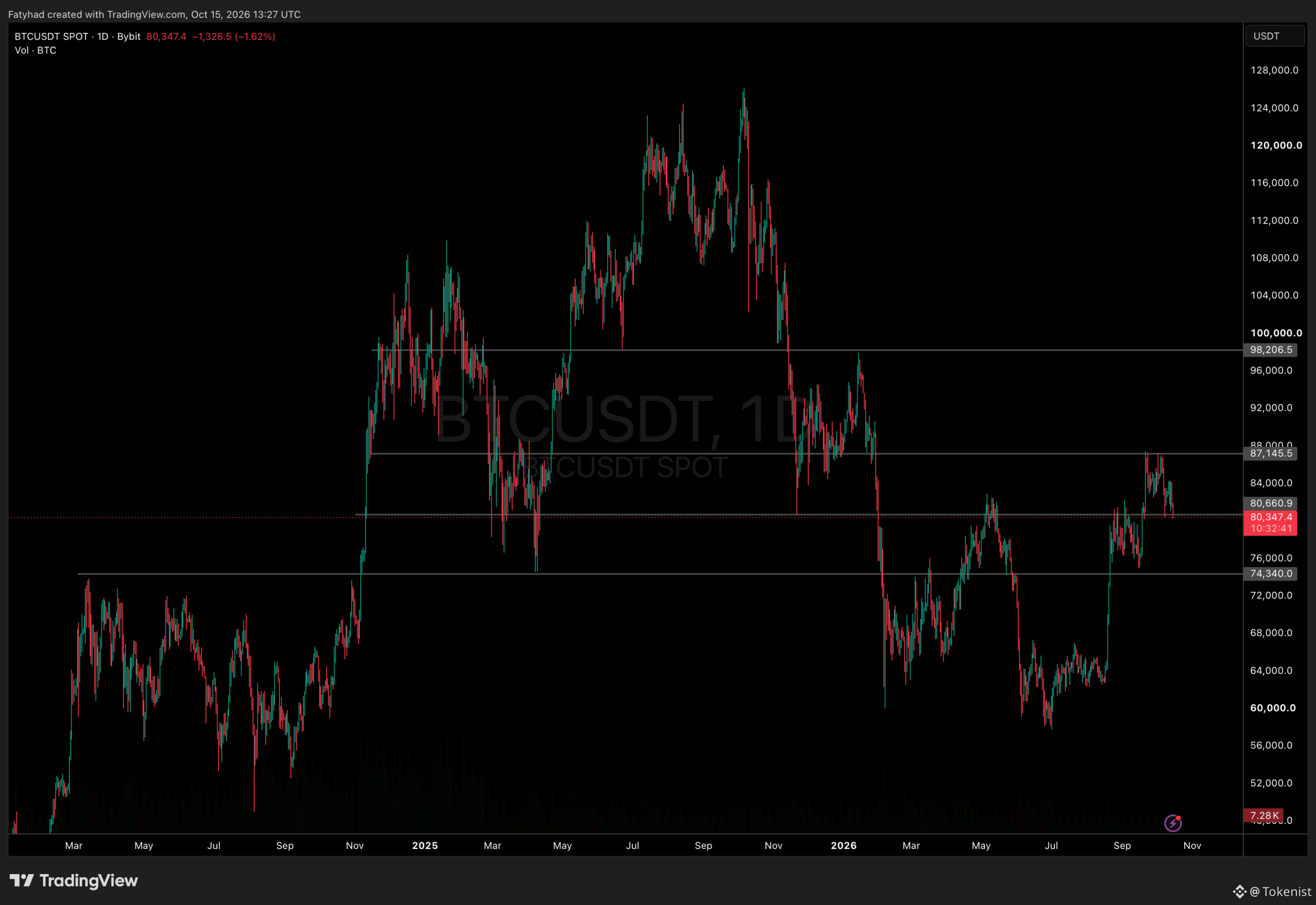
Article
Why AI Infrastructure Stocks Fell After September CPIA 0.6% monthly rise in September CPI weighed on markets on October 14, hitting AI-linked stocks hard and pulling Bitcoin from above $84,000 toward the low-$82,000s. For US crypto, the episode showed how quickly higher rates can pressure both capital-intensive businesses and high-beta assets.
The Bureau of Labor Statistics reported annual headline inflation of 3.7%, up from 3.4% in August, while core CPI rose 0.3% on the month and 2.6% over 12 months.
The central question is whether rising borrowing costs are becoming a shared valuation risk for AI and crypto, even as the companies best able to fund AI spending look comparatively resilient.
BREAKING: September PPI Inflation unexpectedly rises to 6.3%, above expectations of 5.3%.
Core PPI Inflation rose to 5.0%, above expectations of 4.4%
PPI inflation is now at its second highest level since November 2022.
The odds of rate hikes are rising sharply on the news.
— The Kobeissi Letter (@KobeissiLetter) October 15, 2026
Crypto Expert Report: What Are the 10 Next Crypto to Explode in 2026?
Why Are Rising Yields Hurting AI Infrastructure Stocks?
The losses were concentrated in companies tied to AI infrastructure. CoreWeave fell 16%, Nebius lost 11%, Oracle declined 9% and Dell dropped 11%, together erasing about $80 billion in market value, Reuters reported. These businesses depend on heavy investment and outside financing, so higher discount rates and funding costs hit them first. The selloff also followed a large run-up, with Dell shares having quadrupled this year.
CoreWeave shows the funding risk most clearly. LSEG data cited by Reuters shows it has issued $22 billion of bonds and $26 billion of loans, and a bond sold in June at a 9.625% yield recently traded at 15%. The 30-year Treasury yield reached 5.63% on Wednesday before pulling back.
Ross Mayfield of Baird said long rates above 5% and creeping toward 6% are “a problem for the marginal borrower.” The AI trade is not uniformly impaired: investors stayed confident in profitable spenders such as Nvidia, Alphabet, Microsoft, Meta and Amazon.
The risk from crowded AI-stock valuations is therefore relevant to the way rate-sensitive losses can spread beyond companies with the most immediate borrowing needs.
Does the Rate Move Explain the Fall in US Crypto?
BTCUSDT Chart 1D TradingView
Bitcoin’s retreat fits the same pattern. When yields rise, investors can cut exposure to assets that depend on risk appetite and pay no interest, including crypto and high-growth equities. The link has limits, though.
The episode also does not settle Bitcoin’s longer-term role as an inflation hedge. It shows that in this session Bitcoin fell as yields rose, and that US crypto remains sensitive to the cost of capital alongside crypto-specific catalysts.
The next tests are later CPI reports, long-term Treasury yields, evidence that AI spending is producing earnings, and the terms on which less-profitable firms can refinance.
A persistent rise in yields would widen the financing gap between strong and marginal borrowers; a reversal would ease one source of pressure without answering questions about AI returns or crypto’s sensitivity to risk appetite.
A single session is not a trend, so macro conditions deserve attention alongside crypto-specific news.
Crypto Expert Report: What is the Best Meme Coin to Buy and Forget Until the Next Bullrun?
The post Why AI Infrastructure Stocks Fell After September CPI appeared first on Tokenist.
Why AI Infrastructure Stocks Fell After September CPI
A 0.6% monthly rise in September CPI weighed on markets on October 14, hitting AI-linked stocks hard and pulling Bitcoin from above $84,000 toward the low-$82,000s. For US crypto, the episode showed how quickly higher rates can pressure both capital-intensive businesses and high-beta assets.
The Bureau of Labor Statistics reported annual headline inflation of 3.7%, up from 3.4% in August, while core CPI rose 0.3% on the month and 2.6% over 12 months.
The central question is whether rising borrowing costs are becoming a shared valuation risk for AI and crypto, even as the companies best able to fund AI spending look comparatively resilient.
BREAKING: September PPI Inflation unexpectedly rises to 6.3%, above expectations of 5.3%.
Core PPI Inflation rose to 5.0%, above expectations of 4.4%
PPI inflation is now at its second highest level since November 2022.
The odds of rate hikes are rising sharply on the news.
— The Kobeissi Letter (@KobeissiLetter) October 15, 2026
Crypto Expert Report: What Are the 10 Next Crypto to Explode in 2026?
Why Are Rising Yields Hurting AI Infrastructure Stocks?
The losses were concentrated in companies tied to AI infrastructure. CoreWeave fell 16%, Nebius lost 11%, Oracle declined 9% and Dell dropped 11%, together erasing about $80 billion in market value, Reuters reported. These businesses depend on heavy investment and outside financing, so higher discount rates and funding costs hit them first. The selloff also followed a large run-up, with Dell shares having quadrupled this year.
CoreWeave shows the funding risk most clearly. LSEG data cited by Reuters shows it has issued $22 billion of bonds and $26 billion of loans, and a bond sold in June at a 9.625% yield recently traded at 15%. The 30-year Treasury yield reached 5.63% on Wednesday before pulling back.
Ross Mayfield of Baird said long rates above 5% and creeping toward 6% are “a problem for the marginal borrower.” The AI trade is not uniformly impaired: investors stayed confident in profitable spenders such as Nvidia, Alphabet, Microsoft, Meta and Amazon.
The risk from crowded AI-stock valuations is therefore relevant to the way rate-sensitive losses can spread beyond companies with the most immediate borrowing needs.
Does the Rate Move Explain the Fall in US Crypto?
BTCUSDT Chart 1D TradingView
Bitcoin’s retreat fits the same pattern. When yields rise, investors can cut exposure to assets that depend on risk appetite and pay no interest, including crypto and high-growth equities. The link has limits, though.
The episode also does not settle Bitcoin’s longer-term role as an inflation hedge. It shows that in this session Bitcoin fell as yields rose, and that US crypto remains sensitive to the cost of capital alongside crypto-specific catalysts.
The next tests are later CPI reports, long-term Treasury yields, evidence that AI spending is producing earnings, and the terms on which less-profitable firms can refinance.
A persistent rise in yields would widen the financing gap between strong and marginal borrowers; a reversal would ease one source of pressure without answering questions about AI returns or crypto’s sensitivity to risk appetite.
A single session is not a trend, so macro conditions deserve attention alongside crypto-specific news.
Crypto Expert Report: What is the Best Meme Coin to Buy and Forget Until the Next Bullrun?
The post Why AI Infrastructure Stocks Fell After September CPI appeared first on Tokenist.
The Bureau of Labor Statistics reported annual headline inflation of 3.7%, up from 3.4% in August, while core CPI rose 0.3% on the month and 2.6% over 12 months.
The central question is whether rising borrowing costs are becoming a shared valuation risk for AI and crypto, even as the companies best able to fund AI spending look comparatively resilient.
BREAKING: September PPI Inflation unexpectedly rises to 6.3%, above expectations of 5.3%.
Core PPI Inflation rose to 5.0%, above expectations of 4.4%
PPI inflation is now at its second highest level since November 2022.
The odds of rate hikes are rising sharply on the news.
— The Kobeissi Letter (@KobeissiLetter) October 15, 2026
Crypto Expert Report: What Are the 10 Next Crypto to Explode in 2026?
Why Are Rising Yields Hurting AI Infrastructure Stocks?
The losses were concentrated in companies tied to AI infrastructure. CoreWeave fell 16%, Nebius lost 11%, Oracle declined 9% and Dell dropped 11%, together erasing about $80 billion in market value, Reuters reported. These businesses depend on heavy investment and outside financing, so higher discount rates and funding costs hit them first. The selloff also followed a large run-up, with Dell shares having quadrupled this year.
CoreWeave shows the funding risk most clearly. LSEG data cited by Reuters shows it has issued $22 billion of bonds and $26 billion of loans, and a bond sold in June at a 9.625% yield recently traded at 15%. The 30-year Treasury yield reached 5.63% on Wednesday before pulling back.
Ross Mayfield of Baird said long rates above 5% and creeping toward 6% are “a problem for the marginal borrower.” The AI trade is not uniformly impaired: investors stayed confident in profitable spenders such as Nvidia, Alphabet, Microsoft, Meta and Amazon.
The risk from crowded AI-stock valuations is therefore relevant to the way rate-sensitive losses can spread beyond companies with the most immediate borrowing needs.
Does the Rate Move Explain the Fall in US Crypto?
BTCUSDT Chart 1D TradingView
Bitcoin’s retreat fits the same pattern. When yields rise, investors can cut exposure to assets that depend on risk appetite and pay no interest, including crypto and high-growth equities. The link has limits, though.
The episode also does not settle Bitcoin’s longer-term role as an inflation hedge. It shows that in this session Bitcoin fell as yields rose, and that US crypto remains sensitive to the cost of capital alongside crypto-specific catalysts.
The next tests are later CPI reports, long-term Treasury yields, evidence that AI spending is producing earnings, and the terms on which less-profitable firms can refinance.
A persistent rise in yields would widen the financing gap between strong and marginal borrowers; a reversal would ease one source of pressure without answering questions about AI returns or crypto’s sensitivity to risk appetite.
A single session is not a trend, so macro conditions deserve attention alongside crypto-specific news.
Crypto Expert Report: What is the Best Meme Coin to Buy and Forget Until the Next Bullrun?
The post Why AI Infrastructure Stocks Fell After September CPI appeared first on Tokenist.
501
·
--

Article
CoinDepo Governance Turns Community Votes Into Asset Launches and Funding DecisionsCoinDepo has added SUI following a community governance vote, giving COINDEPO token holders another completed example of how their decisions influence the platform.
The integration follows the earlier addition of EURC and a series of votes on charitable funding. In its latest exchange-related vote, the community chose to preserve ecosystem resources rather than proceed with a potential Bit2Me listing under the current proposal.
Together, these outcomes show how CoinDepo is applying community governance within centralized crypto finance, or CeFi. The program gives token holders a role in selected product and ecosystem decisions, while the company carries out the technical and operational work needed to implement the outcomes.
Community-selected assets are now available
The first completed asset vote brought together 648 participants, who selected EURC as the next addition to CoinDepo. The platform subsequently integrated the euro-backed stablecoin, connecting the published voting outcome to an available product.
A later vote selected SUI. CoinDepo has now completed that integration as well, allowing users to deposit the asset on the platform. Both additions followed the same process: holders chose an asset through governance, and CoinDepo completed the work required to make it available.
For participants, these launches provide a visible way to follow a proposal through to implementation. They also give the program concrete product outcomes that users can see in their accounts.
Token holders influence charitable funding
CoinDepo has also used governance to involve holders in its charitable activities. Following an earlier allocation vote, the company reported completing $21,000 in donations to World Child Cancer, GiveDirectly and Damark.
The September vote selected a $31,000 allocation across four partners: $10,000 each for World Child Cancer, GiveDirectly and Action Against Hunger, and $1,000 for Damark. CoinDepo published the allocation alongside transaction links, giving readers access to the payment records associated with the decision.
Community participation also helped determine a new charity relationship. After holders voted to support Action Against Hunger, CoinDepo formalized the collaboration and announced an initial $10,000 donation supporting the organization’s work in Kenya. This extended participation beyond allocating an existing budget to choosing an organization for the charity program.
A vote to preserve exchange listing resources
The latest exchange-related decision concerned whether CoinDepo should pursue a potential Bit2Me listing or retain the available Token Ecosystem resources for future opportunities. The community selected the option to preserve those resources.
CoinDepo announced that it would not move forward with the listing under the current proposal. The company will continue evaluating exchange opportunities, and the retained funds remain available for future listing considerations. This outcome shows that participation can influence whether a proposed expenditure goes ahead, as well as which new initiative is introduced.
Public records support the voting process
Voting takes place within the CoinDepo interface. After a vote concludes, the platform publishes the final result in the InterPlanetary File System, or IPFS, and provides a Bitcoin timestamp proof. Daily token balance snapshots used in calculating Governance Scores are also published with timestamp proofs.
These records give participants access to the data behind completed votes. Readers can review the published outcome and check the associated timestamp proof, then follow the company’s implementation announcements. The public governance page brings voting records and balance snapshots together for that purpose.
A practical role for the COINDEPO token
The program gives COINDEPO holders a defined way to contribute to decisions within the ecosystem. Its completed cases now span asset integrations, charity allocations and an exchange listing proposal. CoinDepo has said it will continue involving its community in new assets, ecosystem initiatives and other areas of development.
Voting records and further information are available on the CoinDepo Governance page.
About CoinDepo
CoinDepo is a centralized digital asset platform offering crypto savings and borrowing products. Its COINDEPO token governance program enables holders to participate in selected platform and ecosystem decisions.
The post CoinDepo Governance Turns Community Votes Into Asset Launches and Funding Decisions appeared first on Tokenist.
CoinDepo Governance Turns Community Votes Into Asset Launches and Funding Decisions
CoinDepo has added SUI following a community governance vote, giving COINDEPO token holders another completed example of how their decisions influence the platform.
The integration follows the earlier addition of EURC and a series of votes on charitable funding. In its latest exchange-related vote, the community chose to preserve ecosystem resources rather than proceed with a potential Bit2Me listing under the current proposal.
Together, these outcomes show how CoinDepo is applying community governance within centralized crypto finance, or CeFi. The program gives token holders a role in selected product and ecosystem decisions, while the company carries out the technical and operational work needed to implement the outcomes.
Community-selected assets are now available
The first completed asset vote brought together 648 participants, who selected EURC as the next addition to CoinDepo. The platform subsequently integrated the euro-backed stablecoin, connecting the published voting outcome to an available product.
A later vote selected SUI. CoinDepo has now completed that integration as well, allowing users to deposit the asset on the platform. Both additions followed the same process: holders chose an asset through governance, and CoinDepo completed the work required to make it available.
For participants, these launches provide a visible way to follow a proposal through to implementation. They also give the program concrete product outcomes that users can see in their accounts.
Token holders influence charitable funding
CoinDepo has also used governance to involve holders in its charitable activities. Following an earlier allocation vote, the company reported completing $21,000 in donations to World Child Cancer, GiveDirectly and Damark.
The September vote selected a $31,000 allocation across four partners: $10,000 each for World Child Cancer, GiveDirectly and Action Against Hunger, and $1,000 for Damark. CoinDepo published the allocation alongside transaction links, giving readers access to the payment records associated with the decision.
Community participation also helped determine a new charity relationship. After holders voted to support Action Against Hunger, CoinDepo formalized the collaboration and announced an initial $10,000 donation supporting the organization’s work in Kenya. This extended participation beyond allocating an existing budget to choosing an organization for the charity program.
A vote to preserve exchange listing resources
The latest exchange-related decision concerned whether CoinDepo should pursue a potential Bit2Me listing or retain the available Token Ecosystem resources for future opportunities. The community selected the option to preserve those resources.
CoinDepo announced that it would not move forward with the listing under the current proposal. The company will continue evaluating exchange opportunities, and the retained funds remain available for future listing considerations. This outcome shows that participation can influence whether a proposed expenditure goes ahead, as well as which new initiative is introduced.
Public records support the voting process
Voting takes place within the CoinDepo interface. After a vote concludes, the platform publishes the final result in the InterPlanetary File System, or IPFS, and provides a Bitcoin timestamp proof. Daily token balance snapshots used in calculating Governance Scores are also published with timestamp proofs.
These records give participants access to the data behind completed votes. Readers can review the published outcome and check the associated timestamp proof, then follow the company’s implementation announcements. The public governance page brings voting records and balance snapshots together for that purpose.
A practical role for the COINDEPO token
The program gives COINDEPO holders a defined way to contribute to decisions within the ecosystem. Its completed cases now span asset integrations, charity allocations and an exchange listing proposal. CoinDepo has said it will continue involving its community in new assets, ecosystem initiatives and other areas of development.
Voting records and further information are available on the CoinDepo Governance page.
About CoinDepo
CoinDepo is a centralized digital asset platform offering crypto savings and borrowing products. Its COINDEPO token governance program enables holders to participate in selected platform and ecosystem decisions.
The post CoinDepo Governance Turns Community Votes Into Asset Launches and Funding Decisions appeared first on Tokenist.
The integration follows the earlier addition of EURC and a series of votes on charitable funding. In its latest exchange-related vote, the community chose to preserve ecosystem resources rather than proceed with a potential Bit2Me listing under the current proposal.
Together, these outcomes show how CoinDepo is applying community governance within centralized crypto finance, or CeFi. The program gives token holders a role in selected product and ecosystem decisions, while the company carries out the technical and operational work needed to implement the outcomes.
Community-selected assets are now available
The first completed asset vote brought together 648 participants, who selected EURC as the next addition to CoinDepo. The platform subsequently integrated the euro-backed stablecoin, connecting the published voting outcome to an available product.
A later vote selected SUI. CoinDepo has now completed that integration as well, allowing users to deposit the asset on the platform. Both additions followed the same process: holders chose an asset through governance, and CoinDepo completed the work required to make it available.
For participants, these launches provide a visible way to follow a proposal through to implementation. They also give the program concrete product outcomes that users can see in their accounts.
Token holders influence charitable funding
CoinDepo has also used governance to involve holders in its charitable activities. Following an earlier allocation vote, the company reported completing $21,000 in donations to World Child Cancer, GiveDirectly and Damark.
The September vote selected a $31,000 allocation across four partners: $10,000 each for World Child Cancer, GiveDirectly and Action Against Hunger, and $1,000 for Damark. CoinDepo published the allocation alongside transaction links, giving readers access to the payment records associated with the decision.
Community participation also helped determine a new charity relationship. After holders voted to support Action Against Hunger, CoinDepo formalized the collaboration and announced an initial $10,000 donation supporting the organization’s work in Kenya. This extended participation beyond allocating an existing budget to choosing an organization for the charity program.
A vote to preserve exchange listing resources
The latest exchange-related decision concerned whether CoinDepo should pursue a potential Bit2Me listing or retain the available Token Ecosystem resources for future opportunities. The community selected the option to preserve those resources.
CoinDepo announced that it would not move forward with the listing under the current proposal. The company will continue evaluating exchange opportunities, and the retained funds remain available for future listing considerations. This outcome shows that participation can influence whether a proposed expenditure goes ahead, as well as which new initiative is introduced.
Public records support the voting process
Voting takes place within the CoinDepo interface. After a vote concludes, the platform publishes the final result in the InterPlanetary File System, or IPFS, and provides a Bitcoin timestamp proof. Daily token balance snapshots used in calculating Governance Scores are also published with timestamp proofs.
These records give participants access to the data behind completed votes. Readers can review the published outcome and check the associated timestamp proof, then follow the company’s implementation announcements. The public governance page brings voting records and balance snapshots together for that purpose.
A practical role for the COINDEPO token
The program gives COINDEPO holders a defined way to contribute to decisions within the ecosystem. Its completed cases now span asset integrations, charity allocations and an exchange listing proposal. CoinDepo has said it will continue involving its community in new assets, ecosystem initiatives and other areas of development.
Voting records and further information are available on the CoinDepo Governance page.
About CoinDepo
CoinDepo is a centralized digital asset platform offering crypto savings and borrowing products. Its COINDEPO token governance program enables holders to participate in selected platform and ecosystem decisions.
The post CoinDepo Governance Turns Community Votes Into Asset Launches and Funding Decisions appeared first on Tokenist.
184
·
--
Bitcoin’s Financial Integration Could Bring New Demand—and New RisksInstitutionalization can widen Bitcoin’s potential demand base while tying its performance more closely to the equity valuations and financing conditions that shape institutional portfolios. That tension is visible in Strategy’s media index: the future of Bitcoin is the future of finance, alongside material on banking, digital credit, and Bitcoin.
The market is assessing whether institutional crypto adoption is a durable source of demand or another route for traditional risk cycles to reach Bitcoin. The central question is therefore structural: can new financial channels deepen demand without making Bitcoin more vulnerable when those same channels contract?
Institutional allocation frameworks could broaden access; Bitcoin allocation in advisor portfolios is a linked discussion.
Strategy’s Bitcoin Banking Adoption Index increased to 34% in Q3 2026. Bitcoin and digital asset adoption across major global banks continues to expand, but remains early. Institutions with questions or corrections: ir@strategy.com pic.twitter.com/Hqhsez5j3p
— Strategy (@Strategy) October 13, 2026
Banking Infrastructure Broadens the Channels
The mechanism is straightforward enough. Familiar routes to custody, investment, and settlement make Bitcoin reachable for institutions that would never hold it directly. Tokenized securities and collateral systems connect digital assets to established workflows. More participants, more uses.
Strategy’s index shows what the company chooses to feature, not what the financial system has completed. Its October listing sits among 2026 keynotes, investor presentations and press items on Bitcoin, banking and digital credit.
Tokenized infrastructure also cuts both ways. It supports collateral and settlement, while pulling digital markets further into conventional funding systems.
Crypto Expert Report: What is the Best Meme Coin to Buy and Forget Until the Next Bullrun?
Strategy Makes Capital Access To Bitcoin Part of the Question
Strategy matters less as a holder than as a case study. When a company accumulates Bitcoin using equity, debt, and preferred stock markets, its ability to keep accumulating depends on investor appetite and available financing. Strong demand for its securities supports further raises. Weaker valuations or tighter credit make the same process harder.
So the model works as a demand source during periods when capital can be deployed. The identical structure raises sensitivity to funding conditions when investors reassess the shares, the preferred securities, or the borrowing costs.
Strategy’s index includes a September 2026 item on amending daily dividends but does not give terms, so the cost of that financing cannot be assessed from the page.
Peter Schiff offered the counterpoint. He argued that Strategy’s Bitcoin activity and preferred stock actions are not evidence of lasting demand, and said Bitcoin could revisit lower prices if the technology-led stock rally faded.
He added that he was surprised Bitcoin held its gains while gold gave back part of its advance.
Michael Saylor – Photo: Gage Skidmore / CC BY-SA 2.0
For now, institutionalization is best read as both a possible demand catalyst and a route through which financial-market stress can reach crypto. The next useful evidence will be measurable: disclosed capital raised and Bitcoin acquired by Strategy, alongside published data on institutional allocations and flows.
Without those details, the index establishes a focus on Bitcoin’s role in finance, not the scale or direction of the market’s next move.
Crypto Expert Report: What Are the 10 Next Cryptos to Explode in 2026?
The post Bitcoin’s Financial Integration Could Bring New Demand—and New Risks appeared first on Tokenist.
Bitcoin’s Financial Integration Could Bring New Demand—and New Risks
Institutionalization can widen Bitcoin’s potential demand base while tying its performance more closely to the equity valuations and financing conditions that shape institutional portfolios. That tension is visible in Strategy’s media index: the future of Bitcoin is the future of finance, alongside material on banking, digital credit, and Bitcoin.
The market is assessing whether institutional crypto adoption is a durable source of demand or another route for traditional risk cycles to reach Bitcoin. The central question is therefore structural: can new financial channels deepen demand without making Bitcoin more vulnerable when those same channels contract?
Institutional allocation frameworks could broaden access; Bitcoin allocation in advisor portfolios is a linked discussion.
Strategy’s Bitcoin Banking Adoption Index increased to 34% in Q3 2026. Bitcoin and digital asset adoption across major global banks continues to expand, but remains early. Institutions with questions or corrections: ir@strategy.com pic.twitter.com/Hqhsez5j3p
— Strategy (@Strategy) October 13, 2026
Banking Infrastructure Broadens the Channels
The mechanism is straightforward enough. Familiar routes to custody, investment, and settlement make Bitcoin reachable for institutions that would never hold it directly. Tokenized securities and collateral systems connect digital assets to established workflows. More participants, more uses.
Strategy’s index shows what the company chooses to feature, not what the financial system has completed. Its October listing sits among 2026 keynotes, investor presentations and press items on Bitcoin, banking and digital credit.
Tokenized infrastructure also cuts both ways. It supports collateral and settlement, while pulling digital markets further into conventional funding systems.
Crypto Expert Report: What is the Best Meme Coin to Buy and Forget Until the Next Bullrun?
Strategy Makes Capital Access To Bitcoin Part of the Question
Strategy matters less as a holder than as a case study. When a company accumulates Bitcoin using equity, debt, and preferred stock markets, its ability to keep accumulating depends on investor appetite and available financing. Strong demand for its securities supports further raises. Weaker valuations or tighter credit make the same process harder.
So the model works as a demand source during periods when capital can be deployed. The identical structure raises sensitivity to funding conditions when investors reassess the shares, the preferred securities, or the borrowing costs.
Strategy’s index includes a September 2026 item on amending daily dividends but does not give terms, so the cost of that financing cannot be assessed from the page.
Peter Schiff offered the counterpoint. He argued that Strategy’s Bitcoin activity and preferred stock actions are not evidence of lasting demand, and said Bitcoin could revisit lower prices if the technology-led stock rally faded.
He added that he was surprised Bitcoin held its gains while gold gave back part of its advance.
Michael Saylor – Photo: Gage Skidmore / CC BY-SA 2.0
For now, institutionalization is best read as both a possible demand catalyst and a route through which financial-market stress can reach crypto. The next useful evidence will be measurable: disclosed capital raised and Bitcoin acquired by Strategy, alongside published data on institutional allocations and flows.
Without those details, the index establishes a focus on Bitcoin’s role in finance, not the scale or direction of the market’s next move.
Crypto Expert Report: What Are the 10 Next Cryptos to Explode in 2026?
The post Bitcoin’s Financial Integration Could Bring New Demand—and New Risks appeared first on Tokenist.
The market is assessing whether institutional crypto adoption is a durable source of demand or another route for traditional risk cycles to reach Bitcoin. The central question is therefore structural: can new financial channels deepen demand without making Bitcoin more vulnerable when those same channels contract?
Institutional allocation frameworks could broaden access; Bitcoin allocation in advisor portfolios is a linked discussion.
Strategy’s Bitcoin Banking Adoption Index increased to 34% in Q3 2026. Bitcoin and digital asset adoption across major global banks continues to expand, but remains early. Institutions with questions or corrections: ir@strategy.com pic.twitter.com/Hqhsez5j3p
— Strategy (@Strategy) October 13, 2026
Banking Infrastructure Broadens the Channels
The mechanism is straightforward enough. Familiar routes to custody, investment, and settlement make Bitcoin reachable for institutions that would never hold it directly. Tokenized securities and collateral systems connect digital assets to established workflows. More participants, more uses.
Strategy’s index shows what the company chooses to feature, not what the financial system has completed. Its October listing sits among 2026 keynotes, investor presentations and press items on Bitcoin, banking and digital credit.
Tokenized infrastructure also cuts both ways. It supports collateral and settlement, while pulling digital markets further into conventional funding systems.
Crypto Expert Report: What is the Best Meme Coin to Buy and Forget Until the Next Bullrun?
Strategy Makes Capital Access To Bitcoin Part of the Question
Strategy matters less as a holder than as a case study. When a company accumulates Bitcoin using equity, debt, and preferred stock markets, its ability to keep accumulating depends on investor appetite and available financing. Strong demand for its securities supports further raises. Weaker valuations or tighter credit make the same process harder.
So the model works as a demand source during periods when capital can be deployed. The identical structure raises sensitivity to funding conditions when investors reassess the shares, the preferred securities, or the borrowing costs.
Strategy’s index includes a September 2026 item on amending daily dividends but does not give terms, so the cost of that financing cannot be assessed from the page.
Peter Schiff offered the counterpoint. He argued that Strategy’s Bitcoin activity and preferred stock actions are not evidence of lasting demand, and said Bitcoin could revisit lower prices if the technology-led stock rally faded.
He added that he was surprised Bitcoin held its gains while gold gave back part of its advance.
Michael Saylor – Photo: Gage Skidmore / CC BY-SA 2.0
For now, institutionalization is best read as both a possible demand catalyst and a route through which financial-market stress can reach crypto. The next useful evidence will be measurable: disclosed capital raised and Bitcoin acquired by Strategy, alongside published data on institutional allocations and flows.
Without those details, the index establishes a focus on Bitcoin’s role in finance, not the scale or direction of the market’s next move.
Crypto Expert Report: What Are the 10 Next Cryptos to Explode in 2026?
The post Bitcoin’s Financial Integration Could Bring New Demand—and New Risks appeared first on Tokenist.
140
·
--
Article
Fairshake Spending and Iran Crypto Claims Take Different PathsFairshake-affiliated political action committees reported $2.7 million in spending on U.S. House races. At the same time, Treasury Secretary Scott Bessent said authorities were likely to seize roughly $1 billion in Iran-linked digital assets during the week of October 12. The developments place US crypto in two distinct Washington policy roles: as a source of electoral influence and as an asset class officials say they can target under US sanctions.
The money, entities and assets in the two stories should not be conflated. The campaign spending is documented in Federal Election Commission (FEC) filings, while Bessent’s Iran crypto seizure remained a prospective claim with no publicly identified wallets or confirmation of completion as of October 13. The sharper question is whether political influence and enforcement reach are separate consequences of crypto’s growing place in U.S. policy, rather than parts of one connected financial flow.
Crypto group Fairshake and its affiliated super PAC throwing even more money against Sherrod Brown in the Ohio Senate race this week
So far about $2.6M reported pic.twitter.com/xvsz7B1Nma
— Igor Bobic (@igorbobic) October 12, 2026
Crypto Expert Report: What Are the 10 Next Crypto to Explode in 2026?
Fairshake’s Spending Puts US Crypto Policy On The Campaign Map
Fairshake affiliates Defend American Jobs and Protect Progress disclosed a combined $2.7 million in media and direct-mail spending supporting Democratic and Republican candidates for House seats in 2026. The filings included:
$512,000 in spending associated with California Representative Pete Aguilar;
$500,000 for New Jersey Representative Josh Gottheimer;
Over $76,000 for House Majority Whip Tom Emmer;
$73,000 for House Agriculture Committee Chair Glenn Thompson.
Those expenditures are a specific reported spending total, not a measure of Fairshake’s full fundraising or available campaign resources. The PAC had $122 million in cash on hand; that balance is distinct from the $2.7 million in disclosed House-race spending and from amounts raised or allocated for other races.
Fairshake also announced plans to endorse 32 additional House candidates.
The stakes extend beyond individual media buys. The candidates covered by the reported spending had voted for the CLARITY Act. The bill passed the House but failed to advance after a Senate procedural vote in September, leaving crypto political spending aligned with a contested regulatory agenda. Fairshake’s role in 2026 midterm spending illustrates how the industry is organizing around that debate.
Bessent’s Iran Crypto Seizure Remains a Stated Plan
Bessent discussed the prospective seizure with Greta Van Susteren at Newsmax’s NPolicy Summit in Washington, D.C. He placed the roughly $1 billion target within what he described as an “absolute isolation campaign” against Iran.
Treasury Secretary Scott Bessent in April 2025. – Photo: Office of the Vice President of the United States
In his account, the administration’s effort extended beyond traditional financial pressure: naval measures were intended to restrict movement through key waterways; international air travel had been curtailed, and Washington was working with the United Arab Emirates, Oman, Pakistan and Turkey on land routes. Bessent also predicted that Iranian oil available for sale on the water would fall to zero. The crypto action is one element of a wider effort to restrict the Iranian government’s access to external markets and financial channels.
The status of the digital assets is less concrete than the campaign-spending filings. As of October 13, the source material identified no specific wallets or tokens, legal mechanism or completed seizure. Bessent said officials knew where the targeted funds were and were working to isolate them, but that statement does not establish that authorities had taken control of the assets.
It also remains unclear whether the roughly $1 billion would be additional to earlier reported seizures. Reporting on Iran-linked crypto activity and sanctions enforcement provides relevant context, but does not verify this planned action.
Crypto Politics: $2.7M in PAC Spending, $1B Seizure Claim
The evidence supporting the two developments is different in kind. FEC filings document the reported PAC expenditures; the Iran-linked figure is Bessent’s prediction of a future enforcement action, not a public record of a completed confiscation. That distinction matters when evaluating both the reach of crypto political spending and the practical limits of a government claim to isolate digital assets.
No evidence connects Fairshake, its donors or U.S. campaign expenditures to the Iran-linked assets. Nor does the reported seizure target show that campaign-finance activity and sanctions enforcement involve the same companies, wallets or funds. Their juxtaposition points instead to two parallel policy questions: how the US crypto industry uses electoral capital to shape regulation, and how authorities pursue digital assets they associate with a sanctioned state actor.
The case-specific details needed to verify the seizure were not publicly available by October 13. Until such details emerge, the $1 billion figure remains a stated expectation rather than a confirmed seizure; the reported $2.7 million in House-race spending remains the documented figure.
Crypto Expert Report: Follow The Money – Which Presales Are Attracting Crypto Whales in 2026?
The post Fairshake Spending and Iran Crypto Claims Take Different Paths appeared first on Tokenist.
Fairshake Spending and Iran Crypto Claims Take Different Paths
Fairshake-affiliated political action committees reported $2.7 million in spending on U.S. House races. At the same time, Treasury Secretary Scott Bessent said authorities were likely to seize roughly $1 billion in Iran-linked digital assets during the week of October 12. The developments place US crypto in two distinct Washington policy roles: as a source of electoral influence and as an asset class officials say they can target under US sanctions.
The money, entities and assets in the two stories should not be conflated. The campaign spending is documented in Federal Election Commission (FEC) filings, while Bessent’s Iran crypto seizure remained a prospective claim with no publicly identified wallets or confirmation of completion as of October 13. The sharper question is whether political influence and enforcement reach are separate consequences of crypto’s growing place in U.S. policy, rather than parts of one connected financial flow.
Crypto group Fairshake and its affiliated super PAC throwing even more money against Sherrod Brown in the Ohio Senate race this week
So far about $2.6M reported pic.twitter.com/xvsz7B1Nma
— Igor Bobic (@igorbobic) October 12, 2026
Crypto Expert Report: What Are the 10 Next Crypto to Explode in 2026?
Fairshake’s Spending Puts US Crypto Policy On The Campaign Map
Fairshake affiliates Defend American Jobs and Protect Progress disclosed a combined $2.7 million in media and direct-mail spending supporting Democratic and Republican candidates for House seats in 2026. The filings included:
$512,000 in spending associated with California Representative Pete Aguilar;
$500,000 for New Jersey Representative Josh Gottheimer;
Over $76,000 for House Majority Whip Tom Emmer;
$73,000 for House Agriculture Committee Chair Glenn Thompson.
Those expenditures are a specific reported spending total, not a measure of Fairshake’s full fundraising or available campaign resources. The PAC had $122 million in cash on hand; that balance is distinct from the $2.7 million in disclosed House-race spending and from amounts raised or allocated for other races.
Fairshake also announced plans to endorse 32 additional House candidates.
The stakes extend beyond individual media buys. The candidates covered by the reported spending had voted for the CLARITY Act. The bill passed the House but failed to advance after a Senate procedural vote in September, leaving crypto political spending aligned with a contested regulatory agenda. Fairshake’s role in 2026 midterm spending illustrates how the industry is organizing around that debate.
Bessent’s Iran Crypto Seizure Remains a Stated Plan
Bessent discussed the prospective seizure with Greta Van Susteren at Newsmax’s NPolicy Summit in Washington, D.C. He placed the roughly $1 billion target within what he described as an “absolute isolation campaign” against Iran.
Treasury Secretary Scott Bessent in April 2025. – Photo: Office of the Vice President of the United States
In his account, the administration’s effort extended beyond traditional financial pressure: naval measures were intended to restrict movement through key waterways; international air travel had been curtailed, and Washington was working with the United Arab Emirates, Oman, Pakistan and Turkey on land routes. Bessent also predicted that Iranian oil available for sale on the water would fall to zero. The crypto action is one element of a wider effort to restrict the Iranian government’s access to external markets and financial channels.
The status of the digital assets is less concrete than the campaign-spending filings. As of October 13, the source material identified no specific wallets or tokens, legal mechanism or completed seizure. Bessent said officials knew where the targeted funds were and were working to isolate them, but that statement does not establish that authorities had taken control of the assets.
It also remains unclear whether the roughly $1 billion would be additional to earlier reported seizures. Reporting on Iran-linked crypto activity and sanctions enforcement provides relevant context, but does not verify this planned action.
Crypto Politics: $2.7M in PAC Spending, $1B Seizure Claim
The evidence supporting the two developments is different in kind. FEC filings document the reported PAC expenditures; the Iran-linked figure is Bessent’s prediction of a future enforcement action, not a public record of a completed confiscation. That distinction matters when evaluating both the reach of crypto political spending and the practical limits of a government claim to isolate digital assets.
No evidence connects Fairshake, its donors or U.S. campaign expenditures to the Iran-linked assets. Nor does the reported seizure target show that campaign-finance activity and sanctions enforcement involve the same companies, wallets or funds. Their juxtaposition points instead to two parallel policy questions: how the US crypto industry uses electoral capital to shape regulation, and how authorities pursue digital assets they associate with a sanctioned state actor.
The case-specific details needed to verify the seizure were not publicly available by October 13. Until such details emerge, the $1 billion figure remains a stated expectation rather than a confirmed seizure; the reported $2.7 million in House-race spending remains the documented figure.
Crypto Expert Report: Follow The Money – Which Presales Are Attracting Crypto Whales in 2026?
The post Fairshake Spending and Iran Crypto Claims Take Different Paths appeared first on Tokenist.
The money, entities and assets in the two stories should not be conflated. The campaign spending is documented in Federal Election Commission (FEC) filings, while Bessent’s Iran crypto seizure remained a prospective claim with no publicly identified wallets or confirmation of completion as of October 13. The sharper question is whether political influence and enforcement reach are separate consequences of crypto’s growing place in U.S. policy, rather than parts of one connected financial flow.
Crypto group Fairshake and its affiliated super PAC throwing even more money against Sherrod Brown in the Ohio Senate race this week
So far about $2.6M reported pic.twitter.com/xvsz7B1Nma
— Igor Bobic (@igorbobic) October 12, 2026
Crypto Expert Report: What Are the 10 Next Crypto to Explode in 2026?
Fairshake’s Spending Puts US Crypto Policy On The Campaign Map
Fairshake affiliates Defend American Jobs and Protect Progress disclosed a combined $2.7 million in media and direct-mail spending supporting Democratic and Republican candidates for House seats in 2026. The filings included:
$512,000 in spending associated with California Representative Pete Aguilar;
$500,000 for New Jersey Representative Josh Gottheimer;
Over $76,000 for House Majority Whip Tom Emmer;
$73,000 for House Agriculture Committee Chair Glenn Thompson.
Those expenditures are a specific reported spending total, not a measure of Fairshake’s full fundraising or available campaign resources. The PAC had $122 million in cash on hand; that balance is distinct from the $2.7 million in disclosed House-race spending and from amounts raised or allocated for other races.
Fairshake also announced plans to endorse 32 additional House candidates.
The stakes extend beyond individual media buys. The candidates covered by the reported spending had voted for the CLARITY Act. The bill passed the House but failed to advance after a Senate procedural vote in September, leaving crypto political spending aligned with a contested regulatory agenda. Fairshake’s role in 2026 midterm spending illustrates how the industry is organizing around that debate.
Bessent’s Iran Crypto Seizure Remains a Stated Plan
Bessent discussed the prospective seizure with Greta Van Susteren at Newsmax’s NPolicy Summit in Washington, D.C. He placed the roughly $1 billion target within what he described as an “absolute isolation campaign” against Iran.
Treasury Secretary Scott Bessent in April 2025. – Photo: Office of the Vice President of the United States
In his account, the administration’s effort extended beyond traditional financial pressure: naval measures were intended to restrict movement through key waterways; international air travel had been curtailed, and Washington was working with the United Arab Emirates, Oman, Pakistan and Turkey on land routes. Bessent also predicted that Iranian oil available for sale on the water would fall to zero. The crypto action is one element of a wider effort to restrict the Iranian government’s access to external markets and financial channels.
The status of the digital assets is less concrete than the campaign-spending filings. As of October 13, the source material identified no specific wallets or tokens, legal mechanism or completed seizure. Bessent said officials knew where the targeted funds were and were working to isolate them, but that statement does not establish that authorities had taken control of the assets.
It also remains unclear whether the roughly $1 billion would be additional to earlier reported seizures. Reporting on Iran-linked crypto activity and sanctions enforcement provides relevant context, but does not verify this planned action.
Crypto Politics: $2.7M in PAC Spending, $1B Seizure Claim
The evidence supporting the two developments is different in kind. FEC filings document the reported PAC expenditures; the Iran-linked figure is Bessent’s prediction of a future enforcement action, not a public record of a completed confiscation. That distinction matters when evaluating both the reach of crypto political spending and the practical limits of a government claim to isolate digital assets.
No evidence connects Fairshake, its donors or U.S. campaign expenditures to the Iran-linked assets. Nor does the reported seizure target show that campaign-finance activity and sanctions enforcement involve the same companies, wallets or funds. Their juxtaposition points instead to two parallel policy questions: how the US crypto industry uses electoral capital to shape regulation, and how authorities pursue digital assets they associate with a sanctioned state actor.
The case-specific details needed to verify the seizure were not publicly available by October 13. Until such details emerge, the $1 billion figure remains a stated expectation rather than a confirmed seizure; the reported $2.7 million in House-race spending remains the documented figure.
Crypto Expert Report: Follow The Money – Which Presales Are Attracting Crypto Whales in 2026?
The post Fairshake Spending and Iran Crypto Claims Take Different Paths appeared first on Tokenist.
1
161
·
--
Article
Ledger Wallet Security Questions Grow After Confirmed Device ImplantOver the weekend, Ledger wallet confirmed that one device linked to the CryptoBilis investigation contained an unauthorized hardware implant, while blockchain analytics firm Bitquery’s latest update estimated $93.2M in crypto losses from 315 wallets across six chains.
The on-chain estimate is not a Ledger-confirmed total, and the device finding does not establish that the implant caused every reported drain or validate claims of a wider European compromise.
The confirmed tampering raises a hardware-wallet security and device-provenance concern, but the incident’s scope and attack path remain unresolved. As in other wallet-related security cases, the distinction between a verified technical finding and broader claims matters: unauthorized third-party access to wallet software presents a different risk from physical interference with a device.
72 hour update on reseller CryptoBilis incident As the investigation continues, we are working with relevant authorities. The volume of impacted devices is limited. We know this is concerning, especially for those directly affected, and we are reaching out to impacted users.…
— Ledger (@Ledger) October 11, 2026
Reports initially concerned customers in Indonesia, Malaysia, and the Philippines who bought devices through CryptoBilis. Ledger said it had contacted affected users and begun working with authorities, and that it had no indication its infrastructure, systems, or services had been compromised.
Ledger also asked CryptoBilis to stop sales of hardware-wallet inventory while the investigation continued. The available reporting connects the affected purchases to the reseller, but does not establish who installed the implant or where in the supply chain the device was altered.
What Did the Ledger Wallet Implant Examination Find?
BREAKING: Mark Karpelès found a hidden SIM card inside a tampered Ledger hardware wallet. "The implant was cleverly hidden where the screen's padding is supposed to be." The device is allegedly linked to reseller 'CryptoBilis'. @MagicalTux pic.twitter.com/LhdNJ4y1wW
— Bitcoin Archive (@BitcoinArchive) October 9, 2026
Ledger examined a device from an impacted user and discovered an unauthorized hardware implant, confirming tampering in that case. However, it’s unclear how many other devices might be affected or if this explains all reported wallet drains.
Hardware wallets protect transaction credentials from online threats, but if compromised, attackers could authorize transactions without the owner’s consent.
Bitquery traced transfers across blockchains, noting that 25 TRON wallets approved the same transaction within three seconds and observed test activity over the two weeks before significant fund drains. While these patterns map fund movements, they don’t clarify how the keys were compromised.
The implant raises questions about its role in the thefts, but Ledger hasn’t proven it caused all losses, and the implant’s origin remains unknown.
This situation underscores the risks of self-custody and the importance of securing wallet credentials and trusting the hardware and software used to safeguard them.
Crypto Expert Report: What Are the 10 Next Crypto to Explode in 2026?
Loss Estimates and the European Claim Remain Unconfirmed
ALERT: The Ledger implant scare may have reached Europe. X user Johannes (4, 4) says he found a hardware implant in a Ledger Nano X he recently bought at MediaMarkt. He says it passed Ledger's checks, but his funds weren't touched. Ledger says all confirmed cases so far are… https://t.co/nonR2cHiwS pic.twitter.com/aEWnUQnmNY
— CryptosRus (@CryptosR_Us) October 12, 2026
The loss figure has grown as analysts expanded their on-chain attribution. The primary report cited an earlier Bitquery estimate near $93M across 311 wallets on five chains; Bitquery’s later update, dated October 11, put the estimate at $93.2M across 315 wallets on six chains.
Earlier reports cited suspected losses above $80M or $86M, reflecting narrower or earlier estimates. These figures reflect investigators’ analysis of blockchain activity, not a final accounting from the Ledger wallet, and the company has not confirmed the total loss or the number of affected customers.
A separate claim circulated on X that a Ledger device purchased through MediaMarkt in Europe showed signs of possible hardware manipulation. Ledger has not confirmed that the device is compromised, and observers disagreed over whether the published images showed an implant or even a genuine Ledger board.
The primary report described MediaMarkt as an official Ledger reseller in several European markets, including Germany and Austria. That status does not verify the specific allegation, establish that the device was altered, or demonstrate that a compromise has spread beyond the CryptoBilis-linked cases.
Supply-Chain Exposure is the Broader Security Issue
The confirmed implant makes device handling and provenance a material concern for hardware-wallet security. A reseller relationship can place more parties between the manufacturer and the end user.
However, the evidence in this case does not show that CryptoBilis or any of its employees installed the component, nor does it establish a network-wide problem affecting Ledger’s reseller channel.
Bitquery reported that Tether froze $10.0M and that $5.35M in USDC was held in wallets that Circle could freeze. Those are on-chain investigation findings about efforts to restrict some funds, not evidence that the broader losses have been recovered or that the cause of the drains is settled.
For Ledger, the immediate distinction is between its reported lack of evidence of a compromise to its own infrastructure and the confirmed tampering found in one user’s device.
For the wider self-custody market, the incident keeps supply-chain risk in focus while leaving the number of affected devices, the mechanism behind the drains, and the final crypto losses open questions.
Crypto Expert Report: Follow The Money – Which Presales Are Attracting Crypto Whales in 2026?
The post Ledger Wallet Security Questions Grow After Confirmed Device Implant appeared first on Tokenist.
Ledger Wallet Security Questions Grow After Confirmed Device Implant
Over the weekend, Ledger wallet confirmed that one device linked to the CryptoBilis investigation contained an unauthorized hardware implant, while blockchain analytics firm Bitquery’s latest update estimated $93.2M in crypto losses from 315 wallets across six chains.
The on-chain estimate is not a Ledger-confirmed total, and the device finding does not establish that the implant caused every reported drain or validate claims of a wider European compromise.
The confirmed tampering raises a hardware-wallet security and device-provenance concern, but the incident’s scope and attack path remain unresolved. As in other wallet-related security cases, the distinction between a verified technical finding and broader claims matters: unauthorized third-party access to wallet software presents a different risk from physical interference with a device.
72 hour update on reseller CryptoBilis incident As the investigation continues, we are working with relevant authorities. The volume of impacted devices is limited. We know this is concerning, especially for those directly affected, and we are reaching out to impacted users.…
— Ledger (@Ledger) October 11, 2026
Reports initially concerned customers in Indonesia, Malaysia, and the Philippines who bought devices through CryptoBilis. Ledger said it had contacted affected users and begun working with authorities, and that it had no indication its infrastructure, systems, or services had been compromised.
Ledger also asked CryptoBilis to stop sales of hardware-wallet inventory while the investigation continued. The available reporting connects the affected purchases to the reseller, but does not establish who installed the implant or where in the supply chain the device was altered.
What Did the Ledger Wallet Implant Examination Find?
BREAKING: Mark Karpelès found a hidden SIM card inside a tampered Ledger hardware wallet. "The implant was cleverly hidden where the screen's padding is supposed to be." The device is allegedly linked to reseller 'CryptoBilis'. @MagicalTux pic.twitter.com/LhdNJ4y1wW
— Bitcoin Archive (@BitcoinArchive) October 9, 2026
Ledger examined a device from an impacted user and discovered an unauthorized hardware implant, confirming tampering in that case. However, it’s unclear how many other devices might be affected or if this explains all reported wallet drains.
Hardware wallets protect transaction credentials from online threats, but if compromised, attackers could authorize transactions without the owner’s consent.
Bitquery traced transfers across blockchains, noting that 25 TRON wallets approved the same transaction within three seconds and observed test activity over the two weeks before significant fund drains. While these patterns map fund movements, they don’t clarify how the keys were compromised.
The implant raises questions about its role in the thefts, but Ledger hasn’t proven it caused all losses, and the implant’s origin remains unknown.
This situation underscores the risks of self-custody and the importance of securing wallet credentials and trusting the hardware and software used to safeguard them.
Crypto Expert Report: What Are the 10 Next Crypto to Explode in 2026?
Loss Estimates and the European Claim Remain Unconfirmed
ALERT: The Ledger implant scare may have reached Europe. X user Johannes (4, 4) says he found a hardware implant in a Ledger Nano X he recently bought at MediaMarkt. He says it passed Ledger's checks, but his funds weren't touched. Ledger says all confirmed cases so far are… https://t.co/nonR2cHiwS pic.twitter.com/aEWnUQnmNY
— CryptosRus (@CryptosR_Us) October 12, 2026
The loss figure has grown as analysts expanded their on-chain attribution. The primary report cited an earlier Bitquery estimate near $93M across 311 wallets on five chains; Bitquery’s later update, dated October 11, put the estimate at $93.2M across 315 wallets on six chains.
Earlier reports cited suspected losses above $80M or $86M, reflecting narrower or earlier estimates. These figures reflect investigators’ analysis of blockchain activity, not a final accounting from the Ledger wallet, and the company has not confirmed the total loss or the number of affected customers.
A separate claim circulated on X that a Ledger device purchased through MediaMarkt in Europe showed signs of possible hardware manipulation. Ledger has not confirmed that the device is compromised, and observers disagreed over whether the published images showed an implant or even a genuine Ledger board.
The primary report described MediaMarkt as an official Ledger reseller in several European markets, including Germany and Austria. That status does not verify the specific allegation, establish that the device was altered, or demonstrate that a compromise has spread beyond the CryptoBilis-linked cases.
Supply-Chain Exposure is the Broader Security Issue
The confirmed implant makes device handling and provenance a material concern for hardware-wallet security. A reseller relationship can place more parties between the manufacturer and the end user.
However, the evidence in this case does not show that CryptoBilis or any of its employees installed the component, nor does it establish a network-wide problem affecting Ledger’s reseller channel.
Bitquery reported that Tether froze $10.0M and that $5.35M in USDC was held in wallets that Circle could freeze. Those are on-chain investigation findings about efforts to restrict some funds, not evidence that the broader losses have been recovered or that the cause of the drains is settled.
For Ledger, the immediate distinction is between its reported lack of evidence of a compromise to its own infrastructure and the confirmed tampering found in one user’s device.
For the wider self-custody market, the incident keeps supply-chain risk in focus while leaving the number of affected devices, the mechanism behind the drains, and the final crypto losses open questions.
Crypto Expert Report: Follow The Money – Which Presales Are Attracting Crypto Whales in 2026?
The post Ledger Wallet Security Questions Grow After Confirmed Device Implant appeared first on Tokenist.
The on-chain estimate is not a Ledger-confirmed total, and the device finding does not establish that the implant caused every reported drain or validate claims of a wider European compromise.
The confirmed tampering raises a hardware-wallet security and device-provenance concern, but the incident’s scope and attack path remain unresolved. As in other wallet-related security cases, the distinction between a verified technical finding and broader claims matters: unauthorized third-party access to wallet software presents a different risk from physical interference with a device.
72 hour update on reseller CryptoBilis incident As the investigation continues, we are working with relevant authorities. The volume of impacted devices is limited. We know this is concerning, especially for those directly affected, and we are reaching out to impacted users.…
— Ledger (@Ledger) October 11, 2026
Reports initially concerned customers in Indonesia, Malaysia, and the Philippines who bought devices through CryptoBilis. Ledger said it had contacted affected users and begun working with authorities, and that it had no indication its infrastructure, systems, or services had been compromised.
Ledger also asked CryptoBilis to stop sales of hardware-wallet inventory while the investigation continued. The available reporting connects the affected purchases to the reseller, but does not establish who installed the implant or where in the supply chain the device was altered.
What Did the Ledger Wallet Implant Examination Find?
BREAKING: Mark Karpelès found a hidden SIM card inside a tampered Ledger hardware wallet. "The implant was cleverly hidden where the screen's padding is supposed to be." The device is allegedly linked to reseller 'CryptoBilis'. @MagicalTux pic.twitter.com/LhdNJ4y1wW
— Bitcoin Archive (@BitcoinArchive) October 9, 2026
Ledger examined a device from an impacted user and discovered an unauthorized hardware implant, confirming tampering in that case. However, it’s unclear how many other devices might be affected or if this explains all reported wallet drains.
Hardware wallets protect transaction credentials from online threats, but if compromised, attackers could authorize transactions without the owner’s consent.
Bitquery traced transfers across blockchains, noting that 25 TRON wallets approved the same transaction within three seconds and observed test activity over the two weeks before significant fund drains. While these patterns map fund movements, they don’t clarify how the keys were compromised.
The implant raises questions about its role in the thefts, but Ledger hasn’t proven it caused all losses, and the implant’s origin remains unknown.
This situation underscores the risks of self-custody and the importance of securing wallet credentials and trusting the hardware and software used to safeguard them.
Crypto Expert Report: What Are the 10 Next Crypto to Explode in 2026?
Loss Estimates and the European Claim Remain Unconfirmed
ALERT: The Ledger implant scare may have reached Europe. X user Johannes (4, 4) says he found a hardware implant in a Ledger Nano X he recently bought at MediaMarkt. He says it passed Ledger's checks, but his funds weren't touched. Ledger says all confirmed cases so far are… https://t.co/nonR2cHiwS pic.twitter.com/aEWnUQnmNY
— CryptosRus (@CryptosR_Us) October 12, 2026
The loss figure has grown as analysts expanded their on-chain attribution. The primary report cited an earlier Bitquery estimate near $93M across 311 wallets on five chains; Bitquery’s later update, dated October 11, put the estimate at $93.2M across 315 wallets on six chains.
Earlier reports cited suspected losses above $80M or $86M, reflecting narrower or earlier estimates. These figures reflect investigators’ analysis of blockchain activity, not a final accounting from the Ledger wallet, and the company has not confirmed the total loss or the number of affected customers.
A separate claim circulated on X that a Ledger device purchased through MediaMarkt in Europe showed signs of possible hardware manipulation. Ledger has not confirmed that the device is compromised, and observers disagreed over whether the published images showed an implant or even a genuine Ledger board.
The primary report described MediaMarkt as an official Ledger reseller in several European markets, including Germany and Austria. That status does not verify the specific allegation, establish that the device was altered, or demonstrate that a compromise has spread beyond the CryptoBilis-linked cases.
Supply-Chain Exposure is the Broader Security Issue
The confirmed implant makes device handling and provenance a material concern for hardware-wallet security. A reseller relationship can place more parties between the manufacturer and the end user.
However, the evidence in this case does not show that CryptoBilis or any of its employees installed the component, nor does it establish a network-wide problem affecting Ledger’s reseller channel.
Bitquery reported that Tether froze $10.0M and that $5.35M in USDC was held in wallets that Circle could freeze. Those are on-chain investigation findings about efforts to restrict some funds, not evidence that the broader losses have been recovered or that the cause of the drains is settled.
For Ledger, the immediate distinction is between its reported lack of evidence of a compromise to its own infrastructure and the confirmed tampering found in one user’s device.
For the wider self-custody market, the incident keeps supply-chain risk in focus while leaving the number of affected devices, the mechanism behind the drains, and the final crypto losses open questions.
Crypto Expert Report: Follow The Money – Which Presales Are Attracting Crypto Whales in 2026?
The post Ledger Wallet Security Questions Grow After Confirmed Device Implant appeared first on Tokenist.
12
·
--
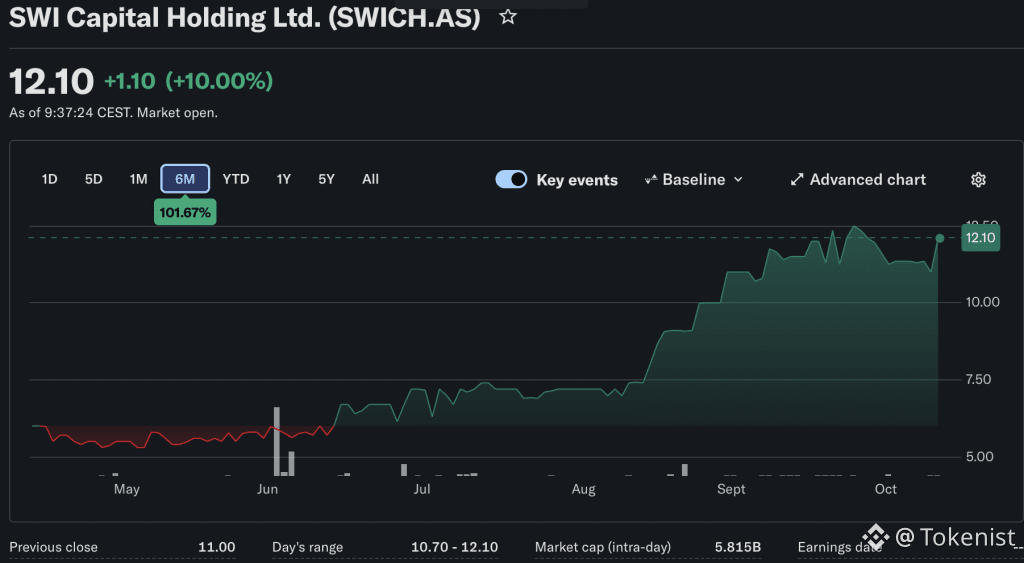
Article
SWI Group’s €800M Raise Puts Grid Power At AI Pivot’s CoreSWI Group (Euronext Amsterdam: SWICH) announced an €800M capital increase on October 12, 2026, at a €6.1Bn valuation, bringing total equity raised since March to over €1Bn. The funds will strengthen power, data-center, and AI-compute infrastructure in Europe and the US, aiming to transform Bitcoin mining sites into digital infrastructure for cloud and AI workloads.
The financing supports SWI’s expansion after acquiring former Bitcoin miner Genesis Digital, which has over 1.3 gigawatts (GW) of grid connections across 15 facilities.
BIG MOVE: SWI GROUP RAISES €800M TO BUILD AI DATA CENTERS AFTER TAKING CONTROL OF FTX’S GENESIS DIGITAL ASSETS. pic.twitter.com/7tsZ5THibA
— Crypto News Hunters (@CryptoNewsHntrs) October 12, 2026
Along with the 2.3 GW European platform AiOnX, SWI claims a total footprint of over 3.6 GW. However, grid access is a key asset, not an indicator of operational AI capacity or revenue.
In a market where power and permits are critical, existing sites hold strategic value, but grid access alone isn’t enough to convert them into profitable AI infrastructure.
How the Capital Increase Supports SWI’s Expansion from Bitcoin Mining Into AI Infrastructure
Euronext-listed SWI Group just added €800M of new equity at a €6.1B valuation, for data center and AI compute capacity in Europe and the US. Over €1B since March.https://t.co/vGRvECrPKU#AIInfrastructure pic.twitter.com/5qKHk8dmMh
— Gennaro (@fourweekmba) October 12, 2026
SWI raised €800M from undisclosed institutional investors by issuing new ordinary shares, increasing its total share capital to 558,399,385 shares and leaving a free float of around 20%.
SWI will use the funds for power infrastructure, compute deployments, and development projects in North America and Europe. This capital boost strengthens SWI’s balance sheet and supports its growth strategy, including investment in AI.
This financing is separate from SWI’s earlier acquisition of Genesis Digital, in which it spent $500M for about 38.3% of the shares. SWI has since moved to majority ownership and plans to market Genesis sites in Texas, North Carolina, South Carolina, and Sweden to hyperscale cloud providers.
The company is also divesting Genesis Digital’s last three small mining sites in Kazakhstan, aligning with its focus on AI data centers over Bitcoin mining.
Crypto Expert Report: Follow The Money – Which Presales Are Attracting Crypto Whales in 2026?
Genesis Digital’s FTX History Remains Part of the Asset’s Context
Genesis Digital’s past links its infrastructure to one of FTX’s largest failed bets. Alameda Research invested about $1.15Bn in the company starting in 2021 and ended up with a 20% stake, according to reporting summarized by Blockhead.
After FTX collapsed, estate administrators sued Genesis Digital to recover the investment. The Wall Street Journal, as cited in Blockhead’s report, described the lawsuit as challenging the prudence of the investment and the value of Genesis’s Kazakh assets; no direct quotation is needed to convey the dispute. FTX dropped the suit on June 15, the same day SWI closed its $500M purchase.
George said SWI had settled the legal disputes with FTX and other shareholders. The lawsuit is historical context rather than part of SWI’s October capital increase, and it does not establish the value or operating prospects of the sites SWI now intends to market.
The broader FTX estate also sold its 7.8% stake in Anthropic for $1.3Bn in 2024; according to Blockhead, the Wall Street Journal estimated that holding would now be worth about $75Bn. That outcome illustrates how dramatically an investment’s value can change, but it offers no direct evidence of SWI’s valuation or Genesis Digital’s performance.
SOURCE: Yahoo Finance Grid Connections are Only the First Step to AI Revenue
SWI’s reported footprint gives the group a substantial base of energized and approved power connections to present to potential customers. Yet converting mining sites into AI infrastructure may require investment in cooling, networking, and GPUs, along with site conversion and any necessary permitting.
The supplied company release and Blockhead’s report do not establish how much of that work is complete, the scale of live GPU deployments or the amount of contracted AI revenue.
In analytical terms, this distinction is central to assessing the pivot: power connectivity is a potentially scarce input, while operational compute capacity and customer contracts matter when assessing the potential for durable cash flow.
The market has seen other Bitcoin miners convert sites to host AI workloads. For related context, see Iren’s equity plan and Nvidia GPU investment.
Similarly, institutional investment and GPU deployment in AI infrastructure highlight how financing and customers turn a platform thesis into operating capacity.
For SWI, the next meaningful evidence will be site conversions, compute deployments, and hyperscale agreements that connect its reported power footprint to revenue.
Crypto Expert Report: What Are the 10 Next Crypto to Explode in 2026?
The post SWI Group’s €800M Raise Puts Grid Power at AI Pivot’s Core appeared first on Tokenist.
SWI Group’s €800M Raise Puts Grid Power At AI Pivot’s Core
SWI Group (Euronext Amsterdam: SWICH) announced an €800M capital increase on October 12, 2026, at a €6.1Bn valuation, bringing total equity raised since March to over €1Bn. The funds will strengthen power, data-center, and AI-compute infrastructure in Europe and the US, aiming to transform Bitcoin mining sites into digital infrastructure for cloud and AI workloads.
The financing supports SWI’s expansion after acquiring former Bitcoin miner Genesis Digital, which has over 1.3 gigawatts (GW) of grid connections across 15 facilities.
BIG MOVE: SWI GROUP RAISES €800M TO BUILD AI DATA CENTERS AFTER TAKING CONTROL OF FTX’S GENESIS DIGITAL ASSETS. pic.twitter.com/7tsZ5THibA
— Crypto News Hunters (@CryptoNewsHntrs) October 12, 2026
Along with the 2.3 GW European platform AiOnX, SWI claims a total footprint of over 3.6 GW. However, grid access is a key asset, not an indicator of operational AI capacity or revenue.
In a market where power and permits are critical, existing sites hold strategic value, but grid access alone isn’t enough to convert them into profitable AI infrastructure.
How the Capital Increase Supports SWI’s Expansion from Bitcoin Mining Into AI Infrastructure
Euronext-listed SWI Group just added €800M of new equity at a €6.1B valuation, for data center and AI compute capacity in Europe and the US. Over €1B since March.https://t.co/vGRvECrPKU#AIInfrastructure pic.twitter.com/5qKHk8dmMh
— Gennaro (@fourweekmba) October 12, 2026
SWI raised €800M from undisclosed institutional investors by issuing new ordinary shares, increasing its total share capital to 558,399,385 shares and leaving a free float of around 20%.
SWI will use the funds for power infrastructure, compute deployments, and development projects in North America and Europe. This capital boost strengthens SWI’s balance sheet and supports its growth strategy, including investment in AI.
This financing is separate from SWI’s earlier acquisition of Genesis Digital, in which it spent $500M for about 38.3% of the shares. SWI has since moved to majority ownership and plans to market Genesis sites in Texas, North Carolina, South Carolina, and Sweden to hyperscale cloud providers.
The company is also divesting Genesis Digital’s last three small mining sites in Kazakhstan, aligning with its focus on AI data centers over Bitcoin mining.
Crypto Expert Report: Follow The Money – Which Presales Are Attracting Crypto Whales in 2026?
Genesis Digital’s FTX History Remains Part of the Asset’s Context
Genesis Digital’s past links its infrastructure to one of FTX’s largest failed bets. Alameda Research invested about $1.15Bn in the company starting in 2021 and ended up with a 20% stake, according to reporting summarized by Blockhead.
After FTX collapsed, estate administrators sued Genesis Digital to recover the investment. The Wall Street Journal, as cited in Blockhead’s report, described the lawsuit as challenging the prudence of the investment and the value of Genesis’s Kazakh assets; no direct quotation is needed to convey the dispute. FTX dropped the suit on June 15, the same day SWI closed its $500M purchase.
George said SWI had settled the legal disputes with FTX and other shareholders. The lawsuit is historical context rather than part of SWI’s October capital increase, and it does not establish the value or operating prospects of the sites SWI now intends to market.
The broader FTX estate also sold its 7.8% stake in Anthropic for $1.3Bn in 2024; according to Blockhead, the Wall Street Journal estimated that holding would now be worth about $75Bn. That outcome illustrates how dramatically an investment’s value can change, but it offers no direct evidence of SWI’s valuation or Genesis Digital’s performance.
SOURCE: Yahoo Finance Grid Connections are Only the First Step to AI Revenue
SWI’s reported footprint gives the group a substantial base of energized and approved power connections to present to potential customers. Yet converting mining sites into AI infrastructure may require investment in cooling, networking, and GPUs, along with site conversion and any necessary permitting.
The supplied company release and Blockhead’s report do not establish how much of that work is complete, the scale of live GPU deployments or the amount of contracted AI revenue.
In analytical terms, this distinction is central to assessing the pivot: power connectivity is a potentially scarce input, while operational compute capacity and customer contracts matter when assessing the potential for durable cash flow.
The market has seen other Bitcoin miners convert sites to host AI workloads. For related context, see Iren’s equity plan and Nvidia GPU investment.
Similarly, institutional investment and GPU deployment in AI infrastructure highlight how financing and customers turn a platform thesis into operating capacity.
For SWI, the next meaningful evidence will be site conversions, compute deployments, and hyperscale agreements that connect its reported power footprint to revenue.
Crypto Expert Report: What Are the 10 Next Crypto to Explode in 2026?
The post SWI Group’s €800M Raise Puts Grid Power at AI Pivot’s Core appeared first on Tokenist.
The financing supports SWI’s expansion after acquiring former Bitcoin miner Genesis Digital, which has over 1.3 gigawatts (GW) of grid connections across 15 facilities.
BIG MOVE: SWI GROUP RAISES €800M TO BUILD AI DATA CENTERS AFTER TAKING CONTROL OF FTX’S GENESIS DIGITAL ASSETS. pic.twitter.com/7tsZ5THibA
— Crypto News Hunters (@CryptoNewsHntrs) October 12, 2026
Along with the 2.3 GW European platform AiOnX, SWI claims a total footprint of over 3.6 GW. However, grid access is a key asset, not an indicator of operational AI capacity or revenue.
In a market where power and permits are critical, existing sites hold strategic value, but grid access alone isn’t enough to convert them into profitable AI infrastructure.
How the Capital Increase Supports SWI’s Expansion from Bitcoin Mining Into AI Infrastructure
Euronext-listed SWI Group just added €800M of new equity at a €6.1B valuation, for data center and AI compute capacity in Europe and the US. Over €1B since March.https://t.co/vGRvECrPKU#AIInfrastructure pic.twitter.com/5qKHk8dmMh
— Gennaro (@fourweekmba) October 12, 2026
SWI raised €800M from undisclosed institutional investors by issuing new ordinary shares, increasing its total share capital to 558,399,385 shares and leaving a free float of around 20%.
SWI will use the funds for power infrastructure, compute deployments, and development projects in North America and Europe. This capital boost strengthens SWI’s balance sheet and supports its growth strategy, including investment in AI.
This financing is separate from SWI’s earlier acquisition of Genesis Digital, in which it spent $500M for about 38.3% of the shares. SWI has since moved to majority ownership and plans to market Genesis sites in Texas, North Carolina, South Carolina, and Sweden to hyperscale cloud providers.
The company is also divesting Genesis Digital’s last three small mining sites in Kazakhstan, aligning with its focus on AI data centers over Bitcoin mining.
Crypto Expert Report: Follow The Money – Which Presales Are Attracting Crypto Whales in 2026?
Genesis Digital’s FTX History Remains Part of the Asset’s Context
Genesis Digital’s past links its infrastructure to one of FTX’s largest failed bets. Alameda Research invested about $1.15Bn in the company starting in 2021 and ended up with a 20% stake, according to reporting summarized by Blockhead.
After FTX collapsed, estate administrators sued Genesis Digital to recover the investment. The Wall Street Journal, as cited in Blockhead’s report, described the lawsuit as challenging the prudence of the investment and the value of Genesis’s Kazakh assets; no direct quotation is needed to convey the dispute. FTX dropped the suit on June 15, the same day SWI closed its $500M purchase.
George said SWI had settled the legal disputes with FTX and other shareholders. The lawsuit is historical context rather than part of SWI’s October capital increase, and it does not establish the value or operating prospects of the sites SWI now intends to market.
The broader FTX estate also sold its 7.8% stake in Anthropic for $1.3Bn in 2024; according to Blockhead, the Wall Street Journal estimated that holding would now be worth about $75Bn. That outcome illustrates how dramatically an investment’s value can change, but it offers no direct evidence of SWI’s valuation or Genesis Digital’s performance.
SOURCE: Yahoo Finance Grid Connections are Only the First Step to AI Revenue
SWI’s reported footprint gives the group a substantial base of energized and approved power connections to present to potential customers. Yet converting mining sites into AI infrastructure may require investment in cooling, networking, and GPUs, along with site conversion and any necessary permitting.
The supplied company release and Blockhead’s report do not establish how much of that work is complete, the scale of live GPU deployments or the amount of contracted AI revenue.
In analytical terms, this distinction is central to assessing the pivot: power connectivity is a potentially scarce input, while operational compute capacity and customer contracts matter when assessing the potential for durable cash flow.
The market has seen other Bitcoin miners convert sites to host AI workloads. For related context, see Iren’s equity plan and Nvidia GPU investment.
Similarly, institutional investment and GPU deployment in AI infrastructure highlight how financing and customers turn a platform thesis into operating capacity.
For SWI, the next meaningful evidence will be site conversions, compute deployments, and hyperscale agreements that connect its reported power footprint to revenue.
Crypto Expert Report: What Are the 10 Next Crypto to Explode in 2026?
The post SWI Group’s €800M Raise Puts Grid Power at AI Pivot’s Core appeared first on Tokenist.
11
·
--

Article
Bitcoin on Track for Weekly Loss As Macroeconomic Headwinds LoomBitcoin staged a modest recovery on Saturday, October 10, but remained on track for a weekly decline as rising oil prices, higher U.S. Treasury yields, and renewed cryptocurrency security concerns continued to weigh on market sentiment.
Bitcoin, the world’s largest cryptocurrency by market capitalization, was trading at $83,025.40 at 14:23 ET (18:23 GMT), up 0.7% over the previous 24 hours. The digital asset traded between $82,537.70 and $83,164.10 during the session, recovering some ground after a difficult week.
INSIGHT: $BTC's volatility has nearly halved since 2018, but extreme swings are happening more often. Per CoinDesk, 2026 has already had 10 extreme move days, more than all of 2018, when Bitcoin crashed 73%. A big driver is crowded options trades that turn normal moves into… pic.twitter.com/Uj0necG1aW
— CryptosRus (@CryptosR_Us) October 11, 2026
Despite Saturday’s gains, Bitcoin remained well below the $87,000 level reached the previous Sunday. The retreat left BTC down about 3% over seven days, underscoring the market’s challenges as investors contend with macroeconomic uncertainty and reduced institutional demand.
Persistent outflows from U.S. spot Bitcoin ETFs added pressure, while concerns about cryptocurrency wallet security and potential implications of AI-related vulnerabilities added uncertainty.
Bitcoin Faces Macroeconomic Headwinds
SOURCE: TradingView
Broader financial market conditions are significantly influencing Bitcoin’s short-term direction. Rising energy prices may fuel inflation, while higher Treasury yields could make traditional investments more appealing than cryptocurrencies.
Traders increasingly worry that U.S. interest rates may stay high longer than expected, potentially restricting liquidity for speculative assets like Bitcoin. Security issues have also resurfaced, with reports of theft linked to Ledger hardware wallets and concerns about AI-related vulnerabilities affecting digital asset safety.
This comes as the market approaches the anniversary of the October 10 flash crash, highlighting its vulnerability to sudden price movements.
Recent CoinDesk analysis found that Bitcoin had 10 trading days in 2026 when prices shifted dramatically, even as overall volatility fell from 84% in 2018 to 46%. This suggests that lower volatility does not eliminate the risk of significant short-term price fluctuations.
Bitcoin Liquidity Improves Despite Weaker Trading Volumes
Market liquidity indicators offer a mixed picture of Bitcoin’s current position. Bitcoin order-book depth sat within 1% of its market price reached $11.7M on October 7.
That was about 75% higher than the level recorded on the day of the flash crash, suggesting the market had regained some capacity to absorb large orders without significant price dislocations.
Trading activity has also remained subdued. Weekly spot cryptocurrency trading volume was nearly two-thirds below the $801 billion recorded during the flash-crash week.
Improved Bitcoin order-book depth and weaker overall trading volumes suggest liquidity recovery has not necessarily translated into broader investor participation.
Crypto Expert Report: What Are the 10 Next Crypto to Explode in 2026?
US Inflation Data Could Influence Bitcoin’s Next Move
NEXT WEEK COULD BE VERY VOLATILE Monday: US market open after Houthis launched new attacks Tuesday: US employment data Wednesday: US CPI and Core CPI data Thursday: US PPI and Core PPI data Friday: Fed Chair Kevin Warsh speech The most important one is CPI and PPI data as… pic.twitter.com/DOoSdeIA3S
— Sweep (@0xSweep) October 11, 2026
Investors are bracing for the U.S. consumer price index (CPI) and producer price index (PPI) reports next week, as these inflation readings could influence the Federal Reserve’s policy decisions.
If inflation remains high, interest rates may stay elevated, which could challenge Bitcoin. Market expectations suggest that the Fed will keep rates unchanged at the October 27–28 meeting, with a possible 25-basis-point increase in December.
For crypto traders, the upcoming data may show whether Bitcoin’s recent weakness is a temporary dip or the start of a deeper downturn. Softer inflation could ease financial concerns, while unexpected price hikes may heighten caution in risk assets.
Strategy’s STRC Shares Approach $100
SOURCE: Yahoo Finance
Despite broader market uncertainty, Strategy’s NASDAQ-listed preferred shares, STRC, moved higher, reaching $99.71, their highest since June.
With a 12% annualized dividend backed by the company’s dollar reserves, a rise above $100 could let Strategy issue more preferred shares to buy Bitcoin, depending on its financing plans.
As one of the largest corporate Bitcoin holders, Strategy’s ability to raise funds can influence institutional demand for Bitcoin. Nonetheless, STRC’s performance does not directly reflect Bitcoin’s market recovery, as it is influenced by its own dynamics.
Crypto Expert Report: Follow The Money – Which Presales Are Attracting Crypto Whales in 2026?
The post Bitcoin on Track for Weekly Loss as Macroeconomic Headwinds Loom appeared first on Tokenist.
Bitcoin on Track for Weekly Loss As Macroeconomic Headwinds Loom
Bitcoin staged a modest recovery on Saturday, October 10, but remained on track for a weekly decline as rising oil prices, higher U.S. Treasury yields, and renewed cryptocurrency security concerns continued to weigh on market sentiment.
Bitcoin, the world’s largest cryptocurrency by market capitalization, was trading at $83,025.40 at 14:23 ET (18:23 GMT), up 0.7% over the previous 24 hours. The digital asset traded between $82,537.70 and $83,164.10 during the session, recovering some ground after a difficult week.
INSIGHT: $BTC's volatility has nearly halved since 2018, but extreme swings are happening more often. Per CoinDesk, 2026 has already had 10 extreme move days, more than all of 2018, when Bitcoin crashed 73%. A big driver is crowded options trades that turn normal moves into… pic.twitter.com/Uj0necG1aW
— CryptosRus (@CryptosR_Us) October 11, 2026
Despite Saturday’s gains, Bitcoin remained well below the $87,000 level reached the previous Sunday. The retreat left BTC down about 3% over seven days, underscoring the market’s challenges as investors contend with macroeconomic uncertainty and reduced institutional demand.
Persistent outflows from U.S. spot Bitcoin ETFs added pressure, while concerns about cryptocurrency wallet security and potential implications of AI-related vulnerabilities added uncertainty.
Bitcoin Faces Macroeconomic Headwinds
SOURCE: TradingView
Broader financial market conditions are significantly influencing Bitcoin’s short-term direction. Rising energy prices may fuel inflation, while higher Treasury yields could make traditional investments more appealing than cryptocurrencies.
Traders increasingly worry that U.S. interest rates may stay high longer than expected, potentially restricting liquidity for speculative assets like Bitcoin. Security issues have also resurfaced, with reports of theft linked to Ledger hardware wallets and concerns about AI-related vulnerabilities affecting digital asset safety.
This comes as the market approaches the anniversary of the October 10 flash crash, highlighting its vulnerability to sudden price movements.
Recent CoinDesk analysis found that Bitcoin had 10 trading days in 2026 when prices shifted dramatically, even as overall volatility fell from 84% in 2018 to 46%. This suggests that lower volatility does not eliminate the risk of significant short-term price fluctuations.
Bitcoin Liquidity Improves Despite Weaker Trading Volumes
Market liquidity indicators offer a mixed picture of Bitcoin’s current position. Bitcoin order-book depth sat within 1% of its market price reached $11.7M on October 7.
That was about 75% higher than the level recorded on the day of the flash crash, suggesting the market had regained some capacity to absorb large orders without significant price dislocations.
Trading activity has also remained subdued. Weekly spot cryptocurrency trading volume was nearly two-thirds below the $801 billion recorded during the flash-crash week.
Improved Bitcoin order-book depth and weaker overall trading volumes suggest liquidity recovery has not necessarily translated into broader investor participation.
Crypto Expert Report: What Are the 10 Next Crypto to Explode in 2026?
US Inflation Data Could Influence Bitcoin’s Next Move
NEXT WEEK COULD BE VERY VOLATILE Monday: US market open after Houthis launched new attacks Tuesday: US employment data Wednesday: US CPI and Core CPI data Thursday: US PPI and Core PPI data Friday: Fed Chair Kevin Warsh speech The most important one is CPI and PPI data as… pic.twitter.com/DOoSdeIA3S
— Sweep (@0xSweep) October 11, 2026
Investors are bracing for the U.S. consumer price index (CPI) and producer price index (PPI) reports next week, as these inflation readings could influence the Federal Reserve’s policy decisions.
If inflation remains high, interest rates may stay elevated, which could challenge Bitcoin. Market expectations suggest that the Fed will keep rates unchanged at the October 27–28 meeting, with a possible 25-basis-point increase in December.
For crypto traders, the upcoming data may show whether Bitcoin’s recent weakness is a temporary dip or the start of a deeper downturn. Softer inflation could ease financial concerns, while unexpected price hikes may heighten caution in risk assets.
Strategy’s STRC Shares Approach $100
SOURCE: Yahoo Finance
Despite broader market uncertainty, Strategy’s NASDAQ-listed preferred shares, STRC, moved higher, reaching $99.71, their highest since June.
With a 12% annualized dividend backed by the company’s dollar reserves, a rise above $100 could let Strategy issue more preferred shares to buy Bitcoin, depending on its financing plans.
As one of the largest corporate Bitcoin holders, Strategy’s ability to raise funds can influence institutional demand for Bitcoin. Nonetheless, STRC’s performance does not directly reflect Bitcoin’s market recovery, as it is influenced by its own dynamics.
Crypto Expert Report: Follow The Money – Which Presales Are Attracting Crypto Whales in 2026?
The post Bitcoin on Track for Weekly Loss as Macroeconomic Headwinds Loom appeared first on Tokenist.
Bitcoin, the world’s largest cryptocurrency by market capitalization, was trading at $83,025.40 at 14:23 ET (18:23 GMT), up 0.7% over the previous 24 hours. The digital asset traded between $82,537.70 and $83,164.10 during the session, recovering some ground after a difficult week.
INSIGHT: $BTC's volatility has nearly halved since 2018, but extreme swings are happening more often. Per CoinDesk, 2026 has already had 10 extreme move days, more than all of 2018, when Bitcoin crashed 73%. A big driver is crowded options trades that turn normal moves into… pic.twitter.com/Uj0necG1aW
— CryptosRus (@CryptosR_Us) October 11, 2026
Despite Saturday’s gains, Bitcoin remained well below the $87,000 level reached the previous Sunday. The retreat left BTC down about 3% over seven days, underscoring the market’s challenges as investors contend with macroeconomic uncertainty and reduced institutional demand.
Persistent outflows from U.S. spot Bitcoin ETFs added pressure, while concerns about cryptocurrency wallet security and potential implications of AI-related vulnerabilities added uncertainty.
Bitcoin Faces Macroeconomic Headwinds
SOURCE: TradingView
Broader financial market conditions are significantly influencing Bitcoin’s short-term direction. Rising energy prices may fuel inflation, while higher Treasury yields could make traditional investments more appealing than cryptocurrencies.
Traders increasingly worry that U.S. interest rates may stay high longer than expected, potentially restricting liquidity for speculative assets like Bitcoin. Security issues have also resurfaced, with reports of theft linked to Ledger hardware wallets and concerns about AI-related vulnerabilities affecting digital asset safety.
This comes as the market approaches the anniversary of the October 10 flash crash, highlighting its vulnerability to sudden price movements.
Recent CoinDesk analysis found that Bitcoin had 10 trading days in 2026 when prices shifted dramatically, even as overall volatility fell from 84% in 2018 to 46%. This suggests that lower volatility does not eliminate the risk of significant short-term price fluctuations.
Bitcoin Liquidity Improves Despite Weaker Trading Volumes
Market liquidity indicators offer a mixed picture of Bitcoin’s current position. Bitcoin order-book depth sat within 1% of its market price reached $11.7M on October 7.
That was about 75% higher than the level recorded on the day of the flash crash, suggesting the market had regained some capacity to absorb large orders without significant price dislocations.
Trading activity has also remained subdued. Weekly spot cryptocurrency trading volume was nearly two-thirds below the $801 billion recorded during the flash-crash week.
Improved Bitcoin order-book depth and weaker overall trading volumes suggest liquidity recovery has not necessarily translated into broader investor participation.
Crypto Expert Report: What Are the 10 Next Crypto to Explode in 2026?
US Inflation Data Could Influence Bitcoin’s Next Move
NEXT WEEK COULD BE VERY VOLATILE Monday: US market open after Houthis launched new attacks Tuesday: US employment data Wednesday: US CPI and Core CPI data Thursday: US PPI and Core PPI data Friday: Fed Chair Kevin Warsh speech The most important one is CPI and PPI data as… pic.twitter.com/DOoSdeIA3S
— Sweep (@0xSweep) October 11, 2026
Investors are bracing for the U.S. consumer price index (CPI) and producer price index (PPI) reports next week, as these inflation readings could influence the Federal Reserve’s policy decisions.
If inflation remains high, interest rates may stay elevated, which could challenge Bitcoin. Market expectations suggest that the Fed will keep rates unchanged at the October 27–28 meeting, with a possible 25-basis-point increase in December.
For crypto traders, the upcoming data may show whether Bitcoin’s recent weakness is a temporary dip or the start of a deeper downturn. Softer inflation could ease financial concerns, while unexpected price hikes may heighten caution in risk assets.
Strategy’s STRC Shares Approach $100
SOURCE: Yahoo Finance
Despite broader market uncertainty, Strategy’s NASDAQ-listed preferred shares, STRC, moved higher, reaching $99.71, their highest since June.
With a 12% annualized dividend backed by the company’s dollar reserves, a rise above $100 could let Strategy issue more preferred shares to buy Bitcoin, depending on its financing plans.
As one of the largest corporate Bitcoin holders, Strategy’s ability to raise funds can influence institutional demand for Bitcoin. Nonetheless, STRC’s performance does not directly reflect Bitcoin’s market recovery, as it is influenced by its own dynamics.
Crypto Expert Report: Follow The Money – Which Presales Are Attracting Crypto Whales in 2026?
The post Bitcoin on Track for Weekly Loss as Macroeconomic Headwinds Loom appeared first on Tokenist.
1
1
466
·
--

Article
Pokemon Crypto Hacker Spends $3M on Rare Cards Following $55M HeistIn a strange Pokemon crypto crossover, a cybersecurity consultant and avid collector has been convicted in the US of a cryptocurrency theft worth almost $55M, with prosecutors saying some of the stolen funds were used to build a multimillion-dollar collection of rare trading cards.
Jonathan Spalletta, 36, was found guilty by a New York federal jury on Wednesday of computer fraud and money laundering following a six-day trial. The case centered on two attacks against the decentralized crypto exchange Uranium Finance in April 2021, which ultimately forced the platform to shut down.
BREAKING: Crypto hacker Jonathan Spalletta has been found guilty of stealing $53.3 million in crypto and spending part of it on Pokémon cards, a Black Lotus, and other collectibles. He faces up to 30 years in prison. pic.twitter.com/NxKBIJVeEC
— EyeWhales (@EyeWhales) October 7, 2026
Pokemon Crypto News: Authorities Seized $3M in Rare Trading Cards Along With $31M in Digital Assets
US authorities seized more than $3M in rare Pokémon and Magic: The Gathering cards from Spalletta’s Maryland home, along with about $31M in cryptocurrency. According to the US Department of Justice, some of the Pokémon purchases were among the most valuable items in his collection.
Among them was a sealed box of first-edition Pokémon booster packs purchased for approximately $257,500. Prosecutors also said Spalletta bought a complete first-edition Pokémon Base Set for around $750,000.
The purchases formed part of a wider collection of high-value collectibles allegedly acquired with cryptocurrency stolen from Uranium Finance.
Spalletta also reportedly spent approximately $500,000 on a rare Black Lotus Magic: The Gathering card and around $1.5M on 18 sealed Alpha Booster packs.
The collection extended beyond trading cards. Authorities said he purchased an ancient Roman coin commemorating the assassination of Julius Caesar for roughly $600,000, as well as a piece of the Wright brothers’ original aircraft that astronaut Neil Armstrong later carried to the Moon.
Crypto Expert Report: What Are The Next 10 Crypto to Explode?
How Did Spalletta Pull Off $55M Crypto Hack?
A few hours ago it was announced that $31M from the Uranium Finance exploit was seized by US law enforcement. In Dec 2023 I posted an investigation for the $50m Uranium exploit on BSC detailing how the exploiter had laundered $10.5M via Magic The Gathering trading cards using a… pic.twitter.com/tJtY54V2vf
— ZachXBT (@zachxbt) February 25, 2025
According to prosecutors, Spalletta tried to conceal the stolen cryptocurrency through a series of transactions, including using the crypto mixer Tornado Cash, before converting some of the funds into physical collectibles.
The original Uranium Finance attacks allegedly exploited vulnerabilities in the exchange’s smart contracts. The first incident generated approximately $1.4M, while a second attack later that month targeted 26 liquidity pools and extracted approximately $53.3M.
Spalletta’s defense argued that his actions did not amount to hacking because he used publicly available functions in Uranium’s smart contracts rather than stolen credentials or malicious code. The jury rejected that argument.
The case offers an unusual intersection between the Pokemon and crypto worlds, with the increasingly valuable market for collectible Pokemon cards, where rare vintage items can sell for hundreds of thousands of dollars.
Spalletta now faces up to 10 years in prison for computer fraud and up to 20 years for money laundering. His sentencing is scheduled for February 16, 2027.
Crypto Expert Report: What is the Best Meme Coin to Buy and Forget Until the Next Bull Run?
The post Pokemon Crypto Hacker Spends $3M on Rare Cards Following $55M Heist appeared first on Tokenist.
Pokemon Crypto Hacker Spends $3M on Rare Cards Following $55M Heist
In a strange Pokemon crypto crossover, a cybersecurity consultant and avid collector has been convicted in the US of a cryptocurrency theft worth almost $55M, with prosecutors saying some of the stolen funds were used to build a multimillion-dollar collection of rare trading cards.
Jonathan Spalletta, 36, was found guilty by a New York federal jury on Wednesday of computer fraud and money laundering following a six-day trial. The case centered on two attacks against the decentralized crypto exchange Uranium Finance in April 2021, which ultimately forced the platform to shut down.
BREAKING: Crypto hacker Jonathan Spalletta has been found guilty of stealing $53.3 million in crypto and spending part of it on Pokémon cards, a Black Lotus, and other collectibles. He faces up to 30 years in prison. pic.twitter.com/NxKBIJVeEC
— EyeWhales (@EyeWhales) October 7, 2026
Pokemon Crypto News: Authorities Seized $3M in Rare Trading Cards Along With $31M in Digital Assets
US authorities seized more than $3M in rare Pokémon and Magic: The Gathering cards from Spalletta’s Maryland home, along with about $31M in cryptocurrency. According to the US Department of Justice, some of the Pokémon purchases were among the most valuable items in his collection.
Among them was a sealed box of first-edition Pokémon booster packs purchased for approximately $257,500. Prosecutors also said Spalletta bought a complete first-edition Pokémon Base Set for around $750,000.
The purchases formed part of a wider collection of high-value collectibles allegedly acquired with cryptocurrency stolen from Uranium Finance.
Spalletta also reportedly spent approximately $500,000 on a rare Black Lotus Magic: The Gathering card and around $1.5M on 18 sealed Alpha Booster packs.
The collection extended beyond trading cards. Authorities said he purchased an ancient Roman coin commemorating the assassination of Julius Caesar for roughly $600,000, as well as a piece of the Wright brothers’ original aircraft that astronaut Neil Armstrong later carried to the Moon.
Crypto Expert Report: What Are The Next 10 Crypto to Explode?
How Did Spalletta Pull Off $55M Crypto Hack?
A few hours ago it was announced that $31M from the Uranium Finance exploit was seized by US law enforcement. In Dec 2023 I posted an investigation for the $50m Uranium exploit on BSC detailing how the exploiter had laundered $10.5M via Magic The Gathering trading cards using a… pic.twitter.com/tJtY54V2vf
— ZachXBT (@zachxbt) February 25, 2025
According to prosecutors, Spalletta tried to conceal the stolen cryptocurrency through a series of transactions, including using the crypto mixer Tornado Cash, before converting some of the funds into physical collectibles.
The original Uranium Finance attacks allegedly exploited vulnerabilities in the exchange’s smart contracts. The first incident generated approximately $1.4M, while a second attack later that month targeted 26 liquidity pools and extracted approximately $53.3M.
Spalletta’s defense argued that his actions did not amount to hacking because he used publicly available functions in Uranium’s smart contracts rather than stolen credentials or malicious code. The jury rejected that argument.
The case offers an unusual intersection between the Pokemon and crypto worlds, with the increasingly valuable market for collectible Pokemon cards, where rare vintage items can sell for hundreds of thousands of dollars.
Spalletta now faces up to 10 years in prison for computer fraud and up to 20 years for money laundering. His sentencing is scheduled for February 16, 2027.
Crypto Expert Report: What is the Best Meme Coin to Buy and Forget Until the Next Bull Run?
The post Pokemon Crypto Hacker Spends $3M on Rare Cards Following $55M Heist appeared first on Tokenist.
Jonathan Spalletta, 36, was found guilty by a New York federal jury on Wednesday of computer fraud and money laundering following a six-day trial. The case centered on two attacks against the decentralized crypto exchange Uranium Finance in April 2021, which ultimately forced the platform to shut down.
BREAKING: Crypto hacker Jonathan Spalletta has been found guilty of stealing $53.3 million in crypto and spending part of it on Pokémon cards, a Black Lotus, and other collectibles. He faces up to 30 years in prison. pic.twitter.com/NxKBIJVeEC
— EyeWhales (@EyeWhales) October 7, 2026
Pokemon Crypto News: Authorities Seized $3M in Rare Trading Cards Along With $31M in Digital Assets
US authorities seized more than $3M in rare Pokémon and Magic: The Gathering cards from Spalletta’s Maryland home, along with about $31M in cryptocurrency. According to the US Department of Justice, some of the Pokémon purchases were among the most valuable items in his collection.
Among them was a sealed box of first-edition Pokémon booster packs purchased for approximately $257,500. Prosecutors also said Spalletta bought a complete first-edition Pokémon Base Set for around $750,000.
The purchases formed part of a wider collection of high-value collectibles allegedly acquired with cryptocurrency stolen from Uranium Finance.
Spalletta also reportedly spent approximately $500,000 on a rare Black Lotus Magic: The Gathering card and around $1.5M on 18 sealed Alpha Booster packs.
The collection extended beyond trading cards. Authorities said he purchased an ancient Roman coin commemorating the assassination of Julius Caesar for roughly $600,000, as well as a piece of the Wright brothers’ original aircraft that astronaut Neil Armstrong later carried to the Moon.
Crypto Expert Report: What Are The Next 10 Crypto to Explode?
How Did Spalletta Pull Off $55M Crypto Hack?
A few hours ago it was announced that $31M from the Uranium Finance exploit was seized by US law enforcement. In Dec 2023 I posted an investigation for the $50m Uranium exploit on BSC detailing how the exploiter had laundered $10.5M via Magic The Gathering trading cards using a… pic.twitter.com/tJtY54V2vf
— ZachXBT (@zachxbt) February 25, 2025
According to prosecutors, Spalletta tried to conceal the stolen cryptocurrency through a series of transactions, including using the crypto mixer Tornado Cash, before converting some of the funds into physical collectibles.
The original Uranium Finance attacks allegedly exploited vulnerabilities in the exchange’s smart contracts. The first incident generated approximately $1.4M, while a second attack later that month targeted 26 liquidity pools and extracted approximately $53.3M.
Spalletta’s defense argued that his actions did not amount to hacking because he used publicly available functions in Uranium’s smart contracts rather than stolen credentials or malicious code. The jury rejected that argument.
The case offers an unusual intersection between the Pokemon and crypto worlds, with the increasingly valuable market for collectible Pokemon cards, where rare vintage items can sell for hundreds of thousands of dollars.
Spalletta now faces up to 10 years in prison for computer fraud and up to 20 years for money laundering. His sentencing is scheduled for February 16, 2027.
Crypto Expert Report: What is the Best Meme Coin to Buy and Forget Until the Next Bull Run?
The post Pokemon Crypto Hacker Spends $3M on Rare Cards Following $55M Heist appeared first on Tokenist.
430
·
--
SEC Filing Outlines 24/7 Plan for 63 OKX Tokenized StocksOKXICE LLC filed a proposal with the U.S. SEC on Sunday, October 4, 2026, seeking approval for a 24/7 venue covering OKX tokenized stocks of an initial 63 public companies.
The joint venture between crypto exchange operator OKX tokenized stocks and Intercontinental Exchange (ICE), the parent of the New York Stock Exchange, is testing whether blockchain-based equity trading can enter US markets; the filing is not SEC approval or evidence of a market launch.
The proposed stock list includes Nvidia, Apple, Coca-Cola, Cisco Systems and McDonald’s. The distinction between a filing and an operating venue matters: the proposal identifies a possible trading model, while regulatory review and issuer participation still stand between that plan and trading.
OKX just asked the SEC for permission to sell tokenized U.S. stocks. The filing is the boring part. The tell is who is asking. For three years tokenized equities lived offshore, where the pitch was that U.S. rules made them impossible. A major exchange just walked into the… https://t.co/puODfvNN5u
— Shawn Chauhan (@shawnchauhan1) October 5, 2026
What Does the OKX Tokenized Stocks Filing Propose? 63 Stocks and a 24/7 Schedule
Bloomberg has reported that OKXICE plans to seek approval to offer tokenized shares of 63 companies. Under the SEC framework described in the report, issuers have 30 days to opt out before trading can begin, making the initial list a proposal rather than a guaranteed final roster.
The opt-out period leaves companies with a role in determining which names could ultimately appear on the venue. If issuers decline participation, the eligible universe may be smaller or otherwise differ from the 63 companies named in the filing. The report does not provide a final list or identify any issuer decisions.
The proposed 24/7 schedule would extend access beyond conventional US stock trading hours. The filing brings together a crypto exchange operator and the parent of the NYSE, but the available reporting does not specify the venue’s technical design, custody arrangements, or settlement assets.
In particular, it does not establish whether trading would use OKX tokenized stocks X Layer, how stablecoins might factor into settlement, or what legal rights token holders would have. Those details cannot be treated as settled features of the proposal on the basis of the filing summary.
The broader effort to place traditional equities on blockchain infrastructure is also visible in the NYSE’s on-chain equities initiative with Securitize. That context reinforces the strategic overlap between established exchange groups and blockchain firms, while leaving the specific design of OKXICE’s venue open.
Crypto Expert: What is The Best Meme Coin To Buy and Forget Until The Next Bull Run?
Regulatory Status and Issuer Choices Remain Decisive in OKX Tokenized Stocks Filing
The next generation of financial markets needs technology and policy to evolve together. Our Founder & CEO @star_okx and OKXICE Co-Chair, former NY Governor @andrewcuomo joined @HenriArslanian at the OKX Main Stage to discuss how clear regulation, strong compliance and resilient… pic.twitter.com/twAF9eNwEm
— OKX (@okx) October 7, 2026
The central constraint is regulatory: OKXICE has filed to seek approval, but the reporting does not say the SEC has approved the venue. It also doesn’t give a launch date. A filing is a step toward a possible market, not proof that investors can already trade tokenized versions of the named stocks.
The 30-day issuer opt-out process is another condition between the proposed list and any trading. It could affect which shares are available, while the source does not confirm whether any company has opted out or how participation would be finalized. The stated 63-company scope should therefore be read as an initial proposal.
Other implementation questions remain open. The reporting does not specify investor protections, custody, liquidity arrangements, or how token holders would be treated in relation to the underlying shares. It also does not establish dividend or voting rights, leaving the rights attached to the tokenized shares unspecified in the available reporting.
The filing summary likewise does not confirm that the venue would use X Layer, stablecoins, automated market makers, or liquidity pools. These features may be relevant to how a blockchain-based market operates, but attributing them to this proposal without verified documentation would overstate what has been disclosed.
Round-the-Clock Trading Could Reshape Market Access
BOOOOOOOOOOOOOOOM!!! THE NEW YORK STOCK EXCHANGE JUST ANNOUNCED 'THE FUTURE OF CAPITAL MARKETS': 1. MONEY, STABLECOINS 2. TOKENIZED STOCKS, BONDS, SECURITIES 3. COMMODITY MARKETS TRANSLATION: The ENTIRE financial system will be ON-CHAIN! pic.twitter.com/T0NyoEmRaB
— DonaldTrumpjr Q (@DonaldTrumpQ7) October 6, 2026
For exchanges, the proposal connects crypto-native trading infrastructure with a major traditional-market group at a time when round-the-clock access is drawing wider interest.
Reuters separately reported that NYSE, Nasdaq and the London Stock Exchange are preparing their own initiatives for around-the-clock trading. That activity points to a broader contest over trading hours, although the exchanges’ plans do not establish how OKXICE’s proposal will perform.
Continuous availability could let investors respond to company news outside standard U.S. market hours. But 24/7 access does not itself guarantee deep liquidity or prices that closely track shares traded on conventional exchanges.
Overnight or weekend trading could bring thinner liquidity, wider spreads, and greater divergence from the underlying market; these are potential market-structure risks, not outcomes established by the filing.
Existing blockchain-based equity exposure offers a point of comparison, but it should not be conflated with an SEC-reviewed U.S. venue. Available reporting does not address Robinhood Chain, while tokenized stocks offered through Base raise separate questions about availability and regulatory scope.
For OKX and ICE, the next meaningful milestones are whether the SEC permits the proposed venue to proceed and which issuers remain in the eligible group after the opt-out window.
Until those points are resolved, the filing signals an attempt to bring tokenized equities into U.S. markets, not a new source of live 24/7 stock access.
Crypto Expert Report: What Are The Next 10 Cryptos to Explode?
This article is for informational purposes only and does not constitute investment advice or a recommendation to buy any stock or token.
The post SEC Filing Outlines 24/7 Plan for 63 OKX Tokenized Stocks appeared first on Tokenist.
SEC Filing Outlines 24/7 Plan for 63 OKX Tokenized Stocks
OKXICE LLC filed a proposal with the U.S. SEC on Sunday, October 4, 2026, seeking approval for a 24/7 venue covering OKX tokenized stocks of an initial 63 public companies.
The joint venture between crypto exchange operator OKX tokenized stocks and Intercontinental Exchange (ICE), the parent of the New York Stock Exchange, is testing whether blockchain-based equity trading can enter US markets; the filing is not SEC approval or evidence of a market launch.
The proposed stock list includes Nvidia, Apple, Coca-Cola, Cisco Systems and McDonald’s. The distinction between a filing and an operating venue matters: the proposal identifies a possible trading model, while regulatory review and issuer participation still stand between that plan and trading.
OKX just asked the SEC for permission to sell tokenized U.S. stocks. The filing is the boring part. The tell is who is asking. For three years tokenized equities lived offshore, where the pitch was that U.S. rules made them impossible. A major exchange just walked into the… https://t.co/puODfvNN5u
— Shawn Chauhan (@shawnchauhan1) October 5, 2026
What Does the OKX Tokenized Stocks Filing Propose? 63 Stocks and a 24/7 Schedule
Bloomberg has reported that OKXICE plans to seek approval to offer tokenized shares of 63 companies. Under the SEC framework described in the report, issuers have 30 days to opt out before trading can begin, making the initial list a proposal rather than a guaranteed final roster.
The opt-out period leaves companies with a role in determining which names could ultimately appear on the venue. If issuers decline participation, the eligible universe may be smaller or otherwise differ from the 63 companies named in the filing. The report does not provide a final list or identify any issuer decisions.
The proposed 24/7 schedule would extend access beyond conventional US stock trading hours. The filing brings together a crypto exchange operator and the parent of the NYSE, but the available reporting does not specify the venue’s technical design, custody arrangements, or settlement assets.
In particular, it does not establish whether trading would use OKX tokenized stocks X Layer, how stablecoins might factor into settlement, or what legal rights token holders would have. Those details cannot be treated as settled features of the proposal on the basis of the filing summary.
The broader effort to place traditional equities on blockchain infrastructure is also visible in the NYSE’s on-chain equities initiative with Securitize. That context reinforces the strategic overlap between established exchange groups and blockchain firms, while leaving the specific design of OKXICE’s venue open.
Crypto Expert: What is The Best Meme Coin To Buy and Forget Until The Next Bull Run?
Regulatory Status and Issuer Choices Remain Decisive in OKX Tokenized Stocks Filing
The next generation of financial markets needs technology and policy to evolve together. Our Founder & CEO @star_okx and OKXICE Co-Chair, former NY Governor @andrewcuomo joined @HenriArslanian at the OKX Main Stage to discuss how clear regulation, strong compliance and resilient… pic.twitter.com/twAF9eNwEm
— OKX (@okx) October 7, 2026
The central constraint is regulatory: OKXICE has filed to seek approval, but the reporting does not say the SEC has approved the venue. It also doesn’t give a launch date. A filing is a step toward a possible market, not proof that investors can already trade tokenized versions of the named stocks.
The 30-day issuer opt-out process is another condition between the proposed list and any trading. It could affect which shares are available, while the source does not confirm whether any company has opted out or how participation would be finalized. The stated 63-company scope should therefore be read as an initial proposal.
Other implementation questions remain open. The reporting does not specify investor protections, custody, liquidity arrangements, or how token holders would be treated in relation to the underlying shares. It also does not establish dividend or voting rights, leaving the rights attached to the tokenized shares unspecified in the available reporting.
The filing summary likewise does not confirm that the venue would use X Layer, stablecoins, automated market makers, or liquidity pools. These features may be relevant to how a blockchain-based market operates, but attributing them to this proposal without verified documentation would overstate what has been disclosed.
Round-the-Clock Trading Could Reshape Market Access
BOOOOOOOOOOOOOOOM!!! THE NEW YORK STOCK EXCHANGE JUST ANNOUNCED 'THE FUTURE OF CAPITAL MARKETS': 1. MONEY, STABLECOINS 2. TOKENIZED STOCKS, BONDS, SECURITIES 3. COMMODITY MARKETS TRANSLATION: The ENTIRE financial system will be ON-CHAIN! pic.twitter.com/T0NyoEmRaB
— DonaldTrumpjr Q (@DonaldTrumpQ7) October 6, 2026
For exchanges, the proposal connects crypto-native trading infrastructure with a major traditional-market group at a time when round-the-clock access is drawing wider interest.
Reuters separately reported that NYSE, Nasdaq and the London Stock Exchange are preparing their own initiatives for around-the-clock trading. That activity points to a broader contest over trading hours, although the exchanges’ plans do not establish how OKXICE’s proposal will perform.
Continuous availability could let investors respond to company news outside standard U.S. market hours. But 24/7 access does not itself guarantee deep liquidity or prices that closely track shares traded on conventional exchanges.
Overnight or weekend trading could bring thinner liquidity, wider spreads, and greater divergence from the underlying market; these are potential market-structure risks, not outcomes established by the filing.
Existing blockchain-based equity exposure offers a point of comparison, but it should not be conflated with an SEC-reviewed U.S. venue. Available reporting does not address Robinhood Chain, while tokenized stocks offered through Base raise separate questions about availability and regulatory scope.
For OKX and ICE, the next meaningful milestones are whether the SEC permits the proposed venue to proceed and which issuers remain in the eligible group after the opt-out window.
Until those points are resolved, the filing signals an attempt to bring tokenized equities into U.S. markets, not a new source of live 24/7 stock access.
Crypto Expert Report: What Are The Next 10 Cryptos to Explode?
This article is for informational purposes only and does not constitute investment advice or a recommendation to buy any stock or token.
The post SEC Filing Outlines 24/7 Plan for 63 OKX Tokenized Stocks appeared first on Tokenist.
The joint venture between crypto exchange operator OKX tokenized stocks and Intercontinental Exchange (ICE), the parent of the New York Stock Exchange, is testing whether blockchain-based equity trading can enter US markets; the filing is not SEC approval or evidence of a market launch.
The proposed stock list includes Nvidia, Apple, Coca-Cola, Cisco Systems and McDonald’s. The distinction between a filing and an operating venue matters: the proposal identifies a possible trading model, while regulatory review and issuer participation still stand between that plan and trading.
OKX just asked the SEC for permission to sell tokenized U.S. stocks. The filing is the boring part. The tell is who is asking. For three years tokenized equities lived offshore, where the pitch was that U.S. rules made them impossible. A major exchange just walked into the… https://t.co/puODfvNN5u
— Shawn Chauhan (@shawnchauhan1) October 5, 2026
What Does the OKX Tokenized Stocks Filing Propose? 63 Stocks and a 24/7 Schedule
Bloomberg has reported that OKXICE plans to seek approval to offer tokenized shares of 63 companies. Under the SEC framework described in the report, issuers have 30 days to opt out before trading can begin, making the initial list a proposal rather than a guaranteed final roster.
The opt-out period leaves companies with a role in determining which names could ultimately appear on the venue. If issuers decline participation, the eligible universe may be smaller or otherwise differ from the 63 companies named in the filing. The report does not provide a final list or identify any issuer decisions.
The proposed 24/7 schedule would extend access beyond conventional US stock trading hours. The filing brings together a crypto exchange operator and the parent of the NYSE, but the available reporting does not specify the venue’s technical design, custody arrangements, or settlement assets.
In particular, it does not establish whether trading would use OKX tokenized stocks X Layer, how stablecoins might factor into settlement, or what legal rights token holders would have. Those details cannot be treated as settled features of the proposal on the basis of the filing summary.
The broader effort to place traditional equities on blockchain infrastructure is also visible in the NYSE’s on-chain equities initiative with Securitize. That context reinforces the strategic overlap between established exchange groups and blockchain firms, while leaving the specific design of OKXICE’s venue open.
Crypto Expert: What is The Best Meme Coin To Buy and Forget Until The Next Bull Run?
Regulatory Status and Issuer Choices Remain Decisive in OKX Tokenized Stocks Filing
The next generation of financial markets needs technology and policy to evolve together. Our Founder & CEO @star_okx and OKXICE Co-Chair, former NY Governor @andrewcuomo joined @HenriArslanian at the OKX Main Stage to discuss how clear regulation, strong compliance and resilient… pic.twitter.com/twAF9eNwEm
— OKX (@okx) October 7, 2026
The central constraint is regulatory: OKXICE has filed to seek approval, but the reporting does not say the SEC has approved the venue. It also doesn’t give a launch date. A filing is a step toward a possible market, not proof that investors can already trade tokenized versions of the named stocks.
The 30-day issuer opt-out process is another condition between the proposed list and any trading. It could affect which shares are available, while the source does not confirm whether any company has opted out or how participation would be finalized. The stated 63-company scope should therefore be read as an initial proposal.
Other implementation questions remain open. The reporting does not specify investor protections, custody, liquidity arrangements, or how token holders would be treated in relation to the underlying shares. It also does not establish dividend or voting rights, leaving the rights attached to the tokenized shares unspecified in the available reporting.
The filing summary likewise does not confirm that the venue would use X Layer, stablecoins, automated market makers, or liquidity pools. These features may be relevant to how a blockchain-based market operates, but attributing them to this proposal without verified documentation would overstate what has been disclosed.
Round-the-Clock Trading Could Reshape Market Access
BOOOOOOOOOOOOOOOM!!! THE NEW YORK STOCK EXCHANGE JUST ANNOUNCED 'THE FUTURE OF CAPITAL MARKETS': 1. MONEY, STABLECOINS 2. TOKENIZED STOCKS, BONDS, SECURITIES 3. COMMODITY MARKETS TRANSLATION: The ENTIRE financial system will be ON-CHAIN! pic.twitter.com/T0NyoEmRaB
— DonaldTrumpjr Q (@DonaldTrumpQ7) October 6, 2026
For exchanges, the proposal connects crypto-native trading infrastructure with a major traditional-market group at a time when round-the-clock access is drawing wider interest.
Reuters separately reported that NYSE, Nasdaq and the London Stock Exchange are preparing their own initiatives for around-the-clock trading. That activity points to a broader contest over trading hours, although the exchanges’ plans do not establish how OKXICE’s proposal will perform.
Continuous availability could let investors respond to company news outside standard U.S. market hours. But 24/7 access does not itself guarantee deep liquidity or prices that closely track shares traded on conventional exchanges.
Overnight or weekend trading could bring thinner liquidity, wider spreads, and greater divergence from the underlying market; these are potential market-structure risks, not outcomes established by the filing.
Existing blockchain-based equity exposure offers a point of comparison, but it should not be conflated with an SEC-reviewed U.S. venue. Available reporting does not address Robinhood Chain, while tokenized stocks offered through Base raise separate questions about availability and regulatory scope.
For OKX and ICE, the next meaningful milestones are whether the SEC permits the proposed venue to proceed and which issuers remain in the eligible group after the opt-out window.
Until those points are resolved, the filing signals an attempt to bring tokenized equities into U.S. markets, not a new source of live 24/7 stock access.
Crypto Expert Report: What Are The Next 10 Cryptos to Explode?
This article is for informational purposes only and does not constitute investment advice or a recommendation to buy any stock or token.
The post SEC Filing Outlines 24/7 Plan for 63 OKX Tokenized Stocks appeared first on Tokenist.
450
·
--
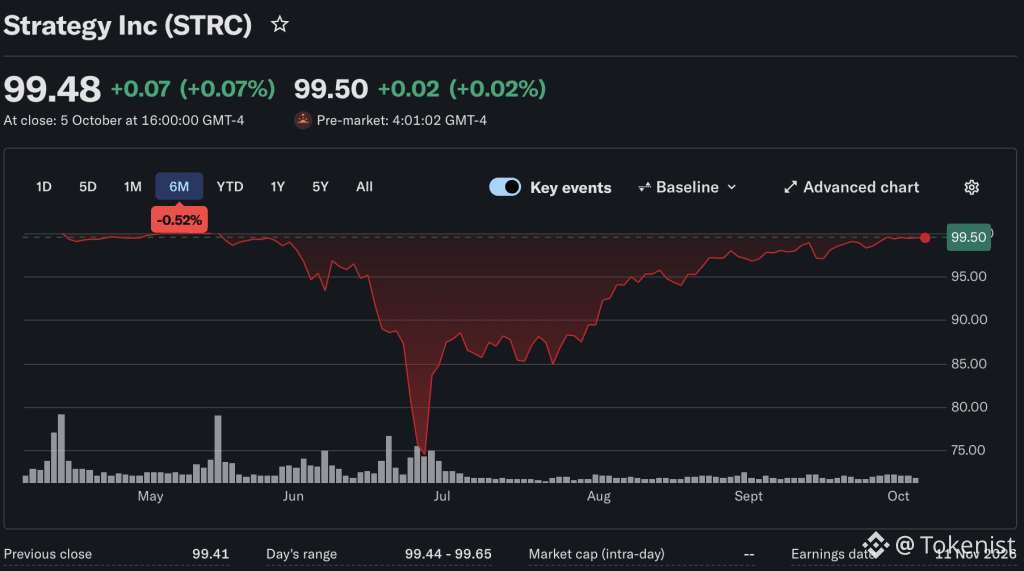
Article
Bitcoin Rebound Faces a Test in Strategy’s STRC FundingBitcoin price was trading near $85,500 when Peter Schiff discussed its rebound, after gaining almost +2.5% over the week and recovering above $80,000.
The economist and longtime Bitcoin critic argued that renewed confidence and short covering may have helped drive the move, but warned that a technology-stock correction could reverse it, particularly if Strategy’s ability to finance substantial new Bitcoin purchases through STRC has weakened.
Schiff links the market’s vulnerability to two potential pressures: technology stocks that, in his view, have yet to correct, and a financing channel he believes may no longer support Strategy’s former buying pace.
Peter Schiff says @Strategy's preferred stock bounced back to $99, but he doesn't think that means much. His read: @saylor burned through the one funding channel that actually bought Bitcoin, and a calmer chart doesn't bring it back.#Bitcoin #Strategy #Saylor pic.twitter.com/43inpTr48B
— Web3 News Wire (@Web3newswire) October 5, 2026
Bitcoin Rebound Meets Schiff’s Tech Stock Warning
In a later market update, Bitcoin was near $86,000, up over 2.5% in a week and more than 6.5% in a month, yet it remained about -30% below its level a year ago. This highlights that while there has been a short-term rebound, it hasn’t offset a longer decline.
Analyst Schiff’s bearish outlook stems from a broader market view, noting that equities have absorbed weak economic signals, such as softer inflation and disappointing employment data, without significant corrections.
He believes this resilience may expose markets to risks if investors reevaluate. He also mentioned falling bond prices and oil prices around $91 a barrel, interpreting these as signs of underlying market strain.
While he doesn’t predict an imminent correction or a direct link to Bitcoin’s movements, a selloff in technology stocks could affect Bitcoin by reducing risk appetite and shifting investment positioning. There are also concerns that overvaluation in AI and tech stocks could affect portfolio concentration.
Crypto Expert: What is The Best Meme Coin To Buy and Forget Until The Next Bull Run?
STRC and Strategy’s Financing Test
SOURCE: Yahoo Finance
Schiff argues that Strategy may struggle to raise capital for Bitcoin accumulation, as he believes it has lost the ability to generate sufficient funds through STRC for large-scale purchases.
While STRC recovered to about $99.40 after a summer drop to $75, attributed to share repurchases and Bitcoin’s rise above $80,000, this does not confirm the company can easily raise new capital.
Strategy holds 848,000 BTC, over 4% of total supply, along with $4.8Bn in reserves and $833M in cash. STRC has a notional value of $8.93Bn, with a 12% variable dividend and a 12.07% effective yield. However, these figures alone do not determine future financing capabilities or costs.
The link between dividend obligations and capital raising matters but is distinct. STRC’s dividend and effective yield describe the financing instrument, while Strategy’s ability to issue or repurchase shares depends on market conditions and company decisions.
The interplay between dividend policies and Bitcoin purchases remains crucial to Strategy’s overall financing and dividend strategy.
Continued Purchases Complicate the Bearish Case from Schiff
Strategy reports a $21 billion gain on digital assets in Q3 2026. Last week, we acquired 334 $BTC and repurchased $176M of $STRC. As of 10/4/26, we hold 848,000 BTC and $5.7B of USD Assets. $MSTR https://t.co/jvwiJahdMm
— Michael Saylor (@saylor) October 5, 2026
Strategy continued to buy despite Schiff’s skepticism, recently acquiring 334 BTC for about $28.7M, and repurchasing around $176M of STRC. This was less than the 1,665 BTC purchased in late September for approximately $142.8M, raising questions about the pace of their accumulation.
Bitcoin was priced near $86,000, up from $84,500 when Schiff made his comments. This price increase doesn’t rule out a potential correction, and the ongoing accumulation highlights a debate over Strategy’s Bitcoin treasury approach.
Investors should distinguish between reported performance and potential risks. While Bitcoin’s recovery and STRC’s movement toward $100 are notable, they don’t guarantee sustained buying levels by Strategy.
Schiff argues that a technology-stock correction may trigger future shifts, depending on risk appetite, purchase pace, and STRC’s ability to maintain its financing role amid market pressures. The reported dividend and yield should be viewed as security terms in this context, rather than investment recommendations.
Crypto Expert Report: What Are The Next 10 Cryptos to Explode?
The author does not own any securities mentioned in this article.
The post Bitcoin Rebound Faces a Test in Strategy’s STRC Funding appeared first on Tokenist.
Bitcoin Rebound Faces a Test in Strategy’s STRC Funding
Bitcoin price was trading near $85,500 when Peter Schiff discussed its rebound, after gaining almost +2.5% over the week and recovering above $80,000.
The economist and longtime Bitcoin critic argued that renewed confidence and short covering may have helped drive the move, but warned that a technology-stock correction could reverse it, particularly if Strategy’s ability to finance substantial new Bitcoin purchases through STRC has weakened.
Schiff links the market’s vulnerability to two potential pressures: technology stocks that, in his view, have yet to correct, and a financing channel he believes may no longer support Strategy’s former buying pace.
Peter Schiff says @Strategy's preferred stock bounced back to $99, but he doesn't think that means much. His read: @saylor burned through the one funding channel that actually bought Bitcoin, and a calmer chart doesn't bring it back.#Bitcoin #Strategy #Saylor pic.twitter.com/43inpTr48B
— Web3 News Wire (@Web3newswire) October 5, 2026
Bitcoin Rebound Meets Schiff’s Tech Stock Warning
In a later market update, Bitcoin was near $86,000, up over 2.5% in a week and more than 6.5% in a month, yet it remained about -30% below its level a year ago. This highlights that while there has been a short-term rebound, it hasn’t offset a longer decline.
Analyst Schiff’s bearish outlook stems from a broader market view, noting that equities have absorbed weak economic signals, such as softer inflation and disappointing employment data, without significant corrections.
He believes this resilience may expose markets to risks if investors reevaluate. He also mentioned falling bond prices and oil prices around $91 a barrel, interpreting these as signs of underlying market strain.
While he doesn’t predict an imminent correction or a direct link to Bitcoin’s movements, a selloff in technology stocks could affect Bitcoin by reducing risk appetite and shifting investment positioning. There are also concerns that overvaluation in AI and tech stocks could affect portfolio concentration.
Crypto Expert: What is The Best Meme Coin To Buy and Forget Until The Next Bull Run?
STRC and Strategy’s Financing Test
SOURCE: Yahoo Finance
Schiff argues that Strategy may struggle to raise capital for Bitcoin accumulation, as he believes it has lost the ability to generate sufficient funds through STRC for large-scale purchases.
While STRC recovered to about $99.40 after a summer drop to $75, attributed to share repurchases and Bitcoin’s rise above $80,000, this does not confirm the company can easily raise new capital.
Strategy holds 848,000 BTC, over 4% of total supply, along with $4.8Bn in reserves and $833M in cash. STRC has a notional value of $8.93Bn, with a 12% variable dividend and a 12.07% effective yield. However, these figures alone do not determine future financing capabilities or costs.
The link between dividend obligations and capital raising matters but is distinct. STRC’s dividend and effective yield describe the financing instrument, while Strategy’s ability to issue or repurchase shares depends on market conditions and company decisions.
The interplay between dividend policies and Bitcoin purchases remains crucial to Strategy’s overall financing and dividend strategy.
Continued Purchases Complicate the Bearish Case from Schiff
Strategy reports a $21 billion gain on digital assets in Q3 2026. Last week, we acquired 334 $BTC and repurchased $176M of $STRC. As of 10/4/26, we hold 848,000 BTC and $5.7B of USD Assets. $MSTR https://t.co/jvwiJahdMm
— Michael Saylor (@saylor) October 5, 2026
Strategy continued to buy despite Schiff’s skepticism, recently acquiring 334 BTC for about $28.7M, and repurchasing around $176M of STRC. This was less than the 1,665 BTC purchased in late September for approximately $142.8M, raising questions about the pace of their accumulation.
Bitcoin was priced near $86,000, up from $84,500 when Schiff made his comments. This price increase doesn’t rule out a potential correction, and the ongoing accumulation highlights a debate over Strategy’s Bitcoin treasury approach.
Investors should distinguish between reported performance and potential risks. While Bitcoin’s recovery and STRC’s movement toward $100 are notable, they don’t guarantee sustained buying levels by Strategy.
Schiff argues that a technology-stock correction may trigger future shifts, depending on risk appetite, purchase pace, and STRC’s ability to maintain its financing role amid market pressures. The reported dividend and yield should be viewed as security terms in this context, rather than investment recommendations.
Crypto Expert Report: What Are The Next 10 Cryptos to Explode?
The author does not own any securities mentioned in this article.
The post Bitcoin Rebound Faces a Test in Strategy’s STRC Funding appeared first on Tokenist.
The economist and longtime Bitcoin critic argued that renewed confidence and short covering may have helped drive the move, but warned that a technology-stock correction could reverse it, particularly if Strategy’s ability to finance substantial new Bitcoin purchases through STRC has weakened.
Schiff links the market’s vulnerability to two potential pressures: technology stocks that, in his view, have yet to correct, and a financing channel he believes may no longer support Strategy’s former buying pace.
Peter Schiff says @Strategy's preferred stock bounced back to $99, but he doesn't think that means much. His read: @saylor burned through the one funding channel that actually bought Bitcoin, and a calmer chart doesn't bring it back.#Bitcoin #Strategy #Saylor pic.twitter.com/43inpTr48B
— Web3 News Wire (@Web3newswire) October 5, 2026
Bitcoin Rebound Meets Schiff’s Tech Stock Warning
In a later market update, Bitcoin was near $86,000, up over 2.5% in a week and more than 6.5% in a month, yet it remained about -30% below its level a year ago. This highlights that while there has been a short-term rebound, it hasn’t offset a longer decline.
Analyst Schiff’s bearish outlook stems from a broader market view, noting that equities have absorbed weak economic signals, such as softer inflation and disappointing employment data, without significant corrections.
He believes this resilience may expose markets to risks if investors reevaluate. He also mentioned falling bond prices and oil prices around $91 a barrel, interpreting these as signs of underlying market strain.
While he doesn’t predict an imminent correction or a direct link to Bitcoin’s movements, a selloff in technology stocks could affect Bitcoin by reducing risk appetite and shifting investment positioning. There are also concerns that overvaluation in AI and tech stocks could affect portfolio concentration.
Crypto Expert: What is The Best Meme Coin To Buy and Forget Until The Next Bull Run?
STRC and Strategy’s Financing Test
SOURCE: Yahoo Finance
Schiff argues that Strategy may struggle to raise capital for Bitcoin accumulation, as he believes it has lost the ability to generate sufficient funds through STRC for large-scale purchases.
While STRC recovered to about $99.40 after a summer drop to $75, attributed to share repurchases and Bitcoin’s rise above $80,000, this does not confirm the company can easily raise new capital.
Strategy holds 848,000 BTC, over 4% of total supply, along with $4.8Bn in reserves and $833M in cash. STRC has a notional value of $8.93Bn, with a 12% variable dividend and a 12.07% effective yield. However, these figures alone do not determine future financing capabilities or costs.
The link between dividend obligations and capital raising matters but is distinct. STRC’s dividend and effective yield describe the financing instrument, while Strategy’s ability to issue or repurchase shares depends on market conditions and company decisions.
The interplay between dividend policies and Bitcoin purchases remains crucial to Strategy’s overall financing and dividend strategy.
Continued Purchases Complicate the Bearish Case from Schiff
Strategy reports a $21 billion gain on digital assets in Q3 2026. Last week, we acquired 334 $BTC and repurchased $176M of $STRC. As of 10/4/26, we hold 848,000 BTC and $5.7B of USD Assets. $MSTR https://t.co/jvwiJahdMm
— Michael Saylor (@saylor) October 5, 2026
Strategy continued to buy despite Schiff’s skepticism, recently acquiring 334 BTC for about $28.7M, and repurchasing around $176M of STRC. This was less than the 1,665 BTC purchased in late September for approximately $142.8M, raising questions about the pace of their accumulation.
Bitcoin was priced near $86,000, up from $84,500 when Schiff made his comments. This price increase doesn’t rule out a potential correction, and the ongoing accumulation highlights a debate over Strategy’s Bitcoin treasury approach.
Investors should distinguish between reported performance and potential risks. While Bitcoin’s recovery and STRC’s movement toward $100 are notable, they don’t guarantee sustained buying levels by Strategy.
Schiff argues that a technology-stock correction may trigger future shifts, depending on risk appetite, purchase pace, and STRC’s ability to maintain its financing role amid market pressures. The reported dividend and yield should be viewed as security terms in this context, rather than investment recommendations.
Crypto Expert Report: What Are The Next 10 Cryptos to Explode?
The author does not own any securities mentioned in this article.
The post Bitcoin Rebound Faces a Test in Strategy’s STRC Funding appeared first on Tokenist.
269
Log in to explore more content
Join global crypto users on Binance Square
⚡️ Get latest and useful information about crypto.
💬 Trusted by the world’s largest crypto exchange.
👍 Discover real insights from verified creators.
Email / Phone number
Trending Topics
BinancePick
2.7M views
144,821 Discussing
Join #EarningsSeason: Predict Earnings on Binance Pick, Share Your Take on Binance Square!
Binance Square Official
·403 Likes
·339.6k views
EarningsSeason
5.1M views
24,814 Discussing
SouthKoreaReportedlyWeighsFourthCryptoTaxDelay
4,592 views
180 Discussing