
Yellow Cap_黄帽
116 Posts

Yellow Cap_黄帽
Report
Block User
Dedicated to Binance Square readers. Sharing market insights, trending narratives, major tokens, and on-chain signals with facts, context, and personal views.
Open Trade

BNB Holder
Occasional Trader
8.7 Years
16 Following
1.1K+ Followers
597 Liked
Posts
Portfolio
All
Quotes
Videos
·
--
Bullish
#USJoblessClaimsFallTo215K is trending.
Why should crypto traders care?
Because the market is not trading the number itself.
It is trading what the number means.
Jobless claims fell to 215K, below expectations. In simple terms, the U.S. labor market is still holding up. Companies are not laying off workers at the pace many expected.
Normally that sounds like good news.
For crypto, it is a little more complicated.
A stronger labor market gives the Fed fewer reasons to rush into rate cuts. If interest rates stay higher for longer, liquidity stays tighter, and risk assets usually lose one of their biggest tailwinds.
That does not mean BTC has to dump today.
It means macro conditions are not becoming easier.
My focus after this report is not today's candle.
It is whether the market starts pushing back expectations for Fed cuts. If that happens, Bitcoin may stay relatively resilient, but higher beta altcoins could feel the pressure first.
Macro does not kill a bull market overnight.
But it can make every rally work much harder.
#USJoblessClaimsFallTo215K is trending.
Why should crypto traders care?
Because the market is not trading the number itself.
It is trading what the number means.
Jobless claims fell to 215K, below expectations. In simple terms, the U.S. labor market is still holding up. Companies are not laying off workers at the pace many expected.
Normally that sounds like good news.
For crypto, it is a little more complicated.
A stronger labor market gives the Fed fewer reasons to rush into rate cuts. If interest rates stay higher for longer, liquidity stays tighter, and risk assets usually lose one of their biggest tailwinds.
That does not mean BTC has to dump today.
It means macro conditions are not becoming easier.
My focus after this report is not today's candle.
It is whether the market starts pushing back expectations for Fed cuts. If that happens, Bitcoin may stay relatively resilient, but higher beta altcoins could feel the pressure first.
Macro does not kill a bull market overnight.
But it can make every rally work much harder.
Why should crypto traders care?
Because the market is not trading the number itself.
It is trading what the number means.
Jobless claims fell to 215K, below expectations. In simple terms, the U.S. labor market is still holding up. Companies are not laying off workers at the pace many expected.
Normally that sounds like good news.
For crypto, it is a little more complicated.
A stronger labor market gives the Fed fewer reasons to rush into rate cuts. If interest rates stay higher for longer, liquidity stays tighter, and risk assets usually lose one of their biggest tailwinds.
That does not mean BTC has to dump today.
It means macro conditions are not becoming easier.
My focus after this report is not today's candle.
It is whether the market starts pushing back expectations for Fed cuts. If that happens, Bitcoin may stay relatively resilient, but higher beta altcoins could feel the pressure first.
Macro does not kill a bull market overnight.
But it can make every rally work much harder.

125
$ANIME update: Azuki’s latest involvement is bigger than just supporting another anime token.
{spot}(ANIMEUSDT)
The real move is that Azuki is turning Animecoin into part of a wider consumer stack: Azuki TCG, Animechain, Anime.com, Studio Azuki, manga, collectibles, and fan participation.
That matters because $ANIME is not trying to win only through speculation. The stronger thesis is that anime fandom can become an onchain economy if users have reasons to interact repeatedly, not just buy once and wait.
The clearest recent signal is Azuki TCG. Through Gates Awakened, promo cards, starter deck activity, booster products, and manga previews, Azuki is testing whether its IP can move beyond NFT holders and reach collectors, players, and anime fans.
This is important for $ANIME because tokens need usage loops.
A token attached only to hype usually fades when attention moves. But a token connected to games, collectibles, identity, events, and content has more chances to become part of user behavior.
Still, this is not an automatic bull case.
The key risk is execution. Anime fans are not easy to convert. Most do not care about wallets, tokenomics, or “community ownership.” They care about characters, story, status, design, and real products. If Azuki makes the experience feel crypto-first, it may struggle. If it makes the experience feel anime-first, has a much stronger path.
My take: Azuki’s latest role is to give Animecoin cultural infrastructure.
Not just a token. Not just a chart. A possible fandom economy.
The next thing to watch is whether Azuki TCG and Animechain create repeat activity after the event cycle ends. One-time mints are not enough. Sustainable attention is the real test.
#azuki #animecoin #TCG
$ANIME update: Azuki’s latest involvement is bigger than just supporting another anime token.
The real move is that Azuki is turning Animecoin into part of a wider consumer stack: Azuki TCG, Animechain, Anime.com, Studio Azuki, manga, collectibles, and fan participation.
That matters because $ANIME is not trying to win only through speculation. The stronger thesis is that anime fandom can become an onchain economy if users have reasons to interact repeatedly, not just buy once and wait.
The clearest recent signal is Azuki TCG. Through Gates Awakened, promo cards, starter deck activity, booster products, and manga previews, Azuki is testing whether its IP can move beyond NFT holders and reach collectors, players, and anime fans.
This is important for $ANIME because tokens need usage loops.
A token attached only to hype usually fades when attention moves. But a token connected to games, collectibles, identity, events, and content has more chances to become part of user behavior.
Still, this is not an automatic bull case.
The key risk is execution. Anime fans are not easy to convert. Most do not care about wallets, tokenomics, or “community ownership.” They care about characters, story, status, design, and real products. If Azuki makes the experience feel crypto-first, it may struggle. If it makes the experience feel anime-first, has a much stronger path.
My take: Azuki’s latest role is to give Animecoin cultural infrastructure.
Not just a token. Not just a chart. A possible fandom economy.
The next thing to watch is whether Azuki TCG and Animechain create repeat activity after the event cycle ends. One-time mints are not enough. Sustainable attention is the real test.
#azuki #animecoin #TCG
The real move is that Azuki is turning Animecoin into part of a wider consumer stack: Azuki TCG, Animechain, Anime.com, Studio Azuki, manga, collectibles, and fan participation.
That matters because $ANIME is not trying to win only through speculation. The stronger thesis is that anime fandom can become an onchain economy if users have reasons to interact repeatedly, not just buy once and wait.
The clearest recent signal is Azuki TCG. Through Gates Awakened, promo cards, starter deck activity, booster products, and manga previews, Azuki is testing whether its IP can move beyond NFT holders and reach collectors, players, and anime fans.
This is important for $ANIME because tokens need usage loops.
A token attached only to hype usually fades when attention moves. But a token connected to games, collectibles, identity, events, and content has more chances to become part of user behavior.
Still, this is not an automatic bull case.
The key risk is execution. Anime fans are not easy to convert. Most do not care about wallets, tokenomics, or “community ownership.” They care about characters, story, status, design, and real products. If Azuki makes the experience feel crypto-first, it may struggle. If it makes the experience feel anime-first, has a much stronger path.
My take: Azuki’s latest role is to give Animecoin cultural infrastructure.
Not just a token. Not just a chart. A possible fandom economy.
The next thing to watch is whether Azuki TCG and Animechain create repeat activity after the event cycle ends. One-time mints are not enough. Sustainable attention is the real test.
#azuki #animecoin #TCG

154
·
--
Bullish
Verified
$MEME update: Memeland just made The Captainz relevant to watch again.
{spot}(MEMEUSDT)
The headline is that The Captainz art has been redrawn from scratch. But the real question is not whether the new art looks better. The question is whether Memeland can turn an old NFT identity into a live cultural asset again.
That matters because $MEME is not just another meme token trying to invent a community after the chart moves. Memeland already had 9GAG distribution, NFT collections, lore, and a holder base before became the ecosystem token.
That gives a different setup from most meme assets.
The bull case is not “new art equals pump.” That is too simple.
The stronger case is this: if The Captainz refresh brings holders back into public conversation, Memeland gets renewed brand surface area. In meme markets, that matters because attention comes before liquidity. A recognizable identity can become a repeated signal across posts, PFPs, hashtags, and community narratives.
But refreshed art alone is not enough.
For this to become more than a cosmetic update, Memeland needs to show that the new Captainz identity connects back to product, utility, community activity, or actual demand for $MEME. Otherwise, the NFT side and token side may stay emotionally connected but economically separate.
My take: this is a brand reset, not a guaranteed token catalyst.
Still, it is worth watching. Strong meme assets need culture that can survive more than one cycle. Memeland still has one of the cleaner setups for that because it has a real brand universe behind the token.
The market will decide if this becomes a narrative or just another refresh.
#MEME #MemeLand #nft
$MEME update: Memeland just made The Captainz relevant to watch again.
The headline is that The Captainz art has been redrawn from scratch. But the real question is not whether the new art looks better. The question is whether Memeland can turn an old NFT identity into a live cultural asset again.
That matters because $MEME is not just another meme token trying to invent a community after the chart moves. Memeland already had 9GAG distribution, NFT collections, lore, and a holder base before became the ecosystem token.
That gives a different setup from most meme assets.
The bull case is not “new art equals pump.” That is too simple.
The stronger case is this: if The Captainz refresh brings holders back into public conversation, Memeland gets renewed brand surface area. In meme markets, that matters because attention comes before liquidity. A recognizable identity can become a repeated signal across posts, PFPs, hashtags, and community narratives.
But refreshed art alone is not enough.
For this to become more than a cosmetic update, Memeland needs to show that the new Captainz identity connects back to product, utility, community activity, or actual demand for $MEME . Otherwise, the NFT side and token side may stay emotionally connected but economically separate.
My take: this is a brand reset, not a guaranteed token catalyst.
Still, it is worth watching. Strong meme assets need culture that can survive more than one cycle. Memeland still has one of the cleaner setups for that because it has a real brand universe behind the token.
The market will decide if this becomes a narrative or just another refresh.
#MEME #MemeLand #nft
The headline is that The Captainz art has been redrawn from scratch. But the real question is not whether the new art looks better. The question is whether Memeland can turn an old NFT identity into a live cultural asset again.
That matters because $MEME is not just another meme token trying to invent a community after the chart moves. Memeland already had 9GAG distribution, NFT collections, lore, and a holder base before became the ecosystem token.
That gives a different setup from most meme assets.
The bull case is not “new art equals pump.” That is too simple.
The stronger case is this: if The Captainz refresh brings holders back into public conversation, Memeland gets renewed brand surface area. In meme markets, that matters because attention comes before liquidity. A recognizable identity can become a repeated signal across posts, PFPs, hashtags, and community narratives.
But refreshed art alone is not enough.
For this to become more than a cosmetic update, Memeland needs to show that the new Captainz identity connects back to product, utility, community activity, or actual demand for $MEME . Otherwise, the NFT side and token side may stay emotionally connected but economically separate.
My take: this is a brand reset, not a guaranteed token catalyst.
Still, it is worth watching. Strong meme assets need culture that can survive more than one cycle. Memeland still has one of the cleaner setups for that because it has a real brand universe behind the token.
The market will decide if this becomes a narrative or just another refresh.
#MEME #MemeLand #nft

1
289
·
--
Bullish
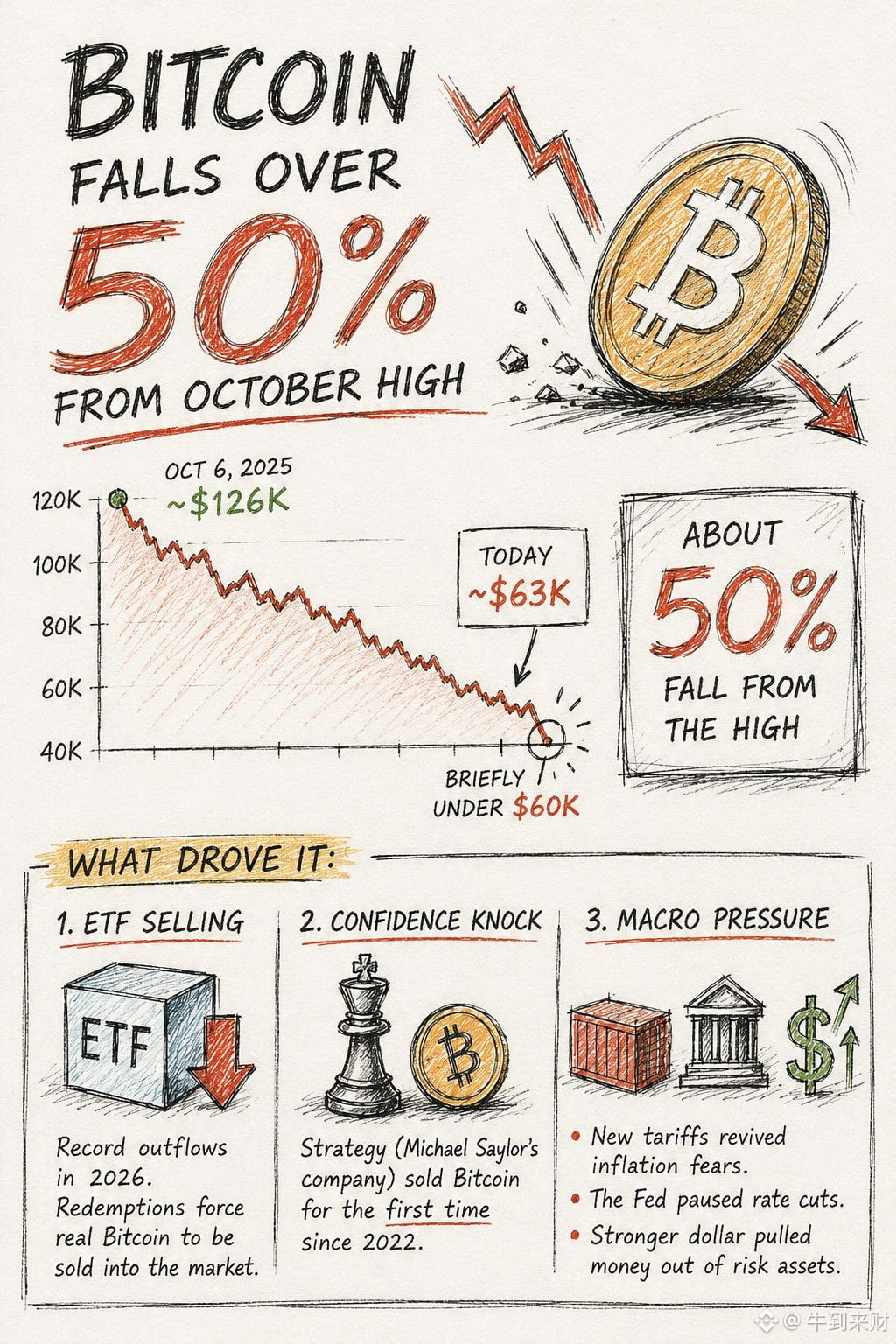
#BitcoinFallsOver50FromOctoberHigh is trending. Here is what it actually means.
{spot}(BTCUSDT)
The facts: $BTC peaked near $126K on Oct 6, 2025. Today it is around $63K. That is a fall of about 50% from the high, and it briefly slipped under $60K on the way down.
What drove it, in plain English:
- ETF selling: after two years of inflows, spot Bitcoin ETFs saw record OUTflows in 2026. Redemptions force real Bitcoin to be sold into the market.
- A confidence knock: Strategy (Michael Saylor's company) sold Bitcoin for the first time since 2022.
- Macro pressure: new tariffs revived inflation fears, the Fed paused rate cuts, and a stronger dollar pulled money out of risk assets.
My read: this was not one dramatic crash event. It was steady, mechanical selling stacking up over months. Understanding the why matters more than reacting to the how much.
#Bitcoin #BTC
#BitcoinFallsOver50FromOctoberHigh is trending. Here is what it actually means.
The facts: $BTC peaked near $126K on Oct 6, 2025. Today it is around $63K. That is a fall of about 50% from the high, and it briefly slipped under $60K on the way down.
What drove it, in plain English:
- ETF selling: after two years of inflows, spot Bitcoin ETFs saw record OUTflows in 2026. Redemptions force real Bitcoin to be sold into the market.
- A confidence knock: Strategy (Michael Saylor's company) sold Bitcoin for the first time since 2022.
- Macro pressure: new tariffs revived inflation fears, the Fed paused rate cuts, and a stronger dollar pulled money out of risk assets.
My read: this was not one dramatic crash event. It was steady, mechanical selling stacking up over months. Understanding the why matters more than reacting to the how much.
#Bitcoin #BTC
The facts: $BTC peaked near $126K on Oct 6, 2025. Today it is around $63K. That is a fall of about 50% from the high, and it briefly slipped under $60K on the way down.
What drove it, in plain English:
- ETF selling: after two years of inflows, spot Bitcoin ETFs saw record OUTflows in 2026. Redemptions force real Bitcoin to be sold into the market.
- A confidence knock: Strategy (Michael Saylor's company) sold Bitcoin for the first time since 2022.
- Macro pressure: new tariffs revived inflation fears, the Fed paused rate cuts, and a stronger dollar pulled money out of risk assets.
My read: this was not one dramatic crash event. It was steady, mechanical selling stacking up over months. Understanding the why matters more than reacting to the how much.
#Bitcoin #BTC
168
·
--
Bullish
Bitcoin just reclaimed $63K. Most people think the Fed turned friendly. It did not. Here is what actually happened.
{spot}(BTCUSDT)
The Fed is still hawkish, holding rates at 3.5% to 3.75% and even warning about possible hikes. What changed this week was the June jobs report: only 57,000 new jobs, a soft number. A weak labor market makes a rate HIKE less likely, and "less chance of tightening" is enough to move risk assets like crypto. On the same day, US Bitcoin ETFs took in $221M, ending a 10-day selling streak.
Takeaway: sometimes crypto rallies not because good news arrived, but because a feared bad outcome (a hike) got less likely. Learn to tell those two apart.
My read: this looks like a relief bounce, not a confirmed trend change. Cautiously constructive, but I want to see ETF inflows continue for several days before calling it a real shift. One $221M day still follows a 10-day, $2.7B outflow streak, and ETFs are net negative on the year (about $5.4B).
#Bitcoin #BTC #Fed #ETF
Bitcoin just reclaimed $63K. Most people think the Fed turned friendly. It did not. Here is what actually happened.
The Fed is still hawkish, holding rates at 3.5% to 3.75% and even warning about possible hikes. What changed this week was the June jobs report: only 57,000 new jobs, a soft number. A weak labor market makes a rate HIKE less likely, and "less chance of tightening" is enough to move risk assets like crypto. On the same day, US Bitcoin ETFs took in $221M, ending a 10-day selling streak.
Takeaway: sometimes crypto rallies not because good news arrived, but because a feared bad outcome (a hike) got less likely. Learn to tell those two apart.
My read: this looks like a relief bounce, not a confirmed trend change. Cautiously constructive, but I want to see ETF inflows continue for several days before calling it a real shift. One $221M day still follows a 10-day, $2.7B outflow streak, and ETFs are net negative on the year (about $5.4B).
#Bitcoin #BTC #Fed #ETF
The Fed is still hawkish, holding rates at 3.5% to 3.75% and even warning about possible hikes. What changed this week was the June jobs report: only 57,000 new jobs, a soft number. A weak labor market makes a rate HIKE less likely, and "less chance of tightening" is enough to move risk assets like crypto. On the same day, US Bitcoin ETFs took in $221M, ending a 10-day selling streak.
Takeaway: sometimes crypto rallies not because good news arrived, but because a feared bad outcome (a hike) got less likely. Learn to tell those two apart.
My read: this looks like a relief bounce, not a confirmed trend change. Cautiously constructive, but I want to see ETF inflows continue for several days before calling it a real shift. One $221M day still follows a 10-day, $2.7B outflow streak, and ETFs are net negative on the year (about $5.4B).
#Bitcoin #BTC #Fed #ETF
134
·
--
Bullish
🇮🇷 Iran Confirms Supreme Leader Khamenei Is Dead: Crypto Reacts, Betting Markets Backlash
Iranian state media has confirmed that Supreme Leader Ayatollah Ali Khamenei was killed in joint U.S.–Israeli airstrikes on Tehran, sparking national mourning and geopolitical uncertainty. Iran announced a 40-day mourning period and heightened tensions across the region.
💱 Crypto Market Moves
• Bitcoin spiked toward ~$68,000 after Khamenei’s death was confirmed, then gave up gains as broader uncertainty hit sentiment, showing how 24/7 trading norms quickly absorb geopolitical shocks.
• Liquidity flows remained unstable with mixed trading signals; crypto markets continue to trade risk alongside global macro and safe-haven flows.
📊 Prediction Markets Under Fire
• Prediction platforms like Polymarket and Kalshi saw heavy trading on contracts related to Khamenei’s status and Iran conflict outcomes. Some users earned large payouts, while others have voiced outrage over unclear resolution mechanics and alleged rigged markets or insider trading.
• On Kalshi, markets directly tied to death outcomes were voided or adjusted to last-traded prices before the event and fees reimbursed, drawing criticism over policy transparency.
🔎 Why It Matters for Crypto Traders
• Geopolitical events often trigger short-lived volatility, with crypto sentiment swinging on headlines and relief rallies, but fundamentals remain tied to broader risk perception.
• Prediction markets highlight the growing intersection of crypto, real-world events, and regulatory/ethical debate, especially when traders can profit from highly sensitive geopolitical outcomes.
Disclaimer: Not financial advice. Market conditions evolve quickly and geopolitical news is subject to change.
#IranConfirmsKhameneiIsDead
🇮🇷 Iran Confirms Supreme Leader Khamenei Is Dead: Crypto Reacts, Betting Markets Backlash
Iranian state media has confirmed that Supreme Leader Ayatollah Ali Khamenei was killed in joint U.S.–Israeli airstrikes on Tehran, sparking national mourning and geopolitical uncertainty. Iran announced a 40-day mourning period and heightened tensions across the region.
💱 Crypto Market Moves
• Bitcoin spiked toward ~$68,000 after Khamenei’s death was confirmed, then gave up gains as broader uncertainty hit sentiment, showing how 24/7 trading norms quickly absorb geopolitical shocks.
• Liquidity flows remained unstable with mixed trading signals; crypto markets continue to trade risk alongside global macro and safe-haven flows.
📊 Prediction Markets Under Fire
• Prediction platforms like Polymarket and Kalshi saw heavy trading on contracts related to Khamenei’s status and Iran conflict outcomes. Some users earned large payouts, while others have voiced outrage over unclear resolution mechanics and alleged rigged markets or insider trading.
• On Kalshi, markets directly tied to death outcomes were voided or adjusted to last-traded prices before the event and fees reimbursed, drawing criticism over policy transparency.
🔎 Why It Matters for Crypto Traders
• Geopolitical events often trigger short-lived volatility, with crypto sentiment swinging on headlines and relief rallies, but fundamentals remain tied to broader risk perception.
• Prediction markets highlight the growing intersection of crypto, real-world events, and regulatory/ethical debate, especially when traders can profit from highly sensitive geopolitical outcomes.
Disclaimer: Not financial advice. Market conditions evolve quickly and geopolitical news is subject to change.
#IranConfirmsKhameneiIsDead
Iranian state media has confirmed that Supreme Leader Ayatollah Ali Khamenei was killed in joint U.S.–Israeli airstrikes on Tehran, sparking national mourning and geopolitical uncertainty. Iran announced a 40-day mourning period and heightened tensions across the region.
💱 Crypto Market Moves
• Bitcoin spiked toward ~$68,000 after Khamenei’s death was confirmed, then gave up gains as broader uncertainty hit sentiment, showing how 24/7 trading norms quickly absorb geopolitical shocks.
• Liquidity flows remained unstable with mixed trading signals; crypto markets continue to trade risk alongside global macro and safe-haven flows.
📊 Prediction Markets Under Fire
• Prediction platforms like Polymarket and Kalshi saw heavy trading on contracts related to Khamenei’s status and Iran conflict outcomes. Some users earned large payouts, while others have voiced outrage over unclear resolution mechanics and alleged rigged markets or insider trading.
• On Kalshi, markets directly tied to death outcomes were voided or adjusted to last-traded prices before the event and fees reimbursed, drawing criticism over policy transparency.
🔎 Why It Matters for Crypto Traders
• Geopolitical events often trigger short-lived volatility, with crypto sentiment swinging on headlines and relief rallies, but fundamentals remain tied to broader risk perception.
• Prediction markets highlight the growing intersection of crypto, real-world events, and regulatory/ethical debate, especially when traders can profit from highly sensitive geopolitical outcomes.
Disclaimer: Not financial advice. Market conditions evolve quickly and geopolitical news is subject to change.
#IranConfirmsKhameneiIsDead

1
1
2.9k
financial freedom !!
financial freedom !!


Yi He
·
--
Today, I will send red packet within Binance Square.💁♀️
On the fifth day of the Lunar New Year, I will send the red envelope link here tonight.
On the fifth day of the Lunar New Year, I will send the red envelope link here tonight.

19
2.9k
Why $BTC might rebound soon
{spot}(BTCUSDT)
1) Oversold conditions suggest relief bounce
Technical indicators (like RSI/Bollinger Bands) show BTC is oversold, which often leads to a short-term bounce toward local resistance ~$82K–$86K before anything else.
2) Analysts point to a consolidation + reaccumulation phase
Some market studies see BTC entering a consolidation → reaccumulation range with a structural floor ~$85K–$88K. Breaks above $95K could spark broader recovery and momentum.
3) Cautious near-term targets
In the next 1–2 weeks, $BTC could test $82K–$86K (short relief). A reclaim of $92K–$95K is a key signal that the rebound is real and not just a bounce.
4) Macro drivers still in play
Fed policy, liquidity, and ETF flows remain dominant catalysts, easing macro pressure (e.g., rate cuts or softer prints) tend to support $BTC rebounds. Analysts highlight that once macro headwinds ease, BTC bounces tend to follow.
5) Longer-term momentum still intact
Despite recent volatility, structural analysis (cycles/halving narratives) and scarcity arguments point to upward arcs over months, not just days.
TL;DR: Short-term bounces near $82K–$86K look likely if buyers step in. Medium-term upside needs spot reclaim of $92K–$95K on volume. Macro catalysts (Fed guidance, ETF flows) remain key drivers.
What’s your next level, $95K or $100K+ ?
#WhenWillBTCRebound
Why $BTC might rebound soon
1) Oversold conditions suggest relief bounce
Technical indicators (like RSI/Bollinger Bands) show BTC is oversold, which often leads to a short-term bounce toward local resistance ~$82K–$86K before anything else.
2) Analysts point to a consolidation + reaccumulation phase
Some market studies see BTC entering a consolidation → reaccumulation range with a structural floor ~$85K–$88K. Breaks above $95K could spark broader recovery and momentum.
3) Cautious near-term targets
In the next 1–2 weeks, $BTC could test $82K–$86K (short relief). A reclaim of $92K–$95K is a key signal that the rebound is real and not just a bounce.
4) Macro drivers still in play
Fed policy, liquidity, and ETF flows remain dominant catalysts, easing macro pressure (e.g., rate cuts or softer prints) tend to support $BTC rebounds. Analysts highlight that once macro headwinds ease, BTC bounces tend to follow.
5) Longer-term momentum still intact
Despite recent volatility, structural analysis (cycles/halving narratives) and scarcity arguments point to upward arcs over months, not just days.
TL;DR: Short-term bounces near $82K–$86K look likely if buyers step in. Medium-term upside needs spot reclaim of $92K–$95K on volume. Macro catalysts (Fed guidance, ETF flows) remain key drivers.
What’s your next level, $95K or $100K+ ?
#WhenWillBTCRebound
1) Oversold conditions suggest relief bounce
Technical indicators (like RSI/Bollinger Bands) show BTC is oversold, which often leads to a short-term bounce toward local resistance ~$82K–$86K before anything else.
2) Analysts point to a consolidation + reaccumulation phase
Some market studies see BTC entering a consolidation → reaccumulation range with a structural floor ~$85K–$88K. Breaks above $95K could spark broader recovery and momentum.
3) Cautious near-term targets
In the next 1–2 weeks, $BTC could test $82K–$86K (short relief). A reclaim of $92K–$95K is a key signal that the rebound is real and not just a bounce.
4) Macro drivers still in play
Fed policy, liquidity, and ETF flows remain dominant catalysts, easing macro pressure (e.g., rate cuts or softer prints) tend to support $BTC rebounds. Analysts highlight that once macro headwinds ease, BTC bounces tend to follow.
5) Longer-term momentum still intact
Despite recent volatility, structural analysis (cycles/halving narratives) and scarcity arguments point to upward arcs over months, not just days.
TL;DR: Short-term bounces near $82K–$86K look likely if buyers step in. Medium-term upside needs spot reclaim of $92K–$95K on volume. Macro catalysts (Fed guidance, ETF flows) remain key drivers.
What’s your next level, $95K or $100K+ ?
#WhenWillBTCRebound
1
1
6
2.1k
Crypto is financial freedom coded
Crypto is financial freedom coded

Richard Teng
·
--
Crypto is the only asset class in history to be built from the bottom up.
After years of being retail-led, the last 24 months have seen a massive influx of institutional capital. The corporate pool is deeper than it’s ever been.
After years of being retail-led, the last 24 months have seen a massive influx of institutional capital. The corporate pool is deeper than it’s ever been.
292
·
--
Bullish
Ethereum Just Upgraded And This Is Quietly Very Bullish for ETH
{spot}(ETHUSDT)
@Ethereum_official has officially rolled out its latest network upgrade, Fusaka, and while there was no instant price explosion, this upgrade is a major long-term bullish signal for $ETH holders and builders.
⚙️ What is Fusaka?
Fusaka is a core infrastructure upgrade designed to make Ethereum more scalable, cheaper to run, and more efficient, especially for Layer-2 rollups. This isn’t a flashy feature upgrade, it’s a foundational one.
🔥 Why this is bullish for $ETH :
✅ Lower node costs = stronger decentralization
Fusaka reduces the resource burden required to run Ethereum nodes. More nodes mean better decentralization, stronger security, and a more resilient network, exactly what long-term capital wants.
✅ Accelerates Ethereum’s rollup-centric future
Ethereum is doubling down on being the global settlement layer for rollups. Fusaka improves how L2s post and verify data, making rollups faster, cheaper, and easier to scale, while still settling on ETH.
✅ Scalability without sacrificing trust
Unlike chains that scale by centralizing, Ethereum continues to scale while preserving security and decentralization. That’s why institutions, developers, and serious capital keep choosing $ETH .
📈 What about price impact?
Upgrades like Fusaka don’t cause instant pumps but they strengthen ETH’s fundamentals:
• More L2 activity → more ETH settlement demand
• More usage → more ETH burned
• Better infra → more builders and institutions
🧠 Big picture
Ethereum now operates on a twice-yearly upgrade cadence, meaning faster innovation and continuous improvements. Upcoming upgrades aim to unlock parallel execution, higher throughput, and better MEV efficiency, all reinforcing ETH’s central role.
Bottom line:
Ethereum isn’t chasing hype. It’s building the rails for on-chain finance, RWAs, stablecoins, and institutional crypto.
Fusaka may be quiet but it makes Ethereum stronger where it matters most.
#fusakaupgrade #ETH #ETHUpgrade
Ethereum Just Upgraded And This Is Quietly Very Bullish for ETH
@Ethereum has officially rolled out its latest network upgrade, Fusaka, and while there was no instant price explosion, this upgrade is a major long-term bullish signal for $ETH holders and builders.
⚙️ What is Fusaka?
Fusaka is a core infrastructure upgrade designed to make Ethereum more scalable, cheaper to run, and more efficient, especially for Layer-2 rollups. This isn’t a flashy feature upgrade, it’s a foundational one.
🔥 Why this is bullish for $ETH :
✅ Lower node costs = stronger decentralization
Fusaka reduces the resource burden required to run Ethereum nodes. More nodes mean better decentralization, stronger security, and a more resilient network, exactly what long-term capital wants.
✅ Accelerates Ethereum’s rollup-centric future
Ethereum is doubling down on being the global settlement layer for rollups. Fusaka improves how L2s post and verify data, making rollups faster, cheaper, and easier to scale, while still settling on ETH.
✅ Scalability without sacrificing trust
Unlike chains that scale by centralizing, Ethereum continues to scale while preserving security and decentralization. That’s why institutions, developers, and serious capital keep choosing $ETH .
📈 What about price impact?
Upgrades like Fusaka don’t cause instant pumps but they strengthen ETH’s fundamentals:
• More L2 activity → more ETH settlement demand
• More usage → more ETH burned
• Better infra → more builders and institutions
🧠 Big picture
Ethereum now operates on a twice-yearly upgrade cadence, meaning faster innovation and continuous improvements. Upcoming upgrades aim to unlock parallel execution, higher throughput, and better MEV efficiency, all reinforcing ETH’s central role.
Bottom line:
Ethereum isn’t chasing hype. It’s building the rails for on-chain finance, RWAs, stablecoins, and institutional crypto.
Fusaka may be quiet but it makes Ethereum stronger where it matters most.
#fusakaupgrade #ETH #ETHUpgrade
@Ethereum has officially rolled out its latest network upgrade, Fusaka, and while there was no instant price explosion, this upgrade is a major long-term bullish signal for $ETH holders and builders.
⚙️ What is Fusaka?
Fusaka is a core infrastructure upgrade designed to make Ethereum more scalable, cheaper to run, and more efficient, especially for Layer-2 rollups. This isn’t a flashy feature upgrade, it’s a foundational one.
🔥 Why this is bullish for $ETH :
✅ Lower node costs = stronger decentralization
Fusaka reduces the resource burden required to run Ethereum nodes. More nodes mean better decentralization, stronger security, and a more resilient network, exactly what long-term capital wants.
✅ Accelerates Ethereum’s rollup-centric future
Ethereum is doubling down on being the global settlement layer for rollups. Fusaka improves how L2s post and verify data, making rollups faster, cheaper, and easier to scale, while still settling on ETH.
✅ Scalability without sacrificing trust
Unlike chains that scale by centralizing, Ethereum continues to scale while preserving security and decentralization. That’s why institutions, developers, and serious capital keep choosing $ETH .
📈 What about price impact?
Upgrades like Fusaka don’t cause instant pumps but they strengthen ETH’s fundamentals:
• More L2 activity → more ETH settlement demand
• More usage → more ETH burned
• Better infra → more builders and institutions
🧠 Big picture
Ethereum now operates on a twice-yearly upgrade cadence, meaning faster innovation and continuous improvements. Upcoming upgrades aim to unlock parallel execution, higher throughput, and better MEV efficiency, all reinforcing ETH’s central role.
Bottom line:
Ethereum isn’t chasing hype. It’s building the rails for on-chain finance, RWAs, stablecoins, and institutional crypto.
Fusaka may be quiet but it makes Ethereum stronger where it matters most.
#fusakaupgrade #ETH #ETHUpgrade

2
1.1k
·
--
Bullish
BTC vs Gold 2025: What’s the Real Story?
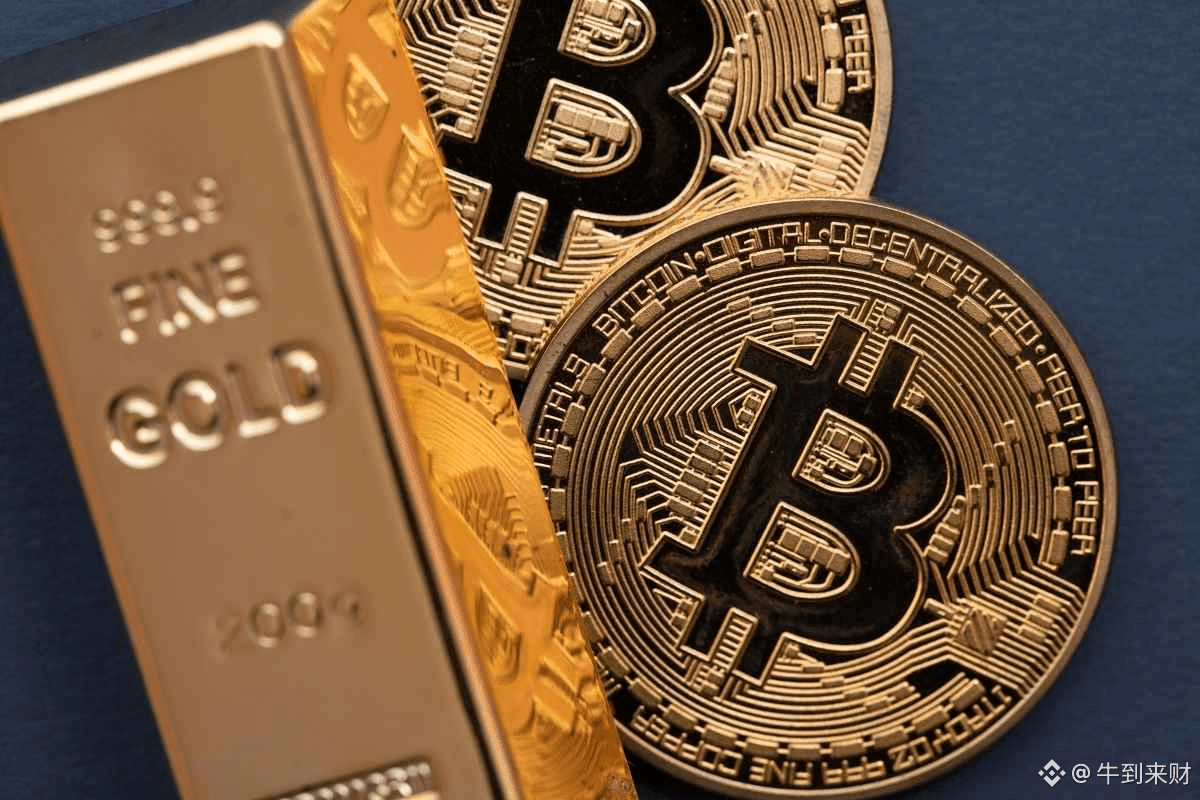
2025 has delivered one of the most striking divergences between two of the world’s most discussed stores of value: Bitcoin ($BTC ) and Gold ($XAU ). As the year comes to a close, data shows gold sharply outperforming Bitcoin in percentage returns, rewriting the narrative for investors across risk profiles.
✨ Gold’s performance in 2025 has been nothing short of remarkable.
Driven by safe-haven inflows, geopolitical tensions, and expectations of U.S. interest rate cuts, gold prices surged to record highs above $4,500 per ounce, marking a ~60–70%+ annual gain for the year so far. This places gold among the top performing major assets in 2025, outpacing traditional equities, bonds, and commodities in pure return terms.
🟡 In contrast, Bitcoin’s 2025 performance has been relatively muted. After several years of wild swings and rapid gains, BTC has largely traded sideways or slightly down on a year-to-date basis, with many pricing models indicating flat to slightly negative returns. As macro sentiment tilted toward risk aversion and safe assets, crypto markets have struggled to keep pace.
So what’s behind this divergence?
📌 Macro Risk Appetite, Investors are flocking to traditional hedges like gold amid inflation concerns and global uncertainty.
📌 Liquidity & Technical Signals, Bitcoin’s range-bound price action reflects cautious positioning and weaker momentum.
📌 Fed Expectations, Easier monetary policy often benefits non-yielding assets like gold.
📌 Shifting Investor Preferences, Some retail buyers are favoring precious metals over digital assets in the current cycle.
Key Takeaway:
In 2025, gold has outpaced Bitcoin by roughly 60–70 percentage points, flipping a long-standing narrative that digital gold would always dominate in growth. While Bitcoin still holds a unique role as a decentralized digital asset and remains a core part of many portfolios, this year underscores that diversification matters, and that no single asset is guaranteed to outperform in every macro regime.
#BTCVSGOLD
BTC vs Gold 2025: What’s the Real Story?
2025 has delivered one of the most striking divergences between two of the world’s most discussed stores of value: Bitcoin ($BTC ) and Gold ($XAU ). As the year comes to a close, data shows gold sharply outperforming Bitcoin in percentage returns, rewriting the narrative for investors across risk profiles.
✨ Gold’s performance in 2025 has been nothing short of remarkable.
Driven by safe-haven inflows, geopolitical tensions, and expectations of U.S. interest rate cuts, gold prices surged to record highs above $4,500 per ounce, marking a ~60–70%+ annual gain for the year so far. This places gold among the top performing major assets in 2025, outpacing traditional equities, bonds, and commodities in pure return terms.
🟡 In contrast, Bitcoin’s 2025 performance has been relatively muted. After several years of wild swings and rapid gains, BTC has largely traded sideways or slightly down on a year-to-date basis, with many pricing models indicating flat to slightly negative returns. As macro sentiment tilted toward risk aversion and safe assets, crypto markets have struggled to keep pace.
So what’s behind this divergence?
📌 Macro Risk Appetite, Investors are flocking to traditional hedges like gold amid inflation concerns and global uncertainty.
📌 Liquidity & Technical Signals, Bitcoin’s range-bound price action reflects cautious positioning and weaker momentum.
📌 Fed Expectations, Easier monetary policy often benefits non-yielding assets like gold.
📌 Shifting Investor Preferences, Some retail buyers are favoring precious metals over digital assets in the current cycle.
Key Takeaway:
In 2025, gold has outpaced Bitcoin by roughly 60–70 percentage points, flipping a long-standing narrative that digital gold would always dominate in growth. While Bitcoin still holds a unique role as a decentralized digital asset and remains a core part of many portfolios, this year underscores that diversification matters, and that no single asset is guaranteed to outperform in every macro regime.
#BTCVSGOLD
2025 has delivered one of the most striking divergences between two of the world’s most discussed stores of value: Bitcoin ($BTC ) and Gold ($XAU ). As the year comes to a close, data shows gold sharply outperforming Bitcoin in percentage returns, rewriting the narrative for investors across risk profiles.
✨ Gold’s performance in 2025 has been nothing short of remarkable.
Driven by safe-haven inflows, geopolitical tensions, and expectations of U.S. interest rate cuts, gold prices surged to record highs above $4,500 per ounce, marking a ~60–70%+ annual gain for the year so far. This places gold among the top performing major assets in 2025, outpacing traditional equities, bonds, and commodities in pure return terms.
🟡 In contrast, Bitcoin’s 2025 performance has been relatively muted. After several years of wild swings and rapid gains, BTC has largely traded sideways or slightly down on a year-to-date basis, with many pricing models indicating flat to slightly negative returns. As macro sentiment tilted toward risk aversion and safe assets, crypto markets have struggled to keep pace.
So what’s behind this divergence?
📌 Macro Risk Appetite, Investors are flocking to traditional hedges like gold amid inflation concerns and global uncertainty.
📌 Liquidity & Technical Signals, Bitcoin’s range-bound price action reflects cautious positioning and weaker momentum.
📌 Fed Expectations, Easier monetary policy often benefits non-yielding assets like gold.
📌 Shifting Investor Preferences, Some retail buyers are favoring precious metals over digital assets in the current cycle.
Key Takeaway:
In 2025, gold has outpaced Bitcoin by roughly 60–70 percentage points, flipping a long-standing narrative that digital gold would always dominate in growth. While Bitcoin still holds a unique role as a decentralized digital asset and remains a core part of many portfolios, this year underscores that diversification matters, and that no single asset is guaranteed to outperform in every macro regime.
#BTCVSGOLD
1
1
16
7.2k
🐧 @pudgypenguins Goes IRL in Las Vegas! 🎰
Pudgy Penguins $PENGU is now live on the Exosphere of @SphereVegas, bringing one of Web3’s most iconic brands to one of the world’s most iconic venues.
From NFTs → toys → licensing → now Vegas-scale digital displays, Pudgy Penguins continues to push Web3 into everyday culture.
Web3 isn’t just online anymore, it’s on the biggest screens in the world.
Kudos to @LucaNetz and team !!
Bullish on brand adoption? 🐧🔥
#PudgyPenguins #PENGUToken
🐧 @Pudgy Penguins Goes IRL in Las Vegas! 🎰
Pudgy Penguins $PENGU is now live on the Exosphere of @SphereVegas, bringing one of Web3’s most iconic brands to one of the world’s most iconic venues.
From NFTs → toys → licensing → now Vegas-scale digital displays, Pudgy Penguins continues to push Web3 into everyday culture.
Web3 isn’t just online anymore, it’s on the biggest screens in the world.
Kudos to @Luca Netz and team !!
Bullish on brand adoption? 🐧🔥
#PudgyPenguins #PENGUToken
Pudgy Penguins $PENGU is now live on the Exosphere of @SphereVegas, bringing one of Web3’s most iconic brands to one of the world’s most iconic venues.
From NFTs → toys → licensing → now Vegas-scale digital displays, Pudgy Penguins continues to push Web3 into everyday culture.
Web3 isn’t just online anymore, it’s on the biggest screens in the world.
Kudos to @Luca Netz and team !!
Bullish on brand adoption? 🐧🔥
#PudgyPenguins #PENGUToken
1
37
·
--
Bullish
Is Gold About to Outperform $ETH ? Here’s What Markets Are Signaling
{spot}(PAXGUSDT)
{spot}(ETHUSDT)
Lately, a hot narrative is making the rounds: Gold is surging while Ethereum lags, does the market expect gold to “beat” ETH?
📈 What’s happening with gold
Gold has been printing new all-time highs in 2025, fueled by:
• Safe-haven demand amid geopolitical uncertainty
• Expectations of lower real interest rates
• Strong central bank and ETF inflows
• Growing concerns over fiat debasement
Some major banks and analysts are forecasting continued upside for gold into 2026, reinforcing its role as a macro hedge.
🔵 So… is gold “surpassing” ETH?
Not literally in price terms. Gold and ETH serve very different roles:
• Gold → store of value, macro hedge, low volatility
• ETH → risk asset tied to DeFi, staking, L2 growth, and on-chain activity
What markets are doing right now is rotating toward safety, which naturally benefits gold more than growth-oriented assets like ETH.
🧠 Why this comparison matters
• When macro uncertainty rises, capital often moves to gold first
• ETH typically performs best when liquidity expands and risk appetite returns
• Gold leading doesn’t mean $ETH is “dead”, it reflects a defensive phase in markets
📊 Big picture
This isn’t gold replacing ETH. It’s a reminder that:
• Different assets shine in different macro regimes
• Gold is winning the “fear trade”
• ETH may need clearer catalysts (ETF flows, DeFi revival, on-chain demand) to reassert strength
🔍 Market takeaway
Gold’s rally highlights caution in global markets. If liquidity conditions improve, history suggests risk assets like $ETH could play catch-up.
Are we still in a defensive macro phase or just early in the next rotation? 🤔
#BTCVSGOLD #ETHVSGOLD
Is Gold About to Outperform $ETH ? Here’s What Markets Are Signaling
Lately, a hot narrative is making the rounds: Gold is surging while Ethereum lags, does the market expect gold to “beat” ETH?
📈 What’s happening with gold
Gold has been printing new all-time highs in 2025, fueled by:
• Safe-haven demand amid geopolitical uncertainty
• Expectations of lower real interest rates
• Strong central bank and ETF inflows
• Growing concerns over fiat debasement
Some major banks and analysts are forecasting continued upside for gold into 2026, reinforcing its role as a macro hedge.
🔵 So… is gold “surpassing” ETH?
Not literally in price terms. Gold and ETH serve very different roles:
• Gold → store of value, macro hedge, low volatility
• ETH → risk asset tied to DeFi, staking, L2 growth, and on-chain activity
What markets are doing right now is rotating toward safety, which naturally benefits gold more than growth-oriented assets like ETH.
🧠 Why this comparison matters
• When macro uncertainty rises, capital often moves to gold first
• ETH typically performs best when liquidity expands and risk appetite returns
• Gold leading doesn’t mean $ETH is “dead”, it reflects a defensive phase in markets
📊 Big picture
This isn’t gold replacing ETH. It’s a reminder that:
• Different assets shine in different macro regimes
• Gold is winning the “fear trade”
• ETH may need clearer catalysts (ETF flows, DeFi revival, on-chain demand) to reassert strength
🔍 Market takeaway
Gold’s rally highlights caution in global markets. If liquidity conditions improve, history suggests risk assets like $ETH could play catch-up.
Are we still in a defensive macro phase or just early in the next rotation? 🤔
#BTCVSGOLD #ETHVSGOLD
Lately, a hot narrative is making the rounds: Gold is surging while Ethereum lags, does the market expect gold to “beat” ETH?
📈 What’s happening with gold
Gold has been printing new all-time highs in 2025, fueled by:
• Safe-haven demand amid geopolitical uncertainty
• Expectations of lower real interest rates
• Strong central bank and ETF inflows
• Growing concerns over fiat debasement
Some major banks and analysts are forecasting continued upside for gold into 2026, reinforcing its role as a macro hedge.
🔵 So… is gold “surpassing” ETH?
Not literally in price terms. Gold and ETH serve very different roles:
• Gold → store of value, macro hedge, low volatility
• ETH → risk asset tied to DeFi, staking, L2 growth, and on-chain activity
What markets are doing right now is rotating toward safety, which naturally benefits gold more than growth-oriented assets like ETH.
🧠 Why this comparison matters
• When macro uncertainty rises, capital often moves to gold first
• ETH typically performs best when liquidity expands and risk appetite returns
• Gold leading doesn’t mean $ETH is “dead”, it reflects a defensive phase in markets
📊 Big picture
This isn’t gold replacing ETH. It’s a reminder that:
• Different assets shine in different macro regimes
• Gold is winning the “fear trade”
• ETH may need clearer catalysts (ETF flows, DeFi revival, on-chain demand) to reassert strength
🔍 Market takeaway
Gold’s rally highlights caution in global markets. If liquidity conditions improve, history suggests risk assets like $ETH could play catch-up.
Are we still in a defensive macro phase or just early in the next rotation? 🤔
#BTCVSGOLD #ETHVSGOLD
1
994
·
--
Bullish
France Considers a Bitcoin Strategic Reserve: Here’s Why It Matters
{spot}(BTCUSDT)
French lawmakers are debating a proposal that could place Bitcoin into France’s national reserve strategy, treating $BTC as a strategic asset similar to digital gold.
What’s being discussed:
• Gradual accumulation of Bitcoin over multiple years
• Managing BTC via a public institution under state oversight
• Funding through seized BTC, potential energy-backed mining, and budget-neutral mechanisms
• Broader support for crypto infrastructure, including stablecoins
⚠️ Important context:
This proposal is still at the debate stage and backed by a minority political bloc, meaning approval is not guaranteed. But the conversation itself is the real signal.
Why this matters (even if it doesn’t pass):
✔ Shows Bitcoin is now part of sovereign-level financial discussions
✔ Reinforces $BTC ’s narrative as a reserve-grade asset, not just speculation
✔ Signals growing unease with over-reliance on fiat-only reserves
✔ Adds long-term credibility for institutional and state adoption
📊 Market takeaway:
Even proposals like this can influence sentiment. When governments start publicly discussing $BTC as a reserve, it shifts Bitcoin from a “risk asset” to a strategic hedge in the global macro playbook.
Whether or not France moves forward, the Overton window has shifted, Bitcoin is now in the same conversation as gold, FX reserves, and energy-backed assets.
Is this the early playbook for future nation-state adoption… or political noise? 🤔
#FranceBTCReserveBilll
France Considers a Bitcoin Strategic Reserve: Here’s Why It Matters
French lawmakers are debating a proposal that could place Bitcoin into France’s national reserve strategy, treating $BTC as a strategic asset similar to digital gold.
What’s being discussed:
• Gradual accumulation of Bitcoin over multiple years
• Managing BTC via a public institution under state oversight
• Funding through seized BTC, potential energy-backed mining, and budget-neutral mechanisms
• Broader support for crypto infrastructure, including stablecoins
⚠️ Important context:
This proposal is still at the debate stage and backed by a minority political bloc, meaning approval is not guaranteed. But the conversation itself is the real signal.
Why this matters (even if it doesn’t pass):
✔ Shows Bitcoin is now part of sovereign-level financial discussions
✔ Reinforces $BTC ’s narrative as a reserve-grade asset, not just speculation
✔ Signals growing unease with over-reliance on fiat-only reserves
✔ Adds long-term credibility for institutional and state adoption
📊 Market takeaway:
Even proposals like this can influence sentiment. When governments start publicly discussing $BTC as a reserve, it shifts Bitcoin from a “risk asset” to a strategic hedge in the global macro playbook.
Whether or not France moves forward, the Overton window has shifted, Bitcoin is now in the same conversation as gold, FX reserves, and energy-backed assets.
Is this the early playbook for future nation-state adoption… or political noise? 🤔
#FranceBTCReserveBilll
French lawmakers are debating a proposal that could place Bitcoin into France’s national reserve strategy, treating $BTC as a strategic asset similar to digital gold.
What’s being discussed:
• Gradual accumulation of Bitcoin over multiple years
• Managing BTC via a public institution under state oversight
• Funding through seized BTC, potential energy-backed mining, and budget-neutral mechanisms
• Broader support for crypto infrastructure, including stablecoins
⚠️ Important context:
This proposal is still at the debate stage and backed by a minority political bloc, meaning approval is not guaranteed. But the conversation itself is the real signal.
Why this matters (even if it doesn’t pass):
✔ Shows Bitcoin is now part of sovereign-level financial discussions
✔ Reinforces $BTC ’s narrative as a reserve-grade asset, not just speculation
✔ Signals growing unease with over-reliance on fiat-only reserves
✔ Adds long-term credibility for institutional and state adoption
📊 Market takeaway:
Even proposals like this can influence sentiment. When governments start publicly discussing $BTC as a reserve, it shifts Bitcoin from a “risk asset” to a strategic hedge in the global macro playbook.
Whether or not France moves forward, the Overton window has shifted, Bitcoin is now in the same conversation as gold, FX reserves, and energy-backed assets.
Is this the early playbook for future nation-state adoption… or political noise? 🤔
#FranceBTCReserveBilll

4
841
$ADA Hoskinson has a point:
Early regulatory neglect helped create today’s confusion.
But today’s shift toward clear rules, not chaos, may actually benefit serious projects, including @Cardano_CF , over the long run.
Regulation delayed ≠ regulation denied.
Clarity is finally coming.
What’s your take, missed opportunity or inevitable evolution? 👇
#TrumpFamilyCrypto #CryptoRegulation
$ADA Hoskinson has a point:
Early regulatory neglect helped create today’s confusion.
But today’s shift toward clear rules, not chaos, may actually benefit serious projects, including @Gigs 1 , over the long run.
Regulation delayed ≠ regulation denied.
Clarity is finally coming.
What’s your take, missed opportunity or inevitable evolution? 👇
#TrumpFamilyCrypto #CryptoRegulation
Early regulatory neglect helped create today’s confusion.
But today’s shift toward clear rules, not chaos, may actually benefit serious projects, including @Gigs 1 , over the long run.
Regulation delayed ≠ regulation denied.
Clarity is finally coming.
What’s your take, missed opportunity or inevitable evolution? 👇
#TrumpFamilyCrypto #CryptoRegulation
7
5.3k
·
--
Bullish
Nasdaq Proposes Tokenized Stock Trading: Why It Matters
Nasdaq has officially submitted a proposal to the U.S. SEC to allow tokenized versions of stocks and ETPs to trade directly on its exchange.
This isn’t about synthetic tokens. These would be real, regulated securities issued on blockchain, with the same rights, pricing, and protections as traditional shares.
🔍 Key Highlights
• Tokenized stocks would trade on the same order books as regular shares
• Same CUSIP, same ownership rights, same investor protections
• Settlement would still go through DTC, enhanced with blockchain tech
• Fully compliant with U.S. securities regulations
🪙 Why This Is Big
✔ Bridges TradFi and blockchain at an institutional level
✔ Improves settlement efficiency and transparency
✔ Opens the door for regulated on-chain capital markets
✔ Strengthens legitimacy of tokenized assets
📅 What’s Next
• Filed with the SEC in Sept 2025
• Public comment period ongoing
• Potential rollout mid-2026, pending approval
TL;DR:
Nasdaq wants stocks to trade as real blockchain-native assets, not wrapped tokens. If approved, this could be a major step toward mainstream tokenization in U.S. markets.
Bullish for real-world assets on-chain 👀
#NasdaqTokenizedTradingProposal #RWA板块涨势强劲
Nasdaq Proposes Tokenized Stock Trading: Why It Matters
Nasdaq has officially submitted a proposal to the U.S. SEC to allow tokenized versions of stocks and ETPs to trade directly on its exchange.
This isn’t about synthetic tokens. These would be real, regulated securities issued on blockchain, with the same rights, pricing, and protections as traditional shares.
🔍 Key Highlights
• Tokenized stocks would trade on the same order books as regular shares
• Same CUSIP, same ownership rights, same investor protections
• Settlement would still go through DTC, enhanced with blockchain tech
• Fully compliant with U.S. securities regulations
🪙 Why This Is Big
✔ Bridges TradFi and blockchain at an institutional level
✔ Improves settlement efficiency and transparency
✔ Opens the door for regulated on-chain capital markets
✔ Strengthens legitimacy of tokenized assets
📅 What’s Next
• Filed with the SEC in Sept 2025
• Public comment period ongoing
• Potential rollout mid-2026, pending approval
TL;DR:
Nasdaq wants stocks to trade as real blockchain-native assets, not wrapped tokens. If approved, this could be a major step toward mainstream tokenization in U.S. markets.
Bullish for real-world assets on-chain 👀
#NasdaqTokenizedTradingProposal #RWA板块涨势强劲
Nasdaq has officially submitted a proposal to the U.S. SEC to allow tokenized versions of stocks and ETPs to trade directly on its exchange.
This isn’t about synthetic tokens. These would be real, regulated securities issued on blockchain, with the same rights, pricing, and protections as traditional shares.
🔍 Key Highlights
• Tokenized stocks would trade on the same order books as regular shares
• Same CUSIP, same ownership rights, same investor protections
• Settlement would still go through DTC, enhanced with blockchain tech
• Fully compliant with U.S. securities regulations
🪙 Why This Is Big
✔ Bridges TradFi and blockchain at an institutional level
✔ Improves settlement efficiency and transparency
✔ Opens the door for regulated on-chain capital markets
✔ Strengthens legitimacy of tokenized assets
📅 What’s Next
• Filed with the SEC in Sept 2025
• Public comment period ongoing
• Potential rollout mid-2026, pending approval
TL;DR:
Nasdaq wants stocks to trade as real blockchain-native assets, not wrapped tokens. If approved, this could be a major step toward mainstream tokenization in U.S. markets.
Bullish for real-world assets on-chain 👀
#NasdaqTokenizedTradingProposal #RWA板块涨势强劲
4
1.7k
·
--
Bearish
U.S. Revised Q3 GDP Update: Why Bitcoin Markets Are Watching Closely
{spot}(BTCUSDT)
The U.S. is set to release its revised Q3 GDP figures, offering a clearer picture of how the economy actually performed in the third quarter. While GDP revisions often get less attention than the initial release, they can still move markets by reshaping expectations around Federal Reserve policy, liquidity, and risk appetite, all of which matter for $BTC .
Markets are watching whether the revision confirms strong economic growth or shows signs of slowing momentum. Beyond the headline number, investors will focus on the quality of growth: consumer spending, business investment, trade, and inflation components inside the report.
Why does this matter for $BTC ? Bitcoin doesn’t react to GDP itself, it reacts to what GDP implies for interest rates and liquidity. If growth is revised higher and remains broad-based, the Fed has less urgency to cut rates. Higher-for-longer rates tend to tighten liquidity, strengthening the dollar and creating short-term pressure on BTC.
On the other hand, a weaker or downward-revised GDP print would strengthen expectations for future rate cuts, easing financial conditions and supporting risk assets, including Bitcoin. Historically, BTC performs best when growth slows just enough to force policy easing, without triggering systemic stress.
In the short term, GDP revisions can trigger volatility as yields, the dollar, and equities reprice. In the medium term, the real impact comes from how the data influences Fed communication and market expectations.
Bottom line:
The revised Q3 GDP report is a key macro input for Bitcoin. Strong growth may bring short-term headwinds, while weaker growth could fuel a liquidity-driven BTC rally. As always, markets aren’t trading GDP, they’re trading the policy path it signals.
#USGDPUpdate
U.S. Revised Q3 GDP Update: Why Bitcoin Markets Are Watching Closely
The U.S. is set to release its revised Q3 GDP figures, offering a clearer picture of how the economy actually performed in the third quarter. While GDP revisions often get less attention than the initial release, they can still move markets by reshaping expectations around Federal Reserve policy, liquidity, and risk appetite, all of which matter for $BTC .
Markets are watching whether the revision confirms strong economic growth or shows signs of slowing momentum. Beyond the headline number, investors will focus on the quality of growth: consumer spending, business investment, trade, and inflation components inside the report.
Why does this matter for $BTC ? Bitcoin doesn’t react to GDP itself, it reacts to what GDP implies for interest rates and liquidity. If growth is revised higher and remains broad-based, the Fed has less urgency to cut rates. Higher-for-longer rates tend to tighten liquidity, strengthening the dollar and creating short-term pressure on BTC.
On the other hand, a weaker or downward-revised GDP print would strengthen expectations for future rate cuts, easing financial conditions and supporting risk assets, including Bitcoin. Historically, BTC performs best when growth slows just enough to force policy easing, without triggering systemic stress.
In the short term, GDP revisions can trigger volatility as yields, the dollar, and equities reprice. In the medium term, the real impact comes from how the data influences Fed communication and market expectations.
Bottom line:
The revised Q3 GDP report is a key macro input for Bitcoin. Strong growth may bring short-term headwinds, while weaker growth could fuel a liquidity-driven BTC rally. As always, markets aren’t trading GDP, they’re trading the policy path it signals.
#USGDPUpdate
The U.S. is set to release its revised Q3 GDP figures, offering a clearer picture of how the economy actually performed in the third quarter. While GDP revisions often get less attention than the initial release, they can still move markets by reshaping expectations around Federal Reserve policy, liquidity, and risk appetite, all of which matter for $BTC .
Markets are watching whether the revision confirms strong economic growth or shows signs of slowing momentum. Beyond the headline number, investors will focus on the quality of growth: consumer spending, business investment, trade, and inflation components inside the report.
Why does this matter for $BTC ? Bitcoin doesn’t react to GDP itself, it reacts to what GDP implies for interest rates and liquidity. If growth is revised higher and remains broad-based, the Fed has less urgency to cut rates. Higher-for-longer rates tend to tighten liquidity, strengthening the dollar and creating short-term pressure on BTC.
On the other hand, a weaker or downward-revised GDP print would strengthen expectations for future rate cuts, easing financial conditions and supporting risk assets, including Bitcoin. Historically, BTC performs best when growth slows just enough to force policy easing, without triggering systemic stress.
In the short term, GDP revisions can trigger volatility as yields, the dollar, and equities reprice. In the medium term, the real impact comes from how the data influences Fed communication and market expectations.
Bottom line:
The revised Q3 GDP report is a key macro input for Bitcoin. Strong growth may bring short-term headwinds, while weaker growth could fuel a liquidity-driven BTC rally. As always, markets aren’t trading GDP, they’re trading the policy path it signals.
#USGDPUpdate
3
1.4k
·
--
Bullish
Gold Is at Record Levels
{spot}(PAXGUSDT)
• Spot gold prices recently hit fresh all-time highs above USD 4,380–4,400 per ounce, breaking past previous records as investors pile into safe havens.
• In many countries, local gold prices are also setting ATH peaks, e.g., Indonesian Antam gold hitting a record ~Rp 2.5 million per gram.
• Silver and other precious metals are also pushing record levels alongside gold, highlighting broad demand for hard assets.
🧠 Why Gold Is Rallying
Gold’s surge is being driven by multiple macro factors:
• Expectations of U.S. Federal Reserve rate cuts, lower yields make non-yielding gold more attractive.
• Safe-haven demand amid geopolitical and economic uncertainty.
• Weaker U.S. dollar, which raises buying power for international investors.
• Strong central bank buying and ETF inflows as institutional investors diversify with gold.
📅 Market Context
Gold’s 2025 rally has been one of its strongest years in history, rising tens of percent year-to-date and surpassing old ATHs not seen since inflation-adjusted peaks in the late 1970s.
Analysts now say the trend could extend into 2026, with some forecasts suggesting gold could push toward USD 5,000/oz if current demand drivers persist.
📌 Bottom Line:
Yes,gold has reached new all-time highs at USD 4,300–4,400+ per ounce and continues to attract strong investor demand. It’s a live macro theme, not just a historical data point.
#GoldPriceRecordHigh
Gold Is at Record Levels
• Spot gold prices recently hit fresh all-time highs above USD 4,380–4,400 per ounce, breaking past previous records as investors pile into safe havens.
• In many countries, local gold prices are also setting ATH peaks, e.g., Indonesian Antam gold hitting a record ~Rp 2.5 million per gram.
• Silver and other precious metals are also pushing record levels alongside gold, highlighting broad demand for hard assets.
🧠 Why Gold Is Rallying
Gold’s surge is being driven by multiple macro factors:
• Expectations of U.S. Federal Reserve rate cuts, lower yields make non-yielding gold more attractive.
• Safe-haven demand amid geopolitical and economic uncertainty.
• Weaker U.S. dollar, which raises buying power for international investors.
• Strong central bank buying and ETF inflows as institutional investors diversify with gold.
📅 Market Context
Gold’s 2025 rally has been one of its strongest years in history, rising tens of percent year-to-date and surpassing old ATHs not seen since inflation-adjusted peaks in the late 1970s.
Analysts now say the trend could extend into 2026, with some forecasts suggesting gold could push toward USD 5,000/oz if current demand drivers persist.
📌 Bottom Line:
Yes,gold has reached new all-time highs at USD 4,300–4,400+ per ounce and continues to attract strong investor demand. It’s a live macro theme, not just a historical data point.
#GoldPriceRecordHigh
• Spot gold prices recently hit fresh all-time highs above USD 4,380–4,400 per ounce, breaking past previous records as investors pile into safe havens.
• In many countries, local gold prices are also setting ATH peaks, e.g., Indonesian Antam gold hitting a record ~Rp 2.5 million per gram.
• Silver and other precious metals are also pushing record levels alongside gold, highlighting broad demand for hard assets.
🧠 Why Gold Is Rallying
Gold’s surge is being driven by multiple macro factors:
• Expectations of U.S. Federal Reserve rate cuts, lower yields make non-yielding gold more attractive.
• Safe-haven demand amid geopolitical and economic uncertainty.
• Weaker U.S. dollar, which raises buying power for international investors.
• Strong central bank buying and ETF inflows as institutional investors diversify with gold.
📅 Market Context
Gold’s 2025 rally has been one of its strongest years in history, rising tens of percent year-to-date and surpassing old ATHs not seen since inflation-adjusted peaks in the late 1970s.
Analysts now say the trend could extend into 2026, with some forecasts suggesting gold could push toward USD 5,000/oz if current demand drivers persist.
📌 Bottom Line:
Yes,gold has reached new all-time highs at USD 4,300–4,400+ per ounce and continues to attract strong investor demand. It’s a live macro theme, not just a historical data point.
#GoldPriceRecordHigh

7
4.2k
Article
Latest: U.S. Staking Tax Review & Reform Talks1️⃣ Bipartisan Push to Revise Staking Tax Rules (Before 2026)
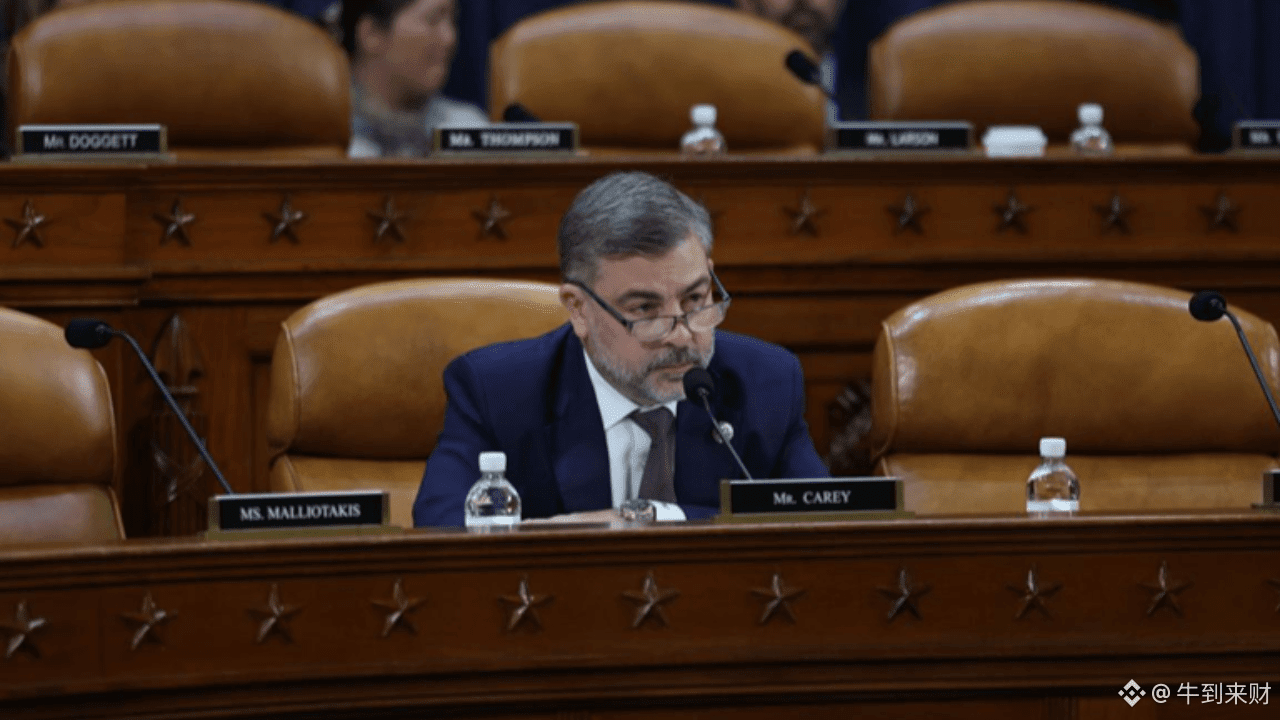
A group of 18 U.S. House lawmakers led by Rep. Mike Carey has formally asked the IRS to revise how crypto staking rewards are taxed. They argue the current system results in double taxation, taxing rewards both when received and again when sold which many say discourages participation in network staking and innovation. The lawmakers want the IRS to update guidance before 2026 to tax rewards only at sale or disposition, aligning tax treatment more fairly with economic gain.
2️⃣ Draft Legislation Proposes Broader Crypto Tax Clarity
Alongside the double-tax issue on staking, a new bipartisan draft bill (often referred to as the Digital Asset PARITY Act) was introduced that would:
Exempt small stablecoin payments (≤$200) from capital gains taxAllow deferral of staking and mining rewards taxation for up to five yearsAim to modernize crypto tax treatment to be more consistent with how digital assets are actually used in the economy.
3️⃣ Current IRS Position Still Tax-Heavy on Staking Rewards
Under current IRS guidance (Revenue Ruling 2023-14), staking rewards are taxable as income when received, even if not sold. This has led to complaints from stakers who pay tax on “phantom income” taxable income without liquidity.
🧠 Why This Matters for Crypto Investors
🔥 Staking Reward Tax Uncertainty
Right now, U.S. stakers can owe tax on receipt of rewards, even before selling them, a burden many view as unfair and a disincentive to securing proof-of-stake networks.
⚖️ Legislative Efforts Aim to Fix It
The bipartisan push aims for tax fairness by:
Taxing staking rewards at sale, not receiptDeferring tax on staking/mining rewardsExempting small stablecoin payments from routine crypto tax headaches
📅 Potential Timeline
Lawmakers want revised IRS guidance or reform before 2026, meaning negotiations and policy discussions could intensify early next year.
📌 Bottom Line
The U.S. crypto staking tax landscape is under review, with growing political momentum to overhaul unfair tax treatment that currently penalizes stakers twice. If successful, these reforms could:
Reduce the tax burden on staking participantsEncourage broader participation in PoS networksAlign U.S. policy more closely with economic reality and innovation
Not finalized yet, but developments are active and worth watching closely.
#USCryptoStakingTaxReview
Latest: U.S. Staking Tax Review & Reform Talks
1️⃣ Bipartisan Push to Revise Staking Tax Rules (Before 2026)
A group of 18 U.S. House lawmakers led by Rep. Mike Carey has formally asked the IRS to revise how crypto staking rewards are taxed. They argue the current system results in double taxation, taxing rewards both when received and again when sold which many say discourages participation in network staking and innovation. The lawmakers want the IRS to update guidance before 2026 to tax rewards only at sale or disposition, aligning tax treatment more fairly with economic gain.
2️⃣ Draft Legislation Proposes Broader Crypto Tax Clarity
Alongside the double-tax issue on staking, a new bipartisan draft bill (often referred to as the Digital Asset PARITY Act) was introduced that would:
Exempt small stablecoin payments (≤$200) from capital gains taxAllow deferral of staking and mining rewards taxation for up to five yearsAim to modernize crypto tax treatment to be more consistent with how digital assets are actually used in the economy.
3️⃣ Current IRS Position Still Tax-Heavy on Staking Rewards
Under current IRS guidance (Revenue Ruling 2023-14), staking rewards are taxable as income when received, even if not sold. This has led to complaints from stakers who pay tax on “phantom income” taxable income without liquidity.
🧠 Why This Matters for Crypto Investors
🔥 Staking Reward Tax Uncertainty
Right now, U.S. stakers can owe tax on receipt of rewards, even before selling them, a burden many view as unfair and a disincentive to securing proof-of-stake networks.
⚖️ Legislative Efforts Aim to Fix It
The bipartisan push aims for tax fairness by:
Taxing staking rewards at sale, not receiptDeferring tax on staking/mining rewardsExempting small stablecoin payments from routine crypto tax headaches
📅 Potential Timeline
Lawmakers want revised IRS guidance or reform before 2026, meaning negotiations and policy discussions could intensify early next year.
📌 Bottom Line
The U.S. crypto staking tax landscape is under review, with growing political momentum to overhaul unfair tax treatment that currently penalizes stakers twice. If successful, these reforms could:
Reduce the tax burden on staking participantsEncourage broader participation in PoS networksAlign U.S. policy more closely with economic reality and innovation
Not finalized yet, but developments are active and worth watching closely.
#USCryptoStakingTaxReview
A group of 18 U.S. House lawmakers led by Rep. Mike Carey has formally asked the IRS to revise how crypto staking rewards are taxed. They argue the current system results in double taxation, taxing rewards both when received and again when sold which many say discourages participation in network staking and innovation. The lawmakers want the IRS to update guidance before 2026 to tax rewards only at sale or disposition, aligning tax treatment more fairly with economic gain.
2️⃣ Draft Legislation Proposes Broader Crypto Tax Clarity
Alongside the double-tax issue on staking, a new bipartisan draft bill (often referred to as the Digital Asset PARITY Act) was introduced that would:
Exempt small stablecoin payments (≤$200) from capital gains taxAllow deferral of staking and mining rewards taxation for up to five yearsAim to modernize crypto tax treatment to be more consistent with how digital assets are actually used in the economy.
3️⃣ Current IRS Position Still Tax-Heavy on Staking Rewards
Under current IRS guidance (Revenue Ruling 2023-14), staking rewards are taxable as income when received, even if not sold. This has led to complaints from stakers who pay tax on “phantom income” taxable income without liquidity.
🧠 Why This Matters for Crypto Investors
🔥 Staking Reward Tax Uncertainty
Right now, U.S. stakers can owe tax on receipt of rewards, even before selling them, a burden many view as unfair and a disincentive to securing proof-of-stake networks.
⚖️ Legislative Efforts Aim to Fix It
The bipartisan push aims for tax fairness by:
Taxing staking rewards at sale, not receiptDeferring tax on staking/mining rewardsExempting small stablecoin payments from routine crypto tax headaches
📅 Potential Timeline
Lawmakers want revised IRS guidance or reform before 2026, meaning negotiations and policy discussions could intensify early next year.
📌 Bottom Line
The U.S. crypto staking tax landscape is under review, with growing political momentum to overhaul unfair tax treatment that currently penalizes stakers twice. If successful, these reforms could:
Reduce the tax burden on staking participantsEncourage broader participation in PoS networksAlign U.S. policy more closely with economic reality and innovation
Not finalized yet, but developments are active and worth watching closely.
#USCryptoStakingTaxReview
4
1.8k
·
--
Bullish
Why $UNI Is Pumping Right Now
{spot}(UNIUSDT)
@Uniswap ’s native token $UNI has been trending higher recently, and the move isn’t random, it’s tied to major governance developments and shifting tokenomics:
🔥 1. “UNIfication” Governance Proposal
Uniswap governance just triggered a major vote on the UNIfication proposal, a unified framework to:
• Activate the protocol fee switch for the first time
• Burn 100 million UNI from the treasury
• Redirect trading fees into a token burn mechanism, linking usage to deflationary pressure
If passed, this cuts supply and aligns token value with protocol revenue growth, a big positive for holders.
💥 2. Token Burn & Deflationary Narrative
The proposal includes a retroactive and ongoing burn model, potentially permanently reducing the circulating supply. This deflationary narrative has sparked strong bullish sentiment among traders and investors.
🐳 3. Whale Activity & Market Confidence
Historical data from recent weeks shows higher whale transactions and accumulation, which often amplifies price reaction during major governance events.
📊 4. Technical Momentum
Price crossed key technical levels with the governance vote underway, triggering short-term momentum buys from traders anticipating positive outcomes.
🧠 Bullish Signal Summary
🏆 Governance-led value capture, fee switch + burn = stronger tokenomics
🦄 Deflationary narrative, fewer tokens = higher scarcity pressure
🐋 Whale accumulation, confidence from big holders
📈 Technical breakout, momentum chasing ahead of results
TL;DR:
$UNI ’s rally is driven by a potential shift from governance token → value-accruing asset, fueled by real protocol changes and community optimism, not just price action alone.
Why $UNI Is Pumping Right Now
@Uniswap Protocol ’s native token $UNI has been trending higher recently, and the move isn’t random, it’s tied to major governance developments and shifting tokenomics:
🔥 1. “UNIfication” Governance Proposal
Uniswap governance just triggered a major vote on the UNIfication proposal, a unified framework to:
• Activate the protocol fee switch for the first time
• Burn 100 million UNI from the treasury
• Redirect trading fees into a token burn mechanism, linking usage to deflationary pressure
If passed, this cuts supply and aligns token value with protocol revenue growth, a big positive for holders.
💥 2. Token Burn & Deflationary Narrative
The proposal includes a retroactive and ongoing burn model, potentially permanently reducing the circulating supply. This deflationary narrative has sparked strong bullish sentiment among traders and investors.
🐳 3. Whale Activity & Market Confidence
Historical data from recent weeks shows higher whale transactions and accumulation, which often amplifies price reaction during major governance events.
📊 4. Technical Momentum
Price crossed key technical levels with the governance vote underway, triggering short-term momentum buys from traders anticipating positive outcomes.
🧠 Bullish Signal Summary
🏆 Governance-led value capture, fee switch + burn = stronger tokenomics
🦄 Deflationary narrative, fewer tokens = higher scarcity pressure
🐋 Whale accumulation, confidence from big holders
📈 Technical breakout, momentum chasing ahead of results
TL;DR:
$UNI ’s rally is driven by a potential shift from governance token → value-accruing asset, fueled by real protocol changes and community optimism, not just price action alone.
@Uniswap Protocol ’s native token $UNI has been trending higher recently, and the move isn’t random, it’s tied to major governance developments and shifting tokenomics:
🔥 1. “UNIfication” Governance Proposal
Uniswap governance just triggered a major vote on the UNIfication proposal, a unified framework to:
• Activate the protocol fee switch for the first time
• Burn 100 million UNI from the treasury
• Redirect trading fees into a token burn mechanism, linking usage to deflationary pressure
If passed, this cuts supply and aligns token value with protocol revenue growth, a big positive for holders.
💥 2. Token Burn & Deflationary Narrative
The proposal includes a retroactive and ongoing burn model, potentially permanently reducing the circulating supply. This deflationary narrative has sparked strong bullish sentiment among traders and investors.
🐳 3. Whale Activity & Market Confidence
Historical data from recent weeks shows higher whale transactions and accumulation, which often amplifies price reaction during major governance events.
📊 4. Technical Momentum
Price crossed key technical levels with the governance vote underway, triggering short-term momentum buys from traders anticipating positive outcomes.
🧠 Bullish Signal Summary
🏆 Governance-led value capture, fee switch + burn = stronger tokenomics
🦄 Deflationary narrative, fewer tokens = higher scarcity pressure
🐋 Whale accumulation, confidence from big holders
📈 Technical breakout, momentum chasing ahead of results
TL;DR:
$UNI ’s rally is driven by a potential shift from governance token → value-accruing asset, fueled by real protocol changes and community optimism, not just price action alone.
3
1.5k
Log in to explore more content
Join global crypto users on Binance Square
⚡️ Get latest and useful information about crypto.
💬 Trusted by the world’s largest crypto exchange.
👍 Discover real insights from verified creators.
Email / Phone number
Trending Topics
USAugustPPIRisesLessThanExpected
15,377 views
402 Discussing
🚨 US AUG PPI: Rises LESS Than Expected! Bullish for Crypto? 🚀
PPI +0.4% MoM as expected, but CORE PPI only +0.2% vs +0.3% expected - cooling!
What it means:
• Wholesale inflation softer than feared
• Fed rate hike chance now 62% - but dovish signals coming
• Core PCE revisions expected downward - bullish
• BTC usually pumps on softer PPI
Fed meeting Sep 15-16 - Market now expects pause, not hike?
Is this the green light for Q4 rally?
#Bitcoin #PPI #Fed #CryptoNews #BTC#usaugustppiriseslessthanexpected
True News
·1 Likes
·1.2k views
SECApprovesNasdaqTexasCommodityTrustRule
11,666 views
363 Discussing
ECBRaisesRatesSecondTimeTo2.5%
8,097 views
260 Discussing